PRELIMINARY REMARKS
Writing an article on the fine-tuning of the universe that is too short and simple runs the risk of being the target of doubts and objections, and a lengthy and technical exposition runs the risk of being difficult for the reader to understand or even boring due to the complexity of the content. That is why I am grateful to Professor Robin Collins for not only allowing me to translate much of his work, but also for providing me with the slides that he uses in his lectures on the fine-tuning of the universe, which is the visual material that I will use in this article.
WHAT IS FINE TUNING?
Before we make an argument about fine-tuning, the first thing to do is to know what fine-tuning is and whether there is such a thing for the universe. Well, by fine-tuning we mean the fact that the universe is extremely fine-tuned for the existence of what Professor Collins calls “embodied conscious agents,” which require stable and reproducible complexity. An analogy for the universe would be a biosphere. The biosphere has to be perfectly structured and fine-tuned to be self-sustaining (the right environment, energy consumption, etc.) so that human beings can exist in it. The universe is like that, that is how it must be structured in an extraordinary way.
Three kinds of Fine Tuning for life
The evidence for fine-tuning of the universe is of three kinds:
- The fine-tuning of the laws of nature.
- Fine-tuning of physical constants.
- The fine-tuning of the initial mass-energy distribution of the universe at the time of the Big Bang.
The Fine Tuning of the Laws of Nature
When we talk about the fine-tuning of the laws of nature we mean that the universe must have precisely the right set of laws in order for highly complex life to exist.
Examples:
- Existence of Gravity.
- Existence of the Electromagnetic Force.
- Existence of the Strong Nuclear Force.
- Existence of the Quantification Principle.
- Existence of the Pauli Exclusion Principle.
Let’s take the existence of gravity, without it you have no stars, you have no planets, and therefore you have no life! Or without the Electromagnetic Force you would have no atoms, so you would not get life either, then you have no chemical bond, and of course, you have no life either.
We can mention other examples, but this is enough to understand that the appropriate laws are necessary for life of great complexity to exist. If any of these laws were missing, such a type of life would be impossible.
Fine-tuning of physical constants
By physical constants, we mean the fundamental numbers that occur in the laws of physics, many of which must be fine-tuned to an extraordinary degree for life to occur.
For example, take the Gravitational Constant—designated by G—which determines the strength of gravity through Newton’s Law of Gravity:
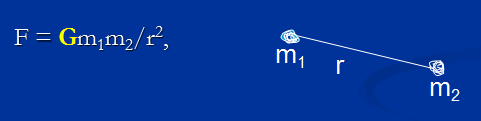
Where F is the force between two masses, m 1 and m 2 , that are a distance r apart. If you increase or decrease G then the force of gravity will correspondingly increase or decrease. (The actual value of G is 6.67 x 10 -11 Nm 2 / kg 2 .)
Now, to get an idea of how finely tuned the force of gravity indicated by G is we must first look at the range of fundamental forces in nature:
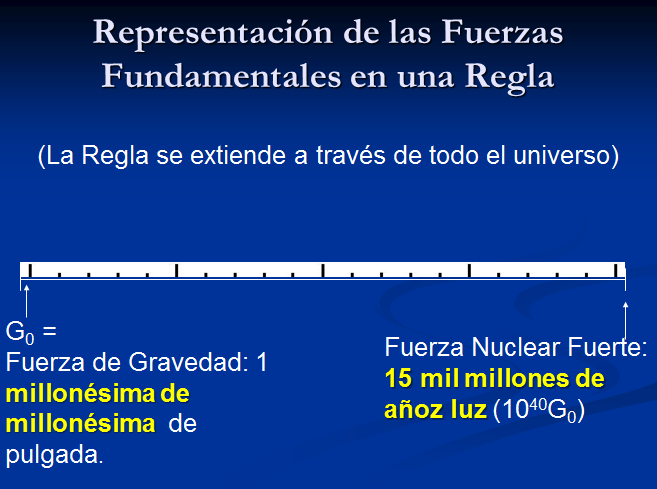
Note that the Strong Nuclear Force is 10,000 sextillion [1] times the Force of Gravity. Too complicated? Well, let’s make this more digestible. Imagine you have a ruler big enough to stretch across the entire universe, now we’ll place the points where the Force of Gravity and the Strong Nuclear Force would be located. We’d get something like this:
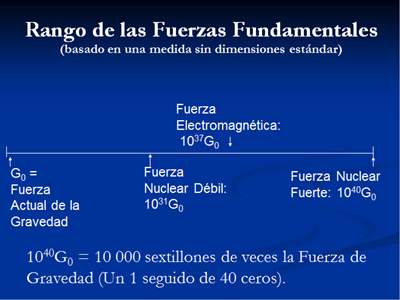
Now, Professor Collins calculates that if you increase the Force of Gravity by one part in 1034 of the range of the fundamental forces (i.e. a billion-fold increase in strength), then even single-celled organisms would be crushed, and only planets smaller than about 31 metres in diameter could support life with our brain size. Such planets, of course, would not be able to support an ecosystem to sustain life for our level of intelligence.
We could continue giving examples of what would happen if you kept playing with the value of the Gravity Force, but I think this one is more than enough to understand what we are talking about.
So we can see that for life to occur, the Force of Gravity must fall within a very, very narrow range of values compared to the total range of the fundamental forces.
Let’s look at one more analogy. Imagine a radio dial large enough to span the entire universe. The station WKLF (K-Life) allows life. So:
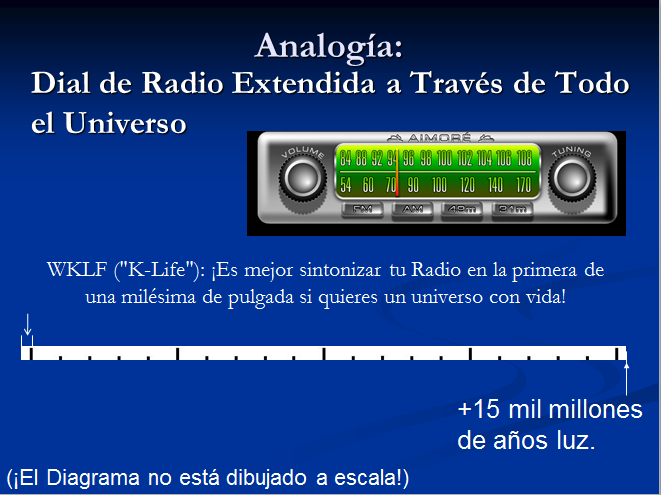
Only by tuning into the right frequency (the first thousandth of an inch) of all those on the radio dial (more than 15 billion light years away) can you get a universe with life.
 And so the same thing would happen if you were to play around with the values of the other constants, if they had slightly different values then complex material systems would not arise, so if you want life to exist then the constants of physics must fall within a very narrow range of values. This is widely acknowledged, the famous cosmologist, Stephen Hawking, says:
The remarkable fact is that the values of these numbers [i.e. the constants of physics] seem to have been very finely tuned to make the development of life possible. [2]
Former director of Cambridge University Observatories, Dr Dennis Sciama, also states:
If you change the laws of nature a little bit, or you change the constants of nature a little bit… it is very likely that intelligent life would not have been able to develop. [3]
Fine-tuning the Initial Mass-Energy Distribution
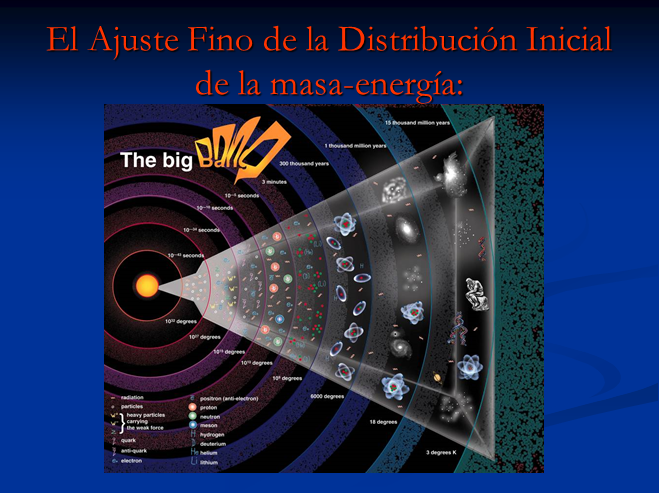
What does the fine-tuning of the initial mass-energy distribution mean? Well, according to standard cosmology, the universe started with the Big Bang, about 13.7 billion years ago. All the matter was condensed into a region smaller than the size of a golf ball, then it exploded and expanded. And in order for that matter to get galaxies, and to get life, it had to have a very precise arrangement. Professor Collins gives us an analogy of this: If you look at a zygote with a powerful microscope, you would see that it is intricately structured. It wouldn’t look that way from the outside, you would just see it as a blob of protoplasm, but under the microscope, you would have an intricate structure of DNA and all the other kinds of organelles in cells to make up a human being. So, in the same way, the universe has to be in an extremely precise state, and those are the initial conditions, the fine-tuning of mass-energy to get galaxies, stars, and ultimately to get like us.
Now comes the important question, how precise must the initial mass-energy distribution be for life to exist? Well, Roger Penrose, one of the UK’s leading theoretical physicists and cosmologists answers this question in his book The Emperor’s New Mind :
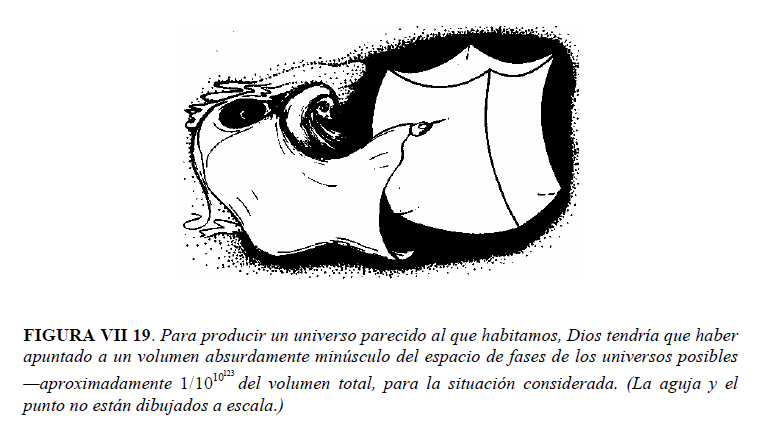
(Phase space is a space of possibilities, with a standard probability measure that tells us how likely it is to be in that part of that possibility space.)
A figure so incredibly large that Penrose says:
We couldn’t even write the whole number in ordinary decimal notation: it would be a “1” followed by 10 123 “0”s. Even if we wrote a “0” for every proton and every neutron in the entire Universe—and added all the other particles as well—we would still be way short [4] .
Here is an analogy for the formidable precision of the Big Bang explosion according to Penrose’s calculations, which must be much greater than that needed to blow up a pile of rubble into a fully formed building filled with desks, tables, chairs and computers!

So we can conclude that the initial mass-energy distribution must fall within an excessively narrow range for complex life to occur.
Summary
We have seen that for complex life to exist in the universe, it has to be well structured as a biosphere, and that we have not just one piece of evidence for this, but many pieces of evidence that point to such fine-tuning, and these are the cases of the fine-tuning of the laws of physics, of the physical constants and of the initial distribution of mass and energy.
FORMULATING THE UNIVERSE FINE-TUNING ARGUMENT FOR THE EXISTENCE OF GOD
There are different ways to formulate an argument from fine-tuning, in this post I will focus only on the versions of William Lane Craig, Robin Collins, and Peter S. Williams.
William Lane Craig’s Fine-Tuning Argument
What is the reason for this fine-tuning? Well, there are three options that have been offered as the best explanation and with which we can formulate our first premise of the argument:
- The fine-tuning of the universe is due either to physical necessity, chance, or design.
Physical need
Let’s first consider the physical necessity alternative. This alternative tells us that the universe must be one that permits life – in other words, that the values and constants cannot be any other way. In this alternative, the existence of a universe that prohibits life is impossible . Of course, that is a mistake, since such a universe is not only possible , but much more probable than a universe that permits life! And the reason for this is because the constants and quantities are not determined by the laws of nature – they cannot be predicted on the basis of current physical theory. There is no reason or evidence to suggest that fine-tuning is necessary.
One could appeal to string theory, but this does not settle the matter at all. Stephen Hawking says:
Even if we understand the ultimate theory, it is not going to tell us much about how the universe began. It cannot predict the dimensions of spacetime, the symmetry group or Gauge group, or other parameters of the effective low-energy theory… It is not going to determine how this energy is partitioned between conventional matter, and a cosmological constant, or quintessence… So to return to the question… Does string theory predict the state of the universe? The answer is that it does not. It allows for a vast landscape of possible universes, in which we occupy an anthropically allowed location [5] .
And that vast landscape of possible universes that string theory allows for is about 100,500 different universes, all of them governed by the present laws of nature, so it does nothing to deliver the observed values of the constants and physical quantities in a necessary way.
Chance/brute fact hypothesis
Now let’s move on to our second alternative: Chance or brute fact.
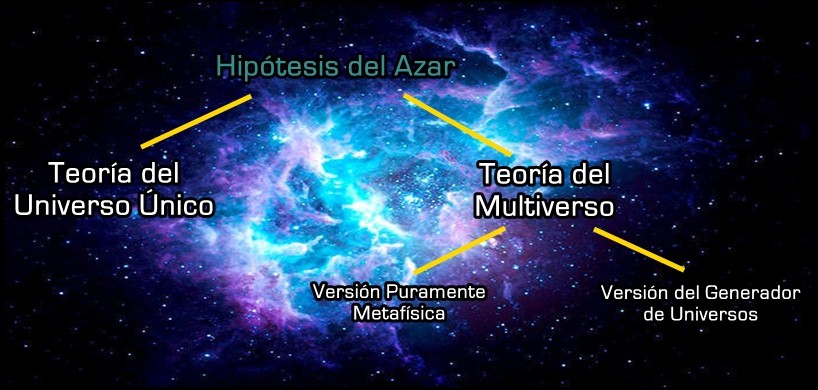
One Universe Theory
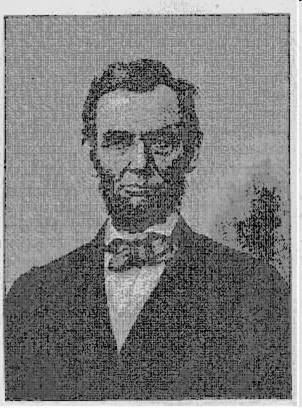
This hypothesis comes in two forms, the first is with respect to the one universe theory, i.e. our universe is the only one in existence. Those who hold this alternative tell us that the fact that a life-supporting universe exists is just a chance occurrence that has and requires no explanation. In simpler words, our existence is just an “extraordinarily lucky accident.” Of course, this hypothesis is not accepted among most people because of its improbability. As Robin Collins exemplifies, it would be as improbable as believing that a painting of Abraham Lincoln’s face is the result of an extraordinarily lucky ink spill, because it is not only extraordinarily improbable, but it is highly significant, these two characteristics go together.
Professor Peter S. Williams puts it this way, we do not infer intelligent design just from high improbability, but from the combination of a “highly improbable” event with a “very special” pattern. He says:
A long string of random letters is complex (unlikely) but unspecified (does not fit any independently determined pattern). A short string of letters might be specified – such as the word “so” – but it would not be sufficiently complex to overcome chance’s ability to explain the event. Neither complexity without specificity nor specificity without complexity requires us to infer design. However, if you saw a Shakespeare play written on a Scrabble board, you would infer design. A play is both specific and sufficiently complex to merit an inference of design on the grounds that “in all cases where we know the causal origin of… specific complexity, experience has shown that intelligent design plays a causal role” [6] . So too with cosmic fine-tuning [7] .
Professor Williams gives us another analogy: Imagine you see someone enter a sequence of numbers into an ATM and then get their money back. What would you infer from this situation? Was the subject lucky or did they get their money by design? It is when a complex, contingent event matches a specific, independent pattern that we infer design.
Multiverse Theory
But maybe if you spilled ink enough times you would get Lincoln’s face, or if you put too many monkeys with too many typewriters, one of them might write a paragraph of Shakespeare’s play. This is what is known as the so-called “multiverse hypothesis,” according to which there are a huge number of universes with not only different initial conditions, but also with different values of the constants of physics, and even laws of nature. Therefore, simply by chance, some universe will have the “winning combination” for life and thus have an explanation for why a universe exists that allows life. The most common analogy proposed by the proponents of this hypothesis is that of the lottery, in the same way that you can draw many tickets with different combinations of numbers, only one of them has the “winning combination” and the person who gets that ticket will simply be the winner by luck, a mere matter of probability. This hypothesis is widely accepted and has quite prominent proponents, such as Professor Max Tegmark, of the Massachusetts Institute of Technology Cosmologist, Sir Martin Rees, Astronomer to the Royal Family of Great Britain, Stephen Hawking, among many others.
Purely Metaphysical Version
The multiverse theory has two versions, the first of which is the Purely Metaphysical version , which tells us that all possible universes exist, all possible realities exist, so there is one reality where the Marvel universe really exists, another reality where the Lord of the Rings books are true, all those universes exist as a brute fact without any further explanation. This version, for obvious reasons, is not widely defended today.
Universe Generator Version
This hypothesis tells us that universes are generated by some physical process that Professor Collins calls a “Universe Generator.” Unlike the metaphysical version, the Universe Generator version is defended by many leaders in cosmology such as Andrei Linde of Stanford University and Britain’s Sir Martin Rees.
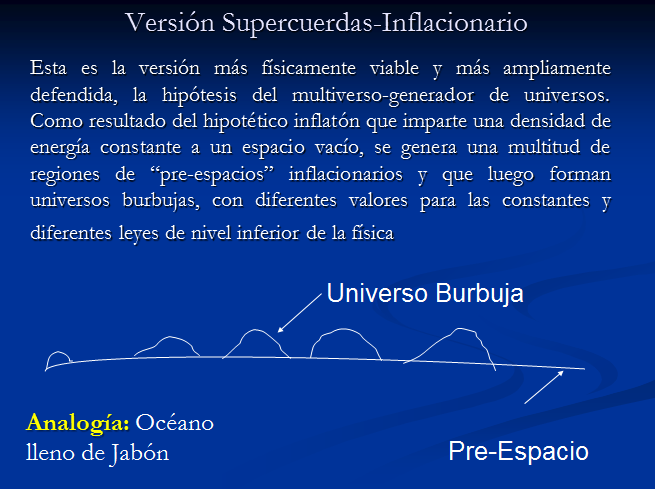
So you pick the ocean of your choice, then pour a lot of soap on it, so thousands of bubbles are formed, and these are the universes, of course, the ocean keeps expanding at a great rate so the bubbles never collide with each other.
We now turn to the answer that Robin Collins focuses on to rule out the Universe Generator hypothesis, which is this: The Universe Generator itself would have to be “well designed” to produce a single universe that would support life.
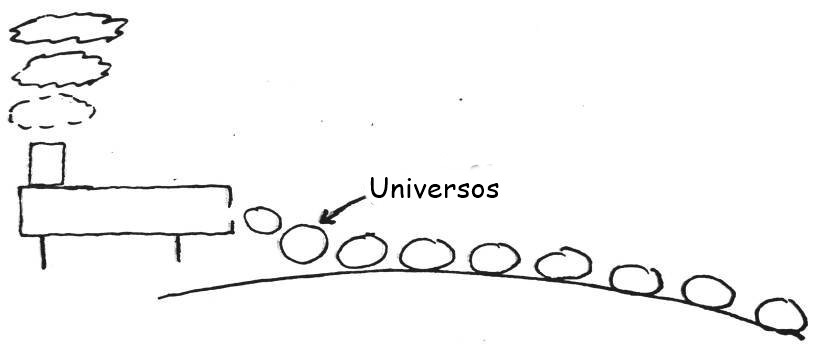
Professor Collins gives us the following analogy of the Universe Generator:
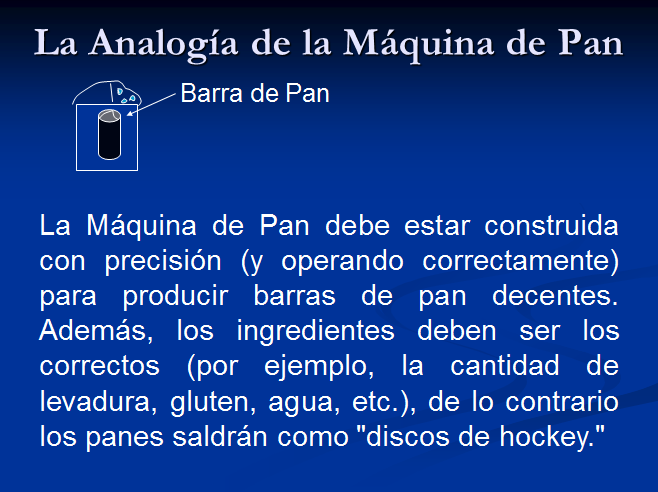
Much like the bread machine, it seems that the Universe Generator must have the right laws and have the right ingredients (initial conditions) to produce universes that support life.
Professor Collins tells us that if we examine the super-string inflationary multiverse carefully, it requires at least five special mechanisms/laws in order to produce at least one life-supporting universe. So he simply sends the design issue up one level. Collins concludes that at best, the Universe Generator hypothesis eliminates the quantitative case for design based on fine-tuning of constants, but it still requires precise laws and the right initial conditions in order to work. So after all, we can still ask the valid question: “Who or what ‘designed’ the Universe Generator?”
Design Hypothesis
Since we have ruled out physical necessity and chance from our basket of alternatives, we can now state the second premise of our argument:
- The fine-tuning of the universe is due neither to physical necessity nor to chance.
But if that is the case, then it inevitably follows that
- Therefore, the fine-tuning of the universe is due to design.
One would think that the “design” alternative is just an option offered by theists on a whim or because they simply “need to fill the gap” left by science, so it must necessarily be included in the list of explanations and not as a common sense interpretation. But that is not so, that fine-tuning is due to design is not only a claim made by theistic cosmologists, but by non-theists as well! Theoretical physicist and popular science writer Paul Davies states: “The impression of design is overwhelming” [8] and astrophysicist Sir Fred Hoyle, who was an atheist, once stated: “A common sense interpretation of the facts suggests that a super-intellect has tinkered with physics… and that there are no blind forces of nature . ”
Robin Collins’ Fine-Tuning Argument
The main feature of this argument is that it does not say that the evidence for fine-tuning proves that the universe was designed, or even that the universe is likely to have been designed. Rather, the argument simply concludes that fine-tuning strongly supports theism over the atheistic one-universe hypothesis.
Our first premise of the argument can be stated as follows:
- The existence of fine-tuning is not improbable under theism.
As we have seen throughout the article, justifying this premise is easy and not at all controversial: since God is a good being and it is good that intelligent and conscious beings exist, it is neither surprising nor unlikely that God would create a world that can sustain intelligent life.
The following premise may be as follows:
- The existence of fine-tuning is highly unlikely under the atheistic single-universe hypothesis.
This premise encompasses the options presented in an atheistic worldview: chance/brute fact and physical necessity. The objections are the same as those we used above for Craig’s argument.
And the conclusion of the argument would be:
- From premises (1) and (2) and by inference from the overriding confirmation principle, it follows that the fine-tuning data provide strong evidence in favor of the design hypothesis over the atheistic single-universe hypothesis.
This is the way Collins presents his argument. The evidence for fine-tuning is a lot like fingerprints found on a gun: although they may provide strong evidence that the defendant committed the murder, one cannot, from the evidence, conclude that the defendant is guilty; one would also have to look at the counter-evidence offered. For example, ten reliable witnesses claimed to have seen the defendant in the park at the time of the shooting. In this case, the fingerprints would still count as significant evidence of guilt, but this evidence would be counterbalanced by the testimony of the witnesses. Similarly, the evidence for fine-tuning strongly supports theism over the atheistic one-universe hypothesis, although it does not by itself show that everything that is considered theism is the most plausible explanation of the world. Nevertheless, as we have seen so far, the evidence for fine-tuning provides a much stronger and more objective argument for theism than the strongest atheistic argument against theism.
Peter Williams’ Fine-Tuning Argument
The first premise of Williams’ argument [9] is as follows:
- If something exhibits specified complexity, then it is probably the product of design.
This premise appeals to our common sense of inferring design when we see a “highly improbable” event with a “very special” pattern. This is not a religious claim or a bias coming from the theist; as we have seen above, the design inference for cosmic fine-tuning arises naturally even among atheist physicists.
Our second premise is as follows:
- The fine-tuning of the universe exhibits specified complexity.
It is obvious that nothing more needs to be said to justify this premise than what has been presented for the previous arguments. It can therefore be concluded that:
- Therefore, the fine-tuning of the universe is probably the product of design.
GENERAL CONCLUSION
So at the end of the day we have a very strong case for the fine-tuning of the universe, and in turn at least three ways to make an argument for the existence of God.
I would like to end this article with a few words from King David:
The heavens declare the glory of God. The skies proclaim the work of his hands. Day by day he tells the world, night by night he makes it known. (Psalm 19:2)
Grades
[1] Translating the huge quantities from English to Spanish is complicated because it is also necessary to convert from the English system of measurement to the international one. For the conversion of the measurements my friend Chris A. Du-Pond helped me with this.
[2] Hawking, 1988, A Brief History of Time , p. 125.
[3] From the BBC special, “The Anthropic Principle.”
[4] Roger Penrose, The Emperor’s New Mind , p. 310
[5] SW Hawking, “Cosmology from the Top Down” a paper presented at the Cosmic Inflation Conference at Davis, University of California, Davis, May 29, 2003.
[6] Stephen C. Meyer, ‘Teleological Evolution: The Difference it Doesn’t Make’, www.arn.org/docs/meyer/sm_teleologicalevolution.htm
[7] Peter S. Williams, “Five Arguments For Theism,” http://www.peterswilliams.com/2016/02/09/five-arguments-for-theism/#_edn8
[8] Paul Davies, The Cosmic Code, 1988, p. 203
[9] http://www.peterswilliams.com/2016/02/09/five-arguments-for-theism/ (Last visited October 17, 2018).
Jairo Izquierdo Hernandez is the founder of Christian Philosopher . He currently works as Social Media Director and author for the Christian organization Cross Examined . He is a member of the Christian Apologetics Alliance and a worship minister at the Christian Baptist Church Christ is the Answer in Puebla, Mexico.

Are you believing tradition or scripture?
PodcastPodcast: Play in new window
Subscribe: Apple Podcasts | Spotify | Amazon Music | Android | iHeartRadio | Email | TuneIn | RSS
An interview with the real Indiana Jones, Bob Cornuke about his new book titled “Tradition: Exploring the Roots of Church Traditions.”
Bob examines various man-made church traditions which have, far too often, strayed from clear Scriptural mandates. Don’t miss this controversial podcast episode. Is definitely one of those episodes worth listening more than once.
How To Be Civil With A Political Party That “Wants To Destroy You”
Legislating Morality, Culture & PoliticsBy Michael Sherrard
Hillary Clinton has thrown more fuel on an already raging fire. In a recent interview, she stated very plainly that until the left has power again, they cannot be civil. If not for the fact that this advice will be followed by many to extreme ends, I’d just laugh at the extreme irony of saying “after I beat you up, I’ll be nice to you.”
Well, I think there is a better way, the way of Jesus Christ namely. It’s a way that involves loving your enemies, praying for those that persecute you, and making a reasonable case for your beliefs with gentleness and respect. For the level-headed Americans that remain, here are three ways you can still be civil in an age of incivility.
The profound lack of listening today is probably both the greatest source of frustration and anger and also the easiest problem to fix. Just shut up. Seriously, learn to shut up. You don’t always have to run your mouth. Instead, listen to your opponent. Listen without the goal of correction. Listen with the goal of understanding. Who knows, maybe you’ll learn something. You’ve been wrong before. Perhaps you are wrong now. What have you got to lose? At the very least, after you have truly listened to your opponent, you will understand better how to proceed in persuading them that their position is flawed in some way. But truth be told, the greatest thing that comes from listening isn’t convincing, it’s compassion. It is easy to hate ideas. It is not as easy to hate an individual. And when you listen and listen well, you are able to hear the person along with their position. This leads to unity and productive conversations. I know it’s a novel idea, but you should give listening a try.
Everybody today is an expert. That is of course sarcasm. The truth is that everybody thinks they are an expert. However, very few can actually explain their beliefs if it requires more than 144 characters or a picture. Personal beliefs today have a profound lack of depth that stems from a deterioration of critical thinking. Beliefs are formed from a pop culture more than reasoned thinking and meaningful reflection, and many accept simply what feels good rather trying to discern what is good. The solution is knowledge. A fundamental component of civil discourse is accurate knowledge of both your position and your opponents. If you cannot explain why your position is true, you are not allowed to talk about it. And I’ll take it a step further. If you do not know why your opponent thinks their position is the correct one, you are not allowed to attack it. I know this is a novel idea, but if you don’t have anything good to say because you don’t know what the heck you are talking about, you ought not say anything at all.
Find a way to love your political opponent. They are in your neighborhood, workplace, school, and church. Now, don’t misunderstand my point here. I think listening to your opponent and learning more about the relevant issues of our time is an act of love. If you do just the above two points, you will have given a great gift to this world. But let’s go a bit further. Go out of your way this week to be kind and serve those that disagree with you. Instead of spending all your mental energy plotting how to belittle your enemy with a clever meme, think instead how you can build them up. They are struggling with life just like you are. Their finances are in trouble. They are suffering broken relationships in their family. They have just received news that their child has cancer. But, hey, feel free to attack their character because they disagree with you on a political issue. Kick them while they are down. Or, be humble and serve them. I’ll let you choose.
This is a time for us all to follow the example of Jesus who did not count equality with God a thing to be exploited but humbled himself by taking the form of a servant. And as a servant, He died on the cross in order to purchase our redemption. Let us all live in this manner, a manner worthy of the gospel, and let us all be civil even to those not worthy of it.
Michael C. Sherrard is a pastor, a writer, and a speaker. Booking info and such can be found at michaelcsherrard.com.
Original Blog Source: http://bit.ly/2OvQdDX
Did the Apostles Really Die as Martyrs?
4. Is the NT True?, Theology and Christian ApologeticsBy Mikel Del Rosario
Evidence That Demands a Verdict
Growing up, I had a lot of questions about the faith. So I went looking for answers.
One of the first apologetics books I discovered on my dad’s shelf was Josh McDowell’s classic work, Evidence that Demands a Verdict. My dad even arranged for me to meet Josh while I was transitioning to high school. But neither one of us knew I’d eventually meet his son, Sean, during our college days at Biola University.
Today, I’m helping get the word out about the newly expanded and updated Evidence That Demands a Verdict by Josh McDowell and Sean McDowell. I’m especially excited about the new additions to Josh’s classic work.
My Favorite Addition
Probably my favorite addition is an excellent chapter on the martyrdom of the apostles (Chapter 13), summarizing key findings from Sean’s doctoral dissertation at Southern Baptist Theological Seminary. His academic work, The Fate of the Apostles, assessed numerous claims and traditions about the martyrdom of the apostles and I’m happy to see his findings presented for a popular audience here.
The martyrdom of the apostles has been an overlooked, but important area in apologetics. Especially since many apologists, myself included, often make a case for the historicity of the resurrection using an argument based on the disciples’ belief that they saw the risen Jesus. Even I say things like, “The disciples wouldn’t die for a lie” and “Liars make poor martyrs.”
The Martyrdom of the Apostles
But how do we know that certain disciples really died as martyrs? What’s the evidence show? In this post, I’ll share Sean’s answers for four questions I asked him about the whole idea of martyrdom and the apostles:
Before I get to the questions, listen to Sean explain why this chapter is his favorite addition to Evidence that Demands a Verdict as well:
Question 1: What makes the apostles different from modern martyrs?
Sean McDowell:
The apostles were eyewitnesses of the risen Jesus…they all suffered and were willing to die for [their belief].
Question 2: What is a martyr?
Sean McDowell:
Question 3: Was the Apostle Peter really martyred by being crucified upside down?
Sean McDowell:
Question 4: Was the Apostle Paul really martyred by being beheaded?
Sean McDowell:
The Evidential Value of the Fate of the Apostles
Skeptics often say, “People die for religious ideas or political causes today. Just because you die for a belief, that doesn’t make it true.” I agree. But what it does mean is that you at least think your beliefs are actually true. As the McDowells observe on page 367:
It’s a strongly evidenced historical fact that Jesus’ disciples had real experiences they believed were experiences of the risen Jesus. And they didn’t die for something that somebody told them second or third-hand. They died for their personal testimony that they personally saw the risen Jesus. And they were the only ones to know if they really saw Jesus alive or not!
While there’s no conclusive historical evidence on the details of how exactly Paul or Peter died for their independent testimonies about seeing the risen Jesus, we can be confident that they died as martyrs. Their martyrdom should at least give a person pause and open the door to a fresh conversation on the reasons for the Christian belief in Jesus’ bodily resurrection.
THE TABLE PODCAST
In this episode, Mikel Del Rosario and Dr. Sean McDowell discuss the fate of the Apostles, focusing on the historical evidence of their martyrdom.
Original Blog Source: http://bit.ly/2NKMX2u
Where the Evidence Led Me
2. Does God Exist?, Theology and Christian ApologeticsBy Terrell Clemmons
A Review of Heretic: One Scientist’s Journey from Darwin to Design, by Matti Leisola & Jonathan
As a student beginning his scientific studies in 1966, Finnish biochemist Matti Leisola used to laugh at Christians who “placed God in the gaps of scientific knowledge,” as the criticism often went. As he saw it, those people lacked the patience and level-headedness that he possessed.
After hearing Francis Schaeffer speak in 1972, though, he realized his concept of truth was naïve. He bought several of Schaeffer’s books and began to study philosophy, a subject he had previously considered of little value. At some point, he realized the god-of-the-gaps criticism cut both ways since a functional atheist could also insert a pat explanation into any knowledge gap. He also came to see another problem that the god-of-the-gaps criticism obscured: materialists seemed to think the proverbial knowledge gap was ever-shrinking, but in practice, the more scientists learned about the natural world, the more they found new and unexpected mysteries opening up. More important, the materialist argument for allowing only material explanations simply presupposed that only material causes exist. What if that presupposition was wrong?
By the mid-1970s, his doubts had become a conviction. “Scientists have no materialist explanation for the origin and complexity of life,” he wrote. “The confident bluffing of the dogmatic materialists notwithstanding, they weren’t even close.” Experimental science, he concluded, seems to point in a different direction.
A quintessential scientist’s memoir, Heretic: One Scientist’s Journey from Darwin to Design contains Leisola’s reflections on both developments in science (including biology, paleontology, genetics, information theory, and ID) and his “long and painstaking” voyage from the naturalistic evolutionary faith to dissent from Darwin. Heretic also details some of the evasions, hatred, suspicions, contempt, fears, power games, and persecutions that unfortunately mark the life of an open Darwin skeptic. And remarkably, it manages to do so with a subtle wit both sharp enough to poke fun at the contortions of materialism and shrewd enough to note the gravely consequential nature of what’s at stake.
Various chapters focus on experiences in academia (“I long ago had come to see that those bent on intimidation think nothing of shutting down debates and marginalizing scientists while paying lip service to the value of academic freedom”); encounters with publishers and broadcaster bias (“unconscious religiosity is all too common in the science community, and the broadcast media ensure that it’s presented as scientific fact day after day”); and “rationalists” behaving irrationally (“Bullies for Darwin; Actually, Several Bullies for Darwin”).
One especially compelling chapter is “The Church Evolves,” which deals with not only the Finnish Lutheran Church’s abject capitulation to Darwinism but also its active opposition to material that challenges Darwin. Even as literature critical of Darwin was forbidden on pain of punishment within Finland’s Soviet bloc neighbors, inside free Finland, church leaders were willfully suppressing the same information. This chapter speaks of trends to which Christians in America should pay attention.
“Criticism of evolutionary theory is a stressful hobby,” observed one reporter about Leisola. “On the other hand,” Leisola responded, “life as a dissenter is rich and exciting.” For the uncertain, he offers a modest invitation:
Take at least that first step on the journey that I began so many decades ago as a young, slightly arrogant scientist committed to modern evolutionary theory. That first step is a modest one, a step through the door of a paradigm and onto an open path whose end point I was unsure of. The first step was the decision simply to follow the evidence wherever it led.
Science- and truth-lovers might also find a delightful first step in Heretic.
—For more about Matti Leisola, see Minority Reporter: A Finnish Bioengineer Touches the Third Rail by Denyse O’Leary.
Terrell Clemmons is a freelance writer and blogger on apologetics and matters of faith.
This article was originally published at salvomag.com: http://bit.ly/2Ads4sY
Los argumentos a partir del Ajuste Fino del universo
EspañolPRELIMINARY REMARKS
Writing an article on the fine-tuning of the universe that is too short and simple runs the risk of being the target of doubts and objections, and a lengthy and technical exposition runs the risk of being difficult for the reader to understand or even boring due to the complexity of the content. That is why I am grateful to Professor Robin Collins for not only allowing me to translate much of his work, but also for providing me with the slides that he uses in his lectures on the fine-tuning of the universe, which is the visual material that I will use in this article.
WHAT IS FINE TUNING?
Before we make an argument about fine-tuning, the first thing to do is to know what fine-tuning is and whether there is such a thing for the universe. Well, by fine-tuning we mean the fact that the universe is extremely fine-tuned for the existence of what Professor Collins calls “embodied conscious agents,” which require stable and reproducible complexity. An analogy for the universe would be a biosphere. The biosphere has to be perfectly structured and fine-tuned to be self-sustaining (the right environment, energy consumption, etc.) so that human beings can exist in it. The universe is like that, that is how it must be structured in an extraordinary way.
Three kinds of Fine Tuning for life
The evidence for fine-tuning of the universe is of three kinds:
The Fine Tuning of the Laws of Nature
When we talk about the fine-tuning of the laws of nature we mean that the universe must have precisely the right set of laws in order for highly complex life to exist.
Examples:
Let’s take the existence of gravity, without it you have no stars, you have no planets, and therefore you have no life! Or without the Electromagnetic Force you would have no atoms, so you would not get life either, then you have no chemical bond, and of course, you have no life either.
We can mention other examples, but this is enough to understand that the appropriate laws are necessary for life of great complexity to exist. If any of these laws were missing, such a type of life would be impossible.
Fine-tuning of physical constants
By physical constants, we mean the fundamental numbers that occur in the laws of physics, many of which must be fine-tuned to an extraordinary degree for life to occur.
For example, take the Gravitational Constant—designated by G—which determines the strength of gravity through Newton’s Law of Gravity:
Where F is the force between two masses, m 1 and m 2 , that are a distance r apart. If you increase or decrease G then the force of gravity will correspondingly increase or decrease. (The actual value of G is 6.67 x 10 -11 Nm 2 / kg 2 .)
Now, to get an idea of how finely tuned the force of gravity indicated by G is we must first look at the range of fundamental forces in nature:
Note that the Strong Nuclear Force is 10,000 sextillion [1] times the Force of Gravity. Too complicated? Well, let’s make this more digestible. Imagine you have a ruler big enough to stretch across the entire universe, now we’ll place the points where the Force of Gravity and the Strong Nuclear Force would be located. We’d get something like this:
Now, Professor Collins calculates that if you increase the Force of Gravity by one part in 1034 of the range of the fundamental forces (i.e. a billion-fold increase in strength), then even single-celled organisms would be crushed, and only planets smaller than about 31 metres in diameter could support life with our brain size. Such planets, of course, would not be able to support an ecosystem to sustain life for our level of intelligence.
We could continue giving examples of what would happen if you kept playing with the value of the Gravity Force, but I think this one is more than enough to understand what we are talking about.
So we can see that for life to occur, the Force of Gravity must fall within a very, very narrow range of values compared to the total range of the fundamental forces.
Let’s look at one more analogy. Imagine a radio dial large enough to span the entire universe. The station WKLF (K-Life) allows life. So:
Only by tuning into the right frequency (the first thousandth of an inch) of all those on the radio dial (more than 15 billion light years away) can you get a universe with life.
Former director of Cambridge University Observatories, Dr Dennis Sciama, also states:
Fine-tuning the Initial Mass-Energy Distribution
What does the fine-tuning of the initial mass-energy distribution mean? Well, according to standard cosmology, the universe started with the Big Bang, about 13.7 billion years ago. All the matter was condensed into a region smaller than the size of a golf ball, then it exploded and expanded. And in order for that matter to get galaxies, and to get life, it had to have a very precise arrangement. Professor Collins gives us an analogy of this: If you look at a zygote with a powerful microscope, you would see that it is intricately structured. It wouldn’t look that way from the outside, you would just see it as a blob of protoplasm, but under the microscope, you would have an intricate structure of DNA and all the other kinds of organelles in cells to make up a human being. So, in the same way, the universe has to be in an extremely precise state, and those are the initial conditions, the fine-tuning of mass-energy to get galaxies, stars, and ultimately to get like us.
Now comes the important question, how precise must the initial mass-energy distribution be for life to exist? Well, Roger Penrose, one of the UK’s leading theoretical physicists and cosmologists answers this question in his book The Emperor’s New Mind :
(Phase space is a space of possibilities, with a standard probability measure that tells us how likely it is to be in that part of that possibility space.)
A figure so incredibly large that Penrose says:
Here is an analogy for the formidable precision of the Big Bang explosion according to Penrose’s calculations, which must be much greater than that needed to blow up a pile of rubble into a fully formed building filled with desks, tables, chairs and computers!
So we can conclude that the initial mass-energy distribution must fall within an excessively narrow range for complex life to occur.
Summary
We have seen that for complex life to exist in the universe, it has to be well structured as a biosphere, and that we have not just one piece of evidence for this, but many pieces of evidence that point to such fine-tuning, and these are the cases of the fine-tuning of the laws of physics, of the physical constants and of the initial distribution of mass and energy.
FORMULATING THE UNIVERSE FINE-TUNING ARGUMENT FOR THE EXISTENCE OF GOD
There are different ways to formulate an argument from fine-tuning, in this post I will focus only on the versions of William Lane Craig, Robin Collins, and Peter S. Williams.
William Lane Craig’s Fine-Tuning Argument
What is the reason for this fine-tuning? Well, there are three options that have been offered as the best explanation and with which we can formulate our first premise of the argument:
Physical need
Let’s first consider the physical necessity alternative. This alternative tells us that the universe must be one that permits life – in other words, that the values and constants cannot be any other way. In this alternative, the existence of a universe that prohibits life is impossible . Of course, that is a mistake, since such a universe is not only possible , but much more probable than a universe that permits life! And the reason for this is because the constants and quantities are not determined by the laws of nature – they cannot be predicted on the basis of current physical theory. There is no reason or evidence to suggest that fine-tuning is necessary.
One could appeal to string theory, but this does not settle the matter at all. Stephen Hawking says:
And that vast landscape of possible universes that string theory allows for is about 100,500 different universes, all of them governed by the present laws of nature, so it does nothing to deliver the observed values of the constants and physical quantities in a necessary way.
Chance/brute fact hypothesis
Now let’s move on to our second alternative: Chance or brute fact.
One Universe Theory
This hypothesis comes in two forms, the first is with respect to the one universe theory, i.e. our universe is the only one in existence. Those who hold this alternative tell us that the fact that a life-supporting universe exists is just a chance occurrence that has and requires no explanation. In simpler words, our existence is just an “extraordinarily lucky accident.” Of course, this hypothesis is not accepted among most people because of its improbability. As Robin Collins exemplifies, it would be as improbable as believing that a painting of Abraham Lincoln’s face is the result of an extraordinarily lucky ink spill, because it is not only extraordinarily improbable, but it is highly significant, these two characteristics go together.
Professor Peter S. Williams puts it this way, we do not infer intelligent design just from high improbability, but from the combination of a “highly improbable” event with a “very special” pattern. He says:
Professor Williams gives us another analogy: Imagine you see someone enter a sequence of numbers into an ATM and then get their money back. What would you infer from this situation? Was the subject lucky or did they get their money by design? It is when a complex, contingent event matches a specific, independent pattern that we infer design.
Multiverse Theory
But maybe if you spilled ink enough times you would get Lincoln’s face, or if you put too many monkeys with too many typewriters, one of them might write a paragraph of Shakespeare’s play. This is what is known as the so-called “multiverse hypothesis,” according to which there are a huge number of universes with not only different initial conditions, but also with different values of the constants of physics, and even laws of nature. Therefore, simply by chance, some universe will have the “winning combination” for life and thus have an explanation for why a universe exists that allows life. The most common analogy proposed by the proponents of this hypothesis is that of the lottery, in the same way that you can draw many tickets with different combinations of numbers, only one of them has the “winning combination” and the person who gets that ticket will simply be the winner by luck, a mere matter of probability. This hypothesis is widely accepted and has quite prominent proponents, such as Professor Max Tegmark, of the Massachusetts Institute of Technology Cosmologist, Sir Martin Rees, Astronomer to the Royal Family of Great Britain, Stephen Hawking, among many others.
Purely Metaphysical Version
The multiverse theory has two versions, the first of which is the Purely Metaphysical version , which tells us that all possible universes exist, all possible realities exist, so there is one reality where the Marvel universe really exists, another reality where the Lord of the Rings books are true, all those universes exist as a brute fact without any further explanation. This version, for obvious reasons, is not widely defended today.
Universe Generator Version
This hypothesis tells us that universes are generated by some physical process that Professor Collins calls a “Universe Generator.” Unlike the metaphysical version, the Universe Generator version is defended by many leaders in cosmology such as Andrei Linde of Stanford University and Britain’s Sir Martin Rees.
So you pick the ocean of your choice, then pour a lot of soap on it, so thousands of bubbles are formed, and these are the universes, of course, the ocean keeps expanding at a great rate so the bubbles never collide with each other.
We now turn to the answer that Robin Collins focuses on to rule out the Universe Generator hypothesis, which is this: The Universe Generator itself would have to be “well designed” to produce a single universe that would support life.
Professor Collins gives us the following analogy of the Universe Generator:
Much like the bread machine, it seems that the Universe Generator must have the right laws and have the right ingredients (initial conditions) to produce universes that support life.
Professor Collins tells us that if we examine the super-string inflationary multiverse carefully, it requires at least five special mechanisms/laws in order to produce at least one life-supporting universe. So he simply sends the design issue up one level. Collins concludes that at best, the Universe Generator hypothesis eliminates the quantitative case for design based on fine-tuning of constants, but it still requires precise laws and the right initial conditions in order to work. So after all, we can still ask the valid question: “Who or what ‘designed’ the Universe Generator?”
Design Hypothesis
Since we have ruled out physical necessity and chance from our basket of alternatives, we can now state the second premise of our argument:
But if that is the case, then it inevitably follows that
One would think that the “design” alternative is just an option offered by theists on a whim or because they simply “need to fill the gap” left by science, so it must necessarily be included in the list of explanations and not as a common sense interpretation. But that is not so, that fine-tuning is due to design is not only a claim made by theistic cosmologists, but by non-theists as well! Theoretical physicist and popular science writer Paul Davies states: “The impression of design is overwhelming” [8] and astrophysicist Sir Fred Hoyle, who was an atheist, once stated: “A common sense interpretation of the facts suggests that a super-intellect has tinkered with physics… and that there are no blind forces of nature . ”
Robin Collins’ Fine-Tuning Argument
The main feature of this argument is that it does not say that the evidence for fine-tuning proves that the universe was designed, or even that the universe is likely to have been designed. Rather, the argument simply concludes that fine-tuning strongly supports theism over the atheistic one-universe hypothesis.
Our first premise of the argument can be stated as follows:
As we have seen throughout the article, justifying this premise is easy and not at all controversial: since God is a good being and it is good that intelligent and conscious beings exist, it is neither surprising nor unlikely that God would create a world that can sustain intelligent life.
The following premise may be as follows:
This premise encompasses the options presented in an atheistic worldview: chance/brute fact and physical necessity. The objections are the same as those we used above for Craig’s argument.
And the conclusion of the argument would be:
This is the way Collins presents his argument. The evidence for fine-tuning is a lot like fingerprints found on a gun: although they may provide strong evidence that the defendant committed the murder, one cannot, from the evidence, conclude that the defendant is guilty; one would also have to look at the counter-evidence offered. For example, ten reliable witnesses claimed to have seen the defendant in the park at the time of the shooting. In this case, the fingerprints would still count as significant evidence of guilt, but this evidence would be counterbalanced by the testimony of the witnesses. Similarly, the evidence for fine-tuning strongly supports theism over the atheistic one-universe hypothesis, although it does not by itself show that everything that is considered theism is the most plausible explanation of the world. Nevertheless, as we have seen so far, the evidence for fine-tuning provides a much stronger and more objective argument for theism than the strongest atheistic argument against theism.
Peter Williams’ Fine-Tuning Argument
The first premise of Williams’ argument [9] is as follows:
This premise appeals to our common sense of inferring design when we see a “highly improbable” event with a “very special” pattern. This is not a religious claim or a bias coming from the theist; as we have seen above, the design inference for cosmic fine-tuning arises naturally even among atheist physicists.
Our second premise is as follows:
It is obvious that nothing more needs to be said to justify this premise than what has been presented for the previous arguments. It can therefore be concluded that:
GENERAL CONCLUSION
So at the end of the day we have a very strong case for the fine-tuning of the universe, and in turn at least three ways to make an argument for the existence of God.
I would like to end this article with a few words from King David:
The heavens declare the glory of God. The skies proclaim the work of his hands. Day by day he tells the world, night by night he makes it known. (Psalm 19:2)
Grades
[1] Translating the huge quantities from English to Spanish is complicated because it is also necessary to convert from the English system of measurement to the international one. For the conversion of the measurements my friend Chris A. Du-Pond helped me with this.
[2] Hawking, 1988, A Brief History of Time , p. 125.
[3] From the BBC special, “The Anthropic Principle.”
[4] Roger Penrose, The Emperor’s New Mind , p. 310
[5] SW Hawking, “Cosmology from the Top Down” a paper presented at the Cosmic Inflation Conference at Davis, University of California, Davis, May 29, 2003.
[6] Stephen C. Meyer, ‘Teleological Evolution: The Difference it Doesn’t Make’, www.arn.org/docs/meyer/sm_teleologicalevolution.htm
[7] Peter S. Williams, “Five Arguments For Theism,” http://www.peterswilliams.com/2016/02/09/five-arguments-for-theism/#_edn8
[8] Paul Davies, The Cosmic Code, 1988, p. 203
[9] http://www.peterswilliams.com/2016/02/09/five-arguments-for-theism/ (Last visited October 17, 2018).
Jairo Izquierdo Hernandez is the founder of Christian Philosopher . He currently works as Social Media Director and author for the Christian organization Cross Examined . He is a member of the Christian Apologetics Alliance and a worship minister at the Christian Baptist Church Christ is the Answer in Puebla, Mexico.
A Deeper Understanding Of Christ’s Love Through Suffering
2. Does God Exist?, Atheism, Theology and Christian ApologeticsBy Luke Nix
Introduction
How can you helplessly watch as a child dies from agonizing cancer? Doesn’t the love you feel tell you that that suffering is evil and a God who is all loving and all powerful would rescue that child? How can God be all loving and all powerful if He allows such a child to suffer and die?
This is a challenge that is often raised by atheists to reject the God of the Bible. But today, I am not going to answer the atheist who raises the challenge as an armchair hypothetical that they have never experienced; instead I want to speak to the person who either has experienced this tragedy or is in the middle of it, and it causes them to be skeptical of the goodness and even existence of God.
This Is What Love Feels Like
But could God have a purpose for the pain that you feel? Before I get to that, please watch this tribute to those who have cared for a loved one at the end of their life: This Is What Love Feels Like, by dc Talk, inspired by Toby McKeehan‘s experience:
Knowing Love Through Suffering
Jesus knew the suffering that would take Him to His physical limits, yet He persisted and conquered: This was His love for you as He suffering the torture of crucifixion. If you have been taken to your limits through the suffering of a loved one, you know this love.
Without the suffering of a loved one, we would not know this love for someone else that takes us to our limits (and live to tell of it), what love truly feels like. Without the suffering of a loved one, we would not have the privilege of getting a trace of understanding of the depth of Christ’s love for us that took Him to the end of His physical limits. Caring for a spouse, parent, or child as they leave this world has to be one of the most painful experiences, and we do not escape it unchanged by the suffering it has caused. We are wounded, but we can use those wounds to heal. We can become the wounded healer (see my post “The Wounded Healer: Finding Ultimate Purpose In Your Suffering” for more on this concept). And just as we are alive today to be wounded healers, Jesus conquered death through His bodily resurrection to be the Ultimate Wounded Healer that we point to.
While it is a privilege to experience what this kind of love feels like (though it comes at a great cost, just like it did for Christ), our experience only scratches the surface of the love that Christ has. And our experience is only one person (or maybe a few people in extremely tragic situations) at a time. But Jesus’ love, as He suffered death, was not just for you or just for a few people, it was for every person (John 3:16).
Conclusion
We must not forget that our suffering in this life will come to an end. It is finite, and this finite suffering is not worth comparing to the infinite glory that will one day be revealed in us (Romans 8:18) and can be revealed in others to enjoy with us if we are willing to be used by God to be wounded healers. Do not be discouraged. Our perfect God has a purpose for your suffering. Without Him, your experience is a gratuitous pain with no purpose or meaning. But because God exists and Christ is resurrected from the dead, your experience is both purposeful and meaningful. Through your experience, God has blessed you with a deeper understanding of His love for you, and now He gives you the privilege to speak hope, life, love, meaning, and purpose to the brokenhearted suffering and struggling the same as you are.
Original Blog Source: http://bit.ly/2RFk6Ql
Emotional Doubt and How to Combat It
Theology and Christian ApologeticsBy Brian Chilton
In a recent class at Liberty University, it was noted how 80% of a person’s doubts do not stem from intellectual problems with Christianity, but rather from emotional doubt. Emotional doubt is a problem for every person, but it seems to be a tougher concept for men to combat. The reason is that most men abstain from talking about their emotions. Many will suppress the emotional doubt and ignore it. However, such actions do not eliminate the doubt. Emotional doubt may address issues concerning the loss of a loved one, an unanswered prayer, or frustrations in life for which one blames God.
Interestingly, emotional doubt can be combated by a form of biblical cognitive behavioral therapy (CBT). Some may claim, “Hold up, Brian! You are talking that psychology mumbo-jumbo! What good is cognitive therapy?” Actually, cognitive behavioral therapy is quite a good practice. Paul argues the following:
The believer should focus on those things that build up one’s faith and not on worry and fears which cause anxiety. CBT does just that. Using CBT to combat emotional doubt is quite effective. CBT can also combat depression and anxiety. Biblical CBT follows three steps.
CBT is a biblical practice that all believers need to practice. For too long, we have allowed the devil to steal our joy and hope. Often, we are our own worst enemies as we feel too frightened to take a chance on something for playing the “what if” game. Stop letting fear and anxiety steal the thunder from the grace that God has given you. Always keep in mind that “God has not given us a spirit of fear, but one of power, love, and sound judgment” (2 Tim. 1:9).
Brian G. Chilton is the founder of BellatorChristi.com and is the host of The Bellator Christi Podcast. He received his Master of Divinity in Theology from Liberty University (with high distinction); his Bachelor of Science in Religious Studies and Philosophy from Gardner-Webb University (with honors); and received certification in Christian Apologetics from Biola University. Brian is currently enrolled in the Ph.D. program in Theology and Apologetics at Liberty University. Brian has been in the ministry for over 15 years and serves as a pastor in northwestern North Carolina.
Original Blog Source: http://bit.ly/2PtiUhm
Apologistas, por favor no se olviden del evangelio
EspañolBy Michael Sherrard
For I am not ashamed of the gospel of Christ, for it is the power of God unto salvation to every one that believeth; to the Jew first, and also to the Greek. — ROMANS 1:16
As an apologist, let me encourage you to trust in the power of the gospel. Do not be ashamed to speak freely about the goodness of God’s mercy and kindness. I have said before that most people reject God because of emotional and volitional problems. The intellect simply hides these problems. Even as we talk about evidence, logic, and arguments, apologists must remember that the reason many people will not give themselves to God is because of their hearts. But the love and kindness of God’s grace can soften a hard heart and will draw many to Him.
All people recognize two things: there is a God, and they have broken a standard of morality by which they should be judged (Rom. 1:18–2:16). All people struggle with guilt, and guilt is a powerful force that causes many people to run from God instead of to Him. Guilt often manifests itself in pride and the attempt to rationalize or atone for sin. Sometimes guilt results in depression, feelings of inadequacy, and the belief that no one should love them. Whatever you look at it, guilt is a hindrance to repentance.
But God is greater than our sin. His love is more powerful than our guilt. And His kindness will draw many to repentance. Don’t put your hope in logic, history, science, and argument. Trust in the beauty of the gospel and the mercy of God. Don’t be ashamed of the gospel because it is the power of God that works for salvation (Rom 1:16). Share it as much as you can.
The thing most overlooked in apologetics is the Gospel. Apologists tend to never go that far in conversations with unbelievers. Sometimes we think other people won’t believe the nonsense of the Cross. So we resort to talking only about what seems reasonable. But don’t shy away from preaching what in this world is considered nonsense. Remember that apologetics is a servant of the Gospel, and sometimes the servant has to get out of the way of the master.
Apologists, share the gospel with others and tell them how God’s mercy has transformed you. You can offer the hope of a changed life. Tell your story. Explain what it feels like to be forgiven. Speak of your hope for heaven. And speak with joy of the peace of God that now fills your life.
Invite skeptics to know God and enjoy all that comes from life in Christ. Feel free to tell them that you know Him, that you have experienced Him, and that they can too. There is value in your experience and in your personal knowledge of God. Talk to them about that. Some people say you can’t argue with a changed life, but you can; I argue with good, changed Mormons all the time. But there is value in your conversion, in the reality in which God can be known and experienced. So tell them your story and invite them to enter into one for themselves.
Michael C. Sherrard is a pastor, author of Relational Apologetics, and director of Ratio Christi College Prep. RCCP is an organization that seeks to equip the church for effective evangelism by teaching high school students apologetics, fundamental Christian doctrine, and biblical evangelism.
Original Blog: http://bit.ly/2AdotuY
Translated by Italo Espinoza Gomez
Edited by Maria Andreina Cerrada
Jesus Is Risen
PodcastPodcast: Play in new window
Subscribe: Apple Podcasts | Spotify | Amazon Music | Android | iHeartRadio | Email | TuneIn | RSS
Originally confined to a small circle of believers centered in Jerusalem, Christianity’s stunning transformation into the world’s most popular faith is one of history’s greatest, most miraculous stories.
Frank interviews #1 bestselling author David Limbaugh about his new book Jesus Is Risen, where he provides a riveting account of the birth of Christianity. Using the Book of Acts and six New Testament epistles as his guide, Limbaugh talks about the exhilarating journey through the sorrow and suffering, as well as the joys and triumphs, of the apostles and other key figures as Christianity bursts through the borders of Judea following the death, resurrection, and ascension of Jesus Christ. You don’t want to miss it.
¿Proviene la Biblia de Dios?
EspañolBy Mikel Del Rosario
Does the Bible really come from God? I recently conducted a workshop on this topic for fifth and sixth graders at Bayside Church in Granite Bay, CA. I wanted to help the Christian kids talk about this topic with their friends. But I knew it had to be something simple to understand and easy to remember. We ended up having a lot of fun with games, activities, stories, and illustrations that helped them stick with these ideas.
After each session, parents told me how much they appreciated the lesson. Another reminder that adults value “simple” things, too.
In this post, I’ll show you a quick way to answer the question, “Is the Bible really from God?” and give you a little reminder so you can remember 3 reasons skeptics should pay attention to the Bible. But first, you should know that when it comes to the Bible, there are only two ways to look at it.
Only 2 options
The Bible says it is God’s message to us (2 Tim 3:16-17). That’s either true or false. So is there any reason to think the Bible is more than a book written by men? What kind of book is the Bible? We have only two answers:
Here’s how I started the kids segment:
3 Reasons Skeptics Should Pay Attention to the Bible
Imagine a UPS truck delivering Bibles, because the letters U, P, and S can help you remember 3 reasons why skeptics should pay attention to the Bible. These are 3 simple discussion points you can share with a friend or even your own children.
Think of it in terms of cause and effect. The Bible is an effect. What is the cause? If the Bible were just a book written by men, it would be pretty hard to explain the following:
The “U” can help you remember the word for unity . The Bible is surprisingly united. When you hold a Bible in your hands, you are holding a collection of 66 ancient documents. They were originally written in 3 languages: Hebrew, Aramaic, and Greek. We’re talking about 40 different authors, writing over a period of over 1,500 years! Imagine these guys writing in different times, places, languages, and cultures.
And yet the authors agree with each other on highly controversial ethical and religious issues. And most importantly, they all arrived at a single message about God.
The “P” can help you remember the word prophecy. The Bible records exact predictions about the future that came true. A couple of examples are specific prophecies about Jesus and Israel.
Predictions about Jesus
The Old Testament prophets said that the Messiah would be from the tribe of Judah (Gen. 49:10), from the lineage of King David (2 Sam. 7:12-13), and that he would be born in Bethlehem (Micah 5:2). 700 years before Jesus was born, the Jewish prophet Isaiah foretold very specific things about the Messiah (ch. 53). For example:
More than 1,000 years before Jesus was born, King David predicted that the Messiah’s hands and feet would be pierced, but not one of his bones would be broken (Psalm 22). All of these things about Jesus, the Messiah, came to pass.
Predictions about Israel
Isaiah also predicted that the Jewish people would return to their lands for a second time (11:11-16). The first time they returned was in the 6th century with Ezra and Nehemiah. But Israel was expelled in 70 AD when the Romans destroyed Jerusalem. Their second return was when Israel became a nation in 1948. I told the children:
This is something that really happened and maybe some of your grandparents saw it! And if not, your parents must have seen it on the news.
The “S” can help you remember that the Bible is still here ! And why is this so important? Because people have tried to wipe the Bible off the face of the earth and they won’t succeed. Not only that, it’s still the number one best-seller.
This is just the beginning. If you really take the time to look more closely, you will see that we have good reason to believe that the Bible is not just people’s ideas about God written down. The Bible is God’s Word given to people.
Fact or fiction:
Can I Trust My Bible? This workshop was based on lesson 4 of my Accessible Apologetics curriculumfor youth and adults. It includes games, illustrations, PowerPoint, and more. Download a free lesson from the series.
Mikel Del Rosario helps Christians explain their faith with courage and compassion. He is a PhD student in the New Testament department at Dallas Theological Seminary. Mikel is a professor of Christian apologetics and world religion at William Jessup University. He is the author of Accessible Apologetics and has published over 20 journal articles on apologetics and cultural engagement with his mentor, Dr. Darrell Bock. Mikel holds an MA in Christian apologetics with highest honors from Biola University and an MA in divinity from Dallas Theological Seminary, where he serves as Cultural Engagement Manager at the Hendricks Center and host on “the Table Podcast.” Visit his website at ApologeticsGuy.com.
Original Blog: http://bit.ly/2CkdMZi
Translated by Natalia Armando
Edited by Maria Andreina Cerrada