By Luke Nix
Introduction
In my late teens and early 20s, I was wrestling with many questions about what I believed. I had several challenges to my Christian faith that ranged from the philosophical to the scientific to the historical. One of the challenges that would not go away, due to some college professors and some friends, was the challenge to the historical Jesus and the gospels. Of all the worldviews one can hold, Christianity can be easily falsified by simply demonstrating that a single person did not actually exist in history: Jesus of Nazareth. Did he really exist in history? If so, what can we really know about him? Does that match was the Bible claims? Was there any evidence that Jesus actually came back to life after being dead? How do we know that the right books were included in the New Testament? Why not the books are known as the “Gnostic Gospels” too?
When I was looking for some answers to these questions, I came across the work of Dr. Gary Habermas. The first book of his that I read was the one I present to you today: The Historical Jesus: Ancient Evidence for the Life of Christ. Reading through this book provided the answers to more than just the questions that I was asking but also to questions that I did not know would eventually come too. This was well over a decade ago, and it is time for me to revisit the book and publish a proper review of this most important work. The review will follow my usual chapter-by-chapter summary style and conclude with my thoughts and specific recommendations.
Part 1: Contemporary Challenges to the Historicity of Jesus
Chapter 1: The Modern Quest for the Historical Jesus
In the introductory chapter, Habermas introduces the reader to the historical quest to discover the historical Jesus. He goes over some of the history of the studies, what different scholars proposed at different times regarding Jesus’ historicity and how to handle the different miracle-claims of the New Testament. He describes the popularity of the liberal approaches of the fictitious lives of Jesus and the idea that the gospel accounts were purely mythologies in the eighteenth and nineteenth centuries and the deemphasizing of the historical Jesus in the early twentieth century. He brings the reader “up to speed” by describing the re-emphasis on the necessity of the historical Jesus near the mid-1900s and onto today. While most scholars today recognize that Jesus was a historical figure, there is a small group that still does not. Habermas reminds the reader that the popularity of a particular position does not provide legitimate evidence, in or of itself, for the historicity of Jesus, so this book will examine the evidence that has convinced the majority of scholars that the historical Jesus existed, and it will make the case that the historical Jesus is the Jesus of Christianity.

Chapter 2: Did Jesus Ever Live?
Even though most scholars reject the idea that Jesus never lived, the idea that he did should not be taken for granted in an investigation about the historical Jesus. Habermas addresses the two most common theories to explain the records of the New Testament without Jesus living in history. The first view addressed is that of G.A. Wells, while the second view is more modest and is promoted by Michael Martin.
G.A. Wells dates the gospels in the late first century to early second, and Paul’s letters earlier. He believes that the gospels were too late to contain accurate historical information, so he leans on Paul for historical information of Jesus. He holds that Paul’s writings include very little information about the historical Jesus and concludes that Paul neither knew or cared about the historical Jesus. Wells believes that, at best, Jesus was a much earlier historical figure that legend grew around, and at worst, Jesus was based upon pagan mythologies. Of the many issues with Wells’ view, Habermas address five of them. He provides textual and historical evidence that Wells is incorrect on issues of Paul’s lack of record of and/or concern with historical information about Jesus, the idea that Jesus may have lived prior to the first century AD, Jesus’ connection to pagan mythologies, the late dating of the gospels, and his overall historical methodology.
Recognizing the failure of the more extreme views of G.A. Wells, Michael Martin softens some of the positions to make them more compatible with the textual and historical evidence. For instance, Martin grants that some historical data can be gleaned from the Pauline epistles, but he does not allow for much. He does retain the late dating of the gospels, and he adds that extrabiblical sources either do not contain historical data of the historical Jesus or that the information is inaccurate. Habermas addresses each of these claims briefly as they were either addressed in the section on G.A. Wells or will be covered in greater detail later in the book.
Chapter 3: Limitations on the Historical Jesus
Even though the extreme view that Jesus never existed in history is widely rejected among scholars, many do still believe that what can be known about the Jesus of history is greatly limited. This view is born out in a few different ways. Habermas describes these various attempts to limit historical investigation of the Jesus of history and demonstrates how each of them fails, thus leaving wide open a historical investigation of the life of Jesus as a person that actually existed in the past.
The first view that Habermas addresses is the idea that the gospels record what early Christians believed about Jesus, not necessarily what actually happened. This view removes the gospels from the historical investigation because they would not be claiming to record what actually happened but just what a group of people believed. Habermas explains that this view fails on four accounts. The first is that it removes all historical grounding for the origin of Christianity (from where did the recorded beliefs come?). The second is that without even attempting to investigate the claims of the gospels as historical claims, it rejects them as mythological (how did they come to the conclusion that the gospels recorded beliefs and not events?). The third is that the view assumes that, unique among all historical authors, the early Christians’ records were to not be trusted to be true because they believed their records to be true (how does belief of an event necessitate an incorrect recording of that event?). And fourth, the view holds that due to the few copies of the gospels, we cannot trust that we have what the early Christians originally wrote (given the mountain of copies compared to other ancient writings, how then are we to trust that we know what other ancient writers originally wrote?).
Another optional view is that while the Gospels do record historical events, the only historical events that are correct are ones that are not miraculous. Habermas addresses four ways in which this view fails as well. The first here is that it presumes to reject the miracle claims without even investigating whether they happened or not. Such a priori assertions exhibit neither good scientific investigation nor good historical investigation. The second problem is that the view does not even allow for the investigation of miraculous events because they are miraculous. However, if an event takes place in reality, that it happened can be investigated independently of its source or cause. Third, when the second problem is removed, investigation of Jesus’ being seen after his death and burial is well established, and no naturalistic explanation can account for the event. If no naturalistic explanation can account for an event that has been historically investigated and confirmed happened, then only a non-natural or supernatural explanation (miracle) is possible; thus miraculous events were recorded in the gospels. Fourth, if it can be established that Jesus did rise from the dead (to be investigated later in the book), then his metaphysical (and theological) teachings and actions must be considered relevant to the reader.
Chapter 4: Reinterpretations of the Historical Jesus
Many scholars grant the failures of the views critiqued in the previous chapter, yet they still wish to reject the Christian worldview. So many have attempted to reinterpret the historically established events of Jesus’ life. Habermas investigates these attempts in this fourth chapter.
The majority of these proposed alternate lives of Jesus depend upon the idea that Jesus did not die by crucifixion as recorded in the gospels. Many offers that Jesus merely appeared to be dead and after being removed from the cross and placed in the tomb, he recovered enough to escape and went on to live a secret life. While there are numerous versions of this “swoon” theory, all of them fail on three major accounts. The first is that Roman crucifixion was extremely brutal and would have left Jesus in such horrific condition that he could not escape from a sealed tomb, much less, convince anyone he had “overcome” death. Second, crucifixion caused death by asphyxiation due to the inability to breathe while hanging from the cross when the muscles are relaxed. This means that it was not possible to appear dead on the cross without actually being dead. Third, the Roman executioners ensured Jesus’ death by thrusting the spear into his side and puncturing his heart. Even if faking death on the cross was possible, this final blow would have killed Jesus immediately. Because of these reasons, the swoon theories have all been rejected by scholars.
Even though the failure of this foundation of the alternate lives of Jesus theories is enough to reject those theories, they fail on other accounts as well. These theories, of course, come in many different versions. Some hold that the Gospels and Paul recorded incorrect information and the real events of Jesus post-crucifixion life is unknown, and others hold that Jesus traveled to other places in the world. All of the theories fail for multiple reasons. They contradict already established historical records (the Gospels). They appear late. They have no historical grounds. And the arguments require multiple fallacies to come to their conclusions. Along with those commonly held failures, Habermas also discusses several additional failures that are unique to the various theories. He ends by stating that, because of the incredible list of reasons that these theories fail, they are not taken seriously by historians today, but they needed to be addressed due to their continual recurrence within popular culture.
Chapter 5: The New Gnosticism
One of the more popular challenges in historical Jesus studies comes from the discovery of several texts dated from the mid-to-late second century to the early third century. These are the Gnostic writings, with The Gospel of Thomas probably being the most familiar to the public. Some scholars believe that these text raise a power challenge against orthodox teachings about Jesus due to their traditionally early dating. The Gospel of Thomas is dated as early as AD 140 (all the others are date much later). Supporters of the Gnostic view attempt to date the tradition that is contained within the Gospel of Thomas in the first century, and they contend that due to the early sourcing, it should at least be held on the same authoritative level as the Gospels. Now, the significance of this dating is that, if the dating is correct, then it is possible that there were multiple expressions of Christianity at the time. The competing claim is that the New Testament that we have today is incomplete and that these Gnostic writings are the “lost books” of the Bible that tell a very different story about the historical Jesus. The Gospel of Thomas lacks mention of the crucifixion and Resurrection of Jesus, so the Gnostics claim that these events did not take place (what makes the view incompatible with orthodoxy). They claim that what is known as orthodoxy today merely won a “cultural war” among the different views and is not a reflection of actual events in history.
Having presented this strong challenge of the Gnostic view against the orthodox view of the historical Jesus, Habermas turns to a four-pronged critique of the view. First, even if The Gospel of Thomas is accurately dated early at AD 140 and its tradition is still earlier, the gospels have all been dated a minimum of half a century earlier than even that, which places their source material closer to the events they record than the source material of the Gospel of Thomas. This means that the Gnostic gospels and the Gospels were not co-circulating at the earliest times; the Gospels were present at least fifty years before the Gnostics showed up and (as will be seen later) within only a few years of Jesus’ death. Secondly, Habermas presents four standards of ancient historiography that establish the accuracy of the Gospels’ historical records. This serves to hold authority over later writings that present contradictory stories (the Gnostic writings, in this case).
Thirdly, based upon the testimony present in various books of the New Testament and in the writings of the apostolic fathers, we can see that the canon of Scripture was well established prior to the dates of many of the Gnostic writings. This means that Christians had recognized the earliest writings as accurate and authoritative before the greater body of Gnostic writings (and their contradictory content) were even present. Fourthly, even though the death and Resurrection of Jesus are not mentioned in the Gospel of Thomas, that is not evidence that it did not happen, especially when we have four earlier records that record that they did happen. Interestingly enough, proponents of the Gnostic view hold that the proposed document “Quelle” or “Q”, that is the source for the similarities among the synoptic Gospels, did not contain information of Jesus’ death and crucifixion, but this is speculation as both the existence and content of the document are hotly debated. Even if they were right about the content’s absence, its absence still would not argue against its actually taking place. For these four reasons, scholars generally do not consider Gnosticism a viable alternative view for the historical Jesus; Gnosticism or elements of it is vastly more popular among non-scholars.
Chapter 6: The Jesus Seminar and the Historical Jesus
Another way to dismiss the historical Jesus (as recorded in the gospels) is put forth by people in the Jesus Seminar. The Jesus Seminar tends to see their position as a compromise between those who reject all historicity of the records in the gospels and those who take every word of it historically. Their position begins philosophically with, not just the rejection of the supernatural, but the very incompatibility of the supernatural with reality. Using this filter, they reject all records in the gospels that include any kind of non-natural event, including all experiences with Jesus after his crucifixion; however, they do tend to believe that the events that required no such non-natural mechanism are historically accurate.
Habermas explains that the Jesus Seminar does not really offer as much of a “compromise” position as they like to think. The primary reason for this is before any investigation on their part has begun, they have already ruled out even the possibility of many of the historical events taking place. They have already rejected the only explanation of the events, so they are unable to perform an unbiased investigation of the historical data. With this critique in place, some Seminar scholars have pulled back on some of the extreme conclusions and have opted for agnosticism on the historicity of different non-natural events. These more moderate Seminar scholars offer several naturalistic explanations for the records of the non-natural events; however, Habermas shows how they fail to account for the historical data and/or commit various fallacies. He also demonstrates how their hypotheses are often contradicted by the historical evidence. Ultimately, he concludes that the various positions offered by Jesus Seminar scholars are not historically viable and should be rejected.

Part 2: Historical Data for the Life of Jesus
Chapter 7: Primary Sources: Creeds and Facts
Having surveyed and dismantled the many different attempts to separate the historical Jesus from the Jesus of the gospels, Habermas now turns to an investigation of what can be known about the historical Jesus and early Christian theology apart from the New Testament gospels. He begins by evaluating the creeds, hymns, and traditions that were closest to the death of Jesus. These sources originated prior to the formation of the New Testament and are recorded within it. Several, among many others, can be found in the following passages of the New Testament:
- 1 John 4:2
- 2 Timothy 2:8
- Romans 1:3-4
- 1 Timothy 3:16
- Phillippians 2:6
- Romans 10:9
- 1 Corinthians 11:23
- 1 Timothy 6:13
- 1 Peter 3:18
Taking the reader through the many early sources, Habermas demonstrates over forty different characteristics of Jesus Christ that were both believed by the early Christians and passed down through the centuries to today. In this exercise, Habermas demonstrates that the Jesus of Christianity is indistinguishable from the Jesus believed by the earliest Christians. These orthodox beliefs were not the product of any single or series of events that took place over time; the beliefs appeared early and suddenly.
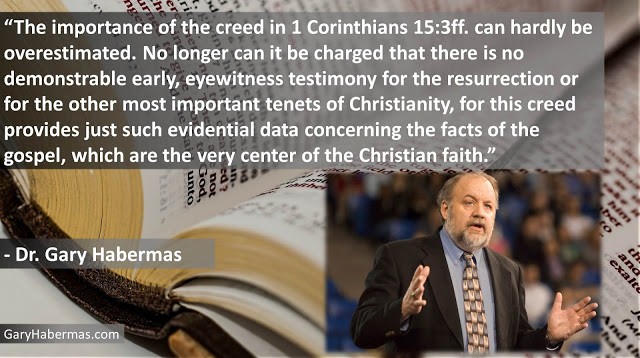
Habermas also spends a considerable portion of the chapter evaluating the creed in 1 Corinthians 15. This creed is often considered to be one of the most important because it ties the beliefs of the earliest Christians to eyewitness testimony of those who walked with Jesus and had experiences of the risen Jesus. Because of this eyewitness connection, this early creed not only opens the door to historical testing of the events surrounding Jesus and the claims that He and the early Christians made, but it compels such testing. Thorough testing has been performed on at least twelve unique claims of the historical Jesus regarding the most important event: the Resurrection. That testing has revealed the facticity of those twelve claims; however, Habermas believes that only four of them are sufficient to establish the historicity of the Resurrection event. He spends a small portion of the chapter explaining this “minimal facts” apologetic, but for those who wish to go deeper into this specific historical event, check out Habermas’ book “The Risen Jesus and Future Hope” along with his many other writings at GaryHabermas.com.
Chapter 8: Archaeological Sources
Archaeology has provided evidence of the historical context surrounding the life of Jesus, has provided corroboration for several of the historical claims within the gospels, and may even provide compelling evidence for the Resurrection of Jesus. One of the most contested (non-miraculous) events recorded in the gospels is that of the census described by Luke. Habermas explains how archaeology has not only helped answer some of the questions this event but has also provided calibration tools for identifying the year of Jesus’ death. Archaeology has also yielded much information about the ancient practice of crucifixion that corroborates reports in the gospels. For instance, the skeleton of “Yohanan,” a crucifixion victim, was discovered in 1968. This particular discovery has provided information regarding the condition of the victim as they were nailed to a cross, the excruciating way a victim was nailed to a cross, many painful events that happened to the body while on the cross, and the ultimate cause of death. This data has given medical and historical researchers ways to test the claims surrounding Jesus’ mode of execution and have found them to be accurate.
Probably the most controversial archaeological find surrounding the historical Jesus is the Shroud of Turin. Tradition has it that this linen is the actual burial cloth of Jesus. Many visual commonalities provide a powerful case for this claim, including the blood stains that are common to victims of a crucifixion and other stains that are unique to Jesus’ crucifixion. The absence of evidence of bodily decomposition suggests that the victim was not in the cloth for long. And some Christians believe that the “scorch” marks that are inconsistent with foreign materials provide evidence of a resurrection. However, carbon dating has seriously challenged the identification of the Shroud with the first century AD, but even these studies have come under scrutiny due to lack of peer review and blind testing, possible contamination, and inconsistency with other pieces of evidence. Habermas explains that even if the Shroud is not that of Jesus, it could still be that of a victim who suffered a remarkably similar fate, thus still providing powerful evidence of the practice of crucifixion. He also explains that if the Shroud is, in fact, the burial cloth of Jesus, archaeologists have powerful tangible evidence not only Jesus’ mode of death but the historical event of His Resurrection as well.
Chapter 9: Ancient Non-Christian Sources
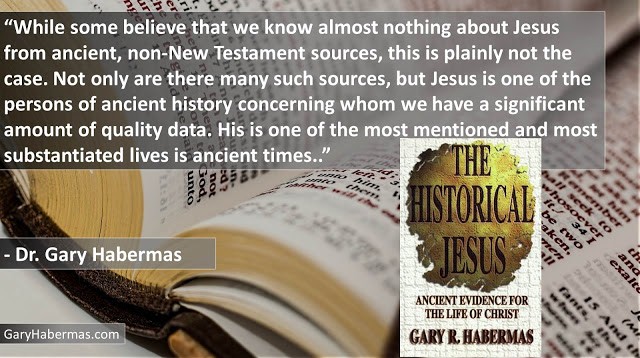
Of all the figures in ancient history, Jesus is the most mentioned. The mentions not only come in ancient Christian writings but also in those of non-Christian sources. Habermas takes the reader through the different ancient historians’ and other writers’ material that mentions Jesus. Tacitus, Suetonius, and Pliny the Younger are just a few. As Habermas describes these writings (and several others) and how they have been preserved in antiquity, he quotes directly from them, highlighting not just the mention of Jesus but also all the information about Jesus’ life, His teachings, and His death that are recorded.
He also discusses the most controversial of them all: Josephus. He quotes the disputed and undisputed texts along with a proposed “original version” of the disputed text that would be more consistent with Josephus’ worldview as a Jewish historian. Habermas takes the undisputed portions along with the proposal to demonstrate several facts recorded by Josephus regarding Jesus. Habermas even cautiously uses Gnostic writings to help support certain claims about the historical Jesus that are found in other non-Christian sources. Habermas concludes from all these ancient non-Christian sources that even if Christian sources (discussed in the next chapter) are disregarded, it is established that the Jesus of the Bible existed in history and many true things can be known about Him.
Chapter 10: Ancient Christian Sources (Non-New Testament)
Of course, the ancient writings of the historical Jesus are not limited to non-Christian sources. Many Christian sources outside the New Testament were also composed and circulated. These authors included Clement of Rome, Ignatious, Justin Martyr, among others. These early sources give historians an understanding of early Christian doctrine and what the early Church believed about the historical Jesus. Habermas discusses each author that builds a total description of Jesus’ life, teachings, death, and resurrection that echoes the claims of the New Testament. These records indicate that the early Church already believed what was written in the New Testament; they did not wait to see who the “winners” were regarding orthodoxy.
Many people believe that the fact that these writers were Christian made them unjustifiably biased in their beliefs and that makes them unreliable sources. However, because much of their beliefs about the historical Jesus were based upon the material in the New Testament (only one generation removed, in some cases), which was shown to be trustworthy in the previous chapters, these early Christian authors were certainly justified in their beliefs. Because they were justified in believing what they recorded, their records stand firmly as a testimony of the beliefs of the earliest Christians.
Chapter 11: Summary and Assessment
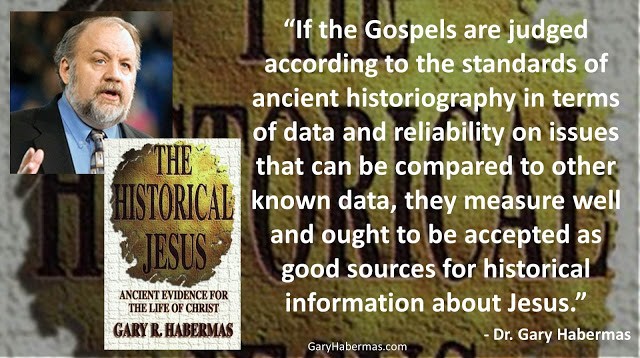
Having concluded a survey of the historical evidence that could speak to the historical Jesus and various challenges to his existence, Habermas succinctly summarizes what can be known from the historical evidence alone. He lists out 129 things that can be known about the historical Jesus relating to His life, work, death, and resurrection. These facts are gathered from 45 different ancient Christian and non-Christian sources. The sheer number of ancient sources that give pertinent information about the life of Jesus is more than enough to conclude by the standards of historiography that the historical Jesus is the same Jesus that is recorded in the Bible. If the Jesus of the Bible is to be separated from the Jesus of history, the entire enterprise of ancient historical studies is called into question.
Reviewer’s Thoughts
The Historical Jesus: Ancient Evidence for the Life of Jesus was an exciting read! I came to the book originally with many questions about what could be truly known about the historical Jesus, but as I read through it, my questions were answered. As my original questions were answered, more questions formulated in my mind that Habermas seemed to almost anticipate. It has been over a decade since my initial read through the book when these questions were answered. It was refreshing and encouraging to read through it again because over the last decade, some curiosities have come up that I had forgotten were addressed in the book. When these come up in conversation, I am now more prepared to “give a reason for the hope that I have” (1 Peter 3:15).
When I first read the book in my early 20s, it was very understandable at that time (it answered my basic questions), yet it is comprehensive and deep enough to have addressed the more nuanced challenges that I have been exposed to over the years. Habermas really made the historical facts come to life for me and give me a more connected feeling to the actual events of history. This not only excited me but gave me a profound sense of satisfaction that my belief is justified true belief, justified by the evidence of history.
If you are having serious doubts about the historical Jesus, you definitely need to get this book. And if your church has a library, it needs to be on the shelf for those who have these deep questions and are honestly looking for answers. For any Christian who regularly discusses the truth of Christianity (that should be all of us), you also need this book. It will give you a resource to always be prepared to answer both the basic and the deeper challenges of those who are skeptical of the historical foundations of our worldview. Nearly two thousand years ago, the Apostle John proclaimed, “The Word (Jesus) became flesh and made his dwelling among us. We have seen his glory, the glory of the one and only Son, who came from the Father, full of grace and truth,” and history bears a fantastic witness to this truth.
Original Blog Source: http://bit.ly/2yMrnWJ

Uncovering Jerusalem with Archaeologist Eli Shukron
PodcastPodcast: Play in new window
Subscribe: Apple Podcasts | Spotify | Amazon Music | Android | iHeartRadio | Email | TuneIn | RSS
Frank sits down in his studio with the famous archaeologist Eli Shukron. They talk about Eli’s story and his amazing archaeological discoveries. These discoveries not only authenticate the historical accuracy of the various biblical accounts related to these artifacts and locations but also illuminate the stories we find in the Scriptures. Don’t miss this insightful and fun listen. Enjoy!
Does The Bible Promote Slavery?
Atheism, Theology and Christian ApologeticsBy Ryan Leasure
“Consult the Bible, and you will discover that the creator of the universe clearly expects us to keep slaves.” 1 This provocative statement by atheist Sam Harris is meant to cast shade on the God of the Bible. After all, if civilized humanity overwhelmingly condemns slavery, why should we worship a God who thinks it’s acceptable?
The question of slavery and the Bible is a bit more complicated than Sam Harris makes it out to be. Unfortunately, Harris and others aren’t interested in providing context or nuance in their books. Instead, they “quote mine” verses and then spin them in such a way to make the slavery laws look as ridiculous and backwoodsy as possible. Furthermore, they assume that biblical slavery and pre-Civil War slavery are essentially the same institutions.
In the remaining space, I’ll attempt to provide some context and nuance for slavery in the Bible. I can’t address everything — which would require much more than a blog post — but I hope to provide some clarity on the issue by looking at eight key points.
1. Slavery Was Pervasive Throughout The Entire Ancient World
It’s estimated that of all the people in the first century Roman Empire, 85 to 90 percent were slaves.2 We also know from the Code of Hammurabi (1700 BC) and another ancient Near Eastern law codes that slavery was pervasive in earlier times.
Not only was slavery the norm, but it was also corrupt and extremely harsh. We see this in how the Egyptians treated the Israelite slaves — forced hard labor, whippings, and killing young children. As you’ll see below, Israel’s slavery laws were a vast improvement on this horrendous institution.
2. God Outlawed The Slave Trade
Exodus 21:16 states, “He who kidnaps a man, whether he sells him or he is found in his possession, shall surely be put to death.” Unlike other ancient cultures and the antebellum South, God forbade Israel from kidnapping individuals and forcing them into slavery. God was so serious about this offense that this act was punishable by death. Already, we can see that Biblical slavery was significantly different from the slavery we think of today.
3. Slavery Was More Like Indentured Servitude
In colonial America times, many foreigners couldn’t afford the fare to cross the Atlantic. So they’d contract themselves — agree to work for a set period of time — until they paid back their debt to the one who paid for their passage.
In the same way, ancient Israelites often times found themselves in financial trouble. In order to get themselves out of debt, they’d agree to become someone’s servant — or slave — until they could get themselves back on their feet.
Leviticus 25:39 describes this when it says, “If your brother becomes poor beside you and sells himself to you, you shall not make him serve as a slave: he shall be with you as a hired worker and as a sojourner.” Furthermore, verse 47 even reports that Israelites became slaves of foreigners living in the land. It states, “If a stranger or sojourner with you becomes rich, and your brother beside him becomes poor and sells himself to the stranger or sojourner…”
Unlike antebellum slavery where the owner had complete ownership over the slave, biblical slavery was more equivalent to an employer/employee relationship. This setup provided financial security for people who otherwise wouldn’t be able to survive on their own. By agreeing to become someone’s slave, they received regular food, shelter, and clothing.
And to give you an idea of how different this institution was from slavery in the South, Israelites often times sold themselves back into slavery after they had gained their freedom because it provided a better life for them.3
4. Masters Couldn’t Harm Their Slaves
Horror stories of slave abuse and mistreatment abound from the antebellum South. God, however, established laws that forbade owners from physically harming their slaves. In Exodus 21:26-27, we read that if a master injured his slave, that slave was to go free. Additionally, if the owner killed his slave, he received the death penalty (Ex 21:20).
Israel’s anti-harm law was a vast improvement on slavery throughout the rest of the world. Jewish scholar Nahum Sarna reports, “This law — the protection of slaves from maltreatment by their masters — is found nowhere else in the entire existing corpus of ancient Near Eastern legislation.”4 The Hammurabi Code, by contrast, permitted masters to cut off their disobedient slave’s ears.5
5. Slavery Was Only For Seven Years
“If any of your people — Hebrew men or women — sell themselves to you and serve you six years, in the seventh you must let them go free (Deut. 15:12). That is to say, Israelite slavery was never intended to be a life-long ordeal. At most, God allowed for them to sign a seven-year contract to work for their master while they paid off their debts, but that was to be the maximum.
Again, this doesn’t sound anything like slavery in the South where it was “once a slave always a slave.” As I mentioned earlier, many times slaves would voluntarily go back into slavery after they gained their freedom because it provided a better lifestyle for them. The key, however, was that it was voluntary.
6. Runaway Slaves Received Safe Haven
Unlike slavery in the South which legally required runaway slaves to be returned to their masters, God ordered the Israelites to give runaways safe haven. Deuteronomy 23:15-16 orders, “If a slave has taken refuge with you, do not hand them over to their master. Let them live among you wherever they like and in whatever town they choose. Do not oppress them.”
Not only is this different from the South, it’s a huge improvement upon other the Hammurabi Code which demanded the death penalty for those helping runaway slaves.6
7. Slavery Is Not God’s Ideal
Contrary to what Sam Harris thinks, God doesn’t want us to have slaves. Just because the Bible describes slavery and regulates the already existing institution doesn’t mean God thinks it’s ideal. Consider Jesus’ words in Matthew 19:8 with respect to divorce. He says, “Moses permitted you to divorce your wives because your hearts were hard.” In other words, God allowed for divorce under certain circumstances and even gave laws related to its practice, but that doesn’t mean God was happy with it. After all, Jesus previously said, “Therefore what God has joined together, let no one separate” (Mt 19:6).
In the same way, just because God established laws regulating the already existing institution of slavery doesn’t mean he approved of it. Rather, it seems that God gave laws that sought to mitigate slavery and undermine it altogether.
For example, because poverty was the main cause of slavery, God made laws that benefited the poor. He decreed that landowners leave the crops on the edges of their fields for the needy (Lev 19:9-20), ordered the wealthy to never charge interest on loans to the poor (Ex 22:25), and permitted the poor to sacrifice less expensive animals (Lev 5:7). Additionally, God ordered that lenders cancel all debts every seven years (Deut 15:1-3).
8. The Full Personhood Of Slaves
Israelites were to treat slaves as people, not property. Job refers to this when he declares, “If I have denied justice to any of my servants, whether male or female… what will I do when God confronts me?… Did not he who made me in the womb make them? Did not the same one form us both within our mothers?” (Job 31:13-15)
Job understood full well that his slaves were God’s image bearers as he was (Gen 1:26-27). Furthermore, slaves received a day of rest on the Sabbath (Deut 5:14) and were participants in Israel’s religious life (Deut 12:12). Paul even writes in the New Testament that both slave and free are one in Christ Jesus (Gal 3:28). “We have in the Bible,” Muhammad Dandamayev observes, “the first appeals in world literature to treat slaves as human beings for their own sake and not just in the interests of their masters.”7
Slavery And The Bible
I hope it’s clear by now that God isn’t pro-slavery. The slavery in the Bible — though not ideal — is a far cry from the slavery that comes to our mind when we think of the word. Those who have used the Bible to justify slavery in the past have, therefore, distorted Scripture’s teachings.
It’s interesting to note that modern abolitionists and civil rights leaders like William Wilberforce and Martin Luther King Jr. have led the charge against slavery and racial injustice by appealing to Scripture’s teaching that every person bears God’s image. Rather than promoting slavery, it seems the Bible was the foundation for abolishing it.
Ryan Leasure holds an M.A. from Furman University and an M.Div. from the Southern Baptist Theological Seminary. He currently serves as a pastor at Grace Bible Church in Moore, SC.
Original Blog Source: http://bit.ly/2Jzf9oc
Book Review: The Historical Jesus: Ancient Evidence for the Life of Christ
4. Is the NT True?, Jesus Christ, Theology and Christian ApologeticsBy Luke Nix
Introduction
In my late teens and early 20s, I was wrestling with many questions about what I believed. I had several challenges to my Christian faith that ranged from the philosophical to the scientific to the historical. One of the challenges that would not go away, due to some college professors and some friends, was the challenge to the historical Jesus and the gospels. Of all the worldviews one can hold, Christianity can be easily falsified by simply demonstrating that a single person did not actually exist in history: Jesus of Nazareth. Did he really exist in history? If so, what can we really know about him? Does that match was the Bible claims? Was there any evidence that Jesus actually came back to life after being dead? How do we know that the right books were included in the New Testament? Why not the books are known as the “Gnostic Gospels” too?
When I was looking for some answers to these questions, I came across the work of Dr. Gary Habermas. The first book of his that I read was the one I present to you today: The Historical Jesus: Ancient Evidence for the Life of Christ. Reading through this book provided the answers to more than just the questions that I was asking but also to questions that I did not know would eventually come too. This was well over a decade ago, and it is time for me to revisit the book and publish a proper review of this most important work. The review will follow my usual chapter-by-chapter summary style and conclude with my thoughts and specific recommendations.
Part 1: Contemporary Challenges to the Historicity of Jesus
Chapter 1: The Modern Quest for the Historical Jesus
In the introductory chapter, Habermas introduces the reader to the historical quest to discover the historical Jesus. He goes over some of the history of the studies, what different scholars proposed at different times regarding Jesus’ historicity and how to handle the different miracle-claims of the New Testament. He describes the popularity of the liberal approaches of the fictitious lives of Jesus and the idea that the gospel accounts were purely mythologies in the eighteenth and nineteenth centuries and the deemphasizing of the historical Jesus in the early twentieth century. He brings the reader “up to speed” by describing the re-emphasis on the necessity of the historical Jesus near the mid-1900s and onto today. While most scholars today recognize that Jesus was a historical figure, there is a small group that still does not. Habermas reminds the reader that the popularity of a particular position does not provide legitimate evidence, in or of itself, for the historicity of Jesus, so this book will examine the evidence that has convinced the majority of scholars that the historical Jesus existed, and it will make the case that the historical Jesus is the Jesus of Christianity.
Chapter 2: Did Jesus Ever Live?
Even though most scholars reject the idea that Jesus never lived, the idea that he did should not be taken for granted in an investigation about the historical Jesus. Habermas addresses the two most common theories to explain the records of the New Testament without Jesus living in history. The first view addressed is that of G.A. Wells, while the second view is more modest and is promoted by Michael Martin.
G.A. Wells dates the gospels in the late first century to early second, and Paul’s letters earlier. He believes that the gospels were too late to contain accurate historical information, so he leans on Paul for historical information of Jesus. He holds that Paul’s writings include very little information about the historical Jesus and concludes that Paul neither knew or cared about the historical Jesus. Wells believes that, at best, Jesus was a much earlier historical figure that legend grew around, and at worst, Jesus was based upon pagan mythologies. Of the many issues with Wells’ view, Habermas address five of them. He provides textual and historical evidence that Wells is incorrect on issues of Paul’s lack of record of and/or concern with historical information about Jesus, the idea that Jesus may have lived prior to the first century AD, Jesus’ connection to pagan mythologies, the late dating of the gospels, and his overall historical methodology.
Recognizing the failure of the more extreme views of G.A. Wells, Michael Martin softens some of the positions to make them more compatible with the textual and historical evidence. For instance, Martin grants that some historical data can be gleaned from the Pauline epistles, but he does not allow for much. He does retain the late dating of the gospels, and he adds that extrabiblical sources either do not contain historical data of the historical Jesus or that the information is inaccurate. Habermas addresses each of these claims briefly as they were either addressed in the section on G.A. Wells or will be covered in greater detail later in the book.
Chapter 3: Limitations on the Historical Jesus
Even though the extreme view that Jesus never existed in history is widely rejected among scholars, many do still believe that what can be known about the Jesus of history is greatly limited. This view is born out in a few different ways. Habermas describes these various attempts to limit historical investigation of the Jesus of history and demonstrates how each of them fails, thus leaving wide open a historical investigation of the life of Jesus as a person that actually existed in the past.
The first view that Habermas addresses is the idea that the gospels record what early Christians believed about Jesus, not necessarily what actually happened. This view removes the gospels from the historical investigation because they would not be claiming to record what actually happened but just what a group of people believed. Habermas explains that this view fails on four accounts. The first is that it removes all historical grounding for the origin of Christianity (from where did the recorded beliefs come?). The second is that without even attempting to investigate the claims of the gospels as historical claims, it rejects them as mythological (how did they come to the conclusion that the gospels recorded beliefs and not events?). The third is that the view assumes that, unique among all historical authors, the early Christians’ records were to not be trusted to be true because they believed their records to be true (how does belief of an event necessitate an incorrect recording of that event?). And fourth, the view holds that due to the few copies of the gospels, we cannot trust that we have what the early Christians originally wrote (given the mountain of copies compared to other ancient writings, how then are we to trust that we know what other ancient writers originally wrote?).
Another optional view is that while the Gospels do record historical events, the only historical events that are correct are ones that are not miraculous. Habermas addresses four ways in which this view fails as well. The first here is that it presumes to reject the miracle claims without even investigating whether they happened or not. Such a priori assertions exhibit neither good scientific investigation nor good historical investigation. The second problem is that the view does not even allow for the investigation of miraculous events because they are miraculous. However, if an event takes place in reality, that it happened can be investigated independently of its source or cause. Third, when the second problem is removed, investigation of Jesus’ being seen after his death and burial is well established, and no naturalistic explanation can account for the event. If no naturalistic explanation can account for an event that has been historically investigated and confirmed happened, then only a non-natural or supernatural explanation (miracle) is possible; thus miraculous events were recorded in the gospels. Fourth, if it can be established that Jesus did rise from the dead (to be investigated later in the book), then his metaphysical (and theological) teachings and actions must be considered relevant to the reader.
Chapter 4: Reinterpretations of the Historical Jesus
Many scholars grant the failures of the views critiqued in the previous chapter, yet they still wish to reject the Christian worldview. So many have attempted to reinterpret the historically established events of Jesus’ life. Habermas investigates these attempts in this fourth chapter.
The majority of these proposed alternate lives of Jesus depend upon the idea that Jesus did not die by crucifixion as recorded in the gospels. Many offers that Jesus merely appeared to be dead and after being removed from the cross and placed in the tomb, he recovered enough to escape and went on to live a secret life. While there are numerous versions of this “swoon” theory, all of them fail on three major accounts. The first is that Roman crucifixion was extremely brutal and would have left Jesus in such horrific condition that he could not escape from a sealed tomb, much less, convince anyone he had “overcome” death. Second, crucifixion caused death by asphyxiation due to the inability to breathe while hanging from the cross when the muscles are relaxed. This means that it was not possible to appear dead on the cross without actually being dead. Third, the Roman executioners ensured Jesus’ death by thrusting the spear into his side and puncturing his heart. Even if faking death on the cross was possible, this final blow would have killed Jesus immediately. Because of these reasons, the swoon theories have all been rejected by scholars.
Even though the failure of this foundation of the alternate lives of Jesus theories is enough to reject those theories, they fail on other accounts as well. These theories, of course, come in many different versions. Some hold that the Gospels and Paul recorded incorrect information and the real events of Jesus post-crucifixion life is unknown, and others hold that Jesus traveled to other places in the world. All of the theories fail for multiple reasons. They contradict already established historical records (the Gospels). They appear late. They have no historical grounds. And the arguments require multiple fallacies to come to their conclusions. Along with those commonly held failures, Habermas also discusses several additional failures that are unique to the various theories. He ends by stating that, because of the incredible list of reasons that these theories fail, they are not taken seriously by historians today, but they needed to be addressed due to their continual recurrence within popular culture.
Chapter 5: The New Gnosticism
One of the more popular challenges in historical Jesus studies comes from the discovery of several texts dated from the mid-to-late second century to the early third century. These are the Gnostic writings, with The Gospel of Thomas probably being the most familiar to the public. Some scholars believe that these text raise a power challenge against orthodox teachings about Jesus due to their traditionally early dating. The Gospel of Thomas is dated as early as AD 140 (all the others are date much later). Supporters of the Gnostic view attempt to date the tradition that is contained within the Gospel of Thomas in the first century, and they contend that due to the early sourcing, it should at least be held on the same authoritative level as the Gospels. Now, the significance of this dating is that, if the dating is correct, then it is possible that there were multiple expressions of Christianity at the time. The competing claim is that the New Testament that we have today is incomplete and that these Gnostic writings are the “lost books” of the Bible that tell a very different story about the historical Jesus. The Gospel of Thomas lacks mention of the crucifixion and Resurrection of Jesus, so the Gnostics claim that these events did not take place (what makes the view incompatible with orthodoxy). They claim that what is known as orthodoxy today merely won a “cultural war” among the different views and is not a reflection of actual events in history.
Having presented this strong challenge of the Gnostic view against the orthodox view of the historical Jesus, Habermas turns to a four-pronged critique of the view. First, even if The Gospel of Thomas is accurately dated early at AD 140 and its tradition is still earlier, the gospels have all been dated a minimum of half a century earlier than even that, which places their source material closer to the events they record than the source material of the Gospel of Thomas. This means that the Gnostic gospels and the Gospels were not co-circulating at the earliest times; the Gospels were present at least fifty years before the Gnostics showed up and (as will be seen later) within only a few years of Jesus’ death. Secondly, Habermas presents four standards of ancient historiography that establish the accuracy of the Gospels’ historical records. This serves to hold authority over later writings that present contradictory stories (the Gnostic writings, in this case).
Thirdly, based upon the testimony present in various books of the New Testament and in the writings of the apostolic fathers, we can see that the canon of Scripture was well established prior to the dates of many of the Gnostic writings. This means that Christians had recognized the earliest writings as accurate and authoritative before the greater body of Gnostic writings (and their contradictory content) were even present. Fourthly, even though the death and Resurrection of Jesus are not mentioned in the Gospel of Thomas, that is not evidence that it did not happen, especially when we have four earlier records that record that they did happen. Interestingly enough, proponents of the Gnostic view hold that the proposed document “Quelle” or “Q”, that is the source for the similarities among the synoptic Gospels, did not contain information of Jesus’ death and crucifixion, but this is speculation as both the existence and content of the document are hotly debated. Even if they were right about the content’s absence, its absence still would not argue against its actually taking place. For these four reasons, scholars generally do not consider Gnosticism a viable alternative view for the historical Jesus; Gnosticism or elements of it is vastly more popular among non-scholars.
Chapter 6: The Jesus Seminar and the Historical Jesus
Another way to dismiss the historical Jesus (as recorded in the gospels) is put forth by people in the Jesus Seminar. The Jesus Seminar tends to see their position as a compromise between those who reject all historicity of the records in the gospels and those who take every word of it historically. Their position begins philosophically with, not just the rejection of the supernatural, but the very incompatibility of the supernatural with reality. Using this filter, they reject all records in the gospels that include any kind of non-natural event, including all experiences with Jesus after his crucifixion; however, they do tend to believe that the events that required no such non-natural mechanism are historically accurate.
Habermas explains that the Jesus Seminar does not really offer as much of a “compromise” position as they like to think. The primary reason for this is before any investigation on their part has begun, they have already ruled out even the possibility of many of the historical events taking place. They have already rejected the only explanation of the events, so they are unable to perform an unbiased investigation of the historical data. With this critique in place, some Seminar scholars have pulled back on some of the extreme conclusions and have opted for agnosticism on the historicity of different non-natural events. These more moderate Seminar scholars offer several naturalistic explanations for the records of the non-natural events; however, Habermas shows how they fail to account for the historical data and/or commit various fallacies. He also demonstrates how their hypotheses are often contradicted by the historical evidence. Ultimately, he concludes that the various positions offered by Jesus Seminar scholars are not historically viable and should be rejected.
Part 2: Historical Data for the Life of Jesus
Chapter 7: Primary Sources: Creeds and Facts
Having surveyed and dismantled the many different attempts to separate the historical Jesus from the Jesus of the gospels, Habermas now turns to an investigation of what can be known about the historical Jesus and early Christian theology apart from the New Testament gospels. He begins by evaluating the creeds, hymns, and traditions that were closest to the death of Jesus. These sources originated prior to the formation of the New Testament and are recorded within it. Several, among many others, can be found in the following passages of the New Testament:
Taking the reader through the many early sources, Habermas demonstrates over forty different characteristics of Jesus Christ that were both believed by the early Christians and passed down through the centuries to today. In this exercise, Habermas demonstrates that the Jesus of Christianity is indistinguishable from the Jesus believed by the earliest Christians. These orthodox beliefs were not the product of any single or series of events that took place over time; the beliefs appeared early and suddenly.
Habermas also spends a considerable portion of the chapter evaluating the creed in 1 Corinthians 15. This creed is often considered to be one of the most important because it ties the beliefs of the earliest Christians to eyewitness testimony of those who walked with Jesus and had experiences of the risen Jesus. Because of this eyewitness connection, this early creed not only opens the door to historical testing of the events surrounding Jesus and the claims that He and the early Christians made, but it compels such testing. Thorough testing has been performed on at least twelve unique claims of the historical Jesus regarding the most important event: the Resurrection. That testing has revealed the facticity of those twelve claims; however, Habermas believes that only four of them are sufficient to establish the historicity of the Resurrection event. He spends a small portion of the chapter explaining this “minimal facts” apologetic, but for those who wish to go deeper into this specific historical event, check out Habermas’ book “The Risen Jesus and Future Hope” along with his many other writings at GaryHabermas.com.
Chapter 8: Archaeological Sources
Archaeology has provided evidence of the historical context surrounding the life of Jesus, has provided corroboration for several of the historical claims within the gospels, and may even provide compelling evidence for the Resurrection of Jesus. One of the most contested (non-miraculous) events recorded in the gospels is that of the census described by Luke. Habermas explains how archaeology has not only helped answer some of the questions this event but has also provided calibration tools for identifying the year of Jesus’ death. Archaeology has also yielded much information about the ancient practice of crucifixion that corroborates reports in the gospels. For instance, the skeleton of “Yohanan,” a crucifixion victim, was discovered in 1968. This particular discovery has provided information regarding the condition of the victim as they were nailed to a cross, the excruciating way a victim was nailed to a cross, many painful events that happened to the body while on the cross, and the ultimate cause of death. This data has given medical and historical researchers ways to test the claims surrounding Jesus’ mode of execution and have found them to be accurate.
Probably the most controversial archaeological find surrounding the historical Jesus is the Shroud of Turin. Tradition has it that this linen is the actual burial cloth of Jesus. Many visual commonalities provide a powerful case for this claim, including the blood stains that are common to victims of a crucifixion and other stains that are unique to Jesus’ crucifixion. The absence of evidence of bodily decomposition suggests that the victim was not in the cloth for long. And some Christians believe that the “scorch” marks that are inconsistent with foreign materials provide evidence of a resurrection. However, carbon dating has seriously challenged the identification of the Shroud with the first century AD, but even these studies have come under scrutiny due to lack of peer review and blind testing, possible contamination, and inconsistency with other pieces of evidence. Habermas explains that even if the Shroud is not that of Jesus, it could still be that of a victim who suffered a remarkably similar fate, thus still providing powerful evidence of the practice of crucifixion. He also explains that if the Shroud is, in fact, the burial cloth of Jesus, archaeologists have powerful tangible evidence not only Jesus’ mode of death but the historical event of His Resurrection as well.
Chapter 9: Ancient Non-Christian Sources
Of all the figures in ancient history, Jesus is the most mentioned. The mentions not only come in ancient Christian writings but also in those of non-Christian sources. Habermas takes the reader through the different ancient historians’ and other writers’ material that mentions Jesus. Tacitus, Suetonius, and Pliny the Younger are just a few. As Habermas describes these writings (and several others) and how they have been preserved in antiquity, he quotes directly from them, highlighting not just the mention of Jesus but also all the information about Jesus’ life, His teachings, and His death that are recorded.
He also discusses the most controversial of them all: Josephus. He quotes the disputed and undisputed texts along with a proposed “original version” of the disputed text that would be more consistent with Josephus’ worldview as a Jewish historian. Habermas takes the undisputed portions along with the proposal to demonstrate several facts recorded by Josephus regarding Jesus. Habermas even cautiously uses Gnostic writings to help support certain claims about the historical Jesus that are found in other non-Christian sources. Habermas concludes from all these ancient non-Christian sources that even if Christian sources (discussed in the next chapter) are disregarded, it is established that the Jesus of the Bible existed in history and many true things can be known about Him.
Chapter 10: Ancient Christian Sources (Non-New Testament)
Of course, the ancient writings of the historical Jesus are not limited to non-Christian sources. Many Christian sources outside the New Testament were also composed and circulated. These authors included Clement of Rome, Ignatious, Justin Martyr, among others. These early sources give historians an understanding of early Christian doctrine and what the early Church believed about the historical Jesus. Habermas discusses each author that builds a total description of Jesus’ life, teachings, death, and resurrection that echoes the claims of the New Testament. These records indicate that the early Church already believed what was written in the New Testament; they did not wait to see who the “winners” were regarding orthodoxy.
Many people believe that the fact that these writers were Christian made them unjustifiably biased in their beliefs and that makes them unreliable sources. However, because much of their beliefs about the historical Jesus were based upon the material in the New Testament (only one generation removed, in some cases), which was shown to be trustworthy in the previous chapters, these early Christian authors were certainly justified in their beliefs. Because they were justified in believing what they recorded, their records stand firmly as a testimony of the beliefs of the earliest Christians.
Chapter 11: Summary and Assessment
Having concluded a survey of the historical evidence that could speak to the historical Jesus and various challenges to his existence, Habermas succinctly summarizes what can be known from the historical evidence alone. He lists out 129 things that can be known about the historical Jesus relating to His life, work, death, and resurrection. These facts are gathered from 45 different ancient Christian and non-Christian sources. The sheer number of ancient sources that give pertinent information about the life of Jesus is more than enough to conclude by the standards of historiography that the historical Jesus is the same Jesus that is recorded in the Bible. If the Jesus of the Bible is to be separated from the Jesus of history, the entire enterprise of ancient historical studies is called into question.
Reviewer’s Thoughts
The Historical Jesus: Ancient Evidence for the Life of Jesus was an exciting read! I came to the book originally with many questions about what could be truly known about the historical Jesus, but as I read through it, my questions were answered. As my original questions were answered, more questions formulated in my mind that Habermas seemed to almost anticipate. It has been over a decade since my initial read through the book when these questions were answered. It was refreshing and encouraging to read through it again because over the last decade, some curiosities have come up that I had forgotten were addressed in the book. When these come up in conversation, I am now more prepared to “give a reason for the hope that I have” (1 Peter 3:15).
When I first read the book in my early 20s, it was very understandable at that time (it answered my basic questions), yet it is comprehensive and deep enough to have addressed the more nuanced challenges that I have been exposed to over the years. Habermas really made the historical facts come to life for me and give me a more connected feeling to the actual events of history. This not only excited me but gave me a profound sense of satisfaction that my belief is justified true belief, justified by the evidence of history.
If you are having serious doubts about the historical Jesus, you definitely need to get this book. And if your church has a library, it needs to be on the shelf for those who have these deep questions and are honestly looking for answers. For any Christian who regularly discusses the truth of Christianity (that should be all of us), you also need this book. It will give you a resource to always be prepared to answer both the basic and the deeper challenges of those who are skeptical of the historical foundations of our worldview. Nearly two thousand years ago, the Apostle John proclaimed, “The Word (Jesus) became flesh and made his dwelling among us. We have seen his glory, the glory of the one and only Son, who came from the Father, full of grace and truth,” and history bears a fantastic witness to this truth.
Original Blog Source: http://bit.ly/2yMrnWJ
El cristianismo es verdadero, aunque algo de la Biblia no lo sea
EspañolBy Frank Turek
Is Christianity true just because the infallible Bible says it is? No. Christianity would still be true even if the Bible had never been written.
Let me explain.
It is a common belief prevailing among some Christians today that what we know about Christianity is dependent on an infallible Bible. This is true, but we know that there are several non-Christian writers from the ancient world who make brief references to first-century events and the beliefs of early Christians, corroborating what we read in the New Testament. We also know that there are a growing number of archaeological finds that support characters and events in Christian history.
But some of us mistakenly think that Christian beliefs cannot be sustained unless the Bible is without error. That would mean that the Christian faith is a house of cards ready to collapse if a verse or reference in the New Testament is found to be false.
While I think these are good reasons to believe in an inerrant Bible , inerrancy is an unnecessarily high standard by which the central event in Christianity is set: the resurrection of Jesus of Nazareth. Christianity is dependent on that historical event. If Christ rose from the dead, then the game is over—Christianity is true. On the other hand, if He did not rise from the dead, then, as a first-century eyewitness by the name of Paul admitted, Christianity is false.
But you don’t need infallible sources to establish that the Resurrection really happened, or any other historical event of that significance. For example, if I find an error in the stat line of a football game, should I assume that every game, story, and stat line in the newspaper was a complete fabrication? So why do some people do that with the New Testament? Why do they assume that unless every word is true, then most of it is false?
They assume this because they are confusing the fact of the Resurrection with reports of the Resurrection. Conflicting reports of a historical event are evidence that the event actually occurred, not the other way around. In other words, to return to our sports analogy, the only reason there is an error in the stat line is because the game was played and someone attempted to report on that game. Neither the stat line nor the error would exist unless the game was actually played. After all, who reports on a game that did not actually take place?
The same is true of the documents that comprise the New Testament and the Resurrection. Even if one were to find an error or disagreement among the multiple accounts of the Resurrection story, the fact that there are multiple eyewitness testimonies shows that something dramatic really did happen in history, especially since the people who wrote it had everything to lose by proclaiming that Jesus rose from the dead.
That is, all of the New Testament reporters (except Luke) were observant Jews who would pay dearly for proclaiming the Resurrection. Why would Jewish believers in Yahweh, the people who thought they were “God’s chosen people” for two thousand years, make up a Resurrection story that would get them excommunicated from the “chosen people” club, and then beaten, tortured, and murdered?
Answer: They wouldn’t. They saw something dramatic that they didn’t expect. They then proclaimed it, changed their lives because of it, and later wrote about it, despite the fact that doing any of that would kill them.
So Christianity is not true just because the Bible says it is true. Christianity is true because an event occurred. It is true that we would not know much about Christianity if the reports of the Resurrection had never been written, but the Resurrection preceded the reports of the Resurrection.
When my friend Andy Stanley asks, “Do you realize there were thousands of Christians before a line of the New Testament was ever written?” Paul was a Christian before he wrote a word of the New Testament. So was Matthew, John, James, Peter, etc. Why? Because they had witnessed the resurrected Jesus.
Contrary to what some skeptics may think, the New Testament writers did not create the Resurrection—the Resurrection created the New Testament writers. In other words, the New Testament documents did not give us the Resurrection. The Resurrection gave us the New Testament documents! There would be no New Testament unless the Resurrection had occurred. The Jewish witnesses would never have made that up.
This is why the core beliefs of Christianity—what C.S. Lewis called Mere Christianity— are true, even if the reports were flawed. Getting details wrong in reporting the Resurrection doesn’t change the larger point that the Resurrection actually happened. In fact, if all the records agreed on every detail, we would rightly assume that they colluded. Actual eyewitnesses never describe the same historical event in the same way.
For example, survivors of the Titanic disagreed on how the ship sank. Some say it broke in two, then sank. Others say the ship sank as a whole. Does that disagreement mean we shouldn’t believe the Titanic sank? Of course not. They all agree on that! They were just looking at the same historical event from different points of view.
Likewise, all the writers agree that the Resurrection occurred, but they differ on minor details (Who arrived at the tomb first? Did you see one or two angels? etc.). And these differences are not necessarily contradictions, but the natural result of viewing the same historical event from different points of view.
The historical documents we have collected, and put into a collection we call the New Testament, are simply what their name implies: they are testimonies or reports of what honorable people have witnessed, and they had no reason to make things up. In fact, given who they were and how they suffered, they had every reason to say it wasn’t true. And there are a number of other excellent reasons that show that it takes more faith to be an atheist than a Christian.
So, inerrant Bible or not, the Resurrection we celebrate on Sunday actually happened about 1,985 years ago. That means you can trust that one day you will be resurrected like Jesus if you trust in Him.
Dr. Frank Turek (D.Min.) is an award-winning author and frequent college speaker who hosts a weekly television show on DirectTV and a radio program that airs on 186 stations nationwide. His books include I Don’t Have Enough Faith to be an Atheist and Stealing from God: Why atheists need God to make their case.
Original Blog: http://bit.ly/2PAirNv
Translated by Malachi Toro Vielma
Edited by Maria Andreina Cerrada
Do We Have Reasons to Believe in God’s Existence?
2. Does God Exist?, Theology and Christian ApologeticsBy Brian Chilton
Recently, news agencies filled the airwaves and the internet with the news of Stephen Hawking’s last book to be published and released posthumously. The book released on October 16, 2018, is entitled Brief Answers to the Big Questions. Hawking argues through a series of essays why he didn’t think that God existed, did not think it was possible for God to exist, and did not believe in an afterlife. He appeals to quantum mechanics and the bizarre behavior of quantum particles which seemingly appear to pop into existence from nothing to argue his case. However, it should be noted that quantum particles do not really pop into existence from nothing as philosophically understood to be “no-thing.” Rather, quantum particles derive from a quantum vacuum—a very physical thing with very physical properties and processes. Thus, while admittedly I am not a physicist nor a physicist’s son, Hawking’s claim is not honest with the scientific data.
This causes one to ask, do we have good reasons to believe in God’s existence? I would like to propose ten reasons why we can believe that he does. To be forthright, there are many, many more. These represent some of the more popular reasons to believe that there really is a God who transcends reality and a few that I think stand to reason by the very nature of the way the world works.
I could certainly list other reasons to believe in God’s existence. But these will suffice for now. Hawking was a man of great intellect. Yet, despite his great mental prowess, it is quite odd that he could never quite see the evidence for God. While he could see, he was quite blind. Hawking said that “religion is a fairy tale for those afraid of the dark.” I believe John Lennox provided a stronger claim by noting that “atheism is a fairy tale for those afraid of the light.”
Brian G. Chilton is the founder of BellatorChristi.com and is the host of The Bellator Christi Podcast. He received his Master of Divinity in Theology from Liberty University (with high distinction); his Bachelor of Science in Religious Studies and Philosophy from Gardner-Webb University (with honors); and received certification in Christian Apologetics from Biola University. Brian is currently enrolled in the Ph.D. program in Theology and Apologetics at Liberty University and is a member of the Evangelical Theological Society and the Evangelical Philosophical Society. Brian has been in the ministry for over 15 years and serves as the Senior Pastor of Westfield Baptist Church in northwestern North Carolina.
Original Blog Source: http://bit.ly/2qcNP6q
Answering Two Common Objections To The Author Of Life Argument
Atheism, Theology and Christian ApologeticsBy Evan Minton
When atheists accuse God of being immoral, they usually point to nasty Old Testament accounts like the conquest of Canaan, God sicking two female bears on a group of youths for harassing Elisha, or destroying humanity in a massive flood (Genesis 6-9). In addition to various other considerations regarding these specific incidences, one factor I always bring up is that God does no wrong in ending the life of an individual human being. Why? Because He is the author of life and therefore He can take life as He sees fit. It’s wrong for humans to kill humans because we aren’t the Author Of Life. The Author Of Life can take life. If you didn’t give life, it isn’t yours to take. It is God’s prerogative as God to decide when the date of our death is.
How Skeptics Typically Respond To This
Two common responses from the skeptic are typically raised against this as reductio ad absurdum arguments. First, they’ll say, if giving someone life entails that you have the prerogative to take that life, then this would entail that parents have the right to kill their children since parents gave their children life. Second, they’ll say something like “If a scientist were able to create a living thing in the lab, your logic would entail that the scientist would have the right to kill that living thing.” Professor Utonium could smother the PowerPuff Girls in their sleep. Dr. Frankenstein could kill his monster. Yet we intuitively recoil at such an idea. This suggests that there’s something wrong with the argument.
The Problem With These Responses: The Fallacy Of The False Analogy
The problem with these responses is that it’s an apples-to-oranges comparison. As far as parents and children go, parents only give their offspring life insofar as they come together in sexual union, and the mother allows the child to grow to full term before giving birth. Yet, my mother did not create any of her eggs, and my father didn’t create any of their sperm. Secondly, they wouldn’t exist unless their parents likewise came together in sexual union and so on. Ultimately there would be no sexual reproductive process if the universe weren’t created and finely tuned for life. As I recently told an atheist on Twitter “Parents and having sex and conceiving VS. God creating life is comparing apples to oranges. Create a living, breathing spirit by the word of your mouth; then we’ll talk about whether you can kill it.” The point is that God is the ULTIMATE creator of all things (Genesis 1, John 1:1-3) and sustains everything’s existence moment by moment (Colossians 1:17). While my mother and father certainly participated in my creation, they didn’t and couldn’t have done it apart from the will of God. Eve recognized this when she gave birth to her firstborn son Cain. She said, “With the help of the LORD I have brought forth a man.” (Genesis 4:1)
Regarding the lab creation, again, the major key difference between God taking life and you taking the life of your lab experiment is that God is the supreme Creator of literally everything (as I’ve just said). There wouldn’t be anything if God had decided not to make the universe. Even if you could make life in a lab, you wouldn’t be the ultimate source of life. It reminds me of that joke in which scientists tell God that they create lifelike He can, and when they scoop up a pile of dirt to do so, God responds with “Hey! Hands off! Get your own dirt!”
Is The Argument Ad-Hoc?
Recently when debating this issue on Twitter, an atheist accused The Author-Of Life argument as being “ad-hoc.” The ad hoc fallacy occurs when you make up an explanation just to save your belief from being refuted. In this case, the Twitter atheist accused me of making up this God-Has-Sovereignty-Over-Life-And-Death position just to avoid the conclusion that God did something wrong in sicking the bears on Elisha’s harassers or exterminating the Canaanites.
However, this charge would only stand if that were my reason for making the proposal, but it isn’t. The church has long held that God is sovereign over life and death precisely because He is the source of all life. This isn’t something I or other contemporary apologists came up with to get God off the hook. Only if this position on God’s sovereignty over life were invented solely with the purpose of answering God-Is-Immoral arguments would the charge of the ad hoc fallacy stand. I asked this person “Can you show me historical evidence that any of the church fathers or the Rabbis that preceded the rise of Christianity held to the view that God has sovereignty over life and death SPECIFICALLY to answer objections like the Elisha bears incident?” He denied that he could and ultimately said that it was unprovable. I told him he ought to refrain from making unprovable assertions in the future.
In Conclusion
The attempts of the skeptic to make a murderer out of God fail.
“The Lord giveth and The Lord taketh away. Blessed be the name of The Lord!” – Job 21:1 (KJV)
Evan Minton is a Christian Apologist and blogger at Cerebral Faith (www.cerebralfaith.blogspot.com). He is the author of “Inference To The One True God” and “A Hellacious Doctrine.” He has engaged in several debates which can be viewed on Cerebral Faith’s “My Debates” section. Mr. Minton lives in South Carolina, USA.
Original Blog Source: http://bit.ly/2O4YPML
Christians and Donald Trump
PodcastPodcast: Play in new window
Subscribe: Apple Podcasts | Spotify | Amazon Music | Android | iHeartRadio | Email | TuneIn | RSS
A controversial topic with a controversial author about a controversial figure. Frank interviews Dr. Michael Brown about his new book: Donald Trump is Not my Saviour.
As a Christian, how can you support a president whose present actions and personal history you utterly disagree with? Radio host, Biblical scholar, and social activist, Dr. Michael Brown, represented the collective fears of many evangelical Christians when it became clear that Donald J. Trump would emerge as the presidential candidate for the Republican Party.
Dr. Brown talks about this difficult topic with wisdom and clarity. You don’t want to miss this fascinating interview.
10 Signs the Christian Authors You’re Following are (Subtly) Teaching Unbiblical Ideas
Theology and Christian ApologeticsBy Natasha Crain
My friend, Alisa Childers, recently wrote a review of the bestselling book, Girl, Wash Your Face, by Rachel Hollis. It started a firestorm of online discussion about what makes someone a “Christian” author, what responsibility a self-identified Christian author has in promoting ideas consistent with biblical faith, and what harm there can be for Christians reading books that contain nonbiblical ideas.
I personally haven’t read the book, so I’m not going to comment on it specifically. But I will say I was extremely disappointed and saddened to see the kinds of comments supporters of the book wrote:
“It wasn’t meant to be a devotional.”
“She’s not teaching theology.”
“Our job is not to seek people out and hate them.”
“Stop competing! Just imagine what the non-Christians think about the McJudgies! We need to focus inward because the project within ourself is the most important work we will accomplish. Don’t use your blog to bring someone down.”
Unfortunately, such comments are representative of the lack of discernment common in the church today. If Alisa fairly characterized the claims of Hollis’s book, Hollis is promoting ideas that conflict with a biblical worldview. And when there is a concern that millions of women are consuming content from a Christian author that can lead them to embrace unbiblical ideas, we should be raising a warning flag and calling out for discernment in the body of Christ.
It’s not about being a “McJudgey.”
It’s about discerning biblical truth from non-truth…something the Bible consistently tells us to do.
While this post isn’t directly related to parenting (which I normally write about), it’s something that affects parenting. When parents readily incorporate popular but unbiblical ideas into their worldview, those ideas will affect how they raise their kids and the nature of the worldview they pass on.
The following are 10 signs that the Christian authors you’re following may be subtly teaching unbiblical ideas. I say “subtly” because I think most people would spot a problem immediately if a Christian said they didn’t believe in the Trinity. But it’s just as important to identify when less obvious warning signs—like the following—are present.
It’s become popular for writers to trumpet that they love Jesus but (fill in the blank). When you see a sentence start this way, be prepared for one of two things to follow.
First, it may be something that the author knows is contrary to what Jesus would have approved of. For example, if you Google “I love Jesus but,” you’ll find a whole industry of shirts, mugs, and other things that say “I love Jesus, but I like to cuss.” Is this really something that glorifies the God you say you love? If you have to use “but” as a contrasting word between loving Jesus and making a statement about what you do and/or say, it’s probably not something to be proud of. When authors do this to be more likable to their audience, it’s often a sign that other unbiblical ideas will follow.
Second, it may be something that isn’t in contrast to loving Jesus at all, but the author wants you to think they’re different than the negative stereotype of Christians. For example, they’ll say something like, “I love Jesus, but I’ll never claim I have all the answers”… implying, of course, that Christians normally claim they have all the answers. Non-believers may think Christians feel this way because Christians believe Christianity is a matter of objective truth, but that doesn’t mean Christians claim to have all answers or that acceptance of objective truth is problematic.
Unfortunately, the idea that Jesus somehow hates religion has become popular even amongst Christians who otherwise hold biblically solid beliefs. If Jesus truly hated religion, the popularity of this idea wouldn’t be an issue. The problem is that Jesus doesn’t hate religion. He hates false religion. Without writing an entire post on this (there’s a whole chapter in my next book about it), the bottom line is that there’s no need to separate Jesus from religion that is true. Christianity is simply the name for the religion whose set of beliefs center on who Jesus is and that calls us to know, worship, serve and obey Him. In other words, Christianity is a religion centered on a relationship.
When authors start writing negatively about “organized religion” in general, and place that in opposition to their own personal relationship with Jesus, it’s often because they are going to 1) challenge the idea of objective truth (thereby suggesting that uniform religious belief found in “organized religion” is bad) and/or 2) value their personal spiritual insights over God’s revelation to humankind through the Bible (personal experience becomes authority).
True religion glorifies God (James 1:27) and isn’t something Christians should denounce.
Authenticity simply means honesty. At first blush, it doesn’t sound like that has anything to do with the Bible, and, if anything, it seems like it should go hand-in-hand with the Bible. However, in practice, authors who emphasize how “messy” their lives are and how “authentic” they are going to be with you about that messiness often use the opportunity to normalize sin.
As with several of these points, this is not always the case. Some authors who speak in these terms use it as an opportunity to point back to God. But I’ve seen it go the other way more often than not, so it makes the list.
Another approach to “spirituality” that has become trendy is focusing more on raising questions about faith than sharing biblically sound answers. Authors who identify as progressive Christians sometimes go so far as to accuse other Christians of being afraid of questions and look skeptically upon anyone who attempts to answer the questions they raise.
Now, if you’ve read my blog for any amount of time (or my books, for that matter), you know that I’m all about raising tough faith questions with your kids…questions are extremely important. But questions also need to be addressed to the extent we can, given what the Bible tells us.
People who value questions more than answers are often uncomfortable with the idea of objective truth—that there is a truth independent of our personal experience. Everything Jesus taught assumed that there is truth independent of our personal experience and that He is that truth. If an author is uncomfortable with the idea of objective truth, they’re uncomfortable with Jesus.
One extremely popular author wrote on her Facebook page recently that she wanted to make it very clear where she stands on social issues. Getting “clear” on these things included making a completely uncontroversial statement for any Christian: she “cherishes the humanity of the LGBT community.”
All Christians should cherish the humanity of every community because we are all made in the image of God.
That’s never been a question.
But, of course, she said this implying that anyone who holds to a biblical view of marriage somehow does not cherish the humanity of the LGBT community. It’s a very misleading move to make a statement that no Christian should disagree with in order to suggest it’s something that those who take a different position than the author on a moral issue would disagree with.
Someone recently told me that people in his denomination don’t value apologetics (why there’s good reason to believe Christianity is true) because their apologetics are in their actions. This attitude, effectively, is what you see with many popular Christian authors today, even when they say nothing about apologetics specifically. For them, Christianity is all about what you do in the world; it’s no longer about believing in Jesus as Lord and coming to a saving knowledge of Him. This kind of Christianity is hardly different than secular humanism. It just comes with a fond but relatively mild appreciation for Jesus on top…like a candied cherry on a sundae of good works that can easily be removed.
The Bible is clear that belief matters…in an eternally significant way. For more on this, see my post, Is How We Live More Important Than What We Believe?
One bestselling Christian author shared the following quote on social media recently: “Faith is not a belief. Faith is what is left when your beliefs have all been blown to hell.” This, sadly, was met with thousands of likes, loves, and shares. It’s also a biblically inaccurate definition of faith.
The Bible does not present faith as blind belief or as believing in spite of evidence. The Bible repeatedly shows that faith is believing in what you have good reason to believe is true.
Biblical faith is not the broken pieces that remain when you’ve lost a bunch of other beliefs, as this quote suggests. Any time you see an author promoting an inaccurate idea of faith, it should be a warning flag. In this case, the author is well known for writing books about her struggles with the Bible. It’s not surprising at all that she would share such a quote.
If you frequently hear from an author that you need to be true to yourself, you can bet they’re on the shaky theological ground. As my 9-year-old daughter said when I asked if she thought people should be true to themselves, “You shouldn’t always be true to yourself, because if you want to be a murderer that would be really wrong.” #basiclogic
Simply put, this kind of “pull yourself up by the bootstraps” secular wisdom is just that…secular. It’s not very inspirational to be more true to yourself. As Christians, we should be inspired to be less like our sinful nature and more like Jesus.
For many people today, the ultimate sin is judging another. Jesus doesn’t tell us not to judge…He tells us not to hypocritically judge and to judge with right judgment (e.g., John 7:24). Friends, we have to be discerning! Discerning between truth and non-truth doesn’t mean you are spiritually condemning a person, as people so often believe. Only God knows the human heart, and we are surely not called to determine whether someone else is saved. But we sure can and should address what the Bible says about right belief and right action. If you’re following someone who says things like, “Don’t stick around if want to judge others!” “Our job isn’t to judge, it’s to love!” or “This is a judgment-free zone!” steer clear. It likely means something very different than you think.
When we follow the greatest commandment—to love God—it informs what it means to follow the second commandment—to love others. It’s not up to us to define the word. There are many authors (who identify themselves as Christians) today who champion unbiblical ideas of what it means to love others, and it’s rooted in ignorance of the commandment to first love God. I saw one such author this week say that Christians are unloving for being opposed to abortion, for example. But when we first love God and understand that we are made in His image and every human, therefore, has extraordinary value, we simply can’t conclude that loving others means allowing them to take the life of another human, no matter the circumstance.
Be vigilant. Test everything. And hold fast to what is good and true.
Natasha Crain runs her Christian apologetics blog for parents, ChristianMomThoughts.com. She obtained her MBA in Marketing and Statistics from UCLA and obtained a Christian apologetic certificate from the University of Biola. She currently resides in California with her husband Bryan along with her three young children.
Original Blog Source: http://bit.ly/2SiVcGq
“Don’t Mix Politics & Religion!”
Legislating Morality, Culture & Politics, Theology and Christian ApologeticsBy Tim Stratton
Complaint:
Dear Tim,
I love you man, but I don’t want my politics and my religion mixed. I look up to you for religious context and commentary because you are an expert in the field. Not politics. That’s just your opinions, and I can get that from every Tom, Dick, and Harry… but not Tim.
– Sean
Tim’s Response:
Thank you for your kind words, Sean. However, in addition to your pleasantries are statements that I encourage you to consider more deeply.
It would be absurd not to have one’s worldview (religion) influence their politics. In fact, one’s worldview ought to do that much (not the other way around). That is to say, if one truly believes that God exists, created humanity on purpose and for a specific purpose and that Jesus revealed how we ought to live, then the laws of politicians will either approximate to the “law above the law” (ultimate reality) or not.
If God does not exist, then humanity was not created on purpose or for a specific purpose. Thus, we would be mere accidents if atheism is true. If humanity is nothing but accidents, then politics are objectively meaningless (along with everything else) as there would be no objective purpose of the existence of humanity (say goodbye to human rights). Thus, on atheism, it would not really be wrong (objectively speaking) if Obama, Trump, Hitler, or Stalin is calling the shots. It is merely one’s irrelevant subjective opinion.
If God exists and Christianity is true, however, then one’s subjective political opinions can be objectively right or objectively wrong.
Politics & Gospel
Additionally, when a Christian claims they do not want their “politics and religion mixed” that is a good indicator that they probably do not understand their own religion for at least two reasons: 1- Jesus got involved in politics. 2- We are commanded to love all people and to share the gospel with the world.
First, consider the fact that Jesus constantly interacted with the Pharisees in the New Testament. The Pharisees were the religious and political rulers of Israel. Matthew 23: 23-24 provides a good example:
23 “Woe to you, teachers of the law and Pharisees, you hypocrites! You give a tenth of your spices—mint, dill, and cumin. But you have neglected the more important matters of the law—justice, mercy, and faithfulness. You should have practiced the latter, without neglecting the former. 24 You blind guides! You strain out a gnat but swallow a camel.”
Think about the “more important matters of the law” and modern-day America. Politicians today are more concerned about the consequences of using plastic drinking straws than placing restrictions on abortion (killing innocent human beings) and actually advocate for it in many cases. What do you think Jesus would say to these politicians? Based on His reaction to the political leaders of Israel, do you think Jesus would worry about hurting the feelings of modern-day politicians or those who vote for them? We must not disregard the “more important matters of the law.”
Second, if a Christian does not take politics seriously, then they probably do not take evangelism seriously. Frank Turek shows a satellite image of the Korean peninsula to make this point (See Why Christians Should Be Involved In Politics).
Notice the stark contrast between the north and south. South Korea is filled with light, activity, and productivity. According to Turek, “it is one of the most Christianized countries in the world.” North Korea, on the other hand, stands in polar contrast to their neighbors south of the border. North Korea is dark and seemingly “dead.” Turek accurately describes it as a big “concentration camp.” What is the difference between North and South Korea? One word: POLITICS!
Many South Koreans have heard the gospel of Jesus Christ because there is political freedom to share the gospel. The communistic government of North Korea, on the other hand, does not allow the gospel to be shared — it is a dictatorship. If you are a Christian, Sean, then you know that the gospel message is the most important information a person could ever have access to or possess. If you truly love all people — as Jesus commanded — then you must desire the people who have never heard the gospel to have access to this eternally vital information. Since politics is keeping millions of souls from hearing the gospel, if you truly love and care for all humans, then you should care about politics.
To not care about politics is to not care about people.
The Lesser of Two Evils
If you believe Christianity (your “religion”) is true, you must “mix” it with politics — at least if you are a consistent Christian and strive to love all people. After all, if Christianity corresponds to reality, then the politicians you support and vote for should strive to correspond to reality too. No politician will do this perfectly, but some political views approximate to reality more than others.
Unless Jesus Christ is running for office, all elections are a vote between the lesser of two evils. As Turek notes, if Billy Graham was running against Hitler, it would still be a vote between the lesser of two evils. Obviously, one who strives to be an objectively good person would do anything possible to keep Hitler and his politics out of office. That would include “mixing” politics with religion and sharing his or her views with as many voters as possible.
Bottom line: You kindly refer to me as an “expert” in my field (theology and metaphysics/ultimate reality). If that is true, then this expertise allows me to intelligently provide insight into things that fall under the umbrella of ultimate reality — like some political issues — as an expert too. That is to say, my political opinions are informed from my knowledge of reality. In fact, if one is trained how to think logically, then thinking logically applies to all aspects of life. This includes both religion and politics.
If one’s religion is true and their political view is also objectively good or right, then one’s religion and politics must be “mixed” . . . independent if they realize it or not.
Stay reasonable (Isaiah 1:18),
Tim Stratton
Tim pursued his undergraduate studies at the University of Nebraska-Kearney (B.A. 1997) and after working in full-time ministry for several years went on to attain his graduate degree from Biola University (M.A. 2014). Tim was recently accepted at North-West University to pursue his Ph.D. in systematic theology with a focus on metaphysics.
Original Blog Source: http://bit.ly/2JgVEkf
Tus niños necesitan pensar críticamente sobre la resurrección… Porque los medios seculares no lo hacen
EspañolPor Natasha Crain
En una edición de la revista Scientific American presenta un artículo del ateo Michael Shermer titulado: “¿Qué se necesitaría para probar la resurrección?”. Está subtitulado audazmente, “Cómo pensar acerca de las afirmaciones, incluso de la resurrección”.
¡Guauu! Este artículo en una revista popular dice que nos va a enseñar cómo pensar acerca de la resurrección. No podía esperar para leerlo. Fue incluso peor de lo que pensé que sería.
Todos los años, durante la Semana Santa (la Pascua), las publicaciones seculares presentan artículos sobre la resurrección, y todos los años son valiosos.
En esta publicación, resaltaré dos formas claves en las que este artículo en particular enseña un pensamiento crítico malo y luego proporcionaré tres puntos para ayudar a tus hijos a pensar más lógicamente sobre el tema.
Por cierto, si tienes tiempo para las canastas de Pascua, la caza de huevos y decoración de huevos, tienes tiempo para tener estas conversaciones con tus hijos. De verdad, esto es importante.
Mal razonamiento 1: afirmaciones extraordinarias requieren evidencia extraordinaria
Shermer elabora su argumento contra la resurrección con un lema favorito de los escépticos: las afirmaciones extraordinarias requieren evidencia extraordinaria.
Si no has escuchado esto antes, es una frase de un escéptico como un intento de detener la conversación. Tiene la intención de hacer desaparecer cualquier supuesta evidencia de un milagro, haciéndola ver muy inadecuado como para demostrar que algo tan improbable como un milagro realmente ocurrió.
Esta idea de que las afirmaciones extraordinarias requieren evidencia extraordinaria, sin embargo, cae directamente en la categoría de cosas que suenan bien, pero que no resisten un control lógico.
Si bien se podría decir mucho aquí, el punto más importante es este: ¿por qué las afirmaciones extraordinarias requieren evidencia extraordinaria? Extremadamente improbable, cosas “extraordinarias” suceden todos los días, y la evidencia ordinaria a menudo es suficiente para demostrar que sucedió. Es extraordinariamente improbable, por ejemplo, que un ataque terrorista ocurra en un lugar específico en un momento específico. Pero cuando los investigadores evalúan la escena, buscan pruebas esencialmente comunes para determinar qué sucedió: imágenes de seguridad, armas en la escena y la palabra de los testigos presenciales.
“Las afirmaciones extraordinarias requieren evidencia extraordinaria” no es una prueba que aplicamos en cualquier otra área de la vida. Los escépticos la usan para establecer de manera subjetiva una barrera evidencial tan alta para los milagros, que ningún milagro podría ser creído.
Eso no es pensamiento crítico… es simplemente mantener la presuposición de que los milagros no ocurren.
Mal razonamiento 2: proponer explicaciones sin tener en cuenta la evidencia
Después de decir que las afirmaciones extraordinarias requieren evidencia extraordinaria, uno podría esperar que Shermer exponga la evidencia de la resurrección y demuestre cómo esa evidencia no cumple con su estándar (extraordinario). Él no lo hace.
Sin considerar ninguna evidencia de la resurrección, simplemente enumera las posibles razones por las cuales la Biblia incluso informaría tal cosa:
Tal vez los testigos presenciales fueron “supersticiosos o crédulos y vieron lo que querían ver”.
Tal vez informaron, “solo sintiendo a Jesús en ‘espíritu’ y durante las décadas su testimonio fue alterado para sugerir que vieron a Jesús en la carne”.
Tal vez los relatos de la resurrección “nunca aparecieron en los Evangelios originales y se agregaron más tarde”.
Cada una de estas hipótesis puede ser refutada enérgicamente, pero como quiero centrarme en el método de pensamiento propuesto por Shermer y no en sus hipótesis específicas, no entraré en eso ahora. En lugar de eso, simplemente quiero señalar que, en lugar de mirar datos históricos y considerar qué hipótesis explican mejor los hechos históricos, él no mira ninguna evidencia, enumera tres hipótesis de todos modos, luego concluye que cualquiera de estas es más probable que la resurrección … porque no implican milagros.
Entonces, para resumir, una revista popular e importante ha sugerido que la forma en la que deberíamos pensar sobre una afirmación como la resurrección es:
En otras palabras, nos acaban de enseñar que la manera de pensar acerca de los milagros es asumir que no son posibles. ¡Brillante!
Lo siento, revista Scientific American, pero no me impresiona.
Por favor, enseña a tus hijos a pensar de manera más crítica que esto
Padres, tenemos que hacerlo mejor que esto. Nuestros niños necesitan aprender a pensar más críticamente que el mundo que los rodea, porque se encontrarán con este tipo de pensamiento pobre en todas partes. Y te aseguro que no aprenderán esto en la Escuela Dominical, por lo que la responsabilidad recae en ti. Aquí hay un marco de “evaluación de un milagro” de 3 puntos que todos los niños deben entender. (Hablo sobre este tema en varios capítulos de Keeping Your Kids on God’s Side, [Mantener a tus hijos del lado de Dios], así que haré referencia a esos capítulos para cada punto si quieres leer más).
Shermer y muchos escépticos como él, simplemente presuponen que los milagros sobrenaturales no son posibles. Ellos efectivamente dicen, “los milagros no son posibles, entonces la resurrección no sucedió”.
La lógica circular no es buena lógica.
Aquí hay una mejor lógica para aprender: la posibilidad de milagros depende de si Dios existe o no.
Si Dios existe, los milagros sobrenaturales son posibles porque lo sobrenatural existe. Si Dios no existe, el mundo natural es todo lo que hay, y los milagros sobrenaturales son imposibles por definición.
A menos que simplemente esté desechando la posibilidad de milagros debido a su compromiso previo con el ateísmo, las afirmaciones de milagros se deben investigar una por una.
En el caso de la resurrección, hay cuatro hechos que están tan fuertemente confirmados históricamente que son ratificados por casi todos los estudiosos del tema, incluidos los escépticos. Los Dres. Gary Habermas y Michael Licona exponen esto en su libro, The Case for the Resurrection of Jesus (El caso de la resurrección de Jesús). Como se trata de una publicación de blog y no de un libro, solo explicaré brevemente cada hecho. Vea el libro de Habermas y Licona para una discusión exhaustiva, o para un resumen entonces el capítulo 21 en Keeping Your Kids on God’s Side, (Mantener a tus hijos del lado de Dios).
La crucifixión de Jesús es referenciada por varias fuentes históricas no cristianas, como Josefo, Tácito, Luciano de Samósata y el Talmud judío.
Habermas explica: “Existe un consenso virtual entre los estudiosos que estudian la resurrección de Jesús en el sentido de que, luego de la muerte de Jesús por crucifixión, sus discípulos realmente creyeron que se les apareció resucitado de entre los muertos. Esta conclusión ha sido analizada por datos que sugieren que 1) los mismos discípulos afirmaron que Jesús resucitado se les había aparecido, y 2) subsecuente a la muerte de Jesús por crucifixión, sus discípulos se transformaron radicalmente de personas temerosas y encogidas que lo negaron, y abandonaron en su arresto y ejecución, en proclamadores audaces del evangelio del Señor resucitado”.
Un escéptico puede afirmar que existen explicaciones naturales (a diferencia de las sobrenaturales) de lo que les sucedió a los discípulos, pero muy pocos niegan que los discípulos hayan experimentado algo que los llevó a enfrentar la muerte y la persecución de forma voluntaria.
Pablo persiguió seriamente a la iglesia primitiva (Hechos 8: 3; 1 Corintios 15: 9; Gálatas 1:13; Filipenses 3: 6). Pero todo cambió cuando tuvo una experiencia con quien reconoció como el Jesús resucitado (Hechos 9). Después de esa experiencia, se convirtió a la fe cristiana y predicó incansablemente la resurrección de Jesús, y finalmente fue martirizado por sus afirmaciones.
Santiago no creía en Jesús durante el ministerio de Jesús (Marcos 3: 21,31; 6: 3-4; Juan 7: 5). Sin embargo, 1 Corintios 15: 7 dice que Jesús se le apareció a Santiago, y después de esta supuesta resurrección, Santiago fue descrito como un líder de la iglesia (Hechos 15: 12-21; Gálatas 1:19). Él también fue martirizado por esta creencia, tal como lo registran los escritos históricos tanto cristianos como no cristianos (Hegesipo, Clemente de Alejandría y Josefo).
Una vez más, estos son los hechos en los que prácticamente todos los académicos están de acuerdo… hechos que requieren una explicación y hechos que ni siquiera fueron considerados por Shermer.
3. ¿Cuál es la mejor explicación para los hechos?
En el capítulo 22 de Keeping Your Kids on God’s Side, (Mantener a tus hijos del lado de Dios), presento siete teorías que las personas han ofrecido para explicar estos hechos:
Como muestro en el libro, ninguna de estas explicaciones se ajusta a todos los hechos históricos conocidos. Una resurrección sobrenatural, sin embargo, fácilmente explica por ellos.
Hay una sólida razón histórica para concluir que una resurrección sobrenatural es la mejor explicación de los hechos si no tienes un compromiso previo con el ateísmo.
Como concluye el teólogo Wolfhart Pannenberg, “La solidez histórica del testimonio cristiano [de la resurrección] plantea un desafío considerable a la concepción de la realidad que se da por sentado en la historia secular moderna. Hay razones buenas e incluso superiores para afirmar que la resurrección de Jesús fue un evento histórico y, en consecuencia, el Señor mismo es una realidad viva. Sin embargo, existe la innumerable experiencia repetida de que en el mundo los muertos no resucitan. Mientras este sea el caso, la afirmación cristiana de la resurrección de Jesús seguirá siendo un tema debatido, a pesar de todo argumento histórico sólido para su autenticidad”.
No espero que Scientific American llegue a la conclusión de que una resurrección sobrenatural se ajusta mejor a los hechos históricos porque es una publicación secular. Pero si les retaría para que en el futuro presenten un enfoque más razonable para abordar estos temas.
Dudo que eso ocurra.
Entretanto, si los padres cristianos pasaran el mismo tiempo hablando de estos temas con sus hijos como el que le dedican a buscar huevos de Pascua, no debe ser un asunto que nos preocupe.
¿Podemos hacer eso?
Natasha Crain administra su blog de apologética cristiana para padres, ChristianMomThoughts.com. Obtuvo su MBA en Marketing y Estadísticas en UCLA y consiguió un certificado de apologética cristiana de la Universidad de Biola. Actualmente reside en California con su esposo Bryan junto con sus tres pequeños hijos.
Blog Original: http://bit.ly/2CHSiFD
Traducido por Rudy Ordoñez Canelas
Editado por María Andreina Cerrada