Tag Archive for: Q&A


Why do Christians think Jesus is the only way to Heaven? And what ultimately sets Christianity apart from other religions like Islam, Buddhism, and Hinduism? In this midweek episode, Frank explains why Jesus is the only way to salvation and why good works or sincere belief in other religions won’t save you. Tune is as he also tackles questions like:

  • Does simply saying you believe Jesus is our LORD and Saviour enough to save you?
  • Why was Jesus’ sacrifice necessary?
  • Are all non-Christians going to Hell, even if they’re “good” people?
  • Why can’t a loving God allow everyone into Heaven, regardless of their beliefs?
  • Do you need Christianity to be a good person?
  • What’s wrong with the popular ‘He Gets Us’ campaign?
  • How are people tormented in Hell?
  • What’s the difference between justice and grace?
  • Why is the nature of truth inherently exclusive?

Later in the episode, Frank responds to a question from someone who attends a church that’s splitting over the issue of homosexuality. How should Christians engage with others in the congregation who don’t believe same-sex relationships are wrong? And more importantly, what kind of “church” doesn’t follow the teachings of Jesus? He’ll also dive into the topic of baptism—what Scripture says about its purpose, and whether it’s required for salvation. All this and more will be discussed in this special Q&A edition of ‘I Don’t Have Enough Faith to Be An Atheist’!

If you enjoyed this podcast episode PLEASE HELP US SPREAD THE TRUTH OF CHRISTIANITY BY SUPPORTING OUR MINISTRY HERE. 100% of your donation goes to ministry, 0% to buildings!

Resources mentioned during the episode:

BOOK: Stealing From God – https://bit.ly/41hLt91
BOOK: Street Smarts – https://www.amazon.com/dp/0310139139
BOOK: Tactics – https://bit.ly/3DgZ1bm
PODCAST: What Could Be Wrong About Love? – https://youtu.be/MettT5ToozM
Take a trip to Jordan, Israel, & Egypt with Frank! – https://bit.ly/4iUCUHi


Download Transcript


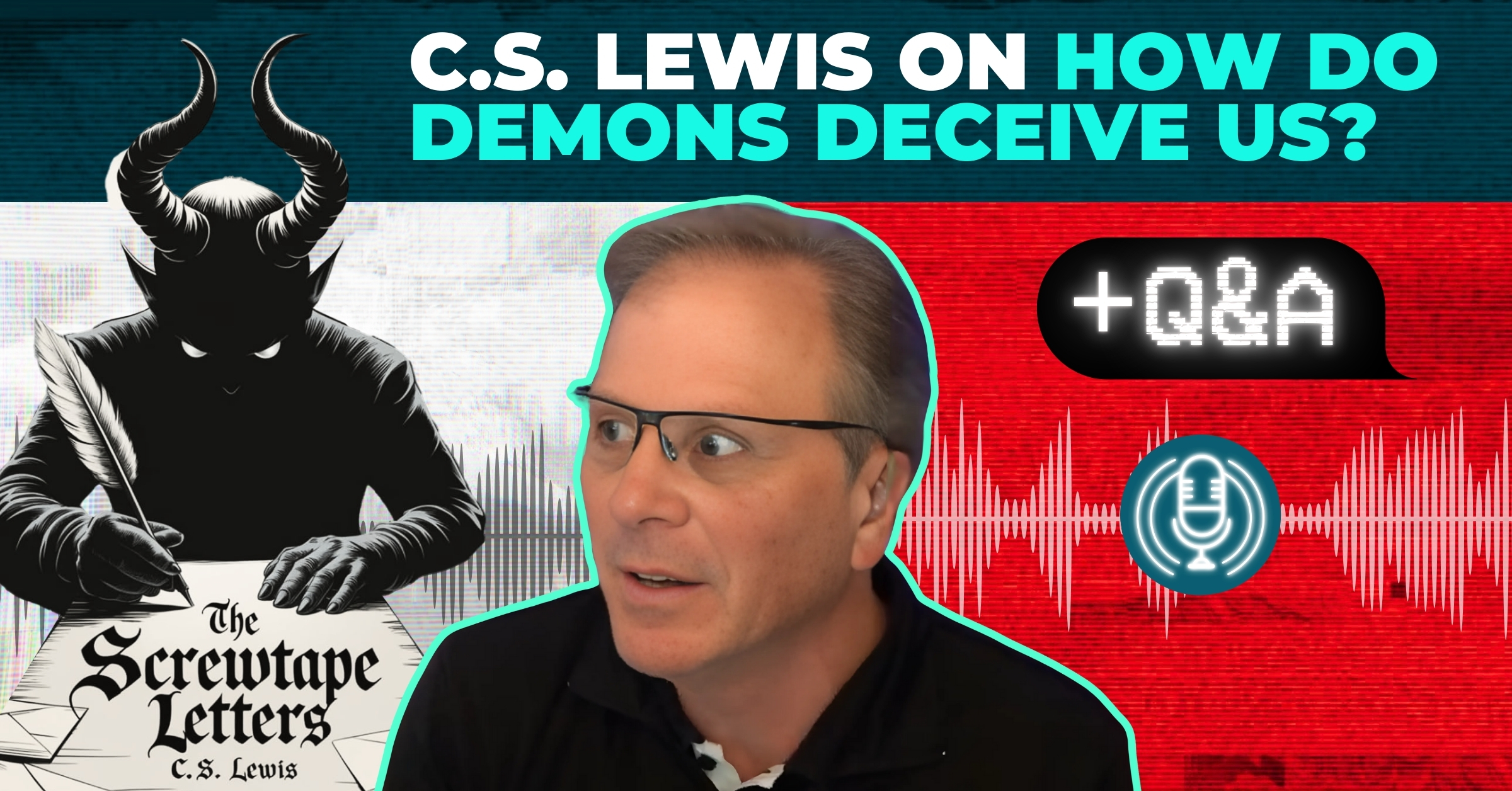
Why is propaganda and empty rhetoric so appealing to some people? In this midweek episode, Frank explains how the first of ‘The Screwtape Letters by C.S. Lewis perfectly illustrates the way demons manipulate human beings, now and throughout history. He’ll also explore the recent power struggles between the Trump Administration and the lower district court judge who blocked Trump’s transgender military ban. Frank will answer questions like:

  • Why is using “jargon” instead of evidence-based arguments not good thinking?
  • What specific tactics does C.S. Lewis say demons use to tempt humans and where do we see evidence of this happening in our culture today?
  • Do all people have the right or privilege to serve in the military?
  • Was Trump’s decision to say transgender people are not qualified to serve in the military unconstitutional?
  • Why is it so difficult to impeach judges, and do we really have only three branches of government?
  • What do a lot of people get wrong about Islam?

Frank also tackles some listener questions about who will be resurrected (is it only Christians?) and whether an old-earth contradicts biblical genealogies. Plus, he’ll reveal details about his numerous speaking events coming up this spring—so listen closely to see if he’s coming to a city near you!

Is there a guest or topic you’d love to hear discussed on a future podcast? We’d love to hear your feedback and suggestions! You can take our 5-minute podcast survey HERE.

Resources mentioned during the episode:

BOOK: The ScrewTape Letters by C.S. Lewis
ARTICLE: The Babylon Bee – Federal Judge Appoints Himself President
BOOK: Seven Days that Divide the World by John Lennox
ARTICLE: The Case for Old-Earth Creationism (Genealogy Info)
BOOK: Systematic Theology by Wayne Grudem


Download Transcript


In this midweek episode of ‘I Don’t Have Enough Faith to Be an Atheist, Frank tackles some of your listener questions on a wide variety of topics! Tune in as he unpacks the unpardonable sin of blasphemy against the Holy Spirit mentioned in the Gospel of Matthew and other questions like:

  • Should Christians be worried about committing the unforgivable sin?
  • What makes the miracles of Jesus so unique compared to others who claimed to perform miracles, like Joseph Smith?
  • How can we know anything about history and do we need to experience a historical event to know that it really occurred?
  • Should you marry someone just based on love?
  • What does the Bible say about a husband’s responsibility to his family?
  • Do intersex conditions mean there are more than two genders?

From historical reliability to gender ideology and practical wisdom for single Christians—this episode is jam-packed with insights you won’t want to miss. And be sure to check out the list of helpful resources below for more information on some of the topics discussed during the program!

If you enjoyed this podcast episode PLEASE HELP US SPREAD THE TRUTH OF CHRISTIANITY BY SUPPORTING OUR MINISTRY HERE. 100% of your donation goes to ministry, 0% to buildings!

Resources mentioned during the episode:

VIDEO: Mormon Challenges Frank on Biblical Inerrancy
BOOK: Correct, Not Politically Correct
Got Questions: What is the Unpardonable/Unforgivable Sin?
Got Questions: What is Blasphemy Against the Holy Spirit?
Michael Knowles on Jubilee: 1 Conservative vs 25 LGBTQ+ Activists


Download Transcript


Does the scientific evidence fall short of proving the fine-tuning of the universe? Should Christians regularly “feel God’s presence”? And since there are minor differences in the Gospels, does that disprove biblical inerrancy? In this midweek podcast episode, Frank tackles three more BIG questions from our listening audience along with questions like:

  • What are the 3 levels of fine-tuning and does it only occur here on planet Earth?
  • Can the fine-tuning argument alone actually prove Christianity is true? And can all truth be explained through science?
  • Where exactly are Heaven and Hell?
  • What’s the true meaning of Christmas?
  • Is loving God an emotion, a feeling, or a decision?
  • If God chooses not to reveal Himself to us is that proof that He doesn’t exist?
  • What’s a great question to ask your skeptic friends?

Have a question you’d like Frank to address in a future episode? Send it to hello[at]crossexamined.org, and stay tuned for Friday’s podcast to hear more about his recent trip to Egypt and Saudi Arabia!

Did you enjoy this episode? HELP US SPREAD THE TRUTH OF CHRISTIANITY BY SUPPORTING THE PODCAST HERE.

Resources mentioned during the episode:

BOOK: Hollywood Heroes – https://bit.ly/3Or82Ax
BOOK: Stealing From God – https://bit.ly/41hLt91
BOOK: Decision Making and the Will of God – https://a.co/d/gQhMD3m
OCC Course: How to Interpret Your Bible – https://bit.ly/3BoEhxD
ARTICLE: Does God Whisper? Part 1 – https://bit.ly/3P0KW47
ARTICLE: Does God Whisper? Part 2 – https://bit.ly/3ZY3hVJ
ARTICLE: Does God Whisper? Part 3 – https://bit.ly/3ZzqOe8

How do you convince non-Christians that homosexuality is wrong without using the Bible? Does human flourishing replace the need for God and the moral argument? And why does God create people that He knows will end up in Hell?  In this week’s solo podcast episode, Frank tackles three BIG questions that were recently sent in from our listening audience. During this discussion, Frank shares some practical advice on how to address these sensitive topics along with questions like:

  • Should Christians be concerned about what people do privately?
  • How does natural marriage contribute to spiritual maturity?
  • Are morals biologically determined?
  • Does the existence of Hell prove that God is unjust?
  • What thought-provoking questions can you ask people who are in support of homosexuality?
  • Why doesn’t atheism solve the problem of evil?
  • What does the Bible say about divine justice?
  • How can pain and suffering possibly result in GOOD?

Brace yourself — this episode is not politically correct, but it will be correct! Be sure to grab a copy of ‘Correct, Not Politically Correct: About Same-Sex Marriage & Transgenderism‘ and ‘Stealing from God‘ for more in-depth answers to these three BIG questions!

Did you enjoy this episode? HELP US SPREAD THE TRUTH OF CHRISTIANITY BY SUPPORTING THE PODCAST HERE.

Resources mentioned during the episode:

BOOK: Toxic Empathy – https://www.toxicempathy.com/
BOOK: Correct Not Politically Correct – https://bit.ly/3qws2ZL
BOOK: Stealing From God – https://bit.ly/41hLt91
VIDEO: Frank and Alex O’Connor – https://youtu.be/qNeB1RVeJHo

Is Harvard ready to embrace THE truth or is it doubling down on President Claudine Gay’s “truth”? Just a couple weeks ago, Frank discussed the rising antisemitism on college campuses like Harvard, the University of Pennsylvania, and MIT. During this midweek episode, Frank continues the conversation and briefly addresses President Gay’s plagiarism scandal and the Harvard Crimson’s censorship of Alan Dershowitz, a Jewish liberal and former Harvard professor who recently wrote an opinion piece on the matter. He also takes a look at Harvard’s surprising history and how this so-called esteemed institution has totally gone off the rails.

Later in the show, Frank also takes the time to respond to some listener questions surrounding objective morality, the real meaning of Christmas, NDEs (near death experiences), and confronting heresy among fellow believers. Is there a war between Christianity and science? What do NDEs tell us about Christianity? How do you navigate conversations with professing Christians who believe heresies? All of these questions and more will be discussed in this jam-packed midweek podcast episode you definitely don’t want to miss!

To view the entire VIDEO PODCAST be sure to join our CrossExamined private community. It’s the perfect place to jump into some great discussions with like-minded Christians while simultaneously providing financial support for our ministry.

You can also SUPPORT THE PODCAST HERE.

Article: The Harvard Crimson Refuses to Publish My Letter Critical of President Claudine Gay

Blog Post: He Gets Us, But Do We Get Him? The Case for Criticizing False Teachers


Download Transcript


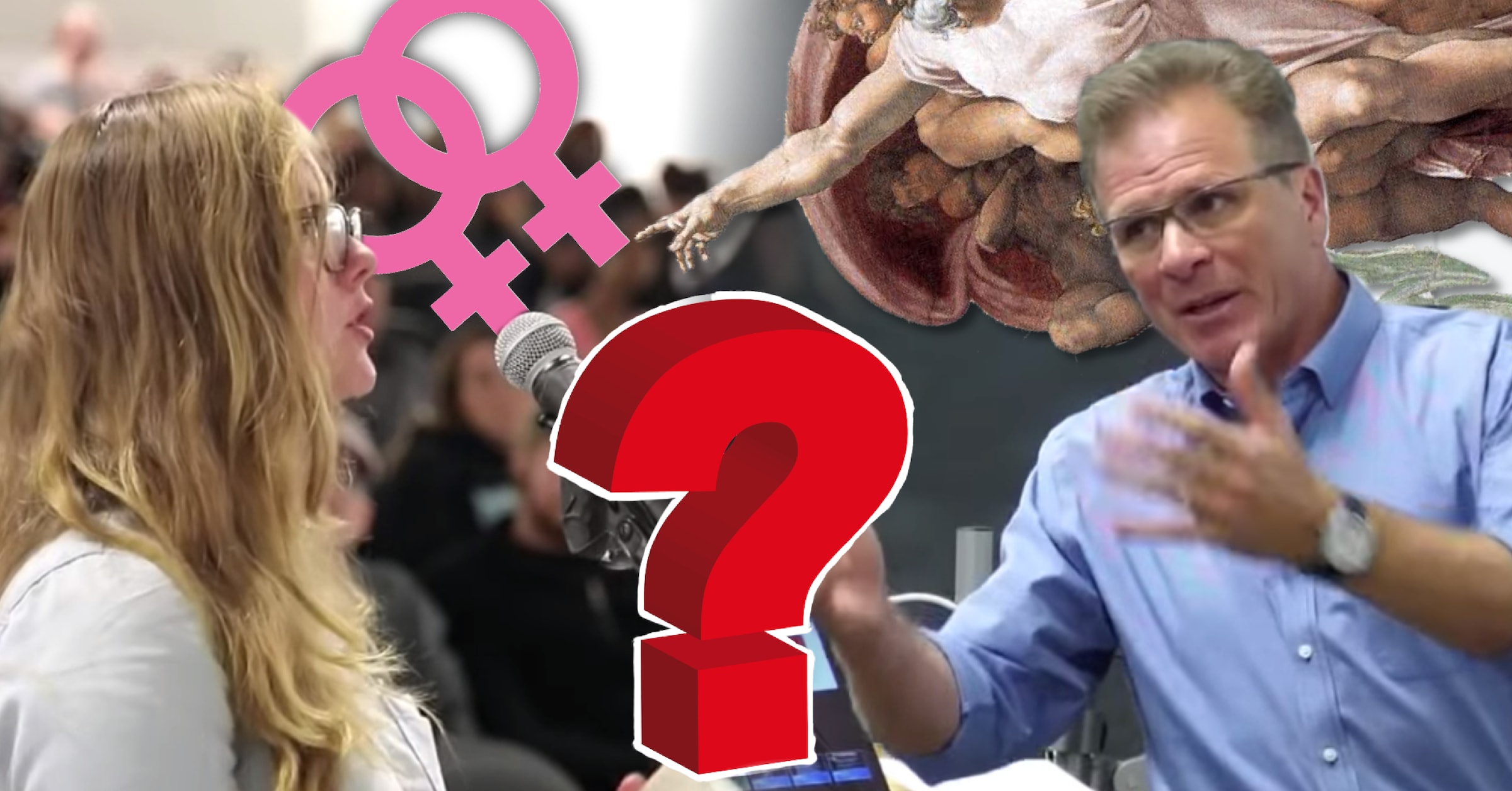
Could there be any more sensitive and provocative question in our culture today?  (Since we posted this video on YouTube two days ago it has averaged nearly 2,000 views per hour.)  A student posed the question at Towson State University.  Here is our four-minute discussion:

The video ends abruptly because the young lady went on to ask another question (you can see the entire presentation and all of the Q&A here).

The bottom line is that we all have an orientation to sinful behavior.  We all have attractions we ought not act on, and we all have to restrain ourselves on numerous fronts each day.  The only one who did that perfectly and completely was Jesus of Nazareth.  That’s why only he can be our sacrifice.  He didn’t die for his own sins, but for ours.

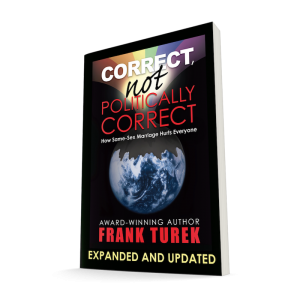
Of course, much more could be said on the issues of love, sex, natural law, homosexuality and same-sex marriage than one can say in a four-minute video.  I may touch on this a bit in the podcast later this week.  But if you want to go into even more depth, I have done so in this recently updated little book.

By Brian G. Chilton

The following is a question submitted to Bellator Christi.com. If you would like to submit a question, fill out the form at https://bellatorchristi.com/submit-a-question-to-bellator-christi/, and your question may be featured in a future article or podcast.

Question:

Dear Brian,

“I have a question that has been deeply troubling me for a while now, and I would like to ask someone with a better understanding of God and the Bible. I read on crossexamined.org that when you were “called into the gospel ministry at 16 years of age” but “left the faith in 2000 due to personal issues and doubts that he had to pertain to the reliability of the faith”. You also said that you “did not completely become an atheist, [but you] did become what [you call] a “theist-leaning-agnostic.” The link to the article I am quoting is https://crossexamined.org/7-reasons-came-back-christian-faith/ . This spoke directly to me because I found myself in a similar situation recently. You see, I was having a lot of doubt about the reliability of the Gospels (mainly, I was concerned that they could have been a myth) and for a couple of days, I called myself an agnostic (I said things along the lines of “I can’t know whether or not the Bible is true!” and “I don’t trust the Bible!” even though I desperately wanted to believe that Christianity was true). After I found that there was a book that dealt with this specific doubt, I immediately wanted to call myself a Christian again. Then I read Hebrews 6:4-6, however, I became afraid that this is impossible. Could you please explain to me the meaning of this passage and tell me whether or not you dealt with this specific problem and, if you did, how?”

-Rachel.

Response:

Rachel,

Thank you for your question. I would like to respond to your question in two parts. First, you are correct. I was in the camp of a theist-leaning-agnostic for some time. I was negatively impacted by the work of the Jesus Seminar, particularly their book The Five Gospels: What Did Jesus Really Say? The Search for the Authentic Words of Jesus. Most troubling was the fact that no one could seem to offer a reasonable response to the Seminar’s charges.

However, I later came to realize that there was the good historical basis for the historicity of Jesus of Nazareth. Many documents outside the Bible (both from the Christian community and the non-Christian community) verify the core details of Jesus’s life. Liberty University professor extraordinaire Gary Habermas has argued that five minimal facts of Jesus’s life can be proven: 1) Jesus died by crucifixion (verified by i) Josephus, Jewish Historian Antiquities 18, chapter 3; ii) Tacitus, Roman Historian Annals 15.44; iii) Lucian of Samosata, Greek satirical writer, The Works of Lucian, Vol. IV “The Death of Peregrin” (scroll down to 11); iv) Mara Bar-Serapion, A Letter of Mara, Son of Serapion (scroll down to just after footnote 19); v) and the Talmud); 2) the disciples had real experiences with whom they though was the risen Jesus; 3) the lives of the apostles were radically transformed; 4) the core gospel message was taught very early after Jesus’s crucifixion; 5) and that James and Paul were radically transformed after Jesus’s resurrection even though they were formerly skeptics.

From there, I learned that due to the over 24,000 documents of the NT, with over 5,000 of them dating between the first three centuries, and numerous citations from early Christian writers, the NT can be verified with a certainty greater than 99.5%. Couple this with notion that the church had no power to gain, no money to make, and advocated sexual purity outside marriage and fidelity within marriage in lieu of the fact that these devout Jewish believers would leave behind certain aspects of their former way of living, there are no reasons why the early church would want to make this stuff up. They literally had nothing to gain on this side of eternity. So, in my opinion, the evidence is clear-cut. The NT is reliable.

Second, you mentioned some confusion over Hebrews 6:4-6. Let me first quote the passage before engaging it. The writer of Hebrews notes that “it is impossible to renew to repentance those who were once enlightened, who tasted the heavenly gift, who shared in the Holy Spirit, who tasted God’s good word and the powers of the coming age, and who have fallen away. This is because, to their own harm, they are recrucifying the Son of God and holding him up to contempt” (Heb. 6:4-6, CSB).

The writer of Hebrews is directing this letter to Jewish Christians who are thinking about adopting their former ways of life within Judaism. They were not necessarily going to reject Christ. Rather, they were tempted to add regulations to their own Christian beliefs. Others may have been tempted to reject their faith altogether. There are at least four interpretations of these verses as they are quite controversial.

  1. The fallen were disingenuous Christians who had rejected Jesus and reverted to Judaism.
  2. The fallen were individuals who had heard the gospel but had not become true believers.
  3. The fallen were those who were not progressing towards maturity, addressing sanctification rather than justification.
  4. The fallen teaching is a rhetorical device describing the possibility rather than the reality. 

The first interpretation does not seem to hold because of the confidence that the writer holds in salvation (Heb. 6:9). The second likewise does not seem to hold because the language of “those who were once enlightened” indicates those who were saved. Likewise, the third does not hold because the writer is describing the salvific experience. Therefore, of the views presented, it seems like the writer of Hebrews is using a rhetorical device as he describes a possible scenario, but not one found in reality. The writer of Hebrews, whomever it was, was a person of great intellectual prowess. In the end, Hebrews is actually arguing for a person’s assurance of salvation. Just as it would be impossible for a person to re-crucify Christ, it is impossible to “renew to repentance those who were once enlightened” because the person has already been enlightened.

To summarize, Rachel, I would say that if you placed your faith and trust in Christ and have received his salvation, making him the Lord of your life, then you are saved. We all have moments of doubt, even John the Baptist did (Matt. 11:3). But, Christ will take us, doubts and all, and shape us into the person he wants us to be by his marvelous grace. Rest in his assurance and find peace in his promises.

Blessings,

Brian G. Chilton


Brian G. Chilton is the founder of BellatorChristi.com and is the host of The Bellator Christi Podcast. He received his Master of Divinity in Theology from Liberty University (with high distinction); his Bachelor of Science in Religious Studies and Philosophy from Gardner-Webb University (with honors); and received certification in Christian Apologetics from Biola University. Brian is currently in the Ph.D. program in Theology and Apologetics at Liberty University. Brian is a full member of the International Society of Christian Apologetics and the Christian Apologetics Alliance. Brian has been in the ministry for over 15 years and serves as the pastor of Huntsville Baptist Church in Yadkinville, North Carolina.

Original Blog Source: http://bit.ly/2Fj0jzo