Tag Archive for: Old Testament

Can a biblical case be made to justify the practice of homosexuality? Does science support the narrative that people are “born gay”? And what did Jesus really teach about sexual ethics in light of the Old Testament? In this powerful episode, Frank is joined by Dr. Robert Gagnon, arguably the world’s leading scholarly authority on the topic, to tackle one of the most divisive moral issues of our time. Drawing from Dr. Gagnon’s landmark book, ‘The Bible and Homosexual Practice‘, widely regarded as the standard work on the subject for over 25 years, they examine what Scripture and science reveal about the issue of homosexuality. Tune in as they answer questions like:

  • What was the initial response to Robert’s book?
  • How does the Bible define love?
  • What’s wrong with “loving” someone of the same sex?
  • What factors influence the likelihood that someone could be attracted to the same sex?
  • If homosexual practices are off limits because of Leviticus 18 what about eating shrimp?
  • What did Jesus say about Old Testament teachings on marriage, divorce, and sex?
  • Does loving someone require affirming all of their desires or behaviors?
  • How do same-sex unions compare to traditional marriage in terms of measurable harm and human flourishing?
  • Why does affirming homosexuality logically open the door to redefining all sexual morality?
  • Why was polygamy sometimes permitted in the Old Testament and is it still ok today?

This episode kicks off the new year with a topic that many Christians avoid, but one we can’t afford to ignore as biblical morality continues to be challenged in the public square and the church. Along the way, Dr. Gagnon shares how publishing this book nearly cost him his academic career, and why the truth was worth the backlash. Don’t miss the next episode where Frank and Dr. Gagnon continue unpacking the cultural and theological consequences of redefining God’s design for sexuality.

If you enjoyed this podcast episode PLEASE HELP US SPREAD THE TRUTH OF CHRISTIANITY BY SUPPORTING OUR MINISTRY USING THE LINK BELOW. 100% of your donation goes to ministry, 0% to buildings!

Resources mentioned during the episode:

Donate to CrossExamined.org
The Bible and Homosexual Practice: Texts and Hermeneutics
Website – RobertGagnon.net
Follow Dr. Gagnon on Facebook – https://www.facebook.com/robert.a.gagnon.56
Follow Dr. Gagnon on X – https://x.com/RobertAJGagnon1

Download Transcript

In Galatians Paul wrote that the Law served as a “tutor to lead us to Christ, so that we may be justified by faith” (Gal. 3:24). Even though Paul was specifically referring to the Mosaic Law, the same could be said concerning the Old Testament as a whole. The Messiah, His person, His work, and His ministry were anticipated through allusion and imagery, not the least of which was the establishment of a theology concerning substitutionary atonement. This laid the groundwork for understanding our need for a Messiah because it explained how we came to be the wretched beings that we are, why God’s moral righteousness means our situation is so dire, and what must be done to reconcile us back to the loving relationship with God we were created for.

Beyond providing a general framework of anticipation for “the Lamb of God that takes away the sin of the world” (John 1:29), the Old Testament also makes very specific predictions concerning the Messiah. When the first few disciples encountered Jesus after He had been baptized by John, they exclaimed, “We have found Him of whom Moses in the Law and also the prophets wrote – Jesus of Nazareth, the son of Joseph” (John 1:45). The purpose of this article is to consider several of these specific predictions and show how Jesus of Nazareth fulfilled them.

General Prophecies

Many Messianic prophecies are general in nature and could be argued to be so to such a degree that they lack strong evidential value. For example, many Christian theologians believe that the first reference in Scripture to a coming Messiah was given shortly after Adam and Eve sinned in the Garden of Eden.[1] As part of God’s punishment on the serpent for his involvement in the Fall, God said to him, “I will put enmity between you and the woman, and between your seed and her seed; he shall bruise you on the head, and you shall bruise him on the heel” (Gen. 3:15).

Considering that the rest of this indictment dealt with the serpent’s physical form, and especially since he was cursed to crawl on his belly as opposed to ostensibly walking upright, some, including John Calvin, have wondered if this enmity should be taken more literally. Namely, that the descendants of the woman, being humans in general, would be at odds with the descendants of the serpent, or snakes in general. Since they have been banished to the lowly position of crawling on the ground, the discord between the two descendants could simply be that snakes will bite people on the foot and they in turn will step on their heads. In other words, some believe this should be taken literally instead of spiritualizing it as referring to a future Messiah.

Paul does seem to allude to this as a Messianic prophecy in the New Testament when he writes, “The God of peace will soon crush Satan under your feet” (Rom. 16:20). However, here it is the church, the followers of Christ, who will crush Satan. Another possibility is that it has a literal fulfillment in terms of humans with snakes and a spiritual fulfillment in terms of Christ and Satan. Many Old Testament prophecies have similar near-term fulfillments in addition to far-term fulfillments. For example, in Genesis 12:3 and Genesis 22:18, God promised Abraham that through one of his descendants all the families of the earth shall be blessed. This was fulfilled in the near term when “the people of all the earth came to Egypt to buy grain from Joseph, because the famine was severe in all the earth” (Gen. 41:57) in addition to being fulfilled in the long term by the Messiah when he provided salvation to the world (Gal. 3:8).

More Specific Prophecies

If the prophecies thus far discussed seem too nebulous, Daniel’s prediction concerning the precise time Messiah would arise should alleviate any qualms. Daniel was told by the angel Gabriel that “from the issuing of a decree to restore and rebuild Jerusalem until Messiah the Prince there will be seven weeks and sixty-two weeks” (Dan. 9:25). This decree was given by Artaxerxes to Nehemiah in 445 B.C. (Neh. 2:1-8); hence, this is the starting point of Daniel’s prophetic timetable.

After the beginning of the seventy weeks is established, we can dial the clock forward from there to discover exactly when the time of Messiah was supposed to have taken place. From Daniel’s perspective this was obviously a prophecy of coming events, but we can look back in history and see its fulfillment. After the decree is issued to restore and rebuild Jerusalem, there will be seven weeks, which is forty-nine years, and then sixty-two weeks, which is 434 more years, for a total of 483 years until Messiah.[2]

The term Messiah is an adjective that means anointed. Specifically, Daniel refers to Him as Messiah the Prince. This is not a fairy tale prince as we think of it but instead is the ruler or leader of a people, much like a king. It is at Jesus’ triumphal entry when He, in fulfillment of Zech. 9:9, is presented to the nation Israel as their anointed King (cf. Matt. 21:1-11). Since we began our starting point at 445 B.C., it would at first seem the only thing left to do is to come forward 483 years. Doing so brings us to AD 38 but unfortunately this is after the crucifixion of Christ.

However, it’s important to consider how the Jews calculated their calendar years. Walvoord explained that “it is customary for the Jews to have twelve months of 360 days each and then to insert a thirteenth month occasionally when necessary to correct the calendar. The use of the 360-day year is confirmed by the forty-two months of the great tribulation (Rev. 11:2Rev. 13:5) being equated with 1,260 days (Rev. 12:6Rev. 11:3).”[3] Robert Anderson has used such a methodology to determine that the 483 years culminated “in A.D. 32 on the very day of Christ’s triumphal entry into Jerusalem shortly before His crucifixion.”[4] There is some controversy over Anderson’s calculations, but “the plausibility of a literal interpretation, which begins the period in 445 B.C and culminates just before the death of Christ, makes this view very attractive.”[5]

It seems to me that this prophecy is incredibly impressive. It even predicts that the Messiah would arrive sometime in the AD 30s. After all, Daniel’s prophecy isn’t about days but seven-year periods (what Daniel calls ‘weeks’). In other words, if someone predicted a meteor would fall from the sky and break my arm next month, I would be impressed whether that happened at the beginning of next month or the end of next month. Similarly, since the time period Daniel’s prophecy uses is seven-year periods, I would be impressed as long as the Messiah appeared within the seven-year period in which He was predicted to arrive.

Daniel’s prophecy continued by stating that after the sixty-two weeks (Dan. 9:26) the Messiah will be cut off and have nothing. After the second of the first two periods are over with, so after 483 years from when the seventy weeks begins, it is said that the Messiah just introduced in verse 25 will be cut off. This term is most often used to refer to cutting something down but is also used to mean “killed” in the Old Testament. It also says he will “have nothing” (Dan 9:26), possibly in the sense that what was entitled to him as Messiah he will, in fact, not receive. How could the Messiah accomplish all of these things listed in Daniel 9:24 by being cut off, i.e., killed? Another remarkable Old Testament prophecy, Isaiah 53, explains how this will happen. Therefore, I agree with Walvoord when he wrote that the “natural interpretation of verse 26 is that it refers to the death of Jesus Christ upon the cross.”[6] (For a more detailed explanation of the prophecy of “seventy weeks of years” in Daniel 9, refer to “Seventy Weeks of Years: A Commentary on Daniel 9:24-27.”)

Unfulfilled Prophecies

It should also be noted that there are numerous Messianic prophecies that the historic Jesus of Nazareth did not fulfill literally. For example, many of the prophets said the Messiah would be “given dominion, glory and a kingdom, that all the peoples, nations and men of every language might serve Him” (Dan. 7:14) and that He would rule over a “kingdom which will never be destroyed” (Dan. 2:44). Among those who believe the Old Testament is God’s inerrant Word, there have historically been three ways to interpret this situation.

First, some have concluded from this that Jesus of Nazareth was not the true Messiah and are still looking for His arrival. Orthodox Jews today would obviously fall in this category. Second, some have affirmed Jesus as the Messiah and claim He fulfilled these types of prophecies not literally but spiritually. For example, some Christians, such as preterist theologians and some covenant theologians, hold that with the kingdom prophecies, the “the inference is to a spiritual kingdom, not an earthly one.”[7] In other words, Jesus spiritually rules today as the King of people’s hearts. They refer to other various New Testament texts such as Col. 1:13Mark 1:14-15John 18:36, and Rev. 1:9 to support the idea that the Messiah’s kingdom is only spiritual. Third, some believe that Jesus qualifies as the Messiah because of all the literal prophecies which He did fulfill and then look still to the future for Him to fulfill the others literally as well. These Christians, such as dispensational theologians, believe that someday Jesus of Nazareth will return and rule the world from David’s throne in Jerusalem.

An important question in this disagreement between Christian theologians is this: are there any precedents in Biblical prophecy for two events being described as seemingly taking place simultaneously, or continuously, but that we know from their fulfillment actually occurred at different times with a chronological gap in between? Jesus Himself seems to propose this understanding of Isaiah 61:1-3 where the first half of the sentence concerns the proclamation of good news and freedom and the second half discusses God’s day of vengeance. Jesus read the first half of this section in the synagogue and explained He was the fulfillment (cf. Luke 4:18-19), but He ended the quote before it talked about vengeance. Therefore, it seems at least reasonable to expect that Jesus will eventually fulfill all the Old Testament prophecies concerning the Messiah in a literal sense.

References:

[1] Norman Geisler, Baker Encyclopedia of Christian Apologetics (Grand Rapids, MI: Baker Publishing Group, 2006), 610.

[2] [Editor’s Note: The word translated as ‘weeks’ is actually “sevens.” So, seven “sevens” would be forty-nine sevens, and sixty-two “sevens” would be 434 years. Together those equal 483 years.]

[3] John F. Walvoord, Daniel: The Key to Prophetic Revelation (Chicago: Moody Publishers, 1989), 228.

[4] Ibid.

[5] Ibid.

[6] Ibid., 229.

[7] Jessie E. Mills, Jr., Daniel: Fulfilled Prophecy (Bradford, PA: International Preterist Association, 2003), 18-19.

Recommended Resources:

Why We Know the New Testament Writers Told the Truth by Frank Turek (mp4 Download)

The Top Ten Reasons We Know the NT Writers Told the Truth mp3 by Frank Turek

How to Interpret Your Bible by Dr. Frank Turek DVD Complete Series, INSTRUCTOR Study Guide, and STUDENT Study Guide

Old Testament vs. New Testament God: Anger vs. Love? (MP3 Set) (DVD Set) (mp4 Download Set) by Dr. Frank Turek 


Adam Lloyd Johnson has served as the president of Convincing Proof Ministries since 2023. Prior to that, Adam was a university campus missionary with Ratio Christi at the University of Nebraska–Lincoln. He has also taught classes for Midwestern Baptist Theological Seminary and has spent time living and teaching at Rhineland Theological Seminary in Wölmersen, Germany. Adam received his PhD in Theological Studies with an emphasis in Philosophy of Religion from Southeastern Baptist Theological Seminary in 2020. Adam grew up in Nebraska and became a Christian as a teenager in 1994. He graduated from the University of Nebraska–Lincoln and then worked in the field of actuarial science for ten years in Lincoln, Nebraska. While in his twenties, he went through a crisis of faith: are there good reasons and evidence to believe God exists and that the Bible is really from Him? His search for answers led him to apologetics and propelled him into ministry with a passion to serve others by equipping Christians and encouraging non-Christians to trust in Christ. Adam served as a Southern Baptist pastor for eight years (2009-2017) but stepped down from the pastorate to serve others full-time in the area of apologetics. He’s been married to his wife Kristin since 1996, and they have four children – Caroline, Will, Xander, and Ray. Adam has presented his work at the National Apologetics Conference, the Society of Christian Philosophers, the Evangelical Philosophical Society, the International Society of Christian Apologetics, the Canadian Centre for Scholarship and the Christian Faith, the American Academy of Religion, and the Evangelical Theological Society. His work has been published in the Journal of the International Society of Christian Apologetics, Philosophia Christi, the Westminster Theological Journal, the Canadian Journal for Scholarship and the Christian Faith, the journal Eleutheria, and the journal Religions. Adam has spoken at numerous churches and conferences in America and around the world – Los Angeles, Chicago, Charlotte, Boston, Orlando, Denver, San Antonio, Canada, Germany, the United Kingdom, and Switzerland. He is the editor and co-author of the book A Debate on God and Morality: What is the Best Account of Objective Moral Values and Duties? published in 2020 by Routledge and co-authored with William Lane Craig, Erik Wielenberg, J. P. Moreland, and others. He is most recently the author of the book Divine Love Theory: How the Trinity is the Source and Foundation of Morality published by Kregel Academic in 2023.

Originally posted at: https://bit.ly/49OfHVC

What did Jesus mean when He said the Old Testament was all about Him? Frank continues his discussion from a previous podcast episode about typology and prophetic symbols of Jesus found in the Old Testament, based largely on his new Bible study series, ‘The Bible You Never Knew’. This week, he answers questions like:

  • What two ways did Jesus and the apostles interpret the Bible?
  • What parallels connect Jesus, Joshua, Jericho, and even the book of Revelation?
  • What’s the surprising connection between Rahab and those who believe in the saving grace of Jesus Christ?
  • What are the “3 P’s” that reveal Jesus in the Old Testament?
  • What evidence suggests that the Book of Joshua was written by an eyewitness?
  • What is a chiasm and how does it demonstrate the divine nature of the Bible?

Later, Frank answers listener questions about:

  • Is it possible for child abusers to go to heaven? And what if I see my abuser there?
  • Does the first law of thermodynamics mean that energy cannot be created?

Also, be sure to tune-in on Friday for an interview with special guest, Robby Starbuck!

If you enjoyed this podcast episode PLEASE HELP US SPREAD THE TRUTH OF CHRISTIANITY BY SUPPORTING OUR MINISTRY USING THE LINK BELOW. 100% of your donation goes to ministry, 0% to buildings!

Resources mentioned during the episode:

Donate to CrossExamined
Just Asking Questions: A Response to Candace Owens (Allie Beth Stuckey)
Candace Owens, Discernment, and the Crisis of Critical Thinking (Alisa Childers)
Is THIS One of the Strongest Evidences for the Bible?

Download Transcript

What did Jesus mean when He said the Old Testament was all about Him? Could figures like Moses, Joshua, and Joseph actually point directly to Him? Once you see how the Bible connects from Genesis to Revelation, you’ll realize it could only have been inspired by a Divine Author.

Frank explains how God’s plan for redemption was woven into the very fabric of Scripture long before Jesus walked the earth as he answers questions like:

  • What are the three main arguments for the existence of God?
  • What is typology and how does it demonstrate the divine nature of the Bible?
  • What’s the difference between a theophany and a typology?
  • How can biblical interpretation be divided into three levels?
  • What two ways did Jesus and the apostles interpret the Bible?
  • How do Joseph, Moses, and Joshua each prefigure Christ?
  • How can the Bible’s core message be explained in three sentences?
  • What does archaeology reveal about the events in the Book of Joshua?

If the Bible isn’t true, there’s no reason to follow Jesus. But if it is, that changes everything. You’ll see why the Bible bears unmistakable marks of divine authorship—and why the evidence leaves little doubt that Jesus truly is the fulfillment of Scripture.

If you enjoyed this podcast episode PLEASE HELP US SPREAD THE TRUTH OF CHRISTIANITY BY SUPPORTING OUR MINISTRY USING THE LINK BELOW. 100% of your donation goes to ministry, 0% to buildings!

Resources mentioned during the episode:

Donate to CrossExamined
Joel Kramer: Tomb of the Exodus
The Bible You Never Knew Session #7 (only available to watch on YouTube for a limited time!)
Did Moses Foreshadow Jesus?
What REALLY Happened at Jericho?

Download Transcript

Does the Bible condone slavery? Critics often point to verses like Leviticus 25 as proof that Scripture supports the kind of dehumanizing chattel slavery we know from the antebellum South. But is that REALLY what the text is teaching? Old Testament scholar and author, Dr. Paul Copan, joins Frank to unpack this hot-button issue and explain how to think carefully about slavery in its historical and redemptive context. You’ll hear answers to questions like:

  • What are 8 things a person needs to study in order to understand this topic well?
  • What does the opening chapter of Genesis teach us about slavery?
  • What is chattel slavery and how is it different from slavery in the Bible?
  • How did the Mosaic laws on slavery compare to other nations in the Ancient Near East?
  • What is the context of Leviticus 25:44 and how should it be understood?
  • How is the term “slave” in modern Bible translations misleading?
  • What is the ultimate vision of God’s Law when it comes to human dignity and freedom?
  • Why wasn’t slavery completely prohibited in the Old Testament?

Tune in as Frank and Paul peel back the layers of cultural context, translation challenges, and God’s ultimate plan of redemption—revealing why the Bible’s teaching on this controversial and complex issue is far different than what skeptics claim. This episode will barely scratch the surface, so be sure to tune in next week as they continue the conversation!

If you enjoyed this podcast episode PLEASE HELP US SPREAD THE TRUTH OF CHRISTIANITY BY SUPPORTING OUR MINISTRY HERE. 100% of your donation goes to ministry, 0% to buildings!

Resources mentioned during the episode:

PaulCopan.com
Is God a Moral Monster?
Is God a Vindictive Bully?
Christianity Contested
Slavery in the Bible: Answering Atheist Critiques
The BIBLE and SLAVERY Explained! with Dr. Carmen Imes

Download Transcript


What do the surprising connections between Old Testament figures and Revelation reveal about the Bible’s divine authorship? Dr. Chip Bennett and Dr. Warren Gage return to continue their fascinating conversation with Frank about the true context of Revelation. Together, they’ll explore how the Old and New Testaments mirror one another in profound and intentional ways—shedding new light on Jesus, prophecy, and redemption. In this episode, they’ll answer questions like:

  • Why was Jesus named after Joshua?
  • How does the battle of Jericho relate to the Book of Revelation?
  • What’s the significance of Jesus meeting the woman at the well?
  • What evidence suggests that the Book of John & the Book of Revelation were written together by John?
  • Who is the beast described in the Book of Revelation?
  • How is Joseph a type of Christ and what’s the mind-blowing connection between Judah, Judas, and Jesus?
  • Why is only focusing on Bible “heroes” a big mistake?
  • How does spotting chiasms or center-points found in Scripture create a deeper meaning of the text?

You’ll discover how the Bible—from Genesis to Revelation—reveals God’s unified plan of redemption through types, themes, and patterns that no human could have orchestrated. This conversation will leave you with greater confidence in Scripture’s divine origin and remind you that no matter who tries to discredit it, the Bible stands as a trustworthy and true revelation from God!

If you enjoyed this podcast episode PLEASE HELP US SPREAD THE TRUTH OF CHRISTIANITY BY SUPPORTING OUR MINISTRY HERE. 100% of your donation goes to ministry, 0% to buildings!

Resources mentioned during the episode:

What No One Ever Told You About the Book of Revelation (Part 1)

Grace Community Church – Sarasota, FL

YouTube playlist – The Revelation Project with Chip & Warren

Chip on TikTok

Chip on YouTube

Dr. Warren Gage on YouTube

WatermarkGospel.com/Revelation – The Book of Revelation Explained in 5 Minutes!

DrWarrenGage.com/Revelation – Revelation resources

Dr. Gage’s book: Milestones to Emmaus


Download Transcript


What’s the true meaning of the Book of Revelation? Is it only about the end times, or have we overlooked its deeper roots in the Old Testament? For centuries, Christians have wrestled with its symbols and prophecies—could it be that we’ve been missing the bigger picture?

This week, Frank welcomes Dr. Chip Bennett, pastor of Grace Community Church in Sarasota, FL along with his mentor and biblical scholar, Dr. Warren Gage, to reveal the often-ignored historical and theological context behind the Book of Revelation. Tune in as Frank, Chip, and Warren explore how early Christians—and the Church Fathers—understood this mysterious book and what modern readers might be missing. Together, they’ll tackle questions like:

  • What’s the surprising connection between the Book of Joshua, Jesus, and the Book of Revelation?
  • Is Revelation a book of fear or a book of hope?
  • What’s the meaning behind the Two Witnesses and Jesus calling Himself “the door”?
  • How are stories like Rahab and Isaac prophetic pictures of Christ?
  • How is Scripture one of our greatest apologetic tools?
  • What did the early church fathers say about the Book of Revelation?
  • Why didn’t John Calvin write a commentary on Revelation and is it a completely futuristic book?

Discover how the original recipients of Revelation would have read it, and why modern day readers need to recover a historical hermeneutic to understand it properly. This is a must-hear conversation for any and all Bible readers so don’t keep it to yourself–share it with a friend to help them connect the dots!

If you enjoyed this podcast episode PLEASE HELP US SPREAD THE TRUTH OF CHRISTIANITY BY SUPPORTING OUR MINISTRY HERE. 100% of your donation goes to ministry, 0% to buildings!

Resources mentioned during the episode:

Grace Community Church – Sarasota, FL
YouTube playlist – The Revelation Project with Chip & Warren
Chip on TikTok
Chip on YouTube
Dr. Warren Gage on YouTube
WatermarkGospel.com/Revelation – The Book of Revelation Explained in 5 Minutes!
DrWarrenGage.com/Revelation – Revelation resources


Download Transcript


How should Christians understand the Old Testament? Since the birth of Christianity, this has been a topic of hot debate, and to this day many Christians don’t really understand how their faith in Jesus interacts with what they read in the Old Testament. It can be tempting to ignore it—or throw it out altogether.

Many Christians have no idea how to read the Old Testament and are under the impression they are supposed to obey every command God gave to Israel. While it’s true that we, as Christians, no longer need to sacrifice animals, engage in purity rituals, and stone people for certain sins, God’s moral law revealed in the Old Testament is based on His nature and character, which is unchanging—and still applicable today.

In Acts 15, New Testament church leaders met to decide whether or not Gentile believers needed to be circumcised according to the Law of Moses. The dispute in Acts 15 did not concern the ethical or moral components of the law, rather it was about how circumcision would bring the full weight of the ceremonial law down on the new gentile believers. But rather than being a departure from the entirety of the Old Testament, the guidelines this council applied to the gentiles actually came from the moral components of the Old Testament law. (Lev.7-8)

As early as the 2nd century, a heretic known only as Marcion taught that the God of the Old Testament could not be the same as the God of the New and that Jesus came to abolish the Old Testament. This two-god theology caused Marcion to create his own canon of scripture, cutting out the entire Old Testament—something the early church quickly rejected. You might say Marcion was the first to “unhitch” the New from the Old.

It can still be tempting today to diminish or disregard the Old Testament. Here are three reasons why you shouldn’t unhitch your Christianity from the Old Testament:

1. Jesus didn’t unhitch Christianity from the Old Testament.

The Old Testament served as the bedrock upon which Jesus founded his ministry and even his identity—quoting it directly or in general dozens of times. In fact, the Old Testament is cited over 200 times in the Gospels alone.

During his famous Sermon on the Mount, Jesus specifically said he had NOT come to abolish the law, but to fulfill it (Matthew 5:17). More importantly, he followed that statement with high praise for the law and for those who teach others to obey it (5:19).

Jesus once told a story about a rich man who lived in luxury and a poor man who lived in suffering (Luke 16:19-31). The rich man died apart from God and went into eternal torment, while the poor man died righteous and went to the “bosom of Abraham.” Distressed that his brothers would receive the same fate, the rich man begged Abraham to send Lazarus to warn them. Abraham’s response was telling: “They have Moses and the prophets,” suggesting that this man’s relatives might find salvation in the Old Testament. The rich man argued that what they really need to see is Lazarus come back from the dead, but Abraham responded, “If they do not respond to Moses and the prophets, they will not be convinced, even if someone rises from the dead.” “Moses and the prophets” is parallel to the phrase “law and prophets” used by Jesus in Matthew, and it was a common idiom for what we now call the Old Testament.

Jesus once rebuked the Pharisees for challenging his authority, and he even made the bold claim that they had never even heard from God (John 5:37). This accusation may seem strange, as the Pharisees were known for their understanding of the Law. But Jesus went on to say, “You study the scriptures thoroughly, because you think in them you possess eternal life, and it is these same scriptures that testify about me” (John 5:39).

Yet again, the message from Jesus to those who studied the Old Testament was not that the Old Testament would no longer apply, but that through it his work would be made known. To argue otherwise is to attempt to remove the Messiah from his Jewish context and to import a Christ that is foreign to the New Testament.

2. The Apostles didn’t unhitch Christianity from the Old Testament.

We can get a good idea of how the earliest Christians understood their faith in light of the Old Testament by looking at the very first sermon ever delivered by a Christian. In Acts 2, the apostle Peter centers the entirety of his gospel presentation on the writings of the Old Testament. According to Peter, the coming of Christ is the fulfillment of Joel’s prophecy (Acts 2:16-21), and the words of David (2:25-36) have verified who he is. Rather than telling the crowd the Old Testament has no application to their lives, Peter preached Jesus directly from it.

As Paul witnessed to Jews in synagogues across the Roman Empire, we read that the Bereans were “more notable” than the Thessalonians because “they examined the scriptures daily to see if (what he said) was true” (Acts 17:11). Again, the Scriptures available to them—and the very ones Paul would have used—were the Old Testament.

Paul defended himself to the Roman government by saying all he had done was to preach what “the prophets and Moses said” (Acts 26:22-23). Paul also wrote, “Everything that was written from former times was written for our instruction” (Romans 15:4). The “our” in question is not the Jews, but Christians. In the same epistle, he stated that the gospel itself was foretold in the Old Testament and that the doctrines and teaching were the same (Romans 1:2-3; 16:26).

Paul almost never divorced his preaching and teaching from the Old Testament Scriptures. In fact, shortly before his execution, Paul sent a letter from his Roman prison asking that a few things be brought to him, including “the scrolls” and “the parchments” (2 Timothy 4:13). While the identity of the parchments is debated, it is virtually unanimous that the scrolls in question were Paul’s copies of the Old Testament. A New Testament Christian, awaiting death, desired nothing more strongly than to read his Bible.

3. The earliest Christian creed didn’t unhitch Christianity from the Old Testament.

Creeds were a way for Christians to learn and recite important doctrines and to pass that information on to others. Arguably, the earliest Christian creed is found in 1 Corinthians 15:3-6, dating back to approximately three to seven years after Jesus’ resurrection. This is a perfect example of what the earliest Christians believed:

For I delivered to you as of first importance what I also received: that Christ died for our sins in accordance with the Scriptures, that he was buried, that he was raised on the third day in accordance with the Scriptures, and that he appeared to Cephas, then to the twelve….

Notice the primary beliefs in this early Christian creed—that Jesus died for our sins, was buried and rose from the dead—are inextricably tied to the Old Testament Scriptures.

The God of the Old Testament is the God of the New. The totality of God’s revealed Word is found in the union of both. It might be tempting for 21st century Christians to conclude that the Old Testament is of no use to us, but this is not the example left to us by the apostles, nor is it the example given to us by the church. To do violence to one Testament necessarily damages the other, because it does violence to the revealed Word of God.

Recommended Resources: 

Another Gospel? by Alisa Childers👉📱https://bit.ly/3Ig6KDc  

How Can Jesus Be the Only Way? Mp4👉📱https://bit.ly/3AbN2X1, Mp3👉📱https://bit.ly/3c9lvgV, and DVD👉📱https://bit.ly/3wfyLHx by Frank Turek

Jesus, You and the Essentials of Christianity by Frank Turek: INSTRUCTOR Study Guide👉📱 https://cutt.ly/eIyeiKG, STUDENT Study Guide👉📱https://cutt.ly/OIyegwW, and DVD👉📱https://cutt.ly/aIyelh6

Why We Know the New Testament Writers Told the Truth by Frank Turek (DVD👉📱 https://cutt.ly/pPdbUzq, Mp3👉📱 https://cutt.ly/nPdbDRv, and Mp4👉📱https://cutt.ly/gPdbCCr)


Alisa Childers is an American singer and songwriter, best known for being in the all-female Christian music group ZOEgirl. She has had a string of top ten radio singles, four studio releases, and received the Dove Award during her time with ZOEgirl. In later years, Alisa found her life-long faith deeply challenged when she started attending what would later identify as a Progressive Christian church. This challenge pushed Alisa toward Christian Apologetics. Today you can read, listen and watch Alisa’s work online as well as purchase her recently published book on Progressive Christianity titled Another Gospel.

Originally posted 5/14/2018 at: https://bit.ly/4es5Ao5


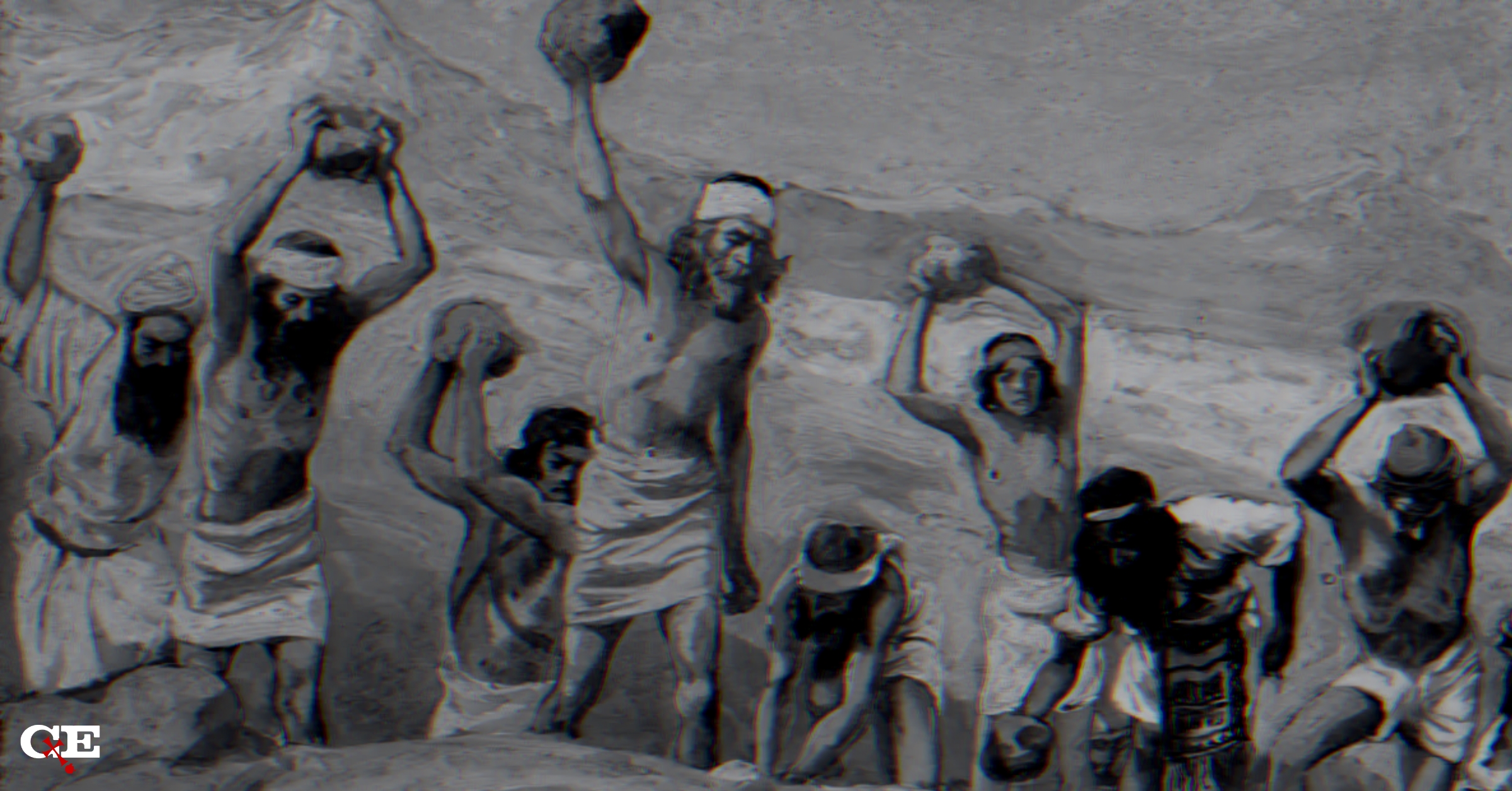
When it comes to Bible reading, some passages are more challenging than others. Such is the case with the stoning passages (see Leviticus 20:27; 24:16; Numbers 15:32-36; Deuteronomy 13:6-11; 21:18-21). These aren’t our go-to passages for morning devotionals. Personally, I can understand capital punishment, but stoning as a means to achieving it just seems so barbaric, cruel, and harsh, especially when the commandment is issued to parents to indict rebellious sons, as seen in Scripture:

“If a man has a stubborn and rebellious son who will not obey the voice of his father or the voice of his mother, and, though they discipline him, will not listen to them, then his father and his mother shall take hold of him and bring him out to the elders of his city at the gate of the place where he lives, and they shall say to the elders of his city, ‘This our son is stubborn and rebellious; he will not obey our voice; he is a glutton and a drunkard.’ Then all the men of the city shall stone him to death with stones. So, you shall purge the evil from your midst, and all Israel shall hear, and fear” (Deuteronomy 21:18-21).

This is a hard passage to stomach, don’t you think? I prefer death by lethal injection, or death by a laced bong hit, but stoning? What a mess. As believers, how are we to understand these verses? Below are five thoughts to consider as you seek to come to terms with this passage.

1. It’s an Ancient Context.

First, we need to understand this text, like all texts, in context. We can’t overlay our twenty-first century cultural understanding on this ancient milieu. Nothing will lead to more head-scratching confusion and frustration than that. Ours is a culture where a minor swat on our child’s gluteus maximus causes an uproar. No wonder stoning is extra hard for us to digest.

2. It’s a Last Resort.

Second, stoning was the last resort. The son described in these verses exhibits an unbending and rebellious spirit. He’s steeped in sin, freely giving himself to drunkenness and gluttony, and refuses to respond to any parental discipline, altogether shunning the fifth commandment. These verses describe a seemingly hopeless case, one set in his own ways as he strong-arms God, his parents, and the principles of his surrounding theocratic nation. He’s a morally sick son whose sin will spread and undo the moral fabric of the whole community nation, if left unchecked. Once the parents realize their son’s recalcitrance, they seek outside intervention as a final resort.[i]

3. Morality Matters At a Community-Level.

Third, the ultimate purpose of stoning was to purge evil from the community and to create a healthy fear of living an unchecked moral life. The health of the nation depended on the entire community walking in alignment with God. That’s not to say people didn’t sin. They did. A lot. And there was an entire sacrificial system in place so people could once again obtain a clear conscience before the Lord. The son described in these verses wasn’t looking for a clear conscience—his conscience was seared.

4. It’s Rare.

This wasn’t a common custom. Interestingly enough, we have very few instances of stoning that take place in the biblical records and I’m not aware of any extra biblical evidence that this punishment was commonly carried out. Perhaps the threat was enough to deter people from such rebellious behavior.

5. Jesus Answers This Law With Grace.

Finally, Jesus models the heart of God regarding stoning.[ii] In John 8:7 Jesus said to those who accused the adulterous women, “Let him who is without sin among you be the first to throw a stone at her.” The law teaches us that we are all lawbreakers. Everyone under God’s law deserves capital punishment, but Jesus experienced capital punishment on our behalf even though He was the only one to ever fulfill the law. Essentially, He was stoned for us in an act of unconditional love as He experienced death on our behalf.

REFERENCES

[i] Editor’s Note: It should also be noted that there’s a cultural corrective built into this scenario to prevent abusing capital punishment. Children were seen as a blessing, a legacy and a source of pride and joy for parents. Plus, even today, it’s only natural for parents to be biased in favor of their own children. So, if anyone was going to advocate to protect and defend one’s children from capital punishment, it’s the parents. In that way, there was a cultural corrective built-into that relation, to keep parents bearing false witness against their child and from doling out a capital punishment lightly. Second, parents would also be the experts on their own children, knowing them better than anyone else. So, if this child is a menace to society, the parents are in a position to recognize that threat before anyone else does. Third, parents already have relational authority over their own children. That means they can make judgments over their children; that’s part of their job as parents. Now they don’t have the natural right to directly kill their kids, but they do have a judicial role over their children, so that court rulings over their children are treated here as an extension or continuation of parental authority over the child. Fourth, even still, this passage isn’t saying that parents have a right to kill their children. Rather, the parents are coming forward as the chief witnesses against their rebellious child. While they created that child, and they have a normal responsibility to raise and care for them, they cannot kill that child as a general right of parenthood. That’s why they have to present their child before a larger judging body, a court of the elders, Sanhedrin, priests, etc., to make that higher-court decision. The parents, in that case, are not the “Judges” issuing a death sentence, they are more like the arresting officers and lead witnesses against their prodigal child. Sixth, that era also had no standing police force and no prison system, and the judicial/court system was usually a small counsel of community leaders (elders, priests, etc.). All that means the punishments had to fit the crime, without requiring an elaborate police force, prison system, or a complicated court system. Stoning was a low-cost, effective, means of containing serious threats and reducing crime. Plus, it’s administered by the whole community, so the whole community takes responsibility for the court rulings. This means no single person can be both judge and executioner. One or two people could be bribed or tricked into a guilty-verdict, but it’s a lot harder to do that to the whole community.

[ii] I realize our earliest manuscripts do not include John 7:53–8:11. Regardless, these verses depict a consistent vision of the life and actions of Jesus Christ.

Recommended resources related to the topic:

Legislating Morality (mp4 download),  (DVD Set), (MP3 Set), (PowerPoint download), and (PowerPoint CD) by Frank Turek

Legislating Morality: Is it Wise? Is it Legal? Is it Possible? by Frank Turek (Book)

A Father’s Embrace (DVD), (Mp3), (Mp4 Download), and (PowerPoint download) by Dr. Frank Turek

If God, Why Evil? (DVD Set), (MP3 Set), and (mp4 Download Set) by Frank Turek

__________________________________________________________________________________________________________________________

Bobby serves as lead pastor of Image Church in Charlotte, North Carolina, and is well known for his YouTube ministry called, One Minute Apologist, which now goes by the name Christianity Still Makes Sense. He also serves as the Co-Host of Pastors’ Perspective, a nationally syndicated call-in radio show on KWVE in Southern California. Bobby earned his Master of Theology degree from Dallas Theological Seminary, his Doctor of Ministry in Apologetics from Southern Evangelical Seminary, and his Ph.D. in Philosophy of Religion from the University of Birmingham (England), where he was supervised under David Cheetham and Yujin Nagasawa. Bobby’s also written several books, including The Fifth Gospel, Doubting Toward Faith, Does God Exist, and Fifty-One Other Questions About God and the Bible, and the forthcoming Christianity Still Makes Sense, to be published by Tyndale in April 2024. He’s married to his lovely wife Heather, and together they have two grown kids: Haley and Dawson.


What happens when your job asks you to do something that conflicts with your religious beliefs? Do you just give in because it’s easier than rocking the boat? The same people who say they are fighting for justice, equity, diversity, and inclusion (JEDI) often punish or intimidate those who commit the thought crime of disagreeing with transgender ideology (or homosexual behavior) even though these beliefs have NOTHING to do with workplace productivity. And really, why are we even talking about sex at work in the first place?!

In this midweek episode, Frank shares what happened when he got fired from his corporate job and gives viewers advice on how they can respectfully engage with a supervisor who is challenging them, including an extensive list of clarifying questions you can present when you are asked to do something that violates your conscience as a Christian.

Questions such as:

  • I noticed that our company values tolerance as I do, but what does the company mean by tolerance?
  • Are all employees required to have the same political, religious, or moral beliefs to work here?
  • Does the company think it’s right to force employees to violate their conscience?

If you’re tired of having to hide your conservative or religious beliefs at work as if you live in a totalitarian state rather than America, then this is the episode for you!

To view the entire VIDEO PODCAST, join our CrossExamined private community. It’s the perfect place to jump into some great discussions with like-minded Christians while providing financial support for our ministry.

Resources mentioned during the episode:

Sex at Work?: https://bit.ly/3Olx4SP

Alliance Defending Freedom: https://adflegal.org/

Correct, Not Politically Correct (Expanded Third Edition): https://amzn.to/457PyMP


Download Transcript