Tag Archive for: Gospel

It wasn’t too long ago we finally finished putting the Christmas decorations away at our house. The process caused me to reminisce about the time we had enjoyed with family and celebrations with our church family both this year and in years past. As each year passes, I am increasingly burdened by the chasm between the secular “Christmas” celebrated by society and the true meaning of Christmas–the incarnation of Jesus Christ.

I ponder the great effort put forth by retail companies (think gifts and décor) and the entertainment industry (movies, concerts, and special events in the name of the “special season”) and can’t help but marvel at the effort to capitalize on the season all while wholly rejecting the reason behind it.

This season, I was reminded of a very important question, arguably the most important question each one of us must answer. All three of the synoptic gospels (Matthew, Mark, and Luke) record Jesus asking his disciples “Who do you say that I am?” Considering the confusion at Christmas and what event it truly marks, I would challenge you to consider your own answer to this question. Who do you say Jesus is?

Jesus’s Two Questions

Jesus and his disciples made their way to an area known as Caesarea Philippi, located north of the Sea of Galilee and near the base of Mount Hermon. It is a beautiful, lush, park-like area that has some of the beginning waters of the Jordan River running through it. Like many places during the time, the name was chosen to honor the current Caesarean and local ruler, Philip the son of Herod the Great.[i]

In addition to the beautiful nature there are ruins of pagan Roman worship. Today one can walk along the side of a hill into which is carved numerous niches that might have held statues of Roman gods and goddesses. There are areas that were once foundations for temples to both one of the Caesars and other gods. There is a particularly looming grotto dedicated to the god Pan (see attached picture). According to a local guide this grotto once involved the sacrifice of infants to the god Pan. This was the physical environment that served as a backdrop to Jesus’ two questions.

This is Matthew’s account of the conversation:

“When Jesus came to the region of Caesarea Philippi, He asked His disciples, “Who do people say that the Son of Man is?” And they said, “Some say John the Baptist; others, Elijah; still others, Jeremiah or one of the prophets.” “But you,” He asked them, “who do you say that I am?” Simon Peter answers, “You are the Messiah, the Son of the Living God!” And Jesus responded, “Simon son of Jonah, you are blessed because flesh and blood did not reveal this to you, but My Father in heaven…”
– Matthew 16:13-17 (HCSB; see also Mark 8:27-29 and Luke 9:18-20)

The Question of the Populace’s Belief in Jesus’s Identity

Jesus begins by asking them what the general population said about his identity. In general, the response was, somebody good, important, and/or wise. John the Baptist or a prophet, like those through whom God spoke in the Old Testament. Obviously, someone who knew the things of God and seemed to live in his favor. How would you answer Jesus’ first question today? I would suggest the answers would be somewhat similar. While not citing specifically Old Testament prophets, many call him a prophet. Others consider him a good, moral teacher.

The Question of the Disciples’ Belief in Jesus’s Identity

Jesus makes his second question personal. He specifically asks the disciples who they say he is. We are wise to feel the same question pointed directly at us. Who do I (insert your own name) say Jesus is? The disciples couldn’t hide behind the prevailing popular answer. While it is impossible to detect whether there were any pauses in the conversation through the written version, Peter seems to answer without hesitation– “You are the Messiah, the Son of the Living God!” How would you answer that question? Would you hesitate and need to think about your answer?

How the Bible Answers the Questions

Jesus tells Peter he is correct and knows the answer because God revealed it to him. The disciples had heard Jesus’ teaching and witnessed the miracles he performed while following him in his ministry.

The Bible is replete with passages that tell us about the identity of Jesus, God’s Son, sent as our Savior to redeem us from our sin, sin that entered the world through Adam and Eve in the early pages of Genesis. The length of this article allows space to note just a few of the places we are told about Jesus’ identity.

The Testimony of Jesus

Jesus himself tells us He is the Son of God. In the verses discussed above, Jesus tells Peter he is correct when he identifies Jesus as the Messiah, the Son of the Living God. In his High Priestly prayer (John 17), Jesus identifies himself as God’s son (John 17:1) and repeatedly calls God his father (17:1; 17:5; 17:11 etc.). Jesus makes claim to his divinity in the account of the healing of the paralytic (Mark 2:1-12). Friends had lowered the lame man through the roof of a house to gain access to Jesus, believing he could heal him. Jesus begins by telling the man his sins are forgiven (2:5) and then ultimately provides physical healing (2:11b). It is the claim to have the authority to forgive sins that infuriates the religious leaders who acknowledge only God can forgive sins.

The Testimony of John the Baptist

John the Baptist, at the baptism of Jesus, testified, “…He is the Son of God.” (John 1:34). Before John the Baptist was even born, he responded to Jesus’s identity from within his mother’s womb. Luke records Jesus’s mother Mary’s visit to her cousin Elizabeth, who was John’s mother. Both women were pregnant at the time and upon Mary’s arrival, John, within his mother’s womb, “leaped” within Elizabeth when she heard Mary’s voice. (Luke 2:41) Elizabeth told Mary of John’s reaction, asked how it was possible the “mother of my Lord” would visit her (Luke 2:43), and told her all that the Lord had told Mary would be fulfilled. Earlier in chapter 2, Luke recorded the angel’s announcement to Mary that she would become pregnant and have a son. This son “will be called the Son of God.” (Luke 2:35b)

The Testimony of God the Father

God himself specifically identified Jesus as his Son at both his baptism and transfiguration. At his baptism, Mark records that when Jesus came up out of the water, a voice from heaven said, “You are my beloved Son; I take delight in You!” (Mark 1:10-11)

Matthew documents the transfiguration of Jesus in chapter 17. While gathered high on a mountain with Peter, James and John, Jesus was transformed in front of them. Moses and Elijah also appeared. “While he was still speaking suddenly a bright cloud covered them, and a voice from the cloud said: This is My beloved Son. I take delight in Him. Listen to Him!” (Matt 17: 1-5)

Conclusion

While Christmas, and all its trappings that deviate so far from the whole event at the root of the holiday, is in the review mirror of life for another year, Jesus’ question is still in front of us. Who do you say he is? Peter and so much of scripture provide the right answer–Jesus is the Messiah, the Son of the Living God. I will argue there is then a follow-up question of equal importance–what are you going to do with that answer?

Are you going to respond to his invitation to repent and follow him? Will you accept the fact that he has stood in your place, taking the just wrath of God as penalty for your sin on your behalf? Will you submit to him and enjoy forever a right relationship with the one and only true God? It is my prayer that you will. If you have questions about becoming a follower of Jesus, please go to Bellator Christi’s main menu and click on the “How to Become a Christian” tab.

References: 

[i] Chad Brand, Charles Draper, and Archie England, eds., Holman Illustrated Bible Dictionary (Nashville, TN.: Holman Bible Publishers, 2003), 248.

Recommended resources related to the topic:

How Can Jesus be the Only Way? Mp4, Mp3, and DVD by Frank Turek

Jesus, You and the Essentials of Christianity by Frank Turek (INSTRUCTOR Study Guide), (STUDENT Study Guide), and (DVD) 

Reflecting Jesus into a Dark World by Dr. Frank Turek – DVD Complete Series, Video mp4 DOWNLOAD Complete Series, and mp3 audio DOWNLOAD Complete Series

Can All Religions Be True? mp3 by Frank Turek


___________________________________________________________________________________________________________________________________________________

Michelle Johnson earned a Ph.D. in Theology and Apologetics at Liberty University. She also earned her M.A. in Theological Studies and her M.Div. in Professional Ministries at Liberty University. Michelle graduated from the University of Minnesota with her undergraduate degrees. She and her husband Steve live in Mankato, Minnesota. Michelle and Steve attend Wooddale Church in Eden Prairie where Michelle serves on the Global Partner Care Team. In addition to her love of theology and apologetics, Michelle also has a passion for historical studies, particularly the theology of the Patristics. When she is not spending time reading or writing, Michelle can often be found dreaming of her next travel adventure or enjoying a great cup of coffee. Michelle Johnson serves as the Executive Vice-President and Managing Editor of Bellator Christi Ministries.

Original Blog Source: https://bit.ly/3I3EcPB


By Natasha Crain

Social media has been a popular place to share deconversion stories over the last few years, and sometimes so many people resonate with those posts that they go viral to some extent (being liked and shared by thousands of people).

There’s one that’s being shared all over Facebook right now, written this week by a lady named Myndee Mack. At the time of this writing, it has 8,000+ likes/loves, 7,000+ comments, and over 3,000+ shares. Clearly, Myndee’s post is compelling to many.

I’d like to offer a response.

While it’s possible Myndee will come across this article, I’m not writing it primarily for her, but rather for the thousands of people who find her post to be a compelling assessment of Christianity and for Christians whose friends are sharing it and want to have a thoughtful response to share. The reason I say I’m not writing it primarily for her is that a one-on-one response would be more relational and personal in nature and tone—like a letter. My purpose here is to help those challenged by her words with a more direct response to the reasoning and theological clarity/accuracy of what she wrote.

“I used to be Christian. I prayed without ceasing. I spent time in the word. I asked. I sought. I knocked until my knuckles bled. My heart was pure. My faith was at least as strong as a mustard seed. I went to Christian elementary school. I prayed the sinners prayer at 6 years old. I would beg my mom to take me to church. I had pages and pages of notes from sermons and from my own studies. I hosted women’s groups. I went to Bible college. I attended church retreats from childhood all the way through young adulthood. I taught at children’s church. I believed I was a sinner in need of a savior, and I accepted Jesus as that savior.”

Myndee sets up her post by making it clear she wasn’t a new Christian rejecting her faith. She wants us to know that she has spent many years involved with the church and presumably seeking God. We have no information on what kind of churches she was part of (certainly something I’d be curious to know about if I met her in person), but the main point here seems to be that she doesn’t want the reader to be dismissive of her.

And I think it’s important to not be.

Don’t be Dismissive

Christians often are dismissive of deconversion stories, saying, “If they walked away, they weren’t truly saved anyway.” Regardless of your view of the assurance of salvation, this is not a helpful response. When people have genuine questions and struggles that they share, we should be ready and willing to offer answers both for them and for those looking on across social media.

That said, I can’t help but note a brief sentence in here that relates to much of what she goes on to write regarding the nature of sin: “My heart was pure.” From a biblical perspective, no one’s heart is “pure.” More on that shortly.

“I was also trapped in a vicious cycle of self hatred, shame, guilt, and repentance. Bible verses such as ‘your heart is deceitful and desperately wicked’ combined with ‘you are fearfully and wonderfully made’ gave me spiritual whiplash.”

Conflicting Scripture?

It’s quite easy to pull any two verses out of the Bible and think they are in conflict if you aren’t looking at them in the context of the whole. The same could be said for virtually any book in the world. In this case, there’s a very important distinction that is missing between being fearfully and wonderfully made (Psalm 139:14) and having a deceitful and wicked heart (Jeremiah 17:9). The fact that we are “fearfully and wonderfully made” is a statement about our design and value: We are not the process of blind, purposeless chance, but rather a purposeful creation who has been given value by our creator—even made in His very image (Genesis 1:27). The fact that we have a “wicked heart” is a statement about the moral choices we are inclined to make. Anyone who is a parent can look at a child and agree that they are extraordinarily valuable and they make bad choices. It’s the same with every human. This isn’t a matter for “spiritual whiplash” once you understand the crucial that distinction between value and morality.

The Vicious Cycle

Furthermore, it’s likely that this conflation of value and morality led to the “vicious cycle” she felt of self-hatred, shame, guilt, and repentance. Knowing that you are inclined toward sin should not cause you to hate yourself. The Bible is clear on our value as image bearers. God so loved His creation that He gave His one and only Son to die for us. We should value ourselves as highly as God values us.

But God is also holy and just. When we sin—transgress a moral law—we rightly feel guilty because we are guilty. If someone intentionally kills an innocent human being, most people would say that person should feel guilty because they did something that is objectively wrong; guilt is not a bad thing, it’s a healthy thing that signifies a functioning conscience. It draws us to repentance, both to the person(s) wronged and toward God.

Therefore, sin, guilt, and repentance are not a vicious cycle. Sin is an ongoing reality in a fallen world, guilt is an appropriate response when we’ve done something wrong (against God’s standards), and repentance leads us back to God. As Christians, we should then accept that Jesus has forgiven us. Self-hatred is not a biblical part of that equation.

“I was taught Romans 8:38-39 and warned of the perils of backsliding all in the same sermon. The thought of somehow committing the unforgivable sin (blasphemy of the Holy Spirit) haunted my mind.”

Beware of Backsliding

Romans 8:38-39 is talking about how nothing can separate us from the love of God in Jesus. In context, Paul is saying that no one can bring a charge against God’s chosen people because it is God who justifies; no matter what happens on Earth, we are “more than conquerors” because nothing can separate us from the Lord. This is a statement about what’s true for those who are saved. While Christians have different views on the assurance of salvation, even for those who believe you can lose your salvation, this is not a contradiction with Romans 8:38-39. If you could “backslide” to a point where you have lost salvation, those verses would simply no longer apply to the unsaved person. It’s a different audience.

“Though I believed [in Christ] with every fiber of my being, I suffered from anxiety, self-loathing and a crippling fear of death. I longed to forge genuine connections with my church family but when I tried to open up about my fears and confusion, I was told I just needed to have more faith. When I had theological questions that made other leaders uncomfortable, I was dismissed if not outright ostracized.”

Just have more Faith!?

If it’s true that Myndee raised her fears and confusions with her church family and was met by dismissal, it’s incredibly sad. Certainly, I’ve seen Christians tell people who have questions to just have more faith, and that’s a terrible response. Biblical faith is confident trust based on who God is. If someone doesn’t understand why there’s good reason to be confident in the existence or identity of God, telling them to just trust more without giving them reason for a confident foundation from which to trust is not the solution.

I only say “if it’s true” because I do think it’s become a bit of a script for many who deconvert to say that no one would or could answer their questions. Did they ask one person? Five? Anyone outside their own church? Read books? There’s no way to know for any individual, but if you’re genuinely seeking truth, you should be seeking answers in many places. There are numerous resources available.

“My hunger and thirst for righteousness went unquenched. Those who claimed to be the hands and feet of Jesus showed me how they weaponized the Bible for their own gain.”

Weaponized Bible

It’s impossible to know what she has in mind about weaponizing the Bible, but today people often claim the Bible is being weaponized any time a Christian shares truth people don’t like. For example, if you say that God made two genders (and you can’t change those genders), you will be accused of “weaponizing the Bible.” If the Bible is truly God’s Word, that’s not using it as a weapon. It’s sharing truth. (Of course, truth should be shared in a gracious way.)

However, it’s possible Myndee grew up in a church that truly did weaponize the Bible in an abusive sense. If that’s the case, again, it’s awful. However, we have to recognize that we can’t blame God when people misuse His Word. We must seek to know if the Bible is true regardless of those abuses.

“My traumas and mental health issues were blamed on the devil, and I was made to feel as though I wasn’t Christian enough because of my struggles that, ironically, stemmed mostly from Christian teachings.”

Mishandling Mental Health

From a biblical perspective, mental health challenges can be part of both a spiritual and physical battle. There’s no way to diagnose this particular situation without knowing the specifics (and even if you knew some specifics, no one could definitively claim that x part is spiritual and y part is physical). But if her struggles were truly stemming from her response to “Christian teachings,” there are a couple of points that should be made.

First, how we feel in response to reality doesn’t determine what is reality. If we feel traumatized by the idea of hell, for example, that has no bearing on whether hell is real. So claiming trauma from biblical teachings is not inherently a statement about whether those teachings are true. Christians shouldn’t feel traumatized by a theologically accurate understanding of God’s judgment (there is no condemnation for those who are in Christ Jesus—Romans 8:1), but however a person does feel does not determine what’s true.

Second, sometimes people may feel the kind of trauma she’s talking about in response to a misunderstanding of biblical truth. If she felt self-hatred (as she mentioned previously) because she didn’t have a theologically accurate understanding of the value-morality distinction, that’s not the fault of what the Bible teaches. It’s a tragic misunderstanding on her own part that was never clarified by further study or other Christians.

“I was doing my best to maintain a good, close, loving relationship with the god of the Christian Bible. I wanted nothing more than that. To abandon myself. To die so he might live in me. What I was actually doing was denying my own compassion, my own intuition, which was objectively more righteous than a God who murders entire civilizations (the children too) and sends his own creation to hell for what can only be described as a design flaw. One the designer, the creator, is ultimately responsible for.”

More Righteous than God!?

This is quite the statement. She claims that her own compassion and intuition (moral intuition, presumably) are more righteous than that of the biblical God. She even states that this is objectively so! Yet where does she get the objective basis for her morality if God doesn’t exist? If there is no God, the universe is the product of blind, purposeless chance, and there is no such thing as an objective right or wrong. Without a higher-than-human moral authority and lawgiver, there is no objective moral law. The compassion she praises herself for is meaningless in such a world—it would simply be a function of evolutionary survival mechanisms, not of an actual moral nature (and therefore would not be praiseworthy!).

The same goes for the moral intuition she claims. If God doesn’t exist, that intuition is an evolutionary delusion brought upon the human species by time and chance. There is no objective morality to have moral intuitions about if there is no God. She claims her morality is objectively superior, but she has no objective standard if God doesn’t exist. And if a god does exist but hasn’t revealed himself, she still can’t claim to have knowledge of what objective standards this hypothetical god put in place—he didn’t reveal anything!

She then says that God “murders” entire civilizations. First, this isn’t morally wrong (as she clearly assumes) if there is no moral law giver. Second, she misses the distinction between murder (the unjustified taking of innocent human life) and killing (any taking of life). Most people recognize that killing in self-defense is not considered murder. Some would say that killing in the context of a just war isn’t either. And some would say neither is the death penalty.

Not all killing is murder. For God to murder people would mean He was unjustified in taking their lives. When God commands the killing of people in the Bible, however, it’s clearly because of judgment that He, as the all-knowing and perfectly just God of the universe, had the knowledge, nature, and right to make.

Free Will, a Design Flaw?

She then goes on to again confuse creation with our ability to make moral choices. Free will is a feature, not a bug, in God’s design of the human being. If we didn’t have the ability to make morally significant choices, we would be robots incapable of being in relationship with Him, which was His purpose in our creation. If we use our free will to reject God and His offer of forgiveness for sin, we will be subject to judgment because He is a holy and just God. Just as it’s not loving to let criminals go free in earthly justice systems, it’s not loving to let moral law breakers (every human) to go free in the “cosmic” justice system. But in God’s love, He paid the penalty for us. We simply have to accept His gift of Jesus’s sacrifice on the cross.

“Then one day, I could deny and ignore it no longer. The Christian god delights in violence. The Christian church caused me more harm than good.”

If you read the Old Testament, God does not delight in violence. He is a patient God who seeks the heart and repentance of His people.

Also, harm and good are two terms that require an objective basis for meaningful definition. A person’s subjective feelings of what is harmful or helpful, good or bad, and right or wrong do not define what is objectively true.

“In getting away from it, I found the peace that passes all understanding. I am now immersed with love, with grace, with joy. I have found freedom in what others call “witchcraft”. I don’t worship the moon or my crystals. My Tarot cards are not a god to me. I respectfully utilize these things to help me connect to myself and to this beautiful world I get to be a part of and share with my fellow humans. I don’t care if Tarot or Reiki or Buddhism or Christianity is real. I care if it is helpful.”

Utility over Truth

This says everything. As I have pointed out multiple times here, nothing she has said so far has had anything to do with what is true or real. A skeptical reader might say that “of course” she had already decided that Christianity is false, and she’s just telling us more about her journey—that it goes without saying that truth mattered. But that’s simply not the case for many people today, and she says it explicitly here: “I don’t care…if Christianity is real.” The motto of so many people who have deconstructed or deconverted is what they subjectively find helpful. The nature of truth is rarely considered.

If you’re reading this and don’t know what you believe, please consider that what you find helpful may or may not be true, and believing what is false but subjectively helpful in your own estimation can have serious consequences for your life now and for eternity. I might find it helpful to my peace of mind if someone came and told me that I will never have a car accident, so I can drive however I want. But if that’s not true, it doesn’t matter how much peace and joy the falsity provided. I’ll die in a car accident if I’m not driving with care.

What’s real matters.

About that Witchcraft . . .

Additionally, if the “witchcraft” she does has an actual consequence in the world because she is tapping into the demonic, she should recognize that this, indeed, is real. And if witchcraft is real, that means the supernatural is real. And if the supernatural is real, that should point her to the existence of God and ultimately back to the Bible, which explains exactly who is behind the witchcraft (Satan) and the role he plays in reality.

On the other hand, if the “witchcraft” does nothing, there’s no reason to do it at all. But I’m guessing she finds it appealing because witchcraft gives a person methods for attempting to exhibit control over the universe. If she struggled with feeling a lack of control under the sovereignty of a God she believed to be murderous and horrible, it would make sense she would try to regain control in her next belief system. But again, if it actually does something, that should point her back to a supernatural worldview in which God exists.

“I don’t care what your doctrine is, I care what kind of impact you make on the world around you. I care more about your mental and emotional health than whether or not you believe the ‘right’ thing.”

Truth-Neutral Living

Well, you might not care about what people believe, but again, this has no bearing on what’s true about the world. If there’s a God who created this incredible universe and every human being, then He is the only one with the rightful authority to say what matters and what doesn’t. The Bible is very clear from beginning to end that what people believe about God matters. There are right and wrong beliefs, and they have significant consequences. And when people do live according to right beliefs about who God is, who we are, what our relationship is, what’s required of us, and more, that flows into a true peace that surpasses all understanding.

This doesn’t mean a Christian won’t have any mental and emotional struggles, however. Counseling and sometimes medication are important for dealing with the kinds of challenges we encounter in this world. That’s a different question than whether or not doctrine matters.

“If being on the inside of Christianity helps you be a better, more whole human, I want that for you. I want whatever brings peace to your soul. Despite life’s turmoil, my soul is more at peace and I am a better human, both internally and externally, outside of Christianity.”

You do You

Again, it doesn’t matter what you want for someone. See answer above—the same logic applies. It’s what God wants for us. It’s how God defines what is better or worse. It’s who God thinks we are when we are most wholly human.

You might use your own definition of “better” to conclude you are a better human outside of Christianity, but if God disagrees, you’re in an infinitely worse place.

“Outside of Christianity, there is no more “us vs. them” or “wheat vs. chaff” for I see that we are all one under this universe. We are all made of stardust, here for a short time and instead of wasting my life dying to myself to try to please an angry, jealous god whose wrath could not be appeased outside the brutal murder of his own son, I spend my time building genuine connections and embodying love.”

If there is no God, she’s right that we’re made of material stuff alone, with no inherent value, and with no objective meaning of life. But if that’s truly the picture of the world we live in, she has no objective basis for claiming God is morally wrong, her “genuine connections” are with other groups of stardust with no actual value, and the love she is “embodying” is just a bunch of chemical reactions. Those are consistent truths with the worldview that we’re all just stardust and nothing more.

But it’s important to note that she simultaneously misconstrues the claims of Christianity here. Again, murder is the unjustified taking of an innocent human life. If you understand Christian doctrine, you know that the Trinity is God the Father, the Son, and the Holy Spirit—three persons, one nature. Jesus is God. He laid down His own life (John 10:17-18). Out of His love for us, He took the punishment for sin and offered us eternal life. Her description here is a complete mischaracterization and misunderstanding of this beautiful truth from our all-loving and perfectly just God.

“If you are worried about my eternal state, don’t be. If the god of the Bible is the loving god Christians claim he is, then [He] will meet me where I am. He will allow me to walk the path that helps me be a better human and live a life without anxiety and self-loathing. That god will understand my plight and accept my inability to accept a doctrine that has caused me irreparable harm. And if you think the god you believe in will say to me ‘depart from me, I never knew you’ when my time on earth is through, that’s not a god I’d want to spend eternity with anyway.”

It’s quite presumptuous to assume that the God of the universe will “meet you where you are,” when by that you mean He’ll accept whatever decisions you make as right for you. If He has already given us a Bible to tell us what we need to know so that we can meet Him where He requires, that’s the standard to which we’ll be held. The Bible explicitly and repeatedly tells us not to be anxious (e.g., Matthew 6:27). And as I already explained, we aren’t to be self-loathing.

It’s truly sad that the theological misunderstandings she has about God have led her to hate Him so much that even if He were real and the Bible were true, she claims she wouldn’t want to be with Him anyway. Theology matters. It’s the difference between someone longing to be with the God who loves them and someone longing to reject the God whom they hate based on an errant understanding of His Word.

All of this begs the question of what is actually true. Unfortunately, the most viral social media posts are rarely about seeking truth. They’re about people’s experiences and emotional responses to those experiences. Experiences and responses aren’t unimportant; they’re part of life. But they don’t determine what’s true. That’s why it’s so important for Christians to have an understanding of apologetics (the case for and the defense of the truth of Christianity). In a world that no longer even asks what’s true, we have to be able to show that’s still the pertinent question…and then demonstrate the Bible is truly God’s Word.

Recommended resources related to the topic:

Debate: What Best Explains Reality: Atheism or Theism? by Frank Turek DVD, Mp4, and Mp3 

Is Original Sin Unfair? by Frank Turek (DVD, Mp3, and Mp4)

Stealing From God by Dr. Frank Turek (Book, 10-Part DVD Set, STUDENT Study Guide, TEACHER Study Guide)

Is Morality Absolute or Relative? by Frank Turek (Mp3/ Mp4)

When Reason Isn’t the Reason for Unbelief by Dr. Frank Turek DVD and Mp4

___________________________________________________________________________________________________________________________________________________

Natasha Crain is a blogger, author, and national speaker who is passionate about equipping Christian parents to raise their kids with an understanding of how to make a case for and defend their faith in an increasingly secular world. She is the author of two apologetics books for parents: Talking with Your Kids about God (2017) and Keeping Your Kids on God’s Side (2016). Natasha has an MBA in marketing and statistics from UCLA and a certificate in Christian apologetics from Biola University. A former marketing executive and adjunct professor, she lives in Southern California with her husband and three children.

Original Blog Source:https://bit.ly/3wt458E

 

As a prosecutor for many decades, I often found myself reflecting on the impact that feelings of guilt have, even upon criminals with lengthy records. Why was it that the guilty wanted to talk about their crime, even after being advised of their rights? Why would those who had “gotten away” nonetheless seek to escape their feelings through alcohol or drugs?  Apart from true sociopaths, it seemed to me that people cannot simply cast-off feelings of guilt by force of will. The feelings persist and they demand a reckoning. That voice of conscience – that voice that so many of us try so hard to quiet– simply refuses to cooperate.

Where Guilt Comes From

Put simply, feelings of guilt arise when a person senses the disconnect between what they have done, or are planning to do, and what they realize they “ought” to do. But why should this be so? Why should we feel conflicted about the behavior we are consciously choosing? For example, when I am hungry, my instinct is to eat to satisfy the hunger. But when I eat too much, and do so repeatedly, I begin to realize I am becoming a glutton. Despite satisfying my urge, I realize that I should not act that way. Similarly, I may elect to act in a way that hurts someone else to advance my own interests. But later, I begin to feel qualms and regret my behavior.

Why is it Universal?

What worldview, I wondered, best explains this near-universal human experience?

To the secularist, such feelings are the product of long-term social evolution. Initially, this explanation made sense to me. After all, why wouldn’t the person with a “pro-social” approach add to their group’s potential for survival?  And wouldn’t feelings of guilt for wrongdoing tend to produce pro-social behavior? But the more I thought about this, the more I realized that it lacked true explanatory value.

If we did in fact evolve from primitive protohumans, how did these first thinking humans begin to feel guilt? After all, no one ever enjoys feeling guilty, and such feelings definitely tend to constrain – not expand – behavior choices. They would cause a person to think twice before doing something that might be in their individual interest. Stealing from one’s neighbor, for example, or killing one’s rival to obtain his belongings, would benefit an individual assuming they felt they could accomplish it. Giving a stranger food or shelter, by contrast, would put someone at a disadvantage if resources are scarce. It makes much more sense that any potential benefit in group thinking would be outweighed by the limitations on guilt-inducing behaviors. Imagine the lion chasing its prey but then feeling “guilty” and stopping short of his goal. How long would he survive? Probably not long enough to pass his genes on to the next generation.

It’s hard to imagine how pro-social thinking would have arisen in the harsh and competitive environment of the first humans. If we are just evolved but now intelligent primates, why would we ever depart from pursuing our own, individual short-term best interest? Raiding and stealing from others makes a lot more sense than trying to make peace with someone who is bent on taking what you have. Why would we limit our possible choices by deciding that we “ought” to do something that helps others but only provides us a possible, longer-term benefit? And if we chose to do so, would this not be the result of an intelligent selection? Feelings of guilt would play no useful role here. Indeed, being burdened by guilt would detract from survivability and therefore be rooted out over time. Moreover, if pro-social thinking is an intellectual exercise, why would feelings come into play at all? Why not simply decide sometimes to act one way depending on the circumstances, without ever experiencing feelings about our choices? What possible advantage would such an approach confer?

What does Altruism Prove?

No, pro-social or altruistic thinking only makes sense in a person who already has in mind the view that building a stronger community, or helping others, is itself a good to pursue. An individual possessing this capacity would decide to forego killing his rival in search of something greater in the more remote future. He would realize this is something he “ought” to do even if his hunger or greed were impelling him to a different decision.

Why would we have such a capacity built into us? The secularist has no answer, but the Christian does. The capacity for guilt did not evolve. It was built into our minds in the same way acquisition of language and understanding the concept of “fair play” were, put there by an intelligent Creator who has a moral law that he desires us to obey. And so, when we stray from that law, there are feelings of dissonance and regret that emerge from that mental “subroutine” leading us back to the “good.” Morality, and the resulting feelings of guilt, are a message to us from outside, not an evolved internal trait.

Now it is true that we do not all experience guilt in the same way. Different cultures, and different groups within a single culture, may feel guilty about different things. But many common features are evident.  No one feels guilt after doing good, or angst after following their conscience. No one feels pleased when they betray a friend. And of course, consciences can be seared by poor upbringing which distorts what “good” and “evil” are in the first place. Our minds naturally follow a selection process as to what we “ought” to do, even if what informs that process has been distorted.

Written On our Hearts

Secularists see guilt as something in need of fixing. They look to modern science – psychology or pharmacology or both – to help people finally rid themselves of this vestige of what they view as our primitive and superstitious past. But it is to no avail. Feelings of guilt flow from the moral law “written on our hearts,” guardrails meant to guide us on to the right path, and no matter how hard we try, we cannot escape them.


Recommended resources related to the topic:

Correct, NOT Politically Correct: How Same-Sex Marriage Hurts Everyone (Updated; downloadable pdfPowerPoint) by Frank Turek

Legislating Morality: Is it Wise? Is it Legal? Is it Possible? by Frank Turek (Book, DVD, Mp3, Mp4, PowerPoint download, PowerPoint CD)

Stealing From God by Dr. Frank Turek (Book, 10-Part DVD Set, STUDENT Study Guide, TEACHER Study Guide)

Is Morality Absolute or Relative? by Frank Turek (Mp3/ Mp4)

__________________________________________________________________________________________________________________________

Al Serrato earned his law degree from the University of California at Berkeley in 1985. He began his career as an FBI special agent before becoming a prosecutor in California, where he worked for 33 years. An introduction to CS Lewis’ works sparked his interest in Apologetics, which he has pursued for the past three decades. He got his start writing Apologetics with J. Warner Wallace and Pleaseconvinceme.com. 


When it comes to Bible reading, some passages are more challenging than others. Such is the case with the stoning passages (see Leviticus 20:27; 24:16; Numbers 15:32-36; Deuteronomy 13:6-11; 21:18-21). These aren’t our go-to passages for morning devotionals. Personally, I can understand capital punishment, but stoning as a means to achieving it just seems so barbaric, cruel, and harsh, especially when the commandment is issued to parents to indict rebellious sons, as seen in Scripture:

“If a man has a stubborn and rebellious son who will not obey the voice of his father or the voice of his mother, and, though they discipline him, will not listen to them, then his father and his mother shall take hold of him and bring him out to the elders of his city at the gate of the place where he lives, and they shall say to the elders of his city, ‘This our son is stubborn and rebellious; he will not obey our voice; he is a glutton and a drunkard.’ Then all the men of the city shall stone him to death with stones. So, you shall purge the evil from your midst, and all Israel shall hear, and fear” (Deuteronomy 21:18-21).

This is a hard passage to stomach, don’t you think? I prefer death by lethal injection, or death by a laced bong hit, but stoning? What a mess. As believers, how are we to understand these verses? Below are five thoughts to consider as you seek to come to terms with this passage.

1. It’s an Ancient Context.

First, we need to understand this text, like all texts, in context. We can’t overlay our twenty-first century cultural understanding on this ancient milieu. Nothing will lead to more head-scratching confusion and frustration than that. Ours is a culture where a minor swat on our child’s gluteus maximus causes an uproar. No wonder stoning is extra hard for us to digest.

2. It’s a Last Resort.

Second, stoning was the last resort. The son described in these verses exhibits an unbending and rebellious spirit. He’s steeped in sin, freely giving himself to drunkenness and gluttony, and refuses to respond to any parental discipline, altogether shunning the fifth commandment. These verses describe a seemingly hopeless case, one set in his own ways as he strong-arms God, his parents, and the principles of his surrounding theocratic nation. He’s a morally sick son whose sin will spread and undo the moral fabric of the whole community nation, if left unchecked. Once the parents realize their son’s recalcitrance, they seek outside intervention as a final resort.[i]

3. Morality Matters At a Community-Level.

Third, the ultimate purpose of stoning was to purge evil from the community and to create a healthy fear of living an unchecked moral life. The health of the nation depended on the entire community walking in alignment with God. That’s not to say people didn’t sin. They did. A lot. And there was an entire sacrificial system in place so people could once again obtain a clear conscience before the Lord. The son described in these verses wasn’t looking for a clear conscience—his conscience was seared.

4. It’s Rare.

This wasn’t a common custom. Interestingly enough, we have very few instances of stoning that take place in the biblical records and I’m not aware of any extra biblical evidence that this punishment was commonly carried out. Perhaps the threat was enough to deter people from such rebellious behavior.

5. Jesus Answers This Law With Grace.

Finally, Jesus models the heart of God regarding stoning.[ii] In John 8:7 Jesus said to those who accused the adulterous women, “Let him who is without sin among you be the first to throw a stone at her.” The law teaches us that we are all lawbreakers. Everyone under God’s law deserves capital punishment, but Jesus experienced capital punishment on our behalf even though He was the only one to ever fulfill the law. Essentially, He was stoned for us in an act of unconditional love as He experienced death on our behalf.

REFERENCES

[i] Editor’s Note: It should also be noted that there’s a cultural corrective built into this scenario to prevent abusing capital punishment. Children were seen as a blessing, a legacy and a source of pride and joy for parents. Plus, even today, it’s only natural for parents to be biased in favor of their own children. So, if anyone was going to advocate to protect and defend one’s children from capital punishment, it’s the parents. In that way, there was a cultural corrective built-into that relation, to keep parents bearing false witness against their child and from doling out a capital punishment lightly. Second, parents would also be the experts on their own children, knowing them better than anyone else. So, if this child is a menace to society, the parents are in a position to recognize that threat before anyone else does. Third, parents already have relational authority over their own children. That means they can make judgments over their children; that’s part of their job as parents. Now they don’t have the natural right to directly kill their kids, but they do have a judicial role over their children, so that court rulings over their children are treated here as an extension or continuation of parental authority over the child. Fourth, even still, this passage isn’t saying that parents have a right to kill their children. Rather, the parents are coming forward as the chief witnesses against their rebellious child. While they created that child, and they have a normal responsibility to raise and care for them, they cannot kill that child as a general right of parenthood. That’s why they have to present their child before a larger judging body, a court of the elders, Sanhedrin, priests, etc., to make that higher-court decision. The parents, in that case, are not the “Judges” issuing a death sentence, they are more like the arresting officers and lead witnesses against their prodigal child. Sixth, that era also had no standing police force and no prison system, and the judicial/court system was usually a small counsel of community leaders (elders, priests, etc.). All that means the punishments had to fit the crime, without requiring an elaborate police force, prison system, or a complicated court system. Stoning was a low-cost, effective, means of containing serious threats and reducing crime. Plus, it’s administered by the whole community, so the whole community takes responsibility for the court rulings. This means no single person can be both judge and executioner. One or two people could be bribed or tricked into a guilty-verdict, but it’s a lot harder to do that to the whole community.

[ii] I realize our earliest manuscripts do not include John 7:53–8:11. Regardless, these verses depict a consistent vision of the life and actions of Jesus Christ.

Recommended resources related to the topic:

Legislating Morality (mp4 download),  (DVD Set), (MP3 Set), (PowerPoint download), and (PowerPoint CD) by Frank Turek

Legislating Morality: Is it Wise? Is it Legal? Is it Possible? by Frank Turek (Book)

A Father’s Embrace (DVD), (Mp3), (Mp4 Download), and (PowerPoint download) by Dr. Frank Turek

If God, Why Evil? (DVD Set), (MP3 Set), and (mp4 Download Set) by Frank Turek

__________________________________________________________________________________________________________________________

Bobby serves as lead pastor of Image Church in Charlotte, North Carolina, and is well known for his YouTube ministry called, One Minute Apologist, which now goes by the name Christianity Still Makes Sense. He also serves as the Co-Host of Pastors’ Perspective, a nationally syndicated call-in radio show on KWVE in Southern California. Bobby earned his Master of Theology degree from Dallas Theological Seminary, his Doctor of Ministry in Apologetics from Southern Evangelical Seminary, and his Ph.D. in Philosophy of Religion from the University of Birmingham (England), where he was supervised under David Cheetham and Yujin Nagasawa. Bobby’s also written several books, including The Fifth Gospel, Doubting Toward Faith, Does God Exist, and Fifty-One Other Questions About God and the Bible, and the forthcoming Christianity Still Makes Sense, to be published by Tyndale in April 2024. He’s married to his lovely wife Heather, and together they have two grown kids: Haley and Dawson.


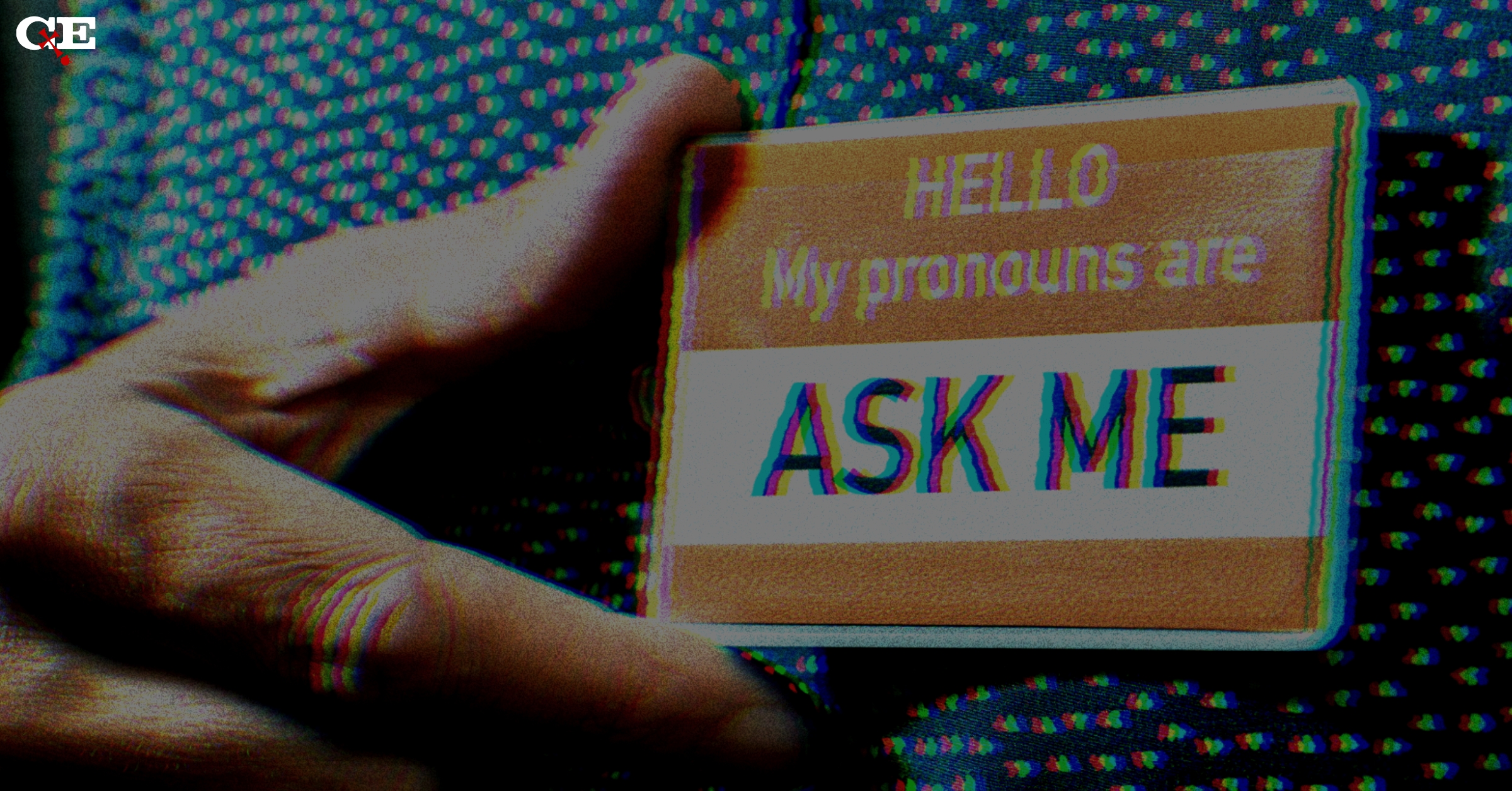
If you haven’t had a chance to freshen up on the latest gender pronoun trend, be sure to do so by visiting a Starbucks near you. There you’ll be warmly greeted by your barista, who might be your standard he or she but could be he/they, she/they, or they/them. On another visit you might encounter ze/hir or ze/zer, or perhaps even xe/xem or ze/zim or sie/her; and, oh yeah, I almost forgot about pir too. It’s sort of like going to McDonald’s as a kid and ordering a happy meal, eagerly waiting to discover what new treat/toy they/them or ze/zer has put inside your box. If you’re confused, don’t worry—that makes two of us. Or does it? You can always purchase your own personal gender pronoun pocket guide in the event you fail to remember whether he is a she or she is a he or he and she are they/them. But let the buyer beware. By the time you finish reading your copy, you’ll want to look for a fresh edition straight off the press to address the growing list.

On one of my latest visits to Starbucks with my wife, Heather, I was met by a lady, or rather they/them, who after taking my order said, “It’ll be right up, sir.” I’m not sure why she assumed I was a man. What if I felt like a pir? But I took no offense. However, out of genuine curiosity, I struck up a friendly conversation with they/them and said, “I noticed you called me ‘sir.’ And typically, we use sir or ma’am for male and female adults, but what does they/them use for a title?” They/them said, “For the nonbinary person, it’s Mx, M.—or some people might prefer Misc.”

I wish I could say that was helpful, but it wasn’t. If anything, I found myself even more confused by the complete hack job of the English language taking place in our culture right now. On top of this, we’re strongly warned by some to not mis-gender people, as this may cause harm. Never mind the fact that they/them assumed I was male by calling me sir instead of pir. All that to say I find it ironic that even those who champion this pronoun discussion the most are guilty of breaking their own rules by assuming the obvious in terms of others when referring to people like me as sir.

If all this pronoun distinction is not enough to keep up with, we’re told that one’s gender pronoun doesn’t necessarily reveal one’s sexual preference. Just as gender is fluid, apparently one’s sexuality is, too. As I spoke with my barista that day, they/them schooled me on this topic, informing me as well that they/them (i.e., my barista) is pansexual, which basically means that what’s good for the goose is good for the gander. Although my barista is pansexual, there are other options as well. For example, there are others who might be ze/zer or ze/zim, and regarding sexual preferences they/them may be allosexual; autoromantic; autosexual; androsexual; curiosexual; and of course, asexual. If someone or someze is asexual, it’s important to know how to orient oneself on the asexual spectrum. That’s because you could be sex-averse, sex-favorable, cupiosexual, graysexual, or even libidoist asexual, to name a few options. But fear not, if the above list is too narrow-minded, the LGBTQIA2 has left a + sign on the end just for you.

I’d like to buy a vowel, please.

As Heather and I left Starbucks that day, we both felt overwhelmed by how much our country has changed. I guess we both felt a bit like Dorothy, who observed to Toto, “We’re not in Kansas anymore.” It kind of feels like we are living in a foreign land these days. And I wish I could say that this pronoun-obsessed culture is our only problem.

It’s not.

Recommended resources related to the topic:

Correct, Not Politically Correct: About Same-Sex Marriage and Transgenderism 2023 Edition by Dr. Frank Turek Book

4 P’s & 4 Q’s: Quick Case FOR Natural Marriage & AGAINST Same-Sex Marriage (DVD) by Dr. Frank Turek 

Legislating Morality (mp4 download),  (DVD Set), (MP3 Set), (PowerPoint download), and (PowerPoint CD) by Frank Turek

Does Love and Tolerance Equal Affirmation? (DVD) (Mp4)  by Dr. Frank Turek

__________________________________________________________________________________________________________________________

Bobby serves as lead pastor of Image Church in Charlotte, North Carolina, and is well known for his YouTube ministry called, One Minute Apologist, which now goes by the name Christianity Still Makes Sense. He also serves as the Co-Host of Pastors’ Perspective, a nationally syndicated call-in radio show on KWVE in Southern California. Bobby earned his Master of Theology degree from Dallas Theological Seminary, his Doctor of Ministry in Apologetics from Southern Evangelical Seminary, and his Ph.D. in Philosophy of Religion from the University of Birmingham (England), where he was supervised under David Cheetham and Yujin Nagasawa. Bobby’s also written several books, including The Fifth Gospel, Doubting Toward Faith, Does God Exist, and Fifty-One Other Questions About God and the Bible, and the forthcoming Christianity Still Makes Sense, to be published by Tyndale in April 2024. He’s married to his lovely wife Heather, and together they have two grown kids: Haley and Dawson.


By Melissa Dougherty

You know something I never see? I never see the average person say that Buddha was made up from stories of ancient pagan gods. Or that Gandhi was actually a Jewish mystic who was misunderstood. Or that Mohammad was an atheist. There’s usually only one historical figure that is distorted more than any other to fit whatever modern agenda they need at the moment: Jesus Christ.

You can get the identity of Buddha, Gandhi, Mohammad, and even other historical figures such as Alexander the Great or Abraham Lincoln wrong, and it does not have any bearing on what that means to you spiritually. In a manner of speaking, who they are is meaningless in this regard. But people would correct you in a hot second if you made a false claim about who they are historically. This is because it’s verifiable to see who these people were, what they did, and what they stood for.

So why do people not hold this same standard to Jesus, the one Person who can affect their spiritual standing before God? I believe there are a few reasons.

1. People Don’t Want Jesus to Be What the Bible Says.

If Jesus is who He says He is, and the Bible is true, then this has consequences. Does it really matter if Buddha wasn’t who He claimed to be? Not really. People might feel a little jaded, but they would believe that their spirituality wouldn’t be in limbo. However, Christianity is different. Jesus’s claim to divinity and the exclusive way to be saved has consequences for humanity. And, quite simply, humans love to run after other gods. They have to turn away from idols and self-worship to turn to the One True God who has the power to save. But that means giving up certain aspects of their lifestyle that are sinful they have grown accustomed to. It brings them death and destruction and they are blinded by it. Jesus says in John 3:19-20 that “Light has come into the world, but people loved darkness instead of the light because their deeds are evil. Everyone who does evil hates the light, and will not come into the light for fear that their deeds will be exposed.”

So people make another Jesus that likes what they like, believes what they believe, and approves of what they do.

2. Spiritual Warfare

I don’t find it to be any coincidence at all that it’s specifically Jesus who has all the attention when it comes to the variety of identities. Satan doesn’t care if you say you believe in God. Even he believes that. He doesn’t even care if you believe in Jesus. As long as it’s a false Jesus, one that has no power to save you. This is one of the oldest rules in the devil’s playbook: distort Jesus. His energy goes into fighting truth, not lies. Jesus says Satan is the Father of Lies and that it would be foolish for Satan to cast himself out because then his kingdom wouldn’t stand. He perpetuates the lies and does what he can to distort the truth.

Who cares about the other spiritual figures because they aren’t really his target. If anything, they’re his allies.

3. People See Truth as Hate

We live in an odd time. People don’t want truth. They want affirmation. This is true even outside of religious circles but also exists in casual friendships, families, and work acquaintances. I’m sure people have witnessed other people’s complete lack of humility and perhaps even a complete disconnect from reality, all in the name of “their truth.” They want their voice to be heard. And they make it heard by shutting everyone else up. It’s a grand level of entitlement that is sweeping our nation with a vengeance. So, when you speak up about Jesus and who He really is, as described in the Bible, if it hurts them emotionally or is seen as unloving, then they discard it because it’s hateful. Our culture has a strong view of truth: if it’s not loving, then it’s not true. This is how the average postmodern New Ager sees truth, too, by the way.

So, their guard goes up if they perceive anything that you’re saying as hurtful to them. Ironically, what informs this way of thinking usually comes from a place of hurt. But instead of looking at it as an obstacle to overcome and grow from, people now expect others to cater to their emotional needs with no expectation of themselves to take any responsibility to grow.

False Christ, False Gospel

Ultimately, when people deny truth and who Jesus is, they are embracing a false version of Him who isn’t going to save anybody. They might have some comfort in their denial, but it’s only a comfort that leads to destruction. Stop running from Jesus. Run to Him. Go to the Scriptures and read about who Jesus is. Let the Holy Spirit guide and convict you and lead you to the Living Waters, the Bread of Life, who will give you what you’ve been yearning for.


Recommended resources related to the topic:

Was Jesus Intolerant? by Frank Turek (DVD and Mp4)

How Can Jesus be the Only Way? Mp4, Mp3, and DVD by Frank Turek

Cold Case Resurrection Set by J. Warner Wallace (books)  

Person of Interest: Why Jesus Still Matters in a World that Rejects the Bible by J. Warner Wallace (Paperback), (Investigator’s Guide).


__________________________________________________________________________________________________________________________

Melissa Dougherty is a Christian Apologist best known for her YouTube channel as an ex-new ager. She has two associate’s degrees, one in Early Childhood Multicultural Education, and the other in Liberal Arts. She also has a bachelor’s degree in Religious Studies at Southern Evangelical Seminary.


We live in an age of a prevailing belief known as “Religious Pluralism”, which says no one religion (especially Christianity) holds the exclusive title to “absolute truth.” Religious pluralism says all religions ultimately lead to one nebulous God, the Creator and Savior of us all.

A Way or The Way?

Unfortunately today, those who believe in a first-century Jewish Rabbi as “THE way” are seen as harsh, mean-spirited, arrogant and backward. And who wants to be like that? However, simply swap that definite article (‘the’) for an ‘a’ and instantly Jesus (and His followers) become a lot more palatable to modern tastes. The Gospel aroma magically becomes more pleasant to millions in an all-inclusive world. One little word makes all the difference in a person’s beliefs about salvation, life and the life to come. It reveals whether you’re an exclusivist (a belief that only one religion is true) or a pluralist (all religions lead to God). Pluralism is prevalent in our culture and sounds like this:

  • “It doesn’t matter what you believe as long as you’re sincere.”
  • “As long as it works for you and makes you happy.”
  • “There is no such thing as ultimate (or absolute) truth.”
  • “I believe there are many ways to God.”
  • “It’s rude to say one person’s religion is better than another’s.”
  • “It takes everyone’s truth to equal the truth.”
  • “What makes you think your religion is right and everyone else is wrong?

Sound familiar?

It is now socially unacceptable to criticize another person’s religious beliefs (unless of course you’re slamming Christianity!). But keep in mind that, historically, ours has always been a creedal faith, meaning our beliefs direct and influence our attitudes and actions. As Christ-followers, we believe God has made Himself known through creation, our conscience and special revelation in Scripture. And He has never stuttered when He spoke, making His character crystal clear so that we wouldn’t mistake Him for any other so-called “gods”. And 2000 years later, in the midst of our culture’s buffet-style theology, Christianity still maintains that God’s identity isn’t optional (or even open to a face-lift).

Nothing New Under the Sun

The idea of pluralism is also nothing new. Way back in the Old Testament era, a diverse range of religious beliefs co-existed alongside ancient, monotheistic Judaism. Baal worship and various forms of Canaanite deities are systemic throughout the Jewish record. And it was in this world-view context that God spoke, clearly setting Himself apart from other deities and distinguishing Israel from other nations. A simple read of the Old Testament and one can see that God isn’t hip on sharing His glory with other belief systems or so-called gods.

“I am the LORD; that is my name; my glory I give to no other, nor my praise to carved idols” (Isaiah 42:8).

“…My glory I will not give to another” (Isaiah 48:11b).

And though Scripture claims the Lord does all things well, sharing His glory apparently isn’t one of them. He is decidedly intolerant on that particular issue. Interestingly, when the ancient Assyrians and Babylonians took Israel into captivity it was largely due to the Jewish nation’s worship of multiple gods, abandoning their allegiance to the one true God. Over time, it had become very fashionable to mix the worship of Yahweh with Ashtoreth and Molech, the cultural gods of Baal.

God isn’t a Middle School Girl

But God’s intolerance of rivals isn’t because He’s “insecure” or jealous like some middle school girl. God’s jealousy for His glory goes much deeper than mere human emotion or understanding. This guarding of His glory and an unwillingness to share the spotlight of praise is rooted in the essence of God Himself. The very nature – even the idea of God – demands that he has no peers. No equals. If the Bible is true, then Yahweh stands alone as God. By direct inference, this would logically mean there is no such thing as Allah. No Molech. No Baal. No Krishna.

So, do the logic. Either Yahweh is God or He isn’t. And if He isn’t, then every other religion or belief system on planet earth is equally valid – or at least on the same level as Jesus. Like your choice of music, food, clothing or lifestyle – it’s whatever works best for you. Personal preference and experience then become the path to paradise, not some irrefutable absolute truth about an invisible Supreme Being. Unfortunately, this preference for pluralism didn’t work out so well for the Jewish nation, resulting in painful and prolonged consequences – displacement, subjugation and slavery. And in time, they realized God was not the syncretistic, eclectic Deity who is one of many faith options.

No Matter the Fashion Truth Excludes Falsity

Fast-forward to today. What are people really saying when they affirm, “It doesn’t really matter what you believe as long as you are sincere and treat others fairly.” Does this make sense? Is it even rational?  With a myriad of belief systems available today, it can be both confusing and difficult as Christians paddle their way upstream against the flow. As some postmodern theologians suggest, time and history has changed God’s character and what ancient Scripture says is true of Him. But the author of Hebrews (who claimed the Word of God was living) maintained, “Jesus Christ is the same yesterday and today and forever” (Heb 4:12; 13:8). The prophet Malachi wrote, “For I the LORD do not change” (Mal 3:6). Since God exists outside of time, centuries of history and the advance of civilizations cannot alter His character. . . or caused Him to warm up to the idea of pluralism. According to Scripture, there is still only room for One on Heaven’s throne.

Footnotes:

*This post is adapted from my book, The Fifth Gospel, Harvest House, 2014.

Recommended resources related to the topic:

How Can Jesus be the Only Way? Mp4, Mp3, and DVD by Frank Turek

Jesus, You and the Essentials of Christianity by Frank Turek (INSTRUCTOR Study Guide), (STUDENT Study Guide)

Another Gospel? by Alisa Childers (book)

Can All Religions Be True? mp3 by Frank Turek


__________________________________________________________________________________________________________________________

Bobby serves as lead pastor of Image Church in Charlotte, North Carolina, and is well known for his YouTube ministry called, One Minute Apologist, which now goes by the name Christianity Still Makes Sense. He also serves as the Co-Host of Pastors’ Perspective, a nationally syndicated call-in radio show on KWVE in Southern California. Bobby earned his Master of Theology degree from Dallas Theological Seminary, his Doctor of Ministry in Apologetics from Southern Evangelical Seminary, and his Ph.D. in Philosophy of Religion from the University of Birmingham (England), where he was supervised under David Cheetham and Yujin Nagasawa. Bobby’s also written several books, including The Fifth Gospel, Doubting Toward Faith, Does God Exist, and Fifty-One Other Questions About God and the Bible, and the forthcoming Christianity Still Makes Sense, to be published by Tyndale in April 2024. He’s married to his lovely wife Heather, and together they have two grown kids: Haley and Dawson.


In my previous blog, I briefly unpacked five ways apologetic preaching can help the church navigate these challenging times, while also sharing four of eight points of what it looks like to apologetically equip our congregations today. In this post, I’ll briefly unpack points five through eight before concluding with a few final thoughts. That said, if we’re going to apologetically equip our churches, here’s how we can do that.

Fifth, set an apologetic tone that is humble and refuse to be a bully from the pulpit.

Sadly, many pastors have used this humility as an excuse to avoid apologetics altogether. But that would be throwing the baby out with the bath water. We can’t detach our pulpit presentation from our personal character. Apologetics in preaching is important, but we want to present a humble apologetic. As James Sire reminds us in A Little Primer on Humble Apologetics, “It is important to see that a humble holy life is far more significant than one’s ability to fashion and present a verbal apologetic for that life.”[1]

Sixth, it’s holistic.

Apologetics often has the reputation of being all head and no heart. But with a holistic approach to apologetics, it’s a head, heart, and hands endeavor. Many left-brain types of people love to conquer content, but the point of the content is to shape our character.

Seventh, apologetics can’t save anyone.

This point is a concession. As great as apologetics can be, it doesn’t save people. But it can erase obstacles preventing people from seeing the truth. And the good news is this. The Holy Spirit can accomplish more through one powerful encounter than we can through an entire lifetime of preaching.

Eighth, remember, the pulpit is not meant to be exclusively used for apologetics.

I’ve had many people come to churches where I’ve pastored only to say, “We want to be a part of an apologetics church” and I’m quick to reply, “We aren’t an apologetics church, but rather we are a church that does apologetics.” There’s a difference. Our faith is not only to be defended but enjoyed. There’s more to the church than apologetics. There’s’ community, service, outreach, and so much more. The church is the place to practice heaven on earth. And think about it. In heaven there won’t be a need for apologetics.

As I bring this to a wrap, the general principles we discussed might benefit from some specific preaching tips. Here are a few practical tips to remember for making your pulpit more apologetically mindful.

  1. Anticipate Objections: As you prepare your message proactively anticipate objections that need to be addressed. For example, if you’re teaching John 14:6 about Jesus being the way, the truth and the life don’t fail to answer the obvious question, “What about those who never heard?” Nothing is more frustrating than a pastor or commentator who skips over the obvious due to a lack of preparation or a fear of conflict.
  2. Be Transparent: As you deliver your message model a concessional apologetic approach when appropriate. For example, admit your own struggles that you had with the text and how you reconciled the tension you felt. When we preach as if we never wrestle with the text our people may wrongly conclude that we’ve got it altogether. We don’t. Every honest pastor knows the tension of trying to understand various difficult passages. Admit that. For example, did you struggle with doubt, or relatability, or coming to a clear interpretation? We often begin our Sunday morning message by sharing the conclusions we’ve made about the text without sharing the process we went through to arrive there. That’s where the connection happens between a pastor and his flock. So, be vulnerable. Let people know the types of questions and doubts you wrestled with and show them how you resolved the tension. Perhaps you still feel the tension. That’s okay. Let them know you’re still praying for clarity. Remove the pressure from thinking you must have a solid position for every passage you teach. Sometimes our study will lead to further questions than answers. That’s okay. You’re thinking. And learning takes time.
  3. Tell The Story: Finally, as you develop your message remember to leverage the power of story. Stories add color to our apologetic content. And no one modeled the power of story better than Jesus. Storytelling makes apologetics more digestible. It’s one way we can connect hard truths to the human heart. That’s because stories grab our attention. Stories move us more than propositions. So, paint your propositions with pictures of real-life stories. Our people will struggle to grasp the need for apologetics until they understand the relevance of it. And nothing will establish the relevance of apologetics more than real life stories of how apologetics has helped real life people find real life answers.          

Footnotes:

[1] (2006; pgs. 16-17)


Recommended resources related to the topic:

Jesus, You and the Essentials of Christianity by Frank Turek (INSTRUCTOR Study Guide), (STUDENT Study Guide)

I Don’t Have Enough Faith to Be an Atheist (Paperback), and (Sermon) by Norman Geisler and Frank Turek

Tactics: A Game Plan for Discussing Your Christian Convictions by Greg Koukl (Book)

Counter Culture Christian: Is the Bible True? by Frank Turek (Mp3), (Mp4), and (DVD)


__________________________________________________________________________________________________________________________

Bobby serves as lead pastor of Image Church in Charlotte, North Carolina, and is well known for his YouTube ministry called, One Minute Apologist, which now goes by the name Christianity Still Makes Sense. He also serves as the Co-Host of Pastors’ Perspective, a nationally syndicated call-in radio show on KWVE in Southern California. Bobby earned his Master of Theology degree from Dallas Theological Seminary, his Doctor of Ministry in Apologetics from Southern Evangelical Seminary, and his Ph.D. in Philosophy of Religion from the University of Birmingham (England), where he was supervised under David Cheetham and Yujin Nagasawa. Bobby’s also written several books, including The Fifth Gospel, Doubting Toward Faith, Does God Exist, and Fifty-One Other Questions About God and the Bible, and the forthcoming Christianity Still Makes Sense, to be published by Tyndale in April 2024. He’s married to his lovely wife Heather, and together they have two grown kids: Haley and Dawson.


Legalism. What do you think of when you hear this word? Some people might think of someone who is a stick in the mud. Maybe even someone who relies on the Bible too much instead of following their hearts. Some might think of a strict religion with lots of rules. Others say it’s a “spirit” of criticism and division.

I believe one of the best ways to define legalism is as follows: Legalism entails the establishment of man-made rules and traditions as the benchmark for what is considered holy and right. This is precisely what the Pharisees did, imposing an unattainable burden where almost every action and word is deemed wrong and sinful by these standards. For example, I remember someone giving me an earful when I decided to place my Bible on the floor because my purse had fallen over, and I needed to pick it up. Some people believe that placing the Bible on the floor or putting any object on it means you are disrespecting God. Muslims hold a similar belief regarding the Quran. I believe this is truly what makes the distinction between regarding the Bible as the word of God and literally worshiping it. It’s a holy book. We need to read and study it. But it’s physically just an object. This mindset causes Christians to hold impossible standards for themselves and others.

If the King James Bible was good enough for Jesus It’s good enough for me. . . right?

Legalism looks like instructing women not to wear pants or makeup, permitting only specific foods at certain times, and adopting a skewed perspective on holiness, just to name a few. I know this from experience. When I first became a Christian, I attended what I would consider a highly legalistic church. This church had numerous stringent rules, such as women being forbidden to wear pants, allowing only one ear piercing per ear, prohibiting tattoos, disallowing music with drums (which included movies or shows featuring drums as well, as everything was perceived as either demonic or worldly), insisting on the exclusive use of the King James version of the Bible, prohibiting the placement of the Bible anywhere other than on a table or shelf, forbidding writing in it, and even dictating how bright and colorful your clothes could be.

A Burden that’s Breaking People’s Faith

This is the essence of legalism. Many Christians would be surprised to know that this is a significant factor contributing to many people’s deconstructing faith. It is a burden imposed by people, not by God, which gives the perception of an angry and distant God who is perpetually displeased with you, no matter how hard you try.

Here Christians must understand the difference between holiness and legalism. They are not the same. Holiness is being set apart, adhering to God’s standards rather than conforming to worldly norms. Legalism tells you to strictly adhere to man-made rules, often discouraging critical thinking. This distinction is key. For example, questioning someone who claims to have received a message from God is not legalism. This is practicing discernment, which is what we’re supposed to do. It raises a huge red flag when a teacher refuses to entertain questions or scrutiny regarding their teachings or messages.

Where’s the Love?

True Christianity involves reading the Bible, comprehending its content, and obeying God out of love. This is a reasonable expectation for those claiming to be Christians. It does not however mean we have to become overly critical or judgmental. Excessive legalism lacks grace. Legalism is aggressive and accusatory. Jesus removes burdens, while legalism restores them. This reminds me of the animated version of “Pilgrim’s Progress,” where the character Christian encounters Legality Hill, a mountain covered in countless rules resembling the Ten Commandments. An angry god at the top of the mountain instructs Christian to follow all the rules to reach him, ultimately showing the impossibility of such impossible demands. This is one of the best pictures of what legalism looks like.

Jesus saved His harshest words for the Pharisees who were the poster children of the day for legalism. Listen, He did not denounce their good deeds, but rather their hypocrisy and prioritization of tradition and human-made rules over God’s commands. Don’t miss this distinction. Many religious denominations, such as Jehovah’s Witnesses, Mormons, and various Word of Faith teachings, adopt a works-based approach, where salvation depends on your actions rather than faith in Jesus alone. Extreme legalism often comes from fear and pride. People are afraid of being deceived. And in that fear of deception, they may become ungracious and overbearing towards other people. Think of a helicopter Christian, trying to protect everyone from anything bad ever happening to them. They overdo it.

It’s essential to stand for truth, the Gospel, and the core doctrines of what the Bible teaches, it is equally important not to impose an unreasonable burden on others without extending grace. Love doesn’t mean we’re pushovers. It means we speak truth. But we’re wise and discerning and not overbearing jerks about it. We’d be wise to remember the message in 1 Corinthians 13 about love. Without speaking and acting in love, our words become mere noise, like a clanging gong.


Recommended resources related to the topic:

Jesus, You and the Essentials of Christianity by Frank Turek (INSTRUCTOR Study Guide), (STUDENT Study Guide)

Another Gospel? by Alisa Childers (book)

Hell? The Truth about Eternity (MP3 Set), (DVD Set), and (Mp4 Download Set) by Dr. Frank Turek

How to Interpret Your Bible by Dr. Frank Turek DVD Complete Series, INSTRUCTOR Study Guide, and STUDENT Study Guide

__________________________________________________________________________________________________________________________

Melissa Dougherty is a Christian Apologist best known for her YouTube channel as an ex-new ager. She has two associate’s degrees, one in Early Childhood Multicultural Education, and the other in Liberal Arts. She also has a bachelor’s degree in Religious Studies at Southern Evangelical Seminary.


A few weeks ago, I created a post that said, “I love apologetics but apologetics is not the gospel.” It wasn’t controversial at all. Just kidding. Come on! We’re talking about social media; the breeding ground of controversy.

As a teacher, I often look for the underlying cause of a misunderstanding. I ask myself, “What is the foundational aspect of this message and why didn’t the reader ‘get it’”? With the so-called controversial post about apologetics and the gospel, it became more and more clear that the reader didn’t understand the word “gospel.”

A Simple Question

So, I created a survey that asked, “What is the gospel?” I got a varying degree of answers that included:

  • Sharing the gospel is praying for someone.
  • Sharing the gospel is sharing my testimony.
  • Sharing the gospel is a kind gesture, a hug, or visiting a sick friend.

And just like a quiz tells the teacher what her students know and don’t know, I immediately understood why my post about apologetics not being the gospel became controversial. The reader doesn’t know what the gospel is. The reader is missing this foundational piece of knowledge in order to understand the entirety of the message. Unfortunately, many of the readers call themselves Christians and they cannot define the gospel.

“Preach the gospel at all times, use words if necessary” – Is that true?

There’s a popular quote attributed to St. Frances of Assisi that many Christians like to mic drop in the social media comment section. It is, “Preach the gospel at all times, use words if necessary.” This famous quote has woven its way into sermons from the Church of Christ all the way to the Baptist pulpit, and even the Instagram post of an unsuspecting Christian apologist.

My objective here is to answer “What is the gospel?”  and then contemplate whether it’s good advice to, “Preach the gospel at all times, and use words if necessary.” Let’s do that by answering:

  1. Who said it?
  2. What is the gospel?
  3. Is the quote valid?

Who said it?

St. Francis of Assisi never said, “Preach the gospel at all times, and use words if necessary.” It’s not clear who first said it either but we know St. Francis never did. We also know he was a prolific preacher, who used lots of words in his preaching. He did however emphasize the importance of our deeds matching our words. I agree with him there. I’d say that many who love this quote believe it is necessary to live what you preach. After all, don’t we often hear how people won’t go to church because it’s full of hypocrites? Trust me. People care that we practice what we preach.

But are we as the church really preaching the gospel with our lives rather than with our words?

Per George Barna’s American Worldview Inventory (2023), he warns that 64% of Americans claim to be Christians while only 4% have a biblical worldview. In other words, most self-identified Christians are living the popular quote in reverse – claiming the gospel but not living in light of it. Wait. So, what do most Christians think the gospel is? Because per Barna, they’re not living it.

Is the gospel a good deed or kind gesture?

Think about it. If the gospel is a prayer, then Judaism and Islam share the gospel. If the gospel is visiting the sick, then atheists and New Agers share the gospel. If the gospel is a virtue, then anytime someone from any religion displays that virtue, they are sharing the gospel. If that’s the case, we’re starting to sound like Oprah Winfrey when she said all religions and beliefs lead back to God.

But then you have to ask: Does every religion include the gospel? If they do, then the gospel is not exclusive to Christianity, and Christianity is not unique to any other religion. However, if Christianity is the only religion that shares the gospel, it cannot be a virtue because everyone is virtuous to some degree – Christian or not. Moreover, if the gospel is unique to Christianity, it cannot be prayer. It cannot be encouragement or kindness or love because you can find all of those things embedded in other people’s actions in all sorts of religions and belief systems.

No, the gospel cannot be merely a good deed. The gospel must be something more.

What is the gospel?

Do you want the good news or the bad news? How about both! The gospel literally means good news. And if there is good news that means there must be bad news. In Greek, the word gospel is euaggelion (yoo-ang-EL-eeon). This is how we get the English word evangel, evangelist, evangelism. That means the gospel is meant to be proclaimed.

The bad news is that man sinned, severing his relationship with God (see Genesis 2-3). The good news is the son of God took on flesh (becoming a human being) and paid the penalty for our sin. John 3:16 puts it simply: “For God so loved the world that He gave His only begotten son, that whosoever believes in Him should not perish but have eternal life.”

There was nothing man could do to save himself. There was no virtue, no kind gesture, no “good” thing that could pay the penalty of death and atone for his sin. It is this gospel message alone, this good news, that tells the story. It is the gospel that sets Christianity apart from every other religion and makes Christ the only way to the Father.

The good news is the message that distinguishes Christianity from every other religion in the world because it tells of Christ and His sacrifice. That is why the gospel must be given a voice – because it is a message that requires a messenger.

Are Christians confused about the gospel?

George Barna from Arizona Christian University has done extensive research on worldview in the American church. He says many self-identified Christians believe they can earn their way to heaven by their good deeds (52%). That aligns with the answers I received in my small poll asking Christians what the gospel is. Since most believe good deeds get them to heaven, no wonder they believe the gospel is a hug or kind gesture.

In fact, per Barna’s American Worldview Inventory from just 2021 and 2022, many Christians don’t believe they are born into sin (91%). If you don’t sin, you’re not a sinner. And if you’re not a sinner, you don’t need a savior. So, who needs the gospel?

And one final point when it comes to why Christians are confused about the gospel – many don’t believe God is the basis of all truth (75%). It would seem Oprah Winfrey’s message, that all beliefs lead back to God, has made its way into the church and taken over the message of the gospel. Maybe one of the reasons is because we stopped speaking it and thought our good deeds would be enough.

Preach the gospel at all times and almost always use words.

When it comes down to it, the Christian should be chomping at the bit to open his or her mouth to share the gospel. There’s nothing wrong with good works, like feeding the hungry, housing the homeless, and lending a helping hand. But cults and world religions can do that too, without the Gospel. We still need words to clarify and distinguish the gospel message from it’s competitors. The same message that changed our hearts, transformed our lives, and inspires us to do good works, that same gospel should be the very message we want to share with a lost and dying world. But we must first remember that there is both good news and bad news – we are sinners in need of a savior. And although we couldn’t do anything about it, Christ did.

There are many verses in the Bible I could use to make these points, but I’ll leave you with 1 Peter 3:15. Peter writes, “But in your hearts revere Christ as Lord. Always be prepared to give an answer to everyone who asks you to give the reason for the hope that you have. But do this with gentleness and respect …” A transformed life is an open door to share the Gospel, but if the Gospel is not shared, the Gospel is not heard.

1 Peter 3:15 is a call to be ready to give an answer to anyone who asks for the hope that is within you. We are ready to give the answer because our transformed life of hope in a fallen world has opened the door of opportunity to share the gospel. It is only then that the blood of the Lamb is shared in the word of our testimony. The evidence is that we walk in newness of life.

So yes, share the gospel at all times and use words.


Recommended resources related to the topic:

Jesus, You and the Essentials of Christianity by Frank Turek (INSTRUCTOR Study Guide), (STUDENT Study Guide)

Another Gospel? by Alisa Childers (book)

How Can Jesus Be the Only Way? (mp4 Download) by Frank Turek

Hell? The Truth about Eternity (MP3 Set), (DVD Set), and (Mp4 Download Set) by Dr. Frank Turek

__________________________________________________________________________________________________________________________

Shanda Fulbright is a credentialed teacher and has a certificate in Christian Apologetics from Biola University, a certificate from the CrossExamined Instructor’s Academy as well as several certificates from Online Christian Courses. She hosts Her Faith Inspires podcast where she takes cultural issues and aligns them to biblical truth. You can read her blogs and find out more about her at shandafulbright.com.