Tag Archive for: Evidence

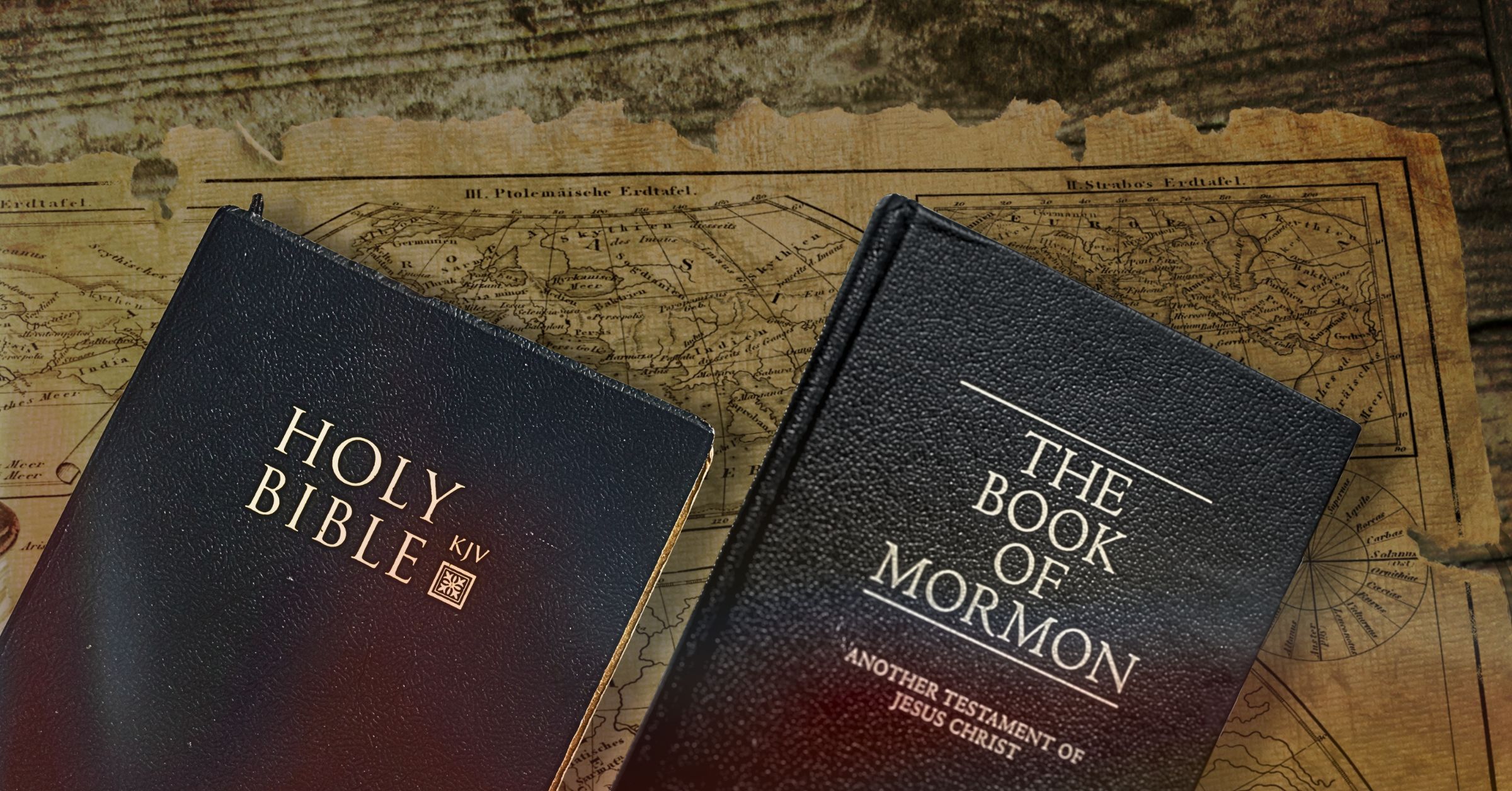
Bart Ehrman (see timestamp 12:51 – 17:46) and Alex O’Connor (see timestamp 1:12:40 – 1:14:32) have both tried to undermine the eyewitness argument for Jesus’s resurrection by comparing it to the eyewitness testimony for Mormonism’s golden plates. Both Alex and Bart challenge Christian apologists with this question:

“Why do apologists reject the eyewitness testimony of Mormonism when their reasons for believing in Christianity are founded on the eyewitness testimony of the apostles?”

Are they right that this is a double standard? After all, Mormonism has a total of twelve eyewitnesses for its key claim about the golden plates. In addition to Joseph Smith’s testimony, eight witnesses say they saw the golden plates, plus three more witnesses say that an angel showed them the plates. There are a few simple points of response to this specific challenge.

  1. Christianity “Got There First”
    Christianity is privileged over Mormonism because it ‘got there first’. Just like Islam, Mormonism tries to build upon the historic Christian message.[1] And just like Islam, Mormonism is birthed from a supposed angelic appearance. But the apostle Paul writes all the way back in c.50 A.D.:

“But even if we or an angel from heaven should preach to you a gospel contrary to the one we preached to you, let him be accursed” (Galatians 1:8 ESV).

He also writes in 2 Corinthians 11:12-15 (ESV) that Satan disguises himself as an angel of light, whose servants likewise disguise themselves as servants of righteousness. Moreover, the Bible ‘signs off’, as it were, with a warning for all future generations. Jesus says in Revelation 22:18 (ESV):

“I warn everyone who hears the words of the prophecy of this book: if anyone adds to them, God will add to him the plagues described in this book…” 

And yet the Book of Mormon comes along in the 19th century and church authorities say in its introduction:

“The Book of Mormon was the most correct of any book on earth, and the keystone of our religion, and a man would get nearer to God by abiding by its precepts, than by any other book.”

The reality is that Christianity’s eyewitness testimony trumps Mormonism’s by the rule: first-come-first-served. Christianity is smart; it safeguards itself against specific alterations of its message, and that is the privilege it gets for being first on the scene. It beats Mormonism by 1800 years.

  1. For Mormonism, eyewitness testimony is unstable.
    Mormonism’s eyewitness testimony is unstable in comparison to the testimony of the apostles. The apostles’ eyewitness testimony is unified and doesn’t carry the stain of eventual scandal, faction, and dissension.

Mormonism’s witness history is much more stained. With the Church of Jesus Christ of Latter-Day Saints’ own official website, we learn that each of the three witnesses – who claimed to see an angel – later fell out with Joseph Smith and never reconciled with him. We also learn that some of the eight witnesses (who were mostly made up of two families) eventually became estranged from the LDS church.

In apostolic Christianity, there is no falling out between any of the key figures such that a key eyewitness like Paul, Peter, James, or John walks away from the church or is excommunicated from the church.

An important principle from Detective J. Warner Wallace is that we can learn a lot by observing the lives of eyewitnesses. Disunity stains the record of Mormon witnesses in their relationships with either the LDS church or with Joseph Smith, adding doubt to key elements of their testimony about the golden plates.

  1. Only One of These has a Support Structure
    Christianity’s testimony has a supporting structure; Mormonism’s doesn’t. To acknowledge Bart and Alex’s challenge; Christianity’s eyewitness testimony certainly has important evidential value. The apostles were willing to go to their deaths for what they believed, and it is difficult to pin them down for a false motive if they merely invented Christianity for personal gain.

But apostolic eyewitness testimony is only one piece of a broader cumulative case for Christianity.[2] The apostles proclaimed Jesus’s resurrection not only because they were convinced that they saw him alive, but they did so at personal cost and while appealing to the greater metaphysical story of the Old Testament (see for example Peter’s speeches in Acts 2-3, or Paul’s creed in 1 Corinthians 15:3-4).

And we also have non-Christian sources, written within 100 years of Jesus’s lifetime, from which we can verify and reconstruct the apostolic claim of the resurrection.[3] Notwithstanding the argument for biblical reliability, Christianity can still make a case for the resurrection even without the Bible.

Not so on Mormonism. Mormonism’s claim to the golden plates is isolated and does not locate itself within a greater plausibility structure (for instance, nowhere are the plates prophesied about in the Bible). And Mormonism cannot appeal outside of itself – neither to non-Mormon sources nor to archaeology – to verify its eyewitness claims about the golden plates.

In summary   

Christians are not guilty of a double standard for affirming the eyewitness testimony of apostolic Christianity but rejecting the eyewitness testimony of Mormonism. Mormonism’s eyewitness testimony can be criticised for three reasons:

  1. First, for claiming to have scriptural revelation in addition to the Bible, even though the Bible explicitly warns against this.
  2. Second, for disunity amongst its witnesses.
  3. Third, for its isolated claim without a greater plausibility structure.

By contrast, Jesus’s apostles warned of future false prophets altering their message, they remained committed to unity of faith until their deaths, and they plugged their eyewitness testimony into both history and an overarching structure of scriptural fulfilment and Messianic expectation.

Eyewitness testimony is only one part of a broader cumulative case for God’s existence and Jesus’s resurrection. But Mormonism solely appeals to taking 12 witnesses at their word in an isolated claim. Mormonism’s eyewitness testimony is not the same as Christianity’s.

References:


[1] [Editor’s Note: Latter Day Saints, also known as Mormons, commonly identify as a denomination of Christianity. From the perspective of historic Christianity that label however is mistaken since historic Christianity contradicts Mormon doctrine by affirming Trinitarian monotheism, rejecting polytheism, denying any “Heavenly Wife” of Father God, and more. The theological differences between Mormonism and historic Christianity are not just “denominational” disagreements but rather heretical divergence. In this way, Mormonism is better understood as a cult offshoot departing from Christianity rather than a denomination within Christianity. In this blog, “Christianity” refers to historic/orthodox Christianity (i.e., Catholicism, Protestantism, and Eastern Orthodox) in distinction from Mormonism/Latter Day Saints.]

[2] See for example Frank Turek’s 6 Es for the reliability of the New Testament; See also J Warner Wallace: The Cumulative Case For Christianity: Death By A 1,000 Paper Cuts. Incidentally, Wallace has plenty of work on the differences between Mormonism and Christianity on his YouTube channel.

[3] Besides archaeology, the two main non-Christian sources which testify to the apostles’ claims are Roman-source Tacitus (Annals 15.44) and Jewish-source Josephus (Antiquities 18.63–4). For more on the authenticity of Josephus’s passage, see T C Schmidt’s ground-breaking 2025 book “Josephus and Jesus: New Evidence for the One Called Christ.” A helpful chapter on external corroboration of the New Testament can be read in J. Warner Wallace, “Chapter 12: Were They Corroborated?” in Cold-Case Christianity: Updated and Expanded Edition (Colorado Springs, David C Cook Publishers: 2023).

Recommended Resources: 

Another Gospel? by Alisa Childers (book)

Early Evidence for the Resurrection by Dr. Gary Habermas (DVD), (Mp3) and (Mp4)

Why We Know the New Testament Writers Told the Truth by Frank Turek (mp4 Download)

The Top Ten Reasons We Know the NT Writers Told the Truth mp3 by Frank Turek


Sean Redfearn is a former Community Youth Worker who now works for Christian Concern in Central London, UK. He completed an MA in Religion at King’s College London, is in the process of completing the MA Philosophy program at Southern Evangelical Seminary, and is a 2022 CrossExamined Instructor Academy graduate. Passionate about Jesus, he is grateful for the impact that apologetics has had on his faith.

What did Jesus mean when He said the Old Testament was all about Him? Could figures like Moses, Joshua, and Joseph actually point directly to Him? Once you see how the Bible connects from Genesis to Revelation, you’ll realize it could only have been inspired by a Divine Author.

Frank explains how God’s plan for redemption was woven into the very fabric of Scripture long before Jesus walked the earth as he answers questions like:

  • What are the three main arguments for the existence of God?
  • What is typology and how does it demonstrate the divine nature of the Bible?
  • What’s the difference between a theophany and a typology?
  • How can biblical interpretation be divided into three levels?
  • What two ways did Jesus and the apostles interpret the Bible?
  • How do Joseph, Moses, and Joshua each prefigure Christ?
  • How can the Bible’s core message be explained in three sentences?
  • What does archaeology reveal about the events in the Book of Joshua?

If the Bible isn’t true, there’s no reason to follow Jesus. But if it is, that changes everything. You’ll see why the Bible bears unmistakable marks of divine authorship—and why the evidence leaves little doubt that Jesus truly is the fulfillment of Scripture.

If you enjoyed this podcast episode PLEASE HELP US SPREAD THE TRUTH OF CHRISTIANITY BY SUPPORTING OUR MINISTRY USING THE LINK BELOW. 100% of your donation goes to ministry, 0% to buildings!

Resources mentioned during the episode:

Donate to CrossExamined
Joel Kramer: Tomb of the Exodus
The Bible You Never Knew Session #7 (only available to watch on YouTube for a limited time!)
Did Moses Foreshadow Jesus?
What REALLY Happened at Jericho?

Download Transcript


Resurrection expert Dr. Gary Habermas returns to discuss Volume 3 of his magnum opus, ‘On the Resurrection: Scholarly Perspectives‘, which includes 500+ scholarly treatments related to the resurrection. From far-left critics to conservative theologians, this collective volume provides a strong overview of everything that has ever been written about the resurrection and includes over 8,000 footnotes!

During their conversation, Frank and Gary answer questions like:

  • Why do critical scholars deny miracles but still affirm that Jesus was a miracle worker?
  • Why does Gary think many atheists don’t want to say “I do” to Jesus?
  • Is biblical inerrancy a requirement for the Gospel and what about apparent Bible contradictions?
  • What are the 3 things you need in order for Christianity to be true?
  • How do you respond to those who say the deity of God evolved over time?
  • What do creeds teach us about high Christology and how did it get started?
  • What’s the best explanation for the rapid growth of early Christianity?

If you’re looking for the most comprehensive survey of scholarship for and against the resurrection, this is it! Whether you’re a skeptic, seeker, or committed believer, this discussion offers rich insight and a reason to take the resurrection seriously. As Gary would say, “It’s a bold argument to say that Jesus rose from the dead, but try to get out of it!”

If you enjoyed this podcast episode PLEASE HELP US SPREAD THE TRUTH OF CHRISTIANITY BY SUPPORTING OUR MINISTRY HERE. 100% of your donation goes to ministry, 0% to buildings!

Resources mentioned during the episode:

On the Resurrection: Evidences – Volume 1
On the Resurrection: Refutations – Volume 2
On the Resurrection: Scholarly Perspectives – Volume 3
GaryHabermas.com
Volume 1 Podcast – Did Jesus REALLY Rise From the Dead?
Volume 2 Podcast – Do Naturalistic Alternatives to the Resurrection Work?

Download Transcript


Is it possible that Jesus, the most influential person in history, was just a fictional character? In this midweek podcast, Frank responds to a question from Elijah, a medical student in Ghana, whose evolutionist professor seems unwilling to consider that Jesus existed unless Elijah can provide first century sources from outside of the Bible. What’s the most effective way for Elijah to engage with his teacher’s skepticism? Join Frank as he explores these questions and more, including:

  • How can you respectfully defend your faith in the classroom?
  • What historical and archaeological evidence confirms Jesus’ existence?
  • Are extra-biblical sources more credible than the New Testament writers?
  • What common presuppositions do atheists hold, and how can you respectfully challenge them?
  • Are there any atheist or agnostic New Testament scholars who believe that Jesus never existed?
  • Was Christianity a Roman invention designed to control the masses?
  • What unique characteristics does Jesus hold that we don’t find in any other human being?

Tune in as Frank not only shares the facts, but also gives practical advice on engaging skeptics with confidence, clarity, and respect. This short but content-packed episode is full of valuable resources, so listen closely and be sure to check out the links below!

Is there a guest or topic you’d love to hear discussed on a future podcast? We’d love to hear your feedback and suggestions! You can take our 5-minute podcast survey HERE.

Resources mentioned during the episode:

BOOK: I Don’t Have Enough Faith to Be An Atheist by Frank Turek and Norman Geisler
BOOK: Hollywood Heroes: How Your Favorite Movies Reveal God by Frank & Zach Turek
BOOK: Stealing from God: Why Atheists Need God to Make Their Case by Frank Turek
BOOK: Can Science Explain Everything? by John Lennox
BOOK: God’s Undertaker: Has Science Buried God? by John Lennox
BOOK: Return of the God Hypothesis by Stephen C. Meyer
BOOK: Tactics by Gregory Koukl


Download Transcript


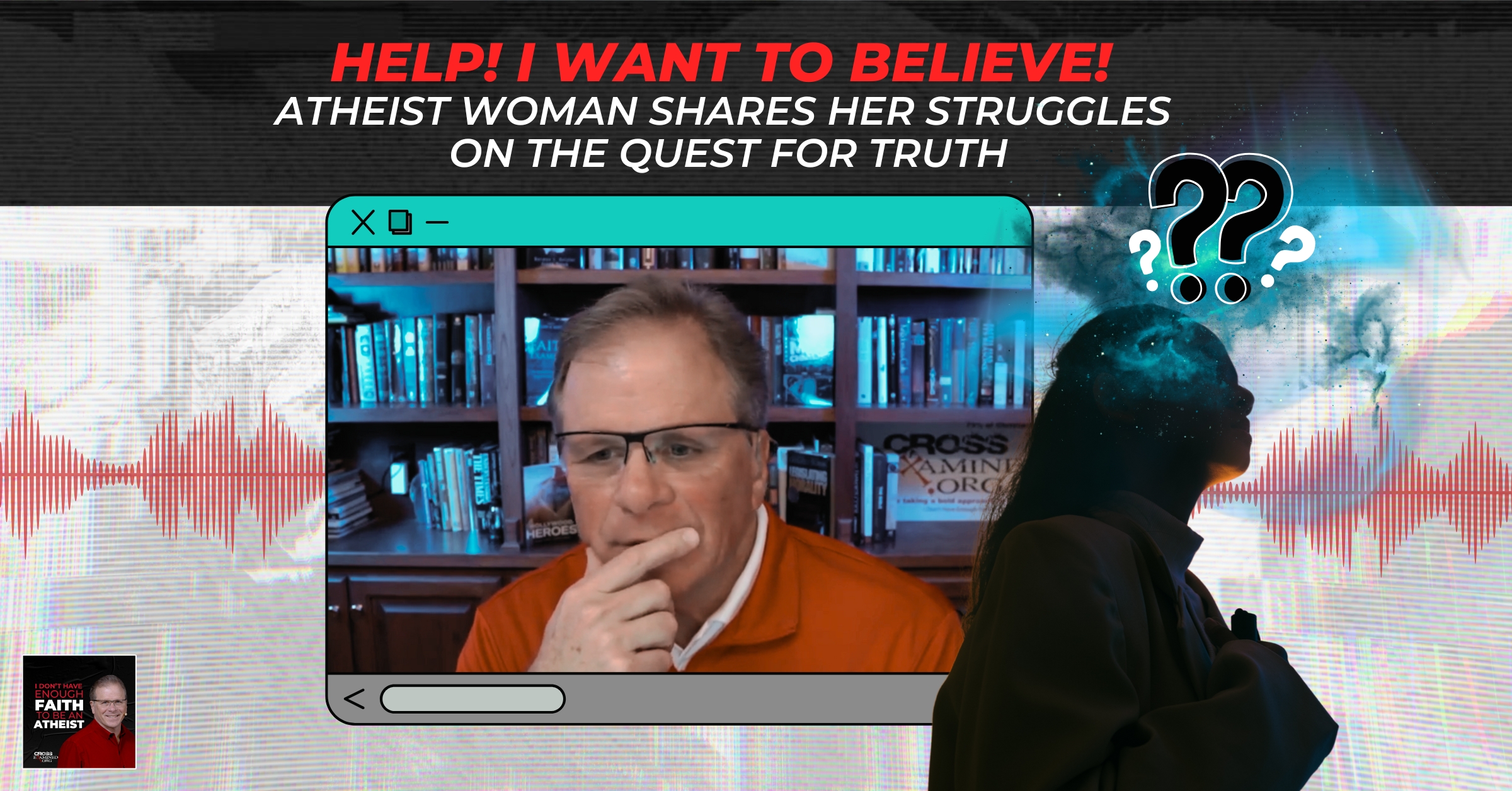
Are you willing to follow the evidence wherever it leads? What if it goes against everything you previously believed to be true? In this solo episode of ‘I Don’t Have Enough Faith to Be an Atheist’, Frank unpacks a thought-provoking email from an atheist in France, who’s innate fear of death now has her questioning everything she was taught about the world. Tune is as he addresses her many questions and concerns, and shares her journey from staunch materialism to becoming open to Christianity. During the episode he’ll tackle questions like:

  • Is it possible that Jesus had a twin brother that nobody knew about?
  • Is believing in miracles totally irrational?
  • Would frequent miracles help the case for Christianity?
  • Which one should we trust more–the evidence or our feelings?
  • Is being a Christian like believing in Santa Claus?
  • Do we always have to see something to believe it?
  • Should Christians always carry the burden of truth?

Whether you identify as an atheist, agnostic, or are struggling through your own season of doubt, this episode is packed with some of the strongest arguments for the truth of Christianity and will challenge you to critically examine your worldview, explore the evidence for the resurrection of Jesus, and consider what’s at stake if Christianity is true. You don’t need all the answers right now, but our hope is that this conversation will inspire you to investigate further—and maybe even take a step toward embracing THE truth. If Christianity were true, would YOU become a Christian?

If you enjoyed this podcast episode PLEASE HELP US SPREAD THE TRUTH OF CHRISTIANITY BY SUPPORTING OUR MINISTRY HERE. 100% of your donation goes to ministry, 0% to buildings!

Resources mentioned during the episode:

BOOK: I Don’t Have Enough Faith to Be an Atheist by Frank Turek
BOOK: Stealing from God by Frank Turek
BOOK: Return of the God Hypothesis by Stephen Meyer
BOOK: Mere Christianity by C.S. Lewis
Blog Series: Does God Whisper? by Greg Koukl
Sean McDowell YouTube Video – The Top 5 Verified Near-Death Experiences


Download Transcript


By Al Serrato

We all intuitively seek the best explanation for a set of facts or circumstances. It’s called abductive reasoning. Detectives make use of this method of reasoning when endeavoring to solve a crime; they put the pieces together so that a picture of what occurred emerges in sufficient detail to have confidence that it is true. Parents do it when they notice that a freshly baked pie has a piece missing and little Johnny has crumbs on his fingers and fruit staining his lips. Perfect knowledge is not required to know with sufficient certainty what occurred.

Abductive Reasoning in Christian Apologetics

As it relates to apologetics, abductive reasoning is a formal way of supporting the case for the validity of Christian truth claims. Though there are dozens of pieces of evidence to support the belief that the Resurrection took place, many apologists will make the case using a “minimal facts” approach. These generally undisputed facts include that Jesus lived, that he was put to death on a Roman cross, that his tomb was later found empty, and that his followers experienced encounters with him which were, simply put, life changing. These followers included skeptics who knew him well, such as his brother James; zealots who were persecuting his followers, such as Paul; and numerous men and women who had been following him during his earthly ministry.

A Cumulative Case

What best accounts for these well-established facts? Could it be they were all hallucinating? That makes little sense as we know that hallucinations do not occur in mass settings. Were they simply mistaken about who it was they were seeing? This too lacks explanatory appeal as mistaken identification is not plausible for family members and close friends and certainly not for many such people. Was it simply wishful thinking? While his followers no doubt missed him dearly, it is not reasonable to conclude that they would face death by insisting that he was still alive, when they knew he was not. Nor would wishful thinking explain the change in those who were initially persecuting Jesus’ followers, nor for those who only became followers after his death. Seeing that the cumulative case points to the fact of the Resurrection can be a powerful way to support the faith.

Losing the Case Before the Courtroom

But many remain unconvinced. When I have encountered such people, I have found that by and large they do not employ abductive reasoning as described above. They have not assessed and considered the piles of evidence from history to determine what other reasonable inference would better fit the known facts. Instead, they begin with the presupposition that miracles – which of course include resurrection from the dead – simply cannot occur. Consequently, any explanation of the historical facts and events which posit a miracle are to be rejected out of hand. The case is lost before it is even considered.

In short, many argue that relying on the possibility of a miracle is simply an admission of ignorance. If you cannot first explain how the miracle occurred, they argue, you should not be able to rely on it.

We can know THAT it happened without knowing HOW it happened.

This challenge to provide an explanation for the “best explanation of the facts” – that is, to explain the miracle – is clever but misplaced. There are many circumstances in which we can know something to be true, or to work, without knowing how it is that this is so. Take our ability to reason or our native sense of fair play: I make use of these things even though I have no way of explaining how reason works, or why I should be able to rely on it to reach true conclusions. I cannot explain how I know that “playing fair” is something that should matter to me. Consciousness is another example: in operating rooms around the world, anesthesiologists make use of drugs that can put people “under” and then restore them to consciousness without knowing how it is that this occurs. They understand the effect these drugs have on the cellular level, and they can measure differences in brain wave activity, but understanding how a grouping of brain cells goes from conscious to unconscious and back is still beyond scientific understanding. Though not usually considered as such, consciousness and reason are themselves “miraculous” – no sufficient naturalistic processes can account for them.

So, if the evidence that a man was put to death and then appeared again in a re-animated and enhanced body is sufficiently credible, then the fact that we cannot currently “explain” how it occurred does not prove that it did not occur. Consider for a moment the many medical “miracles” that have occurred. There are countless cases in which a disease process stops, or reverses, for reasons that are unclear, at least at present. As knowledge and technology advance, some of these miracles will be explained through naturalistic mechanisms. But how can the skeptic possibly know that this will always be the case? Would this not require perfect knowledge on his part, in order to know with certainty that departures from the laws of nature can never occur?

There is nothing wrong with wanting to know more, with seeking more knowledge and more information to get the “how” questions answered. There is nothing wrong with trying to rule out all naturalistic explanations before considering the supernatural. And it may be, in the end, that additional knowledge will modify, or perhaps even change, some of our views.

But refusing to go where the evidence leads because of a belief that supernatural events are “impossible” is a reflection of underlying bias, not an expression of enlightened thinking.

Recommended resources related to the topic:

Miracles: The Evidence by Frank Turek DVD and Mp4

Two Miracles You Take With You Everywhere You Go by Frank Turek DVD, Mp3 and Mp4

Early Evidence for the Resurrection by Dr. Gary Habermas (DVD), (Mp3) and (Mp4)

Debate: What Best Explains Reality: Atheism or Theism? by Frank Turek DVD, Mp4, and Mp3 


Al Serrato earned his law degree from the University of California at Berkeley in 1985. He began his career as an FBI special agent before becoming a prosecutor in California, where he worked for 33 years. An introduction to CS Lewis’ works sparked his interest in Apologetics, which he has pursued for the past three decades. He got his start writing Apologetics with J. Warner Wallace and Pleaseconvinceme.com.


Is God really there for me? God, do you see? Do you hear my prayer? Experiences such as job loss, broken relationships, mental illness, or any unyielding pain can stir up questions of doubt. Doubt is standing at your door desiring to chip away at your faith. During these seasons of sorrow and pain, many days can be filled with questions like: Why are you silent? Why didn’t you save them? Why won’t you show them they are wrong? Will you resolve the situation? When you feel as if there is no answer, doubt festers. Is what I believe true? Lest someone think that non-religious persons are different, C.S. Lewis’s personal comment is very instructive.

“Now that I am a Christian, I do have moods in which the whole thing looks very improbable, but when I was an atheist, I had moods in which Christianity looked terribly probable.”[1]

Evidence can aid in dismantling doubts, and though far from being exhaustive, this article will highlight three reassurances that can start the process of dismantling those doubts about Christianity.

Evidence Reassures

When you doubt, remember you are not alone. Recall John the Baptist who appears to be wrestling with doubt while he is in prison. Although he had baptized Christ, he is later taken to prison and questions if Jesus is the Messiah. Matthew writes, “Now when John, while imprisoned, heard of the works of Christ, he sent word by his disciples and said to Him, “Are You the Expected One, or shall we look for someone else?” (Matt 11:2-3; NASB). We don’t know exactly what John was thinking, but we do know he is seemingly doubting. Jesus lovingly responds without rebuke and instead sends word of the miracles. Matthew writes, “Jesus answered and said to them, “Go and report to John what you hear and see: the blind receive sight and the lame walk, the lepers are cleansed, and the deaf hear, the dead are raised up, and the poor have the gospel preached to them” (Matt 11:4-5). The miracles are delivered as signs of comfort to reassure, strengthen, and dismantle the doubt John is experiencing.

Evidence Reminds

Now you might be wondering, where is my miracle to solve my pain and sorrow? It’s possible John the Baptist could have asked the same question. C. S. Lewis notes it seems easy to believe when you are not the patient, but suppose you are in surgery with a good surgeon with wholly good intentions. Lewis writes, “If he yielded to your entreaties if he stopped before the operation was complete, all the pain up to that point would have been useless.[2] God reminds

us in pain that he is with us and doing something, just like he was with Joseph in the Old Testament (Acts 7:9; 2 Cor 4:16-18; Rom 5:3-5). Remember when Job was suffering, and his wife wanted him to curse God? He asked a significant question, “Shall we indeed accept good from God and not accept adversity” (Job 2:10)?

In times of questioning and doubt, who is Jesus? He is the Son of Man who came to serve and to give His life as a ransom for many (Matt 20:28). His life reminds us of his love for us. The eyewitness accounts remind us that Jesus, too, suffered for a little while, but ultimately, He conquered death. 1 Corinthians 15:3-7 spotlights the eyewitness accounts of Jesus’ death, burial, and resurrection. Paul writes to remind the believer that Cephas, James, the Twelve, and more than five hundred brothers, and sisters witnessed Christ overcoming death.

Evidence Transforms

The disciples in 1 Corinthians 15:3-7 are the same disciples who had earlier abandoned Jesus during his trial before his crucifixion. The ones that lacked the courage to stand with Jesus possibly due to their doubts or uncertainty. What changed? Jesus’s disciples and Paul were transformed after their encounter with the risen Jesus. They became bold witnesses willing to die for Christ. Paul changed from persecuting Christians to sharing the gospel with the world. Why would anyone be willing to face persecution or die for something that is untrue? Sean McDowell attests regarding the Apostles of Christ historically “The evidence shows that some really died as martyrs, and that none recanted.”[3]

Transformation for people happens all the time; what is different about the disciples? They were eyewitnesses; they did not believe in a tradition. They believed what they saw firsthand. Too, these transformational encounters with the risen Jesus provide hope for us in our doubt. John is providing encouragement to the followers of Jesus stating, “These things I have written to you who believe in the name of the Son of God, so that you may know that you have eternal life” (1 John 5:13). It is so we may know and believe. This is encouragement for all believers.

Summing it all up

In conclusion, please note this is not a one-stop article that erases all doubt or pain, but it is a reminder that you are not alone in your doubt, and contemplating the evidence can reassure, remind, and transform our hearts through the work of the Holy Spirit. God is there for you and uses human agents in the Church to encourage us as we wrestle with doubt. People have wrestled with the ways of God throughout the Psalms and many other pages of the Bible. But hopefully, as you work through your doubts, this evidence can play a role in strengthening the weary traveler. The disciples testify to the risen Lord. He will one day establish a government with perfect justice and love. He will wipe away every tear, and suffering will be no more; doubt will be gone. Until then, don’t lose heart in your doubts; wrestle through them and ask God to dismantle doubts by reassuring, reminding, and transforming you to see with his eyes and heart.


Footnotes

[1] C. S. Lewis, Mere Christianity (New York: The Macmillan Company, 1952), p. 123.

[2] C. S. Lewis, A Grief Observed (New York, NY: Harper One, 1961), 43.

[3] Sean McDowell, The Fate of the Apostles (Burlington, VA: Ashgate Publishing, 2015), 260.


Recommended resources related to the topic:

I Don’t Have Enough Faith to Be an Atheist (Paperback), and (Sermon) by Norman Geisler and Frank Turek

The New Testament: Too Embarrassing to Be False by Frank Turek (DVD, Mp3, and Mp4)

Why We Know the New Testament Writers Told the Truth by Frank Turek (DVD, Mp3 and Mp4)

When Reason Isn’t the Reason for Unbelief by Dr. Frank Turek DVD and Mp4

Oh, Why Didn’t I Say That? The Hiddenness of God: Why Isn’t God More Obvious? by Dr. Frank Turek DVD, Mp3, and Mp4 Download


_____________________________________________________________________________________________________________________________________________________

Deanna Huff is a wife and mother. She has been teaching and training for the last twenty years equipping people to know their Christian faith and share it with others. She has led many seminars for the Baptist General Convention of Oklahoma, Oklahoma Ladies Retreat, and the State Evangelism Conference. She taught high school students for ten years at Christian Heritage Academy, in Bible, Universal History, Apologetics and Philosophy. Deanna is a Ph.D. candidate in Apologetics and Theology at Liberty University. She holds a Master of Theology in Apologetics and Worldview from Southern Baptist Theological Seminary, a Master of Divinity with Biblical Languages from Southwestern Baptist Theological Seminary and a Bachelor of Arts from the University of Oklahoma.

Originally posted at: https://bellatorchristi.com/2024/02/04/dismantling-doubt/

Over the years in my work as a public apologist, I have spoken with many dozens of ex-Christians who have renounced their faith and become atheists, as well as numerous individuals who still consider themselves believers but nonetheless are struggling seriously with intellectual doubts concerning the veracity of the Christian faith. In addition, I have watched literally hundreds of YouTube videos wherein a testimony is given of one’s journey out of the Christian faith towards atheism. Through listening to countless people in this situation, I have come to realize how difficult it is for believers to express to members of their church or Christian community that they are struggling with doubts (presumably because to express that one struggles with doubt carries a negative stigma in many churches today).

Struggling with Doubt?

God has therefore placed a burden on my heart for Christians who wrestle with doubts, and I have for several years offered a free service for Christians who wrestle with intellectual doubts. There is a form on my website people can fill out and I endeavor to set up a meeting (normally online) with them to discuss their doubts in confidence.

One of the things I try to do when counseling someone who is walking through doubt is to help them to develop a protocol for managing doubt in an intellectually responsible way and to make them aware of intellectual pitfalls that can ensnare the unwary. In this and future articles, I want to unpack some of those common pitfalls.

Needing Closure?

There is a phenomenon in psychology, which can be an impediment to sound critical thinking. That is, the need for cognitive closure. Wikipedia defines it this way:

Closure or need for closure (NFC) (used interchangeably with need for cognitive closure (NFCC)) are social psychological terms that describe an individual’s desire for a firm answer to a question and an aversion toward ambiguity. The term “need” denotes a motivated tendency to seek out information.

Different people have varying levels of tolerance for mystery and ambiguity. Individuals with a high need for cognitive closure are more prone to walk away from the Christian faith than individuals with a lower need. For some people, in order to be content within one’s worldview, satisfactory answers must exist to all possible questions and objections that might be raised against it.

It is important, however, that we do not become too fixated on the objections to Christianity that we miss the forest for the trees, losing sight of the avalanche of positive confirmatory evidence that cumulatively demonstrates that Christianity is true. Because we have such robust reasons to think Christianity is true, we can justifiably say,

“I don’t know why God permits so much suffering in the world. But I have enough reasons to believe in the God of the Bible and that He is good that I am willing to trust that there is some morally sufficient explanation for why there is so much suffering, even if I do not yet know what that explanation is.”

Does the problem of evil, by itself, discredit Christianity? 

Indeed, the argument from evil, especially natural evil, has been wielded as a cumulative counter-case that competes with the case offered in confirmation of Christianity. An important point to bear in mind when dealing with this subject, however, is that successive pieces of evidence are dependent rather than independent. To see this, suppose that we were to make a long list of specific cases of human and animal suffering for which we do not see any obvious purpose. Let us call them E1, E2, …, En. If we were to take one of them (say, E1) and ask how it affects the probabilities of theism (T) and atheism (~T), then we might say P(E1|~T)/P(E1|T) = k, where k >>1. For the sake of argument, let us suppose that k = 100. That is to say, the probability of E1 is 100 times greater given the falsehood of theism than given its being true. In order to make the cumulative case, we need to bring in additional pieces of evidence. But do they have the same epistemic force as the first one did? This is not at all clear. After all, if God were to have, however unexpectedly, some morally sufficient reason for permitting E1, then it is quite reasonable to expect that God might well have a similar reason for permitting E2, and so forth. The pieces of evidence are all fundamentally similar, all being instances of the suffering of conscious beings. But if God has a morally sufficient reason for one, that same justification may well also explain a host of other similar cases. Now contrast this to the cumulative case for the truth of theism and indeed Christianity. Not only is it extensive, but it is also varied in kind. It is therefore much more difficult to conceive of there being a single alternative explanation for a widely varied evidence that would all be expected if the hypothesis in question were true. It is for this reason that I submit that counter-evidence such as the problem of evil be considered not in isolation but within the broader context of the overall evidence taken as a whole.

What about Evidence Doesn’t Seem to Fit?

Scientific theories often have evidence both supporting and conflicting with it. But anomalous data should not automatically overhaul a well-supported theory, even if a satisfactory explanation of the anomalous data has not yet been proposed. Likewise, I would argue, the strength and varied nature of the positive evidence for Christianity should cause us to expect that explanations of the anomalous data, for which we do not yet have a satisfactory account within the framework of the Christian worldview, in fact exists — even though we do not yet know what that explanation is.

The English rhetorician, logician, economist, academic, and theologian Richard Whately (1787-1863) put it this way:

“Similar to this case is that which may be called the Fallacy of objections; i.e. showing that there are objections against some plan, theory, or system, and thence inferring that it should be rejected; when that which ought to have been proved is, that there are more, or stronger objections, against the receiving than the rejecting of it. This is the main, and almost universal Fallacy of anti-christians; and is that of which a young Christian should be first and principally warned. They find numerous ‘objections’ against various parts of Scripture; to some of which no satisfactory answer can be given; and the incautious hearer is apt, while his attention is fixed on these, to forget that there are infinitely more, and stronger objections against the supposition, that the Christian Religion is of human origin; and that where we cannot answer all objections, we are bound, in reason and in candour, to adopt the hypothesis which labours under the least. 


That the case is as I have stated, I am authorized to assume, from this circumstance,—that no complete and consistent account has ever been given of the manner in which the Christian Religion, supposing it a human contrivance, could have arisen and prevailed as it did. And yet this may obviously be demanded with the utmost fairness of those who deny its divine origin. The Religion exists; that is the phenomenon. Those who will not allow it to have come from God, are bound to solve the phenomenon on some other hypothesis less open to objections. They are not, indeed, called on to prove that it actually did arise in this or that way; but to suggest (consistently with acknowledged facts) some probable way in which it may have arisen, reconcilable with all the circumstances of the case. That infidels have never done this, though they have had 1800 years to try, amounts to a confession, that no such hypothesis can be devised, which will not be open to greater objections than lie against Christianity.” [i]

Indeed, there is no shame for a Christian in having unanswered questions. The question is not “are there questions about Christianity for which there are no satisfactory answers?” Rather, the question is, “are there more numerous and more substantive objections to believing the gospel or to disbelieving the gospel?” Every worldview has its share of unanswered questions. Rejecting Christianity because there are unanswered questions in favor of an alternative worldview that raises even more numerous and more substantive unanswered questions does not resolve the problem.

Every worldview has its share of unanswered questions.

That’s a Good Question!

I recently received an email from someone who was struggling with doubt over the question of why God creates people whom He knows for sure will choose to reject Him and will therefore end up estranged from God’s favorable presence in the hereafter. This is a very good question, and I do not believe anyone really knows the answer since we lack complete information about the relationship between divine sovereignty, divine foreknowledge, and human free will, etc. If Christianity is true, however, we would not be expected to have answers to most questions like this. So, the fact that we do not, in fact, have answers to such questions does not, I would argue, really count as a serious blow against Christianity.

Note that saying we wouldn’t be expected to have answers is quite different from saying that the questions are unanswerable. That is why many Christians get drawn into a speculative response (i.e. “perhaps it is because…”). There is nothing wrong with such responses per se. But precisely because we do not know, we should not get too invested in such speculations. Nor should we treat their failure as signifying something grave.

“Help My Kid is Deconstructing!” [CE Podcast]

Difficult questions about God’s sovereignty and salvation program must always be accompanied by a consideration of the plausibility that there is some answer to those questions that has not been disclosed to us, is beyond our finite ability to comprehend, or simply has not occurred to us. In other words, is it a problem that overhauls the vast confirmatory evidence for Christianity and thereby warrants rejection of the Christian faith, or is it a question with which we can live contentedly in the absence of an answer? An unanswered question is not the same thing as an epistemic warrant for rejection of Christianity.

The atheist so frequently assumes the high ground when it comes to epistemic humility. When pressed on where the Universe or life came from the atheist typically responds “I don’t know.” They are content with not knowing. Why, then, should the same luxury not be extended to the Christian when it comes to why God has done things this or that way? We need to be willing to accept an element of mystery when it comes to divine action. Unlike God, we do not have the box top, as it were, of the jig saw, which reveals how all of the pieces are meant to fit together.

Therefore, we just ought to trust God that he knows what He is doing. As the Proverb states, “Trust in the Lord with all your heart, and do not lean on your own understanding. In all your ways acknowledge him, and he will make straight your paths” (Proverbs 3:5-6).


Footnotes:

[i] Richard Whately, Elements of Logic, 9th ed. (London: Longmans, Green, Reader, & Dyer, 1870), pp. 144-45.

Recommended resources related to the topic:

Why Is God Ignoring Me? (DVD), and (mp4 Download) by Gary Habermas

When Reason Isn’t the Reason for Unbelief by Dr. Frank Turek DVD and Mp4

Oh, Why Didn’t I Say That? The Hiddenness of God: Why Isn’t God More Obvious? by Dr. Frank Turek DVD, Mp3, and Mp4 Download

I Don’t Have Enough Faith to Be an Atheist (Paperback), and (Sermon) by Norman Geisler and Frank Turek

Why Science Needs God by Dr. Frank Turek (DVD and Mp4)


___________________________________________________________________________________________________________________________________________________

Dr. Jonathan McLatchie is a Christian writer, international speaker, and debater. He holds a Bachelor’s degree (with Honors) in forensic biology, a Masters’s (M.Res) degree in evolutionary biology, a second Master’s degree in medical and molecular bioscience, and a Ph.D. in evolutionary biology. Currently, he is an assistant professor of biology at Sattler College in Boston, Massachusetts. Dr. McLatchie is a contributor to various apologetics websites and is the founder of the Apologetics Academy (Apologetics-Academy.org), a ministry that seeks to equip and train Christians to persuasively defend the faith through regular online webinars, as well as assist Christians who are wrestling with doubts. Dr. McLatchie has participated in more than thirty moderated debates around the world with representatives of atheism, Islam, and other alternative worldview perspectives. He has spoken internationally in Europe, North America, and South Africa promoting an intelligent, reflective, and evidence-based Christian faith.

Originally published at: https://jonathanmclatchie.com/the-need-for-cognitive-closure-in-dealing-with-doubts/

By Jonathan McLatchie

Have you ever wondered why some people are able to think about the world clearer, forming more balanced and nuanced views about controversial topics, than others? Have you ever pondered what thinking patterns are most conducive to good reasoning and well supported conclusions, and how one might avoid the pitfalls of confirmation bias and self-deception? In her book The Scout Mindset: Why Some People See Things Clearly and Others Don’t, Julia Galef (host of the podcast “Rationally Speaking” and co-founder of the Center for Applied Rationality) attempts to answer these questions. [i]In the first half of this essay, I shall summarize Galef’s insights; in the latter half, I shall discuss what lessons we as Christian scholars and apologists can glean from the book.

A Summary of The Scout Mindset

Galef distinguishes between what she dubs “the soldier mindset” and “the scout mindset.” According to Galef, the soldier mindset, also known as motivated reasoning, leads us to loyally defend the stronghold of our belief commitments against intellectual threats, come what may. This involves actively seeking out data that tends to confirm our beliefs, while rationalizing or ignoring contrary data that tends to disconfirm them. On the other hand, the scout mindset attempts to honestly determine how the world really is – as Galef defines it, the scout mindset is “the motivation to see things as they are, not as you wish they were,” (p. ix).

For the one in soldier mindset, argues Galef, reasoning is like defensive combat – “it’s as if we’re soldiers, defending our beliefs against threatening evidence,” (p. 7). For the soldier, to change one’s mind – to admit that one was wrong – is seen as surrender and failure, a sign of weakness. One’s allegiance is to one’s cherished beliefs rather than to the truth, even if those beliefs conflict with the balance of evidence. For the soldier, determining what to believe is done by asking oneself “Can I believe this?” or “Must I believe this?”, depending on one’s motives. For the one in scout mindset, by contrast, reasoning may be likened to mapmaking, and discovering that you are wrong about one or more of your beliefs simply means revising your map. Thus, scouts are more likely to seek out and carefully consider data that tends to undermine one’s own beliefs (thereby making one’s map a more accurate reflection of reality), deeming it more fruitful to pay close attention to those who disagree with their own opinions than to those whose thinking aligns with them.

The prevalence of soldier mindset in society today is aptly demonstrated by a sobering study, cited by Galef, in which participants were tested in regard to their “scientific intelligence” with a set of questions.[ii] Questions were divided into four categories – basic facts; methods; quantitative reasoning; and cognitive reflection. Remarkably, when conservative republican and liberal democrat participants were also asked whether they affirmed the statement that there is “solid evidence” of recent global warming due “mostly” to “human activity such as burning fossil fuels,” there was a positive correlation between “scientific intelligence” and divergent opinion. That is to say, the higher one’s scientific intelligence, the more likely a liberal democrat was to affirm the statement and the more likely a conservative republic was to disagree with it. This is not the only study to reveal the tendency for more educated people to diverge in opinion on controversial topics. Another study surveyed people’s views on ideologically charged topics, including stem cell research, the Big Bang, human evolution, and climate change.[iii] Their finding was that “Individuals with greater education, science education, and science literacy display more polarized beliefs on these issues,” though they found “little evidence of political or religious polarization regarding nanotechnology and genetically modified foods.” Galef summarizes the implications of those studies: “This is a crucially important result, because being smart and being knowledgeable on a particular topic are two more things that give us a false sense of security in our own reasoning. A high IQ and an advanced degree might give you an advantage in ideologically neutral domains like solving math problems or figuring out where to invest your money. But they won’t protect you from bias on ideologically charged questions,” (p. 48).

Though there is an element of scout and soldier in all of us, Galef argues, “some people, in some contexts, are better scouts than most,” being “more genuinely desirous of the truth, even if it’s not what they were hoping for, and less willing to accept bad arguments that happen to be convenient. They’re more motivated to go out, test their theories, and discover their mistakes. They’re more conscious of the possibility that their map of reality could be wrong, and more open to changing their mind,” (pp. 14-15). On the flip side of the coin, often “[w]e use motivated reasoning not because we don’t know any better, but because we’re trying to protect things that are vitally important to us – our ability to feel good about our lives and ourselves, our motivation to try hard things and stick with them, our ability to look good and persuade, and our acceptance in our communities,” (p. 26). For example, if we are being honest, how often do we, when considering a claim, “implicitly ask ourselves, ‘What kind of person would believe a claim like this, and is that how I want other people to see me?’” (p. 23). Such thinking fuels soldier mindset. In practice, we cannot eliminate soldier mindset from our reasoning processes entirely. After all, it is our default mentality. By nature, we like having our beliefs confirmed. But we can take intentional steps towards cultivating more of a scout mindset.

What are some of the key characteristics that distinguish scout from soldier mindset? In chapter four, Galef gives five features that define a scout. The first is the ability to tell other people when you realize that they were right. Galef caveats this quality by noting that “Technically, scout mindset only requires you to be able to acknowledge to yourself that you were wrong, not to other people. Still a willingness to say ‘I was wrong’ to someone else is a strong sign of a person who prizes the truth over their own ego.” The second quality is reacting well to criticism. Galef explains, “To gauge your comfort with criticism, it’s not enough just to ask yourself, ‘Am I open to criticism?’ Instead, examine your track record. Are there examples of criticism you’ve acted upon? Have you rewarded a critic (for example, by promoting him)? Do you go out of your way to make it easier for other people to criticize you?” (p. 52). The third quality that marks out a scout is the ability to prove oneself wrong. Galef asks, “Can you think of any examples in which you voluntarily proved yourself wrong? Perhaps you were about to voice an opinion online, but decided to search for counterarguments first, and ended up finding them compelling. Or perhaps at work you were advocating for a new strategy, but changed your mind after you ran the numbers more carefully and realized it wouldn’t be feasible,” (p. 54). The fourth feature of scout mindset is to avoid biasing one’s information. “For example,” writes Galef, “when you ask your friend to weigh in on a fight you had with your partner, do you describe the disagreement without revealing which side you were on, so as to avoid influencing your friend’s answer? When you launch a new project at work, do you decide ahead of time what will count as a success and what will count as a failure, so you’re not tempted to move the goalposts later?” (p. 56). The fifth feature that Galef lists is being able to recognize good critics. Galef comments, “It’s tempting to view your critics as mean-spirited, ill-informed, or unreasonable. And it’s likely that some of them are. But it’s unlikely that all of them are. Can you name people who are critical of your beliefs, profession, or even choices who you consider thoughtful, even if you believe they’re wrong? Or can you at least name reasons why someone might disagree with you that you would consider reasonable (even if you don’t happen to know of specific people who hold those views)?” (p. 57). In summary, Galef notes, “Being able to name reasonable critics, being willing to say ‘The other side has a point this time,’ being willing to acknowledge when you were wrong – it’s things like these that distinguish people who actually care about truth from people who only think they do,” (p. 57).

Chapter 5 of the book offers five tests of bias in our reasoning. The first test is the double standard test, which essentially asks whether we apply the same standards to ourselves that we would apply to others. The second test is the outsider test, which attempts to determine how you would assess the same situation or data if you had no vested interest in the outcome. The third test is the conformity test, which attempts to discern the extent to which one’s opinion is in fact one’s own. Galef explains, “If I find myself agreeing with someone else’s viewpoint, I do a conformity test: Imagine this person told me that they no longer held this view. Would I still hold it? Would I feel comfortable defending it to them?” (p. 66). The fourth test is the selective skeptic test – “Imagine this evidence supported the other side. How credible would you find it then?” (p. 68). The final test is the status quo bias test – “Imagine your current situation was no longer the status quo. Would you then actively choose it? If not, that’s a sign that your preference for your situation is less about its particular merits and more about a preference for the status quo,” (p. 69).

Another thing that marks out a scout, according to Galef, is one’s attitude towards being wrong. Scouts, explains Galef, “revise their opinions incrementally over time, which makes it easier to be open to evidence against their beliefs,” (p. 144). Further, “they view errors as opportunities to hone their skill at getting things right, which makes the experience of realizing ‘I was wrong’ feel valuable, rather than just painful,” (p. 144). Galef even suggests that we should drop the whole “wrong confession” altogether and instead talk about “updating”. Galef explains, “An update is routine. Low-key. It’s the opposite of an overwrought confession of sin. An update makes something better or more current without implying that its previous form was a failure,” (p. 147). Galef points out that we should not think about changing our minds as a binary thing – rather, we should think of the world in “shades of grey”, and think about changing our mind in terms of an “incremental shift” (p. 140). Galef notes that thinking about revising one’s beliefs in this way makes “the experience of encountering evidence against one of your beliefs very different” since “each adjustment is comparatively low stakes” (p. 140). For example, “If you’re 80 percent sure that immigration is good for the economy, and a study comes out showing that immigration lowers wages, you can adjust your confidence in your belief down to 70 percent,” (p. 140).

Galef also points out that, when it comes to intentionally exposing ourselves to content representing the ‘other side’ of a debate in which we are interested, people tend to make the mistake of always ending up “listening to people who initiate disagreements with us, as well as the public figures and media outlets who are the most popular representatives of the other side,” (p. 170). However, as Galef explains, “Those are not very promising selection criteria. First of all, what kind of person is most likely to initiate a disagreement? A disagreeable person. (‘This article you shared on Facebook is complete bullshit – let me educate you…’) Second, what kind of people or media are likely to become popular representatives of an ideology? The ones who do things like cheering for their side and mocking or caricaturing the other side – i.e., you,” (pp. 170-171). Instead, Galef suggests, “To give yourself the best chance of learning from disagreement, you should be listening to people who make it easier to be open to their arguments, not harder. People you like or respect, even if you don’t agree with them. People with whom you have some common ground – intellectual premises, or a core value that you share – even though you disagree with them on other issues. People whom you consider reasonable, who acknowledge nuance and areas of uncertainty, and who argue in good faith,” (p. 171).

Lessons We Can Draw from The Scout Mindset

To what extent are we, as Christian scholars and apologists, cultivating a scout mindset? Too often debates between theists and atheists devolve into tribalism, an ‘us vs. them’ mentality, and a smug condescension towards those who disagree with us. But what if we saw those with whom we disagree not as enemies but as colleagues in our quest to attain a better map of reality? Our critics are those who are best placed to discover flaws in our own reasoning, which may be invisible to us. We ignore them at our peril. By listening carefully to our critics, we can construct a more nuanced, more robust worldview. And which critics of our faith are we seeking out to represent the dissenting view? Are we primarily engaging with popular but less-than-nuanced critics of Christianity, or are we actively seeking out the very best, most erudite and well-informed critics of our faith, even if less well known? Can we name some of our critics as honest and thoughtful? How are we positioning ourselves to be in the best place possible to find out we are wrong, if we are in fact wrong? If we are wrong about one or more of our beliefs, can we honestly say that we value truth enough to want to know? How do our answers to the foregoing questions bear on that latter question?

Perhaps at this juncture it should be clarified what exactly apologetics is, since there is regrettably much confusion surrounding this word, both inside and outside of the Christian community. It is commonly thought that the exercise of apologetics is contrary to open-ended inquiry where the conclusion is not stipulated a priori. However, this view is quite mistaken. While apologetics is not identical to open-ended inquiry, it is co-extensive with it in the sense that apologetics is what happens after the results of open-ended inquiry are in, and the time has come to publicize our interpretation of the data. Thus, though the term is seldom used in this context, every publication of a scientific paper is an exercise in apologetics. Charles Darwin’s Origin of Species was an exercise in apologetics since he sought to sell his interpretation of the observations that he had made on the Galapagos islands. It is common to think of apologists as playing the role of a criminal defence attorney who is committed to defending his client, come what may. In reality, however, a more apt parallel is to an investigative journalist, reporting for popular consumption the results of a fair and balanced inquiry.

Being an apologist of the gospel is no light responsibility. We are asking people to pledge their allegiance to Jesus Christ and dedicate every aspect of their life to His service. This may cost them greatly – even their life. The weight of this responsibility is emphasized by the apostle Paul himself, who stated that, if Jesus was not in fact raised, “We are even found to be misrepresenting God, because we testified about God that he raised Christ, whom he did not raise if it is true that the dead are not raised,” (1 Cor 15:15). We therefore owe it to those to whom we preach to study diligently the facts and arguments on both sides of the debate to ensure that the gospel is in fact true. We also owe it to those with whom we share the gospel to fully and completely inform them, as far as is possible, concerning the facts of the case. Too often I have seen apologists present popular arguments for Christianity but omit relevant facts that undermine the force of their argument. For some examples of this, see my recent conversation with Wesley Huff on arguments Christians should NOT use.[iv] Whenever you encounter an argument that is supportive of a position that you like, you should always, before publicly repeating the argument, conduct a thorough search for any relevant data that might reduce the evidential force of the argument. At the very least you should determine whether any academic publications, especially those critical of your beliefs, have already addressed the argument. This is but one of several ways in which you can reduce the negative effects of confirmation bias on your reasoning.

What other steps can we take to mitigate against confirmation bias? I try to make it my habit to expose myself to more material – whether that be books, articles, podcasts, videos or other media – that argues against my beliefs than those which argue for them. This reduces the likelihood of me fooling myself, and forces me to think deeper and more carefully about my beliefs, and to develop a more nuanced expression of them. It also puts me in a strong position to find out that I am wrong if I am in fact wrong about any of my beliefs. A first step towards stepping outside of your intellectual echo chamber can be recognizing that smart people can argue in good faith and yet disagree with you.

I am sometimes asked how a newcomer to religious debates may discern which apologists to listen to and whom to disregard. Of course, the difficulty here is that, in order to discern which apologists can be trusted to give reliable content, one must have already attained a certain level of knowledge about the subject. But in order to arrive at that threshold of knowledge concerning the subject, one must first determine who to receive information from. How might we escape this dilemma? One criterion of several that I often give is to be wary of anyone who asserts that all of the evidence supports their own personal view and that there is none which tends to disconfirm it. Whenever anyone tells me, concerning any complex topic (whether that be theism, Christianity, evolution or anything else), that all of the evidence is on the side of their own personal view, it leads me to reduce my confidence in their objectivity with the data, and I begin to think that confirmation bias is particularly prominent in this individual’s reasoning process. It is an intellectual virtue to be able to admit that one or more pieces of evidence tends to disconfirm your own view. Of course, presumably you also maintain that the evidence that tends to confirm your view is stronger, on balance, than that which tends to disconfirm it. Nonetheless, recognizing the existence of difficult or anomalous data is a mark of scout mindset. And how might we go about determining whether a given datum confirms or disconfirms our Christian beliefs? For each piece of data we encounter, we should ask ourselves whether that datum, considered in isolation, is more probable given Christianity or given its falsehood. If the former, then it is evidence that is confirmatory of Christianity; if the latter, then it is evidence against. Too often I see people reason that, if a set of data can be made compatible with their beliefs, then they have neutralized the objection to their beliefs. However, this approach is quite simplistic. It is nearly always possible to make discordant data compatible with your beliefs. But that does not mean that the data is not better predicted given that your beliefs are false than that they are true, or that you should not lower your confidence in those beliefs. The appropriate question, when confronted with discordant data, is not to ask “Can I believe I am still right?” Galef rightly points out that “Most of the time, the answer is ‘Yes, easily,’” (p. 141). Rather, we should ask to what extent our confidence in our beliefs needs to be updated in response to this new data.

Another criterion of a credible apologist is that he or she is willing to offer critiques of arguments presented by others on his or her own side of the debate. Are they even-handed in subjecting arguments for their own view to the same scrutiny as those put forward by those on the other side of the debate? This reveals that they are discerning and have a genuine concern for factual accuracy. How one responds to criticism, both friendly critique as well as that from dissenting voices, is also a measure of one’s concern for correct representation of information. An ability to publicly retract false or misleading statements and issue corrections goes a long way to establish one’s credibility. When we encounter a new contributor to the debate, with whose work we have not hitherto interacted, we should also fact-check their statements, going, if possible, back to the primary sources – especially when they stray into territory outside of our own domain of expertise. If they are able to sustain a track record of being reliable in their reportage of information and fully informing the audience about the relevant facts, one ought to be more inclined to trust them as a credible authority. If on the other hand they have a habit of getting things factually incorrect, one should be very hesitant to take anything they say on their word.

One should also be wary of apologists who exaggerate the strength of their argument, over-pushing the data beyond that which it is able to support. It is always better to understate the merits of one’s arguments and pleasantly surprise by overproviding, than to overstate the merits of the argument and disappoint by underproviding. This is why in my writing and public speaking I prefer to use more cautious-sounding statements like “this tends to confirm” or “this suggests” rather than bolder statements like “this proves” or “this demonstrates.” Similarly, I will speak of being “confident” rather than “certain” of my conclusions.

My enthusiastic advocacy for integrity and nuance in apologetics, together with my insistence on subjecting arguments advanced in support of Christianity to the same scrutiny that we would subject contrary arguments to, has on occasion been misconstrued – by atheists as well as by Christians – as an indication of my losing confidence in the truth of Christianity. However, this does not at all follow and, frankly, it saddens me that Christian apologetics has come to be associated, in the minds of many, with a soldier rather than scout mindset. Clearly, it is possible to be convinced by the evidence that Christianity is true and yet still be committed to the honest presentation of information. It is also possible to believe that Christianity is well supported while also maintaining that many of the arguments advanced in support of Christianity are fundamentally flawed or dramatically overstated. I believe it is a virtue rather than a vice to recognize one’s own confirmation bias and thus take steps in the direction of reducing its negative effects on one’s reasoning. The principles that I have advocated in this essay are germane to apologists of any position, regardless of how convinced of that position they are. Otherwise, it is too easy to deceive ourselves, apply double standards, cherry pick data, and inoculate ourselves against finding out that we are mistaken in regards to one or more of our beliefs.

One may of course object to the principles advocated in this essay that, if unsound data or overstated arguments leads people to embrace the gospel, then the end justifies the means. I recall complaining, on more than one occasion, about the presentation of factually erroneous information in defence of Christianity at a University-affiliated Christian society in the United Kingdom. The response with which I was met, lamentably, was that it is very unlikely that any other of the attendees would know enough about the subject to pick up on the errors in the presentation, and we should rejoice that they heard the gospel. This thinking, however, is flawed for at least two reasons. First, we claim to represent the one who identified Himself as truth itself (Jn 14:6). Plenty of Biblical texts condemn the employment of deceptive methods (e.g. Exod 20:16; Ps 24:3-5; 101:7; Prov 10:9; 11:3; 12:22; 24:28; Col 3:9; Eph 4:25). It is therefore not honouring of God when we perpetuate misinformation, even in defence of the gospel. Second, if one with whom we have shared the gospel later does his or her own research to determine whether the things we have said are in fact true, much like the Bereans are commended for doing in regards to Paul’s preaching (Acts 17:11), we are responsible for having placed another obstacle between them and the gospel. This is a grave thing to be responsible for.

In summary, cultivating a scout mindset, and minimizing soldier mindset, can help us to think more clearly and with greater intellectual honesty about our beliefs and our reasons for holding them. I cannot recommend any more highly Julia Galef’s book The Scout Mindset. I would also recommend her presentation for TEDx Talks, “Why ‘scout mindset’ is crucial to good judgment.”[v]

Footnotes

[i] Julia Galef, The Scout Mindset: Why Some People See Things Clearly and Others Don’t (New York: Porfolio, 2021).

[ii] Dan M. Kahan, “Ordinary science intelligence’: a science-comprehension measure for study of risk and science communication, with notes on evolution and climate change,” Journal of Risk Research 20, no. 8 (2017), 995-1016.

[iii] Caitlin Drummond and Baruch Fischoff, “Individuals with greater science literacy and education have more polarized beliefs on controversial science topics,” Proceedings of the National Academy of Sciences 114, no. 36 (Sep, 2017), 9587-9592.

[iv] https://www.youtube.com/watch?v=rVad8BE5A6c

[v] https://www.youtube.com/watch?v=3MYEtQ5Zdn8

Recommended resources related to the topic:

I Don’t Have Enough Faith to Be an Atheist (Paperback), and (Sermon) by Norman Geisler and Frank Turek 

Stealing From God by Dr. Frank Turek (Book, 10-Part DVD Set, STUDENT Study Guide, TEACHER Study Guide)

_____________________________________________________________________________________________________________________________________________________

Dr. Jonathan McLatchie is a Christian writer, international speaker, and debater. He holds a Bachelor’s degree (with Honors) in forensic biology, a Masters’s (M.Res) degree in evolutionary biology, a second Master’s degree in medical and molecular bioscience, and a Ph.D. in evolutionary biology. Currently, he is an assistant professor of biology at Sattler College in Boston, Massachusetts. Dr. McLatchie is a contributor to various apologetics websites and is the founder of the Apologetics Academy (Apologetics-Academy.org), a ministry that seeks to equip and train Christians to persuasively defend the faith through regular online webinars, as well as assist Christians who are wrestling with doubts. Dr. McLatchie has participated in more than thirty moderated debates around the world with representatives of atheism, Islam, and other alternative worldview perspectives. He has spoken internationally in Europe, North America, and South Africa promoting an intelligent, reflective, and evidence-based Christian faith.

Original Blog Source: https://bit.ly/3iKor6w 

 

By Al Serrato

As Christians, we are told to always be ready to give an answer for our faith. But for many of us, the opportunity seldom arises. In fact, by and large, it seems we are faced with apathy and indifference. Struggling to get past this with someone – to get them to actually think about the Christian message – requires the apologist to first deal with the source of the apathy.

One common source, in my experience, is what can be called the Santa Factor. This is the belief that Christians are simply deluding themselves when they believe in a God who will “deliver presents” to them when they die. Talking to skeptics about the rewards God has in store for those who place their trust in Him has little impact. It seems as real to them as the prospect of Santa leaving presents under their tree.

I had this confirmed recently in a conversation with an unbeliever. Seeing her indifference, I told her I felt like I was trying to talk to her about what presents she was hoping for from Santa, while she was just hanging back, secretly laughing at the absurdity of the whole concept. “It’s like I’m trying to list the reasons that there is a North Pole and flying reindeer,” I said, “and you are just politely nodding and wondering why so many people believe this … nonsense.” I asked her whether that was close to what she thought, and her reply was a candid “yes.” She thought the analogy to Santa was a perfect one, she said, one that captured her feelings in a very precise way.

Once this mindset is made clear, it’s easy to understand why my arguments gain no traction. Despite the soundness of the logic used in building my case for Christianity, to the unbeliever, I might as well be trying to explain how elves could conceivably build toys or how reindeer might possess gravity-altering organs. Since there are many reasons to believe that there is no Santa, and no reasons to believe the contrary, that conversation ends before it begins.

I have, as yet, found no sure-fire way to overcome this Santa Factor. I’d be interested to hear from any apologists who have. I do believe there is a necessary first step, however, and that is to show the skeptic that the Santa Factor is actually a variant of the “straw man” fallacy. Setting up a straw man involves defining the other side’s argument in an unfair or misleading way, and then concluding that you have the better argument when you knock down this “straw man.” When skeptics think of Christianity, they often picture a combination of strange images – Father Time with his flowing white beard, angels dancing on the heads of pins, virgin births, cannibalism, and strange “miracles.” A jumble of such images leaves the skeptic feeling comfortable rejecting the whole of Christianity as based on primitive superstitions and beliefs. Like the Santa myth, these beliefs might bring some comfort, and they’re great for tradition and ritual, but they are not really true. It’s all just a myth, based largely on “faith,” which translates roughly in their view to “wishful thinking.”

So, with that in mind, let’s take a closer look at the analogy. Santa, of course, is the supposed source of the gifts found under Christmas trees every Christmas morning. This explanation works for small children – giving them a wonderful period of anticipation and their parents a lever for a bit of behavior modification as kids struggle to remain on the “nice” list – but a moment’s reflection as a child matures would reveal that no one person could possibly build and deliver an endless stream of worldwide gifts. Not to mention keeping straight who gets what.

But considering the issue more critically, discovering that there is no Santa is not cause for concluding that there are no gifts under the tree, or that they appeared on their own. No, logic dictates that someone put the gifts there, someone with knowledge of the child, access to the home, and knowledge of the child’s wish list.

We too have “presents under our tree” that cry out for explanation. After all, we live in a universe, and on a planet, that are fine-tuned to support life. Life emerged on this planet at some point in the past and some of that life became conscious and intelligent. With that consciousness and intelligence, we can perceive and appreciate beauty and can argue about right and wrong, assuming as we do that there is a thing called morality that exists and should guide us. All these things need to be explained, and blithely concluding that God can’t be that explanation is not a rational move. Instead, the skeptic should embark upon an examination of the possible alternatives available through the use of thought and reason. Which worldview has a better explanation for all of this? Atheistic naturalism may have made sense in Darwin’s day when the universe was thought to be infinite in duration and DNA was not even suspected as the reason life displays such ordered variation. But today? Is it really plausible to assume that all the magnificence we see around us just happened on its own, with no guiding hand?

Consider: astrophysicists tell us that the universe arose from nothing 14 billion years ago. This means the universe, and time itself began to exist. But since all things that come into being require an adequate source, logic supports the conclusion that an intelligent, powerful, and transcendent being set it all in motion. Biologists today seek to make sense of the tremendous body of information that is encoded in DNA. The billions of lines of what is akin to computer code direct the construction of all life on this planet and understanding how to work with it has brought remarkable benefits to humanity. But wherever we find information, we must, of course, conclude that an intelligent source is at work. There are countless other questions that need an answer: how can the atheist explain the origin of life? If even the simplest form of cellular life contains millions of lines of DNA code, believing that it magically assembled itself from inert matter is, well, just as difficult to swallow as Santa making it down the chimney. The list of questions continues: from where does human intelligence come? How is it that inert matter became conscious and self-aware?  Why do we have free will? If the universe determines all outcomes, as the secularist believes, then the free will we all intuitively recognize we possess is simply an illusion.

In the end, it really does take more blind – uncritical -faith to accept the secular view. The Christian worldview, by contrast, holds that an infinite, personal, and loving God created this universe, and us, for a purpose, and then revealed Himself to us in history. He did this in a way that provided evidence, both from the study of nature and from the personal testimony of witnesses who were so sure of what they saw and experienced – the life, death, and resurrection of Jesus of Nazareth – that they suffered martyrdom rather than deny it. (Contrasting the two worldviews in detail is beyond the scope of this post, but the case is well made here and here.)

Will this overcome the Santa Factor? It should if the skeptic really gives it a fair hearing. But that of course depends on the skeptic and how open he is to seeing through his little game of make-believe.

Recommended resources related to the topic:

Relief From the Worst Pain You’ll Ever Experience (DVD) (MP3) (Mp4 Download) by Gary Habermas 

Jesus, You and the Essentials of Christianity by Frank Turek (INSTRUCTOR Study Guide), (STUDENT Study Guide), and (DVD)      

Early Evidence for the Resurrection by Dr. Gary Habermas (DVD), (Mp3) and (Mp4)

_____________________________________________________________________________________________________________________________________________________

Al Serrato earned his law degree from the University of California at Berkeley in 1985. He began his career as an FBI special agent before becoming a prosecutor in California, where he worked for 33 years. An introduction to CS Lewis’ works sparked his interest in Apologetics, which he has pursued for the past three decades. He got his start writing Apologetics with J. Warner Wallace and Pleaseconvinceme.com.