Tag Archive for: Christmas

My inner geek is going to show for just a second here. I love superhero origin stories. My favorite part of the story is watching them learn who they truly are, struggle with their powers, and choose the responsibility of sacrificial heroism.

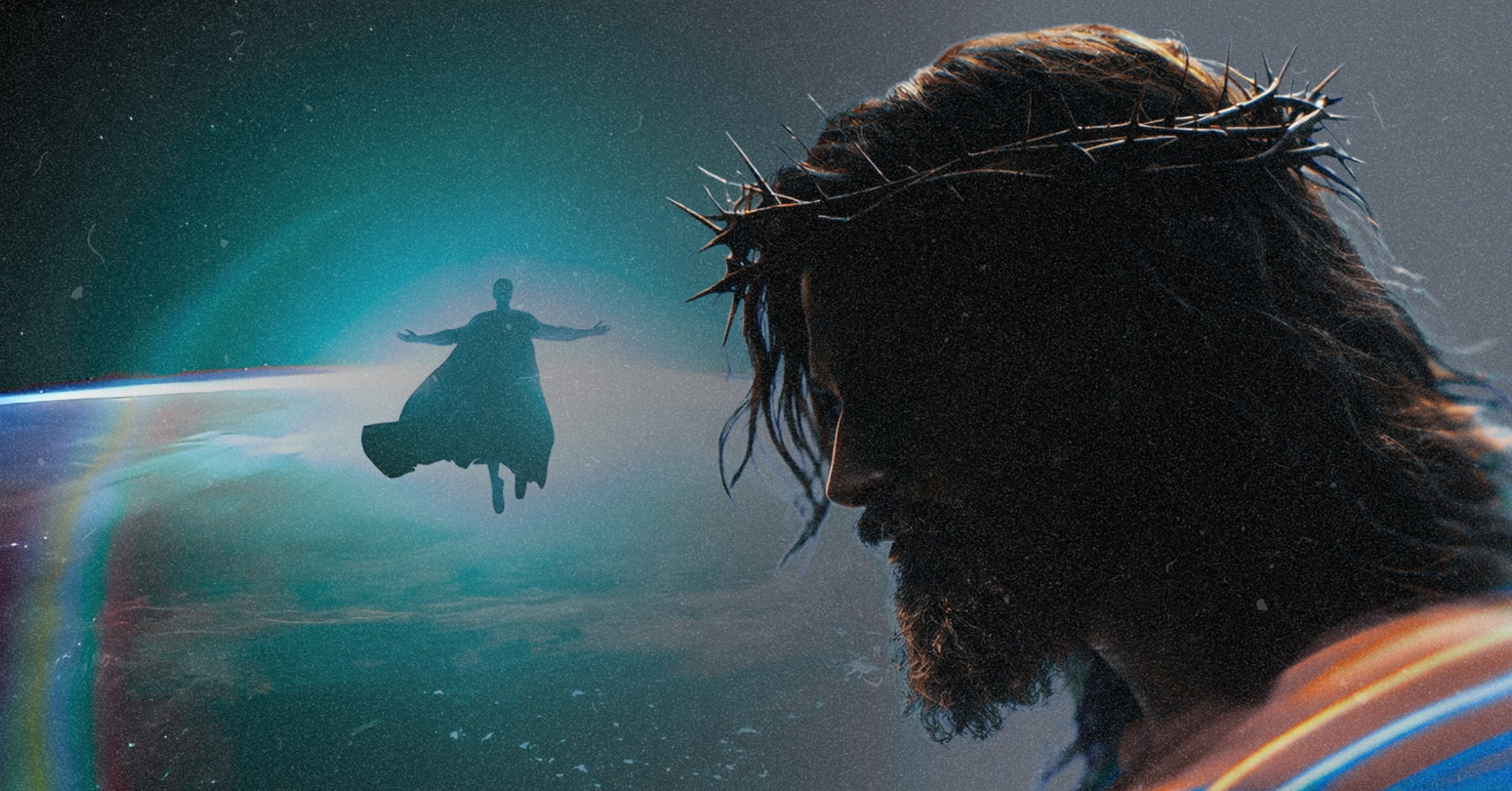
Can you imagine Jesus as Clark Kent? Jesus is the ultimate hero, but we really don’t know what his life was like before he was the teacher we know. I really wish we could see those early moments of Jesus’s life. Talk about the origin of the hero of all heroes!

This advent, I’ve been really focusing on Christ’s coming to earth, becoming human, really imagining what that had to be like for Him, to live as a child while being God. We know from Luke 2, that he was recognized as the Christ by Simeon at 8 days old when Mary and Joseph brought him to the temple for the traditional circumcision. During the Feast of Passover, when Jesus was 12, Mary and Joseph found him conversing with the Jewish teachers who were all amazed by his wisdom and understanding.

But precious few verses summarize 30 years of his life. Jesus came to earth as an infant, and lived quietly unknown, unrecognized. He knew His purpose and mission but had to wait for God’s timing. What was he doing all that time? I can’t wait to ask him.

“In the beginning was the Word, and the Word was with God, and the Word was God.” John 1:1 (ESV)

He was GOD and had to still wait for God’s plan, thirty years before it was his time to reveal his true identity.

He was GOD and still had to wait for God’s timing in his Jesus as Clark Kent beginning. #JesusistheReason Share on X

ESV “On the third day there was a wedding at Cana in Galilee, and the mother of Jesus was there. Jesus also was invited to the wedding with his disciples. When the wine ran out, the mother of Jesus said to him, “They have no wine.” And Jesus said to her, “Woman, what does this have to do with me? My hour has not yet come.” John 2:1-4  John 2:1-4

He could snap his fingers and heal the sick, think a thought and bring back the dead, but he was hesitant to perform miracles until God’s appointed time for him. But when his mother asked, he answered with his first miracle (John 2:1-12).

The fact that Mary comes to him gives us a glimpse into this Martha Kent and Superman moment. I wonder what signs and miracles he must have done at home in private – perhaps none, but Mary obviously knows who He is, that He came to save the world, but His Father hasn’t instructed him to stop being Clark Kent just yet.

As I watch people living hurt and broken lives, I wonder how Jesus handled hurting people before God called him to start his signs and wonders. Living around broken people, how did He, knowing what He knew, WAIT for God’s appointed time to start teaching, doing miracles and wonders?

Sometimes the minute God gives me a little understanding, I want to rush off and share it with everyone. I wonder how He did it, Jesus as Clark Kent, not revealing His true nature? The Bible doesn’t give us a lot of insight into those early days, but His witness had to be in how he lived. If none of us could ever witness to anyone except through our lives, what would your witness be? Would people see Superman peeking through your Clark Kent exterior?

Jesus came as an infant, had parents, lived as a man, so we could know our God understands, has felt the struggle of being Clark Kent in a world that desperately needs Superman.

And this year, as I picture Jesus as Clark Kent, I’m moved to tears by the humility of not just becoming human, but the lowliest of humans, an infant born in a stable, so that his miracles and wonders could only be attributed to the power of God. He put on the pain of our human bodies, the wounds of a fallen world, and did so just to die an agonizing death, for me, for you.

I wonder if our fascination with superheroes really stems from trying to understand Jesus and his sacrifice beyond understanding. Share on X

I wonder if our fascination with superheroes really stems from trying to understand Jesus. His sacrifice is so beyond understanding, we try to grasp it through fictional characters who pale in comparison, but the analogy really personalizes his birth and life and death for me.

And I’m really thankful for Him in a deeper way every year.

Recommended Resources:

What is God Really Like? A View from the Parables by Dr. Frank Turek (DVD, Mp3, and Mp4)

What is God Like? Look to the Heavens by Dr. Frank Turek (DVD and Mp4)

Hollywood Heroes: How Your Favorite Movies Reveal God by Frank Turek & Zach Turek (Book)

Person of Interest: Why Jesus Still Matters in a World that Rejects the Bible by J. Warner Wallace (Paperback), (Investigator’s Guide).


Jennifer DeFrates is a former English and Social Studies teacher turned homeschool mom and Christian blogger at Heavennotharvard.com and theMamapologist.com. Jennifer is a 2x CIA graduate (the Cross-Examined Instructors Academy) and volunteers with Mama Bear Apologetics. She has a passion for discipleship through apologetics. Her action figure would come with coffee and a stack of books. She is also the reluctant ringleader of a small menagerie in rural Alabama.

Originally Posted at: https://bit.ly/4mab3oU
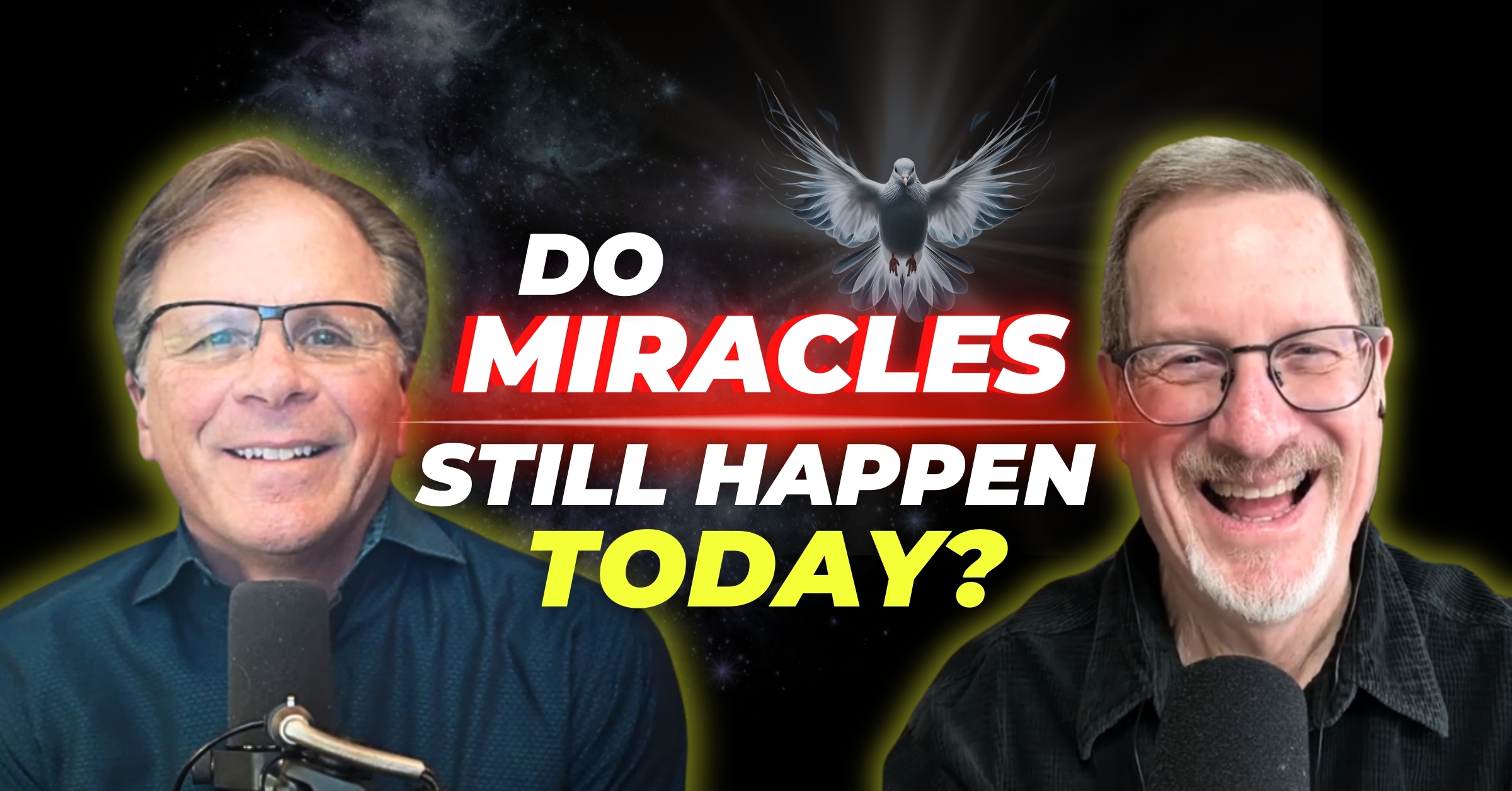
We read about miracles happening in the Bible but is it reasonable to believe that God still intervenes in people’s lives today? Where’s the evidence? The one and only Lee Strobel joins Frank to discuss the new documentary film based on his book, ‘The Case for Miracles‘, playing in theatres MON. 12/15 – THURS. 12/18. Just in time for Christmas, this filmwill take you on a cinematic journey investigating real and documented stories of the impossible! Together, Frank and Lee answer questions like:

  • What are the four ingredients for a modern miracle?
  • What’s the definition of a miracle?
  • What’s the greatest miracle in the Bible?
  • How do we make a distinction between the fact of miracles and the gift of the miracles?
  • Are there still people who have a spiritual gift of healing today?
  • Why do some people experience miracles while others don’t?
  • Does prayer change things?
  • What are some of the biggest misconceptions people have about Christmas?
  • Is December 25th really the day that Jesus was born?

The Case for Miracles‘ is a great movie for both Christians and non-Christians who are open to exploring the possibilities. Grab a friend, get your tickets, and on the way to the theatre swing by Hobby Lobby and get your FREE copy of ‘The Case for Christmas‘ too!

If you enjoyed this podcast episode PLEASE HELP US SPREAD THE TRUTH OF CHRISTIANITY BY SUPPORTING OUR MINISTRY USING THE LINK BELOW. 100% of your donation goes to ministry, 0% to buildings!

Resources mentioned during the episode:

Donate to CrossExamined.org
Buy Tickets Here! – https://thecaseformiracles.movie/
Watch the Trailer Video – https://youtu.be/Vf0Kn8f_78s
The Case for Miracles by Lee Strobel
The Case for Christmas by Lee Strobel – Available for FREE at Hobby Lobby!
Seeing the Supernatural by Lee Strobel
Wes Huff – Christmas is Not a Pagan Holiday PDF
Wes Huff – Christmas is Not a Pagan Holiday Video
LeeStrobel.com
Follow Lee on X

Download Transcript

Why is December 25th celebrated as the birth of Jesus? Was it a date chosen to overshadow pagan festivals like Saturnalia or Sol Invictus, or does it have deeper Christian roots? While the Bible doesn’t provide a specific birthdate for Christ, it may offer more clues than you think!

Just in time for the holiday season, historian and author Bill Federer returns to unpack the fascinating origins of the Christmas story and its rich Christian heritage. One of our most popular topics, this episode dives deeper into the history, theology, and traditions surrounding the incarnation of Christ—a moment that forever changed the course of human history. Join Frank and Bill as they explore questions like:

  • How do the Dead Sea Scrolls provide evidence for Jesus’ actual birthday?
  • Why do some Christians celebrate Christmas on Jan. 6th?
  • When did Christians start celebrating Dec. 25th as the birthday of Jesus?
  • What is one of the most overlooked pro-life passages in the Bible?
  • What’s the story of King Herod and was he really capable of being a baby killer?
  • Why was there strife between the Pharisees and Sadducees, and how did Rome get involved in Jewish politics?
  • How many wise men brought gifts to Jesus and when did they visit Him?
  • Why are the Old Testament prophecies about Jesus so vague?
  • What’s the origin of the “12 days of Christmas”?
  • How does the history of the entire world center on the birth of Christ?

Tune in as Bill dispels some of the common myths surrounding the Christmas holiday and uses his gift of storytelling to connect the historical and biblical pieces together. This episode will be both enlightening and entertaining as it also lays out the message of the Gospel, so be sure to share it with a friend! Merry Christmas from the CrossExamined team and please check out our earlier conversation with Bill where he shares even MORE history behind some of today’s most beloved Christmas traditions with visuals included!

Did you enjoy this episode? HELP US SPREAD THE TRUTH OF CHRISTIANITY BY SUPPORTING THE PODCAST HERE.

Resources mentioned during the episode:

VIDEO PODCAST: Is There Any CHRISTIAN Truth to Our CHRISTMAS Traditions? – CEevents.org
BILL’S WEBSITE: https://americanminute.com/
BILL’S BOOK: ‘There Really is a Santa Claus


Download Transcript


“When we see Jesus as he is, we must turn away or else shamelessly adore him. That must be kept in mind for any authentic understanding of the power of Christian faith.”


This quote, from Dallas Willard’s book, “The Divine Conspiracy,” challenged me the moment I read it this week. There is no better time to remind ourselves of what it means to shamelessly adore Jesus than at Christmas. I’m convicted this week that shameless adoration becomes most possible when we truly grasp what our lives would be like if He had not yet been born. 5 minutes before His birth, the world was completely different.

5 minutes before His birth, the world was completely different.

It’s so easy to forget this, because all we know living in the second millennium AD is a post-Jesus world. But just a few minutes before the event we celebrate this week, the world looked very different.
How Jesus’ birth changed the world is a highly relevant and topical discussion to have with your kids this Christmas. Here’s a good (and simple!) analogy you can use to help them understand the deeper meaning of Jesus’ birth.

Ask your kids how things look different when they put on a pair of 3D glasses to look at a picture.

Here are some talking points for relating this to a basic understanding of how Jesus’ birth changed the world.

3D glasses change how you see because…

1. Important parts of the picture come forward and less important parts of the picture fall to the back.

This is the first thing you notice when you put on a pair of 3D glasses. In a flat picture, it’s up to the viewer to decide what’s most important. 3D glasses translate the flat picture into one that emphasizes some parts and de-emphasizes others.

Before Jesus was born, the religious experts of the time, the Pharisees, had a lot of things wrong. They had added a lot of their own rules and interpretations to the laws God had given hundreds of years before.

But after Jesus was born, we gained the witness of His life to tell us what is important and what is not. Jesus, being God Himself, was uniquely able to set the Pharisees – and ultimately us – straight. Living a life that glorifies God comes “forward” in our view while the material world falls to the background. Not only do we now know that glorifying God is most important in life, we now know what glorifies God and what does not.

2. They give the picture richer details.

3D glasses transform a flat picture into one with depth. The details are richer, and the picture becomes alive!

Before Jesus was born, God had not fully revealed His plan for salvation of all people. The world only had part of the picture of who God is and how He relates to people.

But after Jesus was born, we were given some new and critical details that give our lives their fuller meaning. Now we know that God offers salvation to anyone who believes in Jesus as their Savior (this is a good chance to read John 3:16)!

3. They make the picture more tangible.

In the Captain EO 3D film at Disneyland, there is a little furry creature who jumps out so realistically, everyone in the audience starts petting him in the air. If you lift your glasses and see him on the flat screen, you would never think to reach out and touch him. The glasses bring him close.

Before Jesus was born, following God meant following the Law – a set of very strict rules related to worship.

But after Jesus was born, God came close. Through Jesus, we have been given the opportunity to enter into a relationship with God that wasn’t possible before. But just as you have to put on the right glasses for the little furry guy to come close to you during Captain EO, you have to build a relationship with Jesus through prayer and worship for Him to become tangible in your life. Christmas made that possible.

Merry Christmas to you and your families! May we all teach our children to shamelessly adore Jesus throughout the year.

Recommended Resources: 

Why We Know the New Testament Writers Told the Truth by Frank Turek (mp4 Download)

The Top Ten Reasons We Know the NT Writers Told the Truth mp3 by Frank Turek

Miracles: The Evidence by Frank Turek DVD and Mp4

Jesus, You and the Essentials of Christianity by Frank Turek (INSTRUCTOR Study Guide), (STUDENT Study Guide), and (DVD)      


Natasha Crain is a blogger, author, and national speaker who is passionate about equipping Christian parents to raise their kids with an understanding of how to make a case for and defend their faith in an increasingly secular world. She is the author of two apologetics books for parents: Talking with Your Kids about God (2017) and Keeping Your Kids on God’s Side (2016). Natasha has an MBA in marketing and statistics from UCLA and a certificate in Christian apologetics from Biola University. A former marketing executive and adjunct professor, she lives in Southern California with her husband and three children.

Originally posted at: https://bit.ly/4fAcsjV 

Does the scientific evidence fall short of proving the fine-tuning of the universe? Should Christians regularly “feel God’s presence”? And since there are minor differences in the Gospels, does that disprove biblical inerrancy? In this midweek podcast episode, Frank tackles three more BIG questions from our listening audience along with questions like:

  • What are the 3 levels of fine-tuning and does it only occur here on planet Earth?
  • Can the fine-tuning argument alone actually prove Christianity is true? And can all truth be explained through science?
  • Where exactly are Heaven and Hell?
  • What’s the true meaning of Christmas?
  • Is loving God an emotion, a feeling, or a decision?
  • If God chooses not to reveal Himself to us is that proof that He doesn’t exist?
  • What’s a great question to ask your skeptic friends?

Have a question you’d like Frank to address in a future episode? Send it to hello[at]crossexamined.org, and stay tuned for Friday’s podcast to hear more about his recent trip to Egypt and Saudi Arabia!

Did you enjoy this episode? HELP US SPREAD THE TRUTH OF CHRISTIANITY BY SUPPORTING THE PODCAST HERE.

Resources mentioned during the episode:

BOOK: Hollywood Heroes – https://bit.ly/3Or82Ax
BOOK: Stealing From God – https://bit.ly/41hLt91
BOOK: Decision Making and the Will of God – https://a.co/d/gQhMD3m
OCC Course: How to Interpret Your Bible – https://bit.ly/3BoEhxD
ARTICLE: Does God Whisper? Part 1 – https://bit.ly/3P0KW47
ARTICLE: Does God Whisper? Part 2 – https://bit.ly/3ZY3hVJ
ARTICLE: Does God Whisper? Part 3 – https://bit.ly/3ZzqOe8

“It doesn’t really matter if Jesus was conceived by the Holy Spirit or by Joseph’s seed. What matters is that Jesus came to earth, died, and was resurrected.”

This is more or less what was said in a conversation I had several years ago with a now self-proclaimed progressive Christian. At the time, he was trying to work out his theology. Today, his words ring with expectancy to be answered. Was Jesus born of a virgin? Does it matter in regard to our faith if He was?

Virgin Birth: Negotiable or Not?

The virgin birth of Jesus Christ has always been considered a non-negotiable core doctrine of Christianity and is mentioned in the earliest creeds. Among Christians, this doctrine wasn’t broadly questioned until a period of history referred to as “the Enlightenment”. Sometimes called “the Age of Reason,” the Enlightenment was an intellectual movement that took place primarily in the 18th century. It has had an incalculable impact on Western culture, profoundly affecting the way people think about philosophy, politics, religion, and science.

As science was given precedent over religion, one of the trends to emerge during the Enlightenment was skepticism towards anything miraculous or supernatural. In other words, believing in the miracles recorded in the Bible such as the virgin birth is superstitious and unscientific, so they must be mythological. This seems to be a popular view among progressive Christians today.

​Does the Bible teach that Jesus was actually born of a virgin? 

The prediction, 700 hundred years before Christ (Isaiah 7:14):

Therefore the Lord himself will give you a sign: the virgin will be with child and will give birth to a son, and will call him Immanuel.

The fulfillment (Matthew 1:22-23):

Now all this took place to fulfill what was spoken by the Lord through the prophet: The virgin will be with child and will give birth to a son, and they will call him Immanuel.

Seems pretty simple, right? Isaiah predicted the Virgin Birth and Matthew records that prediction coming true. Not so fast.

A common claim among skeptics is that the word translated “virgin” really just means “young woman” or “maiden,” and there is no reason to assume that Mary was a virgin.

Young Lady, Virgin, or Both?

This reasoning might make sense if we were only reading these Scriptures with a Western, American mindset. With any Scripture, however, we have to look at it through the lens of the culture in which it was written. The Hebrew word in question is almah, which does mean “young woman” or “maiden.” However, in ancient Hebrew culture, all young women of marriageable age were considered to be virgins. Strong’s Online Concordance notes:

There is no instance where it can be proved that this word designates a young woman who is not a virgin.

There is another Hebrew word that specifically means “virgin” (bethulah), but it’s likely that Isaiah preferred almah because he wanted to communicate that the virgin would also be young. Long before the virgin birth was an established doctrine, 70 Hebrew scholars must have agreed, because when they began translating the Hebrew Scriptures into Greek, they translated almah as parthenos, the Greek word for “virgin.” Apparently, they understood exactly what that word meant in context.

Mary herself clearly stated that she was a virgin in Luke 1:34. When the angel told her she would conceive a child, she was perplexed and asked, “But how can this be, since I have not been intimate with a man?”

Does it matter if Jesus was born of a virgin?

As with most core doctrines, the case for the virgin birth of Jesus doesn’t just come down to one or two Bible verses. Scripture teaches that Jesus is fully God and fully human. He literally has two natures. It was necessary for Him to be born of a woman, to fulfill the promise God made to Eve in Genesis 3:15. If Jesus had not been born of a woman, He would not be fully human, and could not have been the promised Messiah.

As I’ve written previously, Scripture teaches that humans inherited a “sin nature” from Adam, and it would seem that sin nature gets passed down through the line of the father (Rom. 5:12, 17, 19). According to Hebrews 7:26, Jesus did not have a sin nature. Also, it’s important to note that Jeremiah prophesied that there would never be a king of Israel who was a descendant of King Jeconiah (Jer. 22:28-30). Matthew 1:12-16 tells us that Joseph was in fact, a descendant of Jeconiah.

If Jesus had been conceived by the seed of Joseph instead of by the Holy Spirit, He would have received a sin nature, and would not be fully God. As a descendant of Jeconiah, He would not have had a right to the throne of Israel, and He could not have been the promised Messiah.

Prophesied by Isaiah and fulfilled by Jesus, the virgin birth allowed for Jesus to be both fully God and fully human, unstained by sin, and God Incarnate. The doctrine of the virgin birth matters because it must be true for salvation to even be possible.

Recommended Resources:

Another Gospel? by Alisa Childers (book)

Why We Know the New Testament Writers Told the Truth by Frank Turek (DVD, Mp3 and Mp4)

Jesus, You and the Essentials of Christianity by Frank Turek (INSTRUCTOR Study Guide), (STUDENT Study Guide), and (DVD)      

Reflecting Jesus into a Dark World by Dr. Frank Turek – DVD Complete Series, Video mp4 DOWNLOAD Complete Series, and mp3 audio DOWNLOAD Complete Series


Alisa Childers is an American singer and songwriter, best known for being in the all-female Christian music group ZOEgirl. She has had a string of top ten radio singles, four studio releases, and received the Dove Award during her time with ZOEgirl. In later years, Alisa found her life-long faith deeply challenged when she started attending what would later identify as a Progressive Christian church. This challenge pushed Alisa toward Christian Apologetics. Today you can read, listen and watch Alisa’s work online as well as purchase her recently published book on Progressive Christianity titled Another Gospel.

Originally posted at: https://bit.ly/4f3rRZP

It’s common for atheists to be a “Grinch” over the Holidays and exclaim that Jesus is just a “Santa Claus for adults!” When I hear that claim, I immediately respond with a question: “What do you mean by that?”

If one means that children often believe in fictional fairy tales and adults believe in fact-based evidence, then I agree – Jesus is for adults (and actually people of all ages)! But I don’t think that’s the intent behind this claim. I believe the intent of the atheist (“Grinch”) is to convey that little kids believe in a fictional Santa Clause and many adults believe in fiction too – Christianity.

How the Grinch Stole Christ out of Christmas

Well, why think a thing like that, Mr. Grinch? Is belief in Jesus — or belief in God — really no different than belief in Santa? To answer this question, we must first ask if we have any good reason to believe in Santa. What good reasons are there that would lead us to logically conclude, “Therefore, Santa exists”?

Now, I’m not emotionally opposed to the existence of Santa Claus, and my life would not really have to change if Santa really exists, so if there were any evidence pointing to a jolly fat man in the North Pole who flies around with Rudolph giving gifts made by the elves, then I would happily follow that evidence wherever it leads. Even if there were logic-based arguments concluding that Santa PROBABLY exists, I would be very open to the existence of Santa. Come to think of it, Santa Claus would save me a ton of money on Christmas presents! Be that as it may, there is no evidence or any logic-based arguments concluding that Santa Claus exists — or even PROBABLY exists. So, although I am willing to be persuaded, there just doesn’t seem to be any evidence or logical reasons to believe in Santa Claus (sorry kids).

Now perhaps, Mr. Grinch, you’re saying to yourself: “That’s right! There’s no evidence for Santa Claus AND there is no evidence of God or Jesus either! That’s why it’s ridiculous to believe in Santa Claus or God!”

A False Equivalence

But is that true? Is the evidence — or lack thereof — for Santa Claus and the evidence for God really the same?

Well, if Santa does exist, we would know what to look for: A big, jolly, white-bearded, fat man in a red suit flying around in a sleigh being pulled by flying reindeer delivering presents to children on Christmas Eve. We would look for his factory full of elves at the North Pole too! So far (as far as I know), this evidence for Santa has never been detected. That in and of itself is not PROOF that Santa does not exist, but once we add to the fact that we have no other positive reasons to believe that Santa exists, then we can safely say that Santa does not exist.

But what about God? If God does exist, what would we expect to find? Do you even know what evidence you should start looking for?

Before stating that there is no evidence for something, Mr. Grinch, make sure you know what kind of evidence there should be if that thing does exist. If the God of the Bible exists, for example, he is not the kind of being you would see flying around in the clouds. He would not be some “sky daddy,” as many internet atheists seem to think. No, if the God of the Bible exists, He would not be some humanoid “Zeus-like being.” God (if He exists) is an immaterial unembodied mind – a “spirit” (John 4:24).

How Christ Saves Christmas, from the Grinch

So, what should we expect to find if Christian theism is true? We would expect to find scientific evidence for the beginning of the space-time universe. We have that! We would expect to find evidence for the fine-tuning of the initial conditions of the big bang so that intelligent life – not to mention matter itself – could exist. We have that! We would expect to have historical data showing that Jesus of Nazareth was a real person of history who was executed by the Roman government. We have that!

In fact, we would expect to be able to make a strong case — via the historical method alone – that Jesus actually rose from the dead. Historians have demonstrated that the resurrection of Jesus is the inference to the best explanation after examining all of the historical facts!

So, the things we would expect to find if Santa exists, do not exist. However, the things we would expect to find if the God of the Bible exists, those things DO exist!

After taking everything into consideration, although it would be irrational to believe in Santa Claus, one is quite coherent believing in the God Jesus revealed. That is to say, we have good reason to celebrate Christmas.

So, the next time Mr. Grinch compares Jesus to Santa Claus, just show him the evidence pointing to the reason for the season.

Have a reasonable (Isaiah 1:18) and Merry Christmas,

Dr. Tim Stratton

Recommended Resources: 

Jesus, You and the Essentials of Christianity by Frank Turek (INSTRUCTOR Study Guide), (STUDENT Study Guide), and (DVD)      

Stealing From God by Dr. Frank Turek (Book, 10-Part DVD Set, STUDENT Study Guide, TEACHER Study Guide)

Reflecting Jesus into a Dark World by Dr. Frank Turek – DVD Complete Series, Video mp4 DOWNLOAD Complete Series, and mp3 audio DOWNLOAD Complete Series

How Can Jesus Be the Only Way? (mp4 Download) by Frank Turek


Tim Stratton (The FreeThinking Theist) pursued his undergraduate studies at the University of Nebraska-Kearney (B.A. 1997) and after working in full-time ministry for several years went on to attain his graduate degree from Biola University (M.A. 2014). Tim was recently accepted at North West University to pursue his Ph.D. in systematic theology with a focus on metaphysics.

Originally posted at: https://bit.ly/49fAu1O

The Christmas season has a way of quickening the senses, doesn’t it? The taste of a kiss under a mistletoe tree, the flavor of nursing steamed Ghirardelli hot chocolate, or the sheer ecstasy of biting into that freshly made batch of flaky peanut brittle. Then there are the smells. Oh, the smells. The smell of Gingerbread houses, hot caramel apple pie, and the dreaded Turkish Delight. We cannot forget the sounds. The sounds of Christmas carolers, holiday bells and our favorite seasonal hymns and not so favorite ones too, like, Last Christmas. It’s also a sight fest. The sight of homes bedecked with multi-colored lights, lawns graced by nativity scenes, and Salvation Army volunteers ringing their bells for coins in the coffer. And of course, we cannot forget the touch of holding that long-awaited for gift as it is first unwrapped. Oh, how I loved unwrapping those Lego sets, or tearing open my new Star Wars action figures. Luke Skywalker. Darth Vader. Stormtroopers. Chewbacca. Yoda. Hans Solo. Keep them coming.

Alright, enough of that. We’re getting a little too sappy here. So, here’s my point. While it’s true that the Christmas season touches the chord of our senses, it’s also true that the heightened sensory extravaganza can numb us to the essential meaning of Christmas, making it even difficult for some to make sense of Christmas with all the added hoopla. As we inch toward this season, let us make sense of the season once again. But before we do, let me set an objection aside. Some might contend that since we don’t know the day on which Jesus was born, then we should avoid a collective celebration of Christmas altogether. While I’d agree, despite some who claim otherwise, I don’t think we can know Jesus’s D.O.B. But that’s to miss the point. We can still reserve a time to celebrate Christ’s incarnation, regardless of a fixed date, we can still revel in his descent to rescue us. Besides, it’s the event, not the date, that counts. It’s the Christ, not the calendar that we worship in remembrance.

Now to the event. The incarnation. The virgin birth. The very infleshing of the Logos. This is an event that’s hard to digest. We’re talking about God becoming flesh. It’s to this event that great sage from many decades ago, Mr. C.S. Lewis himself, referred to as, “The Grand Miracle.” Think about what so grandly entails this pivotal event. Or better yet, try and imagine it for a moment. We’re talking about God in gestation. I know, that’s a lot. On one level you can see the problem. And it’s this. In one sense, we can never make full sense of it. That’s because incarnation thinking boggles the brain. And yet, just the thought of it for the believer should humble our hearts in worship. We’re reflecting on a God who fastened himself in the Person of Christ to human flesh for all time. Knowing that God is Spirit, you’d think after Christ’s death He’d ditch the bodily experience throughout eternity, but no, it was a physical/bodily resurrection. It’s one thing to assume our nature for an earthly sojourn and another thing to assume our nature for an eternal sojourn.

As we seek to make sense of Christmas this year, make sense of this. Christ came to identify with us. To share in our nature. But there’s more. Much more. And yet, space permits me to carry us much farther. So, I’ll close with a few final reflections to feast on for December. First, Christmas is a time to remember that God became man so that man could be one with God. Yes, Christmas reminds us that God is a reconciling God. A rescuing God. A saving God. A relational God. Second, Christmas is a time to remember that God came to earth so that we could go to heaven. This is good news. No, it’s great news. By attaching ourselves to Christ we gain much more than forgiveness of our sins, removal of our guilt and the elimination of our shame. That’s because Jesus came down so we can go up. He came to earth, so we can go to heaven. And finally, Christmas is a gift, and the best gifts are meant to be shared. It’s the gift that keeps on giving. The gift that we will never finish unwrapping. The gift that’s meant to be given away. Christmas is a time for sharing. For sharing the Greatest Story Ever Told. It’s a time to remember that there are miracles and there is The Grand Miracle. That Light came into the world of darkness so that a world of darkness could enter His everlasting light. Selah.


Recommended resources related to the topic:

Miracles: The Evidence by Frank Turek DVD and Mp4

Early Evidence for the Resurrection by Dr. Gary Habermas (DVD), (Mp3) and (Mp4)

Reflecting Jesus into a Dark World by Dr. Frank Turek – DVD Complete Series, Video mp4 DOWNLOAD Complete Series, and mp3 audio DOWNLOAD Complete Series

__________________________________________________________________________________________________________________________

Bobby serves as lead pastor of Image Church in Charlotte, North Carolina, and is well known for his YouTube ministry called, One Minute Apologist, which now goes by the name Christianity Still Makes Sense. He also serves as the Co-Host of Pastors’ Perspective, a nationally syndicated call-in radio show on KWVE in Southern California. Bobby earned his Master of Theology degree from Dallas Theological Seminary, his Doctor of Ministry in Apologetics from Southern Evangelical Seminary, and his Ph.D. in Philosophy of Religion from the University of Birmingham (England), where he was supervised under David Cheetham and Yujin Nagasawa. Bobby’s also written several books, including The Fifth Gospel, Doubting Toward Faith, Does God Exist, and Fifty-One Other Questions About God and the Bible, and the forthcoming Christianity Still Makes Sense, to be published by Tyndale in April 2024. He’s married to his lovely wife Heather, and together they have two grown kids: Haley and Dawson.


Tree decorating. Repetitive Christmas music on the radio. Sleigh bells ringing. Chestnuts burning. (Like, what does this even mean? Do people actually do this?) And the incessant cyber throat-punching over Christians who celebrate Christmas are actually celebrating an evil pagan holiday.

Ah… it’s the most wonderful time of the year.

Christmas is that magical time of the year again, full of bright lights, joyful music, and the warm and fuzzy feelings of family and gift-giving. But every so often, you might hear a claim tossed around that Christmas is rooted in pagan traditions. There are many people, especially online, who take this time of year very personally and feel the need to remind Christians that we are, indeed, participating in a pagan holiday. This can be very confusing for some Christians. They want to make sure they’re doing the right thing in God’s eyes but also don’t want to miss out on a holiday that worships our Lord because some people— passionate as they may seem— might be misled about this topic. If you’re a Christian, you might be left scratching your head, wondering if there’s any truth to these claims. Let’s break it down and look at Christmas from the Christian perspective.

A History Lesson (Don’t Worry, It’s a Short One!) 

The mix-up often comes from the fact that Christmas is celebrated around the same time as the winter solstice and some ancient Roman festivals like Saturnalia. The early Christians didn’t have Jesus’s exact birthdate in their calendars. Deciding to celebrate on December 25th wasn’t about hopping on the pagan bandwagon, though. It was more about carving out a Christian identity that was distinct and separate from these celebrations. So the irony here is they were trying to be distinct from pagan practices, not syncretize with them.

Jesus’s Birthday Bash

From a Christian viewpoint, Christmas is all about celebrating the birth of Jesus Christ, and it’s got nothing to do with pagan festivals. This is probably the one that I want to emphasize the most. Think of the entire point of Christmas. It’s not a fake or false worship of Jesus, but the exact opposite. It’s remembering His birth and how God became human. The Gospels of Matthew and Luke in the New Testament give us these deets on Jesus’s birth. It involves heavenly announcements, prophetic fulfillments, and divine revelations – not exactly your typical pagan celebration ingredients.

All About Those Traditions

Across the ages, Christians have crafted and refined a plethora of charming traditions to honor and celebrate the holiday of Christmas. These customs range from the use of Advent calendars to mark the days leading up to the event, to the lighting of candles to signify the arrival of the Christ child. Another beloved activity is the singing of carols, which often feature lyrics that tell the story of the Nativity. Finally, many Christians enjoy creating intricate and beautiful nativity scenes, which depict the manger where Jesus was born surrounded by various characters from the Bible. These beloved traditions are deeply rooted in the Christian faith and are regarded as essential components of the Christmas season, rather than being borrowed from other religious or cultural practices.

The Real Meaning of Christmas

I alluded to this before, but it is worth noting that Christmas holds a significant connection to the Christian faith. The holiday revolves around the doctrine of the incarnation, which is the belief that God took on human form through the birth of Jesus. The idea of the incarnation is deeply rooted in the New Testament and was frequently discussed by the Apostle Paul in his letters. He emphasized the incredible mystery and beauty of this belief, which has been central to the Christian faith for centuries. As a result, various Christian customs have developed over time to celebrate the miraculous birth of Jesus Christ. These customs range from religious services and prayer to gift-giving and festive decorations. Overall, Christmas is a time for Christians to reflect on the significance of the incarnation and to celebrate the joy of Jesus’s birth.

Wrapping It Up (See What I Did There?) 

So, there you have it. This isn’t an exhaustive list, and numerous Christians (and even non-Christians!) have written about this topic, debunking it over and over again. When it comes to Christmas, it’s essential to separate myth from fact. For Christians, Christmas isn’t a refurbished pagan holiday but a heartfelt celebration of the birth of Jesus, with its unique traditions and meanings. Sure, Christmas trees and gift exchanges are all good, but at the core, it’s all about remembering that moment when heaven touched earth. In this context, Christmas will always be a Christian holiday. For that, I’m grateful.

I made a satirical video about this on my YouTube channel. I used my most controversial character, Judy McJudgerson, to make this point. So… even if you don’t agree with me, I hope you get a kick out of the mediocre wig. You can check it out here.

So no. Christmas isn’t pagan. Let’s stop the madness.

Merry Christmas.


Recommended resources related to the topic:

Miracles: The Evidence by Frank Turek DVD and Mp4

Early Evidence for the Resurrection by Dr. Gary Habermas (DVD), (Mp3) and (Mp4)

Reflecting Jesus into a Dark World by Dr. Frank Turek – DVD Complete Series, Video mp4 DOWNLOAD Complete Series, and mp3 audio DOWNLOAD Complete Series

__________________________________________________________________________________________________________________________

Melissa Dougherty is a Christian Apologist best known for her YouTube channel as an ex-new ager. She has two associate’s degrees, one in Early Childhood Multicultural Education, and the other in Liberal Arts. She also has a bachelor’s degree in Religious Studies at Southern Evangelical Seminary.


By Bob Perry

Even people who don’t celebrate Christmas seem to know what it’s about — the birth of a Savior who comes to rescue us from the consequences of our rebellion against Him. Ultimately, that means it’s part of God’s rescue plan and where we go when we die. But there’s another aspect to Christmas that I think is important too. It’s also about showing us how to live. And right-living depends on how we think. Unfortunately, our thinking is infused with lies that we’ve accepted as being part of “the human condition.” And believing those lies results in dissension, oppression, racism, political wrangling, class struggle, economic strife, and war. Sadly, it’s all part of the gravest story ever told. Christmas offers an antidote to the effects of that story too.

The story started in The Garden. And we’ve been repeating it to each other ever since. It thrives on divided minds. But we are designed to be united. God and man. Husband and wife. Body and soul. Physical and spiritual. The division we experience is a symptom of wrong thinking about the nature of reality. But there is a way to fix it. Christmas shows us how. It’s the cure for our two-storied world.

Focus On The Physical World

There is an assumption in our contemporary society that all of us have tacitly accepted, even if we claim to be “religious.” It is an assumption born in the Enlightenment and nurtured through four-hundred years of modern philosophy, medical breakthroughs, and technological innovation. The assumption is this: That the physical world is all that really exists. And, since science is the study of the physical world, the logical assumption is that it will give the answers to our most profound questions. This is called Naturalism or Materialism. And many of us claim not to accept this view. We may even argue vehemently against it. But it is a difficult assumption to overcome because it is embedded in the fabric of our culture.

When we hear of an inexplicable healing, or an answered prayer, or an eerie “coincidence,” or a Christmas Star, our initial reaction is to seek a scientific explanation. Even those of us who take our faith seriously secretly wonder if the walls of Jericho really just fell down; if the Red Sea really parted, or (though we would be loathe to admit it) if Jesus really rose from the dead. We are hard-wired to be skeptical of those kinds of claims. In a thousand different ways we have assimilated, accommodated, and capitulated to the materialistic world. And with each baby step in that direction, the idea of the miraculous diminishes into a faintly held belief we have little hope of defending.

Non-Physical Reality

The Apostle Paul told us to “test everything” (1 Thessalonians 5:21). So, we take him up on it. But in our knee-jerk reaction to do so we sometimes forget that a Christian view of the world is not limited to physical things. In fact, science is impotent when it comes to answering our biggest questions. And that’s because Ultimate Reality is not physical. It’s transcendent. It’s spiritual.

The Christian worldview encompasses both the physical and the non-physical. Alone, neither is adequate to describe us as persons. And neither can explain the makeup of all we know and experience. Ideas. Values. Reason. Mind. Morals. Love. None of these things are physical. But all of them are real. Life would be meaningless without them.

Creating The Two-Storied World

The modern, materialistic culture we live in disdains such a view. It does its best to belittle and destroy it. The result is that we are constantly engaged in the battle of ideas that this kind of philosophy has created. Francis Schaeffer addressed this conflict many decades ago. He didn’t originate the idea. But he identified its roots in a kind of “split” thinking. And he popularized the notion in a phrase we all recognize when we talk about taking a “leap of faith.”

On Schaeffer’s view, we have created a two-storied vision of reality. And we all live in it. Think of it as a two-story house. Non-physical realities like values, spirituality, religion, faith and the like, reside upstairs. Downstairs we find things like the physical world and science.

UPPER STORY: Values – Spiritual – Religion – Faith — Private

LOWER STORY: Facts – Physical – Science – Knowledge — Public

Living In The Two-Story World

When you think this way, the lower story is where we are told to go when we want to know the true things. Only science can help us. It is public and verifiable. The culture tells us this is where we should be living our lives. It’s the force behind the exhortation we hear every day to “trust the science.”

Conversely, upper story ideas are private and subjective. We are free to take an irrational “leap of faith” to the upper story if we want to. But we must realize that to do so is to ignore rational thought. That kind of stuff has no business seeping into the “real world.” We take the leap upstairs on faith alone. And while no one is permitted to question the thoughts or ideas of your “private world,” neither are we free to allow those ideas to influence how we understand the lower story.

The Consequences Of A Two-Storied View

Unfortunately, most of us go along with this program unwittingly. We tacitly accept the idea that our personal faith and religion are disconnected from, and have little value in, a fact-based world. But this doesn’t fit with what we know and experience. There is no way to understand meaning and purpose.

The lower story is right in front of us. But it contains no hope. Nothing in it can save us. And our world is filled with people who are wallowing in this disconnected reality. They live in the lower-story, but they long for the upper.

Wrong Solutions

Some religions just accept the disconnect. The secularists deny the upper-story. They try to construct a replica of it downstairs using only lower-story stuff. Conversely, the New Age, Gnostic, and eastern religions try to deny or escape the lower-story. They’re happy to float around upstairs with no attachment to the ground.

Both of these are dismal failures because they can’t make sense of the whole show. They don’t even try. All they can offer is a truncated view of the reality.

Christianity is a house where the two stories meld into one. A place where it all makes sense. Facts and values. Spiritual and physical. Religion and science. Faith and knowledge. All of these make up an integrated view of reality.

The two-storied world is not meant to be divided. It never was. There are stairs right in the middle of the house. But they’re too tall for us to climb.

So, God comes down.

Christmas

This is the other Christmas message. The Author steps onto the stage to offer His ultimate revelation. He shows us that human-centered thinking is inadequate to address the human condition we created shortly after we arrived on the scene. We came up with the flawed philosophy that exacerbated those problems. We’re the ones who manufactured a “two-story” view of the world. Our humanistic thinking divided that which was meant to be indivisible.

Christmas reminds us that it all can be fixed in only one way. God gives us the ultimate example of how the world was meant to be through the Incarnation. That’s what it means. God’s essence quite literally “puts on meat.” “The Word became flesh and dwelt among us.”

The spiritual is united with the physical right in front of our eyes.

At Christmastime, the floor joists shatter and a thundering shock wave pierces the night. The ceiling above our human-centered world collapses. And the spirit Who has been rattling around in the attic comes crashing into our living room.

The divine unites with the human in one person. A person who offers us the perfect example of what it means to bear His image. What it means to function as an integrated whole. That person offers us a way out of our self-made morass of idiotic ideas and worldly wisdom. The infinitely perfect man comes downstairs to rescue us. But He also shows us how to live.

Only He can do such a thing. And when He does, the world makes sense again.

Recommended resources related to the topic:

Jesus, You and the Essentials of Christianity by Frank Turek (INSTRUCTOR Study Guide), (STUDENT Study Guide), and (DVD)

How Can Jesus Be the Only Way? (mp4 Download) by Frank Turek

____________________________________________________________________________________________________________________________________________________

Bob Perry is a Christian apologetics writer, teacher, and speaker who blogs about Christianity and the culture at truehorizon.org. He is a Contributing Writer for the Christian Research Journal and has also been published in Touchstone, and Salvo. Bob is a professional aviator with 37 years of military and commercial flying experience. He has a B.S., Aerospace Engineering from the U. S. Naval Academy, and an M.A., Christian Apologetics from Biola University. He has been married to his high school sweetheart since 1985. They have five grown sons.

Original Blog Source: https://bit.ly/3WctDyY