Tag Archive for: Christmas

By Bob Perry

If Christmas is supposed to be about “Peace on Earth,” why all the chaos and stress at this time of year? It started when we, through an ironic accident of language, warped Bethlehem into bedlam. But the history of that change is incidental to what we’ve done since then. It starts every “Black Friday.” The truth is that God never promised us peace on Earth. But he did send a Savior to Bethlehem to offer peace between God and man. We can begin to reclaim the meaning of Christmas by first learning to turn bedlam back to Bethlehem.

Bethlehem Becomes Bedlam (Literally)

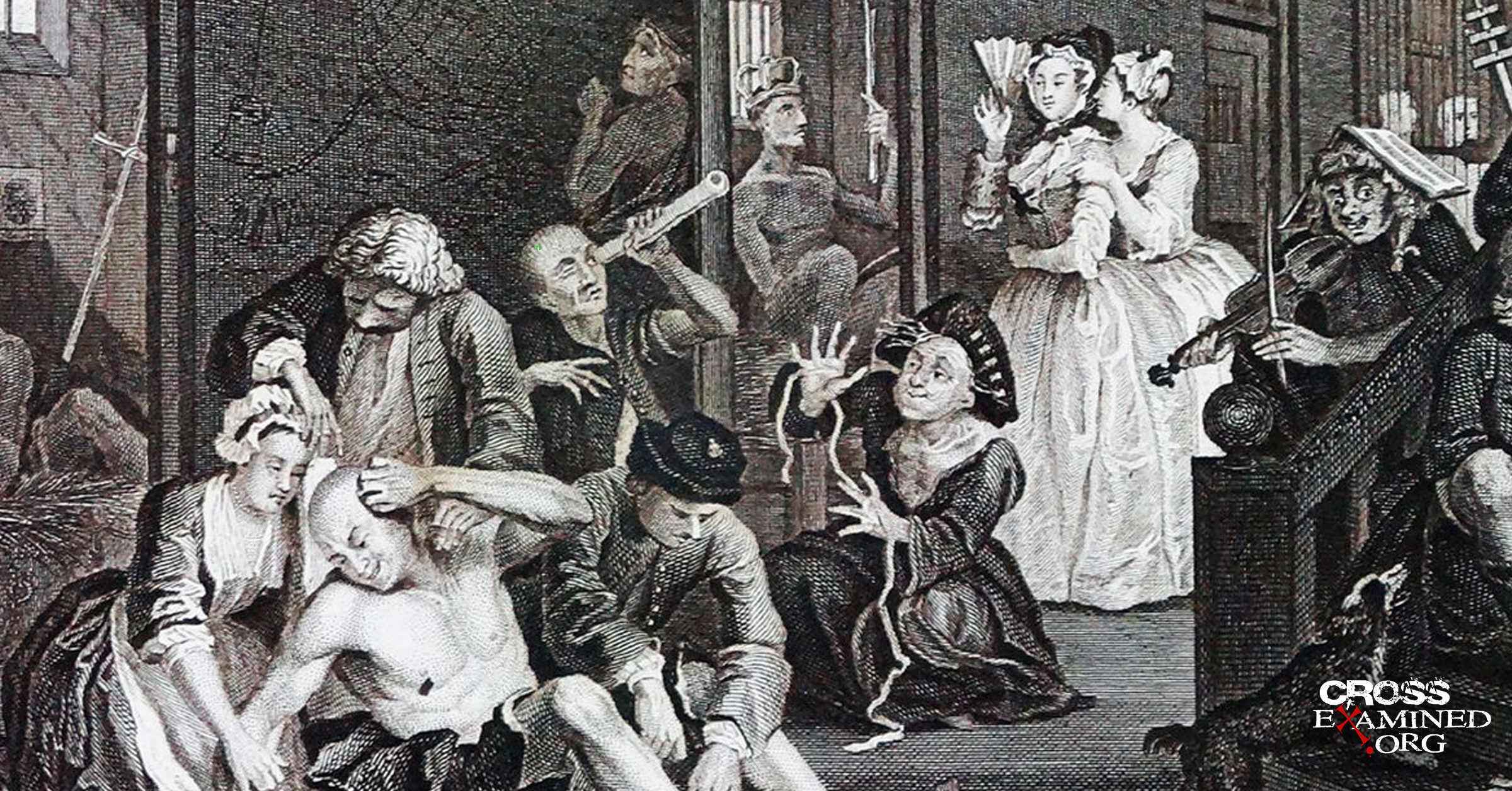
It all started back in 1247 when the Sheriff of London (a man named Simon FitzMary) founded a small monastery just outside the city. He dedicated it to serving the sisters and brothers of the holy order named “The Star of Bethlehem.” The monastery’s sponsoring church used the building to house and entertain the bishop and canons of St. Mary of Bethlehem. Soon, it became known as the Priory of St. Mary of Bethlehem.

By 1330, records show that the priory had become a hospital. And by 1403, some of its patients had begun to remain there permanently. When King Henry VIII later dissolved the Catholic monasteries in Britain, the city of London took over the hospital. In 1547 it was officially designated as an insane asylum. Soon, it became infamous for the brutal ill-treatment of those who lived there. People outside could hear the clamor, commotion, and pandemonium of the mentally disturbed patients inside. It didn’t take long for the locals to begin equating the name of the place with the chaos they heard emanating from within it. And because they spoke in a dialect that didn’t quite live up to the King’s English, their cockney pronunciation of Bethlehem came out as “bedlam.”

So, in a way that only human beings could contrive, the word we now use to describe lunacy and chaos actually has its source in the name of the city of Jesus’ birth.

What We’ve Made Christmas

The linguistic origin of “bedlam” is ironic. But the more modern way we have transformed Christmas from Bethlehem into bedlam is embarrassingly real. Though the madness begins earlier every year, “Black Friday” now marks the beginning of the Christmas season. In the past, that special day has come complete with mall shootings, annual brawls, and the frenzy we have come to expect both online and at our favorite retail locations.

The lunatics are shopping in the asylum.

Even people who aren’t Christians seem to realize that this madness is not “the reason for the season.” Jesus is. But the chaos in which we all participate is the reflection of a deeper flaw in the way we have come to celebrate his birth. We are complicit in turning what was supposed to be about the celebration of the birth of Christ into a consumer marketing extravaganza. And it started with the generous idea that we should give each other gifts.

Gift Giving Gone Haywire

There is some logic to the whole gift-giving idea we now associate with Christmas. God gave us the gift of his Son. The wise men (“Magi“) in the biblical story brought gifts to honor the newborn king. To memorialize those, we began giving gifts to one another. So far, so good.

But then we did something humans always tend to do. We took something good and corrupted it. Once we commercialized the gift-giving, the basement was the limit. Giving gifts became a form of worship. This year, the average American will spend about $920 for Christmas. That means that as a nation we spend over $1 Trillion. As a point of reference, the 2019 U. S. Defense Department budget was $652 Billion.

Maybe it’s just me, but it seems like we might have overdone the gift-giving thing.

A Warped Idea Of Giving

The point of the Christmas story seems to be buried at the bottom of our shopping bags. Christmas is not about roasting chestnuts by an open fire. And it isn’t a time for Santa to reward the nice little boys and girls. It certainly isn’t about eggnog, or even so that we could have a special time to feel good about our families. These are all nice things. There is nothing wrong with any of them.

But they are not the heart of Christmas.

The incarnation — the second person of the Trinity becoming a real, live human being — was a one-way gift. It was a gift meant to offer peace with those of us who’ve turned Bethlehem into bedlam. It is a gift offered by a God who owed us nothing.

Peace Offering

The peace treaty was undeserved and unsolicited:

“An angel of the Lord appeared to them, and the glory of the Lord shone all around them, and they were terrified. But the angel said to them, ‘Do not be afraid. I bring you good news of great joy that will be for all the people. Today in the town of David [Bethlehem] a Savior has been born to you; he is Christ the Lord. This will be a sign to you: You will find a baby wrapped in cloths and lying in a manger.’

Suddenly a great company of the heavenly host appeared with the angel, praising God and saying, ‘Glory to God in the highest, and on earth peace to men on whom his favor rests.'”
(Luke 2:9-14)

It was a peace treaty between heaven and Earth.

“Therefore, since we have been justified through faith, we have peace with God through our Lord Jesus Christ, through whom we have gained access by faith into this grace in which we now stand.” (Romans 5:1-2)

Despite what we’ve turned it into, these passages are not about our joy, or our giving, or our love, or our families. The focus is on God alone.

Back To Bethlehem

It is human nature to turn things that are supposed to be about God into things that are all about us. It makes us feel good to say that Christmas is our hope for “peace on earth.” But God knows that hasn’t proved true over the 2000 years since the first Christmas. World peace didn’t break out on that cold winter morning in Bethlehem. God came down in a human covering to offer the only possible way of reconciliation between His perfect moral goodness and the rebels who have been creating bedlam since the day they arrived on the scene.

We’ve been waging war with God. And Christmas is His peace treaty.

The joy comes in realizing that to be true. The giving and love come in mimicking the selflessness we witnessed in the gift He gave. That gift cost us nothing. Our families are the means by which we replicate and disseminate a love “for all the people.” The difference is important. Each of these things is impossible to celebrate appropriately unless we first make peace with our Creator and Savior.

“When the angels had left them and gone into heaven, the shepherds said to one another, ‘Let’s go to Bethlehem and see this thing that has happened, which the Lord has told us about.'” (Luke 1:15)

Rethinking Christmas

This is not a naive call to boycott Christmas. It’s nothing more than encouragement to change our mindset and refuse to take part in the bedlam. Shop less. Contemplate more.

I’ve never seen it used as a Christmas card, but I can’t imagine a better representation of what we Bedlamites have made Christmas into than the fresco on the Sistine Chapel that Michelangelo titled, “The Creation of Adam.” In the most gracious act in human history, the Creator himself reached down to touch us in human form. And we appear only vaguely interested.

Look at the way God is stretching to reach out to the man – and at the way, the first Bedlamite halfheartedly reaches back.

May we all celebrate this Christmas by rethinking Michelangelo’s artful depiction of our state. “Peace on Earth” is a worthy goal. But “Peace with God” must come first. Christmas is meant to remind us of the subtle difference.

Recommended resources related to the topic:

Jesus, You and the Essentials of Christianity – Episode 14 Video DOWNLOAD by Frank Turek (DVD)

If God, Why Evil? (DVD Set), (MP3 Set), and (mp4 Download Set) by Frank Turek

If God Why Evil. Why Natural Disasters (PowerPoint download) by Frank Turek

Why Doesn’t God Intervene More? (DVD Set), (MP3 Set), and (mp4 Download Set) by Frank Turek

Why does God allow Bad Things to Happen to Good People? (DVD) and (mp4 Download) by Frank Turek


Bob Perry is a Christian apologetics writer, teacher, and speaker who blogs about Christianity and the culture at truehorizon.org. He is a Contributing Writer for the Christian Research Journal and has also been published in Touchstone, and Salvo. Bob is a professional aviator with 37 years of military and commercial flying experience. He has a B.S., Aerospace Engineering from the U. S. Naval Academy, and an M.A., Christian Apologetics from Biola University. He has been married to his high school sweetheart since 1985. They have five grown sons.

Now, this is an episode you CANNOT miss! A Christmas episode about Christmas traditions with the brilliant William J. Federer. Frank and Bill talk about, Santa Claus (the real one), why the use of Xmas instead of Christmas, why celebrating Christ birth on December 25th, the Christmas tree and many more great insights. Then he answers the controversial question: Should Christians celebrate Christmas? Tons of fascinating stuff that you should know!

Merry Christmas to all of our listeners and don’t forget to gift us a 5-star rating and a positive review on iTunes!

You can also help us by donating here: https://crossexamined.org/donate/ we have a $20,000 matching grant until the end of 2018!

Keep Frank busy by sending your questions to Hello@CrossExamined.org and don’t miss this episode!

Subscribe on iTunes: apple.co/CrossExamined_Podcast rate and review! Thanks!!!

Subscribe on Spotify: http://bit.ly/CrossExaminedOfficial_Podcast

Subscribe on Stitcher: http://bit.ly/CE_Podcast_Stitcher


Dreading those awkward family dinners this Christmas season? Unsure about how to tactfully bring up the real reason for Christmas? Here are the Top Ten ways to advance the Gospel at Holiday Dinners:

The Top Ten Ways to Advance the Gospel at Holiday Dinners

  1. Pray: Start praying now for opportunities and for hearts to be open. Then volunteer to pray before the meal (No one will interrupt or critique a prayer!). Keep the prayer short and thank God for:
    • Your family members and guests by name
    • The food
    • Coming to earth that first Christmas in the person of Jesus to pay for our sins and to offer forgiveness and salvation for free to anyone who trusts in Christ. (After all, if ever there was a time when people expect you talk about Jesus it’s during a prayer on the day, we celebrate his birthday! Right?)
  2. Serve: Get off the couch and serve people as if you were a real Christian!
  3. Ask: Seriously ask people how they’ve been doing this year. Then ask them, “Is there anything I can pray for you about?” If something about Christianity comes up, the three most important questions you can ask are these:
    • Do you consider yourself a Christian?
    • Why are you not a Christian?
    • If Christianity were true, would you become a Christian? (I’ve found that many people are on a happiness quest rather than a truth quest. They don’t want God to exist because they think He might get in the way of their pursuit of “happiness.” This question will tell you if they are really open or not.)
  4. Listen (and testify if given the opportunity): If they ask you how you’ve been doing, fold in a story of how God is working. If they don’t ask you, keep listening and asking them what they are up to. If people only want to talk about themselves, let them.
  5. Use Tactical Questions When They Get Something WrongWhen people make truth claims, it’s not your job to refute them—it is their job to support them. So before responding to their statements, ask these questions.
    • What do you mean by that?
    • How did you come to that conclusion? (Or what evidence do you have for that?)
    • Have you ever considered…? (Complete the sentence with the evidence you would like the person to consider).
  6. Seed the conversation: Here are some common objections to Christianity they might bring up, with possible responses you might make to seed the conversation (after you ask them the tactical questions above):
    • Hypocrites: True, but the church is a hospital for sinners. If we were perfect, we wouldn’t need a Savior.
    • Exclusive: Do you think God should force people into Heaven against their will?
    • Atheism: I don’t have enough faith to be an atheist.
    • Science: Science doesn’t say anything: scientists do.
    • Miracles: Even atheists admit the universe began to exist out of nothing. Since there’s evidence for the greatest miracle in the Bible (Genesis 1:1), then every other miracle is at least possible.
    • Conspiracy: What motive did the Jewish New Testament writers have to make up a new religion? They already thought they were God’s chosen people, and they were persecuted for saying the Resurrection occurred?
    • Errors in the Bible: Where? Even if you’re right, does that mean Jesus didn’t rise from the dead? Christianity originated not with a book but with an event—the Resurrection. Why would Jews write the New Testament documents if Jesus didn’t rise from the dead?
    • Evil: What do you mean by evil? It can only exist if Good exists, which means if evil exists then God exists.
    • They have multiple objections and aren’t listening to your answers: If Christianity were true, would you become a Christian?
  7. Agree & Affirm whatever they get right. It will make points of disagreement more acceptable.
  8. Use the Quick Answers section of the CrossExamined App to be ready to respond to specific objections (over 177,000 downloads so far!). You can find more robust responses to the objections above and others in my latest book, Stealing From God: Why Atheists need God to make their case and the DVD set by the same name.
  9. Show them what makes your walk easier: You Version Bible, The Amazing Bible Project Videos, CrossExamined App (people love gadgets, short clarifying videos, and apps).
  10. Write them afterwardsFollowing up on a conversation later via email can be very effective. That’s because you can present your ideas more clearly and completely while the other person can actually consider what you are saying without feeling the pressure of having to respond immediately. You can also include links to articles or websites for those that want to go deeper.

Above all, show the kind of grace and unconditional acceptance to others that Jesus has shown to you. You might be the only true ambassador for Jesus they will see this Christmas.

If you’ve benefited from our ministry, would you please help us launch into 2019 with a tax-deductible donation? Due to a generous donor, any contribution you make up to $20,000 will be matched! Please go here to contribute securely online or by check. Your donations will go 100% toward ministry and 0% toward buildings. Thank you!

A prophecy about Jesus written by Isaiah 700 years in advance:

For to us, a child is born, to us, a son is given, and the government will be on his shoulders. And he will be called Wonderful Counselor, Mighty God, Everlasting Father, Prince of Peace. Of the increase of his government and peace, there will be no end. He will reign on David’s throne and over his kingdom, establishing and upholding it with justice and righteousness from that time on and forever. The zeal of the LORD Almighty will accomplish this. ―Isaiah 9:6-7

Be Jesus to people this Christmas!


Dr. Frank Turek (D.Min.) is an award-winning author and frequent college speaker who hosts a weekly TV show on DirectTV and a radio program that airs on 186 stations around the nation.  His books include I Don’t Have Enough Faith to be an Atheist and Stealing from God:  Why atheists need God to make their case

By Natasha Crain 

I’ve recently had a lot of people asking for recommendations for Christmas gift ideas, for both kids and adults, so I’ve put together this detailed list of my top picks! They are almost all books, but there are a few other ideas as well. Gift ideas for kids come first (mostly for the under 12 crowd, since that’s where my own kids are), followed by gift ideas for adults. Enjoy!

30 Christmas Gift Ideas for Christian Kids

Children’s Bibles and Bible Reading Tools

For kids not ready to read a complete Bible, children’s Bibles are a great starting point. They feature selected Bible accounts, a simplified narrative, and engaging pictures. The problem with many children’s Bibles, however, is that they include too little of the Bible (you’ll always get Noah’s Ark, but how about Nehemiah or Job?) and have overly simplified narratives that leave out important points. I’ve looked at lots, and lots of Bibles in this category and the following is my favorite by far:
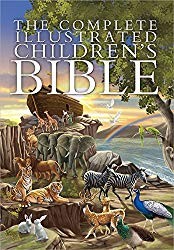
 

60 Christmas Gift 1The Complete Illustrated Children’s Bible includes a much greater breadth of biblical accounts than most other children’s Bibles. I love that. The narratives themselves are simple and direct, so they are very accessible. At the same time, you won’t find them watered down in kiddie language as in many books. The illustrations are beautiful. This is almost 300 pages, and there’s nothing I’ve seen that even comes close to the quality here for younger kids. The website says this is targeted at 5- to 8-year-olds. (If you have a child 9+, don’t get a children’s Bible. It’s time to move up to learning to read a full Bible!)
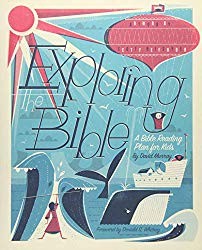
 

60 Christmas Gift 2Exploring the Bible: A Bible Reading Plan for Kids isn’t a children’s Bible, but rather a Bible reading plan. Kids won’t read every word of the Bible using this, but it’s a solid selection that takes you beginning to end. Each day there are verses to read with a small box for them to answer a basic question about the reading. For kids who enjoy writing, this makes it more engaging than simply a list of passages to read. I’ll be honest and say I got this for my 9-year-old twins last Christmas and they didn’t get too far with it despite liking the concept and presentation. But I am recommending it because it’s a unique book that would work really well if the parent is committed to focusing on using it as the primary Bible reading tool for the year.
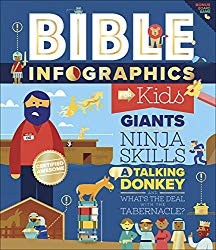
 

60 Christmas Gift 3Bible Infographics for Kids is a 50-page book with beautifully designed spreads that present the Bible in infographic form! My 10-year-old son read through this in a day and loved it. Periodically he comes up with some kind of Bible fact that he learned from reading this, so it really stuck with him. It’s an engaging presentation for any kid, but I especially want to highlight this for parents who may have a child who really resists Bible reading. You certainly aren’t reading the actual Bible with this book, but it can be a stepping stone with it’s appealing visual design to get your less-than-focused elementary age boy to sit down and look at the biblical story through different eyes. I think this book is seriously undermarketed, as I have never heard anyone talk about it. I would never have heard of it myself had the publisher not sent me a copy. It would make an excellent gift and is very unique!

Children’s Devotionals (12 & Under)

I am extremely picky about devotionals. I can spend the whole afternoon at a Christian bookstore taking them off the shelf, reading a few selections, and deciding to put them back because 1) they are too simple/watered down, 2) they are theologically not even quite right, or 3) they are focused on character development (“here’s how to be a good person!”) far more than Jesus himself. I also want to be clear that I would never recommend devotionals as a substitute for reading the Bible with your kids. But, as a supplement that kids can read on their own or with you, they can be helpful…if they aren’t bad. With that in mind, here are a select few I have chosen and appreciated (note my kids are all 10 and under, so I, unfortunately, do not have recommendations yet for the teen crowd). I’m listing them in order from youngest to oldest audience.
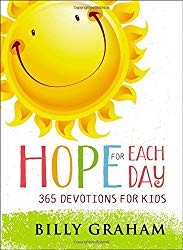
 

60 Christmas Gift 4Hope for Each Day: 365 Devotions for Kids is listed as a devotional for 6- to 10-year-olds, but I would say it’s more for 4- to 8-year-olds (older kids need more meat than this provides). For the younger crowd, these are solid, theologically accurate devotions that get beyond the surface and are great discussion starters (not that that’s what you want before bed!).
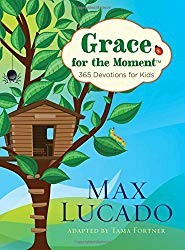
 

60 Christmas Gift 5Grace for the Moment: 365 Devotions for Kids is another solid choice for younger kids. This one, too, is listed for 6- to 10-year-olds, but I would say it should skew a little younger (more like 5 to 8 or 9). These are short devotions that end with some questions for self-reflection. I liked that the book (in both design and content) is appropriate for boys or girls so you can use them for family time with multiple kids.
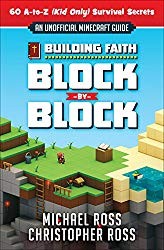
 

60 Christmas Gift 6Building Faith Block by Block [An Unofficial Minecraft Guide] is a devotional for boys who are Minecraft lovers. Each devotional features a Minecraft story and then applies it briefly to a Bible passage with some questions for reflection. Unlike the other devotionals, I did not evaluate this in depth before getting it. My son loves Minecraft, and I trust his judgment, so I decided to let him read and tell me what he thought of it. He really liked it but concluded it was heavy on the Minecraft and light on the biblical learning. Still, I wanted to include it here because if you have a boy who isn’t inclined toward devotionals but likes Minecraft (I bet there are many!), this could be a great way to begin getting them to engage more with the Bible. I’m shocked the website says it’s for kids 12 to 18. I would say 8 to 12.
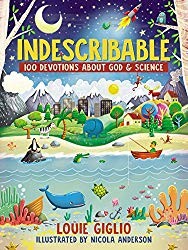
 

60 Christmas Gift 7Indescribable: 100 Devotions about God & Science has 100 devotions for science-loving kids (boys or girls). They focus on amazing facts about God’s creation, and there’s some really interesting stuff in here! The whole idea is to help kids realize how powerful, intelligent, personal, and purposeful our Creator is. It’s also an attractive book, with cute illustrations throughout. As I’m sure some will be wondering, this book is mostly appropriate regardless of your view on the age of the Earth. However, there are a few devotionals that are specific to a young Earth view (e.g., a chapter on “Shooting down the Big Bang”).
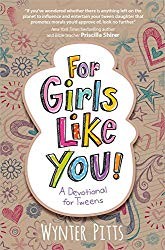
 

60 Christmas Gift 8For Girls Like You: A Devotional for Tweens is a good choice for tween girls who are drawn more to girl-specific examples and a relational approach. While it’s not in depth, it’s theologically solid. My 10-year-old daughter, who sometimes has trouble holding interest to finish whole books, finished this one on her own with no prompting from me. If your daughter likes this one, Wynter Pitts has a second book which I would equally recommend, called You’re God’s Girl. There’s also a matching coloring book which would make a nice complementary gift!
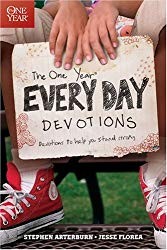
 

60 Christmas Gift 9The One Year Everyday Devotions: Devotions to help you stand strong is a good choice for both boys and girls in the 9 to 12 age range. The readings are quite short, but they make some deep points and apply to everyday situations. If you have a girl who isn’t super “girly”, this is a perfect choice (no pink princesses here!).

Apologetics Books

Apologetics is the study of how we know Christianity is true. If you want to raise faithful kids in a challenging secular world, teaching apologetics is crucial. Raising your kids with this understanding ultimately must start with you (so see my book recommendations under the parents’ section below), but there are a few excellent apologetics books for kids under 12 as well. These should go hand in hand with all else you’re doing!

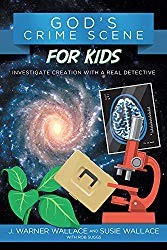
60 Christmas Gift 10 60 Christmas Gift 11 60 Christmas Gift 12

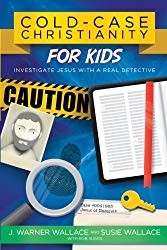
The most comprehensive set of books in this category is the trilogy by J. Warner Wallace. Wallace is a cold-case homicide detective and former atheist who became a Christian after applying detective methodologies to the investigation of biblical reliability. He has three adult books that investigate the truth of Christianity from a similar detective’s perspective: God’s Crime Scene (evidence for God’s existence), Cold-Case Christianity(evidence for Christianity specifically), and Forensic Faith (the necessity of having a faith based on good evidence). I recommend these all the time, and now he has excellent kids’ versions of the same books: Forensic Faith for KidsGod’s Crime Scene for Kids and Cold-Case Christianity for KidsThey are written for 8- to 12-year-olds and correspond to the chapter sequence of the adult versions so you can study together. Because they are written in a detective style, they are really engaging. These books are easy reads that are packed with value for 8- to 12-year-olds. There’s even a free website with corresponding videos and worksheets. I’d recommend getting all three, but if you start with just one, I’d go with Forensic Faith for Kids because it establishes the importance of apologetics before they dig deeper.
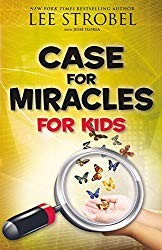
 

60 Christmas Gift 13You’re probably familiar with Lee Strobel’s best-selling book, Case for Christ. You may or may not know he has a whole series of similar books that make a case for the truth of Christianity from a journalist’s perspective, and great kids’ versions to go with them. Check out the following titles and see which might be of greatest interest to your 9- to 12-year olds: Case for Miracles for KidsCase for a Creator for Kids, Case for Christ for Kids, Case for Faith for Kids, and Case for Grace for Kids.
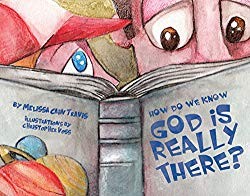
 

60 Christmas Gift 14 60 Christmas Gift 15 60 Christmas Gift 16

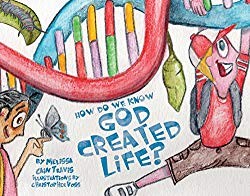
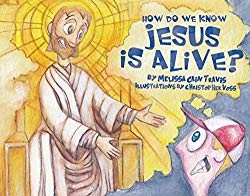
Melissa Cain Travis has written a trilogy of illustrated storybooks that explain key apologetics concepts through an engaging tale (to be read in a single setting). These are very cool because most books for 9- to 12-year-olds aren’t designed to be read in a single session. These are great for the family to read together and then discuss. Kids can then go back and read them on their own. The three books are: How Do We Know God is Really There?, How Do We Know God Created Life?, and How Do We Know Jesus is Alive?
60 Christmas Gift 17

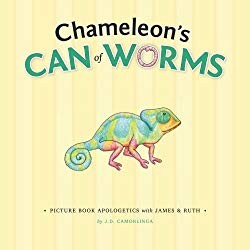
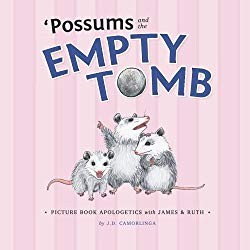
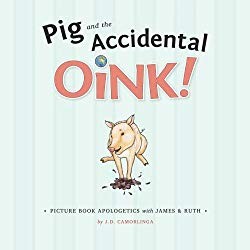
If you have kids in the 5-8 age range, who aren’t ready for the books I just talked about, start here! The Picture Book Apologetics series talks about apologetics concepts at the most basic level, and have sweet, simple pictures to capture a young child’s imagination. Pig and the Accidental Oink! (Volume 1) introduces the cosmological argument (that the universe had to have a creator), Chameleon’s Can of Worms (Volume 2) introduces the problem with moral relativism (some things are not a matter of opinion!), Possums and the Empty Tomb (Volume 3) introduces evidence for the resurrection, Fox and the Hard Day helps kids understand the problem of evil, and Pooch and the Pearly Gates teaches kids about heaven and the new Earth. In addition to these story books, the authors have a kid’s book on logical fallacies (i.e., errors people make in reasoning, and how to think more critically). The content of this one would be more appropriate for kids 8+: Pitfalls: A Quick Guide to Identifying Logical Fallacies for Families.
60 Christmas Gift 20

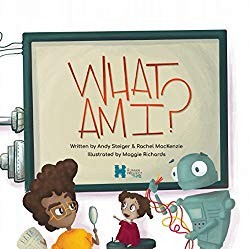
What Am I?  is the story of a boy named Amare, his robot Bobo, and his little sister Nya. Amare makes a variety of things, like a tower and a cage, and asks his robot what he thinks. The robot always replies with a description of what those things are made of–“Excellent collection of colourful plastic parts.” Amare explains that they are made of the same parts, but they are made FOR very different things. He then explains all his inventions and what they are made FOR even though Bobo, as a robot, can only detect what they are made OF.  Eventually, Amare goes to his mom to ask what HE is made for and learns that if you want to find out what you were made for, you need to ask the one who made YOU. Amare and Nya go on to learn what God told us he made humans for. I LOVE that this book tackles the naturalistic worldview (that we’re nothing more than our physical parts) head-on at a level perfect for elementary age kids to understand. It’s a 30-page picture book and easy to read, yet will facilitate deep conversations.

Non-Book Gifts

While this post is focused on book gifts, there are a couple of awesome non-book gifts I would highly recommend.
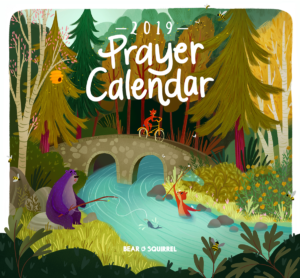
60 Christmas Gift 21.jpgBear & Squirrel is a company that puts out a yearly prayer calendar. The images are amazingly adorable each month and every day tells you what to pray for! It’s such a great way to give kids ideas of how to pray in more diverse ways than “thank you for today.” We bought one for 2018 for all of our kids, and they loved them.

 

60 Christmas Gift 22I am constantly inspired by the amazing work that author Kristen Welch from We Are That Family does around the world to create jobs. Earlier this year I subscribed to her fair trade bracelet of the month club. For $15 each month you receive a beautiful handmade bracelet that empowers women in difficult economic (and other) circumstances. I have two daughters, so they take turns getting to have the bracelets that come. They look forward to receiving them every month and learning about the women who crafted them. This is an extremely meaningful gift that your daughter can receive throughout the year.
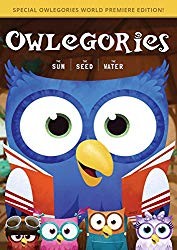
 

60 Christmas Gift 23We don’t watch a lot of videos, so this list is conspicuously missing recommendations in this area. However, I am absolutely crazy about Owlegories. There are six DVDs with a total of 18 episodes so far. Each episode is short, adorable, and actually quite funny (as in, makes an adult laugh with its clever humor). They teach great lessons about the Bible that get away from cliches and feature special messages at the end of each by a well-known Christian teacher such as Matt Chandler. My son AND daughters like these. They would make a wonderful stocking stuffer!


30 Christmas Gift Ideas for Christian Adults

Since almost all of my reading is on apologetics and theology, I’m going to focus these gift ideas on books in these areas. There are so many great books that can be recommended, but my goal here is to give one great idea for each type of gift recipient I list. Since this is recipient-based rather that category-based, I won’t include detailed descriptions as I did above. If you are looking for a gift for someone matching the description, just click over to Amazon to read more. In no particular order…

For both prayer warriors and those who struggle to pray: 
60 Christmas Gift 24

For those going through a difficult time caring for others:
60 Christmas Gift 25

For those who want (or need!) to begin learning about the reliability of the Bible (this is a FABULOUS new, short, and accessible book):
60 Christmas Gift 26

For newer Christians, or Christians who want to have a better understanding of how the whole biblical narrative fits together:
60 Christmas Gift 27

For Christians who want to better understand the evidence for the deity of Christ:
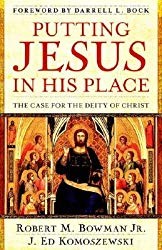
60 Christmas Gift 28

For Christians struggling with doubt in their faith:
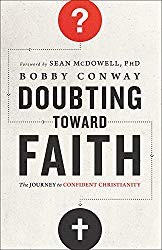
60 Christmas Gift 29

For Christians interested in a theological and scientific critique of theistic evolution (the idea that God created everything through evolutionary processes):
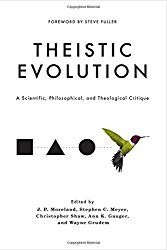
60 Christmas Gift 30

For Christians who want (or need) to begin learning about the importance of apologetics for their faith:
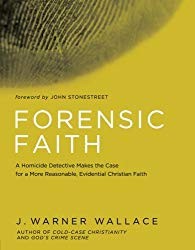
60 Christmas Gift 31

For Christians who are interested in the intersection of culture and faith on topics of sexuality:
60 Christmas Gift 32

For Christians who are interested in a critique of the atheistic worldview and better understanding its logical implications:
60 Christmas Gift 33

For Christian parents who want to start learning apologetics so they can be better prepared to have deep conversations about faith with their kids of any age (yes–this is my own book!):
60 Christmas Gift 34

For Christian parents who want to start having conversations with their kids about the evidence for God’s existence, the relationship between God and science, the nature of God, and the logical implications of a Christian vs. atheistic worldview (my second book!):
60 Christmas Gift 35

For Christians who are struggling with or want to better understand the existence of evil and suffering:
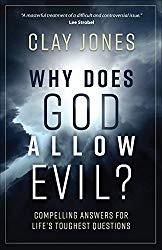
60 Christmas Gift 36

For Christians who want to study the book of Psalms in a creative way (e.g., coloring and journaling):
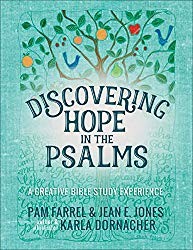
60 Christmas Gift 37

For Christians who want a primer on basic theology:
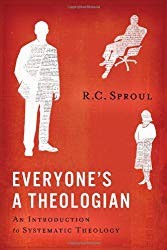
60 Christmas Gift 38

For Christians who are passionate about apologetics and love meaty reference books (this is the recent complete update to the classic–it’s incredible!):
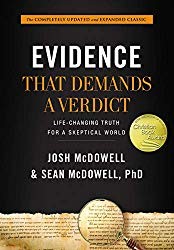
60 Christmas Gift 39

For Christians who have read everything you’ve heard of on apologetics and you want to find something probably off their radar (I randomly discovered this book a couple of months ago, and it was so enlightening, yet I’ve never seen anyone talking about it!):
60 Christmas Gift 40

For Christians interested in the topic of free will vs. God’s sovereignty from a non-Calvinistic view:
60 Christmas Gift 41

For Christians interested in Old Testament issues of violence, slavery, morality, etc.:
60 Christmas Gift 42

For Christians interested in understanding Islam:
60 Christmas Gift 43

For Christians who want to better understand the attributes of God:
60 Christmas Gift 44

For Christians who are interested in the intersection of faith and science (and how science supports faith):60 Christmas Gift 45
For Christians interested in the evidence for God’s supernatural involvement in the world:60 Christmas Gift 46
 

For Christians who enjoy a clever, edgy sense of humor and critiques of atheism:60 Christmas Gift 48
For Christians interested in early Christian distinctiveness in the Roman world:
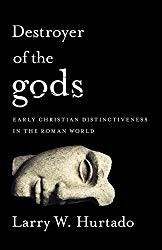
60 Christmas Gift 49

For Christians who aren’t necessarily into apologetics but would enjoy reading answers to common tough questions asked by skeptics:60 Christmas Gift 50
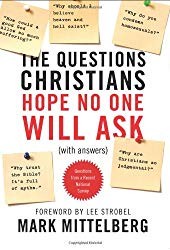
For Christians interested in how modern scholars distort the Gospels:
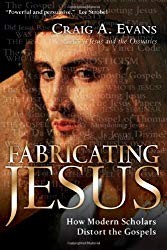
60 Christmas Gift 51

For Christians going on or returning from short-term mission trips:
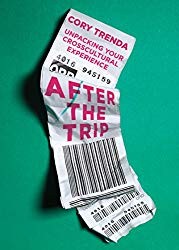
60 Christmas Gift 52

For Christians who have read basic books on the reliability of the Gospels and want to dig deeper:
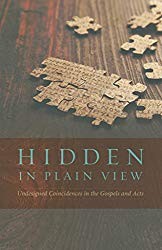
60 Christmas Gift 53

For Christian women who struggle with perfectionism:

60 Christmas Gift 54

If you found this post helpful, please share with others!


Natasha Crain is a blogger, author, and national speaker who is passionate about equipping Christian parents to raise their kids with an understanding of how to make a case for and defend their faith in an increasingly secular world. She is the author of two apologetics books for parents: Talking with Your Kids about God (2017) and Keeping Your Kids on God’s Side (2016). Natasha has an MBA in marketing and statistics from UCLA and a certificate in Christian apologetics from Biola University. A former marketing executive and adjunct professor, she lives in Southern California with her husband and three children.

Original Blog Source: http://bit.ly/2A0V0E4

By Brian Chilton

This past Sunday, I received a wonderful question from a young man in our church. Matthew Cleary was in Sunday school and asked his teacher, who in turn asked me, “What time of night was Jesus born? Was it at midnight?” To be honest, I had never really thought about the question. While it is impossible to provide a detailed time of Christ’s birth with great certainty, certain clues provide us hints at the time and date of Jesus’s birth. The time of Jesus’s birth is intricately tied to the date of his birth. While Scripture does not grant us a large amount of information of the day and time, it does offer a few clues.

Clue 1: Details of Jesus’s Birth Point to an Autumn Birthday

In Luke’s account of Jesus’s birth, the Evangelist notes that when Jesus was born, “shepherds were staying out in the fields and keeping watch at night over their flock” (Lk. 2:8).[1] The sheep that were used for temple sacrifices in Jerusalem were often kept in Bethlehem.[2] December 25th does not mesh with this aspect of the birth story. First, the sheep would have been taken to Jerusalem by December. In addition, December 25th would have been too cold for the shepherds and the sheep to have been staying in the fields at this time. However, the sheep and shepherds would have been in the fields in autumn, especially around the time of the Feast of Trumpets.

Clue 2: Details of the Star of Bethlehem and the Magi’s Appearance

This may disappoint many who read these words, but the Magi (wise men) were not at the stable when Jesus was born. In fact, it is possible that Jesus would have been one or two years old by the time they made it to Bethlehem. Matthew describes the Magi following a star which led them to the Christ child. The star could have been one individual star, or it may have been an astronomical configuration. Nevertheless, the Magi were filled with joy (Mt. 2:10) and entered “the house, they saw the child with Mary his mother, and falling to their knees, they worshiped him” (Mt. 2:11). The Star of Bethlehem guided the Magi to the Christ child after the child was born. The timing of the star is subsequent to the time of Jesus’s birth. The star could have presented a December visitation of the Magi, but since this was later than the birth of Christ, then the birth would have preceded this event.

Clue 3: Details from the Astrological Data in Revelation 12

Another passage of Scripture is linked with Jesus’s birth, one that may surprise you. Revelation 12:1-5 depicts a vision John received on the Isle of Patmos, which may provide additional clues to the time of Jesus’s birth. The text reads:

“A great sign appeared in heaven: a woman clothed with the sun, with the moon under her feet and a crown of twelve stars on her head. She was pregnant and cried out in labor and agony as she was about to give birth. Then another sign appeared in heaven: There was a great fiery red dragon having seven heads and ten horns, and on its heads were seven crowns. Its tail swept away a third of the stars in heaven and hurled them to the earth. And the dragon stood in front of the woman who was about to give birth so that when she did give birth it might devour her child. She gave birth to a Son, a male who is going to rule all nations with an iron rod. Her child was caught up to God and to his throne” (Rev. 12:1-5).

Joseph Dumond argues that Revelation 12 describes a constellation that took place at a certain time in history. Dumond claims that the constellation Virgo (e.g., “virgin”) appeared for a few hours in Bethlehem near Leo—representing the “lion of Judah”—with the sun clothing the woman, with the 12 visible stars surrounding her head. [3]This arrangement would only be visible from 6:15 pm (sunset) to 7:45 pm (moonset).[4] According to the Stellarium Astronomy software database (available at http://stellarium.org/), this astrological alignment was visible from Bethlehem on the evening of Wednesday, September 11, 3 BC.

Conclusion

The growing body of evidence seems to suggest that Jesus was born sometime between 6:15 pm to 7:45 pm on September 11, 3 BC. While September 11th holds bad memories for individuals in the United States, it would have been a day of celebration in ancient Israel. For it would have been the beginning of the Feast of Trumpets, a feast associated with the Messiah and his return. The Feast of Trumpets called for national repentance and also marked the start of a new agricultural year.[5] The blast from a shofar would announce the beginning of the feast. Yom Kippur (the Day of Atonement) would follow the Feast of Trumpets. Yom Kippur is the holiest day of the year for the Israelite. It is the day when the high priest enters the holy of holies and offers sacrifices for the nation’s sins. Sukkot is also one of Israel’s primary holidays. It recalls Israel’s wilderness wanderings and God’s saving action that brought them out of bondage and into salvation. Sukkot follows Yom Kippur and celebrates God’s deliverance of his people. Thus, Rosh Hashanah (Trumpets) calls for repentance (which would be the time when Jesus was born if this theory holds); Yom Kippur (Day of Atonement) seeks redemption, and Sukkot (Tabernacles) celebrates the fulfillment of God’s redemption. Wouldn’t it be just like God to provide a HUGE sign that he was about to save the world from its sins by having his Son to be born at the beginning of these festivities?

https://i0.wp.com/bellatorchristi.com/wp-content/uploads/2017/12/

. . . but wait . . . what about December 25th?

If this theory is true in that Jesus was born on September 11th, does December 25th hold any importance? Yes, it does. It is quite possible that the angel Gabriel appeared to Mary on December 25th. Thus, the date may serve as the time when Mary was impregnated with Jesus by the empowerment of the Holy Spirit by miraculous means. December 25th may also be the date when the Magi visited the Christ Child after following the star. Astronomical data points to this time which is beyond the scope of this article. So, while Jesus may not have been born on December 25th, the date still holds tremendous value and should ultimately remind us of the greatest gift that God has ever given any of us—that is, his Son Jesus.

Notes

[1] Unless otherwise noted, all quoted Scripture comes from the Christian Standard Bible (Nashville: Holman, 2017).

[2] CSB Study Bible (Nashville: Holman, 2017), 1605, footnote 2:8.

[3] Joseph Dumond, cited in Joseph Farah, “Was Jesus Born Sept. 11, 3 B.C.?,” WND.com (8/23/2013), retrieved December 19, 2017, http://www.wnd.com/2013/08/was-jesus-born-sept-11-3-b-c/.

[4] Ibid.

[5] John T. Swann, “Feasts and Festivals of Israel,” ed. John D. Barry et al., The Lexham Bible Dictionary (Bellingham, WA: Lexham Press, 2016).


About the Author

Brian Chilton is the founder of BellatorChristi.com and is the host of The Bellator Christi Podcast. He received his Master of Divinity in Theology from Liberty University (with high distinction); his Bachelor of Science in Religious Studies and Philosophy from Gardner-Webb University (with honors); and received certification in Christian Apologetics from Biola University. Brian is currently a student of the Ph.D. program in Theology and Apologetics at Liberty University. Brian is a full member of the International Society of Christian Apologetics and the Christian Apologetics Alliance. Brian has been in the ministry for over 14 years and serves as the pastor of Huntsville Baptist Church in Yadkinville, North Carolina.

Original Blog Source: http://bit.ly/2kP9Aq3


By Evan Minton

Christmas is one of my favorite holidays and has been for as long as I’ve walked this Earth. As a kid, it was because I got a boatload of toys on Christmas morning that I got to play with as Mom and Dad prepared Christmas dinner for us and the rest of my family. As someone who is now a born-again Christian, my primary reason has shifted from getting gifts to praising God for taking on human flesh to begin His mission of redeeming fallen humanity. We all know the story: of how Gabriel appeared to Mary, told her she would become miraculously pregnant with Jesus, how Mary and Joseph traveled to Bethlehem where Jesus would then be born, etc. However, those of us who witness to non-believers will encounter some objections about the reliability of the Christmas narrative.

It is the point of this blog post to wrestle with these challenges to the gospels’ reliability.

1: The Census 

Luke 2:1-3 says “In those days Caesar Augustus issued a decree that a census should be taken of the entire Roman world. (This was the first census that took place while Quirinius was governor of Syria.) And everyone went to their own town to register.” 

The Bible is clear that Jesus was born when Herod The Great was in power and when Quirinius was governor, but (A) Flavius Josephus says Herod died in A.D 4 and (B) secular history attests that Quirinius didn’t become governor until A.D 6?  Did The Bible get it wrong?

First of all, I think we should give Luke the benefit of the doubt. In The Book Of Acts In The Setting Of Hellenistic History, the classic scholar Dr. Collin J. Hemer shows that archeology proves that the book of Acts got it right in 84 incidental details. The first chapter of Luke and the first chapter of Acts both give us clues that these books are written by the same author (Luke), such as the fact that they’re both addressed to a man named Theophilus and in Acts, the writer alludes “to my former work” (Acts 1:1). This is one piece of internal evidence that Luke and Acts had the same author. Now, if Acts gets it right in 84 different places, then is it really reasonable to suspect that this same writer would be so sloppy in his previous work? In fact, the famed scholar and archeologist Sir William Ramsay once said: “Luke is a historian of the first rank; not merely are his statements of fact trustworthy, he is possessed of the true historic sense…in short, this author should be placed along with the greatest of historians.”[1] Click here to read about some of the things Luke got right in both of his books 

Secondly, there are proposed solutions which could resolve the issue. One proposed solution has been that there were two different men named Quirinius governing on two different occasions. That possibility isn’t entirely out of the question. After all, we’ve had more than one president whose first name is George. The two-Quirinius explanation would be analogous to George Bush’ presidency in the 90s and George W. Bush’ presidency in the 2000s.

Another proposal is that the Qurinius reigned on two different occasions. As Daryl E Witmer of ChristianAnswers.net explains: “There is good reason to believe that Quirinius was actually twice in a position of command (the Greek expression hegemoneuo in Luke 2:2 which is often translated ‘governor’ really just means ‘to be leading’ or ‘in charge of’) over the province of Syria, which included Judea as a political subdivision. The first time would have been when he was leading military action against the Homonadensians during the period between 12 and 2 B.C. His title may even have been ‘military governor.’ “[2]

Either of these proposals would solve the timing of Quirinius’ governorship. Either there were two governors by this name, or, as seems most likely, Quirinius was the governor on two separate occasions. This latter view is the one that archeologist William Ramsay endorsed.[3]

But what about the census itself? Was this really a practice that the Roman government did?

Here’s a quote from an official governmental order dated AD 104. Gaius Vibius Maximus, Prefect of Egypt [says]:

“Seeing that the time has come for the house to house census, it is necessary to compel all those who for any cause whatsoever are residing out of their provinces to return to their own homes, that they may both carry out the regular order of the census and may also attend diligently to the cultivation of their allotments.”[4]

As you can see, that practice is confirmed by this document. And another papyrus from AD 48 implies that the entire family was involved in the census. Moreover, there have been scholars who argued that Romans were known to occasionally allow a census to be taken according to local customs in order to avoid ticking off the population.

According to ancient Semitic culture, what this means is that Mary and Joseph would have had to trek to the home of their ancestors.

2: The Christmas Star


In Matthew 2:2, the magi appear before King Herod and ask him where the baby Jesus is. They said“Where is the one who has been born king of the Jews? We saw his star when it rose and have come to worship him.” The Magi knew how to get to the town Jesus was born because a huge shining star in the sky acted like a celestial GPS system. This incident of the star that guided the magi has baffled historians and astronomers for years. What kind of event could this be? What astronomical phenomenon could have occurred in the universe to have caused a star to shine noticeably bright for the duration of the magis’ journey?

Some Christians have responded to this challenge by asking why it even has to be a literal star at all? Why can’t it just be a supernatural light caused by God? Or why couldn’t it be supernatural light given off by an angel? The problem is that the text specifically calls it a star, or at least some kind of celestial body in this universe. The Greek Word translated as “star” is aster, and according to Hugh Ross, this Greek word can indicate a number of different astronomical bodies, including a star, planet, comet, asteroid, or meteor. If we’re to read the plain meaning of scripture, we should probably conclude that this is a star, planet, meteor, or some other astronomical body rather than an angel or a miracle light. This would be to stick to the hermeneutical principle that The Bible should be interpreted literally unless good reasons can be given to take a term metaphorically.

The astrophysicist Hugh Ross once argued that the star was a recurring nova. He wrote “The brighter novae are rare enough that they could catch the attention of the Magi (who, it seems, were waiting for a sign), yet also dim enough to escape the notice of other observers. And, unlike supernovae, a few novae actually can erupt several times.”[5]

However, he himself said there was “a snag” in this explanation. He said that all the recurring novae that astronomers had observed had a recurrence rate of 10 years or even a century! Nevertheless, Dr. Ross said that believed it was possible for a nova to recur in less than two years. In 2014, new scientific evidence came to light to vindicate Ross. Ross wrote about these findings, saying “Astronomers observed nova M31N 2008-12a recurring within a period of only one year. Following this discovery, a team of four astronomers demonstrated that a certain kind of white dwarf star could exhibit recurring nova eruptions with a period as short as two months. Such a white dwarf star’s rotation rate would need to be close to zero and its mass would need to be 1.38 times the Sun’s mass. It also would need to be accreting mass from a companion star at a rate of 0.00000036 solar masses per year. The team also showed that a one-year nova eruption period requires a white dwarf with a mass = 1.30 solar masses and an accretion rate = 0.00000015 solar masses per year.”[6]

Dr. Ross says that this is a rare occurrence in the Milky Way Galaxy, but that nevertheless, these kinds of white dwarfs exist in a sufficient enough number to make the account of the star of Bethlehem credible.

3: Herod’s Slaughter Of Innocent Babies 

Matthew 2 records that King Herod sought to kill all of the babies in Bethlehem who were 2 years old or younger because he believed the prophecies in The Old Testament about the coming of the Messiah (the giant star talked about in the previous subheader being a sign that he had arrived). Historians and scholars of ancient history have doubted whether this incident ever really occurred. Why? Because the only place it’s recorded is in the gospel of Matthew. Surely a person of such prominence as King Herod committing an act as heinous as murdering all of Bethelem’s infants would have been talked about by more people than Matthew, right?. You would expect Josephus or Tacitus to have at least made a passing reference to this event, right?

What are we to do about this objection? Did King Herod’s genocide not occur? Did Matthew make the whole thing up? Lee Strobel brought this objection up in his interview with Archeologist John McCray in his book The Case For Christ. In that interview, McCray responds with the following:

“‘You have to put yourself back in the first century and keep a few things in mind. First, Bethlehem was probably no bigger than Nazareth, so how many babies of that age would there be in a village of five hundred or six hundred people? Not thousands, not hundreds, although certainly a few. ‘Second, Herod the Great was a bloodthirsty king: he killed members of his own family; he executed lots of people who he thought might challenge him. So the fact that he killed some babies in Bethlehem is not going to captivate the attention of people in the Roman world. And third, there was no television, no radio, no newspapers. It would have taken a long time for word of this to get out, especially from such a minor village way in the back hills of nowhere, and historians had much bigger stories to write about.”[7]

So, in other words, Bethelem was extremely tiny so the slaughter wouldn’t have been a major holocaust. Secondly, Herod was known for heinous acts (see the writings of Josephus), and thirdly, it would have taken a long time for this to have circulated. Given the second point, it wouldn’t have probably been of much interest to people outside of Bethelem.

I would add to McRay’s points by pointing out that much of ancient writings have been lost in the sands of time, decayed away. Sometimes portions of these writings survive as citations in other works, such as Thallus’ mention of the darkness at Jesus’ crucifixion quoted in a work by Julius Africanus which was itself quoted by a historian named George Syncellus[8]. Both Thallus’ and Africanus’ works are lost, but both partially survive in Syncellus’ work. That’s one way we know that they didn’t survive; because historians see these authors quoted yet the quoted works are nowhere to be found. So, it may be the case that some other historians did make mention of it, but their works either haven’t been found yet or none of the manuscripts survived to the present day. We just don’t know.

Conclusion 

Archeology and astronomy have helped to shed light on these Christmas Conundrums. We have reason to believe that Matthew and Luke accurately recorded the story of Jesus’ birth.

Notes 

[1] Sir William M. Ramsey, The Bearing of Recent Discovery on the Trustworthiness of the New Testament, Hodder & Stoughton, 1915.

[2] Daryl E. Witmer, “When Did The Luke 2 Census Occur?”, https://christiananswers.net/q-aiia/census-luke2.html 

[3] John McRay, Archaeology and the New Testament (Grand Rapids: Baker, 1991), 155, emphasis added.

[4] William Mitchell Ramsay, The Bearing of Recent Discovery on the Trustworthiness of the New Testament (London: Forgotten Books, 2012, reprint of 1909 edition), 277.

[5] Hugh Ross, “Astronomy Sheds New Light On The Christmas Star”, December 1, 2014, http://reasons.org/explore/blogs/todays-new-reason-to-believe/read/tnrtb/2014/12/01/astronomy-sheds-new-light-on-the-christmas-star 

[6] Ibid.

[7] Strobel, Lee; Strobel, Lee. Case for Christ Movie Edition: Solving the Biggest Mystery of All Time (Case for … Series) (Kindle Locations 2256-2263). Zondervan. Kindle Edition.

[8] George Syncellus, quoting Julius Africanus, “History Of The World, Book 3”.


Original Blog Source: http://bit.ly/2B4LwGg

By Tim McGrew

One of the favorite targets of destructive biblical criticism is the narrative of Jesus’ birth in the first two chapters of Matthew. One distinctive feature of Matthew’s account makes it a particularly tempting target. Matthew’s theological agenda is absolutely overt: over and over in the first few chapters of his Gospel, we get some variation on the phrase, “… all this took place to fulfill what was spoken by the prophet…” followed by a quotation of some passage from the Old Testament. Clearly, Matthew is deeply concerned to show the birth of Jesus as the fulfillment of Old Testament prophecy.

There are two ways to look at that fact. From a traditional Christian perspective, Matthew, knowing some of the events surrounding Jesus’ birth, searched back through the prophets to find passages that would resonate with the events. Jewish interpretive practices in the first century were varied and complex and not always something sober twenty-first-century readers would engage in. Still, Matthew’s use of those techniques (still a debated issue in some circles) is pretty tame by Jewish standards of his time.

It is not difficult, in a quick online search, to find long lists of ostensible messianic prophecies fulfilled by Jesus. Take Hosea 11:1, for example:

When Israel was a child, I loved him, and out of Egypt I called my son.

One recent commentary (John Phillips, Exploring the Minor Prophets: An Expository Commentary (Grand Rapids: Kregel, 2002), p. 60) reflects on this passage:

Devout Jewish students must have often pondered this Messianic prophecy. How can the Messiah possibly come out of Egypt? they no doubt reasoned.

Or consider Jeremiah 31:15:

Thus says the LORD, “A voice is heard in Ramah, Lamentation and bitter weeping. Rachel is weeping for her children; She refuses to be comforted for her children, Because they are no more.”

Even in Jeremiah’s time, Rachel had been dead for centuries; her mourning is a metaphor. Matthew, reflecting on the small but brutal massacre in Bethlehem, saw history coming full circle again and found in Jeremiah’s description of Rachel’s lament an apt metaphor for events in his own time.

Above all, there is the much-disputed sign promised in Isaiah 7:14:

Behold, the virgin shall conceive and bear a son, and shall call his name Immanuel.

As the notes in the NET Bible Synopsis of the Four Gospels inform us, the “Messiah was to be born of a virgin”—and despite what appears to be an unending wrangle over the words almah and parthenos, it is not hard to see how Matthew, learning that Jesus had indeed been born of a virgin, would have taken the event to be a fulfillment of prophecy.

But from a more cynical perspective, this order of looking at things is backwards. Matthew, knowing the Old Testament prophecies, and persuaded that Jesus was the Messiah, invented the stories in order to fit the prophecies. The events did not remind Matthew of the prophecies; the events, in fact, never took place. Rather, recollected prophecies gave rise to the fabrication of the Christmas story.

The simplicity of the skeptical theory gives it a certain superficial charm. Anything Matthew says that cannot be independently verified can be explained away in this fashion. Why does he (but not Luke) send Jesus to Egypt? Because that way, Jesus can be seen as fulfilling the prophecy in Hosea.

Regarding Jeremiah 31:15, George Wesley Buchanan (Jesus, the King and His Kingdom (Macon: Mercer University Press, 1984), p. 292) writes:

Jeremiah was a prophet. Therefore, he would have been speaking only of the days of the Messiah. Why would there be weeping in Herod’s day? Herod must have slaughtered Rachel’s descendants the way Pharaoh had done with the Hebrew children in Egypt.

There is the reversal: Herod “must have” done this, as it is what the prophecy requires; therefore, the story fulfills the prophecy, neatly bypassing actual history in the process.

And for Isaiah 7:14, the skeptical explanation seems ready made. Does Isaiah prophesy a virgin birth for the Messiah? Well, then if Jesus is the Messiah, a virgin birth he must have. To the skeptical eye it is all so so clear, so satisfying.

Except for one small problem. In all of the Jewish literature prior to the advent of Christianity, there is not one scrap of evidence that any Jewish reader ever considered Isaiah 7:14, Jeremiah 31:15, or Hosea 11:1 to be messianic prophecies.

It is not as though we lack evidence of what they did consider to be messianic. We have an abundance of evidence on that front. In an appendix to the second volume of his massive work The Life and Times of Jesus the Messiah, Alfed Edersheim lists 456 passages that are glossed in the Targums or the Talmud as messianic. And not one of these passages makes the list.

I want to express myself carefully here, as there is a risk that I will be misunderstood. I am not saying that, by the standards of first-century Jewish interpretation, these passages could not be taken to resonate with actual events in the life of Jesus. Clearly they could—if those events really transpired, they might well suggest that sort of application of these passages. What I am saying is that, so far as our evidence is concerned, there is no reason whatsoever to believe that an overly zealous first century Jew, intent on making up a story about the birth of the Messiah, would reach for these passages or feel the need to work them into his narrative. There is plenty of other material to work with. But for this hypothetical Jewish-Christian novelist, these three passages are simply not relevant.

The fact that the Jews themselves did not consider these passages to be Messianic is fatal to the theory that the birth narrative in Matthew was fabricated to accord with messianic expectations. One might even reverse the argument. It is not easy to find a good explanation for the incorporation of such material into a fictional account of Jesus’ nativity. Yet there it is. How, then, shall we explain that fact? Why did Matthew feel moved to draw out just those strands from the prophetic writings, unless it was because the parallels were suggested by the events themselves?

Against this, there is always the fundamental fallback position of skepticism, a position that Matthew Arnold puts with admirable bluntness in his Preface to Literature and Dogma (London: Smith, Elder, & Co., 1883), p. xii:

[O]ur popular religion at present conceives the birth, ministry, and death of Christ, as altogether steeped in prodigy, brimful of miracle;—and miracles do not happen.

With such an antagonist, one knows where one stands. There is no subterfuge here, no pretense that the narratives must be set aside because of the results of dispassionate historical criticism. As G. K. Chesterton observes:

Somehow or other an extraordinary idea has arisen that the disbelievers in miracles consider them coldly and fairly, while believers in miracles accept them only in connection with some dogma. The fact is quite the other way. The believers in miracles accept them (rightly or wrongly) because they have evidence for them. The disbelievers in miracles deny them (rightly or wrongly) because they have a doctrine against them. [Orthodoxy (New York: Dodd, Mead and Co., 1945), pp. 278-79]


Christian Apologetics Alliance BLOG Banner

?  Visit the Christian Apologetics Alliance ?


By Tim Stratton

John 1:1-14 states “In the beginning was the Word (Logos), and the Word was with God and the Word was God. He was in the beginning with God. All things were made through him, and without him was not any thing made that was made…. And the Word became flesh and dwelt among us, and we have seen his glory, glory as of the only Son from the Father, full of grace and truth.”

This is the message of Christmas! The Bible refers to Jesus as “The Logos” and implies that not only is Jesus God, but also gives us some insight into the Trinity. From a theological perspective, this passage of scripture carries much weight! Moreover, from a philosophical and logical perspective, this passage not only makes sense, but we even have scientific data supporting this scripture.

All of the scientific data supports the theory that all nature had an absolute beginning (big bang cosmology, 2nd Law of Thermodynamics, and the Borde, Guth, Vilenkin Theorem of 2003). Everything that begins to exist has a cause, and the evidence demonstrates that the universe (all nature) began to exist. Therefore, since nature began to exist, nature cannot be the cause of nature. Therefore, the cause of nature must be something other than nature (supernatural). This is exactly what the first chapter of John is stating about Jesus – he is the supernatural cause of the natural universe, and he entered into his creation so that we could know him.

That is to say, the Creator of the universe entered into the universe to save the people within the universe. This is what Christmas is all about. This is why we have good reason to celebrate Christmas!

Another thing to keep in mind is that the Greek word “Logos” is used synonymously with Jesus in the text. It is interesting to note that logos, in Greek, means, “the principle of reason.” This is where we get the term “logic.” The Bible is clear that Jesus is God and seems to suggest that he is the grounding of logic and reason. This would make perfect sense of why the immaterial laws of logic impose themselves on the material world — or any possible world. God created the material world according to the logical laws he had in mind or that are grounded in his essence. This is the best explanation of why logic imposes itself on the material world. Just as God is necessary in all possible worlds, so are the laws of logic which are essential to God’s very nature.

Logic is grounded in the essence of the immaterial God. Therefore, when we choose to think and behave logically, we are godly (approximating to or being like God).

With that in mind, we at FreeThinking Ministries and CrossExamined.org wish you a very Merry (and logical) Christmas!


By J.W. Wartick

There are many charges raised against the historicity of the birth narratives of Jesus Christ. These run the gamut from objections based upon alleged contradictions to inconsistencies in the genealogies to incredulity over the possibility of a virgin birth. Rather than make a case to rebut each of these objections in turn, here I will focus upon using undesigned coincidences to note how these birth narratives of Christ have the ring of truth. How exactly do undesigned coincidences work? Simply put, they are incidental details that confirm historical details of stories across reports. I have written more extensively on how these can be used as an argument for the historicity of the Gospels: Undesigned Coincidences- The Argument Stated. It should be noted that the birth narrative occurs only in Matthew and Luke. John begins with a direct link of Christ to God, while Mark characteristically skips ahead to the action. Thus, there are only a few places to compare these stories across different reports. However, both Mark and John have incidental details which hint at the birth account. These incidental details lend power to the notion that the birth narratives of Jesus are historical events.

Joseph

First, there is one undesigned coincidence that is such a gaping hole and such a part of these narratives most people will probably miss it. Namely, what in the world was Joseph thinking in Luke!? Do not take my word for this–look up Luke chapters 1-2. Read them. See anything missing? That’s right! Joseph, who is pledged to a virgin named Mary (1:27) doesn’t say anything at all about the fact that his bride-to-be is suddenly pregnant. There is no mention of him worrying at all about it.

So far as we can tell from Luke, Joseph, who we only know as a descendant of David here, is going to be wed to a virgin and then finds out that she’s pregnant. He’s not the father? What’s his reaction? We don’t find out until Luke 2, where Joseph simply takes Mary with him to be counted in the census, dutifully takes Jesus to the Temple, and that’s about it. Isn’t he wondering anything about this child? It’s not his! What happened?

Only by turning to Matthew 1:18ff do we find out that Joseph did have his second thoughts, but that God sent an angel explaining that Mary had not been unfaithful, and that the baby was a gift of the Holy Spirit. So we have an explanation for why Joseph acted as he did in Luke. Now these are independent accounts, and it would be hard to say that Luke just decided to leave out the portion about Joseph just because he wanted to have Matthew explain his account.

The genealogies of Jesus that Matthew and Luke include are different, but they reflect the meta-narratives going on within each Gospel. Luke’s narrative generally points out the women throughout in a positive light, and it is often argued that his genealogy traces the line of Mary. Matthew, writing to a Jewish audience, traces through Jesus’ legal father, Joseph. Now it could be argued that these are simply reflections of the authors’ imaginations within their fictional accounts, but surely including names with descendants tracing all the way back to Abraham and beyond is not a good way to construct a fictional account. No, Matthew and Luke include the genealogies because their accounts are grounded in history.

Incidental Details

Interestingly, the birth narratives of Jesus also help explain the events reported in Mark and John, which do not report His birth. What of the apparent familiarity John had with Jesus in Mark 1:3ff and John 1:19ff? It seems a bit odd for John to go around talking about someone else “out there” who will be better in every way than he himself is without knowing who this other person is. Well, looking back at Matthew and Luke, we find that Mary and Elizabeth (John’s mother) knew each other and had visited each other during their pregnancy. It seems a foregone conclusion that they continued to interact with each other after the births of their sons, which would explain John’s apparent familiarity with Jesus in Mark and John.

Strangely, Mark never mentions Joseph as Jesus’ father. If all we had was Mark’s Gospel, we would be very confused about who Jesus’ father is. The oddness is compounded by the fact that Mary is mentioned a number of times. Well okay, that still seems pretty incidental. But what about the fact that Mark explicitly has a verse where he lists Mary as well as Jesus’ siblings?

Is not this the carpenter, the son of Mary and brother of James and Joses and Judas and Simon? And are not his sisters here with us?” And they took offense at him. (Mark 6:3, ESV)

This verse seems extremely weird. After all, Joseph was a carpenter (well, a more accurate translation is probably “craftsman”) and yet despite Mark explicitly using that word for Jesus, as well as listing Mary and Jesus’ siblings, we still see nothing but silence regarding Jesus’ father. Well, of course! After all, when we turn to the birth narratives in Matthew and Luke, we find that Jesus was born of a virgin. Jesus had no human father. Thus, Mark, ever the concise master of words, simply omits Joseph from details about Jesus’ life. But to not mention Jesus’ father in a largely patriarchal society alongside his mother and siblings seems extremely strange. It is only explained by the fact of the virgin birth, with which Mark would have been familiar. However, Mark didn’t see the birth narrative as important in his “action Gospel.” Only by turning to Matthew and Luke do we find an explanation for the strange omission of Joseph from Mark’s Gospel.

Conclusion

I have listed just a few undesigned coincidences to be gleaned from the birth narratives of Jesus. The fact of the matter is that these can be multiplied almost indefinitely if one looks at the whole of the Gospels, and even moreso if one investigates the whole Bible. These incidental details fit together in such a way as to give the Gospels the ring of truth. The way that Matthew fills in details of Luke, Mark demonstrates his familiarity with the birth narratives, and the intimate connections of Jesus and John are all cross-confirmed is both incidental and amazing. The claim is not that based upon these incidences alone the Gospel accounts are true. No, the claim is that those who challenge the truth of these accounts must account for these incidences in a way that is more plausible than that they simply occur when people relate history. It seems that the only way to do that would be to resort to outlandish narratives that involve the four authors sitting together and discussing which portions of stories to leave out so the others can fill them in. No, instead it seems much more likely that these four authors were writing what they had witnessed–or that they received from eyewitness testimony, and just as we do when recounting events (think of 9/11, for example, and the different things people remember) they wrote specific details they felt were important or part of the narrative, while the others found other things more important or had other incidental knowledge related to the events they recorded.


Christian Apologetics Alliance BLOG Banner?Visit the Christian Apologetics Alliance Here ?

By Alisa Childers

In a previous post, I offered quick answers to 5 apologetics questions that I think every Christian should be familiar with. With many misconceptions and misunderstandings about Christmas, here are 5 Christmas-themed questions with “barebones” quick answers that can easily be committed to memory.

  1.  Was Jesus born on December 25th, AD 1?

Although we celebrate His birth on December 25th, there is no biblical evidence that this is the actual date He was born. “AD” is an abbreviation for anno domini, which means “in the year of our Lord” in Latin. When scholars came up with the BC/AD system, they intended to divide world history based on the birth of Christ. However, they miscalculated the year of His birth, and it wasn’t recognized until later that Jesus was actually born somewhere between 6-4 BC. (1) Matthew 2:1 records that Jesus was born during the reign of Herod the Great.  History tells us that Herod died in 4 BC, so Jesus would have been at least 4 years old by AD 1.

  1.  Is Christmas a pagan holiday? 

Every year, I see the inevitable “Christmas was a pagan holiday so Christians shouldn’t celebrate it!” claim circulated on social media at Christmastime. Let’s put it to rest, shall we? Christmas was never a pagan holiday. However, in the Roman Empire, there were certain pagan winter ceremonies such as Dies Natalis Solis Invicti, celebrated on December 25th, and  Saturnalia, a week long festival that culminated around the same date.

In the early third century, Christians began to associate Jesus’ birth with December 25th. In the fourth century, they made it an official holiday. Why? Some argue it was because it coincided with the date of the Resurrection, others report that it was to challenge and contrast the existing pagan traditions.(2) Either way, it’s interesting to note that Dies Natalis Solis Invicti honored the Roman sun god, and in Malachi 4:2,  a prophecy about Jesus calls Him the  “Sun of righteousness.” I can’t think of a better way to contrast the festival than to laud the birth of the true Sun—the Light of the world!

  1.  We three kings of Orient are?

There are three inaccuracies just in the first line of this beloved Christmas carol.

  • Three? The wise men brought three gifts, but the Bible doesn’t specify how many actually made the journey.
  • Kings? Matthew 2:1 tells of “wise men from the East” who followed the star to see the boy Jesus. Because of their high standing in court, early church father Tertullian wrote, “The East generally regarded the magi as kings,”(3) but they were not actual monarchs.
  • From the Orient? The wise men did not come from as far east as the Orient but were more likely from somewhere a little closer like Babylon. That was where a certain captive named Daniel was taken centuries earlier and was eventually made “chief of the governors over all the wise men of Babylon” (Dan. 2:48). The wise men would have likely been familiar with the prophecies about Jesus through the writings of Daniel.(4)
  1.  Is the story of Jesus’ virgin birth just a re-telling of ancient mythology?

This frequent claim on social media disintegrates when we actually examine the evidence. Consider the three most common examples—Buddha, Horus, and Mithras. None of the earliest and most reliable sources indicate that these figures were born of a virgin.(5)

  • The earliest sources on Buddha specifically mention that he was born of a royal human bloodline. Later stories record more unusual elements surrounding his conception, but they are nothing like the virgin conception of Jesus.
  • Horus was an Egyptian deity whose parents were Osiris and Isis, and early stories actually mention Osiris’ seed being in Isis to conceive him.
  • Mithraism is an ancient mystery cult with no surviving scripture. All we have are sculptures and paintings, which can be tough to interpret. The earliest version of the birth of Mithras portrays him emerging out of the side of a mountain, leaving a hole in the rock. Unless the mountain was a virgin, that is hardly a “virgin birth story.”
  1.  Was Jesus born in a stable?

Although it is commonly assumed, the biblical account doesn’t actually mention a stable, or a cave, as early church tradition suggests.(6)  However, Luke chapter 2 mentions a couple of important details—that He was “laid in a manger” (a type of feeding trough for animals,) and that there was “no room at the inn.” There’s no mention of an innkeeper, and the word translated as “inn” is the Greek word kataluma, which might be better translated “guest room.” In fact, Jesus uses the same word in Luke 22:11 in reference to the Upper Room, the site of the Last Supper.

As I’ve written previously, Mary and Joseph most likely did not attempt to stay at an inn, but it would have been customary for them to stay with Joseph’s relatives in Bethlehem. With the house overcrowded due to the government-mandated census and the guest room occupied, Jesus was probably born on the lower level of the dwelling. This is where animals were sometimes brought inside at night to keep warm and safe from theft, which explains why there was a manger.(7)

Have a well-informed and Merry Christmas!


Visit Alisa’s website here ? www.AlisaChilders.com ?

References:
(1) Alden A. Mosshammer, The Easter Computus and the Origins of the Christian Era (Oxford University Press, 2008) p. 319-356.
(2) Lee Strobel, The Case For Christmas: A Journalist Investigates the Identity of the Child in the Manger (Zondervan, 1998,2005) p. 20.
(3) Tertullian, Against Marcion, 3:13.
(4) William Stob, “The Gospel of Matthew: Righteousness Through Obedience” The Four Gospels: A Guide to Their Historical Background, Characteristic Differences, and Timeless Significance (Ambassador Group, 2007).
(5) J. Warner Wallace, Was the Virgin Conception of Jesus Borrowed From Prior Mythologies? Cold Case Christianity Podcast #53, 2015.
(6) Justin Martyr, Dialogue of Justin, Philosopher and Martyr, with Trypho, a Jew, LXXVIII.
(7) John McRay, Archaeology & the New Testament (Baker Academic, 1991) p. 80-82; Kenneth Bailey,The Manger and the Inn, 2008.