Tag Archive for: Artificial Intelligence

We hear that technology will set us free and that identity is whatever we choose. What we’re not being told is how these promises unravel reality itself, leaving us restless and confused in a world where we can no longer tell what is true. Embrace the Truth president Abdu Murray returns to the program to continue the discussion about his brand-new book, ‘Fake ID‘, and share practical tips for how we can navigate today’s two cultural tsanamis of artificial intelligence and identity ideology. Together, Frank and Abdu answer questions like:

  • What does it mean to say that humans are made in the image of God?
  • Why does humanity collapse when objective truth goes away?
  • Why does increased digital connection make us feel more lonely and depressed?
  • What shocking story did no one talk about in mainstream media and how is it another example of collapsing reality?
  • Should we embrace our “authentic self”?
  • What are some practical tips and tools we can use to navigate the culture we’re in right now?
  • Why is the distinction between epistemology and ontology so important?
  • What is the ultimate solution to all of this cultural confusion and chaos?
  • What was the providential encounter that Abdu recently experienced at MIT?

Reality doesn’t go away just because you stop believing in it! And the reality is, our identity is found in the truth of Jesus Christ and Him alone. You’re not just made in His image, but you can actually become a child of God by trusting in Jesus. The truth will set you free! Continue to pray that others may be released by the bondage of today’s cultural lies. If you would like to receive a FREE copy of Abdu’s ‘Spot the Truth & Spot the Lie’ online tool, be sure to email your request to mail@embracethetruth.org.

If you enjoyed this podcast episode PLEASE HELP US SPREAD THE TRUTH OF CHRISTIANITY BY SUPPORTING OUR MINISTRY USING THE LINK BELOW. 100% of your donation goes to ministry, 0% to buildings!

Resources mentioned during the episode:

Donate to CrossExamined.org
Embrace the Truth
Fake ID: How AI and Identity Ideology Are Collapsing Reality–and What To Do About It
Lead Psychologist at Tavistock Pleads Guilty to Pedophile Charge But Avoids Jail

Download Transcript

What does it mean to be human? And what if artificial intelligence isn’t just changing technology, but undermining our view of reality? Author, apologist, and founder of Embrace the Truth, Abdu Murray, joins Frank to introduce his brilliant new book, ‘Fake ID: How AI and Identity Ideology Are Collapsing Reality–and What To Do About It‘, that confronts the growing confusion around AI, identity ideology, and truth. In this episode, you’ll hear answers to questions like:

  • How is Abdu processing the murder of his father, and how did it impact his faith?
  • What happened at the trial?
  • What inspired Abdu to write ‘Fake ID’?
  • How does AI relate to the modern world’s obsession with identity ideology?
  • How has AI already managed to deceive high-level government officials?
  • Why are “hot takes” usually bad takes?
  • Why does Catherine Maher (current CEO of NPR and former CEO of The Wikipedia Foundation) deny the concept of truth?
  • What has pushed our culture into a post-truth mindset?
  • How does Abdu describe the two cultural “tsunamis” that are collapsing reality?
  • How does the Bible describe and predict this current cultural moment and what’s the solution?
  • What worldview drives transhumanism?
  • How does AI actually point to intelligent design?

Frank and Abdu will only scratch the surface of ‘Fake ID‘, but there’s much more to uncover. Be sure to pre-order your copy of the book and return next week as they continue the conversation in the midweek podcast episode!

If you enjoyed this podcast episode PLEASE HELP US SPREAD THE TRUTH OF CHRISTIANITY BY SUPPORTING OUR MINISTRY USING THE LINK BELOW. 100% of your donation goes to ministry, 0% to buildings!

Resources mentioned during the episode:

Donate to CrossExamined.org
Embrace the Truth
Fake ID: How AI and Identity Ideology Are Collapsing Reality–and What To Do About It

Download Transcript

In Part 1, we may have virtually scared the pants off our readers with our semi-dystopian view of the future. But everything’s going to be okay, mama. You’re fine. I’m fine. Everything’s FINE!

No, really, we’re all fine.

Let me ask you something: can you give me an example of any time the future wasn’t scary? I doubt it. On this side of heaven, the future will always be uncertain. So, what we can do is cling to that which we are certain of – absolute truth. And that truth is found in a person: Jesus. Seek truth, and you’ll find Christ and His promises. Seek Christ, and you’ll find truth and clarity.

Consequently, it’s no surprise that God’s number one enemy is working relentlessly to distort our view of truth. Because that’s ALL he can do, Mama Bears – he can’t touch truth itself. So, we need to get to work to protect our kids from the enemy’s schemes. I can’t emphasize how important this is. Sports and extracurriculars are wonderful but our primary responsibility during this small window of raising children is to train them up in the way they should go (see Proverbs 22:6). We understand how overwhelming all of this can be, so we came up with a short list of foundational lessons to help you out.

5 practical ways we can prepare our kids for AI:

#1 Teach them the habit of asking “Is this true?”

I am convinced that the enemy loves to exploit our natural tendencies so that we take them too far. If you are a mom of multiple children, you already know how each child is wired so differently! Some kids are naturally trusting, so our job will be to teach them not to be gullible. On the other hand, we need to teach our doubting children to walk that fine line of shrewd skepticism without slipping into the pitfall of cynicism.

That being said, we have a real problem in this culture with people believing something is true merely because, to them, it’s believable (or by the mere fact that it’s on YouTube!). I remember having a conversation with a friend during a highly controversial and widely publicized hearing. She told me she believed the man was guilty simply because she would not be surprised if he were! What?! Mama Bears, that is not how we establish truth.

Here are some questions you can teach your kiddos to ask when trying to determine if this piece of content is true:

  • What is the purpose of this content? 
  • Is it to sell me something?
  • Is it trying to persuade me to agree?
  • Is it trying to get me to click on something?


  • What are the sources used?
  • Are there multiple sources or just one?
  • Are the authors/creators credible?
  • Can you find this information on other credible sites as well?


  • Does the content creator acknowledge their own biases?
  • What worldview, religion, or political aisle is the author/creator coming from?
  • Do they present a balanced perspective on the issue? (legitimate pros and cons)
  • Who is funding this content and what is their goal?


  • Am I being presented with data or opinions (or a mix of both)?
  • Are there statistics or facts included that can be verified?
  • Is the author/creator making inferences on information? If so, are the inferences actually reasonable? Look for logical fallacies (or errors in their reasoning).


#2 Teach them to be slow to speak…and slow…to share

Social media is designed to trigger our emotions and get us to act – even if that’s just to engage with a post by clicking “like” or “share.”Click To Tweet

How often do we take the time to process the actual reason we want to share something (whether that’s an online or in-person conversation)?

“All things are lawful,” but not all things are helpful. “All things are lawful,” but not all things build up. Let no one seek his own good, but the good of his neighbor (1 Corinthians 10:23-24).

We should ask ourselves: Is what I’m about to share truly edifying to the body of Christ or is it just building up my own image? Is it truly informative or is it propaganda (See point #3 below)? Will this help people prepare for the lies of the enemy or is it merely a way to humiliate my ideological enemy? Remind your kiddos not to allow internet algorithms to manipulate them into playing their game.[1]

#3 Teach them to recognize propaganda

Propaganda is a tactic used to influence the public to buy into a specific point of view or political ideology. The strategy promotes emotionalism (getting people to form their opinions based on their emotions as opposed to using critical thinking) and presents information in a biased and often misleading way. Propaganda is everywhere — politics, social media, advertisements, etc.![2] In politics, we should learn to recognize it on both sides of the aisle. When your kids come across something in the news or even a video (*ahem* TikTok) or image (we see you Instagram) that seems to be promoting a particular narrative, remind them to evaluate whether or not they are being presented with actual information. What are the details of this story or event? What actually happened? Is the story providing information or merely someone’s emotionally charged opinion? If you’re not getting actual information, you’ve probably encountered propaganda.

#4 Teach them proper expectations

Depending on the age of your kids, they are either using AI software or they will be eventually. Users need to understand the limits to this technology so that they are not deceived by it. In Part 1, I explained that not everything ChatGPT spits out is actually true information. There is good reason for this. As Rodney Brooks, Australian roboticist and AI expert, explains, “What the large language models are good at is saying what an answer should sound like, which is different from what an answer should be.” [3]

You see, a software program is spitting out an automated response based on complex algorithms. ChatGPT was designed to respond in a way that sounds like a human response. But it does not have reasoning capabilities like a real human. If you don’t keep that in mind, you could be easily fooled into thinking the response is true merely because it sounds correct. And it doesn’t matter whether we’re talking about ChatGPT or another AI tool. Because no matter how well AI will be able to imitate humans, it will always be something other than human.

#5 Teach them to write

Humans have a tendency toward convenience, whether or not it’s good for them in the long run. This AI language bot stuff is relatively brand new, yet the amount of articles released expressing how high school and college students have already adapted to using AI to write their papers is staggering. One article from the Chronicle is titled, “I’m a Student. You Have No Idea How Much We’re Using ChatGPT. No professor or software could ever pick up on it.”[4]

Aside from the obvious ethical concerns, most students are not aware of how important the process of writing is to our brain development. Writing develops your ability to think critically. You have to plan, organize, develop, and reflect on your thoughts.

According to Dr. M Cecil Smith,

“Writing is a significant literacy activity in modern life that enables individuals to accomplish a variety of personal, intellectual, occupational, and recreational goals. It has been demonstrated, across a variety of investigations, that writing activities yield a number of intellectual, physiological, and emotional benefits to individuals. These benefits include improved [sic] memory function, decreased symptomatology [define], and greater feelings of happiness.”[5]

The temptation to abuse ChatGPT and other AI tech out of convenience (and intellectual laziness) is going to be strong. What we need to drill into our kiddos is the fact that if their critical thinking skills are not constantly being sharpened, they will be vulnerable to being manipulated and controlled. No one wants to be controlled. Help them to understand the importance of writing and developing their OWN thoughts, so that they can recognize when politicians, the media, or any other person is trying to manipulate them.

Final thoughts

It might be tempting to shield our kids completely from the dangers of the virtual world – and there is totally a season for that. For those mama bears with littles, the young years are a good time to lay that foundation of critical thinking skills. But the world we live in is becoming increasingly dependent on technology and, at the appropriate age, our kids will need to be trained and prepared for it.

Consider how much of what makes up our worldview is now being delivered to us digitally. Mama Bears, this kind of training is not optional. Evaluating every message that we encounter can be exhausting. But it’s like strengthening a muscle – the more you practice it, the more you strengthen your mind and it becomes natural. Keep in mind that we are not designed to be informed about every single possible event or new piece of information on the planet. Because of the internet we have access to it all, but remind your kiddos that they are in control of what they allow to take up mental space.

We are not obligated to know everything about everything, and God never intended us to. But we would be wise to hold our opinions loosely on the things we haven’t been able to thoroughly research.Click To Tweet

When considering AI and how it will impact our kids’ futures, there is so much more to consider than we can cover here. AI tech is being used to scam people. It is raising serious ethical concerns. It could impact future employment opportunities. People could even start developing relationships with AI bots. That’s super weird but not unheard of.[6] We can see that awareness is undeniably important. But don’t let it completely overwhelm you. The world has always been a scary place with many uncertainties. But Jesus told us, “In this world you will have trouble. But take heart! I have overcome the world” (John 16:33).

References: 

[1] We recommend the film, The Social Dilemma (2020).

[2] A classic example of propaganda is the Uncle Sam poster stating “I want YOU for U.S. Army!”

[3] Rodney Brooks, quoted in Victor Tangermann, “AI Expert Says ChatGPT is Way Stupider Than People Realize,” The Byte, May 21, 2023, https://futurism.com/the-byte/ai-expert-chatgpt-way-stupider?fbclid=IwAR3bU81sys9tSkoX_7q3lWA0pnMI3pD5UPwV-60rOczsYyBFgTmKVF8-zm0.

[4] Owen Kichizo Terry, “I’m a Student. You Have No Idea How Much We’re Using ChatGPT,” The Chronicle, May 12, 2023, https://www.chronicle.com/article/im-a-student-you-have-no-idea-how-much-were-using-chatgpt.

[5] M Cecil Smith, “The Benefits of Writing,” Northern Illinois University, https://www.niu.edu/language-literacy/_pdf/the-benefits-of-writing.pdf.

[6] Maria Noyen, “A woman who ‘married’ an AI chatbot is open to finding love in the real world, but says a future partner must accept her virtual husband is here to stay,” Insider, June 15, 2023, https://www.insider.com/woman-who-married-ai-chatbot-open-to-real-world-dating-2023-6.

Recommended Resources: 

Debate: What Best Explains Reality: Atheism or Theism? by Frank Turek DVDMp4, and Mp3

Jesus vs. The Culture by Dr. Frank Turek DVD, Mp4 Download, and Mp3

Reflecting Jesus into a Dark World by Dr. Frank Turek – DVD Complete SeriesVideo mp4 DOWNLOAD Complete Series, and mp3 audio DOWNLOAD Complete Series

I Don’t Have Enough Faith to Be an Atheist (Paperback), and (Sermon) by Norman Geisler and Frank Turek


Alexa Cramer is a Blog and Podcast Contributor and Video Content Creator with MamaBearApologetics.com. She’s also a homeschool mom of two. She became obsessed with apologetics after a season of doubt that nearly stole her faith. Alexa has a background in film and video and will willingly fight anyone who doesn’t agree that DC Talk is the best band that ever graced the earth.

Originally posted at: https://bit.ly/4f64H5n

A TikToker programs himself a virtual AI girlfriend and decides to “euthanize” her when she becomes less responsive, and he falls into depression. Entire porn sites are dedicated to stealing the images of female online influencers (specifically Twitch streamers) using AI to create “deepfake” pornography. And creative things that we typically perceive as uniquely human, like art and music, are being generated by AI . . . and they are impressive, to say the least.

There’s no denying it. Things are getting really weird. Artificial Intelligence (AI) is all the rage in 2023, and why shouldn’t it be? We just got over a pandemic. Time to bring in the free-thinking robots. We’ve got to keep things exciting! If the world isn’t about to end, is it even worth living?

No Robot Apocalypse . . . Yet.

Alright, calm down. Robots aren’t actually about to take over the world. We’re not quite there . . . yet. But the truth is, the capabilities we are seeing with AI do have implications for how much our world will change before our eyes. As usual with technology and most things, these changes will consist of both costs and benefits. There are plenty of conversations to have concerning the ethics of using AI or whether our technology will lead to an existential crisis, but that’s not the point of this blog. What we are concerned with is how AI might affect our culture and the dominant worldview our kids are growing up around.

Note before we get into it – I am not “tech-negative.” In fact, my family is kind of techy! We own a virtual reality headset and a racing simulator for goodness’ sake. We’re nerds. So, while we are about to get into discussing a major negative ramification of AI that is almost certain to impact our entire culture, please keep this in mind: AI in and of itself is not evil. It is a neutral tool and has a ton of positive benefits for individuals and society at large. From a Christian worldview, humanity is sinful and we have an enemy who takes pleasure in hijacking good things and using them for evil. As disciples of Christ, we would be wise not to fall into either extreme view. We don’t need to categorize AI technology as demonic nor should we ignore every warning of negative ramifications.

It’s time to “chew and spit”[i] so that we can empower our kiddos to navigate our ever-changing, increasingly weird world with wisdom. Now say that 5 times fast! But first, what is AI exactly?

What is AI?

You should be aware that sometimes people mean different things when they use “AI.” Some people use AI to refer to software that is capable of human-like rationality. (There is a debate on whether that type of AI will ever be able to exist). But AI can also just refer to certain types of technology we use every day. For example, Google uses AI algorithms to “decide” which links are the most relevant to show you when you search for something. So, in general terms, AI is simply software that is programmed to imitate and exceed human capacities. It has innumerable applications. Keep reading to see how I used AI to generate a list of examples of how AI is being used in some incredible ways. It’s so meta.

How does AI work?

AI software “learns” by “training” it on a set of information (whether that data is text, images, or video). It must first be programmed to complete a specific task, and the algorithms get to work to “determine” how to accomplish that task based on the prompts of the programmer. So, for example, ChatGPT is a popular AI tool that has been programmed to imitate human conversation. When you ask it a question, it does a phenomenal job of responding as if you’re talking to a real person. You can even ask it follow-up questions, and the AI program will take into account the context of your questions based on your previous inputs.

Want to see it in action? I prompted ChatGPT with this: “Give me some examples of how AI is used today, including in the field of medicine.” The first response was helpful but a bit long. See the image below.

I then replied, “Shorten that response by half.” Here’s what ChatGPT came up with:

I responded, “Thank you, this is perfect!” And ChatGPT politely replied, “You’re welcome! I’m glad the shortened response meets your needs. If you have any more questions, feel free to ask.”

Today’s AI technology is no doubt powerful, but it is extremely limited. No matter how alive it sounds, we are nowhere near the possibility of AI developing its own will and taking over the world, despite what you may have seen in films. You can breathe a sigh of relief! Regardless, AI is certain to have a major effect on our culture. It is being used to write essays and song lyrics and produce actual music, art, and even video. And the dark side of AI is already being used to exploit and scam unsuspecting victims, including our tech-native kids.

AI is only going to improve in both quality and quantity. And while much of what is being produced now is impressive, in the near future it could become nearly impossible to distinguish between what’s man-made and AI-made. Case in point:

War on Reality

Most of us have already learned to question the news, politicians, and viral social media content. Sometimes it feels nearly impossible to know what’s true. Part of our postmodern problem is our overload of “information.” With all of our access to conflicting opinions, especially by experts and scholars, it becomes a lot easier to throw up our hands and say, “Even if truth exists, no one can know it!” How much more will this problem be exacerbated by the exponential growth in “information,” images, and video generated by AI that are already flooding the internet?

People who use ChatGPT should be aware that according to its own website, “ChatGPT will occasionally makeup facts or ‘hallucinate’ outputs.” Melissa Heikkilä, senior reporter at MIT Technology Review, warns that AI will pollute the internet. As AI generates its mix of truth, lies, and propaganda, guess what data the AI will go back and use to generate more content? Much of what the AI will be sampling from will be its own previous answers, which may not be true. And it will do this again and again. Heikkilä elegantly refers to this potential phenomenon as “a snowball of bull$#!&.” And apparently, we’re not just talking about text but also images.

Our kids are growing up in a world where they will need to question every photo, every video, and every article they read. In a way, we are already there. But it will become increasingly more difficult to distinguish between the lies, the truth, and especially the almost true.

Will there be any objective truth for us to cling to so we can keep a grip on reality? The good news is, yes! There will always be objective truth. But discerning that truth is going to take work. And unless we are committed to training our children in how to think well and process this content they will stand little chance against the lies of postmodernism.

So how do we prepare our kids?

Contrary to what culture tells us, we are not responsible for creating our own reality. Let that burden be removed from your shoulders if you’ve been carrying it! Reality is what it is, truth whatever corresponds to it. And that’s no matter how many silly humans come along and try to deny it. This is good news because while we are caught in this “war on reality,” reality itself is actually safe. The enemy is the author of confusion. But since God is the Creator, then He is the arbiter of truth since reality begins with Him.

So, our goal should be to work on sharpening our skills to be able to recognize that truth. And we absolutely need to teach these skills to our kiddos. “But HOW?!” If you’re panicking, don’t worry! We’ve got you. . . . stay tuned for Part 2 of “What The Heck Is Artificial Intelligence And Why Does It Matter?”.

Alexa Cramer is a Blog and Podcast Contributor and Video Content Creator with MamaBearApologetics.com. She’s also a homeschool mom of two. She became obsessed with apologetics after a season of doubt that nearly stole her faith. Alexa has a background in film and video and will willingly fight anyone who doesn’t agree that DC Talk is the best band that ever graced the earth.

References: 

[i] Editor’s Note: The terminology of “chew & spit” was coined by John Ferrer but elaborated and popularized by Hillary Ferrer of Mama Bear Apologetics. It refers to “chewing” ideas, “spitting” out the bad parts, and “swallowing” the good parts. In other words, it’s a method of discernment. For more see: https://mamabearapologetics.com/mba057-teaching-kids-chew-spit/

Recommended Resources: 

Debate: What Best Explains Reality: Atheism or Theism? by Frank Turek DVD, Mp4, and Mp3 

Jesus vs. The Culture by Dr. Frank Turek DVD, Mp4 Download, and Mp3

Reflecting Jesus into a Dark World by Dr. Frank Turek – DVD Complete Series, Video mp4 DOWNLOAD Complete Series, and mp3 audio DOWNLOAD Complete Series

I Don’t Have Enough Faith to Be an Atheist (Paperback), and (Sermon) by Norman Geisler and Frank Turek


Alexa Cramer is a Blog and Podcast Contributor and Video Content Creator with MamaBearApologetics.com. She’s also a homeschool mom of two. She became obsessed with apologetics after a season of doubt that nearly stole her faith. Alexa has a background in film and video and will willingly fight anyone who doesn’t agree that DC Talk is the best band that ever graced the earth.

Originally posted at: https://bit.ly/405FsMk

When it comes to Artificial Intelligence, I’m a luddite. I’m analog over digital. Forget Pandora® and Spotify® or even CD’s. Vinyl LP’s rule them all. I grew up playing outside, climbing trees, chasing things, reveling over sticks – not joysticks, just sticks. If they look like a sword or a gun, even better. I’m a Labrador retriever, but literate. I have the tech-savvy of your average canine too. That’s because I’m Gen X. I was raised before the interweb, before social media and Netflix. I remember Atari, Nintendo, and Sega, and Alladin’s Palace. I slogged through the dial-up era. I even met my wife on Myspace. Rock on! When Sunday comes, I actually leave my house to go to church! I turn my phone off to listen to the sermon. And the sermon isn’t at 1.5x speed either. It’s at regular speed, and it takes forever. But that’s how I roll. There are some disadvantages to being an old-school luddite like me. But there’s one big advantage. We first learned about AI from The Terminator. We see artificial intelligence through the lens of Skynet killbots. We learned to fear it before we were ever tempted to love it.

We’re not surprised to find that ChatGPT, for example, poses some major threats to modern writing. It’s not all bad, of course. AI image-builders are great at stirring your creative juices. Writing engines can be a great research tool for summarizing big data into small bites. Long before ChatGPT hit the market spell-checkers and grammar assistants were helping to spot-clean our writing, on the fly. And I’m sure there is AI-tech is tracking down terrorists, blocking telemarketers, rejecting spam, and exterminating viruses. AI can be wonderful. But, technology can be used for good or evil, depending on how people wield it. So, when it comes to publishing, we should be aware of some of the ethical problems AI poses.

First, if you didn’t write it, you’re not the author.

The most glaring problem with AI writing is plagiarism. If you are writing a paper, and use AI to generate a sentence, a paragraph, or more, then that’s content you didn’t write. If you present that writing as your own, you are lying. That’s plagiarism. Ethically, you would need to report that AI program as a co-author. If you’re using AI to write your blog or online article, you should the least say: “Written with the assistance of AI/ChatGPT/etc.” And while that’s better than nothing, if that’s all you say about AI, it’s still misleading since you didn’t just use AI merely to fact-check or assist with research. The writing itself was produced by a writing-engine. So, you aren’t the sole author AI wrote a significant portion of the article, blog, or book while you are claiming sole authorship. In that case, AI didn’t just “assist” you. You two are co-authors. It’s misleading at best, and dishonest at worst, to claim authorship for written material that you didn’t author. Don’t be surprised then if publishers or professors reject your papers and accuse you of plagiarism if you ever claim AI writing as your own.

Second, if you didn’t learn it, you don’t know it.

AI is a Godsend when it comes to research. With AI you can get quick summaries, condense tons of information, and hunt down obscure quotes, authors, and books. I’m a big fan of AI as a research tool. But there’s a looming delusion with AI-infused research. People can radically overestimate their expertise to whatever extent they rely on AI to do the “thinking” for them.

Consider it this way. If you had a forklift and used it to lift thousand-pound loads, does that mean you’re strong? Of course not. A forklift is a tool for heavy lifting, and that’s fine. That’s what tools are for, to make work easier. But the machine did the hard work, not you. So you aren’t strong. The machine is. Now imagine you have a forklift, and not only do you use it to lift thousand-pound loads on the job site, but you also use it at your home gym to do your weightlifting. All your strength-training features you sitting in the driver’s seat, steering this forklift to move weights, pull loads, flip tires, push sleds, and carry you through the miles of jogging trail. You were using the forklift for exercise, so does that forklift now mean you’re strong? Still no. You’re no stronger, but likely weaker because that machine is taking over the hands-on work that you should have been doing to grow fit and strong. That’s how we often treat AI. Instead of wielding it as a tool in the hands of a skilled craftsman, it’s an artificial limb rendering us handicapped and codependent. AI, therefore, must be subordinated beneath the task of learning. It should function in service of our learning. As writers, publishers, and content creators, we should be learning about the subjects we’re writing about, we should be gaining experience and expertise. We do well, then, to take full responsibility for the learning task before us, so we’re not using AI to replace learning and knowledge with the appearance of learning substitute for learning and knowledge. Rather we should be using AI to help us learn and gain knowledge. At the end of the day, if you’re reposting AI content that you didn’t learn for yourself then you don’t know whether that content is correct, fair, or reasonable. If you didn’t learn it, you don’t know it.

Third, if you don’t lead it, you’re led by it.

A third problem facing AI-usage is that it “has a mind of it’s own.” I’m not talking about actual autonomous life. We’re probably not at the point of iRobot or even Skynet. I’m talking about how AI isn’t neutral or objective, and it’s often laughably mistaken. If you followed Google’s “Gemini” launch fiasco then you know what I’m talking about. In February 2024, Google launched an AI-engine called “Gemini.” It could generate images, but never of white people. Apparently, it had been programmed to avoid portraying white people and, instead, to favor images of black people and other minorities. Allegedly, this is from a DEI initiative written into its code. So, if you asked for images of the Pope you might get one of these instead:

Now I’m not too worried about Gemini 1.0. I’m more concerned about the AI engines that are so subtle that you’ll never realize when they skew information in favor of a political narrative. For all writers, editors, authors, and content-creators, we need to do more than take credit for our content. We need to take responsibility for it too. That means we take leadership over the tools used in research, fact-finding, and learning. Instead of letting those tools lead us whichever direction they’re programmed to go, we decide for ourselves whether those directions are worth going, change course as needed, and refuse to let a Google algorithm determine what we are going to think or believe. Another way to say this is that we should expect that AI introduces some degree of slant and bias to the equation. So instead of trusting AI to tell the truth, and report events accurately, we need to keep a healthy dose of skepticism on hand and be ready to correct against our own biases and the bias we find in AI programming.

At an innocent level, an AI writing program might be biased in favor of formal writing – replacing all contractions like “aren’t,” “we’re” and “y’all” with “are not,” “we are,” and “youz guys.” At a more insidious level, AI can insert a decidedly partisan slant – especially when it comes to progressive political agenda items. It would be naïve to think that Google, Bing, Microsoft, etc. aren’t willing and able to let political and religious bias slip into the programming.

There’s No Going Back to the Stone Age

Now I may be a luddite, but I’m no fool. I understand that unless there’s a nuclear fallout, or something comparable, there’s no way we’re going back to the days of dot matrix printers and analog typewriters. We aren’t going back to the stone age as long as these time-saving tools are still functional. I write these warnings to you, not as a prophet but as a minister. I don’t foresee technological disasters crashing down on us. Rather I’m a hopeful Christian encouraging all of you aspiring writers out there to model academic integrity, write well, own your material, and grow through the writing process.

Oh, and Analog > Digital. Long live Vinyl!

Recommended Resources:

Correct not Politically Correct: About Same-Sex Marriage and Transgenderism by Frank Turek (Book, MP4, )

Stealing From God by Dr. Frank Turek (Book, 10-Part DVD Set, STUDENT Study Guide, TEACHER Study Guide)

Legislating Morality: Is it Wise? Is it Legal? Is it Possible? by Frank Turek (Book, DVD, Mp3, Mp4, PowerPoint download, PowerPoint CD)

Is Morality Absolute or Relative? by Frank Turek (Mp3/ Mp4)


Dr. John D. Ferrer is a speaker and content creator with Crossexamined. He’s also a graduate from the very first class of Crossexamined Instructors Academy. Having earned degrees from Southern Evangelical Seminary (MDiv) and Southwestern Baptist Theological Seminary (ThM, PhD), he’s now active in the pro-life community and in his home church in Pella Iowa. When he’s not helping his wife Hillary Ferrer with her ministry Mama Bear Apologetics, you can usually find John writing, researching, and teaching cultural apologetics.

Who (or WHAT) is discipling you and your family? We often talk about discipleship in Christian circles, with most of us instinctively associating it with some form of ministry training. While this is certainly an aspect of discipleship, it doesn’t quite encapsulate the concept as a whole. Is it safe to assume that the Church has been exclusive in its pursuit of producing disciples? Or has the culture managed to make a few disciples of its own?

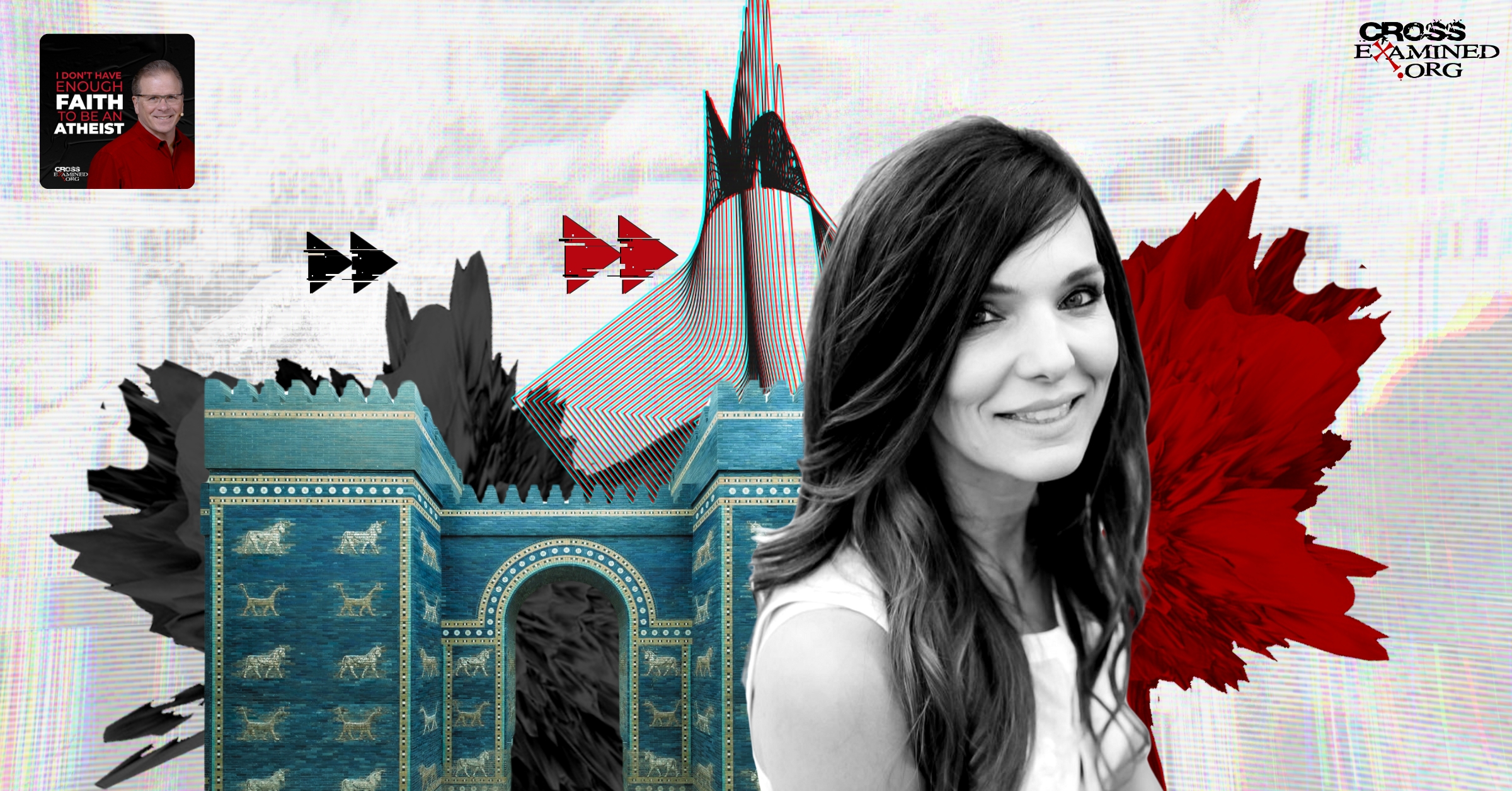
In this midweek podcast, Phoenix Hayes sits down with former public school teacher, OCC instructor, and Biola certified Christian apologist, Shanda Fulbright, to talk about some practical ways to make faithful disciples. With help from Daniel and his Jewish friends, Shanda will explain what Christians can learn about discipleship from their experience in Babylon. During the episode, Phoenix and Shanda will answer questions like:

  • What are three key ingredients to effective discipleship?
  • Is Christian discipleship just another form of “indoctrination”?
  • Why were Daniel, Shadrach, Meshach, and Abednego targeted by Babylon?
  • How many professing Christians in the U.S. actually hold a biblical worldview?
  • What can parents (and the Church) do to curtail culture’s influence on their kids?

As you’ll hear during this episode, the unwavering faith of Daniel, Shadrach, Meshach, and Abednego didn’t happen by accident. What was it that gave them the courage and the confidence to stand against the culture of their day? Listen and learn!

Do you need help discipling your 6-8th grader? Then don’t miss the opportunity to enroll your child in Shanda’s upcoming PREMIUM COURSE, ‘Let’s Get Real: Examining the Evidence for God‘, which kicks off on January 8th! During this 12-week course, each student will participate in 11 LIVE Zoom discussions with Shanda, and the 12th week will feature a LIVE Q&A session with Frank! Class starts soon so don’t delay, enroll your child HERE today!

To view the entire VIDEO PODCAST be sure to join our CrossExamined private community. It’s the perfect place to jump into some great discussions with like-minded Christians while simultaneously providing financial support for our ministry.

You can also SUPPORT THE PODCAST HERE.

Connect with Shanda online: https://www.shandafulbright.com/

Take one of Shanda’s online courses:

Train Your Brain: An Introduction to Logic – Self-Paced version for KIDS or ADULTS

Let’s Get Real: Examining the Evidence for God – PREMIUM course for 6-8th graders starts on 1/8!

Grab a copy of our new comic book just in time for Christmas!

HARDCOVER – $11.99

SOFTCOVER – $3.99


Download Transcript


How do we know that life is designed? Would it surprise you to know that it can be done mathematically? You see, things like biological systems, specified complexity, and probabilistic hurdles leave no reasonable explanation for life as we know it without a creator. But are atheists and skeptics willing and able to address these hurdles without attributing them to so-called “chance”?

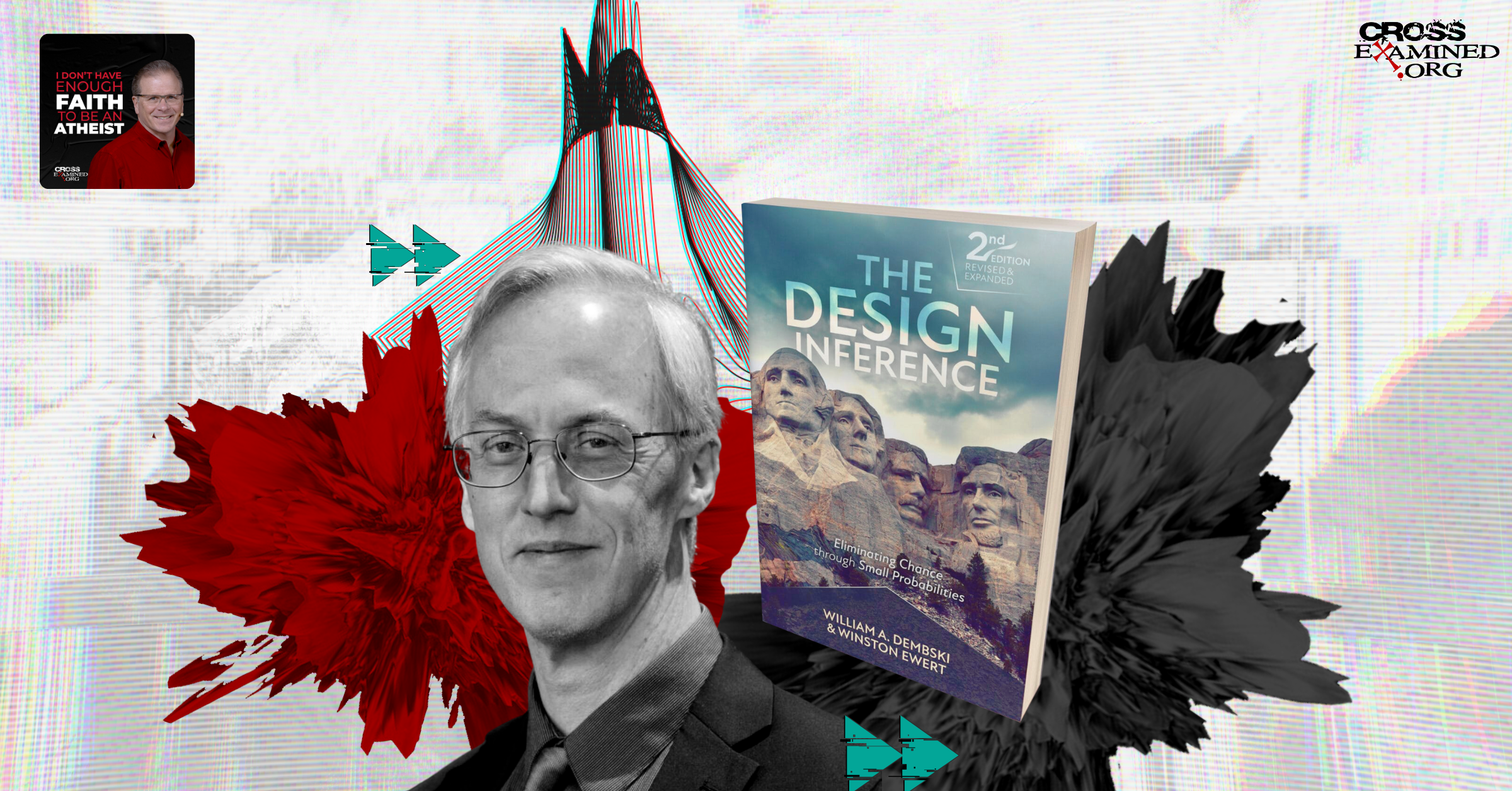
In this week’s podcast episode, Frank interviews Dr. William “Bill” Dembski, one of the founders of the modern-day intelligent design movement, who has an impressive academic background in philosophy, mathematics, and theology and sits on the Board of Directors at the Discovery Institute. In this thought-provoking episode, Bill and Frank team up to discuss the second edition of Bill’s book (co-authored by Winston Ewert) ‘The Design Inference: Eliminating Chance Through Small Probabilities‘, which lays out the mathematical way to detect design in nature. During their conversation, Bill and Frank will answer questions like:

  • What is a design inference and what happens when you apply it to biology?
  • Why did Bill take a 10-year hiatus from his career in academia?
  • How did the use of mathematics to detect design expose the president of Stanford University as a cheat?
  • What do cells and DNA reveal about the complexity of life?
  • What are the challenges that materialists face when trying to explain the origin of life?
  • What are some of the flaws in Richard Dawkins’ argument for ‘Climbing Mount Improbable’?
  • What do monkeys and Shakespeare have in common?

As you’ll hear in this episode, it isn’t just a religious position that supports the existence of an intelligent designer. Objections to design, such as the argument from ignorance, are not valid when the design inference is applied correctly. How do we know that life is designed? Because the numbers just don’t lie!

To view the entire VIDEO PODCAST be sure to join our CrossExamined private community. It’s the perfect place to jump into some great discussions with like-minded Christians while simultaneously providing financial support for our ministry.

You can also SUPPORT THE PODCAST HERE.

Purchase ‘The Design Inference’ (2nd Edition): https://a.co/d/bfwaDUT

Connect with Bill online: https://billdembski.com/


Download Transcript


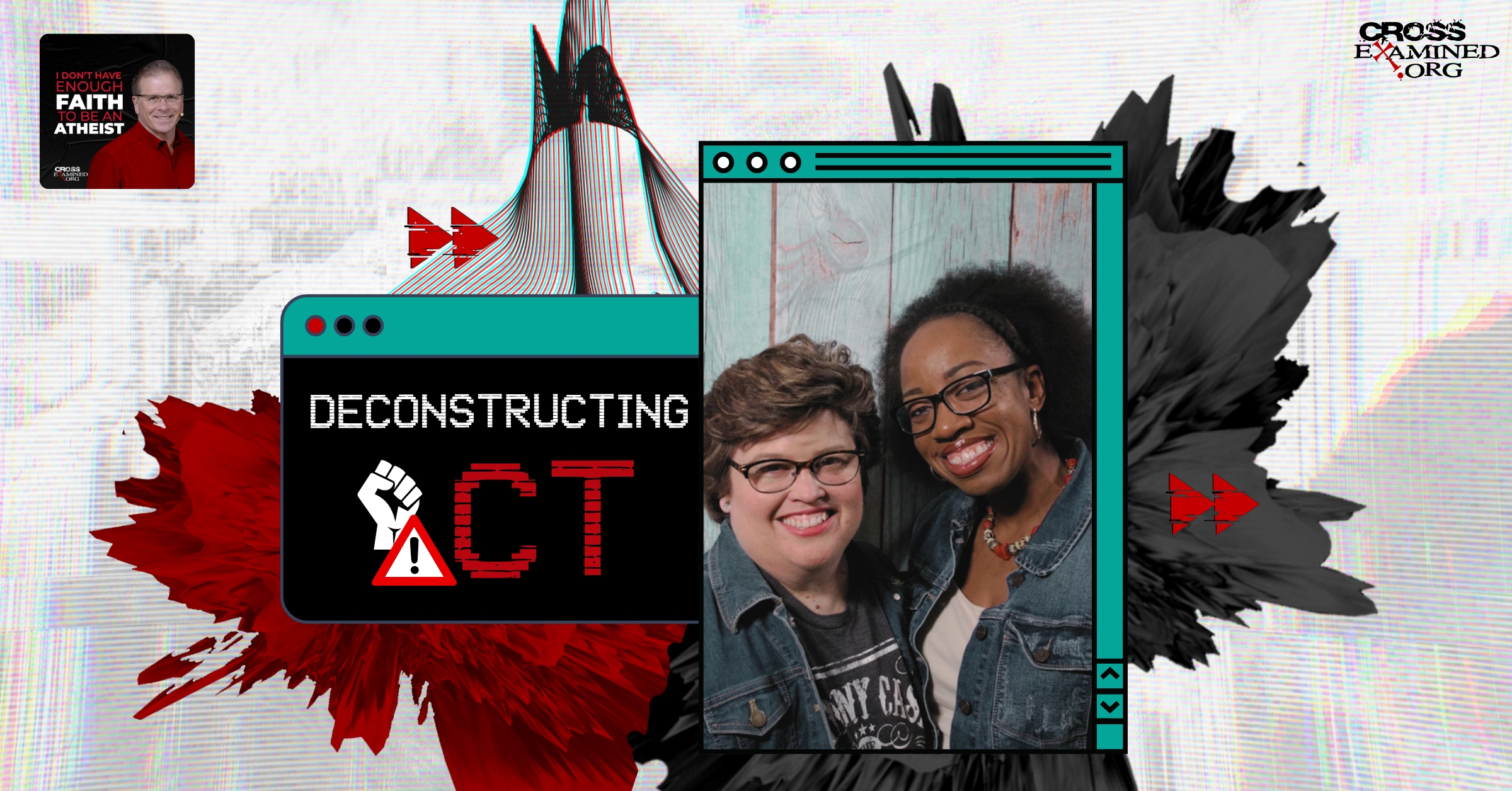
What does the Bible teach us about race, ethnicity, unity, and justice? When Krista Bontrager (a conservative wife, homeschool mom, and Biola graduate) formed a close relationship with Monique Duson (a self-proclaimed former social justice warrior, international missionary, and Biola graduate), both women discovered that even in their shared love for Jesus, their views on these social issues couldn’t have been more diametrically opposed. With a topic as (potentially) divisive, triggering, and racially charged as social justice, how exactly did Krista and Monique manage to develop a close friendship and redirect their prior experiences and individual perspectives to form a ministry dedicated to answering these questions from a biblical worldview?

In this midweek podcast episode, CrossExamined’s Staff Writer, Phoenix Hayes, sits down with Monique and Krista, founders of the Center for Biblical Unity, to discuss the inspiration behind their upcoming book ‘Walking in Unity: Biblical Answers to Questions on Race and Racism.’ As they share the origin story of their friendship, you’ll see how walking and talking about their conflicting ideas strengthened their budding friendship and led them to a greater understanding of Critical Theory, including how it fundamentally clashes with the Gospel message. Listen as Phoenix, Monique, and Krista answer questions like:

  • How did Krista and Monique’s upbringing impact their view of American history and the person of Jesus?
  • Should all churches place an emphasis on ethnic diversity?
  • How does their approach in the book tackle the issue of CRT in a unique way?
  • What are some common forms of critical theory and what is the collective goal of each one?
  • How is CRT shaping conversations surrounding the Israel/Hamas conflict?

Krista and Monique’s journey is proof that the Gospel still has the power to unite people from all walks of life, regardless of differences in age, ethnicity, and cultural backgrounds. This is a light-hearted conversation that will make you laugh, but also gives valuable insight into how to have tough conversations fruitfully. Be sure to keep your eyes peeled for more details on when ‘Walking in Unity’ will be available again for pre-order. Due to a minor setback, the original release date has been delayed and the new date is TBD. You can also support Krista and Monique through their work at the Center for Biblical Unity.

To view the entire VIDEO PODCAST be sure to join our CrossExamined private community. It’s the perfect place to jump into some great discussions with like-minded Christians while simultaneously providing financial support for our ministry.

You can also SUPPORT THE PODCAST HERE.


Download Transcript


What is the eternal message of hope that we are privileged to have here in the United States (and other parts of the West) that many people around the world don’t have? It is the Gospel–the saving grace of Jesus Christ. And it was Jesus Himself who told us to go and make disciples of ALL NATIONS. But with only about 20% of the world speaking English (that’s only 1 out of 5 people), how can we reach the other 80% with not only the Gospel, but also with the evidence for Christianity? And how can that be accomplished most effectively without breaking the bank?

In this week’s podcast episode, Frank, Phoenix, and Jorge team up to discuss how CrossExamined is chartering unprecedented territories by way of cyberspace (today’s Roman roads). With the help of God, cutting-edge technology, and generous donors, we’re using artificial intelligence (AI) and social media in ways that they have NEVER been used before! During the episode, Frank, Phoenix, and Jorge will share some of the exciting details surrounding this brand-new endeavor, known as the “Kingdom AI Project”, and you’ll hear Frank speak languages that he really doesn’t speak! They’ll also answer questions like:

  • Why is it wise for Christians to use AI technology in this way?
  • Why is the Kingdom AI Project targeting Africa first?
  • What does the Tower of Babel and Pentecost have to do with any of this?
  • How is the Kingdom AI Project more cost-effective than traditional in-person missionaries?
  • How does the CE budget and online reach compare to RZIM (which sadly is no longer in existence)?
  • How can Christians all over the world get involved in the project to reach their local communities?

We are convinced that the Gospel message can overcome dark forces even in places where it’s prohibited to talk about Christianity. This could very well be the BIGGEST feat in the history of apologetics anywhere in the world, which is why we’re requesting all hands-on deck to help us reach this epic goal. Please join us today so that we can continue to grow God’s kingdom by sharing the evidence for truth and the Gospel message using over 30 languages to reach 3 BILLION PEOPLE across the globe!

To view the entire VIDEO PODCAST be sure to join our CrossExamined private community. It’s the perfect place to jump into some great discussions with like-minded Christians while simultaneously providing financial support for our ministry.

Watch the Kingdom AI Project video and support our mission HERE.


Download Transcript


By Tim Stratton

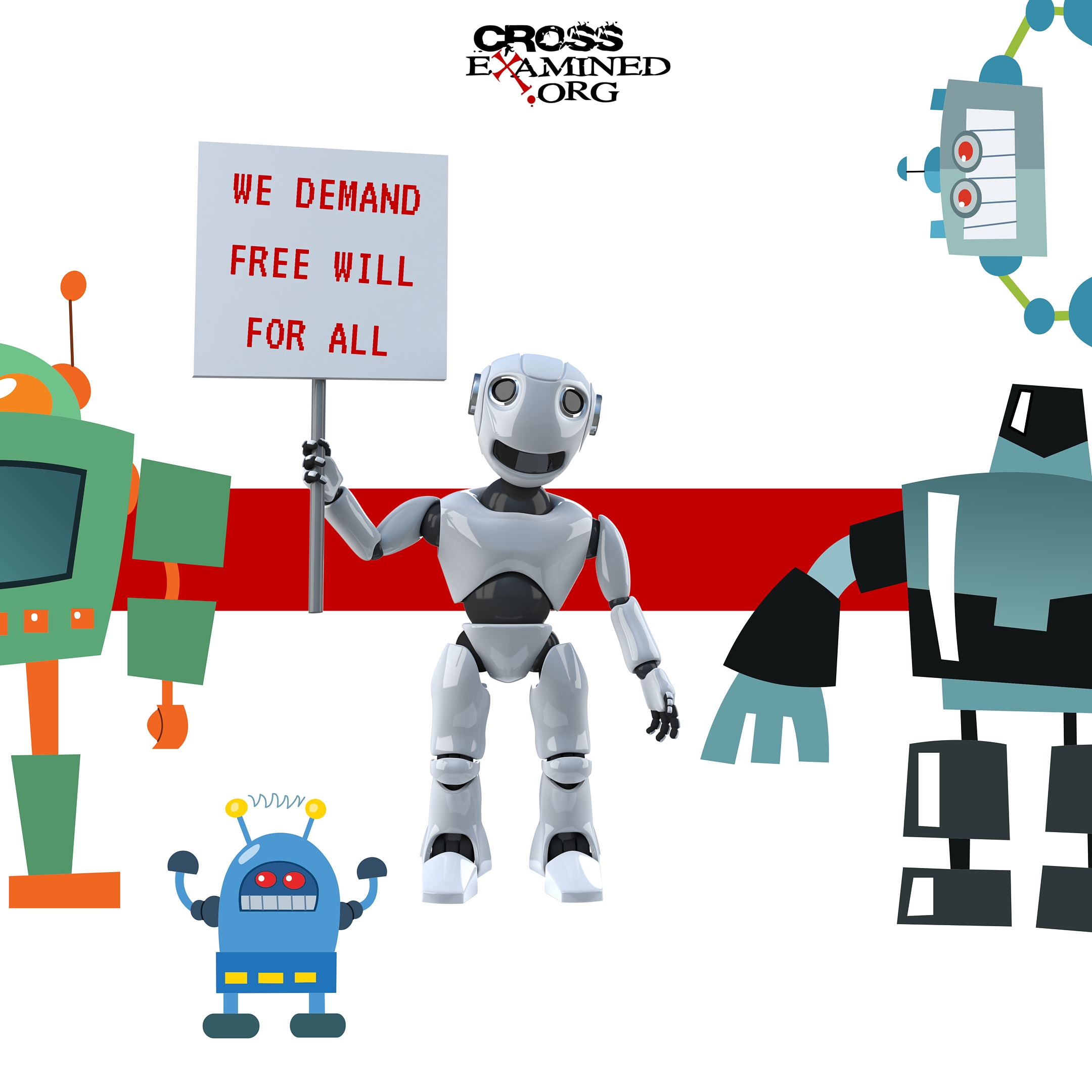
Determinists determined to defend determinism often counter the Freethinking Argument by proclaiming that computers seem to be rational and they do not possess libertarian free will. They state this is sufficient refutation of premise (3) of the Freethinking Argument, and therefore, the conclusions: free will exists, the soul exists, and naturalism is false, do not follow. This article exposes a major problem with this objection and demonstrates that the deductive conclusions of the Freethinking Argument remain unscathed.

Assumptions & Presuppositions

One problem with the “computer objection” is this: simply by stating that computers are, or robots of the future could be, rational in a deterministic universe *assumes* that the determinist making this claim has, at least briefly, transcended their deterministic environment and freely inferred the best explanation (the one we ought to reach) via the process of rationality to correctly conclude that computers are, in fact, rational agents.

Naturalistsic determinists presuppose they are rational humans while offering a computer as a completely determined rational agent. The question, however, is this: does rationality exist on naturalism? With the proper question in mind, the answer given must be an explanation as to how humans could be rational in a fully physical and causally determined world, not, “Well computers are rational!”

Again, if determinists happen to luckily be right about determinism, then they did not come to this conclusion based on rational deliberation by weighing competing views and then freely choosing to adopt the best explanation from the rules of reason via properly functioning cognitive faculties. No, given determinism, they were forced by chemistry and physics to hold their conclusion whether it is true or not. On naturalism there are no cognitive faculties functioning in a “proper” way according to a design plan which would allow one to freely think and infer what ought to be inferred. Simply offering a computer as a rational entity only sweeps the problem under the rug, but the problem remains as we are not discussing computers, but rather, the designers of computers.

If one is going to assert a certain view of the actual world, then the view offered should entail the ability of the proclaimer to make this rational inference in the same world. After all, one cannot rationally conclude a model of reality which destroys the very method he used to reach the conclusion. Alvin Plantinga notes the circularity involved by the naturalist:

“such a claim is pragmatically circular in that it alleges to give a reason for trusting our noetic equipment, but the reason is itself trustworthy only if those faculties are indeed trustworthy. If I have come to doubt my noetic equipment, I cannot give an argument using that equipment for I will rely on the very equipment in doubt.”[1]

Plantinga quotes Thomas Reed’s perceptive statement to support his case: “If you want to know whether [or not] a man tells the truth, the right way to proceed is not to ask him.” If you have reason to suspect a certain man is a liar, why should you believe this individual when he tells you that he is not a liar? Similarly, if we have reason to suspect we cannot freely think to infer the best explanation, why assume these specific thoughts (which are suspected of being unreliable) are reliable regarding computers?

Moreover, the naturalist who states that he freely thinks determinism is true is similar to one arguing that language does not exist, by using English to express that thought. The proposition itself counts as evidence against that view. If a naturalist is going to assume the ability to rationally argue that computers and robots can be rational in a deterministic and completely physical universe, they must first demonstrate they are not begging any questions by assuming they are rational to reach the conclusion that they are rational.

Until naturalists demonstrate exactly how a determined conclusion, which cannot be otherwise and is caused by nothing but physics and chemistry, can be rationally inferred and affirmed, then the rest of their argument has no teeth in its bite as it is incoherent and built upon unproven assumptions. As I always say, any argument based upon a logical fallacy is no argument at all. That is to say, even if a naturalist’s conclusion happens to be right, they have not offered any reason to think the conclusion is true, or any rational justification to think their causally determined thoughts are reliable or worth considering.

 Conclusion

If all is ultimately determined by nature, then all thoughts — including what humans think about the rationality of computers — cannot be otherwise. We are simply left assuming that our thoughts (which we are not responsible for) regarding computers are good, the best, or true. We do not have a genuine ability to think otherwise or really consider competing hypotheses at all.

Bottom line: if naturalism is true, then there is no such thing as free will, and if there is no free will then there is no freethinking!

Stay reasonable (Philippians 4:5),

Tim Stratton

NOTES

[1] William Lane Craig & JP Moreland note Alvin Plantinga’s claim in Philosophical Foundations for a Christian Worldview (page 107).

Resources for Greater Impact: 

reasoninthebalance book


Tim pursued his undergraduate studies at the University of Nebraska-Kearney (B.A. 1997) and after working in full-time ministry for several years went on to attain his graduate degree from Biola University (M.A. 2014). Tim was recently accepted at Northwest University to pursue his Ph.D. in systematic theology with a focus on metaphysics.

Original Blog Source: http://bit.ly/2RqXcvs