*Spoilers for the film Wicked (2024) ahead. Stop reading if you don’t want to know what happens in the film. Also, this is about the film, not about the book by Gregory Maguire or the Broadway musical.*
A lot of opinions are circling the interwebs as to whether Christians should see the film, Wicked. While there are definitely certain unredeemable media that we here at Mama Bear Apologetics feel totally comfortable giving a black-and-white “NO” to (*cough* Fifty Shades *cough*), most of the time we just try to give you some things to think through and leave it up to you and the Holy Spirit. That’s where we’re at with Wicked. It’s not for everybody, particularly those who themselves (or their kids) are sensitive to themes containing witchcraft. For instance, there is a scene towards the end of the movie when Elphaba, the green witch, casts a spell from a spell book, and it is very unsettling, especially for those who are spiritually sensitive.
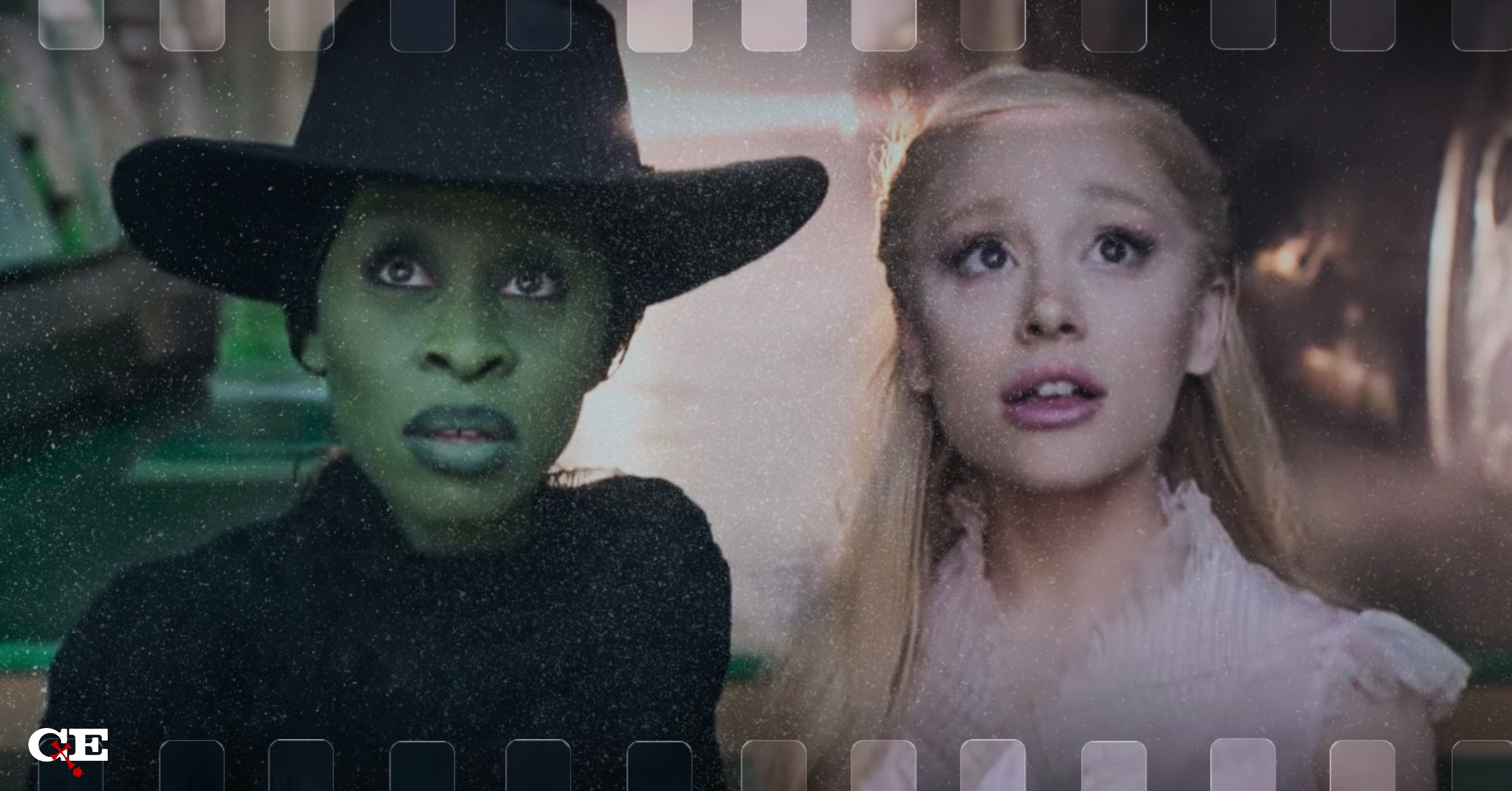
Also, parents should be aware that one of the opening scenes implies an extramarital affair. And if you do choose to see the movie, be prepared for depictions of “queerness” which at times is blatant and slightly obnoxious (just sayin’). That being said, we’re not here to give you a play-by-play or even a movie review. We’re here to do what we do best: to help parents guide their kiddos in discerning through messages being sent by the culture around us.
We’re here to do what we do best: to help parents guide their kiddos in discerning through messages being sent by the culture around us. #wickedfilm #wickedClick To Tweet
A quick bare-bones need-to-know summary: Wicked is a spin-off of the Wizard of Oz, which depicts the origin story of the Wicked Witch of the West. Elphaba is born green and has mysterious powers she can’t control, and she is treated horribly by other humans for being different. Animals, however, show her kindness and understanding. She meets Glinda (the future “Good Witch” from the Wizard of Oz) at Shiz University. Initially, the two start out as enemies, but eventually befriend one another. They travel to Emerald City to meet the Wizard, and it turns out (spoiler alert) he’s a big fat sleazy manipulator!
The Wizard and the Headmistress of Shiz University are extremely interested in Elphaba’s powers. Elphaba realizes she is being used for her powers to oppress animals, and she decides that rather than comply with the “system,” she will “defy gravity,” become her own authority, and fight for the justice of her world’s talking animals! Meanwhile, Glinda, who desperately wants everyone to like her, chooses to put her trust in the corrupt Wizard and evil headmistress despite witnessing for herself their true wickedness.
Now let’s R.O.A.R!
R – Recognize the Message
People become “wicked” because of things that happened to them.
Our culture is obsessed with villain origin stories (the Joker, Cruella, Loki, etc.). We love to ask the question, “How did this person become so evil?” Wicked is yet another depiction of a character who has been long perceived as pure evil, but when you peel back the layers to see why they act as they do, you’ll find that there is goodness buried somewhere inside their hearts.
Naivety can lead to participating in a wicked and oppressive system.
As cute and charming as Glinda (ahem, I mean GAH-linda) is, her narcissistic attitude blinds her to the injustice of the oppression of talking animals. She is so obsessed with approval from those in power that she prefers to naively submit to oppressive authoritarians, convincing herself that they are good even with clear evidence that they are not. Glinda begs Elphaba to trust the Wizard because he must have a good reason for what he’s doing! As a result, Glinda participates in an oppressive system. Viewers should come away with the message that naivety is no excuse. Submitting to oppressive leaders and going along with their system is wrong.
The (seemingly) good guy might actually be the bad guy.
Beware of the ones who you trust who have power and control over you. They may have all the appearances of being good and trustworthy and of having good intentions for you. But do they really?
O – Offer Discernment
TRUTH #1: Understanding One’s circumstances can help us have more compassion and grace for them.
When we see something in someone that we don’t understand (or don’t like), it is always a good idea to get to know them better in hopes of understanding them better. We develop habits, attitudes, and defense mechanisms as we grow, depending on what was encouraged in our family of origin or the aspects from which we needed to protect ourselves.
TRUTH #2: Our circumstances do have an effect on us.
The age-old nature-nurture controversy is alive and well. There are some people who are born with propensities no matter what kind of environment they are in. (We see this all the time with biological siblings who couldn’t be more different.) On the other hand, we cannot deny that our environment has a significant effect on us. However, we should be careful to not make an explanation into an excuse. We are ultimately responsible for our choices, no matter what kind of hand we are dealt.
TRUTH #3: We should not strive for the approval of men.
Can we say yay for examples of standing up for what is right, even when everyone else is trying to “go along to get along”?
TRUTH #4: Ignorance is not an excuse to participate in injustice.
(‘nuff said)
Ignorance is not an excuse to participate in injustice. #wicked #wickedfilmClick To Tweet
TRUTH #5: People can deceive us.
(‘nuff said)
So, while we applaud the truths that Wicked espouses (and we should use them as jumping-off points to talk with our kids!), there are a number of totally unbiblical lies that have snuck in too.
LIE #1: People are inherently good.
Hollywood is obsessed with the “noble villain” – the person who had all the goodness beaten out of them by evil, oppressive systems. Without these horrible experiences, they would have (of course) been totally altruistic, kind, and heroic. Mama Bears, this is the opposite of the biblical worldview. Yes, we humans have a latent imago dei; most everyone is born with an innate sense of good and evil. Romans 2:15 reminds us that God’s law is written on our hearts. However, our inclinations are usually more prone to pride and selfishness than goodness and self-sacrifice.
Just observe your kids. Where have they ever seen you or your husband bashing each other over the head to get to a toy? They didn’t have to learn that behavior; that feature came standard–with the creation of the child. So, do not confuse a person’s knowledge of good and evil (or even their desire to be good) with the lie that we humans are basically good. We’re not. Ask anyone who has studied genocides. It is not usually some strange monster who perpetrates the atrocities that we see in crimes against humanity. It is often the average, everyday person.
LIE #2: Magic/sorcery is a neutral tool, and whether it’s good or evil depends on how you use it.
This is one of those lies that is sneaking into lots of our programming. Our society seems to be suddenly obsessed with the idea of “good” forms of the occult. Just ask any self-proclaimed witch (ahem…actress Ariana Grande herself), and they’ll tell you that they are doing “white” witchcraft . . . as if there were such a thing. Mama Bears, no. There is no such thing as white magic. There is no such thing as a good witch. And for those of you who feel that you need to stay away from Wicked entirely because–for you–it would be participating in the deeds of darkness (Ephesians 5:11), stay away! Listen to that voice of the Holy Spirit.
A – Argue for a Healthier Approach
So how do we think about good versus evil? God and His goodness are not ambiguous, nor are they “nuanced.”
God is ALL good. Everything God does and commands is ALWAYS good. The objective moral system that permeates our reality flows from His very nature. Right is right and wrong is wrong. But why does it seem so confusing sometimes? Why are people such a mixed bag of goodness and evil? Why does it seem like the most evil people really do have tragic pasts? Any of our confusion around morality is not because God has been confusing. Rather, because of sin we have really muddied up our worldview lenses. It can be hard to see clearly, and we need the sanctification of the Holy Spirit to clear them up for us!
Any of our confusion around morality is not because God has been confusing. Rather, because of sin we have really muddied up our worldview lenses.Click To Tweet
So, we were created with the ability to represent God and His work here on Earth. But since God lovingly endowed us with free will, we have the choice to commit good (living up to His image) or to commit evil (distorting His image). As testified by our everyday experience, each human is a mixed bag of both choices.
R – Reinforce Through Discipleship, Discussion, and Prayer
- Know your (and your child’s) level of spiritual sensitivity. Some people may find Wicked to be a very fun, fantasy-based musical. Others (like one of our mama bears) could not even look at the promo poster without having spiritual discomfort well up inside. A lady Hillary saw the movie with had to physically get up and leave when Elphaba started speaking aloud the spells in the book. (Hillary said she also felt something spiritually dark during that scene.) Different people have different spiritual sensitivities. Listen to them.
- Know you and your child’s level of occult fascination. Look out for how fascinated your child is (or you are!) with occult themes. Are they tempted to think that witchcraft is cool to imitate? Do they secretly want to be a “good witch” even though they *know* that there’s “no such thing”? If so, maybe for you, stay away. We do not want to elevate something that is already a struggle. If you’re a theater kid who can spot the nonsense, but you love the music and you can partake without being affected, that’s between you and God. Romans 14:5 – each one should be fully convinced in their own mind. (Meaning, that you have already taken it before God, and He’s told you if this is for you and your kids, or not.)
- Talk to your child about the world’s idea that humans are inherently good. Read Luke 4:1-14 and ask your kiddo, “Did Jesus sin when He was tempted?” (No!) Talk about how Jesus had been fasting in the wilderness for 40 days. He had deprived Himself of His basic needs yet still overcame temptation because He IS inherently morally good. Next, read about the fall of Adam and Eve (Genesis 3:1-7). Talk about how they had everything they could ever need and want (fruit from any tree but one, a home in a beautiful garden, fellowship with God), yet they still chose to sin. Can their sin be blamed on circumstances? What does that say about how we should think about our own sin?
What did you think of the Wicked film?
Recommended Resources:
Can All Religions Be True? mp3 by Frank Turek
Jesus, You and the Essentials of Christianity by Frank Turek (INSTRUCTOR Study Guide), (STUDENT Study Guide), and (DVD)
Is Morality Absolute or Relative? by Dr. Frank Turek DVD, Mp3 and Mp4
Another Gospel? by Alisa Childers (book)
Alexa Cramer is a Blog and Podcast Contributor and Video Content Creator with MamaBearApologetics.com. She’s also a homeschool mom of two. She became obsessed with apologetics after a season of doubt that nearly stole her faith. Alexa has a background in film and video and will willingly fight anyone who doesn’t agree that DC Talk is the best band that ever graced the earth.
Originally posted at: https://bit.ly/4jriGWf

HELP! I Want to Believe! Atheist Woman Shares Her Struggles on the Quest for Truth
PodcastAre you willing to follow the evidence wherever it leads? What if it goes against everything you previously believed to be true? In this solo episode of ‘I Don’t Have Enough Faith to Be an Atheist’, Frank unpacks a thought-provoking email from an atheist in France, who’s innate fear of death now has her questioning everything she was taught about the world. Tune is as he addresses her many questions and concerns, and shares her journey from staunch materialism to becoming open to Christianity. During the episode he’ll tackle questions like:
Whether you identify as an atheist, agnostic, or are struggling through your own season of doubt, this episode is packed with some of the strongest arguments for the truth of Christianity and will challenge you to critically examine your worldview, explore the evidence for the resurrection of Jesus, and consider what’s at stake if Christianity is true. You don’t need all the answers right now, but our hope is that this conversation will inspire you to investigate further—and maybe even take a step toward embracing THE truth. If Christianity were true, would YOU become a Christian?
If you enjoyed this podcast episode PLEASE HELP US SPREAD THE TRUTH OF CHRISTIANITY BY SUPPORTING OUR MINISTRY HERE. 100% of your donation goes to ministry, 0% to buildings!
Resources mentioned during the episode:
BOOK: I Don’t Have Enough Faith to Be an Atheist by Frank Turek
BOOK: Stealing from God by Frank Turek
BOOK: Return of the God Hypothesis by Stephen Meyer
BOOK: Mere Christianity by C.S. Lewis
Blog Series: Does God Whisper? by Greg Koukl
Sean McDowell YouTube Video – The Top 5 Verified Near-Death Experiences
From Peter to the Christian Apologist
Theology and Christian ApologeticsTo the Christian Apologist, 1 Peter 3:15-16 is a ‘mandate’ passage, used to demonstrate the reason we all study and become proficient with apologetics.
The REAL Reason for doing Apologetics
We tend to focus, however, on verses 15 and 16 and forget to consider the “lead in” context. The real reason we SHOULD do apologetics is actually shown in the second half of verse 14 and the first part of verse 15. If we take time to look there, we might notice a quote that comes straight out of Isaiah 8:12.
Isaiah and Peter were both facing significant persecution. Isaiah wrote, “Fear not what they fear, and don’t be afraid. Set apart the Lord of hosts Himself and let Him be your fear” (Isaiah 8:12). But Peter, seeing the persecutions looming ahead for himself and the Christian church he’s writing to, copies Isaiah’s template. But Peter adds a twist, “fear not their fear, neither be troubled; but set apart Christ as Lord in your hearts” (1 Peter 3:14-15a). Theologian Alexander MacLaren describes the significance here.
Hallowed be They Name
What does “set apart Christ as Lord” mean in Peter’s letter? Looking at the term “set apart,” (or “sanctify” in King James language) we see it elsewhere in the New Testament. The first sentence of the Lord’s Prayer in Matthew 6:9, says, “Our Father Who art in heaven, hallowed, be thy Name.” The exact same Greek word, used as “set apart,’ and as ‘hallowed,’ is hagiazo.
We set apart sanctify or hallow one who is holy already, when we recognize the holiness, and then honor it. Thus, the plain meaning of Peter’s text is, ‘elevate Christ to the pedestal; the place He deserves in your life, and then; bow down before Him with all reverence and submission. He is due your highest awe and reverence.
“Set apart Christ as Lord in your hearts” is the command. In Scripture the heart is that center node within a person that both affixes and produces your thoughts, words and actions. Remember the verse, “as a man thinks in his heart, so is he,” or when Jesus says “…out of the heart comes the things that defile a man.” The heart then is the very core of our being. With that in mind, and looking at Peter’s command in the negative sense, he asserts that if we don’t set apart Christ as Lord, you cannot help being afraid of threats and terror, and hence will be inevitably troubled. But, if you do set Christ apart in your heart, then there is no fear that can plague you or render you impotent and ineffective.
MacLaren finishes his narrative with,
The Heartbeat of Christian Apologetics
The first part of my thesis then is: every Christian, not just the Apologist, should not fear . . . and won’t be fearful, if Christ is rightly placed in that singular, hallowed place at the core of your very being – your identity – and is given the reverence due Him. That is the foundation for studying Apologetics. He is the foundation for studying apologetics. Without that solid footing, your efforts to accumulate and dispense Christian apologetic knowledge will yield little for the Kingdom, and will yield nothing of eternal benefit in your own life.
From there, the rest of our referent passage says, “be prepared to give a defense for the hope that is in you, but do so with grace and truth.” I finish off with this – the second part of my thesis; offering your apologetic truth to another, infused with genuine grace is only possible when the heart has Christ set apart, hallowed and elevated appropriately in the central place, the core, of your heart. His love will then be manifest in your interpersonal connections in the form of grace, truth and love. If not, only ‘a resounding gong or a clanging cymbal’ will be heard.
References:
[1] Alexander MacLaren, “Hallowing Christ: 1 Pete 3:14, 15,” [Commentary], Blue Letter Bible [website], N.D., accessed 31 Jan 2025 at: https://www.blueletterbible.org/comm/maclaren_alexander/expositions-of-holy-scripture/1-peter/hallowing-christ.cfm
[2] Ibid.
Recommended Resources:
Debate: What Best Explains Reality: Atheism or Theism? by Frank Turek DVD, Mp4, and Mp3
Jesus, You and the Essentials of Christianity by Frank Turek (INSTRUCTOR Study Guide), (STUDENT Study Guide), and (DVD)
Early Evidence for the Resurrection by Dr. Gary Habermas (DVD), (Mp3) and (Mp4)
Stealing From God by Dr. Frank Turek (Book, 10-Part DVD Set, STUDENT Study Guide, TEACHER Study Guide)
Dan Hodges has over 40 years of business experience in aerospace, sensor and communications technology. He is a published author and inventor with multiple patent grants in the areas of RADAR systems, telecommunications and intelligence. He had a 26-year career as a military officer and F-16 instructor pilot and likewise has very deep experience in business operations. He has managed more than 400 employees and 16 subsidiary companies simultaneously as an entrepreneur, and has founded and built-out multiple enterprises, both private and publicly traded. He is also the Chairman of two non-profit, ministry-related organizations – CrossExamined and Crossroads Conservation Corp. Dan holds a Masters in Christian Apologetics from Biola University and both speaks and teaches at churches and schools and via online forums. He currently resides on a family farm in the Blue Ridge mountains with his wife and cultivates apple orchards and edible and medicinal mushrooms.
Expedition to Reality: 3 Key Steps to Teach Kids a Biblical Worldview with Shanda Fulbright
PodcastDoes TikTok have more influence over your child than you do as a Christian parent? God has placed the responsibility on parents to disciple their children, yet studies show that many professing Christians don’t even have a biblical worldview themselves. So, what do Christians actually believe, and how can parents be intentional about leading their kids in truth before the culture does?
In this episode, former California public school teacher and Biola-certified Christian apologist, Shanda Fulbright, joins Frank to unpack how schools and social media are subtly indoctrinating kids with secular ideas and how parents can steer their kids in the right direction before it’s too late! Tune in as they tackle questions like:
Your children are growing up fast, and time is of the essence to train them up in the Lord! If this all feels overwhelming—we can help! Shanda and Frank have created a fun and engaging online course just for teens and pre-teens to address these critical issues. ‘Expedition to Reality‘ is an 8-week online course beginning on FEB. 24 that is designed to help 7th-9th graders build confidence in their faith. The course includes 8 LIVE Zoom sessions with Shanda and 1 special Q&A session with Shanda and Frank. The class is already half-full so secure your child’s spot TODAY! There is also a SELF-PACED version of the course available for adults too!
If you enjoyed this podcast episode PLEASE HELP US SPREAD THE TRUTH OF CHRISTIANITY BY SUPPORTING OUR MINISTRY HERE. 100% of your donation goes to ministry, 0% to buildings!
Resources mentioned during the episode:
SHANDA’S NEW OCC COURSE: Expedition to Reality
SHANDA’S WEBSITE: ShandaFulbright.com
OCC COURSE: Train Your Brain
OCC COURSE: Let’s Get Real
BOOK: ‘Faithfully Different‘ by Natasha Crain
BRAVE BOOKS: Elephants Are Not Birds
Should Christianity Be Taught In Public Schools?
Legislating Morality, Culture & PoliticsMy sixth grader ran through the front door sounding slightly short of breath. “My teacher is teaching a unit on world religions,” he huffed. “He’s going to teach us about Islam, Christianity, Egyptian gods and who knows what else!” As a fifth grade teacher I was aware of the California standards for fifth grade but this surprised me. World religions was part of the sixth grade standards? Low and behold, written into the California content standards for sixth grade social studies is the requirement for students to learn “ancient civilizations, religion, slavery, and delving into Hammurabi’s laws, sections of the Torah (first five books of the Bible), and Confucius.”[1]
My surprise wasn’t because I was worried about him learning opposing worldviews. I was surprised the curriculum took the students deep into these world religions. I wondered how the teacher would present the information to the students. Will he be unbiased? Biased? My son went forward with the unit, even taking a field trip to an Egyptian museum in Sacramento. It was an eye-opening experience that led us to deeper conversations about the Christian worldview in comparison to opposing worldviews.
Curriculum Change?
A few months ago, Texas became the latest state to integrate religion into their elementary school curriculum, joining states like Oklahoma and Louisiana.[2] As expected, the reaction to the news has caused a split of, let’s say, cheers and boos. But what I’ve seen is the revelation of false assumptions about worldviews in public education that I’ll address in this article.
Worldview Integration
What Texas did was add an optional curriculum that infuses biblical stories and concepts into their lessons. It’s hardly teaching worldview, but I won’t split hairs. Schools do not have to adopt this curriculum but the Texas State Board of Education sweetened the deal by offering $60 per student if they do. For a teacher on a budget equivalent to that of a college student, that’s tempting. Consequently, this brought cheers from those who desire to see Christianity brought back into the public education system and boos from those who want to keep it out. It’s rare that anyone is neutral on whether or not religion should be taught in public education.
I want to pose something to think about for the cheerleaders and the boo hoo-ers of this decision. First, everyone needs to calm down because I don’t think it’s as simple as threading some Bible verses into a social studies unit and expecting you’ll get a student who thinks biblically. When it comes to biblical integration, we need to consider the three I’s of worldview formation:
When it comes to education, and in this case, worldview development, it’s not only about what is being taught, it’s also about who teaches it. Every teacher has a worldview and just because she teaches some Bible verses from a teacher’s guide does not mean it will result in a student with a biblical worldview. As Martha MacCollough states in her book Undivided: Developing A Biblical Approach To Worldview Integration,
Teaching bible lessons is one thing; teaching students how to apply them is the necessary connection to worldview development. Therefore, MacCullough goes on to say that,
In a public education environment this isn’t possible because the worldview behind the public education system is scientific naturalism. Again, a unit sprinkled with some Bible verses in elementary school is competing with Darwinian evolution in tenth grade science. And although according to The Texas Tribune the Texas Board of Education did add language that allowed students to pushback on evolutionary science, it’s still not a cohesive framework that provides integrity in worldview formation.
To integrate means you “combine one thing with another so they become a whole.” In order to effectively teach from a biblical worldview so the result is a student with a biblical worldview, you must have a teacher with a biblical worldview, teaching a curriculum produced from a biblical worldview, across a school wide program with a unified philosophy of education. If that sounds a lot like the children’s book If You Give A Mouse A Cookie, it should.[5] An effective and cohesive program is going to set off a chain of events that puts everyone on the same page for worldview development. Otherwise, it’s not truly biblical integration. It’s just, as I said above, some Bible verses added into social studies content.
Addressing The Assumptions
From a biblical standpoint, the Bible is clear about whose responsibility it is to teach children about God and it’s not the school. But let’s not be so naive as to assume religion and worldview isn’t taught in school already. Darwinian evolution is taught to tenth grade science students every year and there isn’t one state in the United States where it isn’t. Where are the boo-hooers? Oh, they’re only upset if it’s content they disagree with.
Let’s get this straight: no one is neutral. Everyone is passionate about their passionately held beliefs and that’s to be expected. One side will always boo and the other side will always cheer; it’s just dependent on who gets their way.
So, for all of the Christian parents and educators out there where a biblical worldview is not only the correct framework for Christian education but is also expected, this is what I suggest: teach all of it. Teach Islam. Teach New Age. Teach Mormonism, Progressive Christianity, and competing worldviews. But do it on the foundation of biblical truth and teach kids why we shouldn’t be afraid to test the claims of all religions, including their own. After all, isn’t that what we want if we’re confident that what we believe is true? So no, the public educations system shouldn’t teach Christianity in school because they don’t have the framework for it to be effective. The reason my son’s 6th grade unit was enjoyable is because he was testing the claims of other worldviews in comparison with Christianity because we made sure it turned out that way. The school did not. Outside of that, we didn’t expect much else from the public education system by way of a Christian education. And neither should you.
New Course For 7th-9th Graders!
Are you looking for curriculum to help your 7th-9h grader test the claims of major worldviews and religions? Check out our brand new course Expedition To Reality beginning on February 24th at OnlineChrstianCourses.com. This is an 8 week course that builds on the foundation of the core tenets of Christianity while learning about Islam, New Age, Marxism, Progressive Christianity and more. Join the expedition before it’s too late!
Sign-Up Now for the New Course:
Expedition to Reality
Starting February 24th
References:
[1] https://www.scoe.net/media/ykyfx3ri/parent_overview_hss_6-8.pdf
[2] https://www.newsnationnow.com/us-news/education/states-push-incorporate-religion-school-curriculums/; https://www.texastribune.org/2024/11/19/texas-sboe-bible-christianity-curriculum/
[3] Martha MacCullough, Undivided: Developing A Biblical Approach To Worldview Integration (Colorado Springs, CO: Purposeful Design Publications, 2016), ch. 1
[4] Ibid.
[5] Laura Numeroff and Alicia Bond, If You Give a Mouse a Cookie (New York: Harper Collins, 2015).
Recommended Resources:
Counter Culture Christian: Is the Bible True? by Frank Turek (Mp3), (Mp4), and (DVD)
How to Interpret Your Bible by Dr. Frank Turek DVD Complete Series, INSTRUCTOR Study Guide, and STUDENT Study Guide
Jesus, You and the Essentials of Christianity by Frank Turek (INSTRUCTOR Study Guide), (STUDENT Study Guide), and (DVD)
Tactics: A Game Plan for Discussing Your Christian Convictions by Greg Koukl (Book)
Shanda Fulbright is a credentialed teacher and has a certificate in Christian Apologetics from Biola University, a certificate from the CrossExamined Instructor’s Academy as well as several certificates from Online Christian Courses. She hosts Her Faith Inspires podcast where she takes cultural issues and aligns them to biblical truth. You can read her blogs and find out more about her at shandafulbright.com.
Can I Trust the Bible? with Dr. Andy Steiger
PodcastIn an age of growing skepticism and hostility toward the Bible, are there any good reasons to take it seriously? Last week, Dr. Andy Steiger, president of Apologetics Canada, joined Frank to tackle the problem of evil and to explore the ultimate purpose of suffering. This week, Andy returns to discuss, ‘Can I Trust the Bible?‘—a brand-new video series he co-created with Wesley Huff, defending the Bible’s reliability. In this episode, Frank and Andy dive into pressing questions like:
Be sure to check out Wes and Andy’s new video series along with even more great content on the Apologetics Canada website, including infographics, new podcast episodes, online courses, recommended resources for children, and MUCH more!
If you enjoyed this podcast episode PLEASE HELP US SPREAD THE TRUTH OF CHRISTIANITY BY SUPPORTING OUR MINISTRY HERE. 100% of your donation goes to ministry, 0% to buildings!
Resources mentioned during the episode:
WEBSITE: ApologeticsCanada.com
VIDEO SERIES: Can I Trust the Bible?
WES HUFF INFOGRAPHICS + OTHER HELPFUL CONTENT: Apologetics Canada Resources
Defending the Deity of Jesus in John 1
2. Does God Exist?John 1:1 is one of the most important verses in the Gospel of St. John to understand grammatically in English but more importantly in Greek.
“In the Beginning was the word and the word was with God and the Word was God” (John 1:1)
Εν αρχή ἧν ὁ λόγος και ὁ λόγος ἧν προς τον θεόν και θεός ἧν ὁ λόγος[i][ii]
The reason is this verse is always under attack by various non-Christian religious groups and even faiths who claim to be Christian but, do not accept Jesus Christ as God the Son (The second person of the Trinity). The two words I want to focus on is “God” and “Word” or Θεός ἧν ὁ Λόγος (Theos hēn hŏ logos). What I am going to focus on is the grammatical construct of John 1:1 and a bit of the history behind ὁ λόγος (hŏ logos).
John 1:1 and Genesis 1:1
In Ancient Greek literature there is no difference in meaning between the two-word adverbial Phrase Ἐν ἀρχη (en arkē) and the three-word adverbial phrase Ἐν τη ἀρχη (en tē archē) but Ἐν ἀρχη is used more frequently. Ἐν ἀρχη parallels Genesis 1:1 Ἐν ἀρχη ἐπιοησεν ὁ Θεος (en arkē hŏ theos), “In the beginning God created.”[iii]
The Historical Background of Hŏ Logos
John may have written his gospel in Ephesus the birthplace of Greek philosopher Heraclitus who lived around 500 B.C. He taught that λογος (logos) was eternal, and it could be compared to fire and gives life to everything in the universe; and this was taught well into the first century.[iv]
Λόγος word
The Greek Term λόγος is found in a number of different English words like logic, logical, prologue, epilogue etc. It can also have a number of different senses like, word, reason, cause, reasoning etc.
Λόγος is associated with “spoken Word” but λόγος in John 1:1 does not mean “word” in the sense of a word found in a dictionary. The Greek term for word is λέξις (lexeis) which is where we get our English word lexicon from. The ὁ λόγος in John 1:1 in a person.[v]
John was writing to a Hellenized audience, so he places Jesus as the ὁ λόγος he did this in the most integral spot, at the beginning of his gospel.[vi]
The Grammatical Construct of John 1:1
The combination of Προς (prŏs) plus the accusative Τον Θεόν (tŏn theon) means “with God.” This is similar in force to how Paul writes: ἐν μορφῃ Θεού ἰσα Θεῳ (en morfē isa theō), which translates as, “In the form of God, equal with God” (Phil. 2:6).
Προς Τον Θεόν (prŏs tŏn theon) literally means “With the God.” The use of the article Τον (tŏn) “the” before a noun identifies that noun. And in this case “the God” means “God the Father.” By reiterating the conjunction και (kai) in και Θεός ἧν ὁ λόγος (kai theos hēn hŏ logos) John is placing emphasis on this instance of ὁ λόγος. He describes in his gospel, in addition to being from eternity with Θεός, is also Himself Θεός.[vii]
The word order is reversed in English, in English it reads “and the word was God” but in Greek it reads, “And God was the Word.”
Θεός ἧν ὁ λόγος (Theos hēn hŏ logos)
In John 1:1 this clause has two nouns. One noun is Θεος (theos) and the other is λόγος (logos). Λογος has an article, ὁ λόγος which means it is an articular noun and Θεος has no article so it is called an anarthrous noun. The articular noun is identified by the definite article “ὁ” as the subject. And the rest of the clause is the predicate.[viii]
So, between the predicate noun and a linking verb, ἧν (hēn; “was”), the linking verb connects the subject, ὁ λόγος, to the predicate noun, Θεός. Θεός adjectivally describes ὁ λόγος. In essence ὁ λόγος was with all the attributes, essence, nature, and qualities of Θεός. [Everything true of God is true of the Logos.][ix]
This article is not intended to be a full comprehensive explanation due to the how in depth this subject can go. John was very intentional about describing Jesus as God the Son, the second person of the Trinity.
References:
[i] Editor’s note: The Greek transliterates as: “en arkē hēn ho logos kai ho logos hēn pros ton theon kai theos hēn ho logos.” – Transliterations are included throughout, in text, for those of you who don’t read Greek.]
[ii] Editor’s Note: If the translation were to preserve the Greek word order, it would look something like this: “And the word was with [the] God and God was the word.” This phrasing creates a chiasm – inverting the word order between the two parallel lines: Word-God, and God-Word. Additionally, the definite article, ὁ (pronounced hŏ), which is typically unnecessary in Greek except for emphasis or clarity, translates as “the” and is used here for “the God” in the first phrase then “the Word” in the second phrase. The Chiasm, being inverted parallelism, indicates that this verse is intended as poetry – still literally true, but expressed with an eye for beauty, memorability, and maybe even lyricality. Heightening that poetic structure is the shift of the definite article from “the God” to “The Word.” The one and only God is the same being as singular Logos, “The Word.” The author most definitely wanted to draw attention to the strict identity between God and Logos. The Word is God.” – JDF]
[iii] “Philemon, Zachariou Greek Pronunciation John 1:1.” YouTube. YouTube, n.d. Accessed November 20, 2024. https://www.youtube.com/watch?v=7IkIgSpCgtM
[iv] Ibid., see also, Jean Bollack, “Ch. 17 The Heraclitean Logos,” in The Art of Reading: From Homer to Paul Celan, C. Porter and S. Tarrow with B. King, trans; C. Koenig, L. Muellner, G. Nagy, and S. Pollock, eds. Hellenic Studies Series 73 (Washington, DC: Center for Hellenic Studies, 2016), accessed 23 Jan 2025 at: https://chs.harvard.edu/chapter/17-the-heraclitean-logos/.
[v] Ibid.
[vi] Ibid.
[vii] Ibid.
[viii] Ibid.
[ix] Editor’s Note: JDF.
Recommended Resources:
Jesus, You and the Essentials of Christianity by Frank Turek (INSTRUCTOR Study Guide), (STUDENT Study Guide), and (DVD)
How to Interpret Your Bible by Dr. Frank Turek DVD Complete Series, INSTRUCTOR Study Guide, and STUDENT Study Guide
Can All Religions Be True? mp3 by Frank Turek
How Philosophy Can Help Your Theology by Richard Howe (DVD Set, Mp3, and Mp4)
Seattle native Justin Angelos brings a passion for evangelism and discipleship along with theology and apologetics. He has studied at Biola University and Liberty University and recently earned a Master of Arts in Apologetics from Biola University. Justin focuses on providing help for those who suffer from emotional and anxiety issues. He currently resides in Salt Lake City, Utah.
Originally posted at: https://bit.ly/3EtdlxB
67 Innocent Lives Perish in Plane Crash: Why Didn’t God Intervene? with Dr. Andy Steiger
PodcastTragic events like the devastating collision between American Airlines Eagle Flight 5342 and a military Black Hawk helicopter that claimed the lives of 67 innocent people shake us to our core and leave us asking deep, unsettling questions. Questions like, where was God and why would He allow this to happen?
Suffering is an unavoidable part of life, making it crucial for Christians to reconcile God’s goodness with the presence of evil. This week, Frank sits down with Dr. Andy Steiger, co-creator of the new video series, ‘Can I Trust the Bible?‘, and President of Apologetics Canada, to tackle one of the most difficult topics in apologetics: the problem of evil. During their conversation, they will answer questions like:
With the reality that life is fleeting, Christians must be prepared to face hardships and learn what it means to suffer well. Tune in as Andy shares some of the tragedies he’s encountered throughout his 25 years of pastoral ministry and explores how modern culture’s “you do you” mentality contributes to an immoral and corrupt society. Come back next week as Andy and Frank continue their conversation and talk about Andy’s new video series, co-created with Wes Huff!
If you enjoyed this podcast episode PLEASE HELP US SPREAD THE TRUTH OF CHRISTIANITY BY SUPPORTING OUR MINISTRY HERE. 100% of your donation goes to ministry, 0% to buildings!
Resources mentioned during the episode:
WEBSITE: ApologeticsCanada.com
BOOK: Thinking? Answering Life’s Five Biggest Questions by Andy Steiger
BOOK: Reclaimed: How Jesus Restores Our Humanity in a Dehumanized World by Andy Steiger
BOOK: The Rise and Triumph of the Modern Self by Carl Trueman
Too Raw for Radio: Natasha Crain Reveals What Some Want To Do To Kids
PodcastIs Drag Queen Story Hour really about tolerance, diversity, and acceptance or is something more sinister going on? This episode comes with a trigger warning because it’s not suitable for children and touches on a topic that will be disturbing for many people. Last week, Natasha Crain joined Frank to discuss her brand new book, ‘When Culture Hates You: Persevering for the Common Good as Christians in a Hostile Public Square.’ This week, Natasha returns to unpack the sobering final chapter that investigates the evils of the “sexual liberation of children” (SLC) and the subtle ways that kids (and the people who raise them) are being targeted. During this podcast episode, Frank and Natasha will answer questions like:
Falsely billed as “family friendly”, Drag Queen story hours are growing in popularity all over the country. Yet, it’s of the utmost importance that parents become aware of the stated goal of these events, which is to sexualize children. You will undoubtedly feel the weight of the evil in this conversation, but hang in there, listen closely, and order your copy of ‘When Culture Hates You‘ so that you can be informed and take action on this pressing issue!
If you enjoyed this podcast episode PLEASE HELP US SPREAD THE TRUTH OF CHRISTIANITY BY SUPPORTING OUR MINISTRY HERE. 100% of your donation goes to ministry, 0% to buildings!
Resources mentioned during the episode:
NATASHA’S WEBSITE: NatashaCrain.com
ORDER NATASHA’S BOOK: When Culture Hates You
RESEARCH ARTICLE: Drag Pedagogy
UNSHAKEN CONFERENCE 2025: UnshakenConference.com
When Culture Hates You with Natasha Crain
PodcastHas the recent political shift softened the growing animosity toward Christians, or is hostility here to stay? The election may be over, but Christians can’t afford to let our guards down just yet. While America might be moving toward cultural sanity, the battle for truth, justice, morality, and reason is far from over!
This week, our good friend, Unshaken Conference speaker, and author, Natasha Crain, joins Frank to discuss her timely new book, ‘When Culture Hates You: Persevering for the Common Good as Christians in a Hostile Public Square‘. Together, they’ll explore how Christians can respond to persecution, speak truth boldly, and navigate cultural backlash and opposition with grace, courage, and humility, tackling questions like:
Do you feel hated as a Christian? Get used to it, but don’t give up! In this podcast episode, Frank and Natasha will offer encouragement for believers who experience persecution on any level, as well as provide practical tips on how to be salt and light in the midst of so much chaos. Be sure to order a copy of Natasha’s book, ‘When Culture Hates You‘, and don’t miss the upcoming midweek podcast episode where Frank and Natasha will continue their conversation by discussing a topic that’s TOO EXTREME for radio!
If you enjoyed this podcast episode PLEASE HELP US SPREAD THE TRUTH OF CHRISTIANITY BY SUPPORTING OUR MINISTRY HERE. 100% of your donation goes to ministry, 0% to buildings!
Resources mentioned during the episode:
NATASHA’S WEBSITE: NatashaCrain.com
ORDER NATASHA’S BOOK: When Culture Hates You
BLOG POST: What the Inauguration (and Vibe Shift) Means for Christians
BOOK: Faithfully Different by Natasha Crain
UNSHAKEN CONFERENCE 2025: UnshakenConference.com
ROARing Through the Wicked Film
CrossExamined*Spoilers for the film Wicked (2024) ahead. Stop reading if you don’t want to know what happens in the film. Also, this is about the film, not about the book by Gregory Maguire or the Broadway musical.*
A lot of opinions are circling the interwebs as to whether Christians should see the film, Wicked. While there are definitely certain unredeemable media that we here at Mama Bear Apologetics feel totally comfortable giving a black-and-white “NO” to (*cough* Fifty Shades *cough*), most of the time we just try to give you some things to think through and leave it up to you and the Holy Spirit. That’s where we’re at with Wicked. It’s not for everybody, particularly those who themselves (or their kids) are sensitive to themes containing witchcraft. For instance, there is a scene towards the end of the movie when Elphaba, the green witch, casts a spell from a spell book, and it is very unsettling, especially for those who are spiritually sensitive.
Also, parents should be aware that one of the opening scenes implies an extramarital affair. And if you do choose to see the movie, be prepared for depictions of “queerness” which at times is blatant and slightly obnoxious (just sayin’). That being said, we’re not here to give you a play-by-play or even a movie review. We’re here to do what we do best: to help parents guide their kiddos in discerning through messages being sent by the culture around us.
We’re here to do what we do best: to help parents guide their kiddos in discerning through messages being sent by the culture around us. #wickedfilm #wickedClick To Tweet
A quick bare-bones need-to-know summary: Wicked is a spin-off of the Wizard of Oz, which depicts the origin story of the Wicked Witch of the West. Elphaba is born green and has mysterious powers she can’t control, and she is treated horribly by other humans for being different. Animals, however, show her kindness and understanding. She meets Glinda (the future “Good Witch” from the Wizard of Oz) at Shiz University. Initially, the two start out as enemies, but eventually befriend one another. They travel to Emerald City to meet the Wizard, and it turns out (spoiler alert) he’s a big fat sleazy manipulator!
The Wizard and the Headmistress of Shiz University are extremely interested in Elphaba’s powers. Elphaba realizes she is being used for her powers to oppress animals, and she decides that rather than comply with the “system,” she will “defy gravity,” become her own authority, and fight for the justice of her world’s talking animals! Meanwhile, Glinda, who desperately wants everyone to like her, chooses to put her trust in the corrupt Wizard and evil headmistress despite witnessing for herself their true wickedness.
Now let’s R.O.A.R!
R – Recognize the Message
People become “wicked” because of things that happened to them.
Our culture is obsessed with villain origin stories (the Joker, Cruella, Loki, etc.). We love to ask the question, “How did this person become so evil?” Wicked is yet another depiction of a character who has been long perceived as pure evil, but when you peel back the layers to see why they act as they do, you’ll find that there is goodness buried somewhere inside their hearts.
Naivety can lead to participating in a wicked and oppressive system.
As cute and charming as Glinda (ahem, I mean GAH-linda) is, her narcissistic attitude blinds her to the injustice of the oppression of talking animals. She is so obsessed with approval from those in power that she prefers to naively submit to oppressive authoritarians, convincing herself that they are good even with clear evidence that they are not. Glinda begs Elphaba to trust the Wizard because he must have a good reason for what he’s doing! As a result, Glinda participates in an oppressive system. Viewers should come away with the message that naivety is no excuse. Submitting to oppressive leaders and going along with their system is wrong.
The (seemingly) good guy might actually be the bad guy.
Beware of the ones who you trust who have power and control over you. They may have all the appearances of being good and trustworthy and of having good intentions for you. But do they really?
O – Offer Discernment
TRUTH #1: Understanding One’s circumstances can help us have more compassion and grace for them.
When we see something in someone that we don’t understand (or don’t like), it is always a good idea to get to know them better in hopes of understanding them better. We develop habits, attitudes, and defense mechanisms as we grow, depending on what was encouraged in our family of origin or the aspects from which we needed to protect ourselves.
TRUTH #2: Our circumstances do have an effect on us.
The age-old nature-nurture controversy is alive and well. There are some people who are born with propensities no matter what kind of environment they are in. (We see this all the time with biological siblings who couldn’t be more different.) On the other hand, we cannot deny that our environment has a significant effect on us. However, we should be careful to not make an explanation into an excuse. We are ultimately responsible for our choices, no matter what kind of hand we are dealt.
TRUTH #3: We should not strive for the approval of men.
Can we say yay for examples of standing up for what is right, even when everyone else is trying to “go along to get along”?
TRUTH #4: Ignorance is not an excuse to participate in injustice.
(‘nuff said)
Ignorance is not an excuse to participate in injustice. #wicked #wickedfilmClick To Tweet
TRUTH #5: People can deceive us.
(‘nuff said)
So, while we applaud the truths that Wicked espouses (and we should use them as jumping-off points to talk with our kids!), there are a number of totally unbiblical lies that have snuck in too.
LIE #1: People are inherently good.
Hollywood is obsessed with the “noble villain” – the person who had all the goodness beaten out of them by evil, oppressive systems. Without these horrible experiences, they would have (of course) been totally altruistic, kind, and heroic. Mama Bears, this is the opposite of the biblical worldview. Yes, we humans have a latent imago dei; most everyone is born with an innate sense of good and evil. Romans 2:15 reminds us that God’s law is written on our hearts. However, our inclinations are usually more prone to pride and selfishness than goodness and self-sacrifice.
Just observe your kids. Where have they ever seen you or your husband bashing each other over the head to get to a toy? They didn’t have to learn that behavior; that feature came standard–with the creation of the child. So, do not confuse a person’s knowledge of good and evil (or even their desire to be good) with the lie that we humans are basically good. We’re not. Ask anyone who has studied genocides. It is not usually some strange monster who perpetrates the atrocities that we see in crimes against humanity. It is often the average, everyday person.
LIE #2: Magic/sorcery is a neutral tool, and whether it’s good or evil depends on how you use it.
This is one of those lies that is sneaking into lots of our programming. Our society seems to be suddenly obsessed with the idea of “good” forms of the occult. Just ask any self-proclaimed witch (ahem…actress Ariana Grande herself), and they’ll tell you that they are doing “white” witchcraft . . . as if there were such a thing. Mama Bears, no. There is no such thing as white magic. There is no such thing as a good witch. And for those of you who feel that you need to stay away from Wicked entirely because–for you–it would be participating in the deeds of darkness (Ephesians 5:11), stay away! Listen to that voice of the Holy Spirit.
A – Argue for a Healthier Approach
So how do we think about good versus evil? God and His goodness are not ambiguous, nor are they “nuanced.”
God is ALL good. Everything God does and commands is ALWAYS good. The objective moral system that permeates our reality flows from His very nature. Right is right and wrong is wrong. But why does it seem so confusing sometimes? Why are people such a mixed bag of goodness and evil? Why does it seem like the most evil people really do have tragic pasts? Any of our confusion around morality is not because God has been confusing. Rather, because of sin we have really muddied up our worldview lenses. It can be hard to see clearly, and we need the sanctification of the Holy Spirit to clear them up for us!
Any of our confusion around morality is not because God has been confusing. Rather, because of sin we have really muddied up our worldview lenses.Click To Tweet
So, we were created with the ability to represent God and His work here on Earth. But since God lovingly endowed us with free will, we have the choice to commit good (living up to His image) or to commit evil (distorting His image). As testified by our everyday experience, each human is a mixed bag of both choices.
R – Reinforce Through Discipleship, Discussion, and Prayer
What did you think of the Wicked film?
Recommended Resources:
Can All Religions Be True? mp3 by Frank Turek
Jesus, You and the Essentials of Christianity by Frank Turek (INSTRUCTOR Study Guide), (STUDENT Study Guide), and (DVD)
Is Morality Absolute or Relative? by Dr. Frank Turek DVD, Mp3 and Mp4
Another Gospel? by Alisa Childers (book)
Alexa Cramer is a Blog and Podcast Contributor and Video Content Creator with MamaBearApologetics.com. She’s also a homeschool mom of two. She became obsessed with apologetics after a season of doubt that nearly stole her faith. Alexa has a background in film and video and will willingly fight anyone who doesn’t agree that DC Talk is the best band that ever graced the earth.
Originally posted at: https://bit.ly/4jriGWf