
Tag Archive for: Teología

By Josh Klein

The Four Horsemen of atheism burst onto the cultural, philosophical and spiritual scene at the beginning of the 21st century. Their dogmatic atheistic (or even anti-theistic, depending on who you talk to) positions immediately gained popularity.

The late Christopher Hitchens, Richard Dawkins, Daniel Dennett and Sam Harris were part of the team. They took their vitriol against religious thought into the mainstream, seeking, for what seemed to be the first time, to proselytise religious people into conversion to atheism. These men were dubbed “The New Atheists” by popular culture and seemed to take the world by storm, often denigrating their opponents as stupid and backward.

Simple believers in myths.

Richard Dawkins’ book, The God Delusion , sent ripples through Christianity and the religious mainstream, as his caricature of God as the “flying spaghetti monster” had the world laughing and ridiculing Christianity, and other faiths, as ignorant at best and malevolent at worst. Daniel Dennett’s take on consciousness sought to banish the epistemic belief that only religion could explain consciousness as a reality, going so far as to suggest that consciousness is nothing more than an illusion, and the late Christopher Hitchens’ God Is Not Good sought to expose religion as a poison for the masses that results in horrific abuses of power and violence. But all of these men did not cause the waves that the seemingly even-tempered Sam Harris did.

Sam Harris, with his quiet, understated personality, approached debates differently from his peers. Hitchens indulged in sophistry and sarcasm, Dawkins in nasty denigration, and Dennett in condescension. Sam Harris was different. I found the tone of the other three off-putting, and their arguments were either humorous but unconvincing or intellectual but boring. But Harris had a way about him that appealed to me. I think what attracted me was his unwavering commitment to objective morality and the honest way he assessed different religions. Harris has been honest in praising what he sees as positive about Christianity, while at the same time holding Christians to the fire . [i]

I found his style engaging, even if his words were not, and his reasoning sensible and unemotional. He was, in a word, compelling. His seminal work, The Moral Landscape , sought to address a substantial problem in the atheist realm. Without God as the bearer of moral standards, are we left with moral subjectivism? [ii] And if so, who is to say that the Nazis were, in fact, evil? Or that murder is unjust? The moral argument for the existence of God remains one of the most powerful arguments for theism [iii] , but Sam rightly understood that embracing moral subjectivism was untenable for the reasonable man, and so an effort was born to promote objective moral values ​​based on atheism. For Sam, a moral landscape could be (he might say should be) established using scientific reason, rationality, and, as he says, the facts.

“Controversies about human values ​​are controversies about which science officially has no opinion. I will argue, however, that questions about values—about the meanings, morality, and larger purpose of life—are really questions about the well-being of conscious creatures. Values, therefore, translate into facts that can be understood scientifically: about positive and negative social emotions, retributive impulses, the effects of particular laws and social institutions on human relationships, the neurophysiology of happiness and suffering, and so on . ” [iv]

Sam’s commitment to objective moral values ​​based on scientific facts intrigued me, and his book laid out what seemed to be a plausible account of objective morality. That is, until the reasoning was challenged. Upon further investigation, one realizes that Sam often smuggles in assumptions about human flourishing to make his argument palatable. While Sam addresses the what of morality, he can never come up with an honest why, as his discussion with Jordan Peterson revealed just a few years ago. [v] What are those objective moral values? Well, they are what Sam says they are. They certainly could not be based on Nazism or Islamism. However, one could certainly argue (and both do) that both Nazis and Muslims believe they seek to contribute to the natural flourishing of humanity. Sam has inadvertently hitched his wagon to moral relativism by virtue of scientific facts not adequately explaining human flourishing.

It should come as no surprise that Harris, admittedly on the far left of the political spectrum and extremely anti-Donald Trump, had this to say regarding the 2020 election cycle silencing of the Hunter Biden computer story:

“[It was] a conspiracy by the left to deny Donald Trump the presidency. Of course it was. Absolutely, but I think it was justified” [vi] .

When pressed about his statement by the podcast hosts, one of whom had a problem with the idea that a conspiracy should be used to deny any political candidate office, Sam Harris upped the ante, comparing the conspiracy to a room full of scientists meeting to steer an asteroid off a collision course with Earth. Some might be surprised that Sam would say such a thing, given his distaste for subjectivism. However, if you examine his work closely, it becomes abundantly clear that he finds it necessary to be the arbiter of what is and is not objectively moral. To put it another way, Sam Harris, to himself, is a god.

Sam Harris is a consistent communicator, but his positions are often conflicting. His embrace of objective morality as an atheist is admirable, but his claim that free will is illusory is cumbersome to the argument and seems diametrically opposed to it. If free will is illusory, then how are agents morally culpable for their actions, and how does objective morality fit in? Harris insists that the two are not at odds, but his insistence resists scrutiny. On their own, his arguments seem coherent. Combined, they often directly oppose each other. One cannot live life according to the philosophy Harris espouses consistently, so Sam often suggests that one must live within the illusion.

This is how Sam is both the most and least effective new atheist. Take, for example, Sam’s openness to the multiverse theory:

“This is my candidate for the strangest idea that is still scientifically plausible” [vii] .

To be fair to Sam, he himself doesn’t advocate the multiverse, but he seems interestingly open to the idea from a metaphysical perspective. Which, to me, makes his statements about the idea of ​​heaven all the more puzzling:

As I said on Twitter, I used to like Sam Harris. I thought his critiques of Christianity were necessary (if flawed) and that he was willing to engage in dialogue about faith rather than just debate it, but Harris has a nasty habit of building up ridiculous theological strawmen only to knock them down with a smirk as if he’s accomplished something.

Whether Sam believes it or not, heaven (the dwelling place of God) has never (in the mainstream Christian faith) been understood to be in outer space. This criticism of heaven theology is intended to denigrate its intellectual opponents as being as ignorant as the Greek theologians who believed in a literal Mount Olympus.

This has not been the orthodox understanding of the celestial kingdom for millennia, if ever. As Randy Alcorn states:

“The present and intermediate Heaven is in the angelic realm, clearly separated from the Earth.”

Randy is not making this up out of thin air. Even though Sunday school may make silly representations of heaven in the clouds or speak of heaven in human terms as being “above” us, this is not reminiscent of real theology. There is no biblical or theological position that indicates heaven is physically in outer space where telescopes can see. This is not Thor.

One might say, “Sam Harris is a naturalist, so he is assuming that if there is a heaven it must be in outer space, where we could see it.” But this argument fails for two reasons. The first is that when you are addressing the theology of a religion, you have to address its meaning for the debate to make sense. For example, if I were to debate a Muslim about the nature of Allah, I cannot bring in my interpretation of the Trinity to define Allah. If I apply my own view of the divine to Allah, I will have done a disservice to the conversation. Sam must interact, not with what he thinks heaven would be if it existed; he must interact with what Christians say heaven is. He can deny its existence (as I would with Allah) but he cannot do so on the basis of false premises.

The second reason this defense fails is because of Sam’s already soft position on the multiverse. If one can see the multiverse as plausible, how can one so easily dismiss a heavenly realm as impossible and attribute the characteristics of this realm to it? Sam would not do a believer in the multiverse the disservice of this uncharitable assumption regarding other universes, and therefore he need not do this disservice to the arguments for heaven either.

The Scriptures teach that the present heaven is a place in the angelic realm. This is true in both the Old and New Testaments. Isaiah 6, 2 Kings 6, Daniel 10:20, and John 18:36 indicate this. More specifically, the martyrdom of Stephen indicates a linking of the realms as well.

In Acts 7:56, as Stephen is being stoned, he says, “Behold, I see the heavens opened, and the Son of Man standing at the right hand of God.” In Daniel 10, Acts 7, and Acts 9 we notice a phenomenon about the current heavenly kingdom. It can be revealed to specific individuals and hidden from others. Meaning that the kingdom, although it exists physically and spiritually, is outside of our concept of this physical plane.

When Jesus ascends in Acts 1:9 there are many who might say that Jesus ascended into heaven. This could mean physical heaven! But it does not. A careful reading of the passage in question will note that the writer says, “After he had said these things, he was taken up as they looked on, and a cloud received him out of their sight.” This brings us to the image of Isaiah 6 and the glory of God.

In all of these cases, there is no indication that the angelic/celestial realm is in the stars themselves. Sam’s treatment of the matter was superficial and misrepresents, or misinterprets, the Christian doctrine of heaven. In scripture there are two heavens, one representing the sky and the stars (the heavens) the other, the angelic realm. The delineations are clear and obvious even to the casual observer. Sam’s irregularity in handling this subject undermines his credibility as a good actor on the philosophical stage and highlights the arrogance of his atheistic belief. In this brief interview, Sam reveals why his objective morality without God is meaningless and why his objections to Christian theology, in particular, are often not bona fide. And so his credibility is shaken.

Footnotes:

[i] https://www.samharris.org/blog/reply-to-a-christian

[ii] https://freethinkingministries.com/the-moral-argument-a-short-dialectic/

[iii] https://freethinkingministries.com/an-ignorant-objection-to-the-moral-argument-for-gods-existence/

[iv] Harris, Sam. “Introduction.” The Moral Landscape: How Science Can Determine Human Values , Free Press, New York, 2010, pp. 2–2.

[v] https://www.youtube.com/watch?v=jey_CzIOfYE

[vi] https://nypost.com/2022/08/19/sam-harris-defends-silencing-the-post-on-hunter-biden/

[vii] https://www.samharris.org/blog/the-multiverse-you-you-you-you

Recommended resources in Spanish:

Stealing from God ( Paperback ), ( Teacher Study Guide ), and ( Student Study Guide ) by Dr. Frank Turek

Why I Don’t Have Enough Faith to Be an Atheist ( Complete DVD Series ), ( Teacher’s Workbook ), and ( Student’s Handbook ) by Dr. Frank Turek 

_____________________________________________________________________________________________________________________________________________________________

Josh Klein is a pastor from Omaha, Nebraska, with over a decade of ministerial experience. He graduated with an MDiv from Sioux Falls Seminary and spends his free time reading and engaging with current and past theological and cultural issues. He has been married to Sharalee Klein for 12 years, and they have three young children.

Translated by Elenita Romero
Edited by Daniela Checa Delgado

Original Blog Source: https://bit.ly/3mYnzhm

 

By Melissa Dougherty

Since the 1960s, there has been a dramatic decline in moral ethics here in the United States. Some would argue that it has been in a steady decline since the beginnings of humanity, as I would put it. However, here in the United States, the phrase “legislating morality” has come up more and more. Depending on the generation, many people have not heard this phrase or even understood what it means. Some use it as a cliché term to throw at the person who tries to promote certain morals that should or should not be permissible.

 I say that, like the argument that there is “no absolute truth,” saying that we cannot legislate morality is simply self-refuting. Everyone everywhere knows intrinsically what is right and wrong. Many people would realize that it is obvious to enforce the law to distinguish right from wrong. As Romans 2:15 says, God’s law is written on our hearts. This is echoed in our Declaration of Independence as well. However, what morality are we talking about? First, one must determine whether morality can and should be legislated.

How can morality be legislated?

The brilliance of the Founding Fathers was to avoid the inevitable pendulum swing that many governments fall victim to by finding a middle ground. Instead of appealing to religion or a secular government, they appealed to the moral law to make their case. They then legislated those unalienable laws and rights into the Constitution. What makes this so clever is that it prohibits the government from establishing a national religion, but it does not prevent it from establishing a national morality. Their appeal to the moral law is not limited to just the United States. They appeal to an authority that many cultures and peoples have appealed to in the past. The Founding Fathers believed that these freedoms were morally right and needed to be preserved through legislation. This is literally legislating morality! This is also in the First Amendment. The government cannot establish a state-supported religion and will not force people to practice a particular religion. Unlike the popular political rhetoric we hear, this is not meant to shut up religious people.

Spoiler alert

No one needs the Bible to distinguish right from wrong. We know this intrinsically. That is why we see cultures appealing in some way to the moral law. They did not get together and decide this. Separated by thousands of miles, across all continents, without ever communicating, people knew this law.

Fascinating!

However, that doesn’t mean that there isn’t a suppression of this within us. This is where it gets muddy. This is not only true for the far-left secular humanist, but also for the far-right. When making rules around society or individually, we appeal to this law. But it’s not always black and white. There are those who want to enact Old Testament law in the United States. At the other extreme, secular humanists want to restrict any religion in our country. They want to eliminate any appeal to a Higher Being. Both are wrong.

What should be legislated is the moral law.

These self-evident truths are consistent with many biblical principles because of their common source: God. The purpose is not to create a Christianized country. The purpose is to create a moral one. This raises a question about whose morality. Should the individual decide for himself what is right and wrong? Or should we appeal to a higher standard than our own? This is a central question in this debate.

The thing is, without God… All we have left is the self.

As history has shown, forcibly establishing divine rule over non-believers does not work and is quite damaging. The same idea applies to forcing people to abandon their moral compass for vices. Secular humanism reinforces the desired authority of the “self.” As Natasha Crain says in her book Faithfully Different, feelings are the ultimate guide, happiness is the ultimate goal, judging is the ultimate sin, and God is the ultimate guess. For example, this is why when we debate someone who is pro-choice, they cannot ultimately say when life begins or what exactly is in the mother’s womb. They must appeal to the mother’s subjective perspective and say that it is up to her to decide what that is. Ultimately, they must suspend truth and reality to be consistent with secular humanism.

Right and wrong are not determined. They are discovered. The moral law is self-evident, but people have a way of suppressing this when it interferes with their own desires. As already stated, when our country was founded and the Declaration of Independence was written, Thomas Jefferson appealed to the moral law. This avoids the intolerance of a highly religious government and the moral relativism of a secular government. It is clear which way the pendulum is swinging in our country and why appealing to the moral law on which our country was founded is the obvious answer. This only works if people actually follow these rules.

The moral law is not an invented morality, but an inherited one. If we take away this law, there is no objective standard norm. In other words, relativists do not really have “morality.” Morality is doing what is right, not what someone finds desirable for their particular life or situation. 

Recommended resources in Spanish:

Stealing from God ( Paperback ), ( Teacher Study Guide ), and ( Student Study Guide ) by Dr. Frank Turek

Why I Don’t Have Enough Faith to Be an Atheist ( Complete DVD Series ), ( Teacher’s Workbook ), and ( Student’s Handbook ) by Dr. Frank Turek 

_____________________________________________________________________________________________________________________________________________________________

Melissa Dougherty is a Christian apologist best known for her YouTube channel as a former New Ager. She holds two bachelor’s degrees, one in Multicultural Early Childhood Education and another in Liberal Arts. She is currently pursuing a Bachelor’s degree in Religious Studies at Southern Evangelical Seminary.

Translated by Yatniel Vega García
Edited by Mónica Pirateque

Original source of the blog: https://bit.ly/3o0VZQo


By Bobby Conway

Have you ever talked to a skeptic and he or she comes up with the timeless trick question: “So, who made God?” Asking “Who made God?” is like asking “What does Beethoven’s Moonlight Sonata taste like?” The question just doesn’t make sense. This question is a classic category mistake. God was not created and Beethoven’s Moonlight Sonata cannot be appreciated with the palate. Adding to this nonsense is the famous atheist Bertrand Russell with his famous phrase: “If everything has a beginning, then God must have one.” However, it is not true that everything has an beginning. Only that which will come into existence has an beginning. And in this God is unique in a category that belongs only to him.

God is the uncreated Creator.

He is the origin without beginning.

He has no beginning but is the Beginning of everything that has existed.

Think about it for a moment. Everything that has had a beginning also had an origin. And in every beginning there is the Initiator. And behind every product there is a Producer. And for every work there is an Artificer. If something has an origin, it is certain that there is also an inventor. And since there is a genesis, there is also the Author.

And that author friend of mine is, well, you guessed it.

God.

The Scriptures declare from the very first verse, “In the beginning God created the heaven and the earth.” (Genesis 1:1). God was not created, He is the creator of all that exists.

Let me explain it to you in another way, pay attention. The difference between God and everything else is that all of that came into existence at a certain point in time, whereas God just exists. Do you remember what God said to Moses when he appeared to him in the midst of the burning bush? Moses posed the following scenario.

Then Moses said to God, “If I go to the Israelites and say to them, ‘The God of your fathers has sent me to you,’ what shall I say to them?” Then God said to Moses, “I AM WHO I AM.” And God said to Moses, “Thus you shall say to the Israelites, ‘I AM has sent me to you. ’” (Exodus 3:13-14)

What was God showing Moses? He reveals Himself to Moses as the self-existent One. The One who was not created. In other words, God was saying, “Moses, go and tell them that the One who had no beginning has sent you. The One who is uncreated.”

Unlike us, God is what philosophers call a necessary being, an independent being. And each of us, except for God, is a contingent being and therefore dependent. The universe is also in the contingent category because God spoke it into existence. This means that all things that had a beginning in order to exist depend on God to continue existing.

All of the above shows that there is an inconsistency with the question “Who created God?” The phrase created cannot be linked to God, since God is the uncreated Creator. As expected, He is in a category where He is the only subject.

Recommended resources in Spanish:

Stealing from God ( Paperback ), ( Teacher Study Guide ), and ( Student Study Guide ) by Dr. Frank Turek

Why I Don’t Have Enough Faith to Be an Atheist ( Complete DVD Series ), ( Teacher’s Workbook ), and ( Student’s Handbook ) by Dr. Frank Turek 

_____________________________________________________________________________________________________________________________________________________________

Bobby is the senior pastor of Image Church in North Carolina and is well known for his ministry on the One Minute Apologist YouTube channel, which remains online but now under the name Christianity Still Makes Sense. He also co-hosts the national call-in radio show Pastor’s Perspective on KWVE in Southern Carolina. Bobby earned his Master’s degree from Dallas Theological Seminary, his Doctorate of Ministry Apologetics from Southern Evangelical Seminary, and his Doctor of Philosophy in the area of ​​Philosophy of Religion from the University of Birmingham (England) where he was mentored by David Cheetham and Yujin Nagasawa. Boby has written several books including The Fifth Gospel, Doubting Toward Faith, Does God Exist, Fifty-One other Questions About God and the Bible, and the upcoming Christianity Still Makes Sense to be published by Tyndale in April 2024. He is married to his loving wife Heather and they have two grown children: Haley and Dawson.

Translated by Gustavo Camarillo
Edited by Yatniel Vega Garcia


By John D. Ferrer

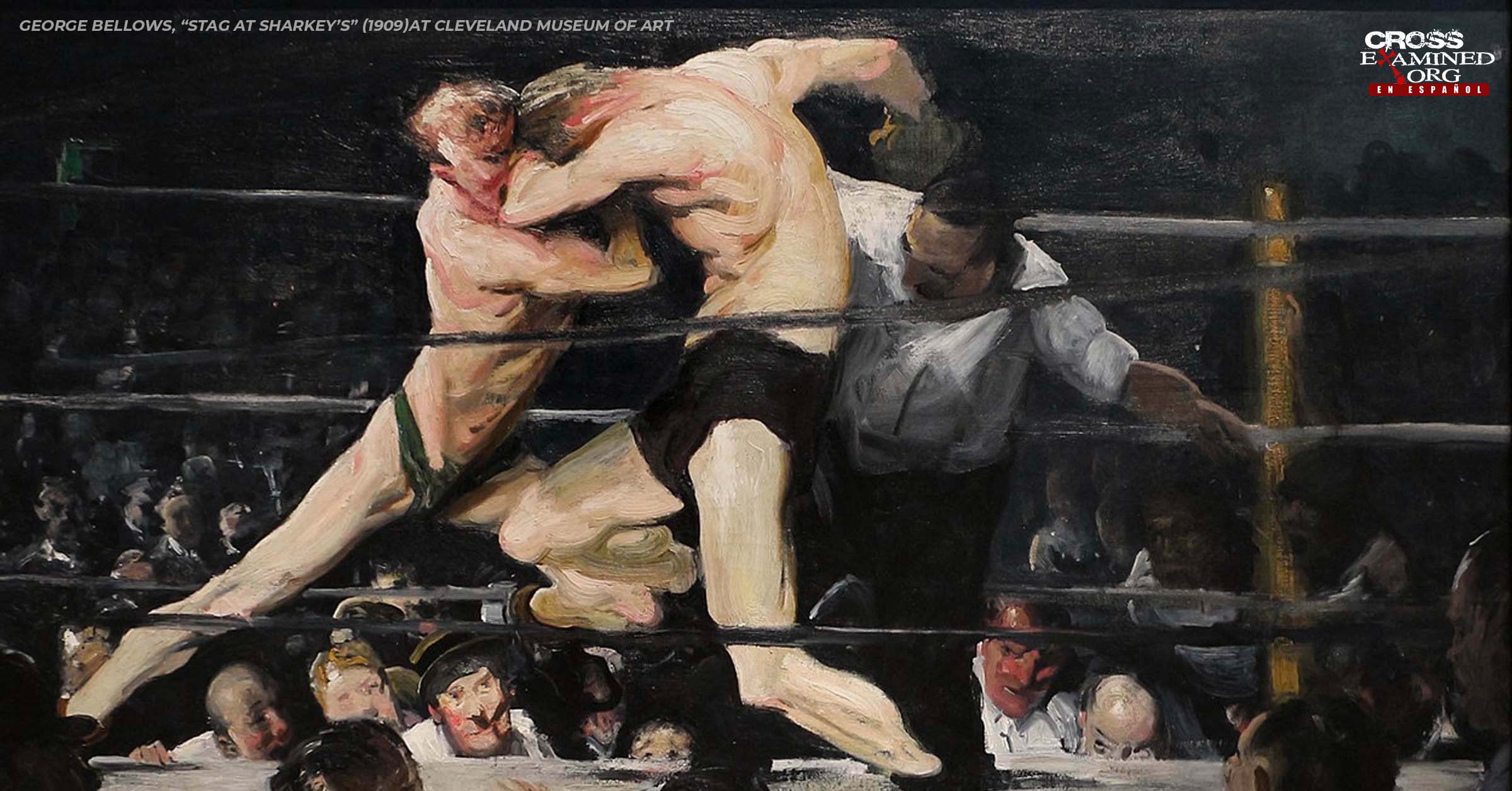
You may have heard the phrase “fair play is trade.” If your opponent on the football or basketball field pushes and elbows you, it’s only fair that you push back, right? As they say, fair play is trade. And as long as it’s not against the law, immoral, or physically harmful to someone, that principle can work well, at least in ball and board games. But what about politics?

Frank and I had a podcast on this topic as well. You can check it out at: 

When your opponent cheats, what should you do? | with Dr. John Ferrer

How far should we take this idea that “fair is unfair”? A gentleman from Nigeria named Austin sent us a question about this last week.

“Imagine you are in the boxing ring with an opponent who breaks all the rules and no one calls him out on it, would you still play by the rules? To be more concrete, this analogy is meant to capture the political power imbalance between the Muslim north and the Christian south of Nigeria. As I am sure you already know, the survival of Islam depends on political power and domination. Our Muslim brothers are extremely political while the Christians are mostly passive. But apart from the political docility of the Christians, our Muslims do not really play fair. For instance, the Muslims go to the extent of registering underage voters. This is one of the main reasons why the northern votes beat the southern ones in federal elections, not that the Muslims outnumber the Christians. There are many more of their misdeeds that I prefer not to name here. The situation is much uglier than I have chosen to portray at this point… So how do you see this? How do you play fair with an opponent who does not play fair?”

Austin is clearly concerned about more than just apologetics. He yearns for justice. Under the looming weight of political corruption and injustice, he faces one of the biggest militant fronts in modern Islam. He worries, and rightly so, that religious and political adversaries have rigged the system. Of course, he wants to do something about it.

If their opponents in the Muslim north are cheating and abusing the system to stay in power, perhaps Christians in the south can use the same tactics to oppose the expanding Islamic caliphate. The Christians would have good reasons. The others cheated first. So is it okay to lie and cheat if the other does?

In short, no.

While I sympathize with Austin in Nigeria, I cannot condone such behavior. He is raising a practical question, whether “the end justifies the means.” That axiom is the centerpiece of Utilitarianism [i] , a non-Christian ethical theory formulated by Jeremy Bentham. Sure, lying and cheating may help you win elections. And you may cheat in the same way as your opponents. But the end does not justify the means. The means must justify themselves.

Furthermore, lying and cheating will not preserve the integrity of the church or show the light of Christ to the world. We will discuss some exceptional cases later. But at this point, if you are not literally being forced to lie and cheat, then you should not lie or cheat.

Heart check-up

Perhaps the best starting point to understand this answer is to do some soul searching. Ask yourself: Do you fear and love God more than anyone else?

 “Do you fear and love God more than anyone else?”

That is, do you fear God as your sovereign judge and king more than anyone else? And do you love God as your heavenly Father more than you love anyone else? When we can answer this heart check with a resounding “Yes!” then we are in a good position to face the difficulties and do the hard work of apologetics.

This heart-checking was Peter’s advice to first-century believers. Apologists love to quote it in 1 Peter 3:15b: “Always be prepared to give an answer.” But just before that classic call to defend the faith, Peter places it within a context of persecution. In verse 14 he says, “But even though you suffer for what is right, you are blessed. Do not be afraid of their threats; do not be terrified.” Responding to how to do this, Peter says to put Jesus first. “But in your hearts revere Christ as Lord” (vs15a). The surrounding passage, 1 Peter 3:9-17 [ii] reinforces this point by saying, “do not repay evil with evil,” “nor insult with insult,” “repay evil with blessing,” “keep your tongue from evil and your lips from deceitful words,” and “suffer for doing good” rather than “for doing evil.”

It’s easy for you to say it.

Of course, it is easy for me to say all this. My job, my family, my way of life, are safe. There are no political enemies or religious invaders knocking on our door. My church faces no real danger of conquest at the hands of radical Muslims, militant Hindus, or even sarcastic atheists. It is easy for me to tell people to endure persecution heroically when it is their persecution and not mine. That is why I do not speak on my own authority. The apostle Peter said it first. I only agree with him. If I am ever faced with persecution like that suffered by my brothers and sisters in Nigeria, I pray that I will have the courage to follow my own counsel, I pray that I will follow Peter in honoring Christ as Lord and suffering well.

 “Love and honor Christ as Lord, and then suffer well.”

How do we do it?

At this point, you might be saying to yourself, “Well, be fair and don’t ‘stoop down to their level.’ I get that. But how do we do that?” That’s a great question. I’m glad you asked. Stay tuned for part 2, where I explain seven principles we should all follow when our opponent isn’t fighting fairly.

Recommended resources in Spanish:

Stealing from God ( Paperback ), ( Teacher Study Guide ), and ( Student Study Guide ) by Dr. Frank Turek

Why I Don’t Have Enough Faith to Be an Atheist ( Complete DVD Series ), ( Teacher’s Workbook ), and ( Student’s Handbook ) by Dr. Frank Turek 

_____________________________________________________________________________________________________________________________________________________________

Dr. John D. Ferrer is an educator, writer, and graduate of CrossExamined Instructors Academy. A diplomate of Southern Evangelical Seminary and Southwestern Baptist Theological Seminary, he is currently active in the pro-life community and his home church in Pella, Iowa. When not assisting his wife Hillary Ferrer with her Mama Bear Apologetics ministry, John can usually be found writing, researching, and teaching cultural apologetics.

Translated by Yatniel Vega Garcia
Edited by Jennifer Chavez

Original Blog Source: https://bit.ly/3U9AOYv


Por Timothy Fox

Bienvenidos a la segunda entrega de mi serie “Cosas que dicen los ateos”[i]. (Lea la parte 1 aquí.) Esta serie está dedicada a los malos argumentos y declaraciones que algunos ateos (el tipo de troll de Internet) hacen para desviar una conversación y evitar tener que presentar argumentos o pruebas propias.

Mi intención no es desprestigiar a todos los no creyentes, ya que hay muchas preguntas reflexivas y honestas que los escépticos hacen y que necesitan respuesta. De hecho, ¡hay muchos ateos que están tan cansados como yo de estas afirmaciones sin sentido! Por eso quiero aclarar de una vez por todas algunos de estos eslóganes sin sentido. Pasemos a la segunda:

Mal “argumento” Nº 2: Creer en Dios no es diferente de creer en Papá Noel.

O tal vez lo hayas oído decir: “No necesito refutar a Dios más de lo que necesito refutar la existencia de los duendes”. O de las hadas. O cualquier otro tipo de criatura mítica. El sentido de esta afirmación es igualar a Dios con cualquier otro ser imaginario en el que es ridículo creer seriamente.

El espejismo de Papá Noel

¿Creer en Dios es lo mismo que tener un amigo imaginario? ¿Un papá invisible del cielo? Tal vez, si creer en un hombre gordo con un traje rojo que reparte regalos en un trineo tirado por renos voladores a todos los niños del mundo es lo mismo que creer en un Dios que creó el universo de la nada, trajo la vida de la no vida y fundamenta valores y deberes morales objetivos. Si es así, entonces sí, son exactamente lo mismo.

Pero si creer en Dios es tan ridículo, ¿sabes qué es aún más ridículo? Dar conferencias en contra de su existencia. Debatir sobre ello. Trollear blogs y salas de chat de internet. Escribir libros populares promoviendo la incredulidad. Mientras tanto, no veo a nadie escribiendo “El espejismo de Papá Noel” o “El hada de los dientes no es genial”.

Y supongo que la inmensa mayoría de los seres humanos de todos los tiempos son tan ingenuos como los niños pequeños. Porque todas las culturas a lo largo de la historia han tenido algún tipo de religión o han creído en una deidad de algún tipo.  Discutimos sobre la existencia de Dios en las aulas, en la mesa y tomando un café (o una cerveza). Desde filósofos hasta científicos, pasando por creyentes, escépticos y todos los demás. Humanos tontos.

No, en serio

Pero tomémonos este argumento en serio. ¿Creer en Dios no es realmente diferente a creer en Papá Noel? En primer lugar, ¿hasta qué punto está justificado creer en Papá Noel? ¿Qué hace falta para que alguien crea que existe? La evidencia. Y aquí el ateo dice “¡Correcto! ¡No hay pruebas para ninguno de los dos! ¡Por eso es ridículo creer en Dios o en Papá Noel!”. Pero, ¿la evidencia para Santa Claus y Dios es realmente la misma? Bueno, si Papá Noel existe, sabríamos qué buscar: un hombre gordo con un traje rojo que reparte regalos en Nochebuena. Pero, ¿y Dios? Si Dios existe, ¿sabe usted lo que buscaría[ii]? Antes de afirmar que no hay pruebas de algo, asegúrate de saber qué tipo de pruebas debería haber si ese algo existiera.

Para que fuera razonable creer que Papá Noel existe, tendría que ser la mejor explicación de la existencia de los regalos de Navidad. Pero, ¿existe otra explicación mejor? Tal vez alguien más puso los regalos bajo el árbol, como los padres. Quizá los regalos surgieron de la nada. O quizá llevan ahí toda la eternidad. Probablemente ya veas por dónde va esto. ¿Cómo llegó aquí el universo? ¿Apareció de la nada, siempre ha estado ahí, o es razonable creer que algo o alguien provocó que empezara a existir?[iii] Dios es la mejor explicación de toda la realidad. Y aunque no estés de acuerdo, sigue siendo una opción legítima, ¿no?

Pero tal vez Santa existe y sólo se esconde. Por eso nunca ha sido observado, ¡igual que Dios![iv] De nuevo, ¿cuáles son las razones para creer que Papá Noel existe? ¿Hay alguna? Porque hay muy buenas razones para creer que Dios existe, como el argumento cosmológico, el argumento moral[v], el argumento del ajuste fino[vi], etc. ¿Se puede decir sinceramente lo mismo de Papá Noel? Por supuesto que no.

Además, ¿qué consecuencias tendría que Papá Noel no existiera? Entonces los niños deben recibir sus regalos de Navidad de otra manera, porque sabemos por experiencia que los regalos existen (a menos que estuvieras en la lista de los malos, supongo). ¿Pero si Dios no existe? Entonces el universo surgió de la nada sin ninguna razón. La vida surgió de la no-vida y la conciencia de la no-conciencia. No hay moral ni valores objetivos. ¿Exactamente lo mismo? No. Ni por asomo.

Conclusión

Espero que todos podamos ver lo ridículo que es igualar a Dios con algún ser imaginario o mítico. No se trata de algo tan trivial como quién reparte los regalos de Navidad o cambia dinero por dientes; estamos hablando de la Primera Causa que creó y sostiene todo el universo. Hay buenas razones y argumentos para la existencia de Dios. Así que a los que dicen que creer en Dios no es diferente de creer en Papá Noel, por favor, paren ya de hacerlo. Son ustedes los que hacen afirmaciones ridículas, no nosotros.

Para otro buen y exhaustivo tratamiento de esta cuestión, consulte el artículo de Reasonable Faith [vii] ¿Es Dios imaginario?[viii]

Para más artículos como Cosas que dicen los ateos: Creer en Dios es como creer en Papá Noel visite el sitio de Tim en FreeThinkingMinistries.com

Notas al pie de página:

[i] https://crossexamined.org/stuff-atheists-say-youre-almost-an-atheist/

[ii] https://freethinkingministries.com/evidence-for-god/

[iii] https://freethinkingministries.com/logic-science-god-the-kalam-cosmological-argument/

[iv] https://freethinkingministries.com/why-god-hides/

[v] https://freethinkingministries.com/an-ought-from-an-is/

[vi] https://www.reasonablefaith.org/finetuning

[vii] https://www.reasonablefaith.org/

[viii] https://www.reasonablefaith.org/writings/question-answer/is-god-imaginary

Recursos recomendados en Español:

Robándole a Dios (tapa blanda), (Guía de estudio para el profesor) y (Guía de estudio del estudiante) por el Dr. Frank Turek

Por qué no tengo suficiente fe para ser un ateo (serie de DVD completa), (Manual de trabajo del profesor) y (Manual del estudiante) del Dr. Frank Turek 

_____________________________________________________________________________________________________________________________________________

A Timothy Fox le apasiona equipar a la iglesia para que pueda influir en la cultura. Es profesor de matemáticas a tiempo parcial, y esposo y padre a tiempo completo. Tiene un máster en Apologética Cristiana por la Universidad de Biola, así como un máster en Educación Matemática de Adolescentes y una licenciatura en Informática, ambos por la Universidad Stony Brook. Vive en Long Island, Nueva York, con su esposa y sus dos hijos pequeños.

Traducido por Yatniel Vega García
Editado por Monica Pirateque

Fuente del Blog Original: https://bit.ly/3iMiXsx


By Ryan Leasure

If you’re from an Appalachian church that handles snakes, I’m sorry to disappoint you. This is not THAT kind of post. Instead, it’s a post about how the Bible portrays vipers, snakes, and dragons. What’s more, it’s about how a mighty warrior defeats a snake to rescue his precious bride. If this story sounds familiar, it’s because many great children’s stories of the past tell these same kinds of stories.

You see, the Bible presents three main characters: [1] 1) the serpent (the villain, Satan), 2) the damsel in distress (God’s people), and 3) the snake catcher (the hero, Jesus).

It should be noted that “Serpent” is a biblical term that includes both snakes and dragons [2] ; that is, serpent is a general category, while snakes and dragons are more specific. It should also be noted that the ancients did not think of dragons as winged, fire-breathing creatures. Rather, they thought of them as giant serpents. Throughout the Bible, snakes take one form or another depending on the situation. Biblical scholar Andrew Naselli notes, “As a rule, the form a serpent takes depends on its strategy. When a serpent in scripture attempts to deceive, it is a viper. When a serpent attempts to devour, it is a dragon” [3] .

With these anecdotes in mind, let’s start at the beginning.

The snake in the garden

The beginning was pure bliss. A perfect, holy God decided to share his goodness and created a universe ex nihilo . Like jewels in a crown in God’s creation, humans walked in fellowship with him in the garden. However, they let down their guard and allowed the serpent to enter. Genesis 3:1 notes, “Now the serpent was more crafty than any beast of the field which the LORD God had made.”

Cunning (or deceit) perfectly describes this serpent, as he immediately questioned Eve, “Did God really say, ‘You shall not eat from any tree in the garden’?” Notice the serpent’s tactic. He called God’s Word into question. He planted doubt in the woman’s mind so that she would begin to consider alternative options. As soon as the woman said that eating from the tree in the middle of the garden would lead to death, the serpent went on to contradict God’s Word completely. He declared, “you will not surely die.” And then he called God’s motives into question. “For God knows that in the day you eat from it your eyes will be opened, and you will be like God, knowing good and evil.”

The serpent was successful. Eve ate the fruit, gave some to Adam, and he ate too. And immediately everything changed. Their innocence was lost, and they knew they were naked. Because of their shame, they tried to hide from God, but it was no use. God confronted them for their disobedience. Adam blamed Eve, and Eve blamed the serpent. She commented in 3:13, “The serpent deceived me, and I ate.” As a result, God banished them from His holy presence, where they would live in exile. Now let us remember that when the serpent takes the form of a viper, its primary tactic is to deceive. And this is what it has done.

However, God did not allow the serpent to have the final say. He judged the serpent and promised to one day destroy him when He stated, “And I will put enmity between you and the woman, and between your seed and her seed; he shall bruise your head, and you shall bruise his heel” (Gen. 3:15). The rest of Scripture traces the ongoing battle waged between the seed of the woman (God’s people) and the seed of the serpent (enemies of God and His people). Ultimately, the unique seed of the woman (Gal. 3:16) will utterly destroy the serpent, even though the serpent wounds him in the process.

Snakes portrayed negatively

Before we look at some examples of the serpent’s seed fighting against the woman’s seed, I simply want to draw our attention to the fact that serpents are associated with evil throughout Scripture.

Let us consider the following texts:

The wicked are led astray from the womb; those who speak lies go astray from their birth. They have poison like the poison of a serpent; they are like a deaf cobra that closes its ear and does not hear the voice of enchanters, not even the most skilled enchanter (Psalm 58:3-5).

They sharpen their tongue like a serpent; the venom of a viper is under their lips (Psalm 140:3).

Snakes often symbolize God’s enemies:

The nations will see and be ashamed of all their power; they will put their hands over their mouths, their ears will be deaf. They will lick the dust like a serpent, like the creeping things of the earth. They will tremble from their strongholds; they will come to the Lord our God in terror, and they will be afraid before you (Micah 7:16-17).

The seventy returned with joy, saying, “Lord, even the demons are subject to us in your name.” And Jesus said to them, “I saw Satan fall like lightning from heaven. See, I have given you authority to tread on serpents and scorpions and over all the power of the enemy, and nothing will hurt you” (Luke 10:17-19).

As mentioned above, the serpent takes the form of a dragon when it wants to destroy. The following texts describe the dragon as a sea monster called Leviathan and Rahab.

On that day the Lord will punish with his fierce, great and powerful sword, Leviathan, the fleeting serpent, Leviathan, the crooked serpent, and he will kill the dragon that lives in the sea (Isaiah 27:1).

He has stirred up the sea by his power, and broken Rahab by his understanding. With his breath the heavens are cleansed; his hand has pierced the fleeing serpent (Job 26:12-13).

See also Job 41, which describes God’s sovereignty over the monstrous sea serpent Leviathan.

The Egyptian Serpent

The story of Scripture presents the seed of the serpent (God’s enemies) in conflict with the seed of the woman (God’s people). Perhaps the clearest example of the seed of the serpent is Egypt and its Pharaoh. The Lord tells Pharaoh in Ezekiel 32:2, “You are like a dragon in the seas.” Recall that the dragon seeks to destroy the seed of the woman, and this is what he set out to do when he ordered the death of all Israelite baby boys (Exodus 1:15-22).

One also thinks of the episode in which Aaron’s staff turned into a serpent and swallowed the staffs/serpents of Pharaoh’s magicians (Ex 7:8-13). Most likely, Aaron’s staff turned into a cobra, which also figured on the Pharaoh’s headdress. This headdress symbolized divine power and protection and was fashioned after an Egyptian goddess named Uraeus. By wearing the cobra headdress, the Pharaoh could channel the powers of the deity.

Thus, “when Moses had Aaron cast the serpent-rod before Pharaoh,” archaeologist John Currid argues, “he was directly attacking that symbol of pharaonic sovereignty: the scene was a polemical mockery. When Aaron’s rod swallowed up the rods of the Egyptian magicians, the pharaonic deity and his omnipotence were being denounced and rejected out of hand. Pharaoh’s cobra-crested diadem was powerless against Yahweh . ” [4]

Reflecting on the exodus from Egypt, the biblical authors saw it as a victory over the serpent. Psalm 74:12-14 states:

Yet God is my King from of old, doing works of salvation in the midst of the earth. You divided the sea by your power; you broke the heads of the monsters in the waters. You crushed the heads of Leviathan; you gave him as food to those who dwell in the desert.

Although final victory still awaited, God was already foreshadowing how He would one day crush the serpent’s head.

Goliath, the serpent

One of the best-known stories in the Old Testament is that of David’s defeat of Goliath. This story presents Goliath as a giant serpent seeking to devour the woman’s seed. We know this because, as 1 Samuel 17:5 makes clear, Goliath “was clothed in scale armor” (JBS and NIV). While some translations simply translate this as “a coat of mail” (NASB), the more literal translation is “armor of scales.”

The Hebrew word for “scales” appears seven other times in the Old Testament, and each time it refers to the scales of fish—including sea dragons. [5] Notably, God also calls Pharaoh a “great dragon” with “scales” in Ezekiel 29:3-4. Pharaoh and Goliath are the only two characters in the Bible who are said to have “scales.”

In the account given in 1 Samuel 17, David proclaims that the battle is the LORD’s and then proceeds to drive a stone into the forehead of the giant serpent, which falls face downwards to the ground, eating dust like the ancient serpent (Gen 3:14). Once again, God foreshadows how He will crush the serpent’s head and free His people.

The serpent in the Gospels

We find several examples where the serpent’s seed attempts to destroy the woman’s seed. Like the ancient Pharaoh, King Herod tried to kill all the children of Bethlehem in an attempt to kill the unique seed of the woman (Matthew 2:16-18).

Repeatedly, we find the Pharisees and Sadducees portrayed as the seed of the serpent. Jesus tells them, “You are of your father the devil” (John 8:44). When John the Baptist saw them coming from afar, he cried out, “You brood of vipers! Who warned you to flee from the wrath to come? Therefore bear fruits worthy of repentance; and do not presume to say to yourselves, ‘We have Abraham as our father’” (Mt 3:7-9). Likewise, Jesus cries out to the Pharisees in Matthew 23, “You serpents! You brood of vipers! How will you escape the judgment of hell?” In short, the Pharisees and Sadducees are the seed of the serpent making war on the seed of the woman.

The dragon is killed

We complete this discussion by going all the way to the end, where the book of Revelation proclaims the final destruction of the serpent. Revelation 12:3-5 states:

Then another sign appeared in heaven: behold, a great red dragon, having seven heads and ten horns, and seven diadems on his heads. His tail swept a third of the stars of heaven and threw them to the earth. Then the dragon stood before the woman who was about to give birth, so that when she was born he might devour her child. And she gave birth to a male child, who is to rule all the nations with a rod of iron. And her child was caught up to God and to his throne .

Here we read that this powerful dragon, thirsty for blood, seeks to devour the seed of the woman. However, God frees the seed from his persecutions.

Revelation 12:7-9 continues:

Then there was war in heaven. Michael and his angels fought against the dragon. The dragon and his angels fought, but they were not victorious, and a place was no longer found for them in heaven. Then the great dragon was thrown down, that ancient serpent, called the Devil and Satan, the deceiver of the whole world. He was thrown down to the earth, and his angels were thrown down with him.

Note that the dragon is none other than Satan himself, that old serpent and deceiver of the whole world. And he is defeated, but how? Did the archangel Michael destroy the dragon alone?

Revelation 12:11 states:

They overcame him by the blood of the Lamb and by the word of their testimony; and they did not love their lives so much as to suffer death.

Satan was finally defeated by the blood of the Lamb! It was Jesus Christ who conquered Satan. That moment on the cross, when it seemed that the serpent would prevail, his head was crushed by the seed of the woman (Gen 3:15).

Fast forward to Revelation 20, just after the Millennium, and we read in verse 10:

 And the devil who deceived them was thrown into the lake of fire and sulfur, where the beast and the false prophet are also; and they will be tormented day and night forever and ever.

Finally, the mighty snake-catcher defeated the ancient snake and rescued his bride so that she could no longer be deceived or devoured. Or to put it another way, the prince killed the dragon and had his girl. [6]

Grades

[1] Andrew Naselli, The Serpent, and the Serpent Slayer, 18.

[2] Ibid., 18.

[3] Ibid., 18.

[4] John Currid, Ancient Egypt, 93-94.

[5] Andrew Naselli, The Serpent, and the Serpent Slayer, 90.

[6] Ibid., 15.

Recommended resources in Spanish: 

Stealing from God ( Paperback ), ( Teacher Study Guide ), and ( Student Study Guide ) by Dr. Frank Turek

Why I Don’t Have Enough Faith to Be an Atheist ( Complete DVD Series ), ( Teacher’s Workbook ), and ( Student’s Handbook ) by Dr. Frank Turek  

____________________________________________________________________________________________________________________________________________________

Ryan Leasure holds a Master of Arts degree from Furman University and a Master of Divinity degree from the Southern Baptist Theological Seminary. He is currently a Doctor of Ministry candidate at the Southern Baptist Theological Seminary. He also serves as pastor at Grace Bible Church in Moore, SC.

Original Blog Source: https://bit.ly/34fxPZ2

Translated by Monica Pirateque

Edited by Daniela Checa Delgado


Por Alisa Childers

Cuando mi hija Dyllan era pequeña, me ejercitaba con bastante regularidad en el YMCA. (Y por “ejercitaba” quiero decir que leía un libro en la bicicleta estática y pedaleaba lo más despacio posible mientras disfrutaba de una hora de guardería gratuita. No voy a mentir). Un día, cuando la recogí de la sala de niños, la cuidadora sacó la barrita de granola sin abrir que había metido en la bolsa de Dyllan, me la entregó y me dijo: “No podemos dársela porque contiene maní. No permitimos nada con maní en la zona de la guardería”. Reconozco que me sorprendió un poco porque no era algo en lo que hubiera pensado mucho. Pero enseguida aprendí que no había casi nada que los padres temieran más en 2010 que el temido maní.

Por supuesto, las alergias al maní son muy reales. En su libro The Coddling of the American Mind: How Good Intentions and Bad Ideas Are Setting Up a Generation for Failure, Greg Lukianoff y Jonathan Haidt informaron de que antes de mediados de los años 90, las alergias al maní eran extremadamente raras en los niños estadounidenses. Sin embargo, en 2008, catorce de cada mil niños habían desarrollado alergias al maní. Nadie sabía por qué había un aumento tan drástico hasta que se publicó un estudio fidedigno en 2015. Se descubrió que muchos niños estaban desarrollando alergias al maní porque sus padres evitaban dárselos. El estudio reveló que la introducción de productos de maní a los bebés con alto riesgo de alergias en realidad redujo sus posibilidades de desarrollar una alergia al maní en un sorprendente 81%. En otras palabras, dar productos de manía los bebés hizo que su sistema inmunológico respondiera y creara tolerancia

Nuestros hijos tienen cuerpos increíbles que reaccionan a las bacterias, parásitos -y sí, al maní- con una defensa inmunológica que enseña a su sistema a adaptarse y luchar contra futuras amenazas a su salud.

Del mismo modo, creo que nuestros hijos tienen sistemas inmunológicos espirituales.

Hace varios años, participé en un grupo de estudio y discusión sobre el cristianismo. Esta fue la clase que desafió mi fe intelectualmente y he contado esa historia aquí. Un día, surgió el tema de Adán y Eva y se preguntó: “¿Alguien sigue creyendo que fueron personas reales?”. Me da un poco de vergüenza admitir que era totalmente ingenua en lo que se refiere a este tema. Incluso de adulta, pensaba que la existencia literal de Adán y Eva era algo en lo que todos los cristianos profesantes creían. Hay que atribuirlo a la burbuja evangélica en la que crecí o al hecho de que la mayor parte de mi vida transcurrió antes de la invención de Internet. Pero la pregunta me desconcertó porque no tenía ni idea de cómo responder.

Hasta ese momento, ni siquiera sabía que era una pregunta. Tenía cero inmunidad.

Esta fue simplemente una de las muchas afirmaciones escépticas planteadas contra el cristianismo histórico que se unieron para enviarme a una época oscura de dudas. A menudo he reproducido ese momento en mi mente y he imaginado un escenario diferente. ¿Y si hubiera sido consciente de esta cuestión desde la infancia? ¿Y si ya hubiera reflexionado sobre ella? ¿Y si cuando leí el relato del Génesis sobre la creación, alguien me hubiera dicho: “Oye, hay gente que no cree que Adán y Eva existieron realmente? Pensemos en lo que dice la Biblia al respecto, en lo que muestran las pruebas científicas y en lo que eso significaba para el evangelio”.

Si mi sistema inmunológico espiritual se hubiera fortalecido de esta manera, escuchar esta pregunta como adulta no habría sido un gran problema. No habría sacudido mi fe ni un poco. Simplemente habría participado en esa conversación de forma inteligente, sin miedo ni dudas.

Además de enseñar a nuestros hijos los fundamentos de la fe cristiana, hay muchas medidas prácticas que podemos tomar para ayudar a reforzar su sistema inmunológico espiritual. Aquí hay tres para empezar:

1. Lee la Biblia con tus hijos, y no te saltes las cosas difíciles.

Con “no te saltes las cosas difíciles” no quiero decir que debas asustar a tus hijos antes de acostarse leyendo sobre el levita que descuartiza a su concubina en Jueces 19, o sobre Sansón al que le sacan los ojos en Jueces 16. Obviamente, hay una manera apropiada de presentar las historias bíblicas a nuestros hijos. Lo que quiero decir con “no te saltes lo más difícil” es que la lectura de historias y relatos que los escépticos suelen poner en tela de juicio es una gran manera de inocular a nuestros hijos contra sus falsas ideas.

Por ejemplo, cuando mi hija tenía unos siete años, leímos juntas el Génesis.  En el capítulo 26, leímos la historia de Isaac mintiendo a los filisteos. Les dijo que su esposa Rebeca era su hermana, temiendo que alguien pudiera matarlo para casarse con ella. Le dije a mi hija: “¿Sabías que algunas personas piensan que esta historia es inventada porque es muy similar a lo que hizo Abraham, el padre de Isaac, dos veces antes? ¿Qué opinas de eso?”. Tuvimos una gran conversación sobre cómo tendría perfecto sentido que Isaac repitiera la mentira de su padre, porque no parecía haber mayores consecuencias por hacerlo. De hecho, en ambos casos, Abraham se fue más rico de lo que llegó. También analizamos el tema bíblico de que los hijos tienden a repetir los pecados de sus padres. Después de hablar, todo tenía sentido. Y ahora mi hija no se verá sorprendida si escucha esa afirmación escéptica en el futuro.

Un gran recurso para ayudar con esto es La Biblia de Estudio de Apologética. A medida que se lee la Biblia, encontramos las notas a pie de página de  los versículos que los escépticos suelen cuestionar, y se ofrecen respuestas inteligentes y creíbles que se pueden comentar con los niños.

2. Exponga a sus hijos al ateísmo.

Como padres, puede dar miedo contar intencionadamente a sus hijos todas las razones por las que los ateos rechazan el cristianismo. Basándose en su experiencia enseñando apologética a padres cristianos, mi amiga Natasha Crain señaló que muchos padres no quieren arriesgarse a llevar a sus hijos por el mal camino presentándoles argumentos ateos. Pero ella señala acertadamente que todos nuestros hijos escucharán inevitablemente estas ideas. Ella escribió:

La única opción que tienes como padre es si primero lo escuchan de ti -en un entorno en el que tendrán tu orientación fácilmente disponible- o si lo escuchan primero de los no creyentes -en un entorno en el que procesarán lo que escuchan por su cuenta-.

Brett Kunkle compara la exposición a las ideas ateas con la enseñanza del surf a sus hijos.  En este vídeo, explica que, como padre, no lanzarías a tu hijo al océano para que surfeara grandes olas antes de enseñarle aspectos básicos como la natación y cómo manejar olas más pequeñas. Míralo a continuación:

Acostumbrar a nuestros hijos a las “pequeñas olas” del ateísmo puede ser una buena manera de prepararlos para encontrarse con las “grandes olas” cuando estén solos.

3. Exponga a sus hijos a los falsos evangelios y a otras religiones.

Al igual que es importante exponer a nuestros hijos a las ideas ateas, es igualmente importante exponerlos a los evangelios falsos, que casi siempre se disfrazan de cristianismo auténtico. Se ha dicho que las mejores mentiras contienen gran  parte de verdad. Por eso los falsos evangelios pueden ser tan difíciles de discernir. …contienen mucha verdad.  A menudo hacen hincapié en Jesús, utilizan la expresión correcta e incluso apelan a la Biblia para respaldar sus afirmaciones. Explicar las diferencias entre el cristianismo auténtico y el mormonismo, los testigos de Jehová, el evangelio de la prosperidad o el cristianismo progresista preparará a nuestros hijos para interactuar con sus ideas y ver los engaños que proponen.     

Otro paso importante es hablar con nuestros hijos sobre lo que creen las personas de otras religiones sobre Dios, Jesús y la naturaleza de la realidad. Aunque están de acuerdo en algunos puntos, todas las religiones del mundo se contradicen con las demás en un nivel fundamental. Lógicamente, no pueden ser todas verdaderas. Esta es una gran oportunidad para exponer las contradicciones y hablar con nuestros hijos sobre por qué el cristianismo es verdadero y explica mejor la realidad.

¿Quién iba a pensar que dar a un bebé un trocito de mantequilla de maní podría salvarle la vida? Del mismo modo, dar a nuestros hijos pequeños trozos de ideas anticristianas y permitirles procesar estas cuestiones dentro de la seguridad y la orientación de nuestro cuidado podría tener un impacto duradero en sus futuras vidas espirituales.

Otros recursos prácticos:

Durante años, Brett Kunkle ha ofrecido formación teológica para adolescentes y ha facilitado viajes a Utah para interactuar con los mormones. Cuando lo entrevisté en mi podcast, me informó de que el impacto de estos viajes ha sido tremendo en la vida de los jóvenes, motivándolos a estudiar teología y apologética por su cuenta. Ahora ofrece viajes al campus universitario de Berkeley donde los chicos cristianos pueden compartir el evangelio e interactuar con ateos y escépticos. Más información en www.maventruth.com.

Otro ministerio que realiza una gran labor en este ámbito es Jonathan Morrow e Impact 360. Cada verano, ofrecen experiencias en las que los adolescentes cristianos reciben formación en liderazgo, apologética y teología, tras lo cual se les ofrecen experiencias del mundo real para poner a prueba sus conocimientos. Visitan templos budistas y mormones, conocen ateos y mucho más. Para saber más, visita www.impact360institute.org y escucha la entrevista de Jonathan en mi podcast.

Si quieres ser intencional en este aspecto, toma el libro de Natasha Crain Talking with Your Kids about God: 30 Conversations Every Christian Parent Must Have, y sigue el blog de Natasha para obtener más consejos. También puedes comprar el trío de libros para niños de J. Warner Wallace (1, 2 y 3) que exploran todo, desde la existencia de Dios hasta la veracidad del cristianismo.

Recursos recomendados en Español: 

Robándole a Dios (tapa blanda), (Guía de estudio para el profesor) y (Guía de estudio del estudiante) por el Dr. Frank Turek

Por qué no tengo suficiente fe para ser un ateo (serie de DVD completa), (Manual de trabajo del profesor) y (Manual del estudiante) del Dr. Frank Turek  

_____________________________________________________________________________________________________________________________________________________

Alisa Childers es una cantante y compositora estadounidense, más conocida por formar parte del grupo femenino de música cristiana ZOEgirl. Ha tenido una lista de los diez mejores sencillos de la radio, cuatro lanzamientos de estudio y recibió el premio Dove durante su tiempo con ZOEgirl. Años más tarde, Alisa experimentó un profundo desafío a su fe de toda la vida cuando empezó a asistir a lo que más tarde se identificaría como una iglesia cristiana progresista. Este desafío empujó a Alisa hacia la Apologética Cristiana. Actualmente se puede leer, escuchar y ver el trabajo de Alisa en línea, así como adquirir su libro recientemente publicado sobre el cristianismo progresista, titulado Another Gospel.

Blog Originalmente publicado aquí: https://bit.ly/3OH0Z5U

Traducido por Jennifer Chavez

Editado por Elenita Romero


By Alisa Childers

When my daughter was little, I made her quinoa, oat, and flax seed waffles, and she loved them. It wasn’t until we were visiting family in California that she experienced the hotel breakfast bar and exclaimed out loud, “Mom, these waffles are SO MUCH BETTER THAN YOURS!” The charade was over. Dry, grainy, fake waffles would no longer be tolerated. She had now tasted the real thing, and would never again be fooled by a fake.

Likewise, one of the most effective ways to teach our children to spot a false gospel is to make sure they are well-versed in the true gospel . That way, when they encounter a false version of Christianity, they will immediately recognize it. Here are some ways to teach our children to spot a false gospel:

Teach them to love the truth

One of the most common ways that young Christians are deceived with bad ideas is through the vehicle of relativism. Relativism is the belief that absolute truth does not exist or cannot be known. “What is true for you is true for you” or “There is no such thing as truth” are common expressions thrown at Christians to shut down their ideas and make them feel like moral censors/criticizers for simply claiming to know the truth.

However, Christianity is a belief system that stands or falls on the basis that truth is absolute. God either exists or he doesn’t. Jesus either rose from the dead or he didn’t. In fact, Jesus claimed to be Truth itself: “I am the way, the truth, and the life” (John 14:6). The stakes are that high!

Teaching our children to base their beliefs on what is true, not what feels right , will help prevent them from walking away when their faith no longer “feels right.”

Teach them to be biblically cultured

From the beginning, false ideas about God were passed off as “Christian.” False teachers often twisted Scripture to deceive followers of Jesus into believing their teachings. Even today, some of the most misleading ideas are those marketed as “biblical.”

The only way to know for sure whether an idea is biblical or not is to actually know what the Bible says. There is nothing wrong with buying a good children’s devotional book or a cartoon of a Bible character to supplement our devotions, but nothing can replace reading the actual Bible with our children.

This will help prevent them from falling into misquotes and misrepresentations because they will know the reality.

Teach them to identify the essentials of the gospel

One of the ways Christians can be deceived into believing a false gospel is when they confuse non-essential doctrines with essential doctrines. The thinking goes something like this: If Christians can’t even agree on how predestination works, why can’t we just agree to disagree about the resurrection?

Essential doctrines are beliefs that directly affect someone’s salvation. The virgin birth, the deity of Jesus, the atonement, the resurrection, the second coming, and the final judgment are all examples of essential doctrines of the gospel. These are fundamental topics that we cannot simply agree to disagree about.

Teaching our children to recognize the difference between core and non-core beliefs will help them avoid confusion about what matters most.

Teach them to define their terms

One telltale sign of a false gospel is the redefinition of terms. For example, someone might imply that telling people they might not go to heaven is “unloving.” But this only works if they have redefined the word love to mean making someone feel good by endorsing all their beliefs and behaviors. But according to the Bible, that is not love at all.

First Corinthians 13 tells us that “love is patient and kind” (verse 4). But it also “does not rejoice at evil but at the truth” (verse 6 [author’s error in verse]). To love someone means to tell them the truth, even when it’s unpleasant. So telling someone about the possibility of an eternity apart from God is actually the most loving thing you can do .

Teaching our children to define their terms biblically will help protect them from being “pigged in” by words that are redefined according to cultural norms.

Teach them to appreciate the beauty of the gospel

The apostle Paul wrote that when he preached the gospel, it had a fragrance. To some, it smelled of life and peace. To others, it reeked of death. [1] I imagine it all came down to whether or not someone truly believed they were a sinner. If one does not recognize their own sinfulness, the Father’s message demanding Jesus’ sacrifice on the cross would seem unnecessary—even immoral. However, if someone knows they have sinned against a holy God and deserve death, Jesus’ atoning work suddenly becomes the most beautiful cure imaginable.

We live in a culture that inundates our children with messages that they are perfect just the way they are and that they should follow their hearts. But these “positive messages” soften their own sinfulness and can make them vulnerable to imitations/counterfeits of the cross akin to “cosmic child abuse.”

As parents, we know that most ideas are learned, not taught. It is useless to teach our children all the right things if we ourselves do not practice those ideas. This involves repenting when we are wrong. It involves reading the Bible and praying with them. And just as my daughter will never again be fooled by imposter waffles, our children will not settle for false gospels because they will be so well acquainted with the real one .

Grades

 [1] 2 Corinthians 2:15-16

Recommended resources in Spanish: 

Stealing from God ( Paperback ), ( Teacher Study Guide ), and ( Student Study Guide ) by Dr. Frank Turek

Why I Don’t Have Enough Faith to Be an Atheist ( Complete DVD Series ), ( Teacher’s Workbook ), and ( Student’s Handbook ) by Dr. Frank Turek  

_____________________________________________________________________________________________________________________________________________________

Alisa Childers is an American singer and songwriter, best known for being part of the all-female Christian music group ZOEgirl. She has had one top ten radio single, four studio releases, and received a Dove Award during her time with ZOEgirl. Years later, Alisa experienced a profound challenge to her lifelong faith when she began attending what would later be identified as a progressive Christian church. This challenge pushed Alisa towards Christian Apologetics. You can currently read, listen to, and watch Alisa’s work online, as well as purchase her recently released book on progressive Christianity, titled Another Gospel.

Original Blog : https://cutt.ly/YO9CxmL 

Translated by Jennifer Chavez

Edited by Gustavo Camarillo 


Por Alisa Childers

Permítanme empezar diciendo que me gusta Rob Bell. (No pensaste que iba a decir eso, ¿verdad?) Como parte de una investigación que estoy haciendo sobre el Cristianismo Progresista, he pasado bastante tiempo con él últimamente, —escuchando conferencias, entrevistas y leyendo sus libros. De todos los autores progresistas que estoy leyendo actualmente (Rachel Held Evans, Richard Rohr, Brian McLaren, Steve Chalke y Pete Enns, entre otros), Bell es el que más me gusta. Esto no significa que esté de acuerdo con mucho de lo que dice, pero es elocuente, claro, fascinante y parece una persona genuinamente agradable.

Hace poco leí el libro de Bell,  What Is the Bible? How an Ancient Library of Poems, Letters, and Stories Can Transform the Way You Think and Feel About Everything (¿Qué es la Biblia? Cómo una antigua biblioteca de poemas, cartas, e historias pueden transformar tu forma de pensar y sentir en todos los aspectos) (Ese es un título muy bueno.) Con capítulos como “Moisés y su humedad”, “Ollas humeantes”  e “Y la grasa inmovilizó la espada”, la creatividad y el entusiasmo de Bell por su trabajo son palpables.

Una de las cosas en las que destaca es en la narración de historias y en la aportación de datos contextuales que ayudan al lector a comprender el panorama general de la Biblia. A veces lo hace de forma que termino sonriendo y afirmando con la cabeza. Otras veces acabo jalándome los cabellos y discutiendo con mi computadora (porque lo leí en Kindle). En ocasiones, el “panorama general” que pintó era totalmente ajeno a la Biblia.

He aprendido que cuando leo a Rob Bell, siempre debo cuestionar sus premisas. Es brillante en la construcción de una interpretación deslumbrante y convincente en torno a una premisa falsa. Antes de que te des cuenta de lo que ha sucedido, has saltado por un arco iris completamente diferente, cosechando baratijas de una olla de oro totalmente distinta, —que puede que no contenga oro real.

Aquí hay un ejemplo.

En un capítulo titulado “Lo humano y lo divino”, Bell señala que la Biblia fue escrita por humanos. Lo repite a menudo a lo largo del libro e incluso afirma en la introducción que “la Biblia es un libro sobre lo que significa ser humano”. (p. 4) Señala que “cuando empiezas ahí, [ entendiendo que la Biblia fue escrita por humanos] y te adentras en la humanidad de esta biblioteca de libros, puede que encuentres lo divino.” (p.183) En este punto, la mayoría de la gente seguirá leyendo como si nada. Pero a esto me refiero: es una premisa falsa.  Me explico.

Una de las claves del pensamiento crítico es cuestionar siempre las premisas. Alguien puede presentar un argumento que es lógicamente válido, pero que sigue siendo erróneo. Observa este argumento:

Premisa 1: Todas las razas de ganado tienen rayas moradas.

Premisa 2: La vaca Jersey es una raza de ganado.

Conclusión: Las vacas Jersey tienen rayas moradas. 

¿Las vacas de Jersey tienen rayas moradas? Por supuesto que no. Pero, aunque la conclusión sea falsa, ésta consideró correctamente las premisas, así que técnicamente, el argumento es válido. Por eso las premisas son tan importantes. Veamos la premisa de Bell.

¿La Biblia fue escrita por humanos?

Es cierto que la Biblia fue escrita por humanos. Pero esa no es toda la historia, y por lo tanto no debe ser nuestro punto de partida como sugiere Bell. Esta es una visión torcida de cómo se escribió la Biblia. Dios ciertamente usó a muchas personas diferentes que vivieron en varias culturas y períodos de tiempo para redactar las palabras de la Escritura, pero como dice Pablo en 2 Timoteo 3:16 LBLA, “Toda Escritura es inspirada por Dios, y útil para enseñar, para reprender, para corregir, para instruir en justicia”.

La palabra griega traducida como “inspirada por Dios” no significa “inspirada” de la misma manera que un poeta es inspirado por su musa, o como un bailarín que se desempeña con inspiración. Significa ” exhalado por Dios”. Al referirse a las profecías del Antiguo Testamento, el apóstol Pedro escribió: “ pues ninguna profecía fue dada jamás por un acto de voluntad humana, sino que hombres inspirados por el Espíritu Santo hablaron de parte de Dios”. (2 Pedro 1:21 LBLA)

 Jesús dijo que cuando David escribió las Escrituras, estaba “hablando por el Espíritu”, y afirmó una y otra vez que creía que las Escrituras eran la mismísima Palabra de Dios: inspiradas, con autoridad e históricamente confiables.

¿Se equivocan Pablo, Pedro y Jesús? La premisa de Bell sugiere que sí.  Su punto de partida es desechar la doctrina de la inspiración divina, o al menos la interpretación tradicional de la misma.  Hay un breve capítulo en el que todo gira alrededor de la palabra “inspirada”, pintando su significado con la más tosca de las brochas. Al explicar que el uso que hace Pablo del griego theopneustos, (respirado por Dios), escribe que Pablo simplemente quería decir: “Son libros, pero son más que libros”. (p. 286) Compara esto con ser inspirado por una canción o al tener “algo bueno, de esperanza, verdadero, reconfortante, sanador o genuino” es soplado hacia ti. (p. 286)

Al final del capítulo, hace una distinción importante pero sutil. Escribe: “La Biblia está inspirada, de la misma manera en que tú eres inspirado… No eres más que un humilde saco de huesos y piel que tropieza, y sin embargo la fuerza creadora divina, infinita y eterna del universo ha soplado en ti”. Cuando compara eso con la forma en que la Biblia está inspirada, escribe que esta “Biblioteca de libros. . .ha sido soplada hacia. . .” (p. 287) Esto puede no parecer tan controvertido, salvo que implica que los libros fueron primero escritos y luego inspirados.

La Biblia enseña que los propios escritores de las Escrituras fueron ” impulsados por el Espíritu Santo” para escribir las palabras ” exhaladas por Dios”… Dios no tomó lo que ya habían escrito para convertirlo en algo inspirador.

¿Qué está en juego?

Si el punto de partida de Bell es que la Biblia es esencialmente una invención humana, no es de extrañar que no considere los acontecimientos ahí registrados cómo históricamente fiables.

Al exponer la idea de que la Biblia fue escrita por seres humanos (¿estás viendo hacia dónde se dirige?), Bell se pregunta por qué María y los discípulos no reconocieron a Jesús resucitado cuando lo vieron por primera vez. Casualmente menciona entre paréntesis:

La próxima vez que oigas a alguien insistir en que fue una resurrección real y literal, asegúrate de añadir que lo corporal debe significar que no tenía el mismo aspecto de antes. (p.185)

¿Observas  lo que hizo ahí? Simplemente asume que sus lectores son demasiado inteligentes como para pensar que la resurrección de Jesús fue un hecho “literal” (contrario a lo que prácticamente todos los cristianos creyentes en la Biblia han afirmado durante los últimos 2.000 años). No se toma la molestia de exponer ese argumento (bíblico o de otro tipo) ni siquiera señala las ramificaciones teológicas por haberlo cambiado. Y así, sin más, —derriba una doctrina cristiana esencial con nada más que una ocurrencia entre paréntesis. Pudo hacerlo porque ya había hecho creer al lector que la Biblia es un libro sobre lo que significa ser humano.

En este punto, Bell se ha posicionado a sí mismo (y al lector) por encima de las Escrituras como la máxima autoridad y juez de la verdad. Y lo consigue en unos pocos párrafos bien escritos, fascinantes e ingeniosos. 

Tengo algunos puntos de acuerdo con Bell. Por ejemplo, escribe que la Biblia debe leerse “literalmente”. Es decir, leerla según su género y su contexto cultural. No podría estar más de acuerdo. Sin embargo, casi inmediatamente explica esto para señalar que cada vez que hay algo “extremo” (como Elías siendo arrebatado al cielo), debemos tomarlo como una pista de que probablemente no es histórico. (p. 80) Su premisa fundamental de que la Biblia es más humana que divina seguramente empañara cualquier punto bueno que haga.

¿Es la Biblia un libro esencialmente humano? Jesús, Pablo y Pedro no lo creían, —y prefiero creer lo mismo que ellos.

Recursos recomendados en Español: 

Robándole a Dios (tapa blanda), (Guía de estudio para el profesor) y (Guía de estudio del estudiante) por el Dr. Frank Turek

Por qué no tengo suficiente fe para ser un ateo (serie de DVD completa), (Manual de trabajo del profesor) y (Manual del estudiante) del Dr. Frank Turek 

______________________________________________________________________________________________________________________________________________

Alisa Childers es una cantante y compositora estadounidense, más conocida por formar parte del grupo femenino de música cristiana ZOEgirl. Ha tenido una lista de los diez mejores sencillos de la radio, cuatro lanzamientos de estudio y recibió el premio Dove durante su tiempo con ZOEgirl. Años más tarde, Alisa experimentó un profundo desafío a su fe de toda la vida cuando empezó a asistir a lo que más tarde se identificaría como una iglesia cristiana progresista. Este desafío empujó a Alisa hacia la Apologética Cristiana. Actualmente se puede leer, escuchar y ver el trabajo de Alisa en línea, así como adquirir su libro recientemente publicado sobre el cristianismo progresista, titulado Another Gospel.

Blog Original: https://cutt.ly/FOy2Fvc

Traducido por Jennifer Chavez

Editado por Gustavo Camarillo


Por Richard Howe

En nuestra reciente transmisión en directo sobre la verdad, demostramos cómo la comprensión adecuada de la naturaleza de la verdad y el reconocimiento de que la verdad sobre la realidad es objetiva y conocible son cruciales para llevar a cabo adecuadamente tanto la apologética como el estudio de la Biblia. También hablamos de que el lenguaje es capaz de comunicar la verdad objetiva sobre la realidad, incluida la comunicación que se encuentra en la Biblia. Aquí queremos dar algunas reflexiones preliminares sobre cómo entender adecuadamente la verdad objetiva que encontramos en las páginas de la Escritura.

¿Todo lo que dice la Biblia se aplica a nosotros hoy?

En primer lugar, ¿aplica todo lo que dice la Biblia a nosotros hoy? Yo (Richard) estaba en una discusión sobre la interpretación de la Biblia cuando surgió esta pregunta. Le dije a mi amigo que parece que la respuesta debe ser “no”. Para exponer mi caso, apelé a lo que me pareció un ejemplo relativamente poco controvertido de Mateo 21.Los versículos 1-2 nos dicen: “Cuando se acercaron a Jerusalén y llegaron a Betfagé, junto al monte de los Olivos, Jesús entonces envió a dos discípulos, {2} diciéndoles: Id a la aldea que está enfrente de vosotros, y enseguida encontraréis un asna atada y un pollino con ella; desatadla y traédmelos“ (LBLA). Me pareció obvio que ninguno de nosotros tiene hoy la obligación de llevar un burro a Jesús. Claramente, la orden de Jesús era para los discípulos presentes con él en ese momento y no era una prescripción para todas las épocas para que nosotros soltemos un burro y se lo llevemos. 

Sin embargo, debo añadir rápidamente que, basándome en haber escuchado algunos de los sermones y estudios bíblicos más ridículos, no me sorprendería que en algún púlpito un domingo se predicara el sermón “¿Has soltado el asno para Jesús?”. Al pensar en cómo se vería una “teología del asno” en todo el mundo cristiano, tuve que concluir que los cristianos calvinistas reformados se mantenían firmes en la idea de que no se puede aflojar el propio asno. En cambio, Dios tiene que soltar soberanamente tu asno por ti. Sin duda, Dios sólo lo hace por sus elegidos. Evitaré la complicada tarea de tratar de arbitrar el debate entre los Supralapsarianos que sostienen que los decretos de Dios están tan ordenados que Dios decreta atar el asno primero y luego decreta aflojar los asnos para los elegidos, frentes a los Infralapsarianos que sostienen en que el decreto final de Dios fue que sus elegidos tuvieran sus asnos desatados y sólo después decreta tenerlos previamente atados.

Los bautistas, por supuesto, son conocidos por su grito de guerra: “¡Una vez desatado, siempre desatado!”. Los arminianos no sólo están en desacuerdo con los calvinistas sobre si alguien tiene el libre albedrío para soltar su propio asno, sino que advierten del peligro de perder su asno en el camino de llevarlo a Jesús.

Apartándose de las ramas más conservadoras de la fe, uno notará que los cristianos liberales sostienen que no tiene que ser literalmente un asno lo que se lleve a Jesús. Puede ser cualquier animal de granja siempre que se sea sincero. Alejándose aún más del núcleo evangélico, los pluralistas radicales creen que ni siquiera tiene que ser necesariamente Jesús a quien se le lleve el asno. Puedes traer tu asno (u otro animal de granja) a Krishna, o a Buda o a otros. Por último, los de la nueva era instan a todo el mundo a hacerse uno con su asno. [No puedo atribuirme el mérito de esto último, ya que me lo sugirieron una vez cuando estaba contando este chiste].

Se podrían citar otros pasajes, como el del asno, que parecen derrumbarse en lo absurdo cuando se les fuerza a aplicarse a nosotros hoy. Cada vez que me encuentro con un cristiano que parece estar demasiado lleno de sí mismo en cuanto a lo obedientemente que cree estar viviendo los mandatos de la Biblia, le pregunto si ya ha saludado a Rufo. Después de todo, ¡podemos ver que en Ro 16:13 se nos ordena hacerlo!

Dejando a un lado los casos en los que Mateo 21:1-2 o Romanos 16:13 sólo podrían aplicarse a nosotros hoy mediante la más ilegítima maniobra interpretativa, una lectura sobria de tales pasajes nos hace conscientes de que, con cualquier lectura bíblica, tenemos que llegar a un acuerdo sobre si se aplica o no a nosotros hoy.

El reto de los pasajes descriptivos frente a los normativos (prescriptivos)

Además del desafío anterior (en realidad un primo cercano de éste) está el problema de distinguir los pasajes descriptivos de los normativos (o prescriptivos).   Un enunciado descriptivo es aquel que se limita a expresar lo que es una situación, es decir, la describe. Un enunciado normativo (o prescriptivo) establece lo que debe ser una situación, es decir, prescribe una situación. Seguro que has oído el viejo chiste del adolescente “hippy” de pelo largo que quería que su padre le comprara un coche. El padre, que se había cansado del pelo largo de su hijo, le dijo que le compraría un coche sólo si el hijo se cortaba el pelo. El hijo respondió: “¡Pero papá, Jesús tenía el pelo largo!”, a lo que el padre replicó: “¡Sí, y también iba caminando a todas partes!”. Lo que el chiste señala es la cuestión de si, porque Jesús hizo X, nosotros, como sus seguidores, debemos hacer X. Recuerdo muy bien, cuando era joven y un nuevo cristiano, a mis líderes espirituales instando a que nos levantáramos temprano en la mañana para orar tal como lo hizo Jesús en Marcos 1:35. No se daban cuenta de que estaban preparando a este noctámbulo para una experiencia de discipulado de lo más sombría debido a mis repetidos fracasos a la hora de salir de la cama lo suficientemente temprano por la mañana. 

Sin embargo, estas consideraciones pueden llevarle a uno rápidamente a cuestiones que son menos divertidas y más controvertidas o divisivas. Consideremos Malaquías 3:10, que nos ordena “Traed todo el diezmo al alfolí” después de lo cual Dios ha prometido que “abriré las ventanas del cielo, y derramaré para vosotros bendición hasta que sobreabunde”. Olvida el deseo de tener un dólar cada vez que se predica este pasaje en una iglesia contemporánea para defender una doctrina del diezmo para el cristiano. Estoy seguro de que esa predicación ya ha aportado muchos dólares. Pero, ¿es el diezmo algo obligatorio (o incluso esperado) para el cristiano? ¿Es la iglesia cristiana un ” depósito “? ¿Es obvio que el pasaje es prescriptivo para hoy?

Si estas cuestiones no fueran lo suficientemente divisivas, ¿qué hay de Hechos 2:4? 

Los primeros discípulos estaban reunidos en el aposento alto. Cuando el Espíritu Santo los llenó, ellos “comenzaron a hablar en otras lenguas, según el Espíritu les daba habilidad para expresarse”. ¿Es una experiencia de este tipo normativa para el cristiano de hoy? ¿Debemos buscar esa experiencia? ¿O es que esta experiencia era algo sólo relativo a lo que Dios estaba haciendo en las primeras etapas de la Iglesia?

El problema de moralizar o alegorizar

Con más frecuencia de la que me importa contar, he escuchado sermones en los que se “moraliza” un determinado pasaje. Esto significa que el predicador toma el pasaje, intenta extraer algún principio moral del mismo y luego lo aplica a nuestra vida actual. ¿Qué puede haber de malo en esto? Al fin y al cabo (se preguntarán algunos), ¿no es ésta la propia vocación de un predicador con respecto a la Biblia? El problema surge cuando, al tratar de extraer esos principios morales, el intérprete tiene que alegorizar el pasaje. Varios elementos del pasaje (la mayoría de las veces, aunque no siempre, una narración histórica) reciben una interpretación alegórica (o “espiritual”). 

¿Cuántas veces has oído predicar 1 Samuel 17:38-39 para enseñar que no debemos intentar adoptar el “llamado” o el “ministerio” de otra persona para nosotros mismos? Por el contrario, debemos tratar de descubrir cuál es el ministerio único de Dios para nosotros en nuestro propio “llamado”. Esto, podría insistir el predicador, fue lo que descubrió David cuando intentó ponerse la armadura de Saúl, sólo para descubrir que no le quedaba. Para David tratar de hacer la voluntad de Dios en esta situación usando la armadura de Saúl (en lugar de seguir adelante con lo que Dios lo había equipado) era el camino equivocado. Una vez que descubrió que la armadura de Saúl no le quedaba bien (es decir, una vez que descubrió que Dios no pretendía que David trabajara dentro de lo que Dios le había dado a Saúl) entonces David “se la quitó”. Ya conoces el resto de la historia. Así que, la conclusión es que si quieres tener éxito en la voluntad de Dios para tu propio ministerio, no trates de “tomar prestado” el “llamado” o “equipamiento” de otra persona.

Si esa lección no te suena, seguro que más de una vez te han animado sobre cómo “matar los gigantes de tu vida”. La conocida historia de David y Goliat siempre se ha predicado (a mi entender) como una alegoría. Es (según la interpretación común) la clásica historia del triunfo del débil. Goliat representa (es decir, es una alegoría de) los obstáculos aparentemente insuperables que todos encontramos de vez en cuando en nuestras vidas. Pero con la ayuda de Dios, podemos tener la esperanza de poder superar esos obstáculos matando a esos “gigantes” que encontramos. ¿Qué puede ser un mensaje más edificante con el cual salir de la iglesia para afrontar nuestra semana? 

A veces, el esfuerzo que se hace para que un pasaje se “predique” a sí mismo empieza a agotar la credibilidad. Aunque pocas personas con las que he discutido el tema verían algo malo en la interpretación anterior del pasaje de David y Goliat, casi me caigo del banco cuando escuché a un predicador animarnos a todos a “aligerar las cargas” en nuestras vidas, basándose en los “principios” que vio en Hechos 27:18: Al día siguiente, mientras éramos sacudidos furiosamente por la tormenta, comenzaron a arrojar la carga;”. Si tu vida se está convirtiendo en una carga demasiado pesada, tal vez debas considerar aligerar tu carga. Lo que lo hizo aún peor; el predicador admitió al principio de su sermón que probablemente no era esto lo que este pasaje estaba enseñando. Aparentemente, la alegoría era demasiado difícil para él como para resistirse a extraerla para su sermón.

Sin embargo, sería negligente si no visitara el ejemplo más notorio de alegorización de un pasaje en un sermón público. Hay varias versiones de los relatos. La mayoría de las versiones que he escuchado provienen de personas que afirman haber escuchado realmente a un predicador predicar el pasaje de esta manera. Luego añaden rápidamente el chiste que tan inteligentemente han pensado mientras estaban sentados en el banco escuchando el sermón. Mientras el predicador está predicando sobre Jesús montado en el burro para su entrada triunfal, observando cómo el burro está “llevando a Jesús al mundo”, haciendo la aplicación de cómo nosotros, también, debemos ser un “burro para Jesús” para “llevarlo” a nuestro mundo como (para extender la aplicación) la Gran Comisión ordena, ¡el que cuenta la historia comenta lo afortunado que es que el predicador no está predicando de la versión King James de la Biblia!

Algunos comentarios sobre la cuestión de los versos “fuera de contexto”

Todos los puntos anteriores se engloban dentro de la hermenéutica; la ciencia de la interpretación textual (en este caso, bíblica). Parecieran incontables los libros que se han escrito sobre hermenéutica. Lamentablemente, demasiados de esos libros se han visto comprometidos (en mayor o menor medida) por la mala filosofía; concretamente, las cuestiones filosóficas en torno a la naturaleza del lenguaje, la naturaleza del significado, la relación del lenguaje con la realidad y la naturaleza de cómo se transmite el significado desde el significante al lector.  No me ocupo aquí tanto de estas cuestiones filosóficas críticas. Para ello, recomendaría a mi lector “Objectivity in Biblical Interpretation” (en español: Objetividad en la interpretación bíblica) de mi hermano el Dr. Tom Howe. En lo que a mí respecta, me interesa centrarme en algunos puntos más generales y, a continuación, visitar los distintos sentidos en los que un verso o un pasaje puede relacionarse con su contexto.

A veces uno puede utilizar un versículo fuera de contexto para defender un punto que es verdadero y que en realidad puede ser enseñado en otra parte de la Escritura. Por lo tanto, que yo discuta un versículo fuera de contexto, no implica necesariamente que esté en desacuerdo con la conclusión final que alguien pueda poner al servicio del pasaje. Incluso si una conclusión es verdadera, cuando se utiliza un verso fuera de contexto, como dice el refrán, “No se puede llegar allí desde aquí”.

Seis tipos de contexto

En cuanto a la cuestión del contexto en sí, hay una serie de fuentes de interpretación errónea de los versículos de la Escritura. Quiero centrarme brevemente en seis. En primer lugar, está el contexto filosófico. Se incluye aquí las cuestiones mencionadas anteriormente sobre la naturaleza de la verdad, la capacidad de los seres humanos para conocer la verdad, la utilidad del lenguaje para transmitir la verdad, e incluso las verdades metafísicas como el hecho de que todos los seres físicos tienen naturalezas por las que son conocidos. Sin una base filosófica sólida para nuestra hermenéutica, los lectores pueden llegar a todo tipo de conclusiones erróneas. Por ejemplo, la Biblia dice claramente que Jesús está hecho de harina y agua. Después de todo, ¡Él es el pan de vida! Este es un ejemplo absurdo porque conocemos la naturaleza de los seres humanos (la naturaleza humana de Jesús) y la naturaleza del pan. Y sabemos que los seres humanos no son pan. Por lo tanto, sabemos que el hecho de que Jesús sea el pan de vida es una figura retórica. Sin embargo, este sencillo ejemplo ilustra exactamente cómo los malos fundamentos filosóficos conducen a conclusiones peligrosas, y a veces heréticas. Para más información sobre este tema, véase este artículo del blog archivado.

En segundo lugar, está el contexto inmediato. Este se pregunta: “¿Cómo pueden los versículos circundantes ayudarnos a entender?”. Si se profundiza un poco en esto, hay que considerar en qué Testamento (Antiguo o Nuevo Testamento) se encuentra el versículo. Esto puede ser importante porque algunas cosas son verdades absolutas y trascienden el contexto del Testamento particular, como la existencia y la naturaleza de Dios. Algunas cosas son ciertas específicamente en referencia al tema del Testamento particular. Algunos versos, promesas, advertencias, recomendaciones pertenecen a la nación Israel, otros a los cristianos en general, y otros a individuos específicos. Además, hay que tener en cuenta quién habla específicamente en el pasaje. A veces el pasaje representa las palabras de alguien que no necesariamente está transmitiendo las palabras de Dios (por ejemplo, Satanás en el Jardín del Edén) y puede, de hecho, estar diciendo una mentira. A veces el pasaje representa las palabras de Dios mismo. 

En tercer lugar, está el contexto de la lengua original. Este se pregunta, “¿Cómo puede la lengua original del texto ayudarnos a entender?”. La Biblia se escribió en hebreo y arameo (Antiguo Testamento) y en griego koiné (Nuevo Testamento). Es posible que la lengua original transmita un sentido (ya sea el significado o la trascendencia) que quede oscurecido por una traducción. 

En cuarto lugar, está el contexto gramatical. Este se pregunta, “¿Cómo puede una lectura cuidadosa de la gramática española ayudar a nuestra comprensión?”. Se pueden dar muchos ejemplos para ilustrar la necesidad de prestar atención al pasaje adecuadamente traducido.

En quinto lugar, está el contexto histórico/cultural. Este se pregunta, “¿Cómo pueden las consideraciones históricas o culturales ayudar a nuestra comprensión?”. Dado que la cultura de la Biblia está a varios miles de años (y aún más kilómetros) de distancia de muchos de nosotros, el intérprete tiene que tener cuidado de no ignorar este contexto (o, peor aún, de no imponer el suyo propio) al considerar un pasaje.

Por último, está el contexto teológico. Este se pregunta, “¿Cómo pueden las consideraciones teológicas ayudar a nuestra comprensión?”. Hay que reconocer que éste puede ser el más complicado, si no el más abusado. Se trata de la delicada interacción entre, por un lado, la exégesis (sacar del texto el sentido que tiene) y, por otro, la teología sistemática (la cuidadosa ordenación de las propias conclusiones sobre las verdades de Dios en un conjunto sistemático y coherente). La exégesis sin teología sistemática corre el peligro de ser incoherente (y, por tanto, falsa en algún momento), mientras que la teología sistemática sin exégesis puede llevar a defender un sistema teológico sin tener en cuenta cuidadosamente el testimonio de la Escritura. Y todo esto, de nuevo, depende de una base filosófica adecuada que parte del hecho innegable de que la verdad sobre la realidad es objetiva y conocible.

Recursos recomendados en Español: 

Robándole a Dios (tapa blanda), (Guía de estudio para el profesor) y (Guía de estudio del estudiante) por el Dr. Frank Turek

Por qué no tengo suficiente fe para ser un ateo (serie de DVD completa), (Manual de trabajo del profesor) y (Manual del estudiante) del Dr. Frank Turek  

______________________________________________________________________________________________________________________________________________

Richard G. Howe es profesor emérito de Filosofía y Apologética (B.A., M.A., Ph.D.) Disertación: Una defensa de la segunda vía de Tomás de Aquino. Es profesor emérito de Filosofía y Apologética en el Southern Evangelical Seminary de Charlotte, Carolina del Norte. Es licenciado en Biblia por el Mississippi College, tiene un máster en Filosofía por la Universidad de Mississippi y un doctorado en Filosofía por la Universidad de Arkansas. El Dr. Howe fue presidente de la Sociedad Internacional de Apologética Cristiana (ISCA). Es escritor, así como orador y sofista en iglesias, conferencias y campus universitarios sobre temas relacionados con la apologética y la filosofía cristianas. Ha hablado y/o debatido en iglesias y universidades de Estados Unidos y Canadá, así como en Europa y África, sobre temas relacionados con la defensa de la fe cristiana.

Blog Original: https://cutt.ly/COtJW9F 

Traducido por Elías Castro 

Editado por Daniela Checa Delgado