Tag Archive for: Jorge Gil


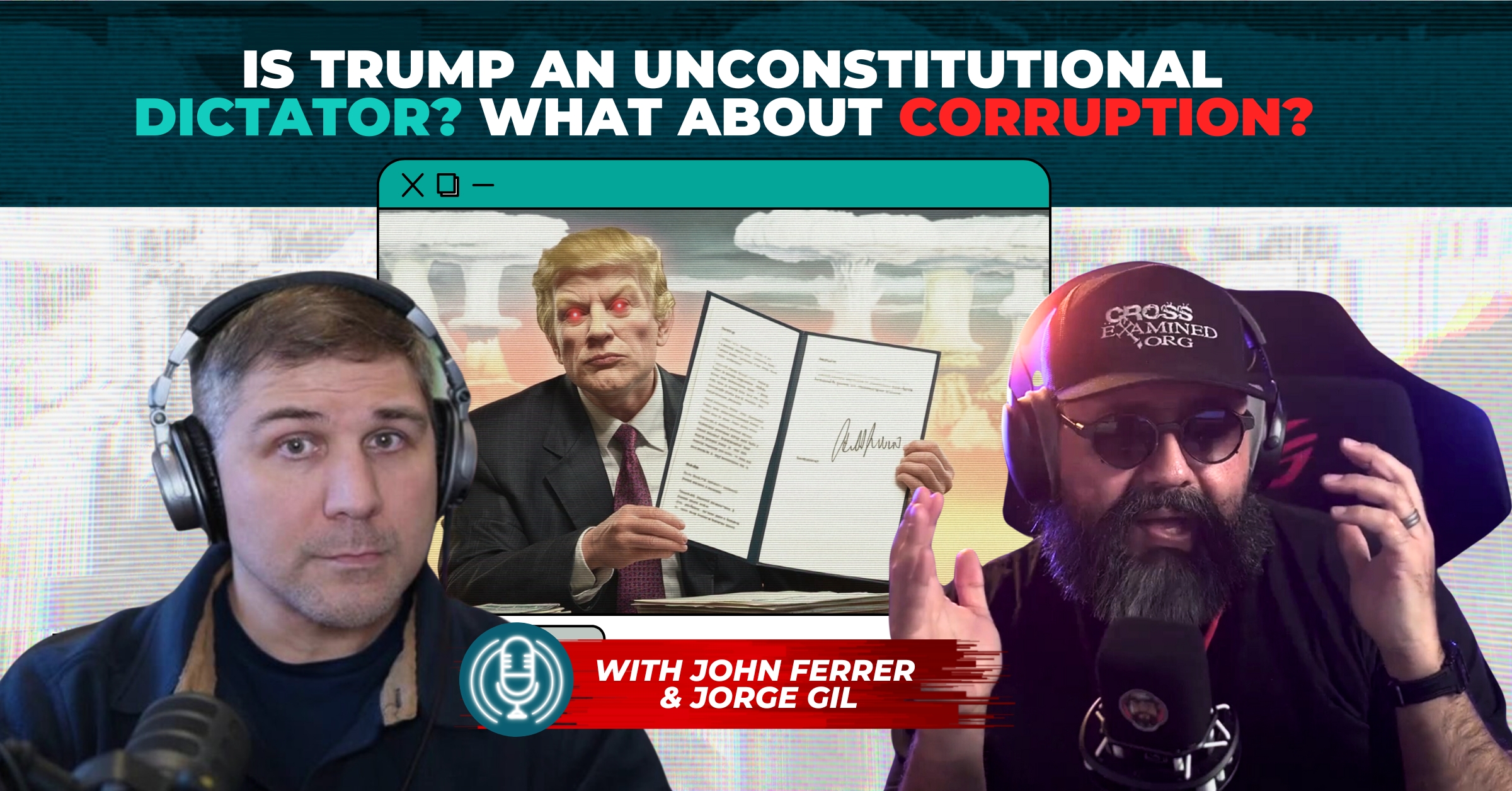
Ladies and gentlemen, we are witnessing something unprecedented in American history! This week, we’ll explore how President Donald Trump is using the “shock and awe” strategy to shake up the political landscape – and more importantly, how Christians should navigate this new era without becoming complacent or too comfortable with the changing leadership.

With the recent transfer of political power, how has the current administration managed to accomplish so much in such a short time? And are these rapid changes more beneficial or more detrimental to the American people? Jorge Gil and John Ferrer temporarily take over the ‘I Don’t Have Enough Faith to Be an Atheist’ podcast to examine Trump’s bold political moves from a nuanced, biblical perspective, tackling key questions such as:

  • What is the “shock and awe” strategy, and how is Trump using it to reshape the political landscape?
  • How has the political left and legacy media lost the trust of the American people, and why have they failed to regain it?
  • What were Trump’s three biggest campaign promises, and has he followed through on them?
  • Is Trump acting like a dictator, or have the attacks against him only strengthened his influence?
  • What has Elon Musk and DOGE uncovered about government waste and corruption?
  • Why shouldn’t Christians put too much trust in the Trump Administration or any political party?

It’s a fascinating—and at times overwhelming—political climate, but in this conversation, Jorge and John will encourage Christians to stay engaged, keep up with current events, and analyze it all through a biblical lense. Tune in to learn how Christians can stand as beacons of light, restore civil discourse, and foster courage and hope in America. You won’t want to miss this fast-paced, thought-provoking episode!

If you enjoyed this podcast episode PLEASE HELP US SPREAD THE TRUTH OF CHRISTIANITY BY SUPPORTING OUR MINISTRY HERE. 100% of your donation goes to ministry, 0% to buildings!

Resources mentioned during the episode:

Department of Government Efficiency: https://doge.gov/
2025 Donald J. Trump Executive Orders: https://bit.ly/4hN3gL2
24 Things Donald Trump Is Promising To Do: https://bit.ly/4hYdNCs


Download Transcript


If Jesus rose from the dead, wouldn’t that also demonstrate beyond a reasonable doubt that the Messianic prophecies were about Him? Even if you can convince an orthodox Jew that the resurrection actually happened, it still may not be enough to persuade them that Jesus is the promised Messiah of the Old Testament. Where exactly is the disconnect and why do so many Jews (and even Christians) have trouble detecting the link between these prophecies and the events described in the Gospels?

This week, Frank invites Eric Chabot, author of the book ‘The Resurrection of the Jewish Messiah‘, and contributor to the new book, ‘Faith Examined‘, to explore the Old Testament’s references to the Messiah and the great significance of the literary theme of the third day throughout the Scriptures. Serving as the chapter leader of Ratio Christi at The Ohio State University, Eric will share how Ratio Christi is reaching college students with the Gospel on his local campus and also touch on why there is a Jewish aversion to accepting Jesus as the Messiah. During their conversation, Frank and Eric will answer questions like:

  • What strategies does Ratio Christi use to engage students on The Ohio State campus?
  • How has the attitude towards religion shifted in recent years at Ohio State?
  • Why do Jews often avoid Isaiah 53?
  • What’s so special about 1 Corinthians 15?
  • Do Messianic prophecies specifically promise that the Messiah will rise from the dead?
  • What is the commonality between Jews who had previously claimed to be the Messiah prior to Jesus?

As you’ll hear during this midweek podcast episode, key passages from the Old and New Testaments include symbolism, typology, and metaphors, all pointing to the reality that Jesus meets all of the qualifications of the Jewish Messiah. Because of his background growing up in a Jewish community, Eric has a passion for drawing Jewish people to Christ and has used these clues from the Scriptures to foster meaningful conversations with people in that demographic. If you want to dig deeper into the significance of the Messianic prophecies, be sure to pick up a copy of Eric’s book ‘The Resurrection of the Jewish Messiah‘ and also read his chapter on this topic in the new book written by CIA graduates called ‘Faith Examined: New Arguments for Persistent Questions, Essays in Honor of Dr. Frank Turek.’

To view the entire VIDEO PODCAST be sure to join our CrossExamined private community. It’s the perfect place to jump into some great discussions with like-minded Christians while simultaneously providing financial support for our ministry.

You can also SUPPORT THE PODCAST HERE.

RESOURCES MENTIONED DURING THE EPISODE:

Faith Examined book: https://a.co/d/hvS13kK

The Resurrection of the Jewish Messiah: https://a.co/d/1AvTNHd


Download Transcript


It’s the age old question–if God is sovereign over all things then how do we have free will? And if God controls everything, does that make Him the author of evil since He causes humans to sin? How do we reconcile a good God with all of the pain and suffering that’s happening in the world?

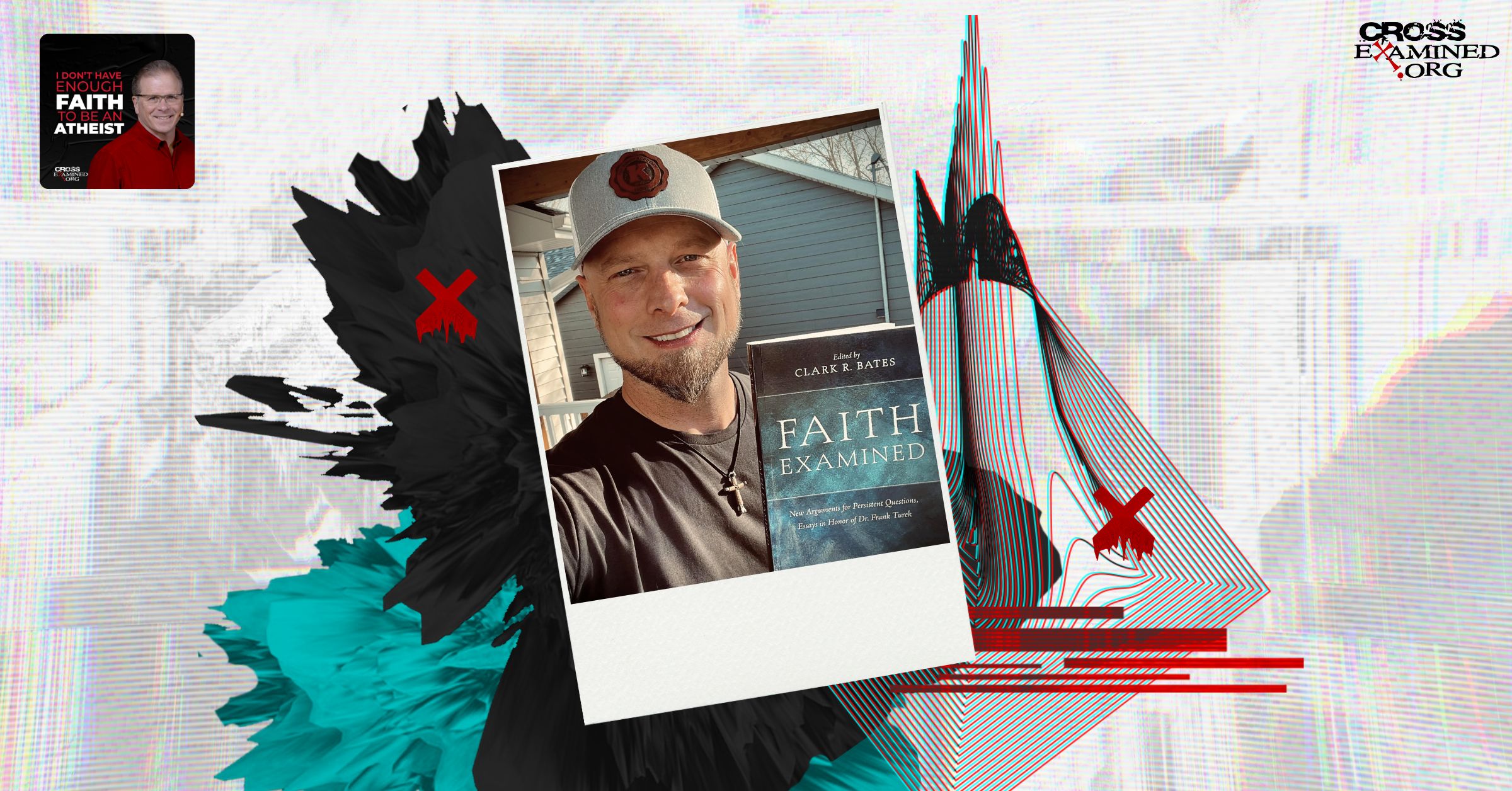
It can seem like a bit of a conundrum for Christians, and the lack of satisfactory answers has caused many people to turn away from God. But what if there was a doctrine or school of thought that could help us make sense of these seemingly intractable problems? Joining Frank on the podcast this week is CIA graduate and professor of Theology at Trinity Theological Seminary, Tim Stratton, who has spent his fair share of time studying these dillemmas. So much time in fact, that this centuries old school of thought known as “Mere Molinism” became the focus of his doctoral dissertation. During the episode, Frank and Tim will answer questions like:

  • What event in his personal life caused Tim to question his former Calvinist beliefs?
  • Where does the term Molinism come from?
  • What are the two “main ingredients” of Molinism?
  • How does Molinism compare to Arminianism and Calvinism?
  • What is the proper interpretation of Romans 9?
  • How does Molinism solve the problem of evil?
  • How does Avengers: Infinity War and Endgame apply to Molinism?

If you’ve ever struggled with the problem of evil or wondered how we can possibly steer our own ship when God is completely omniscient, then this episode will definitely give you a few light bulb moments! For more information on this topic, be sure to check out Tim’s contribution to Faith Examined (a collection of essays written by CIA graduates) or Tim’s book ‘Human Freedom, Divine Knowledge, and Mere Molinism‘.

To view the entire VIDEO PODCAST be sure to join our CrossExamined private community. It’s the perfect place to jump into some great discussions with like-minded Christians while simultaneously providing financial support for our ministry.

You can also SUPPORT THE PODCAST HERE.

RESOURCES MENTIONED DURING THE EPISODE:

Faith Examined book: https://a.co/d/hvS13kK
Free Thinking Ministries: https://freethinkingministries.com/
Tim’s book on Mere Molinism: https://a.co/d/bBWr0u1
In-Person CIA (Charlotte, NC): https://crossexamined.org/what-is-cia/
CIA Online 2024: https://bit.ly/3T8Unjw

Can a purely materialistic worldview account for concepts like human dignity, moral absolutes, or objective meaning? In a surprising (and encouraging) turn of events, many who once held to an atheistic worldview are beginning to see that a search for meaning without God is ultimately futile. As this realization continues to permeate the minds of prominent intellectuals within the new atheist movement, will this spark a new interest in faith conversations and even Christianity itself?

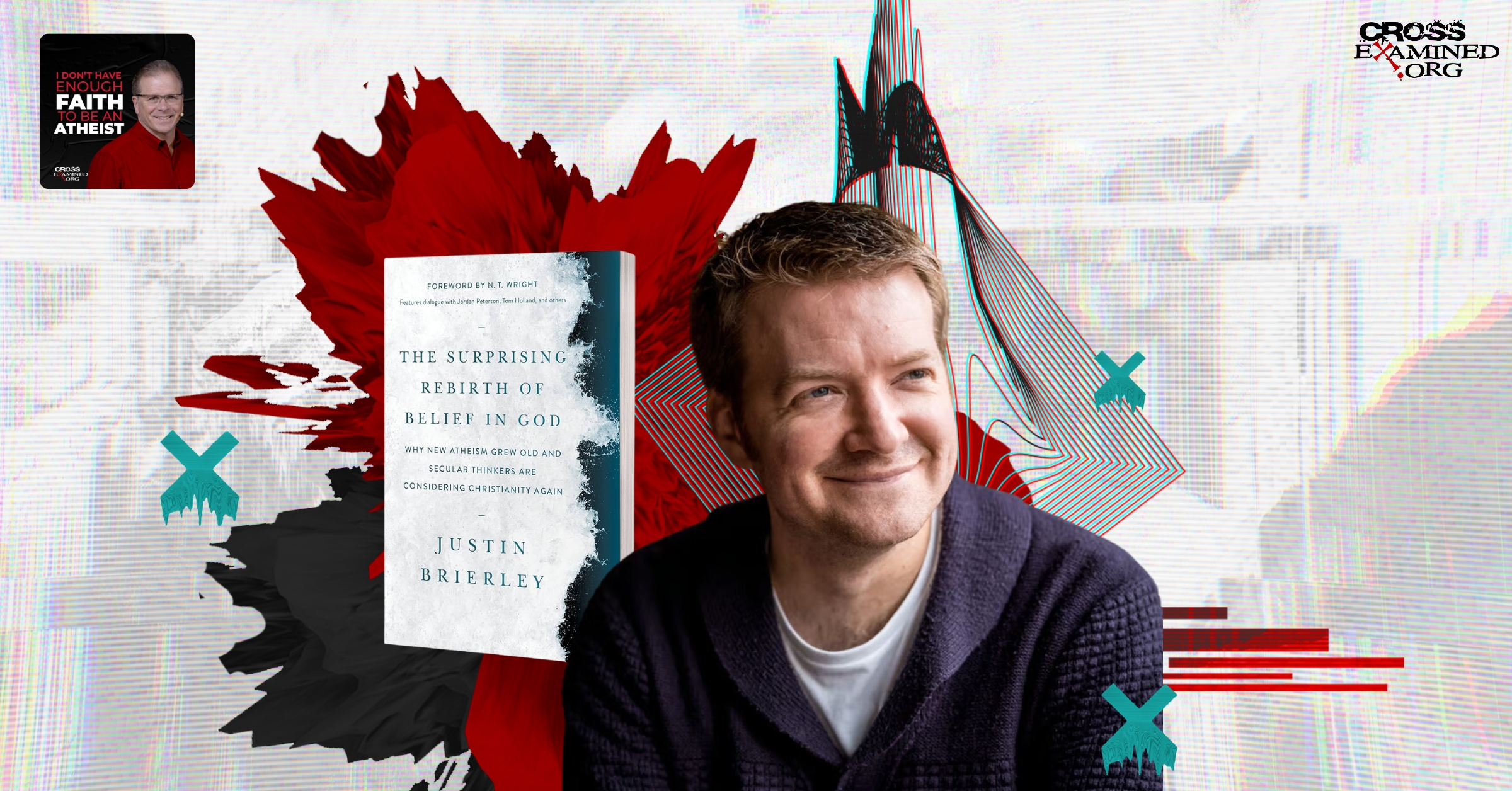
This week, Justin Brierley returns to talk more about his new book (and podcast), ‘The Surprising Rebirth of Belief in God: Why New Atheism Grew Old and Secular Thinkers Are Considering Christianity Again‘, as well as explore the positive impacts of Christianity on contemporary society and its overarching role in uplifting humanity. Why did Christianity spread so quickly in the ancient world? Was Julias Caesar a hero or a tyrant? Why are people flocking to hear Jordan Peterson speak about the Bible of all things? All of this and more will be discussed in the conclusion of this special two-part series!

To view the entire VIDEO PODCAST be sure to join our CrossExamined private community. It’s the perfect place to jump into some great discussions with like-minded Christians while simultaneously providing financial support for our ministry.

You can also SUPPORT THE PODCAST HERE.

Justin’s book: https://justinbrierley.com/the-surprising-rebirth-of-belief-in-god/

The Surprising Rebirth podcast: https://justinbrierley.com/surprisingrebirth/


Download Transcript


Could we be witnessing a return of belief in God during our generation? It seems that the Christian narrative that shaped the West has been replaced by sweeping secularism. But is that the end of the story?

In recent years, a number of highly intellectual atheists have abandoned their secularism and found themselves surprised by the continuing resonance and relevance of Christianity in today’s modern world. Is it possible that the new atheist movement is now dealing with a massive downward spiral of its own? And what’s pushing this new generation of secular thinkers to reconsider the Christian worldview in a positive light?

This week, Frank speaks with the one and only Justin Brierley, former host of the popular show ‘Unbelievable’ and author of the new book, ‘The Surprising Rebirth of Belief in God: Why New Atheism Grew Old and Secular Thinkers Are Considering Christianity Again.’ In conjunction with the release of the book, Justin is here to share the details on his new documentary podcast of the same title, and how this project has reignited his hope for the survival of the Christian faith in secular society. During the episode, Frank and Justin will answer questions like:

  • Why did Justin end his time on ‘Unbelievable’?
  • What is the focus of Justin’s new podcast?
  • What contributed to the rise of New Atheism after 9/11?
  • Is Richard Dawkins a “Christian Atheist?”
  • Why did Christianity fuel the modern scientific revolution?
  • Who are the prominent voices leading the exodus of new atheism?

Justin and Frank will also touch on some of the splits within the new atheist movement and highlight the ways in which atheism maintains its own version of dogmatism and religiosity. Want to dive deeper into the unfolding story of ‘The Surprising Rebirth of Belief in God’? Be sure to check out Justin’s new book and podcast!

To view the entire VIDEO PODCAST be sure to join our CrossExamined private community. It’s the perfect place to jump into some great discussions with like-minded Christians while simultaneously providing financial support for our ministry.

You can also SUPPORT THE PODCAST HERE.

Justin’s book: https://justinbrierley.com/the-surprising-rebirth-of-belief-in-god/

The Surprising Rebirth podcast: https://justinbrierley.com/surprisingrebirth/


Download Transcript


Is social media turning your kids into digital zombies? You wouldn’t believe how much time the average person will spend scrolling their phone in a lifetime, but the effects that endless scrolling is having on today’s youth is becoming more and more apparent. Is there anything that concerned parents can do to safeguard the well-being of vulnerable children, teens, and young adults from the tech industry’s attacks?

In this midweek podcast episode, Jorge Gil sounds the alarm on the negative impact that the overuse of technology is having on our modern culture and how it’s brainwashing younger generations. A pressing issue hiding in plain sight, parents and even grandparents have the huge responsibility to stay in the know when it comes to their children’s online interactions. During this episode, Jorge will answer questions like:

  • In what ways is social media lying to you and your children?
  • What is the connection between social media and depression rates among young people?
  • What practical rules can you put in place to protect kids from their devices?
  • How long does the average person spend scrolling everyday?
  • How can Christians use technology for good instead of evil?

Phone addiction doesn’t discriminate, but the good news is, you can do something about it if you tackle it now! This episode will give you a lot to think about as Jorge exposes the dangers of allowing young people to have too much access to social media without any accountability. Jorge will also give you the tools you need to fight back against the tech industry’s digital assault on your family and share practical advice on how to use technology in a way that honors God.

To view the entire VIDEO PODCAST be sure to join our CrossExamined private community. It’s the perfect place to jump into some great discussions with like-minded Christians while simultaneously providing financial support for our ministry.

You can also SUPPORT THE PODCAST HERE.

Resources mentioned during the episode:

Article: Has the Smartphone Destroyed a Generation

Article: The Tech Industry’s War on Kids

Book: American Girls: Social Media and the Secret Lives of Teenagers

Book: A Practical Guide to Culture: Helping the Next Generation Navigate Today’s World


Download Transcript


What is the eternal message of hope that we are privileged to have here in the United States (and other parts of the West) that many people around the world don’t have? It is the Gospel–the saving grace of Jesus Christ. And it was Jesus Himself who told us to go and make disciples of ALL NATIONS. But with only about 20% of the world speaking English (that’s only 1 out of 5 people), how can we reach the other 80% with not only the Gospel, but also with the evidence for Christianity? And how can that be accomplished most effectively without breaking the bank?

In this week’s podcast episode, Frank, Phoenix, and Jorge team up to discuss how CrossExamined is chartering unprecedented territories by way of cyberspace (today’s Roman roads). With the help of God, cutting-edge technology, and generous donors, we’re using artificial intelligence (AI) and social media in ways that they have NEVER been used before! During the episode, Frank, Phoenix, and Jorge will share some of the exciting details surrounding this brand-new endeavor, known as the “Kingdom AI Project”, and you’ll hear Frank speak languages that he really doesn’t speak! They’ll also answer questions like:

  • Why is it wise for Christians to use AI technology in this way?
  • Why is the Kingdom AI Project targeting Africa first?
  • What does the Tower of Babel and Pentecost have to do with any of this?
  • How is the Kingdom AI Project more cost-effective than traditional in-person missionaries?
  • How does the CE budget and online reach compare to RZIM (which sadly is no longer in existence)?
  • How can Christians all over the world get involved in the project to reach their local communities?

We are convinced that the Gospel message can overcome dark forces even in places where it’s prohibited to talk about Christianity. This could very well be the BIGGEST feat in the history of apologetics anywhere in the world, which is why we’re requesting all hands-on deck to help us reach this epic goal. Please join us today so that we can continue to grow God’s kingdom by sharing the evidence for truth and the Gospel message using over 30 languages to reach 3 BILLION PEOPLE across the globe!

To view the entire VIDEO PODCAST be sure to join our CrossExamined private community. It’s the perfect place to jump into some great discussions with like-minded Christians while simultaneously providing financial support for our ministry.

Watch the Kingdom AI Project video and support our mission HERE.


Download Transcript


Does God want everybody to be well? By the power of your faith can you abolish all sickness from your life and your loved ones’?

In this midweek podcast episode, Jorge and John take a close look at the “Health and Wellness Gospel” and how it fails to embrace the whole council of Scripture. At its best, this idea has some basis in the Bible, but stretches the text beyond recognition. And at its worse, it sets people up for disappointment, disillusionment, and even deconversion.

To be clear, God wants all of us well (eventually), but in the mean time, we live in a fallen world marked by sickness, death, and disease. Miraculous healing does happen (sometimes), but that’s God’s prerogative and not in our power to control. We’re left to minister in this war torn landscape, through the sickness and suffering. There we find perhaps the greatest testimony to the truth of Christ is when we suffer well. In that way, Jesus’ words still shine through as a ray of hope: “In this world you will have trouble, but take heart I [Jesus] have overcome the world.” (John 16:33).

To view the entire VIDEO PODCAST, join our CrossExamined private community. It’s the perfect place to jump into some great discussions with like-minded Christians while providing financial support for our ministry.


Download Transcript


There comes a time in every Christian’s life when their faith will be challenged. Apologetics has become a resource for many Christians who have the desire to learn how to defend the faith with confidence. Oftentimes that confidence can morph into contention when people lose sight of the reason why they studied apologetics in the first place. When used properly, apologetics can be a tool used for evangelism. But when the need to win an argument trumps the desire to spread the Gospel, apologetics can quickly become an outlet for friendly fire.

In this midweek podcast episode, guest hosts and CrossExamined speakers Jorge Gil and Dr. John Ferrer guide us through steps we can take to avoid becoming combative apologists. They also touch on the issue of social media and how it has impacted the field of apologetics. Some of the questions addressed in this episode are:

  • What can and cannot be accomplished through apologetics?

  • What motivates you to learn apologetics?

  • Are you loving people through your apologetics?

  • Has apologetics replaced your devotional life?

  • Are you spreading truth or hurling truth bombs?

  • How do we balance truth and grace when defending Christianity?

Defending the faith is a skill that all Christians can be excited about developing as long as we remember the WHY of our defense. Don’t let your passion for apologetics kill your compassion for people!

To view the entire VIDEO PODCAST, join our CrossExamined private community. It’s the perfect place to jump into great discussions with like-minded Christians while providing financial support for our ministry.

Want to learn how to become a better apologist? Come join us at CIA this summer!

If you would like to submit a question to be answered on the show, please email your question to Hello@Crossexamined.org.

Subscribe on Apple Podcast: http://bit.ly/CrossExamined_Podcast Rate and review! Thanks!!!
Subscribe on Google Play: https://cutt.ly/0E2eua9
Subscribe on Spotify: http://bit.ly/CrossExaminedOfficial_Podcast
Subscribe on Stitcher: http://bit.ly/CE_Podcast_Stitcher


Download Transcript


By Bob Perry 

I have shown that truth, goodness, and beauty are objective properties of the world we live in. I hope those three articles have been of interest to you. Please don’t go thinking that what you are about to read are unimportant doctrines or viewpoints. They are not. We are living in a post-truth culture. And yet it is a place where the nature and qualities of truth, goodness, and beauty are of the utmost importance. Our view of objective truth completely affects the way we live our lives. It is the antidote to moral relativism. Truth is important. And understanding the depth of this simple fact will radically change the way you interact with the world. Here is why.

But is faith belief without evidence? Is it something else? Here are the Top Five Reasons Why Faith Is Not What You Think It Is.

The assumptions of culture

Consider the three values ​​I’ve been talking about. And remember the way others often talk about them: Truth — “That may be true for you, but not for me.” Goodness — “Don’t try to impose your moral standards on me!”  Beauty — “Beauty is in the eye of the beholder.” Despite thousands of years of human knowledge and experience, modern-day culture has made each of these values ​​subjective. They have suddenly become things we decide for ourselves. In fact, if you were to say that the concepts for each of these values ​​are not subjective, you would be treated as an arrogant, oppressive Neanderthal who wants to impose his personal values ​​on the rest of the world. Who do you think you are to do that?!

The world is upside down

We live in cultural relativism. The place where we are expected to accept the idea that any individual’s opinion on any subject is equally valid. And remember that awkward definition of truth as “what corresponds to reality”? It’s a thing of the past. The new normal is that our highest aspiration is to “be true to ourselves .” But what exactly does that mean?

Follow your heart

When your standard for truth and virtue is the person you see in the bathroom mirror, you don’t need much imagination to know what’s next. Feelings rule. You’re encouraged to “follow your heart.” And following your heart means you evaluate reality by relying on emotions rather than using reason and logic. If it feels good, do it. “If it makes you happy, it can’t be that bad…” Sherlyl Crow. Living according to reality has become passé. An archaic obstacle. But there’s a problem with that. And the problem is that “persistent belief in something that doesn’t fit reality” is called delusion. Our culture has embedded delusion into the arts. Our culture has elevated delusion to an art form.

Philosophy is about the real world

It turns out that all this discussion of truth, goodness, and beauty goes beyond a pastime of self-absorbed philosophers. These ideas have consequences in the real world. Ideas are always put into practice. Good or bad, we live in a world where those ideas will be put into practice.  And so we see the consequences of erroneous beliefs about state policies and about the families and relationships of community members on which our politics depend. We hear about it on the news—and also in the false rumors that are generated on both sides of the political spectrum. We suffer the repercussions for denying the reality of the economic situation of the country. And our children and grandchildren will pay—in the broadest literal sense—the price for these deliberate delusions. Above all, we see it in the glorification of sexual autonomy that has infiltrated every corner of our culture. The denial of reality is at the core of issues such as abortion, sexual licentiousness, transsexualism, and homosexual behavior. Defending each of them can only be chronic madness.

Faith communities are not immune

The Church is certainly not immune to the corrosive acid of bad reasoning. The Word of Faith Movement, Universalism, and so-called “progressive” Christianity are proof that you can find nonsensical nonsense. And each of these social ills has found ways to creep into the church. When we strip away the window dressing, we see that the problems in our culture are not new. In fact, they are as old as humanity itself. The rejection of truth, goodness, and beauty began soon after we arrived on the scene. The fall of man was the first moment where human beings used their free will to exchange God’s truth for a lie. Since then, we have only expanded the boundaries of that futile exercise. The good news is that the antidote to bad reasoning remains the same. Seek truth in all its forms. Then align your life with it.  The Church should never be a safe space for bad ideas. It should be a place where people are treated with kindness and respect, but also a place where corrupt reasoning ceases to exist. Bob Perry is a Christian apologist who writes, teaches, and speaks on the subject of Christianity and culture at truehorizon.org . He is a senior writer for the Christian Research Journal and has also written articles for Touchstone , and Salvo . Bob is a professional pilot with 37 years of experience in military and commercial aviation. He holds a Bachelor of Science degree in Aerospace Engineering from the US Naval Academy , and a Master of Science degree in Christian Apologetics from Biola University . He has been married to his high school sweetheart since 1985. Their five children are grown.

Recommended resources in Spanish: 

Stealing from God ( Paperback ), ( Teacher Study Guide ), and ( Student Study Guide ) by Dr. Frank Turek

Why I Don’t Have Enough Faith to Be an Atheist ( Complete DVD Series ), ( Teacher’s Workbook ), and ( Student’s Handbook ) by Dr. Frank Turek  

_____________________________________________________________________________________________________________________________________________________

Bob Perry is a Christian apologetics writer, teacher, and speaker who blogs about Christianity and culture at truehorizon.org. He is a contributing writer to the Christian Research Journal, and has also been published in Touchstone, and Salvo. Bob is a professional aviator with 37 years of experience in military and commercial flight. He holds a BS in Aerospace Engineering from the United States Naval Academy and an MS in Christian Apologetics from Biola University. He has been married to his high school sweetheart since 1985. They have five grown children.

Original source of the blog: https://bit.ly/3Q6FQSi

Translated by Jennifer Chavez 

Edited by Monica Pirateque