Tag Archive for: Intelligent Design

By Jonathan McLatchie

The ear is responsible for two of our most fundamental senses — hearing and equilibrium — the receptors for which are all found inside the inner ear. For an incredible animation of how hearing works, I recommend this YouTube video.

Here, I will describe the anatomy of the ear and the biological basis of the sense of hearing. The information below can be found in any good anatomy and physiology textbook. You can also find a good discussion of this subject in Chapter 11 of Your Designed Body, by Steve Laufmann and Howard Glicksman. It might be helpful to refer to the illustration of the ear below as you read the description that follows. [1]

The Outer Ear

The outer ear is comprised of the auricle and ear canal. The auricle is composed of skin-covered cartilage. In dogs (who have movable ears), the auricle can serve as a funnel for sound waves. In humans, on the other hand, its absence would not negatively affect our hearing.

Skin containing ceruminous glands lines the ear canal (also called the external auditory meatus). The ear canal is a tube-like structure that extends from the outer ear to the middle ear. It is responsible for directing sound waves into the ear, which then travel through the ear canal and arrive at the eardrum (tympanic membrane) in the middle ear. The eardrum vibrates in response to these sound waves, and these vibrations are transmitted to the middle ear bones.

The Middle Ear

The middle ear is a cavity in the temporal bone that is filled with air. The tympanic membrane (popularly called the eardrum) is a thin, flexible membrane that separates the outer ear from the middle ear, and is stretched across the end of the ear canal. When sound waves enter the ear canal, they strike the eardrum, causing it to vibrate. Behind the eardrum, there are three small bones known as the ossicles — namely, the malleus (hammer), incus (anvil), and stapes (stirrup). The ossicles form a chain and are connected to each other. When the eardrum vibrates in response to waves, it causes the malleus to move, which, in turn, moves the incus and stapes. This mechanical linkage helps amplify the vibrations and transmits them from the eardrum to the inner ear.

The middle ear is also connected to the nasopharynx (back of the throat) through a tube called the eustachian tube. This tube helps to equalize air pressure on both sides of the eardrum. This is essential to maintain equilibrium of air pressure between the middle ear and external atmospheric pressure, to allow the eardrum to properly vibrate.

The Inner Ear

The inner ear is also a cavity within the temporal bone, and is also called the bony labyrinth. It is lined with a membrane called the membranous labyrinth. Between the bone and membrane is a fluid called perilymph, and within the membranous structures of the inner ear is a fluid called endolymph. Three of these structures (the utricle, saccule, and semicircular canals) are concerned with equilibrium. The other (the cochlea) relates to hearing.

The cochlea’s appearance is like the shell of a snail. The inside of the cochlea is partitioned into three canals, filled with fluid. The uppermost canal is called the scala vestibuli, and it is filled with perilymph (a fluid similar to cerebrospinal fluid). Sound vibrations travel through the cochlea and arrive at the scala tympani. The middle canal is called the scala media (otherwise known as the cochlear duct), and it is separated from the scala vestibuli by Reissner’s membrane, and from the scala tympani by the basilar membrane. The scala media contains endolymph and is where the sensory cells of the cochlea (known as hair cells) are located. These hair cells are of course not in fact hair, but, rather, are specialized microvilli that are responsible for converting sound vibrations into electrical signals that can be interpreted by the brain. Situated above the hair cells is the tectorial membrane which, as we shall see, is crucial for hearing.

The Sense of Hearing

The process of hearing begins with the production of sound waves, which are pressure fluctuations that are propagated through air. These waves are funneled into the ear canal by the pinna (the external part of the ear). The ear canal carries the sound waves to the eardrum (tympanic membrane), which causes it to vibrate. These vibrations are then transmitted to the malleus, incus, and stapes, which amplify the vibrations. The stapes is connected to the oval window, a membrane-covered opening to the inner ear. Vibration of the stapes bone against the oval window creates pressure waves in the fluid-filled cochlea. As the pressure waves pass through the fluid in the cochlea, they cause vibration of the basilar membrane. This results in the bending of hair cells against the tectorial membrane, which in turn triggers the release of neurotransmitters that convert mechanical vibrations into electrical signals. These electrical signals are transmitted to the brain by the auditory nerve, where they are interpreted as sound by the auditory areas in the temporal lobes of the cerebral cortex.

The auditory nerve fibers carrying information from one ear partially cross to the opposite side at a structure in the brainstem, known as the trapezoid body. This means that signals from both ears are sent to both sides of the brain. This plays an important role in sound localization and spatial processing, allowing the brain to compare the timing and intensity of signals from both ears, helping us to determine the direction of a source of sound. Impulses arriving from each inner ear are counted and compared by the auditory areas, to determine the direction of a sound. If there are more impulses coming from the right cochlea than from the left one, the brain projects the sound to the right, and vice versa.

The neurons of the auditory cortex are organized in a manner similar to a piano keyboard — being arranged from low to high pitch. The brain is also able to detect volume, rhythm, and tempo, as well as timbre, which is a quality of tone (a guitar playing a middle C and a piano playing the same note at the same volume will sound different due to the unique timbre of each instrument).

A Masterpiece of Engineering

The anatomy of hearing described above is of course the system found in humans and other terrestrial mammals. Many other organisms have less advanced hearing systems. For example, fish lack external ears and have structures called otoliths that detect vibrations and changes in water pressure. Reptiles, birds, and amphibians also often lack an external ear and have a single middle ear bone instead of the three found in mammals. And most invertebrates (such as crustaceans and mollusks) lack ears and a sense of hearing altogether. Typically, claims that the sense of hearing evolved by natural selection focus on these as intermediate stages. The incus, malleus, and stapes are thought to have arisen from three reptilian bones associated with the jaw — the quadrate bone, articular bone, and columella respectively.

However, the vertebrate sense of hearing involves several fundamental anatomical features that are common to all vertebrate hearing systems and cannot be removed without severely compromising (or completely eliminating) the ability to hear. For example, the cochlea (which contains the hair cells) is a critical component for transducing sound vibrations into electrical signals that the brain can interpret. Indeed, the leading cause of hearing loss is damage to the hair cells. Furthermore, the auditory nerve, which carries electrical signals from the hair cells in the cochlea to the brain, is crucial for transmitting auditory information to the central nervous system. In injuries or infections (such as meningitis) where the auditory nerve is damaged, the result can be a complete and permanent loss of hearing in that ear. The eardrum (tympanic membrane), which vibrates in response to sound waves, transmitting these vibrations to the middle ear ossicles, is also an essential aspect of the sense of hearing. If the eardrum is damaged or perforated, the consequence can be deafness. A minimum of one middle ear ossicle appears to be essential for hearing as well. Another crucial feature of the auditory system is the oval window, the membrane-covered opening between the middle and inner ear, located at the base of the stapes bone. Vibrations transmitted by the ossicles are transferred to the fluid within the cochlea through the oval window.

Thus, several different structural components are necessary for the vertebrate sense of hearing. It strains credulity to suppose that an unguided process of random variation sifted by natural selection could assemble such a delicately arranged system. It instead points to a cause with foresight.

Footnotes: 

[1] Image credit: Blausen.com staff (2014). “Medical gallery of Blausen Medical 2014”. WikiJournal of Medicine 1 (2). DOI:10.15347/wjm/2014.010. ISSN 2002-4436., CC BY 3.0 https://creativecommons.org/licenses/by/3.0, via Wikimedia Commons.


Recommended resources related to the topic:

Science Doesn’t Say Anything, Scientists Do by Dr. Frank Turek (DVD, Mp3 and Mp4)

Oh, Why Didn’t I Say That? Does Science Disprove God? by Dr. Frank Turek (DVD and Mp4)

Stealing From God by Dr. Frank Turek (Book, 10-Part DVD Set, STUDENT Study Guide, TEACHER Study Guide

Why Science Needs God by Dr. Frank Turek (DVD and Mp4)

___________________________________________________________________________________________________________________________________________________

Dr. Jonathan McLatchie is a Christian writer, international speaker, and debater. He holds a Bachelor’s degree (with Honors) in forensic biology, a Masters’s (M.Res) degree in evolutionary biology, a second Master’s degree in medical and molecular bioscience, and a Ph.D. in evolutionary biology. Currently, he is an assistant professor of biology at Sattler College in Boston, Massachusetts. Dr. McLatchie is a contributor to various apologetics websites and is the founder of the Apologetics Academy (Apologetics-Academy.org), a ministry that seeks to equip and train Christians to persuasively defend the faith through regular online webinars, as well as assist Christians who are wrestling with doubts. Dr. McLatchie has participated in more than thirty moderated debates around the world with representatives of atheism, Islam, and other alternative worldview perspectives. He has spoken internationally in Europe, North America, and South Africa promoting an intelligent, reflective, and evidence-based Christian faith.

Originally posted at: Evolution News & Science Today


By Luke Nix

Introduction

If you consume a large portion of your material through audio, it is hard to get past a good deal on an excellent audiobook. Twice every year ChristianAudio.com runs a sale on most of their collection, and you can usually pick up these great audio resources for $7.49. The time has come for the first sale of 2021 (and beyond), so I will be highlighting some of my favorite audiobooks. I’ll include a few of my favorite quotes from the books, my recommendation from my chapter-by-chapter reviews, links to posts that were inspired by the books, and, of course, I will include links to the audiobook deal throughout the article. Today, I am highlighting Improbable Planet: How Earth Became Humanity’s Home by Dr. Hugh Ross.

Improbable Planet by Hugh Ross– My Recommendation

Improbable Planet: How Earth Became Humanity’s Home is the highly anticipated “sequel” to Dr. Hugh Ross’ book Why The Universe Is The Way It Is. In the first work, Dr. Ross examined several biblical purposes God has for this creation and how these purposes are evidenced in the history of the universe. In this new book, Dr. Ross zooms in from the perspective of the entire universe and multiple purposes to the earth and God’s purpose of redemption. Dr. Ross’ goal in this volume is to demonstrate how the history of our planet is not merely some naturalistic “just-so story” but rather a complex, multi-stage project with an explicit purpose as its end-goal. He intends to marshal the latest scientific discoveries from numerous scientific disciplines to make his case for the design of our planet.

It is an amazing listen. I work with several project managers at my job, and they have shown me representations of the schedules of their various projects. These include the necessary order of numerous steps, deadlines for the steps, the goals of each step, and the final purpose. Many of the steps must be done together and within certain time periods; otherwise, the project will fail. If you have ever mapped out a project or have seen one mapped out, you may be familiar with Gantt charts and how complex they can be. As I was only a couple chapters into this book, I could not help but imagine the incredible complexity behind the project that God planned and executed perfectly to accomplish His purposes. The projects that I have seen at work do not compare to the project that was our planet. If it is reasonable to think that the smaller and less complex projects at work were the product of designers, then it is even more reasonable to understand the project that was our planet is the product of a Designer.

Dr. Ross skillfully brings numerous discoveries of numerous disciplines of science together to give the big picture of the project of our planet. He then shows from the Bible what the end purpose was, and how it all comes together into a cohesive worldview that ends with Christian evangelism. He shows how God did not merely start the process at the big bang and wait for natural processes to eventually and accidentally complete each step. Rather God initiated each step at the earliest moment possible after the previous step was completed, and while certain steps were being completed, God was working on other necessary steps. Dr. Ross shows how it was necessary that each step be completed within precise boundaries and deadlines that, if crossed or missed, we would not exist.

Dr. Ross masterfully demonstrates God’s patient yet highly active execution of His cosmic project. The argument from design in this book is awe-inspiring scientifically and theologically. The way the argument is presented makes it nearly impossible to be intellectually dismissed, especially by those even remotely involved in engineering or project management. I highly recommend that all Christians pick up a copy of this book. It will give you a new appreciation for the creation and the power, care, patience, and love of our Creator and Savior. It will also give you a tremendous tool to discuss and defend the truth of the Christian worldview from the latest discoveries in the hard sciences.

I especially recommend this audiobook to Christian apologists interested in arguments from design. This book takes the teleological argument to the next level. It goes beyond just identifying the finely-tuned constants of the universe to show how, even within a finely-tuned universe, in order for the arrival of advanced life such as humans, the processes that formed the final site of advanced life had to be meticulously planned and actively guided. The argument in the book appeals directly to what is known about the necessity of a designer behind projects, and implied throughout the book is the exponentially decreasing probabilistic resources available to the naturalist to explain our existence. Scientists, every day, are discovering new features of the history of our planet that cry out for a purposeful explanation. Improbable Planet needs to be in your personal library and part of your collection of tools to defend the truth that God created this universe and us for a purpose: to redeem us through the death and bodily resurrection of Jesus Christ.

You can read the complete chapter-by-chapter summary review by clicking or tapping here.

Improbable Planet by Hugh Ross Favorite Quotes

“Only in a spiral galaxy is a long history of life possible. A spiral galaxy of the just-right size and the just-right structure can yield adequate heavy elements for life as well as a possible location where a planetary system can reside for billions of years without being exposed to deadly radiation and without gravitational disruptions from adjacent stars and molecular clouds.”

“The Local Group represents a rarity. As far as astronomers are able to see, the Local Group is the only grouping of galaxies wherein a host galaxy can sustain a planet on which a long history of diverse, complex, and abundant life is possible.”

“The list of rarities, all of which serve the eventual needs of long-enduring life, up to and including advanced civilization, starts with the [solar] system’s origin cluster and goes on to include its ejection from that cluster, the Grand Tack sequence, the Moon-forming event, the late veneer, the late heavy bombardment, the fifth planet’s timing, and jumping Jupiter. The existence and locations of our planetary system’s five asteroid and comet belts simply add to the already long list of features that must be in place before life can originate on Earth and possess any possibility of survival for a few billion years. The ‘coincidences’ compound with each new discovery.”

“Destructive mean motion resonances are nearly ubiquitous. As it is, Uranus is close to a 7:1 resonance with Jupiter, a 2:1 resonance with Neptune, and a 3:1 resonance with Saturn. Meanwhile, Jupiter and Saturn are very close to a 5:2 resonance. If any of these gas giant planets’ orbital positions were to shift even slightly, that shift would generate instabilities in the orbit of one or more of the solar system’s eight planets. Such instabilities would shatter the possibility of a long history of life on Earth, a history leading to human life and civilization.”

“The conditions under which the Moon formed seem so unlikely, from a naturalistic worldview, as to defy credibility.”

“The ideal place for any kind of life as we know it turns out to be the solar system like ours, within a galaxy like the Milky Way, within a supercluster system like ours, within a galaxy like the Milky Way, within a supercluster of galaxies like the Virgo supercluster, within a super-supercluster like the Laniakea super-supercluster. In other words, we happen to live in the best, perhaps the one and only, neighborhood that allows not only for physical life’s existence but also for its enduring survival.”

“Ongoing research tells us that Earth has been shaped not only by an intricately orchestrated interplay of physical forces and conditions but also by its vast abundance and diversity of life-forms. By means that no depth and breadth of scientific research can explain, life arose early in Earth’s history under anything but the benign conditions it would seem to require and somehow persisted through multiple mass extinction events, always appearing or reappearing at just-right times and in just-right forms to meet the needs and demands of the revised environment.”

“Both plate tectonics and life must remain at certain levels at different times throughout the past 3.8 billion years so that the history of life and of plate tectonics will produce all the resources for humanity’s eventual existence and launch of global, technologically advanced civilization.”

“The great diversity and abundance established early in life’s history drove the carbon, nitrogen, oxygen, and sulfur cycles to levels eventually sufficient for the entry of advanced life. The sulfate-reducing bacteria played an especially critical role. Their metabolic reactions transformed much of the soluble metal resources in the oceans and crust into insoluble concentrated metal ore deposits. Thus, a potentially poisonous environment for advanced life became an optimal resource repository, one that would later allow humanity to quickly transition from Stone Age machinery and tools to metallurgy-based technologies.”

“Without abundant photosynthetic life, plate tectonic activity on Earth would have shut down relatively quickly, making the crust a stationary lid over anything and everything beneath it. Without plate tectonics, the removal of greenhouse gases from Earth’s atmosphere would have shut down. Without removal of greenhouse gases, the Sun’s increasing luminosity would have raised Earth’s surface temperature beyond what life can tolerate. Earth would have become permanently sterile.”

“Unless plate tectonics had become established as a sustained, aggressive, globally manifested phenomenon as early as 3.0 billion years ago, Earth’s surface might never have attained the necessary conditions for advanced life in the time window between the Late Heavy Bombardment and the Sun’s brightening to catastrophic levels.”

“Thanks to the long history of progressively more advanced life-forms, the mineral inventory in Earth’s crust grew from 250 minerals up to its present stock of 4,300 distinct minerals. Many of these minerals have made possible the technology and standard of living humanity enjoy today. Billions of years of life appearing in progressively more advanced forms also provided humanity with an enormous treasure chest of biodeposits. This treasure includes several feet of rich topsoil and humus (amorphous organic matter) on sedimentary plains all over Earth’s landmasses–essential for extensive, intensive cultivation. Earth’s long history of life and tectonic activity also laid down vast stores of fossil fuels and building materials. That history speaks of a rich endowment that built up over billions of years of speciation events, deaths, and extinctions, new speciation events, more deaths and extinctions, and more life.”

“When research runs head-on into nature’s limits only scientism, not science, would rule out consideration of any cause other than nature. At such places, to invoke the possibility of a power and intelligence beyond nature may be the most rational response.”

Recommended resources related to the topic:

Why Science Needs God by Dr. Frank Turek (DVD and Mp4)

Science Doesn’t Say Anything, Scientists Do by Dr. Frank Turek (DVD, Mp3, and Mp4)

Oh, Why Didn’t I Say That? Does Science Disprove God? by Dr. Frank Turek (DVD and Mp4)

Stealing From God by Dr. Frank Turek (Book, 10-Part DVD Set, STUDENT Study Guide, TEACHER Study Guide)


__________________________________________________________________________________________________________________________________________________

Luke Nix holds a bachelor’s degree in Computer Science and works as a Desktop Support Manager for a local precious metal exchange company in Oklahoma.

Original Blog Source: https://cutt.ly/YnP2QRU


By Al Serrato

My seventh-grade nephew needed some help the other night on social studies. He was working on the Paleolithic Age – the Old Stone Age – a time when man first started working with stone and bone tools. That got me thinking about the greatest “tool” of all – the human hand. It’s something that most people take for granted, but I don’t think it’s an overstatement to say that modern civilization would never have arisen without it.

How can the atheist explain something as complex as the hand? Like the human reproductive system that I discussed in my last post, in his worldview, the hand is the product of a slow, random set of mutations occurring over a long period of time. We just happened to be lucky enough for everything to fall into place so that we – modern humans – are the beneficiaries of this entirely happenstance outcome. But think for a moment about the staggering complexity of the hand. Consider first the intricacy of the nerves that allow not just for feeling but for the fine sensitivity of feeling that exists in the fingertips. Consider the placement of the hand at the end of a flexible wrist on an arm that is also flexible. Five fingers provide the ability to grip and to manipulate objects, and the five can be used in unison or individually. Two matching hands are vastly superior to one, and the hands just happen to match in size, shape, and function. The opposable thumb may be its greatest feature, as it allows for tools to be gripped. There is a versatile muscular system that allows for objects to be firmly, or lightly, gripped, and a feedback mechanism in the nervous system that allows us to know whether we are gripping something so hard as to crush it or softly enough to caress it. All the while, it provides information on warmth and cold. On and on the list goes. It is truly a marvelous tool, and despite the best efforts of modern-day scientists, there is no way at present to even begin to replicate its complexities.

Yet we are to believe, according to the atheist, that this amazing feature of human beings is not the product of an intelligent designer, who foresaw and anticipated our use of tools to build and shape the world around us, but was instead the result of random processes occurring over time. By why should this be so? Well, the atheist will say, the hand is simply the descendent of more primitive appendages. Small, random changes conferred an advantage on some descendents, which allowed them to succeed and pass on this modification. Really? If this is so, then why haven’t monkeys, and these other more primitive forms, gone extinct, if their appendages were so unhelpful to their survival? Clearly, the development of a hand that could use tools, as opposed to one suited for climbing trees, was not needed by them in order to thrive and reproduce. Or conversely, why haven’t modern monkeys, which apparently predate humans, not yet evolved human hands, hands finely suited for using and manipulating tools?

More importantly, what happened before monkeys with primitive hands evolved? What was that earlier mammalian life form from which the arm and hand emerged? A squirrel? A rodent? What were these life forms doing, earlier still, when they had mere stumps on the ends of their limbs? Or no limbs at all? How did they survive? And why aren’t there other examples in nature of animals who randomly produced hands? Or animals that have partial hands that are somewhere on the road to evolving a complete hand?

To be fair, atheists probably think they are doing the believer a favor by arguing that science is the source of all knowledge, and that with enough time and study, answers to the questions I pose will someday be found. I suspect that most have not considered deeply the difficulty with this position. After all, the human hand is just one of dozens of fine-tuned systems in the body, each of which was constructed according to instructions embedded in the millions of lines of coded DNA information that directs the body to grow from a single cell to an adult person.

To conclude that the evolution of life forms happened randomly might have made sense in Darwin’s day, when those considering the question had no idea that information-rich DNA was directing the process of building and sustaining life. But today? Science can tell us many things about DNA and how it works. But the original source of the code, and the identity of the coder who wrote the language of DNA to provide for the life that is teeming on Planet Earth, is not something that science will find, certainly not if scientists insist on assuming that DNA assembled itself.

Recommended resources related to the topic:

I Don’t Have Enough Faith to Be an Atheist (Paperback), and (Sermon) by Norman Geisler and Frank Turek 

Answering Stephen Hawking & Other Atheists MP3 and DVD by Dr. Frank Turek 

Tactics: A Game Plan for Discussing Your Christian Convictions by Greg Koukl (Book)

Defending the Faith on Campus by Frank Turek (DVD Set, mp4 Download set and Complete Package)

So the Next Generation will Know by J. Warner Wallace (Book and Participant’s Guide)


__________________________________________________________________________________________________________________________________________________

Al Serrato earned his law degree from the University of California at Berkeley in 1985. He began his career as an FBI special agent before becoming a prosecutor in California, where he continues to work. An introduction to CS Lewis’ works sparked his interest in Apologetics, which he has pursued for the past three decades. He got his start writing Apologetics with J. Warner Wallace and Pleaseconvinceme.com.


By Brent Hardaway

A blogger named MarkCC demonstrates a few common misunderstandings regarding Intelligent Design (ID).

First, we need to clarify some terms, as there is some jargon given in the post that the reader may not be familiar with.

Specified Event – The phrase “Go Take Out the Trash” is a specified arrangement of letters. The jumbled letter sequence “smets qwoand nduams iba” is not specified, as it is not a pattern that is recognizable. How this relates to the ID is that if you come to the dining room table and see some Alpha-Bits arranged in the first sequence (even if not perfectly straight), you’d assume that your housemate purposely arranged them as communication to someone else, quite possibly you. That would be a specified event. But if you saw the second sequence not perfectly straight, you would be pretty likely to assume that your housemate carelessly spilled some out of the box and didn’t bother to clean it up. That would be non-specified. And applying this to the origin of life, there are many features of life (like DNA and proteins), that exhibit sequences of code that are specific. For example, the work of MIT molecular biologist Robert Sauer came to the conclusion that for a protein chain that was 92 amino acids long, only 1 in 10^63 could perform some function in cellular life.[1] So language and proteins are pretty similar in that letters/amino acids form chains of readable sentences/working proteins.

Universal Probability Bound – What if we could spill some Alpha-Bits every second? Wouldn’t we eventually get the phrase regarding the trash? Well, if we were able to spill exactly the same amount, and the odds of a space appearing as often as a letter was equal, it would happen about once every 1.14 Octillion years.[2] So even if I live to be 100, it’s absurd to think I would ever achieve that sequence by randomly spilling Alpha-Bits. I’d have an astronomically far greater chance of winning the lottery. There are only so many “rolls of the dice,” in such cases. So, in other words, beyond a certain point, we have to rule out blind luck as an explanation and attribute an improbable event to design guided by some intelligence. That would be the “Universal Probability Bound.” Dembski suggests that this should be any odds around 1 in 10^150. This is what he calls the number of “probabilistic resources.” This is based on the number of possible events in the universe. And when he says “events,” he’s using the most minimal definition possible. It is the maximum number of times that all the elementary particles in the universe could have reacted with energy!

Now on to the post –

“Here’s the fundamental dishonesty: None of those numbers have *anything* to do with what he’s supposedly trying to prove. He’s trying to create a formal-sounding version of the big-number problem by throwing together a bunch of fancy-sounding numbers, multiplying them together, and claiming that they somehow suddenly have meaning. But they don’t. It’s actually remarkably easy to show what utter nonsense this is. I’ll do a fancy one first, and a trivial one second.”

Rather, MarkCC has not understood Dembski’s argument. As the second example is easier to understand, we’ll start with that one.

“Grab two decks of distinguishable cards. Shuffle them together, and lay them out for a game of spider solitaire. What’s the probability of that particular lay of cards? 104! , or, very roughly, something larger than 1×10166. Is god personally arranging my cards every time I play spider? Anyone who’s ever taken any class on probability *knows* this stuff.”

The blogger has missed Dembski’s point. Yes, the odds of ANY one sequence with two decks of cards is 1 in 10^166, but what Dembski is looking for is a SPECIFIC sequence. To put it another way, what MarkCC must do to falsify Dembski’s point is either to 1) Predict a specific sequence of 104 cards or 2) Shuffle the cards randomly twice, and get them in the same sequence each time. The odds of that happening are indeed 1 in 10^166, but the percent chance of getting another result is 99.9999999999%, carried out to 164 decimal places. In other words, a non-specific sequence is virtually certain, and a specific one is virtually impossible.

One commenter named Corkscrew notes this, but then goes on to say,

Of course, this presents two further problems. Firstly, as you’ve mentioned before, the whole concept of specification is complete bollocks. AFAICT it basically boils down to how cool something looks – if it makes Dembski go “whoa…” it’s specified.

This is actually kind of humorous, as this very statement is itself an example of a specification. I don’t say that because it made me go “Whoa,” but because it’s recognizable as an English sentence. What would Corkscrew think if I said “I can’t tell if a person actually wrote this. Perhaps they’re just random letters generated by a computer”? And as we noted before, written sentences are a valid analogy to the coding required in DNA and proteins.

“Secondly, the whole concept of probabilistic resources is completely borked. It assumes a discrete universe. We do not live in a discrete universe. It assumes that every configuration has effectively the same chance of appearing. This is blatant bull.”

This is true enough – but that is only relevant if the bases that make DNA and the amino acids that makeup proteins are significantly (to an astronomical degree) more likely to group together in ways that make them actually function than not. Corkscrew does not provide any evidence that this is the case. And as we shall see that, in fact, Dembski’s estimation of probabilistic resources available to get life from non-life is far too generous.

Now, let’s move onto his “fancy” example –

“Let’s create an incredibly simplified model of a region of space. Let’s say we have a cube of space, 1 kilometer on a side. Further, let’s suppose that this space contains 1000 particles, and they are all electrons. And further, let’s suppose that each 1mm cube in this cubic kilometer can only have one electron in it.”

He goes on to calculate the number of possible configurations of these particles as 10^5232, way more than Dembski’s probability bound. He asks,

“So what Dembski is saying is that *every* possible configuration of matter in space in the entire universe is impossible without intelligent intervention.”

That isn’t at all what Dembski is saying. In fact, this moves us on to the next point of the ID argument. The number of possible combinations greatly outweigh the possible number of trials. As it relates to life forms, the late astronomer Fred Hoyle calculated that there are 10^40,000 amino acid combinations for the complete set of 2,000 actual known enzyme proteins that exist [3]– and this is just one of many features of life that need to appear. It isn’t that God is necessary to arrange any possible sequence of these amino acids. The problem is there are only 10^150 possible events. If each event was a complete trial arranging different combinations of amino acids, we still wouldn’t come close to finding the very few specific sequences that can form life.

But it’s actually much worse than that for three reasons –

1) Each event is only what one elementary particle does with energy. When molecules form, quite a few particles are involved – and each one would consume at least one event, reducing the number of available trials to form life.

2) In reality, no one believes that a cell or group of proteins came together all at once, but that these things formed via a step-by-step process. But a step-by-step process would take many events. This would also reduce the number of trials.

3) There are plenty of environments, such as the air that you are breathing, or the sun, that are not at all conducive to forming any of the building blocks of life. This reduces the number of trials even further.

Once these misunderstandings have been cleared up, Dembski’s argument stands.

Notes

[1] Meyer, Steven. Darwin’s Doubt, p. 180

[2] The calculation is 27 ^21 = 1.14 * 10^30.

[3] “Hoyle on Evolution” Nature, Nov. 12, 1981 p.105


Brent Hardaway is a Financial Analyst living in the Tampa, FL area. Originally from Northern CA, he has a B.S. in Accounting from San Diego State University and a Certificate in Christian Apologetics from Biola University. He is an avid baseball and football fan, and enjoys reading and playing golf in his spare time.

Original Blog Source:  http://bit.ly/2NzlYHx

By Evan Minton

If evolution were true, what would we Christians do about the Bible’s teachings on Adam and Eve, their relationship with sin’s entrance into the world, and the doctrine of original sin? As I’ve argued in several blog posts on this website, I believe Christianity and Evolution are compatible, and many of the objections lodged at Theistic Evolution simply don’t work. For example, when scientists talk about “random” mutations, they don’t mean the mutations are purposeless or chance events. They just mean that they’re unpredictable from a scientific point of view[1], and in any case even if they did mean they occurred by chance, this would at most, only be from a human perspective. Proverbs 16:33 says “The lot is cast, but it’s every decision is from the Lord.” So the argument that evolutionary creationism is incoherent because “it posts that God had a purpose in a random process” commits the fallacy of equivocation. God is sovereign even over what appears to be a chance event from our human point of view. Also, just because an event can be explained naturally by no means entails that God wasn’t involved. We believe (and The Bible teaches) that God orchestrated the crucifixion of Jesus, but He clearly worked through natural processes (i.e human free choices) to bring that about. Moreover, as Kirk MacGregor has argued, Molinism would provide a plausible mechanism for how God could guide evolution without intervening all the time.[2]

All that said, I think the trickiest area that Theistic Evolution a.k.a Evolutionary Creationism has to deal with is the biblical teachings on Adam and Eve. For those who reject macroevolution entirely, such as young earth and old earth creationists, Adam isn’t a problem. But what about those convinced of Evolutionary Creationism? What if you become convinced that the scientific evidence firmly establishes macro evolution? Some say that evolution doesn’t allow for a historical Adam at all, and therefore, would adopt an allegorical interpretation of Genesis 1-11 and say that biblical history starts in Genesis 12 (e.g Peter Enns). As I’ve written elsewhere, I think an allegorical view of Genesis is exegetically untenable. If nothing else, it makes Romans 5 unintelligible, and it renders the Genealogies in Luke and 1 Chronicles errant.[3]

While it’s true that an evolutionary process wouldn’t result in the genesis of one man and one woman, it doesn’t follow that Genesis 2-11 need to be entirely jettisoned as historical narrative. I’m convinced that there are least two biblically faithful options we could adopt if we thought the theory of Darwinian macro evolution were true. These would harmonize evolutionary biology with the biblical text. There are more than Christian evolutionists have proposed, but in this blog post, I’ll only survey the ones I think are the most tenable and have the least amount of problems.

1: The Strattonian Model 
In his blog post “Should Christians Oppose Evolution?” apologist and blogger Tim Stratton offers the following evolutionary creation model.

“1. God exists and possesses omniscient middle knowledge.


2. Big Bang (God chooses and actualizes this world and all that will happen in it)!


3.The universe unfolds…


4. Our solar system and earth come into existence.


5. Life evolves exactly the way God knew it would via his design in the finely-tuned initial conditions of the Big Bang.


6. Homo sapiens evolve as planned (not by accident).


7. God “breathes his image” (soul) into the Homo sapien making the first human in another act of special creation.


8. God does the same thing with a female Homo sapien and then “breathes his image” into her making the first female human.


9. God separates Adam and Eve from the other “soul-less” Homo sapiens (who are physically identical, but not spiritually), and places them in the Garden of Eden with the Tree of Life (as long as they eat of this tree they will never experience a physical death).


10- After the fall, Adam and Eve are expelled from the paradise of the Garden of Eden and the Tree of Life (now they will eventually die).


11. After Adam and Eve’s son, Cain, kills their other son, Abel, Cain is expelled from the world’s only “human tribe.” Cain is scared of other soul-less Homo sapiens who may kill him (Genesis 4:13-14).


12. Cain finds a physically identical but soul-less Homo sapien female as a wife (Genesis 4:17). The human soul is always passed on to offspring (avoids “bottle-necking” problems).

13. The human soul is a trait preferred via natural selection (as it allows for rationality).

14. Soon, all Homo sapiens have souls created in the “image of God.” Therefore, now all Homo sapiens are human (All humans are Homo sapiens, but not all Homo sapiens have been human).


15. This is exactly the way God planned and designed life to unfold. It all started with the Big Bang!”
 [4]

The most controversial and most important part of the model is 8-14. This is because it deals with the origin of humanity and the historicity of Adam and Eve. Stratton proposes that a few thousand homo sapiens evolved in the “March Of Progress” (step 6), and God elected to supernaturally intervene to endow one specific homo sapien with a spirit (i.e His image, entailing rationality, free will, and the knowledge of objective morality) (step 7). This homo sapien, He named Adam. Then God did the same thing with a female Homosapien (step 8), whom Adam named Eve when he first met her. Step 9 of Stratton’s model posits that the other homo sapiens were not supernaturally endowed with His image, and therefore remained spiritless like all of the other animals in the world. If you’re having a hard time imagining this, think of the unintelligent, mute humans in the movie “The Planet Of The Apes” (the original one with Charlton Heston). While George Taylor was an intelligent, rational being endowed with free will and a knowledge of right and wrong, the other homo sapiens he encountered had devolved into unintelligent animals, and the apes in the movie (who had now gained intelligence and rationality) treated them as such.

Steps 10-12 of Stratton’s model posits that once exiled from the Garden of Eden because of their disobedience, Adam and Eve had other children, and once Cain fled the scene of the crime, the wife he found was one of these spiritless homo sapiens, whom he was able to reproduce with since they were physically identical. Over time, the divine image bearing homo sapiens replaced the non-divine-image bearing once because natural selection preferred the former because greater intelligence provided for better survival.

Step 12 of Tim Stratton’s model is helpful since it posits that Adam’s offspring reproduced with spiritless homo sapiens. This would provide enough genetic diversity by the time of the Genesis flood (chapters 6-9) so that, although all people are inherited from Noah and his sons (who, in turn, were descended from Adam and Eve), we don’t run into the “But much population genetics!” objection. All people are descended from two humans, Adam and Eve, despite evolution bringing about a large number of homo sapiens.

When I first read about this model many months ago, I really liked it. One thing that bothered me about it is that it posits that Adam’s descendants mated with non-human (i.e non-imageo dei) homo sapiens. This seems to get dangerously close to saying beastiality occurred, because although they were biologically identical to the image bearing homo sapiens (Adam, Eve, Cain, Able,) they were animals on a spiritual level. But as I reflected on it, I became more comfortable with it. First, even if this was technically beastiality, is that really any worse than the traditional explanation that Adam’s children all had sex with each other? Also, many Christians are trichotomous in their view of the human soul. So, to say that God could have created a human body with a soul but not a spirit (i.e the divine image) shouldn’t bother them. Since the spirit is a separate faculty altogether, I don’t see why God couldn’t withhold this faculty from all except Adam and Eve and the children they bore. And even on dichotomism (the view I gravitate towards), the Spirit is a faculty of the soul even though it isn’t a separate faculty altogether. To be a truly human person, one is biologically homo sapiens and is endowed with a spirit-soul. Why couldn’t there homo sapiens endowed with souls that lacked the property? Creatures, that are human in biology only?

Tim Stratton, after presenting this model, went on to stress that he isn’t saying this model of creation is true. In fact, he wasn’t even arguing that evolution is true. Rather, he’s presenting this model as a possibility to show that macro evolution and Genesis 1-11 being historical accounts are not mutually exclusive affirmations. There is a logically possible way that both can be true. Therefore, if one is convinced of The Bible, one does not have to throw out evolution. If one is convinced of evolution, that is no cause to throw out The Bible. This model shows it’s logically possible for both Darwinian macro evolution to be true and for the historical accounts in Genesis to be true.

Evolution does nothing to undermine the inerrancy of The Bible and Christians have nothing to fear if they start thinking that Darwin’s theory has something to it.

In order to show evolution refutes Genesis (or vice versa), one would have to show that Tim Stratton’s model cannot even be possibly true.

2: The Evolutionary Ancestral Pair Model 
Some have argued that even presupposing the truth of Darwinian Macro Evolution, it is defensible to suppose that by the time homo sapiens evolved, something happened to render us a bottleneck of only two individuals. Individuals who evolved but are nevertheless the only remaining members of their kind. They would rebut geneticists who say that genetic evidence forces us to say that the bottleneck of ancient homo sapiens was no larger than 10,000, citing studies showing genetic diversity coming from one male animal and one female animal that exceeded the expectation of the scientists who put the two animals together.

Biochemist Fasale Rana writes of one study involving two sheep that were left together on a deserted island. He wrote:

“In 2007 a research team reported on the genetic diversity of wild mouflon sheep on one of the islands that are part of the Kerguelen sub-Antarctic archipelago. This group of sheep provided researchers with an unprecedented opportunity to study the effects of population dynamics on genetic diversity in small populations.

In 1957 a male and female yearling were placed on Haute Island (an island in the Kerguelen Archipelago). . . . By the beginning of the 1970s, the number had grown to 100 individuals and peaked at 700 sheep in 1977. Since that time the population has fluctuated in a cyclical manner between 250 and 700 members.


Given that the population began with only two individuals, . . .has experienced cyclical changes in the population size, and was isolated on an island, the researchers expected very low genetic diversity (measured as heterozygosity).” [5]

However, when the scientists measured this quantity directly for the sheep on Haute Island, they discovered that it exceeded the predictions made by the models by up to a factor of 4. The genetic diversity exceeded the expectations of the model four times over! They greatly underestimated what the genetic diversity of the actual population was going to be.

It’s important to point out that Fasale Rana accepts De Novo Creation rather than Evolutionary Creation. It’s also important to point out that these findings don’t disprove macroevolution nor do they prove all humanity actually came from one man and one woman. The findings do, however, make defensible the doctrine that all humanity descended from one man and one woman.

Perhaps we all descended from Adam because he was the only homo sapiens left by the time of homo sapiens’ evolution. Perhaps some catastrophe wiped out the other homo sapiens by this time. That would make it necessary for God to miraculously fashion another human from Adam’s side. Upon seeing Eve, Adam was relieved to find that there was another human being, whom he could mate with to restore the species (Genesis 2:20-23).

Or, perhaps Adam and Eve were one pair among several thousand at the dawn of humanity, and the reason why we’re all descendants of him is that we’re all descendants of Noah, and only Adam’s lineage survived the flood through Noah. If the population genetics argument is as faulty as Rana says, no objection could be raised at a bottlenecking during the time of Noah’s Ark.

However, if population genetics are reliable after all, there still wouldn’t be a problem. We could merely adopt Tim Stratton’s model, which, as I said, would entail that Noah and his sons had much genetic diversity within them, given that Adam’s children mated with spiritless homo sapiens. The flood could very well explain why these spiritless homo sapiens vanished from the Earth and only the imageo dei baring ones lived on.

Objection: But Genesis 2 says Adam was made from Dirt, and Eve from his side!

Some special creationists would object that although these models would keep Adam and Eve as historical individuals within an evolutionary framework, nevertheless, the biblical description of their creation precludes them being evolved from lower hominids. Genesis 2:7 says that God made Adam from the dust of the ground and Genesis 2:21-22 says Eve was fashioned from Adam’s side. If that doesn’t sound like de novo creation, I don’t know what does. Doesn’t this rule out human evolution entirely?

I don’t think so. First, while I’m open to these descriptions being literal, I’m also just as open-minded toward a non-literal reading of these passages. Just because a text is a historical narrative doesn’t mean every word within the narrative has to be taken literally. If that were the case, then when Jesus said “I am the gate” (John 10:9), we’d have to conclude he’s literally a gate with hinges. The gospels are clearly Greco-Roman biographies (a specific kind of the historical genre), yet Jesus frequently spoke in metaphorical language.

Old Testament Scholar John Walton proposes a metaphorical reading of the “dust from the ground” and “from Adam’s side” language in his book The Lost World Of Adam and Eve.

John Walton makes a strong case that the reference to dust is implying Adam’s mortality, given other places in Scripture where it speaks of humans being dust, with the context making it clear that the “dust” language is speaking of our mortality. Psalm 103:13-16 says “As a father has compassion for his children, so the Lord has compassion for those who fear him. For he knows how we were made; he remembers that we are dust. As for mortals, their days are like grass; they flourish like a flower of the field; For the wind passes over it, and it is gone, and its place knows it no more.” 

We are dust. We are mortal. Just like the grass and flowers.

The “teacher” of Ecclesiastes asserts the same thing, comparing us to animals:

“The fate of humans and the fate of animals is the same; as one dies, so dies the other. They all have the same breath, and humans have no advantage over the animals; for all is vanity. All go to one place; all are from the dust, and all turn to dust again.” – Ecclesiastes 3:19-20

It’s very plausible that the Genesis text is just saying God created Adam mortal, rather than literally scooping up a handful of dirt and miraculously transforming it into a person. It’s also possible that the language of Eve being created from His side is to convey the fact that women are ontologically equal to men.

“But wait!” you’ll object. “Doesn’t The Bible make it clear that Adam was created immortal? Romans 5 says death came into the world through his sin.” — For one thing, I think it’s plausible that Romans 5 is speaking of spiritual death, not physical (see my blog post “Why Pre-Fall Death Isn’t A Problem For Old Earth Creationism” to see why). But besides that, if Adam was created mortal, then the tree of life becomes superfluous. For if Adam was an inherently immortal being until he sinned, then why does there need to be a tree of life for him to eat from? And why did God feel the need to bar access from the tree of life? In Genesis 3:22, God told us the reason for barring access to the tree of life. “And the LORD God said, ‘The man has now become like one of us, knowing good and evil. He must not be allowed to reach out his hand and take also from the tree of life and eat, and live forever.”God barred access to the tree of life to prevent Adam and Eve from living forever. But if they were inherently immortal, such a tree wouldn’t be needed. It’s implied that unless Adam and Eve could have regular access to the tree of life, they would die, which entails they didn’t have immortality in and of themselves.

Moreover, we should also keep the principle of accommodation in mind. As I’ve argued in Part 3 of my series on biblical hermeneutics and in “Why Did God Write A Book?”, I don’t believe it was God’s intention to teach the original recipients of scripture scientific truths. God used the faulty science of their day to convey spiritual and theological truths. If that’s the case, then Genesis 2-3 shouldn’t even be treated as a text on anthropological origins even in principle.

Objection: Genesis Doesn’t Say Anything About Other Humans Coming Into Existence Simultaneously with Adam and Eve.
Some may object that any evolutionary creationist view that takes Genesis 1-11 as historical is untenable because Genesis 2-3 is silent on the creation of other humans. Since The Bible doesn’t say anything about these other thousands of humans at the dawn of our species, it is eisegesis to say that Adam and Eve were only one couple among thousands.

The problem with this objection is that it commits the Argument From Silence fallacy. True, The Bible doesn’t mention any other humans at the dawn of our species except for Adam and Eve, but that doesn’t necessarily mean they weren’t there. It’s possible that The Bible simply omits any omission of them because they aren’t important in the narrative. This is especially the case if Tim Stratton’s model is true. On Stratton’s model, these would be homo sapiens of an animalistic nature. They would be human in biology only, not baring the imago dei, which is the direct focus of Genesis 2; this image-bearing creature getting to know his Creator and getting the privilege to name all the animals (a privilege we still enjoy today when scientists discover a new species or star). Hugh Ross, who does not affirm evolutionary creationism, agrees that Genesis 2 is concerned with the spiritual origins of humanity whereas Genesis 1 is concerned about the physical origins.

It would also make sense of scripture to zero in on Adam if he is truly the man whom all humanity is descended from. On Stratton’s model, natural selection got rid of the non-spiritual humans since the intelligence associated with the imago dei contributed to survival value. Also, it could be the case that even if all homo sapiens had the imago dei, we could all still share Adam as our first parent since only his lineage survived the flood (i.e through Noah and his sons). This would also make Adam and Eve of special significance, and therefore it would make sence why the Genesis narrative focuses on them and ignores everyone else.

Moreover, if one affirms a “Federal Headship” view of Adam, it makes, even more, sense why Genesis would be silent about these other humans. Adam is their tribe leader and Eve is his wife. He’s the one responsible, on this view, for getting humanity into this sin situation, to begin with. Just as nations were held responsible for the sins of their kings, the rest of the human race were held accountable for what their chief leader (Adam) did. This is not a view I’ve examined in this post, partly because of length concerns, but also because I find problems with the inherited accountability brand of original sin, but this view is talked about in Loren Haarsma’s article linked below. I only bring it up because this model would also make sense of why Genesis only mentions one couple.

My philosophy has always been that when The Bible is silent on the matter, we’re free to speculate and/or look to other sources of knowledge to come to a conclusion. Genesis doesn’t really say that Adam and Eve were the only people God created at that time. This conclusion was inferred from (A) the lack of mention of other persons in the account and (B) the fact that Paul says every nation was built from one man (Acts 17:26), and (C) it has typically been held that the sinful nature was inherited from Adam a la Romans 5. But as we’ve seen, B is accounted for if only Adam’s lineage survived; either through natural selection or the Noah’s Ark flood. Thus Paul’s statement in Acts 17 would be true. As for C, it’s never explicitly stated that the sinful nature is inherited. This was an inference made by St. Augustine.

It could be that Adam spread sin to the entire human race in two ways; one through inheritance, and the other through bad influence. The latter would only apply to Adam’s contemporaries.

I would also like to point out that positing other humans created alongside Adam and Eve is not without historical or exegetical precedent. I remember reading a BioLogos post which mentioned that even before Darwin’s theory was even published, some theologians has speculated that perhaps God created other people alongside Adam and Eve. Their reason? To explain how human civilization sprung up so rapidly in Genesis 4 and to explain how Cain got his wife without having to invoke the incestuous explanation. I think this is significant, as these theologians weren’t trying to reconcile The Bible’s account of human origins with the evolutionary account (there wasn’t even an evolutionary account yet). They were trying to explain some anomalies that immediately followed the expulsion from the Garden of Eden.

Conclusion 
There are many more models of evolutionary creationism that preserve a historical Adam that I could have surveyed, but I find these two to be the most faithful to the biblical text and have the least amount of exegetical and scientific difficulties. For other EC views on the historical Adam, check out this blog post written by Loren Haarsma.

In conclusion: Evolution is not a threat to Christianity. It is not only is compatible with theism, it’s compatible with The Bible. True, evolution would alter the way we read the accounts of Adam and Eve’s formation, but it wouldn’t force us to deny their existence altogether. Therefore, even if evolution is true, we’re not forced to deny the historicity of The Bible’s opening chapters. If we are convinced the biblical authors intended for us to take Adam and Eve’s story as history and if we’re also convinced of macro evolution, these models are welcome alternatives to the allegorical approach.

Also, keep in mind that these two models are only put forth as possibilities, to try to show compatibility between the biblical account and evolution. As Tim Stratton recently said in a Facebook comment, it’s good to “have a model of Theistic Evolution in your ‘back pocket'” so you can immediately stop Darwin from being a roadblock to people coming to the cross, whether you personally think TE is true or not.

One thing is certain: God inspired two books: the book of The Bible and the book of nature. Since He is the author of both, neither can contradict one another. If there appears to be conflict, it’s because we human interpreters got it wrong somewhere. We either misread The Bible, or we misread the universe. Either the theologian got it wrong, or the scientists did. We must be careful to consider which.

Notes 
[1] Scientists and Christians Deborah and Loren Haarsma explain in their book Origins: Christian Perspectives On Creation, Evolution, and Intelligent Design. They write:

 “When scientists say that something is random, they mean that the outcome is unpredictable. Consider the roll of a pair of dice. Scientists can calculate the probability that the roll will yield a five or an eleven, but they can’t predict what any particular roll will turn out to be. It’s not that some mysterious force is at work making the dice roll differently each time. Rather, each time the dice are rolled they follow exactly the same well-understood natural laws of gravity and motion. The dice land differently each time because of how they bounce and spin. If the dice are tossed even slightly differently from one time to the next, that slight difference is magnified by each bounce, and after several bounces the final outcome is completely changed. The system is scientifically random because the outcome is unpredictable.” 

[2] See Kirk MacGregor’s paper “The Impossibility Of Evolution Apart From A God With Middle Knowledge”. I also talk about this in my own words in my blog post “Could God Not Use Evolution Because It’s A Random Process” and “5 Reasons Why I’m Open To Theistic Evolution”. 

[3] See my blog post “Why I Don’t Accept The Allegorical View Of Genesis”. 

[4] Tim Stratton, “Should Christians Oppose Evolution?”, Free Thinking Ministries, October 18th, 2016, http://freethinkingministries.com/should-christians-oppose-evolution/

[5] Fazale Rana, “Were They Real? The Scientific Case for Adam and Eve,” Reasons To Believe, October 1, 2010. See http://www.reasons.org/articles/were-they-real-the-scientific-case-for-adam-and-eve  


Original Blog Source: http://bit.ly/2EEZArA

Questions related to origins are some of the most divisive in the church today: How old is the earth? Is there good evidence for intelligent designDid God use evolution?Sadly, rather than discussing differences in a sober and gracious manner, conversations are often characterized by defensiveness, misunderstanding, and personal attacks. What a shame!

But this need not be the case. The recent book Old-Earth or Evolutionary Creation?demonstrates that leading voices in the origins debate can come together and wrestle over big questions of faith and science with both “gentleness and respect” (1 Peter 3:15).

This book is the culmination of a decade-long formal conversation between scientists, philosophers, and theologians from the old-earth creationist organization Reasons to Believe (RTB) and evolutionary creation (theistic evolution) organization BioLogos, as well as a group of Southern Baptist (SB) seminary professors.

One of the Southern Baptist moderators describes the major purposes of the book as demonstrating that “two creationist organizations can strongly disagree with one another while treating one another with Christian charity, respect, and a willingness to seriously consider the merits of an opposing position.”[1] This mission was clearly accomplished in the book.

If you are interested in questions of the interaction between science and faith, then this book is a must-read. Even if you hold to a young-earth position, which is not represented in this book, you will find the give-and-take invaluable.

While much could be said about the book, the most valuable part to me was that it surfaces key underlying assumptions that drive how both sides interpret the evidence. RTB and BioLogos frequently agree on the scientific facts, but their conclusions vary because they bring different philosophical and theological lenses to the data. Let me offer a couple examples.

The Interaction Between Science and Scripture

First, both organizations approach the philosophical question of the interaction of science and Scripture differently. RTB holds a soft-concordist view, which means they believe there is some overlap between biblical claims and science. Specifically, they believe science confirms some Scriptural claims such as the origin of the universe (Gen 1:1) and the unique creation of Adam (Gen 2:7).

On the other hand, BioLogos writer Jim Stump looks at the natural world through two different lenses—scientific and personal (chapter 6). Thus he doesn’t expect any overlap between scientific claims and Scripture because, from his perspective, the two operate on different levels of explanation.

There are also theological differences at the heart of how they interpret the interaction between Scripture and science. Writing for BioLogos, John Walton argues that God does not convey more meaning in Scripture than the original authors intended (except when NT authors add meaning to OT writers, which is an example of further divine inspiration). Thus, he is not tempted to look for modern scientific claims in ancient Scripture.

On the other hand, RTB philosopher Ken Samples argues that there can be deeper truths in Scripture beyond the intention of the original authors. Thus, he (and the RTB team) is inclined to look for scientific clues that find modern confirmation. In both cases, their underlying assumptions shape how they reconcile the interaction between science and Scripture.

Common Descent or Common Design?

Second, the two organizations have different assumptions about how God acts in the natural world. BioLogos is committed to natural mechanisms as driving the evolutionary process. Answering a question related to the size of their “tent,” BioLogos president Deborah Haarsma responds:

Someone who disagrees with common ancestry would be outside the BioLogos tent. However, we welcome debate within BioLogos on questions currently debated in the scientific community, such as the relative importance of various natural mechanisms in evolution and whether genes or organisms are most central to the evolutionary story.”[2]

In contrast, RTB scholars believe that science can validate God’s direct involvement in physical history. Astrophysicist Jeff Zweerink explains:

RTB affirms that just as the descriptions of the exodus and the battle of Jericho (Josh 6) give details that archaeologists and historians can validate, the creation accounts in Genesis 1-2, Job 38-41, Psalm 8, and elsewhere describe physical events that scientists can validate.”[3]

As a result of these differences, they tend to evaluate the evidence for evolution differently. For instance, Darrell Falk argues that one of the most compelling arguments for evolution is the genetic “scars” that exist in humans and chimps in the same location in the genome, which he says can only be explained by common ancestry.

In contrast, Fuz Rana believes genetic scars can also be explained by common design. He gives the example of a scar found on the tip of your finger because of a common initiation rite. In this case, the cut serves a common function for all club members, even if it seems purposeless and accidental to outsider observers. He interprets genetic “scars” through the same design framework.

My point is not to the debate the issue here (my own perspective is much closer to RTB, which I have laid out in my book with William Dembski, Understanding Intelligent Design). Rather, to simply highlight how powerfully assumptions shape—not determine—how people interpret the data.

Much more could be said about this book. I enjoyed the chapters on the historical Adam, human evolution, methodological naturalism, natural evil, and more. In these cases, as the two above, the discussion clarifies underlying assumptions. To me, this is worth the price of the book.

Given both the quality of the content, and the generous spirit of interaction in this book, I hope it is just the beginning of many more common projects yet to come.

Sean McDowell, Ph.D. is a professor of Christian Apologetics at Biola University, best-selling author, popular speaker, part-time high school teacher, and the Resident Scholar for Summit Ministries, California. Follow him on Twitter: @sean_mcdowell and his blog: seanmcdowell.org.

[1] Old-Earth or Evolutionary Creation? Discussing Origins with Reasons to Believe and BioLogos, ed. Kenneth Keathley, J.B. Stump, and Joe Aguirre (Downers Grove, IL: IVP Academic, 2017), 7.

[2] Ibid., 21.

[3] Ibid., 114.


By Philip Carlson

If one believes in evolution, it is important to know what is required for life. Not just what environmental conditions are needed, but also what biochemical conditions.

It is often quoted that there are 250 essential proteins required for basic life. To have life, you need 250 proteins so it was thought. While those were previous guesses it is now possible to determine what parts of DNA are essential for life. A study released in the journal Molecular Systems Biology provides a method of testing just that. Not only  do they give a method they also performed the test on a “simple” bacterium (Caulobacter crescentus). 

The complete genome of this bacterium was sequenced in 2001. Which helps tremendously with the task of determining which parts are essential for its survival. It is important to know that just because the genome was sequenced does not mean that the function of all the pieces is known, just that the nucleobase sequence that makes up the DNA is known.

With the bacteria in hand, these researchers from the Stanford University School of Medicine took a close look at exactly what parts of DNA are required for this bacteria to live in the lab.

“This work addresses a fundamental question in biology: What is essential for life?” said Beat Christen, PhD, one of the co-first authors of the new paper and a postdoctoral scholar in developmental biology. “We came up with a method to identify all the parts of the genome required for life.”(1)

What is essential for life from a biochemical standpoint? They came up with some interesting conclusions which dwarf the previous estimates.

In total, the essential Caulobacter genome was 492,941 base pairs long and included 480 protein-coding genes that were clustered in two regions of the chromosome. The researchers also identified 402 essential promoter regions that increase or decrease the activity of those genes, and 130 segments of DNA that do not code for proteins but have other roles in modifying bacterial metabolism or reproduction. Of the individual DNA regions identified as essential, 91 were non-coding regions of unknown function and 49 were genes coding proteins whose function is unknown. (1)

We are told, “that 12 percent of the bacteria’s genetic material is essential for survival under laboratory conditions.” (1) Sounds like a small percentage overall, but keep in mind that this essential genome was 492,941 base pairs long. These are base pairs that are needed for life in this bacterium. This means that 985,882 amino acids were needed in the correct arrangement to allow life for this bacterium. The implications this has for the unaided formation of the first life are staggering. (While we could stop here and calculate the apparent overly absurd odds of this happening, such a calculation would serve little purpose. As a side note, creationist literature often attempts to calculate the absurd odds of things happening the way evolutions claim. Many set up straw men with these types of processes. I think that more often than not those types of calculations oversimplify the problems and ashamedly make a caricature of the opponents position. This type of “argumentation” is best left off the table if any real headway is to be made with this issue. While I do believe that such odds could be calculated at a rudimentary level, it could never be done to complete satisfaction without knowing all the factors involved. We do know, however, that the improbability is greatly increased because of the sheer number of correctly sequenced amino acids needed.) The researches did find 480 protein coding regions that are essential. This nearly doubles the previous estimates of how many proteins are needed for life. While is is a bit of an extrapolation to say that all of those 480 proteins are needed for life I think we can say that if that part of the DNA is needed it stands to reason that so are those proteins. They also found 91 essential coding regions and 49 coding regions that have unknown function.

“There were many surprises in the analysis of the essential regions of Caulobacter’s genome,” said Lucy Shapiro, PhD, the paper’s senior author. “For instance, we found 91 essential DNA segments where we have no idea what they do. These may provide clues to lead us to new and completely unknown bacterial functions.” Shapiro is a professor of developmental biology and the director of the Beckman Center for Molecular and Genetic Medicine at Stanford. (1)

These 91 essential DNA segments that are of unknown function were still found to be essential to life! This reminds me of the old vestigial organs argument often used in support of evolution. That is right, just because we don’t know the function does not means there isn’t one. See the previous discussion on pseudogenes for another example of that type of thinking.

This new research helps to contribute to our (mis)understanding of an evolutionary origin of life, and, I think, push us toward accepting that the transcendent creator did not use evolution to bring about life.

1. Digitale, E. “New method reveals parts of bacterium genome essential to life”. Stanford School of Medicine news release, August 30, 2011, http://med.stanford.edu/ism/2011/august/shapiro.html

Christian Apologetics Alliance BLOG Banner

Visite here CAA here


Resrouce for Greater Impact

Signature in the Cell (DVD)

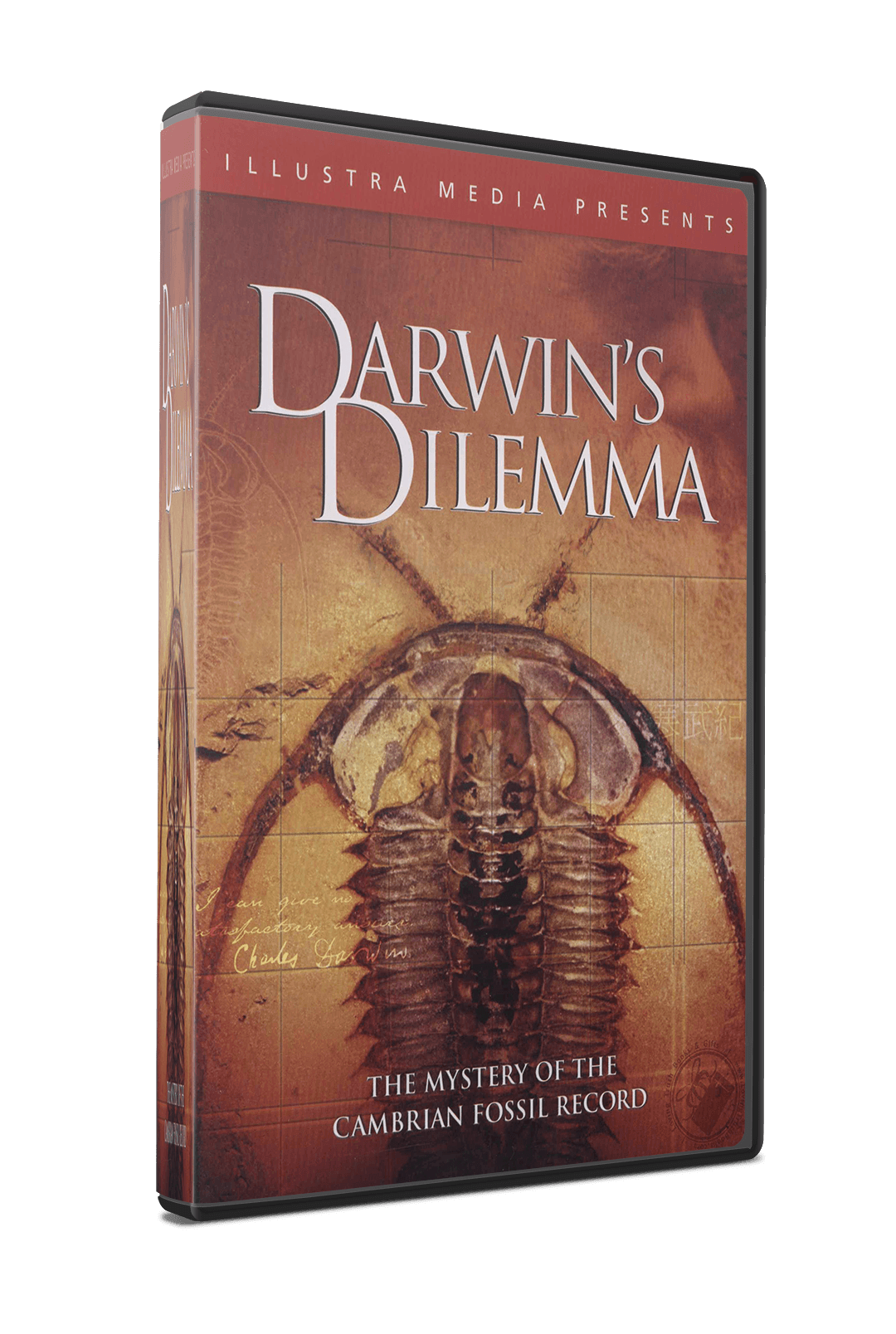
Darwin Dilemma

Darwin’s Dilemma (DVD)


This is the sixth blog in my series on fine-tuning. Here are the previous blogs if you missed them:

Intro/Philosophical Background

If You Don’t Want God, You Better Have a Multiverse!

How Does Fine-Tuning Provide Evidence for God?

Objections

Mistaken Objections that Seek to Trivialize Fine-Tuning

Important Objections in the Fine-Tuning Debate

But We Can’t Even Define Life

We’re finally ready to start exploring the fine-tuning data itself. A logical starting point is the initial conditions of our universe – are those which permit life rare among possibilities?

1)      Energy-Density is Finely-Tuned

The amount of matter (or more precisely energy density) in our universe at the Big Bang turns out to be finely-tuned to about 1 part in 1055. In other words, to get a life-permitting universe the amount of mass would have to be set to a precision of 55 decimal places. This fine-tuning arises because of the sensitivity to the initial conditions of the universe – the life-permitting density now is certainly much more flexible! If the initial energy density would have been slightly larger, gravity would have quickly slowed the expansion and then caused the universe to collapse too quickly for life to form. Conversely if the density were a tad smaller, the universe would have expanded too quickly for galaxies, stars, or planets to form. I argued in my previous blog that it’s implausible to expect life to originate without a long-lived, stable energy source such as a star. Thus, life would not be possible unless the density were just right – if you added or subtracted even just your own mass[1] to that of the universe this would have been catastrophic!

There is, however, a potential dynamical solution to this problem based on a rapid early expansion of the universe known as cosmic inflation. In this blog, I’ll be relying primarily on the most comprehensive review article on fine-tuning in the peer-reviewed literature – this one by Luke Barnes. I’ve referenced it previously and I’m hoping if I reference it enough I’ll get tech-savvy readers to check it out! It may be too technical for some readers and my blog can be viewed as just an attempt at explaining some highlights to non-physicists and tying it into my metaphysical hypothesis that God is the best explanation of the fine-tuning. So let’s look at what Luke Barnes has to say about inflation as a solution to the energy density problem. He points out 6 aspects of inflation that would have to be properly setup, some of which turn out to require fine-tuning. One significant aspect is that the inflation must last for the proper amount of time – inflation is posited to have been an extremely brief but hyper-fast expansion of the early universe. If inflation had lasted a fraction of a nanosecond longer, the entire universe would have been merely a thin hydrogen soup, unsuitable for life. Barnes cites an article by Max Tegmark of MIT that indicates that in a best case scenario about 1 in 1000 inflationary universes would avoid lasting too long. The biggest issue though seems to be that for inflation to start, it needs a very special/rare state of an extremely smooth energy density. Several articles make this point – consider Sean Carroll’s article:

“It is therefore a necessary (although not sufficient) condition for inflation to occur that perturbations be small at early times. . . . the fraction of realistic cosmologies that are eligible for inflation is therefore … 10-66,000,000.”

Barnes also explains why, even if inflation solves this fine-tuning problem, one should not expect new physics discoveries to do away with other cases of fine-tuning: “Inflation thus represents a very special case… This is not true of the vast majority of fine-tuning cases. There is no known physical scale waiting in the life-permitting range of the quark masses, fundamental force strengths or the dimensionality of spacetime. There can be no inflation-like dynamical solution to these fine-tuning problems because dynamical processes are blind to the requirements of intelligent life. What if, unbeknownst to us, there was such a fundamental parameter? It would need to fall into the life-permitting range. As such, we would be solving a fine-tuning problem by creating at least one more. And we would also need to posit a physical process able to dynamically drive the value of the quantity in our universe toward the new physical parameter.”

2)      Initial Conditions in a Very Low Entropy State

Even if inflation somehow could solve the energy density problem and scientists are mistaken that inflation requires its own fine-tuning, inflation doesn’t solve the problem with this next type of fine-tuning which relates to the universe’s initial entropy. What is entropy? Entropy represents the amount of disorder in a system. Thus, a high entropy state is highly disordered – think of a messy teenager’s room. Our universe began in an incredibly low entropy state. A more precision definition of entropy is that it represents the number of microscopic states that are macroscopically indistinguishable. An egg has higher entropy once broken because you’re “opening” up many more ways to arrange the molecules. There are more ways of arranging molecules that would still be deemed an omelet than there are ways to arrange the particles in an unbroken egg in where certain molecules are confined to subsets of the space in the egg – such as a membrane or the yolk. Entropy is thus closely associated with probability. If one is randomly arranging molecules, it’s much more likely to choose a high entropy state than a low entropy state. Randomly arranged molecules in an egg would much more likely look like an omelet that an unbroken egg.

Entropy can also be thought of as the amount of usable energy. Over time the usable energy decreases. This principle is known as the Second Law of Thermodynamics, which says that in a closed system the entropy on average increases until a state of equilibrium is reached. Thus, the Second Law predicts that our universe will eventually reach such a state of equilibrium or “heat death” in which nothing interesting happens. All life will die off long before such a state is reached. Life relies on usable energy from the environment.

It turns out that nearly all arrangements of particles in the early universe would have resulted in a lifeless universe of black holes. Tiny inconsistences in the particle arrangements would be acted on by gravity to grow in size. A positive feedback results since the clumps of particles have an even greater gravitational force on nearby particles. Penrose’s analysis shows that in the incredibly dense early universe, most arrangements of particles would have resulted basically in nothing but black holes. Life certainly can’t exist in such a universe because there would be no way to have self-replicating information systems. Possibly the brightest objects in the universe are quasars, which release radiation as bright as some galaxies due to matter falling into a supermassive black hole. The rotation rates near black holes and the extremely high-energy photons would disrupt information storage, a prerequisite for life[2].

Artist's impression of a stellar-mass black hole.Artist’s conception of a black hole. Credit: European Space Agency, NASA, and Felix Mirabel (the French Atomic Energy Commission & the Institute for Astronomy and Space Physics/Conicet of Argentina)

Oxford physicist Roger Penrose is the first scientist to quantify the fine-tuning necessary to have a low entropy universe to avoid such catastrophes. “In order to produce a universe resembling the one in which we live, the Creator would have to aim for an absurdly tiny volume of the phase space of possible universes, about 1/1010123 [3].” This number is incomprehensibly small – it represents 1 chance in 10 to the power of (10 to the power of 123). Writing this number in ordinal notational would require more zeroes than the number of subatomic particles in the observable universe, 10123 zeroes vs. about 1092 particles. Under the assumption of atheism, the particles in our universe would have been arranged randomly or at least not with respect to future implications for intelligent life. Nearly all such arrangements would not have been life-permitting so this fine-tuning evidence favors theism over atheism. We have a large but finite number of possible original states and rely on well-established statistical mechanics to assess the relevant probability.[4]

In a comment on one of in my earlier blogs, someone suggested that perhaps the universe is fine-tuned for black holes rather than life. The incredibly low entropy state of the initial conditions shows, however, that the exact opposite is true – fine-tuning was required to avoid excessive black holes! This fact about the initial conditions also calls into question Smolin’s proposed scenario that universes with differing physical constants might be birthed out of black holes. Smolin suggests the possibility of an almost Darwinian concept in which universes that produce more black holes therefore more baby universes than those which don’t. But if our universe requires statistically miraculous initial conditions to be life-permitting by avoiding excessive black holes, universes evolving to maximize black hole production would be unlikely to lead to life! (Even if the evolution of universes were possible)

Furthermore, the skeptic who thinks that black holes suggest a purposeless universe should consider that black holes can, in moderation and kept at distance, be helpful for life. While a universe comprised of mostly black holes would be life-prohibiting, having a large black hole at the center of a galaxy is actually quite helpful for life. Here is a Scientific American article that documents the benefits of Black Holes for life – it summarizes: “the matter-eating beast at the center of the Milky Way may actually account for Earth’s existence and habitability.”

Does inflation explain the low entropy of the early universe?

Here is how Sean Carroll answers this question: “Not by itself, no. To get inflation to start requires even lower-entropy initial conditions than those implied by the conventional Big Bang model. Inflation just makes the problem harder[5].” Penrose also has harsh words for inflation as an explanation of the low entropy state of the initial universe[6].

Barnes calls inflation a “cane toad solution” for the entropy fine-tuning. Cane toads were brought into Australia from Hawaii starting in 1935 to eat beetles threatening the sugarcane fields. With no natural predators in Australia this strategy was disastrous as these poisonous toads multiplied greatly and wreaked havoc on native species and the ecosystem in general. Thus, Barnes is saying that inflation makes this fine-tuning problem worse. None of this is to say that some version of inflationary theory isn’t true just that it doesn’t help this fine-tuning issue.

How well could a multiverse explain this evidence?

This is a key question to consider as we explore the fine-tuning evidence. If some features seem overly fine-tuned, this would be unexpected if our universe was simply a life-permitting universe randomly selected from a vast ensemble of other universes with other constants or initial conditions. A multiverse explanation for the fine-tuning of the low entropy fails miserably because this universe does seem to be finely-tuned much more than would be minimally necessary. As Penrose says: “We can get the solar system and all inhabitants for much less odds: 1 in 101060 .. These world ensemble hypotheses are worse than useless in explaining the anthropic fine-tuning of the universe.” In other words, Penrose argues that it would be more likely to just have the particles arranged in initial conditions such that you already have pre-formed intelligent life in a single solar system than to have such a large universe as ours in a low-entropy state that could eventually lead to intelligent life.

Even atheist Sean Carroll admits[7] that a multiverse explanation fails for this fine-tuning. First, he agrees with the widely-accepted principle I referenced above: “anthropically-selected parameters should be of the same order of magnitude as the largest value compatible with the existence of life.” He then explicitly agrees that the multiverse cannot by itself explain this particular fine-tuning and quotes Penrose’s numbers. “An example of fine‐tuning well beyond anthropic constraints is the initial state of the universe, often characterized in terms of its extremely low entropy… The entropy didn’t need to be nearly that low in order for life to come into existence. One way of thinking about this is to note that we certainly don’t need a hundred billion other galaxies in the universe in order for life to arise here on Earth; our single galaxy would have been fine, or for that matter a single solar system.” As an atheist he doesn’t view this as an insuperable problem, holding out hope that new physics could somehow explain this low entropy. Carroll indicates that he can’t think of any reason why God would fine-tune the universe more than is necessary, apparently not giving thought to the possibility that God might want to leave evidence that He setup the physics of the universe – evidence of the type that even an infinite multiverse cannot plausibly explain!

Is this evidence for God?

Even if this evidence points to design, why think that God is necessarily the designer?

If this is your perspective, please help remove the stigma on intelligent design so this type of evidence can be fairly evaluated. Also, note that this perspective affirms the claim of leading Intelligent Design advocates that design by itself does not necessarily prove God.

For this particular design evidence, however, I argue that we have reasons for thinking that only a supernatural being could setup these initial conditions in this way. Is it in principle physically possible for a being limited by the laws of physics to setup the initial conditions of our Big Bang? The Heisenberg Uncertainty principle limits our ability to even have knowledge of both position and momentum of particles beyond a certain scale – and it’s even more challenging to think about how so many particles might have their locations and velocities adjusted. The early universe would have been so small that the limits imposed by this physical principle would seem to prevent any physically-limited agent from making the necessary adjustments to the particles or even having knowledge to determine necessary adjustments. Moreover, even those who advocate a naturalistic cause to the Big Bang often admit that the Big Bang represents a spacetime boundary. Many theorists consider our universe to be a causally disconnected region of spacetime – which would make it impossible for a physically limited being residing in a different physical region from affecting anything in this new region of spacetime.
Thus, a supernatural designer seems more plausible than a natural designer. Also, if fine-tuning is required to bring about intelligent life, how did the first natural designers arise?

Does God Have to be Fine-tuned?

To me this seems like asking: “does an uncreated being depend on rare events or rare settings of physical parameters for His existence?” By definition God doesn’t rely on anything for his existence – this is the concept of a necessary being. If the concept of a necessary being seems implausible, I warn you that you might already believe premises that by the rules of logic would entail the existence of a necessary being. I invite you to explore that possibility in this online quiz.


[1] The universe is estimated to contain at least 10^80 atoms – here is one estimate of 10^53 kg: http://en.wikipedia.org/wiki/Observable_universe Anyone old enough to read this blog must weigh at least say 10 kg so this seems to be a safe estimate even after accounting for other forms of matter energy not included in the above mass.

[2] Refer to my previous blog for further justification: http://crossexamined.org/cant-even-define-life/

[3] Penrose, The Emperor’s New Mind, p. 343. He also makes the same argument in Road to Reality on p. 730.

[4] In addition, the entropy equation for a black hole, first developed by Bekenstein and Hawking, is involved in these computations. This equation is widely accepted by the physics community and I’ve read articles by those who believe in string theory and those who believe in loop quantum gravity arguing for their theories by pointing to how they can derive this same equation in their flavor of quantum gravity.

[5] Sean Carroll, http://preposterousuniverse.com/eternitytohere/faq.html

[6] Penrose says in Road to Reality, p. 755: “Indeed, it is fundamentally misconceived to explain why the universe is special in any particular respect by appealing to a thermalization process [such as inflation]. For, if the thermalization is actually doing anything (such as making temperatures in different regions more equal than they were before), then it represents a definite increasing of entropy. Thus, the universe would have had to be more special before the thermalization than after. This only serves to increase whatever difficulty we might have had previously in trying to come to terms with the initial extraordinarily special nature of the universe. . . . invoking arguments from thermalization, to address this particular problem [of the specialness of the universe], is worse than useless!” A couple of pages later Penrose also writes that “the point is that whether or not we actually have inflation, the physical possibility of an inflationary period is of no use whatever in attempts to ensure that evolution from a generic singularity will lead to a uniform (or spatially flat) universe.”

[7] Carroll, Does the Universe Need God? The Blackwell Companion to Science and Christianity. A copy is available online at http://preposterousuniverse.com/writings/dtung/.

"Gears" from a plant hopping insect look designed

“Gears” from a plant hopping insect.

Scientists continually tell us that certain features found in nature are not “designed” but are the product of unguided evolutionary development. In his book The Blind Watchmaker biologist Richard Dawkins curiously has to remind his readers and warn them that some things in nature may appear designed when in fact they are not. He wrote that, “Biology is the study of complicated things that give the appearance of having been designed for a purpose.”

A recent article posted by Christian apologist, Melissa Cain Travis, offers some compelling reasons that nature is in fact, designed. Many of these designs are copied either unconsciously or consciously (via the science of Biomimicry) by humans. The most reasonable inference is that these designs come from an Intelligent Creator.

You can read about it here


The purpose of this post is not to prove that Intelligent Design is true, nor that it is superior to naturalistic alternatives, but simply to raise awareness over some of the lines of evidence where Intelligent Design seems to be science. Let me also reject in advance those who dismiss ID with casual comments like, “There is no evidence whatsoever for ID,” “ID is creationism in a tuxedo, but still has no ticket for the party,” or “ID is no more scientific than astrology” or the like. These aren’t necessarily ridiculous positions to hold, but they require a lot more substance than most claimants (that I’ve encountered) are usually willing to muster. ID does not necessarily deserve credit or acceptance, but if satisfies the criteria for admission into scientific consideration, then one cannot in good-intellectual-honesty dismiss it out of hand and still claim to be science-minded.

First, ID employs a theory drawn from science, namely, information theory (see, Dembski’s The Design Inference)–information theory is a staple in SETI, Forensics, Archeology, Cryptology, Anthropology, etc.

Second, the problem with ID is not whether information theory is scientific, but whether astronomy, biology, and chemistry are valid fields of applying information theory. Properly casting the nature of this debate is key to understanding the lines of argumentation. Those rebuking ID for elaborating “information theory” should instead focus their argument on the illegitimacy of applying information theory to fields like astronomy, biology, and chemistry.

Third, ID does achieve claims that are, at least on a low level, falsifiable. For example, the Bacterial flagellum may be irreducibly complex if no more basic alternative-use formulations such as a (Type III secretory system [syringe type rod]) can be found which are constitutionally older than the flagellum. Applying ID theory to the flagellum renders a testable prediction, namely the falsifiable theory that if the flagellum is irreducibly complex, then there will never be discovered a simpler same-function form nor an older alternative-function form.

Fourth, neither naturalism nor materialism has been, historically, a necessary precondition for doing science, given the preponderance of religious scientists throughout history. It may be argued, weakly, that if one allows for supernatural causes, one is discouraged or distracted from the hard task of finding natural, reliable, or material causes for natural phenomenon. While that possibility makes sense, it has not been the reality. Despite there being many non-theists (i.e.: no kind of God-belief) in the sciences, there are still a host of theists who have little trouble employing a methodological naturalism for much of their work while suspending that assumption where it might bias the data (such as, dismissing evidence for a miracle claim simply because naturalism demands dismissing all miracle claims). Stephen Jay Gould’s Non-overlapping Magisterium is a nice theory to safely quarantine religion and science from effecting each other, but both make metaphysical claims on history, humanity, and the natural world. And many scientists exist in the overlap for, despite the claims of casual anti-ID theorist, these science-minded theists can readily admit the possibility of an active God without descending into a “magical” irrational view of nature.

Fifth, ID does bear fruit in further predictions and study. We can, for example, study and apply irreducible complexity theory anywhere in biology to see where it fits and where it does not. At a minimum, such applications of ID force evolutionary alternatives to mount a more comprehensive/compelling set of unintelligent mechanisms since the known unintelligent mechanisms fail pretty badly on many cases. Pure evolutionary theory, for example, has the difficulty of explaining the reality of “true belief” given the non-intelligent mechanical causes of Newtonian forces as it’s only physical forces, or, natural selection and genetic variations as it’s overriding biological forces. Sure one can appeal to conceptual models and thought experiments to argue for an evolutionary answer to this problem Plantinga calls “the Evolutionary Argument Against naturalism,” but that effort is bound to circularity, begging the question, since naturalistic answers ostensibly presuppose that intelligence arises from non-intelligence though that is precisely the premise needing defense.

For another example, ID predicts that the more irreducibly complex and higher specified complexity of something, the less capable we will be at demonstrating a viable evolutionary account. By testing evolutionary mechanisms against a given object–such as the Giraffe’s neck or the woodpecker’s tongue–we can see, according to the prediction, whether the known mechanisms of evolution easily explain it or not. If the Giraffe’s neck, which supposedly is irreducibly complex, then there would be no immediate and demonstrable explanation from naturalism for its appearance. If the Giraffe’s neck is slightly or greatly complex, and irreducible in either case, then evolutionary theory will have an easier or harder time, respectively, providing a viable account from natural causes that does not betray the kind of incrementalism espoused by Darwin nor, if one is okay with being in the scientific minority, the punctuated equilibrium espoused later. Remember though, that both sets of theories have their own burden of proof whereby they ought to exceed the (low) test of “explanatory” sufficiency and reach some kind of testability.

Still a third example of how ID is fruitful with testable predictions, ID predicts that high-information content within organisms can devolve, but does not greatly evolve. Hence, we can subject microorganisms to generations of forced mutations to see if any give rise to sustainable gains in specified complexity. Fourth, ID presents tremendous applications for the search for extra-terrestrials (i.e., non-human intelligences), and reapplication of information theory in forensics, cryptology, computer programming, Artificial Intelligence, and archeology. Fifth, and implied above, ID also presents a valuable frame of reference for critiquing the monopoly of evolutionary theory (such that many evolutionists are not aware of any explanatory gaps or weaknesses within evolutionary theory). And what is science if not a free-exchange of alternative theories and findings achieving the market-capitalism of ideas whereby poorly framed hypotheses can be honed and improved, or ground down into oblivion.

Sixth, it is not very scientific to put faith in evolutionary theory to IN THE FUTURE resolve present ignorance. Evolution-of-the-gaps is no less dogmatic and faith-based than is God of the gaps. And frankly, a great deal of force behind the rejection of ID is fueled by faith in evolutionary theory to explain aspects of nature that are yet unknown. Though evolution, according to typical evolutionists, has been well verified on many accounts, scientists pride themselves on respecting no authorities and refraining from all faith or dogma in place of their science. Where evolution has not been DEMONSTRATED to explain a certain phenomenon, it remains a theory, or, at best a hypothesis. But any use of said hypothesis prior to experimentation risks being philosophy or even theology. Scientists are more than allowed to do philosophy; they just have to sacrifice the authority and credibility of “Science-says-so-and-so” when they are philosophizing.

Seventh, NO scientific claim is DEDUCTIVELY verifiable–as that would entail the kind of certainty achieved only in logic and math. It would not be fair to demand of Intelligent Design a degree of certainty that the rest of science rarely if ever achieves. All scientific claims, even the strongest ones, are limited to INDUCTIVE probability never deductive certainty since they are fundamentally empirical (not rationalistic or formalistic in their metaphysics or epistemology).

Eighth, any theoretical streams within science are deemed “scientific” though they conceptually and practically defy testability (whether verification or falsification)–just as Theoretical Physics like String Theory.

Ninth, whatever else “science” means, there would seem to be something inherently unscientific about disqualifying what may be true and treat any related questions as uninteresting since they are not bound by naturalism. Science should not be too proud to investigate the mating habits of insects nor the possibility of non-human intelligence.

Tenth, science itself could not exist without philosophy of science to establish it’s nature and parameters. Truth be told, ID tests the demarcation problem for Science though many scientists themselves may have never known there was any problem demarcating Natural Science from other fields of study like theology or philosophy. Scientists hate to admit this, as there is a generally negative view of metaphysics entire even though every scientist is, by the nature of the field, a part-time metaphysician. To illustrate, it was the philosophy of science that gave birth to the scientific method which gave modern birth science. This point is relevant because the natural sciences rightly incorporate under the title of “science” things that were never purely “science. The scientific method was not hatched in a lab but in the mind of philosophical-theological-scientists. We would sacrifice too much if we cut off any “philosophy” or “theology” as non-science simply because it is not testable in a lab as that would forbid the scientific method itself–which is philosophy, and not itself testable within the parameters of science.

Eleventh, it is a genetic fallacy and a fallacy of association to fault ID for having young-Earthers, religious people (who are presumed “biased”), or otherwise unliked characters among its members. We should remember that early chemists are largely indistinguishable from alchemists–yet we would not want to dismiss their work as “unscientific” just because they were still dabbling in pseudoscience. We would not want to morally fault science for its association among Nazi experimenters in WWII. Abuse does not bar use. And if the ID is abused or genetically tainted by some of its practitioners, we still have the theory itself to deal with lest we mistakenly burn the message because of the messenger. Conversely, we cannot rightly fault the findings of atheistic humanists in science because they, perhaps, have an anti-theological bias or might be “swayed” by their irreligion or humanism or atheism. Biased people can still do good science provided; there’s is not an overriding bias.

In conclusion, a compelling case can be made that ID is indeed a science and therefore, it deserves a hearing among science-minded people.