Tag Archive for: Inerrancy

On April 14th 2025, Christianity Today published an article entitled “Was Jesus Crucified with Nails?” In the article, the author asserted that it was likely that Jesus was not nailed to the cross but was instead tied to the cross with ropes. He argues this by appealing to an authority, a professor from Gordon College, who has made this argument based solely on some limited archaeological data. Indeed, in the article, the professor is cited as saying, “he wanted to explore the issue because it’s good to question tradition and people can benefit from closer scrutiny of history.”[i]


Did the Article Miss the Johannine Reference to the Nailprints?   

When the article was published, it immediately came under fire on social media. After all, John 20:25 clearly states,

“The other disciples therefore said to him [Thomas], ‘We have seen the Lord.’ So he said to them, ‘Unless I see in His hands the print of the nails, and put my finger into the print of the nails, and put my hand into His side, I will not believe.’”

Thomas claimed that he would not believe Jesus rose from the dead unless he saw the very nail prints in Jesus’ hands and feet. This seems to be clear evidence in one of the Gospels that Jesus was crucified with nails. The question, then, is how could someone have missed this passage prior to publishing the article?

The simple answer is that they did not miss this passage. Indeed, the passage is addressed in the article. The article states, “Going back to the Bible, García said there is one place in the New Testament that mentions nails. In the Gospel of John, the doubting apostle Thomas says he would have to see and touch the “marks of the nails” (20:25), before he would believe that Jesus rose from the dead.” A few sentences later, however, the article states, “García said many scholars also think John was written later—perhaps after crucifixion with nails had become more common.”

The Implied Message of the Article: An Attack on Biblical Authorship      

The article thus implies one of two things: either John, who was present at the crucifixion and was inspired by the Holy Spirit, got it wrong or the Gospel of John, which has been attributed to the apostle John since the early church, was not written by John as an eyewitness but was written much later by someone who was not present for these events and was just making up the story based on events of his own day instead of the events that actually occurred in history. Either one of these views is not something that should or needs to be held by believers.

Now, this is not an attack on Christianity Today. They acknowledged the article was incorrect, retracted some of the assertions and apologized for its assertions. However, how could this have happened in the first place when the text of Scripture seems so clear? Two years ago, I wrote an article entitled ”Why Biblical Authorship Matters?”. One of the assertions that I made in that article was that authorship mattered because “it gives us eyewitness accounts that help to establish historical reliability for many of the key events throughout the Bible.”

In this context, we know that Jesus was crucified with nails because John was both present for the crucifixion itself and was present for Thomas’ statement. He, as the author, serves as our eyewitness to these events. When you deny Johannine authorship, as Garcia asserts in the article, you open the door to destroying the reliability of the historical events presented in Scripture.

Conclusion

This should remind us once again that biblical authorship matters. It helps us to hold to the eyewitness accounts of many of the events of the Bible and should not be something that we just haphazardly throw away because critics argue against it. Otherwise, we end up doubting whether events in the Bible happened as they were written. That is a place that we do not want to end up in. Instead, we should trust the authority and inerrancy of Scripture, in part because many of the stories are documented by eyewitness testimony.

 References: 

[i] https://www.christianitytoday.com/2025/04/was-jesus-crucified-with-nails/

Recommended Resources:

Why We Know the New Testament Writers Told the Truth by Frank Turek (mp4 Download)

The Top Ten Reasons We Know the NT Writers Told the Truth mp3 by Frank Turek

Counter Culture Christian: Is the Bible True? by Frank Turek (Mp3), (Mp4), and (DVD)     

The New Testament: Too Embarrassing to Be False by Frank Turek (DVD, Mp3, and Mp4)


Daniel Sloan is an Assistant Professor at Liberty University. He was mentored by the late Dr. Ed Hindson. After Dr. Hindson’s untimely passing, Dr. Sloan was allowed to teach some of Dr. Hindson’s classes. In addition to his teaching duties, Dr. Sloan serves as an Associate Pastor at Safe Harbor Community Church in Lynchburg, Virginia. Daniel graduated with his PhD in Theology and Apologetics from Liberty University. His research and expertise is in Old Testament studies. He and his wife, Natalie, live in Lynchburg, Virginia. Along with his extensive knowledge of the Bible, Daniel is an avid sports fan.

Originally posted at: https://bit.ly/40edPzX

Secular scholars, especially those who attack the historicity of the New Testament, claim it is difficult to establish historical knowledge that is valid and reliable because of the infallibility of the human memory. People do not recall information accurately, especially if the account is written years after the event. However, historians and archaeologists have been able to make strong cases for their accounts considering several factors, such as the closeness of the written document to the event, multiple attestations to the incident, and so on.
In this article, I will discuss the factor of oral tradition communities, how literate people recorded their history, and whether their methodology is reliable or not. Western and advanced societies might not realize that there is a pattern that oral communities usually follow to preserve their history and pass it on to the next generation. The first-century Middle Eastern people were no exception, and we can today trust their recordings despite the minor variations we have in the written accounts of the New Testament.

The Secular Theory of Oral Tradition

Secular philosopher Paul Ricoeur describes the reference modes of history and fiction as interweaving. He believes that when historians try to make sense of an artifact to understand the historical event, their imagination imposes itself making them come up with their own fiction about history. [i] Schröter explains that “the narration of history represents a fictionalizing of the past, whereas the fictional narrative imitates the historical narrative.”[ii] Therefore, the final product is never accurate. It is a mixture of the history and imagination of the writer.

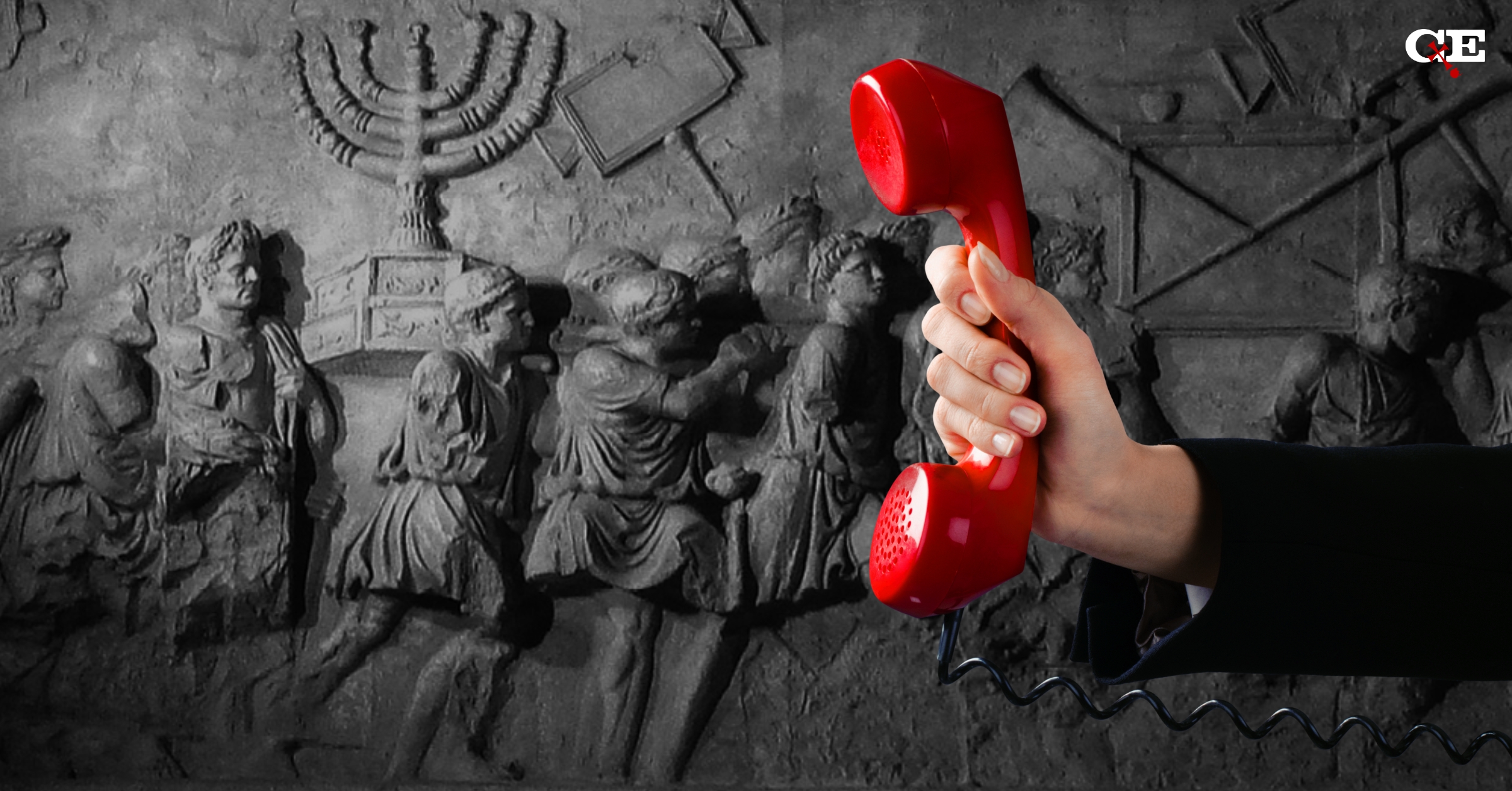
Bart Ehrman generally agrees with this view accusing the writers of the NT of not being reliable and the Gospel accounts being recorded as people were playing a telephone game. He states,

Nearly all of these storytellers had no independent knowledge of what really happened [to Jesus]. It takes little imagination to realize what happened to the stories. You are probably familiar with the old birthday party game ‘telephone.’ A group of kids sits in a circle, the first tells a brief story to the one sitting next to her, who tells it to the next, and to the next, and so on, until it comes back full circle to the one who started it. Invariably, the story has changed so much in the process of retelling that everyone gets a good laugh. Imagine this same activity taking place, not in a solitary living room with ten kids on one afternoon, but over the expanse of the Roman Empire (some 2,500 miles across), with thousands of participants.”[iii]

Ehrman’s analogy might seem appealing to some people; however, the question that we should investigate is whether preserving history in an oral culture is like a telephone game, as Ehrman claims.

What Is Oral Culture?

Oral culture is a term that refers to preliterate cultures to characterize the thought and expressions that carry over into manuscript and print culture. People talk to one another about certain events until these events are written. Robert Cochran makes a distinction between oral culture and oral history. He states, “Oral culture is culture based on the spoken rather than the written word; oral history is a record of the past based on spoken accounts.” [iv] In our times, an estimated one billion people do not know how to read or write any language, and so they live in what we call oral culture. [v]

It is important to explain also what oral tradition is not. According to Lynne Kelly, oral tradition is “not teaching how to hunt or how to gather during daily excursions. It is not about stories casually told around the campfire at night – these are more folk tale than myth and are usually for children. Oral tradition is about formal knowledge, about the way oral cultures store, maintain and transmit knowledge which is central to their physical and social worlds.” [vi] In other words, oral cultures are not a bunch of savages uneducated societies. They are people whose lack of written language and advanced education forced them to find alternative ways to remember and record their history accurately and reliably.

How Do Oral Cultures Save Their Knowledge?

Literate cultures record their knowledge on paper, books, or electronically. If they cannot write, then the knowledge must be committed to memory—practiced, repeated, and saved for future use in human memory. According to Kelly, the way formal knowledge is stored in literate culture is similar to oral culture,

We can assume that the individuals within oral cultures have the same range of intellectual potential, physiology and memory ability that has been typical of all humans for at least the last few millennia. We need to look beyond superficial differences and accept our similarities. It is only when the complexity of oral tradition is acknowledged that the control of knowledge can be seen as a tool for power. [vii]

People who lived under oral culture were also human beings with the same abilities to find accurate ways to record and pass on their knowledge.

Different elements were used to save knowledge in oral cultures, such as repetitions, rhythm, poetry, narratives, and stories that were transmitted in social gatherings. De Costa adds that “in oral cultures many constructions are aggregative rather than analytic, that is to say, remembered information is not systematized individually but in groups or series of related groups by means of parallelisms, antitheses, and epithets.” [viii]

So, oral cultures created and used different methods to repeat information and learn it. Basic knowledge is acquired in daily interaction to learn what is appropriate and how someone should act in a certain circumstance, and Specialized knowledge is acquired by participating in ceremonies and discussions with elders. [ix] This is why early Christians formed liturgy and creeds. The whole purpose was to keep repeating the basics of their faith over and over so it is not forgotten.

Is All Oral History Mixed with Myths?

The ancient Near Eastern civilization left one of the oldest writings (cuneiform), which included different information, such as migrations of people, chronology of political states, foreign relations, internal governance, legal institutions, and official acts. [x] Moreover, a variety of inscriptions from different places in the world distinguish between mythical, folklore, historical, political, and religious. Wiessner notes that the Enga of Papua New Guinea distinguishes clearly between myth and historical traditions. [xi] Historical information includes news about “wars, migrations, agriculture, the development of cults and ceremonial exchange networks, leadership, trade, environmental disasters, and fashions in song and dress.” [xii] In other words, because of inscriptions, historians are able to differentiate between myths and other genres, which is a piece of evidence that not all oral tradition is mixed with myths.

Were The Gospels Written According to the Telephone Game?

The majority of first-century Middle Easterners were literate people who lived in oral cultures. The New Testament was written within the first century after the death of Christ. The first written book of the NT was the First Letter to the Corinthians, which Paul wrote AD 53-55. The Gospels were written between AD 70-95, about 40-65 years after the death of Jesus. According to Bart Ehrman, this period of time is enough for people to forget what Jesus had said and done, and consequently, corrupt the Gospels.

The Purpose of the Telephone Game vs. Written Oral History

As per the previous information about oral tradition, it seems that Bart Ehrman has not done a good job investigating the culture of the first-century Middle East; otherwise, he would not have depicted the process of writing the NT books to the telephone game. The purpose of the telephone game is totally different from the purpose of written oral history. The purpose of the telephone game is to have fun, so people purposely disrupt the process of communication to laugh at the end results. Writing the Gospels tradition was precisely the opposite. The men of God wrote purposely to preserve the words and deeds of Jesus from disruption (Luke 1:1-4).

One-Way Chain of Communication

I am not sure if first-century people played the telephone game; however, this game represents a single one-way chain of communication, whereas, oral tradition is like a web or network. It does not pass information from one person to another person, but it passes information from many people to many people. When Paul wrote his first letter to the Corinthians, there were many people alive who witnessed and testified Jesus resurrected and ascended to heaven, and there were multiple opportunities for skeptics to investigate: “Did this really happen?” (1 Cor 15:6).

Liberal scholars who support Ehrman’s theory believe that “oral history reveal that cultures do not tend to remember events over much more than two generations and that memories ‘become increasingly inaccurate until they are so corrupt that they can hardly be distinguished from myth.”[xiii] If a generation lives for 20-30 years, and information is corrupted after the second generation, then it is reasonable to conclude that the NT books are reliable by secular standards because they were written within the first two generations after the death of Jesus.

Conclusion

It is simply impossible for any culture to retain all their knowledge without some formal information system. Therefore, literate cultures came up with ways to retain information, such as repetition in special ceremonies, conversations with elders, and social gatherings to pass on their knowledge. If Western culture found different ways to store information, that does not mean Eastern and Middle Eastern cultures have never done so. Further study of oral culture tradition shows that depicting the process of writing the NT books with telephone games is emphatically wrong.

References:

[i] Paul Ricoeur, Time and Narrative, Trans. K. McLaughlin and D. Pellauer, vol. 3, (Chicago: University of Chicago Press, 1984– 1988), 190-192.

[ii] Jens Schröter, From Jesus to the New Testament: Early Christian Theology and the Origin of the New Testament Canon, (Waco: Baylor University Press, 2013), 34.

[iii] Bart Ehrman, The New Testament: A Historical Introduction to the Early Christian Writings, 5th ed. (New York: Oxford University Press, 2012), pp. 72-74.

[iv] Robert Cochran, “Oral History and Oral Culture,” In The Encyclopedia of Literary and Cultural Theory, ed. Michael Ryan, 2011.

[v] Thomas Farrell, J. “Oral Culture,” in The Cambridge Encyclopedia of the Language Sciences, ed. Patrick Colm Hogan, (Cambridge University Press, 2011).

[vi] Lynne Kelly, Knowledge and Power in Prehistoric Societies: Orality, Memory and the Transmission of Culture (Cambridge: Cambridge University Press, 2015), 15.

[vii] Ibid.

[viii] Elena De Costa, “Orality,” in Concise Encyclopedia of Latin American Literature, ei. Verity Smith, ed. Routledge, 2000.

[ix] J. Goody, The Interface Between The Written And The Oral (Cambridge University Press, Cambridge,1987), 156-7.

[x] J. Puhvel, “epigraphy,” Encyclopedia Britannica, accessed, July 28, 2024. https://www.britannica.com/topic/epigraphy.

[xi] P. Wiessner, “The vines of complexity: egalitarian structures and the institutionalization of inequality among the Enga,” Current Anthropology, vol. 43, no. 2, (2002): 233–69

[xii] Ibid, 237.

[xiii] Richard Bradley, “The Translations of Time,” in RM, Van Dyke & SE Alcock, eds., Archaeologies of memory, Blackwell, (2003): 221–7.

Recommended Resources:

Why We Know the New Testament Writers Told the Truth by Frank Turek (mp4 Download)

The Top Ten Reasons We Know the NT Writers Told the Truth mp3 by Frank Turek

The New Testament: Too Embarrassing to Be False by Frank Turek (DVD, Mp3, and Mp4)

Cold Case Resurrection Set by J. Warner Wallace (books)   


Sherene Khouri was born into a religiously diverse family in Damascus, Syria. She became a believer when she was 11 years old. Sherene and her husband were missionaries in Saudi Arabia. Their house was open for meetings, and they were involved with the locals until the government knew about their ministry and gave them three days’ notice to leave the country. In 2006, they went back to Syria and started serving the Lord with RZIM International ministry. They traveled around the Middle Eastern region—Turkey, Jordan, Egypt, Lebanon, Syria, and United Arab Emirates.

Sherene was also involved in her local church among the young youth, young adults, and women’s ministry. In 2013, the civil war broke out in Syria. Sherene and her husband’s car was vandalized 3 times and they had to immigrate to the United States of America. In 2019, Sherene became an American citizen.

Sherene is an Assistant Professor at Liberty University. She teaches Arabic, Religion, and Research classes. Additionally, she holds a Ph.D. in Theology and Apologetics, M.A. in Christian Apologetics from Liberty University, and B.S. in Biblical Studies from Moody Bible Institute. Currently, Sherene is also working on a Master of Theology in Global Studies at Liberty University and M.A. in Arabic and linguistics from PennWest University.

Original Blog Posting: https://bit.ly/3ZQetUT

 

Because Paul crisscrossed paths with many folks, some repeatedly, it’s quite enlightening to compare how these people are portrayed in the book of Acts with what Paul hints at in his own letters. Among these characters, Timothy stands out as a particularly intriguing figure.

In 1 Corinthians 4:17, Paul mentions sending Timothy, his “beloved and faithful child in the Lord,” to jog the Corinthians’ memory about Paul’s ways in Christ. Now, from this passage alone, it’s a bit tricky to figure out if Timothy was sent before the letter or with it. In 1 Corinthians 16:10-11, though, Paul makes it clear that Timothy was dispatched before the letter was penned. He talks about Timothy’s impending arrival as something distinct from when the Corinthians would receive the letter itself – “When Timothy comes, …”

Contradictory Accounts?

Now, when you stack these two passages side by side, a puzzling question pops up. If Timothy was sent first, why didn’t he show up first? And if he did arrive first, why bother sending instructions afterward on how to welcome him?

The most sensible answer is that Timothy, even though sent ahead, must have taken a more roundabout route to Corinth. The quickest way from Ephesus, where Paul was writing, to Corinth would be by ship, covering the distance in a jiffy with a favorable wind. But, as we dig into Luke’s account in Acts 19:21-22, we discover that Timothy, when leaving Ephesus, opted for the overland route, traveling up through Macedonia.

We stumble upon these coincidences that weren’t orchestrated but fit together seamlessly. Paul’s letter doesn’t mention a word about Timothy’s trek through Macedonia, and Acts doesn’t bring up Paul’s letter. Yet, Acts offers the only sensible explanation for these offhand remarks Paul makes in his letter, creating this neat puzzle where the pieces just click into place.

How Did The Philippian Church Know Timothy?


But there’s more about Timothy. When Paul writes the church at Philippi, he says:

“I hope in the Lord Jesus to send Timothy to you soon, so that I too may be cheered by news of you. For I have no one like him, who will be genuinely concerned for your welfare. For they all seek their own interests, not those of Jesus Christ. But you know Timothy’s proven worth, how as a son with a father he has served with me in the gospel” (Philippians 2:19-21).

In this passage, it’s pretty clear that the Philippians knew Timothy and had seen him working alongside Paul. The nifty part is how there’s this subtle and smooth connection between what’s written in Philippians and the story in the book of Acts. So, in Acts 16, Paul starts traveling with Timothy, a convert from around Lystra and Iconium. After that, the Acts story gets into Paul’s travels across Asia Minor to Troas and then Macedonia.

When they hit Philippi, the story dives into Paul’s missionary adventures, detailing his struggles and hardships. Acts 17 continues the journey, covering Paul’s move from Philippi to Thessalonica, where things get pretty heated, and he has to leave. Then comes this sneaky part: the brothers secretly send Paul and Silas to Berea at night, and when they get there, they hit up the Jewish synagogue. That’s when Timothy pops back into the picture:

“Then the brothers immediately sent Paul off on his way to the sea, but Silas and Timothy remained there” (Acts 17:14).

So, even though Timothy wasn’t explicitly mentioned during the journey, Acts 17:10-15 shows that he was indeed rolling with Paul at Berea. Silas gets more spotlight in the story, but Acts hints that Paul had more buddies along, including the author himself. This revelation about Timothy being there in Berea fills in the gaps and explains how the Philippians knew about Timothy’s skills and saw him working hard with Paul, like a son with his father.

What’s interesting is that Acts doesn’t just say Timothy was in Philippi. You have to connect the dots by piecing together Timothy’s role from different mentions in Acts. It’s not like the author of Acts was trying to be all sneaky and create a link with Philippians. Instead, this connection adds weight to the idea that the author of Acts really knew Paul’s life inside out, including his friends and moves during that time.

Paul Alone In Athens

But wait, there’s another nice example of an undesigned coincidence in this same passage. So, in Thessalonica, Paul’s ministry gets interrupted by a rowdy bunch of Gentiles riled up by the local Jews, prompting a quick escape with Silas for Berea (Acts 17:10). When the troublemakers catch wind that Paul’s still preaching in Berea, they show up, causing a ruckus. Paul has to skedaddle to Athens in a hurry, leaving Silas and Timothy behind (Acts 17:14). Now, Acts doesn’t spill the tea on why Paul left Silas and Timothy hanging. But then, 1 Thessalonians 3:1-5 gives us the missing piece:

“Therefore when we could bear it no longer, we were willing to be left behind at Athens alone, and we sent Timothy, our brother and God’s coworker in the gospel of Christ, to establish and exhort you in your faith…”

Turns out, under the circumstances, Paul sent Timothy back to Thessalonica to check on the folks there and report back while Paul was busy in Athens. This neatly clears up the unexplained bit in Acts, making sense of the separation from Silas and Timothy.

Timothy’s Mixed Upbringing

Here’s another neat example of undesigned coincidences, from Paul’s second letter to Timothy, where describes Timothy rather than mentioning his travels:

“…and how from childhood you have been acquainted with the sacred writings, which are able to make you wise for salvation through faith in Christ Jesus.” (2 Timothy 3:15)

Clearly, Paul’s talking about the Jewish scriptures here, but he doesn’t give any hint as to how Timothy, who wasn’t circumcised until after his conversion as a young man (as mentioned in Acts 16:3), got to know them. The missing piece of information falls into place when we check out Acts 16:1:

“Paul came also to Derbe and to Lystra. A disciple was there, named Timothy, the son of a Jewish woman who was a believer, but his father was a Greek.”

Seems like Timothy’s Greek dad wasn’t on board with the whole circumcision thing. But his Jewish mother made sure he got schooled in the scriptures of her people. Paul even names his mother and grandmother in 2 Timothy 1:5.

Timothy’s Knowledge Of Paul’s Persecutions

But there’s more! In 2 Timothy 3:10-11, Paul talks about how Timothy followed his teachings, behavior, and experiences, especially the tough times in Antioch, Iconium, and Lystra. Now, the Antioch here isn’t the famous one in Syria, but a different one in Pisidia. Acts 13 in the Bible says that Paul and Barnabas got into trouble there, stirred up by the locals. They had to skip town and faced more problems in Iconium, so they moved on to Lystra and Derbe.

In Acts 14, it mentions Paul getting stoned and dragged out of the city by angry folks from Antioch and Iconium. This lines up perfectly with what Paul mentions in 2 Timothy 3:10-11 about the persecutions he faced in Antioch, Iconium, and Lystra. It matches not only in the cities but also in the order Paul talks about them.

Here’s another cool tidbit: In Acts, Lystra and Derbe are often mentioned together, just like in 2 Timothy. But, interestingly, Paul doesn’t face any troubles in Derbe, and sure enough, it’s not mentioned in the list of persecutions in 2 Timothy. So, there’s a perfect match between what Paul says and what happened in Acts.

Now, Paul also implies that Timothy saw or at least knows about these persecutions. Acts backs this up. In Acts 15:36, it says Paul went on a second journey to check on the folks he converted during the first trip. In Acts 16:1-2, we find out that Timothy, a disciple from Lystra, was well-regarded in the community. This suggests that Timothy might have been converted during Paul’s earlier visit when all the tough times were going down. So, it looks like Timothy was there, or at least very aware of what Paul went through in those cities.

What This All Means

Does the fact that these passages don’t match up exactly, and they’re scattered throughout without sounding alike, make you think someone’s trying to trick us? Or does each one just fit naturally where it is? If it’s the latter, it’s pretty unlikely that someone cooked up these connections on purpose. These accounts sound like what we would expect if different people, at different times and places, are sharing different parts of the same story.

Think about it this way: Imagine someone trying to copy an important document, but they change a few words here and there to make it seem original. We can see this happening with some writings from the second century, like the “Gospel of Peter,” where they use phrases almost identical to ones found in well-known Gospels to make their writing seem legit:

  • “And one of them brought a crown of thorns and put it on the head of the Lord.” (similar to Mark 15:17)
  • “And they brought two malefactors, and they crucified the Lord between them.” (similar to Luke 23:32-33)
  • “And in that hour the veil of the temple in Jerusalem was rent in twain.” (similar to Mark 15:38)
  • “But who shall roll away for us the stone …?” (similar to Mark 16:3)
  • “Whom seek ye? Him that was crucified? He is risen and gone.” (similar to Mark 16:6)

Here, the similarities are on purpose to make it seem real. But when we look at Acts and the Pauline letters, they’re not like that. They don’t match word for word, and they’re connected in more subtle ways. This makes it pretty impressive evidence that they’re telling us the truth about what really happened, without needing to fake anything.

Recommended resources related to the topic:

Why We Know the New Testament Writers Told the Truth by Frank Turek (mp4 Download)

The Top Ten Reasons We Know the NT Writers Told the Truth mp3 by Frank Turek

The New Testament: Too Embarrassing to Be False by Frank Turek (DVD, Mp3, and Mp4)


____________________________________________________________________________________________________________________________________________________

Erik Manning is the creative force behind the YouTube channel Testify, which is an educational channel built to help inspire people’s confidence in the text of the New Testament and the truth of the Christian faith. 

Originally published at: Is Jesus Alive?

By Ryan Leasure 

This article is part 6 in a nine-part series on how we got our Bible. Part 1 dealt with inspiration and inerrancy. Part 2  looked at Old Testament development. Part 3 investigate the Old Testament canon and the Apocrypha. Part 4 considered attributes of the New Testament Canon. And Part 5 inquired into the early church’s reception of the New Testament Canon. This post will consider the manuscript tradition and preservation of the New Testament text.

No Original Autographs

Sadly, none of the original autographs remain. Most likely, they wore out after constant usage and copying. Now, all that we possess are copies of copies of copies—a lot of them actually. Yet these copies differ in lots of different places. But do these differences render our Bible unreliable? Bart Ehrman thinks so. He asks:

How does it help us to say that the Bible is the inerrant Word of God if in fact we do not have the words that God inerrantly inspired, but only the words copied by scribes—sometimes correctly but sometimes(many times!) incorrectly?[1]

In response to Ehrman’s objection, I’d like to quote the Chicago Statement on Biblical Inerrancy. Article X reads:

We affirm that inspiration, strictly speaking, applies only to the autographic text of Scripture, which in the providence of God can be ascertained from available manuscripts with great accuracy. We affirm that copies and translations of Scripture are the Word of God to the extent that they faithfully represent the original.

In other words, through the manuscript tradition, we can recreate the original texts with a high degree of accuracy. The reason for this accuracy is that we have 5,000+ extant Greek NT manuscripts (and thousands more in other languages).

Important Early Manuscripts

While listing all the manuscripts would be an impossible task, allow me to highlight some of the more prominent ones:

P52

P stands for “papyri” taken from a reed-like plant in the marshes of Egypt. All the oldest NT manuscripts are on papyri. P52 is probably the oldest surviving manuscript and most likely dates to the second century. The manuscript is extremely small (about the size of a credit card), and contains portions of John 18:31-33, 37-38 on a two-sided fragment. It was discovered in 1934 and is currently housed in the John Rylands Library in Manchester, England.

P66

This manuscript contains almost a complete copy of John’s Gospel. The manuscript contains 104 in tact leaves and fragments from forty other leaves. This manuscript dates to somewhere between the late second and early third centuries. It is currently housed in the Bodmer Library in Cologny, just outside Geneva, Switzerland.

P75

This manuscript contains most of Luke and John’s Gospels and dates somewhere between the late second and early third centuries. Discovered in the 1950s, this manuscript made a significant splash in the text criticism world as it closely resembles the fourth century Codex Vaticanus, demonstrating that the copying of early scribes wasn’t as uncontrolled and inaccurate as many previously thought. This manuscript is housed in the Vatican Library.

P45

This manuscript is a highly fragmented portion of a four-Gospel and Acts codex (book with pages) and dates to somewhere between the late second and early third centuries. It was originally 220 pages, but only thirty survive. This codex, along with others like P46 demonstrate that the early church started collecting their canonical texts into single book forms. No early codex, for example, contains the canonical Gospels and the Gospel of Peter or Thomas. This manuscript was discovered in the 1930s and is housed in the Chester Beatty Museum in Dublin, Ireland.

P46

This manuscript contains eight of Paul’s letters and Hebrews. Many in the early church thought Hebrews was Pauline, so it was often lumped in with his other letters. This manuscript is very early and probably dates to the second century, though third century is a possibility. It was discovered in the 1920s in the ruins of an old monastery in Egypt. Fifty-six leaves are housed in the Chester Beatty Museum in Dublin, Ireland, and thirty are at the University of Michigan.

Codex Sinaiticus

Unlike the previous manuscripts, this one is on parchment (stretched and dried animal skins) and is extremely elegant. It dates to the fourth century. The manuscript includes about half of the OT, Apocryphal texts, the entire NT, the Shepherd of Hermes, and the Epistle of Barnabas. It contains over four hundred leaves of parchment measuring 13 x 14 inches in size. In 1844, Constantine Tischendorf supposedly discovered it in a waste basket that was set to be burned in a fire to keep the monks warm. Along with Vaticanus, this manuscript is the best one in our possession. It is currently housed in the British Library in London.

Codex Vaticanus

Similar to Sinaiticus, Vaticanus dates to around the middle of the fourth century. It contains almost the entire OT, Apocryphal texts, and almost the entire NT (parts of Hebrews and Revelation are missing). Most text scholars regard Vaticanus as the most trustworthy manuscript of the NT. As mentioned previously, it relates closely to P75. This manuscript has been housed in the Vatican Library since the 15th century.

Texual Variants

With thousands of manuscripts comes thousands of textual variants (about 500,000 in total). A variant is simply a different reading in the text. And as Bart Ehrman likes to point out, “There are more variations among our manuscripts than there are words in the New Testament.”[2] While there are only about 138,000 words in the New Testament, Ehrman’s quote is misleading. First off, we wouldn’t have any variants if we only had one manuscript. With 5,000+, we’re bound to have thousands upon thousands of variants. And second, Ehrman wrongly compares the total number of variants in ALL the manuscripts to the total number of words in only ONE complete manuscript.

Peter Gurry has calculated that when you add up all the words in the 5,000+ manuscripts, and divide it by the total number of variants, you come out to “just one distinct variant per 434 words copied.”[3] That’s a far cry from having far more variants than words in the NT.

Types of Variants[4]

With all the variants in the manuscript tradition, how do scholars determine which readings represent the original text? To help you make sense of this process, I think it will be helpful to place the types of variants into four different categories:

1. Neither Meaningful nor Viable

This category represent variants that don’t change the meaning of the text and obviously don’t reflect the original reading. For example spelling errors are easy to detect and aren’t original to the text. Or, occasionally a scribe got careless and repeated a word like the scribe who copied Galatians 1:11: “For I would have you know, brethren, that the gospel the gospel that was preached by me is not man’s gospel.” These types of variants make up about 75% of all variants (roughly 400,000 variants).

Even Ehrman admits, “To be sure, of all the hundreds of thousands of textual changes found among our manuscripts, most of them are completely insignificant, immaterial, of no real importance for anything other than showing that scribes could not spell or keep focused any better than the rest of us.”[5]

2. Viable but not Meaningful

These variants could reflect the original, but they don’t affect the meaning of the text. Variants of this sort include synonyms, different spellings, changes in word order, and the like. Allow me to offer you a few examples:

  • John 1:6 either reads, “There came a man sent from God.” Or it reads, “There came a man sent from the Lord.” Either could reflect the original, but meaning remains the same.
  • The movable nu is either present or absent in several instances. This variant is equivalent to the English use of the article “a” or “an.” No translation is affected.
  • Sometimes John has two n’s and sometimes it has one n. It can be spelled either way. This could be equivalent to spelling it “color” or “colour.” Technically, both are acceptable. But again, the spelling of Ἰωάννηςdoesn’t affect translation.
  • One popular group of synonyms are words translated as “and” (καὶ, δέ, τέ). The variants could reflect the original, but the translation and meaning are not affected.
  • Word order changes don’t affect meaning either because Greek is an inflected language. Meaning, the form of the word determines its place in the sentence. For example, I can write “God loves you” twelve different ways in Greek (θεός ἀγαπᾷ σε / θεός σε ἀγαπᾷ / σε ἀγαπᾷ θεός / σε θεός ἀγαπᾷ / ἀγαπᾷ θεός σε / ἀγαπᾷ σε θεός / ὁ θεός ἀγαπᾷ σε / ὁ θεός σε ἀγαπᾷ / σε ἀγαπᾷ ὁ θεός / σε ὁ θεός ἀγαπᾷ / ἀγαπᾷ ὁ θεός σε / ἀγαπᾷ σε ὁ θεός). That is to say, changes of word order don’t affect translation.

3. Meaningful but not Viable

These variants would change the meaning of the text, but they obviously don’t reflect the original. For example, most John 1:30 manuscripts reads, “after me comes a man.” One manuscript, however, reads, “after me comes air.” And I don’t think John the Baptist was talking about some bad locusts he ate. This variant would change the meaning, but it obviously does not reflect the original. The copyists simply left out a letter (ἀήρ vs. ἀνήρ).

Again, Erhman remarks, “Most of the changes found in our early Christian manuscripts have nothing to do with theology or ideology. Far and away the most changes are the results of mistakes, pure and simple — slips of the pen, accidental omissions, inadvertent additions, misspelled words, blunders of one sort or another.”[6]

Of all textual variants, 99% of them fall into these first three categories. The remaining 1% fall into the final category.

4. Meaningful and Viable

These variants would change the meaning of the text and they very possibly could reflect the original. Furthermore, most Bibles include these variants in their footnotes. Let me give you a few examples of what these variants look like and the process that textual scholars go through in making their decisions:

Mark 1:2

Either it reads: (A) “as it is written in Isaiah the prophet” or, (B) “as it is written in the prophets.”

Most of the early manuscripts (Sinaiticus, Vaticanus, Bezae) support reading A. Later Byzantine texts support B. This one seems pretty straight forward to me. A is the more difficult reading because the following quotation comes from both Isaiah and Micah. Therefore, it’s easy to see how a later scribe would try to smooth this out by changing “Isaiah” to “the prophets” because of a perceived mistake in the manuscript he was copying. Since it’s the more difficult reading, and since it is well represented among the earliest manuscripts, reading A is to be preferred.

Luke 22:43-44

Either: (A) it includes Jesus agonizing and sweating drops of blood in the garden, or (B) it omits it.

The manuscript evidence is somewhat divided on this issue. Good manuscripts support both A and B, although church father quotations support A. Moreover, its difficult to understand why a scribe would insert this scene if it wasn’t original to the text. On the flip side, it’s easier to make sense of why a scribe would omit the scene because it makes Jesus look weak compared to other Christian martyrs who boldly went to their deaths. Option A seems like the better reading in my opinion.

Romans 5:1

Either it reads: (A) “Therefore, since we have been justified by faith, we have peace with God through our Lord Jesus Christ” or, (B) “let us have peace with God through our Lord Jesus Christ.”

Most of the early and better manuscripts favor reading B. That said, the context of Romans 5 suggests that A would be a better reading. In other words, Paul doesn’t seem to be exhorting the believers to pursue peace with God, but declaring that they already have peace with God. The difference is one letter (ἔχομεν or ἔχωμεν), and they would have sounded almost identical as they were read aloud. It’s easy to see how a copyist mistakenly heard the wrong word as someone read it aloud to him as he copied the text. Therefore, A seems like the better reading.

A Reliable Text

I hope these examples give you a little idea of what the process of textual criticism looks like. I should also note that none of the meaningful and viable variants leave any Christian doctrine hanging in the balance. That is to say, the Trinity isn’t up in the air if a Bible translator chose the wrong variant. God’s word is redundant (in a good way) so that every major Christian belief is well-represented across a wide spectrum of texts. Thus, while biblical scholars are less than 100% certain in a few places, you can have confidence that God’s word has been reliably preserved.

The next post will look into the history of the English Bible.

Notes

[1] Bart Ehrman, Misquoting Jesus, 7.

[2] Bart Ehrman, Misquoting Jesus, 90.

[3] Peter Gurry, Myths and Mistakes, 196.

[4] These categories come from Dan Wallace.

[5] Bart Ehrman, Misquoting Jesus, 207.

[6] Bart Ehrman, Misquoting Jesus, 55.

Recommended resources related to the topic:

Why We Know the New Testament Writers Told the Truth by Frank Turek (DVD, Mp3 and Mp4)

The Footsteps of the Apostle Paul (mp4 Download), (DVD) by Dr. Frank Turek

Cold-Case Christianity: A Homicide Detective Investigates the Claims of the Gospels by J. Warner Wallace (Book)

_____________________________________________________________________________________________________________________________________________________

Ryan Leasure holds a Master of Arts from Furman University and a Masters of Divinity from the Southern Baptist Theological Seminary. Currently, he’s a Doctor of Ministry candidate at the Southern Baptist Theological Seminary. He also serves as a pastor at Grace Bible Church in Moore, SC

Original Blog Source: https://bit.ly/3KPYR8v


Is Christianity true just because the inerrant Bible says it is?  No.  Christianity would still be true even if the Bible was never written.

Let me explain.

It’s a common belief prevalent among some Christians today that what we know about Christianity depends on an inerrant Bible.  Sure, we know that there are several non-Christian writers from the ancient world that make brief references to the first-century events and the beliefs of the early Christians, corroborating what we read in the New Testament.  We also know that there is an increasing number of archaeological findings that support characters and events in the Christian storyline.

But some of us erroneously think that Christian beliefs cannot be sustained unless the Bible is without error.  That would mean that the Christian faith is a house of cards ready to collapse if one verse or reference in the New Testament is discovered to be false.

Although I think are good reasons to believe in an inerrant Bible, inerrancy is an unnecessarily high standard by which to establish the central event in Christianity—the Resurrection of Jesus of Nazareth (which we celebrate this Sunday).  Christianity hinges on that historical event.  If Christ rose from the dead, then, game over, Christianity is true.  On the other hand, if he didn’t rise from the dead, then, as a first-century eyewitness by the name of Paul admitted, Christianity is false.

But you don’t need inerrant sources to establish that the Resurrection actually happened, or any other historical event for that matter.  For example, if you found an error in the stat line of a football game, should you assume that every game, story and stat line in the newspaper was a complete fabrication?  Then why do some people do that with the New Testament?   Why do they assume that unless every word of it is true, then most of it is false?

They assume that because they are confusing the fact of the Resurrection with the reports of the Resurrection. Conflicting reports of a historical event are evidence that the event actually occurred, not the reverse.  In other words, to return to our sports analogy, the only reason there is an error in the stat line, to begin with, is because the game was actually played and someone tried to report on that game.  Neither the stat line nor the error would exist unless the game had actually been played.  After all, who reports on a game that didn’t actually take place?

The same is true with the documents comprising the New Testament and the Resurrection.  Even if one were to find an error or disagreement between the multiple accounts of the Resurrection story, the very fact that there are several eyewitness accounts shows that something dramatic actually happened in history—especially since the folks who wrote it down had everything to lose by proclaiming Jesus rose from the dead.

That is, all of the New Testament reporters (except Luke) were observant Jews who would pay dearly for proclaiming the Resurrection.  Why would Jewish believers in Yahweh—people who thought they were God’s “chosen people” for two thousand years—invent a Resurrection story that would get them excommunicated from the “chosen people” club, and then beaten, tortured and murdered?

Answer:  they wouldn’t. They saw something dramatic that they weren’t expecting.  Then they proclaimed it, altered their lives because of it, and later wrote about it, despite the fact that doing any of that would get them killed.

So Christianity isn’t true just because the Bible says it’s true. Christianity is true because an event occurred.  True, we wouldn’t know much about Christianity if the reports of the Resurrection had never been written, but the Resurrection preceded the reports of it.

As my friend Andy Stanley asks, “Do you realize that there were thousands of Christians before a line of the New Testament was ever written?”  Paul was a Christian before he wrote a word of the New Testament.  So was Matthew, John, James, Peter, etc.  Why?  Because they had witnessed the resurrected Jesus.

Contrary to what some skeptics may think, the New Testament writers didn’t create the Resurrection—the Resurrection created the New Testament writers.   In other words, the New Testament documents didn’t give us the Resurrection.  The Resurrection gave us the New Testament documents!  There would be no New Testament unless the Resurrection had occurred.  Observant Jews would never have invented that.

This why the foundational beliefs of Christianity—what C.S. Lewis called Mere Christianity—are true even if the reports have some errors.  Getting details wrong in reporting the Resurrection doesn’t change the larger point that the Resurrection actually happened.  In fact, if all of the accounts agreed on every detail, we’d rightly assume they colluded.  Actual eyewitnesses never describe the same historical event in the same way.

For example, survivors of the Titanic disagreed how the ship sank.  Some say it broke in two and then sank.  Others say the thought it went down whole.  Does that disagreement mean that we shouldn’t believe the Titanic sank?  Of course not.  They all agree on that!   They were just viewing the same historical event from different vantage points.

Likewise, all the writers agree that the Resurrection occurred, but they differ on the minor details (Who got to the tomb first?  Did you see one angel or two? etc.).  And these differences aren’t necessarily contradictions, but the natural result of viewing the same historical event from different vantage points.

The historical documents we’ve collected and put into one binding we call the New Testament are just what the name implies— they are testaments or reports of what honorable people witnessed and had no motive to invent.  In fact, given who they were and how they suffered, they had every motive to say it wasn’t true.  And there are several other excellent reasons that show it takes more faith to be an atheist than a Christian.

So inerrant Bible or not, the Resurrection we celebrate on Sunday actually occurred about 1,985 years ago. That means you can trust that one day you’ll be resurrected like Jesus if you put your trust in him.


Dr. Frank Turek (D.Min.) is an award-winning author and frequent college speaker who hosts a weekly TV show on DirectTV and a radio program that airs on 186 stations around the nation.  His books include I Don’t Have Enough Faith to be an Atheist and Stealing from God:  Why atheists need God to make their case