Tag Archive for: Christianity

By Al Serrato

Christians claim that God is a perfect Being. By perfect, of course, we mean that God has every possible attribute in an infinite and complete way. In other words, God possesses everything, lacks nothing and needs…nothing. Why then, the skeptic will often counter, does this Being that needs nothing need praise? Doesn’t God demand that we praise and worship Him? A perfect being shouldn’t want for anything, including the worship of its creation. Right?

The question can be restated in the form of an argument denying that the God of the Bible is perfect. It would go like this:

• A perfect being has no needs and no wants.
• The God of the Bible needs and wants praise and worship.
• Therefore, the God of the Bible is not perfect.

Of course, a non-perfect “God” is a contradiction. This would lead to one of two conclusions: either God does not actually exist or the real God is not the God of the Bible. Either way, the Christian loses.

The value in restating the question lies in the clarification it brings to the skeptic’s assumptions. The syllogism set forth is logical. If in fact the God of the Bible needs and wants praise and worship, he could not rightly be viewed as perfect. The problem with the challenge is not the implied logic; no, the problem is that the assumption about God – that he both needs and desires praise – is false. The God of the Bible has no such desire. Instead, because he is the perfect Being, God rightly expects praise and worship from us lesser, imperfect beings, his creation.

To see why, one must first spend a moment considering what “praise” and “worship” entail. To “praise” is to express approval or admiration. It derives from the verb “to prize,” or in other words, to highly value something. To “worship” derives from “worth” and means to revere or to adore. To “revere” means to regard with awe, an overwhelming feeling of fear or admiration produced by that which is grand, sublime or extremely powerful. These concepts all boil down to the same basic thought: praise and worship are a recognition and expression of awe in the presence of something great.

In considering praise and worship, two things become apparent:

1) To be meaningful, praise and worship must be freely given. They are the human mind’s natural response to witnessing or experiencing something marvelous or amazing. You simply cannot force someone to experience such feelings. As is true of love, such feelings cannot be the result of coercion, for to coerce someone by threat, or by promise of reward, to give praise or to worship would deprive those things of any value or of meaning.  One cannot be forced to admire or to feel awe.

2) Praise flows naturally from a recognition of greatness. Millions of people tune into the Olympics to marvel at the great skill and ability on display by the athletes in the arena. While the viewers may not recognize it, while they watch they no doubt feel a sense of awe at what they are witnessing.  We have a term for this natural human response: it’s call hero-worship and just about everyone experiences it. From early childhood, most people will gravitate to someone who embodies for them qualities, capacities, or abilities that they admire and esteem. This human response occurs even if the viewer refuses to convey praise to the person they are watching, or where they actually dislike what is on display. For example, a viewer may dislike the Blue Angels for being militaristic, but contemplating the great skill required to control high performance aircraft travelling inches apart at near supersonic speeds would still result in a feeling of awe; the performance of the pilots is no small feat. The mastery of self and jet and the ability to perform generate awe. Similarly, some fans may dislike overpaid baseball players yet still admire the ability required to hit a curving ball travelling toward the batter at 90 miles per hour. In both cases, the viewer can refuse to give praise but the recognition of “greatness” in the performance will evoke a feeling of admiration.

Recognizing what praise and worship involve, it is apparent that no person – certainly not a perfect one – would demand it. It simply does not work this way. Review the pages of the Bible, and you will see that God does not demand praise and worship to fulfill some need of His. Where those concepts are discussed, they are the words and exhortations of other people talking about God. But God does expect our worship and praise. Of course He does, for that is indeed what we should feel when we contemplate Him.

This point bears emphasis. God knows the way things really are. His self-assessment of his infinite perfection is accurate. Such perfection is worthy of praise and awe and reverence from those lesser, limited being which he created. For God to think otherwise would not be humility, but error. Having no limitations, God rightly expects that we view him in the correct way, the only way that conforms to reality. Consequently, whatever attributes a person finds worthy of praise, God possesses these in infinite measure. Getting one’s mind around the immensity of a perfect God – of the utter overwhelming greatness that he possesses – one would necessarily be overcome with awe, fear and reverence. Whether we “like” Him or rebel against Him, our urge to praise and worship Him flow naturally from a recognition of His infinite greatness. If we could see God clearly, without our innate urge to selfishness and rebellion, we would naturally feel infinite “hero worship” for the greatest of all possible beings.

Now add to this the fact that God created us from nothing. He offers us the opportunity for union with Him, the chance to partake in His eternal loving relationship. When we begin to think deeply about the notion of what living eternally in the presence of perfection will be like, we will naturally, as a recognition of the proper order of things, gush praise and worship, and love. This is what the Bible is capturing when it speaks of the need – our need – to give praise and worship to God.

For those looking in from the outside, this will make little sense. They will mock our rituals of prayer, worship and adoration as primitive things, forced upon us by a jealous and angry god. For they do not yet understand. They have closed their minds to Godly things. Think of it this way: a person encounters a scuba diver for the first time. Watching him ascend a set number of feet and then stop for a period may seem quaint. The observer might imagine that the diver is saying prayers to the gods or partaking in some other primitive ritual. But the diver knows better. Understanding the workings of nature – that rising too quickly will result in that dangerous condition known as the bends – he periodically stops his ascent to comply with the natural order of things. It may seem like silly ritual to the uninformed, but to one with actual knowledge of the way things really are, it is indispensable. It is something he must do to remain in sync with the natural order of things.

So too with eternal matters. While our prayers and beliefs and rituals may seem foolish to the secular world, they are in fact a proper recognition of the “worth”ship of God. We bend our knees voluntarily to His sublime excellence, for it too is the natural order of things.

Recommended resources related to the topic:

What is God Really Like? A View from the Parables by Dr. Frank Turek (DVD, Mp3, and Mp4)

Stealing From God by Dr. Frank Turek (Book, 10-Part DVD Set, STUDENT Study Guide, TEACHER Study Guide)

_____________________________________________________________________________________________________________________________________________________

Al Serrato earned his law degree from the University of California at Berkeley in 1985. He began his career as an FBI special agent before becoming a prosecutor in California, where he worked for 33 years. An introduction to CS Lewis’ works sparked his interest in Apologetics, which he has pursued for the past three decades. He got his start writing Apologetics with J. Warner Wallace and Pleaseconvinceme.com.


By Brian Chilton

Recently, Curtis Evelo (Bellator Christi Podcast co-host) told me about a conversation he had with an individual about biblical interpretation. Apparently, the individual held that the wine that Jesus miraculously brought forth out of water in John 4 was merely unfermented grape juice. When asked why he held this view, he contended that to hold that the wine held fermented content was to argue that Jesus was a sinner because wine is said to be a mocker in Proverbs 20:1. Curtis asked him what this had to do with Jesus’s miraculous transformation of water into wine. The unnamed individual then said that he used the law of first mention. According to the law of first mention, the interpreter first examines the initial place where the term or doctrine is taught in the Scripture. Then, the initial usage of the term and/or doctrine serves as a guideline for interpreting other subsequent passages that teach on the issue.

Let me first say that in all my biblical hermeneutics courses, I have never heard of the law of first mention. I have had some world-class instructors who can read the Bible in its original languages without a translation in hand. To my knowledge, they never mentioned such a law of biblical interpretation. There is simply no good reason to follow the law of first mention for the following reasons. As an aside, the issue concerning the Christian’s use of alcohol is a highly controversial topic. We simply do not have space to deal with the ethical ramifications of alcohol use. For the purposes of this article, we are merely examining the efficacy of the law of first mention, or the lack thereof.

The Law of First Mention Fails to Engage the Individual Text

The first problem with the law of first mention is that the tactic fails to consider the literal interpretation of each biblical text. Considering the topic at hand, earlier texts really do nothing to assist the interpreter with engaging whether a historical event occurred or not. Earlier teachings may assist with understanding the thought process behind a text in question. But it cannot overrule other factors such as social practice and norms, extra-biblical historical events, word studies, and other social matters that come into play. Furthermore, the historical context of the first mention must also be an issue of investigation, as one must remember that the modern interpreter is separated from the biblical times by at least 2,000 years—more like 4–6,000 years from the Old Testament eras. Additionally, the writings of Scripture are not necessarily in chronological order. So, determining when something was first uttered may be far more complex than originally held.

The Law of First Mention Fails to Accommodate Theological Complexities

Second, the law of first mention does not consider the theological complexities found in Scripture. Without considering various theological issues, one may adopt all kinds of absurdities. For instance, the first two instances where wine is mentioned in the Bible come in the book of Genesis. The first reference is in Genesis 9:21, where it is said of Noah that “He drank some of the wine, became drunk, and uncovered himself inside the tent” (Gen. 9:21) [1]. Does this then imply that each believer should drink wine, become drunk, and uncover oneself? Certainly not! Obviously, this is not what Curtis’s friend was trying to imply.

The second mention is no better for his cause, for it says, “Melchizedek, king of Salem, brought out bread and wine; he was a priest to God Most High” (Gen. 14:18). This is of no help when trying to understand whether Jesus’s wine was fermented or not. Thus, as one can tell, the law of first mention fails to account for the theological complexities of the text. The first instance serves as a warning of a life that strayed from God, whereas the second shows the gift that Melchizedek gave to Abraham, which may have included fermented wine.

Does this then indicate that everyone should drink wine? Of course not! Because other texts serve as warnings, exhorting individuals to avoid drunkenness (i.e., Prov. 23:20; Isa. 5:22; Gal. 5:19–21; Eph. 5:18). Yet this shows the ineptitude of the law of first mention when used alone. The law of first mention would seem to indicate that everyone should drink wine and get drunk if the case of Noah is used; but as the specified texts suggest, this is not the case.

Finally, the law of first mention fails to account for the gradual betterment of each subsequent covenant. If one accepts the law of first mention, then the old covenants are inherently better than the newer covenants. However, the new covenant in Christ is superior to all previous covenants. The writer of Hebrews states, “By saying a new covenant, he has declared that the first is obsolete. And what is obsolete and growing old is about to pass away” (Heb. 8:13). Not only does the author note that the new covenant is better than the covenants of old, but he also proclaims that the new has made the old obsolete. Therefore, this poses a major difficulty for the law of first mention, as it shows that there may be times when the new supersedes the old. Yes, the new covenant is indeed built upon concepts found in previous covenants. However, the new covenant does not require animal sacrifices, rituals, or the keeping of certain holidays. Rather, it is built upon the sacrifice of Christ himself. The believer is no longer under the law of old. He or she is under the law of grace. The new covenant’s supersession of the old creates a cataclysmic problem for the law of first mention.

The Law of First Mention is Based on a Logical Fallacy

Finally, the law of first mention is seemingly built upon a logical fallacy known as the fallacy of antiquity or the fallacy of tradition. The fallacy of antiquity is a false belief that holds that something must be better if it is older. This is the opposite of what is known as the fallacy of novelty, which holds that something must be better if it is new.

Suppose a person argues that original video games are better than modern video games. If this were so in all cases, then the paddle game Pong would be better than recent sports games, since it is the very first video game developed. However, Pong can in no way match the complexities and graphics found in modern games. For instance, being a football fan, I love the Madden football series. There is no comparison between Pong and the Madden series, as Madden adds realistic graphics, color commentary, and the opportunity to call numerous plays. In contrast, Pong allows you to move a white bar on a black screen to toss a white ball to an opponent who repeats the process. It could be that some aspects of older games are better than newer games. [2] But it is a hard sale to claim that all older games are better than all newer ones.

Another misconception people hold is that times were always better in the 50s and 60s than in modern times. However, one often does not consider the racial tensions of the 50s. If a person was black and lived in some sectors of the South, then the 50s were exponentially worse than modern times. Thus, this view shows the difficulties associated with an appeal to antiquity. The reality is that such a claim is not always true. The law of first things appears to be guilty of the same fallacy. Accepting the first mention of an issue in the Bible as the linchpin for all future references is nothing more than adopting the fallacy of antiquity.

Conclusion

The law of first mention fails as a proper hermeneutic on several fronts. First, it does not adequately handle the hermeneutical complexities of each passage at hand. Second, it fails to examine the theological intricacies throughout the totality of Scripture, especially when concerned with the supremacy of the new covenant over the old. Finally, the law of first mention is built upon the logical fallacy known as the appeal to antiquity. With all this noted, one may still find some benefits in studying the first place where an idea or word is used in Scripture. Some have found it beneficial to examine the first time that the term “light” is used in Genesis. Nevertheless, such a practice should never be used in isolation. It should always accompany linguistic, historical, and theological depths to find authorial intent. The goal of biblical interpretation is to understand what the author is trying to communicate to his/her reader. As such, the law of first mention does not assist in this endeavor and can lead to absurdities if pressed too far.

Footnotes

[1] Unless otherwise noted, all quoted Scripture comes from the Christian Standard Bible (Nashville, TN: Holman, 2020).

[2] One case being where old hockey games would allow you to shove a player into his team’s bench and allowed you to shatter the glass if you were to hit the puck just right. But does this indicate that the overall game is better? Probably not.

Recommended resources related to the topic:

How to Interpret Your Bible by Dr. Frank Turek DVD Complete Series, INSTRUCTOR Study Guide, and STUDENT Study Guide

How Philosophy Can Help Your Theology by Richard Howe (MP3 Set), (mp4 Download Set), and (DVD Set

_____________________________________________________________________________________________________________________________________________________

Brian G. Chilton is the founder of BellatorChristi.com and is the host of The Bellator Christi Podcast. He received his Master of Divinity in Theology from Liberty University (with high distinction); his Bachelor of Science in Religious Studies and Philosophy from Gardner-Webb University (with honors); and received certification in Christian Apologetics from Biola University. Brian is currently enrolled in the Ph.D. program in Theology and Apologetics at Liberty University. Brian has been in the ministry for over 15 years and serves as a pastor in northwestern North Carolina.

Original Blog Source: https://bit.ly/3bo21og


By Alisa Childers

This article is in response to this piece from The Gospel Coalition. As a past TGC contributor, as an act of good faith, I did express my concerns directly to TGC before posting my article here.

**Update** The Gospel Coalition was gracious to publish a condensed version of my article on their site.

No, Martin Luther Was Not a Deconstructionist. And neither was Jesus.

Many years ago, my Christian beliefs were challenged intellectually by a progressive Christian pastor. It threw me into deconstruction that took several years to fully come out of. I would find out later that he himself had already deconstructed and had hoped to propel his congregation into deconstruction so he could convert them to progressive Christianity. He was very good at it. In fact, he was almost totally successful. A few of us came back around to a historically Christian understanding of the gospel, but most did not.

Because of this, when “deconstruction stories” started popping up in my social media newsfeed, along with hashtags like #exvangelical and #deconstruction, I paid attention. I’ve been following along… seeking to understand what people mean by those words.

I witnessed a hashtag turn into a movement.

As of today, there are 293,026 posts on Instagram utilizing the hashtag #deconstruction. The vast majority are from people who have either deconverted from Christianity, become progressive Christians, embraced same-sex marriage and relationships, rejected core historic doctrines of the faith,and/or are on a mission to crush the white Christian patriarchy. There are a few photos of deconstructed clothing (apparently this is a thing?) and a scant few sneaky posts from evangelicals attempting (mostly unsuccessfully) to convince the deconstructors that Jesus is the way. A plethora of insults, mockery, and anger are hurled at the church, along with memes stating, “I regret saving myself for marriage,” and “Good morning! It’s a great day to leave your nonaffirming church.”

Online, there are countless deconstruction therapy and counseling sites which will facilitate your deconstruction and reconstruct you with mindfulness or the contemplative practices of progressive Christian favorites like Richard Rohr. There are conferences you can attend, one for which I personally paid good money (for research purposes) to be taught how to break free from toxic religion, reject Christian dogma, and learn to embrace what basically added up to warmed-over Buddhism.

Phil Drysdale, a deconstructed Christian and deconstruction researcher asked people on Instagram to name the accounts that have helped them through their deconstructions. A quick scroll reveals that the leaders and guides the vast majority are looking to are accounts/people like Lisa Gungor, Audrey Assad, God is Grey, Jesus Unfollower, Your Favorite Heretics, Jo Luehmann, The Naked Pastor, and a plethora of others dedicated to providing a space for Christians to examine, reinterpret and/or abandon their beliefs. None of these accounts are encouraging Christians to look to Scripture as the authority for truth.

My Kingdom for a Definition

In my book, Another Gospel: A Lifelong Christian Seeks Truth in Response to Progressive Christianity, which chronicles my own deconstruction journey, I define deconstruction this way:

In the context of faith, deconstruction is the process of systematically dissecting and often rejecting the beliefs you grew up with. Sometimes the Christian will deconstruct all the way into atheism. Some remain there, but others experience a reconstruction. But the type of faith they end up embracing almost never resembles the Christianity they formerly knew.

I would add that it rarely retains any vestiges of actual Christianity.

Over the past year or so, it has become common for Christian leaders to begin to refer to deconstruction as something potentially positive. I get it. When I first heard that take, I thought, “Hmmm. That could work. Just deconstruct the false beliefs and line up what you believe with Scripture.” I was operating from the foundational belief that objective truth exists and can be known. But as I continued to study the movement, this understanding of deconstruction became untenable.

That’s because the way the word is most often used in the deconstruction movement has little to do with objective truth, and everything to do with tearing down whatever doctrine someone believes is morally wrong. Take, for example, Melissa Stewart, a former Christian now agnostic/atheist with a TikTok following of over 200k. She describes how lonely and isolated she felt during her own deconstruction, and how discovering the #exvangelical hashtag opened up a whole new world of voices who related with what she was going through. Her TikTok platform now gives her the opportunity to create that type of space for others. In an interview on the Exvangelical Podcast, she commented on the deconstruction/exvangelical online space:

My biggest experiences with it were people talking about what they went through—their stories—and it was very personal and it focused on the human beings who have come out of this, rather than on whether a certain kind of theology is right or wrong. 

In my experience studying this movement, I think she nails it on the head. Deconstruction is not about getting your theology right. It’s built upon a postmodern-ish embrace of moral relativism. For example, if your church says a woman can’t be a pastor, the virtuous thing to do would be to leave that church and deconstruct out of that toxic and oppressive doctrine. Deconstructionists do not regard Scripture as being the final authority for morality and theology—they appeal primarily to science, culture, psychology, sociology, and history.

A Life of Its Own

Now, the narrative is evolving. I’m seeing more and more posts, including the previously mentioned Gospel Coalition article, that portray Martin Luther and even Jesus himself as deconstructionists. This, in my view, is inherently irresponsible. If deconstruction means nothing more than changing your mind, or correcting bad ideas, then I can say I deconstructed by switching from AT&T to Verizon. Martin Luther was trying to reform the church to get back to Scripture. This is most certainly not what the deconstructionists are doing. In most cases, the Bible is the first thing to go. And when people put Jesus in the deconstruction camp…it’s unclear whether they mean he deconstructed his own views or he deconstructed the views of others. Either way, it’s seriously problematic. Deconstruction is not an appropriate term to use in these contexts.

It’s as if all of the sudden no one knows what the word means anymore, and they are somehow trying to redeem it or co-opt it to represent something like changing your mind or reforming your faith. Some in the deconstruction movement will argue that the current iteration of deconstruction is not to be conflated with the postmodern philosophy of Jacque Derrida, who is often referred to as the “Father of Deconstruction.” But I’m not convinced. Ultimately, Derrida didn’t believe that words could be pinned down to singular meanings. James Lindsay and Helen Pluckrose put it like this: “For Derrida, the speaker’s meaning has no more authority than the hearer’s interpretation and thus intention cannot outweigh impact.”[i]

Of course, for Derrida deconstruction had to do with text and words, not necessarily the dismantling of one’s faith. But it’s only a short jump from deconstructing the text of the Bible (which, I would argue, is typically the first stop on the path to deconstruction as it is manifesting today) to the complete unraveling of one’s orthodox Christian beliefs.

Here’s the irony. If we attempt to completely detach current deconstruction from Derrida and define it subjectively, we are literally deconstructing the word “deconstruction” a la Derrida. Why are we trying to co-opt a word and spin it into a positive? And if the meaning of the word deconstruction signifies any number of different things, at best we will be equivocating. At worst, we will have bought into the assumptions of postmodernism  hook, line and sinker.

Matt Chandler is Right

Recent comments by Matt Chandler have made the rounds in which he characterized deconstruction as “the sexy thing to do,” hitting on the almost trendy type of cool factor the word now carries. Aside from giving the deconstructionists endless opportunities to make him the butt of their “Matt Chandler thinks I’m sexy!” jokes and memes, his comments (along with the recent comments by John Cooper of Skillet) have revealed that many Christians are using this one word in profoundly different ways. For example, Relevant magazine claims Chandler and Cooper have a “fundamental misunderstanding” of deconstruction. I disagree. I admit I’ve had a few quibbles with points Matt Chandler has made in recent years. But on this I think he understands something they don’t. He links deconstruction with the postmodernism of Derrida, and in a subsequent Instagram post, commented, “Deconstruction doesn’t mean doubt or theological wrestle or struggling through church hurt.” (All things he said he’s been through and has tons of mercy for.) I think he’s dead right.

We are Christians, and we should be deriving our vocabulary and categories from Scripture.  I see nowhere in the Bible where anything like the current movement of deconstruction is promoted or condoned. I propose we leave it with Derrida and instead use biblical words and categories like doubt, reformation, discernment, and even sometimes, (gasp!) apostasy.

Let’s save deconstruction for what it presents itself to be. Here are some characteristics to look for if you think you might be deconstructing:

1.     Some type of moral relativism is assumed, whether explicitly or implicitly. If Scripture is your authority, you are not deconstructing. That doesn’t mean you’re not struggling deeply with doubt, seeking healing from church abuse, or have profound confusion over what it means to be a Christian.

2.     You are detaching from the body of Christ and seeking only the community of others who are also in deconstruction. If you are working through your doubts and questions in community with other believers, or at least have the intention of doing so, you are not deconstructing. Sometimes this will mean leaving an unbiblical church environment for a time, with the goal of finding a healthy one.

3.     You are looking to non-Christian religious philosophies, history, or sociology—rather than Scripture— to determine authentic Christianity. Not that things like history and sociology are without merit, but if you are honestly seeking to derive your religious beliefs from Scripture, you are not deconstructing.

This doesn’t mean there’s no hope if you find yourself in actual deconstruction. Ten years ago, I found myself spiraling into deconstruction, and God in his unfathomable mercy and faithfulness led me out.

Let’s not Deconstruct Deconstruction

As Christians, we tend to protest when progressives and secularists take words and phrases like “love,” “tolerance,’ “biblical inspiration,” and “incarnation” and change the definitions to suit their preferences. Let’s not do the same with deconstruction.

Deconstruction has taken on a life of its own, and now is the time to be extremely careful to define our words accurately. After all, if the word means everything, then it means nothing, yet it carries the potential to suck unsuspecting Christians into a very dangerous vortex of ideas from which they might not return.

Recommended resources related to the topic:

Jesus, You and the Essentials of Christianity by Frank Turek (INSTRUCTOR Study Guide), (STUDENT Study Guide), and (DVD)      

How Philosophy Can Help Your Theology by Richard Howe (DVD Set, Mp3, and Mp4)   

_____________________________________________________________________________________________________________________________________________________

Alisa Childers is an American singer and songwriter, best known for being in the all-female Christian music group ZOEgirl. She has had a string of top ten radio singles, four studio releases, and received the Dove Award during her time with ZOEgirl. In later years, Alisa found her life-long faith deeply challenged when she started attending what would later identify as a Progressive Christian church. This challenge pushed Alisa toward Christian Apologetics. Today you can read, listen and watch Alisa’s work online as well as purchase her recently published book on Progressive Christianity titled Another Gospel.

Original Blog Source: https://bit.ly/3Olk2Cd


By Adam Tucker

As I sit at my computer thinking about the incomprehensible evil of yet another mass shooting, this time in Uvalde, Texas, the floods of outrage, sadness, fear, and uncertainty grip me as I’m sure they do many of you. Ironically, news of the tragedy broke just minutes before attending the end-of-year ceremonies at my kids’ school. Tears filled my eyes as I watched the boys and girls sing and receive their awards knowing that so many parents will not get to experience such joys after this latest tragedy. I truly cannot imagine.

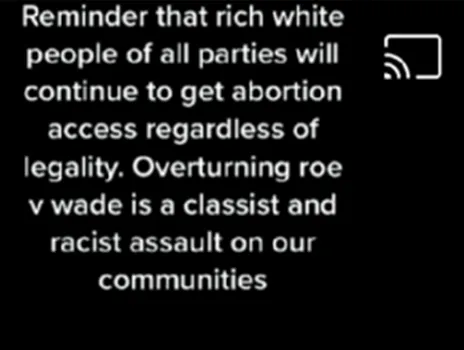
Yet, while the news coming out of Texas is very disturbing, there is something else I can’t get out of my mind. Just over a week ago, my family and I had the opportunity to take in some of the landmarks in our nation’s capital. As we navigated busy crosswalks and a drizzly day around the National Mall, we began hearing loud music and very angry people shouting over a PA system. Once we reached the front of the White House (the obligatory photo op), we could see the area just below the Washington Monument covered with thousands of people pouring into the streets holding signs and banging drums. Little did we know, this was one of nearly 400 “Bans Off Our Bodies” rallies organized across the country to protest the recently leaked documents from the Supreme Court that point to a possible overturn of Roe v. Wade.

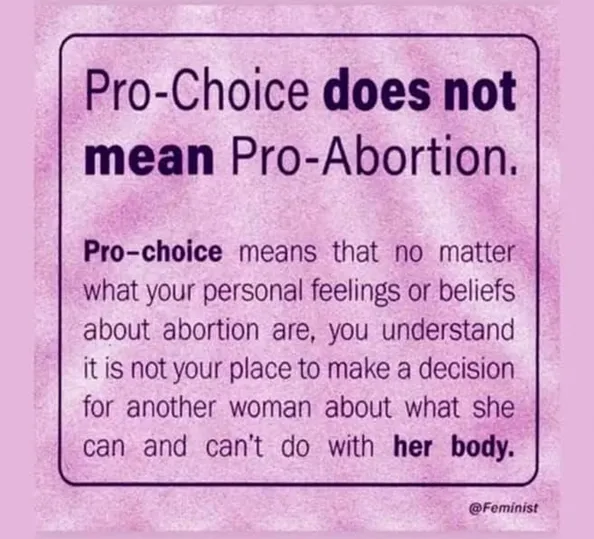
The sadness I feel about the Uvalde school-shooting was equaled by the anger and heartbreak I felt seeing the narcissism, hedonism, and utter foolhardy reasoning occurring at that pro-choice rally.

What is wrong with this scenario? How can we (rightly) mourn the loss of “our most vulnerable” one day and cheer for the death of the unborn (those who are truly our most vulnerable) the next? More to the point, how can we pretend that these utterly contradictory attitudes are sane?

To be frank, we can’t, and we shouldn’t, because such attitudes demonstrate the literal insanity that has taken over modern moral sensibilities and outrage. We can demonstrate this insanity by asking three important questions.

What is a ‘Right’?

No doubt, in the days to come there will be vicious calls for more gun laws, and more debates will occur over the right to bear arms. Likewise, those from the “Bans Off Our Bodies” rally will continue to argue that they have a right to an abortion, and those opposing them will argue the unborn have their own right to life. We constantly hear about gay rights, trans rights, equal rights, etc. This language of “rights” gets thrown around all the time, but what exactly is a right? It will be most helpful to first determine what a right is not.

Rights can’t be merely subjective preferences. If that were the case, then no mass shooter, abortionist, protester, Supreme Court Justice, etc. could, in principle, do anything objectively wrong. At most, we could say their behavior is not our preferred behavior, but why should anyone care about your preferred behavior? In this case, we could not say that anything is actually wrong (or right for that matter). That certainly doesn’t seem correct.

Nor can we conclude that rights are the types of things that apply universally to everything. After all, we don’t put lions on trial for killing a gazelle or even another lion. Hence, there seems to be something specific to human beings regarding rights.

Similarly, rights can’t just be a matter of legislation from some government body. Things like slavery used to be perfectly legal, but we rightly concluded that such behavior is objectively wrong regardless of its legality. Governments are tasked with protecting rights, not granting them. This understanding was foundational to the formulation of America’s founding documents (even if it was inconsistently lived out). It was also understood when even governments themselves, like Nazi Germany for example, were charged with crimes against “humanity” despite the legal grounds in Nazi Germany for killing Jews.

So rights are the kinds of things that aren’t merely opinions. They are not simply based on what is legal, and they seem to apply specifically to human beings. We’re getting closer to understanding what a right is, but what exactly does it mean to be human, and why do humans have these things we call rights?

Why Do Humans Have Rights?

Classically understood, a thing is what it is according to its nature. In other words, all humans are humans because we instantiate a common human nature (in a moderate-realist sense) that makes us a human rather than, say, a dog or a cat. This seems rather obvious, but it is in fact something that has been abandoned in our modern rationale where anyone can “be” anything they want to “be.” In reality, however, we all know this simple fact about natures. No one intentionally goes to the veterinarian rather than a medical doctor when he’s sick. Why? Because he knows the difference between humans and dogs!

Because we can know the natures of things, we can know what constitutes a thing’s good. Correctly understood, “good” is that which fulfills the end or purpose of some thing according to that thing’s nature. To quote Thomas Aquinas, “Good has the nature of an end, and evil, the nature of a contrary.” For example, an eye that doesn’t hear well provides no useful information regarding whether the eye is good or not. An eye that doesn’t see well, however, is an objectively bad eye because it does not fulfill its purpose according to its nature as an eye. Such an understanding turns to moral goodness because humans have a rational nature. We are able both to know what is good for us and choose whether to pursue that good or not. Because the good of our intellects is knowing truth, and the good of our wills is pursuing what the intellect perceives as good, acting contrary to reason just is to act immorally. What does this have to do with rights? We’re getting there.

Notice that this is a completely objective standard of goodness. For example, no matter how much someone wants his eyes to hear, they are simply not the kinds of things meant for hearing. We discover such truths about reality because of our ability to know the natures of things. We do not invent these truths. This understanding of morality is called natural law (based on the good according to our nature as human beings), and it is broadly the basis for our Declaration of Independence and the civil rights movement. As Rev. Dr. Martin Luther King, Jr. famously wrote in his Letter from Birmingham Jail, “I would agree with St. Augustine that ‘an unjust law is no law at all.’ … To put it in the terms of St. Thomas Aquinas, an unjust law is a human law that is not rooted in eternal and natural law.”

This knowledge of natural law gives us the foundation to discover the objective and unchanging human rights to which we’re all entitled based on our shared objective and unchanging human nature. To see why, consider this. Because we are by nature social creatures, we rely on each other for our well-being in various ways (both positively and negatively). As Christian philosopher Dr. Edward Feser observes,

“… we are all obliged to refrain from interfering with others’ attempts to fulfill the various moral obligations placed on them by the natural law; the most basic natural right is the right to do what is good and not to be coerced into doing evil.”

From this understanding we can extrapolate, among other things, the basic rights to “life, liberty, and the pursuit of happiness.”

Of course, this does not mean that we are free to pursue our personal idea of “happiness” without limits. Quite the opposite. We are, after all, naturally directed to pursuing what is actually true and what is actually good. Much like my children having fun on the playground, they are free to play anywhere within the bounds of the playground (their “good” if you will), but they are not free to play in the street. As Feser goes on to say,

“While the very concept of a right entails a certain measure of liberty, that liberty cannot be absolute; for since the point of natural rights is to enable us to realize the ends set for us by nature [our actual good], there cannot, even in principle, be a natural right to do what is contrary to the realization of those ends. In short, there cannot be a natural right to do wrong.”

What are the Implications for Modern Moral Outrage?

Given the knowledge that human rights are based on the natural law thinking outlined above, we can ask our final question: what are the implications of this understanding for the modern moral outrage we see all around us?

While not all of our social ills can be blamed on any one thing, there is one issue that has contributed to societal downfall more than perhaps any other. That issue is sex. Let’s briefly examine this issue in light of our natural law reasoning. We can see that human sexual faculties are directed towards the dual purposes of procreation and emotional bonding with the opposite sex. Intercourse naturally results in children who require the long-term care of a mother and father. Adultery, pornography, promiscuity, homosexual behavior, and many other misdirected sexual behaviors are directly contrary to the good of our sexual faculties. Therefore, such behaviors are necessarily bad for us regardless of someone’s particular feelings or desires (after all, we all have desires on which we ought not act).

Recall the Aquinas quote above, “Good has the nature of an end, and evil, the nature of a contrary.” Since human rights are based in natural law, and natural law shows the necessarily evil nature of the modern sexual revolution, we can see that someone cannot rationally argue for sexual vice by claiming her “rights” are being violated. Why? Because no such rights exist (that is not to say that there needs to be government-enforced laws against every vice). Moreover, if someone wants to simply jettison this natural law reasoning all together, then she is also eliminating the very possibility of objective human rights, in which case, there is no rational argument to be made for keeping “bans off [your] bodies.” You can’t have it both ways.

Feser summarizes the situation well,

“Similarly, in a person or society dominated by sexual vice, it isn’t just moral understanding in matters of sex that would be undermined, but moral understanding in general. For the general idea of human faculties having natural purposes is unlikely to survive when the natural purposes of our sexual faculties, specifically (which are about as obvious as natural purposes can be), are obscured. … The infection is bound to leap from the individual, to the culture at large, to the political sphere. In the Republic, Plato suggests that egalitarian societies tend to become dominated by lust, and have a tendency to degenerate into tyrannies. For souls dominated by lust are least able to restrain their appetites or to tolerate disapproval of them, which leads to general moral breakdown and an increase in the number of individuals with especially disordered and ruthless temperaments.”

We are left with a culture whose moral reasoning is truly insane, having largely been blinded by decades of sexual vice masquerading as sexual freedom. This is how such a culture can in one breath rightly mourn the tragic loss of young lives, and use the next breath to hysterically shout about a “woman’s right to choose” to murder her unborn baby. It truly is a psychosis that must be countered with a generation of well-trained and sober-minded individuals who are prepared to tackle the insanity head-on.

In short, there can be no legitimate moral outrage apart from human rights. And there can be no actual human rights apart from natural law. But natural law shows that things like abortion, homosexual behavior, adultery, pornography, etc. are necessarily bad for us (i.e., evil). Thus, we have no “rights” to such things. These ideas stand or fall together.
The simple fact is, without moral sanity there can be no real social justice. To once more quote Feser’s summation of the issue,

“In reality, there cannot possibly be true social justice without sound sexual morals, because the family is the foundation of social order and the family cannot be healthy without sound sexual morals. The sexual revolution is the cause of millions of children being left fatherless, with the intergenerational poverty and social disorder that that entails. Nor is there any greater manifestation of the deep selfishness that makes social justice impossible than the callous willingness of millions to murder their own children in the womb. Talk about social injustice that ignores the fundamental role of the sexual revolution in fostering such injustice is mere chatter – unserious, sentimental, and prone to make modern people comfortable in their sins rather than telling them what they really need to hear.”

One Last Thought

The astute reader may notice that no Bible verses have been quoted thus far. That may seem like a slap in the face to some, but it is indicative of the common grace and general revelation God has given all of us. A strong case can be made for objective morality apart from any appeal to God or the Bible. On the flip side, the reality of objective morality, based on natural law, can serve as the basis for a strong argument for the existence of God. In turn, such an argument can then lead to a demonstration of the truthfulness of Christianity as a whole.

May wise Christ-followers use the reality of modern moral outrage as a springboard for pointing others to the truth of the Gospel. Ultimate healing of broken homes, broken lives, and evil hearts can only come through the hope and salvation found in the death and resurrection of Jesus Christ. As we live out the Christian life amidst the insanity around us, let us do so with 2 Tim. 2:24-26 in our minds,

“The Lord’s servant must not quarrel, but must be gentle to everyone, able to teach, and patient, instructing his opponents with gentleness. Perhaps God will grant them repentance leading them to the knowledge of the truth. Then they may come to their senses and escape the trap of the devil, who has taken them captive to do his will.”

Recommended resources related to the topic:

You Can’t NOT Legislate Morality mp3 by Frank Turek

Legislating Morality (DVD Set), (PowerPoint download), (PowerPoint CD), (MP3 Set) and (DVD mp4 Download Set

Correct, NOT Politically Correct: How Same-Sex Marriage Hurts Everyone (Updated/Expanded) downloadable pdf, Book, DVD Set, Mp4 Download by Frank Turek

_____________________________________________________________________________________________________________________________________________________

Adam Tucker is the Director of Recruiting & Admissions at Southern Evangelical Seminary. Ranked one of the Best Apologetics Graduate Programs by TheBestSchools.org, since 1992 Southern Evangelical Seminary has provided an integrated approach to theology, philosophy, and apologetics in order to equip Christians to persuasively proclaim the Gospel, engage the culture, and defend the Faith in a secular world.

Original Blog Source: https://bit.ly/3OxIJe9 


A significant point of contention in regard to the book of Hebrews is whether a genuine believer can lose their salvation, or whether falling away from the faith merely evidences the fact that one had never truly come to share in Christ. At the center of this controversy are the warning passages, which are found in Hebrews 2:1-4, 3:7-4:13, 5:11-6:12, 10:19-39, and 12:14-29. The purpose of this paper is to evaluate the Biblical evidence on whether a professing Christian who walks away from the faith forfeits their salvation, with a particular focus on the book of Hebrews.

A fundamental principle of Biblical hermeneutics is that the unclear passages should always be interpreted in light of clearer texts. This follows from the premise that the Biblical texts, being divinely inspired, though composed by different authors, are a unit. That is to say, they are internally consistent in all that they teach. When interpreting difficult and hotly debated texts in the book of Hebrews, therefore, we must ask ourselves first what the rest of the Scriptures teach about this topic. Ideally, we would particularly want to analyse any other books by the same author to provide illumination on his probable intended meaning in the book in which we are interested. Unfortunately, the authorship of Hebrews is widely debated among New Testament scholars and no clear consensus has been reached. However, irrespective of the actual author(s), the text does show evidence of reflecting Pauline thought, and was very likely composed by an associate of Paul, if not by Paul himself [1].  An examination of the Pauline corpus, therefore, can give us some insight into the broader theology of the author of Hebrews. We must then examine the book of Hebrews itself to determine whether other texts, beside the warning passages under investigation, provide illumination on the question before us. Finally, it is incumbent upon us to analyse the context of each of the five warning passages, and how they fit into the general argumentative flow of the book of Hebrews.

A Brief Survey of the New Testament as a Whole

Much could be written on what the New Testament has to say about eternal security. However, since the focus of this paper is the book of Hebrews, I will keep my comments brief. Various statements in the gospels seem to indicate strongly that one cannot lose one’s salvation. For example, Jesus stated that “All that the Father gives me will come to me, and whoever comes to me I will never cast out…And this is the will of him who sent me, that I should lose nothing of all that he has given me, but raise it up on the last day. For this is the will of my Father, that everyone who looks on the Son and believes in him should have eternal life, and I will raise him up on the last day,” (John 6:37-40). Thomas R. Schreiner observes that “the parallelism establishes that comes and believes are synonyms. Thus, to say that those given by the Father ‘will come’ to the Son also means that they ‘will believe’ in the Son.”[2]  Jesus further stated that “No one can come to me unless the Father who sent me draws him. And I will raise him up on the last day,” (John 6:44). The two references to “him” in this verse clearly allude to the same individual, namely, he who was drawn. The implication is that the one who is drawn will ultimately be raised up on the last day. Jesus later goes on to say, “My sheep hear my voice, and I know them, and they follow me. I give them eternal life, and they will never perish, and no one will snatch them out of my hand. My Father, who has given them to me, is greater than all, and no one is able to snatch them out of the Father’s hand,” (John 10:27-29). In Greek, the phrase denoting “they will never perish” is οὐ μὴ ἀπόλωνται εἰς τὸν αἰῶνα. The expression οὐ μὴ is a double negative, used in Greek for emphasis. It hence may be best translated “they will never ever perish.” Again, this supports the doctrine of eternal security.

One possible counter example that may be given to these texts in the gospels is the falling away of Judas, one of the Twelve. However, John 6:64-65 suggests that Judas was not a genuine believer even prior to his betrayal of Jesus: “‘But there are some of you who do not believe.’ (For Jesus knew from the beginning who those were who did not believe, and who it was who would betray him.) And he said, ‘This is why I told you that no one can come to me unless it is granted him by the Father.’” The use of the expression “Διὰ τοῦτο…” (“This is why…”) links verse 65 with verse 64, indicating that the reason Jesus foreknew who would forsake the faith is because he knew before time to whom the ability to come to Jesus had been granted by the Father. The foot washing episode at the last supper adds further support to the idea that Judas was not in fact a believer prior to the betrayal: “‘And you are clean, but not every one of you.’ For he knew who was to betray him; that was why he said, “Not all of you are clean,” (John 13:10).

Multiple texts outside of the gospels also support the doctrine of eternal security. In 1 John 2:19, the apostle John also speaks of false prophets, saying, “They went out from us, but they were not of us; for if they had been of us, they would have continued with us. But they went out, that it might become plain that they all are not of us.” This is consistent with the view that falling away is not a forfeiting of one’s salvation but rather an evidence that one has never truly walked with Christ. The only viable alternative interpretation of this text is to read it as saying that they “went out from us because they were no longer of us.”[3] However, this is special pleading, since the Greek word οὐκέτι (“no longer”) is completely absent from this passage.

Peter indicates that believers “by God’s power are being guarded through faith for a salvation ready to be revealed in the last time,” (1 Peter 1:5). The phrase “being guarded” (φρουρουμένους) expresses the concept that the inheritance of a believer is preserved by God. 2 Peter, however, also contains a warning passage against falling away that is not unlike those found in Hebrews (2 Peter 2:20-22): “For if, after they have escaped the defilements of the world through the knowledge of our Lord and Savior Jesus Christ, they are again entangled in them and overcome, the last state has become worse for them than the first. For it would have been better for them never to have known the way of righteousness than after knowing it to turn back from the holy commandment delivered to them. What the true proverb says has happened to them: ‘The dog returns to its own vomit, and the sow, after washing herself, returns to wallow in the mire.’” Peter, then, seems to uphold both that salvation is conditional upon remaining in the faith and that those who are saved will persevere to the end.

What about the Pauline corpus? Does it provide any additional support for eternal security? One helpful text here is Paul’s statement to the Christians in Philippi that “he who began a good work in you will bring it to completion at the day of Jesus Christ,” (Philippians 1:6). Similarly, Paul tells the Corinthian Christians that Christ “will sustain you to the end, guiltless in the day of our Lord Jesus Christ,” (1 Corinthians 1:8, cf. 1 Thessalonians 5:23-24). These affirmations would seem to point in the direction of perseverance in the faith being accomplished by God Himself. Paul also writes to the Romans that “those whom [God] foreknew he also predestined to be conformed to the image of his Son, in order that he might be the firstborn among many brothers. And those whom he predestined he also called, and those whom he called he also justified, and those whom he justified he also glorified,” (Romans 8:29-30). This text sets up an unbroken chain of redemption from God’s active foreknowledge to the calling of the believer, to their justification and ultimate glorification. In other words, everyone who is called and justified by God will certainly be glorified.

Of interest to the present study, however, there are also warning passages to be found in the Pauline corpus. For example, Paul writes “And you, who once were alienated and hostile in mind, doing evil deeds, he has now reconciled in his body of flesh by his death, in order to present you holy and blameless and above reproach before him, if indeed you continue in the faith, stable and steadfast, not shifting from the hope of the gospel that you heard, which has been proclaimed in all creation under heaven, and of which I, Paul, became a minister,” (Colossians 1:21-23). Paul also writes, “For I do not want you to be unaware, brothers, that our fathers were all under the cloud, and all passed through the sea, and all were baptized into Moses in the cloud and in the sea, and all ate the same spiritual food, and all drank the same spiritual drink. For they drank from the spiritual Rock that followed them, and the Rock was Christ. Nevertheless, with most of them God was not pleased, for they were overthrown in the wilderness,” (1 Corinthians 10:1-5). The affirmation of eternal security, together with an affirmation that salvation is conditional upon perseverance, is something also found in Hebrews, as we shall see. Paul, however, holds those two apparently conflicting ideas together. He writes of the gospel “by which you are being saved, if you hold fast to the word I preached to you – unless you believed in vain,” (1 Corinthians 15:2). In other words, while salvation is indeed conditional upon perseverance in the faith, a true believer will not fail to persevere. Of course, this raises a question about the purpose of the warning passages in Hebrews and the rest of the New Testament: Why does one need to be warned if there is no danger of falling away? I shall return to this question later in this paper.

An Analysis of Clear Texts in the Book of Hebrews

Having briefly surveyed Biblical books outside of the epistle to the Hebrews, we must turn our attention to analyse any clear texts within Hebrews itself that might provide illumination as to relevant beliefs the author holds relating to the subject. Indeed, while the unity of Scripture is a justified working assumption that falls out of the doctrine of inspiration, we must be open to the possibility of this methodological presupposition being falsified.

The author of Hebrews tells us that a necessary consequence of coming to share in Christ is holding “our original confidence firm to the end,” (Hebrews 3:14). The implication here is that if one does not persevere in the faith then that individual has not come to share in Christ – confirming the numerous statements in other New Testament literature and thereby supporting our working assumption of Scriptural unity. Indeed, “Careful attention to the wording shows that these lines do not cite what will be true if they hold on, but what is already true of them, if in fact they endure. Their endurance through temptation will be the evidence of their vital connection to Christ. The writer asserts that their continuance in faith will demonstrate that they are members of God’s household, not that it will make it so in the future. Holding on to their confidence will reveal the reality they already have come to share in Christ, not what they will share. By continuing in faith, they demonstrate the work Christ has already begun and will certainly accomplish in them.” [4]

Another relevant text in Hebrews is the author’s statement that “[Christ] is able to save to the uttermost those who draw near to God through him, since he always lives to make intercession for them,” (Hebrews 7:25). This presents a theological conundrum for the view that salvation may be forfeited by falling away, since if Christ is standing making intercession on behalf of those who are His and yet they are falling away, the conclusion seems inescapable that the intercession and prayers of the Son are being rejected by the Father, thereby implying a dissension within the godhead.

Any attempt to understand the soteriology of the book of Hebrews, therefore, must make sense of both the statements given above and the warning passages. It is to these warning passages that I now turn.

Are the Warning Passages Addressing Genuine Believers?

The first question we must address is whether the warning passages are addressed to genuine believers and speak of a falling away of someone who truly believed. Perhaps the most famous of the warning passages is that found in Hebrews 5:11-6:12. Verses 4-6 state that “it is impossible, in the case of those who have once been enlightened, who have tasted the heavenly gift, and have shared in the Holy Spirit, and have tasted the goodness of the word of God and the powers of the age to come, and then have fallen away, to restore them again to repentance, since they are crucifying once again the Son of God to their own harm and holding him up to contempt.” The contextual background of this text seems to be that the audience to whom the author was writing were failing to make spiritual progress and were in a state of spiritual infancy and lethargy (Hebrews 5:11; 6:12). The author thus warns them in the strongest of terms about the danger of falling away, a step they were on the verge of taking. Indeed, the author consistently refers to the potentiality of taking this next step rather than its actuality (Hebrews 2:1; 3:12-13; 4:11, 11, etc). Thus, he says in 6:9, “Though we speak in this way, yet in your case, beloved, we feel sure of better things – things that belong to salvation.”

Throughout the homily of Hebrews, the author alludes to the danger of his audience drifting away from or neglecting the gospel of salvation (Hebrews 2:1,3), of throwing away their confidence, and shrinking back from faith (Hebrews 10:35, 38-39). They were on the verge of unbelief and being hardened by the deceitfulness of sin (Hebrews 3:12-13,19), disobedience (3:18; 4:6, 11), and rejecting God (Hebrews 12:25). Verses 26-31 say, “For if we go on sinning deliberately after receiving the knowledge of the truth, there no longer remains a sacrifice for sins, but a fearful expectation of judgment, and a fury of fire that will consume the adversaries. Anyone who has set aside the law of Moses dies without mercy on the evidence of two or three witnesses. How much worse punishment, do you think, will be deserved by the one who has trampled underfoot the Son of God, and has profaned the blood of the covenant by which he was sanctified, and has outraged the Spirit of grace? For we know him who said, ‘Vengeance is mine; I will repay.’ And again, ‘The Lord will judge his people.’ It is a fearful thing to fall into the hands of the living God.” Verse 29 speaks of how the apostate has “profaned the blood of the covenant by which he was sanctified.” The interpretation of this text rests in large measure on the identification of the referent of the pronoun of this verse. If the pronoun refers to the individual who deliberately carries on sinning, then this would suggest that the text is speaking of a genuine believer, who had undergone sanctification by Christ’s blood, who has fallen into consistent rebellion against God. Alternatively, a minority of interpreters, in order to avoid the force of this text, have suggested instead that the pronoun of verse 29 may be referring to Christ who was sanctified, since Christ is said earlier in the homily to have “learned obedience through what he suffered” (Hebrews 5:8).[5] However, this seems to be an ad hoc interpretation. Randy Booth comments, “Some contend that the words ‘by which he was sanctified’ refer to Jesus (see John 17:19). Such an interpretation cannot be sufficiently supported. Moreover, even if they did refer to Jesus, it must be admitted that the word ‘sanctify’ is used in a different way than it is earlier in Heb. 10:14. Surely the sanctification experience of Jesus is far different from that which we experience.”[6]

Another interpretation, offered by Wayne Grudem, is that the sanctification being referred to here is outward and ceremonial, since it is found in a context where a comparison is being made to the Levitical sacrifices.[7] Thomas Schreiner points out, rightly in my view, two problems with this approach. One is that “a similar argument could be made regarding the cleansing of the conscience, for the author contrasts the cleansing of the conscience with that provided by the Levitical system. Thus, on Grudem’s own terms it is methodologically possible that the cleansing of the conscience is also external and not saving.”[8] Schreiner also points out that “the contrast with Levitical sanctification is intended to emphasize the superiority of Christ’s work. The contrast and comparison with the Levitical system does not indicate that the sanctification provided by Christ is merely external, for throughout Hebrews the old covenant outwardly symbolizes what is now an inward reality through Christ. Grudem, by relegating the sanctification in Hebrews 10:29 to ceremonial sanctification, actually contravenes one of the major themes of Hebrews, namely, what was anticipated in shadowy form in the Old Testament has now become a reality in and through the sacrifice of Christ.”[9]

The other three warning passages also appear to be addressed to believers. In Hebrews 2, the author cautions his readers against “drifting away from” (2:1) and “neglecting” (2:3) the “great salvation.” Given that a major theme of the book of Hebrews is the readers’ spiritual lethargy and disposition to return to the things of the old covenant (which were but shadows of the reality in Christ), the best way to interpret this text, in my judgment, is that it addresses genuine believers who are at risk of falling away. That this warning is addressed to believers is also suggested by the use of the inclusive pronoun ἡμᾶς (“we”) in Hebrews 2:1.

The warning passage in Hebrews 3:7-4:13 also appears to be directed towards believers, since 3:12 says “Take care, brothers, lest there be in any of you an evil, unbelieving heart, leading you to fall away from the living God.” The fact that the author addresses the audience of the warning as ἀδελφοί (“brothers”) suggests that his exhortation is directed towards fellow believers.

Finally, the warning in Hebrews 12:14-29 is best understood as being directed at believers. The author writes “But you have come to Mount Zion and to the city of the living God, the heavenly Jerusalem, and to innumerable angels in festal gathering, and to the assembly of the firstborn who are enrolled in heaven, and to God, the judge of all, and to the spirits of the righteous made perfect, and to Jesus, the mediator of a new covenant, and to the sprinkled blood that speaks a better word than the blood of Abel,” (Hebrews 12:22-24). This strongly suggests that the addressees are genuine believers. In the verse that immediately follows, the author says, “See that you do not refuse him who is speaking. For if they did not escape when they refused him who warned them on earth, much less will we escape if we reject him who warns from heaven,” (Hebrews 12:25). The second person plural pronoun (“you”) in this text refers to the same audience as that in verse 22, indicating strongly that the warning is given to individuals who are true believers.

For the reasons given above, it, therefore, seems most plausible to me that the “falling away” spoken of in Hebrews 6:4-6 and the other warning passages refers to genuine apostasy where a true believer forsakes the gospel of his salvation. If that is indeed the case, then it would appear that salvation is indeed conditional upon perseverance in the faith. What is not as clear, however, is whether this implies that a true believer can forfeit his or her salvation by falling away. It is to this question that I now turn.

Can a Christian Lose Their Salvation?

If, as I have argued, the warning passages of Hebrews are addressed to believers, does this imply that a Christian can lose their salvation? If so, we would be required either to re-evaluate our methodological presumption of the unity of Scripture, or to re-evaluate the numerous texts in the rest of the New Testament that I have argued support eternal security. Some interpreters have gone down this route and have argued that loss of salvation is indeed a possibility for the believer. For example, Scot McKnight has offered an analysis of all five of the warning texts, in which he argues that believers are indeed in view and that a Christian can forfeit his or her salvation by falling away.[10]  Howard Marshall likewise argues that a Christian can lose their salvation by falling away, since, he argues, the warning passages are robbed of their meaning if a believer cannot in fact stray from the faith and forfeit their salvation by so doing. [11]  Nonetheless, he argues that falling away is the exception rather than the rule, as revealed by the texts which speak of the preserving grace of God. According to Marshall, the relationship between God’s threats and promises is paradoxical and cannot be understood.[12]  Marshall also reinterprets texts outside of the book of Hebrews that appear to teach eternal security of the believer. For example, he suggests that the golden chain of redemption spoken of in Romans 8:29-30 can in fact be broken by the believer.[13]

Another approach that has been offered in an attempt to get around the implication that a believer can forfeit their salvation is argued by Charles Stanley[14], R.T Kendall[15], and Zane C. Hodges [16] [17]. These authors argue that the warning passages, though directed at believers, actually concern the loss of rewards, or the loss of a happy and fruitful Christian life. According to this perspective, everyone who ever confesses Jesus as Lord will be saved, no matter what fruit (or lack thereof) is borne in the life of the believer. Kendall, for example, suggests that the kingdom of God spoken of in warning texts such as 1 Corinthians 6:9-11 and Galatians 5:21 refers not to heaven but instead to God dwelling in the hearts of believers[18].  Likewise, when it comes to the warnings in Hebrews, Kendall argues that the texts are warning about the loss of rewards, not their eternal salvation. [19]  However, this approach errs in the divorcing of salvation from good works and perseverance in the faith. Numerous texts throughout the New Testament indicate that good works are a necessary accompaniment of saving faith and provide the grounds of assurance of one’s salvation. Indeed, “faith by itself, if it does not have works, is dead,” (James 2:17).

My own opinion is that, though the warning passages are indeed addressed to believers, and though the warning texts refer to a genuine apostasy, a Christian cannot lose their salvation. We have already seen that the apostle Paul upheld both the doctrine of eternal security and the doctrine that salvation is conditional upon perseverance in the faith. If those ideas can indeed be held in harmony, then there is no reason to think that the book of Hebrews teaches that a Christian can forfeit their salvation.

I would argue that the interpretive key is found in Hebrews 3:14, discussed earlier in this paper, which says “For we have come to share in Christ, if indeed we hold our original confidence firm to the end.” This is consistent with what is said in the Pauline corpus concerning apostasy. For example, he writes of the gospel “by which you are being saved, if you hold fast to the word I preached to you – unless you believed in vain,” (1 Corinthians 15:2). The soteriology of the book of Hebrews, therefore, does not appear to be different from that of Paul and Peter. All three uphold both eternal security and the requirement of perseverance for salvation. Both hold those two doctrines together by maintaining that the test of a true believer is that they will persevere in the faith. In numerous texts, Paul indicates that certain behaviours, including perseverance, necessarily accompany true salvation and warns believers to test themselves to ensure that they are indeed in the faith (e.g. 2 Corinthians 13:5-6).

The Purpose of the Warning Passages

This still, however, leaves unaddressed the question of why Paul and the author of Hebrews feel a need to include the warning passages. If true believers will not fail to persevere, what sense is there in warning them that they must persevere in the faith in order to inherit salvation? The answer I find most satisfying is what Thomas Schreiner has called “the means of salvation” view. [20] That is to say, observing and taking heed of the warning passages is the means by which we obtain salvation. This is not works-based salvation, since, in my view, perseverance is a necessary expression of true faith and anchored in the sustaining grace of God. While works are necessary for salvation, those works are not meritorious. Rather, works are a necessary accompaniment of saving faith. So powerful is God’s grace that it not only imparts to the believer salvation apart from any meritorious works on our part, but it also regenerates the believer. Indeed, “what is striking about the Scriptures is that the passages concerning the steadfastness of God’s faithfulness and the passages with admonitions are inseparable. We do not encounter a single passage that would allow anyone to take the immutability of the grace of God in Christ for granted.”[21]

A helpful illustration to convey the purpose of the warning passages is to be found in the shipwreck of Paul on route to Rome in Acts 27:13-44. Paul says to the sailors, “I urge you to take heart, for there will be no loss of life among you, but only of the ship,” (verse 22) since an angel had told Paul that “God has granted you all those who sail with you,” (verse 23). Nonetheless, “Paul said to the centurion and the soldiers, ‘Unless these men stay in the ship, you cannot be saved,’” (verse 31). Here, Paul has been guaranteed by God that all of those with him on the ship will be saved. However, Paul also candidly warns the sailors that to be saved they must remain with the ship. In other words, their salvation was conditional upon their perseverance with the ship, but God fulfilled the condition by causing them to persevere. God uses means to accomplish His ends, and in this case, God used Paul’s warning to those with him on the ship that they needed to remain with the doomed vessel in order to be saved. I would argue that God uses means to bring about the perseverance of those who are being saved. One of these means is through the warning passages in Hebrews and elsewhere in Scripture.

Some may be concerned that God guaranteeing that true believers will persevere in the faith – and, indeed, God’s sovereign election of His saints – conflicts with human free will. However, the compatibilist view is that God works through our free choices. So exhaustive is God’s knowledge of His creatures, even before they are born, that He knows how they will behave given different contingent counterfactuals. Thus, using this divine middle knowledge, God can create a world in which His purposes are accomplished (including the salvation and perseverance of His elect) without compromising human free will.[22]

The idea that salvation is conditional upon perseverance in the faith is further supported by the Olivet discourse, where Jesus says, “See that no one leads you astray (Mark 13:5). Jesus goes on to speak of the terrible persecution that Jesus’ followers are to endure. He says that “you will be hated by all for my name’s sake. But the one who endures to the end will be saved” (Mark 13:13). However, notice how Jesus indicates that God also uses means by which the endurance to the end is brought about. He goes on to say that “in those days there will be such tribulation as has not been from the beginning of the creation that God created until now, and never will be. And if the Lord had not cut short the days, no human being would be saved. But for the sake of the elect, whom he chose, he shortened the days,” (Mark 13:19-20). In other words, God would providentially shorten the days of persecution for the sake of His elect, so that they would indeed persevere to the end.

Conclusion

In summary, I have argued that while the warning passages in Hebrews and elsewhere in the New Testament are directed towards believers and concern the real danger of apostasy, the New Testament teaches that this condition is fulfilled by God Himself, who causes true believers to persevere in the faith. If, then, someone fails to persevere in the faith, that provides evidence that they were never truly saved. I have argued that the warning passages serve as part of the means through which God ensures the perseverance of His saints. The Lord’s sheep hear the voice of the shepherd, which warns and admonishes them, lest they should stray from the path of salvation and perish.

Footnotes

[1] David Alan Black, “Who Wrote Hebrews? The Internal and External Evidence Reexamined,” Faith & Mission 18, no. 2 (Spring 2001): 3-26.

[2] Thomas R. Schreiner, “Perseverance and Assurance: A Survey and a Proposal,” The Southern Baptist Journal of Theology 2, no. 1 (Spring 1998): 32-62.

[3] Dale Moody, The Word of Truth: A Summary of Christian Doctrine Based on Biblical Revelation (Grand Rapids, MI: Wm. B. Eerdmans-Lightning Source, 1981), 357.

[4] Buist M. Fanning, “A Classical Reformed View,” in Four Views on the Warning Passages in Hebrews, ed. H. W. Bateman IV (Grand Rapids, MI: Kregel Academic & Professional, 2007), 207.

[5] James R. White, “The Newness of the New Covenant: Better Covenant, Better Mediator, Better Sacrifice, Better Ministry, Better Hope, Better Promises (Part II),” Eamon Younis, March 30 2020, http://eamonyounis.blogspot.com/2020/03/the-newness-of-new-covenant-better_30.html.

[6] Randy Booth, “Covenant Transition,” in The Case for Covenantal Infant Baptism, ed. Gregg Strawbridge (Phillipsburg, NJ: P&R Publishing, 2003), 298.

[7] Wayne Grudem, “Perseverance of the Saints: A Case Study of Hebrews 6:4-6 and the Other Warning Passages in Hebrews,” in The Grace of God, The Bondage of the Will: Biblical and Practical Perspectives on Calvinism, Volume One, ed. Thomas R. Schreiner and Bruce A. Ware (Grand Rapids: Baker, 1995), 177-178.

[8] Thomas R. Schreiner, “Perseverance and Assurance: A Survey and a Proposal,” The Southern Baptist Journal of Theology 2, no. 1 (Spring 1998), 49-50.

[9] Ibid., 50.

[10] Scot McKnight, “The Warning Passages of Hebrews: A Formal Analysis and Theological Conclusions,” Trinity Journal 13 (1992) 21-59.

[11] Howard Marshall, Kept by the Power of God: A Study of Perseverance and Falling Away (Minneapolis: Bethany Fellowship, 1969), 196-216.

[12] Ibid., 210-211.

[13] Ibid., 103.

[14] Charles Stanley, Eternal Security: Can You Be Sure? (Nashville: Thomas Nelson, 1990).

[15] R.T. Kendall, Once Saved, Always Saved (Chicago: Moody Press, 1983).

[16] Zane C. Hodges, The Gospel Under Siege: A Study on Faith and Works (Dallas: Redencion Viva, 1981).

[17] Zane C. Hodges, Absolutely Free: A Biblical Reply to Lordship Salvation (Dallas: Redencion Viva, 1989 and Grand Rapids: Zondervan, 1989).

[18] R.T. Kendall, Once Saved, Always Saved (Chicago: Moody Press, 1983), 125-130, 159-184.

[19] Ibid., 177-178.

[20] Thomas R. Schreiner, “Perseverance and Assurance: A Survey and a Proposal,” The Southern Baptist Journal of Theology 2, no. 1 (Spring 1998), 32-62.

[21] Gerrit Cornelis Berkouwer, Faith and Perseverance, trans. R. D. Knudsen (Grand Rapids: Eerdmans, 1958), 116-117.

[22] Kenneth Keathley, Salvation and Sovereinty: A Molistinist Approach (Nashville, TN: B&H Academic, 2010).

Recommended resources related to the topic:

How to Interpret Your Bible by Dr. Frank Turek DVD Complete Series, INSTRUCTOR Study Guide, and STUDENT Study Guide

How Philosophy Can Help Your Theology by Richard Howe (MP3 Set), (mp4 Download Set), and (DVD Set

_____________________________________________________________________________________________________________________________________________________

Dr. Jonathan McLatchie is a Christian writer, international speaker, and debater. He holds a Bachelor’s degree (with Honors) in forensic biology, a Masters’s (M.Res) degree in evolutionary biology, a second Master’s degree in medical and molecular bioscience, and a Ph.D. in evolutionary biology. Currently, he is an assistant professor of biology at Sattler College in Boston, Massachusetts. Dr. McLatchie is a contributor to various apologetics websites and is the founder of the Apologetics Academy (Apologetics-Academy.org), a ministry that seeks to equip and train Christians to persuasively defend the faith through regular online webinars, as well as assist Christians who are wrestling with doubts. Dr. McLatchie has participated in more than thirty moderated debates around the world with representatives of atheism, Islam, and other alternative worldview perspectives. He has spoken internationally in Europe, North America, and South Africa promoting an intelligent, reflective, and evidence-based Christian faith.

Original Blog Source: https://bit.ly/3bo21og

 

By Brian Huffling

Many people don’t know how to study the Bible, or even where to begin. The Bible is a long collection of books that contains much about ancient history, difficult concepts, and is very intimidating for people who want to read it but don’t know where to start. This article will describe some of the principles of interpreting the Bible (hermeneutics) that are taught in basic Bible college and seminary classes (but are easy enough for anyone to understand). This is not a 12-step method to anything, it is simply a sound method to examine the biblical text. Well, it is a 3-step method: observation, interpretation, and application.

OBSERVATION

When we read a passage, we typically want to ask, “What does it mean?” But there is a more basic question we should ask first: “What does it say?” It is easy to read into the text something that is not there (this is called eisegesis), often because we simply put words there that aren’t but think they should be. For example, John 20:19 says: “On the evening of that day, the first day of the week, the doors being locked where the disciples were for fear of the Jews, Jesus came and stood among them and said to them, ‘Peace be with you.’” It is often stated that Jesus walked through a wall or the door. However, the text doesn’t say that. It simply says the doors were locked and Jesus appeared to them. Maybe he walked through the door or wall, or maybe he just showed up. We have to observe the text carefully. There are various aspects of the text to observe.

One major area to observe is genre. For example, narrative is treated differently than poetry or didactic literature (such as the epistles). Narrative simply describes what happened, whereas didactic literature prescribes what should happen (in other words, it gives commands). Of course there can be narrative in epistolary literature (or vice versa), but the point is that one needs to be careful, for example, not to make an imperative out of a simple description.  It is also arguably the case that one should not use parables to base his theology. This is debated, but the point is that we should be aware of the type of genre we are reading when doing interpretation.

Another aspect of the text to observe is the historical and cultural context. For example, Revelation 3:15-16 says, “I know your works: you are neither cold nor hot. Would that you were either cold or hot! So, because you are lukewarm, and neither hot nor cold, I will spit you out of my mouth.” People often say that Jesus would rather you be completely dedicated to him or not dedicated at all. (Does the latter even make sense?) Actually, what we know from historical information is that the the area being referred to (Laodicea) had hot water pumped in from hot springs and cold water pumped in from cold springs. People went to the hot springs for healing (like being in a hot tub) and went to the cold springs for refreshment (something I would never do as I hate cold water), so the Laodiceans tried to get that water for themselves. However, by the time the water got to Laodicea, it was lukewarm and nasty and when people drank it it would make them vomit. Jesus is saying that he wanted the Laodiceans to be spiritually healing or refreshing. Rather, what the church there had to offer was spiritually nasty. Historical knowledge here clarifies the text for us.

It is also imperative to observe the textual and literary context, that is, what comes before and after the passage you are looking at. We get into trouble when we start looking at passages without understanding the context in which they are in. Sometimes we don’t have to go back to the beginning of the book, but we should at least start with he literary unit in which our passage is found. The chapters and verses don’t necessarily determine that, so pay attention to what the text is saying. Does the passage start with a conjunction such as “but” or “and?” Then it’s a good idea to see what preceded that conjunction.

In looking at the textual and literary context we can observe the structure of the passage. Are words, phrases or sentences in a certain order or pattern? For example, we should be on the look out for chiasms. Chiasms are structures that have an ABCBA order. Sometimes it could have an ABBA order, such as in Romans 10:9-10, which says: “because, if you confess with your mouth that Jesus is Lord and believe in your heart that God raised him from the dead, you will be saved. For with the heart one believes and is justified, and with the mouth one confesses and is saved.” Notice the mouth/heart/heart/mouth structure. The middle part of the chiasm is meant to emphasize the author’s point. Look at the below chiasm from the flood story:

Such a long chiasm is hard to identify, but if we start to see patterns in the wording of the text and in a certain order, it can be found. While the story of the flood is typically thought to be about judgment, the focal point of the flood story is actually that God remembered Noah. The entire Book of Mark is actually a chiasm. The below image is taken from my Hermeneutics class notes by Dr. Tom Howe:

Another area to observe is terms. This particular area of observation is difficult not to blend with interpreting (asking about the meaning). However, we have to observe what terms are (and are not) used. As you probably know, the Bible was not written in English. Almost all of the Old Testament was written in Hebrew, with some areas being written in Aramaic (such as much of Daniel with the rest being Hebrew—something that itself needs to be observed), and the New Testament was written in Greek. Word studies are very popular, and many times all of Bible study is simply reduced to a word study, which it should not be. But it should be part of our study. It is important to know what underlying original word was used, if we can, when doing a Bible study. Some people are more trained at this than others, but it is a goal we should have.

When observing terms, we need to look for terms that are repeated. Such repetition of terms can show the structure of the book or passage. Such as the word “immediately” in Mark. The word “immediately” is used 5 times in Matthew, and fewer than that in Luke and John. But Mark uses it over 40 times. Why is that? It is obviously an important term for him. Let me put that into a graphic for you:

We should also observe terms that are difficult to understand, such as “predestination.” Figure of speech is also important to observe. Sometimes it is debatable as to whether a text is a figure of speech or not. There are some rules that can help discover if something should be taken as a figure of speech. For example, if something for whatever reason cannot be taken literally, then it should be taken as a figure of speech—such as when Jesus told his disciples at the Last Supper that the bread and wine was his body and blood. If something would be an immoral command from God, such as when Jesus said to eat and drink his body, that should be taken as a figure of speech. Of course, these examples are debatable between Catholics and Protestants, but the general rule holds true that when something cannot be taken literally, it needs to be taken as a figure of speech.

We also need to take note of words that are unfamiliar to us, such as “talent.” When we read, for example, in the parable of the unforgiving servant, that the servant owed ten thousand talents, we need to know what a talent is. (This gets blurry with our second step, interpretation.) Some translations, such as the NIV, translate “ten thousand talents” here as “ten thousand bags of gold.” One talent was about twenty years worth of wages. More on this in the next section, but the point is we need to be aware of these words—in other words, observe them.

INTERPRETATION

This is the step we generally start with but shouldn’t: what does the text mean? Back to the “talent” story. We observed that the word used in the parable of the unforgiving servant is “talent,” but the NIV says “bags of gold.” A talent was about 20 years worth of wages. If the average wage is around $45k, then that’s $900k. I don’t know how much a bag of gold is worth, but we’d have to multiply $900k by 10k for it to be accurate in talents. My iPhone calculator got an error when I did that. Ten thousand talents was more money than the known world had then, and ten thousand was the highest number in Greek. The point was actually that the amount of money the servant owed was unimaginable. Ten thousand bags of gold just doesn’t seem to be a good translation. This is an example of both the observation and the meaning of a word.

Another example is the word “power” in Romans 1:16: “For I am not ashamed of the gospel, for it is the power of God for salvation to everyone who believes, to the Jew first and also to the Greek.” The word for “power” in Greek is dynamis, from which we get the word “dynamite.” Some today, even popular commentators, say that the gospel, like dynamite, blows up sin. The problem with this view is that dynamite didn’t exist in the first century, so that can’t be what Paul meant. It simply means “power” or “ability.” This is a good example of what not to do in interpretation: import a later meaning into an earlier word. Remember, a text can’t mean what it never meant. This particular issue is called the fallacy of reverse etymology (etymology is the study of how words change over time) or anachronism.

Don’t know Greek? There are tools to help. Let me illustrate with a couple that I used before I studied Greek. I used to listen to a popular teacher and in one of his sermons he quoted Acts 2:24 to argue that Jesus went to hell. The text says this: “God raised him up, loosing the pangs of death, because it was not possible for him to be held by it” (the KJV from which he was using says “pains”). According to this teacher, since Jesus was in pain, then he must have been suffering, which wouldn’t have happened in heaven, so he must have been in hell. I was looking at that passage one day in my newly purchased Hebrew and Greek study Bible that used Strong’s Dictionary number system. The word “pain” had a number by it, so I looked it up. It said the word was “odin.” I also had just gotten the Theological Dictionary of the New Testament (this is not an endorsement of TDNT as it is said to be pretty liberal, but it can be helpful in some ways), and looked up the word there. Basically, TDNT said that the word referred to birth pain, and that Peter was making an analogy here between a woman not being able to hold her baby in, but at the right time she gives birth, and death not being able to hold Jesus, but at the right time was forced to let go of him. It does not mean Jesus was in pain. Lessons: look words up. Get some tools.

But, as mentioned, word studies are not the only aspect of Bible study. When doing interpretation, we have to not only examine the meaning of particular words, but how words relate to other words. The former is merely grammar and the latter is syntax. This requires a knowledge of grammar as well as parts of speech and how words relate to each other. This is why simple word studies, while obviously useful, is not the only part of the game. Words aren’t in isolation, but relate to other words. Let me give you an example of how it is important to see how words relate to each other.

Several years ago in a Ph.D. class on philosophy of history, my professor, Mike Licona, said that we should not take the saints being raised in Matthew 27 literally because if we did, it would result in a problem in the text (this issue has since become a hot issue for him and the issue of inerrancy). Here’s the text: “And behold, the curtain of the temple was torn in two, from top to bottom. And the earth shook, and the rocks were split. The tombs also were opened. And many bodies of the saints who had fallen asleep were raised, and coming out of the tombs after his resurrection they went into the holy city and appeared to many” (Matthew 27:51-53, ESV). Do you see the problem? I have read this passage for years and never noticed it. The context of the passage is Christ’s death. When was the curtain torn, and when did the earth shake? At his death—Friday. When did the tombs open and when were the saints raised? Friday. When does it say they came out of their tombs? After his resurrection—Sunday! That’s a natural reading of this translation. I haven’t seen any other English translations say it differently. The text seems to say that they were raised and the tombs were opened at the same time as the other events. But it seems to say that they didn’t come “out of their tombs until after his resurrection.”

I didn’t like this and was distracted by it. So, I stopped listening to the lecture (sorry Mike), and went to the Greek. Long story short, here was my solution: the word for “and” is kai in Greek and has several meanings, such as “even.” When it means “even” it tends to be emphatic/explanatory. In this case it could mean, “the saints were raised even coming out of their graves.” This seems to emphasize the physical nature of the event and that it wasn’t merely spiritual. Then, we could re-punctuate the sentence to read, “the saints who had fallen asleep were raised, even coming out of their tombs. After his resurrection, they went into the holy city and appeared to many.” I actually asked Mike if this was an acceptable answer as he knows Greek much better than me, and he said yes, as long as the word for “after” (meta) can start a new sentence. It can, an actually does a lot in narrative. Such a solution maintains proper Greek and English grammar and syntax. But it requires seeing how words relate to each other. It also requires observation and interpretation. (Some may object to such an answer as it appears to make the saints “resurrected” or first fruits before Jesus, but such is not necessary. The text does not imply they were raised immortal like Jesus. Remember, Jesus was not the first person raised from the dead. Elijah raised someone as did Jesus—Lazarus.)

I use this example to show a couple of things. One, don’t be married to any single English translation. Look at other translations (although I haven’t found an English translation that doesn’t have this particular problem here) and look, to whatever capacity you can, at the original languages. Two, the punctuation is not inspired (neither are the chapters and verses). In other words, read the text freshly and see if there are other ways to understand it and if the meaning changes.

One last note on interpretation and meaning. There can only be one meaning (although there can be many applications of that meaning: see below). While it is common for teachers to go around the room and ask their students, “What does this passage mean to you,” it is a bad question. It can’t mean to one person something that it doesn’t mean for all. It can have a different significance, but the actual meaning is fixed. (For a discussion on the issue argument the meaning is subjective or unattainable due to our biases, see my article on standard hermeneutics books as well as my article on historical objectivity.) While there are debates about what a given passage means, there can be only one right answer. It is up to studious interpreters to discover that meaning through the hermeneutical process. More could be said about interpretation, but let’s move on.

APPLICATION

Application is basically the “so what” part of the process. The question to ask here, after we have asked what does it say and what does it mean, is “how does this passage apply?” Unfortunately, sometimes people want to skip to this step first. Of course we have to know what the text says and means before we can ask how it applies to us. There are certain principles to keep in mind when trying to apply the text. Perhaps it is best up front to state that the text does not always have an application for us. Sometimes the text is informative for us and tells us about what happened, but it doesn’t always have an application. When the text says something like, “this king did this, and then this,” there really is no application, just information. In such instances, it is important not to try to wring out an application when there really isn’t one. Having said this, it is important to point out that even if there is no direct application, as Paul says in 2 Timothy 3:16, all Scripture is “profitable for teaching, for reproof, for correction, and for training in righteousness, that the man of God may be complete, equipped for every good work.”

It’s easy to apply commands: just do or don’t do something. Although, sometimes it’s hard to tell whether a command is meant to be for a certain culture and time or whether it’s mean to be universal. For example, is the issue of head coverings in 1 Corinthians 11 meant to be universal? What about men not having long hair in verse 14? Paul says in 1 Timothy 2:12-14, “I do not permit a woman to teach or to exercise authority over a man; rather, she is to remain quiet. For Adam was formed first, then Eve; and Adam was not deceived, but the woman was deceived and became a transgressor.” Is Paul saying women shouldn’t teach or exercise authority over a man always, or just in that culture and time? Whatever that text means, the reasoning behind it seems to be universal. Paul gives two reasons for what he said: (1) the order of creation, and (2) who was deceived. If the reasons are universal, then the prohibition would seem to be so as well.

Things aren’t as straightforward with narrative. We have to be careful to not make a description into a prescription. Narrative simply is a narration of what happened. Of course, it can contain other genres, but when we are looking at pure narrative and not a command to us, we have to be careful how we apply the text, if it can be applied. If it is simply a description of what happened, we can’t necessarily make it a prescription of what should happen. For example, the fact that Gideon put out a fleece to discern God’s will is not a command for us to. The fact that Elijah and other people in the OT were called supernaturally by God does not mean we can say that’s how God normally operates or “calls” people today. Here are some other pitfalls to avoid with application:

Analogizing: analogizing is what we just referred to with the call of Elijah. Just because God called Elijah does not mean that he calls us. This “call” is often analogized between Israel’s prophets and people today, but such an application is illicit. We simply can’t say that because God did something in ancient Israel that he does so today.

Allegorizing: Allegorizing is when we take a literal event and make the application allegorical. For example, we can talk about the person who “loosed his donkey for Jesus” when he entered Jerusalem. I once heard someone say he heard a pastor talk about “loosing your donkey for Jesus.” I guess that’s supposed to mean you are making what you have available for Jesus, but the text is talking about an event that actually happened. It is not a command.

Spiritualizing: Spiritualizing is similar to allegorizing. It takes literal events and gives a spiritual significance. A popular example of this is to present the story of Jesus calming the storm for the disciples and say “Jesus stills the storms of life.” There are a few problems with this. One is that this was a literal storm and was not meant to say that Jesus actually stills the storms of life. It isn’t talking about spiritual storms or tough times: it’s talking about a storm! Secondly, Jesus doesn’t still the storms of life if that means that he stops the storm like he did in the story. To say that he stills the storms of life is not only to state something that is false but to endanger someone’s faith who expects him to still his storms.

So what do we do to apply the text? One thing is to do what the text says to do if it is issuing a command. If it’s narrative, it’s to see what universal principle can be applied. In the story of David and Goliath, it is a spiritualization to say that we should go and slay the Goliaths in our lives. The biblical passage is talking about a literal person named Goliath. It is not giving a command, but describing something that actually happened. But we can glean universal principles. In this story that principle could be that God is faithful to the promises he makes and to his covenant. Here are some other principles from which to see how to apply the text:

  1. Is there an example for me to follow?
  2. Is there a sin to avoid?
  3. Is there a promise to claim?
  4. Is there a prayer to repeat?
  5. Is there a command to obey?
  6. Is there a condition to meet?
  7. Is there a verse to memorize?
  8. Is there an error [theological] to mark?
  9. Is there a challenge to face? (Howard Hendricks, Living by the Book, chapter 44)

The New International Application Commentary is an excellent commentary series to use to bridge the gap between the biblical times and ours to see if and how the text can be applied.

One last word about application: while the meaning is one, the application can be many since there are many situations in which to apply the text.

TOOLS FOR STUDY

If one is going to study the Bible, it is best to understand the tools that are available. Resources that this 3-step method is based on include Methodical Bible Study and Living by the Book (Living by the Book has a workbook).The most important tool is the Bible itself. There are hundreds of English translations of the Bible but there are generally 3 categories of translation philosophies: essentially literal (A.K.A. formal equivalence), dynamic equivalence (A.K.A. functional equivalence), and paraphrase. It is very important to use an essentially literal Bible for Bible study (see Translating Truth: The Case for Essentially Literal Bible Translation for a discussion on this), and I would argue for reading it too, but a good dynamic equivalent translation can be ok for reading. Paraphrases have even been recommended by good interpreters, but mainly to see the general sense of the passage. The front matter in your Bible should explain what translational philosophy it holds to. Essentially literal Bibles include the King James Version, The New King James Version, the New American Standard Bible, the English Standard Version, the Christian Standard Version, and the like. Dynamic equivalent translations include the New International Version, the Good News Bible, and the New English Translation. (The NET is worthwhile for its 60,000+ notes, and is available free at Bible.org.) Paraphrases include The MessageThe Living Bible, and as I like to point out to my students, the Cotton Patch Gospel, that tells the story of Jesus from the vantage point of southerners in the U. S. (he is born in Gainesville, GA and escapes to Mexico).

Then there are commentaries. Commentaries are useful in many ways, but ideally should be consulted after your own study so you aren’t biased in a certain direction. There are two basic types of commentaries: critical (technical) and non-critical (non-technical). A commentary is critical if it discusses textual issues such as variations between different manuscripts of the original languages, or discusses the original languages in general. Some commentaries go into a great deal of detail and others don’t. Sometimes you just need a brief overview of an issue. For that I recommend The Bible Knowledge Commentary,  The Expositor’s Bible Commentarythe Tyndale Old Testament Commentary and the Tyndale New Testament Commentary (as a set here)The NIV Application Commentary is another non-technical commentary. The New International Commentary on the Old Testament, and The New International Commentary on the Old Testament (as a set here) is also very good. It is non-technical in the text but has technical/critical information in the notes. The IVP Bible Background Commentary (separate for OT and NT) is good for giving . . . the background, as are the The Lexham Geographical Commentary on the GospelsThe Lexham Geographical Commentary on Acts through Revelation, and The New Testament in Antiquity. There are actually commentaries on commentaries. These are basically long annotated biographies but with more information on the pluses and minuses of each set. See for example the Old Testament Commentary Survey,the New Testament Commentary Survey, and Commentary and Reference Survey. For a free and very useful resource, see Daniel Akin’s “Building a Theological Library.” It is not necessary to buy a complete set. As the commentary surveys and and Akin’s site show, some commentaries in a set are better than others, thus, it might be more beneficial if cost is an issue to buy certain individual commentaries. It is also important to pick up a good Bible dictionary and encyclopedia. There are a number of those in each category.

I can’t have a section on study tools and not mention Logos. There are many electronic software programs for Bible study. I have used Logos since 2004 and don’t want to try to do Bible study without it. I have required Logos in a couple of my classes as well, and the students love it too. Not only does it offer original language tools, it has incredibly complex search capabilities for the Bible, as well as the other books in your Logos library. And it is just that: a library. They have tens of thousands of books and tools. Other programs are good and there are debates about which is best, but I have used and love Logos. Others programs are BibleWorksOlive Tree, or Accordance (only for Mac). Good free software is Blue Letter Bible and e-Sword.

CONCLUSION

What has been said hardly scratches the surface of biblical interpretation. It is certainly incomplete, but only mean to give some pointers and hopefully motivation for doing Bible study. This article is not meant to make Bible study seem hard, but to show that it takes work and offer some hopefully helpful tips. If you want to understand this system better, I encourage you to get Methodical Bible Study and/or Living by the Book. Thanks for reading, and please subscribe!

Recommended resources related to the topic:

Why We Know the New Testament Writers Told the Truth by Frank Turek (mp4 Download)

The Top Ten Reasons We Know the NT Writers Told the Truth mp3 by Frank Turek

Counter Culture Christian: Is the Bible True? by Frank Turek (Mp3), (Mp4), and (DVD)

_____________________________________________________________________________________________________________________________________________________

J. Brian Huffling, PH.D. have a BA in History from Lee University, an MA in (3 majors) Apologetics, Philosophy, and Biblical Studies from Southern Evangelical Seminary (SES), and a Ph.D. in Philosophy of Religion from SES. He is the Director of the Ph.D. Program and Associate Professor of Philosophy and Theology at SES. He also teaches courses for Apologia Online Academy. He has previously taught at The Art Institute of Charlotte. He has served in the Marines, Navy, and is currently a reserve chaplain in the Air Force at Maxwell Air Force Base. His hobbies include golf, backyard astronomy, martial arts, and guitar

Original blog: https://bit.ly/3xgtCia 


By Al Serrato

Christians believe that God is an infinite being who has always existed. But what “evidence” can the theist put forth in support of this claim? This is a common challenge raised by the skeptic.

When a person asks for “evidence,” the usual response is to look for things like witness statements, or documents or fingerprints left at a scene. Since no one has “evidence” relating to things outside our universe, or to a being who preceded the Big Bang, it’s a safe bet, they think, that the Christian apologist can’t come up with any “evidence.” Or is it?

Teasing out the unspoken premise in the question highlights what is at play: the challenger assumes that it is only through physical or testimonial “evidence” that we can know things. But this is simply not true. While evidence and inferences from evidence are valid ways of determining what is true, they are not the exclusive ways. For example, when I know that no circle is also a square, where is the evidence for that? Or that A = C, when told that A = B and B = C? Or that rape is always wrong. These types of knowledge – based on logic and reason or on a basic moral sense – are part of the normal functioning of every human mind. Like a computer running software, our minds come equipped with certain basic programs, such as the ability to acquire and use language. Similarly, we are born with an appreciation of game-playing and fairness. Watch a child develop and you will see these subprograms at work. You may teach them how to play the game and what’s considered fair or foul, but they already intuitively understand the importance of the game and the rules.

The mind has an additional “pre-loaded” capability that helps us better understand where we came from and who created us: the ability to conceptualize, to make sense of patterns by grouping things into categories. For example, we don’t need an exhaustive list of possible ”chairs” or ”tables” to know whether a particular item can serve in that capacity. To know if something new qualifies as ”food,” we needn’t refer to a list but can instead ask questions, such as whether the item is edible and able to provide nourishment. An exotic fruit will pass that test but an ashtray will not. When we reflect on these conceptions, we can derive actual knowledge, even in the absence of traditional “evidence.” By realizing what a square is, we “know” that a circle can never be one. By knowing that people have a right to the integrity of their bodies, we know that rape – which violates that right – is always wrong. By employing logic, we know that A = C when A and C are both equal to B.

What does this have to do with God’s origins? Just this: it is by conceptualizing what is meant by God that we can determine – that we can know – certain important things about him. When we think of God, what exactly are we thinking about? We may of course disagree on specifics, but to qualify as ”God,” we must be referring to that ultimate omnipotent being that possesses and embodies infinite perfection. Well, the skeptic protests, why does that require existence? I can imagine a unicorn but that doesn’t mean I could ever find one.

This objection helps focus the inquiry, because it requires us to think more deeply. When we think of a unicorn, we are thinking of a white horse-like animal with a horn protruding from its forehead. Such a being may once have existed or may exist sometime in the future or may never exist at all. There is nothing about the conception of a “unicorn” that requires it to actually exist; the only requirement is that if such an animal did exist, it would have the noted attributes.

But when we get back to the conception of God, what is it that we have in mind? How do we best put words to the concept of the ultimate being, a being so great that it is simply not possible to conceive of anything greater? God embodies infinite perfections. Such a being, to qualify as ”God” within our minds, must necessarily exist. If you are contemplating two beings with similar attributes and one possesses the attribute of necessary existence and the other does not, it is readily apparent that the former is the greater being. Unless we’re conceiving within our minds this image of God, we have not yet actually begun to think about God but are instead thinking of something lesser.

Anselm of Canterbury is credited with first developing this argument, the ontological argument, ten centuries ago. When you follow where reason leads in conceptualizing what God entails, you realize that he must be an infinite being who necessarily exists. He was not created. He never came into being, and will never cease existing. All that there is, or was, or ever will be is contingent him upon him for existence, while he is complete in and of himself, contingent upon nothing. This is the only rational conclusion that can be drawn from the creation of something from nothing; it is where the “evidence” leads.

That God is the source of this universe, and all that is in it, is a product of recognizing that all created things had a preceding cause, sufficient to bring them into existence. There are no known exceptions and no reason to suspect that there are any exceptions. Moving to the very beginning of the space/time continuum we occupy, there must be a source adequate to the task of creating it. Two possibilities exist: the creator of the universe was himself created, and therefore had a beginning; or he was infinite, having no beginning. If you choose the former, you haven’t gone far enough in your reasoning because the only way for a being to qualify as “God” is to possess infinite perfection. You need to keep moving back in time to frame in your mind that original being, the one who was not himself created.

The skeptic will usually persist in his challenge: why doesn’t your god need a cause? But again, to ask the question betrays the mistake in reasoning of the questioner. The error is in the premise: all things do not need a creator, only created things, or more specifically this universe and all that it encompasses. Something outside of the universe, something that is the source of all things, does not need to be created. In fact, reason leads us in the opposite direction. Since things don’t create themselves, there must be, at the very beginning, a being who always existed, who was never created and never in need of anything.

Seen in this light, the question becomes nonsensical, translating into: who created the uncreated being, or who caused the being which needed no cause? It is no different than asking what time it is on the moon. The time of day is a function of where on earth a person is; it is nonsensical when applied off planet.

Of course, none of this proves that God is the triune God of the Bible, who by the way does provide witness testimony of his eternal nature. But the skeptic will never begin to consider the truth claims of Christianity if he remains stuck doubting the existence of that God.

Recommended resources related to the topic:

Stealing From God by Dr. Frank Turek (Book, 10-Part DVD Set, STUDENT Study Guide, TEACHER Study Guide)

Oh, Why Didn’t I Say That? Does Science Disprove God? by Dr. Frank Turek (DVD and Mp4)

_____________________________________________________________________________________________________________________________________________________

Al Serrato earned his law degree from the University of California at Berkeley in 1985. He began his career as an FBI special agent before becoming a prosecutor in California, where he worked for 33 years. An introduction to CS Lewis’ works sparked his interest in Apologetics, which he has pursued for the past three decades. He got his start writing Apologetics with J. Warner Wallace and Pleaseconvinceme.com.


By Melissa Dougherty

Energy. Universe. I AM. Manifesting. Meditation. Visualize. Source.

These are just a few words that were familiar to me in the New Age/Thought. These have different meanings in the Christian world and for the average person. Sandra Tanner, a well-known former Mormon, once said, “if you [as a Christian] find yourself agreeing with a Mormon, then someone hasn’t defined their terms.” This isn’t just true with Mormonism. Even though people use the same words, we must understand their definition of what they mean to understand when it departs from Orthodox Christianity. We need to make a distinction between beliefs.

I will attempt to list what I consider to be the top 5 New Age terms that need to be clarified. I will define what these words mean in the New Age vs. what they mean in Christianity. This is not an exhaustive definition but is a general understanding of each word. Because New Age is such a “salad bar” belief system, many people who consider themselves “spiritual” can define each of these slightly differently.

1. Energy- In the New Age, this can mean an invisible power or force that can change and affect things. I used to think of this as a sort of “magic.” We’re all made up of energy and can manipulate it with our thoughts, words, and feelings. It’s the all-encompassing power in the Universe that allows us to manipulate our surroundings and reality. Sometimes, people in their pursuit of mixed spirituality will mistake this for being the “Holy Spirit,” that God is really Universal energy.

In Christianity, when someone says “good vibes” or “bad energy,” it’s not the same thing. They’re trying to convey a bad or good feeling of sorts. Sometimes people innocently use this word to size up what we’re feeling in a room or with people. Scientifically speaking, of course, it’s the general energy our body gives us to move. In Biblical Christianity, we understand there’s a spiritual realm. Thoughts and feelings play a part in how God works, but they’re not the basis of truth. As Christians, we have the Bible and the guidance of the Holy Spirit, but a significant difference is that we recognize God’s sovereignty over our own.

2. Universe/Source- In the New Age, Universe and Source (with a capital “s” and “u”) are buzz words for a pantheistic type of “God”: all is God, and God is all. All are One, and all are united. It can be seen as an “it,” an impersonal force, perhaps a form of conscious ‘love’ fueling the cosmos, and it grants us our desires and guides us. This is where we receive our answers from.

In Christianity, these definitions are used quite literally. The universe is a creation of God. God does not equal the Universe. He holds the universe in His hands. God is personal. He has feelings and is our Creator. He’s not our genie that grants wishes. He’s not submissive to us.

3. I AM- In the New Age, this is a huge affirmation word. I AM has creative power in your life. You say it, believe it, speak it into the universe, and so it shall be. Like Christianity, I AM is another name for God in the New Age. However, the implications are startlingly different. This is a word used to tap into our personal divinity, being able to tell the Universe what we need from it. I AM well. I AM rich. I AM complete etc., are all examples of what I used to say to make it so. In other words, Jesus was claiming His divinity when He said He was the I AM. We all can claim this divinity just like He did because He is the “Way-shower.” The late Wayne Dyer, a popular New Thought teacher, was especially vocal about this teaching. He says:

“The words I AM are your sacred identification as God- your highest self. Take care how you use this term because saying anything after I AM that’s incongruent with God is really taking the Lord’s name in vain!… I AM God is not blasphemy. It’s your identity!”

Pretty cringe, right?

I AM in Christianity is so different! This is Jesus’ exclusive claim to be God, the one and only. In the Old Testament, God claimed to be the I AM. This was the Great I AM, the testimony of the identity of Yahweh, the Almighty God. In my opinion, no other word best describes the attributes of God than “I AM.”

He is the fullness of perfection and is all we need.

4. Manifesting/Visualize- These words are used a lot together in the new age. Whatever you think and feel, you manifest in your reality. The Law of Attraction, a New Thought teaching that says “like attracts like,” is probably one of the biggest examples of this practice. If you visualize it (whatever “it” is, good or bad) and send the energy out into the Universe, then it will mirror that and manifest in your world. This is why positive thinking and actions are paramount to the type of outcome you want to manifest in your life. Growing up, I was told that visualizing was a form of “prayer” to the universe.

In Christianity, in general, there’s nothing wrong with thinking ahead in life and having a mental image of the desired outcome in our lives. A lot of people do this with no metaphysical intentions. But the most significant difference is that we’re not our own sovereigns. We are under the will of the Father. His will be done, which is tough for some people to accept. This means voluntarily giving up control. In Christianity, whatever we have isn’t there because we manifested, visualized, or attracted it to us. God is the one who’s ultimately in control if we’ve given Him our lives.

5. Meditation- New Age meditation is a meditative state where we are all about our energies, chakras, one with the universe, visualizing, etc. It’s a mental state focused on finding inner peace and enlightenment of sorts. Many people will meditate in hopes of having a vision, meeting their spirit guide, or invoking inner peace or a spiritual awakening.

In Christianity, this word means something very different. Believe it or not, meditation itself isn’t unbiblical at all. It’s what we’re meditating on that makes the difference. Many scriptures point to meditating on God’s word and Him alone. An example of this is perhaps memorizing scripture and focusing on God’s will around a particular avenue we should go in life. Our focus is on God and His will.

Does anyone notice a theme of sorts here? In the New Age/New Thought, it’s all about us and our will.

In Christianity, it’s all about God and His will.

Recommended resources related to the topic:

Jesus, You and the Essentials of Christianity by Dr. Frank Turek (INSTRUCTOR Study Guide), (STUDENT Study Guide), and (DVD)

How to Interpret Your Bible by Dr. Frank Turek DVD Complete SeriesINSTRUCTOR Study Guide, and STUDENT Study Guide

_____________________________________________________________________________________________________________________________________________________

Melissa Dougherty is a Christian Apologist best known for her YouTube channel as an ex-new ager. She has two associate’s degrees, one in Early Childhood Multicultural Education, and the other in Liberal Arts. She is currently pursuing her bachelor’s degree in Religious Studies at Southern Evangelical Seminary.


By Natasha Crain  

With the leaked Supreme Court draft opinion potentially pointing to Roe v. Wade being overturned, social media is on fire with pro-choice advocates sharing memes intended to portray abortion “rights” as necessary, important, and even morally good.

For those of us who believe intentionally killing preborn human beings is murder (the unjustified taking of innocent human life), it’s absolutely heartbreaking to see so many people passionately advocating for the right to commit such an act. In response, many Christians have taken to private social media groups to share examples of pro-choice memes and discuss how best to respond.

While it’s not necessary to respond to every post you come across (there aren’t enough hours in the day!), I’m heartened to see so many Christians wanting to address what they’re seeing. That said, I’ve noticed that many people’s responses are missing the key point of the debate as much as the memes themselves are.

As such, I wanted to write this article to respond to several viral pro-choice memes and show how to maintain focus on the core issue without getting pulled into irrelevant other subjects. But first, a critical distinction must be understood.

Distinguishing Worldview Disagreements from Logically Fallacious Red Herrings

Imagine that you come across someone posting the following on social media: “I’m an atheist. I do not believe anything exists beyond the natural world, and therefore I do not believe in the existence of objective morality. Nothing is morally right or wrong, so I’m pro-choice because I believe there’s nothing wrong with ending the life of an unborn baby.”

In this case, the pro-choice advocate is merely being consistent within their own naturalistic worldview. They believe morality is only a matter of opinion, given their view of the nature of the universe. If a Christian is pro-life as a logical outworking of their biblical worldview and an atheist is pro-choice as a logical outworking of their naturalistic worldview, the ensuing conversation isn’t so much about abortion as it is about their respective underlying worldview assumptions.

Worldview-level discussions about the nature of the universe, the nature of humanity, and the corresponding rights (or lack of rights) held by preborn humans certainly transpire in some circles. And these worldview-level questions are ultimately what the debate comes down to.

But this is rarely the level of conversation floating to the top of social media.

In fact, I’ve seen virtually no pro-choice social media posts addressing these questions in popular discourse. Rather, emotion-driven memes carry the day—memes that are nearly always logically fallacious red herringsIn other words, they distract from the real issue with points completely irrelevant to the core (worldview) question at hand:

Is it morally wrong to intentionally kill a preborn human being?

That’s it. That’s what the debate comes down to.

For clarity, the logic behind the answer for Christians with a biblical worldview is as follows:

  1. It’s morally wrong to intentionally kill an innocent human being.
  2. Abortion intentionally kills innocent human beings.
  3. Therefore, abortion is morally wrong.

With this in mind, let’s look at brief responses to eight of the most popular pro-choice memes circulating right now to see how to highlight the red herring and point back to the real issue. As we’ll see, they all fail to address the core question: Is it morally wrong to intentionally kill a preborn human being?

POPULAR PRO-CHOICE IDEA 1: If you really care about babies, you should be working to provide extensive government and/or business support for their lives (and their families’ lives) after birth (and for much longer).

Social media example:

If intentionally killing a preborn baby is morally wrong, whatever a person does or does not do to support a child and/or their parents does not change the morality of the action itself.

Virtually everyone, for example, would agree that rape is morally wrong. If a person opposed to rape does absolutely nothing for rape victims, we still acknowledge that their opposition to rape is the morally correct position to hold. Logically speaking, the morality of an action must be evaluated on its own basis. The core question remains: Is it morally wrong to intentionally kill a preborn human being?

[Avoid the trap: Don’t try to prove your motivations in response to the wording “if it was about babies…” If someone wants to question your motivations, they’re unlikely to be convinced otherwise by your words. The morality of abortion has nothing to do with any individual’s motivation for holding a given position. Also, don’t start breaking down each good we should supposedly provide (formula, diapers, etc.) to show why it’s unnecessary, unfeasible, or already sufficiently provided. All you’re doing is playing into the red herring.]

POPULAR PRO-CHOICE IDEA 2: Being “pro-life” means you should agree to a bundle of other social/moral positions assumed to be the best for human beings.

Social media example:

This is logically quite similar to the first meme, but with a twist that often confuses people: equivocation on the term “pro-life” (equivocation is the use of ambiguous language—typically using the same word with two different meanings).

Pro-life, in the context of the abortion debate, means that a person is opposed to abortion. Here the writer wants to make the political point that if you really care about “life,” you’ll agree with a bundle of other positions (ones they assume to be the best life-sustaining positions). But Roe v. Wade is not about a bundle of issues related to human life. This is a question of one specific human life issue.

Again, intentionally killing preborn babies is either morally wrong or it’s not. Whether someone takes a morally right or wrong position on any other issue is irrelevant to whether they’ve taken a morally right or wrong position on abortion.

[Avoid the trap: Don’t start trying to defend that you really are pro “all life,” but that being pro “all life” doesn’t translate into supporting each of the particular positions listed. If you start trying to prove your pro “all life” credentials by getting into detailed discussions on all these other issues, you’re simply playing into the red herring.]

POPULAR PRO-CHOICE IDEA 3: Caring about unborn babies is easier than caring about people already born.

Social media example:

The logic here is similar to that of the first two memes, but I wanted to include it because this one is especially popular, and it has a slightly different framing: It’s a “Christian” pastor presumably chastising fellow Christians for only caring about who is easiest to advocate for. Non-Christians of course like this because the accusation is coming from one of “our own.”

But regardless of who it’s coming from and regardless of how relatively easy or uneasy it is to advocate for any particular group, the morality of actions against that group remains the same.

That’s it. Even if advocating for the preborn were the easiest thing on earth relative to advocating for other groups, it doesn’t change whether intentionally killing those babies is morally wrong or not. If we’re talking about abortion laws, that’s the question that matters.

[Avoid the trap: Don’t get caught up in showing that this pastor is progressive and doesn’t hold a biblical view. That’s true, but the source of the comment is irrelevant. Also avoid debating how easy or uneasy it is to advocate for different groups—as I’ve shown here, that too is irrelevant.]

POPULAR PRO-CHOICE IDEA 4: Babies born to parents who can’t afford them, don’t want them, or otherwise are unready for them are better off being aborted.

Social media example:

The basic logic here is that it’s better to kill a preborn human than to allow that human to be born into bad circumstances, ranging from poverty to abuse. But many humans live in and always have lived in bad—often terrible—circumstances regardless of whether their parents wanted them. The pro-choice advocate would almost certainly not say that we should kill every human who lives in or will live in a set of circumstances deemed to be insufficiently pleasant. Imagine the outrage if our society started pulling toddlers out of the homes of poor families to kill them! The only difference between that scenario and the one in the meme is that the child is already born.

Again, it’s either morally wrong or it’s not to intentionally kill an innocent human being. Whether a given human’s parents want to or are able to raise that human according to certain standards has nothing to do with whether killing them is right or wrong. We wouldn’t apply that logic to humans who are already born; there’s no logical reason to apply it before birth either.

[Avoid the trap: Don’t enter into debate about how good a child’s life can be even in bad circumstances. The morality of abortion doesn’t depend on how good or bad a child’s life turns out to be. That’s another red herring.]

POPULAR PRO-CHOICE IDEA 5: Men have no right to tell a woman what she should or shouldn’t do with her body.

Social media example:

This idea comes in many different meme forms, but the basic logic is that men have no right to tell a woman what she should or shouldn’t do with her body because men can’t get pregnant. (As an aside, I’m not sure how long this argument can go unchecked today given that trans activists claim trans men–biological women–can be pregnant. Will feminists declare that there really are differences between trans men and biological men and allow trans men alone to speak, given their reproductive capabilities? Only time will tell.)

Once again, this avoids the question of the morality of abortion with an emotional red herring. Our society has laws against murder because we’ve collectively agreed that it’s wrong to intentionally kill an innocent human being; our laws unashamedly restrain the freedom of citizens to kill one another. It’s no more “controlling,” therefore, to have restrictions on what would-be murderers do with their bodies to kill others than it is to have restrictions on what pregnant women do with their bodies to kill others. The only relevant question is whether it’s morally wrong to intentionally kill a preborn human being, and the morality of an action doesn’t depend on the gender of who makes the law. (As many people have pointed out, it was an all-male Supreme Court that passed Roe v. Wade in the first place, so by this logic, pro-choice people should reject that court decision as well.)

[Avoid the trap: Don’t get distracted by the claim that “conservative Christianity” is about controlling bodies. That’s just a jab at Christians. Focus on the “my body, my choice” logic, which quickly fails for the above reasons.]

POPULAR PRO-CHOICE IDEA 6: No one has a right to tell a woman what she should or shouldn’t do with her body.

Social media example:

The logic here is identical to that of the last meme except it takes out the gender-specific language. Rather than “men have no right to tell women what to do with their body,” it’s “no one has a right to tell women what to do with their body.” Once again, we have all kinds of laws in society that restrict the use of one’s body to intentionally hurt or kill other humans. Abortion laws are not unique in telling someone what they can or can’t do with their body when it comes to other human lives.

The relevant question is whether it’s morally wrong to intentionally kill a preborn human being, not whether society is in a place to tell someone what they can or cannot do with their body. We already do that in all kinds of ways.

POPULAR PRO-CHOICE IDEA 7: Legally restricting abortion is classist and racist.

Social media example:

I’m always shocked that someone would make this argument, but it always comes up, so let’s look at the logic: We should keep the intentional killing of preborn human beings legal because if we don’t, certain racial and economic groups will be better able to find illegal ways to kill babies than others. In other words, poor people and people of color won’t have equal opportunity to kill.

We simply do not apply this kind of thinking in other cases—we don’t make actions legal because some groups of people are better able to skirt the law! If we did that, we’d probably have no laws at all. As a society, we work to provide equal opportunity for good not for bad.

The question, therefore, remains: Is it morally wrong to intentionally kill a preborn human being? If it is, there’s no need to give people equal opportunity to do what’s wrong.

[Avoid the trap: Don’t go down the rabbit hole of discussing which groups of people do or do not need abortion “access”—no one needs access to a moral wrong.]

POPULAR PRO-CHOICE IDEA 8: There are all kinds of bad circumstances leading women to seek abortion, so we can’t and/or shouldn’t make blanket restrictions on it.

Social media example (this is a copy and paste post that is viral around Facebook):

I’m not pro-murdering babies.

I’m pro-Becky who found out at her 20 week anatomy scan that the infant she had been so excited to bring into this world had developed without life sustaining organs.

I’m pro-Susan who was sexually assaulted on her way home from work, only to come to the horrific realization that her assailant planted his seed in her when she got a positive pregnancy test result a month later.

I’m pro-Theresa who hemorrhaged due to a placental abruption, causing her parents, spouse, and children to have to make the impossible decision on whether to save her or her unborn child.

I’m pro-little Cathy who had her innocence ripped away from her by someone she should have been able to trust and her 11 year old body isn’t mature enough to bear the consequence of that betrayal.

I’m pro-Melissa who’s working two jobs just to make ends meet and has to choose between bringing another child into poverty or feeding the children she already has because her spouse walked out on her.

I’m pro-Brittany who realizes that she is in no way financially, emotionally, or physically able to raise a child.

I’m pro-Emily who went through IVF, ending up with SIX viable implanted eggs requiring selective reduction in order to ensure the safety of her and a SAFE amount of fetuses.

I’m pro-Christina who doesn’t want to be a mother, but birth control methods sometimes fail.

I’m pro-Jessica who is FINALLY getting the strength to get away from her physically abusive spouse only to find out that she is carrying the monster’s child.

I’m pro-Vanessa who went into her confirmation appointment after YEARS of trying to conceive only to hear silence where there should be a heartbeat.

I’m pro-Lindsay who lost her virginity in her sophomore year with a broken condom and now has to choose whether to be a teenage mom or just a teenager.

I’m pro-Courtney who just found out she’s already 13 weeks along, but the egg never made it out of her fallopian tube so either she terminates the pregnancy or risks dying from internal bleeding.

You can argue and say that I’m pro-choice all you want, but the truth is:

I’m pro-life.

Their lives.

Women’s lives.

You don’t get to pick and choose which scenarios should be accepted.

Women’s rights are meant to protect ALL women, regardless of their situation!

I’ve saved this one for last because it’s like a capstone example for this article. I’ve seen so many Christians ask how to respond to this post, presumably because it looks so overwhelming. There are a dozen different types of cases given here, and the intent is clearly to confront the reader with too much to respond to. The writer wants to show that there are just too many difficult circumstances leading to a woman’s desire for abortion, so we shouldn’t make blanket restrictions; too many bad things exist that make abortion access necessary.

While the logical problems could be pointed out with each individual case (and I’ve seen people do that well), I think this is more simply and effectively dealt with by sticking with the high level logic the post is using: If difficult circumstances result in or from a human life being created, a woman needs the right to kill that preborn baby. To see the logical problem, apply that thinking to a human being already born…if difficult circumstances lead to one human wanting to kill another human, should we legalize that murder due to their difficult circumstances? As with an earlier meme, we don’t apply that logic in such cases. There’s no reason to apply it to the preborn either.

As one other logic point, to say that you’re not “pro-murdering babies” but are pro-women who want to be able to is a fallacy called distinction without difference. In other words, if you’re for women being able to kill a preborn baby, you’re “pro-(the ability to) murder babies.” Drawing a cursory distinction via word choice does not change the central issue of whether it’s morally wrong to intentionally kill a preborn human being.

[Avoid the trap: There are certainly nuances to some of the cases listed here that could warrant further points. For example, in the case of Vanessa, the baby has already died; that’s not about abortion at all. However, most people posting this aren’t looking to get into conversation about the details. Their whole point is that there are too many considerations that warrant conversation, so we should leave the choice to women. In general, I’d recommend avoiding the trap of replying to each case and stick with the overall points of logic I described here.]

Christians are called to speak truth, but sometimes before we can even speak truth about the sanctity of life, we need to help people see the flawed logic of popular claims. Once we sweep away logical errors so we can clearly see the core question (Is it morally wrong to intentionally kill a preborn human being?), we of course need to be prepared to make the case for life. For help in doing so, I highly recommend Scott Klusendorf’s book The Case for Life: Equipping Christians to Engage the Culture.

Recommended resources related to the topic:

Correct, NOT Politically Correct: How Same-Sex Marriage Hurts Everyone (Updated/Expanded) downloadable pdfBookDVD SetMp4 Download by Frank Turek

The Case for Christian Activism MP3 SetDVD Setmp4 Download Set by Frank Turek

You Can’t NOT Legislate Morality mp3 by Frank Turek

Fearless Generation – Complete DVD SeriesComplete mp4 Series (download) by Mike Adams, Frank Turek, and J. Warner Wallace

_____________________________________________________________________________________________________________________________________________________

Natasha Crain is a blogger, author, and national speaker who is passionate about equipping Christian parents to raise their kids with an understanding of how to make a case for and defend their faith in an increasingly secular world. She is the author of two apologetics books for parents: Talking with Your Kids about God (2017) and Keeping Your Kids on God’s Side (2016). Natasha has an MBA in marketing and statistics from UCLA and a certificate in Christian apologetics from Biola University. A former marketing executive and adjunct professor, she lives in Southern California with her husband and three children.

Original Blog Source: https://bit.ly/3MFd1uY 


By Al Serrato

The biggest obstacle to most apologetics efforts is apathy. While there are indeed some ardent atheists, usually the ones who take the time to write a response to posts like these, by and large the response of the average skeptic is to figuratively throw up their hands. They usually don’t take the time to research and consider a specific truth claim that is being made, or to counter some argument with evidence to show that an argument is false or mistaken. Nor do they try to convince you that their worldview is in fact true. Instead, most skeptics I’ve dealt with have developed a comfort level regarding the “unknowability” of ultimate things. They often argue that the fact that people disagree about such things – that a range of people have differing views on the subject- is itself evidence that no one can ever know whether there is a God, what He is about, or most importantly, what He may want of us. And so, they often don’t bother to try to investigate these things for themselves.

But if the Christian worldview is correct, such apathy is itself hazardous to one’s spiritual health. Recently, I tried to make this case in a conversation with a skeptic. It went something like this:

“Let’s say this was 70 years ago, and when I saw you, you were chain smoking cigarettes with your children always nearby. I know where medical science is headed, so I tell you that you are hurting yourself, and your kids. You respond that no one can really know such things; after all, you can point to doctors who advertise cigarettes and smoke them themselves, and you feel fine when you smoke. I point to other doctors who think that it’s really bad for you. You respond, ‘See, it’s a tie, so stop bothering me. Each person believes what they were raised to believe, or what they want to believe.”

“Do you see,” I asked, “that the conflict between the doctors should not lead you to conclude that neither is right, or that the answer is not knowable? As a friend, should I keep trying to bring you back to the truth about cigarettes, or should I let you persist in believing something that is, in the end, hurting you and your loved ones?”

My friend’s response was not unexpected. It went like this:

“Have you ever noticed how so many things are bad or wrong only at certain points in a cycle? Eat eggs, don’t eat eggs; give your kids soy, soy is bad; babies should sleep on their backs, no their stomachs, no their sides, no their backs etc., etc. When my daughter was born I would put her on her back to sleep and when I left the room my mother would put her on her side and when my mother left the room my grandmother would put her on her stomach. Over time the answer comes full circle. Why go around and around with it? What I am saying is not just throw up your hands and quit; what I am saying is that I do what feels right to me and that is the best I can do. Sometimes I listen to friends (and doctors) and sometimes I don’t. I think the ‘answer’ to many of these things is unknowable.”

Fair enough. Some things are unknowable, and for some things, it doesn’t really matter. But that of course is the point of being thoughtful: deciding which is which. So, I conceded that for some things, the right answer might be “it doesn’t matter.” For example, a child might be equally safe on her side or her back. Eggs or soy might be good for you or bad, depending on your health and how much you eat.

But for other things – like smoking – it will never “come back around.” Science will never say that smoking is good. It might say that it won’t necessarily kill you, but not that it will “balance your humours” like they said 200 years ago.”

“This analogy to smoking,” I continued, “is just one of many possible examples of the way consequences are built into the nature of reality. Take another example: if I embark upon a life of crime or drug addiction, I will eventually reap what I sow and the place I find myself might not be pleasant. We have the ability to foresee possible consequences through the use of our minds and imaginations. Is it really that much of a stretch to consider that this life will end at some point and to give some thought to what may await? Take my drugs example one step further – since you’re young and healthy, you might be able to abuse drugs for quite some time without being harmed. You might presently be indifferent to whether using drugs is a good or bad idea. But how smart a move would it be for you to say that you really don’t care what effect it will have on you in twenty years? Looking down the road to the consequence of our choices is something we all really need to do.”

“So,” I concluded, “the trick is, which is this? Are questions of eternal life like laying a child on her side, or are they more like smoking with my kids in the room or abusing drugs? I hope you see the answer matters. If you were smoking ten hours a day with your kids present, you would be harming them. Getting the right answer on that would matter. Getting the right answer on your relationship with God also matters, both to you and to the people you influence.”

I don’t think I persuaded her. As with smoking, not everyone bothers to read the warning label.

Recommended resources related to the topic:

What is God Like? Look to the Heavens by Dr. Frank Turek (DVD and Mp4)

Why Doesn’t God Intervene More? (DVD Set), (MP3 Set), and (mp4 Download Set) by Frank Turek

Two Miracles You Take With You Everywhere You Go by Frank Turek DVD, Mp3 and Mp4

_____________________________________________________________________________________________________________________________________________________


Al Serrato earned his law degree from the University of California at Berkeley in 1985. He began his career as an FBI special agent before becoming a prosecutor in California, where he worked for 33 years. An introduction to CS Lewis’ works sparked his interest in Apologetics, which he has pursued for the past three decades. He got his start writing Apologetics with J. Warner Wallace and Pleaseconvinceme.com.