
Tag Archive for: Book

By Timothy Fox

I’ve always enjoyed reading. And when the COVID lockdowns began in March 2020, there wasn’t much else to do for a long time. I took full advantage of this, though, and over the next year, I read a lot of books over a wide range of topics. For instance, I read the entire Chronicles of Narnia series by C.S. Lewis with my son (in the correct order), which was wonderful.

But not all of my reading was for fun. I focused mostly on current cultural issues, given all that went down in 2020. I wanted to better understand what was going on, how things got so bad, and maybe get some ideas on how to fix it. Since I’ve recommended many of these books to others, I figured I would just share my list with everyone. Here are the five most important books on culture that I read from March 2020 to March 2021, along with some honorary mentions:

1) Live Not by Lies: A Manual for Christian Dissidents by Rod Dreher

If you only read one book on the list, this one should be it. Rod Dreher compares our modern society to totalitarian regimes around the world, and the similarities are scary. He warns of the loss of our religious freedoms as well as the Church’s impending persecution. Dreher discusses many important topics, such as surveillance capitalism (“Alexa, please record all of my conversations.”) and soft totalitarianism (cultural coercion instead of government coercion), as well as what Christians must do to stand firm in the face of increasing hostility. After reading Live Not by Lies, Dreher’s Benedict Option looks more appealing than ever.

2) The Coddling of the American Mind by Greg Lukianoff and Jonathan Haidt

This book addresses the harm that well-meaning adults have caused young people by sheltering them within a culture of safetyism—absolute safety at all costs. Such coddling has impeded young people’s ability to develop grit and autonomy, making them overly dependent on moral authority and unable to withstand conflict. While this has had the greatest impact on college campuses, we can all see how it has spilled into society at large. The authors seek to expose the three lies of safetyism and teach parents, educators, and everyone else how to raise the next generation to be resilient and independent.

To learn more about The Coddling of the American Mindvisit the book’s website.

3) Cynical Theories by Helen Pluckrose and James Lindsay

If you’ve been paying any attention to current events, you’ve likely heard of Critical Theory (CT) or Critical Race Theory. Simply put, CT is a motivating school of thought behind many political and academic movements within our society, an ideology that is capable of destroying any type of open-minded, liberal debate. Cynical Theories is a thoroughly-researched academic (yet accessible) book that teaches the history of CT and how it has influenced the modern Social Justice movement. While some topics may seem outrageous to uninformed readers, such as fat studies (yes, that’s a thing), the authors give all of the content a fair and honest evaluation.

If you wish to seriously study the influence that CT has had on practically every modern field of study, you need to read Cynical Theories. Oh, and did I mention that the authors are atheists? CT isn’t just a Christian boogeyman; it’s a problem for everyone.

To read a more thorough overview, see Neil Shenvi’s review.

4) The Madness of Crowds: Gender, Race and Identity by Douglas Murray

As the title states, this book examines three of the most divisive issues in our culture today: gender, race, and identity. It focuses on how news media and social media are destroying our society through mob mentality and tribalism. Just be warned: this book is very spicy. If you haven’t been following the cultural narrative regarding gender, race, and identity, prepare to be shocked, and possibly outraged.

Again, for a greater overview, read the review by Neil Shenvi.

5) The Rise of Victimhood Culture by Bradley Keith Campbell and Jason Manning

Canceling. Safe spaces. Trigger warnings. Microaggressions. These are all features of victimhood culture, a moral culture in which victimhood is a sort of social currency—the greater one’s victimhood, the higher one’s social or moral status. This book traces the rise of victimhood within our society, noting how it stems from our general dignity culture, which stresses the dignity for all persons, while adding elements of honor culture, in which even the slightest of insults cannot be tolerated. If you wish to understand how our society has become obsessed with victimhood and offended about practically everything, you need to read this book.

These are 5 of the most important cultural books I read from March 2020 to March 2021, which I highly recommend to you as well. Note that only one of the books criticizing our modern culture is Christian, so it’s good to know that there are people across the religious and political spectrum who are concerned with the current state of our society.

Honorary Mentions

Now, if you’ve already read all five books above, or you’re looking for even more recommendations, here are some honorary mentions:

1) Anything by Thomas Sowell

Not everything I read during the pandemic was good. I saw Robin DiAngelo’s White Fragility referenced and recommended far and wide, so I thought I should see for myself what all the fuss was about.

My verdict?

It’s terrible. Stay far away from it. This book is mental poison, filled with gross generalizations and slander of whites, unprovable and unfalsifiable assumptions, cherry-picked anecdotal evidence, and extremely poor reasoning. White Fragility peddles racism and white guilt and it will only fuel greater racial animus and division within our society. Shame on anyone foolish enough to be manipulated by the nonsense DiAngelo spews in this book.

And lest you think this is all just an example of my own fragility, it’s been trashed by plenty of others as well, such as us at FreeThinking MinistriesSamuel SeyNeil ShenviBen ShapiroJames LindsayJohn McWhorter… just to name a few.

Why do I mention all of this? As a mental detox for torturing myself with White Fragility, I read a few books by Thomas Sowell (thanks to Wintery Knight’s constant recommendations). Now, some accuse Sowell of being too conservative (as if that’s a bad thing), but his work still serves as a counterbalance to many progressive racial and economic talking points.

During the pandemic lockdowns, I read (or listened to – another thanks to WK for turning me on to audiobooks) Disparities and DiscriminationEconomic Facts and FallaciesCharter Schools and their Enemies, and White Liberals and Black Rednecks. They’re all great, and I would recommend any of them based on your individual interest.

But is there one book by Thomas Sowell that I recommend to beginners? Again, it depends. If you want a response specifically to economic claims along racial lines, read Disparities and Discrimination. If you want a general response to progressive economic talking points, read Economic Facts and Fallacies.

2) 1984 by George Orwell

No, this isn’t a joke. The only reason I didn’t include it on the main list was to limit it to non-fiction books about modern cultural issues. However, the events of 1984 are quickly becoming current events. While I vaguely remembered much of the book from past readings, I was alarmed by how many of its events are now happening in our culture, such as blatant doublethink, erasing history down memory holes, and punishing people for thought crimes.

If you haven’t read 1984 since high school, or you’ve never read it before, do yourself a favor and read it. You’ll be shocked by how much the events of this dystopian novel written in the mid-20th century parallel our current society.

3) The Rise and Triumph of the Modern Self by Carl Trueman

This book isn’t on my main recommendation list since it’s a long, tough, academic read. Also, I’m still working through it… slowly. But it’s very important in how it traces the psychological history of how our society has come to value expressive individualism over all else, and how gender and sexuality have become such important aspects of personal identity.

Happy reading!

Recommended resources related to the topic:

I Don’t Have Enough Faith to Be an Atheist (Paperback), and (Sermon) by Norman Geisler and Frank Turek 

Stealing From God by Dr. Frank Turek (Book, 10-Part DVD Set, STUDENT Study Guide, TEACHER Study Guide


__________________________________________________________________________________________________________________________________________________

Timothy Fox has a passion to equip the church to engage the culture. He is a part-time math teacher, full-time husband, and father. He has an M.A. in Christian Apologetics from Biola University as well as an M.A. in Adolescent Education of Mathematics and a B.S. in Computer Science, both from Stony Brook University. He lives on Long Island, NY with his wife and two young children.

Original Blog Source: https://cutt.ly/SbYkuKC
 

Por Brian Chilton

Cuando era adolescente, recuerdo haber estado un poco asustado con el libro de Apocalipsis. El olor del limpiador facial para el acné llenó la habitación mientras me zambullía en misteriosas representaciones de ángeles de cuatro caras, bestias del mar y de la tierra, de enormes ángeles y granizo de 100 libras arrojados a la tierra. Mientras que Apocalipsis contiene imágenes misteriosas y atemorizantes de los tiempos del fin, el libro de Apocalipsis fue escrito para animar a los cristianos de todos los tiempos. Pero, ¿quién fue el que escribió la Palabra de Apocalipsis? Este artículo concluirá nuestra serie titulada “¿Quién escribió el Nuevo Testamento?” mientras investigamos al autor del libro de Apocalipsis.
Book Revelation Author

Autor: La tradición ha sostenido durante mucho tiempo que el apóstol Juan, a quien hemos visto que escribió el Cuarto Evangelio y las tres cartas que se le atribuyen, escribió el último libro de las Escrituras. Si es así, Juan escribió gran parte del Nuevo Testamento, con solo Pablo y Lucas escribiendo más que él. Si bien hubo escépticos, incluso desde el principio, sobre la autoría del texto (muy probablemente debido a la naturaleza apocalíptica del libro), el consenso general fue que Juan el apóstol era el autor. Existen cuatro razones de por qué uno debería aceptar la autoría joánica de Apocalipsis.

1) El autor se identifica a sí mismo como “Juan” en Apocalipsis 1:4; 1:9; y 22:8. Esto no necesariamente indica que este Juan fue Juan el apóstol. Sabemos de un Juan Marcos, que escribió el Segundo Evangelio, y un posible Juan el Viejo (aunque es posible que Juan el apóstol también fuera conocido como Juan el Viejo en algunos casos, sin embargo, hay razones para creer que otro Juan podría haber vivido como líder de la iglesia, especialmente porque “Juan” era un nombre popular).

2) El autor del libro claramente tuvo una fuerte conexión con las siete iglesias de Asia Menor como se evidencia en Apocalipsis 2: 1-3: 22. La tradición dice que Juan el apóstol fue el pastor de las iglesias en Éfeso.

3) Las circunstancias del autor coinciden en gran medida con las de Juan el apóstol. Fuentes del segundo siglo indican que Juan fue exiliado a la Isla de Patmos. Ignacio (35-107 d.C.) escribe sobre hechos concluyentes particulares en que “¿Pedro fue crucificado; Pablo y Santiago fueron asesinados con la espada; Juan fue desterrado a Patmos; Esteban fue apedreado hasta la muerte por los judíos que mataron al Señor? Pero, [en verdad,] ninguno de estos sufrimientos fue en vano; porque el Señor realmente fue crucificado por los impíos”[1]. El exilio de Juan el apóstol concuerda con lo que encontramos del autor de Apocalipsis (1: 9).

4) A lo largo del texto, las imágenes del Antiguo Testamento indican que uno ha estado completamente inmerso en una educación y crianza hebrea. Juan el apóstol coincide con ese requisito.

5) El Diccionario de la Biblia Lexham discute un hallazgo llamado los Fragmentos de Harris. En consecuencia, estos fragmentos dan una mayor comprensión de los escritos de Policarpo (69-150 DC), un discípulo de Juan. Los fragmentos “ofrecen una visión única para reconciliar el martirio de Juan su larga vida y muerte natural reportadas en eso:

  • Apoyan la tradición de la iglesia del siglo II de que Juan el Apóstol, el hijo de Zebedeo, vivió una larga vida en Éfeso después de sufrir el exilio en Patmos, y murió de una muerte pacífica.
  • Explican el cumplimiento de la profecía de Jesús acerca de la muerte del mártir de que Juan, el hijo de Zebedeo, moriría”[2].

De lo que hemos reunido, Juan el apóstol es el candidato más claro para la autoría de Apocalipsis. Atribuyo a la mentalidad: “Si no está roto, no lo arregles”. Las tradiciones de larga data solo deberían revocarse si hay pruebas claras de lo contrario. No veo eso con la tradición de que Juan el apóstol fue autor del último libro de las Escrituras. Honestamente (como has visto si has leído todas mis entradas sobre este tema), no veo ninguna razón convincente para rechazar la autoría tradicional adscrita a cualquier libro del Nuevo Testamento canónico.

Fecha: Curiosamente, algunos eruditos están asignando una fecha a Apocalipsis antes de lo que se ha sostenido tradicionalmente debido a las imágenes completamente judías encontradas en el texto. Los que tienen una visión más antigua para la datación de Apocalipsis promueven los finales de los años 60 como el momento en que se escribió el libro. Sin embargo, la opinión de que el libro fue escrito más tarde en el primer siglo, muy probablemente a finales de los 80 o principios de los 90 tiene una mayor fuerza.

Propósito: Como se mencionó al principio del artículo, Apocalipsis no fue dada para asustarnos. Más bien, fue escrito para alentar a los creyentes de todos los tiempos a que, a pesar de los problemas enfrentados, Dios gana al final. El bien triunfará sobre el mal. Los poderes de la oscuridad serán confinados por los poderes de la luz. Apocalipsis nos dice mucho sobre Dios, Cristo, la humanidad, el pecado, la iglesia, los ángeles, así como a Satanás y sus fuerzas demoníacas.

El libro contiene una introducción (1:1-8); cartas dadas a las siete iglesias de Asia (2: 1-3:22); representaciones de lo que sucederá en los últimos tiempos por parte de tres septetos, siete sellos que conducen a siete trompetas que conducen a siete copas de ira, que en última instancia conducirán a un cielo nuevo y una tierra nueva (4: 1-22: 5); y una conclusión (22: 6-21).

¡Sea animado por Apocalipsis! Dios le dio a Juan el apóstol esta visión por una razón. Fue para hacernos saber que el creyente debe tener una perspectiva eterna entendiendo que Dios ha ganado, está ganando, y que va a ganar al final.

Para su disfrute auditivo, Gaither Vocal Band interpreta a “John the Revelator”.

Notas

[1] Pseudo-Ignacio de Antioquía, “La Epístola de Ignacio a los Tarsos, Capítulo III”, en Los Padres Apostólicos con Justino Mártir e Ireneo , ed.Alexander Roberts, James Donaldson y A. Cleveland Coxe , vol.1, Los Padres Ante-Nicenos (Buffalo, Nueva York: Christian Literature Company, 1885), 107.

[2] Tracee D. Hackel, “Juan el Apóstol, Temas críticos”   ed.John D. Barry y otros,   El diccionario de la Biblia Lexham (Bellingham, WA: Lexham Press, 2016).


Brian Chilton es el fundador de BellatorChristi.com y es el presentador de The Bellator Christi Podcast.Recibió su Maestría en Teología en la Universidad Theology from Liberty (sobresaliente); su Licenciatura en Ciencias en Estudios Religiosos y Filosofía de la Universidad Gardner-Webb (con honores); y recibió la certificación en Christian Apologetics de la Universidad de Biola .Brian es actualmente un estudiante del Ph.D. programa en Teología y apologética en Liberty University. Brian es miembro de pleno derecho de la Sociedad Internacional de Apologética Cristiana y la Alianza Cristiana de Apologética. Brian ha estado en el ministerio por más de 14 años y se desempeña como pastor de Huntsville Baptist Church en Yadkinville, Carolina del Norte.

Blog Original: http://bit.ly/2zaWZYj

Traducido por María Andreina Cerrada

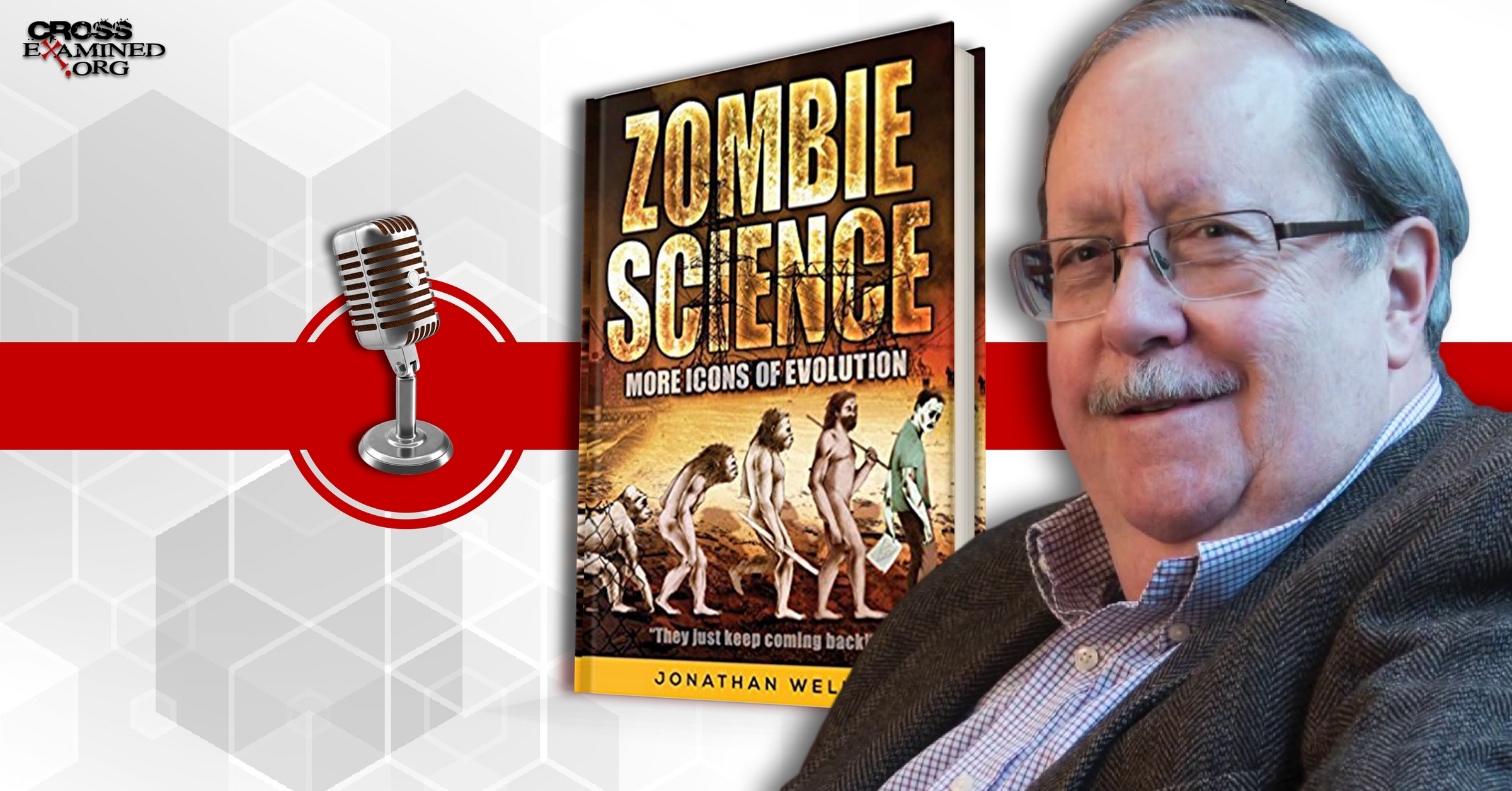
In 2000, biologist Jonathan Wells took the science world by storm with Icons of Evolution, a book showing how biology textbooks routinely promote Darwinism using bogus evidence— in Zombie Science, Wells asks a simple question: If the icons of evolution were just innocent textbook errors, why do so many of them still persist? Science has enriched our lives and led to countless discoveries. But now, Wells argues, it’s being corrupted. Empirical science is devolving into zombie science, shuffling along unfazed by opposing evidence. Don’t miss this fantastic interview with Dr. Wells about his new book, Zombie Science!

Zombie Science (Book) http://amzn.to/2DoHDy8

Zombie Science

By Brian Chilton

As a teenager, I remember being a bit frightened of the book of Revelation. The smell of acne face cleanser filled the room as I dove into mysterious depictions of four-faced angels, beasts from the sea and land, of massive angels, and 100-pound hailstones being hurled to the earth. While Revelation holds mysterious and frightening images of the end-times, the book of Revelation was written to be an encouragement to Christians of all times. But, who was it that penned the word of Revelation? This article will conclude our series titled “Who Wrote the New Testament?” as we investigate the author of the book of Revelation.

Author: Tradition has long held that John the apostle, whom we have seen penned the Fourth Gospel and the three letters attributed to him, wrote the last book of Scripture. If so, John penned much of the New Testament, with only Paul and Luke writing more than him. While there were skeptics, even early on, about the authorship of the text (most likely due to the apocalyptic nature of the book), the general consensus was that John the apostle was the author. Four reasons exist as to why one should accept Johannine authorship of Revelation.

1) The author identifies himself as “John” in Revelation 1:4; 1:9; and 22:8. This does not necessarily indicate that this John was John the apostle. We know of a John Mark, who penned the Second Gospel, and a possible John the Elder (although it is possible that John the apostle was also known as John the Elder in some instances, yet there are reasons to believe that another John could have lived as a church leader, especially since “John” was a popular name).

2) The author of the book clearly had a strong connection with the seven churches of Asia Minor as evident in Revelation 2:1-3:22. Tradition states that John the apostle served as the pastor to the churches in Ephesus.

3) The author’s circumstances greatly match those of John the apostle. Second-century sources indicate that John was exiled to the Isle of Patmos. Ignatius (35-107 AD) writes of particular conclusive facts in that “Peter was crucified; Paul and James were slain with the sword; John was banished to Patmos; Stephen was stoned to death by the Jews who killed the Lord? But, [in truth,] none of these sufferings were in vain; for the Lord was really crucified by the ungodly.”[1] John the apostle’s exile matches what we find of the author of Revelation (1:9).

4) Throughout the text, Old Testament images indicate one who has been thoroughly immersed with a Hebrew education and upbringing. John the apostle matches that requirement.

5) The Lexham Bible Dictionary discusses a finding called the Harris Fragments. Accordingly, these fragments give further insight to the writings of Polycarp (69-150 AD), a disciple of John. The fragments “offer unique insight into reconciling John’s martyrdom and his reported long life and natural death in that:

  • They support the second-century church tradition that John the Apostle, the son of Zebedee, lived a long life in Ephesus after suffering exile on Patmos, and died a peaceful death.
  • They account for the fulfillment of Jesus’ prophecy about the martyr’s death that John the son of Zebedee would die.”[2]

From what we have gathered, John the apostle is the clearest candidate for authorship of Revelation. I ascribe to the mentality, “If it isn’t broken, don’t fix it.” Long-held traditions should only be overturned if there is clear evidence to the contrary. I do not see that with the tradition that John the apostle authored the last book of Scripture. Quite honestly (as you have seen if you have read all my entries on this matter), I do not see any compelling reason to reject the traditional authorship ascribed to any book of the canonical New Testament.

Date: Interestingly, some scholars are dating Revelation earlier than what has been traditionally held due to the thoroughly Jewish imagery found in the text. Those holding an older view for the dating of Revelation promote the late 60s as the time the book was written. However, the view that the book was written later in the first-century, most likely in the late 80s or early 90s holds greater strength.

Purpose: As mentioned at the beginning of the article, Revelation was not given to scare us. Rather, it was written to encourage believers of all times that despite the troubles faced, God will win in the end. Good will triumph evil. The powers of darkness will be confined by the powers of light. Revelation tells us much about God, Christ, humanity, sin, the church, angels, as well as Satan and his demonic forces.

The book hosts an introduction (1:1-8); letters given to the seven Churches of Asia (2:1-3:22); depictions of what will happen in the end-times by three septets—seven seals leading to seven trumpets leading to seven bowls of wrath—ultimately leading to a new heaven and a new earth (4:1-22:5); and a conclusion (22:6-21).

Be encouraged by Revelation! God gave John the apostle this vision for a reason. It was to let us know that the believer should hold an eternal perspective understanding that God has won, is winning, and will win in the end.

For your listening enjoyment, the Gaither Vocal Band performs “John the Revelator.”

Notes

[1] Pseudo-Ignatius of Antioch, “The Epistle of Ignatius to the Tarsians, Chapter III,” in The Apostolic Fathers with Justin Martyr and Irenaeus, ed. Alexander Roberts, James Donaldson, and A. Cleveland Coxe, vol. 1, The Ante-Nicene Fathers (Buffalo, NY: Christian Literature Company, 1885), 107.

[2] Tracee D. Hackel, “John the Apostle, Critical Issues,” ed. John D. Barry et al., The Lexham Bible Dictionary (Bellingham, WA: Lexham Press, 2016).


Brian Chilton is the founder of BellatorChristi.com and is the host of The Bellator Christi Podcast. He received his Master of Divinity in Theology from Liberty University (with high distinction); his Bachelor of Science in Religious Studies and Philosophy from Gardner-Webb University (with honors); and received certification in Christian Apologetics from Biola University. Brian is currently a student of the Ph.D. program in Theology and Apologetics at Liberty University. Brian is a full member of the International Society of Christian Apologetics and the Christian Apologetics Alliance. Brian has been in the ministry for over 14 years and serves as the pastor of Huntsville Baptist Church in Yadkinville, North Carolina.

Original Blog Source: http://bit.ly/2zaWZYj

By Timothy Fox

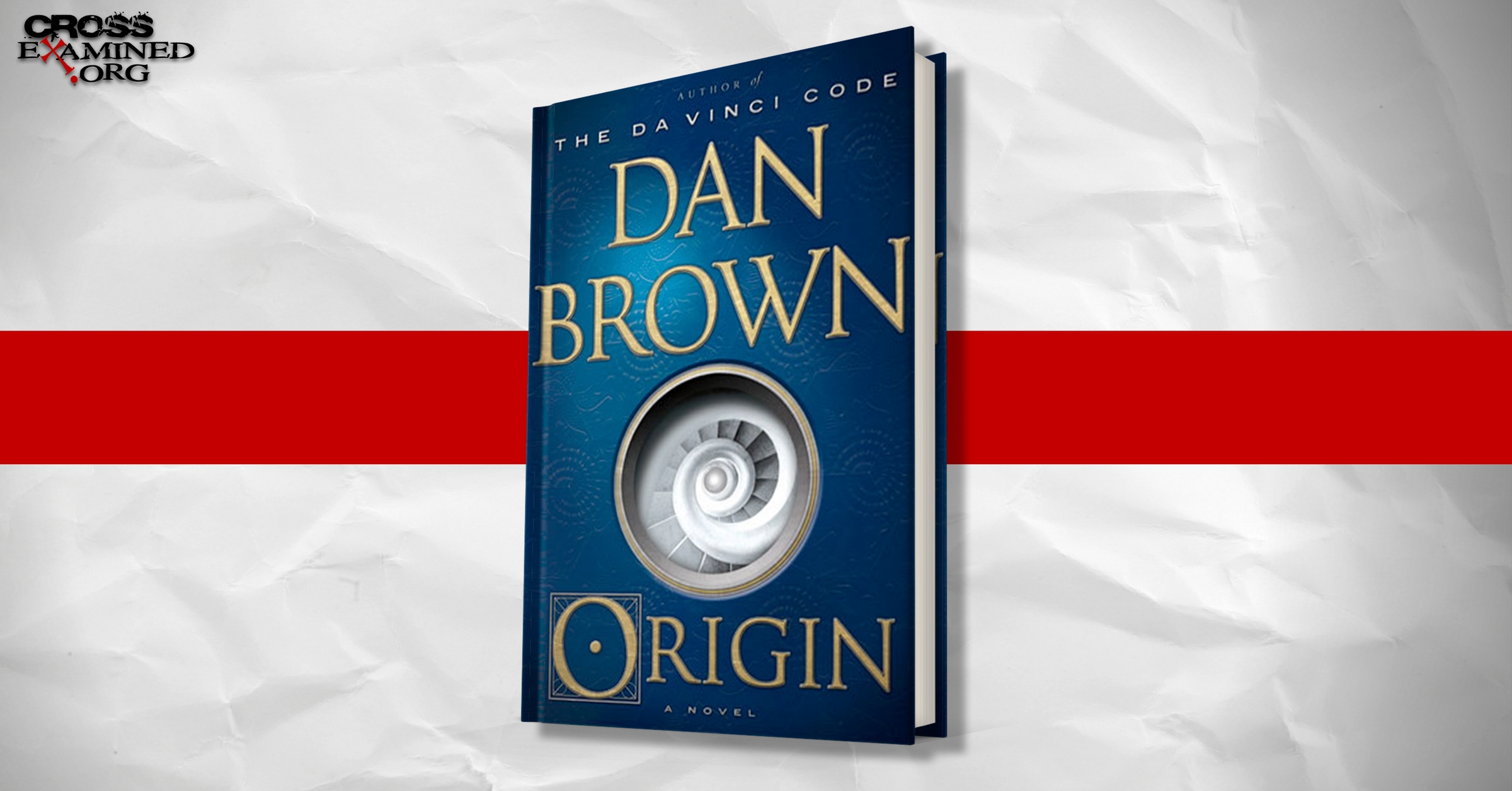
“Where do we come from?” and “Where are we going?” These are the two big questions Dan Brown explores in his latest novel, Origin (Doubleday, 2017). (Minor spoilers ahead.) This is the fifth book in the series starring Harvard professor, Robert Langdon, the most famous being The Da Vinci Code. While many of them have explored religion – mostly Christianity – his later books feature science more prominently. A major theme in this book, however, is science versus religion. Can science explain away the superstitions of religion, or even take the place of religion in people’s lives? This is the hope of computer scientist, Edmond Kirsch.

Kirsch is a vocal, New Atheist-type who would make Richard Dawkins proud. He believes he has made a discovery that will rock the major religions, answering two major questions that humanity has always pondered: “Where do we come from?” and “Where are we going?” Without getting too spoilery, Kirsch “proves” that life arose naturally on Earth without any supernatural intervention. Thus, he has squeezed God out of an explanatory gap, making his existence that much less necessary.

But that got me thinking. Suppose God really was unnecessary for the origin of life. After “Where do we come from?”, are there any other questions that science must answer to eradicate the need for God? I thought of a few:

Why is the universe here?

After Kirsch’s presentation showed that the laws of physics alone are sufficient for creating life, Professor Langdon ponders: “If the laws of physics are so powerful that they can create life… who created the laws?!” (p. 420). This question is huge. It’s one thing to explain where life came from. But what about the universe itself? Why is there something rather than nothing?[1] If life naturally arose from the primordial ooze, where did the ooze come from?

How did consciousness arise?

So Kirsch proved that life can naturally arise from non-life. But at what point in the evolutionary process did life become conscious? How does the mind form from purely naturalistic processes? What are the components of consciousness? Honestly, I think this is a far bigger (and more interesting) problem than the origin of life.

Is morality real?

On the news following Kirsh’s presentation, a viewer response reads “RELIGION CANNOT CLAIM MORALITY AS ITS OWN… I AM A GOOD PERSON BECAUSE I AM A GOOD PERSON! GOD HAS NOTHING TO DO WITH IT!” (p. 418 – emphasis and CAPS original). But if God has nothing to do with morality, then how do we define good and evil? Is there a real and objective moral standard that is binding upon all people across all time or is it merely a social construct?

Did Jesus Christ rise from the dead?

This goes beyond basic theism into Christianity. If Jesus did rise from the dead, we get a two-for-one: Christianity is true, and, thus, God exists. To kill Christianity, you must simply disprove the resurrection of Jesus Christ. So if Jesus did not rise from the dead, then:

  • How did the belief in the resurrection begin in Jerusalem, the same place where Jesus was publicly executed and then buried?
  • Why did many of Christ’s followers – including his disciples and former persecutor of Christians, Saul of Tarsus – claim to have a genuine experience of the risen Christ?
  • Why were these same followers willing to suffer and die for a belief they would have known was false?

Yes, Origin is just a fictional work that cannot possibly explore every question regarding God’s existence. But still, above are just a few that need to be fully explained before we can proclaim “God is dead.” Even if a real-life Edmond Kirsch can someday prove that life originated naturally on Earth, the universe still requires a First Cause that is outside of time and space. I’m highly skeptical that consciousness can arise naturally from matter. A moral law requires a Moral Lawgiver. And if Jesus Christ rose from the dead, it vindicated all of his teachings, including the authority of the Bible, the message of his followers, and, of course, the existence of God.

I’m sorry, Edmond, but God’s death has been greatly exaggerated.

Notes

[1] This is briefly addressed by a quote from Stephen Hawking: “It is not necessary to invoke God to set the universe going. Spontaneous creation is the reason there is something rather than nothing” (p. 418). But if the universe can spontaneously create itself, why not other things, like food in my refrigerator, money in my pocket, or hair on my head?


Original Blog Source: http://bit.ly/2z3WpuH

By Evan Minton

Why did God write a book? By that, I mean why did God inspire authors to write documents which make up a compilation we call The Holy Bible? What were God’s purposes in doing that? Obviously, He had reasons of some sort. All authors write books for reasons. For example, when I sat down to write Inference To The One True God, my purpose was to give arguments for why belief in the Christian God is warranted as opposed to any other so-called deity. In my book A Hellacious Doctrine, my purpose was to establish that God’s love and justice aren’t incompatible with The Bible’s teachings on Hell. My purpose in Inference To The One True God wasn’t to tell my readers about agriculture, or whether abortion is morally permissible, or what the health benefits of a glucose-free diet are or are not. I had a specifically stated purpose: to give reasons to believe that The God of The Bible exists, and by extension, The Bible’s truth, and by even further extension, Christianity’s truth.

Likewise, The Bible’s divine author (God) had a purpose for inspiring the authors of the 66 books and letters which comprise it. It’s important that we know an author’s purpose for writing because if we don’t, we may wrongly accuse him of error, or criticize him for not talking about something or mentioning something in his work. If we don’t know an author’s reason for writing, we may also have unreasonable expectations which, if not met, will cause us to be disappointed or to doubt the author’s credibility.

Through reflection on this subject, I’ve come to the conclusion that God had 3 reasons for inspiring the 66 books and letters which comprise The Holy Bible.

1: To Teach Us Theology

The most obvious reason God inspired The Bible was to reveal to us truths about Himself. Through The Bible, we learn that God is omnipotent (see Genesis 18:14, Job 42:1-2, Matthew 19:26, Luke 1:37), omniscient (see Job 34:21, 1 John 3:20, Proverbs 15:3, Psalm 147:5, Psalm 139:1-4), omnipresent (see Psalm 139:7-12, Joshua 1:9, Jeremiah 23:24, Acts 17:27), morally perfect (see Deuteronomy 32:4, 1 John 1:5), all-loving 1: John 4:8, John 3:16), and so on.

We learn that God is a Trinity from the inference of 5 biblical facts: 1) There is only one God (see Isaiah 44:8, Isaiah 45:5, Isaiah 43:10, 1 Corinthians 1:8, 1 Timothy 2:5), that 2) The Father is God (1 Corinthians 4:8), that 3: Jesus is God (see John 1:1-3, 14, John 10:30, Isaiah 9:6, Philippians 2:5-8, Colossians 1:15-17, Hebrews 1), that 4: The Holy Spirit is God (Acts 5:3-4), and 5: That The Father, Son, and Holy Spirit are distinct persons (as evident from the fact that Jesus often talks to the Father, that John 1 said the Word was with God, that Jesus said He would send The Holy Spirit when He Himself departed  in John 14:26, etc.).

We learn that Jesus’ death on the cross was to pay for our sins in passages like Isaiah 53, 1 John 2:2, Romans 4:25, and 1 Peter 3:18. Moreover, Romans 4:25 tells us that not only did Jesus die to bring us justification, but He was resurrected from the dead as well. Jesus’ resurrection was part of His atoning work.

So, theological truths, doctrine, is why God inspired The Bible. The Bible was written so that man would know He is a sinner who has broken God’s laws, and that God became incarnate, took the punishment on his behalf, and will apply that shed blood if he only places his faith in Him. The Bible was written so that we would know what God is like, who God wants to save, who Jesus died for, and much more.

2: To Teach Us History

The Bible was also written to teach us history. Now, not all of The Bible’s books were written for this purpose (e.g Proverbs, Psalms), but undoubtedly many fall into the historical genre. For example, most scholars agree that the 4 gospels fall into the genre known as “Greco-Roman Biographies”, which is to say that they’re written to chronicle the events of a person’s life (in this case, Jesus’). The books of Exodus, Deuteronomy, Numbers, 1 and 2 Samuel, 1 and 2 Kings, etc. are also universally agreed by theologians to fall in the historical genre. These are records of events that happened in space and time.

One of God’s purpose in having His chosen authors accurately record history is that much of Christian theology rests on historical events having taken place. For example, if the crucifixion and resurrection of Jesus did not actually occur in time and space, the entire Christian faith crumbles (see 1 Corinthians 15:4). If you don’t have a historical death and resurrection, you don’t have an atonement for mankind’s sins (Romans 4:25). Thankfully, the historical evidence is strong that Jesus did die on a cross and did subsequently rise from the dead (see “A Quick Case For Jesus’ Resurrection”).

Moreover, almost anyone would admit that history can be learned from, even secular history. That’s why they say “If people don’t learn history, they will be doomed to repeat it”. We can learn from the lives of Moses, Samuel, David, The Apostles. For example, every time I read about the Israelites’ wandering in the wilderness, and how they complained and distrusted God, how they accused Moses on more than one occasion of leading them out there to die, and so on, and how God never fails to provide for them, I am reminded that God is faithful. He will do what He says He will do. He will never leave us nor forsake us. I take a lesson from that. In the wanderings through the wilderness we call “life”, we should trust God to take care of us. Often times, many of us find ourselves in the same position as the complaining Israelites.

Moreover, the historical narratives strung together to tell a specific story: the story of God’s mission to rescue the world from Sin. It starts in the garden of Eden and climaxes in the death and resurrection of Jesus. “It is accomplished” (John 19:30) And now history continues, as followers of Christ spread all over the globe to tell others the way to salvation (Matthew 28:19).

3: To Teach Us Morality 

Obviously, God wants us to live moral lives. If He didn’t, He would not have given us The Ten Commandments (Exodus 20), or told us “Be holy for I am holy” (1 Peter 1:16, cf. Leviticus 11:44, Leviticus 20:7), or “Be perfect, therefore, as your heavenly Father is perfect” (Matthew 5:48). God wants us to live holy and upright lives. He wants us to produce the fruits of the Spirit which are love, joy, peace, forbearance, kindness goodness, faithfulness, gentleness, and self control, (Galatians 5:22:23) rather than the fruits of the flesh (i.e sinful nature) which are sexual immorality, drunkenness, outbursts of anger, hatred, idolatry, discord, factions, witchcraft, envy, orgies, etc. (Galatians 5:19-21).

God tells us what is right and wrong in The Bible, and He commands us to choose the right and refrain from the wrong. Now, of course, we can know right from wrong in many areas without scripture, as Romans 2:14-15 tells us that God wrote an awareness of morality on our hearts, but not everything can be read of “The Moral Law”. For example, in Romans 7:7, Paul says that if The Old Testament scriptures hadn’t told him that coveting was wrong, he would have never known it was wrong. I can say the same thing about looking at women with lust. If Jesus hadn’t told me that it was wrong in Matthew 5:28, I would probably do it and think nothing of it. I also probably wouldn’t think to get drunk was a sin had various verses in The Bible said so. I would think it unwise to get drunk, but not morally wrong. Crossing the street without looking both ways is unwise, but it’s not a sin.

4: To Teach Us Science? 

The 3 purposes God had for inspiring The Bible’s documents will be uncontroversial for any orthodox Christian believer. I think any Christian reading this would be in full agreement with me that doctrine, history, and morality are reasons that God wrote The Bible. We could probably include wisdom as well, given that that’s the explicitly stated purpose of the book of Proverbs, but one may possibly put that under the morality category. I don’t know, it’s up to you whether you think Wisdom fall under category number 3 or stands as its own category.

Anyway, there is a split in the church today over whether God intended His authors to convey accurate scientific information. By that, I mean that many Christians (in fact, I’d be willing to say most) believe that whenever a Bible passage makes reference to the natural world, the way it talks about it should correspond to the way the world really is. They think that if The Bible taught some scientifically ludicrous idea such as the Earth is flat or that the sky consists of a solid dome, then The Bible is in error and therefore not divinely inspired. The Christians would call themselves “Concordists” as they believe The Bible must be in concord with what science says about the universe.

However, we need to ask two questions: first: what is the definition of biblical inerrancy. Secondly: what would constitute an error.

My definition of inerrancy is this: “The Bible is inerrant in everything that it intends to teach.” If The Bible did not intend to teach something, then if the authors got it wrong when talking about that something, then inerrancy isn’t undermined. So, for me, I would accuse The Bible to be in error if it got it wrong in any of the three categories stated above: Theology, History, and Morality. I would also consider it to be in error if it got it wrong in describing cosmology IF God intended to teach the recipients of His book cosmology. However, if that wasn’t His goal, then no problem.

I am not a concordist. I am an accommodationist. I believe God did not intend to teach the Israelites Cosmology. In fact, the more I think about the idea of God conveying absolutely perfect scientific information in scripture, the less sense it actually makes. Here’s why I say it doesn’t make sense. I go back to that one question: “Why did God decide to write a book?” Was God really interested in teaching the ancient Israelites how the cosmos functioned? Was that really on His list of priorities? Did it matter to him whether they believed the Earth is a sphere or is flat? Did it matter to Him whether or not they believed the sky was solid? What was God’s purpose for writing a book? I think 3 reasons given above make perfect sense, but it makes no sense to think teaching them accurate cosmology and physiology was even on His to-do list.

For one thing: God has foreknowledge (Psalm 139:1-4). He knew we would figure out the truth about the universe eventually through the rigorous scientific method. It would have been redundant to tell us in His Word. God may have thought to Himself “There’s no need to correct my Peoples’ faulty cosmology. Humanity will figure it all out on their own in time. Besides, a lot of this would just confuse them anyway, and I already have a tough time getting them to trust what I say. Overturning their entire cosmological system with something foreign to their thinking would just be counterproductive. I’ll just use the cosmology they think is true to get my theological points across.”

On this view, God accommodated (hence the name) the scientific understanding of his original recipients to teach truths about Himself. I resisted this view for a long time because I thought to affirm that The Bible contained Ancient Near Eastern Cosmology was to affirm that The Bible is not inerrant. But I now see that’s mistaken.

It’s like this: imagine there’s a pastor teaching vacation Bible school, and he wants to teach the children about being charitable. It’s Christmas time and all the kids are talking about Santa’s supposed imminent coming. The pastor talks about Santa Claus and says “Santa Claus travels all over the world delivering lots of toys to good little girls and boys. You know why he does this? Because he’s loving and selfless. He gets nothing out of this global delivery except your joy and happiness. You should strive to be just as charitable and giving as he is”.

Now, the pastor’s point is not that there is actually a person called Santa Claus who delivers presents on Christmas Eve. His point is that the children should be just as charitable as they believe Santa is. In an analogous way, when The Bible says “The Lord reigns, he is robed in majesty; the Lord is robed in majesty and armed with strength; indeed, the world is established, firm and secure.” (Psalm 93:1, NIV), God’s point is not that the Earth doesn’t move, but that God’s throne (His sovereignty) is as established and unmovable as the ancients believed the Earth was. Just as the pastor could use a false belief of the child’s to teach a moral truth, God used a false scientific belief to teach His initial recipients a theological truth. Neither the pastor nor the Lord could be accused of being in error because the existence of Santa Claus and the immovability of Earth wasn’t what they were trying to teach. Indeed. Neither of them needed to teach such, for the child believed in Santa Claus prior to receiving the teaching. The Israelites believed the Earth was motionless prior to receiving the revelation. The pastor and God simply used false pre-existing beliefs as a springboard to teach something that is true.

Conclusion 

Why Did God write a book? To convey the history of his interactions with His people, to convey theological doctrine, and to convey morality. God could have used scripture to teach cosmology, but what motive would He have for doing that? I can’t find any motive. He knew we would figure it out on our own anyway, so why tell us thousands of years in advanced? One can have a spiritually fulfilling life and a strong relationship with God even if they’re the most scientifically ignorant person of all time, so why would correct cosmology be a priority at all? Moreover, one could argue that concepts like evolution, a spherical earth, a non-solid sky, would have just confused them at best, and made them distrustful of this God didn’t know anything about their “correct” science at worst.

Of all the motives I can find for God to write a book, cosmology isn’t one of them. I can’t think of a single reason God would have to want to correct the ancient Israelites cosmology via divine revelation.

So, if God’s book doesn’t describe the world properly (and it doesn’t), I don’t find blame God. Teaching cosmology wasn’t one of Scripture’s purposes. Getting mad at God for not teaching cosmology would be like getting mad at me for not teaching quantum physics in A Hellacious Doctrine. Quantum Physics wasn’t why I wrote the book.

“The Bible shows the way to go to Heaven, not the way the heavens go.”
 – Galileo Galilei[1]

“I think that we have made a mistake by thinking the Bible is a scientific book. The Bible is not a book of science. The Bible is a book of Redemption” 
– Billy Graham[2]

Notes

[1] Galileo Galilei, (n.d.) BrainyQuote.com. Retrieved August 15, 2017, from BrainyQuote.com Web site: https://www.brainyquote.com/quotes/quotes/g/galileogal381320.html

[2] Source Book:  Billy Graham: Personal Thoughts of a Public Man, 1997.  p. 72-74


Original Blog Source: http://bit.ly/2g9peKZ

By Brian Chilton

Over the past few months, we have been examining the authors and background information for the books of the New Testament. For this article, we will examine a little book towards the end of the New Testament known as Jude. What do we know about this book and whom it was that composed it?

Author:          Jude opens the book indicating that he is a “servant of Jesus Christ and a brother of James” (vs. 1).[1] The quest for Jude’s identity is intricately linked with the identity of James listed as Jude’s brother. One can easily eliminate James the son of Zebedee because he was martyred early in church history (Acts 12:1-5). The only other viable James is Jesus’ brother. When people at Nazareth were questioning Jesus, they asked, “Isn’t this the carpenter, the son of Mary, and the brother of James, Joses, Judas, and Simon? And aren’t his sisters here with us?” (Mark 6:3).

Mark 6:3 highlights a few facts. First, James and Jude were Jesus’ brothers. Second, they were both known by the church. If this is the case, then it stands to reason that Jude would identify himself as James’ brother since James was an influential leader in the Jerusalem church. Therefore, Jude the brother of James and Jesus is the most viable candidate to have authored this little book. Jude humbly designated himself only as the brother of James and a servant of Christ rather than elevate himself as Jesus’ brother.

Date:               Jude is a difficult book to date. Since Jude deals with false teachings that had entered the church, one would think that a later date would be more feasible. However, the book does not discuss Gnosticism outright. Thus, many have postulated a date between AD 65 and 80.  

Purpose:         By Jude’s own admonition, he had desired to write an encouraging letter about the believers’ common salvation to the “loved by God the Father and kept for Jesus Christ” (vs. 1). The beloved of God refers to the recipients who were most likely Jewish believers of the time. However, due to false teachings that had entered the church, Jude felt compelled to write a letter “appealing [them] to contend for the faith that was delivered to the saints once for all” (vs. 3).

Jude’s letter is a polemical letter warning the believers to avoid false teachers. After giving the purpose for his letter in verses 1-4, Jude describes the apostates of the past and present time (vs. 5-11), the apostates’ doom (vs. 12-19), delivers an exhortation (vs. 20-23), before giving his benediction (vs. 24-25).

Connection of Jude with 2 Peter:    Most unique to the book of Jude is its link with 2 Peter. Much of the content of Jude matches that of 2 Peter, including a quotation from the pseudipigraphical book 1 Enoch (vs. 12-13) and an allusion to the apocryphal book the Assumption of Moses. Did Jude borrow from 2 Peter, did Peter borrow for Jude, or did both borrow from a common source?

As shown previously in the article “Who Wrote the Letters of Peter,”[2] Simon Peter is a good candidate to have written 2 Peter. If 2 Peter borrowed from Jude, then the book would have been too late to have been penned by Simon Peter. If Peter is a good candidate for 2 Peter’s authorship, then either Jude borrowed from Peter or both borrowed from a common source. There are less problems stating that Jude borrowed from 2 Peter or that both borrowed from a common source. It is likely that since Jude borrows heavily from the Old Testament and Jewish tradition, he most likely borrowed from Peter’s second letter since it was received by the church in his day.

 Notes

[1] Unless otherwise noted, all quoted Scripture comes from the Christian Standard Bible(Nashville: Holman, 2017).

[2] Brian Chilton, “Who Wrote the Letters of Peter?,” Bellator Christi.com (August 23, 2017), retrieved September 14, 2017, https://bellatorchristi.com/2017/08/23/who-wrote-the-letters-of-peter/.

Original Blog Source: http://bit.ly/2wOfpry 


About the Author

Brian Chilton is the founder of BellatorChristi.com and is the host of The Bellator Christi Podcast. He received his Master of Divinity in Theology from Liberty University (with high distinction); his Bachelor of Science in Religious Studies and Philosophy from Gardner-Webb University (with honors); and received certification in Christian Apologetics from Biola University. Brian is in the Ph.D. program in Theology and Apologetics at Liberty University. Brian is full member of the International Society of Christian Apologetics and the Christian Apologetics Alliance. Brian has been in the ministry for over 14 years and serves as the pastor of Huntsville Baptist Church in Yadkinville, North Carolina.


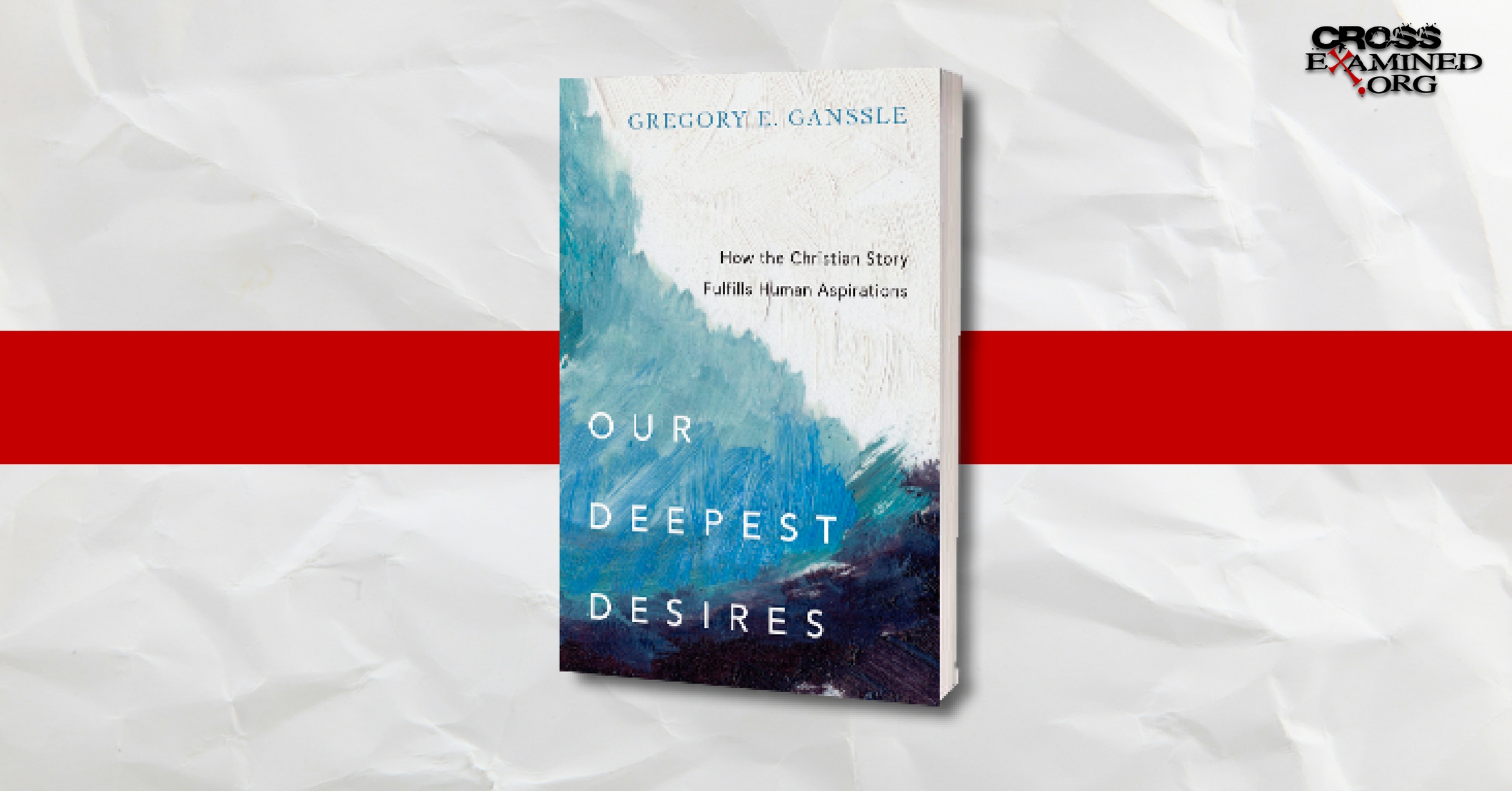
My friend and Biola colleague Greg Ganssle has written a fascinating new book called Our Deepest Desires: How the Christian Story Fulfills Human Aspirations. Professor Ganssle takes a unique approach to the apologetic task. Essentially, his goal is not to show that Christianity is true, but to argue that when it is properly understood, people should wish it were true. He talks about how tragedy, beauty, and freedom make the most sense in a Christian worldview and that only Christianity fulfills our deepest desires.

Our Deepest Desires is one of the most interesting books I have read in awhile. I hope you will check out this interview and think about getting a copy of his excellent book:

SEAN MCDOWELL: Can you tell us briefly what your book is about?

GREG GANSSLE: As the subtitle indicates, the book is about how the Christian story explains and grounds our basic aspirations. Every person has the same task—that is we all aim to navigate life in the best way we can. We navigate life with some notions of what it is good to be and to do. These notions are widely shared among people, regardless of their religious beliefs or lack of them.

I structure the book around four fundamental commitments that are widely shared. First, there is the commitment to persons. Nearly everything we care about is connected to human beings. Second, is the commitment to goodness. We want to be good and we enjoy what is good. Third, we are drawn towards beauty. Beauty calls us home in two ways. First, it calls us to see that this world is a wonderful place. Second, it points beyond this world to the next. Lastly, we long for personal freedom. That is the freedom to become the kind of people we want to be.

Each of these areas makes sense in the Christian story. God, the most fundamental reality, is personal. He is good and made a good world for his own good reasons. We are not surprised to find the world to be beautiful because he is a master artist. God created us to embody certain virtues, and we find our own freedom as we experience these.

MCDOWELL: The goal of your book is to convince people they should hope Christianity is true. What do you mean, and why start there?

GANSSLE: I start there because I think that most people do not care whether or not Christianity is true. They are already convinced that it is a story that hinders human flourishing, rather than a story that secures and promotes flourishing. What is startling is the fact that the things most human beings care most about fit better within the Christian story than they do in the various atheistic stories. Once we see this connection, we see that we want the Christian story to be true. Of course, the fact that we want it to be true does not show that it is true. But once a person wants it to be true, the objections to the truth of the Gospel seem much smaller.

MCDOWELL: Who is the primary audience?

GANSSLE: As I wrote this book, I was thinking of the many professors I know who are not yet followers of Christ. I was trying to overcome what I see as the biggest obstacle to belief in Christ–that the Christian story is unattractive. Nietzsche quipped, “What is decisive against Christianity now is our taste, not our reason.” I am trying to overcome the sense that the Christian story is not to be desired.

MCDOWELL: How might those who are already believers use and benefit from this book?

GANSSLE: There are two ways this book can benefit those who are already followers of Jesus. First, it can help us grasp the Gospel more deeply. We often have a superficial understanding of the Christian story. As a result, we fail to see its intrinsic relevance to the deep aspirations of every person. Our own appreciation of the Christian story will be enriched as we reflect on how it provides the resources to capture the most common human aspirations.

Second, this book will be a good tool to start conversations. You can hand it to a thoughtful person and discuss it later. Because it is not a work of scholarship, it is accessible to all kinds of people. I even made sure the chapters were short! I would recommend giving it to neighbors and following up with some questions.

MCDOWELL: What message is there for the church?

GANSSLE: I am convinced that the next horizon for apologetics is the desirability of the Gospel. As one of my colleagues has written (Dave Horner), the Christian story is “too good not to be true.” We have been so keen to defend theological notions such as the sinfulness of every person that we have neglected the deeper theological truths of the value, goodness and beauty of all God has created. We do not believe in the omnipotence of sin. Sin twists everything, to be sure, but it cannot erase that goodness that God has put into the world and into human beings.

MCDOWELL: I have heard you mention how tragedies reveal the deepest human desires. What do you mean, and how does this support the Christian worldview?

GANSSLE: When we encounter suffering, we long for meaning. We want our suffering to be meaningful or to contribute to a meaningful life. Horrendous suffering has the potential to crush a person’s soul. Unless our meaning is securely grounded in the God who brings good out of evil, who experienced evil, and who gives us his presence in the midst of suffering, we may find it impossible to experience a meaningful life in the midst of suffering. It is Jesus weeping at the grave of Lazarus that gives us hope because he is the God who bears our suffering and offers his presence.

Sean McDowell, Ph.D. is a professor of Christian Apologetics at Biola University, best-selling author, popular speaker, part-time high school teacher, and the Resident Scholar for Summit Ministries, California. Follow him on Twitter: @sean_mcdowell and his blog: seanmcdowell.org.


The following is adapted from chapter 6 of I Don’t Have Enough Faith to Be an Atheist:

The God-of-the-Gaps fallacy occurs when someone falsely believes that God caused the event when it really was caused by undiscovered natural phenomena. For example, people used to believe that lightning was caused directly by God. There was a gap in our knowledge of nature, so we attributed the effect to God. Darwinists assert that theists are doing the same thing by claiming that God created the universe and life. Are they correct? No, for a number of reasons.


First, when we conclude that intelligence created the first cell or the human brain, it’s not simply because we lack evidence of a natural explanation; it’s also because we have positive, empirically detectable evidence for an intelligent cause. A message (specified complexity) is empirically detectable. When we detect a message like “Take out the garbage, Mom” or 1,000 encyclopedias we know that it must come from an intelligent being because all of our observational experience tells us that messages come only from intelligent beings. Every time we observe a message, it comes from an intelligent being. We couple this data with the fact that we never observe natural laws creating messages, and we know an intelligent being must be the cause. That’s a valid scientific conclusion based on observation and repetition. It’s not an argument from ignorance, nor is it based on any “gap” in our knowledge.

Second, Intelligent Design scientists are open to both natural and intelligent causes. They are not opposed to continued research into a natural explanation for the first life. They’re simply observing that all known natural explanations fail, and all empirically detectable evidence points to an intelligent Designer.

Now, one can question the wisdom of continuing to look for a natural cause of life. William Dembski, who has published extensive research on Intelligent Design, asks, “When does determination [to find a natural cause] become pigheadedness? . . . How long are we to continue a search before we have the right to give up the search and declare not only that continuing the search is vain but also that the very object of the search is nonexistent?” Consider the implications of Dembski’s question. Should we keep looking for a natural cause for phenomena like Mount Rushmore or messages like “Take out the garbage-Mom”? When is the case closed?

Walter Bradley, a coauthor of the seminal work The Mystery of Life’s Origin, believes A there ­doesn’t seem to be the potential of finding a [natural explanation] for the origin of life. He added, AI think people who believe that life emerged naturalistically need to have a great deal more faith than people who reasonably infer that there’s an Intelligent Designer.” Regardless of whether or not you think we should keep looking for a natural explanation, the main point is that ID scientists are open to both natural and intelligent causes. It just so happens that an intelligent cause best fits the evidence.

Third, the Intelligent Design conclusion is falsifiable. In other words, ID could be disproven if natural laws were someday discovered to create specified complexity. However, the same cannot be said about the Darwinist position. Darwinists don’t allow falsification of their “creation story” because, as we have described, they don’t allow any other creation story to be considered. Their “science” is not tentative or open to correction; it=s more closed-minded than the most dogmatic church doctrine the Darwinists are so apt to criticize.

Finally, it’s actually the Darwinists who are committing a kind of God-of the-Gaps fallacy. Darwin himself was once accused of considering natural selection “an active power or Deity” (see chapter 4 of Origin of Species). But it seems that natural selection actually is the deity or “God of the Gaps” for the Darwinists of today. When they are totally at a loss for how irreducibly complex, information-rich biological systems came into existence, they simply cover their gap in knowledge by claiming that natural selection, time, and chance did it.

The ability of such a mechanism to create information-rich biological systems runs counter to the observational evidence. Mutations that aren’t neutral are nearly always harmful, and time and chance do the Darwinists no good, as we explained in chapter 5. At best, natural selection may be responsible for minor changes in living species, but it cannot explain the origin of the basic forms of life. You need a living thing to start with for any natural selection to take place. Yet, despite the obvious problems with their mechanism, Darwinists insist that Natural Selection covers any gap in their knowledge. Moreover, they willfully ignore the positive, empirically detectable evidence for an intelligent being. This is not science but the dogma of a secular religion. One could say that Darwinists, like the opponents of Galileo, are letting their religion (or at least their philosophy) overrule scientific observations.


Dr. Frank Turek (D.Min.) is an award-winning author and frequent college speaker who hosts a weekly TV show on DirectTV and a radio program that airs on 186 stations around the nation.  His books include I Don’t Have Enough Faith to be an Atheist and Stealing from God:  Why atheists need God to make their case