Tag Archive for: Alisa Childers

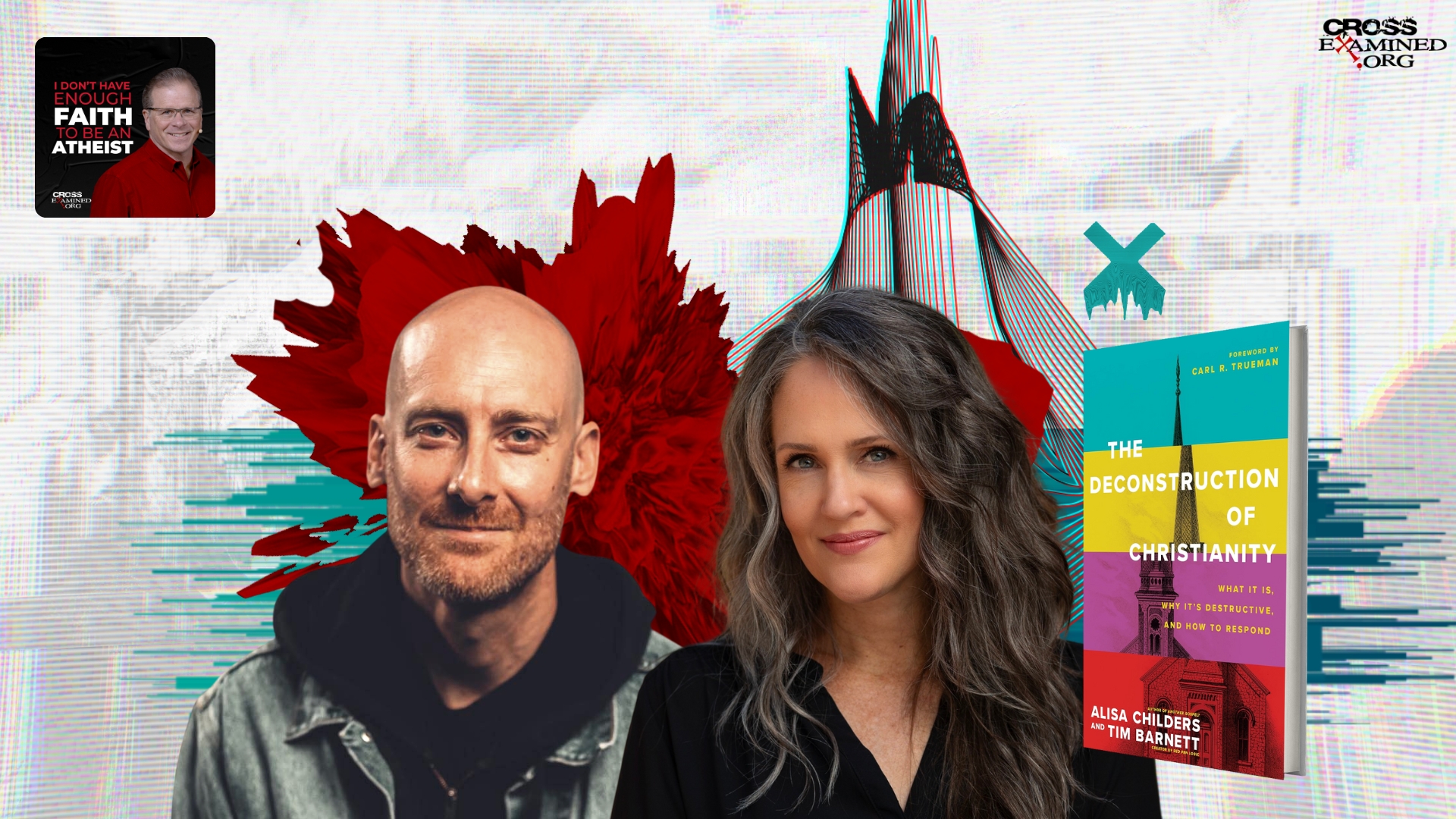
This internet age is full of trends. One of the latest is the trend to “deconstruct” one’s beliefs about Jesus and Christianity. If someone you love has done this, how should you respond? On today’s podcast, Alisa Childers joins Frank to offer insights on how you can make progress, especially when your loved one now thinks you are “toxic” and seems resistant to reason. Join our listeners as they ask questions related to their personal experiences, including:

  • What is causing this trend?

  • What are the top 4 reasons why people leave the Christian faith?

  • What is “deconstruction” and how does it compare to having doubts?

  • What if your pastor is showing signs of deconstruction?

  • How do you talk to a spouse who belittles you and your beliefs?

  • What if your child has been brainwashed by their spouse?

  • Is it possible to have a relationship with someone who hates your faith?

  • Should we be talking about this trend with our young children?

And many more!

To view the entire VIDEO PODCAST, be sure to join our CrossExamined private community. It’s the perfect place to jump into some great discussions with like-minded Christians while simultaneously providing financial support for our ministry.

If you would like to submit a question to be answered on the show, please email your question to Hello@Crossexamined.org.

Subscribe on Apple Podcast: http://bit.ly/CrossExamined_Podcast Rate and review! Thanks!!!
Subscribe on Google Play: https://cutt.ly/0E2eua9
Subscribe on Spotify: http://bit.ly/CrossExaminedOfficial_Podcast
Subscribe on Stitcher: http://bit.ly/CE_Podcast_Stitcher


Who or what are we worshiping? Are we bowing to the one true God, or to the god of the self? We’ve all witnessed the Western world change quite dramatically, especially during the past few years. It goes from faith “deconstruction” to woke ideology to radical gender theory. Anti-Christian ideas haven’t just crept into our homes. They’ve kicked the door down and pulled a chair up to the table!

Christians feel immense pressure to bow down to these false idols as we watch the culture (and many of our loved ones) being shaken up all around us. Once you decide to take a stand for Christ and His authority, how do you hold your ground and live boldly in a world that is downright hostile to the idea of objective and Biblical truth?

That’s the BIG question Alisa Childers, Natasha Crain, and Frank will be tackling in the first-ever UNSHAKEN Conference which is set to take place in Dayton, Ohio on 1/28 along with three other locations later this year! In this podcast episode, Alisa and Natasha sit down with Frank to give us a glimpse into some of the content they’ll be sharing at the conference, which is set to be unlike any other apologetics conference you’ve ever seen before!

To view the entire VIDEO PODCAST, be sure to join our CrossExamined private community. It’s the perfect place to jump into some great discussions with like-minded Christians while simultaneously providing financial support for our ministry.

UNSHAKEN conference info + tickets: https://unshakenconference.com/

If you would like to submit a question to be answered on the show, please email your question to Hello@Crossexamined.org.

Subscribe on Apple Podcast: http://bit.ly/CrossExamined_Podcast Rate and review! Thanks!!!
Subscribe on Google Play: https://cutt.ly/0E2eua9
Subscribe on Spotify: http://bit.ly/CrossExaminedOfficial_Podcast
Subscribe on Stitcher: http://bit.ly/CE_Podcast_Stitcher


Download Transcript


We’ve all seen the memes that populate the internet: “live your truth”, “follow your heart”, and “authenticity is everything”. Sounds great, right?! Many come from mainstream authors and influencers with millions of followers. But what if these slogans are really just deceptions that unhinge us from reality and lead to our spiritual decline?

In this episode, the one and only Alisa Childers joins Frank to discuss her brand new book, Live Your Truth and Other Lies: Exposing Popular Deceptions That Make Us Anxious, Exhausted, and Self-Obsessed. In it, Alisa delivers an apologetic response to mainstream Progressive Christianity and the self-help industry, explaining that being the captain of our own destiny is a huge burden that we were never meant to bear because real freedom can only be found by choosing to live GOD’S TRUTH, not our own! You’ll also hear about Alisa’s life-changing experience visiting a women’s prison in Ecuador and a special offer just for our listeners if you order the book!

To view the entire VIDEO PODCAST, be sure to join our CrossExamined private community. It’s the perfect place to jump into some great discussions with like-minded Christians without fear of being canceled by your friends, family, co-workers, or boss!

Alisa’s book: https://a.co/d/3Ll1qoz

If you would like to submit a question to be answered on the show, please email your question to Hello@Crossexamined.org.

Subscribe on Apple Podcast: http://bit.ly/CrossExamined_Podcast Rate and review! Thanks!!!
Subscribe on Google Play: https://cutt.ly/0E2eua9
Subscribe on Spotify: http://bit.ly/CrossExaminedOfficial_Podcast
Subscribe on Stitcher: http://bit.ly/CE_Podcast_Stitcher


Download Transcript


By Alisa Childers

This article is in response to this piece from The Gospel Coalition. As a past TGC contributor, as an act of good faith, I did express my concerns directly to TGC before posting my article here.

**Update** The Gospel Coalition was gracious to publish a condensed version of my article on their site.

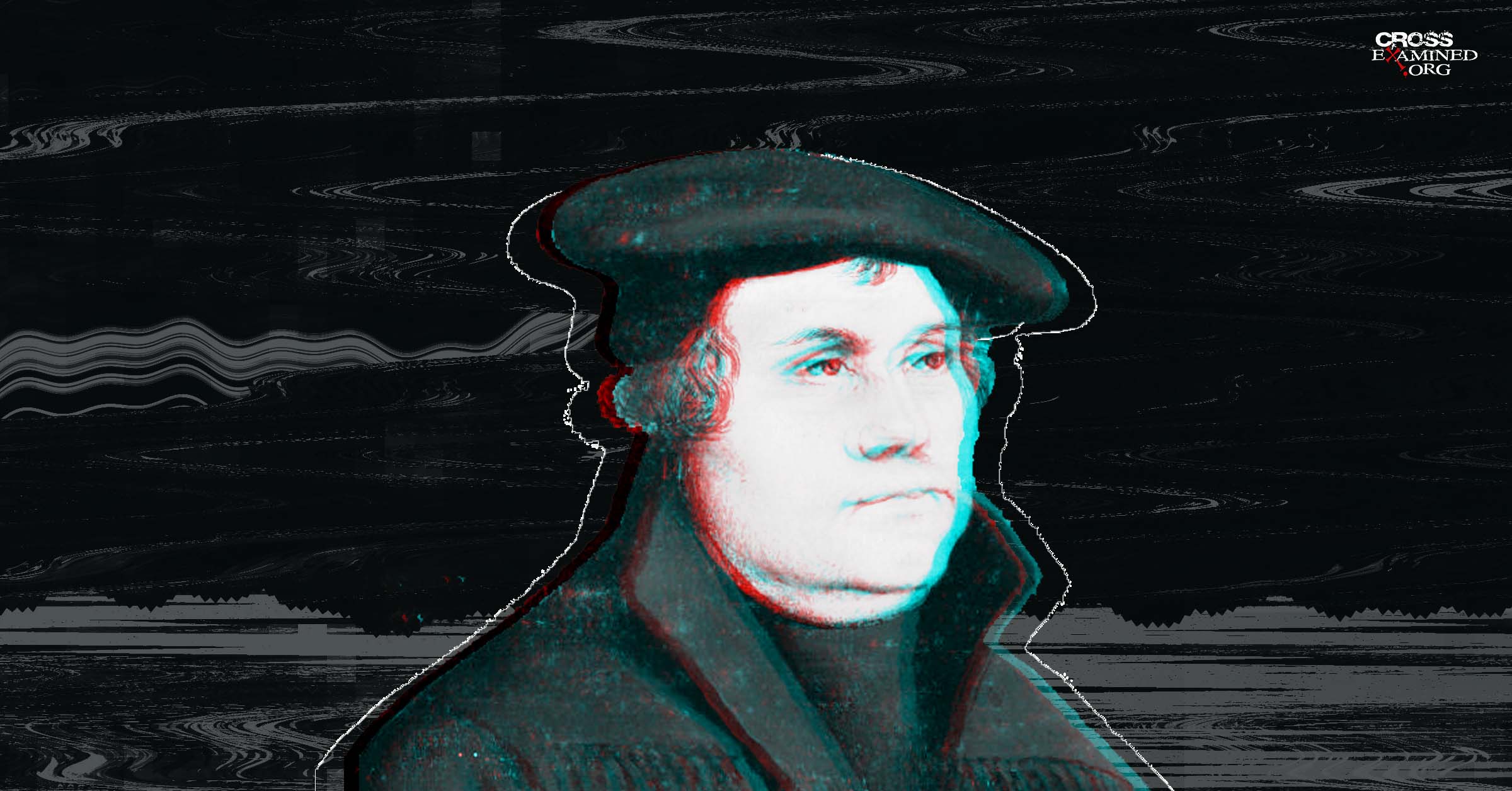
No, Martin Luther Was Not a Deconstructionist. And neither was Jesus.

Many years ago, my Christian beliefs were challenged intellectually by a progressive Christian pastor. It threw me into deconstruction that took several years to fully come out of. I would find out later that he himself had already deconstructed and had hoped to propel his congregation into deconstruction so he could convert them to progressive Christianity. He was very good at it. In fact, he was almost totally successful. A few of us came back around to a historically Christian understanding of the gospel, but most did not.

Because of this, when “deconstruction stories” started popping up in my social media newsfeed, along with hashtags like #exvangelical and #deconstruction, I paid attention. I’ve been following along… seeking to understand what people mean by those words.

I witnessed a hashtag turn into a movement.

As of today, there are 293,026 posts on Instagram utilizing the hashtag #deconstruction. The vast majority are from people who have either deconverted from Christianity, become progressive Christians, embraced same-sex marriage and relationships, rejected core historic doctrines of the faith,and/or are on a mission to crush the white Christian patriarchy. There are a few photos of deconstructed clothing (apparently this is a thing?) and a scant few sneaky posts from evangelicals attempting (mostly unsuccessfully) to convince the deconstructors that Jesus is the way. A plethora of insults, mockery, and anger are hurled at the church, along with memes stating, “I regret saving myself for marriage,” and “Good morning! It’s a great day to leave your nonaffirming church.”

Online, there are countless deconstruction therapy and counseling sites which will facilitate your deconstruction and reconstruct you with mindfulness or the contemplative practices of progressive Christian favorites like Richard Rohr. There are conferences you can attend, one for which I personally paid good money (for research purposes) to be taught how to break free from toxic religion, reject Christian dogma, and learn to embrace what basically added up to warmed-over Buddhism.

Phil Drysdale, a deconstructed Christian and deconstruction researcher asked people on Instagram to name the accounts that have helped them through their deconstructions. A quick scroll reveals that the leaders and guides the vast majority are looking to are accounts/people like Lisa Gungor, Audrey Assad, God is Grey, Jesus Unfollower, Your Favorite Heretics, Jo Luehmann, The Naked Pastor, and a plethora of others dedicated to providing a space for Christians to examine, reinterpret and/or abandon their beliefs. None of these accounts are encouraging Christians to look to Scripture as the authority for truth.

My Kingdom for a Definition

In my book, Another Gospel: A Lifelong Christian Seeks Truth in Response to Progressive Christianity, which chronicles my own deconstruction journey, I define deconstruction this way:

In the context of faith, deconstruction is the process of systematically dissecting and often rejecting the beliefs you grew up with. Sometimes the Christian will deconstruct all the way into atheism. Some remain there, but others experience a reconstruction. But the type of faith they end up embracing almost never resembles the Christianity they formerly knew.

I would add that it rarely retains any vestiges of actual Christianity.

Over the past year or so, it has become common for Christian leaders to begin to refer to deconstruction as something potentially positive. I get it. When I first heard that take, I thought, “Hmmm. That could work. Just deconstruct the false beliefs and line up what you believe with Scripture.” I was operating from the foundational belief that objective truth exists and can be known. But as I continued to study the movement, this understanding of deconstruction became untenable.

That’s because the way the word is most often used in the deconstruction movement has little to do with objective truth, and everything to do with tearing down whatever doctrine someone believes is morally wrong. Take, for example, Melissa Stewart, a former Christian now agnostic/atheist with a TikTok following of over 200k. She describes how lonely and isolated she felt during her own deconstruction, and how discovering the #exvangelical hashtag opened up a whole new world of voices who related with what she was going through. Her TikTok platform now gives her the opportunity to create that type of space for others. In an interview on the Exvangelical Podcast, she commented on the deconstruction/exvangelical online space:

My biggest experiences with it were people talking about what they went through—their stories—and it was very personal and it focused on the human beings who have come out of this, rather than on whether a certain kind of theology is right or wrong. 

In my experience studying this movement, I think she nails it on the head. Deconstruction is not about getting your theology right. It’s built upon a postmodern-ish embrace of moral relativism. For example, if your church says a woman can’t be a pastor, the virtuous thing to do would be to leave that church and deconstruct out of that toxic and oppressive doctrine. Deconstructionists do not regard Scripture as being the final authority for morality and theology—they appeal primarily to science, culture, psychology, sociology, and history.

A Life of Its Own

Now, the narrative is evolving. I’m seeing more and more posts, including the previously mentioned Gospel Coalition article, that portray Martin Luther and even Jesus himself as deconstructionists. This, in my view, is inherently irresponsible. If deconstruction means nothing more than changing your mind, or correcting bad ideas, then I can say I deconstructed by switching from AT&T to Verizon. Martin Luther was trying to reform the church to get back to Scripture. This is most certainly not what the deconstructionists are doing. In most cases, the Bible is the first thing to go. And when people put Jesus in the deconstruction camp…it’s unclear whether they mean he deconstructed his own views or he deconstructed the views of others. Either way, it’s seriously problematic. Deconstruction is not an appropriate term to use in these contexts.

It’s as if all of the sudden no one knows what the word means anymore, and they are somehow trying to redeem it or co-opt it to represent something like changing your mind or reforming your faith. Some in the deconstruction movement will argue that the current iteration of deconstruction is not to be conflated with the postmodern philosophy of Jacque Derrida, who is often referred to as the “Father of Deconstruction.” But I’m not convinced. Ultimately, Derrida didn’t believe that words could be pinned down to singular meanings. James Lindsay and Helen Pluckrose put it like this: “For Derrida, the speaker’s meaning has no more authority than the hearer’s interpretation and thus intention cannot outweigh impact.”[i]

Of course, for Derrida deconstruction had to do with text and words, not necessarily the dismantling of one’s faith. But it’s only a short jump from deconstructing the text of the Bible (which, I would argue, is typically the first stop on the path to deconstruction as it is manifesting today) to the complete unraveling of one’s orthodox Christian beliefs.

Here’s the irony. If we attempt to completely detach current deconstruction from Derrida and define it subjectively, we are literally deconstructing the word “deconstruction” a la Derrida. Why are we trying to co-opt a word and spin it into a positive? And if the meaning of the word deconstruction signifies any number of different things, at best we will be equivocating. At worst, we will have bought into the assumptions of postmodernism  hook, line and sinker.

Matt Chandler is Right

Recent comments by Matt Chandler have made the rounds in which he characterized deconstruction as “the sexy thing to do,” hitting on the almost trendy type of cool factor the word now carries. Aside from giving the deconstructionists endless opportunities to make him the butt of their “Matt Chandler thinks I’m sexy!” jokes and memes, his comments (along with the recent comments by John Cooper of Skillet) have revealed that many Christians are using this one word in profoundly different ways. For example, Relevant magazine claims Chandler and Cooper have a “fundamental misunderstanding” of deconstruction. I disagree. I admit I’ve had a few quibbles with points Matt Chandler has made in recent years. But on this I think he understands something they don’t. He links deconstruction with the postmodernism of Derrida, and in a subsequent Instagram post, commented, “Deconstruction doesn’t mean doubt or theological wrestle or struggling through church hurt.” (All things he said he’s been through and has tons of mercy for.) I think he’s dead right.

We are Christians, and we should be deriving our vocabulary and categories from Scripture.  I see nowhere in the Bible where anything like the current movement of deconstruction is promoted or condoned. I propose we leave it with Derrida and instead use biblical words and categories like doubt, reformation, discernment, and even sometimes, (gasp!) apostasy.

Let’s save deconstruction for what it presents itself to be. Here are some characteristics to look for if you think you might be deconstructing:

1.     Some type of moral relativism is assumed, whether explicitly or implicitly. If Scripture is your authority, you are not deconstructing. That doesn’t mean you’re not struggling deeply with doubt, seeking healing from church abuse, or have profound confusion over what it means to be a Christian.

2.     You are detaching from the body of Christ and seeking only the community of others who are also in deconstruction. If you are working through your doubts and questions in community with other believers, or at least have the intention of doing so, you are not deconstructing. Sometimes this will mean leaving an unbiblical church environment for a time, with the goal of finding a healthy one.

3.     You are looking to non-Christian religious philosophies, history, or sociology—rather than Scripture— to determine authentic Christianity. Not that things like history and sociology are without merit, but if you are honestly seeking to derive your religious beliefs from Scripture, you are not deconstructing.

This doesn’t mean there’s no hope if you find yourself in actual deconstruction. Ten years ago, I found myself spiraling into deconstruction, and God in his unfathomable mercy and faithfulness led me out.

Let’s not Deconstruct Deconstruction

As Christians, we tend to protest when progressives and secularists take words and phrases like “love,” “tolerance,’ “biblical inspiration,” and “incarnation” and change the definitions to suit their preferences. Let’s not do the same with deconstruction.

Deconstruction has taken on a life of its own, and now is the time to be extremely careful to define our words accurately. After all, if the word means everything, then it means nothing, yet it carries the potential to suck unsuspecting Christians into a very dangerous vortex of ideas from which they might not return.

Recommended resources related to the topic:

Jesus, You and the Essentials of Christianity by Frank Turek (INSTRUCTOR Study Guide), (STUDENT Study Guide), and (DVD)      

How Philosophy Can Help Your Theology by Richard Howe (DVD Set, Mp3, and Mp4)   

_____________________________________________________________________________________________________________________________________________________

Alisa Childers is an American singer and songwriter, best known for being in the all-female Christian music group ZOEgirl. She has had a string of top ten radio singles, four studio releases, and received the Dove Award during her time with ZOEgirl. In later years, Alisa found her life-long faith deeply challenged when she started attending what would later identify as a Progressive Christian church. This challenge pushed Alisa toward Christian Apologetics. Today you can read, listen and watch Alisa’s work online as well as purchase her recently published book on Progressive Christianity titled Another Gospel.

Original Blog Source: https://bit.ly/3Olk2Cd

 

By Alisa Childers

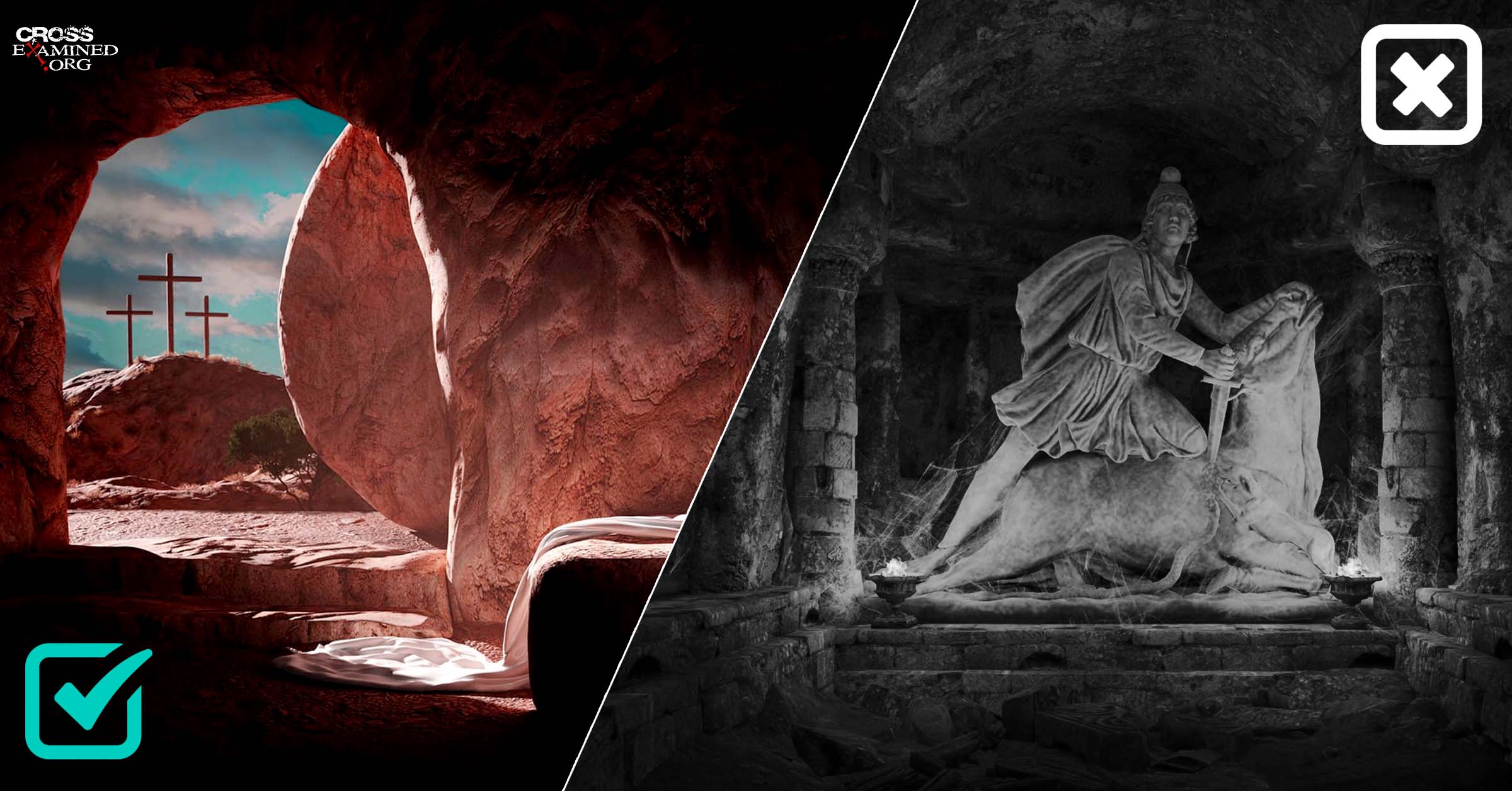
We are coming up on a time of year when the resurrection of a virgin-born child whose followers called the “Good Shepherd” and “Messiah” is celebrated. He had twelve disciples, performed miracles, and sacrificed himself for the peace of the world. He was buried in a tomb only to rise from the dead three days later. His followers went on to celebrate his resurrection every year, and this celebration eventually became what we call “Easter.

Think I’m talking about Jesus?

Nope. I’m talking about Mithras.

This is a common claim that is made by skeptics all over popular media, the internet, and even in some universities. The only problem—it’s simply not true. According to Mithraic tradition, Mithras was born out of solid rock (I guess it counts if the rock was a virgin?) His birth was celebrated on December 25th, but Christians already knew that wasn’t the real date of Christ’s birth. There is no evidence that he had twelve disciples, sacrificed himself for world peace, or that he was called “Good Shepherd” or “Messiah.” Many mythological characters were thought to be miracle workers (so maybe they can have that one), but there is no evidence he ever even died—which makes his “resurrection” a wee bit of a dilemma.

Church Father Tertullian wrote about Mithraic believers acting out resurrection stories, but this was well after the time of the New Testament. So, if there are a couple of similarities between Jesus and Mithras, it could be that Mithraic believers copied the Christians….rather than the other way around.

Mithras isn’t the only pagan myth that Christians are accused of copying. Although most scholars are agreed that no such “dying and rising gods” existed before Christ,[1] here are 5 reasons the resurrection of Jesus could NOT be a copycat. (These 5 points are my summary of this 5 part video series by Dr. Michael Licona.)

1. Ancient myths about dying and rising gods were usually tied to agricultural cycles.

When I was a little girl I remember asking someone why there are thunder and lightning. I was jokingly told thunder meant either that God was clapping his hands or maybe the angels were bowling in heaven. In the ancient world, people would describe things like the change of seasons, drought, and rain in a similar way…to their children.

Imagine an ancient Egyptian little boy asking his mom why it hadn’t rained in a while. The mom might tell him the story of the storm god Ba’al who was swallowed by his brother Mot, the god of death and the underworld. When the mother of the two gods was able to convince Mot to let his brother go, it would rain again—thus explaining the cycle of rain.

Unlike pagan myths, which were annual events going back to the distant past, the resurrection of Jesus was a one-time occurrence. It was reported as a recent event that happened within the lifetimes of the people who claimed to witness it—and it was not connected to agricultural cycles.

2. The earliest Christians were devout Jews who were highly sensitive to Jewish law and traditions.

First century Christians were constantly debating things related to the law. Should Jewish men maintain the temple purification rites? Should Gentile men be circumcised? Should Christians eat meat sacrificed to idols? These are the types of problems they took very seriously and went to great lengths to solve.

Bottom line—it’s absurd to conclude that people who were pious Jews, debating things as particular as whether or not Jewish and Gentile believers should even eat together—would borrow from pagan myths to create their own.

3. Correlation doesn’t equal causation.

During the course of human history, similarities in stories and parallels in experience are not going to be hard to find. For example, we are all familiar with a plane that took off from Massachusetts one morning and flew into one of the tallest skyscrapers in New York City between the 78th and 80th floors, killing everyone on the plane. You are probably thinking of the horrifying terrorist attack of 911 that forever changed our country. However, I’m actually referring to the B-52 that flew into the Empire State Building in 1945.

Although these two tragedies share some eerie similarities, there is no causal connection between them. Likewise, no causal connection has been shown between the resurrection of Jesus and pagan myths.

4. The comparisons are just not that impressive.

Much like the Mithras example given above, most of the pagan parallels are not that persuasive, once we get past the rhetoric and actually examine the evidence. The most comparable pagan myth that preceded the life of Jesus might be the story of a demi-god named Asclepius. Even so, the only thing that is really similar is that he, like Jesus, was known to be a healer, and according to the myth, raised someone from the dead.

Most of the pagan comparisons rely on taking bits and pieces from different ancient myths and figures that pre-dated Jesus and combine them with some real people who post-dated Him. The lengths one must go to in order to piece together a composite figure of Jesus is a bit of a stretch, and frankly, just not that impressive.

5. The abundance of myths doesn’t cancel out the evidence for the real resurrection of Jesus.

If you go to Barnes & Noble and take a look at the section for romance fiction, you will find cover after cover of helpless women trying to solve the biggest problem in their lives: which handsome and gallant hero will they choose? It’s a tired formula that borders on the ridiculous—but just because tons of romance fiction is out there—it doesn’t negate the idea that real romantic love exists.

The truth is that there are so many silly romantic novels because romance seems to be an insatiable desire of the human condition.

Life in the Roman Empire was brutal, with most people living in poverty, and given such a society, people were naturally looking for hope. They wanted to know that evil would be punished and goodness would be rewarded and that there would be life after death where justice would be done. Like the impetus behind modern romance fiction, this is a common desire of the human condition.

We should expect that stories would emerge that would satisfy this hope for immortality. This doesn’t mean that Jesus actually rising from the dead is fictitious or impossible. If we have good evidence for the resurrection of Jesus (which we do), there’s no reason to reject it simply because there may be some similarities in fictional stories.

This Easter, we don’t celebrate Mithras or some other impotent figure of an ancient fairy tale. We celebrate the true and living Savior who conquered death and the grave to save us and reconcile us to God. I pray this post helps you confidently agree with the angel at Jesus’ tomb by saying: He is risen!

Notes:

[1] Lund University Professor and Biblical Scholar T. N. D. Mettinger wrote, “The consensus among modern scholars—nearly universal—is that there were no dying and rising gods that preceded Christianity. They all post-dated the first century.” (Cited in Lee Strobel, The Case for the Real Jesus (Grand Rapids, MI: Zondervan, 2007, 160-61.)

Recommended resources related to the topic:

Early Evidence for the Resurrection by Dr. Gary Habermas (DVD), (Mp3) and (Mp4)

Jesus, You and the Essentials of Christianity by Frank Turek (INSTRUCTOR Study Guide), (STUDENT Study Guide), and (DVD)     

_____________________________________________________________________________________________________________________________________________________

Alisa Childers is an American singer and songwriter, best known for being in the all-female Christian music group ZOEgirl. She has had a string of top ten radio singles, four studio releases, and received the Dove Award during her time with ZOEgirl. In later years, Alisa found her life-long faith deeply challenged when she started attending what would later identify as a Progressive Christian church. This challenge pushed Alisa toward Christian Apologetics. Today you can read, listen and watch Alisa’s work online as well as purchase her recently published book on Progressive Christianity titled Another Gospel.

Original blog: https://bit.ly/3rvZYDR


By Alisa Childers

When my daughter Dyllan was a toddler, I exercised quite regularly at the YMCA. (And by “exercised,” I mean that I read a book on the stationary bike and pedaled as slowly as possible while I enjoyed an hour of free childcare. Not gonna lie.) One day when I picked her up from the kid’s room, the childcare worker pulled out the unopened granola bar I had put in Dyllan’s bag, handed it to me, and said, “We can’t give this to her because it contains peanuts. We don’t allow anything with peanuts into the childcare area.” I admit I was a bit surprised because it wasn’t something I had given much thought to. But I quickly learned that there was almost nothing parents feared more in 2010 than the dreaded peanut.

Of course, peanut allergies are very real. In their book, The Coddling of the American Mind: How Good Intentions and Bad Ideas Are Setting Up a Generation for Failure, Greg Lukianoff and Jonathan Haidt reported that before the mid-1990s, peanut allergies were extremely rare in American children. However, by 2008, fourteen out of every thousand kids had developed peanut allergies. No one knew why there was such a drastic increase until an authoritative study was released in 2015. It was discovered that many kids were developing peanut allergies because their parents avoided giving them peanuts. The study revealed that introducing peanut products to infants with a high risk for allergies actually reduced their chances of developing a peanut allergy by a whopping 81%. In other words, giving peanut products to infants caused their immune systems to respond and build up a tolerance.

Our kids have amazing bodies that react to bacteria, parasites—and yes, peanuts—with an immune response that teaches their system to adapt and fight off future threats to their health.

In the same way, I believe our kids have spiritual immune systems.

Several years ago,  I was a participant in a study and discussion group about Christianity. This was the class that challenged my faith intellectually and I’ve told that story here. One day, the subject of Adam and Eve came up and it was asked, “Does anyone still believe they were actual people?” I’m a little embarrassed to admit that I was entirely naive when it came to this subject. Even as an adult, I thought the literal existence of Adam and Eve was something all professing Christians believed in. Chalk it up to the Evangelical bubble I grew up in or the fact that most of my life happened before the invention of the internet. But the question threw me because I had no idea how to answer.

Until that moment, I didn’t even know it was a question. I had zero immunity. 

This was simply one of many skeptical claims raised against historic Christianity that snowballed together to send me into a dark time of doubt. I’ve often replayed that moment in my mind and imagined a different scenario. What if I had been aware of this question from childhood? What if I had already thought it through? What if when I read the Genesis account of creation, someone had told me, “Hey, some people don’t think Adam and Eve really existed. Let’s think about what the Bible says about it, what scientific evidence shows, and what that would mean for the gospel.

If my spiritual immune system had been strengthened in this way, hearing this question as an adult would have been no big deal. It wouldn’t have shaken my faith one bit. I would have simply engaged in that conversation intelligently, without fear or doubt.

Other than teaching our kids the basics of the Christian faith, there are many practical steps we can take to help bolster their spiritual immune systems. Here are three to start with:

1. Read the Bible with your kids, and don’t skip the hard stuff. 

By “don’t skip the hard stuff,” I certainly don’t mean you should freak your kids out right before bed by reading about the Levite hacking his concubine to pieces in Judges 19, or Samson getting his eyes gouged out in Judges 16. Obviously, there is an age-appropriate way to introduce biblical stories to our kids. What I mean by “don’t skip the hard stuff,” is that reading stories and accounts that skeptics typically challenge is a great way to inoculate our kids against their false ideas.

For example, when my daughter was about seven, we read through Genesis together.  In chapter 26, we read the story of Isaac lying to the Philistines. He told them his wife Rebekah was his sister, fearing that someone might kill him in order to marry her. I said to my daughter, “Did you know that some people think this story is made up because it’s so similar to what Isaac’s dad Abraham did twice before? What do you think about that?” We had a great conversation about how it would make perfect sense for Isaac to repeat his father’s lie, because there seemed to be no major consequences for doing so. In fact, in both cases, Abraham left richer than he came. We also looked at the biblical theme of sons tending to repeat their father’s sins. After we talked, it all made sense. And now my daughter won’t be caught off-guard should she hear that skeptical claim in the future.

​A great resource to help with this is The Apologetics Study Bible. As you read through the Bible, it footnotes the verses that skeptics typically challenge, and offers intelligent and credible responses you can talk through with your kids!

​2. Expose your kids to atheism.

As a parent, it can be scary to intentionally tell your kids all the reasons why atheists reject Christianity. Based on her experience teaching apologetics to Christian parents,  my friend Natasha Crain noted that many parents don’t want to risk leading their kids astray by introducing atheist arguments. But she rightly points out that all of our kids will inevitably hear these ideas. She wrote:

The only choice you have as a parent is if they’ll hear them first from you—in an environment where they’ll have your guidance readily available—or if they’ll hear them first from nonbelievers—in an environment where they’ll be processing what they hear on their own.

Brett Kunkle compares exposure to atheist ideas with teaching his kids to surf.  In this video, he explains that as a parent, you wouldn’t throw your kid into the ocean to surf big waves before you teach them basics like swimming and how to handle smaller waves. Watch below:

​Getting our kids used to the “smaller waves” of atheism can be a great way to prepare them to encounter the “big waves” when they are out on their own.

3. Expose your kids to false gospels and other religions.

​Just like it’s important to expose our kids to atheist ideas, it’s equally important to expose them to counterfeit gospels—which almost always masquerade as authentic Christianity. It’s been said that the best lies contain the most truth. This is why false gospels can be so tricky to discern. . .they contain so much truth.  They will often emphasize Jesus, use the right lingo, and even appeal to the Bible to back up their claims. Explaining the differences between authentic Christianity and Mormonism, Jehovah’s Witnesses, the prosperity gospel, or progressive Christianity will prepare our kids to interact with their ideas and see through the deceptions they espouse.

Another important step is talking with our kids about what people of other religious faiths believe about God, Jesus, and the nature of reality. Although they agree on some points, every world religion contradicts the others at a fundamental level. Logically, they can’t all be true. This is a great opportunity to expose the contradictions and talk with our kids about why Christianity is true and best explains reality.

Who would have thought that giving a baby a tiny bit of peanut butter could potentially save his life? In the same way, giving our kids tiny bits of anti-Christian ideas and allowing them to process these questions within the safety and guidance of our care could have a lasting impact on their future spiritual lives.

Other practical resources:

For years, Brett Kunkle has offered theological training for teenagers and facilitated trips to Utah to interact with Mormons. When I interviewed him on my podcast, he reported that the impact of these trips has been tremendous in the lives of young people, motivating them to study theology and apologetics on their own. He now offers trips to the Berkeley college campus where Christian kids can share the gospel and interact with atheists and skeptics. Find out more at www.maventruth.com.

Another ministry doing great work in this area is Jonathan Morrow and Impact 360. Every summer, they offer experiences in which Christian teenagers are trained in leadership, apologetics, and theology after which they are given real-world experiences to test their knowledge. They visit Buddhist and Mormon temples, meet atheists, and more. Find out more at www.impact360institute.org and listen to Jonathan’s interview on my podcast.

If you want to be intentional about this, pick up Natasha Crain’s book Talking with Your Kids about God: 30 Conversations Every Christian Parent Must Have, and follow Natasha’s blog for more great tips. Or pick up J. Warner Wallace’s trio of kids’ books (12, and 3) that explore everything from the existence of God to the truthfulness of Christianity.

Recommended resources related to the topic:

Proverbs: Making Your Paths Straight Complete 9-part Series by Frank Turek DVD and Download

So the Next Generation will Know by J. Warner Wallace (Book and Participant’s Guide)

Fearless Generation – Complete DVD Series, Complete mp4 Series (download) by Mike Adams, Frank Turek, and J. Warner Wallace

Jesus, You and the Essentials of Christianity by Frank Turek (INSTRUCTOR Study Guide), (STUDENT Study Guide), and (DVD)      

_____________________________________________________________________________________________________________________________________________________

Alisa Childers is an American singer and songwriter, best known for being in the all-female Christian music group ZOEgirl. She has had a string of top ten radio singles, four studio releases, and received the Dove Award during her time with ZOEgirl. In later years, Alisa found her life-long faith deeply challenged when she started attending what would later identify as a Progressive Christian church. This challenge pushed Alisa toward Christian Apologetics. Today you can read, listen and watch Alisa’s work online as well as purchase her recently published book on Progressive Christianity titled Another Gospel.

Original Blog Source: https://bit.ly/3pDSI7V


Por Alisa Childers

Cuando mi hija Dyllan era pequeña, me ejercitaba con bastante regularidad en el YMCA. (Y por “ejercitaba” quiero decir que leía un libro en la bicicleta estática y pedaleaba lo más despacio posible mientras disfrutaba de una hora de guardería gratuita. No voy a mentir). Un día, cuando la recogí de la sala de niños, la cuidadora sacó la barrita de granola sin abrir que había metido en la bolsa de Dyllan, me la entregó y me dijo: “No podemos dársela porque contiene maní. No permitimos nada con maní en la zona de la guardería”. Reconozco que me sorprendió un poco porque no era algo en lo que hubiera pensado mucho. Pero enseguida aprendí que no había casi nada que los padres temieran más en 2010 que el temido maní.

Por supuesto, las alergias al maní son muy reales. En su libro The Coddling of the American Mind: How Good Intentions and Bad Ideas Are Setting Up a Generation for Failure, Greg Lukianoff y Jonathan Haidt informaron de que antes de mediados de los años 90, las alergias al maní eran extremadamente raras en los niños estadounidenses. Sin embargo, en 2008, catorce de cada mil niños habían desarrollado alergias al maní. Nadie sabía por qué había un aumento tan drástico hasta que se publicó un estudio fidedigno en 2015. Se descubrió que muchos niños estaban desarrollando alergias al maní porque sus padres evitaban dárselos. El estudio reveló que la introducción de productos de maní a los bebés con alto riesgo de alergias en realidad redujo sus posibilidades de desarrollar una alergia al maní en un sorprendente 81%. En otras palabras, dar productos de manía los bebés hizo que su sistema inmunológico respondiera y creara tolerancia

Nuestros hijos tienen cuerpos increíbles que reaccionan a las bacterias, parásitos -y sí, al maní- con una defensa inmunológica que enseña a su sistema a adaptarse y luchar contra futuras amenazas a su salud.

Del mismo modo, creo que nuestros hijos tienen sistemas inmunológicos espirituales.

Hace varios años, participé en un grupo de estudio y discusión sobre el cristianismo. Esta fue la clase que desafió mi fe intelectualmente y he contado esa historia aquí. Un día, surgió el tema de Adán y Eva y se preguntó: “¿Alguien sigue creyendo que fueron personas reales?”. Me da un poco de vergüenza admitir que era totalmente ingenua en lo que se refiere a este tema. Incluso de adulta, pensaba que la existencia literal de Adán y Eva era algo en lo que todos los cristianos profesantes creían. Hay que atribuirlo a la burbuja evangélica en la que crecí o al hecho de que la mayor parte de mi vida transcurrió antes de la invención de Internet. Pero la pregunta me desconcertó porque no tenía ni idea de cómo responder.

Hasta ese momento, ni siquiera sabía que era una pregunta. Tenía cero inmunidad.

Esta fue simplemente una de las muchas afirmaciones escépticas planteadas contra el cristianismo histórico que se unieron para enviarme a una época oscura de dudas. A menudo he reproducido ese momento en mi mente y he imaginado un escenario diferente. ¿Y si hubiera sido consciente de esta cuestión desde la infancia? ¿Y si ya hubiera reflexionado sobre ella? ¿Y si cuando leí el relato del Génesis sobre la creación, alguien me hubiera dicho: “Oye, hay gente que no cree que Adán y Eva existieron realmente? Pensemos en lo que dice la Biblia al respecto, en lo que muestran las pruebas científicas y en lo que eso significaba para el evangelio”.

Si mi sistema inmunológico espiritual se hubiera fortalecido de esta manera, escuchar esta pregunta como adulta no habría sido un gran problema. No habría sacudido mi fe ni un poco. Simplemente habría participado en esa conversación de forma inteligente, sin miedo ni dudas.

Además de enseñar a nuestros hijos los fundamentos de la fe cristiana, hay muchas medidas prácticas que podemos tomar para ayudar a reforzar su sistema inmunológico espiritual. Aquí hay tres para empezar:

1. Lee la Biblia con tus hijos, y no te saltes las cosas difíciles.

Con “no te saltes las cosas difíciles” no quiero decir que debas asustar a tus hijos antes de acostarse leyendo sobre el levita que descuartiza a su concubina en Jueces 19, o sobre Sansón al que le sacan los ojos en Jueces 16. Obviamente, hay una manera apropiada de presentar las historias bíblicas a nuestros hijos. Lo que quiero decir con “no te saltes lo más difícil” es que la lectura de historias y relatos que los escépticos suelen poner en tela de juicio es una gran manera de inocular a nuestros hijos contra sus falsas ideas.

Por ejemplo, cuando mi hija tenía unos siete años, leímos juntas el Génesis.  En el capítulo 26, leímos la historia de Isaac mintiendo a los filisteos. Les dijo que su esposa Rebeca era su hermana, temiendo que alguien pudiera matarlo para casarse con ella. Le dije a mi hija: “¿Sabías que algunas personas piensan que esta historia es inventada porque es muy similar a lo que hizo Abraham, el padre de Isaac, dos veces antes? ¿Qué opinas de eso?”. Tuvimos una gran conversación sobre cómo tendría perfecto sentido que Isaac repitiera la mentira de su padre, porque no parecía haber mayores consecuencias por hacerlo. De hecho, en ambos casos, Abraham se fue más rico de lo que llegó. También analizamos el tema bíblico de que los hijos tienden a repetir los pecados de sus padres. Después de hablar, todo tenía sentido. Y ahora mi hija no se verá sorprendida si escucha esa afirmación escéptica en el futuro.

Un gran recurso para ayudar con esto es La Biblia de Estudio de Apologética. A medida que se lee la Biblia, encontramos las notas a pie de página de  los versículos que los escépticos suelen cuestionar, y se ofrecen respuestas inteligentes y creíbles que se pueden comentar con los niños.

2. Exponga a sus hijos al ateísmo.

Como padres, puede dar miedo contar intencionadamente a sus hijos todas las razones por las que los ateos rechazan el cristianismo. Basándose en su experiencia enseñando apologética a padres cristianos, mi amiga Natasha Crain señaló que muchos padres no quieren arriesgarse a llevar a sus hijos por el mal camino presentándoles argumentos ateos. Pero ella señala acertadamente que todos nuestros hijos escucharán inevitablemente estas ideas. Ella escribió:

La única opción que tienes como padre es si primero lo escuchan de ti -en un entorno en el que tendrán tu orientación fácilmente disponible- o si lo escuchan primero de los no creyentes -en un entorno en el que procesarán lo que escuchan por su cuenta-.

Brett Kunkle compara la exposición a las ideas ateas con la enseñanza del surf a sus hijos.  En este vídeo, explica que, como padre, no lanzarías a tu hijo al océano para que surfeara grandes olas antes de enseñarle aspectos básicos como la natación y cómo manejar olas más pequeñas. Míralo a continuación:

Acostumbrar a nuestros hijos a las “pequeñas olas” del ateísmo puede ser una buena manera de prepararlos para encontrarse con las “grandes olas” cuando estén solos.

3. Exponga a sus hijos a los falsos evangelios y a otras religiones.

Al igual que es importante exponer a nuestros hijos a las ideas ateas, es igualmente importante exponerlos a los evangelios falsos, que casi siempre se disfrazan de cristianismo auténtico. Se ha dicho que las mejores mentiras contienen gran  parte de verdad. Por eso los falsos evangelios pueden ser tan difíciles de discernir. …contienen mucha verdad.  A menudo hacen hincapié en Jesús, utilizan la expresión correcta e incluso apelan a la Biblia para respaldar sus afirmaciones. Explicar las diferencias entre el cristianismo auténtico y el mormonismo, los testigos de Jehová, el evangelio de la prosperidad o el cristianismo progresista preparará a nuestros hijos para interactuar con sus ideas y ver los engaños que proponen.     

Otro paso importante es hablar con nuestros hijos sobre lo que creen las personas de otras religiones sobre Dios, Jesús y la naturaleza de la realidad. Aunque están de acuerdo en algunos puntos, todas las religiones del mundo se contradicen con las demás en un nivel fundamental. Lógicamente, no pueden ser todas verdaderas. Esta es una gran oportunidad para exponer las contradicciones y hablar con nuestros hijos sobre por qué el cristianismo es verdadero y explica mejor la realidad.

¿Quién iba a pensar que dar a un bebé un trocito de mantequilla de maní podría salvarle la vida? Del mismo modo, dar a nuestros hijos pequeños trozos de ideas anticristianas y permitirles procesar estas cuestiones dentro de la seguridad y la orientación de nuestro cuidado podría tener un impacto duradero en sus futuras vidas espirituales.

Otros recursos prácticos:

Durante años, Brett Kunkle ha ofrecido formación teológica para adolescentes y ha facilitado viajes a Utah para interactuar con los mormones. Cuando lo entrevisté en mi podcast, me informó de que el impacto de estos viajes ha sido tremendo en la vida de los jóvenes, motivándolos a estudiar teología y apologética por su cuenta. Ahora ofrece viajes al campus universitario de Berkeley donde los chicos cristianos pueden compartir el evangelio e interactuar con ateos y escépticos. Más información en www.maventruth.com.

Otro ministerio que realiza una gran labor en este ámbito es Jonathan Morrow e Impact 360. Cada verano, ofrecen experiencias en las que los adolescentes cristianos reciben formación en liderazgo, apologética y teología, tras lo cual se les ofrecen experiencias del mundo real para poner a prueba sus conocimientos. Visitan templos budistas y mormones, conocen ateos y mucho más. Para saber más, visita www.impact360institute.org y escucha la entrevista de Jonathan en mi podcast.

Si quieres ser intencional en este aspecto, toma el libro de Natasha Crain Talking with Your Kids about God: 30 Conversations Every Christian Parent Must Have, y sigue el blog de Natasha para obtener más consejos. También puedes comprar el trío de libros para niños de J. Warner Wallace (1, 2 y 3) que exploran todo, desde la existencia de Dios hasta la veracidad del cristianismo.

Recursos recomendados en Español: 

Robándole a Dios (tapa blanda), (Guía de estudio para el profesor) y (Guía de estudio del estudiante) por el Dr. Frank Turek

Por qué no tengo suficiente fe para ser un ateo (serie de DVD completa), (Manual de trabajo del profesor) y (Manual del estudiante) del Dr. Frank Turek  

_____________________________________________________________________________________________________________________________________________________

Alisa Childers es una cantante y compositora estadounidense, más conocida por formar parte del grupo femenino de música cristiana ZOEgirl. Ha tenido una lista de los diez mejores sencillos de la radio, cuatro lanzamientos de estudio y recibió el premio Dove durante su tiempo con ZOEgirl. Años más tarde, Alisa experimentó un profundo desafío a su fe de toda la vida cuando empezó a asistir a lo que más tarde se identificaría como una iglesia cristiana progresista. Este desafío empujó a Alisa hacia la Apologética Cristiana. Actualmente se puede leer, escuchar y ver el trabajo de Alisa en línea, así como adquirir su libro recientemente publicado sobre el cristianismo progresista, titulado Another Gospel.

Blog Originalmente publicado aquí: https://bit.ly/3OH0Z5U

Traducido por Jennifer Chavez

Editado por Elenita Romero


By Alisa Childers

When my daughter was little, I made her quinoa, oat, and flax seed waffles, and she loved them. It wasn’t until we were visiting family in California that she experienced the hotel breakfast bar and exclaimed out loud, “Mom, these waffles are SO MUCH BETTER THAN YOURS!” The charade was over. Dry, grainy, fake waffles would no longer be tolerated. She had now tasted the real thing, and would never again be fooled by a fake.

Likewise, one of the most effective ways to teach our children to spot a false gospel is to make sure they are well-versed in the true gospel . That way, when they encounter a false version of Christianity, they will immediately recognize it. Here are some ways to teach our children to spot a false gospel:

Teach them to love the truth

One of the most common ways that young Christians are deceived with bad ideas is through the vehicle of relativism. Relativism is the belief that absolute truth does not exist or cannot be known. “What is true for you is true for you” or “There is no such thing as truth” are common expressions thrown at Christians to shut down their ideas and make them feel like moral censors/criticizers for simply claiming to know the truth.

However, Christianity is a belief system that stands or falls on the basis that truth is absolute. God either exists or he doesn’t. Jesus either rose from the dead or he didn’t. In fact, Jesus claimed to be Truth itself: “I am the way, the truth, and the life” (John 14:6). The stakes are that high!

Teaching our children to base their beliefs on what is true, not what feels right , will help prevent them from walking away when their faith no longer “feels right.”

Teach them to be biblically cultured

From the beginning, false ideas about God were passed off as “Christian.” False teachers often twisted Scripture to deceive followers of Jesus into believing their teachings. Even today, some of the most misleading ideas are those marketed as “biblical.”

The only way to know for sure whether an idea is biblical or not is to actually know what the Bible says. There is nothing wrong with buying a good children’s devotional book or a cartoon of a Bible character to supplement our devotions, but nothing can replace reading the actual Bible with our children.

This will help prevent them from falling into misquotes and misrepresentations because they will know the reality.

Teach them to identify the essentials of the gospel

One of the ways Christians can be deceived into believing a false gospel is when they confuse non-essential doctrines with essential doctrines. The thinking goes something like this: If Christians can’t even agree on how predestination works, why can’t we just agree to disagree about the resurrection?

Essential doctrines are beliefs that directly affect someone’s salvation. The virgin birth, the deity of Jesus, the atonement, the resurrection, the second coming, and the final judgment are all examples of essential doctrines of the gospel. These are fundamental topics that we cannot simply agree to disagree about.

Teaching our children to recognize the difference between core and non-core beliefs will help them avoid confusion about what matters most.

Teach them to define their terms

One telltale sign of a false gospel is the redefinition of terms. For example, someone might imply that telling people they might not go to heaven is “unloving.” But this only works if they have redefined the word love to mean making someone feel good by endorsing all their beliefs and behaviors. But according to the Bible, that is not love at all.

First Corinthians 13 tells us that “love is patient and kind” (verse 4). But it also “does not rejoice at evil but at the truth” (verse 6 [author’s error in verse]). To love someone means to tell them the truth, even when it’s unpleasant. So telling someone about the possibility of an eternity apart from God is actually the most loving thing you can do .

Teaching our children to define their terms biblically will help protect them from being “pigged in” by words that are redefined according to cultural norms.

Teach them to appreciate the beauty of the gospel

The apostle Paul wrote that when he preached the gospel, it had a fragrance. To some, it smelled of life and peace. To others, it reeked of death. [1] I imagine it all came down to whether or not someone truly believed they were a sinner. If one does not recognize their own sinfulness, the Father’s message demanding Jesus’ sacrifice on the cross would seem unnecessary—even immoral. However, if someone knows they have sinned against a holy God and deserve death, Jesus’ atoning work suddenly becomes the most beautiful cure imaginable.

We live in a culture that inundates our children with messages that they are perfect just the way they are and that they should follow their hearts. But these “positive messages” soften their own sinfulness and can make them vulnerable to imitations/counterfeits of the cross akin to “cosmic child abuse.”

As parents, we know that most ideas are learned, not taught. It is useless to teach our children all the right things if we ourselves do not practice those ideas. This involves repenting when we are wrong. It involves reading the Bible and praying with them. And just as my daughter will never again be fooled by imposter waffles, our children will not settle for false gospels because they will be so well acquainted with the real one .

Grades

 [1] 2 Corinthians 2:15-16

Recommended resources in Spanish: 

Stealing from God ( Paperback ), ( Teacher Study Guide ), and ( Student Study Guide ) by Dr. Frank Turek

Why I Don’t Have Enough Faith to Be an Atheist ( Complete DVD Series ), ( Teacher’s Workbook ), and ( Student’s Handbook ) by Dr. Frank Turek  

_____________________________________________________________________________________________________________________________________________________

Alisa Childers is an American singer and songwriter, best known for being part of the all-female Christian music group ZOEgirl. She has had one top ten radio single, four studio releases, and received a Dove Award during her time with ZOEgirl. Years later, Alisa experienced a profound challenge to her lifelong faith when she began attending what would later be identified as a progressive Christian church. This challenge pushed Alisa towards Christian Apologetics. You can currently read, listen to, and watch Alisa’s work online, as well as purchase her recently released book on progressive Christianity, titled Another Gospel.

Original Blog : https://cutt.ly/YO9CxmL 

Translated by Jennifer Chavez

Edited by Gustavo Camarillo 


Por Alisa Childers

Permítanme empezar diciendo que me gusta Rob Bell. (No pensaste que iba a decir eso, ¿verdad?) Como parte de una investigación que estoy haciendo sobre el Cristianismo Progresista, he pasado bastante tiempo con él últimamente, —escuchando conferencias, entrevistas y leyendo sus libros. De todos los autores progresistas que estoy leyendo actualmente (Rachel Held Evans, Richard Rohr, Brian McLaren, Steve Chalke y Pete Enns, entre otros), Bell es el que más me gusta. Esto no significa que esté de acuerdo con mucho de lo que dice, pero es elocuente, claro, fascinante y parece una persona genuinamente agradable.

Hace poco leí el libro de Bell,  What Is the Bible? How an Ancient Library of Poems, Letters, and Stories Can Transform the Way You Think and Feel About Everything (¿Qué es la Biblia? Cómo una antigua biblioteca de poemas, cartas, e historias pueden transformar tu forma de pensar y sentir en todos los aspectos) (Ese es un título muy bueno.) Con capítulos como “Moisés y su humedad”, “Ollas humeantes”  e “Y la grasa inmovilizó la espada”, la creatividad y el entusiasmo de Bell por su trabajo son palpables.

Una de las cosas en las que destaca es en la narración de historias y en la aportación de datos contextuales que ayudan al lector a comprender el panorama general de la Biblia. A veces lo hace de forma que termino sonriendo y afirmando con la cabeza. Otras veces acabo jalándome los cabellos y discutiendo con mi computadora (porque lo leí en Kindle). En ocasiones, el “panorama general” que pintó era totalmente ajeno a la Biblia.

He aprendido que cuando leo a Rob Bell, siempre debo cuestionar sus premisas. Es brillante en la construcción de una interpretación deslumbrante y convincente en torno a una premisa falsa. Antes de que te des cuenta de lo que ha sucedido, has saltado por un arco iris completamente diferente, cosechando baratijas de una olla de oro totalmente distinta, —que puede que no contenga oro real.

Aquí hay un ejemplo.

En un capítulo titulado “Lo humano y lo divino”, Bell señala que la Biblia fue escrita por humanos. Lo repite a menudo a lo largo del libro e incluso afirma en la introducción que “la Biblia es un libro sobre lo que significa ser humano”. (p. 4) Señala que “cuando empiezas ahí, [ entendiendo que la Biblia fue escrita por humanos] y te adentras en la humanidad de esta biblioteca de libros, puede que encuentres lo divino.” (p.183) En este punto, la mayoría de la gente seguirá leyendo como si nada. Pero a esto me refiero: es una premisa falsa.  Me explico.

Una de las claves del pensamiento crítico es cuestionar siempre las premisas. Alguien puede presentar un argumento que es lógicamente válido, pero que sigue siendo erróneo. Observa este argumento:

Premisa 1: Todas las razas de ganado tienen rayas moradas.

Premisa 2: La vaca Jersey es una raza de ganado.

Conclusión: Las vacas Jersey tienen rayas moradas. 

¿Las vacas de Jersey tienen rayas moradas? Por supuesto que no. Pero, aunque la conclusión sea falsa, ésta consideró correctamente las premisas, así que técnicamente, el argumento es válido. Por eso las premisas son tan importantes. Veamos la premisa de Bell.

¿La Biblia fue escrita por humanos?

Es cierto que la Biblia fue escrita por humanos. Pero esa no es toda la historia, y por lo tanto no debe ser nuestro punto de partida como sugiere Bell. Esta es una visión torcida de cómo se escribió la Biblia. Dios ciertamente usó a muchas personas diferentes que vivieron en varias culturas y períodos de tiempo para redactar las palabras de la Escritura, pero como dice Pablo en 2 Timoteo 3:16 LBLA, “Toda Escritura es inspirada por Dios, y útil para enseñar, para reprender, para corregir, para instruir en justicia”.

La palabra griega traducida como “inspirada por Dios” no significa “inspirada” de la misma manera que un poeta es inspirado por su musa, o como un bailarín que se desempeña con inspiración. Significa ” exhalado por Dios”. Al referirse a las profecías del Antiguo Testamento, el apóstol Pedro escribió: “ pues ninguna profecía fue dada jamás por un acto de voluntad humana, sino que hombres inspirados por el Espíritu Santo hablaron de parte de Dios”. (2 Pedro 1:21 LBLA)

 Jesús dijo que cuando David escribió las Escrituras, estaba “hablando por el Espíritu”, y afirmó una y otra vez que creía que las Escrituras eran la mismísima Palabra de Dios: inspiradas, con autoridad e históricamente confiables.

¿Se equivocan Pablo, Pedro y Jesús? La premisa de Bell sugiere que sí.  Su punto de partida es desechar la doctrina de la inspiración divina, o al menos la interpretación tradicional de la misma.  Hay un breve capítulo en el que todo gira alrededor de la palabra “inspirada”, pintando su significado con la más tosca de las brochas. Al explicar que el uso que hace Pablo del griego theopneustos, (respirado por Dios), escribe que Pablo simplemente quería decir: “Son libros, pero son más que libros”. (p. 286) Compara esto con ser inspirado por una canción o al tener “algo bueno, de esperanza, verdadero, reconfortante, sanador o genuino” es soplado hacia ti. (p. 286)

Al final del capítulo, hace una distinción importante pero sutil. Escribe: “La Biblia está inspirada, de la misma manera en que tú eres inspirado… No eres más que un humilde saco de huesos y piel que tropieza, y sin embargo la fuerza creadora divina, infinita y eterna del universo ha soplado en ti”. Cuando compara eso con la forma en que la Biblia está inspirada, escribe que esta “Biblioteca de libros. . .ha sido soplada hacia. . .” (p. 287) Esto puede no parecer tan controvertido, salvo que implica que los libros fueron primero escritos y luego inspirados.

La Biblia enseña que los propios escritores de las Escrituras fueron ” impulsados por el Espíritu Santo” para escribir las palabras ” exhaladas por Dios”… Dios no tomó lo que ya habían escrito para convertirlo en algo inspirador.

¿Qué está en juego?

Si el punto de partida de Bell es que la Biblia es esencialmente una invención humana, no es de extrañar que no considere los acontecimientos ahí registrados cómo históricamente fiables.

Al exponer la idea de que la Biblia fue escrita por seres humanos (¿estás viendo hacia dónde se dirige?), Bell se pregunta por qué María y los discípulos no reconocieron a Jesús resucitado cuando lo vieron por primera vez. Casualmente menciona entre paréntesis:

La próxima vez que oigas a alguien insistir en que fue una resurrección real y literal, asegúrate de añadir que lo corporal debe significar que no tenía el mismo aspecto de antes. (p.185)

¿Observas  lo que hizo ahí? Simplemente asume que sus lectores son demasiado inteligentes como para pensar que la resurrección de Jesús fue un hecho “literal” (contrario a lo que prácticamente todos los cristianos creyentes en la Biblia han afirmado durante los últimos 2.000 años). No se toma la molestia de exponer ese argumento (bíblico o de otro tipo) ni siquiera señala las ramificaciones teológicas por haberlo cambiado. Y así, sin más, —derriba una doctrina cristiana esencial con nada más que una ocurrencia entre paréntesis. Pudo hacerlo porque ya había hecho creer al lector que la Biblia es un libro sobre lo que significa ser humano.

En este punto, Bell se ha posicionado a sí mismo (y al lector) por encima de las Escrituras como la máxima autoridad y juez de la verdad. Y lo consigue en unos pocos párrafos bien escritos, fascinantes e ingeniosos. 

Tengo algunos puntos de acuerdo con Bell. Por ejemplo, escribe que la Biblia debe leerse “literalmente”. Es decir, leerla según su género y su contexto cultural. No podría estar más de acuerdo. Sin embargo, casi inmediatamente explica esto para señalar que cada vez que hay algo “extremo” (como Elías siendo arrebatado al cielo), debemos tomarlo como una pista de que probablemente no es histórico. (p. 80) Su premisa fundamental de que la Biblia es más humana que divina seguramente empañara cualquier punto bueno que haga.

¿Es la Biblia un libro esencialmente humano? Jesús, Pablo y Pedro no lo creían, —y prefiero creer lo mismo que ellos.

Recursos recomendados en Español: 

Robándole a Dios (tapa blanda), (Guía de estudio para el profesor) y (Guía de estudio del estudiante) por el Dr. Frank Turek

Por qué no tengo suficiente fe para ser un ateo (serie de DVD completa), (Manual de trabajo del profesor) y (Manual del estudiante) del Dr. Frank Turek 

______________________________________________________________________________________________________________________________________________

Alisa Childers es una cantante y compositora estadounidense, más conocida por formar parte del grupo femenino de música cristiana ZOEgirl. Ha tenido una lista de los diez mejores sencillos de la radio, cuatro lanzamientos de estudio y recibió el premio Dove durante su tiempo con ZOEgirl. Años más tarde, Alisa experimentó un profundo desafío a su fe de toda la vida cuando empezó a asistir a lo que más tarde se identificaría como una iglesia cristiana progresista. Este desafío empujó a Alisa hacia la Apologética Cristiana. Actualmente se puede leer, escuchar y ver el trabajo de Alisa en línea, así como adquirir su libro recientemente publicado sobre el cristianismo progresista, titulado Another Gospel.

Blog Original: https://cutt.ly/FOy2Fvc

Traducido por Jennifer Chavez

Editado por Gustavo Camarillo


Por Alisa Childers

Cuando decidí tomar más en serio el aspecto intelectual de mis creencias espirituales, algunos de mis amigos cristianos se quedaron rascándose la cabeza.

Mi recién adquirido amor por el aprendizaje me llevó a recibir comentarios como: “No dejes que tu cabeza se interponga en el camino de tu corazón”, y “No necesito estudiar porque tengo fe”, y “Ten cuidado de no estudiar demasiado porque ‘el conocimiento te infla’ (1 Corintios 8:1)”.

Por muy bien intencionados que sean estos comentarios, parecen reflejar el antiintelectualismo que ha saturado a la cultura estadounidense y se ha filtrado a la iglesia. En un artículo acertadamente titulado “Los corazones ardientes no se alimentan con cabezas vacías”, R.C. Sproul escribió,

Vivimos en lo que puede ser el periodo más antiintelectual de la historia de la civilización occidental…. La cultura secular ha abrazado un tipo de impresionismo que amenaza con convertir todos nuestros cerebros en papilla, y el mundo evangélico ha seguido su ejemplo, desarrollando una alergia a todo lo intelectual (1).

Pero no siempre ha sido así. Los cristianos fundaron universidades de la Ivy League, como Harvard y Princeton, y fueron pioneros de la revolución científica. La huella intelectual de los cristianos en la historia del mundo es incalculable.

Un poco de historia… 

Cuando los puritanos llegaron a América, valoraban profundamente la vida de la mente. El filósofo estadounidense J.P. Moreland señaló,

Los puritanos eran personas muy instruidas (la tasa de alfabetización de los hombres de los primeros años de Massachusetts y Connecticut se situaba entre el 89 y el 90%) que fundaron colegios, enseñaron a sus hijos a leer y escribir antes de los seis años, estudiaron arte, ciencia, filosofía y otros campos como forma de amar a Dios con la mente (2).

En aquella época, los ministros eran considerados autoridades no sólo en cuestiones espirituales, sino también en cuestiones intelectuales. Todo esto empezó a cambiar después de que se produjeran varios avivamientos en América a mediados del siglo XIX. Estos avivamientos fueron muy positivos, ya que hicieron hincapié en la conversión personal a Cristo y en una fe emocionalmente comprometida.

Sin embargo, un énfasis excesivo en estas experiencias comenzó a tomar el lugar de la reflexión silenciosa, la consideración reflexiva y una comprensión profunda de las auténticas enseñanzas cristianas. Miles de personas escucharon a predicadores de avivamiento y se convirtieron al cristianismo, pero muchos de estos nuevos creyentes carecían de una comprensión intelectual de las cuestiones doctrinales esenciales. Como resultado, cultos como el mormonismo y los testigos de Jehová cobraron impulso y pasaron a tener un profundo impacto en las creencias de millones de personas en todo el mundo.

El creciente analfabetismo teológico también debilitó la capacidad de la Iglesia para responder al ataque intelectual al cristianismo que culminó a finales del siglo XIX. El empirismo de la “Era de la Ilustración”, el escepticismo de la alta crítica alemana y el desarrollo de la evolución darwiniana llevaron a muchos cristianos a desconfiar de las actividades intelectuales, en lugar de motivarlos a enfrentarse a estas ideas de frente.

A principios del siglo XX, el liberalismo empezó a influir en las principales denominaciones, provocando que los fundamentalistas se retiraran de la arena del discurso público para formar sus propias instituciones teológicas y aislando así las ideas cristianas del resto del mundo. En lugar de ser la “sal de la tierra”, volvimos a poner la sal en el armario.

En conjunto, estas tendencias debilitaron la influencia de la Iglesia en la cultura en general y llevaron a muchos cristianos modernos a devaluar una sólida comprensión intelectual de su fe (3).

Un poco de Teología…

¿Pero no dice la Biblia que “el conocimiento nos infla”? Cuando alguien utilice un solo versículo para exponer su punto de vista, recuerda el útil consejo de Greg Koukl: Nunca leas un versículo de la Biblia. Muchas palabras y frases tienen múltiples definiciones y significados, y cuando no consideramos el pasaje que rodea a un versículo en particular, podemos perder su significado.

Justo antes de la frase “el conocimiento te infla”, el apóstol Pablo escribió: “Ahora sobre la comida sacrificada a los ídolos”. Algunos cristianos sabían que los ídolos no eran reales, mientras que otros no lo sabían y creían que comer alimentos sacrificados a los ídolos los hacía ceremonialmente impuros. En el contexto, Pablo está exhortando a los creyentes que tenían mayor conocimiento a mostrar amor a los que tenían la conciencia más débil y a abstenerse de comer alimentos ofrecidos a los ídolos delante de ellos para que no tropezaran. Su punto era que el conocimiento debe ser ejercido en amor, para edificar a otros creyentes y no a nuestra propia arrogancia.

Al igual que debemos considerar los versículos en su contexto, nuestra teología debe basarse en el conjunto de las Escrituras. He aquí algunos de los muchos lugares en los que la Escritura habla positivamente del conocimiento:

Los necios aborrecen el conocimiento (Proverbios 1:22).

El sabio oirá y crecerá en conocimiento, y el inteligente adquirirá habilidad (Proverbios 1:5).

Oseas capítulo 4 dice que el pueblo de Dios perece por falta de conocimiento respecto a la ley. 2 Pedro 2:1 nos dice que añadamos a nuestra fe la bondad, y a la bondad, el conocimiento. En Filipenses 1:9, Pablo ora para “que vuestro amor abunde aún más y más en conocimiento verdadero y en todo discernimiento”.

Pablo incluso alaba el conocimiento como parte de la guerra espiritual en 2 Corintios 10:5 al decir: “destruyendo especulaciones y todo razonamiento altivo que se levanta contra el conocimiento de Dios.” Proverbios 15:4 dice que el “corazón del prudente adquiere conocimiento”, y Proverbios 1:29 advierte de la destrucción que sigue al odiar el conocimiento.

Una y otra vez en las Escrituras se nos ordena buscar el conocimiento, y una y otra vez se nos advierte de las consecuencias si no lo hacemos. De hecho, cuando Jesús nos ordenó “amar al Señor tu Dios con toda tu mente”, estaba diciendo que debemos amar a Dios con toda nuestra capacidad intelectual.

El conocimiento debe mantenerse en tensión con el amor. Cuando no es así, el orgullo y la arrogancia pueden imponerse. Pero el verdadero conocimiento es humilde. Cuanto más aprendo, más me doy cuenta de lo mucho que me queda por aprender, más me doy cuenta de mi pequeñez e insuficiencia intelectual.

Cuando comprometemos nuestra fe intelectualmente con el amor, el conocimiento no nos inflará. De hecho, tengo que estar de acuerdo con el escritor de Proverbios que dijo: “¡Los labios que hablan de conocimiento son una joya poco común!”.

Recursos recomendados en Español: 

Robándole a Dios (tapa blanda), (Guía de estudio para el profesor) y (Guía de estudio del estudiante) por el Dr. Frank Turek

Por qué no tengo suficiente fe para ser un ateo (serie de DVD completa), (Manual de trabajo del profesor) y (Manual del estudiante) del Dr. Frank Turek  

_____________________________________________________________________________________________________________________________________________________

Alisa Childers es una cantante y compositora estadounidense, más conocida por formar parte del grupo femenino de música cristiana ZOEgirl. Ha tenido una lista de los diez mejores sencillos de la radio, cuatro lanzamientos de estudio y recibió el premio Dove durante su tiempo con ZOEgirl. Años más tarde, Alisa experimentó un profundo desafío a su fe de toda la vida cuando empezó a asistir a lo que más tarde se identificaría como una iglesia cristiana progresista. Este desafío empujó a Alisa hacia la Apologética Cristiana. Actualmente se puede leer, escuchar y ver el trabajo de Alisa en línea, así como adquirir su libro recientemente publicado sobre el cristianismo progresista, titulado Another Gospel.

Blog Original: https://cutt.ly/jIHw2ed 

Traducido por Jennifer Chavez

Editado por Daniela Checa Delgado