By Natasha Crain
I’ve recently had a lot of people asking for recommendations for Christmas gift ideas, for both kids and adults, so I’ve put together this detailed list of my top picks! They are almost all books, but there are a few other ideas as well. Gift ideas for kids come first (mostly for the under 12 crowd, since that’s where my own kids are), followed by gift ideas for adults. Enjoy!
30 Christmas Gift Ideas for Christian Kids
Children’s Bibles and Bible Reading Tools
For kids not ready to read a complete Bible, children’s Bibles are a great starting point. They feature selected Bible accounts, a simplified narrative, and engaging pictures. The problem with many children’s Bibles, however, is that they include too little of the Bible (you’ll always get Noah’s Ark, but how about Nehemiah or Job?) and have overly simplified narratives that leave out important points. I’ve looked at lots, and lots of Bibles in this category and the following is my favorite by far:
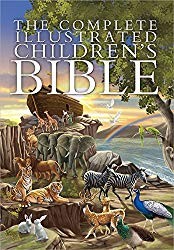 The Complete Illustrated Children’s Bible includes a much greater breadth of biblical accounts than most other children’s Bibles. I love that. The narratives themselves are simple and direct, so they are very accessible. At the same time, you won’t find them watered down in kiddie language as in many books. The illustrations are beautiful. This is almost 300 pages, and there’s nothing I’ve seen that even comes close to the quality here for younger kids. The website says this is targeted at 5- to 8-year-olds. (If you have a child 9+, don’t get a children’s Bible. It’s time to move up to learning to read a full Bible!)
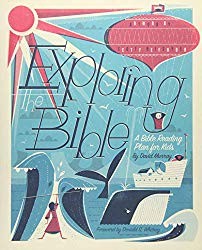 Exploring the Bible: A Bible Reading Plan for Kids isn’t a children’s Bible, but rather a Bible reading plan. Kids won’t read every word of the Bible using this, but it’s a solid selection that takes you beginning to end. Each day there are verses to read with a small box for them to answer a basic question about the reading. For kids who enjoy writing, this makes it more engaging than simply a list of passages to read. I’ll be honest and say I got this for my 9-year-old twins last Christmas and they didn’t get too far with it despite liking the concept and presentation. But I am recommending it because it’s a unique book that would work really well if the parent is committed to focusing on using it as the primary Bible reading tool for the year.
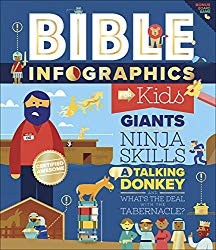 Bible Infographics for Kids is a 50-page book with beautifully designed spreads that present the Bible in infographic form! My 10-year-old son read through this in a day and loved it. Periodically he comes up with some kind of Bible fact that he learned from reading this, so it really stuck with him. It’s an engaging presentation for any kid, but I especially want to highlight this for parents who may have a child who really resists Bible reading. You certainly aren’t reading the actual Bible with this book, but it can be a stepping stone with it’s appealing visual design to get your less-than-focused elementary age boy to sit down and look at the biblical story through different eyes. I think this book is seriously undermarketed, as I have never heard anyone talk about it. I would never have heard of it myself had the publisher not sent me a copy. It would make an excellent gift and is very unique!
Children’s Devotionals (12 & Under)
I am extremely picky about devotionals. I can spend the whole afternoon at a Christian bookstore taking them off the shelf, reading a few selections, and deciding to put them back because 1) they are too simple/watered down, 2) they are theologically not even quite right, or 3) they are focused on character development (“here’s how to be a good person!”) far more than Jesus himself. I also want to be clear that I would never recommend devotionals as a substitute for reading the Bible with your kids. But, as a supplement that kids can read on their own or with you, they can be helpful…if they aren’t bad. With that in mind, here are a select few I have chosen and appreciated (note my kids are all 10 and under, so I, unfortunately, do not have recommendations yet for the teen crowd). I’m listing them in order from youngest to oldest audience.
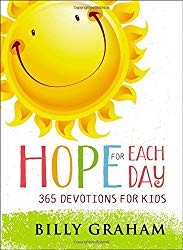 Hope for Each Day: 365 Devotions for Kids is listed as a devotional for 6- to 10-year-olds, but I would say it’s more for 4- to 8-year-olds (older kids need more meat than this provides). For the younger crowd, these are solid, theologically accurate devotions that get beyond the surface and are great discussion starters (not that that’s what you want before bed!).
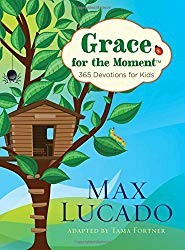 Grace for the Moment: 365 Devotions for Kids is another solid choice for younger kids. This one, too, is listed for 6- to 10-year-olds, but I would say it should skew a little younger (more like 5 to 8 or 9). These are short devotions that end with some questions for self-reflection. I liked that the book (in both design and content) is appropriate for boys or girls so you can use them for family time with multiple kids.
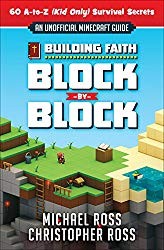 Building Faith Block by Block [An Unofficial Minecraft Guide] is a devotional for boys who are Minecraft lovers. Each devotional features a Minecraft story and then applies it briefly to a Bible passage with some questions for reflection. Unlike the other devotionals, I did not evaluate this in depth before getting it. My son loves Minecraft, and I trust his judgment, so I decided to let him read and tell me what he thought of it. He really liked it but concluded it was heavy on the Minecraft and light on the biblical learning. Still, I wanted to include it here because if you have a boy who isn’t inclined toward devotionals but likes Minecraft (I bet there are many!), this could be a great way to begin getting them to engage more with the Bible. I’m shocked the website says it’s for kids 12 to 18. I would say 8 to 12.
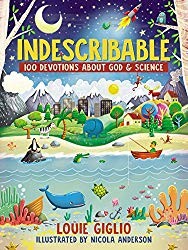 Indescribable: 100 Devotions about God & Science has 100 devotions for science-loving kids (boys or girls). They focus on amazing facts about God’s creation, and there’s some really interesting stuff in here! The whole idea is to help kids realize how powerful, intelligent, personal, and purposeful our Creator is. It’s also an attractive book, with cute illustrations throughout. As I’m sure some will be wondering, this book is mostly appropriate regardless of your view on the age of the Earth. However, there are a few devotionals that are specific to a young Earth view (e.g., a chapter on “Shooting down the Big Bang”).
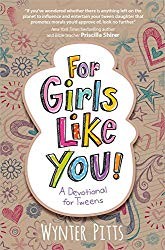 For Girls Like You: A Devotional for Tweens is a good choice for tween girls who are drawn more to girl-specific examples and a relational approach. While it’s not in depth, it’s theologically solid. My 10-year-old daughter, who sometimes has trouble holding interest to finish whole books, finished this one on her own with no prompting from me. If your daughter likes this one, Wynter Pitts has a second book which I would equally recommend, called You’re God’s Girl. There’s also a matching coloring book which would make a nice complementary gift!
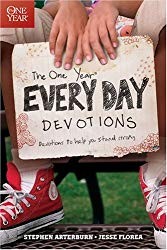 The One Year Everyday Devotions: Devotions to help you stand strong is a good choice for both boys and girls in the 9 to 12 age range. The readings are quite short, but they make some deep points and apply to everyday situations. If you have a girl who isn’t super “girly”, this is a perfect choice (no pink princesses here!).
Apologetics Books
Apologetics is the study of how we know Christianity is true. If you want to raise faithful kids in a challenging secular world, teaching apologetics is crucial. Raising your kids with this understanding ultimately must start with you (so see my book recommendations under the parents’ section below), but there are a few excellent apologetics books for kids under 12 as well. These should go hand in hand with all else you’re doing!
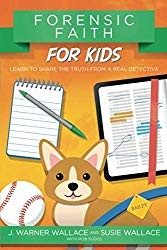
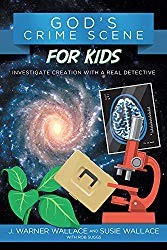
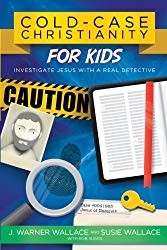
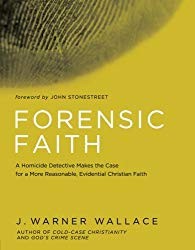
The most comprehensive set of books in this category is the trilogy by J. Warner Wallace. Wallace is a cold-case homicide detective and former atheist who became a Christian after applying detective methodologies to the investigation of biblical reliability. He has three adult books that investigate the truth of Christianity from a similar detective’s perspective: God’s Crime Scene (evidence for God’s existence), Cold-Case Christianity(evidence for Christianity specifically), and Forensic Faith (the necessity of having a faith based on good evidence). I recommend these all the time, and now he has excellent kids’ versions of the same books: Forensic Faith for Kids, God’s Crime Scene for Kids and Cold-Case Christianity for Kids. They are written for 8- to 12-year-olds and correspond to the chapter sequence of the adult versions so you can study together. Because they are written in a detective style, they are really engaging. These books are easy reads that are packed with value for 8- to 12-year-olds. There’s even a free website with corresponding videos and worksheets. I’d recommend getting all three, but if you start with just one, I’d go with Forensic Faith for Kids because it establishes the importance of apologetics before they dig deeper.
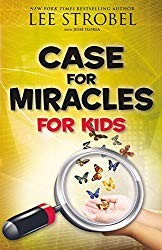 You’re probably familiar with Lee Strobel’s best-selling book, Case for Christ. You may or may not know he has a whole series of similar books that make a case for the truth of Christianity from a journalist’s perspective, and great kids’ versions to go with them. Check out the following titles and see which might be of greatest interest to your 9- to 12-year olds: Case for Miracles for Kids, Case for a Creator for Kids, Case for Christ for Kids, Case for Faith for Kids, and Case for Grace for Kids.
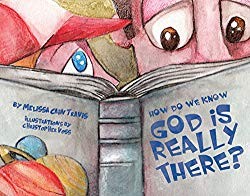
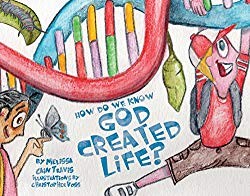
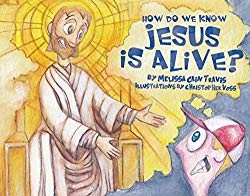
Melissa Cain Travis has written a trilogy of illustrated storybooks that explain key apologetics concepts through an engaging tale (to be read in a single setting). These are very cool because most books for 9- to 12-year-olds aren’t designed to be read in a single session. These are great for the family to read together and then discuss. Kids can then go back and read them on their own. The three books are: How Do We Know God is Really There?, How Do We Know God Created Life?, and How Do We Know Jesus is Alive?
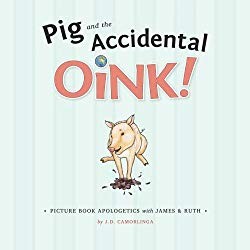
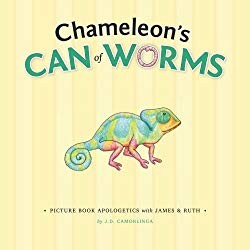
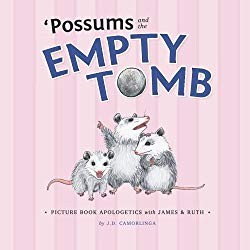
If you have kids in the 5-8 age range, who aren’t ready for the books I just talked about, start here! The Picture Book Apologetics series talks about apologetics concepts at the most basic level, and have sweet, simple pictures to capture a young child’s imagination. Pig and the Accidental Oink! (Volume 1) introduces the cosmological argument (that the universe had to have a creator), Chameleon’s Can of Worms (Volume 2) introduces the problem with moral relativism (some things are not a matter of opinion!), Possums and the Empty Tomb (Volume 3) introduces evidence for the resurrection, Fox and the Hard Day helps kids understand the problem of evil, and Pooch and the Pearly Gates teaches kids about heaven and the new Earth. In addition to these story books, the authors have a kid’s book on logical fallacies (i.e., errors people make in reasoning, and how to think more critically). The content of this one would be more appropriate for kids 8+: Pitfalls: A Quick Guide to Identifying Logical Fallacies for Families.
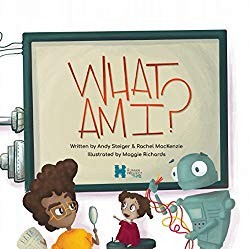
What Am I? is the story of a boy named Amare, his robot Bobo, and his little sister Nya. Amare makes a variety of things, like a tower and a cage, and asks his robot what he thinks. The robot always replies with a description of what those things are made of–“Excellent collection of colourful plastic parts.” Amare explains that they are made of the same parts, but they are made FOR very different things. He then explains all his inventions and what they are made FOR even though Bobo, as a robot, can only detect what they are made OF. Eventually, Amare goes to his mom to ask what HE is made for and learns that if you want to find out what you were made for, you need to ask the one who made YOU. Amare and Nya go on to learn what God told us he made humans for. I LOVE that this book tackles the naturalistic worldview (that we’re nothing more than our physical parts) head-on at a level perfect for elementary age kids to understand. It’s a 30-page picture book and easy to read, yet will facilitate deep conversations.
Non-Book Gifts
While this post is focused on book gifts, there are a couple of awesome non-book gifts I would highly recommend.
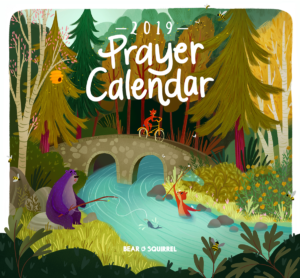 Bear & Squirrel is a company that puts out a yearly prayer calendar. The images are amazingly adorable each month and every day tells you what to pray for! It’s such a great way to give kids ideas of how to pray in more diverse ways than “thank you for today.” We bought one for 2018 for all of our kids, and they loved them.
 I am constantly inspired by the amazing work that author Kristen Welch from We Are That Family does around the world to create jobs. Earlier this year I subscribed to her fair trade bracelet of the month club. For $15 each month you receive a beautiful handmade bracelet that empowers women in difficult economic (and other) circumstances. I have two daughters, so they take turns getting to have the bracelets that come. They look forward to receiving them every month and learning about the women who crafted them. This is an extremely meaningful gift that your daughter can receive throughout the year.
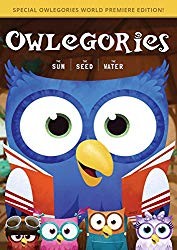 We don’t watch a lot of videos, so this list is conspicuously missing recommendations in this area. However, I am absolutely crazy about Owlegories. There are six DVDs with a total of 18 episodes so far. Each episode is short, adorable, and actually quite funny (as in, makes an adult laugh with its clever humor). They teach great lessons about the Bible that get away from cliches and feature special messages at the end of each by a well-known Christian teacher such as Matt Chandler. My son AND daughters like these. They would make a wonderful stocking stuffer!
30 Christmas Gift Ideas for Christian Adults
Since almost all of my reading is on apologetics and theology, I’m going to focus these gift ideas on books in these areas. There are so many great books that can be recommended, but my goal here is to give one great idea for each type of gift recipient I list. Since this is recipient-based rather that category-based, I won’t include detailed descriptions as I did above. If you are looking for a gift for someone matching the description, just click over to Amazon to read more. In no particular order…
For both prayer warriors and those who struggle to pray:
For those going through a difficult time caring for others:
For those who want (or need!) to begin learning about the reliability of the Bible (this is a FABULOUS new, short, and accessible book):
For newer Christians, or Christians who want to have a better understanding of how the whole biblical narrative fits together:
For Christians who want to better understand the evidence for the deity of Christ:
For Christians struggling with doubt in their faith:
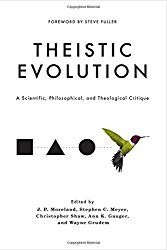
For Christians interested in a theological and scientific critique of theistic evolution (the idea that God created everything through evolutionary processes):
For Christians who want (or need) to begin learning about the importance of apologetics for their faith:
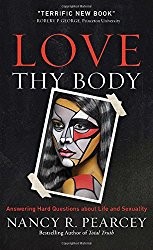
For Christians who are interested in the intersection of culture and faith on topics of sexuality:
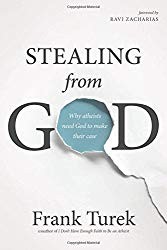
For Christians who are interested in a critique of the atheistic worldview and better understanding its logical implications:
For Christian parents who want to start learning apologetics so they can be better prepared to have deep conversations about faith with their kids of any age (yes–this is my own book!):
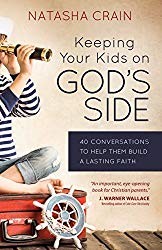
For Christian parents who want to start having conversations with their kids about the evidence for God’s existence, the relationship between God and science, the nature of God, and the logical implications of a Christian vs. atheistic worldview (my second book!):
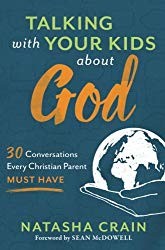
For Christians who are struggling with or want to better understand the existence of evil and suffering:
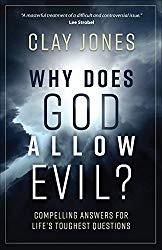
For Christians who want to study the book of Psalms in a creative way (e.g., coloring and journaling):
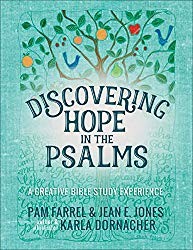
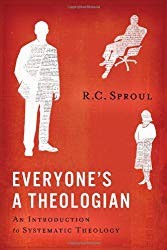
For Christians who want a primer on basic theology:
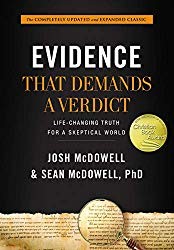
For Christians who are passionate about apologetics and love meaty reference books (this is the recent complete update to the classic–it’s incredible!):
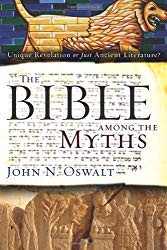
For Christians who have read everything you’ve heard of on apologetics and you want to find something probably off their radar (I randomly discovered this book a couple of months ago, and it was so enlightening, yet I’ve never seen anyone talking about it!):
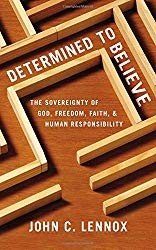
For Christians interested in the topic of free will vs. God’s sovereignty from a non-Calvinistic view:
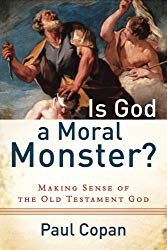
For Christians interested in Old Testament issues of violence, slavery, morality, etc.:
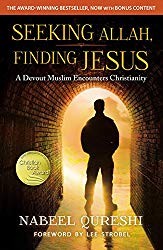
For Christians interested in understanding Islam:
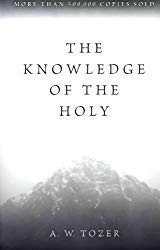
For Christians who want to better understand the attributes of God:
For Christians who are interested in the intersection of faith and science (and how science supports faith):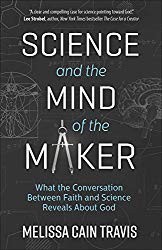
For Christians interested in the evidence for God’s supernatural involvement in the world:
For Christians who enjoy a clever, edgy sense of humor and critiques of atheism:
For Christians interested in early Christian distinctiveness in the Roman world:
For Christians who aren’t necessarily into apologetics but would enjoy reading answers to common tough questions asked by skeptics:
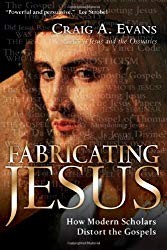
For Christians interested in how modern scholars distort the Gospels:
For Christians going on or returning from short-term mission trips:

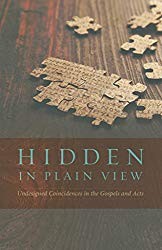
For Christians who have read basic books on the reliability of the Gospels and want to dig deeper:
For Christian women who struggle with perfectionism:

If you found this post helpful, please share with others!
Natasha Crain is a blogger, author, and national speaker who is passionate about equipping Christian parents to raise their kids with an understanding of how to make a case for and defend their faith in an increasingly secular world. She is the author of two apologetics books for parents: Talking with Your Kids about God (2017) and Keeping Your Kids on God’s Side (2016). Natasha has an MBA in marketing and statistics from UCLA and a certificate in Christian apologetics from Biola University. A former marketing executive and adjunct professor, she lives in Southern California with her husband and three children.
Original Blog Source: http://bit.ly/2A0V0E4

Las diez mejores maneras de promover el evangelio en las cenas navideñas
Español¿Temes esas incómodas cenas familiares en esta temporada navideña? ¿No estás seguro de cómo recordar con delicadeza la verdadera razón de la Navidad? Tengo más que un vídeo corto esta semana. Estas son las diez mejores formas de promover el evangelio en las cenas navideñas:
Sobre todo, mostrar el tipo de gracia y aceptación incondicional a otros que Jesús te ha mostrado. Podrías ser el único verdadero embajador de Jesús que verán esta Navidad.
Si te has beneficiado de nuestro ministerio, ¿podrías ayudarnos para iniciar en el 2019 con una donación deducible de impuestos? Gracias a un donante generoso, cualquier contribución que hagan hasta $20,000 ¡el monto será doblado! Por favor, ve aquí para contribuir de forma segura en línea o por cheque. Tus donaciones irán 100% hacia el ministerio y 0% a inmuebles. ¡Gracias!
Una profecía sobre Jesús escrita por Isaías con 700 años de anticipación:
Porque un niño nos ha nacido, un hijo nos ha sido dado, y la soberanía reposará sobre sus hombros; y se llamará Admirable Consejero, Dios poderoso, Padre Eterno, Príncipe de Paz. El aumento de su soberanía y de la paz no tendrán fin sobre el trono de David y sobre su reino, para afianzarlo y sostenerlo con el derecho y la justicia desde entonces y para siempre. El celo del SEÑOR de los ejércitos hará esto“ Isaías 9: 6-7
¡Sé Jesús para la gente esta Navidad!
El Dr. Frank Turek (D.Min.) es un galardonado autor y frecuente orador universitario que presenta un programa de televisión semanal en DirectTV y un programa de radio que se transmite en 186 estaciones de todo el país. Sus libros incluyen I Don’t Have Enough Faith to be an Atheist (No tengo suficiente fe para ser ateo) y Stealing from God: Why atheists need God to make their case (Robando a Dios: ¿por qué los ateos necesitan a Dios para presentar su caso?).
Blog Original: http://bit.ly/2rIfdtS
Traducido por María Andreina Cerrada
Is Apologetics A Discipline? A Conversation with Robert Bowman
Theology and Christian ApologeticsBy J. Brian Huffling
A few months ago I wrote a post titled “Why Christian Apologetics Is Not A Discipline.” Dr. Robert Bowman has graciously responded with a blog post titled “Is Apologetics a Discipline?” I appreciate Bowman’s article as it highlights the importance and nature of apologetics. I have been a fan of his for well over decade since I read his and Kenneth Boa’s Faith Has Its Reasons, which is probably the best book on apologetic methodology. I also greatly appreciate his The Word-Faith Controversy: Understanding the Health and Wealth Gospel. I had the chance to Meet Rob a couple of years ago at Southern Evangelical Seminary’s National Conference on Christian Apologetics. He is incredibly friendly and courteous, and I greatly appreciate his work in apologetics.
The Importance of Apologetics
My first post on this topic argues that apologetics is not a discipline. Bowman disagrees and argues that it is. Before I respond to Bowman’s post, I would like to be very clear that I am not denigrating apologetics in the least. I went to SES in 2004 to study apologetics and earned a masters degree in that area in 2009 (along with majors in Biblical Studies and Philosophy). I am currently a professor at SES and co-teach Intro to Apologetics with Norman Geisler. I have argued for years that apologetics is needed. Thus, it should be clear that I consider myself an apologist and think that doing apologetics is very important.
I also want to be clear that I do not think that one must be a specialist in order to be an effective apologist. (In my first piece I argued that to be a good apologist one must be a specialist. However, my main point there was aimed at those looking to be professionals. One can certainly be good and effective as a lay apologist; however, I do maintain that there is a risk of being over-simplistic regarding complex issues as a generalist.) Most people who practice apologetics are not professional apologists, meaning that they don’t earn their living that way. Some are, though, and do very well for themselves (although I think there are few). My point in my original post was simply that if one wants to be a professional apologist, especially in academics, then he should be a specialist in a given field. I do argue and believe that pastors and lay people should practice apologetics, and they don’t need to be specialists in order to do so. I have served on several church staffs, and I am currently a reserve chaplain in the Air Force. We need people doing apologetics, and most apologists will be bi-vocational or laymen. I am not denigrating general apologetics. It is needed. I do argue, though, that general apologetics is possible because of specialists in other fields who make their information and data available to laymen. Without specialists, there would basically be no apologetics. At least not to the level, there is now.
Response to Bowman’s Article
Having said that, I stand by my original claim that apologetics is not an academic discipline; it is a practice. Let me now respond to Bowman’s post.
After summarizing my overall position, and agreeing “in general,” he makes several points. The first regards the course offerings at SES that are apologetics classes. He lists several types of classes that we offer (world religions and new religious movements, philosophy, biblical studies, etc.), focusing on the scientific classes that are offered as electives and comprise one of our certificate programs. Bowman states:
One problem with the science-related courses at SES of relevance to Huffling’s concern is that they are not intended to enable the student to become proficient in any scientific discipline. There is an apologetics course surveying science-related issues and four courses on “scientific apologetics” instructing students in intelligent design theory and objections to evolutionary theory. By no means am I criticizing these courses; my point is that if Huffling is correct, these courses are inadequate to prepare students to become good apologists. The only subject areas other than apologetics with course offerings sufficiently robust at SES to make students proficient in those areas are biblical studies and philosophy.
As I have already stated, and as Bowman admits, my concerns are really aimed at those who are trying to be full-time or professional apologists. People can certainly have a positive impact with lay-level or general apologetics training. I will say, though, that I do think that without proper training in science it is challenging to rightly understand the scientific issues relating to these topics. Yes, people can study astronomy, chemistry, and the like, and become better apologists. That is why we offer the classes. We want people to take them and learn and hopefully go on to study science at a higher level. But these are not science classes as such; they are apologetics classes. It is hoped that our students will take their knowledge from these classes and apply it to their ministries. (It is probably worth noting that it is the application of these classes to ministries and not academics that is the point of these classes. They are not scientific classes as such, and would probably not transfer to a secular school to replace an actual class on these topics. This is because these classes are not outright science classes, they are apologetics classes from a scientific point of view. They are great classes taught by excellent teachers who are scientists, such a Hugh Ross, but they are not science classes as such. I think this highlights my point that apologetics relies on disciplines for its content, but it is itself simply the application of those disciplines, such as astronomy, to defend the faith.)
Bowman then makes the correct point that “SES has a number of courses in apologetics per se—perhaps more than any other seminary. These include surveys touching on multiple disciplines but also courses on apologetic methods, the history of apologetics, and so on. These courses are not about nothing.” Agreed. In saying that apologetics is not a discipline, but a practice is not to equate it with nothing.
Next, he states, “A pastor or evangelist or missionary who takes a variety of these courses might indeed be well prepared to do their ministry better. Some of Huffling’s critics on Facebook made this point, and I think it is a reasonable one, though it is not directly germane to his concern regarding those seeking to be full-time apologists.” Again, agreed. I have never maintained otherwise, contrary to said Facebookers. As Bowman admits, that was not even relevant to my point in my post as I had in mind those trying to be full-time professionals.
Bowman now comes to his “main disagreement” which is my “assertion that apologetics is not a discipline.” His overall point here is that apologetics is “in the same category as philosophy, which Huffling views as a legitimate discipline.” He states,
It is not clear to me how apologetics is a second order discipline. According to Bowmans’ definition if it were, then it would have as its subject other first-order disciplines. Let’s take history as an example. Is history the subject of apologetics? It seems not, at least not in an exclusive way since other disciplines can as well. But for the sake of argument lets go along with this idea. When apologists use history to defend the faith they usually have in mind the reliability of the Bible or the truth of the resurrection. So then how would apologetics as a second-order discipline have a history as its subject here? It would look at the claims being made such as “The Bible is historically reliable” or “Jesus rose from the dead.” But the only way to proceed would be to compare the claims made with what we know about reality and can prove historically. In other words, the only way the apologist can proceed by using history in his defense is simply to claim that history is on his side. But this doesn’t seem like a second order discipline; it seems like we are simply pointing to what historians say. People point to what historians all the time and are not “doing apologetics.” Or, in the broadest sense, we could say that any historical case made for something is an apologetic for that issue. But this stresses my point that apologetics is the use of a discipline to prove a point, not a discipline in itself. When someone says “X happened in history” it is hard to see how that is itself a discipline other than history.
There are aspects of philosophy that are second order, but that does not mean that philosophy as such is a second order discipline. Bowman states that he comes “down on the side of the analytic tradition in philosophy.” In defining philosophy, he quotes Faith Has Its Reasons, saying, “ the task of philosophy is to clarify the meaning of knowledge claims and to assess the rationality of those claims” (168). Defining philosophy this way makes it easier to view philosophy as a second-order discipline. Those like we at SES who view philosophy from a more systematic approach would not agree that philosophy as such is a second order discipline. We lament philosophy being reduced to mere linguistic analysis or simply assessing the rationality of claims. Such a view relegates philosophy to a fact-checking system. Historically philosophy was more than that, and it still is in many circles. Rather than being a way to analyze statements, answer problems, or demonstrate that something is rational, philosophy has its own unique subject matter. For example, the subject of metaphysics is not something that piggybacks on other disciplines, but rather, is a discipline in itself. No other discipline inquires into the nature of being as such. Metaphysics studies the nature of existence, essences, change, and the like. This is its primary and direct subject matter. The analytic tradition that Bowman espouses rejects the rich traditions in metaphysics and relegates philosophy to mere linguistic analysis. Perhaps Bowman doesn’t mean to do this, but this is indeed the history of the analytic tradition: the rejection of metaphysics and the emptying of philosophy of its rich content. When one understands what analytic philosophy is, it is easy to see why Peter Unger titled his book Empty Ideas: A Critique of Analytic Philosophy. Only if philosophy is merely analytic in this way can it be said to be a second-order discipline.
What about the “philosophy of ___________” areas? Let’s look at philosophy of religion. Again, I would argue that this is its own discipline since it has its own unique subject matter. Philosophy of religion studies God’s existence and nature, miracles, the problem of evil, religious experience, how our language relates to God (religious epistemology, or God-talk), etc. As such, philosophy of religion does not look to another discipline to do this. It has its own unique and well-defined subject matter.
There are areas in philosophy that arise out of analysis of other disciplines, such as the philosophy of math and the philosophy of science. Such fields ask about the nature of such enterprises. However, even in this case, it is clear that each has its own unique and well-defined subject matter. Philosophy of math is not the same as the philosophy of science, for example.
In order to be a discipline of study a field must have its own unique and well-defined subject matter. Philosophy certainly has this, as do the “philosophy of’s.” However, this can’t be said for apologetics since it can have as its subject matter history, archaeology, chemistry, biology, physics, astronomy, philosophy, biblical studies, etc. No actual discipline has such a broad area of study. This can only be the case since apologetics requires fields of study, such as history, to defend the Christian faith. Historians practice apologetics when they use historical arguments in defense of the faith. Astronomers do apologetics when they apply their expertise to defending aspects of the faith. The same is said of all of these other disciples from which apologetics is practiced. There is no such thing as “mere apologetics.” Whenever someone tries to defend the faith, he is always doing it by practicing some field of study.
Bowman next claims, “Philosophy and apologetics can even involve the study of one another: much of philosophy of religion examines apologetic arguments for specific religious beliefs, and philosophical apologetics is itself a type of apologetics.” It is not at all clear how apologetics studies philosophy. I am also not clear as to what arguments he is referring to, but I’m assuming theistic proofs for God’s existence, the problem of evil, the nature and possibility of miracles, etc. It seems that he is referring to this when he refers to philosophical apologetics as a type of apologetics. Rather than the philosophy of religion examining apologetic arguments, there are arguments used in defense of our faith that are philosophical in nature. These arguments come from applying philosophy to our faith. Without the philosophy of religion, there would simply be no apologetic arguments in this regard. Philosophical apologetics is nothing more than the application of philosophy to Christianity. Philosophers aren’t examining apologetic arguments; philosophers are making apologetic arguments by applying philosophy to a defense of the faith. This is a one-way street as philosophers can make and examine apologetic arguments, but apologists cannot make and examine philosophical arguments without using philosophy.
Next, Bowman writes, “My point is that philosophy and apologetics are both disciplines in their own right that study how to think about knowledge claims in other, more specific disciplines.” It is not overly clear what Bowman means by “knowledge claims.” Does he mean studying the nature of knowledge and the knowing process? Such would be epistemology. Does he mean seeking to find the truth value of a given claim or testing worldviews? In short, apologetics does not study how to think about knowledge claims. Philosophy studies the nature of knowledge and any discipline can be used to check the veracity of a given proposition that falls in its domain. It is not unique to apologetics, and I don’t think it makes sense to say apologetics does this. Checking a truth claim against reality is not unique to apologetics; it is something that everyone does. Such a claim, if this is what Bowman has in mind, seems to prove too much as then everything would be apologetics.
Finally, Bowman declares, “It is true, as Huffling points out, that most universities and other schools have teaching positions in philosophy but not in apologetics. This fact might be a good pragmatic reason not to pursue a major in apologetics per se if one’s goal is an appointment to a full-time faculty position somewhere. However, it is not a good argument against recognizing apologetics as a discipline.” I agree that this is a pragmatic reason not to major in apologetics if one wants to be an academics. However, it may be a good degree for other reasons. My position that apologetics is not a discipline does not derive from the fact that schools don’t have teaching positions in it. My argument is that apologetics does not have its own unique and well-defined body of knowledge. It uses actual disciplines from which to defend the faith. The fact that schools don’t have positions in apologetics is evidence of my claim but was not my argument for it.
Conclusion
I would like to thank Rob for spending the time interacting with my article. I was surprised he thought it worthy of mention! Apologetics is indeed important, even at the lay-level. We do need generalists, and we need apologetics taught in churches and para-church ministries. However, apologetics relies on the expertise of scholars in well-defined disciplines. This is not a negative quality for apologetics. It is simply how reasoning works. The fact that apologetics is based on specialists and scholars in various fields should give us confidence in our apologetic endeavors. Shouldn’t we want specialists defending the faith and telling us how secure the foundation for our beliefs is rather than relying on generalists? The generalist approach has its merits and appropriate venues, but apologetics as such is secured by specialists who are experts in solid and well-defined disciplines.
Original Blog Source: http://bit.ly/2EjrZ9M
The Top Ten Ways to Advance the Gospel at Holiday Dinners
Jesus Christ, Theology and Christian ApologeticsDreading those awkward family dinners this Christmas season? Unsure about how to tactfully bring up the real reason for Christmas? Here are the Top Ten ways to advance the Gospel at Holiday Dinners:
Above all, show the kind of grace and unconditional acceptance to others that Jesus has shown to you. You might be the only true ambassador for Jesus they will see this Christmas.
If you’ve benefited from our ministry, would you please help us launch into 2019 with a tax-deductible donation? Due to a generous donor, any contribution you make up to $20,000 will be matched! Please go here to contribute securely online or by check. Your donations will go 100% toward ministry and 0% toward buildings. Thank you!
A prophecy about Jesus written by Isaiah 700 years in advance:
For to us, a child is born, to us, a son is given, and the government will be on his shoulders. And he will be called Wonderful Counselor, Mighty God, Everlasting Father, Prince of Peace. Of the increase of his government and peace, there will be no end. He will reign on David’s throne and over his kingdom, establishing and upholding it with justice and righteousness from that time on and forever. The zeal of the LORD Almighty will accomplish this. ―Isaiah 9:6-7
Be Jesus to people this Christmas!
Dr. Frank Turek (D.Min.) is an award-winning author and frequent college speaker who hosts a weekly TV show on DirectTV and a radio program that airs on 186 stations around the nation. His books include I Don’t Have Enough Faith to be an Atheist and Stealing from God: Why atheists need God to make their case
60 Christmas Gift Ideas for Christian Kids and Adults
Apologetics for Parents, Theology and Christian ApologeticsBy Natasha Crain
I’ve recently had a lot of people asking for recommendations for Christmas gift ideas, for both kids and adults, so I’ve put together this detailed list of my top picks! They are almost all books, but there are a few other ideas as well. Gift ideas for kids come first (mostly for the under 12 crowd, since that’s where my own kids are), followed by gift ideas for adults. Enjoy!
30 Christmas Gift Ideas for Christian Kids
Children’s Bibles and Bible Reading Tools
For kids not ready to read a complete Bible, children’s Bibles are a great starting point. They feature selected Bible accounts, a simplified narrative, and engaging pictures. The problem with many children’s Bibles, however, is that they include too little of the Bible (you’ll always get Noah’s Ark, but how about Nehemiah or Job?) and have overly simplified narratives that leave out important points. I’ve looked at lots, and lots of Bibles in this category and the following is my favorite by far:
Children’s Devotionals (12 & Under)
I am extremely picky about devotionals. I can spend the whole afternoon at a Christian bookstore taking them off the shelf, reading a few selections, and deciding to put them back because 1) they are too simple/watered down, 2) they are theologically not even quite right, or 3) they are focused on character development (“here’s how to be a good person!”) far more than Jesus himself. I also want to be clear that I would never recommend devotionals as a substitute for reading the Bible with your kids. But, as a supplement that kids can read on their own or with you, they can be helpful…if they aren’t bad. With that in mind, here are a select few I have chosen and appreciated (note my kids are all 10 and under, so I, unfortunately, do not have recommendations yet for the teen crowd). I’m listing them in order from youngest to oldest audience.
Apologetics Books
Apologetics is the study of how we know Christianity is true. If you want to raise faithful kids in a challenging secular world, teaching apologetics is crucial. Raising your kids with this understanding ultimately must start with you (so see my book recommendations under the parents’ section below), but there are a few excellent apologetics books for kids under 12 as well. These should go hand in hand with all else you’re doing!
The most comprehensive set of books in this category is the trilogy by J. Warner Wallace. Wallace is a cold-case homicide detective and former atheist who became a Christian after applying detective methodologies to the investigation of biblical reliability. He has three adult books that investigate the truth of Christianity from a similar detective’s perspective: God’s Crime Scene (evidence for God’s existence), Cold-Case Christianity(evidence for Christianity specifically), and Forensic Faith (the necessity of having a faith based on good evidence). I recommend these all the time, and now he has excellent kids’ versions of the same books: Forensic Faith for Kids, God’s Crime Scene for Kids and Cold-Case Christianity for Kids. They are written for 8- to 12-year-olds and correspond to the chapter sequence of the adult versions so you can study together. Because they are written in a detective style, they are really engaging. These books are easy reads that are packed with value for 8- to 12-year-olds. There’s even a free website with corresponding videos and worksheets. I’d recommend getting all three, but if you start with just one, I’d go with Forensic Faith for Kids because it establishes the importance of apologetics before they dig deeper.
Melissa Cain Travis has written a trilogy of illustrated storybooks that explain key apologetics concepts through an engaging tale (to be read in a single setting). These are very cool because most books for 9- to 12-year-olds aren’t designed to be read in a single session. These are great for the family to read together and then discuss. Kids can then go back and read them on their own. The three books are: How Do We Know God is Really There?, How Do We Know God Created Life?, and How Do We Know Jesus is Alive?
If you have kids in the 5-8 age range, who aren’t ready for the books I just talked about, start here! The Picture Book Apologetics series talks about apologetics concepts at the most basic level, and have sweet, simple pictures to capture a young child’s imagination. Pig and the Accidental Oink! (Volume 1) introduces the cosmological argument (that the universe had to have a creator), Chameleon’s Can of Worms (Volume 2) introduces the problem with moral relativism (some things are not a matter of opinion!), Possums and the Empty Tomb (Volume 3) introduces evidence for the resurrection, Fox and the Hard Day helps kids understand the problem of evil, and Pooch and the Pearly Gates teaches kids about heaven and the new Earth. In addition to these story books, the authors have a kid’s book on logical fallacies (i.e., errors people make in reasoning, and how to think more critically). The content of this one would be more appropriate for kids 8+: Pitfalls: A Quick Guide to Identifying Logical Fallacies for Families.
What Am I? is the story of a boy named Amare, his robot Bobo, and his little sister Nya. Amare makes a variety of things, like a tower and a cage, and asks his robot what he thinks. The robot always replies with a description of what those things are made of–“Excellent collection of colourful plastic parts.” Amare explains that they are made of the same parts, but they are made FOR very different things. He then explains all his inventions and what they are made FOR even though Bobo, as a robot, can only detect what they are made OF. Eventually, Amare goes to his mom to ask what HE is made for and learns that if you want to find out what you were made for, you need to ask the one who made YOU. Amare and Nya go on to learn what God told us he made humans for. I LOVE that this book tackles the naturalistic worldview (that we’re nothing more than our physical parts) head-on at a level perfect for elementary age kids to understand. It’s a 30-page picture book and easy to read, yet will facilitate deep conversations.
Non-Book Gifts
While this post is focused on book gifts, there are a couple of awesome non-book gifts I would highly recommend.
30 Christmas Gift Ideas for Christian Adults
Since almost all of my reading is on apologetics and theology, I’m going to focus these gift ideas on books in these areas. There are so many great books that can be recommended, but my goal here is to give one great idea for each type of gift recipient I list. Since this is recipient-based rather that category-based, I won’t include detailed descriptions as I did above. If you are looking for a gift for someone matching the description, just click over to Amazon to read more. In no particular order…
For both prayer warriors and those who struggle to pray:
For those going through a difficult time caring for others:
For those who want (or need!) to begin learning about the reliability of the Bible (this is a FABULOUS new, short, and accessible book):
For newer Christians, or Christians who want to have a better understanding of how the whole biblical narrative fits together:
For Christians who want to better understand the evidence for the deity of Christ:
For Christians struggling with doubt in their faith:
For Christians interested in a theological and scientific critique of theistic evolution (the idea that God created everything through evolutionary processes):
For Christians who want (or need) to begin learning about the importance of apologetics for their faith:
For Christians who are interested in the intersection of culture and faith on topics of sexuality:
For Christians who are interested in a critique of the atheistic worldview and better understanding its logical implications:
For Christian parents who want to start learning apologetics so they can be better prepared to have deep conversations about faith with their kids of any age (yes–this is my own book!):
For Christian parents who want to start having conversations with their kids about the evidence for God’s existence, the relationship between God and science, the nature of God, and the logical implications of a Christian vs. atheistic worldview (my second book!):
For Christians who are struggling with or want to better understand the existence of evil and suffering:
For Christians who want to study the book of Psalms in a creative way (e.g., coloring and journaling):
For Christians who want a primer on basic theology:
For Christians who are passionate about apologetics and love meaty reference books (this is the recent complete update to the classic–it’s incredible!):
For Christians who have read everything you’ve heard of on apologetics and you want to find something probably off their radar (I randomly discovered this book a couple of months ago, and it was so enlightening, yet I’ve never seen anyone talking about it!):
For Christians interested in the topic of free will vs. God’s sovereignty from a non-Calvinistic view:
For Christians interested in Old Testament issues of violence, slavery, morality, etc.:
For Christians interested in understanding Islam:
For Christians who want to better understand the attributes of God:
For Christians who are interested in the intersection of faith and science (and how science supports faith):
For Christians interested in the evidence for God’s supernatural involvement in the world:
For Christians who enjoy a clever, edgy sense of humor and critiques of atheism:
For Christians interested in early Christian distinctiveness in the Roman world:
For Christians who aren’t necessarily into apologetics but would enjoy reading answers to common tough questions asked by skeptics:
For Christians interested in how modern scholars distort the Gospels:
For Christians going on or returning from short-term mission trips:
For Christians who have read basic books on the reliability of the Gospels and want to dig deeper:
For Christian women who struggle with perfectionism:
If you found this post helpful, please share with others!
Natasha Crain is a blogger, author, and national speaker who is passionate about equipping Christian parents to raise their kids with an understanding of how to make a case for and defend their faith in an increasingly secular world. She is the author of two apologetics books for parents: Talking with Your Kids about God (2017) and Keeping Your Kids on God’s Side (2016). Natasha has an MBA in marketing and statistics from UCLA and a certificate in Christian apologetics from Biola University. A former marketing executive and adjunct professor, she lives in Southern California with her husband and three children.
Original Blog Source: http://bit.ly/2A0V0E4
J. Warner Wallace: Different Answers to The Question “Why Are You a Christian?”
Atheism, Theology and Christian ApologeticsBy Wintery Knight
I sometimes think about the horrible experiences I had encountering “normal” Christians in American churches after having become a Christian on my own through reading the New Testament, reading apologetics, and watching William Lane Craig debates. I heard a lot of different reasons to be a Christian from the church Christians, and what struck me was 1) their reasons had nothing to do with objective truth, and 2) their reasons hadn’t prepared them to have serious conversations about Christianity with non-Christians.
Well, J. Warner Wallace recently posted an episode of his podcast about this, and I thought that this might be useful to people who (like me) were confused by what they found in the church.
LAPD homicide detective Jim Wallace examining an assault rifle
Here is the video:
And he has a blog post about it, where he explains all the responses to the question “why are you a Christian?” which he got from the church – none of which were like his answer for why he became a Christian.
Here are some answers that were not like his answer:
I’m sure that all my readers know that Wallace is a homicide detective and an evidentialist. He handles evidence and builds cases with evidence, and that’s how he approaches his worldview as well. So he didn’t answer any of those.
Wallace’s answer was different:
I’m actually much harder on church Christians than he is because I found that the more fideistic the Churchian, the less you could count on them to act like authentic Christians. I have never met an evidential apologist who was soft on moral questions or tough theology, for example. To me, if you have an evidentialist approach to Christianity, then you have no problem with things like a bodily resurrection of Jesus, with exclusive salvation through faith alone in Christ alone, with a literal eternal separation from God called Hell, and so on.
What about people in other religions? Well, if evidence is your first concern, then it doesn’t bother you that someone of a different religion won’t be saved. For example, I like my Mormon friends, but I know that they’re wrong in their belief in an eternal universe. When I present evidence to them for the beginning of the universe, they just tell me that science isn’t as important to them as the burning in the bosom, their family, their community, etc. Well, if those things are more important to you than knowing the truth about God as he really is, then I’m fine with whatever God decides to do with you when you eventually get old, die and face judgment.
A truth-centered approach to life makes you indifferent to what people think of you. And that’s something that we could all use as Christians, especially those Christians who are more driven by feelings than by facts. A lot of people raised in the church drop out because they go somewhere (e.g., college) where they are made to feel bad for being different. That’s not a problem for evidentialists. We like to be right. We don’t care what people who are wrong think about us. Christians should all read 1 Corinthians 4:1-4, and accept the fact that being truth-centered isn’t going to make you popular.
Positive arguments for Christian theism
Original Blog Source: http://bit.ly/2UJtRhQ
Why is there evidence for anything?
PodcastPodcast: Play in new window
Subscribe: Apple Podcasts | Spotify | Amazon Music | Android | iHeartRadio | Email | TuneIn | RSS
Frank is back answering your questions after three weeks of great interviews on the Cross Examined Official Podcast. Many people claim that there’s no evidence for God… but “Why is there evidence for anything?” Frank unpacks this and answers a couple more questions he got from you, our great audience, via email. He talks about the evidence we have that shows the universe came from nothing and answers the question “If the Bible says we should not kill, how can anyone justify war?”
Keep Frank busy by sending your questions to Hello@CrossExamined.org and don’t miss this episode!
Subscribe on iTunes: apple.co/CrossExamined_Podcast rate and review! Thanks!!!
Subscribe on Spotify: http://bit.ly/CrossExaminedOfficial_Podcast
Subscribe on Stitcher: http://bit.ly/CE_Podcast_Stitcher
Ciudad Gótica y Nazaret no están en la misma categoría
EspañolBy Ryan Leasure
When I was a kid, I considered Batman to be my favorite superhero. Unlike other superheroes who could fly, see through walls, or turn into green giants, Batman fought crime in Gotham City through more conventional means. He was a great fighter, used cool gadgets, had an awesome suit, and drove a cool car. In this way, Batman was more realistic than his fellow superheroes. Now suppose I truly believed that Batman was a real person. After all, I had seen him on the silver screen and at the occasional Halloween party. My friends, however, thought it was ridiculous and tried to erase this idea from my brain. However, no matter what they said, I remained convinced of his existence.
Until one day, my friend suggested that we visit Batman in Gotham City. This sounded like a great plan to me, I wasted no time packing my bags, with all my Batman shirts, and started dreaming of being by my superhero’s side. There was one final step left. I needed to buy tickets to Gotham City, so I grabbed my computer and started searching for the next available flight, except I couldn’t find any! I searched vigorously for hours, but alas, I ended up empty-handed, with no ticket.
My friend, who was more astute than I thought, took this opportunity to explain to me why I couldn’t find a plane ticket: Gotham City doesn’t exist. To prove him wrong, I quickly Googled the city’s location, only to find that it was nowhere to be found. After all these years of thinking that Gotham City was located where New York City was, I felt dejected. This was a bad sign, since if Gotham City isn’t real, then Batman probably isn’t either.
IS NAZARETH A REAL PLACE?
For years, Jesus mythologists have argued that Nazareth, like Gotham City, was fictional. The argument goes, if Nazareth didn’t exist, then Jesus didn’t exist either. After all, the Gospels repeatedly state that Jesus came from Nazareth ( Mk 1:24 ; Jn 1:45 ).
So if you prove that Nazareth didn’t exist, you can prove that Jesus didn’t exist either. Skeptics make this claim based on the fact that the Old Testament, the Jewish historian Josephus , and the Jewish Talmud never mention Nazareth. Surely, the argument goes, all three of these primary sources would have mentioned Nazareth if it were a real place. What are we to make of this claim? Was Nazareth a real place? Yes, and there is evidence.
ARCHEOLOGY
In 1962, archaeologists in Israel discovered a tablet in Aramaic that listed twenty-four different priestly families and their locations. The location of one priestly family was, you guessed it, Nazareth. The traditional dating of this list goes back to 70 AD, indicating that Nazareth was a real place in the first century.
Furthermore, further archaeological discoveries provide additional evidence of Nazareth’s existence. Within the city, archaeologists excavated two houses in 2006 and 2009, which match a typical dwelling in first-century Rome. Inside the houses, they found doors, windows, a shaft and cooking pots.
In addition, archaeologists discovered first-century tombs just outside the city, which fits with Jewish customs that forbade burying corpses inside the city. Likewise, pottery dating back to the first century was discovered inside the tombs. The evidence is so compelling that archaeologist Jack Finegan says, “From the tombs… one can conclude that Nazareth was a heavily Jewish settlement in the Roman period.”
CAN ANYTHING GOOD COME OUT OF NAZARETH?
Based on excavations, scholars suggest that ancient Nazareth was a small hillside village of about sixty acres, with a maximum population of 500 people. This fits nicely with Nathanael’s dismissive comment in John 1:46 when he asked, “Can anything good come out of Nazareth?” You’d think that if you were making up a religious hero, you’d give him a more prominent hometown. The Gospel writers had no motivation to make up this detail about Jesus.
CAESAR’S DECREE
Perhaps the most important discovery from ancient Nazareth is a marble slab measuring 24 by 15 inches. Archaeologists date this piece to the first half of the first century, probably during the reign of Emperor Claudius (AD 41-54).
On this slab is a decree from Caesar himself stating that if anyone steals a body from any of the tombs, they will suffer capital punishment. It is necessary to keep in mind that we are talking about Caesar, the most powerful man in the world, and a small rural village of 500 people thousands of miles away. What would compel Caesar to care about grave robbers in Nazareth? This would be the equivalent of the President of the United States addressing a grave robber in a small rural town in North Dakota.
It seems that Caesar had heard stories of Jesus of Nazareth rising from the dead. He had probably also heard that Jesus’ disciples stole his body from the tomb. No doubt lost in the shuffle were the exact details that Jesus of Nazareth rose from the dead in Jerusalem.
We know for certain that Claudius was aware of Christianity because he expelled all Christians from Rome in AD 49. Suetonius , a 2nd century Roman historian writes that Claudius “expelled the Jews from Rome constantly making riots at the instigation of Chrestus.” Luke also reports this event in Acts 18:2. Apparently, the Christian preaching that Jesus was the promised Messiah caused quite a stir among the Jewish community.
Think about how this radical claim would have caused dissension. The Jews had maintained a strict monotheistic faith for thousands of years, and now suddenly some of their own were claiming that Jesus of Nazareth is Lord. Perhaps violence was involved. It’s hard to know for sure, but it was significant enough to cause Claudius to drive everyone out of his city.
WHAT DOES THIS PROVE?
Unlike Gotham City, Nazareth was a real city in the Galilee region of first-century Rome. Archaeology confirms its existence several times over, as not only have we found ancient houses, pottery, and tombs, but we also know that Caesar wrote a special decree for the people of Nazareth not to remove bodies from tombs, or else they would die. It is likely that he wrote this proclamation in connection with the story that Jesus rose from the dead.
These archaeological findings do not necessarily prove Jesus’ existence, but they do corroborate the Gospels’ claims that Jesus came from Nazareth. To learn more about how we know Jesus was a real person, you can check out an article I wrote here.
Skeptics continue to cast doubt on the Gospels, and more specifically, on Jesus of Nazareth. However, archaeology continues to confirm the accuracy of the biblical narrative. Based on the archaeological findings discussed above, I believe it is safe to say that the claim that Jesus came from Nazareth is not fake news.
Original Blog: http://bit.ly/2BdyWWw
Translated by Rudy Ordoñez Canelas
Edited by Maria Andreina Cerrada
My Conversation About Morality with an Atheist Millennial Man
Atheism, Legislating Morality, Culture & Politics, Theology and Christian ApologeticsBy Wintery Knight
A meme that was posted on the WK Facebook page, by the new meme admin
I spent some time talking to an atheist millennial recently. He considers himself a moral person, and he is very helpful to others. I asked him to define morality, and he said that morality was feeling good, and helping other people to feel good. I was trying to think of a way to punch a hole in his feelings-based utilitarianism. How could I show him that happy feelings are not a good basis for morality?
Now, you’re probably thinking that abortion is the most obvious example of something that is morally wrong – it’s just killing a baby because adults don’t want to take responsibility for their foolish pursuit of pleasure. But atheists typically don’t think of unborn children as people. They usually believe in naturalistic evolution, and they are committed to a view of reality where the universe is an accident, human beings are accidents, there are no objective human rights, and biological evolution progresses because the strong survive while the weak die. So you aren’t going to be able to generate a moral standard that includes compassion for weak unborn children on that scenario. If the rule is “let’s do what makes us happy,” and the unborn child can’t voice her opinion, then the selfish grown-ups win.
Instead, I decided to focus on fatherlessness. I asked him whether he thought that fatherlessness harmed children. Surprisingly, he said that it didn’t and that he had a relative who was doing a great job raising fatherless kids. I asked him if he had ever looked at the research on what father absence does to children. He hadn’t. Then I asked him if a system of sexual rules based on “me feeling good, and other people around me feeling good,” was likely to protect children. He went silent.
Well, that was the end of that conversation. And I think it was a nice window into how millennials – who are absolutely clueless about what research says about sex, dating, marriage, and parenting – think about relationships. They’re making decisions based on their feelings, then acting surprised when their “common sense” decisions based on happiness “in the moment” blow up in their faces, and destroy the lives of their children, including their unborn children.
Unfortunately, young people are having children outside of a marriage commitment more and more.
Out-of-wedlocks births rising as cohabitation replaces marriage
Far-left Bloomberg News reports:
Forty percent of all births in the U.S. now occur outside of wedlock, up from 10 percent in 1970, according to an annual report released on Wednesday by the United Nations Population Fund (UNFPA), the largest international provider of sexual and reproductive health services. That number is even higher in the European Union.
The EU has a higher rate of fatherless births because they have high taxes and big government to allow women to have children without having to commit to a husband:
The EU likely sees more births out of wedlock because many member countries have welfare systems that support gender-balanced child care, said Michael Hermann, UNFPA’s senior adviser on economics and demography, in an interview. Public health care systems, paid paternal leave, early education programs and tax incentives give unwed parents support beyond what a partner can provide.
More welfare and more government services make it easier for women to pursue relationships with men who aren’t interested in marriage. Hot bad boys who give them all the tingles. Big government makes those boring, predictable marriage-ready men dispensable. Big government also makes it much harder for a man who does marry to afford a stay-at-home mother for his kids, because he has to pay higher taxes for big government.
More:
The data show such births in the U.S. and EU are predominantly to unmarried couples living together rather than to single mothers, the report says.
[…] Jones also noted that the rise in births outside of marriage is closely correlated to delays in childbearing. “Women are claiming their ground professionally,” she said. “Delaying motherhood is a rational decision when you consider the impact it can have on your career, and that’s contributing to this trend.”
[….] The traditional progression of Western life “has been reversed,” said John Santelli, a professor in population, family health and pediatrics at Columbia’s Mailman School of Public Health. “Cohabiting partners are having children before getting married. That’s a long-term trend across developing nations.”
Regardless of marital status, more couples are choosing not to have kids at all. The U.S. fertility rate hit a historic 30-year low last year, according to the Centers for Disease Control and Prevention. Hermann said the rise in births outside of wedlock has actually mitigated the decline in fertility, which “would be much steeper if women weren’t having children outside marriage.”
What’s interesting about this anti-marriage article is that they have nothing to say about the research showing that cohabitation – and also marriages that occur after a period of cohabitation – are inferior to no-cohabitation marriages. People who are serious about self-control, and who are serious about committing through thick and thin, tend to have longer lasting marriages. But we don’t prioritize chastity, fidelity and self-sacrificial commitment anymore, because that relationships that require self-denial make us unhappy.
The article concludes: “We can’t go back to the ’50s”. Right. Because if feelings-based “morality” is assumed, then any choice between adult happiness and children’s happiness will favor the adults. Today’s young people carefully AVOID any evidence that contradicts their new “happiness-morality.” They act surprised when their unstable relationships dissolve, leaving children separated from their fathers. Marriage requires that both partners have a system of morality that puts the commitment above happy feelings. People have to be accustomed to doing things that feel bad, just because they are good and moral things to do according to an objective standard of morality. The new atheist morality of happy feelings doesn’t develop the character needed for commitment.
If you ask an atheist millennial, they think they are doing a great job of being “moral.” They don’t see the messes they are making for children as something that they are causing themselves, with their own foolish feelings-based decision-making. They think they know everything about relationships through their feelings. They think that they are exempt from the patterns of cause and effect in the peer-reviewed research.
Original Blog Source: http://bit.ly/2AUAuVq
Apologetics for Children
Apologetics for Parents, Theology and Christian ApologeticsBy Mikel Del Rosario
How can we help our children understand evidence for the Christian faith?
When people ask me about apologetics for children, I think back to the time when my son was in kindergarten. A classmate would tease him at school by sarcastically asking, “Why do you still believe in the God thing?”
This confirmed my suspicion that it’s never too early to begin talking to your kids about what we believe and some of the basic evidence for Christian truth claims. Even children who don’t encounter skeptical friends at school can ask big questions about some of the most important things in life.
How prepared are we to explain key elements of the Christian worldview to kids in a way they can understand? It is so important for us to be able to contextualize apologetics for children. In this episode of the Table Podcast, I shared a Skype conversation with my friend Melissa Travis of Houston Baptist University (HBU) to talk about this very question.
We discussed how to use stories to explain the Christian worldview to children, focusing on her Young Defenders series of children’s books. These books would make great gifts for your kids, grandkids, or other young children in your life.
Explaining the Christian Worldview to Children
From Series: “The Table Podcast“
Mikel Del Rosario helps Christians explain their faith with courage and compassion. He is a doctoral student in the New Testament department at Dallas Theological Seminary. Mikel teaches Christian Apologetics and World Religion at William Jessup University. He is the author of Accessible Apologetics and has published over 20 journal articles on apologetics and cultural engagement with his mentor, Dr. Darrell Bock. Mikel holds an M.A. in Christian Apologetics with highest honors from Biola University and a Master of Theology (Th.M) from Dallas Theological Seminary where he serves as Cultural Engagement Manager at the Hendricks Center and a host of the Table Podcast. Visit his Web site at ApologeticsGuy.com.
Original Blog Source: http://bit.ly/2SuuvxJ
Whirled Views
Atheism, Philosophy of Science, Theology and Christian ApologeticsBy Terrell Clemmons
A Framework for Mapping Reality & Engaging Ideological Confusion.
“Science is more than a body of knowledge. It’s a way of thinking,” said Carl Sagan in the last interview he gave before his death in 1996 at age 62. Sagan and Charlie Rose were discussing Sagan’s last book, The Demon-Haunted World: Science as a Candle in the Dark, and the danger that America’s deficiency in basic science posed for future generations. People in positions of power, they agreed, as well as the electorates who put them there must have a correct understanding of “the way the universe really is” and not be informed by doctrines that “make us feel good.” “If we are not able to ask skeptical questions, to interrogate those who tell us that something is true,” Sagan stressed, “then we’re up for grabs for the next charlatan, political or religious, who comes ambling along.” The upshot of it all was that science, rather than demons or doctrines, must be the “candle” that lights our way to the future.
Sagan is best known as the author and host of the 1980 PBS series Cosmos: A Personal Voyage, which was the most widely watched PBS series of the 1980s. His legacy lives on in the 2014 Cosmos: A Spacetime Odyssey, which aimed to capture for a new generation the “spirit of the original Cosmos,” according to host Neil deGrasse Tyson. Building on the popularity of the original, Tyson explained, the 21st-century remake would “present science in a way that has meaning to you, that could influence your conduct as a citizen of the nation and of the world—especially of the world.”
Salvo readers should be familiar with the concept of agenda-driven science, and to those who listen with an ear to discern it, it’s clear that Sagan, Rose, and Tyson are using science as they understand it to advance an agenda—to influence the way people think, with the aim of changing their behavior. This is the stuff of propaganda, and like most propaganda, Cosmos served up a slickly produced package of truths, half-truths, and subtle lies, skillfully laced with running undercurrents of moralistic appeals to emotion.
How does one respond to wholesale agendas like this without coming off as an abject contrarian? Try the worldview reset.
Worldview Reset
In How Now Shall We Live? (1999), Nancy Pearcey and Charles Colson laid out a framework for worldview analysis that can be applied to any narrative, idea, or agenda that comes ambling along. Here’s how it goes: Any worldview must provide an answer to three questions:
Who am I, and where did I come from? This is the question of origins.
What is wrong with the world? This is the question of the problem.
How can it be fixed? This is the question of the remedy.
Put through this filter, Christianity can answer each question in one word: Creation, fall, and redemption. God, sin, and Christ or the cross would work equally well. The point is not to nail down precise terminology, but to sketch out the main points on the biblical map of reality. Christianity is not just a relationship with Jesus, or adherence to a set of doctrines or rules, or association with a religious institution. Those things may have their place, but it’s more than that. Christianity is a full-orbed, comprehensive worldview that puts forth testable truth claims about all of reality.
The same framework, then, can serve as a test for coolly analyzing alternative worldviews. All agendas operate according to some worldview, and our first objective in the face of one should be to identify it. In the case of Sagan and Tyson, this is straightforward. They’re scientific naturalists. But even if we didn’t know that, we could figure it out from the grandiose opening to the original Cosmos, where Sagan intoned, “The cosmos is all that is, or ever was, or ever will be.” From there, given the title of his book and his discussion with Rose, we can see that the problem they diagnose in the world stems from authorities and doctrines that are unscientific. Following through, the remedy they prescribe is for people to question those authorities, reject those doctrines, and think “scientifically,” just like they do.
Popularized through folksy celebrities like Tyson and Bill Nye “the Science Guy,” this materialistic narrative, along with its socio-moral dictates, is just one of the subliminal narratives that have become deeply entrenched in our culture.
First Things First: The Question of Origins
In practice, worldviews tend to bleed together, but the most prevalent ones in the developed world today are: scientific naturalism, which says that God is effectively nonexistent; postmodernism, which says that the question of God is unanswerable or irrelevant because cultures make up their own stories; pantheism, which identifies God with nature or the universe and then sees in nature a myriad of non-transcendent deities; and Judeo-Christianity, which says that there is one transcendent God who created the universe and everything in it.
It is supremely important to note that, of these, the Judeo-Christian worldview is the only one that is actually theistic. It alone, along with its offshoot Islam, answers the question of origins with a self-existing God. All the others are non-theistic. They amount to some form of philosophical naturalism and then try to explain all of reality, including human history, behavior, and culture, within those limits.
In 2016-2017 Morgan Freeman hosted a National Geographic series on religion called The Story of God, in which he traveled the world asking people of different faiths how they viewed death, evil, the afterlife, and other matters related to religion. The series was visually stunning, but its name is actually a misnomer. It was really a “story of a man”— a professed atheist attempting to explain the panoply of human experience within the confines of naturalism. Freeman’s worldview governed his interpretation of all the incoming data, and viewers who don’t understand that at the outset will likely find the series confusing.
Worldview and Ideologies
The concept of worldview is closely related to the concept of ideology, but the two are not quite the same thing. Every ideology is born of a worldview, but not every worldview is an ideology. Dictionary.com defines ideology as a body of doctrine, myth, or belief that guides an individual, group, or movement, together with a socio-political plan and devices for implementing it. In simpler terms, an ideology is an idea that has been elevated to worldview status and then activated into an agenda.
Let’s look at a few ideologies that are dominant today and identify the worldview behind them. Broadly speaking, environmentalism is an ideology that begins with philosophical naturalism, diagnoses the problem in the world as human mismanagement of the earth’s resources, and then prescribes changes to resource management, usually to be implemented by the government. Marxism, too, begins with naturalism, but it diagnoses the problem in terms of some kind of inequality between people groups. From there, it prescribes as the remedy some form of equalization, also usually to be implemented by the government.
Sexual ideologies grew out of Freud’s naturalism-based diagnosis that human problems stem from sexual repression, and they accordingly prescribe a remedy of casting off restraint. And, for an example of how ideologies bleed together, LGBT demands for “equality” effectively fuse the Freudian and Marxian diagnoses of the problem and then demand equalization for “sexual minorities” with respect to such social benefits as moral approval and state-endorsed marriage.
Interrogating the Disconnect
When one is confronted with a pre-assembled agenda masquerading as a good idea, applying the three-point worldview framework will facilitate dialogue in a way that clarifies, rather than clouds, the conflict. The framework does this by keeping attention on the incoming worldview and examining its truth claims. To use Sagan’s terminology, we interrogate it —Where is this idea coming from? What unstated presuppositions lie behind it?—with the goal of mapping the worldview disconnect and then peacefully shifting the discussion to the actual point of contention.
This can revolutionize a conflict in two ways. First, it draws all ideas out into the open. I was recently invited to participate in an informal roundtable discussion with Ben, a college student majoring in philosophy. When asked about my worldview, I answered within the three-point framework: God, sin, Christ. He liked that structure and used it to articulate his worldview as well: evolution, dogma, better science education—right in line with the Sagan-Tyson synthesis. Then he elaborated. Scientists aren’t doing enough to educate the public about what they know, he said, particularly with respect to the beginning of the universe and the origin of the first living things.
Now, if you’ve been reading Salvo for any length of time, you know why scientists aren’t providing these explanations. It’s because they don’t exist. And our discussion exposed this and other gaping holes in Ben’sworldview that are being filled with a materialistic version of faith.
Second, a worldview reset can reorient a potentially contentious dialogue. With most conflicts regarding secular ideologies, the disconnect is, at root, a clash between the theistic and non-theistic foundations. This can be the case even if both sides are invoking biblical imagery.
For example, sexual ideologies are often pushed with slogans like, “Jesus would accept gays and transgenders.” That may be true, but if Jesus is going to be invoked, then it’s fair and intellectually honest to redirect the discussion to the question of worldview foundation. If the Judeo-Christian God created humanity male and female and instituted marriage, then certain implications for sexuality follow from that. If not, then anything goes.
The relevant point for discussion would be, Which worldview foundation are we starting from? Is it Christian theism? Or is it some form of philosophical naturalism? If naturalism, then moral dictates based on what Jesus may or may not have done are irrelevant. Furthermore (and worse for the naturalist), in naturalism, morality is an ungrounded, arbitrary chimera. Whenever possible, then, ideologues, whether sexual, environmental or otherwise, should be pressed to grapple with the full implications of their worldview foundation. This is not rhetorical tit for tat. Wisely executed, it’s an act of Christian love.
Practical Peacemaking
Another entrenched narrative out there says that truth claims are the source of human conflict. But a worldview reset can actually be a move toward peace. Family counselor Beverly Buncher created a communication strategy for families of addicts called BALM—Be A Loving Mirror. It involves remaining calm in heated situations and, as lovingly as possible, reflecting back your opponent’s thoughts and emotions. The objective is to stay in the relationship, grounded in your own reasoned composure, in hopes of serving over time as a peacemaking, transformative presence for your loved one.
Both the worldview filter and the BALM approach are powerful aids for remapping ideological impasses and bridging relational divides. More important, they provide a setting for illuminating truth.
Terrell Clemmons is a freelance writer and blogger on apologetics and matters of faith.
This article was originally published at salvomag.com: http://bit.ly/2zJGiBe