
Is the Bible No More Credible Than the Book of Mormon?
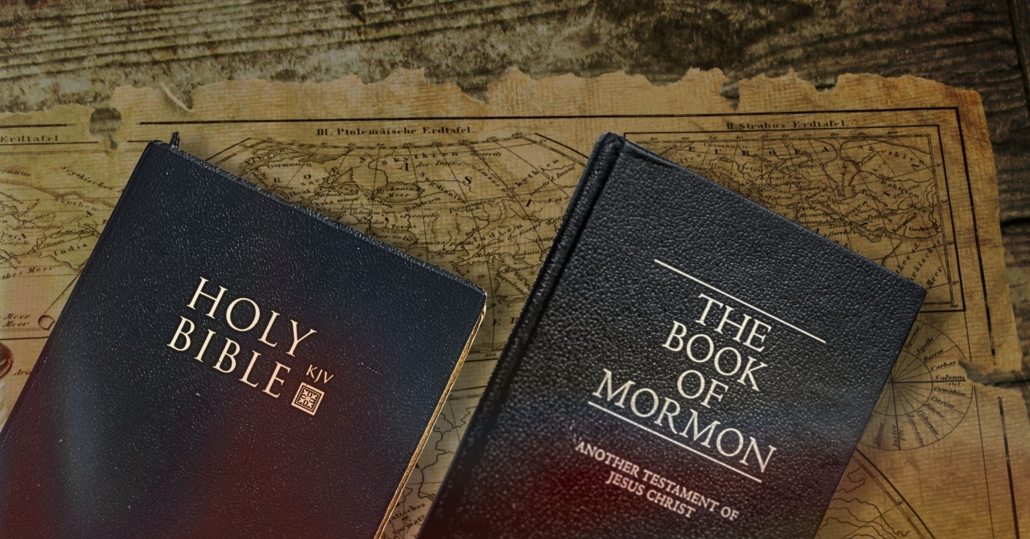
Bart Ehrman (see timestamp 12:51 – 17:46) and Alex O’Connor (see timestamp 1:12:40 – 1:14:32) have both tried to undermine the eyewitness argument for Jesus’s resurrection by comparing it to the eyewitness testimony for Mormonism’s golden plates. Both Alex and Bart challenge Christian apologists with this question:
“Why do apologists reject the eyewitness testimony of Mormonism when their reasons for believing in Christianity are founded on the eyewitness testimony of the apostles?”
Are they right that this is a double standard? After all, Mormonism has a total of twelve eyewitnesses for its key claim about the golden plates. In addition to Joseph Smith’s testimony, eight witnesses say they saw the golden plates, plus three more witnesses say that an angel showed them the plates. There are a few simple points of response to this specific challenge.
- Christianity “Got There First”
Christianity is privileged over Mormonism because it ‘got there first’. Just like Islam, Mormonism tries to build upon the historic Christian message.[1] And just like Islam, Mormonism is birthed from a supposed angelic appearance. But the apostle Paul writes all the way back in c.50 A.D.:
“But even if we or an angel from heaven should preach to you a gospel contrary to the one we preached to you, let him be accursed” (Galatians 1:8 ESV).
He also writes in 2 Corinthians 11:12-15 (ESV) that Satan disguises himself as an angel of light, whose servants likewise disguise themselves as servants of righteousness. Moreover, the Bible ‘signs off’, as it were, with a warning for all future generations. Jesus says in Revelation 22:18 (ESV):
“I warn everyone who hears the words of the prophecy of this book: if anyone adds to them, God will add to him the plagues described in this book…”
And yet the Book of Mormon comes along in the 19th century and church authorities say in its introduction:
“The Book of Mormon was the most correct of any book on earth, and the keystone of our religion, and a man would get nearer to God by abiding by its precepts, than by any other book.”
The reality is that Christianity’s eyewitness testimony trumps Mormonism’s by the rule: first-come-first-served. Christianity is smart; it safeguards itself against specific alterations of its message, and that is the privilege it gets for being first on the scene. It beats Mormonism by 1800 years.
- For Mormonism, eyewitness testimony is unstable.
Mormonism’s eyewitness testimony is unstable in comparison to the testimony of the apostles. The apostles’ eyewitness testimony is unified and doesn’t carry the stain of eventual scandal, faction, and dissension.
Mormonism’s witness history is much more stained. With the Church of Jesus Christ of Latter-Day Saints’ own official website, we learn that each of the three witnesses – who claimed to see an angel – later fell out with Joseph Smith and never reconciled with him. We also learn that some of the eight witnesses (who were mostly made up of two families) eventually became estranged from the LDS church.
In apostolic Christianity, there is no falling out between any of the key figures such that a key eyewitness like Paul, Peter, James, or John walks away from the church or is excommunicated from the church.
An important principle from Detective J. Warner Wallace is that we can learn a lot by observing the lives of eyewitnesses. Disunity stains the record of Mormon witnesses in their relationships with either the LDS church or with Joseph Smith, adding doubt to key elements of their testimony about the golden plates.
- Only One of These has a Support Structure
Christianity’s testimony has a supporting structure; Mormonism’s doesn’t. To acknowledge Bart and Alex’s challenge; Christianity’s eyewitness testimony certainly has important evidential value. The apostles were willing to go to their deaths for what they believed, and it is difficult to pin them down for a false motive if they merely invented Christianity for personal gain.
But apostolic eyewitness testimony is only one piece of a broader cumulative case for Christianity.[2] The apostles proclaimed Jesus’s resurrection not only because they were convinced that they saw him alive, but they did so at personal cost and while appealing to the greater metaphysical story of the Old Testament (see for example Peter’s speeches in Acts 2-3, or Paul’s creed in 1 Corinthians 15:3-4).
And we also have non-Christian sources, written within 100 years of Jesus’s lifetime, from which we can verify and reconstruct the apostolic claim of the resurrection.[3] Notwithstanding the argument for biblical reliability, Christianity can still make a case for the resurrection even without the Bible.
Not so on Mormonism. Mormonism’s claim to the golden plates is isolated and does not locate itself within a greater plausibility structure (for instance, nowhere are the plates prophesied about in the Bible). And Mormonism cannot appeal outside of itself – neither to non-Mormon sources nor to archaeology – to verify its eyewitness claims about the golden plates.
In summary
Christians are not guilty of a double standard for affirming the eyewitness testimony of apostolic Christianity but rejecting the eyewitness testimony of Mormonism. Mormonism’s eyewitness testimony can be criticised for three reasons:
- First, for claiming to have scriptural revelation in addition to the Bible, even though the Bible explicitly warns against this.
- Second, for disunity amongst its witnesses.
- Third, for its isolated claim without a greater plausibility structure.
By contrast, Jesus’s apostles warned of future false prophets altering their message, they remained committed to unity of faith until their deaths, and they plugged their eyewitness testimony into both history and an overarching structure of scriptural fulfilment and Messianic expectation.
Eyewitness testimony is only one part of a broader cumulative case for God’s existence and Jesus’s resurrection. But Mormonism solely appeals to taking 12 witnesses at their word in an isolated claim. Mormonism’s eyewitness testimony is not the same as Christianity’s.
References:
[1] [Editor’s Note: Latter Day Saints, also known as Mormons, commonly identify as a denomination of Christianity. From the perspective of historic Christianity that label however is mistaken since historic Christianity contradicts Mormon doctrine by affirming Trinitarian monotheism, rejecting polytheism, denying any “Heavenly Wife” of Father God, and more. The theological differences between Mormonism and historic Christianity are not just “denominational” disagreements but rather heretical divergence. In this way, Mormonism is better understood as a cult offshoot departing from Christianity rather than a denomination within Christianity. In this blog, “Christianity” refers to historic/orthodox Christianity (i.e., Catholicism, Protestantism, and Eastern Orthodox) in distinction from Mormonism/Latter Day Saints.]
[2] See for example Frank Turek’s 6 Es for the reliability of the New Testament; See also J Warner Wallace: The Cumulative Case For Christianity: Death By A 1,000 Paper Cuts. Incidentally, Wallace has plenty of work on the differences between Mormonism and Christianity on his YouTube channel.
[3] Besides archaeology, the two main non-Christian sources which testify to the apostles’ claims are Roman-source Tacitus (Annals 15.44) and Jewish-source Josephus (Antiquities 18.63–4). For more on the authenticity of Josephus’s passage, see T C Schmidt’s ground-breaking 2025 book “Josephus and Jesus: New Evidence for the One Called Christ.” A helpful chapter on external corroboration of the New Testament can be read in J. Warner Wallace, “Chapter 12: Were They Corroborated?” in Cold-Case Christianity: Updated and Expanded Edition (Colorado Springs, David C Cook Publishers: 2023).
Recommended Resources:
Another Gospel? by Alisa Childers (book)
Early Evidence for the Resurrection by Dr. Gary Habermas (DVD), (Mp3) and (Mp4)
Why We Know the New Testament Writers Told the Truth by Frank Turek (mp4 Download)
The Top Ten Reasons We Know the NT Writers Told the Truth mp3 by Frank Turek
Sean Redfearn is a former Community Youth Worker who now works for Christian Concern in Central London, UK. He completed an MA in Religion at King’s College London, is in the process of completing the MA Philosophy program at Southern Evangelical Seminary, and is a 2022 CrossExamined Instructor Academy graduate. Passionate about Jesus, he is grateful for the impact that apologetics has had on his faith.