
Tag Archive for: theology

Introduction

Human origins is a fascinating area of research today. With all the different models for the origins of humanity being proposed, I see an increase in the discussions, both scientific and theological. For everyone reading this post, this area of research should be of utmost interest for you as well. Two critical ideas about humanity are at stake depending on which model (or family of models) is true: intrinsic and equal human dignity and value, and the sinfulness of humanity.

The age-old debate about God’s existence has great implications on this area of the debate about human origins. The Judeo-Christian claim that all humans are created in God’s Image and that humans possess a sin nature that will cause them to tend toward the immoral. These paradoxical doctrines together explain both the greatness and wretchedness of humanity that we see everyday, throughout history, and expect in the future.

The Image of God

If we are created in the image of God that means that all humans possess intrinsic and equal human dignity and value. If this is false, then humans are not valuable in virtue of their being human but in virtue of a myriad of other characteristics and stati that change in fashionability with the culture. One moment a human can be valuable and the next moment they are not. If humans do not have value at any point, that gives justification for their expendability (murder) at the hands of those who have power over them at that point. If humans are not created in the image of God, then there is nothing wrong with humans abusing their power against other humans. Any model of human origins that does not allow for the Image of God in humans places the very lives of every human at risk.

Human Sinfulness

Genesis also records that Adam and Eve sinned against God and with that action brought the sin nature into all future humans. Humans are not born good or even neutral. This means that the abuse of power described above is not just possible but inevitable. Any model of human origins that does not allow for the Fall or for the transfer of the sin nature (whether through the biological, spiritual, or some combination) denies this element of human psychology, sociology, and history. 

Denying Both?

Any model that does not allow for one or the other already makes human lives less worthy of protection because either it is not worth protecting or there is nothing to necessarily protect against. But if a model denies both, then that is a recipe for disaster. This means that the debate about human origins is not just a scientific question but also a philosophical one, even for the atheist or naturalist. An interesting analysis of the implications of these two characteristics is provided in Os Guinness’ book “The Magna Carta of Humanity” which I highly recommend, particularly for those involved in human origins discussions and debates. It provides a renewed urgency for the importance of the debate about human origins.

Should Theology Judge Science?

I often hear the claim that many Christians allow their theology to determine their interpretation (and maybe even rejection) of the scientific data. The implication is that we should not allow any knowledge discipline (or at least, theology) other than science in developing our model or that we should at least give precedence to science.

It is important to recognize at this point the distinction between “science” and “data of nature.” The data that is discovered is the raw information that must be accommodated in any model, whereas “science” is the interpretation (which is fallible, but not necessarily false) of that data. Because multiple sources of truth (philosophical and historical as described above, and not just the natural data) exist about humans, the data of each must be recognized and accommodated in any model of human origins that claims to accurately reflect the natural history of human origins (what really happened). Just as the data of nature can judge our interpretation of the data of history and Scripture, the data of history and the data of Scripture can judge our interpretation of the data of nature in virtue of their being true.

We cannot allow an epistemic (knowledge) posture of strong or even weak scientism to prevent our discovery of the correct model of human origins. To do so, would be dangerous.

Conclusion

With the work in the field of human origins being done at numerous Christian organizations, the number of possible models and level of detail may seem confusing to many yet exciting to others. But they are important for all of us. I encourage these organizations to continue (or begin) working together to gather all the data that each emphasize in their respective models and adjust those models to reflect the data provided by others. We need to be careful and respectful of any accusations of heresy- ensure that our accusations are demonstrably reflective of the model not the Christian, and that we address such accusations with or adjust our models based on the biblical data and logic. It is important that even though we may disagree on details that we present a united front that is based on the data and sound reasoning from that data, not only for the future of humanity, but as a demonstration of the unity and love that Christ prayed for and told us that unbelievers will see. We need to not only demonstrate the truth of these important Christian doctrines (ones that are often under attack and used as excuses to reject Christ) but we need to emphasize our love, respect, cooperation, and dedication to truth that unbelievers often overlook.

Recommended resources related to the topic:

Science Doesn’t Say Anything, Scientists Do by Dr. Frank Turek (DVD, Mp3 and Mp4)

Oh, Why Didn’t I Say That? Does Science Disprove God? by Dr. Frank Turek (DVD and Mp4)

Is Original Sin Unfair? by Frank Turek (DVD, Mp3, and Mp4)

Stealing From God by Dr. Frank Turek (Book, 10-Part DVD Set, STUDENT Study Guide, TEACHER Study Guide


___________________________________________________________________________________________________________________________________________________

Luke Nix holds a bachelor’s degree in Computer Science and works as a Desktop Support Manager for a local precious metal exchange company in Oklahoma.

Original Blog Source: https://bit.ly/49DBeNf


It wasn’t too long ago we finally finished putting the Christmas decorations away at our house. The process caused me to reminisce about the time we had enjoyed with family and celebrations with our church family both this year and in years past. As each year passes, I am increasingly burdened by the chasm between the secular “Christmas” celebrated by society and the true meaning of Christmas–the incarnation of Jesus Christ.

I ponder the great effort put forth by retail companies (think gifts and décor) and the entertainment industry (movies, concerts, and special events in the name of the “special season”) and can’t help but marvel at the effort to capitalize on the season all while wholly rejecting the reason behind it.

This season, I was reminded of a very important question, arguably the most important question each one of us must answer. All three of the synoptic gospels (Matthew, Mark, and Luke) record Jesus asking his disciples “Who do you say that I am?” Considering the confusion at Christmas and what event it truly marks, I would challenge you to consider your own answer to this question. Who do you say Jesus is?

Jesus’s Two Questions

Jesus and his disciples made their way to an area known as Caesarea Philippi, located north of the Sea of Galilee and near the base of Mount Hermon. It is a beautiful, lush, park-like area that has some of the beginning waters of the Jordan River running through it. Like many places during the time, the name was chosen to honor the current Caesarean and local ruler, Philip the son of Herod the Great.[i]

In addition to the beautiful nature there are ruins of pagan Roman worship. Today one can walk along the side of a hill into which is carved numerous niches that might have held statues of Roman gods and goddesses. There are areas that were once foundations for temples to both one of the Caesars and other gods. There is a particularly looming grotto dedicated to the god Pan (see attached picture). According to a local guide this grotto once involved the sacrifice of infants to the god Pan. This was the physical environment that served as a backdrop to Jesus’ two questions.

This is Matthew’s account of the conversation:

“When Jesus came to the region of Caesarea Philippi, He asked His disciples, “Who do people say that the Son of Man is?” And they said, “Some say John the Baptist; others, Elijah; still others, Jeremiah or one of the prophets.” “But you,” He asked them, “who do you say that I am?” Simon Peter answers, “You are the Messiah, the Son of the Living God!” And Jesus responded, “Simon son of Jonah, you are blessed because flesh and blood did not reveal this to you, but My Father in heaven…”
– Matthew 16:13-17 (HCSB; see also Mark 8:27-29 and Luke 9:18-20)

The Question of the Populace’s Belief in Jesus’s Identity

Jesus begins by asking them what the general population said about his identity. In general, the response was, somebody good, important, and/or wise. John the Baptist or a prophet, like those through whom God spoke in the Old Testament. Obviously, someone who knew the things of God and seemed to live in his favor. How would you answer Jesus’ first question today? I would suggest the answers would be somewhat similar. While not citing specifically Old Testament prophets, many call him a prophet. Others consider him a good, moral teacher.

The Question of the Disciples’ Belief in Jesus’s Identity

Jesus makes his second question personal. He specifically asks the disciples who they say he is. We are wise to feel the same question pointed directly at us. Who do I (insert your own name) say Jesus is? The disciples couldn’t hide behind the prevailing popular answer. While it is impossible to detect whether there were any pauses in the conversation through the written version, Peter seems to answer without hesitation– “You are the Messiah, the Son of the Living God!” How would you answer that question? Would you hesitate and need to think about your answer?

How the Bible Answers the Questions

Jesus tells Peter he is correct and knows the answer because God revealed it to him. The disciples had heard Jesus’ teaching and witnessed the miracles he performed while following him in his ministry.

The Bible is replete with passages that tell us about the identity of Jesus, God’s Son, sent as our Savior to redeem us from our sin, sin that entered the world through Adam and Eve in the early pages of Genesis. The length of this article allows space to note just a few of the places we are told about Jesus’ identity.

The Testimony of Jesus

Jesus himself tells us He is the Son of God. In the verses discussed above, Jesus tells Peter he is correct when he identifies Jesus as the Messiah, the Son of the Living God. In his High Priestly prayer (John 17), Jesus identifies himself as God’s son (John 17:1) and repeatedly calls God his father (17:1; 17:5; 17:11 etc.). Jesus makes claim to his divinity in the account of the healing of the paralytic (Mark 2:1-12). Friends had lowered the lame man through the roof of a house to gain access to Jesus, believing he could heal him. Jesus begins by telling the man his sins are forgiven (2:5) and then ultimately provides physical healing (2:11b). It is the claim to have the authority to forgive sins that infuriates the religious leaders who acknowledge only God can forgive sins.

The Testimony of John the Baptist

John the Baptist, at the baptism of Jesus, testified, “…He is the Son of God.” (John 1:34). Before John the Baptist was even born, he responded to Jesus’s identity from within his mother’s womb. Luke records Jesus’s mother Mary’s visit to her cousin Elizabeth, who was John’s mother. Both women were pregnant at the time and upon Mary’s arrival, John, within his mother’s womb, “leaped” within Elizabeth when she heard Mary’s voice. (Luke 2:41) Elizabeth told Mary of John’s reaction, asked how it was possible the “mother of my Lord” would visit her (Luke 2:43), and told her all that the Lord had told Mary would be fulfilled. Earlier in chapter 2, Luke recorded the angel’s announcement to Mary that she would become pregnant and have a son. This son “will be called the Son of God.” (Luke 2:35b)

The Testimony of God the Father

God himself specifically identified Jesus as his Son at both his baptism and transfiguration. At his baptism, Mark records that when Jesus came up out of the water, a voice from heaven said, “You are my beloved Son; I take delight in You!” (Mark 1:10-11)

Matthew documents the transfiguration of Jesus in chapter 17. While gathered high on a mountain with Peter, James and John, Jesus was transformed in front of them. Moses and Elijah also appeared. “While he was still speaking suddenly a bright cloud covered them, and a voice from the cloud said: This is My beloved Son. I take delight in Him. Listen to Him!” (Matt 17: 1-5)

Conclusion

While Christmas, and all its trappings that deviate so far from the whole event at the root of the holiday, is in the review mirror of life for another year, Jesus’ question is still in front of us. Who do you say he is? Peter and so much of scripture provide the right answer–Jesus is the Messiah, the Son of the Living God. I will argue there is then a follow-up question of equal importance–what are you going to do with that answer?

Are you going to respond to his invitation to repent and follow him? Will you accept the fact that he has stood in your place, taking the just wrath of God as penalty for your sin on your behalf? Will you submit to him and enjoy forever a right relationship with the one and only true God? It is my prayer that you will. If you have questions about becoming a follower of Jesus, please go to Bellator Christi’s main menu and click on the “How to Become a Christian” tab.

References: 

[i] Chad Brand, Charles Draper, and Archie England, eds., Holman Illustrated Bible Dictionary (Nashville, TN.: Holman Bible Publishers, 2003), 248.

Recommended resources related to the topic:

How Can Jesus be the Only Way? Mp4, Mp3, and DVD by Frank Turek

Jesus, You and the Essentials of Christianity by Frank Turek (INSTRUCTOR Study Guide), (STUDENT Study Guide), and (DVD) 

Reflecting Jesus into a Dark World by Dr. Frank Turek – DVD Complete Series, Video mp4 DOWNLOAD Complete Series, and mp3 audio DOWNLOAD Complete Series

Can All Religions Be True? mp3 by Frank Turek


___________________________________________________________________________________________________________________________________________________

Michelle Johnson earned a Ph.D. in Theology and Apologetics at Liberty University. She also earned her M.A. in Theological Studies and her M.Div. in Professional Ministries at Liberty University. Michelle graduated from the University of Minnesota with her undergraduate degrees. She and her husband Steve live in Mankato, Minnesota. Michelle and Steve attend Wooddale Church in Eden Prairie where Michelle serves on the Global Partner Care Team. In addition to her love of theology and apologetics, Michelle also has a passion for historical studies, particularly the theology of the Patristics. When she is not spending time reading or writing, Michelle can often be found dreaming of her next travel adventure or enjoying a great cup of coffee. Michelle Johnson serves as the Executive Vice-President and Managing Editor of Bellator Christi Ministries.

Original Blog Source: https://bit.ly/3I3EcPB


As a prosecutor for many decades, I often found myself reflecting on the impact that feelings of guilt have, even upon criminals with lengthy records. Why was it that the guilty wanted to talk about their crime, even after being advised of their rights? Why would those who had “gotten away” nonetheless seek to escape their feelings through alcohol or drugs?  Apart from true sociopaths, it seemed to me that people cannot simply cast-off feelings of guilt by force of will. The feelings persist and they demand a reckoning. That voice of conscience – that voice that so many of us try so hard to quiet– simply refuses to cooperate.

Where Guilt Comes From

Put simply, feelings of guilt arise when a person senses the disconnect between what they have done, or are planning to do, and what they realize they “ought” to do. But why should this be so? Why should we feel conflicted about the behavior we are consciously choosing? For example, when I am hungry, my instinct is to eat to satisfy the hunger. But when I eat too much, and do so repeatedly, I begin to realize I am becoming a glutton. Despite satisfying my urge, I realize that I should not act that way. Similarly, I may elect to act in a way that hurts someone else to advance my own interests. But later, I begin to feel qualms and regret my behavior.

Why is it Universal?

What worldview, I wondered, best explains this near-universal human experience?

To the secularist, such feelings are the product of long-term social evolution. Initially, this explanation made sense to me. After all, why wouldn’t the person with a “pro-social” approach add to their group’s potential for survival?  And wouldn’t feelings of guilt for wrongdoing tend to produce pro-social behavior? But the more I thought about this, the more I realized that it lacked true explanatory value.

If we did in fact evolve from primitive protohumans, how did these first thinking humans begin to feel guilt? After all, no one ever enjoys feeling guilty, and such feelings definitely tend to constrain – not expand – behavior choices. They would cause a person to think twice before doing something that might be in their individual interest. Stealing from one’s neighbor, for example, or killing one’s rival to obtain his belongings, would benefit an individual assuming they felt they could accomplish it. Giving a stranger food or shelter, by contrast, would put someone at a disadvantage if resources are scarce. It makes much more sense that any potential benefit in group thinking would be outweighed by the limitations on guilt-inducing behaviors. Imagine the lion chasing its prey but then feeling “guilty” and stopping short of his goal. How long would he survive? Probably not long enough to pass his genes on to the next generation.

It’s hard to imagine how pro-social thinking would have arisen in the harsh and competitive environment of the first humans. If we are just evolved but now intelligent primates, why would we ever depart from pursuing our own, individual short-term best interest? Raiding and stealing from others makes a lot more sense than trying to make peace with someone who is bent on taking what you have. Why would we limit our possible choices by deciding that we “ought” to do something that helps others but only provides us a possible, longer-term benefit? And if we chose to do so, would this not be the result of an intelligent selection? Feelings of guilt would play no useful role here. Indeed, being burdened by guilt would detract from survivability and therefore be rooted out over time. Moreover, if pro-social thinking is an intellectual exercise, why would feelings come into play at all? Why not simply decide sometimes to act one way depending on the circumstances, without ever experiencing feelings about our choices? What possible advantage would such an approach confer?

What does Altruism Prove?

No, pro-social or altruistic thinking only makes sense in a person who already has in mind the view that building a stronger community, or helping others, is itself a good to pursue. An individual possessing this capacity would decide to forego killing his rival in search of something greater in the more remote future. He would realize this is something he “ought” to do even if his hunger or greed were impelling him to a different decision.

Why would we have such a capacity built into us? The secularist has no answer, but the Christian does. The capacity for guilt did not evolve. It was built into our minds in the same way acquisition of language and understanding the concept of “fair play” were, put there by an intelligent Creator who has a moral law that he desires us to obey. And so, when we stray from that law, there are feelings of dissonance and regret that emerge from that mental “subroutine” leading us back to the “good.” Morality, and the resulting feelings of guilt, are a message to us from outside, not an evolved internal trait.

Now it is true that we do not all experience guilt in the same way. Different cultures, and different groups within a single culture, may feel guilty about different things. But many common features are evident.  No one feels guilt after doing good, or angst after following their conscience. No one feels pleased when they betray a friend. And of course, consciences can be seared by poor upbringing which distorts what “good” and “evil” are in the first place. Our minds naturally follow a selection process as to what we “ought” to do, even if what informs that process has been distorted.

Written On our Hearts

Secularists see guilt as something in need of fixing. They look to modern science – psychology or pharmacology or both – to help people finally rid themselves of this vestige of what they view as our primitive and superstitious past. But it is to no avail. Feelings of guilt flow from the moral law “written on our hearts,” guardrails meant to guide us on to the right path, and no matter how hard we try, we cannot escape them.


Recommended resources related to the topic:

Correct, NOT Politically Correct: How Same-Sex Marriage Hurts Everyone (Updated; downloadable pdfPowerPoint) by Frank Turek

Legislating Morality: Is it Wise? Is it Legal? Is it Possible? by Frank Turek (Book, DVD, Mp3, Mp4, PowerPoint download, PowerPoint CD)

Stealing From God by Dr. Frank Turek (Book, 10-Part DVD Set, STUDENT Study Guide, TEACHER Study Guide)

Is Morality Absolute or Relative? by Frank Turek (Mp3/ Mp4)

__________________________________________________________________________________________________________________________

Al Serrato earned his law degree from the University of California at Berkeley in 1985. He began his career as an FBI special agent before becoming a prosecutor in California, where he worked for 33 years. An introduction to CS Lewis’ works sparked his interest in Apologetics, which he has pursued for the past three decades. He got his start writing Apologetics with J. Warner Wallace and Pleaseconvinceme.com. 


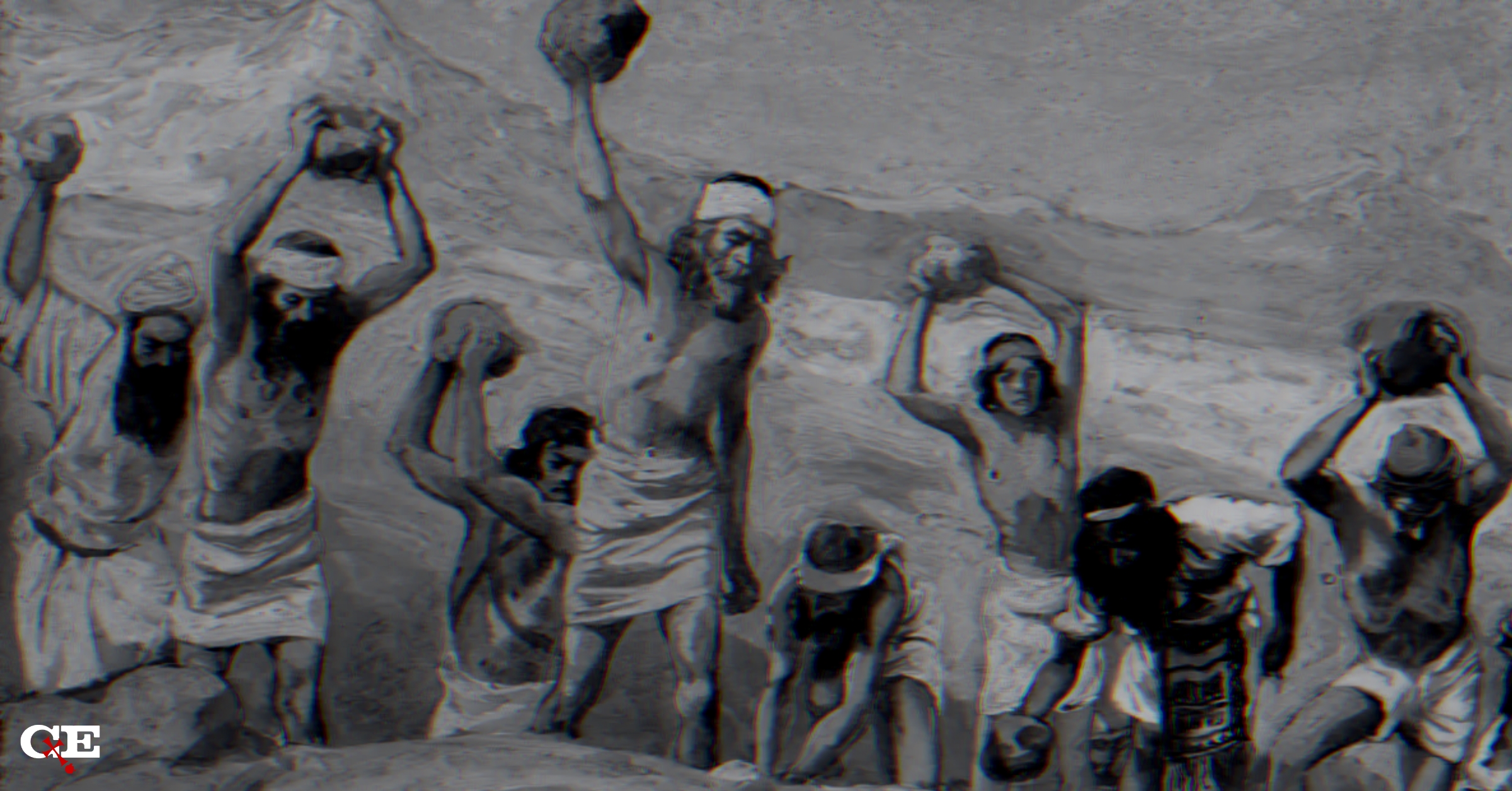
When it comes to Bible reading, some passages are more challenging than others. Such is the case with the stoning passages (see Leviticus 20:27; 24:16; Numbers 15:32-36; Deuteronomy 13:6-11; 21:18-21). These aren’t our go-to passages for morning devotionals. Personally, I can understand capital punishment, but stoning as a means to achieving it just seems so barbaric, cruel, and harsh, especially when the commandment is issued to parents to indict rebellious sons, as seen in Scripture:

“If a man has a stubborn and rebellious son who will not obey the voice of his father or the voice of his mother, and, though they discipline him, will not listen to them, then his father and his mother shall take hold of him and bring him out to the elders of his city at the gate of the place where he lives, and they shall say to the elders of his city, ‘This our son is stubborn and rebellious; he will not obey our voice; he is a glutton and a drunkard.’ Then all the men of the city shall stone him to death with stones. So, you shall purge the evil from your midst, and all Israel shall hear, and fear” (Deuteronomy 21:18-21).

This is a hard passage to stomach, don’t you think? I prefer death by lethal injection, or death by a laced bong hit, but stoning? What a mess. As believers, how are we to understand these verses? Below are five thoughts to consider as you seek to come to terms with this passage.

1. It’s an Ancient Context.

First, we need to understand this text, like all texts, in context. We can’t overlay our twenty-first century cultural understanding on this ancient milieu. Nothing will lead to more head-scratching confusion and frustration than that. Ours is a culture where a minor swat on our child’s gluteus maximus causes an uproar. No wonder stoning is extra hard for us to digest.

2. It’s a Last Resort.

Second, stoning was the last resort. The son described in these verses exhibits an unbending and rebellious spirit. He’s steeped in sin, freely giving himself to drunkenness and gluttony, and refuses to respond to any parental discipline, altogether shunning the fifth commandment. These verses describe a seemingly hopeless case, one set in his own ways as he strong-arms God, his parents, and the principles of his surrounding theocratic nation. He’s a morally sick son whose sin will spread and undo the moral fabric of the whole community nation, if left unchecked. Once the parents realize their son’s recalcitrance, they seek outside intervention as a final resort.[i]

3. Morality Matters At a Community-Level.

Third, the ultimate purpose of stoning was to purge evil from the community and to create a healthy fear of living an unchecked moral life. The health of the nation depended on the entire community walking in alignment with God. That’s not to say people didn’t sin. They did. A lot. And there was an entire sacrificial system in place so people could once again obtain a clear conscience before the Lord. The son described in these verses wasn’t looking for a clear conscience—his conscience was seared.

4. It’s Rare.

This wasn’t a common custom. Interestingly enough, we have very few instances of stoning that take place in the biblical records and I’m not aware of any extra biblical evidence that this punishment was commonly carried out. Perhaps the threat was enough to deter people from such rebellious behavior.

5. Jesus Answers This Law With Grace.

Finally, Jesus models the heart of God regarding stoning.[ii] In John 8:7 Jesus said to those who accused the adulterous women, “Let him who is without sin among you be the first to throw a stone at her.” The law teaches us that we are all lawbreakers. Everyone under God’s law deserves capital punishment, but Jesus experienced capital punishment on our behalf even though He was the only one to ever fulfill the law. Essentially, He was stoned for us in an act of unconditional love as He experienced death on our behalf.

REFERENCES

[i] Editor’s Note: It should also be noted that there’s a cultural corrective built into this scenario to prevent abusing capital punishment. Children were seen as a blessing, a legacy and a source of pride and joy for parents. Plus, even today, it’s only natural for parents to be biased in favor of their own children. So, if anyone was going to advocate to protect and defend one’s children from capital punishment, it’s the parents. In that way, there was a cultural corrective built-into that relation, to keep parents bearing false witness against their child and from doling out a capital punishment lightly. Second, parents would also be the experts on their own children, knowing them better than anyone else. So, if this child is a menace to society, the parents are in a position to recognize that threat before anyone else does. Third, parents already have relational authority over their own children. That means they can make judgments over their children; that’s part of their job as parents. Now they don’t have the natural right to directly kill their kids, but they do have a judicial role over their children, so that court rulings over their children are treated here as an extension or continuation of parental authority over the child. Fourth, even still, this passage isn’t saying that parents have a right to kill their children. Rather, the parents are coming forward as the chief witnesses against their rebellious child. While they created that child, and they have a normal responsibility to raise and care for them, they cannot kill that child as a general right of parenthood. That’s why they have to present their child before a larger judging body, a court of the elders, Sanhedrin, priests, etc., to make that higher-court decision. The parents, in that case, are not the “Judges” issuing a death sentence, they are more like the arresting officers and lead witnesses against their prodigal child. Sixth, that era also had no standing police force and no prison system, and the judicial/court system was usually a small counsel of community leaders (elders, priests, etc.). All that means the punishments had to fit the crime, without requiring an elaborate police force, prison system, or a complicated court system. Stoning was a low-cost, effective, means of containing serious threats and reducing crime. Plus, it’s administered by the whole community, so the whole community takes responsibility for the court rulings. This means no single person can be both judge and executioner. One or two people could be bribed or tricked into a guilty-verdict, but it’s a lot harder to do that to the whole community.

[ii] I realize our earliest manuscripts do not include John 7:53–8:11. Regardless, these verses depict a consistent vision of the life and actions of Jesus Christ.

Recommended resources related to the topic:

Legislating Morality (mp4 download),  (DVD Set), (MP3 Set), (PowerPoint download), and (PowerPoint CD) by Frank Turek

Legislating Morality: Is it Wise? Is it Legal? Is it Possible? by Frank Turek (Book)

A Father’s Embrace (DVD), (Mp3), (Mp4 Download), and (PowerPoint download) by Dr. Frank Turek

If God, Why Evil? (DVD Set), (MP3 Set), and (mp4 Download Set) by Frank Turek

__________________________________________________________________________________________________________________________

Bobby serves as lead pastor of Image Church in Charlotte, North Carolina, and is well known for his YouTube ministry called, One Minute Apologist, which now goes by the name Christianity Still Makes Sense. He also serves as the Co-Host of Pastors’ Perspective, a nationally syndicated call-in radio show on KWVE in Southern California. Bobby earned his Master of Theology degree from Dallas Theological Seminary, his Doctor of Ministry in Apologetics from Southern Evangelical Seminary, and his Ph.D. in Philosophy of Religion from the University of Birmingham (England), where he was supervised under David Cheetham and Yujin Nagasawa. Bobby’s also written several books, including The Fifth Gospel, Doubting Toward Faith, Does God Exist, and Fifty-One Other Questions About God and the Bible, and the forthcoming Christianity Still Makes Sense, to be published by Tyndale in April 2024. He’s married to his lovely wife Heather, and together they have two grown kids: Haley and Dawson.


“No one is above the law.” So the popular saying goes, and no truer thing was ever said in a mere six words. This thought, and our Western system of justice which sprang from it, stands as a testament, and a tribute, to the philosophy that gives humanity its best chance for self-government and ordered liberty.

The philosophy that found its expression in this view was itself largely shaped by a Christian worldview, one in which our individual rights, and our equality under law, were grounded in a transcendent being who made us for a purpose. Our Founders certainly understood this when they declared their right to independence from Great Britain and affirmed that “all men are created equal.” In their view, this equality finds its roots in the “Creator,” who endows each person with “certain unalienable rights.” As the familiar phrase sets forth, among these rights are “Life, Liberty and the pursuit of Happiness.”

Many secularists today have misapplied this thought, mistakenly asserting that this concept also applies to God. They fail – or refuse – to see the distinction between the Creator and the created, as they put God “on trial” for everything from genocide, “ethnic cleansing” and murder in Old Testament times to every instance of suffering in the modern world that God could, but fails, to prevent.

A moment’s reflection should make plain that God need not answer to us – he, indeed, is the one thing “above the law” for he is the law. He is no more subject to it, or answerable to us, than the computer programmer is to the rules he writes into a computer simulation. While God’s apparent indifference to the human condition may cause us to speculate about his nature, or his will, none of our opinions or our accusations will ever “make out a case against him.” This is simply nonsensical when one realizes what the concept of God entails.

Most people understand this intuitively. Take the prevailing view of abortion in many circles today: a majority of Americans apparently still support the notion that a mother has the right to end the life of the baby growing within her. Christianity holds, to the contrary, that it is always wrong to take innocent human life. Since the developing child is “innocent” and since he or she is “human life,” that should end the discussion. The reason it does not is that many people recognize that the baby’s life is different – the baby lacks self-awareness or developed intelligence and the baby is “dependent” upon his mother’s body for continued life. These factors, skillfully manipulated through the rhetoric of “choice,” lead many people – who refuse to think through what in fact is at play – into serious error.

Think of it this way: human beings, regardless of their age, level of intelligence, or degree of dependence on others are in a horizontal relationship with each other. We are all the same kind of creature. While we each possess distinct and different talents, and while opportunities for development differ, we are equal in the nature of our being. Though many wish to view the mother as “superior” to the child, in reality she is not. The mother of the child did not “create” the child she is bearing; the child was “begotten.” This may sound like mere semantics, but it is not. For it is the power to “create” from nothing – as God did in the Big Bang event – that gives the right to dictate to those that were created. Men and women, when they procreate, are but a link in the chain of life that God set into motion tens of thousands of years ago. They take part in the process; they are not the source of it.

If science ever leads to the creation of fully functional AI robots, human beings will be the “creators” and will have the right to do with those robots what they will. Having created them from raw materials, whatever rights they are eventually given will be dependent entirely on the will, and wishes, of those who created them.

As the Bible teaches, in God we live and move and have our being. This is literally true: the sum total of what we are is grounded in God’s creative power. If he were to stop thinking of us for even a moment, we would cease to exist. Our relationship to him is not one of equals, as we are entirely dependent upon him for our continued existence.

I’d say that gives God the power to define morality. It places him above, and as the source of, our earthly law. As created beings, we should spend less time judging God and more time listening to what he expects of us.


Recommended resources related to the topic:

Correct, NOT Politically Correct: How Same-Sex Marriage Hurts Everyone (Updated; downloadable pdfPowerPoint) by Frank Turek
Intellectual Predators: How Professors Prey on Christian Students by Frank Turek (mp4 Download) (mp3) (DVD)
Tactics: A Game Plan for Discussing Your Christian Convictions by Greg Koukl (Book)
Letters to a Young Progressive by Mike Adams (Book)
Another Gospel? by Alisa Childers (book)

__________________________________________________________________________________________________________________________

Al Serrato earned his law degree from the University of California at Berkeley in 1985. He began his career as an FBI special agent before becoming a prosecutor in California, where he worked for 33 years. An introduction to CS Lewis’ works sparked his interest in Apologetics, which he has pursued for the past three decades. He got his start writing Apologetics with J. Warner Wallace and Pleaseconvinceme.com. 


Imagine a porcupine. He’s waddling around with his long pointy quills. He’s harmless, even cute until he gets scared or offended. Then he becomes an angry pincushion. Now image this porcupine is giant-sized, like a dinosaur. He’s bumping into things, knocking things over, leaving huge piercing quills behind him as if marking his territory. People and animals just stay out of his way for fear of getting trampled, stabbed, or otherwise canceled. Now imagine this porcupine is hyper-sensitive. He’s reactive, easily offended, easily frightened, distrusting, and very aggressive when upset. Now imagine he’s rainbow colored and you’re tasked with giving this huge moody multi-colored pincushion a great big hug! That’s what it feels like answering the question: “Is it biblical to be a Gay Christian?”

This is the kind of topic where it feels like any move is the wrong move. You can’t really hug a huge temperamental rainbow porcupine. The LGBTQ+ movement has grown into a cultural juggernaut, dictating new legislation, directing media, invading public and private schools, coopting corporations, butting into the healthcare system, reshaping social norms, even changing the English language. One of those linguistic innovations is the identity statement: “Gay Christian.” Our question today is whether it’s biblical to be a “Gay Christian”?

Loveless Truth or Truthless Love?
There is no way forward without risking injury and without offending someone. As Biblical Christians, all we can realistically hope to do with this triggering topic is to speak truth in love (Ephesians 4:15). As we try to answer whether the concept of “Gay Christian” is biblical, we do well to remember that we cannot responsibly sacrifice truth or love. We need both. And we need the wisdom to balance and leverage them for our best chance at pointing people to the God of the Bible. If we compromise too much we get truthless love. If we’re tactless and mean, we get loveless truth. Both distort Christ’s message. Both drive people away from the Faith. Loveless truth is no better than truthless love.

As Christians we have every reason to major on both truth and love, to balance them by way of wisdom. Sometimes it’s fine to be sharp and forceful with a truth jab. Other times we risk causing more spiritual injury in our delivery than they felt from their ailment. LGBTQ+ people can be incredibly diverse, but they are all human. That means at least three things: (1) they are hurting, (2) they’re sinners just like you and me, and (3) their only hope of salvation is in Christ alone. We’re in the same boat. With this in mind let’s see if we can bring some clarity to this prickly issue.

What does “Gay Christian” even mean?
The phrase “gay Christian” can point a few different directions. First it can be a description. It’s describing someone who is Christian and is same-sex attracted (whether practicing or not). It would be like saying, “I am a male-Christian,” “an Texan-Christian” or “a married, heterosexual, masculine, Christian who likes hot sauce, and weightlifting, and thinks about the Roman Empire at least once a day.” Descriptive language is perhaps the broadest, and least-problematic way to understand the phrase “gay Christian.” As a description, the phrase is just pointing out any true claims about a person. There is still a problem with this sense of “Gay Christian,” but we’ll get to that later.

Second, “Gay Christian” can be a group identity statement roughly equivalent to, “I affiliate with a brand of ‘Christianity’ that endorses homosexual practice.” Typically, that includes supporting gay-marriage, left-leaning politics, and progressive theology. Whether that brand of ‘Christianity’ is, in fact, Christian – that’s a different question for a different day. The point is, “gay Christian” could be (1) a description or a (2) group identity.

Third, “Gay Christian” can also be a personal identity statement. It’s saying that that individual, in his heart of hearts, his essence, his soul, is a “Gay Christian.” This is more than just a description. We can describe how a person is without identifying what that person is. Descriptive language alone doesn’t necessarily point out what defines the person. But when the phrase “Gay Christian” refers to one’s personal identity, that individual is defined as both gay and Christian in that order. “Gay” isn’t just a secondary, accidental, or unnecessary quality. It defines them. It’s not just how he is, or what he does. It’s who he is.

Critiquing the idea of “Gay Christian”
Of those three categories: (1) Description, (2) Group Identity, and (3) Personal identity, I will focus on that third sense: “Gay Christian” as one’s “personal identity.” There are problems with all three – since the word “gay” doesn’t only mean “same-sex attracted,” but often means more than that. It can refer to homosexual practice, gay lifestyle, gay-affirming politics and culture, and so forth. That sense of “gay” is a mismatch when paired with orthodox Christianity. Of course, people have tried to argue, from Scripture, that there’s no inherent problem with combining those, but that has never been a historic orthodox convention in Christianity.

What else do we need to know about LGBTQ+ issues?
Find out in “Correct, Not Politically Correct” by Dr. Frank Turek


Partial Truths
First we can commend this terminology for identifying “Christian” at the core of one’s identity. Christianity isn’t just something people toss on top of the pile, along with everything else in their lives. Biblically-speaking, to become a Christian means replacing all the other claims on your identity with God’s claim on you. Becoming a Christian means you are a new creation, “In Christ,” adopted into the family of God, no longer lost on your own, but found and claimed, no longer slaves to sin, but citizens of a new heavenly kingdom, (2 Cor 5:17; 1 John 3:1-2; Gal 5:1; Phil 3:20). All that means Christians are effectively redefined from the moment of salvation forward. The Apostle Paul says it this way:

I have been crucified with Christ and I no longer live, but Christ lives in me. The life I now live in the body, I live by faith in the Son of God, who loved me and gave himself for me.” Galatians 2:20, NIV

So, the phrase “Gay Christian” is partly correct in the sense that Christianity isn’t just a descriptor or group affiliation, it’s an expression of one’s essence. It is one’s fundamental identity. Our identity is Christ-centered, not self-centered. Hence the name “Christianity” – we are “little Christs.”

That partial truth however, is not enough to redeem the phrase, “Gay Christian.” There are at least four problems with the phrase that, I suggest, disqualify the concept from standard usage in orthodox Christian circles.

Four Problems with Identifying as a “Gay Christian”

  1. It’s Unclear: Advocates for the phrase “Gay Christian” have been known to say that “Clarity is kindness.”[1] But the word “Gay” is ambiguous. It could communicate same sex attraction or homosexual practice. So, the expression “Gay Christian” creates confusion where clarity is needed. It would be more kind to replace that confusing label rather than unwittingly suggest to people that Christianity embraces homosexual practice.
  2. It’s Jesus+: Biblically speaking, Christians find their ultimate identity in Christ Jesus alone (Sola Christus). Not in Jesus plus our good works, plus nationalism, plus identity politics, or plus our sexual orientation. Whatever other features may describe and distinguish us (white, male, hetero/homosexual, American, nerdy, bookworm, pastor, backup dancer, etc.) all of these must be submitted to Christ’s lordship. No secondary identity should compete with His sovereign claim over us. This is important because our very identity can be an idol (not to mention a football in the game of identity politics). The title “gay Christian” adds to one’s identity in Christ by putting something in front of Christ. At best this is confused for mixing a secondary “identity” with one’s primary identity. At worst it makes an identity-idol out of one’s sexual orientation. By the way, this objection applies equally well to straight people. Neither hetero- nor homosexuality should compete with Christ in defining us.
  3. It can mean sin: The word “gay” can refer to temptation or practice. As a temptation, it’s not necessarily sinful but can easily become sinful depending on how one interacts with their temptation: surrendering to it, fantasizing about it, fixating on it, encouraging it, etc. And “gay” in the sense of homosexual practice is sin (Lev 18:22; 20:13; Rom 1:26-28; 1 Cor 6:9; 1 Tim 1:10; Jude 1:7). So, combining all that together, the phrase “Gay Christian” is deeply problematic for affixing to one’s Christianity something that might be sin, can readily turn into sin, and is itself a desire for sin. How could any of those affiliations with sin rightly serve in defining one’s identity in Christ? All those ties to sin are what Christ is delivering people from (in sanctification). That’s the identity of our old self, from back when we were “slaves to sin” (Rom 6:6). It’s not out new self since we are “declared righteous,” and that is what Christ takes on Himself since he has “become sin for us” so that we can be called holy and children of God (2 Cor 5:21). In Christ we’re not defined by our sin or by temptation to sin but by Christ Himself who saves us from sin.
  4. It’s Morally Absurd: Stepping back for a moment, the three senses of “Gay Christian” that we mentioned are all absurd. Whether it’s a “descriptor,” a “group identity,” or a “personal identity” the phrase “Gay Christian” is incoherent because we can’t just add any descriptor in front of “Christian” and still have a coherent, theologically sound, and Christ-honoring concept. This becomes abundantly clear when we start adding to our Christian identity other temptations which also have no righteous vent – Zoophile Christian, Pedo Christian, Voyeuristic Christian, Klepto Christian, or Homicidal Christian. I’m not saying that gay people are group-affiliated with all these evils. These are just examples of how absurd it is to combine our Christianity identity with a temptation to sin and somehow think that’s a legitimate pairing.

Why Words Matter
It bears repeating that we’re not just talking about descriptive statements. “Marybeth does this, looks like that, and is tempted by these things.” We’re talking about identity statements. Identity statements are attempts at expressing who we really are, not just how we happen to be at the moment. Speaking of repetition, if we repeat statements defining ourselves a certain way, that can have a fortifying affect on our sense of self. Repetition forms neural pathways, creating habits of thought, gradually shaping our character, and convincing us of the truth of something even if it’s not true.

The word we use to describe or identify ourselves can shape our sense of self by changing, limiting, or expanding how we think of ourselves. Our self-identifying terms lend momentum pushing us in their direction. Scripture has a lot to say against coarse insulting language and taming the tongue (Eph 5:4; Col 3:8; James 1:26). That applies to “self-talk” and identity statements too. None of this bodes well for the phrase “Gay Christian.” A better alternative would be to just receive our identify as “Christian,” or “Christ-Follower,” “child of God,” or “Disciple.” These acknowledge that as Christians we no longer define ourselves. Christ defines us. We can still describe ourselves in truthful ways as gay-attracted, straight, celibate-single, good friend, poker player, tea-drinker, beat-boxer, meat head, etc. But it’s vitally important to distinguish secondary descriptors from one’s primary identity in Christ. And one of the most clear, helpful, and theologically responsible ways to do that is to put no competitors beside Christ. We are Christians, not hyphenated faithers or adjectival disciples. We don’t follow Jesus+. We follow Jesus. He defines our identity at a deeper level than any part of our sin nature, human nature, or natural fact about us.

We are Christians, not hyphenated faithers or adjectival disciples. We don’t follow Jesus+. We follow Jesus. He defines our identity at a level that’s deeper than any part of our sin nature, our human nature, or any natural fact about us.


Endnotes

[1] Preston Sprinkle and Gregory Coles, “Faith, Sexuality, and Gender Conference,” [Conference] Center or Faith, Sexuality, and Gender, (Pella, IA: Third Reformed Church, January 11, 2023).


Recommended resources related to the topic:

Correct, NOT Politically Correct: How Same-Sex Marriage Hurts Everyone (Updated; downloadable pdfPowerPoint) by Frank Turek
Intellectual Predators: How Professors Prey on Christian Students by Frank Turek (mp4 Download) (mp3) (DVD)
Tactics: A Game Plan for Discussing Your Christian Convictions by Greg Koukl (Book)
Letters to a Young Progressive by Mike Adams (Book)
Another Gospel? by Alisa Childers (book)

__________________________________________________________________________________________________________________________

Dr. John D. Ferrer is a speaker and content creator with Crossexamined. He’s also a graduate from the very first class of Crossexamined Instructors Academy. Having earned degrees from Southern Evangelical Seminary (MDiv) and Southwestern Baptist Theological Seminary (ThM, PhD), he’s now active in the pro-life community and in his home church in Pella Iowa. When he’s not helping his wife Hillary Ferrer with her ministry Mama Bear Apologetics, you can usually find John writing, researching, and teaching cultural apologetics.


Sometimes cults are easy to spot. Most everyone knows about the Jim Jones cult (People’s Temple), or David Koresh’s group in Waco, Texas (Branch Davidians). Those cults are easy to spot because doomsday theology and mass killing tend to make headlines. But some cults aren’t so easy to see. Personality cults can be hard to spot.

When people call a religious group a “cult” it usually means one of two things.

TWO TYPES OF CULTS
Type 1: Theological Cult
 – heretical theology deviating from core orthodox teachings of that religion. These cults spring from a parent-religion. Ex., Mormonism and Jehovah’s Witnesses are cult offshoots of Christianity.

Type 2: Sociological Cult – socially and psychologically dangerous practices like authoritarian and manipulative leadership, social isolation, abuse, threats, blackmail, “mind-control” etc. These may or may not have a parent religion.

This post is about personality cults, which fall under the second type. Personality cults may line up perfectly with historic Christian teaching, have all the right creeds, prayers, liturgy, and so on. But they have dangerous practices centering on a personality-driven leadership model.  Often that means one leader calls all the shots and may resort to underhanded and manipulative behavior to get his (or her) way. Here are the first six out of twelve signs that can help you identify if your church is a personality cult.

SIGNS OF A PERSONALITY CULT

1. One Charismatic Leader Is the Face of the Church

Personality cults center on one primary person, who typically has a magnetic and winsome personality. When he or she speaks, people listen. We’ll call this leader “Alpha” or “Al” for short. Alphas are often gregarious and extroverted, feeding off the respect and praise (or fear) of others. They are charismatic in the sense of persuasive influence. They are often natural leaders, drawing crowds most everywhere they go. Sometimes they are also charismatic in the sense of spiritual gifts (tongues, prophecy, visions, mysticism), but that’s not always the case. Bear in mind, there is nothing wrong with being a leadership-oriented charismatic person. Just because a person has tremendous social power within the church doesn’t mean they are abusing that power. But the more power people have, the more tempting it can be to abuse it, especially when they don’t have any accountability for their actions. Remember, “power corrupts, and absolute power corrupts absolutely” (Lord Acton, 1887). That’s why personality cults always have a strong personality at the center.

2. Narcissistic Leader

Al isn’t just a charismatic leader, he also has a big ego. I’m not just talking about confidence, and bravado, I’m talking about clinical narcissism. He tends to view all social dynamics as a competition, or a zero-sum game, that he’s trying to win. He can be remarkably crafty and manipulative in navigating social dynamics to acquire more allies, or to silence and cut off anyone who disagrees with him. Al’s ego is too insecure to tolerate a truth-teller disagreeing with him. That’s like having a spy in your ranks or letting an opponent play on your team. Al also craves an approving audience (whether he admits it or not) and if anyone disapproves he can be so devastatingly hurt/angered/indignant that he resorts to extreme measures against them.

Narcissism is fairly common in the U.S., so Al may have come across it naturally. Western cultures tend to reward confident dynamic people with jobs, promotions, and leadership positions. Narcissists exploit that fact. They are experts at talking-big, acting important, and dictating every narrative into a story about how great they are. Narcissistic alphas have tremendous pride about their ability to lead, their vision for the church, and so on. But they lack the humility, maturity, and emotional security to fill out that self-assured pride with actual competence. Likewise, Alphas tend to objectify people. Al may act like he values other people more than himself, as in Philippians 2:3, but he’s really just acting. In reality, he’s often just using people to feed his ego.

“Do nothing out of selfish ambition or vain conceit. Rather, in humility value others above yourselves,” Philippians 2:3 (NIV).

3. Authoritarian Leadership-Model

Al is also the power broker for the church. Al may delegate minor decisions to other people (especially for matters that don’t interest him). But when it comes to major decisions about church direction, big events, membership policies, church discipline, and especially finances, Al sits at the head of the table. Sometimes Alphas are heavy-handed in exercising authority. But many times they are indirect, manipulative, and evasive. That way they can still get their way while still rationalizing the outcome as a “team effort” or a “group decision.”

Because of Al’s authoritarian role, church discipline is typically a straight-line from him to whomever, he believes, needs correction. Al often bypasses any “due process,” like the checks and balances prescribed in Matthew 18:15-17. In personality cults, church discipline often comes down directly from Al like a monarch declaring an absolute verdict. He may appeal to the elder board, presbytery, or leadership team. But as long as they are just “yes men” (see #4 – Yes Men) and he gets to dictate the narrative, then he still gets what he wants.

“If your brother or sister sins, go and point out their fault, just between the two of you. If they listen to you, you have won them over. 16But if they will not listen, take one or two others along, so that ‘every matter may be established by the testimony of two or three witnesses.’ 17If they still refuse to listen, tell it to the church; and if they refuse to listen even to the church, treat them as you would a pagan or a tax collector.”
Matthew 18:15-17 (NIV)

4. Other Leaders in the Church Are “Yes Men”

Al typically has several other “leaders” on his team, but he doesn’t really share power with them. They may have been invited into leadership, in the past, because they have clout, character and strong leadership ability, but they are only allowed to stay in leadership because they cooperate with Al. He likes them because they “rubber stamp” everything he says.  It’s circular reinforcement. He likes how they rubber stamp everything he proposes, and they like being part of his elite circle of leaders, the few and the proud who have the heart of such an important man.

Some of these cooperators are “yes-men” by nature, that’s their personality type.  They’re peace-keepers who “go along to get along.” Often they enjoy the privilege and status of being in the “inner circle,” so they don’t want to rock the boat. Other times people adapt to a “yes man” mentality because of group pressure, peer culture, or their growing appetite for Al’s approval.

Individually these people might be terrific independent thinkers, courageous, independent, and wise. But, when they get together at an 11am business meeting, and everyone is already hungry for lunch, their resolve may wane. When Al cleverly raises the most controversial proposal at 11:55am, “yes men” culture sinks in and all the “leaders” just follow the crowd, approving anything that lets them finish by noon. “Yes men” don’t have to be “suck-ups” (sycophants), but often they are. Mainly the yes men act as extensions of Al’s authority. They don’t offer any serious challenge, critique, or correction against Al even when he needs it most.

5. “Lone Wolf” Approach to Decision-Making

As much as Al can, he makes decisions directly without any serious input from the rest of the church. In his mind, he sees himself as the hero. Like the dashing and talented quarterback, he thinks of himself as the most important person on the team and the on-field coach. Everyone else’s job is to support Him so he can win the game for them. This direct-decision making style, to him, seems like common sense to him. By making as many decisions as possible by himself, it’s easier and more efficient for everybody. After all, it can keep the whole church working together toward the same unified vision of ministry without wasting time and energy quibbling through business meetings and deliberating over every vote.

6. Vindictive Church Discipline

Church discipline is a Biblical concept (see Titus 2:15; 2 Thessalonians 3:14). But in personality cults, church discipline is less like routine healthcare, and more like a spontaneous amputation. It isn’t healthy. It’s often petty and vindictive instead of restorative (Galatians 6:1). Often personality cults, under Al’s leadership, use gossip, shame, and backbiting to publicly humiliate people by either crushing their spirit so they leave forever or putting them in a dangerously vulnerable position for Al to swoop in like their savior and “restore” them (i.e., creating a codependent loyalist). When Al employs church discipline he is not necessarily aiming to use God’s word to correct false teachers (and every earthly teacher makes mistakes), though he may do some of that. Mainly he’s aiming at silencing critics, so the church is united around him. Never mind if those critics are speaking from God’s word, appealing to historic Christian teaching, or expressing humble godly wisdom. If they are criticizing Al or second-guessing his decisions then they are dissenters, trouble-makers, and enemies of the faith. Al can rationalize punishing them with vindictive discipline to protect the fragile unity of his church.

“Brothers and sisters, if someone is caught in a sin, you who live by the Spirit should restore that person gently. But watch yourselves, or you also may be tempted.” Galatians 6:1 (NIV)

For the next six signs of a personality cult
Stay tuned for “Is Your Church a Personality Cult? Part 2”!


Recommended resources related to the topic:

Intellectual Predators: How Professors Prey on Christian Students by Frank Turek (mp4 Download) (mp3) (DVD)
Your Most Important Thinking Skill by Dr. Frank Turek DVD, (mp4 download)
Proverbs: Making Your Paths Straight Complete 9-part Series by Frank Turek DVD and Download
Tactics: A Game Plan for Discussing Your Christian Convictions by Greg Koukl (Book)
Letters to a Young Progressive by Mike Adams (Book)
Another Gospel? by Alisa Childers (book)

__________________________________________________________________________________________________________________________

Dr. John D. Ferrer is a speaker and content creator with Crossexamined. He’s also a graduate from the very first class of Crossexamined Instructors Academy. Having earned degrees from Southern Evangelical Seminary (MDiv) and Southwestern Baptist Theological Seminary (ThM, PhD), he’s now active in the pro-life community and in his home church in Pella Iowa. When he’s not helping his wife Hillary Ferrer with her ministry Mama Bear Apologetics, you can usually find John writing, researching, and teaching cultural apologetics.

Original post: https://bit.ly/46ndmfs


If you’re going to contend that universalism is true, i.e., the belief that everyone will eventually end up in heaven, then you best beware of the consequences of doing so.

Evacuating a Dying Planet

To illustrate. Imagine you live on a planet called Elpis (in Greek this means “hope” or “expectation”). You have been tasked with evacuating your entire civilization to another planet because of a life-threatening emergency. Due to an increasing level of CO2 in the atmosphere, ELPIS has limited time before there’s not enough oxygen to sustain life. So, you are developing a plan to transfer your fellow residents, via spaceships, to a safer environment. You’ve chosen a planet called Earth as your destination and have already been in touch with the humans there. The earthlings are happy to accommodate the immigrants from Elpis.

The people of Earth, like the residents of Elpis, cannot exist without air. And experts on both planets have stressed to you that, in transit from Elpis to Earth, there is no air in outer space. So, you have naturally acquired a large supply of pressurized air tanks for use in the passage to Earth. Your preparations seem to be proceeding smoothly, and you think you’re just about able to breathe a sigh of relief.

The “Myth” of Airlessness

But then a new emergency arises. Just days before your planetwide launch to remove your fellow citizens from Elpis, a new book comes out entitled Relax, There’s Room to Breathe: Deconstructing the Myth of an Airless Outer Space. The book skyrockets to the top of the planet’s bestsellers lists. By the thousands, Elpis residents toss away their air tanks as they prepare to leave for their new environment.

Lives are on the line. The deception is costly. You must respond. What will you do?

Would it not be unthinkable to say nothing?

Awake yet?

Let’s wake up from our dream. This is not Elpis. This is worse. We face a life-threatening situation. We’re not running out of oxygen on Earth. In fact, the crisis is even more serious. Today we’ve got people inside and outside the church ready to hold out an offer of universal salvation. Not only are the consequences of doing so catastrophic, but there’s not a scintilla of biblical evidence to back this claim up. Any attempts to do so is to reject the broader overall context of Scripture. When it comes to heaven, everyone will not end up there and neither are there many pathways leading to its destination. No, the way is narrow. We need air to breath there. And Jesus is the Air we must all inhale to arrive in heaven someday. To promise any other way, besides the Jesus way is to hold out false hope. In the end, Jesus is our only Elpis.

“Salvation is found in no one else,
for there is no other name under heaven
given to mankind by which we must be saved.”
Acts 4:12 (NIV)


Recommended Resources Related to this Topic

Counter Culture Christian: Is the Bible True? by Frank Turek (Mp3), (Mp4), and (DVD)
Hell? The Truth about Eternity (MP3 Set), (DVD Set), and (Mp4 Download Set) by Dr. Frank Turek
Short Answers to Long Questions (DVD) and (mp4 Download) by Dr. Frank Turek
Was Jesus Intolerant? (DVD) and (Mp4 Download) by Dr. Frank Turek
Can All Religions Be True? mp3 by Frank Turek

__________________________________________________________________________________________________________________________

Bobby serves as lead pastor of Image Church in Charlotte, North Carolina, and is well known for his YouTube ministry called, One Minute Apologist, which now goes by the name Christianity Still Makes Sense. He also serves as the Co-Host of Pastors’ Perspective, a nationally syndicated call-in radio show on KWVE in Southern California. Bobby earned his Master of Theology degree from Dallas Theological Seminary, his Doctor of Ministry in Apologetics from Southern Evangelical Seminary, and his Ph.D. in Philosophy of Religion from the University of Birmingham (England) where he was supervised under David Cheetham and Yujin Nagasawa. Bobby’s also written several books including: The Fifth Gospel, Doubting Toward Faith, Does God Exist, and Fifty-One other Questions About God and the Bible and the forthcoming Christianity Still Makes Sense to be published by Tyndale in April 2024. He’s married to his lovely wife Heather and together they have two grown kids: Haley and Dawson.


In part 1 of this series we looked at prooftexts from the Old Testament. In part 2 we looked at prooftexts from the New Testament. At this point you may be wondering, “So what’s the big deal?” People will misinterpret things, so what?

What’s the Big Deal?

Clearly, misinterpretation occurs often within the Church. Does that mean that the church is apostate or heretical? Not really, but it does mean that we make mistakes. Many of these mistakes go unnoticed and never cause any real damage. But other mistaken interpretations can sink in, take root, and spring up as dangerous beliefs and bad practices. Consider how many people have watched a loved one pass away, even though they prayed in groups for God to heal them, and, this unmet expectation shattered their faith (see Matt. 18:19-20 in Part 2). Or consider how many people think that the Bible instructs them to fear Satan, and as a result, they have developed a paranoid superstition over Satan’s abilities despite the fact and assurance of God’s sovereignty (see Matt. 10:28). And even well intended misinterpretation such as the evangelistic use of Revelation 3:20, can cause trouble. If people are won to Christ through misinterpretation what precedent does that set for their continued growth in prayer and Bible Study? Can men willfully disrespect God’s Word and still respect God?

Sound interpretation is important. What good is an inerrant Word if we disregard the available correctives to keep our interpretation on target? And even though God can guide and preserve orthodoxy, we should not be so presumptuous as to assume that the Holy Spirit will always make up for our interpretational mistakes, especially when we should already know better than to make those mistakes. God has provided man with an inspired inerrant Word, and He has provided enough resources (natural and spiritual) to access and apply it. We are in no place to deal half-heartedly with such a precious revelation as God’s Word. If we dare to willfully or negligently misinterpret God’s word, we’re flirting with bad theology. And to indulge in bad theology is to flirt with idolatry.

Basics of Interpretation

What are some of these correctives to help us interpret Scripture? Below are a few keys principles to keep in mind as you study God’s Word.

  1. Context, Context, Context
    Respect historical, cultural, circumstantial, and textual context (that is, the larger passage). These help keep your interpretation oriented and anchored.
  2. The Bible can never mean what it never originally meant.       
    As a general rule of thumb, we shouldn’t try to find meaning in the text that the original author would have never intended. Any given passage will have only one meaning. That is the normal mode of communication. This meaning may have endless applications, there can many implications and layers to that meaning, like double entendres and word plays, or multiple sub-points, metaphors, but the entire meaning that it once had is the one meaning it always has. Without this boundary line there is little defense against the various interpretations offered by cult groups, critics, and heretics.
  3. When we share common particulars with the audience being addressed God’s word to them is the same as it is to us.
    This rule deals with how to apply the text. Where our particulars differ from that of the original audience, then we cannot directly apply that element of that passage of Scripture. But when those particulars are the same between us and the original audience (to whom the text is addressed) then we can draw the same general application as them. Jesus told believers back then to “love your neighbor as yourself,” and since we too believe in Jesus and fit in that general audience, we too should “love our neighbor as ourselves” (Mark 12:31).
  4. Scripture interprets Scripture.
    The Bible is a big book and for most topics there are at least a handful of passages that will apply in some manner. Consider the overall Biblical message by comparing verses and passages within Scripture. And where new or unfamiliar passages arise, let the already understood passages serve in the sound interpretation of the rest of Scripture.
  5. Let the clear passages predominate.
    Some passages will stand out as clear and accessible. Let these passages provide guidance in the interpretation of related, but more difficult passages.
  6. If the plain sense makes sense, seek no other sense, lest you end up with nonsense.
    Much of Scripture is readily understandable to the honest reader. Let Scripture speak out clearly as much as possible and seek no other sense unless the Scriptures themselves defy such a ready interpretation.

Conclusion

If you have found yourself setting off the Christian metal detectors by innocently retaining potentially harmful misinterpretations, then hopefully these principles will help you in future study. But you will probably find out soon (if you have not already) that even the best interpreters can benefit from some outside resources. For a good introduction to interpretation see How to Read the Bible for All Its Worth by Gordon Fee and Douglas Stewart.[1] For some free Bible study software see the free version of Logos, or other free bible programs at www.e-sword.org and YouVersion/Bible.com. You may also want to invest in some more specialized resources as well like paid-versions of Accordance or Logos.[2] These materials range from free, to costing an arm and a leg. But, whatever the cost, they may yet prove to be of eternal value.

In closing, it must be said that though interpretation can be very difficult, most of its difficulty is simply our impatience and pride. But we can still solve most of our mistakes in interpretation by patiently and humbly searching out the meaning of a text as we suspend our immediate impressions and test our possible understandings. True, many passages will remain debatable and even mysterious. But on the whole Scripture is clear enough for us to believe, practice, and communicate the true Biblical Christian faith. As guardians of the faith, we should be like the security personnel at Laguardia airport taking our job seriously. Keep the big picture in mind, including all the various dangers, so that you take seriously your job as a guardian of the faith. God’s Word is weighty and powerful. Handled poorly it can be a disaster, but handled wisely it is the very power of God to change the world.


Endnotes

[1] 2nd ed. (Grand Rapids: Zondervan, 1993). A good introduction to literary hermeneutics is Leland Ryken, How to Read the Bible as Literature . . . and Get More Out of It (Grand Rapids: Zondervan, 1984). Also good is, Grant R. Osborne’s The Hermeneutical Spiral: A Comprehensive Introduction to Biblical Interpretation (Downer’s Grove, IL: Intervarsity, 1991). This edition would probably have benefited from collaboration with specialists in philosophy and related fields, but overall this text is strong. Unfortunately many evangelical texts disqualify themselves from safe recommendation because they deny objective Biblical interpretation. For more on this issue see Kevin J. Vanhoozer, Is there a Meaning in This Text? (Grand Rapids: Zondervan, 1998), 1-195 and Thomas A. Howe, Toward a Thomistic Theory of Meaning [Master’s Thesis] (Charlotte, NC: Independently Published, 2000).
[2] The standard Greek Lexicon is Bauer, Arndt, Gingrich, Danker, Greek-English Lexicon of the New Testament and Other Early Christian Literature (2000). The standard Hebrew lexicon is the Koehler and Baumgartner, Hebrew and Aramaic Lexicon of the Old Testament [HALOT] (2002), followed by slighter older and less comprehensive Brown, Driver, and Briggs, Hebrew and English Lexicon (1992). the standard English-language concordance is James Strong, ed. The New Exhaustive Concordance (1985). Some other helpful sources for commentary on difficult or misrepresented Scriptures include Norman Geisler and Thomas Howe, When Critics Ask: A Popular Handbook on Bible Difficulties (Grand Rapids: Baker, 1992); and Walter C. Kaiser and others, Hard Sayings of the Bible (Downers Grove, IL: Intervarsity, 1996).


Recommended resources related to the topic:

Counter Culture Christian: Is the Bible True? by Frank Turek (Mp3), (Mp4), and (DVD)
The New Testament: Too Embarrassing to Be False by Frank Turek (DVD, Mp3, and Mp4)
Why We Know the New Testament Writers Told the Truth by Frank Turek (DVD, Mp3 and Mp4)
Oh, Why Didn’t I Say That? Is the Bible Historically Reliable? by Dr. Frank Turek DVD, Mp4, Mp3 Download.
How to Interpret Your Bible by Dr. Frank Turek DVD Complete Series, INSTRUCTOR Study Guide, and STUDENT Study Guide
How Philosophy Can Help Your Theology by Richard Howe (MP3 Set), (mp4 Download Set), and (DVD Set)

__________________________________________________________________________________________________________________________

John is a licensed minister with earned degrees from Charleston Southern (BA), Southern Evangelical Seminary (MDiv), and Southwestern Baptist Theological Seminary (ThM, PhD). His doctorate is in philosophy of religion, minoring in ethics. As a new addition to Crossexamined in 2023, John brings a wealth of experience to the team including debating atheists, preaching the Gospel, teaching apologetics in schools and churches, publishing books and articles, and creating websites. John is also a teaching fellow with Equal Rights Institute and president of Pella Pro-Life in his hometown of Pella, Iowa. There he resides with his lovely and brilliant wife Hillary Ferrer, founder of Mama Bear Apologetics. Together they specialize in cultural apologetics with an emphasis on family-based apologetic training.

Originally posted at: https://bit.ly/3r0C5qp


Have you talked with Jesus yet today? No, I’m not talking about your morning prayers. I’m talking about the new Text-With-Jesus app. This is a downloadable smartphone app that will put you in a text-message conversation with an AI simulation of Jesus, and other biblical characters. You’re basically talking to a robot programmed to say things that you’d expect to hear from Jesus, or Jonah, or Moses, or Matthew, or even Satan himself. The app is free, but for $2.99 you can purchase access to the Satan-character and converse with an AI version of Lucifer himself. I guess we shouldn’t be surprised that the grace-based (free) version features Jesus, but you have to sell a little bit of your soul to talk to the prince of darkness.

Is this APP some tech-driven opportunists trying to make a buck? Probably. Is it foolhardy and sacrilegious? Most likely. Is it going to lead you deeper in your Christian walk? Probably not. But the Lord works in mysterious ways. At this point, I’m not sure this app deserves any extensive commentary, but it does raise a few important questions.

1. Aren’t we struggling enough already with identity issues?

This app feeds into a growing identity crisis. Once upon a time people gathered a formidable sense of self by growing up in traditional homes. I’m talking #TradFam. They learned social interaction, conflict resolution, cooperation, and social norms primarily through their family upbringing and only secondarily through schools. They had invested parents who were married to each other. They were raised with siblings, and pets, and neighbors. Kids played outdoors with other kids. They did chores around the house. They might even learn job skills in the family business. And the whole family reconnected around the dinner table every night. In this way, countless people learned a sense of self as they cultivated mutual respect, family-values, faith, good manners, and a work-ethic. That was simple old fashion social-emotional child-rearing. It wasn’t perfect. And it wasn’t universal. But that old-school model preempted a lot of anxiety, insecurity, and existential dread that increasingly plague young people today. Through no fault of their own, countless people have virtually none of those things.

But they do have a smart phone. And with that smart phone they have a neuro-chemical dependence on social media, porn and video games. They also have the emotional maturity of a toddler, the spiritual depth of a plastic bag, and the attention span of a goldfish. All that means the more people are dependent on their phones as a bionic extension of their arms and dependent on screens to shape their perception of reality, we can expect people to become increasingly confused about social norms, sexual norms, gender identity, and who they are in the world. Not to mention, screen addiction isn’t doing their faith any favors. My inner curmudgeon increasingly weighs the merits of every tech innovation according to whether it pulls us closer to, or further form our smart phones. By that measure, this app is pulling people in the wrong direction.

2. Aren’t we struggling enough with social and relational entropy?

Building off the first question, this app substitutes fake and potentially idolatrous personifications where people should be interacting with real people (Satan excluded of course). You don’t need an app to talk with Jesus. You can talk to him directly through prayer. You don’t need an app to hear what Matthew, or Jonah, or John the Baptist have to say. You can read the Bible, or better yet, go to church and learn that stuff within a spiritual community.

Sadly, we might inhabit the loneliest social landscape on record. Marriage rates are at all-time lows. Birth rates are dropping below the replacement rate. Suicide rates are climbing. Divorce rates, abortion rates, and depression and anxiety rates, all remain high. Mental health is worsening. And with all that happening, what does this app do? It inserts a fake person where a real person should be. Instead of asking a friend, a colleague, a pastor, or a neighbor for an encouraging word, a Bible verse, or a spiritual question, this app enables (props up?) social isolation. That way we can seek out spiritual answers and social support without the burden or the risk of being in an actual relationship with a friend or neighbor who might have their own opinion, or – heaven forbid – disagree with us about something!

3. Is this more innovation or exploitation?

So far, I haven’t voiced any dire concerns over this app. Sure, social isolation and identity issues are a big problem and this app isn’t helping any. But I suspect this app won’t hurt much either, at least not on large scale. This app could be a flash in the pan, a novelty that disappears as quickly as it surfaced, with no serious damage done. I don’t expect people to download this app, en masse, or start worshipping a robot Jesus through it. Whatever idolatry it might introduce, it would probably be more subtle than that. I do however have one serious objection. This app looks like an easy way to exploit people who are desperate for spiritual connection. It will give people a false sense of spirituality, a facade of religious community, and an artificial framework for their faith. Also, with AI technology trending leftward, this artificial Messiah is destined for a liberal-progressive drift, abandoning the historic Christian faith in the process. There’s no reason to expect this Robot Jesus to be orthodox since it’s build to reflect not direct consumers. All that means Robot Jesus is, at best, a blasphemous mockery of our Risen Lord. But at worst, Robot Jesus is fated to be a progressive cult leader, exploiting lonely, isolated, and spiritually confused people who are so desperate for fellowship they’ll take it from a robot.

There are lots of people who are homebound, sick, injured, handicapped, elderly, or just socially awkward, and this app seems like a misguided attempt for people to feed their spiritual need without Christian community.

If you’re familiar with televangelists from the days of broadcast television, you know that many of them were con artists and charlatans. Lonely homebound elderly folks are some of the most vulnerable targets for screen-based fakery. That pseudo-spirituality preyed on overly trusting people with big pension funds who couldn’t drive to a real church. This app looks to fit that model to a T. It can turn technological innovation into a clever new mode of spiritual exploitation. While the app is a free download, there are paid subscription services that give people access to different AI generated personalities. Even if it’s only $3 a month, that’s still bilking people and giving the a false sense of Christian fellowship and spiritual guidance.

Final Assessment?

On one level this app sounds like an afternoon of game play. I picture a gaggle of mischievous males trying to get Robot Jesus to tell a dirty joke or say something un-Christ-like. Maybe I’ve hear too many false alarms before, but this app just isn’t very alarming to me. Of course it sounds like something to avoid, but not like avoiding a big ravenous threat like sharks or bears. It’s more like avoiding month-old leftovers in the back of the fridge. No need for alarm, just don’t eat it. Throw it out. Yes, this app strikes me as overtly idolatrous – graven images can be digital you know. But idolatry isn’t anything new. A little restraint and discernment  will be more useful than alarmism.

If you find yourself wanting to download the app and see if this robot Jesus can give you some good advice, I would strongly caution against it. This is still a FAKE Jesus. So, it’s literal idolatry. It doesn’t matter whether you’re dabbling or serious, whether you have good or bad intentions; nobody should be playing around with idols of any kind. Biblical warnings against idolatry, as a general rule, don’t mention people’s “intentions” (Lev 19:4; 1 John 5:21; etc.). It doesn’t matter what your motives are, messing around with idols is profoundly stupid because it’s insulting to the most powerful, most important, and highest authority there is: God Himself. Oh, and in case you didn’t know, idolatry has no serving size small enough to be safe for consumption.

Idolatry has no serving size small enough to be safe for consumption.

Cynically, I suspect the primary customer base for this app is the spiritually naïve, lonely, or confused person who want the casual benefits of Christianity without the investment and work that comes from human relationships. If this app manages to defy the odds – most apps fail miserably – and it somehow turns a profit or becomes popular, then my prediction is that it will add monetized features invariably exploiting their customer base, doing more spiritual harm, generating more social isolation, individualism, and weakening spiritual community. Meanwhile, its practical effects will be tepid spiritual counsel which, at its best, is shallow pleasantries and at worst flagrant blasphemy.

Personally, whenever I get an automated messaging system or voice prompt on the phone, I’m doing everything I can to bypass the robo-system so I can talk with a person. I have a hard time imagining why people would opt for intentional fakery in the form of Robot Jesus when they could instead talk with real people who can understand nuance, pick up on social cues, and care about you as a person. You don’t need an app or even a smart phone to talk to Jesus. You can talk with him directly in prayer. And the most reliable way to hear from Him is to read what he’s been trying to tell you in His Word.


Recommended resources related to the topic:

Your Most Important Thinking Skill by Dr. Frank Turek DVD, (mp4) download
Person of Interest: Why Jesus Still Matters in a World that Rejects the Bible by J. Warner Wallace (Paperback), (Investigator’s Guide).
Counter Culture Christian: Is the Bible True? by Frank Turek (Mp3), (Mp4), and (DVD)
How to Interpret Your Bible by Dr. Frank Turek DVD Complete Series, INSTRUCTOR Study Guide, and STUDENT Study Guide
How Philosophy Can Help Your Theology by Richard Howe (MP3 Set), (mp4 Download Set), and (DVD Set)
Letters to a Young Progressive by Mike Adams (Book)
Another Gospel? by Alisa Childers (book)

__________________________________________________________________________________________________________________________

John is a licensed minister with earned degrees from Charleston Southern (BA), Southern Evangelical Seminary (MDiv), and Southwestern Baptist Theological Seminary (ThM, PhD). His doctorate is in philosophy of religion, minoring in ethics. As a new addition to Crossexamined in 2023, John brings a wealth of experience to the team including debating atheists, preaching the Gospel, teaching apologetics in schools and churches, publishing books and articles, and creating websites. John is also a teaching fellow with Equal Rights Institute and president of Pella Pro-Life in his hometown of Pella, Iowa. There he resides with his lovely and brilliant wife Hillary Ferrer, founder of Mama Bear Apologetics. Together they specialize in cultural apologetics with an emphasis on family-based apologetic training.