Tag Archive for: Reliability

Secular scholars, especially those who attack the historicity of the New Testament, claim it is difficult to establish historical knowledge that is valid and reliable because of the infallibility of the human memory. People do not recall information accurately, especially if the account is written years after the event. However, historians and archaeologists have been able to make strong cases for their accounts considering several factors, such as the closeness of the written document to the event, multiple attestations to the incident, and so on.
In this article, I will discuss the factor of oral tradition communities, how literate people recorded their history, and whether their methodology is reliable or not. Western and advanced societies might not realize that there is a pattern that oral communities usually follow to preserve their history and pass it on to the next generation. The first-century Middle Eastern people were no exception, and we can today trust their recordings despite the minor variations we have in the written accounts of the New Testament.

The Secular Theory of Oral Tradition

Secular philosopher Paul Ricoeur describes the reference modes of history and fiction as interweaving. He believes that when historians try to make sense of an artifact to understand the historical event, their imagination imposes itself making them come up with their own fiction about history. [i] Schröter explains that “the narration of history represents a fictionalizing of the past, whereas the fictional narrative imitates the historical narrative.”[ii] Therefore, the final product is never accurate. It is a mixture of the history and imagination of the writer.

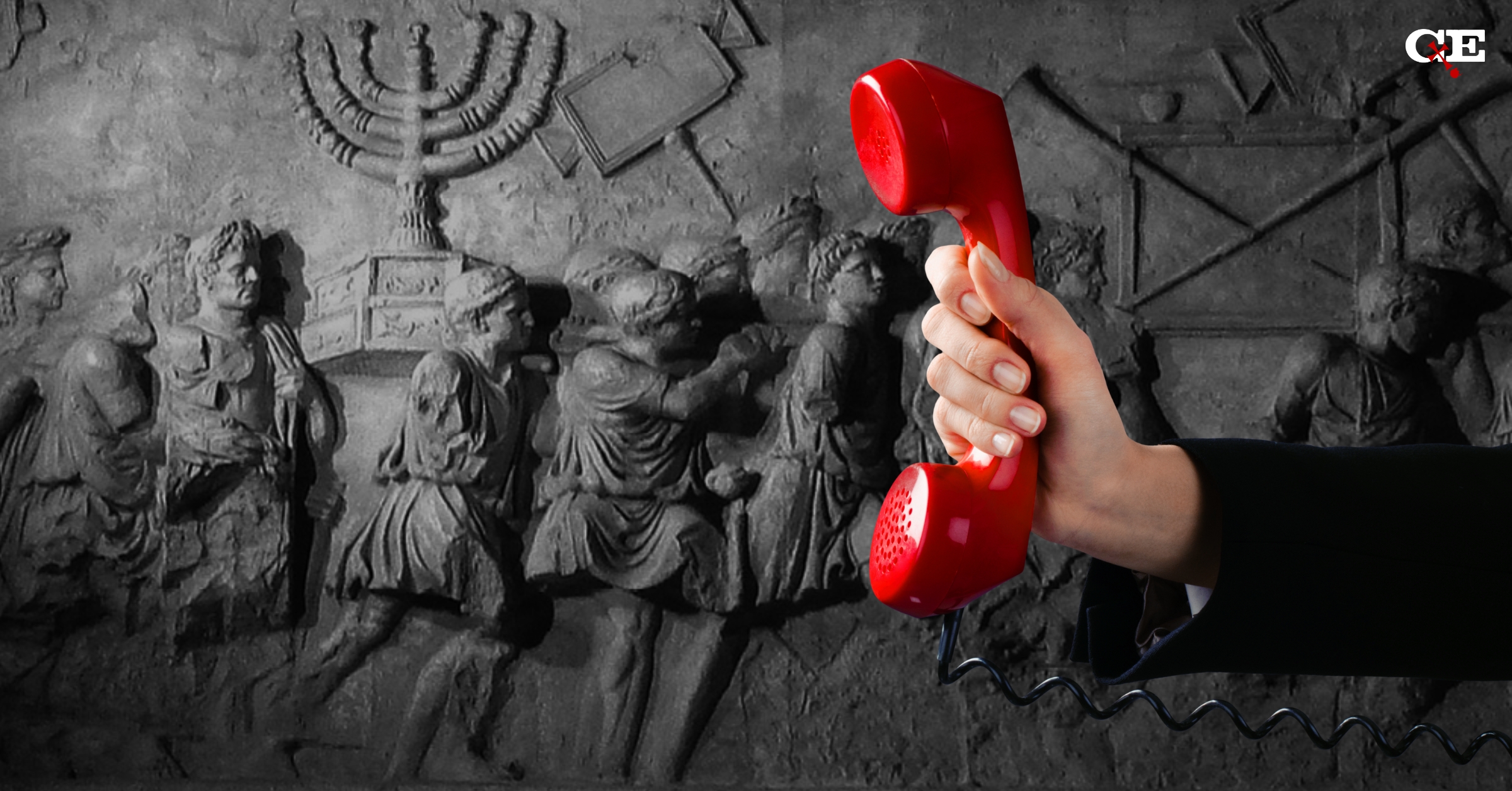
Bart Ehrman generally agrees with this view accusing the writers of the NT of not being reliable and the Gospel accounts being recorded as people were playing a telephone game. He states,

Nearly all of these storytellers had no independent knowledge of what really happened [to Jesus]. It takes little imagination to realize what happened to the stories. You are probably familiar with the old birthday party game ‘telephone.’ A group of kids sits in a circle, the first tells a brief story to the one sitting next to her, who tells it to the next, and to the next, and so on, until it comes back full circle to the one who started it. Invariably, the story has changed so much in the process of retelling that everyone gets a good laugh. Imagine this same activity taking place, not in a solitary living room with ten kids on one afternoon, but over the expanse of the Roman Empire (some 2,500 miles across), with thousands of participants.”[iii]

Ehrman’s analogy might seem appealing to some people; however, the question that we should investigate is whether preserving history in an oral culture is like a telephone game, as Ehrman claims.

What Is Oral Culture?

Oral culture is a term that refers to preliterate cultures to characterize the thought and expressions that carry over into manuscript and print culture. People talk to one another about certain events until these events are written. Robert Cochran makes a distinction between oral culture and oral history. He states, “Oral culture is culture based on the spoken rather than the written word; oral history is a record of the past based on spoken accounts.” [iv] In our times, an estimated one billion people do not know how to read or write any language, and so they live in what we call oral culture. [v]

It is important to explain also what oral tradition is not. According to Lynne Kelly, oral tradition is “not teaching how to hunt or how to gather during daily excursions. It is not about stories casually told around the campfire at night – these are more folk tale than myth and are usually for children. Oral tradition is about formal knowledge, about the way oral cultures store, maintain and transmit knowledge which is central to their physical and social worlds.” [vi] In other words, oral cultures are not a bunch of savages uneducated societies. They are people whose lack of written language and advanced education forced them to find alternative ways to remember and record their history accurately and reliably.

How Do Oral Cultures Save Their Knowledge?

Literate cultures record their knowledge on paper, books, or electronically. If they cannot write, then the knowledge must be committed to memory—practiced, repeated, and saved for future use in human memory. According to Kelly, the way formal knowledge is stored in literate culture is similar to oral culture,

We can assume that the individuals within oral cultures have the same range of intellectual potential, physiology and memory ability that has been typical of all humans for at least the last few millennia. We need to look beyond superficial differences and accept our similarities. It is only when the complexity of oral tradition is acknowledged that the control of knowledge can be seen as a tool for power. [vii]

People who lived under oral culture were also human beings with the same abilities to find accurate ways to record and pass on their knowledge.

Different elements were used to save knowledge in oral cultures, such as repetitions, rhythm, poetry, narratives, and stories that were transmitted in social gatherings. De Costa adds that “in oral cultures many constructions are aggregative rather than analytic, that is to say, remembered information is not systematized individually but in groups or series of related groups by means of parallelisms, antitheses, and epithets.” [viii]

So, oral cultures created and used different methods to repeat information and learn it. Basic knowledge is acquired in daily interaction to learn what is appropriate and how someone should act in a certain circumstance, and Specialized knowledge is acquired by participating in ceremonies and discussions with elders. [ix] This is why early Christians formed liturgy and creeds. The whole purpose was to keep repeating the basics of their faith over and over so it is not forgotten.

Is All Oral History Mixed with Myths?

The ancient Near Eastern civilization left one of the oldest writings (cuneiform), which included different information, such as migrations of people, chronology of political states, foreign relations, internal governance, legal institutions, and official acts. [x] Moreover, a variety of inscriptions from different places in the world distinguish between mythical, folklore, historical, political, and religious. Wiessner notes that the Enga of Papua New Guinea distinguishes clearly between myth and historical traditions. [xi] Historical information includes news about “wars, migrations, agriculture, the development of cults and ceremonial exchange networks, leadership, trade, environmental disasters, and fashions in song and dress.” [xii] In other words, because of inscriptions, historians are able to differentiate between myths and other genres, which is a piece of evidence that not all oral tradition is mixed with myths.

Were The Gospels Written According to the Telephone Game?

The majority of first-century Middle Easterners were literate people who lived in oral cultures. The New Testament was written within the first century after the death of Christ. The first written book of the NT was the First Letter to the Corinthians, which Paul wrote AD 53-55. The Gospels were written between AD 70-95, about 40-65 years after the death of Jesus. According to Bart Ehrman, this period of time is enough for people to forget what Jesus had said and done, and consequently, corrupt the Gospels.

The Purpose of the Telephone Game vs. Written Oral History

As per the previous information about oral tradition, it seems that Bart Ehrman has not done a good job investigating the culture of the first-century Middle East; otherwise, he would not have depicted the process of writing the NT books to the telephone game. The purpose of the telephone game is totally different from the purpose of written oral history. The purpose of the telephone game is to have fun, so people purposely disrupt the process of communication to laugh at the end results. Writing the Gospels tradition was precisely the opposite. The men of God wrote purposely to preserve the words and deeds of Jesus from disruption (Luke 1:1-4).

One-Way Chain of Communication

I am not sure if first-century people played the telephone game; however, this game represents a single one-way chain of communication, whereas, oral tradition is like a web or network. It does not pass information from one person to another person, but it passes information from many people to many people. When Paul wrote his first letter to the Corinthians, there were many people alive who witnessed and testified Jesus resurrected and ascended to heaven, and there were multiple opportunities for skeptics to investigate: “Did this really happen?” (1 Cor 15:6).

Liberal scholars who support Ehrman’s theory believe that “oral history reveal that cultures do not tend to remember events over much more than two generations and that memories ‘become increasingly inaccurate until they are so corrupt that they can hardly be distinguished from myth.”[xiii] If a generation lives for 20-30 years, and information is corrupted after the second generation, then it is reasonable to conclude that the NT books are reliable by secular standards because they were written within the first two generations after the death of Jesus.

Conclusion

It is simply impossible for any culture to retain all their knowledge without some formal information system. Therefore, literate cultures came up with ways to retain information, such as repetition in special ceremonies, conversations with elders, and social gatherings to pass on their knowledge. If Western culture found different ways to store information, that does not mean Eastern and Middle Eastern cultures have never done so. Further study of oral culture tradition shows that depicting the process of writing the NT books with telephone games is emphatically wrong.

References:

[i] Paul Ricoeur, Time and Narrative, Trans. K. McLaughlin and D. Pellauer, vol. 3, (Chicago: University of Chicago Press, 1984– 1988), 190-192.

[ii] Jens Schröter, From Jesus to the New Testament: Early Christian Theology and the Origin of the New Testament Canon, (Waco: Baylor University Press, 2013), 34.

[iii] Bart Ehrman, The New Testament: A Historical Introduction to the Early Christian Writings, 5th ed. (New York: Oxford University Press, 2012), pp. 72-74.

[iv] Robert Cochran, “Oral History and Oral Culture,” In The Encyclopedia of Literary and Cultural Theory, ed. Michael Ryan, 2011.

[v] Thomas Farrell, J. “Oral Culture,” in The Cambridge Encyclopedia of the Language Sciences, ed. Patrick Colm Hogan, (Cambridge University Press, 2011).

[vi] Lynne Kelly, Knowledge and Power in Prehistoric Societies: Orality, Memory and the Transmission of Culture (Cambridge: Cambridge University Press, 2015), 15.

[vii] Ibid.

[viii] Elena De Costa, “Orality,” in Concise Encyclopedia of Latin American Literature, ei. Verity Smith, ed. Routledge, 2000.

[ix] J. Goody, The Interface Between The Written And The Oral (Cambridge University Press, Cambridge,1987), 156-7.

[x] J. Puhvel, “epigraphy,” Encyclopedia Britannica, accessed, July 28, 2024. https://www.britannica.com/topic/epigraphy.

[xi] P. Wiessner, “The vines of complexity: egalitarian structures and the institutionalization of inequality among the Enga,” Current Anthropology, vol. 43, no. 2, (2002): 233–69

[xii] Ibid, 237.

[xiii] Richard Bradley, “The Translations of Time,” in RM, Van Dyke & SE Alcock, eds., Archaeologies of memory, Blackwell, (2003): 221–7.

Recommended Resources:

Why We Know the New Testament Writers Told the Truth by Frank Turek (mp4 Download)

The Top Ten Reasons We Know the NT Writers Told the Truth mp3 by Frank Turek

The New Testament: Too Embarrassing to Be False by Frank Turek (DVD, Mp3, and Mp4)

Cold Case Resurrection Set by J. Warner Wallace (books)   


Sherene Khouri was born into a religiously diverse family in Damascus, Syria. She became a believer when she was 11 years old. Sherene and her husband were missionaries in Saudi Arabia. Their house was open for meetings, and they were involved with the locals until the government knew about their ministry and gave them three days’ notice to leave the country. In 2006, they went back to Syria and started serving the Lord with RZIM International ministry. They traveled around the Middle Eastern region—Turkey, Jordan, Egypt, Lebanon, Syria, and United Arab Emirates.

Sherene was also involved in her local church among the young youth, young adults, and women’s ministry. In 2013, the civil war broke out in Syria. Sherene and her husband’s car was vandalized 3 times and they had to immigrate to the United States of America. In 2019, Sherene became an American citizen.

Sherene is an Assistant Professor at Liberty University. She teaches Arabic, Religion, and Research classes. Additionally, she holds a Ph.D. in Theology and Apologetics, M.A. in Christian Apologetics from Liberty University, and B.S. in Biblical Studies from Moody Bible Institute. Currently, Sherene is also working on a Master of Theology in Global Studies at Liberty University and M.A. in Arabic and linguistics from PennWest University.

Original Blog Posting: https://bit.ly/3ZQetUT

 

By Erik Manning

When it comes to miracles, Christians are often accused of special pleading. We’re quick to accept Christian miracle claims, but we suddenly turn into Richard Dawkins when it comes to miracle claims made by other religions. Why should skeptics start investigating the resurrection of Jesus when we don’t give other miracles the time of day? The truth is that there are dozens of different religions and thousands of miraculous claims out there. So how can the Christian hope to use miracles as an argument for their faith?

But the fact that there are miracle claims in other religions doesn’t require us to dismiss all miracle claims out of hand. Nor is it necessary for us to be haplessly credulous about all historical miracle claims. There’s a middle way. Before examining miracle claims in detail, we can and should run them through a religiously-neutral evidential filter. Failure to pass through such a filter wouldn’t necessarily prove that the miracle didn’t occur, but it does give us reasons to doubt it. From there we can move on to more promising candidates and not waste our time.

So what filter do I have in mind? Dr. Tim McGrew proposed a 6-point DOUBTS filter in his debate with Zachary Moore. DOUBTS is a backronym because Dr. McGrew is a philosophy professor, and well, teachers can’t resist making backronyms. McGrew has co-written the chapter on The Argument from Miracles in the Blackwell Companion to Natural Theology, as well as the entry for Miracles in The Stanford Encyclopedia of Philosophy, so he’s a bit of a subject matter expert here. Let’s take a look at his filter.

D – DISTANT EVENTS

For starters, the D in DOUBTS stands for distant events. When the first report of a miracle is made only at a significant distance from the alleged event, we have reasons to doubt. So for example, a 2nd-century Greek writer named Philostratus reports that Apollonius of Tyana worked all kinds of wonders. The problem is that many of these wonders often allegedly happened in India, while Philostratus was writing in Greece some 3500 miles away. This is like that socially awkward guy who claims he’s dating a really hot girl who no one has seen from Canada. We have reason to be skeptical.

O – OPINIONS ALREADY ESTABLISHED

The O in DOUBTS stands for opinions already established. When miracles confirm or affirm established opinions and prejudices, we have some reasons to be skeptical. So for example, we have reason to doubt Brigham Young’s claim that Joseph Smith walked house-to-house healing a large group of his followers from malaria while living in Illinois. Young was Smith’s predecessor and had already recognized him as God’s special prophet. There are few details in the reports, and the people who preserved them weren’t initially suspicious. They might have credulously latched onto any flimsy claim made about Smith.

U – UNCERTAIN EVENTS

Next up is U – uncertain events. Granting that the event really happened, if it can be explained without implausibility that it was a natural event, we have reasons to be skeptical. If certain saints were said to levitate but clever illusionists can replicate this trick, chances are it wasn’t a miracle. Or for another example, the Talmud tells us about Honi the Circle Drawer. When rain did not come well into the winter, Honi drew a circle in the dust and sat inside it. He then told God that he would not move until it rained. And what do you know–it began to rain. Yet I think we’re all pretty experienced with rain and how it comes and passes. While this could be a miraculous answer to prayer, this also could’ve just been a coincidence and a fully natural occurrence. It’s an uncertain event and nothing on the same level as, say, someone being raised from the dead.

B – BELATED REPORTS

Moving on to B – belated reports. When the first report of a said miracle comes long after the event, we have some serious reasons to be skeptical. Let’s go back to our buddy Apollonius of Tyana. Philostratus wrote his biography 100 years after Apollonius was dead. That’s obviously a long time and any alleged eyewitnesses would’ve long been dead. Or we have the resurrection stories about St. Nicolas. Reportedly there was a horrible famine, an evil butcher lured three children into his house, killed them and pickled them. This baddy was planning to try and pass them off as cured ham. Gross stuff. Saint Nicolas saw through this scheme and allegedly resurrected the kids by making the sign of the cross. The problem is this story was first circulated in Medieval times, hundreds of years after St. Nick was dead.

T – TRIVIAL MIRACLES

Let’s now move on to the T in the DOUBTS filter – Trival miracles. These would be reports of miracles that are unconnected to any significant purpose. They make no real difference to our lives. The basic idea is captured by the Roman poet Horace when he wrote: “Let a god not intervene unless it’s a knot worthy of a god’s untying.” You’ll often hear skeptics ask crazy things like: “well, if I told you that I have a friend who flew around the room by flapping his arms, died, rose again and turned my sofa into a donkey all in one evening, would you believe me?” Well, why would God be behind something like that? What deep questions about our destiny does this answer, or what striking doctrines would this confirm? Even if such a story happened, what claim does this supposed miracle make on my life? At the most, this flying man might cause me to conclude that the world is a stranger place than I initially imagined. Such an event serves no significant purpose.

S – SELF-SERVING MIRACLES

Finally, we’ve reached the S in the DOUBTS filter. The S stands for self-serving miracle claims. When a supposed miracle serves obvious human motivations like sex, political power, greed, a lust for fame then there’s a huge reason to doubt such a miracle claim. Indian guru Sathya Sai Baba allegedly miraculously manifested clocks and watches but was accused of sexual abuse, money laundering, among other things. The Mormon founder Joseph Smith had ambitions to be the President of the United States and married over 40 different women. There are reasons to think there’s something fishy going on with his so-called revelations.

A PERSONAL CRITERION I’D ADD – V – VAGUENESS.

Granted, this takes away the coolness of the backronym but I’d add vague reports to the criteria. So for example, after apostatizing from the Mormon church and denying that Joseph Smith was a prophet, Fanny Stenhouse recorded an experience in which she said she saw Smith miraculously heal an old woman named Sister Armstrong who had been bedridden for years. In her account, Stenhouse says that this was not a fake healing. However, she attributes it to “animal magnetism” and not directly associated with God. But that’s all we have is something rather brief in her biography, there’s not a lot of details in the report. We’d have to know a lot more about what was wrong with the old woman, why she was bedridden, and what Smith did to believe it was a genuine miracle. It’s a vague report.

I think this is where we need to be careful as Christians, too. If we just rely on 1 Corinthians 15:3-7 to carry the load for our resurrection apologetic, we give vague evidence that isn’t detailed enough to warrant justified belief. Brief and confusing episodes are arguably compatible with 1 Corinthians 15:3-7 as I’ve argued here. We need the detailed, multisensory, time-extended experiences that we read about in the Gospels to make a strong case.

IS THE RESURRECTION OF JESUS WORTHY OF OUR INVESTIGATION?

Remember that any miracle claim that fails on one or more of these criteria might still be true, but these give us a reasonable basis to not investigate them. I’d argue that the resurrection of Jesus doesn’t run afoul of any of the criteria. Without the aid of a miracle, crucified and buried dead men tend to stay dead. It’s not an uncertain event. The resurrection was proclaimed in the streets of Jerusalem, within weeks after the crucifixion. The disciples stayed in Jerusalem, the very city where Jesus was crucified (Galatians 2:1,9) even when the church came under heavy persecution. (Acts 7, 12)

For the disciples to preach this so soon after Jesus’ execution that their religious leaders set up was to invite the same type of persecution. They could have waited until things calmed down. But they did not. Peter shifted from denying Jesus to boldly proclaiming his resurrection just 50 days after Jesus was murdered. (Acts 2:22-24). The enemies of Christianity had the means, motive, and opportunity to discredit the story. Jesus claimed that he was the Giver of eternal life, so there’s nothing trivial about this claim.

For more details, see this video:

THE TEXAS SHARPSHOOTER FALLACY?

The skeptic might then ask: aren’t these criteria then a bit self-serving for Christians? As a believer, Dr. McGrew obviously believes the resurrection passes this filter. So isn’t this an example of the Texas Sharpshooter fallacy? For those of you who don’t know, the Texas Sharpshooter fallacy is where one cherry-picks a data cluster to suit your argument, or finds a pattern to fit a presumption. I don’t believe that’s the case here.

For starters, this criteria cuts against miracle claims that I’d accept. Since I believe in the inspiration of Scripture, I accept that Balaam’s donkey spoke. But I am not asking a skeptic to start their historical investigation there and I think they’re not unreasonable if they’re skeptical that such an event happened. Remember that these criteria are religiously neutral. They’re obviously sensible and keep one from wasting their time chasing after unpromising claims. Each criteria reduces the probability that a genuine miracle occurred, so a skeptic should like them. If one wants to add to this criteria, I’m all ears. I’d personally add that in the case of modern miracles where the person is still alive, medical data would be something I’d like to see.

These criteria should be embraced by the skeptic because it gives them the opportunity to say that they’re not dogmatically rejecting all miracle claims out of hand. I hope this helps show that Christians aren’t necessarily guilty of special pleading. Maybe we reject miracle claims in other religions because they’re often poorly attested.

Recommended resources related to the topic:

Why We Know the New Testament Writers Told the Truth by Frank Turek (mp4 Download)

The Top Ten Reasons We Know the NT Writers Told the Truth mp3 by Frank Turek

_____________________________________________________________________________________________________________________________________________________

Erik is a Reasonable Faith Chapter Director located in Cedar Rapids, Iowa. He’s a former freelance baseball writer and the co-owner of a vintage and handmade decor business with his wife, Dawn. He is passionate about the intersection of apologetics and evangelism.

Original Link: https://bit.ly/3LHIEDk


By Ryan Leasure  

This article is part 5 in a nine-part series on how we got our Bible. Part 1 considered inspiration and inerrancy. Part 2 looked at the unfolding of the Old Testament. Part 3 examined the Old Testament canon and the Apocrypha. Part 4 considered the canonical attributes for New Testament books. This article will unpack how the early church received the New Testament canon.

Marcion (AD 85-160)

Before diving into the the corporate reception of the canon, it’s first necessary to say a brief word about Marcion. According to church historian Henry Chadwick, Marcion was “the most radical and to the church the most formidable of heretics.”[1] What was Marcion’s heresy? He promoted Gnosticism—the belief that the god who created the world was evil, and thus the OT was evil. This belief led Marcion to reject the entire OT and most parts of the NT which spoke positively of the OT.

Therefore, Marcion’s canon included a mutilated version of Luke which left out all positive references to the OT as well as any hints that Jesus might have actually been a physical human. Gnosticism, after all, taught that the physical world was evil. Jesus, then, only appeared to be human—a view known as Docetism.

The Church universally rejected Marcion. Not one church Father has anything remotely positive to say about him. In fact, after Marcion made a sizable donation to the church in Rome, they returned it to him after they learned of his heretical views.

When did the Church Receive the Canon?

Marcion’s so-called canon suggests that the church already had some kind of functional canon by the middle-part of the second century. Which raises a significant question: When did the Church receive the NT canon? One’s answer to this question depends largely on how they define the canon. Michael Kruger gives three definitions:[2]

Exclusive Canon — The church solidified the canonical boundaries in the fourth century.

Functional Canon — The core canonical texts were functioning authoritatively by the second century.

Ontological Canon — The texts were authoritative as soon the apostles finished writing them.

The rest of this post will focus mostly on the functional canon and a little on the exclusive canon. For more on the ontological canon, see the first post in this series on the inspiration of biblical texts. In that article, I draw attention to the fact that the biblical authors were aware that they were writing authoritative Scripture.

The Reception of the New Testament Canon

In the remaining space, I’m going to argue that the church recoginzed most of the NT as authoritative by the second century. The church later affirmed the fringes of the canon in the fourth century. To support this claim, I will consider four key points.

1. Statements by Church Fathers

Several statements from the church fathers suggest that they recognized certain texts as authoritative. Irenaeus (AD 180), for example, notes, “It is not possible that the gospels can be either more or fewer than the number they are. For since there are four zones of the world in which we live and four principle winds . . . [and] the cherubim, too were four-faced.”[3] While we may scratch our heads at Irenaeus’ logic, one thing is for certain: He believed that four and only four Gospels were authoritative.

Justin Martyr (AD 150) also recognized their authority when he mentioned that the church was reading these texts in corporate worship alongside the OT. He remarks, “And on the day called Sunday, all who live in cities or in the country gather together in one place, and the memoir of the apostles or the writings of the prophets are read, as long as time permits.”[4] No one questions whether the early church recognized the authority of the OT. The fact that they were reading NT texts alongside the OT suggests they believed both were Scripture.

Ignatius (AD 110) recognizes the apostles’ authority verses his own when he said, “I am not commanding you as Peter and Paul did. They were apostles, I am condemned.”[5] Ignatius was an influential church leader in the second century. But even he recognized that Peter and Paul’s writings were on a whole other level from his own.

As you peruse the early church fathers, you will find several quotes referencing the authority of the NT texts.

2. Appeals to Texts as Scripture

Not only do the early church fathers state that the New Testament texts were authoritative, they also appeal to them as divinely inspired Scripture. The Epistle of Barnabas (AD 130), for example, uses the formula “it is written” when it quotes from the Gospel of Matthew. It’s well-noted that the NT authors frequently employ this formula when they quote an OT text. The Epistle of Barnabas reads, “As it is written, ‘Many are called, but few are chosen.’”[6]

Polycarp (AD 110) makes an even more explicit reference. He notes, “As it is written in these Scriptures, ‘Be angry and do not sin and do not let the sun go down on your anger.”[7] Interestingly, Polycarp quotes two texts and refers to them both as “Scripture.” The first text was Psalm 4:5, and the second was Ephesians 4:26.

In fact, by the middle to end of the second century, a few well-known church fathers appeal to a core set of canonical books, indicating that they believed those books were in fact Scripture. Irenaeus appeals to the following books as Scripture:

Matthew, Mark, Luke, John, Acts, Romans, 1 Corinthians, 2 Corinthians, Galatians, Ephesians, Philippians, Colossians, 1 Thessalonians, 2 Thessalonians, 1 Timothy, 2 Timothy, Titus, Hebrews, James, 1 Peter, 1 John, 2 John, and Revelation.[8]

Only Philemon, 2 Peter, 3 John, and Jude are missing.

Similarly, Clement of Alexandria appeals to the following books as Scripture:

Matthew, Mark, Luke, John, Acts, Romans, 1 Corinthians, 2 Corinthians, Galatians, Ephesians, Philippians, Colossians, 1 Thesalonians, 2 Thessalonians, 1 Timothy, 2 Timothy, Titus, Philemon, Hebrews, 1 Peter, 1 John, 2 John, Jude, and Revelation.[9]

Only James, 2 Peter, and 3 John are missing.

Around AD 250, Origen gives us a complete canonical list in his homily on Joshua. Notice carefully all the books that he references:

But when our Lord Jesus Christ comes, whose arrival that prior son of Nun designated, he sends priests, his apostles, bearing “trumpets hammered thin,” the magnificent and heavenly instruction of proclamation. Matthew first sounded the priestly trumpet in his Gospel; Mark also; Luke and John each played their own priestly trumpets. Even Peter cries out with trumpets in two of his epistles; also James and Jude. In addition, John also sounds the trumpet through his epistles [and Revelation], and Luke, as he describes the Acts of the Apostles. And now that last one comes, the one who said, “I think God displays us apostles last,” and in fourteen of his epistles, thundering with trumpets, he casts down the walls of Jericho and all the devices of idolatry and dogmas of philosophers, all the way to the foundations.[10]

You’ll notice that Origen attributes fourteen letters to Paul instead of thirteen. The most likely explanation for this error is the common belief that Paul wrote the book of Hebrews.

3. Manuscript Evidence

One of the best indications that the NT books functioned authoritatively in the second and third century is the amount of extant manuscripts we have in our possession. As of right now, we have over sixty NT manuscripts from the second and third century. The Gospel of John has the most with eighteen. Matthew comes in second with twelve. By comparison, we have seventeen  second and third century manuscripts of all the apocryphal texts combined. In other words, we have more manuscripts of John than all the apocryphal books put together. The most manuscripts for any apocryphal text is the Gospel of Thomas which has three.

The amount of extant manuscripts indicates which books the church used most often. John and Matthew were apparently the two most popular books in the early church based on the number of extant manuscripts in our possession. The fact that we have hardly any apocryphal manuscripts indicates that the early church didn’t have much use for them.

Also of note is the fact that all of the second and third century New Testament manuscripts are in a codex format (precursor to modern books). None are on a scroll. That said, the scroll was the most popular book form of the second and third century. Over time, as Christianity grew, codex became the dominant book form in the ancient world.

While none of the New Testament texts are on a scroll, apocryphal texts are. Furthermore, because the codex allowed the church to conveniently place several books into a single codex, we have several codices with multiple Gospels and Paul’s letters. P46, for example, is a collection of nine of Paul’s letters. P75 contains Luke and John. P45 is a four Gospel codex. We don’t have a single codex which combines canonical and apocryphal gospels. In other words, no manuscript has Matthew, Mark, Luke, John, and Thomas. The manuscripts tell us all we need to know about which books the early church thought were authoritative.

4. Canonical Lists

In 1740, Lodovico Antonio Muratori published a Latin list of NT books known as the Muratorian Fragment. This fragment contains an early canonical list that most trace back to the second century church in Rome. The canon includes the following books:

Matthew, Mark, Luke, John, Acts, Romans, 1 Corinthians, 2 Corinthians, Galatians, Ephesians, Philippians, Colossians, 1 Thessalonians, 2 Thessalonians, 1 Timothy, 2 Timothy, Titus, Philemon, 1 John, 2 John, Jude, and Revelation.

Only Hebrews, James, 1 Peter, 2 Peter, and 3 John are missing. This list, along with the lists from the early church fathers, indicates that the second century church recognized a core group of canonical books by the middle to late second century. Only a few fringe books are missing. As time progressed, the church eventually affirmed the twenty-seven book canon that we have today.

Around AD 320, church historian Eusebius gave a canonical list that he subdivided into four categories:[11]

Recognized Books: Eusebius remarks that these books were universally accepted.

Matthew, Mark, Luke, John, Acts, Romans, 1 Corinthians, 2 Corinthians, Galatians, Ephesians, Philippians, Colossians, 1 Thessalonians, 2 Thessalonians, 1 Timothy, 2 Timothy, Titus, Philemon, Hebrews, 1 Peter, 1 John, and Revelation

Disputed Books: Eusebius remarked that these books were “disputed yet known by most.”

James, 2 Peter, 2 John, 3 John, and Jude

Spurious Books: Eusebius notes that these were books that the early church found helpful, but they weren’t Scripture.

Acts of Paul, Shepherd of Hermes, Revelation of Peter, Epistle of Barnabas, Didache, and Gospel of Hebrews

Heretical Books: Eusebius says these books have been universally rejected.

Gospel of Peter, Gospel of Thomas, Acts of Andrew, Acts of John, and Gospel of Matthias

Notice that between the recognized and disputed books which were “known by most,” the entire New Testament canon is present. Also worth noting is that Eusebius believed the heretical books were utterly repulsive. Consider his words:

we have felt compelled to give this catalogue in order that we might be able to know both these works and those that are cited by the heretics under the name of the apostles, including, for instance, such books as the Gospels of Peter, of Thomas, of Matthias, or of any others besides them, and the Acts of Andrew and John and the other apostles, which no one belonging to the succession of ecclesiastical writers has deemed worthy of mention in his writings. And further, the character of the style is at variance with apostolic usage, and both the thoughts and the purpose of the things that are related in them are so completely out of accord with true orthodoxy that they clearly show themselves to be the fictions of heretics. Wherefore they are not to be placed even among the rejected writings, but are all of them to be cast aside as absurd and impious.

In other words, these books didn’t “almost” make it into the canon. The canon didn’t come down to an arbitrary vote. The church rejected these books from a very early time due to their devilish nature.

Following Eusebius, Athanasius gave a complete canonical list with all twenty-seven books in AD 367. In AD 393 and 397, the Councils of Hippo and Carthage also affirmed the twenty-seven books in the canon.

Recognized Not Determined

In closing, I want to make an important point. The church did not grant authority to any NT text. It merely recognized which books were already authoritative in the church. As J. I. Packer helpfully states, “The Church no more gave us the New Testament canon than Sir Isaac Newton gave us the force of gravity. God gave us gravity . . . Newton did not create gravity but recognized it.”

In the next post, we will transition to the preservation of the NT text. Specifically, we will take a look at the manuscript tradition and textual criticism.

References

[1] Henry Chadwick, The Early Church, 39.

[2] Michael Kruger, The Question of Canon, 29-46.

[3] Irenaeus, Against Heresies, 3.11.8.

[4] Justin Martyr, First Apology, 67.3.

[5] Ignatius, Romans. 4:4.

[6] Epistle of Barnabas 4.14.

[7] Polycarp, Philippians, 12.1.

[8] Michael Kruger, Canon Revisited, 228.

[9] Michael Kruger, The Question of Canon, 168.

[10] Origen, Homily on Joshua 7.1.

[11] Eusebius, Church History, 3.25.1-7.

Recommended resources related to the topic:

Why We Know the New Testament Writers Told the Truth by Frank Turek (DVD, Mp3 and Mp4) Jesus, You and the Essentials of

Christianity by Frank Turek (INSTRUCTOR Study Guide), (STUDENT Study Guide), and (DVD)       Cold-Case Christianity: A Homicide

Detective Investigates the Claims of the Gospels by J. Warner Wallace (Book)

_____________________________________________________________________________________________________________________________________________________

Ryan Leasure holds a Master of Arts from Furman University and a Masters of Divinity from the Southern Baptist Theological Seminary. Currently, he’s a Doctor of Ministry candidate at the Southern Baptist Theological Seminary. He also serves as a pastor at Grace Bible Church in Moore, SC

Original Blog Source: https://bit.ly/3KTGEHP