Tag Archive for: Natasha Crain

By Natasha Crain

Regret.

It’s something I often hear from parents who are heartbroken that their teen or adult kids have walked away from Christianity.

Whether it’s through one of my online books read along groups, private emails, blog comments, Facebook messages, or at speaking events, when parents reach out to me about their kids walking away from faith, their words are laced with painful sadness and a sense that they in some way failed.

My kids are still young (ages 9 and 7), so I haven’t faced this myself, but I relate to these parents because I have so often experienced my own sense of parenting failure.

I haven’t shown enough patience, and I see them exhibiting their own impatience.

I haven’t given them enough conflict resolution skills, and I see them argue constantly.

I haven’t spent enough time showing them how to serve others, and I see them lacking perspective on how to live out their faith.

As a parent, there are so many I haven’ts. And there will always be, because none of us are perfect. We cannot flawlessly deliver all that our kids need. But there’s something about I haven’t that implies opportunity.

I haven’t implies I haven’t yet.

When our kids leave home, however, those I haven’ts will cement into regretful I didn’ts.

As Christian parents, there should be nothing more important to us than raising our kids to know and love Jesus. How could there be something more important if our kids’ relationship with Jesus has eternal implications? Yet we have to recognize that we don’t control whether or not our kids become Christ-followers. The heavy burden of I didn’ts that so often comes with a child’s rejection of faith must be tempered with grace and placed at the foot of the cross.

At the same time, parents with kids still at home can’t ignore the fact that there is much we can do to help our kids develop a lasting faith. We are called to actively disciple our kids (Deuteronomy 6)—not to sit back and see what happens. We should focus on what we can control and give the rest to God.

With that in mind, there are many regrets we can purposefully avoid. They are things that we largely have in our control and that we should be able to reasonably identify as responsibilities long before I didn’t becomes a reality. Here are five you don’t want to have if your kids walk away from faith. Unfortunately, they are five I hear from parents far too often.

  1. You didn’t give them a deep enough understanding of Christianity.

Research has shown time after time that at least 60 percent of kids who grew up in church walk away from their faith by their early 20s (here is an excellent summary of the studies). Don’t be jaded by the numbers—that is a crazy statistic.

Young people often turn away from Jesus, however, with a flawed understanding of the nature of truth, what Christianity even is, and what the Bible teaches.

They think that Christianity requires blind faith; that a person must choose between faith and science; that Christianity basically boils down to living with “good values”; that Christians think they’re better than others; that Christians aren’t loving if they declare something is sinful according to the Bible; and much more.

How sad to think that many turns away from what they think is Christianity, but is actually only a caricature of it based on layers of misunderstandings built from popular culture over time.

One of the most important things we can do as parents is to ensure our kids deeply understand what, exactly, Christianity is—and isn’t. This requires us to 1) study the Bible deeply with our kids and 2) be educated on how the world gets Christianity wrong so we can proactively correct those misunderstandings with our kids.

If my kids reject their faith, I want to know that they accurately understand what they’re rejecting.

  1. You didn’t expose them to the claims of skeptics.

A lot of parents are overwhelmed at the thought of helping their kids learn the case for Christianity and how to defend their faith against the seemingly ubiquitous challenges today.

Where do you start? Where do you end? How can you cover it all? How can kids ever really be sufficiently prepared? How can we even be prepared ourselves?

But here’s what you need to know: Helping your kids develop a faith that’s prepared for today’s challenges is not a nebulous, impossible task.

Skeptics make a predictable set of claims, so we have a pretty specific agenda we should be covering with our kids over time. Think of it like helping them study for a test. You might not be able to anticipate every conceivable question they’ll get, but you can make sure they know what major subject areas they’ll encounter and how to think through the most important questions in those areas. They’re not venturing out into a completely wild blue yonder. This test can be studied for.

If my kids reject their faith, I want to know that it’s not because they were taken aback by shocking claims they hadn’t heard first from me.

  1. You didn’t make enough time for conversations about faith.

In their research for the book Sticky Faith, Kara Powell, and Chap Clark surveyed 11,000 church-going teenagers and asked how many of them talk with their parents about faith. They found that only 12% of kids talk regularly with their mom about faith and 5% with their dads.

What a devastating fact.

How can we help kids navigate the complexities of faith in a challenging world if we’re having zero or few conversations about it with them? Let’s be clear: This is completely in our control. It’s simply a matter of prioritizing the time needed and learning what conversations need to be had.

If my kids reject their faith, I want to know that it’s not because I didn’t invest time consistently and continually in having meaningful and relevant spiritual conversations with them.

  1. You relied on the church to develop their spiritual life.

Being part of a fellowship with other believers is an important part of Christian life. But there’s no question that simply getting your kids to church each week is not enough to prepare them to be independent followers of Jesus—especially in a challenging world like this. Parents must accept responsibility as the primary spiritual influencer in the life of their child.

If my kids reject their faith, I want to know that it’s not because I delegated the responsibility of spiritual discipleship to the church.

  1. You focused more on raising kids with “good values” than raising kids with Jesus.

This might be one of the mantras of this blog given how much I repeat it, but it’s so important, I need to say it over and over: good values are not the same as Christianity. None of us want to raise kids who are little terrors in the world. We want them to be pleasant people who generally exhibit what the Bible identifies as fruits of the Spirit—love, joy, peace, patience, kindness, goodness, faithfulness, gentleness, and self-control. It’s easy to forget, however, that those qualities are fruits of the Spirit, not fruits of how hard we try. They are the outcome of a Spirit-filled life: the fruit, not the root.

If we focus on raising kids who are simply “good people” (by whatever behavioral definition you want to assume), and not on raising kids who love Jesus as the root of the fruit, we’re just raising future secular humanists.

If my kids reject their faith, I want to know that it’s not because they believed good values were pretty much the same as Christianity and eventually decided they didn’t Jesus.

If these points raise some I haven’ts for you, take a moment to consider right now what needs to change. Know that they don’t have to become I didn’ts. And rest in the peace of knowing you’re not responsible for your child’s ultimate decision to follow Jesus, but rather for being obedient to your calling as the primary spiritual influencer in your child’s life.

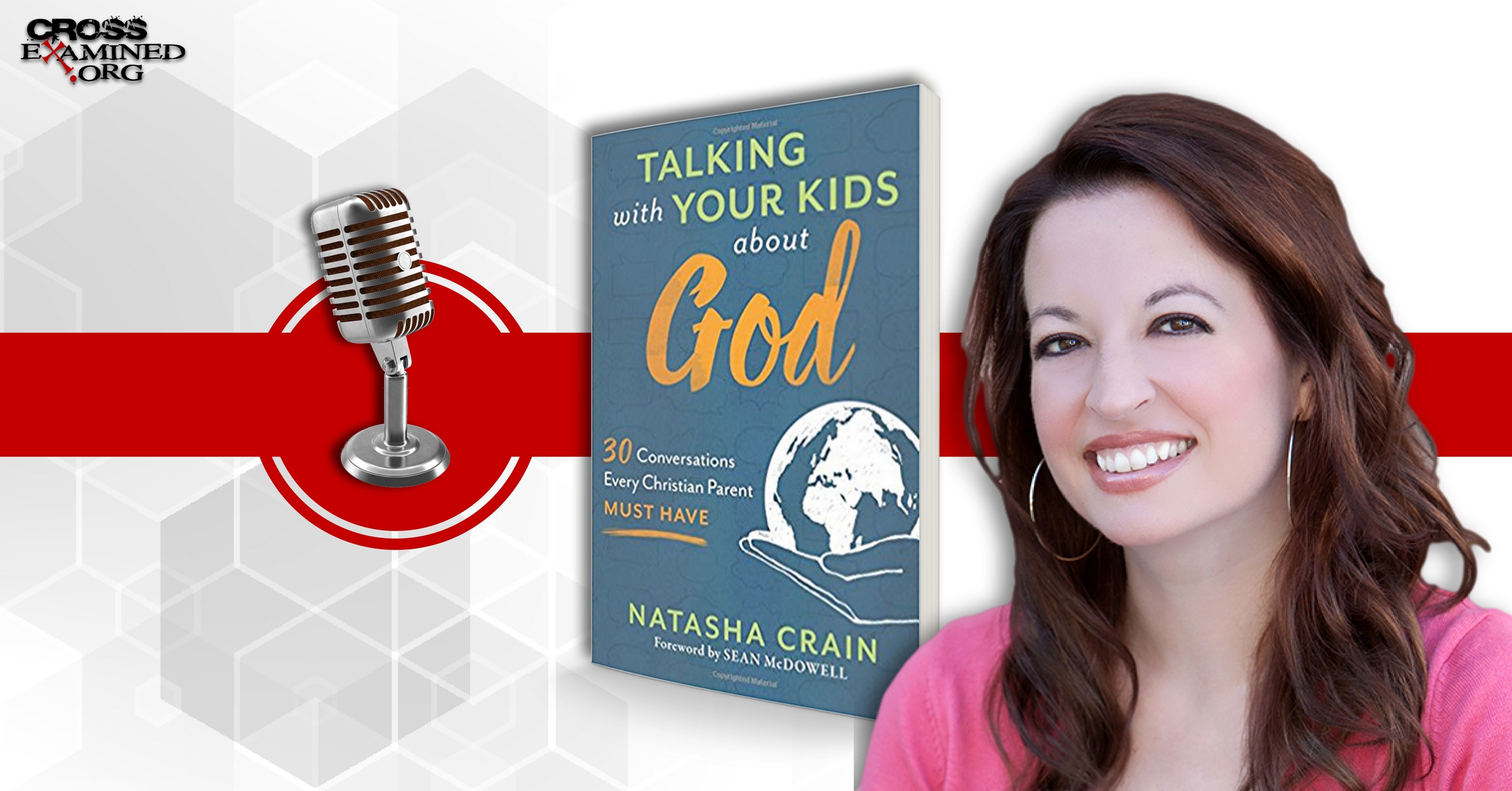
If you need a resource to help you with these points, you’ll find what you need in my latest book, Talking with your Kids about God. You’ll get equipped to help your kids understand Christianity more deeply; you’ll know specifically what claims skeptics make about God that you need to expose them to; you’ll learn how to have those conversations (every chapter has a step-by-step conversation guide); you’ll see what it means to take responsibility for their spiritual development rather than delegating to the church; and you’ll be prepared to teach why good values depend on the existence of God.  


Natasha Crain is a blogger, author, and national speaker who is passionate about equipping Christian parents to raise their kids with an understanding of how to make a case for and defend their faith in an increasingly secular world. She is the author of two apologetics books for parents: Talking with Your Kids about God (2017) and Keeping Your Kids on God’s Side (2016). Natasha has an MBA in marketing and statistics from UCLA and a certificate in Christian apologetics from Biola University. A former marketing executive and adjunct professor, she lives in Southern California with her husband and three children.

Original Blog Source: http://bit.ly/2EvgtpF

By Natasha Crain

I haven’t blogged in a few weeks because I’ve been especially busy since the release of Talking with Your Kids about God. Speaking events and interviews take a lot of time! But it’s been a truly encouraging few weeks, as I’ve had the opportunity to hear from the first readers how the book is already impacting the discipleship of their kids and grandkids (you can read almost 70 excellent reviews on Amazon!).

One of the best parts of the book release experience has been my launch team—a group of people who agreed to read a pre-release copy of the book in exchange for their honest review and to help share about the book on social media. These early readers were passionate about getting the word out after reading it. This led to several of them in our Facebook group asking something to the effect of, “I’ve shared with my personal circle, but how do we get more Christian parents—in churches everywhere!—to understand the need for this knowledge? It seems so hard to get people to care about seriously discipling their kids.”

It was both heartening and discouraging to hear the question. It was heartening because it indicated that they felt the sense of urgency I so passionately wanted to convey in the book. It was discouraging because it reminded me of the challenge I have known so well over my years of writing and speaking—it’s tough to get most Christian parents interested in getting equipped to train their kids with an understanding of apologetics (the evidence for the truth of Christianity).

I’ve reflected a lot on this challenge and could say many things about it, but I wanted to share just one reason for it today, as it relates to moms especially: Christian moms often look for encouragement more than guidance.

If you do a survey of popular books, blogs, retreats, and conferences targeted at Christian moms (and reflecting the market demand for this kind of content), you’ll see a predominant theme of general life encouragement. These messages:

Help us find joy in the midst of our “messy” lives (a favorite descriptor).

Let us know it’s normal to be overwhelmed by laundry.

Inspire us to feel we’re doing an important job with our kids, even when cleaning.

Encourage us to find release from various “traps” in our lives.

Demonstrate how we can make the most of small moments in our day.

Confirm that finding balance is difficult.

Relieve our fears that we’re not as good of a parent as we should be.

Remind us that comparing ourselves to other parents is a bad thing.

Let us know we don’t have to be perfect.

These messages are all important. I know what it’s like to feel discouraged by the day-to-day parenting life, both as a working mom and as a stay-at-home mom. I really do. There is a need for these messages.

But when the predominant messages moms consume are words of general encouragement, we create a self-indulgent culture focused on increasing our satisfaction with life rather than our effectiveness as Christian parents.

One of the greatest areas that suffer when this is the case is our kids’ spiritual development.

How Did We Get Here?

My professional background is in marketing, and one of the things marketers know well is that there’s a key difference between a person’s felt needs and their real needs. A felt need is a need that a person feels, but may or may not be something they really need. A real need is a true need a person has, but may or may not be something they’re aware of or agree with.

Felt needs are powerful drivers of behavior. The fact that there is so much content targeting moms with life encouragement readily demonstrates that moms feel that need and have created a market demand for it. And is there any question as to why? Being a mom is HARD! Most of us are thoroughly overwhelmed. I’m personally overwhelmed by the messiness of my house, the incessant fighting between my kids, the reality of getting older, and a lack of free time, amongst many other things.

While “being a mom is hard” sounds like a rather trite declaration, many studies show that Gen X women are particularly stressed, depressed, overwhelmed, and exhausted, with self-reported well-being declining steadily from age 35 to 50. Two recent articles at Oprah.com and ChristianityToday.com discuss how these facts have led to a new kind of midlife crisis for today’s women who are in the thick of their parenting years.

When we’re in a crisis mode (whether we consciously label these feelings as “crises” or not), we’re at a breaking point. You probably know that point well: the one where you feel that if there is ONE MORE THING you have to do, you’re going to scream, panic, or cry.

It’s natural that in this state of mind we’re most interested in finding help to clear our emotional plate. It’s the strongest felt need. Unfortunately, it’s also natural that in this state of mind we are wholly uninterested in anything that tells us we need to be doing more or doing things better.

Yet, given the world our kids are facing today, they need us to do more than most of us are doing for their discipleship…and they need us to do it better.

A Real Need for Guidance

In the introduction to Talking with Your Kids about God, I suggest that there are two key ingredients to discipling our kids: discipline and direction. Direction is the knowledge of what to do and discipline is the commitment to doing it. Discipline comes from within, but direction comes from intentionally identifying the guidance one needs to best do the job.

So why is there such a need to actively seek guidance when it comes to our kids’ spiritual development?

  1. What’s required in disciple-making changes over time?

Disciple-making has always been the process of helping kids become followers of Jesus. But what is involved in that process differs through time. Parents of kids growing up in the 1600s faced different issues than those raising kids in the 1800s and 2000s. We’re striving to help our kids follow the same Jesus throughout those centuries, but there are different obstacles in the path. Today’s challenges are leading unprecedented numbers of kids away from their faith (at least 60 percent of those raised in Christian homes, according to multiple independent studies). We need to ask what our disciple-making process should look like given today’s spiritual environment. That requires more guidance than our personal intuition.

  1. What “worked” for you may not “work” for your kids.

Many moms I talk to are simply repeating whatever discipleship they received as kids in their own family because they don’t know what else discipleship would look like. Oftentimes, this boils down to a trip to church each week, prayers before bedtime, and maybe an occasional devotional. They assume that because they grew up to love Jesus that this is enough for their kids too. This is a dangerous assumption. Kids today will be challenged more often and more deeply on their beliefs than most of us ever were. You simply don’t know how your faith would have developed in similar conditions.

  1. Today’s challenges are predictable, so there’s no excuse for not equipping your kids to understand them.

When I speak, I often begin by asking the room, “How many of you are here today already thinking that our country is becoming an increasingly secular place and that your kids’ faith will likely be challenged because of it?” Every parent raises their hand. But when I ask, “Now take that a step further: How many of you are confident you know specifically what the challenges are, how to effectively talk about those challenges with your kids, and what that means for you as a parent on a daily basis?” I at most will see a couple of hands go up.

As this shows, most parents get as far as feeling the fear of what their kids will encounter but don’t take the next step of looking for guidance on what to do. My goal at those speaking events is to demonstrate that today’s challenges are highly predictable (as I’ve shown in both of my books), and that if we don’t equip our kids to encounter them, we have quite literally failed them without excuse.

Discipleship is a calling for both moms and dads, so I don’t want anyone to read this and think I’m laying the youth exodus from Christianity solely at the feet of moms. But we, as moms, certainly have part of the responsibility. And our collective thirst for and prioritization of encouragement is, of course, just one of many reasons we aren’t better discipling our kids. However, when we see so many moms gravitating to self-help resources, I can’t help but ask:

What if for every book we read on finding balance, we read one on the evidence for God’s existence?

What if for every small group study we did on anxiousness, we did one on discipleship?

What if for every blog post we read on easing mommy guilt, we read one on a common objection to Christianity?

What if for every encouraging Facebook group we joined, we joined one that discusses apologetics and theology?

I will venture an answer to these and similar questions: Kids today would have a deeper faith. Encouragement is great, but it will never compensate for learning what we need to be effective disciplers of our children.


Natasha Crain is a blogger, author, and national speaker who is passionate about equipping Christian parents to raise their kids with an understanding of how to make a case for and defend their faith in an increasingly secular world. She is the author of two apologetics books for parents: Talking with Your Kids about God (2017) and Keeping Your Kids on God’s Side (2016). Natasha has an MBA in marketing and statistics from UCLA and a certificate in Christian apologetics from Biola University. A former marketing executive and adjunct professor, she lives in Southern California with her husband and three children.

Original Blog Source: http://bit.ly/2jUEDjt

Christian parenting is hard work–and it’s getting harder. Parents have a deep desire to pass on their faith but fear that today’s increasingly skeptical and hostile world will eventually lead their kids to reject the truth of Christianity. That leaves many parents feeling overwhelmed–uncertain of what they can do to help their children, given the difficulty and extent of the faith challenges they will face. Frank interviews author Natasha Crain about her new book a practical and timely resource that gives parents the confidence of knowing what to discuss with their children and how to discuss it in order to facilitate impactful conversations that will form the basis of a lifelong faith.

Natasha’s Website: http://christianmomthoughts.com/

Natasha’s New Book: http://christianmomthoughts.com/talkingwithyourkidsaboutgod/

Crain

By Natasha Crain

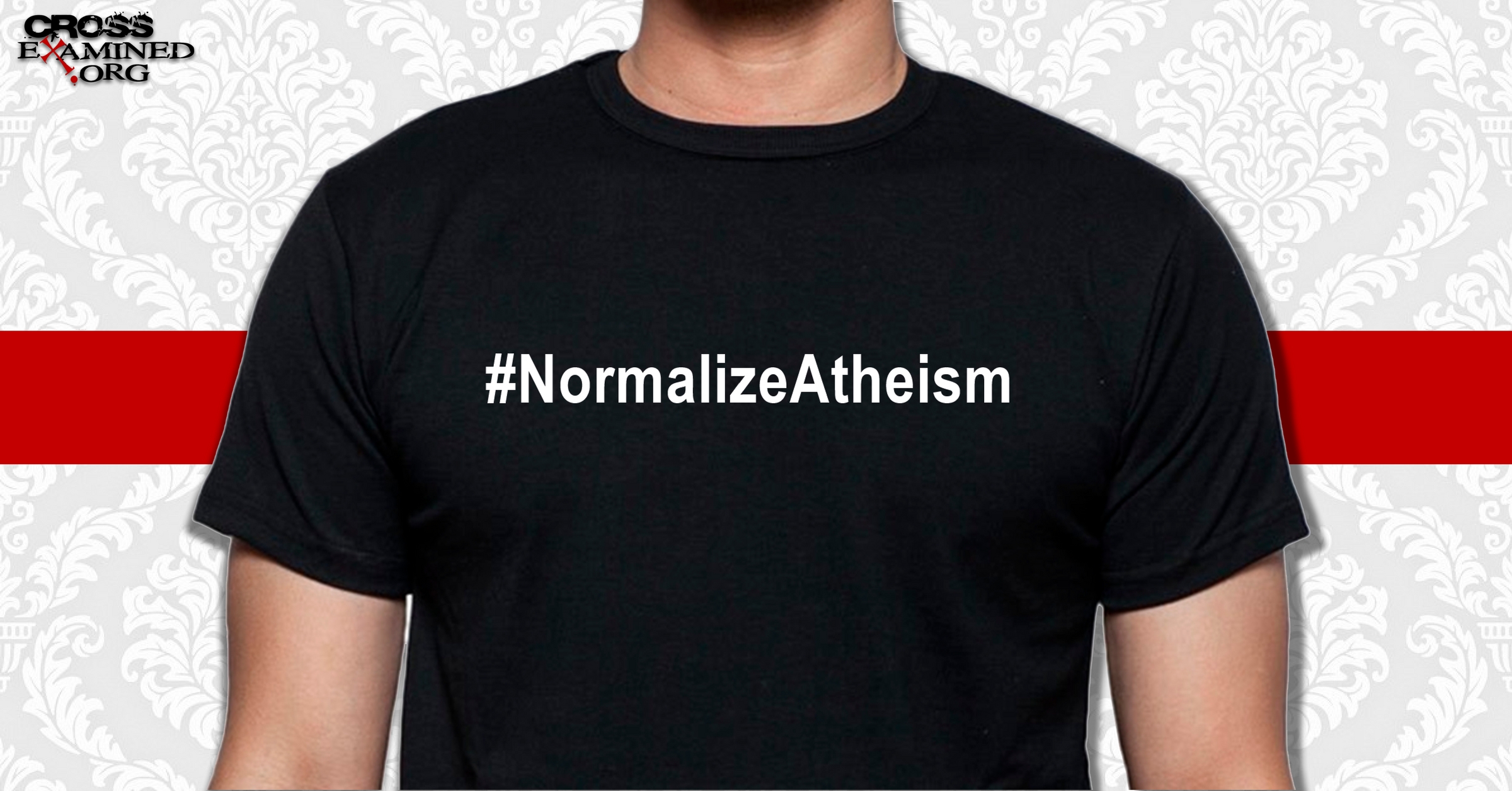
I recently encountered a movement underway on social media called “Normalize Atheism.” According to the website of the same name, the movement started a couple of years ago, but it seems to have picked up more speed recently. The basic idea is that atheists post a picture of themselves on social media, using the hashtag #normalizeatheism, to demonstrate that atheists are just like everyone else.

Why is that necessary? The website explains:

Even in countries where church and state are kept separate and mainstream religious practice is fairly moderate, atheists are marginalized, stigmatized, or simply ignored. And that’s a problem. Because if we want our society to be just, pluralistic, and inclusive, there needs to be space not only for the many varieties of religious believers but also for those of us who don’t believe. This isn’t an easy problem to solve…it’s a very old problem. Solving it will require changing the way atheists are perceived by the societies in which we live. And the first step toward realizing that change is reminding everyone else that we’re here. It doesn’t demand any particular political affiliation, it doesn’t necessitate the acceptance of a specific ideology. All it requires is for all of us who are able to speak up and say, ‘I’m an atheist. And I think it’s time for us to #NormalizeAtheism.’”

Here are a few examples of what people are posting:

Example 1

Example 2

Example 3

Example 4

There is, of course, nothing wrong with such a movement. People (oftentimes Christians) do stereotype atheists in unfair ways, so I can appreciate why atheists would start something like this. The reason for this post is that I believe Christian parents should learn several important things from the movement, and I wanted to share those things with you today.

  1. Atheists are a minority, but their numbers don’t appropriately reflect their influence.

Depending on the survey you look at, and how atheism is defined, the percent of atheists in American is usually estimated to be under 10 percent. I’ve had parents ask me at speaking events why it’s so important to help our kids learn how to engage with the atheistic worldview when so few people are actually atheists. This question, however, misses the point: atheists may be a minority, but they are a vocal minority that your kids will hear from. There may be a lot more people who simply identity as “nothing in particular” on religious surveys, but they don’t organize campaigns called #NormalizeNothingInParticular. It’s not the numbers; it’s the influence that requires parents to thoughtfully engage with their kids on the atheist worldview today.

  1. Your kids will engage with atheists from a much earlier age than you probably did.

It may be tempting to think that atheist influence is only at some kind of organized political level, but that’s simply not the case. As the Normalize Atheism campaign readily demonstrates, atheists want a much more popular-level awareness. Reaching out through social media in this way is an excellent way to promote ideas to young people. Talking with your kids about the atheistic worldview isn’t a subject to have when they become teens. They should be well aware that some people don’t believe in God and why Christians have good reason to be confident God exists from the youngest ages.

  1. Kids must learn to distinguish between their feelings about people and the truth about those people’s beliefs.

The overriding message of the Normalize Atheism movement is that atheists are good people, just like everyone else. And if by good they mean they are people who can be nice, love others, be good citizens, and so on, they’re right! As Christians, we should never be teaching our kids that only those who love Jesus can match such a description. If we do, we’re seriously misleading them. Perhaps that sounds obvious, but I think the point has been lost on too many young people. I can’t tell you how many times I’ve heard teens comment that their atheist friends are “just as good of people” as their Christian friends—as if that has some implication for the truth of the Christianity. Here’s an atheist making the same claim herself:

Example 5

Kids who haven’t been raised to think deeply about the nature of truth and worldviews are spiritually vulnerable to a likeability campaign like this. They can readily confuse their positive feelings for people with a fair evaluation of the truth of those people’s beliefs: “If all these atheists are such good people, why does Christianity matter?”

The answer is obvious for kids who have learned to think about these things: Truth is what corresponds to reality and has nothing to do with who’s nice and who’s not.

  1. Kids need to understand that there is often a difference between what atheists believe and what is logically consistent with an atheistic worldview.

An atheist recently commented on a blog post I wrote: “You have no way of knowing what I believe without talking to me.” I will never forget that comment because it raises such an important point that kids need to understand:

There is often a difference between what an individual atheist believes and what is logically consistent with an atheistic worldview.

In other words, this person was absolutely right. I don’t have any idea what they believe despite the fact they identify as an atheist. This is the case with any person. For example, someone might identify as a Christian but have non-Christian beliefs that are logically inconsistent with a Christian worldview (for example, some Christians believe in reincarnation).

Another example is in the picture I posted above. This lady says she lives her life by doing what is right. But in an atheistic worldview, there can be no objective right or wrong because there is no moral authority; moral judgments can only be a matter of opinion. Looking at the social media discussions in the Normalize Atheism campaign, there are many people who make claims inconsistent with what an atheistic world actually requires. When kids are not well-trained to understand this, they can be persuaded by beliefs that are logically incoherent.

  1. If you’re not prepared to discuss the evidence for God’s existence with your kids, atheists will be happy to fill the role.

While the idea of Normalize Atheism sounds innocuous enough, don’t think for a moment that the only thing atheists want is to have people see them in a more positive light. Just as Christians want to share our beliefs with others, atheists want to share their beliefs as well.

They’ll let you know that atheism represents reason, logic, and science (implying theism doesn’t):

Example 6

They’ll let you know that atheism represents free-thinking (implying theists are all mindlessly indoctrinated):

Example 7

They’ll let you know that if you believe God speaks to you, you need to see a “shrink”:

Example 8

They’ll let you know that God is an imaginary friend:

Example 9

I could continue with examples all day, but you get the point. If you’re not prepared to talk with your kids about why there’s good reason to believe God exists and why the claims of all these skeptics are unfounded, your kids’ faith may well suffer. As atheism indeed is becoming more “normal,” we have a great responsibility as parents to have these discussions with our kids.

Notes

My new book, Talking with Your Kids about God, comes out in just 5 days and is a complete guide for parents to all of the points raised by skeptics in this post and so many more. It walks you step-by-step through conversations on the evidence for God’s existence, the ins and outs of claims about science and God, the logical implications of an atheistic versus theistic worldview, and much more. Click here for the full table of contents and order information!


Original Blog Source: http://bit.ly/2h5ZPT7

By Natasha Crain

This weekend I had the wonderful opportunity to speak at the ReTHINK Student Apologetics Conference (there are more of these conferences coming—be sure to check out the link and learn about them!). I always enjoy talking to parents after speaking and this weekend was no exception. One thing I realized this time was that at every event where I’ve spoken in the last couple of years, there have been parents who share with me afterward that their child has recently said they no longer believe in God. Sometimes the kids are very young, other times they’re well into their adult years. But the question parents bring to me is always the same: “What should I say to them?”

After having a couple of long conversations with parents about this over the weekend, I wanted to write this post for others who may be struggling with the same thing. While this is, of course, a complex topic, these are 10 of the most important things I think you can say to a child of any age when they say they don’t believe in God anymore. For what it’s worth, this isn’t some kind of theoretical exercise for me. One of my own young kids periodically struggles with this because God can’t be physically seen. We have several of these conversations regularly.

  1. “Thank you for sharing this with me.”

There’s no doubt it sends panic into a Christian parent’s heart to hear the words, “I don’t believe in God anymore” or “I’m not sure if I believe in God anymore.” But how we respond to our child at a time of spiritual crisis (whether they consider it a crisis or not) is critical. If our reaction is fearful, angry, panicked or condemning, we quickly let our kids know that expressing their doubts is not OK. As parents, we need to be the safest place in our children’s lives to have conversations about God or they’ll find another place to go—likely a place where you wouldn’t want to find them.

Simply saying, “Thank you for sharing this with me” lets them know you are happy they came to you, that you want to talk with them about their feelings, and that expressing doubt in your home is welcome. To be clear, that doesn’t imply you’re happy about the doubt itself, but that you’re happy to be a safe place for these conversations.

  1. “How have you come to that conclusion?”

Because we love our kids so much and want to quickly bring them back to truth, there’s a temptation to immediately start offering a response with reasons to believe in God. But imagine for a moment that you go to the doctor when you don’t feel well and the doctor starts prescribing medicine for a wide range of illnesses without first asking you questions or running tests. That, of course, would be crazy. In the same way, if we don’t know the source of our kids’ doubts and how they’ve come to their conclusions about God, we can’t have meaningful conversations to specifically address their concerns. Use this question to get the conversation going and ask as many follow up questions as needed to be confident that you truly understand what has led them to doubt God’s existence.

  1. “How long have you felt this way?”

This is a helpful diagnostic question because it lets you know the depth of the doubt. In some cases, doubt comes as a knee jerk reaction to a specific event—for example, experiencing an unanswered prayer. When there is a single, proximate source of doubt, it can be easier to untangle because you can address that concern directly. However, if it turns out your child has been doubting for years and you simply didn’t know until the day he or she verbalized it, there’s much more history you’ll need to dig into.

  1. “If I could give you good evidence to show that God exists, would you want to be convinced He exists?”

This is another helpful diagnostic question because it gives you a window into the heart of your child. Sometimes doubt comes from not wanting to believe—and the reasons for not wanting to believe in God can be many. If a child says they wouldn’t want God to exist, it’s likely a sign that either 1) they have a misunderstanding of who God is (and wouldn’t want that God to exist), or 2) are engaged in behaviors they know aren’t godly and would rather live according to their own will. If a child admits that they wouldn’t want God to exist, the most important conversation you can have is getting to the bottom of why that’s the case. Only then will you know where to take the discussion next.

For those who do want God to exist but are doubting, go on to the next pieces of conversation.

  1. “Having doubt is normal and nothing to be ashamed of.”

One of the most difficult aspects of having doubt about our faith is feeling that we’re somehow abnormal—that if we experience doubt, we’re not a “real” Christian. But doubt is actually a normal part of faith. When we don’t have certainty about something, there is always room for doubt. For example, we can be confident that an airplane will safely deliver us to our destination, but we can’t be certain of that, so some doubt should necessarily exist. Even John the Baptist experienced doubt about Jesus being the Messiah when circumstances got tough and he was in prison (see Luke 7:18-30).

Sharing with your child that doubt is normal can put them at ease for further conversation. Rather than feeling something is wrong with them (or wrong with God!) because they’re doubting, they can feel hopeful that the doubt can be resolved.

  1. “Fortunately, God hasn’t left us to just guess whether or not He’s there. He’s given us plenty of evidence.”

If you haven’t had some deeper conversations about faith with your kids, there’s a good chance they’ve never heard the idea that there could actually be evidence for His existence. In the minds of many kids (and adults), believing in God is simply a blind choice—not something that is rooted in tangible evidence. Kids have to know this is not the case. Emphasize that they may not yet know the evidence, but that it exists and you want to lead them through it. This simultaneously takes the pressure off of them to make a decision about God they may have thought was rooted only in their own feelings and sets you up to suggest the following point.

  1. “Let’s study the evidence for God’s existence together.”

If you read the last point and thought, “That’s great, but I have no idea what to say…” have no fear. You don’t have to be a professional apologist (someone who knows how to make a case for and defend the truth of Christianity) to have this conversation. More than a lecture, kids need you to come alongside them.

There is an incredible new resource out this month to help you and your kids learn together. J. Warner Wallace and his wife Susie have released God’s Crime Scene for Kids, which is a book targeted at kids ages 8-12 and follows the topics of the adult book God’s Crime SceneIn the kids’ version, the Wallaces use a mystery around a box found in a grandmother’s attic to demonstrate how we can look at the evidence in the universe to draw conclusions about the existence of God. It’s engaging, clear, and unlike anything else available for this age group. There’s even a website with free videos and worksheets.

For what it’s worth, I had the opportunity to endorse it, which I enthusiastically did. Here’s what I said: “God’s Crime Scene is my go-to recommendation for anyone who wants to learn about the evidence for God’s existence. I was thrilled to hear that a kid’s version was coming out, but honestly wondered how Det. Wallace was going to translate some of the more challenging scientific and philosophical concepts into material for 8- to 12-year-olds. Now that I’ve read it, I’m blown away. This is brilliant! There’s nothing else like it, and I’ll be recommending it for years to come.”

If your kids are younger, the kids’ version would still be helpful for you to read and get ideas for how to talk about the evidence at your kids’ level. If your kids are older, they may already be ready to work through the adult version with you. If your kids are out of the house, they may not be willing to study anything together, but you can study and discuss with them as the opportunity arises.

  1. “If God didn’t exist, this is what reality would look like.”

In my experience with skeptics who have come to my blog over the years, many have dumped the idea of God without considering the necessary worldview implications of a world without Him—many of which run very contrary to our most basic intuitions. This led me to devote the final six chapters in Talking with Your Kids about God to helping parents show their kids “The Difference God Makes.” For example:

  • What is the meaning of life? (There is no objective meaning in a world without God.)
  • Do we really have free will? (There is little reason to believe we actually have free will in a world without God.)
  • What should we do with our lives? (There can be no should—no moral obligations—in a world without God.)
  • What is our responsibility to other people? (There are no objective responsibilities to others in a world without God.)
  • How should we make sense of evil? (There can be no objective right or wrong in a world without God—moral evil cannot exist.)

Why does biblical hope matter? (There is no ultimate hope in a world without God.)

When we show our kids the necessary implications of an atheistic world, it can help them see how the evidence for God is the best explanation for all the evidence we have.

  1. “What questions do you have about God?”

This is a question that should run alongside all the other points, and on an ongoing basis—whether your kids have doubts right now or not! The best way to avoid a spiritual crisis later is by facilitating conversations around kids’ questions regularly. For ideas on how to do incorporate an ongoing “questions night” in your family’s life, see my post How to Get Your Kids to Ask More Questions about Their Faith. As you work through the prior points with kids who are already doubting, more questions will surely arise. Make it a way of life to continually give them a forum for addressing whatever faith questions are on their mind.

  1. I love you and God loves you.

Ultimately, regardless of how all the prior conversations go, kids need to know we love them and that God loves them through their questions. In reality, some kids will struggle for years. But knowing that their doubts will never separate them from our love builds a relationship that will foster these important conversations for a lifetime.


Original Blog Source: http://bit.ly/2fHeLpC

By Natasha Crain

A couple of years ago, my husband and I were invited to a dinner party with a few other new parents from our kids’ Christian elementary school. After we worked our way through appetizers and the requisite small talk, the conversation turned to our respective faith backgrounds. One of the moms confessed that, as much as she loved the Lord, she struggled with how to share her faith with her son—so she had enrolled him at a Christian school where others might be able to do a “better job.”

Another mom replied, “Well, I don’t worry too much about it. I just tell my daughter that believing in God is like believing in Santa Claus. Some people believe, and some don’t. It’s a matter of faith.”

I glanced over at the mom who said that, ready to laugh with her at the idea of placing God and Santa in the same category.

But she wasn’t laughing.

She had just matter-of-factly shared what she honestly thought was a helpful way of explaining belief in God’s existence to her daughter.

Now, if an atheist had overheard this dinner party conversation, he or she would have delighted in my friend’s comparison of God and Santa because that’s precisely how atheists want us to think . . .

  • God and Santa: two entities with no evidence to demonstrate their existence.
  • God and Santa: childish beliefs people should outgrow once they understand there’s no evidence to demonstrate their existence.

Without realizing it, this mom was playing right into the hands of atheists. She was talking about God in a way that could actually damage her daughter’s faith eventually, given the types of challenges she’s likely to encounter.

As Christian parents, it’s critical that we understand our job isn’t to just talk about God in any way we can.

How we talk about God matters.

I was reminded of this fact—and my God vs. Santa experience—when I joined a Christian parenting Facebook group recently. Within a couple of days, I saw someone post that her 12-year-old son was suddenly struggling to believe in God and was asking his mom how we know God exists. She asked the group what she should tell him.

Dozens of parents chimed in, but almost all of the answers offered were in the “God and Santa” category—answers that can actually do more harm than good. It was really disheartening.

So today I want to share five kinds of responses I saw—and see often—that we should avoid when our kids ask questions about God’s existence.

5 Answers That Can Do More Harm Than Good

  1. (Just) have more faith.

I don’t know if any word today is more misused than “faith.” For example, several people replied something to the effect of, “It just takes faith. Tell him this is what faith is all about.”

This answer implies that even when we don’t think God exists, we just need to somehow summon up enough “faith” (sheer force of will?) to hold on to our beliefs. But that’s not what biblical faith is all about. Biblical faith is trusting in what we have good reason to believe is true—not committing ourselves ever more strongly to a blind leap in the dark with no rational basis.

When we understand that, we can see why it doesn’t make sense to answer a child’s question about God’s existence by telling him or her to just have more faith. Faith comes from the conviction that something or someone isworth trusting. The answer, therefore, isn’t to tell kids to focus on theoutcome of conviction—it’s to increase their conviction by giving them solid reasons to believe God exists.

  1. (Just) pray.

Many people said that the mom should start praying fervently for her son and tell him he needs to pray as well. I would say that too.

But it should be clear from every part of the Bible that we must pray andtake earthly action. Noah didn’t just pray to be saved from the flood; he built an ark. Joshua didn’t just pray to conquer the Canaanites; he marched around Jericho. Paul didn’t just pray that the gentile world would come to know Jesus; he spent the rest of his life on missionary journeys.

So, yes, pray. But don’t stop there. Kids need to learn why there’s good reason to believe there’s actually a God to pray to.

  1. That’s (just) the enemy attacking you.

I’ll never forget reading a detailed “About Me” page written by a young man who grew up in a Christian family but eventually lost his faith…and became a vocal atheist. Over and over, he came back to the fact that his family and church didn’t answer the specific questions he had. Instead, they continually reiterated that he was under attack from the enemy and he just needed to mentally fight against his doubts. For a long time, his faith hung on by a thread; he no longer believed in God but told himself that it was only Satan making him think that way. Eventually he gave up and let go of the thread.

As with the first two points, there is certainly truth to the reality of spiritual warfare. Ephesians 6:12 says, “For we do not wrestle against flesh and blood, but against the rulers, against the authorities, against the cosmic powers over this present darkness, against the spiritual forces of evil in the heavenly places.” People were quick to point this out to the mom on Facebook.

But the fact that someone may be under spiritual attack doesn’t lessen the need to offer them specific answers to their questions. Offering those answers—in this case, the evidence for God’s existence—actually grounds them in the truth that allows them to withstand spiritual attack.

  1. General restatements of Christian belief that don’t address the question asked.

Several of the Facebook responses said something like, “Remind him [the child] that God loves him and Jesus died for him.” Well, yes, God does love him and Jesus did die for him. It certainly never hurts to remind anyone of that. But if a child is asking how we even know God exists in the first place, this kind of statement is unlikely to help him or her through a spiritual crisis.

  1. Silence.

Another suggestion was to just be patient, as this is a “phase” many kids go through. Silence, however, says so much. To a child doubting God’s existence, it says, “I don’t have good answers for your questions so I’ll just be over here in the corner waiting this whole thing out.” And if mom and dad don’t have good answers, kids are unlikely to assume good answers exist elsewhere. Silence is not golden.

Need Help with Better Answers?

Parents, questions of God’s existence are foundational to our kids’ faith. We have to get these conversations right, particularly in a world that challenges the fact of God’s existence each and every day.

That’s exactly why I wrote my new book, Talking with Your Kids about God: 30 Conversations Every Christian Parent Must Have. I wanted to help parents not just talk with their kids about God, but do so in the ways most needed by kids growing up in a secular world. In the book, you’ll find five sections that will prepare you to discuss how we know God is real and what we can know about Him from many different angles (check out the full table of contents here):

  • The Existence of God
  • Science and God
  • The Nature of God
  • Believing in God
  • The Difference God Makes

Every chapter even has a step-by-step conversation guide. If this looks like a valuable resource for your family, church, or school, please take a minute to pre-order it now at christianbook.combn.com, or amazon.com. It comes out in just a few weeks, and your early support encourages retailers to stock it!


Let’s work together to give our kids the answers they deserve. We don’t want anyone ever to grow up thinking there’s no more evidence for God than there is for Santa.

“The heavens declare the glory of God, and the sky above proclaims his handiwork. Day to day pours out speech, and night to night reveals knowledge” (Psalm 19:1-2).

Original Blog Source: http://bit.ly/2eIJXF2


By Natasha Crain 

Our family just returned from a wonderful vacation to the mountains of British Columbia. It was stunningly beautiful! We spent our first day there relaxing at this picture-perfect lake.

My husband and kids had a blast swimming out to a wooden platform in the middle of the lake and taking turns jumping off. I’m highly opposed to submerging myself in freezing cold water unnecessarily, so I happily enjoyed reading on the shore.

At one point I decided to walk down to the sand and take some photos. A man soon approached me and pointed to the water with a very serious look on his face.

“Leeches. The lake is filled with leeches. Look around and you’ll see that the big ones are puffed up on the blood they’ve sucked.”

I immediately freaked out, imagining that my family would soon be swimming back covered in blood-sucking creatures I would be too terrified to remove. But when I looked around the shallow water for signs of my family’s impending leech doom, I didn’t see anything. I started feeling better and decided the guy probably didn’t know what he was talking about.

When my husband and kids got back from swimming, I told them what the guy had said. My husband was as grossed out as I was and replied, “Great. I’m sure it’s not a big problem but now I don’t want to go back in. Way to ruin the rest of my day, ‘leech on the beach guy.’”

A little while later, leech on the beach guy spotted me and proudly walked over with a water bottle in hand. Inside was a gigantic leech with several babies attached.

“I told you so. She’s huge and was just sitting near the shore. They are everywhere.”

He walked away with the confidence of someone who had just revealed one of life’s greatest mysteries. But although it turned out he was right, my husband wasn’t exactly grateful for the confirmation. He still resented our leech friend for ruining his swimming plans.

When the Bearer of Bad News is Resented

That same day, I read with disgust about the now infamous Teen Vogue article promoting sodomy among teens. I truly couldn’t believe this was in a mainstream magazine. Speechless. Just speechless. And it made me consider how counter-culturally we have to live today as Christians. We’re no longer talking about a world where counter-cultural means leaving sports practice early for Wednesday night youth group.

We’re talking about having to protect our kids from widely available TEEN FASHION magazines that teach them how to be sodomized.  

(Almost equally unbelievable is the Twitter response from the magazine’s digital editor to those who think this is a problem.)

In a world like this, parents must increasingly say “no.” A lot. But if we’re not careful in how we execute our counter-cultural living, our kids can start seeing us like the alarmist leech on the beach guy and resent Christianity because of it.

There are four ways we can inadvertently allow that to happen.

  1. We focus more on the dangers of the world than on the beauty of Christianity.

There’s no doubt that leech on the beach guy was right about the dangers lurking in the water. But it was astounding to see how absolutely focused he was on the leeches, seemingly missing the stunning beauty around him entirely. He only cared about leeches.

In a world that seems to be going crazier by the second, it’s easy to spend more time pointing out the darkness of culture than the light of Christianity. Now, don’t get me wrong; we absolutely need to make our kids aware of cultural dangers. But when we don’t consistently point them back to the beauty of the Christian worldview which renders our culture so ugly in the first place, our faith will become defined by what we’re against more than what we’re for. There are a lot of problems with that, but for our current purpose, suffice it to say that persistent negativity breeds resentment.

The last six chapters in my new book, Talking with Your Kids about God, are written to help parents understand and communicate the beauty of a Christian worldview versus the atheistic worldview that so often pervades secularism. It was my favorite part of the book to write, knowing how important this knowledge is today.

  1. We spend more time addressing what is problematic about culture than whyit’s problematic.

Because leech on the beach guy was so focused on danger that no one else saw, we assumed his level of concern was disproportionate to the reality of the problem. Without more information to properly evaluate the significance of leech danger, my husband was left with ambiguous fear while having doubt about the legitimacy of the fear.

It’s a recipe for resentment: enough concern to modify your behavior, but not enough understanding to be confident the modification was worthwhile.

When the message our kids hear is an ongoing stream of don’ts without meaningful explanation—don’t listen to this music, don’t visit these sites, don’t use this social media platform, don’t subscribe to this magazine, don’t join this political movement—they’ll start to wonder if our level of concern about the world is warranted. And meaningful explanation requires demonstrating how the problems actually relate to the Christian worldview. Simply telling our kids that a movie has violence and they shouldn’t watch it, for example, is hardly a meaningful explanation. Why is that a problem for Christians? How can that affect us spiritually?Where should we draw the line? These kinds of questions should regularly be discussed.

  1. We frame our lives in terms of worldly limits more than Christian freedom.

If leech on the beach guy had a child with him, I bet that child would be longingly looking around at the groups of people having great fun. Some of the surrounding types of “fun” would be morally acceptable, some not so much. But you can bet the child would feel he or she was missing out on something by spending so much time focused on leeches…and probably resent dad because of it.

I often see ex-Christians comment about the freedom they feel in “letting go of God.” The language they use to describe their deconversion says so much. They saw religion as a limiting approach to life and therefore felt freer after shedding their beliefs in God. But as Christians we know that we are not free in our natural state at all—we are slaves to sin. When we put our faith in Jesus, we are given a new nature that is free from such bondage (Romans 6:18).

The reality, therefore, is that only Christians are actually free.

To embrace the feeling of freedom rather than limitation, our kids need to understand 1) the definition of sin, 2) the reality of sin, 3) why sin is such a big problem, and 4) why we should value being slaves to righteousness rather than to sin (Romans 6:18). Only then will they begin to understand that they’re notmissing out when they don’t make worldly choices.

  1. We focus more on authoritative parental decisions than on cultivating the skill of discernment.

Leech on the beach guy was incredibly smug. When he told me about the leeches, I asked him to show me where they were. He had no interest in doing so; he merely restated that he knew there were many in the lake. Had he not caught one later to show me, I probably would have left not believing him at all.

In many cases, parents have a bigger perspective than kids can possibly have given their limited life experiences. We have to make certain decisions on our kids’ behalves. But if we consistently present our “counter-cultural” lives as a series of decisions made by mom and dad (albeit for good reason), kids will naturally resent what they feel has been forced upon them. To the degree we can, we should always strive to cultivate our kids’ skill of discernment by involving them in the thought process of our decision making. After all, the second they walk out our door as adults, “authoritative parental decisions” no longer apply.

Finally, I want to mention that if you feel like you’re drowning in rather than navigating the cultural waters right now, there’s a fantastic new book out you should know about. It’s called A Practical Guide to Culture: Helping the Next Generation Navigate Today’s World, by John Stonestreet and Brett Kunkle. It explains why culture matters and how to handle topics with your kids such as pornography, the hookup culture, sexual orientation, gender identity, affluence and consumerism, addiction, entertainment, and racial tension. I highly recommend it for all Christian parents.

Just for fun, I managed to snap a picture of leech on the beach guy in anticipation of this post. Here he is, water bottle in hand, combing the beach for more leeches. Don’t be like this guy. Keep your family’s eyes on the beauty of the Lord and don’t let the world’s leeches suck the spiritual life out of you.

Leech on Beach Guy

Original Source Blog: http://bit.ly/2v4Nln7 


By Natasha Crain

I’ve written over 250 blog posts here since 2011. People still come across my old posts by searching for something on Google, so nearly every day I receive new comments on a wide variety of old posts. Many of the comments are from atheists.

As I read the latest comments this week, I noticed a running theme.

The vast majority of atheists who comment here don’t seem to want God to exist.

They talk about the “freedom” of no longer believing in God, how nice it is to be self-reliant, how great it feels to get rid of guilt, how they’ve found more meaning in life without God, how they can better enjoy all that life has to offer, how the world will be a better place when religion is gone, and so on.

If I saw God—and a godless existence—in the way most of these commenters do, I wouldn’t want to believe He exists either.

But I don’t think those who prefer the atheistic picture of reality have given it enough thought; no one shouldwant atheism to be true if we really draw out the implications of what that means for our existence. If people considered that more deeply, I think there would be more atheists saying, “I sure wish God existed, but there just isn’t enough evidence!” rather than, “There’s no evidence for God…and that sure is great!”

To be clear, wanting something to be true doesn’t make it true. But this isn’t a post about the evidence for the truth of any one worldview. This is a post about appropriately understanding the logical implications of a worldview.

With more than 60 percent of young adults rejecting their Christian faith today, and many becoming atheists, I have to wonder how many did so thinking atheism was actually more attractive…and not understanding these implications.

As parents, we should not only show our kids why there’s good reason to believe God exists, but why they should be thrilled that He does.

Let’s see what reality would look like in a world without God.

  1. Life has no objective meaning in an atheistic world.

In an atheistic world, our universe and everything in it developed by strictly natural forces. There’s no creative or sustaining intelligence behind it, and no ultimate reason for its existence. It just is.

It follows that there can be no objective meaning of life in such a world because there’s no Creator with the authority to say what that is. People can create theirown meaning, but there’s no meaning which applies to everyone.

Now, many people are enamored by that thought, but we should ask how meaningful that meaning can ever be. Without God, we’re just chemical specks in a vast, indifferent universe. You can choose to find meaning in saving the endangered Hawksbill turtle, but ultimately the Hawksbill turtle is just molecules in motion like you and every other living thing—why bother? You can choose to find meaning in art, but scientists say the sun will eventually explode and swallow the Earth—do paint patterns on canvas really matter? You can choose to find meaning in ending human suffering, but if humans have no more inherent value than rocks, why not just end those lives instead?

There’s no reason to celebrate the ability to live according to our small, self-defined meanings when ultimately such an existence leads to nothingness.

  1. Life has no special value in an atheistic world.

Astronomer and agnostic Carl Sagan said in his bestseller Cosmos, “I am a collection of water, calcium and organic molecules called Carl Sagan. You are a collection of almost identical molecules with a different collective label.”

Sagan appropriately sums up the value of life in an atheistic world: it has no more inherent value than its chemical components. Nothing exists apart from the basic matter of which we—and everything else in the universe—are comprised. In a world without God, we’re simply molecular machines.

  1. There’s little reason to believe we could actually make free choices in an atheistic world.

If all we are is our biology, a logical implication is that our decisions are driven by strictly physical impulses—we’re bound by the shackles of physical law. As molecular biologist Francis Crick said, “‘You,’ your joys and your sorrows, your memories and your ambitions, your sense of personal identity and free will, are in fact no more than the behavior of a vast assembly of nerve cells and their associated molecules.”

Yet belief in the reality of some degree of free will fundamentally shapes how we live. Questions like What should we do with our lives? What is our responsibility to other people? and How should we make sense of evil?—have meaning because they presume humans have the ability to make choices that matter. That ability is highly questionable, however, in the context of an atheistic world.

  1. No way of living is better than any other way of living in an atheistic world.

If God doesn’t exist, there’s no objective reason why anyone should live in any particular way. Shouldimplies a moral obligation. But if we’re all just molecules in motion, to whom would we be morally obliged? To other molecules in motion? Clearly not. In an atheistic world, no one can prescribe a way of living for anyone else because there’s no moral authority, and, therefore, no objective basis for doing so. How a person “should” live his or her life can only be a matter of opinion. One way cannot be morally better than any other way.

  1. No one has a responsibility to anyone else in an atheistic world.

If life has no special value because it’s the product of purely natural forces, and there’s no moral authority to establish relational obligations, the idea of responsibility to one another is senseless. Molecules can’t owe other molecules anything.

Despite this implication of a world without God, many atheists consider themselves “humanists” and stress the importance of believing in human dignity and equal rights. It sounds good, but there’s a logical problem with the humanist position. If God doesn’t exist, natural rights that are equally held by all people also don’t exist. A “right” is something to which a person is entitled, and you can’t be entitled to something unless someone entitles you to it. Who has the authority to give rights to humankind if God doesn’t exist?

  1. There is no such thing as evil in an atheistic world.

On any given day, you can scroll through news headlines and read about people being murdered, children being abused, women being raped, and much more. It’s part of our most basic intuition to categorize such things as “evil.” But in a world without God, there’s no objective standard for calling anything evil. Without a moral authority, any one person’s view of murder, child abuse, and rape can only be a matter of opinion.

To be sure, atheists can feel as much moral outrage at the evil in the world as anyone who believes in God. They just have no objective basis for appealing to others to feel the same way. It can only be something they don’t like, not something that’s actually wrong.

  1. Life is ultimately hopeless in an atheistic world.

To recap, here’s a basic picture of reality in a world without God:

  • Life is an accident with no objective meaning.
  • We’re chemical specks in a vast, indifferent universe with no more inherent value than rocks.
  • There’s little reason to believe we can freely make choices.
  • No one should live in any particular way because it makes no moral difference.
  • No one has a responsibility to anyone else because we’re just molecules in motion with no moral obligations.
  • There’s no such thing as objective moral evil, so we can’t even condemn even the worst actions of society as objectively wrong.

Such a picture is undoubtedly hopeless in any meaningful sense. Sure, atheists can have “hope” in life, if we’re talking about hope for things like good parking spots or rain. Some hopes may have greater significance for a while—the hope of getting married, finding a good job, beating cancer, or having a family—but all of these hopes end in the same place after being realized: a grave.

Compare all this with a world in which God exists:

  • Life is precious and is the product of a purposeful Creator. All living things were meant to be here—no cosmic accidents involved.
  • Every person’s life has objective meaning: to know our perfect God and make Him known.
  • We have the ability to make choices and moral accountability for the choices we make. What we do actually matters.
  • Living a morally good life is the natural outcome of our belief in, knowledge of, and relationship with our perfectly good Creator.
  • There’s an objective basis for equal human rights because every human is created in the image of God and is therefore equally valuable.
  • Evil is an objective reality worthy of condemnation.

Instead of a grave, those who have put their trust in Jesus enter the glorious presence of the Lord and live with Him forever in a place free from pain and suffering (Revelation 21:4). This is a “new birth into a living hope through the resurrection of Jesus Christ from the dead, and into an inheritance that can never perish, spoil or fade” (1 Peter 1:3-4).

That is hope.

Does it mean God exists or that Christianity is true? No. Again, that’s another subject.

But anyone who has thought through such a comparison of worldviews should want God to exist.

Original Blog Source: http://bit.ly/2sVXWw5


By

In our backyard we used to have a beautiful lime tree.

One day I noticed that a thorny vine of some kind had started growing around it. It looked enough like the rest of the tree that I figured it was just another stage of growth. A quick Google search told me thorns often grow around citrus trees, so I didn’t think much more about it.

Then, within a couple of months, the thorns took over the tree and it began to die. A gardener looked at it and said these particular thorns weren’t part of the tree at all. It turns out they were a foreign invader.

Had the foreign invader looked more foreign, I would have realized the need to uproot it immediately. But because it shared surface-level similarities with the tree, I was fooled into thinking it was all the same thing.

I often write here about the threat hostile atheists pose to kids’ faith today. But atheism is not the only threat. In fact, there’s a particular threat that can be even more dangerous because it less obviously requires attention. It’s like the thorny plant that gradually killed my lime tree because I didn’t even realize it was foreign.

That threat is called progressive Christianity.

What is Progressive Christianity?

It can be hard to define progressive Christianity because it’s an umbrella term for a lot of different beliefs. But I think my friend and fellow blogger, Alisa Childers (who was once part of a progressive Christian church) hit the nail on the head when she summarized it this way in a recent post:

  • A lowered view of the Bible
  • Feelings are emphasized over facts
  • Essential Christian doctrines are open for reinterpretation
  • Historic terms are redefined
  • The heart of the gospel message shifts from sin and redemption to social justice

Here’s the danger. To the untrained ear, the progressive Christian message can sound a lot like biblical Christianity. There’s talk of God, Jesus, the Bible, love, and compassion. If a child has never learned to think more deeply about theology and what the Bible actually teaches, they can easily mistake progressive Christianity for biblical Christianity.

And progressive Christianity often teaches an incomplete or false gospel.

Exhibit A: There’s a blog called Unfundamentalist Parenting that promotes parenting according to progressive Christian views. This Easter, the blog featured a guest post by a Children’s Pastor at a progressive Christian church. In her post, The Trouble with Easter: How To (and not to) Talk to Kids about Easter, the author expressed how difficult Easter is because she doesn’t want to teach the kids in her spiritual care that:

  • Jesus died for you/your sins (this is “psychologically damaging”)
  • God intended for Jesus to die (this is “confusing and jarring”)
  • Jesus died to save them from God’s judgment (“an atonement theology of inborn corruption in need of redemption has no place in a conversation with kids about Easter”)

The whole article literally made my heart hurt.

Views like these are thorny, foreign invaders in the church.

Why Progressive Christians Don’t Like Apologetics

The Unfundamentalist Parenting blog recently featured another post that caught my eye: Why Your Children Do NOT Need Apologetics. (If you’re not familiar with the term, apologetics is the study of why there’s good reason to believe Christianity is true.) The post is filled with misunderstandings, but my purpose here is not to rebut it. Instead, I want to highlight why progressive Christians don’t like apologetics…and why that shows just how important the study of apologetics actually is.

The author bemoans the fact that apologetics “confines faith as doctrine,” explaining:

Our faith is a dynamic experience that shifts and evolves for us and especially for a child growing leaps and bounds in their development. We cannot capture that experience and box it into a set of propositions to memorize and defend—that limits and denies the realities of the human experience.”

This statement says so much. The author is confused between the objective, unchanging truth of God and the subjective, changing experiences we have as we relate to God throughout our lives.

God and the truth He has revealed do not shift and evolve.

Our experiences shift and evolve, but that has nothing to do with what is true.

Teaching kids apologetics isn’t about putting their experiences in a “box.” To the contrary, apologetics is about stepping outside personal experience and examining what reason there is to believe Christianity is true regardless of our feelings.

If kids are only developing a faith based on “shifting and evolving” experiences, they have no way of knowing if their faith is well placed. I could have faith that a mouse will fly out of a tree right now, but that would be a bad thing to have faith in.

Faith, in and of itself, is no virtue.

It’s only as solid as the object of the faith.

The question is, how can we be confident that Jesus, as the object of Christian faith, is “solid”?

Apologetics.

Progressive Christians don’t like apologetics because it challenges them to think of biblical teachings in a category of objective truth—something we’re not free to change just because we happen to “experience” it in varied ways.

Two plus two equals four whether I experience difficulty with that or not.

Experience cannot be elevated over objective truth.

Progressive Christianity is Just One More Reason Your Kids and the Church at Large Desperately Need Apologetics

The study of apologetics is desperately needed for all Christians today, both for engaging with the secular world and, less obviously, for engaging with groups that teach an unbiblical version of Christianity.

But, for some reason, the church is still largely blind to this need.

Cold-Case homicide detective, apologist, and author J. Warner Wallace sees this all the time. He speaks nearly every week at churches and conferences across the country on the reliability of the Gospels, the reasonable inference of the resurrection, and the evidence for God’s existence. Wallace has the opportunity to engage with the spectrum of believers in a way that few others do.

What he’s found has been disappointing at best.

In his new book, Forensic Faith, Wallace says, “In many of these churches, the people I meet aren’t really interested in Christian ‘apologetics’…In fact, most are still completely unfamiliar with the word, and some even reject the value of such an effort. On more than one occasion, I’ve heard a well-meaning believer say something akin to, ‘Well, that’s nice, but I don’t really need any evidence. I just believe Christianity is true.”

In other words, Christians are largely unprepared to make the case for what they believe and many in the church still deny the need to be prepared in the first place.

The church is asleep.

And while the church sleeps, the secular world marches on, becoming increasingly hostile to the truth of Christianity, and thorny foreign invaders continue to grow within.

For that reason, I don’t think there’s a more important book for the church right now than Forensic Faith. In it, Wallace powerfully makes the case for the importance of apologetics for every Christian. It’s a wake up call to the sleeping church.

For those new to apologetics, it’s a perfect place to start. Wallace motivates you to take your Christian case-making duty seriously and shows you, step-by-step, what to do once you’ve accepted that duty.

For those who already understand the importance of apologetics, it’s the ultimate resource to share with fellow believers who need the understanding you have. It’s the book you can give to your small group members, pastors, children’s ministry leaders, and friends.

I pray this fantastic book will truly sweep through the church.

As Christian parents, we must continually be vigilant. Threats to our kids’ faith aren’t always as obvious as the freeway billboards proclaiming “There is No God.” Providing kids with a foundation of apologetics, however, will give them the training of a discerning gardener ready to identify and uproot any kind of invader that shouldn’t exist alongside biblical truth.

Original Blog Source: http://bit.ly/2szavjS


By Natasha Crain

There’s a new hero in town. He’s thought to be all-powerful, always right, and everyone’s best friend. If anyone says something that could possibly be construed as being opposed to this hero, they are to be quickly shamed and put in their place. You see, if the world wants to move forward productively and intelligently—or so the story goes—they must get in line behind this hero.

He is today’s “way and truth.”

His name is science.

And tens of thousands of people marched for him last weekend in the “March for Science.”

If it sounds funny to give human attributes to the concept of science, don’t blame me. I’m only talking about science in the same kind of terms that the secular world effectively does.

To be sure, this hero isn’t actually new. He’s been promoted as such for a few centuries. But his popularity is skyrocketing today. He’s become a mainstream idol and he’s literally being paraded as a replacement for God.

In this post, we’ll look at how the secular world has turned science into an idol, and how we can teach kids not to bow to it.

To be clear: This post is about combating the idol of science…not science itself. In fact, if you read this and conclude that I’m opposed to science because I used the words combat and science in the same post, it’s a good sign you’ve fallen prey to the very mentality I’m describing.

Understanding How the Secular World Has Turned Science into an Idol

Before we can understand how to combat the idol of science, we have to understand how the secular world has created the idol in the first place. Here’s the basic strategy.

1. Proclaim that science is the only reliable way to determine what’s true about our world.

The Huffington Post featured an article with “19 of the Cutest and Funniest Kids from the March for Science.” One picture shows a boy holding up a sign that says, “Make America Think Again” and is wearing a shirt that says, “In Science We Trust.”

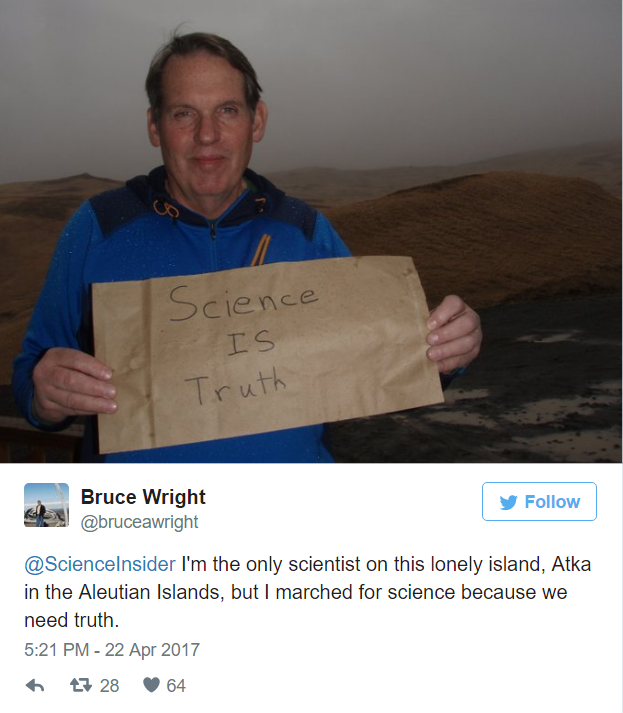
One man bluntly stated that science is truth:

Similar examples abound.

This idea—that science is the only trustworthy way of learning about our world—is the key philosophical starting point for those who want to replace God with an idol of science. (Note that this was exactly the thinking behind the ridiculous Scientific American article on the resurrection that I critiqued in my last blog post.)

If you can convince the masses that “science” is synonymous with truth, it’s quickly implied that no other sources of truth are necessary. Who needs the Bible when we can figure everything out in test tubes?

2. Promote a false dichotomy between “science” and theism so people feel they have to make a choice.

With point 1 firmly in place, people are ready to start believing that science and theism (belief in a personal God) are a trade-off. You pick one as your source of truth. But don’t think for a minute the choices are being hailed as equally viable. Those who pick God are to feel ashamed for being backward and unscientific. After all, it’s assumed they rejected science.

So choose science and join others who made the obvious choice for truth at the cool kids’ table.

That’s the message.

3. Use the word science in a such a variety of ways that people stop trying to clarify what exactly is meant by “science” in any particular context and accept whatever is claimed in its name.

March organizers said they were doing it to encourage “scientists, educators, and advocates, as well as social service workers, artists, trade workers, business people, our elderly population, and families to come together for science.”

Sounds pretty harmless, right? As one 8-year-old said, “Trees make oxygen. It helps us breathe. Who doesn’t like that?” Other kids held up similar non-controversial posters that said, “I love my microscope”; “Future scientist”; and “Science: Experiment, Learn, Fail, Repeat”; and “Science Matters.”

There’s basically no one who would have a problem with any of those statements. In fact, you might even begin feeling a wee bit silly for ever casting a skeptical eye on the March in the first place. But that’s precisely the problem. Non-controversial statements are a smokescreen for the myriad other pieces of secular worldview being promoted under the umbrella term “science.”

If the March was only about science as a field of study, as these examples would imply, no one would need to march at all.

People march because they want something.

They want you to believe something or do something. And if you take a survey of the statements made by marchers, it’s clear they are using the word science interchangeably to mean a variety of things:

  • A field of study (as in, science is the systematic study of the natural world)
  • Scientists (the people who engage in that field of study)
  • Findings of scientific research
  • Interpretation of the findings of scientific research
  • Consensus on the interpretation of the findings of scientific research
  • Policy decisions that in any way touch on any of the above

It’s an effective strategy that you can see everywhere in media today. Establish that science is the only reliable way to gain knowledge about the world, convince people they need to choose science or God, then smuggle in whatever you want to put forward as truth under the generic label of “science” and make everyone think disagreement is for the uneducated fools who didn’t make the smart choice.

Don’t believe it for a minute.

The Art of Raising Kids Who Won’t Bow to the Science Idol

As Christian parents, we must help our kids understand science as nothing more and nothing less than what it is: an extremely important field of study that can give and has given us a wealth of knowledge about the workings of God’s creation.

We can modify the three points above to see what our kids really should know.

1. Scientific research is one (important) way to determine the truth about our world.

Scientific research reveals the mechanics of the universe at a level of detail far beyond what God has revealed to us in the Bible. There’s no verse in the Bible, for example, that states the force of gravity. Science complements our knowledge of God because it reveals the workings of the world He created. Christians need the field of science as much as those with any other beliefs.

But science can say nothing about the ultimate meaning or purpose of our universe, or where all those laws of nature came from in the first place. You can study how a marble maze works, and describe those actions and mechanisms fully, but that doesn’t answer the questions of how the maze came together, why it’s there, and what we should do with it.

To answer these kinds of questions about the universe, we need the input of the One who created it. In that way, the Bible complements science.

2. There need never be a choice between science and God.

Far from being polar opposites, science needs God.

The goal of science, broadly, is to discover the order of the universe. But the feasibility of that goal depends on the assumption that the workings of our natural world can be discovered. We often take that for granted, but we shouldn’t.

Our universe is both understandable and logical. These characteristics allow us to do science in the first place. If the universe was just a hodgepodge of chaotic events, ungoverned by structured laws, science would be a hopeless task.

But why is the world intelligible rather than chaotic?

If the universe is truly the product of unguided evolutionary forces, as atheists claim, there’s no reason to expect that an elegant ordering of nature would happen on its own. But if the universe is the product of intelligence, as Christians and other theists claim, we would expect it to be orderly—a reflection of its rational designer.

Much more could be said on this, but the bottom line is that there is no trade-off between science and God. It’s a false dichotomy. You can pretend you’re “choosing” science, but your choice has no legs to stand on its own. You need God and science.

3. Thoughtful conversations about “science” must be nuanced enough to determine which meaning of science we’re talking about.

Let’s revisit the various meanings of science to see just a few questions that could be asked about any statement like, “Science says X.”

  • A field of study: Science, as a field of study, can say nothing. Only people say things. So, no, science doesn’t say X.
  • Scientists: Which scientists? Which field are they in? What are their credentials for speaking on this particular subject? What is the context for what they said? Who disagrees? Why do they disagree?
  • Findings of specific scientific research: How was the study designed? What was being tested? What was assumed? Who conducted it?
  • Interpretation of the findings of scientific research: What have prior studies on the subject found? What further research is needed to understand or test these findings? Is there a reason to believe this particular study is authoritative in some way? Where is the line between the findings of the study and what people are saying should be done with those findings?
  • Consensus on the interpretation of the findings of scientific research: When consensus is claimed, who is included in that consensus? How is consensus measured? Who has determined that consensus has been reached? What reasons do we have for believing the consensus?
  • Policy decisions that in any way touch on any of the above: The questions here are literally endless. Even if 100 percent of people agreed about the interpretation of 100 percent of scientific findings, there could be endless (legitimate) discussion on what the best policy measures should be based on those findings.

“Science says X” is an authoritative statement built on a foundation of hundreds of assumed answers to questions like these. What happens when we get tricked into believing that anything labeled science is authoritative?

This.

This is from Bill Nye’s new Netflix show, Bill Nye Saves the World, in which he “educates” the public on science issues.

This is being promoted as science.

I apologize for posting something of such a graphic nature, but this needs to be seen to be believed.


Incredible.

So, to the little boy who said, “Trees make oxygen. It helps us breathe. Who doesn’t like that?” the answer is no one.

Absolutely no one.

But that’s not the science the secular world wants us all to “like.” That science is an idol made by hands of people who want God off His throne.

Do not bow down.


 Original Blog Source: http://bit.ly/2rRhlAU