Tag Archive for: John Ferrer

If you’re like me, this upcoming election feels like a choice between which electric outlet to jab a fork into. I’m not a big fan of either candidate. It may be tempting to just sit-out this election. But we shouldn’t give up that easily. This November, you won’t be voting for a pastor, or a personality. You’re not just voting for a president either. You’re voting for a package deal. We’re going to get the president and everything that comes with them. So, we owe it to ourselves to look past their personality and consider the rest of the caravan that’s coming along with them. Here are eight reasons why you and I should still vote in this election even if we don’t like either candidate.

If You Won’t Vote for Either Candidate Then . . .

1. Vote Down Ballot

Besides the presidency, there are thousands of other elected officers to be determined this November. History shows that whichever party wins the presidency gets a boost in the elections down ballot. You can help your preferred party win those other elections by endorsing their party for president.

2. Vote For a Cabinet

The president doesn’t work alone. He or she has a cabinet of about 15 different department heads, 10 other cabinet officials, and the Vice President.[1] This cabinet of 26 people advise the president on a regular basis. The president has the authority to appoint all of those officers. If you don’t like either candidate but you would trust a conservative cabinet over a progressive cabinet, then you know who to vote for.

3. Vote For 4,000 Presidential Appointees.

Besides appointing all the cabinet members, the president also appoints 4,000 or so government positions. When people say, “The Trump Administration” or the “Biden Administration” that’s what they are talking about; it’s the president plus the cabinet plus 4,000 or so appointees. The president isn’t just a personality but also a gateway for overhauling Washington DC.

4. Vote For a Vice President

Besides serving as the next in line for president, the VP is the Chief officer in the president’s cabinet. Even if you don’t care for Trump or Harris, you can get a sense of the administration direction through their running mate. Plus, you might see something in a VP candidate to inspire your vote.

5. Vote For a Party Platform

I would say ‘vote for the party’ but there’s no telling what the party stands for without their platform (what they say they’ll do) and their policies (what they do). In the last 5-8 years, the “left” has pulled farther left. “Old-school” democrats are considered moderate or even Republican now. Today’s Republicans are tough to distinguish from libertarians. The point is, you can still read the party platform of the Democrats and the Republicans and vote for the one that best fits our beliefs and values.

6. Vote For the Policies

Beside the party platform, both candidates represents a set of policies. Now, you can expect politicians to make all sorts of campaign promises leading up to the election. But I’m not talking about those empty promises. I’m talking about the party policies that are likely to happen, once that party is in power. The president, of course, can’t just make a new law. Congress does that. But the president, VP, and his cabinet can throw a lot of influence behind their party policies.

7. Vote For the Power of Executive Office

The president has the power to make executive orders including creating or disbanding whole departments if they so choose. Now, you may not trust either candidate with that power. But someone will have that power regardless. I bet you distrust one candidate more than the others.

8. Vote Against the Other Candidate

There is no option to vote for two U.S. presidents in this election cycle. So, when you vote, you’re always voting against the other candidate. Maybe you don’t like either candidate. But you can still vote against whichever candidate you dislike the most.

A Final Warning

If you aren’t convinced yet, and you don’t follow my advice, then you have that right. It’s a free country, for now. It’s not like Christians will lose their salvation for voting third-party or sitting this one out. But I would urge you not to waste your vote. You can still exercise wisdom, love, and courage by voting not for the president but for the policies, platforms, and personnel that they represent. Yes, that means voting in the presidential election, but it’s not just about the president. It never was. It’s about competing visions of what American will become over the next 4 years. You can vote for the future of America by voting on the direction of this country right now.

Otherwise, if you sit this one out, then you’re muffling your God-given influence. You’re wasting a precious gift. And you’re telling all the rot and darkness out there rioting in the streets as we speak that you’d rather keep your “salt and light” to yourself (Matt. 5:13:16). Perish the thought. Let’s go vote!

References:

[1] This number can change with any given administration, whenever a new office or department is formed, or another one is shut down.

Recommended Resources: 

Correct, NOT Politically Correct: How Same-Sex Marriage Hurts Everyone (Updated/Expanded) Book, DVD Set, Mp4 Download by Frank Turek

You Can’t NOT Legislate Morality mp3 by Frank Turek

Legislating Morality (DVD Set), (PowerPoint download), (PowerPoint CD), (MP3 Set) and (DVD mp4 Download Set

Does Jesus Trump Your Politics by Dr. Frank Turek (mp4 download and DVD)


Dr. John D. Ferrer is an educator, writer, and graduate of CrossExamined Instructors Academy. Having earned degrees from Southern Evangelical Seminary and Southwestern Baptist Theological Seminary, he’s now active in the pro-life community and in his home church in Pella Iowa. When he’s not helping his wife Hillary Ferrer with her ministry Mama Bear Apologetics, you can usually find John writing, researching, and teaching cultural apologetics.

When it comes to Artificial Intelligence, I’m a luddite. I’m analog over digital. Forget Pandora® and Spotify® or even CD’s. Vinyl LP’s rule them all. I grew up playing outside, climbing trees, chasing things, reveling over sticks – not joysticks, just sticks. If they look like a sword or a gun, even better. I’m a Labrador retriever, but literate. I have the tech-savvy of your average canine too. That’s because I’m Gen X. I was raised before the interweb, before social media and Netflix. I remember Atari, Nintendo, and Sega, and Alladin’s Palace. I slogged through the dial-up era. I even met my wife on Myspace. Rock on! When Sunday comes, I actually leave my house to go to church! I turn my phone off to listen to the sermon. And the sermon isn’t at 1.5x speed either. It’s at regular speed, and it takes forever. But that’s how I roll. There are some disadvantages to being an old-school luddite like me. But there’s one big advantage. We first learned about AI from The Terminator. We see artificial intelligence through the lens of Skynet killbots. We learned to fear it before we were ever tempted to love it.

We’re not surprised to find that ChatGPT, for example, poses some major threats to modern writing. It’s not all bad, of course. AI image-builders are great at stirring your creative juices. Writing engines can be a great research tool for summarizing big data into small bites. Long before ChatGPT hit the market spell-checkers and grammar assistants were helping to spot-clean our writing, on the fly. And I’m sure there is AI-tech is tracking down terrorists, blocking telemarketers, rejecting spam, and exterminating viruses. AI can be wonderful. But, technology can be used for good or evil, depending on how people wield it. So, when it comes to publishing, we should be aware of some of the ethical problems AI poses.

First, if you didn’t write it, you’re not the author.

The most glaring problem with AI writing is plagiarism. If you are writing a paper, and use AI to generate a sentence, a paragraph, or more, then that’s content you didn’t write. If you present that writing as your own, you are lying. That’s plagiarism. Ethically, you would need to report that AI program as a co-author. If you’re using AI to write your blog or online article, you should the least say: “Written with the assistance of AI/ChatGPT/etc.” And while that’s better than nothing, if that’s all you say about AI, it’s still misleading since you didn’t just use AI merely to fact-check or assist with research. The writing itself was produced by a writing-engine. So, you aren’t the sole author AI wrote a significant portion of the article, blog, or book while you are claiming sole authorship. In that case, AI didn’t just “assist” you. You two are co-authors. It’s misleading at best, and dishonest at worst, to claim authorship for written material that you didn’t author. Don’t be surprised then if publishers or professors reject your papers and accuse you of plagiarism if you ever claim AI writing as your own.

Second, if you didn’t learn it, you don’t know it.

AI is a Godsend when it comes to research. With AI you can get quick summaries, condense tons of information, and hunt down obscure quotes, authors, and books. I’m a big fan of AI as a research tool. But there’s a looming delusion with AI-infused research. People can radically overestimate their expertise to whatever extent they rely on AI to do the “thinking” for them.

Consider it this way. If you had a forklift and used it to lift thousand-pound loads, does that mean you’re strong? Of course not. A forklift is a tool for heavy lifting, and that’s fine. That’s what tools are for, to make work easier. But the machine did the hard work, not you. So you aren’t strong. The machine is. Now imagine you have a forklift, and not only do you use it to lift thousand-pound loads on the job site, but you also use it at your home gym to do your weightlifting. All your strength-training features you sitting in the driver’s seat, steering this forklift to move weights, pull loads, flip tires, push sleds, and carry you through the miles of jogging trail. You were using the forklift for exercise, so does that forklift now mean you’re strong? Still no. You’re no stronger, but likely weaker because that machine is taking over the hands-on work that you should have been doing to grow fit and strong. That’s how we often treat AI. Instead of wielding it as a tool in the hands of a skilled craftsman, it’s an artificial limb rendering us handicapped and codependent. AI, therefore, must be subordinated beneath the task of learning. It should function in service of our learning. As writers, publishers, and content creators, we should be learning about the subjects we’re writing about, we should be gaining experience and expertise. We do well, then, to take full responsibility for the learning task before us, so we’re not using AI to replace learning and knowledge with the appearance of learning substitute for learning and knowledge. Rather we should be using AI to help us learn and gain knowledge. At the end of the day, if you’re reposting AI content that you didn’t learn for yourself then you don’t know whether that content is correct, fair, or reasonable. If you didn’t learn it, you don’t know it.

Third, if you don’t lead it, you’re led by it.

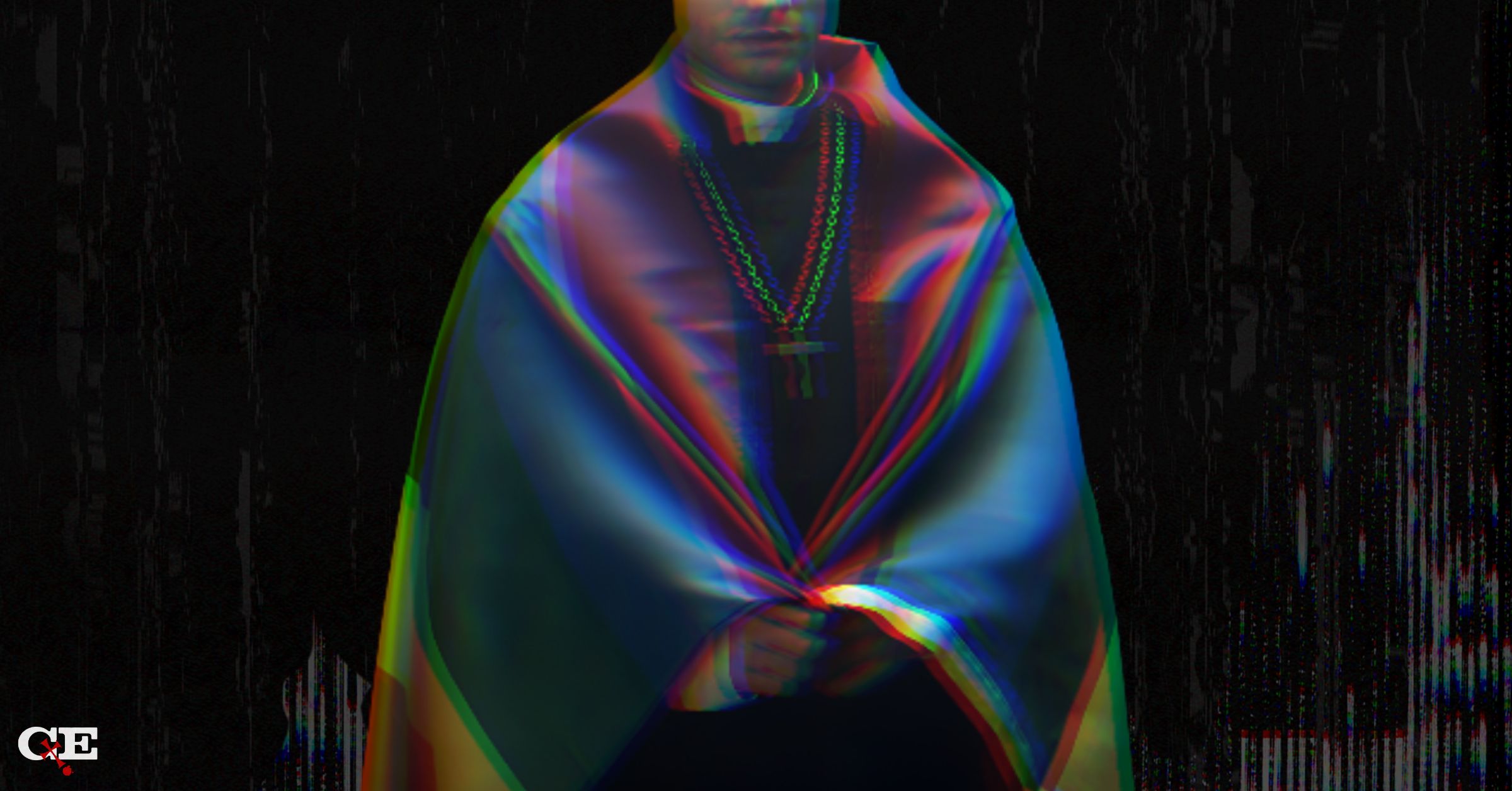
A third problem facing AI-usage is that it “has a mind of it’s own.” I’m not talking about actual autonomous life. We’re probably not at the point of iRobot or even Skynet. I’m talking about how AI isn’t neutral or objective, and it’s often laughably mistaken. If you followed Google’s “Gemini” launch fiasco then you know what I’m talking about. In February 2024, Google launched an AI-engine called “Gemini.” It could generate images, but never of white people. Apparently, it had been programmed to avoid portraying white people and, instead, to favor images of black people and other minorities. Allegedly, this is from a DEI initiative written into its code. So, if you asked for images of the Pope you might get one of these instead:

Now I’m not too worried about Gemini 1.0. I’m more concerned about the AI engines that are so subtle that you’ll never realize when they skew information in favor of a political narrative. For all writers, editors, authors, and content-creators, we need to do more than take credit for our content. We need to take responsibility for it too. That means we take leadership over the tools used in research, fact-finding, and learning. Instead of letting those tools lead us whichever direction they’re programmed to go, we decide for ourselves whether those directions are worth going, change course as needed, and refuse to let a Google algorithm determine what we are going to think or believe. Another way to say this is that we should expect that AI introduces some degree of slant and bias to the equation. So instead of trusting AI to tell the truth, and report events accurately, we need to keep a healthy dose of skepticism on hand and be ready to correct against our own biases and the bias we find in AI programming.

At an innocent level, an AI writing program might be biased in favor of formal writing – replacing all contractions like “aren’t,” “we’re” and “y’all” with “are not,” “we are,” and “youz guys.” At a more insidious level, AI can insert a decidedly partisan slant – especially when it comes to progressive political agenda items. It would be naïve to think that Google, Bing, Microsoft, etc. aren’t willing and able to let political and religious bias slip into the programming.

There’s No Going Back to the Stone Age

Now I may be a luddite, but I’m no fool. I understand that unless there’s a nuclear fallout, or something comparable, there’s no way we’re going back to the days of dot matrix printers and analog typewriters. We aren’t going back to the stone age as long as these time-saving tools are still functional. I write these warnings to you, not as a prophet but as a minister. I don’t foresee technological disasters crashing down on us. Rather I’m a hopeful Christian encouraging all of you aspiring writers out there to model academic integrity, write well, own your material, and grow through the writing process.

Oh, and Analog > Digital. Long live Vinyl!

Recommended Resources:

Correct not Politically Correct: About Same-Sex Marriage and Transgenderism by Frank Turek (Book, MP4, )

Stealing From God by Dr. Frank Turek (Book, 10-Part DVD Set, STUDENT Study Guide, TEACHER Study Guide)

Legislating Morality: Is it Wise? Is it Legal? Is it Possible? by Frank Turek (Book, DVD, Mp3, Mp4, PowerPoint download, PowerPoint CD)

Is Morality Absolute or Relative? by Frank Turek (Mp3/ Mp4)


Dr. John D. Ferrer is a speaker and content creator with Crossexamined. He’s also a graduate from the very first class of Crossexamined Instructors Academy. Having earned degrees from Southern Evangelical Seminary (MDiv) and Southwestern Baptist Theological Seminary (ThM, PhD), he’s now active in the pro-life community and in his home church in Pella Iowa. When he’s not helping his wife Hillary Ferrer with her ministry Mama Bear Apologetics, you can usually find John writing, researching, and teaching cultural apologetics.

You’ve been at your job for almost a year. You enjoy your work. You’re planting roots. Soon you’ll qualify for a pay raise and new benefits. Things are looking up. Except, at today’s business meeting, the boss announced a mandatory diversity training[i] for all employees. He made it sound harmless, perfunctory, just a hoop to jump through. No one asked questions. Everyone just nodded. Since you’re new here, you held your questions. You don’t want to cause a stir. Still, something smells fishy. Maybe you’ve heard stories about DEI, SEL, CRT, or Unconscious Bias training.[ii] Maybe you’ve been through this before, and you know what’s coming. But whatever is bothering you, there’s a decision to make. What will you do about this diversity training?

You’ve got options. But before picking one, you should know what you’re up against.

Background Check
On the surface, “diversity training” seems like a great idea. We all agree that racism, sexism, phobia, and bullying are all bad. But everyone has their biases. So with a little coaching maybe we can get along better, become more productive, solve problems, and have a healthier workplace. Not to mention, we might avoid a harassment suit or messy discrimination case down the road.

Diversity training can be incorporated into “leadership training,” “career advancement,” or “onboarding programs.” But the big takeaway is that the workplace (school, or church) needs to get ready for more diversity, and all the challenging opportunity that presents.

Advocates like the US Chamber of Commerce claim diversity training is a “business imperative,” so companies can provide “opportunities for everyone . . .  help[ing] lift communities and strengthen the health, prosperity, and competitiveness of our nation and our society.”[iii] In the past these programs were called “sensitivity training” reflecting a growing awareness of sexism and harassment in the workplace. But today they’re more often about racial and LGBTQ diversity, with a progressive political spin. Some critics have spoken out about the multi-billion dollar diversity training industry, claiming it’s a trojan-virus, packaged in slick and appealing buzzwords, but filled with corruption, extortion, and radical agendas.[iv] More gracious critics argue diversity training just doesn’t work, as anthropologists Frank Dobbin and Alexandra Kalev explain:

“[D]iversity training is likely the most expensive, and least effective, diversity program around. But [corporate, church, and school representatives] persist, worried about the optics of getting rid of training, concerned about litigation, unwilling to take more difficult but consequential steps or [they’re] simply in the thrall of glossy training materials and their purveyors. That colleges and universities in the United States persist in offering training to faculty and students, and even mandate it (29% of all schools require faculty to undergo training), is particularly surprising given that the research on the poor performance of training comes out of academia.” [v]

Compliance Warning
The average employee won’t know all that, or know the latent problems with diversity training, or detect progressive political influence. Most employees won’t raise objections as long as it doesn’t cost them anything. The common practice is “go along, to get along.” In other words, compliance is commonplace.

Christians often behave the same way, thinking they’re being meek and mild just like Jesus. After all, Paul says, “as far as it depends on you, live at peace with everyone” (Rom 12:8). We Christians should be peacemakers. While that’s not exactly compliance, it can look the same.

Even if you eventually decide to partake in the training, there is no option, for mature Christians to be lazy, passive, and compliant. Whether it’s a diversity seminar, critical race training, struggle sessions, LGBTQ sensitivity school, or whatever it is, you’ll be offered a veritable buffet of ideas, and they might even try to force-feed it to you. So, if you’re in the habit of ingesting whatever authorities feed you, then you’re likely to swallow something toxic. Passive compliance isn’t a responsible option.

Is It Really Mandatory?
Fortunately, “mandatory training” isn’t always mandatory. If it’s just suggested, then you don’t have to go. Or it’s mandatory only if you’re at the office. Then you can dodge it by missing work on those days.

Even if the training is optional, however, you may still decide to attend, especially if you want to learn what they’re saying and how to respond to it. It probably won’t be 100% wrong but not 100% right either. You would need discernment, tact, and will-power. And most importantly, make sure to “live not by lies.”[vi] Measure your words. Guard your actions. Sign only what you agree with. Speak only truth. If you’re required to sign a position statement then politely decline unless you agree with it. Your Christian testimony is more valuable than any paper or screen they put in front of you. “Above all else,” Scripture warns, “guard your heart, for everything you do flows from it.” (Prov. 4:23; NIV)

Now, let’s suppose you can’t be “out of the office” on those days but you don’t want to attend. Further, let’s suppose this training will likely conflict with Christianity or your conscience. If a diversity seminar promotes divisiveness rather than diversity, or it stirs up more racism than reconciliation, then you may have valid grounds for a religious exemption. If you’re on good terms with your manager, or higher up, you could request that. They might write an “exception clause” for you. If this diversity training is meant to reduce the risk of discrimination lawsuits, then they might grant a religious exemption, not as a favor but for fear of a discrimination suit.

Your human resources department can probably help you to know your rights here. If not them, then call a lawyer friend, or in extreme cases, call Alliance Defending Freedom (www.ADFlegal.org), the American Center for Law and Justice (www.aclj.org), or the Foundation for Individual Rights and Expression (https://www.thefire.org/).

It Is Mandatory. What Now?
Avoidance, of course, isn’t always an option. Legally speaking, the company has a general right to decide what kind of expectations and values they want among their employees. And there are many creative ways they can obey the law while pressuring you to conform. At this point, your options are more limited. Two extremes are: Quit or Lawyer up.

Quitting your job will work, for avoiding training. But, besides losing the job, you may lose health insurance, friends, advancement opportunities, and ministry influence in the company. Plus, you can be replaced with someone more compliant, surrendering that territory to the same forces you were protesting. Christians need to count the cost. Following Jesus takes a toll. Maybe not your job, but it might cost some convenience, embarrassment, a pay cut, a reprimand, or suspension. “If anyone would come after me,” Jesus said, “let him deny himself and take up his cross and follow me” (Matt 16:24; ESV). Historically, the normal Christian life invites adversity from a world that cares little for Christ (John 1:10-11).

Another extreme option is to “lawyer up.” Christians should be forgiving and not litigious with other Christians (1 Cor 6:7). But that’s a general principle, and between church-members. In a corporate setting, there can be righteous lawsuits. Christians have a general duty beyond their own interests to seek justice for other people (Micah 6:8). And if your company is teaching people to “be less white,”[vii] or that “black people can’t be racist,”[viii] or “white people are sub-human demons”[ix] – as some diversity trainers have said – then legal action might be how a righteous defense rises to the level of egregious offense. But be warned. This option is expensive. And you might not have a case. The diversity training industry is big, with lots of lawyers, lots of money, and even a couple supreme court precedents on their side (Regents v. Bakke, 1978; and Grutter v. Bollinger, 2003). The upcoming Supreme Court case, Students v Harvard College, could roll back some of that. In the meantime, this legal landscape is dicey.

The moderate option is to attend the training. Rarely would mere attendance be sinful. If you have some discernment, take good notes, and act polite, you might be able to make it through the seminar without any trouble and even learn something. If you’re required to attend, and the seminar is somehow immoral, then the moral burden rests heavier on your supervisors than on you.

Four Strategies For Mandatory Diversity Training

If you’re in this boat, and your best option is to attend the seminar, then you still have the choice of how to carry yourself during the training. What will your attitude and strategy be? James Lindsay proposes four ways to conduct yourself here.[x]

  1. Gray Rock: This is passive resistance, the safest option for most people. Present yourself as a boring gray rock, unengaged, uncommunicative, calm, offering only short answers, and limiting exposure. On social media this is called ghosting. As long as you don’t have to say or do something against your conscience, this strategy should work.
  1. Spying/Whistle-blowing – a riskier option is to play along, engaging and cooperating as if you’re compliant but you’re really spying. You’re recording and gathering notes preparing to “blow the whistle.” Spying poses moral dilemmas as you may be acting against your conscience, or saying things that you don’t believe. That’s spiritually dangerous territory. Plus, whenever people do find out you’re the whistle-blower you’ll likely lose your job, or worse. This isn’t a great option unless the diversity training is very egregious, and you really know what you’re doing.
  1. Outright resistance – another risky option is to openly resist. You could refuse to attend, or write a letter to the board, or stage a walk-out, or host a press conference, or things like that. Again, the risk of getting fired is high. Done right, however, it can be very effective, especially if most of the company is involved. Know that the bigger the protest, the harder it will be to pull off, and as tensions escalate you risk looking like the bad guy.
  1. Trolling – This is an accelerationist strategy, where the “troll” gives false information – like jokes, sarcasm, or memes – to illicit responses that derail the event. Quick witted class clowns have been doing this at school for ages. Some people have just the personality, and skill set to pull this off. But it’s an advanced strategy. It can require you to know the material better than the trainer does, so you can exploit holes in their argument and gaps in their evidence. You risk coming off as adolescent, insincere, and rude. For Christians, this isn’t generally a safe strategy, especially if it turns into mocking people or picking fights. Expect to lose your job with this strategy too.

The 5th Strategy: Christian Wisdom

Building on Lindsay’s four strategies, we can add a fifth option. Scripture exhorts Christians to live at peace with everyone as far as we’re able, treating people with the respect and love they deserve as “image bearers” (Gen 1:26-28; Mark 12:31; Rom 12:8). While we won’t agree with evil or lies, we can listen graciously, affirm the good, speaking only when it’s helpful and only what’s true.[xi] Even if the diversity seminar is flooded with bad ideas, Christians can hold fast to the truth so the torrent of confusion doesn’t sweep us away.

At times, Christians may need the Gray Rock strategy (#1). And we should take good notes preparing to blow-the-whistle if it comes that (#2). If the training requires agreeing with lies, foolishness, or evil, then you’ll have to decline – in open resistance (#3). You may even need to point out bad logic, with an innocent question or joke (#4). You can be merciless towards bad ideas, just make sure to be merciful toward, never mocking them. The important thing here is to be a good example of Christ and exercise wisdom throughout. As you watch or listen to a mixture of good and bad ideas, you can chew what they feed you, swallow the good and spit out the bad, so to speak.[xii]

You might not have any great options available. But if you measure your words, guard your heart, and keep the faith, you can stand your ground. May God bless your effort!

REFERENCES:

[i] Besides diversity training, most of this article could apply to other training types that threaten freedom of religion/conscience.

[ii] DEI: Diversity, Equity, and Inclusion. SEL: Social Emotional learning. CRT: Critical Race Theory.  Each of these acronyms is loaded with political and cultural connotations and should not be taken at face value.

[iii] U.S. Chamber of Commerce, “Diversity, Equity, and Inclusion” [Main page] USChamber.com, accessed 2 April 2023 at: https://www.uschamber.com/diversity

[iv] https://newdiscourses.com/2023/03/marxist-roots-dei-session-1-equity/, https://newdiscourses.com/2023/03/marxist-roots-dei-session-2-diversity/, and https://newdiscourses.com/2023/03/marxist-roots-dei-session-3-inclusion/

[v] Frank Dobbin, and Alexandra Kalev, “Why Doesn’t Diversity Training Work? The Challenge for Industry and Academia,” 10, no. 2 (2018), 48 at: https://scholar.harvard.edu/files/dobbin/files/an2018.pdf

[vi] Aleksandr Solzhenitsyn, “Live Not By Lies,” [Essay] (12 Feb 1974). See also, Rod Dreher, Live Not by Lies: A Manual for Christian Dissidents (NY: Sentinel, 2020).

[vii] https://nypost.com/2021/02/23/coca-cola-diversity-training-urged-workers-to-be-less-white/

[viii] https://www.foxnews.com/media/woke-department-defense-equity-chief-writes-anti-white-posts-exhausted-white-folx

[ix] https://www.youtube.com/watch?v=C2tQathSxpg

[x] https://newdiscourses.com/2023/03/fighting-dei-training/

[xi] For example, Neil Shenvi, “DEI Done Right: Disentangling Christian Community From Critical Theory,” ShenviApologetics.com (San Dimas, CA: Life Pacific University, 7 April 2022) at: https://shenviapologetics.com/dei-done-right-disentangling-christian-community-from-critical-theory/

[xii] See, Hillary Ferrer, Mama Bear Apologetics: Empowering Your Kids to Challenge Cultural Lies (Eugene, OR: Harvest House, 2019), 47-62.


Recommended resources related to the topic:

Correct not Politically Correct: About Same-Sex Marriage and Transgenderism by Frank Turek (Book, MP4, )

Legislating Morality (DVD Set), (PowerPoint download), (PowerPoint CD), (MP3 Set) and (DVD mp4 Download Set)

Does Jesus Trump Your Politics by Dr. Frank Turek (mp4 download and DVD)

Jesus vs. The Culture by Dr. Frank Turek DVD, Mp4 Download, and Mp3


Dr. John D. Ferrer (MDiv, Southern Evangelical Seminary; ThM & PhD Southwestern Baptist Seminary) is a teaching fellow with the Equal Rights Institute and ministers full-time with Crossexamined.org.


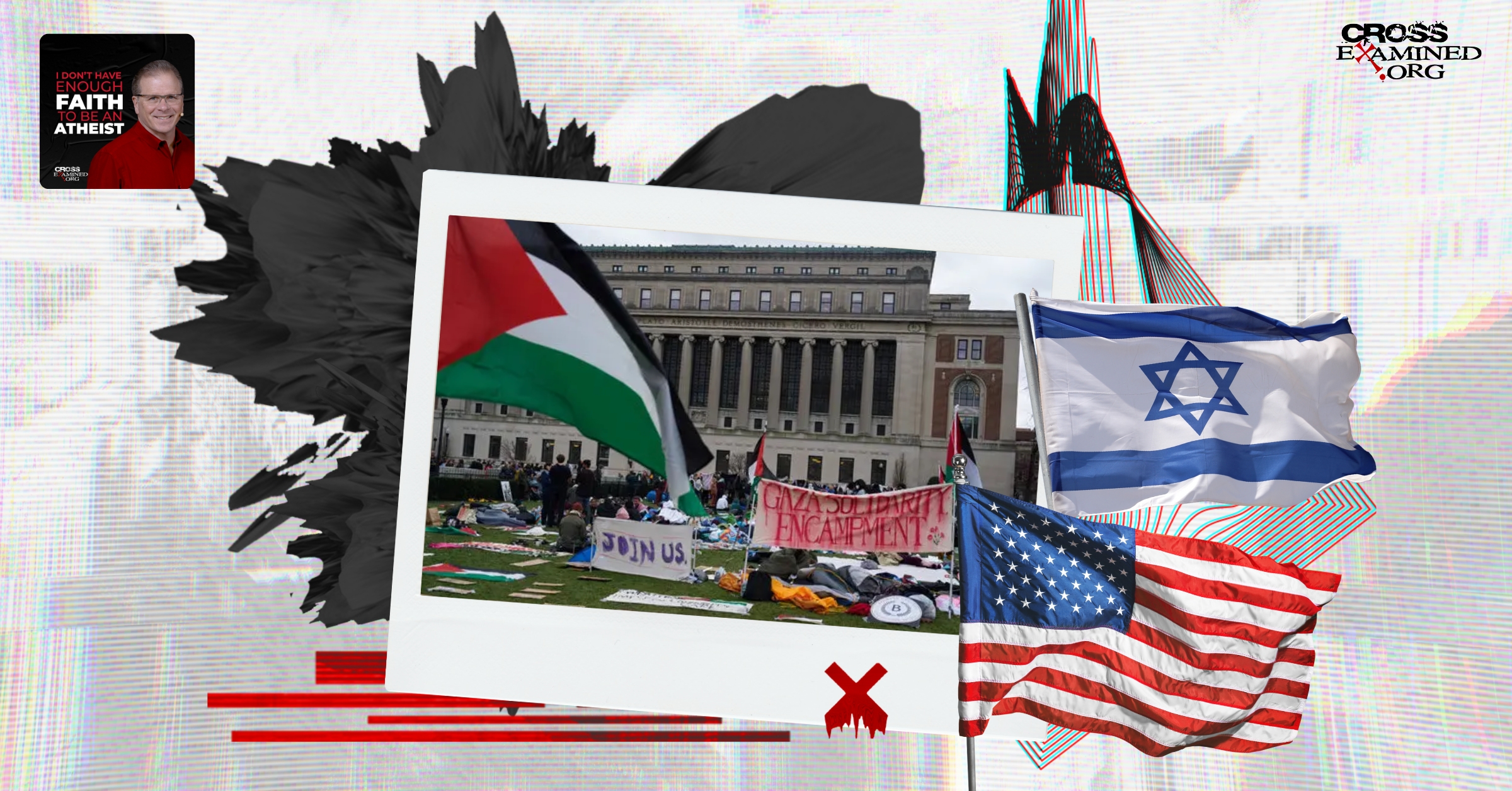
What’s driving the anti-Israel protests storming college campuses all across America? Schools like Columbia University, UCLA, Emory, Harvard, and Yale have been hit with massive pro-Palestinian mobs that have led to hundreds of arrests and violent threats against the Jewish student populations. Why are these angry (yet seemingly sophisticated) mobs targeting college campuses and how have they successfully managed to recruit students to join in the madness even at the threat of expulsion?

In this midweek podcast, John guides us through a conversation investigating the ongoing anti-Israel protests as he also breaks down the geopolitical, historical, theological, and prophetic backdrop. He’ll also provide an update as to how the U.S. government is responding to these hostile demonstrations in real time and expose the true heart and motivation behind them. During the episode, John will answer questions like:

  • What sparked this string of protests and what demands are being made?
  • What would be the implications of a ceasefire from Israel?
  • Why is a two-state solution impossible?
  • How legitimate is the “Free Palestine” cause?
  • What makes Israel a political barometer in the Middle East?
  • If Hamas managed to defeat Israel, how would the U.S. be impacted?
  • Why do many Muslims and citizens of Gaza support the flourishing of Israel?

As you learn about the context surrounding the protests and the Israel-Hamas conflict, it’ll become more and more apparent why Christian apologists should have a vested interest in the nation of Israel. Take a listen as John reveals how politics is playing a major role in the recent rise of antisemitism on college campuses in the U.S. and explores how the Islamic worldview continues to fuel hostility between Jews and Arabs in the Middle East. And please continue to pray for the safety of Israel and a peaceable end to this ongoing war.

To view the entire VIDEO PODCAST be sure to join our CrossExamined private community. It’s the perfect place to jump into some great discussions with like-minded Christians while simultaneously providing financial support for our ministry.

You can also SUPPORT THE PODCAST HERE.


Download Transcript


The Satanic Temple (TST) is at it again. The atheistic left-wing activist group is already known for starting afterschool Satan clubs,[1] erecting unholy statues at government buildings,[2] and trying to carve out religious exemptions to pro-life laws.[3] Now they have opened an online abortion clinic.[4] Abortion clinics are not uncommon. And TST has a history of abortion activism. But this abortion clinic stands out for two reasons.

TROLL LORDS

First, the clinic is named “Samuel Alito’s Mom’s Satanic Abortion Clinic,” an obvious troll move.[5] TST is so well-known for trolling it is not just a side quest, but a lifestyle.[6] Their inception, according to the New York Times, was designed as “a mischievous thorn in the side of conservative Christianity.”[7] Stated positively, they could teach a masterclass on trolling. They take adolescent snark, infuse agitational protesting, incorporate theatrics, and beef it up with a cadre of lawyers till it becomes a whole socio-political methodology. And make no mistake, they are dead serious about it.

For TST, trolling is a mode of political activism advancing their ideology, which they expound as Seven Fundamental Tenets.[8] These guiding statements are roughly what could be expected at the crossroads of progressive politics and New Atheism. So far, their primary focus has been religious freedom in the public square. Their trolling is a way of stretching “religious freedom” till it breaks. Instead of supporting robust religious freedom where Christianity, the majority religion, holds a measure of cultural privilege and influence in the public square, TST aims at a more austere separation of church and state. This Troll Lord approach has not yet blown up in their faces. But this abortion clinic might be the spark that does it.


RITUAL ABORTION

The second reason distinguishing this clinic is that it treats abortion as a religious ritual. In their own words: “Samuel Alito’s Mom’s Satanic Abortion Clinic™ is an online clinic that provides religious medication abortion care. The clinic provides abortion medication via mail to those in New Mexico who wish to perform The Satanic Temple’s Religious Abortion Ritual.”[9]

Yes, TST abortion services are touted as “religious rituals,” but these are not surgical abortions with blood-smearing child sacrifices. This is an online mail-order clinic. The New England-based Satanic Temple offers only medication (pill) abortion[10] through an unnamed pharmacy in New Mexico. The “rituals” are something between semi-religious motivational self-talk on one end and a legal formality on the other.[11]

First, TST is protesting the oft-scorned U.S. Supreme Court case, Dobbs v. Jackson Women’s Health Organization (2022).[12] The clinic’s namesake, Justice Samuel Alito, penned the majority decision in Dobbs, the monumental ruling that overturned both the Roe v. Wade (1973)[13] and Planned Parenthood v. Casey (1992)[14] decisions.

Second, TST maintains they are helping to fill a healthcare void for women as states roll back abortion-choice laws in the post-Roe era. Even in pro-choice states like New Mexico (as of 2023), where TST’s clinic is based, these medication abortion services, supposedly, could offer more privacy and access than is currently available at traditional abortion clinics.

Third, they are potentially circumventing future anti-abortion laws through a religious exemption. If a woman identifies as a TST member, then, theoretically, she could bypass abortion bans and get an abortion under the protection of First Amendment “religious freedom.” Her federal-level right could bypass state-level anti-abortion laws.[15]

Fourth, they stand to grow their membership if this religious exemption route works. If they can carve out a federally protected religious exemption against state-level abortion laws, then they will have effectively overturned the Dobbs decision, but only for members of The Satanic Temple. That is a strong incentive for people to join TST.

Fifth, TST stands to make a fortune from tax-exempt “religious” donations, as abortion-choice activism is a left-wing goldmine right now.[16]

Sixth, beyond just exploiting religious tax exemptions, they might explode them. Religious tax exemptions have their basis in a pluralistic “religious freedom” interpretation of the First Amendment. But opposing that view is the secular sense of “separation of church and state.” In this view, the First Amendment is thought to mandate strictly secular governance.[17] Judicial history favors the pluralistic view.[18] TST seems to favor the secular view. TST could make religious tax exemptions so offensive that all such exemptions are revoked.

Strategically speaking, by calling their abortion services a “religious ritual,” they stand to benefit materially and advance their cause, at least in the short term. But they may have overplayed their hand. There are brands of Satanism that practice “black” magic and or believe in a literal Satan.[19] TST, however, is not one of them. There are different denominations, so to speak, of Satanism; and while some arguably have a place for , The Satanic Temple is not like that.[20] TST does not see their rituals as child sacrifices to Satan since they do not believe God or Satan exist. Yet in claiming abortion as a satanic ritual, they can .


HEALTH RISKS WITH PILL ABORTIONS

Medically speaking, TST risks undercutting their pro-choice aims by aligning with an especially dangerous abortion method. At a surface level, they are proudly pro-choice. And opening an abortion clinic is very pro-choice. That seems consistent enough. But, at a deeper level, they are also trying to promote women’s health. In their words, “TST is taking many steps…to establish exemptions from laws that do not promote the health and safety of patients.”  [21] They also try to conform their beliefs to the “best scientific understanding of the world” and “strive to act with compassion and empathy toward all creatures in accordance with reason.”[22] But medication abortion significantly increases health risks for mothers.[23] That is not very compassionate, empathetic, or healthy. These increased risks can be difficult to see through a partisan political lens, but with an eye for humanitarianism and good solid science, the risks become evident. What are those health risks?

First, if a woman has a tubal (ectopic) pregnancy, the pill regimen will very likely not work on her.[24] She will remain pregnant with a looming fatal complication. But because she had the abortion pill, she believes she is no longer pregnant, and she may well not know she is in harm’s way.

Second, if women use abortion pills to secure an abortion without clinical visits, they can unwittingly terminate future pregnancies, rendering themselves infertile if they are Rh-negative.[25] The blood type Rh-negative (i.e., A-negative, B-negative, AB-negative, and O-negative blood) is a common blood type affecting 15 percent of the population. It often lingers undetected without affecting one’s health. A pregnant woman seeking chemical abortion may never know she is Rh-negative. But with that condition she will need Rh D immune globulin (RhoGAM) at the time of her pill regimen.[26] Otherwise, her body will form “antibodies against the fetal blood cells, which can result in catastrophic immune rejection of the fetus in a subsequent pregnancy.”[27] Medication abortion would not just complicate this pregnancy but imperil future pregnancies, causing stillbirths, neonatal deaths, and brain injuries, and can make her infertile.[28]

Third, medication abortions are self-administered. The first pill, mifepristone, may or may not be given in the clinic. But the second pill is self-administered, at home two days later. That pill, misoprostol, is the primary active agent expelling the pre-term child. A host of side-effects routinely happen at this stage.[29] But being at home, she has no direct clinical supervision. The pregnant mother has to guess whether her bleeding, cramping, nausea, and so forth are bad enough for a visit to the emergency room. She is not a licensed physician, and likely not experienced with this sort of thing. She cannot be expected to know when her severe cramping is too severe or when a lot of bleeding becomes too much bleeding. Nor can she be expected to know if the abortion was complete. Yet any remains left in-utero can cause further complications, such as infection, sepsis, or death. If she is using chemical abortion to keep her pregnancy a secret or to stay anonymous, then even if she goes to the emergency room for complications, as she should, she will likely have to drive herself. Severe cramping and hemorrhaging become doubly dangerous when you are stuck in traffic. Moreover, she will lose minutes, perhaps hours, at a time when seconds count. Additionally, chemical abortion risks are likely much higher than reported due to hospitals misreporting chemical abortion complications as miscarriage complications.[30]

Furthermore, chemical abortion is designed for early-stage abortions, up to 49 days (seven weeks). Even Planned Parenthood says that after eleven weeks, pill abortion is not recommended.[31] Its effectiveness declines between eight and eleven weeks, from about six percent to thirteen percent chance of failure.[32] Beyond that threshold, effectiveness drops, and complication rates worsen. All these facts together explain why medication abortions generate roughly four times more medical complications and injuries compared to surgical abortions.[33] These risks also help explain why the FDA currently faces challenges before the U.S. Supreme Court for rolling back medical regulations surrounding pill abortion (see FDA v. Alliance for Hippocratic Medicine and Danco Laboratories v. Alliance for Hippocratic Medicine).

Fourth, coerced abortion is not “pro-choice.” Yet self-administered abortions are notoriously difficult to screen for coercion. Pregnant women are often pressured into an abortion by an abuser, a partner, parents, or friends. Abusers can use abortion to destroy evidence that might otherwise incriminate them for rape or molestation. For parents it may be a way to protect the reputation of the family, or to punish the daughter. Or it could just be an overbearing or negative influence pressuring her into an abortion. A 2023 peer-reviewed study showed that only 33% of women who had abortions wanted their abortion, and 24% of women surveyed described their abortion was coerced[34] Abortion-choice advocacy, TST included, hinges on abortion being a choice. But compared to pro-choice rhetoric, the ugly reality of coerced abortion tells a different story. Women are exploited for sexual gratification, then tossed aside to fend for themselves, or threatened with abandonment, or abused till they kill their children-in-utero. That is a far cry from women’s liberation.

The convenience and privacy of pill abortions can make them sound like a panacea for sexually liberated society. But the reality is not so pretty. Pill abortion means less medical supervision, more coercion and social isolation, and around 400 percent more complications and injuries for women. In this way, The Satanic Temple is drifting into a basic pro-abortion posture at the expense of being “pro-science,” “pro-choice,” and “pro-woman.” If the TST really wants to promote women’s health and freedom while staying pro-choice, they should at least wait till chemical abortion and health regulations improve so TST isn’t left contradicting their own aims.


BAD PRESS FOR PRO-CHOICE

Besides the heightened health and social risks with pill abortions, there is a glaring publicity problem with satanic ritual abortions. When people hear about the “Satanic Abortion Ritual,” they are liable to interpret it as child sacrifice. That is not what TST is trying to do here, but that is still how their marketing sounds. Yet any affiliation between abortion and child sacrifice is bad press for the pro-choice cause.

Most pro-lifers already believe abortion is child sacrifice — metaphorical or not, intentional or not. From a pro-life Christian perspective, abortion-choice culture looks like modernized Molech worship (Lev. 18:21; 20:2–5; Deut. 12:31; 18:10; Jer. 7:31; Ezek. 16:20–21). Instead of sacrificing born babies on the temple altar to Satan’s hoards, The Satanic Temple is sacrificing preborn babies on the altar of convenience. They are not just helping women with their abortions; they are enlisting women to perform satanic ritual abortions.

In this way, The Satanic Temple is stepping on a rake of their own making. They are declaring abortion to be a satanic ritual, just like pro-life Christians have warned all along. Sure, TST might think this ritual is little more than a self-help therapy session; but people don’t have to believe in Satan to do his bidding.


SUMMONING TASH

In C. S. Lewis’s Narnia-series classic, The Last Battle (1956), Lewis portrays an epic showdown where a few opportunistic tricksters perform a summoning ritual for a false god named Tash. They don’t even believe in Tash. They go through the motions, pretending to summon Tash, to trick the audience. But lo and behold, Tash arrives. And he is terrifying. Some Tash followers were insincere, playing games on the spiritual battlefield, taking none of this religious stuff seriously. Yet they still served Tash. In the same way, one does not have to believe in Satan to serve him. One does not have to believe in spiritual warfare to be victimized by it either. Worse yet, people can blindly victimize others thinking they are helping. The abortion-choice campaign in the U.S. alone has devoured over 65,000,000 innocent casualties, largely under the banner of empowering women.[35] Slick marketing or a slippery slope, it’s the same difference. Murderous evil can march under right-wing or left-wing banners, religious or secular, human or divine. Yet the test for discerning evil is not in winsome rhetoric, party allegiance, or good intentions, but whether that act is in fact evil.

It matters little whether TST advocates believe in a literal Satan, or in ritual child sacrifice. They can perform child sacrifice to Satan all the same. In this way, TST is inadvertently embracing some of the most pointed critiques against abortion-choice.

People can be casualties, and unwittingly create casualties, without even knowing a war is raging. People can do all sorts of consequential things, without recognizing the weight of their actions till it is too late. They can even sacrifice living human beings to a false god and a real demon, without believing in gods or demons.

FINAL THOUGHTS

The Satanic Temple is predictably doing what they have done before, exploiting their cartoonishly dark and villainous branding to agitate the public and pester the Christian Right into a judicial showdown. Only this time, they have gone so far to bait the Christian Right; they have come full circle. They stepped into the crosshairs of one of the fiercest critiques abortion-choice has ever faced. All those abortions they helped facilitate, killing new human beings every time, and all the harms to women emotionally, socially, and physically because of those abortions — all of that behavior will ultimately weigh on every Satanic Temple member (or anyone else) who helps make it happen. I don’t mean to sound like a fear-baiter. I just say that as a warning against the hubris of scientifically ill-informed activism. No amount of good intentions can redeem bad policy. And for all the value found in bodily autonomy, which TST affirms, it does not excuse deliberately killing tiny, innocent, defenseless human beings. If we, as a society, are going to live up to the huge responsibility of humanitarianism, we need to prioritize protecting the most defenseless members of society from discrimination, oppression, and especially targeted killing. That includes sex-selective killing, race-based killing, ability-based killing, exploitation of women, and child abuse. Abortion-choice policy fails on all those accounts.[36] If TST were more consistent with their own stated values, they would walk back this pill-abortion clinic. And if we as a society were more serious about humanitarianism, we could admit that women deserve better than the septic social band-aid of abortion-choice policy.

REFERENCES:

[1] Joe Bukuras, “Judge Orders PA District to Allow After School Satan Club to Meet on School Grounds,” Catholic News Agency, May 4, 2023, https://www.catholicnewsagency.com/news/254246/judge-orders-pa-district-to-allow-after-school-satan-club-to-meet-on-school-grounds.

[2] James Farrell, “Why a Satanic Holiday Display at the Iowa Capitol Building Has Been Allowed to Stay Up Despite Backlash,” Forbes, December 13, 2023, https://www.forbes.com/sites/jamesfarrell/2023/12/13/why-a-satanic-holiday-display-at-the-iowa-capitol-building-has-been-allowed-to-stay-up-despite-backlash/.

[3] Daniel Payne, “Satanic Temple Loses Lawsuit against Indiana Pro-life Law,” Catholic News Agency, October 27, 2023, https://www.catholicnewsagency.com/news/255839/satanic-temple-loses-lawsuit-against-indiana-pro-life-law.

[4] “Samuel Alito’s Mom’s Satanic Abortion Clinic,” The Satanic Temple (2023), accessed January 10, 2024, https://thesatanictemple.com/pages/samuel-alitos-moms-satanic-abortion-clinic.

[5] Co-founder of TST Malcom Jarry said, “in 1950, [Supreme Court Justice] Samuel Alito’s mother did not have options and look what happened.” John Lavenburg, “New Mexico’s Bishop’s Shudder at Prospect of ‘Satanic’ Abortion Clinic,” Crux, February 10, 2023, https://cruxnow.com/church-in-the-usa/2023/02/new-mexicos-bishops-shudder-at-prospect-of-satanic-abortion-clinic.

[6] This reputation for “trolling” appears in their “Frequently Asked Questions” page. They don’t evade accusations of “trolling” and deny it’s merely for attention. TST, “Frequently Asked Questions: Is TST a Media Stunt/Hoax/Trolling, Etc.?,” The Satanic Temple, c. 2019, https://thesatanictemple.com/pages/faq. For an unofficial list of TST activist trolling, see “Timeline of The Satanic Temple,” SFGate, January 9, 2019, https://www.sfgate.com/nation/slideshow/Timeline-of-the-Satanic-Temple-188753.php.

[7] Mark Oppenheimer, “A Mischievous Thorn in the Side of Conservative Christianity,” New York Times, July 11, 2015, https://www.nytimes.com/2015/07/11/us/a-mischievious-thorn-in-the-side-of-conservative-christianity.html.

[8] “There Are Seven Fundamental Tenets,” The Satanic Temple, accessed January 8, 2024, https://thesatanictemple.com/blogs/the-satanic-temple-tenets/there-are-seven-fundamental-tenets.

[9] “Samuel Alito’s Mom’s Satanic Abortion Clinic,” The Satanic Temple.

[10] Or medication-induced abortion, also known as chemical abortion, medical abortion, and pill abortion (by the “abortion pill”). For TST’s explanation of medication abortion, see “Medication Abortion,” TST Health (2023), accessed January 10, 2024, https://www.tsthealth.org/resources#medicationabortion.

[11] See “Satanic Abortion Ritual,” TST Health, accessed January 10, 2024, https://static1.squarespace.com/static/63b68c961da991700b94e8b7/t/63eac53263f3c063df3e1675/1676330291874/TST+Health+-+Satanic+Abortion+Ritual+Flyer-2.pdf.

[12] Dobbs v. Jackson Women’s Health Organization, 597 U.S. 215 (2022), Majority Opinion Justice Samuel Alito, https://www.supremecourt.gov/opinions/21pdf/19-1392_6j37.pdf.

[13] Roe v. Wade, 410 U.S. 113 (1973), https://www.law.cornell.edu/supremecourt/text/410/113.

[14] Planned Parenthood of Southeastern Pa. v. Casey, 505 U.S. 833 (1992), https://www.law.cornell.edu/supct/html/91-744.ZS.html.

[15] See “How Is the Satanic Abortion Ritual Legally Protected?” and other (linked) statements in “The Satanic Temple: Religious Reproductive Rights,” The Satanic Temple (c.2023), accessed January 11, 2024, https://thesatanictemple.com/pages/rrr-campaigns.

[16] If they utilize religious tax exemptions, they can make even more money. They wouldn’t have to accept payment for abortion services, per se, but merely accept (tax-exempt) donations to run the clinic. As of January 2024, TST is hosting a fundraiser for the clinic. See “Supreme Courtship: A Fundraiser in Support of Samual Alito’s Mom’s Abortion Clinic,” The Satanic Temple, accessed January 8, 2024, https://thesatanictemple.com/pages/supreme-courtship.

[17] The Freedom From Religion Foundation is a clear example of this “secular state” interpretation of religious freedom, nicknamed here as “separation of church and state.”

[18] The “Lemon Test” (Lemon v Kurtzman, 1973) notwithstanding; Supreme Court history has favored a broad sense of “freedom of religion” where people are not forced by the state to participate in religious activity but, if they choose, can freely and publicly exercise their religion as an individual and communal expression of their 1st Amendment rights. For example, see Cantwell v Connecticut (1940); WV Board of Education v Barnett (1943); Emerson v Board of Education (1947); Torcaso v Watkins (1961); Sherbert v Verner (1963); Lynch v Donnelly (1984); Oregon v Smith (1990); Burwell v. Hobby Lobby (2014); and Kennedy v Bremerton (2022).

[19] Satanic groups that affirm magic include LaVeyan Satanism (Church of Satan), Temple of Set, Luciferians, the Order of Nine Angels, and others. Unofficially, even the Satanic Temple allows magical practice among its members. If a TST member practiced magic, that’s not heresy or heterodoxy for them, it’s just not formally affirmed by TST. See, e.g., “Can I Join TST If I Have Supernatural Beliefs?,” FAQ, The Satanic Temple, accessed January 8, 2024, https://thesatanictemple.com/pages/faq.

[20] See “Can I Join TST If I Have Supernatural Beliefs?” Archaeological remains confirm that human sacrifice occurred in Mesoamerica, mostly victimizing military-age males but with about five percent of them being children. Lizzy Wade, ““Feeding the Gods: Hundreds of skulls Reveal Massive Scale of Human Sacrifice in Aztec Capital,” Science, June 21, 2018, https://www.science.org/content/article/feeding-gods-hundreds-skulls-reveal-massive-scale-human-sacrifice-aztec-capital.

Similar archaeological findings confirm that child sacrifice occurred and was well known in the ancient world. Robin Ngo, “Did the Carthaginians Really Practice Infant Sacrifice,” Biblical Archaeological Society, July 27, 2020, https://www.biblicalarchaeology.org/daily/ancient-cultures/did-the-carthaginians-really-practice-infant-sacrifice/.

These findings reinforce biblical reports that disdainfully describe this practice as an abomination (see, e.g., Lev. 20:2–5; Isa. 30:33; Jer. 19:12). It even becomes an indictment against Israel when the people and their kings adopt neighboring pagan religions, including ritual child sacrifice (2 Kings 21:6; 2 Chron. 28:1–4; Jer. 32:35). In some parts of the world child sacrifice is still practiced in recent times. Tonny Onyulo, “In This Nation, Children’s Body Parts Are Sacrificed for Witchcraft,” USA Today, May 1, 2017, https://www.usatoday.com/story/news/world/2017/05/01/uganda-human-children-sacrifice/100741148/.

While child sacrifice is reasonably well proven, it is more difficult to establish verified ties between Satanism and child sacrifice. The “Satanic Panic” of the late 1970’s and 1980’s muddied the waters here, undoubtedly sensationalizing and likely exaggerating the threat of “Satanic Ritual Abuse.” One Justice Department report on Satanic Ritual Abuse (SRA) explains the conundrum, “Although evidence increasingly shows SRA exists, clinicians working with individual patients cannot be sure if they are dealing with fact or fantasy.“ C. A. Ross, “Satanic Ritual Abuse: Principles of Treatment,” U.S. Department of Justice (1995), https://www.ojp.gov/ncjrs/virtual-library/abstracts/satanic-ritual-abuse-principles-treatment.

Nevertheless, from a Christian perspective, all the false gods who feed on child sacrifice in the Ancient Near East (Molech, Chemosh, Dagon, Baal, etc.) are derivations more or less of Satan — whether being different “infernal names” for Satan and his hoards, or being false gods embodying the adversarial, false, and ungodly aims of Satan’s minions (see, Anton Levay, Satanic Bible [San Francisco: William Morrow paperbacks], 43–45). Even when some self-identified Satanists like the Order of Nine Angels allegedly endorse “human sacrifice,” since they are a dark society, cloaked in mystery, it’s difficult to tell what is mere talk, gossip, and legend, versus what is real. Moreover, the TST could even formally disavow all child sacrifice, using “ritual” language entirely as a judicial ruse, yet if they’re facilitating child-killing under the banner of Satanism, they’re still doing Satan’s bidding — serving a literal Satan whom they don’t believe in.

[21] “The Satanic Temple: Religious Reproductive Rights,” at: https://thesatanictemple.com/pages/rrr-campaigns?gclid=Cj0KCQiAn-2tBhDVARIsAGmStVl2_YhcBMVfAzcuEXhrZ2vtuY5_RmtL5XsliAjklaSeXx-pCJ2TG_MaAr5vEALw_wcB

[22] Tenets V and I, respectively, in “There Are Seven Fundamental Tenets,” The Satanic Temple, accessed January 8, 2024, https://thesatanictemple.com/blogs/the-satanic-temple-tenets/there-are-seven-fundamental-tenets.

[23] Margaret M. Gary and Donna J. Harrison, “Analysis of Severe Adverse Events Related to the Use of Mifepristone as an Abortifacient,” Annals of Pharmacotherapy 40, 2 (2006), https://doi.org/10.1345/aph.1G481, full paper is accessible via American Association of Pro-Life Obstetricians and Gynecologists, https://www.aaplog.org/wp-content/uploads/2011/07/MifeSAEharrison-pdf-copy.pdf; see also American College of Pediatricians, “Chemical Abortions: With and Without Medical Supervision,” Issues in Law & Medicine 38, 1 (2023): 77–106, https://issuesinlawandmedicine.com/articles/chemical-abortions-with-and-without-medical-supervision/.

[24] Gary and Harrison explain, “Ectopic pregnancy is an absolute contraindication to the use of mifepristone.” Gary and Harrison, “Analysis of Severe Adverse Events Related to the Use of Mifepristone as an Abortifacient”; see also “Questions and Answers on Mifepristone for Medical Termination of Pregnancy through 10 Weeks Gestation,” U.S.A. Food and Drug Administration (FDA), March 3, 2023, https://www.fda.gov/drugs/postmarket-drug-safety-information-patients-and-providers/questions-and-answers-mifepristone-medical-termination-pregnancy-through-ten-weeks-gestation; cf. Julia Oltman et al., “Have We Overlooked the Role of Mifepristone for the Medical Management of Tubal Ectopic Pregnancy?, Human Reproduction 38, Issue 8, (2023): 1445–1448, https://doi.org/10.1093/humrep/dead116.

[25] Ingrid Skop, “The Evolution of ‘Self-Managed’ Abortion: Does the Safety of Women Seeking Abortion Even Matter Anymore?,” Charlotte Lozier Institute, March 1, 2022, https://lozierinstitute.org/the-evolution-of-self-managed-abortion/.

[26] “Practice Bulletin 181: Prevention of Rh D Alloimmunization,” Obstetrics & Gynecology 130, no. 2 (2017), 481–483, https://doi.org/10.1097/AOG.0000000000002232.

[27] Skop, “The Evolution of Self-Managed Abortion.”

[28] Skop, “The Evolution of Self-Managed Abortion.”

[29] American College of Pediatricians, “Chemical Abortions: With and Without Medical Supervision.”

[30] Christina A. Cirucci, Kathi A. Aultman, Donna J. Harrison, “Mifepristone Adverse Events Identified by Planned Parenthood in 2009 and 2010 Compared to Those in the FDA Adverse Event Reporting System and Those Obtained Through the Freedom of Information Act,” Health Services Research and Managerial Epidemiology 8 (2021), https://doi.org/10.1177/23333928211068919.

[31] “The Abortion Pill,” Planned Parenthood, accessed January 8, 2024, https://www.plannedparenthood.org/learn/abortion/the-abortion-pill.

[32] “The Abortion Pill,” Planned Parenthood.

[33] Maarit Niinimäki et al., “Immediate Complications after Medical Compared with Surgical Termination of Pregnancy,” Obstetrics & Gynecology 114, no. 4 (2009): 795–804, https://doi.org/10.1097/AOG.0b013e3181b5ccf9; Ushma D. Upadhyay et al., “Incidence of Emergency Department Visits and Complications after Abortion,” Obstetrics & Gynecology 125, no. 1 (2015): 175–183, https://doi.org/10.1097/AOG.0000000000000603. For a summary of the increased risks involved in medication abortion over surgical abortion, see “Fact Sheet: Risks and Complications of Medical Abortion,” Charlotte Lozier Institute, July 19, 2022 (updated August 23, 2023), https://lozierinstitute.org/fact-sheet-risks-and-complications-of-chemical-abortion/.

[34] Coercion, like consent, can be difficult to prove, especially if the victim is still protecting their abuser, or still under threat from them. Nevertheless, Reardon, et al., summarize their findings saying: “33% identified [the abortion] as wanted, 43% as accepted but inconsistent with their values and preferences, and 24% as unwanted or coerced.” See, David C. Reardon, Katherine A. Rafferty, Tessa Longbons, “The Effects of Abortion Decision Rightness and Decision Type on Women’s Satisfaction and Mental Health,” Cureus 15, no. 5 (2023), abstract, https://doi.org/10.7759/cureus.38882. David C. Reardon, et al., “Hidden Epidemic: Nearly 70% of Abortions are Coerced, Unwanted, Or Inconsistent with Women’s Preferences,” Lozier Institute (15 May 2023), https://lozierinstitute.org/hidden-epidemic-nearly-70-of-abortions-are-coerced-unwanted-or-inconsistent-with-womens-preferences/

[35] Based on trends in “Abortion Statistics: United States and Trends,” National Right to Life, January 2023, https://www.nrlc.org/uploads/factsheets/23StatsFS.pdf.

[36] Abortion is literally fatal child abuse. Sex-selective, race-based, and ability-based abortion are all legal in the U.S.


Recommended resources related to the topic:

Legislating Morality (DVD Set), (PowerPoint download), (PowerPoint CD), (MP3 Set) and (DVD mp4 Download Set)

Does Jesus Trump Your Politics by Dr. Frank Turek (mp4 download and DVD)

Sex and Your Commanding Officer (DVD) (Mp4 Download) by Dr. Frank Turek

Jesus vs. The Culture by Dr. Frank Turek DVD, Mp4 Download, and Mp3

__________________________________________________________________________________________________________________________

Dr. John D. Ferrer is an educator, writer, and graduate of CrossExamined Instructors Academy. Having earned degrees from Southern Evangelical Seminary and Southwestern Baptist Theological Seminary, he’s now active in the pro-life community and in his home church in Pella, Iowa. When he’s not helping his wife Hillary Ferrer with her ministry Mama Bear Apologetics, you can usually find John writing, researching, and teaching cultural apologetics.

Original Blog Source: https://bit.ly/48mii4y

 

In part one, we looked at how “cult” can refer to a group’s heretical theology (“theological cult”) or to its dangerous practices (“sociological cult). A personality cult is the second type, with personality-driven problems centering on central leader. To discuss the signs of a personality cult, we used the name named Al, as he sees himself as the Alpha, the #1, the head-honcho. And depending on how narcissistic he is, he might honestly believe he’s the only hope for this church’s success. Then we looked six signs of a personality cult:

1. One Charismatic Leader Is THE Face Of The Church

2. Narcissistic Leader

3. Authoritarian Leadership-Model

4. Other Leaders In The Church Are “Yes Men”

5. “Lone Wolf” Approach To Decision-Making

6. Vindictive Church Discipline

Now let’s look at 6 more signs of a personality cult.

7. NO CRITIQUE IS ALLOWED INSIDE THE CHURCH

Another common element in personality cults is how they cannot handle healthy critique. There is no tolerance for members critiquing Al’s theology, teachings, or vision for the church. He wants agreement, solidarity, even uniformity, and he can exert a tremendous amount of pressure to that end. Church members don’t necessarily have to dress alike and live in a commune. But they are strongly encouraged to support the leadership no matter what. Any questioning, disagreement, or failure to cooperate is treated like a malicious power play or as a personal failing. Critics are either villainized or treated as immature, selfish, doubters tangled up in private sin. A bevy of Scriptures can be cited (out of context), supporting this stifling uniformity culture too. “Do not grumble against one another” (James 5:9, NET). “Do not judge so that you will not be judged” (Matthew 7:1). “Do everything without grumbling or arguing” (Philippians 2:14). And of course, “Don’t touch my chosen ones! Don’t harm my prophets!” (Psalm 105:15).

Those verses are not talking about a principled and gracious critique of false teaching or wise critique of a foolish decision. And we could just as easily cite Scriptural evidence about how we should “contend for the faith” (Jude 1:3), “expose” works of darkness (Eph 5:11), and “fight the good fight with faith and a good conscience” (1 Timothy 1:18-20). Plus, the Apostle Paul himself models righteous critique of church leaders when he rebukes St. Peter over a church matter (Galatians 2:11-21)!

8. There’s NO ACCOUNTABILITY FROM OUTSIDE THE CHURCH

Personality cults have little room for critique from their members and even less room for accountability from those outside the congregation. Personality cults may have strained and broken relationships with their parent churches or they may just have a lot of defenses in place to keep denominational authorities in the dark. As for Al, he doesn’t go out looking for accountability partners either. He doesn’t like to have his ideas challenged, and he has no interest in having anyone call him on the carpet. He may have several layers of defense mechanisms to keep people from getting that close to him, yet ironically, he can probably name a half-dozen people whom he claims “hold him accountable.” If he has anything close to an “accountability partner” that person is wrapped around his finger, having long-been manipulated into compliance. Or he just keeps them at arm’s length, never letting them know enough gritty details to have an informed opinion about his personal life or sin-struggles.

9. CULTURE OF SILENCE

Cultures of silence stem from our self-serving biases. We all try to protect our reputation. We all want to be seen in a positive light. We all have this self-serving bias. But personality cults take it way farther than healthy people and churches would. People normally try to hide embarrassing and incriminating details. That’s just how we are. But personality cults take that self-preservation to another level by assuming the best of their leaders, denying all allegations, blaming the victims, and (sometimes) covering up their crimes.

Cultures of silence emerge in personality cults, in part, because Al isn’t humble or willing enough to endure correction. He can wander way off course without any serious accountability pulling him back on track. The further he veers into authoritarianism, and narcissism, the more likely he is going to do something grossly immoral or even criminal because he now thinks he can get away with anything. In many cases, he can. Wicked and criminal behavior goes unchecked because he built a framework of suppression in the church that disciplines whistle-blowers into silence and hides dirty laundry to “protect the ministry” and “preserve unity.”

Group leaders, staff, and leadership boards all have to report to Al before they say anything publicly. Al treats church resources like propaganda, using social media, rumors mills, bulletins, newsletters, and sermons to “get ahead of the narrative” and dictate the “official” story to the church. Members are discouraged from reporting any mischief to outside authorities (unless it benefits Al). Any investigations are conducted in-house often through yes-men that Al hand-picked. Al and his staff are not trying to make things right so much as they are trying to control the narrative and save face.

10. SECRETIVE FINANCES

Another bad sign for churches is when they hide their finances. Healthy churches recognize the need for financial transparency if for no other reason than that they need accountability to reduce temptation. Many churches have crashed and burned because someone was skimming money, or because they just didn’t handle their money wisely. Churches should have nothing to hide with their budget and financial records. In personality cults, Al might never let the congregation see the real budget. Or worse, there might not be a budget because he expects everyone to trust him to make all the financial decisions directly. When financial matters are cloaked in secrecy, it often means the leaders are hiding something. For example, they might be way over budget, have too much debt, Al might be paid too much, or other staffers paid too little. Or perhaps the budget just doesn’t reflect the values of a healthy church.

11. NO SHARED PULPIT

Another bad sign is when the pastor rarely ever shares the pulpit or any related teaching opportunities. He is okay with letting people cover responsibilities that don’t interest him. For example, he may have no interest in the children’s ministry, or in public works projects. So, he might happily share those teaching and leadership opportunities with others. But when it comes to visibly leading the church, from the front, through sermons, vision-casting, and overseeing important meetings, he always takes the head seat at the table. He does not share the pulpit often, but whenever he does, it is either in very small doses or it’s with close allies who are wrapped around his finger.

Al might even let another leader in the church preach, especially when it’s an unpopular topic. For example, it could be about disfellowshipping someone, or fund-raising for the building campaign, or announcing some bad news. The charismatic leader isn’t sharing the pulpit graciously, but out of self-interest. He’s having someone else do his dirty work, so he can keep his hands clean. If he wants the church to double their giving toward a new sanctuary and raising his own pay, he can use the head of the deacon board to preach, heavy-handed, on “sacrificial giving.” When people complain, predictably, they will to the pastor but about the head deacon. Effectively, he’s directing the complaint department to someone else’s desk. Generally, personality cult leaders don’t like sharing the pulpit, and when they do there are strings attached.

12. ABUSE

At this point, it almost goes without saying that personality cults are prime candidates for abuse whether physical, verbal, spiritual, or emotional abuse. When a narcissistic charismatic authoritarian leader is in charge, abusive behavior isn’t far behind. He may not start out abusive. He may have been an innocent, ministry-minded man-of-God in the past. But he now enjoys power and attention a bit too much, and like an addict, he molds his environment and manipulates his relationships to protect his addiction. Also like an addict, he is liable to escalate things resorting to more and more aggressive measures to exert his power, feed his ego, or silence his critics. And that can mean abuse.

***

If you have gone through this list and you think your church might be a personality cult then you don’t have to just roll-over and take it. Awareness is the first step. If you are in a safe and stable place spiritually, and you have the freedom to pull-away then you may just need to transfer to a healthier church or perhaps alert the proper authorities, like the police or presbytery. If, however, you have struggled and suffered in a toxic church then you may need more than a new church.


Resources for recovery:

Spiritual abuse? – Spiritual Abuse Resources (SAR)

Sexual abuse? – Lydia Discipleship Ministries

Substance abuse? – National Association for Christian Recovery (NACR)

Want More Resourcs on Abusive Churches?

David Johnson and Jeff Van Vonderen, The Subtle Power of Spiritual Abuse [Book]


Recommended resources related to the topic:

Another Gospel? by Alisa Childers (book)

Jesus, You and the Essentials of Christianity by Frank Turek (INSTRUCTOR Study Guide), (STUDENT Study Guide), and (DVD)      

How to Interpret Your Bible by Dr. Frank Turek DVD Complete Series, INSTRUCTOR Study Guide, and STUDENT Study Guide

__________________________________________________________________________________________________________________________

Dr. John D. Ferrer is an educator, writer, and graduate of CrossExamined Instructors Academy. Having earned degrees from Southern Evangelical Seminary and Southwestern Baptist Theological Seminary, he’s now active in the pro-life community and in his home church in Pella, Iowa. When he’s not helping his wife Hillary Ferrer with her ministry Mama Bear Apologetics, you can usually find John writing, researching, and teaching cultural apologetics.


Imagine a porcupine. He’s waddling around with his long pointy quills. He’s harmless, even cute until he gets scared or offended. Then he becomes an angry pincushion. Now image this porcupine is giant-sized, like a dinosaur. He’s bumping into things, knocking things over, leaving huge piercing quills behind him as if marking his territory. People and animals just stay out of his way for fear of getting trampled, stabbed, or otherwise canceled. Now imagine this porcupine is hyper-sensitive. He’s reactive, easily offended, easily frightened, distrusting, and very aggressive when upset. Now imagine he’s rainbow colored and you’re tasked with giving this huge moody multi-colored pincushion a great big hug! That’s what it feels like answering the question: “Is it biblical to be a Gay Christian?”

This is the kind of topic where it feels like any move is the wrong move. You can’t really hug a huge temperamental rainbow porcupine. The LGBTQ+ movement has grown into a cultural juggernaut, dictating new legislation, directing media, invading public and private schools, coopting corporations, butting into the healthcare system, reshaping social norms, even changing the English language. One of those linguistic innovations is the identity statement: “Gay Christian.” Our question today is whether it’s biblical to be a “Gay Christian”?

Loveless Truth or Truthless Love?
There is no way forward without risking injury and without offending someone. As Biblical Christians, all we can realistically hope to do with this triggering topic is to speak truth in love (Ephesians 4:15). As we try to answer whether the concept of “Gay Christian” is biblical, we do well to remember that we cannot responsibly sacrifice truth or love. We need both. And we need the wisdom to balance and leverage them for our best chance at pointing people to the God of the Bible. If we compromise too much we get truthless love. If we’re tactless and mean, we get loveless truth. Both distort Christ’s message. Both drive people away from the Faith. Loveless truth is no better than truthless love.

As Christians we have every reason to major on both truth and love, to balance them by way of wisdom. Sometimes it’s fine to be sharp and forceful with a truth jab. Other times we risk causing more spiritual injury in our delivery than they felt from their ailment. LGBTQ+ people can be incredibly diverse, but they are all human. That means at least three things: (1) they are hurting, (2) they’re sinners just like you and me, and (3) their only hope of salvation is in Christ alone. We’re in the same boat. With this in mind let’s see if we can bring some clarity to this prickly issue.

What does “Gay Christian” even mean?
The phrase “gay Christian” can point a few different directions. First it can be a description. It’s describing someone who is Christian and is same-sex attracted (whether practicing or not). It would be like saying, “I am a male-Christian,” “an Texan-Christian” or “a married, heterosexual, masculine, Christian who likes hot sauce, and weightlifting, and thinks about the Roman Empire at least once a day.” Descriptive language is perhaps the broadest, and least-problematic way to understand the phrase “gay Christian.” As a description, the phrase is just pointing out any true claims about a person. There is still a problem with this sense of “Gay Christian,” but we’ll get to that later.

Second, “Gay Christian” can be a group identity statement roughly equivalent to, “I affiliate with a brand of ‘Christianity’ that endorses homosexual practice.” Typically, that includes supporting gay-marriage, left-leaning politics, and progressive theology. Whether that brand of ‘Christianity’ is, in fact, Christian – that’s a different question for a different day. The point is, “gay Christian” could be (1) a description or a (2) group identity.

Third, “Gay Christian” can also be a personal identity statement. It’s saying that that individual, in his heart of hearts, his essence, his soul, is a “Gay Christian.” This is more than just a description. We can describe how a person is without identifying what that person is. Descriptive language alone doesn’t necessarily point out what defines the person. But when the phrase “Gay Christian” refers to one’s personal identity, that individual is defined as both gay and Christian in that order. “Gay” isn’t just a secondary, accidental, or unnecessary quality. It defines them. It’s not just how he is, or what he does. It’s who he is.

Critiquing the idea of “Gay Christian”
Of those three categories: (1) Description, (2) Group Identity, and (3) Personal identity, I will focus on that third sense: “Gay Christian” as one’s “personal identity.” There are problems with all three – since the word “gay” doesn’t only mean “same-sex attracted,” but often means more than that. It can refer to homosexual practice, gay lifestyle, gay-affirming politics and culture, and so forth. That sense of “gay” is a mismatch when paired with orthodox Christianity. Of course, people have tried to argue, from Scripture, that there’s no inherent problem with combining those, but that has never been a historic orthodox convention in Christianity.

What else do we need to know about LGBTQ+ issues?
Find out in “Correct, Not Politically Correct” by Dr. Frank Turek


Partial Truths
First we can commend this terminology for identifying “Christian” at the core of one’s identity. Christianity isn’t just something people toss on top of the pile, along with everything else in their lives. Biblically-speaking, to become a Christian means replacing all the other claims on your identity with God’s claim on you. Becoming a Christian means you are a new creation, “In Christ,” adopted into the family of God, no longer lost on your own, but found and claimed, no longer slaves to sin, but citizens of a new heavenly kingdom, (2 Cor 5:17; 1 John 3:1-2; Gal 5:1; Phil 3:20). All that means Christians are effectively redefined from the moment of salvation forward. The Apostle Paul says it this way:

I have been crucified with Christ and I no longer live, but Christ lives in me. The life I now live in the body, I live by faith in the Son of God, who loved me and gave himself for me.” Galatians 2:20, NIV

So, the phrase “Gay Christian” is partly correct in the sense that Christianity isn’t just a descriptor or group affiliation, it’s an expression of one’s essence. It is one’s fundamental identity. Our identity is Christ-centered, not self-centered. Hence the name “Christianity” – we are “little Christs.”

That partial truth however, is not enough to redeem the phrase, “Gay Christian.” There are at least four problems with the phrase that, I suggest, disqualify the concept from standard usage in orthodox Christian circles.

Four Problems with Identifying as a “Gay Christian”

  1. It’s Unclear: Advocates for the phrase “Gay Christian” have been known to say that “Clarity is kindness.”[1] But the word “Gay” is ambiguous. It could communicate same sex attraction or homosexual practice. So, the expression “Gay Christian” creates confusion where clarity is needed. It would be more kind to replace that confusing label rather than unwittingly suggest to people that Christianity embraces homosexual practice.
  2. It’s Jesus+: Biblically speaking, Christians find their ultimate identity in Christ Jesus alone (Sola Christus). Not in Jesus plus our good works, plus nationalism, plus identity politics, or plus our sexual orientation. Whatever other features may describe and distinguish us (white, male, hetero/homosexual, American, nerdy, bookworm, pastor, backup dancer, etc.) all of these must be submitted to Christ’s lordship. No secondary identity should compete with His sovereign claim over us. This is important because our very identity can be an idol (not to mention a football in the game of identity politics). The title “gay Christian” adds to one’s identity in Christ by putting something in front of Christ. At best this is confused for mixing a secondary “identity” with one’s primary identity. At worst it makes an identity-idol out of one’s sexual orientation. By the way, this objection applies equally well to straight people. Neither hetero- nor homosexuality should compete with Christ in defining us.
  3. It can mean sin: The word “gay” can refer to temptation or practice. As a temptation, it’s not necessarily sinful but can easily become sinful depending on how one interacts with their temptation: surrendering to it, fantasizing about it, fixating on it, encouraging it, etc. And “gay” in the sense of homosexual practice is sin (Lev 18:22; 20:13; Rom 1:26-28; 1 Cor 6:9; 1 Tim 1:10; Jude 1:7). So, combining all that together, the phrase “Gay Christian” is deeply problematic for affixing to one’s Christianity something that might be sin, can readily turn into sin, and is itself a desire for sin. How could any of those affiliations with sin rightly serve in defining one’s identity in Christ? All those ties to sin are what Christ is delivering people from (in sanctification). That’s the identity of our old self, from back when we were “slaves to sin” (Rom 6:6). It’s not out new self since we are “declared righteous,” and that is what Christ takes on Himself since he has “become sin for us” so that we can be called holy and children of God (2 Cor 5:21). In Christ we’re not defined by our sin or by temptation to sin but by Christ Himself who saves us from sin.
  4. It’s Morally Absurd: Stepping back for a moment, the three senses of “Gay Christian” that we mentioned are all absurd. Whether it’s a “descriptor,” a “group identity,” or a “personal identity” the phrase “Gay Christian” is incoherent because we can’t just add any descriptor in front of “Christian” and still have a coherent, theologically sound, and Christ-honoring concept. This becomes abundantly clear when we start adding to our Christian identity other temptations which also have no righteous vent – Zoophile Christian, Pedo Christian, Voyeuristic Christian, Klepto Christian, or Homicidal Christian. I’m not saying that gay people are group-affiliated with all these evils. These are just examples of how absurd it is to combine our Christianity identity with a temptation to sin and somehow think that’s a legitimate pairing.

Why Words Matter
It bears repeating that we’re not just talking about descriptive statements. “Marybeth does this, looks like that, and is tempted by these things.” We’re talking about identity statements. Identity statements are attempts at expressing who we really are, not just how we happen to be at the moment. Speaking of repetition, if we repeat statements defining ourselves a certain way, that can have a fortifying affect on our sense of self. Repetition forms neural pathways, creating habits of thought, gradually shaping our character, and convincing us of the truth of something even if it’s not true.

The word we use to describe or identify ourselves can shape our sense of self by changing, limiting, or expanding how we think of ourselves. Our self-identifying terms lend momentum pushing us in their direction. Scripture has a lot to say against coarse insulting language and taming the tongue (Eph 5:4; Col 3:8; James 1:26). That applies to “self-talk” and identity statements too. None of this bodes well for the phrase “Gay Christian.” A better alternative would be to just receive our identify as “Christian,” or “Christ-Follower,” “child of God,” or “Disciple.” These acknowledge that as Christians we no longer define ourselves. Christ defines us. We can still describe ourselves in truthful ways as gay-attracted, straight, celibate-single, good friend, poker player, tea-drinker, beat-boxer, meat head, etc. But it’s vitally important to distinguish secondary descriptors from one’s primary identity in Christ. And one of the most clear, helpful, and theologically responsible ways to do that is to put no competitors beside Christ. We are Christians, not hyphenated faithers or adjectival disciples. We don’t follow Jesus+. We follow Jesus. He defines our identity at a deeper level than any part of our sin nature, human nature, or natural fact about us.

We are Christians, not hyphenated faithers or adjectival disciples. We don’t follow Jesus+. We follow Jesus. He defines our identity at a level that’s deeper than any part of our sin nature, our human nature, or any natural fact about us.


Endnotes

[1] Preston Sprinkle and Gregory Coles, “Faith, Sexuality, and Gender Conference,” [Conference] Center or Faith, Sexuality, and Gender, (Pella, IA: Third Reformed Church, January 11, 2023).


Recommended resources related to the topic:

Correct, NOT Politically Correct: How Same-Sex Marriage Hurts Everyone (Updated; downloadable pdfPowerPoint) by Frank Turek
Intellectual Predators: How Professors Prey on Christian Students by Frank Turek (mp4 Download) (mp3) (DVD)
Tactics: A Game Plan for Discussing Your Christian Convictions by Greg Koukl (Book)
Letters to a Young Progressive by Mike Adams (Book)
Another Gospel? by Alisa Childers (book)

__________________________________________________________________________________________________________________________

Dr. John D. Ferrer is a speaker and content creator with Crossexamined. He’s also a graduate from the very first class of Crossexamined Instructors Academy. Having earned degrees from Southern Evangelical Seminary (MDiv) and Southwestern Baptist Theological Seminary (ThM, PhD), he’s now active in the pro-life community and in his home church in Pella Iowa. When he’s not helping his wife Hillary Ferrer with her ministry Mama Bear Apologetics, you can usually find John writing, researching, and teaching cultural apologetics.


Sometimes cults are easy to spot. Most everyone knows about the Jim Jones cult (People’s Temple), or David Koresh’s group in Waco, Texas (Branch Davidians). Those cults are easy to spot because doomsday theology and mass killing tend to make headlines. But some cults aren’t so easy to see. Personality cults can be hard to spot.

When people call a religious group a “cult” it usually means one of two things.

TWO TYPES OF CULTS
Type 1: Theological Cult
 – heretical theology deviating from core orthodox teachings of that religion. These cults spring from a parent-religion. Ex., Mormonism and Jehovah’s Witnesses are cult offshoots of Christianity.

Type 2: Sociological Cult – socially and psychologically dangerous practices like authoritarian and manipulative leadership, social isolation, abuse, threats, blackmail, “mind-control” etc. These may or may not have a parent religion.

This post is about personality cults, which fall under the second type. Personality cults may line up perfectly with historic Christian teaching, have all the right creeds, prayers, liturgy, and so on. But they have dangerous practices centering on a personality-driven leadership model.  Often that means one leader calls all the shots and may resort to underhanded and manipulative behavior to get his (or her) way. Here are the first six out of twelve signs that can help you identify if your church is a personality cult.

SIGNS OF A PERSONALITY CULT

1. One Charismatic Leader Is the Face of the Church

Personality cults center on one primary person, who typically has a magnetic and winsome personality. When he or she speaks, people listen. We’ll call this leader “Alpha” or “Al” for short. Alphas are often gregarious and extroverted, feeding off the respect and praise (or fear) of others. They are charismatic in the sense of persuasive influence. They are often natural leaders, drawing crowds most everywhere they go. Sometimes they are also charismatic in the sense of spiritual gifts (tongues, prophecy, visions, mysticism), but that’s not always the case. Bear in mind, there is nothing wrong with being a leadership-oriented charismatic person. Just because a person has tremendous social power within the church doesn’t mean they are abusing that power. But the more power people have, the more tempting it can be to abuse it, especially when they don’t have any accountability for their actions. Remember, “power corrupts, and absolute power corrupts absolutely” (Lord Acton, 1887). That’s why personality cults always have a strong personality at the center.

2. Narcissistic Leader

Al isn’t just a charismatic leader, he also has a big ego. I’m not just talking about confidence, and bravado, I’m talking about clinical narcissism. He tends to view all social dynamics as a competition, or a zero-sum game, that he’s trying to win. He can be remarkably crafty and manipulative in navigating social dynamics to acquire more allies, or to silence and cut off anyone who disagrees with him. Al’s ego is too insecure to tolerate a truth-teller disagreeing with him. That’s like having a spy in your ranks or letting an opponent play on your team. Al also craves an approving audience (whether he admits it or not) and if anyone disapproves he can be so devastatingly hurt/angered/indignant that he resorts to extreme measures against them.

Narcissism is fairly common in the U.S., so Al may have come across it naturally. Western cultures tend to reward confident dynamic people with jobs, promotions, and leadership positions. Narcissists exploit that fact. They are experts at talking-big, acting important, and dictating every narrative into a story about how great they are. Narcissistic alphas have tremendous pride about their ability to lead, their vision for the church, and so on. But they lack the humility, maturity, and emotional security to fill out that self-assured pride with actual competence. Likewise, Alphas tend to objectify people. Al may act like he values other people more than himself, as in Philippians 2:3, but he’s really just acting. In reality, he’s often just using people to feed his ego.

“Do nothing out of selfish ambition or vain conceit. Rather, in humility value others above yourselves,” Philippians 2:3 (NIV).

3. Authoritarian Leadership-Model

Al is also the power broker for the church. Al may delegate minor decisions to other people (especially for matters that don’t interest him). But when it comes to major decisions about church direction, big events, membership policies, church discipline, and especially finances, Al sits at the head of the table. Sometimes Alphas are heavy-handed in exercising authority. But many times they are indirect, manipulative, and evasive. That way they can still get their way while still rationalizing the outcome as a “team effort” or a “group decision.”

Because of Al’s authoritarian role, church discipline is typically a straight-line from him to whomever, he believes, needs correction. Al often bypasses any “due process,” like the checks and balances prescribed in Matthew 18:15-17. In personality cults, church discipline often comes down directly from Al like a monarch declaring an absolute verdict. He may appeal to the elder board, presbytery, or leadership team. But as long as they are just “yes men” (see #4 – Yes Men) and he gets to dictate the narrative, then he still gets what he wants.

“If your brother or sister sins, go and point out their fault, just between the two of you. If they listen to you, you have won them over. 16But if they will not listen, take one or two others along, so that ‘every matter may be established by the testimony of two or three witnesses.’ 17If they still refuse to listen, tell it to the church; and if they refuse to listen even to the church, treat them as you would a pagan or a tax collector.”
Matthew 18:15-17 (NIV)

4. Other Leaders in the Church Are “Yes Men”

Al typically has several other “leaders” on his team, but he doesn’t really share power with them. They may have been invited into leadership, in the past, because they have clout, character and strong leadership ability, but they are only allowed to stay in leadership because they cooperate with Al. He likes them because they “rubber stamp” everything he says.  It’s circular reinforcement. He likes how they rubber stamp everything he proposes, and they like being part of his elite circle of leaders, the few and the proud who have the heart of such an important man.

Some of these cooperators are “yes-men” by nature, that’s their personality type.  They’re peace-keepers who “go along to get along.” Often they enjoy the privilege and status of being in the “inner circle,” so they don’t want to rock the boat. Other times people adapt to a “yes man” mentality because of group pressure, peer culture, or their growing appetite for Al’s approval.

Individually these people might be terrific independent thinkers, courageous, independent, and wise. But, when they get together at an 11am business meeting, and everyone is already hungry for lunch, their resolve may wane. When Al cleverly raises the most controversial proposal at 11:55am, “yes men” culture sinks in and all the “leaders” just follow the crowd, approving anything that lets them finish by noon. “Yes men” don’t have to be “suck-ups” (sycophants), but often they are. Mainly the yes men act as extensions of Al’s authority. They don’t offer any serious challenge, critique, or correction against Al even when he needs it most.

5. “Lone Wolf” Approach to Decision-Making

As much as Al can, he makes decisions directly without any serious input from the rest of the church. In his mind, he sees himself as the hero. Like the dashing and talented quarterback, he thinks of himself as the most important person on the team and the on-field coach. Everyone else’s job is to support Him so he can win the game for them. This direct-decision making style, to him, seems like common sense to him. By making as many decisions as possible by himself, it’s easier and more efficient for everybody. After all, it can keep the whole church working together toward the same unified vision of ministry without wasting time and energy quibbling through business meetings and deliberating over every vote.

6. Vindictive Church Discipline

Church discipline is a Biblical concept (see Titus 2:15; 2 Thessalonians 3:14). But in personality cults, church discipline is less like routine healthcare, and more like a spontaneous amputation. It isn’t healthy. It’s often petty and vindictive instead of restorative (Galatians 6:1). Often personality cults, under Al’s leadership, use gossip, shame, and backbiting to publicly humiliate people by either crushing their spirit so they leave forever or putting them in a dangerously vulnerable position for Al to swoop in like their savior and “restore” them (i.e., creating a codependent loyalist). When Al employs church discipline he is not necessarily aiming to use God’s word to correct false teachers (and every earthly teacher makes mistakes), though he may do some of that. Mainly he’s aiming at silencing critics, so the church is united around him. Never mind if those critics are speaking from God’s word, appealing to historic Christian teaching, or expressing humble godly wisdom. If they are criticizing Al or second-guessing his decisions then they are dissenters, trouble-makers, and enemies of the faith. Al can rationalize punishing them with vindictive discipline to protect the fragile unity of his church.

“Brothers and sisters, if someone is caught in a sin, you who live by the Spirit should restore that person gently. But watch yourselves, or you also may be tempted.” Galatians 6:1 (NIV)

For the next six signs of a personality cult
Stay tuned for “Is Your Church a Personality Cult? Part 2”!


Recommended resources related to the topic:

Intellectual Predators: How Professors Prey on Christian Students by Frank Turek (mp4 Download) (mp3) (DVD)
Your Most Important Thinking Skill by Dr. Frank Turek DVD, (mp4 download)
Proverbs: Making Your Paths Straight Complete 9-part Series by Frank Turek DVD and Download
Tactics: A Game Plan for Discussing Your Christian Convictions by Greg Koukl (Book)
Letters to a Young Progressive by Mike Adams (Book)
Another Gospel? by Alisa Childers (book)

__________________________________________________________________________________________________________________________

Dr. John D. Ferrer is a speaker and content creator with Crossexamined. He’s also a graduate from the very first class of Crossexamined Instructors Academy. Having earned degrees from Southern Evangelical Seminary (MDiv) and Southwestern Baptist Theological Seminary (ThM, PhD), he’s now active in the pro-life community and in his home church in Pella Iowa. When he’s not helping his wife Hillary Ferrer with her ministry Mama Bear Apologetics, you can usually find John writing, researching, and teaching cultural apologetics.

Original post: https://bit.ly/46ndmfs


In part 1 of this series we looked at prooftexts from the Old Testament. In part 2 we looked at prooftexts from the New Testament. At this point you may be wondering, “So what’s the big deal?” People will misinterpret things, so what?

What’s the Big Deal?

Clearly, misinterpretation occurs often within the Church. Does that mean that the church is apostate or heretical? Not really, but it does mean that we make mistakes. Many of these mistakes go unnoticed and never cause any real damage. But other mistaken interpretations can sink in, take root, and spring up as dangerous beliefs and bad practices. Consider how many people have watched a loved one pass away, even though they prayed in groups for God to heal them, and, this unmet expectation shattered their faith (see Matt. 18:19-20 in Part 2). Or consider how many people think that the Bible instructs them to fear Satan, and as a result, they have developed a paranoid superstition over Satan’s abilities despite the fact and assurance of God’s sovereignty (see Matt. 10:28). And even well intended misinterpretation such as the evangelistic use of Revelation 3:20, can cause trouble. If people are won to Christ through misinterpretation what precedent does that set for their continued growth in prayer and Bible Study? Can men willfully disrespect God’s Word and still respect God?

Sound interpretation is important. What good is an inerrant Word if we disregard the available correctives to keep our interpretation on target? And even though God can guide and preserve orthodoxy, we should not be so presumptuous as to assume that the Holy Spirit will always make up for our interpretational mistakes, especially when we should already know better than to make those mistakes. God has provided man with an inspired inerrant Word, and He has provided enough resources (natural and spiritual) to access and apply it. We are in no place to deal half-heartedly with such a precious revelation as God’s Word. If we dare to willfully or negligently misinterpret God’s word, we’re flirting with bad theology. And to indulge in bad theology is to flirt with idolatry.

Basics of Interpretation

What are some of these correctives to help us interpret Scripture? Below are a few keys principles to keep in mind as you study God’s Word.

  1. Context, Context, Context
    Respect historical, cultural, circumstantial, and textual context (that is, the larger passage). These help keep your interpretation oriented and anchored.
  2. The Bible can never mean what it never originally meant.       
    As a general rule of thumb, we shouldn’t try to find meaning in the text that the original author would have never intended. Any given passage will have only one meaning. That is the normal mode of communication. This meaning may have endless applications, there can many implications and layers to that meaning, like double entendres and word plays, or multiple sub-points, metaphors, but the entire meaning that it once had is the one meaning it always has. Without this boundary line there is little defense against the various interpretations offered by cult groups, critics, and heretics.
  3. When we share common particulars with the audience being addressed God’s word to them is the same as it is to us.
    This rule deals with how to apply the text. Where our particulars differ from that of the original audience, then we cannot directly apply that element of that passage of Scripture. But when those particulars are the same between us and the original audience (to whom the text is addressed) then we can draw the same general application as them. Jesus told believers back then to “love your neighbor as yourself,” and since we too believe in Jesus and fit in that general audience, we too should “love our neighbor as ourselves” (Mark 12:31).
  4. Scripture interprets Scripture.
    The Bible is a big book and for most topics there are at least a handful of passages that will apply in some manner. Consider the overall Biblical message by comparing verses and passages within Scripture. And where new or unfamiliar passages arise, let the already understood passages serve in the sound interpretation of the rest of Scripture.
  5. Let the clear passages predominate.
    Some passages will stand out as clear and accessible. Let these passages provide guidance in the interpretation of related, but more difficult passages.
  6. If the plain sense makes sense, seek no other sense, lest you end up with nonsense.
    Much of Scripture is readily understandable to the honest reader. Let Scripture speak out clearly as much as possible and seek no other sense unless the Scriptures themselves defy such a ready interpretation.

Conclusion

If you have found yourself setting off the Christian metal detectors by innocently retaining potentially harmful misinterpretations, then hopefully these principles will help you in future study. But you will probably find out soon (if you have not already) that even the best interpreters can benefit from some outside resources. For a good introduction to interpretation see How to Read the Bible for All Its Worth by Gordon Fee and Douglas Stewart.[1] For some free Bible study software see the free version of Logos, or other free bible programs at www.e-sword.org and YouVersion/Bible.com. You may also want to invest in some more specialized resources as well like paid-versions of Accordance or Logos.[2] These materials range from free, to costing an arm and a leg. But, whatever the cost, they may yet prove to be of eternal value.

In closing, it must be said that though interpretation can be very difficult, most of its difficulty is simply our impatience and pride. But we can still solve most of our mistakes in interpretation by patiently and humbly searching out the meaning of a text as we suspend our immediate impressions and test our possible understandings. True, many passages will remain debatable and even mysterious. But on the whole Scripture is clear enough for us to believe, practice, and communicate the true Biblical Christian faith. As guardians of the faith, we should be like the security personnel at Laguardia airport taking our job seriously. Keep the big picture in mind, including all the various dangers, so that you take seriously your job as a guardian of the faith. God’s Word is weighty and powerful. Handled poorly it can be a disaster, but handled wisely it is the very power of God to change the world.


Endnotes

[1] 2nd ed. (Grand Rapids: Zondervan, 1993). A good introduction to literary hermeneutics is Leland Ryken, How to Read the Bible as Literature . . . and Get More Out of It (Grand Rapids: Zondervan, 1984). Also good is, Grant R. Osborne’s The Hermeneutical Spiral: A Comprehensive Introduction to Biblical Interpretation (Downer’s Grove, IL: Intervarsity, 1991). This edition would probably have benefited from collaboration with specialists in philosophy and related fields, but overall this text is strong. Unfortunately many evangelical texts disqualify themselves from safe recommendation because they deny objective Biblical interpretation. For more on this issue see Kevin J. Vanhoozer, Is there a Meaning in This Text? (Grand Rapids: Zondervan, 1998), 1-195 and Thomas A. Howe, Toward a Thomistic Theory of Meaning [Master’s Thesis] (Charlotte, NC: Independently Published, 2000).
[2] The standard Greek Lexicon is Bauer, Arndt, Gingrich, Danker, Greek-English Lexicon of the New Testament and Other Early Christian Literature (2000). The standard Hebrew lexicon is the Koehler and Baumgartner, Hebrew and Aramaic Lexicon of the Old Testament [HALOT] (2002), followed by slighter older and less comprehensive Brown, Driver, and Briggs, Hebrew and English Lexicon (1992). the standard English-language concordance is James Strong, ed. The New Exhaustive Concordance (1985). Some other helpful sources for commentary on difficult or misrepresented Scriptures include Norman Geisler and Thomas Howe, When Critics Ask: A Popular Handbook on Bible Difficulties (Grand Rapids: Baker, 1992); and Walter C. Kaiser and others, Hard Sayings of the Bible (Downers Grove, IL: Intervarsity, 1996).


Recommended resources related to the topic:

Counter Culture Christian: Is the Bible True? by Frank Turek (Mp3), (Mp4), and (DVD)
The New Testament: Too Embarrassing to Be False by Frank Turek (DVD, Mp3, and Mp4)
Why We Know the New Testament Writers Told the Truth by Frank Turek (DVD, Mp3 and Mp4)
Oh, Why Didn’t I Say That? Is the Bible Historically Reliable? by Dr. Frank Turek DVD, Mp4, Mp3 Download.
How to Interpret Your Bible by Dr. Frank Turek DVD Complete Series, INSTRUCTOR Study Guide, and STUDENT Study Guide
How Philosophy Can Help Your Theology by Richard Howe (MP3 Set), (mp4 Download Set), and (DVD Set)

__________________________________________________________________________________________________________________________

John is a licensed minister with earned degrees from Charleston Southern (BA), Southern Evangelical Seminary (MDiv), and Southwestern Baptist Theological Seminary (ThM, PhD). His doctorate is in philosophy of religion, minoring in ethics. As a new addition to Crossexamined in 2023, John brings a wealth of experience to the team including debating atheists, preaching the Gospel, teaching apologetics in schools and churches, publishing books and articles, and creating websites. John is also a teaching fellow with Equal Rights Institute and president of Pella Pro-Life in his hometown of Pella, Iowa. There he resides with his lovely and brilliant wife Hillary Ferrer, founder of Mama Bear Apologetics. Together they specialize in cultural apologetics with an emphasis on family-based apologetic training.

Originally posted at: https://bit.ly/3r0C5qp


Have you talked with Jesus yet today? No, I’m not talking about your morning prayers. I’m talking about the new Text-With-Jesus app. This is a downloadable smartphone app that will put you in a text-message conversation with an AI simulation of Jesus, and other biblical characters. You’re basically talking to a robot programmed to say things that you’d expect to hear from Jesus, or Jonah, or Moses, or Matthew, or even Satan himself. The app is free, but for $2.99 you can purchase access to the Satan-character and converse with an AI version of Lucifer himself. I guess we shouldn’t be surprised that the grace-based (free) version features Jesus, but you have to sell a little bit of your soul to talk to the prince of darkness.

Is this APP some tech-driven opportunists trying to make a buck? Probably. Is it foolhardy and sacrilegious? Most likely. Is it going to lead you deeper in your Christian walk? Probably not. But the Lord works in mysterious ways. At this point, I’m not sure this app deserves any extensive commentary, but it does raise a few important questions.

1. Aren’t we struggling enough already with identity issues?

This app feeds into a growing identity crisis. Once upon a time people gathered a formidable sense of self by growing up in traditional homes. I’m talking #TradFam. They learned social interaction, conflict resolution, cooperation, and social norms primarily through their family upbringing and only secondarily through schools. They had invested parents who were married to each other. They were raised with siblings, and pets, and neighbors. Kids played outdoors with other kids. They did chores around the house. They might even learn job skills in the family business. And the whole family reconnected around the dinner table every night. In this way, countless people learned a sense of self as they cultivated mutual respect, family-values, faith, good manners, and a work-ethic. That was simple old fashion social-emotional child-rearing. It wasn’t perfect. And it wasn’t universal. But that old-school model preempted a lot of anxiety, insecurity, and existential dread that increasingly plague young people today. Through no fault of their own, countless people have virtually none of those things.

But they do have a smart phone. And with that smart phone they have a neuro-chemical dependence on social media, porn and video games. They also have the emotional maturity of a toddler, the spiritual depth of a plastic bag, and the attention span of a goldfish. All that means the more people are dependent on their phones as a bionic extension of their arms and dependent on screens to shape their perception of reality, we can expect people to become increasingly confused about social norms, sexual norms, gender identity, and who they are in the world. Not to mention, screen addiction isn’t doing their faith any favors. My inner curmudgeon increasingly weighs the merits of every tech innovation according to whether it pulls us closer to, or further form our smart phones. By that measure, this app is pulling people in the wrong direction.

2. Aren’t we struggling enough with social and relational entropy?

Building off the first question, this app substitutes fake and potentially idolatrous personifications where people should be interacting with real people (Satan excluded of course). You don’t need an app to talk with Jesus. You can talk to him directly through prayer. You don’t need an app to hear what Matthew, or Jonah, or John the Baptist have to say. You can read the Bible, or better yet, go to church and learn that stuff within a spiritual community.

Sadly, we might inhabit the loneliest social landscape on record. Marriage rates are at all-time lows. Birth rates are dropping below the replacement rate. Suicide rates are climbing. Divorce rates, abortion rates, and depression and anxiety rates, all remain high. Mental health is worsening. And with all that happening, what does this app do? It inserts a fake person where a real person should be. Instead of asking a friend, a colleague, a pastor, or a neighbor for an encouraging word, a Bible verse, or a spiritual question, this app enables (props up?) social isolation. That way we can seek out spiritual answers and social support without the burden or the risk of being in an actual relationship with a friend or neighbor who might have their own opinion, or – heaven forbid – disagree with us about something!

3. Is this more innovation or exploitation?

So far, I haven’t voiced any dire concerns over this app. Sure, social isolation and identity issues are a big problem and this app isn’t helping any. But I suspect this app won’t hurt much either, at least not on large scale. This app could be a flash in the pan, a novelty that disappears as quickly as it surfaced, with no serious damage done. I don’t expect people to download this app, en masse, or start worshipping a robot Jesus through it. Whatever idolatry it might introduce, it would probably be more subtle than that. I do however have one serious objection. This app looks like an easy way to exploit people who are desperate for spiritual connection. It will give people a false sense of spirituality, a facade of religious community, and an artificial framework for their faith. Also, with AI technology trending leftward, this artificial Messiah is destined for a liberal-progressive drift, abandoning the historic Christian faith in the process. There’s no reason to expect this Robot Jesus to be orthodox since it’s build to reflect not direct consumers. All that means Robot Jesus is, at best, a blasphemous mockery of our Risen Lord. But at worst, Robot Jesus is fated to be a progressive cult leader, exploiting lonely, isolated, and spiritually confused people who are so desperate for fellowship they’ll take it from a robot.

There are lots of people who are homebound, sick, injured, handicapped, elderly, or just socially awkward, and this app seems like a misguided attempt for people to feed their spiritual need without Christian community.

If you’re familiar with televangelists from the days of broadcast television, you know that many of them were con artists and charlatans. Lonely homebound elderly folks are some of the most vulnerable targets for screen-based fakery. That pseudo-spirituality preyed on overly trusting people with big pension funds who couldn’t drive to a real church. This app looks to fit that model to a T. It can turn technological innovation into a clever new mode of spiritual exploitation. While the app is a free download, there are paid subscription services that give people access to different AI generated personalities. Even if it’s only $3 a month, that’s still bilking people and giving the a false sense of Christian fellowship and spiritual guidance.

Final Assessment?

On one level this app sounds like an afternoon of game play. I picture a gaggle of mischievous males trying to get Robot Jesus to tell a dirty joke or say something un-Christ-like. Maybe I’ve hear too many false alarms before, but this app just isn’t very alarming to me. Of course it sounds like something to avoid, but not like avoiding a big ravenous threat like sharks or bears. It’s more like avoiding month-old leftovers in the back of the fridge. No need for alarm, just don’t eat it. Throw it out. Yes, this app strikes me as overtly idolatrous – graven images can be digital you know. But idolatry isn’t anything new. A little restraint and discernment  will be more useful than alarmism.

If you find yourself wanting to download the app and see if this robot Jesus can give you some good advice, I would strongly caution against it. This is still a FAKE Jesus. So, it’s literal idolatry. It doesn’t matter whether you’re dabbling or serious, whether you have good or bad intentions; nobody should be playing around with idols of any kind. Biblical warnings against idolatry, as a general rule, don’t mention people’s “intentions” (Lev 19:4; 1 John 5:21; etc.). It doesn’t matter what your motives are, messing around with idols is profoundly stupid because it’s insulting to the most powerful, most important, and highest authority there is: God Himself. Oh, and in case you didn’t know, idolatry has no serving size small enough to be safe for consumption.

Idolatry has no serving size small enough to be safe for consumption.

Cynically, I suspect the primary customer base for this app is the spiritually naïve, lonely, or confused person who want the casual benefits of Christianity without the investment and work that comes from human relationships. If this app manages to defy the odds – most apps fail miserably – and it somehow turns a profit or becomes popular, then my prediction is that it will add monetized features invariably exploiting their customer base, doing more spiritual harm, generating more social isolation, individualism, and weakening spiritual community. Meanwhile, its practical effects will be tepid spiritual counsel which, at its best, is shallow pleasantries and at worst flagrant blasphemy.

Personally, whenever I get an automated messaging system or voice prompt on the phone, I’m doing everything I can to bypass the robo-system so I can talk with a person. I have a hard time imagining why people would opt for intentional fakery in the form of Robot Jesus when they could instead talk with real people who can understand nuance, pick up on social cues, and care about you as a person. You don’t need an app or even a smart phone to talk to Jesus. You can talk with him directly in prayer. And the most reliable way to hear from Him is to read what he’s been trying to tell you in His Word.


Recommended resources related to the topic:

Your Most Important Thinking Skill by Dr. Frank Turek DVD, (mp4) download
Person of Interest: Why Jesus Still Matters in a World that Rejects the Bible by J. Warner Wallace (Paperback), (Investigator’s Guide).
Counter Culture Christian: Is the Bible True? by Frank Turek (Mp3), (Mp4), and (DVD)
How to Interpret Your Bible by Dr. Frank Turek DVD Complete Series, INSTRUCTOR Study Guide, and STUDENT Study Guide
How Philosophy Can Help Your Theology by Richard Howe (MP3 Set), (mp4 Download Set), and (DVD Set)
Letters to a Young Progressive by Mike Adams (Book)
Another Gospel? by Alisa Childers (book)

__________________________________________________________________________________________________________________________

John is a licensed minister with earned degrees from Charleston Southern (BA), Southern Evangelical Seminary (MDiv), and Southwestern Baptist Theological Seminary (ThM, PhD). His doctorate is in philosophy of religion, minoring in ethics. As a new addition to Crossexamined in 2023, John brings a wealth of experience to the team including debating atheists, preaching the Gospel, teaching apologetics in schools and churches, publishing books and articles, and creating websites. John is also a teaching fellow with Equal Rights Institute and president of Pella Pro-Life in his hometown of Pella, Iowa. There he resides with his lovely and brilliant wife Hillary Ferrer, founder of Mama Bear Apologetics. Together they specialize in cultural apologetics with an emphasis on family-based apologetic training.