Tag Archive for: Israel

One thing is certain: antisemitism—indeed, outright Jew-hatred—is not merely an ancient problem. It remains disturbingly prevalent and resilient today. From Pharaoh and Haman in the biblical narrative, to the exiles under oppressive empires, through medieval Europe with its deicide charges (blaming Jews for the death of Jesus), blood libels, and well-poisoning myths, antisemitism has taken many forms. It appeared in pagan Rome, medieval Christendom, and in various Islamic contexts. We have seen economic scapegoating, ghettos, expulsions, and later racialized antisemitism under Nazism, followed by conspiracy theories and, in our own day, a viscous anti-Zionism and what Matt Walsh has called “Jew Derangement Syndrome.”

The more I observe debates about Israel online—I see some of the most vile and hateful rhetoric imaginable—along with antisemitic attacks across the world. The sheer excess and durability of this hatred seem to go beyond normal political, ethnic, or economic rivalries.

Today, some have become deeply invested in what might be called “Palestinianism,” adopting a simplistic oppressed/oppressor narrative in which the Israeli government is portrayed as the worst evil on the global stage. This fixation often leads to selective moral outrage, ignoring or minimizing other major humanitarian crises around the world. Whether Israel is guilty of every accusation circulating in the media is a complex and separate discussion. What is clear, however, is that the hatred and vitriol frequently extend far beyond the policies of the Israeli government and spill over onto Jewish people everywhere.

Many who spew antisemitic rhetoric are simply absorbing what they read and hear online. Yet the deeper point remains: this hostility toward Jews keeps reappearing across wildly different cultures, ideologies, and historical periods.

For my part, I embrace Jesus as the Jewish Messiah and the Messiah of the nations. You cannot divorce Jesus’ ministry from the Jewish people or from Israel. The roots of the Christian faith are thoroughly Jewish.

For many of us who reflect seriously on this phenomenon, a basic intuition arises: Why this people—everywhere, across millennia? This intuition leads some to consider that there may be more at work than merely social, political, or economic causes. A spiritual explanation begins to appear plausible.

The deepest explanation for this long-standing, irrational, and persistent hatred of the Jewish people may involve demonic opposition. The patterns of antisemitism we continue to witness today often manifest in familiar forms:

  • Racial/Ethnic Hatred:Discrimination against Jews based on ethnicity or group identity.
  • Economic Conspiracy Theories:Resentment fueled by myths about Jewish wealth and power.
  • Scapegoating:Blaming Jews for social, political, or economic problems.
  • Deicide Theory:The belief that “the Jews” are collectively responsible for the death of Jesus Christ. While certain Jewish leaders opposed Jesus and played a role in the events leading to His crucifixion, Scripture also recognizes the decisive role of the Roman authorities. Moreover, Christian theology affirms that Jesus willingly laid down His life for the salvation of humanity in accordance with God’s redemptive plan. For Christians, blaming Jews for the death of Jesus—when their own salvation depends upon that sacrifice—makes no rational sense.
  • “Chosen People” Resentment:Hostility toward Jews rooted in resentment over their biblical identity as God’s chosen people, which can provoke jealousy even among Christians. The secular nature of the modern state of Israel or of individual Jews does not negate their covenantal status within the biblical narrative.

Scripture teaches that God chose Israel as the people through whom (1) the Scriptures would come and (2) the Messiah would come. Jesus was Jewish. The apostles were Jewish. Salvation history is rooted in Israel.

From this framework, some Christians reason as follows: if Satan opposes God’s redemptive plan, it would make sense for him to target the people through whom that plan unfolds.

Jeremiah speaks powerfully to God’s enduring covenant faithfulness:

“Thus says the Lord, who gives the sun for light by day and the fixed order of the moon and the stars for light by night, who stirs up the sea so that its waves roar—the Lord of hosts is his name: ‘If this fixed order departs from before me, declares the Lord, then shall the offspring of Israel cease from being a nation before me forever.’ … ‘If the heavens above can be measured, and the foundations of the earth below can be explored, then I will cast off all the offspring of Israel for all that they have done,’ declares the Lord.”
(Jeremiah 31:35–37)

A similar promise appears in Jeremiah 33:23–26, where God rebukes those who claim that He has rejected the families He chose and reaffirms His covenant with Israel and David.

Christians rejoice that God has kept His promises by preserving the Jewish people throughout history. Their continued existence testifies to the faithfulness and character of the God Christians worship. Yet, from a spiritual perspective, one could argue that this very faithfulness is what provokes satanic hostility. If the Jewish people were eradicated, God’s promises would appear void, and His character could be impugned. In that sense, antisemitism becomes not merely hatred of a people, but an indirect assault on the trustworthiness of God Himself.

In the end, as I continue to witness the resurgence and intensification of Jew-hatred across the world, purely naturalistic explanations seem increasingly inadequate on their own. Social, political, and economic factors help explain how antisemitism manifests in different eras, but they do not fully account for why this particular hatred persists with such tenacity across millennia. From a Christian worldview, a deeper spiritual conflict offers a more coherent account of this tragic and enduring phenomenon.

Recommended Resources:

Answering Islam by Dr. Frank Turek (DVD Set, Mp4 and Mp3)

Was Jesus Intolerant? by Frank Turek (DVD and Mp4)

Correct not Politically Correct: About Same-Sex Marriage and Transgenderism by Frank Turek (Book, MP4, )

Legislating Morality: Is it Wise? Is it Legal? Is it Possible? by Frank Turek (Book, DVD, Mp3, Mp4, PowerPoint download, PowerPoint CD)


Eric Chabot was raised in a mainline denomination in Columbus, Ohio, but he doesn’t really remember hearing too many teachings from Scripture—and definitely not any salvation messages. Although not Jewish himself, Eric grew up in a Jewish community, where most of his friends were Jewish. He attended countless Jewish holiday events, weddings, and numerous Bar and Bat Mitzvahs. His daily exposure to Jewish culture continued throughout his youth and into his college years. At age 24, Eric had never before met Jewish people who believed in Yeshua (Jesus). Invited by a friend to attend Beth Messiah, a messianic congregation led by a Jewish pastor, Eric heard the powerful and convicting message of salvation, for the first time, taught from the Book of Matthew. After becoming a believer a few weeks later, Eric felt a strong burden from God to share his faith in Yeshua with his Jewish friends. Through Beth Messiah Congregation, Eric grew spiritually and looked for opportunities to serve the Lord. He began to understand how God had strategically placed him around so many Jewish people, and he could see that God had a calling on his life. Eric also understood that he was fulfilling what Paul wrote in Romans 11:11 about the role of the Gentiles: “. . . to provoke them to jealousy, salvation has come to the Gentiles.” Eric holds an M.A. in Religious Studies from Southern Evangelical Seminary. Serving full-time as Midwest Ministry Representative for CJF Ministries, Eric uses his gift of evangelism to reach out to Jewish people in a variety of ways and venues. He speaks in local churches and conferences about the Jewish roots of the historic Christian faith (and other relevant topics) and also serves as director of Ratio Christi apologetics chapter on the campus of Ohio State University. A collection of come of his apologetics teachings is available on his YouTube channel. [https://www.cjfm.org/about-us/us-representatives/eric-chabot/biography/]
Throughout the history of Christianity, God has raised up His people in specific places and times for unique purposes. The early church carried the gospel from Jerusalem across the Roman Empire. The Reformation revived biblical faith and reshaped the Western world. In our time, many Christian leaders believe that God has entrusted a distinctive mission to the American church — a mission with two inseparable parts: to proclaim the gospel of Jesus Christ to the nations and to stand with the Jewish people, including the modern State of Israel.

These two callings are not separate tracks. They emerge from the same biblical story, reflect the same divine purposes, and together represent one of the most important responsibilities of the church in our generation.

Preach the Gospel — and Fuel a Global Missions Movement        

The first and most fundamental calling of the church is as old as Christianity itself: “Go therefore and make disciples of all nations…” (Matthew 28:19). The Great Commission is not a suggestion for particularly zealous Christians — it is the church’s central identity and purpose. And for the past two centuries, the American church has played a uniquely significant role in carrying out that mission.

Beginning in the early 19th century, especially during the Second Great Awakening, revival movements in the United States helped spark a powerful missionary effort that would go on to shape global Christianity. Out of this wave of spiritual energy came the Student Volunteer Movement, founded in 1886, which mobilized more than 20,000 young Americans for overseas missions before World War I. In the years that followed, organizations such as the International Mission Board, Wycliffe Bible Translators, and Youth With A Mission (YWAM) played a key role in advancing the gospel by translating Scripture, planting churches, and training local leaders around the world. At the same time, American Christians poured significant resources into building seminaries, hospitals, schools, and humanitarian projects, all of which opened new doors for ministry and helped expand the global reach of the gospel (Noll, 2002)[1].

Of course, this work has never been exclusively American. British, German, Australian, Korean, Brazilian, and African churches have all been deeply involved in global missions. But the American church, uniquely resourced with wealth, freedom, technology, and global influence, has often functioned as a catalyst, multiplying the reach of others and pioneering new frontiers. The missiologist Christopher Wright notes that mission is not an activity the church does but the very identity of God’s people, participating in God’s mission to redeem all nations (Wright, 2006)[2]. This identity must remain central as the global landscape changes. Billions still live without access to the gospel, and God’s call to the American church remains: to send, support, and sustain a movement that reaches every tribe and tongue.

Stand with the Jewish People — Beyond Prophecy Charts

The second calling, standing with the Jewish people, is more controversial but no less biblical. It is not merely a matter of eschatology or politics. It flows from God’s covenant promises, from the church’s spiritual heritage, and from a moral responsibility rooted in history.

God’s relationship with Israel did not end with the coming of Christ. His promise to Abraham, “I will bless those who bless you…” (Genesis 12:3), was never revoked. Paul makes this point clearly in Romans 11, using the image of a cultivated olive tree to describe the relationship between Israel and the Church. Gentile believers are like wild branches grafted into Israel, drawing life from its covenant blessings (Romans 11:17–18). The root itself remains essential, and “the gifts and the calling of God are irrevocable” (Romans 11:29). Moreover, Paul envisions a mysterious future in which the salvation of the Gentiles will provoke Israel to jealousy, ultimately leading to its redemption, and that redemption, he writes, will mean “life from the dead” for the world (Romans 11:15).

This vision offers a deeper reason to stand with the Jewish people than geopolitical alliances or prophetic speculation. At its heart, this is about covenant faithfulness and gratitude. From Israel came the Scriptures, the prophets, the covenants, and ultimately the Messiah Himself (Romans 9:4–5). Christianity isn’t a replacement for Israel — it’s the continuation and fulfillment of God’s promises through Israel. Supporting the Jewish people today, including affirming their right to security and self-determination in their ancestral homeland, is a way of honoring God’s faithfulness and participating in His unfolding plan (McDermott, 2017)[3].

The Moral Imperative: Confronting the Oldest Hatred      

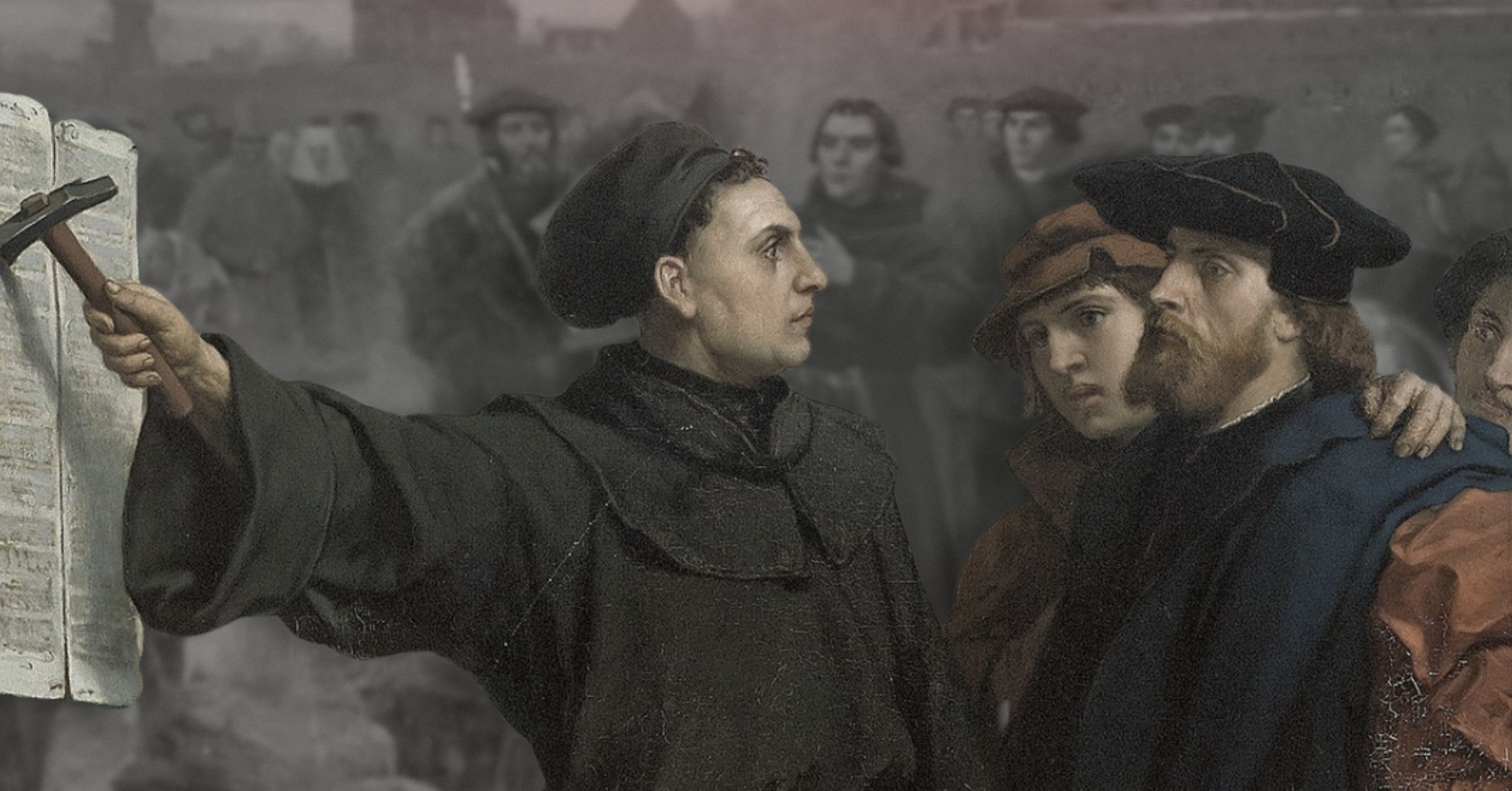
Even apart from theology, there is a profound historical and ethical reason for Christians to stand with the Jewish people: antisemitism. Often called “the world’s oldest hatred,” antisemitism has plagued humanity for millennia, from ancient slanders to medieval blood libels, from forced conversions to expulsions, and culminating in the Holocaust. Tragically, much of this hatred was fueled or tolerated by Christians, particularly in the Church in Europe and the Middle East. The Church fathers also wrote polemics against Jews, medieval councils imposed discriminatory laws, and even Martin Luther penned vitriolic works that were later exploited by the Nazis (Noll, 2002)[4].

Yet the story also includes courage and repentance. Believers such as Dietrich Bonhoeffer, Corrie ten Boom, and André Trocmé risked their lives to resist antisemitism and protect Jewish lives. Their example demonstrates what faithful Christian witness looks like amid hatred and violence. Today, antisemitism is resurging in new forms like conspiracy theories, Holocaust denial, and the delegitimization of Israel itself. The Church needs to, once again stand in the gap. Confronting antisemitism isn’t about politics — it’s about living out Christian love and obedience to Jesus’ command to “love your neighbor as yourself” (Mark 12:31).

Historical Responsibility and Theological Gratitude

Christianity is inseparable from its Jewish roots. Every page of Scripture, every covenant, and every prophecy is part of Israel’s story. Jesus Himself was a Jew who observed Jewish festivals and fulfilled Jewish prophecy. As N.T. Wright argues, the church does not replace Israel but participates in its vocation, to bear witness to God’s faithfulness and salvation before the nations (Wright, 2013)[5].

That shared story carries responsibility. After centuries of persecution, I believe Christians have a moral responsibility to stand up for the dignity and safety of the Jewish people. One important way we can live out that responsibility is by supporting their right to self-determination, including the existence and security of the State of Israel. Doing so doesn’t mean we have to agree with every policy or turn a blind eye to the suffering of Palestinians, but it does mean recognizing a deep obligation shaped by history and conscience. Justice, as the prophet Micah reminds us, requires that we “act justly, love mercy, and walk humbly” (Micah 6:8). Christians can oppose antisemitism and advocate for Palestinian dignity simultaneously. Compassion is not a zero-sum game.

“Compassion is not a zero-sum game.”

Engaging Objections: Supersessionism and Political Zionism                     

Some Christians reject this emphasis on Israel, arguing that the church has replaced Israel in God’s plan — a view known as supersessionism. But Paul directly refutes this in Romans 11:1 “Has God rejected his people? By no means!” The inclusion of the Gentiles does not mean the exclusion of Israel; God’s promises are enduring. Theologian Gerald McDermott argues that the church’s historic neglect of Israel stems from theological misunderstandings that flatten the biblical story and ignore its Jewish context (McDermott, 2017).

Others fear that Christian support for Israel leads to uncritical nationalism or partisan politics. This is a legitimate concern, and precisely why Christian support must be rooted in biblical theology and wisdom, not worldly ideologies. Supporting Israel does not mean endorsing every action of its government. It means affirming the Jewish people’s right to exist, opposing antisemitism, and advocating for policies that uphold human dignity on all sides.

Mission and Israel: Two Callings, One Story

It is important to see that these two callings, mission and solidarity with Israel, are not separate. They are deeply intertwined in God’s redemptive plan. Paul’s vision in Romans 11 suggests that Gentile evangelism will one day stir the Jewish people toward faith, and their redemption will bring even greater blessing to the world. In this way, mission and Israel’s restoration are part of the same divine trajectory, one that points to the final renewal of all creation.

Moreover, antisemitism itself is a barrier to the gospel. How can the church credibly proclaim the love of God if it remains indifferent to hatred against the people through whom God brought salvation into the world? Standing with the Jewish people is therefore not a distraction from the church’s mission but an essential part of it.

Strategic Pathways for the American Church          

The American church has been uniquely positioned by God, with resources, freedoms, and global influence, to play a leading role in this twofold calling. But how can we move from ideas to action? Here are five strategic ways churches and believers can live out this mission:

  1. Recommit to Global Mission. Renew investment in missionary sending, cross-cultural training, and gospel-centered partnerships. Support indigenous leaders and prioritize unreached peoples.
  2. Confront Antisemitism Locally. Educate congregations about antisemitism’s history and current expressions. Partner with Jewish organizations to stand against hatred in your community.
  3. Build Bridges with Jewish Communities. Foster relationships based on respect and trust. Participate in dialogues, attend cultural events, and demonstrate solidarity.
  4. Advocate for Justice and Peace. Support Israel’s right to exist while calling for policies that promote peace, security, and dignity for both Jews and Palestinians.
  5. Teach the Church’s Jewish Roots. Recover the Old Testament story, celebrate the Jewishness of Jesus, and help Christians understand how they are grafted into God’s covenant story.

Conclusion: A Church for This Moment       

When we step back and see the bigger picture, the twofold calling of the church becomes clear. God has entrusted His people, and especially the American church, with immense opportunity and responsibility. We are called to proclaim the gospel with boldness and compassion, fueling a global missions movement that reaches every nation. And we are called to stand with the Jewish people, opposing antisemitism, honoring God’s covenant, and seeking justice and peace in the land where God’s promises began.

These are not two competing agendas; they are two sides of one mission — the mission of God to bless all nations through the family of Abraham and to reconcile the world through His Son, Jesus Christ. If the American church embraces this calling with faith, humility, and courage, it will not only shape the course of history but also bear powerful witness to the unchanging faithfulness of God.

References:

[1] Noll, M. (2002). A History of Christianity in the United States and Canada. Grand Rapids, MI: Eerdmans.

[2] Wright, C. J. H. (2006). The Mission of God: Unlocking the Bible’s Grand Narrative. Downers Grove, IL: IVP Academic.

[3] McDermott, G. (2017). Israel Matters: Why Christians Must Think Differently About the People and the Land. Grand Rapids, MI: Brazos Press.

[4] Noll, M. (2002). A History of Christianity in the United States and Canada. Grand Rapids, MI: Eerdmans.

[5] Wright, N. T. (2013). Paul and the Faithfulness of God. Minneapolis, MN: Fortress Press.

Recommended Resources:

Correct not Politically Correct: About Same-Sex Marriage and Transgenderism by Frank Turek (Book, MP4, )

Was Jesus Intolerant? (DVD) and (Mp4 Download) by Dr. Frank Turek 

Legislating Morality: Is it Wise? Is it Legal? Is it Possible? by Frank Turek (Book, DVD, Mp3, Mp4, PowerPoint download, PowerPoint CD)

Jesus, You and the Essentials of Christianity by Frank Turek (INSTRUCTOR Study Guide), (STUDENT Study Guide), and (DVD)      


Tim Orr serves full-time with the Crescent Project as the Assistant Director of the Internship Program and Area Coordinator, where he is also deeply involved in outreach across the UK. A scholar of Islam, Evangelical minister, conference speaker, and interfaith consultant, Tim brings over 30 years of experience in cross-cultural ministry. He holds six academic degrees, including a Doctor of Ministry from Liberty University and a Master’s in Islamic Studies from the Islamic College in London. In September, he will begin a PhD in Religious Studies at Hartford International University.

Tim has served as a research associate with the Congregations and Polarization Project at the Center for the Study of Religion and American Culture at Indiana University Indianapolis, and for two years, he was also a research assistant on the COVID-19 study led by Hartford International University. His research interests include Islamic antisemitism, American Evangelicalism, Shia Islam, and gospel-centered ministry to Muslims.

He has spoken at leading universities and mosques throughout the UK, including Oxford University, Imperial College London, and the University of Tehran. His work has been published in peer-reviewed Islamic academic journals, and he is the author of four books. His fifth book, The Apostle Paul: A Model for Engaging Islam, is forthcoming.

Note: The original version of this article was published on Dr. Orr’s Substack.
The present version has been substantially revised and adapted by the author.

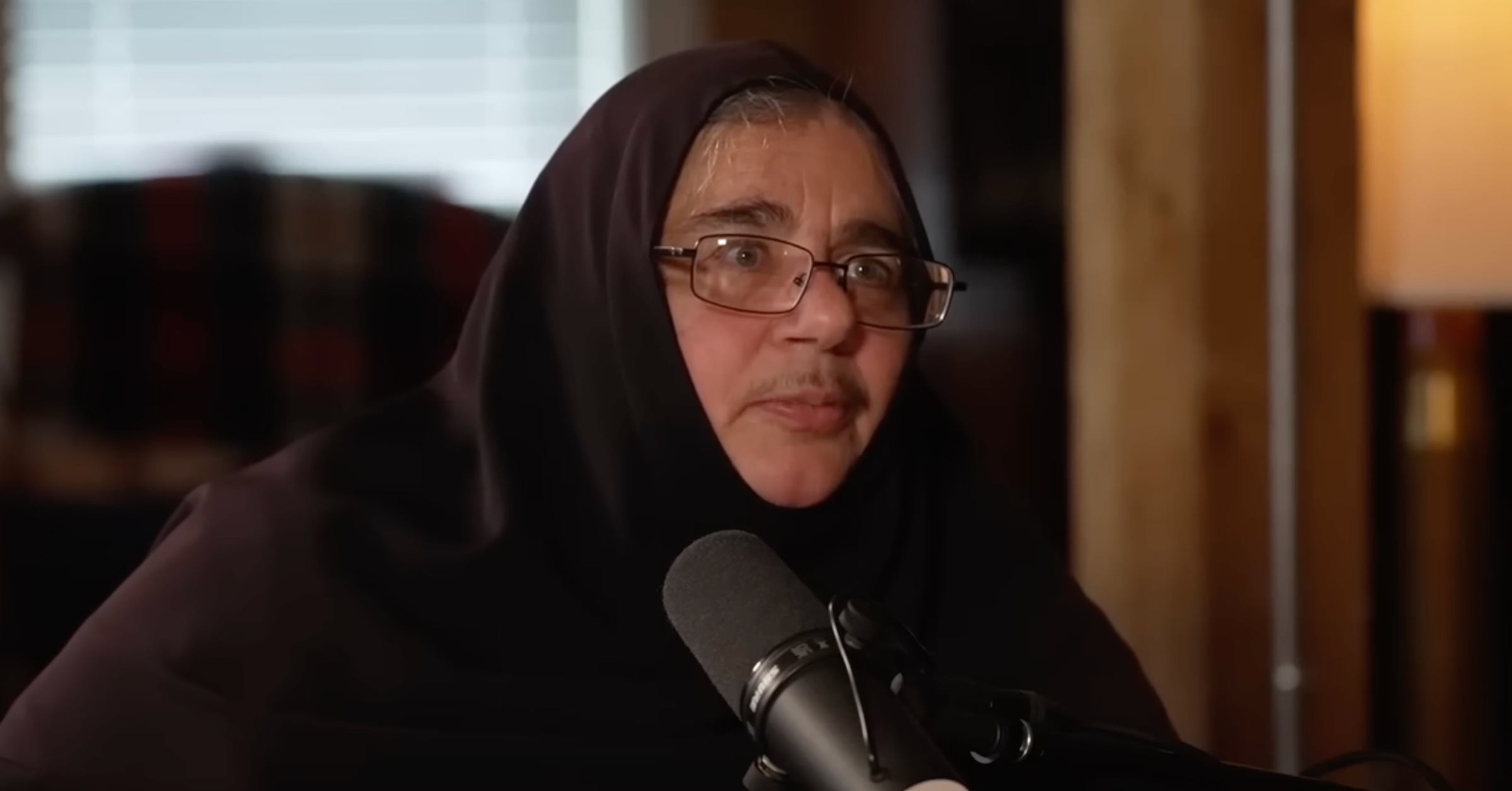
When Tucker Carlson aired the episode Here’s What It’s Really Like to Live as a Christian in the Holy Land (2025), the optics were powerful. His guest, Mother Agapia Stephanopoulos, appeared cloaked in a black Orthodox veil, her presence suggesting sanctity and authenticity. The fact that she was also the sister of George Stephanopoulos, longtime ABC political commentator, made the segment doubly compelling. The habit and the surname prepared audiences to assume her words carried both religious authority and cultural weight.

On the surface, she seemed to speak truth about Christian suffering in the land of Christ’s birth. In reality, what she offered was not gospel witness but a politicized narrative—an apologetic for propaganda. This is not about attacking a nun or a television host; it is about recognizing how propaganda undermines Christian credibility.

Christian apologetics must resist the lure of propaganda, for when believers trade truth for political narratives or survival strategies, they undermine the very credibility of the gospel whose power rests on historical reality and Christ’s Lordship. Carlson’s broadcast gives us a case study in how easily symbols and stories can distort Christian witness, and why apologists must anchor every defense of the faith in uncompromising truth.

Truth as the Foundation of Witness

The problem is not only what Mother Agapia said, but how Western audiences received it. Many viewers, unfamiliar with the history of Arab Christianity or the survival strategies of dhimmi life, mistook her testimony for unbiased truth. Yet her narrative echoed centuries of Christian communities navigating life under Islamic subjugation.

Under dhimmi status—a framework that allowed Jews and Christians to live under Muslim rule but only as second-class subjects—Christians developed “survival apologetics.” These rhetorical strategies defended not the gospel but communal existence. When this survival instinct becomes the measure of witness, truth is displaced, and credibility is lost.

Symbol vs. Substance in Apologetics           

In the Western imagination, the nun’s habit symbolizes purity, moral authority, and spiritual integrity. Carlson framed Mother Agapia not as a political actor but as a “holy witness,” inviting viewers to hear her with reverence. As Roland Barthes observed, such symbols often function as “mythological signs”—they communicate meaning before arguments are tested.

But apologetics demands discernment beyond symbols. Peter calls believers to “set apart Christ as Lord” before making any defense (1 Pet. 3:15). No veil, robe, or role guarantees truth. The apologetic task is to measure every witness against Scripture, not appearances.

Why Credibility Matters in Apologetics       

Mother Agapia claimed Christians are leaving Bethlehem because of Israeli occupation. While the demographic collapse is undeniable, her explanation was misleading. Historians have shown Bethlehem’s decline stems primarily from Islamist harassment, discriminatory laws, and economic pressures. By contrast, Israel’s Christian population has grown under protections of law and freedom of worship.

The apologetic point is critical: if Christians are careless with political truth, unbelievers will not trust them with theological truth. The resurrection rests on historical reliability. If we distort the facts in politics, why should anyone trust us about history’s most important fact—the empty tomb?

The Dhimmi Reflex and the Gospel’s Call    

As Bernard Lewis observed, Christians under Islamic rule often shifted blame onto Jews as a way to preserve their safety. This “dhimmi reflex” continues today when Arab Christians echo nationalist propaganda instead of confronting Islamist hostility.

But Jesus warned against making survival the highest good: “Whoever would save his life will lose it” (Matt. 16:25). True apologetics refuses to sacrifice gospel truth for cultural or political survival. The early martyrs knew this well—burning incense to Caesar may have seemed like a minor concession, but it betrayed Christ’s Lordship. Apologetics today must embody the same fidelity.

It is worth noting that such compromises often arose under severe pressure. Christians living as minorities have faced hard choices. Yet the lesson for us today is not to condemn but to learn: fidelity to truth, even when costly, has always been the mark of authentic witness.

The Cost of False Witness     

Mother Agapia’s credibility was already in question after her discredited claims during the 2002 Bethlehem siege. Yet Carlson presented her as trustworthy, as though a habit and a surname sanctified her words.

But apologetics cannot sanctify distortion. Its task is to defend the hope we have in Christ (1 Pet. 3:15), a hope grounded in truth. The gospel rises or falls on historical reality. Once Christians become comfortable bearing false witness for political ends, we erode the foundation of our apologetic witness.

Conclusion: Apologetics Anchored in Christ Alone 

Mother Agapia’s appearance was praised as bold truth-telling, but in reality it was propaganda cloaked in sanctity. Her surname gave her visibility, her habit gave her credibility, and Carlson’s platform gave her reach. Yet none of these could sanctify distortion.

We are not called to defend propaganda—we are called to defend Christ. When Christians compromise truth for cultural approval, survival strategies, or political alliances, they may gain short-term credibility with the world but they lose credibility for the gospel. As Jesus warned, “What will it profit a man if he gains the whole world and forfeits his soul?” (Matt. 16:26).

The apologetic task is not to prop up narratives but to bear faithful witness to Christ, crucified and risen. The world will only trust our defense of the resurrection if it sees us defending truth in every sphere of life. In an age when media spectacles masquerade as reality, the most powerful apologetic is fidelity: setting apart Christ as Lord, and proclaiming Him with integrity, courage, and unwavering commitment to truth.

Recommended Resources:

Answering Islam by Dr. Frank Turek (DVD Set, Mp4 and Mp3)

Legislating Morality: Is it Wise? Is it Legal? Is it Possible? by Frank Turek (Book, DVD, Mp3, Mp4, PowerPoint download, PowerPoint CD)

Reflecting Jesus into a Dark World by Dr. Frank Turek – DVD Complete Series, Video mp4 DOWNLOAD Complete Series, and mp3 audio DOWNLOAD Complete Series

Does Jesus Trump Your Politics by Dr. Frank Turek (mp4 download and DVD)


Tim Orr serves full-time with the Crescent Project as the Assistant Director of the Internship Program and Area Coordinator, where he is also deeply involved in outreach across the UK. A scholar of Islam, Evangelical minister, conference speaker, and interfaith consultant, Tim brings over 30 years of experience in cross-cultural ministry. He holds six academic degrees, including a Doctor of Ministry from Liberty University and a Master’s in Islamic Studies from the Islamic College in London. In September, he will begin a PhD in Religious Studies at Hartford International University.

Tim has served as a research associate with the Congregations and Polarization Project at the Center for the Study of Religion and American Culture at Indiana University Indianapolis, and for two years, he was also a research assistant on the COVID-19 study led by Hartford International University. His research interests include Islamic antisemitism, American Evangelicalism, Shia Islam, and gospel-centered ministry to Muslims.

He has spoken at leading universities and mosques throughout the UK, including Oxford University, Imperial College London, and the University of Tehran. His work has been published in peer-reviewed Islamic academic journals, and he is the author of four books. His fifth book, The Apostle Paul: A Model for Engaging Islam, is forthcoming.


Are we the generation to witness the triumphant return of Jesus? After all, aren’t we seeing all the signs being fulfilled on the news right now? In this midweek episode, Frank unpacks end times views, challenges popular assumptions about prophecy, and answers tough listener questions related to feminism and the importance of the epistles in teaching us how to live the Christian life. Tune in as he tackles questions such as:

  • Is watching the news the best way to set your prophetic clock?
  • What was Jesus talking about in Matthew 24 during the Olivet Discourse?
  • Has the Church replaced Israel and what does it mean to “bless Israel”?
  • Should Christians support everything that Israel does?
  • How can we trust the New Testament if Jesus didn’t write it and why are the epistles just as important as the gospels?
  • Where does modern feminism go wrong according to the Bible?
  • Who are the most unhappy people in the world today according to recent statistics?

You’ll also learn why Frank thinks the best advice is to “always be ready” and stay tuned for even more mind-blowing insights about the Book of Revelation coming up on the next two episodes of, ‘I Don’t Have Enough Faith to Be an Atheist!’

If you enjoyed this podcast episode PLEASE HELP US SPREAD THE TRUTH OF CHRISTIANITY BY SUPPORTING OUR MINISTRY HERE. 100% of your donation goes to ministry, 0% to buildings!

Resources mentioned during the episode:

9 Discoveries That Support the Biblical Exodus in Egypt
Ryan Burge on X


Download Transcript


What could the election of the nation of Israel and the 2024 U.S. presidential election possibly have in common? This week, we’re diving into both! Join Frank as he talks with investigative filmmaker, Tim Mahoney, about his new film, ‘The Israel Dilemma‘, premiering in theaters next week. As they discuss the film, you’ll discover why Tim’s latest work is an apologetics gold mine, unveiling some of the most compelling archaeological evidence for events documented in the Old Testament. Together, Frank and Tim explore questions like:

  • How do we know that God’s promises to Israel actually came true?
  • What’s the inspiration behind the film, and who are some of the BIG names that Tim was able to interview in the film?
  • Is there a way to verify Old Testament prophecy?
  • Why did the Tel Dan stele discovery shake up the archaeological world and critics of the Bible?
  • What evidence is there inside and outside Israel that the kingdom was destroyed?
  • Why do some of the criticisms against Bible prophecy fall flat?
  • Are there still biblical prophecies that need to be fulfilled?

This new film is only in theaters next week (Nov. 13, 14 and 17) so grab your tickets EARLY to see this excellent new film and invite your church small group! Then, stick around for the second half of the episode as Frank reflects on the election’s implications for Christians, with insights from our friend and fellow Unshaken speaker, Natasha Crain.

  • How should we conduct ourselves with those who are upset with the results?
  • What if they claim to be Christians?
  • Why are some “Progressive” Christians puzzled by evangelical support for Trump?
  • Is character the main deciding factor when voting for someone?
  • Is choosing to follow Christ the ONLY important decision we need to make as Christians?

Don’t miss this episode of ‘I Don’t Have Enough Faith to Be an Atheist’ to find out!

Did you enjoy this episode? HELP US SPREAD THE TRUTH OF CHRISTIANITY BY SUPPORTING THE PODCAST HERE.

Resources mentioned during the episode:

Get Your Tickets for ‘The Israel Dilemma’!
Kamala Harris’s Top Priority – Killing Unborn Babies
Natasha Crain on Christians Voting for Trump
Is It Wrong to Call Out Shepherds?
Josh Howerton’s Advice for Christians After the Election


Download Transcript


You’ve got questions, and for this midweek podcast, we’ve got answers! Tune in as Frank dives into your listener questions on Roman Catholicism, Bible Translations, the impact of “gender-affirming care” on transgender patients, and the presidential debate and related issues. During the episode, Frank will address questions like:

  • Why did he leave the Roman Catholic Church?
  • Which Bible translation is the “best” and which translations should be avoided at all costs?
  • Are most people who obtain “gender-affirming care” satisfied with the outcome in the long term?
  • Where can we go to get accurate stats on the transgender issue?
  • What are we to make of the recent presidential debate, the lies that were told, and the media coverup of President Biden’s condition?
  • In what areas have both political parties majorly dropped the ball?
  • What should you do if you don’t like either candidate for President?

Frank will also discuss a thought-provoking Facebook post by Dr. Robert Gagnon, highlighting major issues with the Biden Administration and contrasting Republican and Democratic platforms. Be sure to listen in as Frank tackles your latest questions with rapid-fire responses and stay tuned for another Q&A episode coming next week, where he’ll address more of your questions on Romans 9 and free will.

To view the entire VIDEO PODCAST be sure to join our CrossExamined private community. It’s the perfect place to jump into some great discussions with like-minded Christians while simultaneously providing financial support for our ministry.

You can also SUPPORT THE PODCAST HERE.

Resources mentioned during the episode:

Book –  Roman Catholics and Evangelicals: Agreements and Differences
Self-Paced Online Course – How to Interpret Your Bible
Laura Bryant Hanford – Transgenderism Resources PDF
Robert Gagnon – Biden Speaks the Truth? Facebook Post


Download Transcript


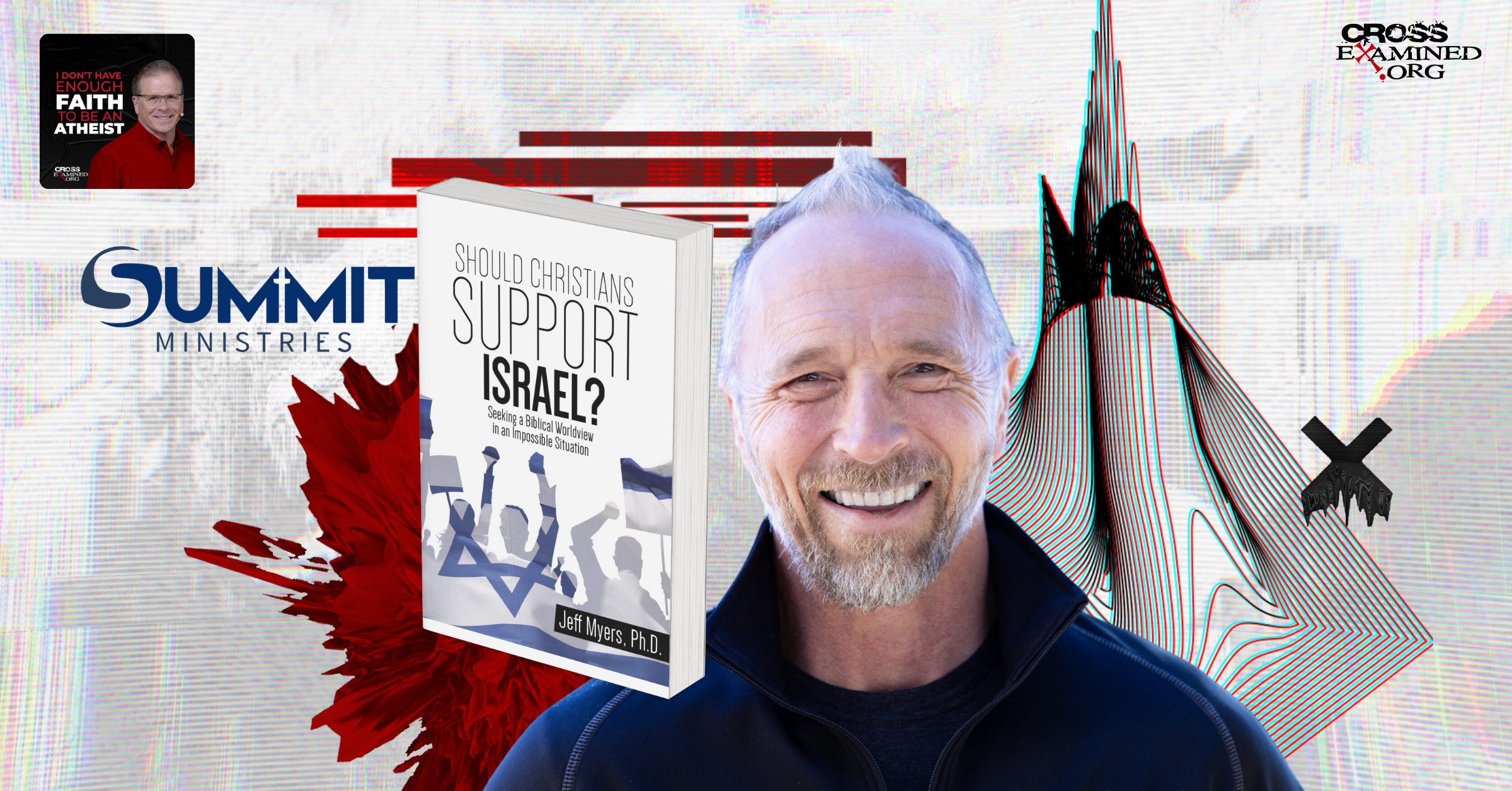
Does the Bible promise prosperity to those who bless and support Israel? In the wake of the October 7th attacks on Israel by the Hamas terrorist group, antisemitism in the West is shockingly at an all-time high. What’s driving this sudden surge in antisemitism, and what can we glean from the Old Testament scriptures in relation to God’s covenant with Abraham and how it applies to the modern state of Israel today?

This week on the podcast, Dr. Jeff Myers, president of Summit Ministries, joins Frank to discuss his latest book, ‘Should Christians Support Israel?: Seeking a Biblical Worldview in an Impossible Situation.’ Tune in as Jeff breaks down the basics of the Israel-Palestine conflict, sharing insights from his recent trip to Israel. He’ll reveal the inspiration behind the book, what he observed in Israel, how locals are responding to the attacks, and what mainstream media isn’t telling us. During their conversation, Frank and Jeff will answer questions like:

  • Are Christians commanded to support Israel, no matter what?
  • What are the characteristics of genocide and is Israel guilty of committing these acts?
  • Has the Church replaced Israel?
  • Why is Gen-Z the most antisemitic generation?
  • What explains the widespread hatred towards Israel?
  • Is Hamas worse than the Nazis and are they an ongoing threat to Israel?

Listen as Frank and Jeff unpack the root cause of what’s driving unrest in the Gaza Strip and America, exploring signs of hope for Israel’s future despite ongoing opposition. They’ll also talk about the principles of just war and whether Israel’s military response to the horrific Hamas attack was justified. Make sure to grab your FREE copy of Jeff’s book to learn more about the plight of Israel and why Christians should support their right to a peaceful existence.

To view the entire VIDEO PODCAST be sure to join our CrossExamined private community. It’s the perfect place to jump into some great discussions with like-minded Christians while simultaneously providing financial support for our ministry.

You can also SUPPORT THE PODCAST HERE.

Claim Your FREE book! – Should Christians Support Israel?


Download Transcript


How can Christians defend the faith in light of today’s most common objections from young atheists and agnostics? America’s “best and brightest” have a bone to pick with God and the Christian worldview, which means evangelizing this demographic is of the utmost importance. But how can Christians effectively reach young people when factors like the problem of evil and the reality of suffering prohibit them from wanting to embrace theism?

Back by popular demand, Cliffe and Stewart Knechtle of the popular YouTube channelGive Me An Answer, return to share more insights on how they tackle today’s toughest philosophical questions from college and university students. Does the truth of Christianity depend on how good (or bad) Christians live out their faith? Why is free will a necessary component of a moral universe? Is there biblical precedence for open-air evangelism? What effect has moral relativism had on the minds of high school students? All this and more will be discussed in Part 2 of this lighthearted but highly informative midweek podcast episode!

To view the entire VIDEO PODCAST be sure to join our CrossExamined private community. It’s the perfect place to jump into some great discussions with like-minded Christians while simultaneously providing financial support for our ministry.

You can also SUPPORT THE PODCAST HERE.

Ask Cliffe YouTube channel: https://www.youtube.com/@askcliffe

Give Me An Answer (website)

Grace Community Church in New Canaan, CT


Download Transcript


Do young people today reject theism and Christianity for the same reasons as past generations? If you ask the average American college student why they doubt Christianity or God’s existence, you’re sure to get a range of responses. But are their objections grounded in evidence, reason, and rationality? Or are they allowing their emotions and desires to guide their unbelief?

Evangelizing college students is no easy task, but today’s guests have mastered the art of dialoguing with young people who have major questions when it comes to faith, morality, and identity. This week, Frank sits down with the humble father/son duo, Cliffe and Stuart Knechtle of the popular YouTube channelGive Me an Answer. During the episode, Frank, Cliffe, and Stuart will answer questions like:

  • What are some of the top objections they get to Christianity and how do they respond?
  • Why and how did Cliffe and Stuart start doing open-air apologetics on college campuses?
  • How does atheism contradict the Black Lives Matter movement?
  • Should depressed teens have the right to commit suicide?
  • Should Christian parents send their kids to secular colleges and universities?
  • What are some of the CRAZY (and sometimes frightening) ways that students have responded to their ministry?

As you’ll hear throughout this conversation, Cliffe and Stuart take a head, heart, and hands approach when they evangelize on college campuses. This podcast episode is all about showcasing how to present both the love and the truth of Christ without (purposely) offending a potentially hostile audience. We know you’re going to appreciate what Cliffe and Stuart have to say, so be sure to subscribe to their YouTube channel and stay tuned for the upcoming midweek podcast episode where Frank will wrap up the conversation with Cliffe and Stuart on how to effectively engage young people through Christian apologetics.

To view the entire VIDEO PODCAST be sure to join our CrossExamined private community. It’s the perfect place to jump into some great discussions with like-minded Christians while simultaneously providing financial support for our ministry.

You can also SUPPORT THE PODCAST HERE.

Ask Cliffe YouTube channel: https://www.youtube.com/@askcliffe

Give Me An Answer (website)

Grace Community Church in New Canaan, CT


Download Transcript


What are the historical and ideological factors that have shaped the modern state of Israel and the ongoing Israeli-Palestinian conflict? Religion, corruption, and even money laundering cannot be overlooked when having a nuanced discussion on what has happened and is happening in that region. But with the complexity of this ongoing war of ideologies and power grabs, where does the true solution lie?

During last week’s podcast, Frank and our guest, best-selling author and historian Bill Federer, walked us through some of ancient Israel’s history as documented through archaeology and in the Old Testament. This week, Bill briefly revisits the miraculous re-founding of Israel in 1948 and then gets into the weeds of many of the challenges that the Jews have faced in light of re-establishing their nation and protecting it from Islamic regimes that are dedicated to destroying Israel for good. Listen as Frank and Bill answer questions like:

  • How did a population of only 600,000 Jews manage to defeat an army of five different countries the day after the modern state of Israel was founded?
  • Why did the Palestinians vacate the land once it was reclaimed by Israel?
  • What role does critical theory play in the history of the modern rise of Islamic governments?
  • What’s the ideology of Wahhabism and jihad?
  • How did US government officials like Franklin D. Roosevelt, President Biden, Hilary Clinton, and others contribute to the Israeli-Palestinian conflict?
  • What led the son of Hamas’ founder to turn away from Islam and convert to Christianity?
  • How is Jesus the ultimate solution to this never-ending war?

As Bill ties up some of the loose ends from the prior podcast episode, he’ll take us even deeper into the centuries-long hostility between Arab nations, Muslim fundamentalists, and Israel. Part 2 of this series is sure to leave you with a better understanding of the significance of the October 7th Hamas attack, decades-old oil transactions, critical theory, and how they’re all linked to a long chain of antisemitic uprisings from past and present history. And just in case you missed Part 1, be sure to go back and check out the previous episode that aired on 1/5 so that you’re fully in the loop!

To view the entire VIDEO PODCAST be sure to join our CrossExamined private community. It’s the perfect place to jump into some great discussions with like-minded Christians while simultaneously providing financial support for our ministry.

You can also SUPPORT THE PODCAST HERE.

Previous podcast (Part 1): The History of Modern-Day Israel with Bill Federer – Part 1

Bill’s book: What Every American Needs to Know about the Qur’an: A History of Islam & the United States


Download Transcript