
Tag Archive for: I don’t have enough faith to be an atheist

In 2025, we had unforgettable conversations with some of today’s leading apologists, archaeologists, pastors, theologians, philosophers, and Christian influencers who joined Frank to unpack today’s most compelling arguments and evidence for the Christian faith. From digs in the Middle East to Bible studies and political commentary, we covered a lot of ground and hopefully were able to help you answer some of the questions you’ve asked and encountered surrounding faith, freedom, and philosophy.

We’ve kept up with the biggest news headlines and impact events, keeping you informed and engaged amidst the ongoing culture war from a Christian perspective. And then out of nowhere, we were hit with the most devastating tragedy, the martyrdom of our great friend Charlie Kirk–an event that not only shocked the nation, but by God’s grace, rippled forward to a tsunami of worldwide conversions to Christ.  We’ve grieved together and grappled with the “why” questions, yet we’re still on mission to #makeheavencrowded with a whole new year ahead. If you missed out on any ‘I Don’t Have Enough Faith to Be an Atheist’ podcasts, now’s the time to catch up. We recommend you start with what our statistics say are the most popular episodes of 2025 based on listens and views!

You can view the full playlist on our YouTube channel HERE.


#10. Why the Foundations of Islam Are Now Crumbling with Dr. Jay Smith – Part 2
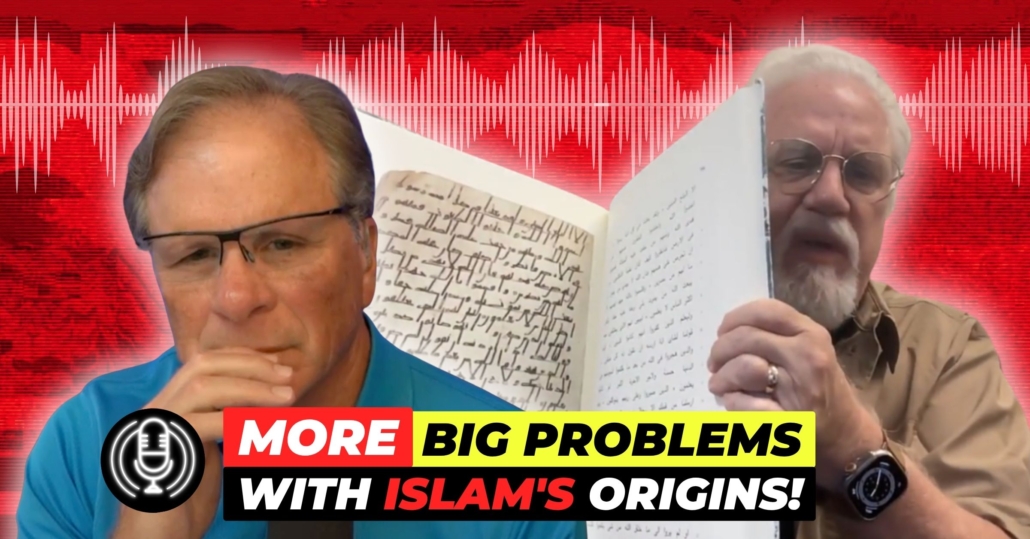
Why the Foundations of Islam Are Now Crumbling with Dr. Jay Smith - Part 2

What’s behind the mass exodus from Islam? Christian apologist Dr. Jay Smith joins Frank in this two-part series to expose the lack of historical evidence for the world’s fasting growing religion. Watch it HERE!


#9. Charlie Kirk Conspiracy Theories That Lead to Death Threats with Seth Dillon
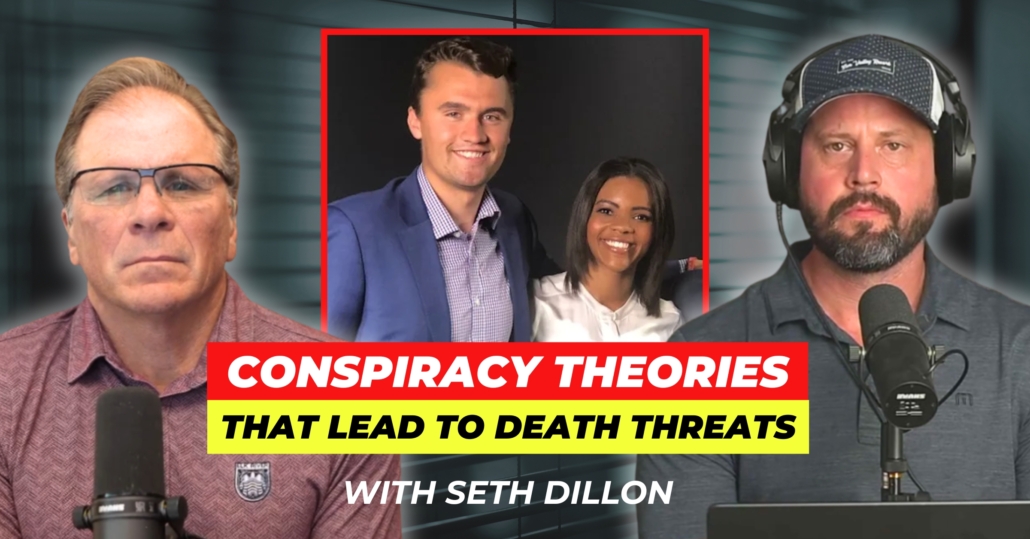

Babylon Bee CEO and founder Seth Dillon stops by the podcast to discuss why baseless internet conspiracy theories surrounding Charlie Kirk’s death are no laughing matter. Watch it HERE!


#8. Why the Foundations of Islam Are Now Crumbling with Dr. Jay Smith


Part one of this epic conversation with Dr. Jay Smith dives headfirst into growing skepticism surrounding the true origins of Islam. Watch it HERE!


#7. If God, Why Evil? Honoring the Life & Legacy of My Friend Charlie Kirk
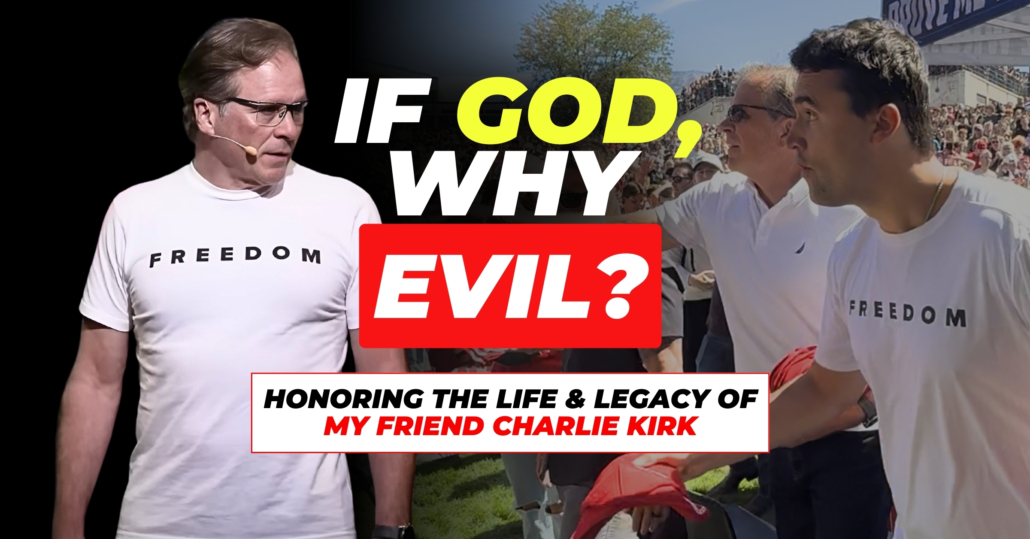

In the aftermath of the assassination of Charlie Kirk, Frank delivers his first public speech to answer the ultimate question. Why does God allow evil? Watch it HERE!


#6. MAKE HEAVEN CROWDED and Take a BOLD Stand Christ with Jack Hibbs

With over 35 years of ministry experience, Jack Hibbs joins Frank to reveal the keys to standing firmly for the truth (like Charlie Kirk) in a godless age. Watch it HERE!


#5. What’s Next for Turning Point USA? Continuing the Legacy of Charlie Kirk with Mikey & Rob McCoy


How will TPUSA continue the fight for freedom, faith, and patriotism now that Charlie is no longer with us? Charlie’s best friend and Chief of Staff Mikey McCoy and his father, Pastor Rob McCoy share TPUSA’s plan to carry Charlie’s legacy forward. Watch it HERE!


#4. 12 Biblical Archaeological Discoveries You’ve Never Heard of Before with Dr. Titus Kennedy
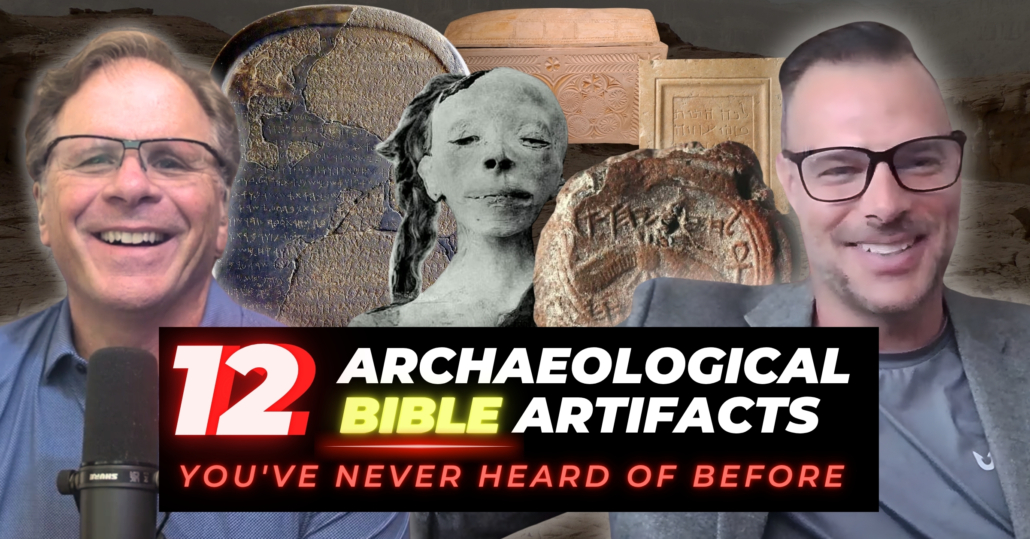

Archaeologist Dr. Titus Kennedy shares 12 of the most recent archaeological finds that corroborate people, places, and events documented in the Bible. Watch it HERE!


#3. Behind the Scenes at Charlie Kirk’s Memorial Service
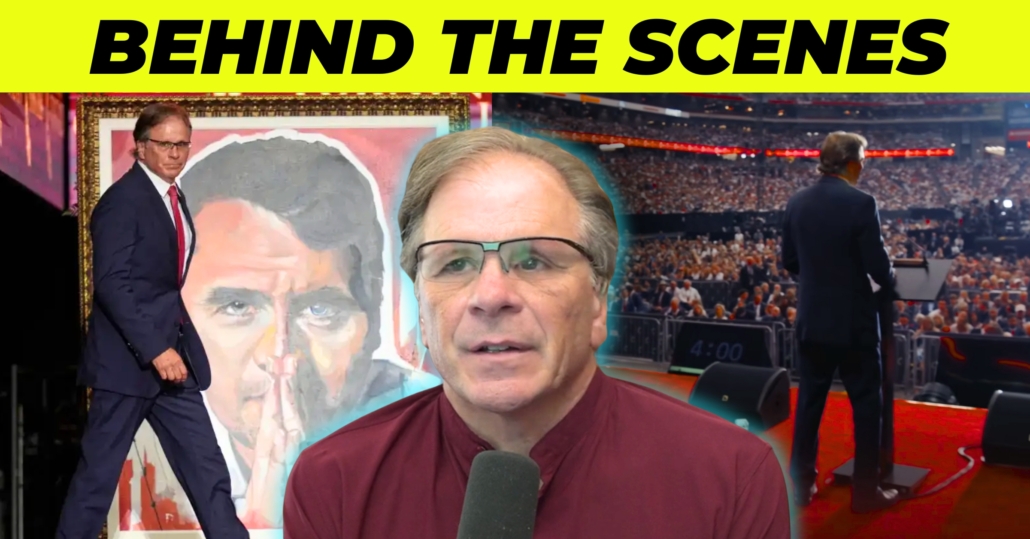

Frank shares what went on behind the scenes leading up to the historic Memorial for Charlie Kirk and why this was the perfect opportunity to share the Gospel with the world. Watch it HERE!


#2. Charlie Kirk Conspiracy Theories? Homicide Detective Speaks Out with J. Warner Wallace


Cold-Case Detective J. Warner Wallace joins Frank to debunk some of the most disturbing myths and conspiracies surrounding Charlie’s death and how criminal investigations are handled prior to the trial date. Watch it HERE!


#1. The Greatness of Charlie Kirk: An Eyewitness Account of His Life and Martyrdom


In the first podcast episode following the assassination of Charlie Kirk, Frank gives his eyewitness account of the tragedy while focusing on the power of the Gospel in light of the problem of evil. Watch it HERE!

Recommended Resources:

Answering Islam by Dr. Frank Turek (DVD Set, Mp4 and Mp3)
Correct not Politically Correct: About Same-Sex Marriage and Transgenderism by Frank Turek (Book, MP4, )
I Don’t Have Enough Faith to Be an Atheist (Paperback), and (Sermon) by Norman Geisler and Frank Turek 
If God, Why Evil? (DVD Set), (MP3 Set), and (mp4 Download Set) by Frank Turek 

The following is adapted from chapter 6 of I Don’t Have Enough Faith to Be an Atheist:

The God-of-the-Gaps fallacy occurs when someone falsely believes that God caused the event when it really was caused by undiscovered natural phenomena. For example, people used to believe that lightning was caused directly by God. There was a gap in our knowledge of nature, so we attributed the effect to God. Darwinists assert that theists are doing the same thing by claiming that God created the universe and life. Are they correct? No, for a number of reasons.


First, when we conclude that intelligence created the first cell or the human brain, it’s not simply because we lack evidence of a natural explanation; it’s also because we have positive, empirically detectable evidence for an intelligent cause. A message (specified complexity) is empirically detectable. When we detect a message like “Take out the garbage, Mom” or 1,000 encyclopedias we know that it must come from an intelligent being because all of our observational experience tells us that messages come only from intelligent beings. Every time we observe a message, it comes from an intelligent being. We couple this data with the fact that we never observe natural laws creating messages, and we know an intelligent being must be the cause. That’s a valid scientific conclusion based on observation and repetition. It’s not an argument from ignorance, nor is it based on any “gap” in our knowledge.

Second, Intelligent Design scientists are open to both natural and intelligent causes. They are not opposed to continued research into a natural explanation for the first life. They’re simply observing that all known natural explanations fail, and all empirically detectable evidence points to an intelligent Designer.

Now, one can question the wisdom of continuing to look for a natural cause of life. William Dembski, who has published extensive research on Intelligent Design, asks, “When does determination [to find a natural cause] become pigheadedness? . . . How long are we to continue a search before we have the right to give up the search and declare not only that continuing the search is vain but also that the very object of the search is nonexistent?” Consider the implications of Dembski’s question. Should we keep looking for a natural cause for phenomena like Mount Rushmore or messages like “Take out the garbage-Mom”? When is the case closed?

Walter Bradley, a coauthor of the seminal work The Mystery of Life’s Origin, believes A there ­doesn’t seem to be the potential of finding a [natural explanation] for the origin of life. He added, AI think people who believe that life emerged naturalistically need to have a great deal more faith than people who reasonably infer that there’s an Intelligent Designer.” Regardless of whether or not you think we should keep looking for a natural explanation, the main point is that ID scientists are open to both natural and intelligent causes. It just so happens that an intelligent cause best fits the evidence.

Third, the Intelligent Design conclusion is falsifiable. In other words, ID could be disproven if natural laws were someday discovered to create specified complexity. However, the same cannot be said about the Darwinist position. Darwinists don’t allow falsification of their “creation story” because, as we have described, they don’t allow any other creation story to be considered. Their “science” is not tentative or open to correction; it=s more closed-minded than the most dogmatic church doctrine the Darwinists are so apt to criticize.

Finally, it’s actually the Darwinists who are committing a kind of God-of the-Gaps fallacy. Darwin himself was once accused of considering natural selection “an active power or Deity” (see chapter 4 of Origin of Species). But it seems that natural selection actually is the deity or “God of the Gaps” for the Darwinists of today. When they are totally at a loss for how irreducibly complex, information-rich biological systems came into existence, they simply cover their gap in knowledge by claiming that natural selection, time, and chance did it.

The ability of such a mechanism to create information-rich biological systems runs counter to the observational evidence. Mutations that aren’t neutral are nearly always harmful, and time and chance do the Darwinists no good, as we explained in chapter 5. At best, natural selection may be responsible for minor changes in living species, but it cannot explain the origin of the basic forms of life. You need a living thing to start with for any natural selection to take place. Yet, despite the obvious problems with their mechanism, Darwinists insist that Natural Selection covers any gap in their knowledge. Moreover, they willfully ignore the positive, empirically detectable evidence for an intelligent being. This is not science but the dogma of a secular religion. One could say that Darwinists, like the opponents of Galileo, are letting their religion (or at least their philosophy) overrule scientific observations.


Dr. Frank Turek (D.Min.) is an award-winning author and frequent college speaker who hosts a weekly TV show on DirectTV and a radio program that airs on 186 stations around the nation.  His books include I Don’t Have Enough Faith to be an Atheist and Stealing from God:  Why atheists need God to make their case

Since the post Darwinists Have a Lot of Explaining to Do asks atheists to offer causes for at least ten truths about reality, I thought I would present my perspective on each of those truths.  We’ll start with the origin of the universe out of nothing.  The following is an excerpt from I Don’t Have Enough Faith to Be an Atheist (p. 84) and follows a section about the evidence that the universe began with a Big Bang out of nothing.  I appreciate your comments.


So the universe had a beginning. What does that mean for the question of God’s existence? The man who now sits in Edwin Hubble’s chair at the Mount Wilson observatory has a few things to say about that. His name is Robert Jastrow, an astronomer we’ve already quoted in this chapter. In addition to serving as the director of Mount Wilson, Jastrow is the founder of NASA’s Goddard Institute of Space Studies. Obviously his credentials as a scientist are impeccable. That’s why his book God and the Astronomers made such an impression on those investigating the implications of the Big Bang, namely those asking the question “Does the Big Bang point to God?” Jastrow reveals in the opening line of chapter 1 that he has no religious axe to grind. He writes, “When an astronomer writes about God, his colleagues assume he is either over the hill or going bonkers. In my case it should be understood from the start that I am an agnostic in religious matters.”

In light of Jastrow’s personal agnosticism, his theistic quotations are all the more provocative. After explaining some of the Big Bang evidence we’ve just reviewed, Jastrow writes, “Now we see how the astronomical evidence leads to a biblical view of the origin of the world. The details differ, but the essential elements in the astronomical and biblical accounts of Genesis are the same: the chain of events leading to man commenced suddenly and sharply at a definite moment in time, in a flash of light and energy.”

The overwhelming evidence for the Big Bang and its consistency with the biblical account in Genesis led Jastrow to observe in an interview, “Astronomers now find they have painted themselves into a corner because they have proven, by their own methods, that the world began abruptly in an act of creation to which you can trace the seeds of every star, every planet, every living thing in this cosmos and on the earth. And they have found that all this happened as a product of forces they cannot hope to discover. . . . That there are what I or anyone would call supernatural forces at work is now, I think, a scientifically proven fact.”

By evoking the supernatural, Jastrow echoes the conclusion of Einstein contemporary Arthur Eddington. As we mentioned earlier, although he found it “repugnant,” Eddington admitted, “The beginning seems to present insuperable difficulties unless we agree to look on it as frankly supernatural.”

Now why would Jastrow and Eddington admit that there are “supernatural” forces at work? Why ­couldn’t natural forces have produced the universe? Because these scientists know as well as anyone that natural forces– indeed all of nature– were created at the Big Bang. In other words, the Big Bang was the beginning point for the entire physical universe. Time, space, and matter came into existence at that point. There was no natural world or natural law prior to the Big Bang. Since a cause cannot come after its effect, natural forces cannot account for the Big Bang. Therefore, there must be something outside of nature to do the job. That’s exactly what the word supernatural means.

The discoverers of the radiation afterglow, Robert Wilson and Arno Penzias, were not Bible-thumpers either. Both initially believed in the Steady State Theory. But due to the mounting evidence, they’ve since changed their views and acknowledged facts that are consistent with the Bible. Penzias admits, “The Steady State theory turned out to be so ugly that people dismissed it. The easiest way to fit the observations with the least number of parameters was one in which the universe was created out of nothing, in an instant, and continues to expand.”

Wilson, who once took a class from Fred Hoyle (the man who popularized the Steady State Theory in 1948), said, “I philosophically liked the Steady State. And clearly I’ve had to give that up.” When science writer Fred Heeren asked him if the Big Bang evidence is indicative of a Creator, Wilson responded, “Certainly there was something that set it all off. Certainly, if you are religious, I can’t think of a better theory of the origin of the universe to match with Genesis.”  George Smoot echoed Wilson’s assessment. He said, “There is no doubt that a parallel exists between the big bang as an event and the Christian notion of creation from nothing.”

Robert Jastrow suggested the same when he ended his book God and the Astronomers with this classic line:  “For the scientist who has lived by his faith in the power of reason, the story ends like a bad dream. He has scaled the mountains of ignorance; he is about to conquer the highest peak; as he pulls himself over the final rock, he is greeted by a band of theologians who have been sitting there for centuries.”


Dr. Frank Turek (D.Min.) is an award-winning author and frequent college speaker who hosts a weekly TV show on DirectTV and a radio program that airs on 186 stations around the nation.  His books include I Don’t Have Enough Faith to be an Atheist and Stealing from God:  Why atheists need God to make their case