Tag Archive for: history

By Brian Chilton

In 2000, I made the difficult decision to step away from my faith. I entered into what I call theistic-leaning agnosticism, one step removed from pantheism. I believed that some kind of God could possibly exist. However, I didn’t know that a person could know if that God really did exist and most certainly could not know anything about the historical Jesus of Nazareth. These doubts were brought on the claims of the Jesus Seminar who held that less than 14% of the sayings attributed to Jesus were actually his own. The Seminar claimed that the rest of the sayings were inventions from the apostles. Couple the Seminar with PBS’s show From Jesus to Christ, which claimed that the Christ of faith evolved over time from the Jesus of history, then one could see why I needed some serious answers. When I asked Christian leaders about how I could know if Jesus was accurately portrayed in the Gospels, I was met with scorn and hostility. Add to that the nepotistic hypocrisy I often saw, then stepping away from the faith was pretty easy.

However, everything changed in 2005. I was introduced to the writings of Lee Strobel, Josh McDowell, William Lane Craig, and Gary Habermas. This past week, my journey came full circle. I had the honor to have one of my apologetic heroes, Gary Habermas, once again as a professor. The class investigated the New Testament creeds, which is the material in the New Testament that predates the New Testament writings. It is thought even by skeptical scholars that many of these creeds date to no later than 35 AD when Paul met Peter and James in Jerusalem (Gal. 1:18-20). The NT creeds tell us much about the historical Jesus because this information is located at ground zero. The creeds tell us about the message of the earliest church, which in turn came from the historical Jesus of Nazareth. So, what can we know about the historical Jesus of Nazareth from these creeds?

Creeds Tell Us about the Nature of the Historical Jesus. As fascinating as it is, the creeds provide us with high Christology. In fact, the earliest church had the highest Christology. This decimates the claims that the church evolved the nature of Jesus from a prophet to a divine God-man over time. For instance, consider the Philippians hymn. The Philippians hymn notes that Christ Jesus “existing in the form of God, did not consider equality with God as something to be exploited. Instead, he emptied himself by assuming the form of a servant, taking on the likeness of humanity” (Php. 2:6-7a, CSB). The sermon summaries of Acts, all thought to be extremely early, denote the deity of Jesus as one who “has been exalted to the right hand of God” (Acts 2:33, CSB). Don’t forget about the Colossian’s creed where Christ is said to be the “invisible God, the firstborn over all creation” (Col. 1:15, CSB and see following Col. 1:16-20). One may say, “Okay, but this shows the church’s theology, not the historical Jesus of Nazareth.” In response, one must note that there is no historical presence of evolutionary development, not even legendary development. The earliest church held an extremely high view of Jesus. Therefore, Jesus of Nazareth must have taught something about his divine nature, backing them up with miraculous works.

Creeds Tell Us about the Life of the Historical Jesus. While the majority of the creeds focus on the death, burial, and resurrection of Jesus, the creeds do provide details pertaining to the life and ministry of Jesus of Nazareth. The creeds note that Jesus was born a descendant of David (Acts 13:23; Rom. 1:3). Jesus was noted to have been a Nazarene (Acts 2:22; 4:10; 5:38). Jesus of Nazareth performed numerous miracles (Acts 2:22; 10:38) and fulfilled several Messianic prophecies (Acts 2:25-31; 3:21-25; 4:11; 10:43). From the creeds, the researcher begins to see a similar pattern of Jesus of Nazareth’s life that is portrayed in the biblical narratives concerning him.

Creeds Tell Us about the Death and Resurrection of the Historical Jesus. The majority of the creeds are based around the earliest kerygma of the church—that is, the death, burial, and resurrection of Jesus. Most notably, 1 Corinthians 15:3-7 denotes the resurrection appearances of Jesus, even stating that 500 people witnessed the risen Jesus at one time (1 Cor. 15:6). The sermon summaries of Acts also provide the same formula in that Jesus lived, died, and rose again. The Acts 13 sermon summary even gives a nod to the empty tomb. For Paul’s early message stated that “When they had carried out all that had been written about him, they took him down from the tree and put him in a tomb. But God raised him from the dead, and he appeared for many days to those who came up with him from Galilee to Jerusalem, who are now his witnesses to the people” (Acts 13:29-31, CSB). The creeds denote the numerous witnesses who saw the risen Jesus. They sometimes provide details that other sources do not, such as Simon Peter’s private interaction with the risen Jesus (Lk. 24:34; 1 Cor. 15:5) and James’ private meeting with the risen Jesus (1 Cor. 15:7).

The early creeds are impressive in what they tell us about the historical Jesus of Nazareth. Some will skeptically hold that since the creeds speak of the miraculous and the divine that they must be thrown out. However, such attitudes show more of an anti-supernatural bias than they do a quest for historical truth. At the very least, these early creeds tell us what the earliest church believed about Jesus. At the most, the early creeds give a fascinating description of whom Jesus was, is, and forever will be. Even if we did not have the New Testament, the creeds would tell us everything we needed to know about the historical Jesus of Nazareth, who is the Christ of faith! The creeds tell the life-changing truth that Jesus has risen. Will you allow this truth to transform you?


Brian G. Chilton is the founder of BellatorChristi.com and is the host of The Bellator Christi Podcast. He received his Master of Divinity in Theology from Liberty University (with high distinction); his Bachelor of Science in Religious Studies and Philosophy from Gardner-Webb University (with honors); and received certification in Christian Apologetics from Biola University. Brian is currently enrolled in the Ph.D. program in Theology and Apologetics at Liberty University and is a member of the Evangelical Theological Society and the Evangelical Philosophical Society. Brian has been in the ministry for close to 20 years and serves as the Senior Pastor of Westfield Baptist Church in northwestern, North Carolina.

Original Blog Source: http://bit.ly/2ZALSAi

By Ryan Leasure

Several reasons exist for why we should trust the Gospels. Their eye-witness testimony, familiarity with the Palestinian world, embarrassing nature, early dating, and undesigned coincidences, all suggest that the Gospels are reliable documents. Beyond that, the plethora of Greek manuscripts and strong evidence that the text hasn’t changed give us even more confidence to trust these works.

Yet there’s another angle that makes the case even stronger — corroborating evidence. That is to say, non-biblical sources also testify to individuals or events contained in the Gospels, and thus corroborate what the Gospel writers report. Perhaps the most popular corroborating source is the first-century Jewish historian Josephus.

Not only does Josephus tell us about Jesus and his brother James, but he also writes about several other characters in the Gospels. One such character is John the Baptist.

John the Baptist the Forerunner

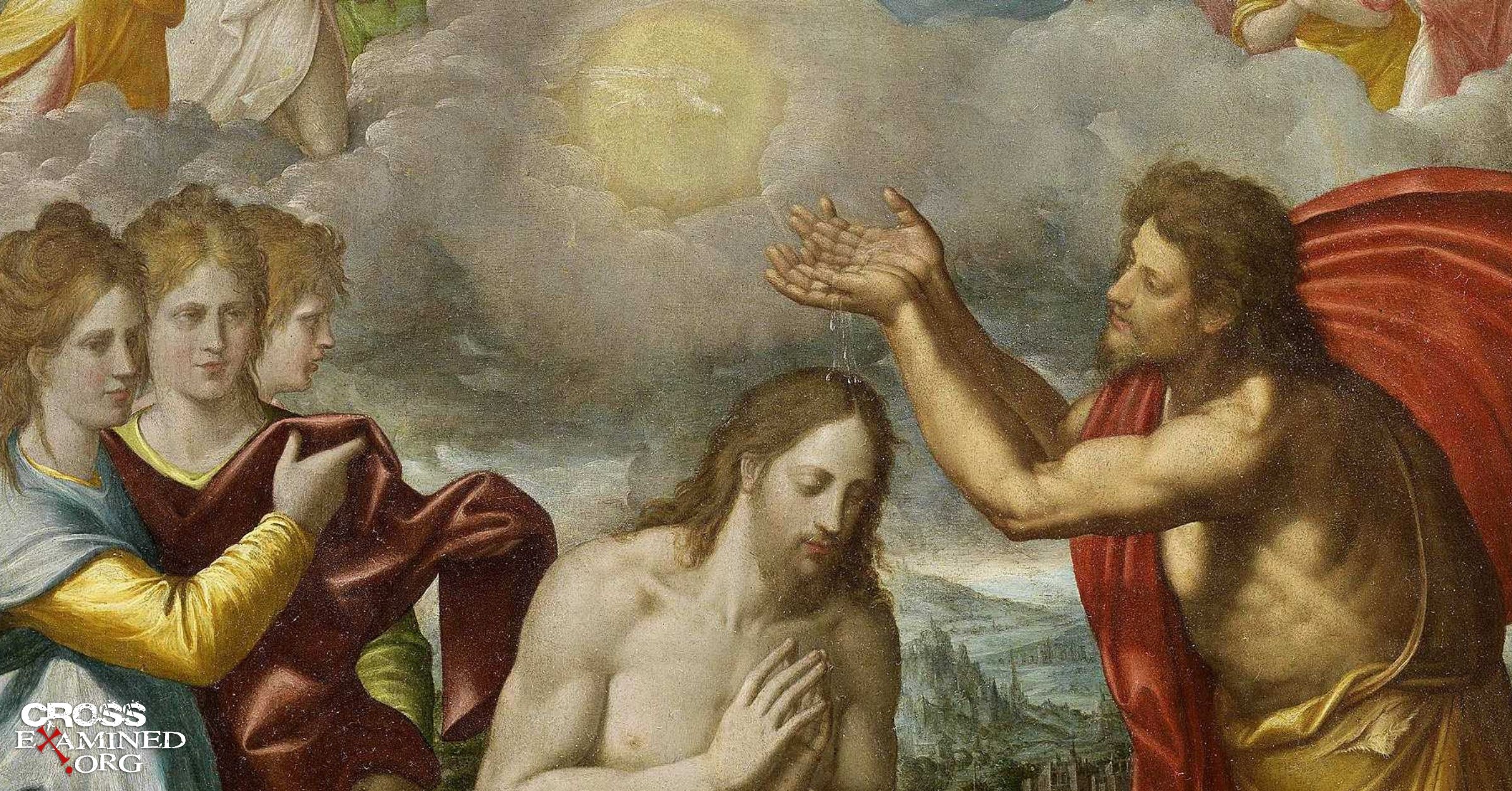
John the Baptist is familiar to readers of the Gospels. Though he prepared the way for Jesus’ public ministry, he’s known primarily for baptizing the people as a sign of their repentance. Mark 1:4-5 states:

And so John the Baptist appeared in the wilderness, preaching a baptism of repentance for the forgiveness of sins. The whole Judean countryside and all the people of Jerusalem went out to him. Confessing their sins, they were baptized by him in the Jordan River.

John the Baptist the Preacher of Justice

Like most prophets, John warned the people of God’s judgment if they didn’t change their ways. We read further in Luke 3:10-14:

“What should we do then?” the crowd asked. John answered, “Anyone who has two shirts should share with the one who has none, and anyone who has food should do the same.” Even tax collectors came to be baptized. “Teacher,” they asked, “what should we do?” He replied, “Don’t extort money and don’t accuse people falsely — be content with your pay.”

John’s message was straight-forward. Repent of your sins. And this repentance will manifest itself in how you love your fellow neighbor. Be generous, compassionate, and fair with everyone. In other words, love your neighbor as yourself.

Despite John’s popularity, Herod Antipas, the tetrarch of Galilee (4 B.C.-A.D. 39), arrested, and subsequently, beheaded him. We read in Mark 6:16-18:

But when Herod heard this, he said, “John, whom I beheaded, has been raised from the dead!” For Herod, himself had given orders to have John arrested, and he had him bound and put in prison. He did this because of Herodias, his brother Philip’s wife, whom he had married. For John had been saying to Herod, “It is not lawful for you to have your brother’s wife.”

Notice why Herod arrested John the Baptist and then later had him beheaded. John was publicly critical of Herod’s divorce and remarriage to his brother’s ex-wife Herodias — an action that violated Israel’s law.

John the Baptist in Josephus

What the Gospels don’t tell us is that Herod Antipas’ decision to divorce his first wife led to increased tensions between Galilee and the region Nabatea to the east. You see, Herod divorced the king of Nabatea’s daughter in order to marry Herodias.

When the king of Nabatea, Aretus IV, attacked and defeated Herod’s army, the people of Galilee believed it was God’s judgment on Herod for how he treated John. Read Josephus’ account:

Now it seemed to some of the Jews that the destruction of Herod’s army was by God, and was certainly well deserved, on account of what he did to John, called the Baptist. For Herod had executed him, though he was a good man and had urged the Jews — if inclined to exercise virtue, to practice justice toward one another and piety toward God — to join in baptism. For baptizing was acceptable to him, not for a pardon of whatever sins they may have committed, but in purifying the body, as though the soul had beforehand been cleansed in righteousness. And when others gathered (for they were greatly moved by his words), Herod, fearing that John’s great influence over the people might result in some form of insurrection (for it seemed that they did everything by his counsel), thought it much better to put him to death before his work led to an uprising than to await a disturbance, become involved in a problem, and have second thoughts. So the prisoner, because of Herod’s suspicion, was sent to Machaerus, the stronghold previously mentioned, and there was executed. But to the Jews, it seemed a vindication of John that God willed to do Herod an evil, in the destruction of the army.1

Josephus on the Herodias Marriage

Josephus also tells us of Herod’s marriage to Herodias:

But Herodias, their sister, was married to Herod (Philip), the son of Herod the Great, a child of Mariamne, daughter of Simon, the high priest; and to them was born Salome. After her birth, Herodias, thinking to violate the ways of the fathers, abandoned a living husband and married Herod (Antipas) — who was tetrarch of Galilee — her husband’s brother by the same father.2

Corroborating Evidence

Notice how much Josephus corroborates what the Gospels say about John the Baptist:

* Josephus says John “inclined the Jews to exercise virtue and to practice justice toward one another.”

* The Gospels say John exhorted the Jews to share their clothing and money with one another, not to extort money from others, and not to accuse others falsely (Lk. 3:10-14).

* Josephus says John baptized many Jews as a sign of repentance.

* The Gospels also report that John baptized many Jews as a sign of repentance (Mk. 1:4-5).

* Josephus states that Herod arrested John the Baptist.

* The Gospels likewise report that Herod arrested John the Baptist (Mk. 6:16-18).

* Josephus declares that Herodias left Philip and married his brother Herod Antipas.

* The Gospels report that Herod divorced his wife and married his brother Philip’s wife Herodias (Mk. 6:16-18).

* Josephus reports that Herod had John the Baptist executed.

* The Gospels state that Herod had John the Baptist beheaded (Mk. 6:16-18).

We Can Trust the Gospels

Josephus’ emphasis on John’s death is purely political. He insinuates that Herod had him executed because he feared a rebellion. And during this critical time, when his people were at war, he needed everyone unified.

Yet Josephus doesn’t tell us why he wanted John dead in the first place. After all, Josephus only tells us that John exhorted the people of Israel to act justly toward their fellow neighbors. Why would the king want to stop that message from spreading?

The Gospel accounts give us further clarification. They tell us that John publicly rebuked the king for his unlawful divorce and remarriage, and thus, Herod dealt harshly with him.

The corroboration between Josephus and the Gospels with respect to John the Baptist and the marriage fiasco between Herod and Herodias should give us greater confidence to trust the Gospels. For if the Gospel writers were careful to get John’s story right, how much more would they be careful to get Jesus’ story, right?


Ryan Leasure holds an M.A. from Furman University and an M.Div. from the Southern Baptist Theological Seminary. He currently serves as a pastor at Grace Bible Church in Moore, SC.

Original Blog Source: http://bit.ly/2WG5upY

By Brian Chilton

Often, critical scholars make Jesus of Nazareth out to be a country bumpkin, one who was uneducated and unsophisticated. However, when one evaluates his life and teaching style, it appears that Jesus of Nazareth was a well-polished individual who spoke and taught with great authority and wisdom. The Jewish leaders marveled at Jesus, saying, “How is this man so learned, since he hasn’t been trained” (Jn. 7:14, CSB)? While this writer holds that Jesus was the divine Son of God, the human aspect of Jesus does not indicate that Jesus was an uneducated hillbilly, but rather one who had at least some formal education. The following are five reasons to believe that Jesus was a well-educated man.

  1. Jesus could read. The Synoptic Gospels indicate that Jesus stood in the synagogue of Nazareth. Luke notes that Jesus “entered the synagogue on the Sabbath day and stood up to read” (Lk. 4:16, CSB). The text indicates that he read from the prophet Isaiah. In Jewish culture, Hebrew boys were expected to be able to read from the Scriptures. In Jesus’s case, it is clear that he had the ability to read, which was better than 90% of the society at the time. The reading level for Jews was higher than the those of the Greco-Roman world due to the emphasis of schools in the synagogues, at least for boys.
  2. Jesus could write on some level. While John 7:53-8:11 is not found in the earliest manuscripts of John, it is generally accepted to be historically genuine since it has all the earmarks of the historical stories told of Jesus. What makes the passage of Scripture so fascinating is that on two occasions, Jesus is said to have written something in the sand (Jn. 8:6, 8). The term used for Jesus’s writing does not indicate some abstract doodling, but the writing of words. Graphō is used for writing that is found in books and scrolls. According to Louw and Nida, “Since the knowledge of writing is almost universal, there is usually no difficulty in obtaining a satisfactory term for writing” (Louw & Nida, Greek-English Lexicon of the NT, 395).
  3. Jesus taught according to rabbinic styles. Jesus also used rabbinic styles of teaching. Jesus often answered questions by asking them. When the rich young ruler asked Jesus what he must do to inherit eternal life while calling Jesus good, Jesus responded by asking, “Why do you call me good” (Lk. 18:19, CSB)? In another case, Jesus is asked whether people should pay taxes. Jesus responds with the question after taking a denarius, “Whose image and inscriptions does it have” (Lk. 20:24)? Jesus also uses a rabbinical style of teaching called Remez, which alludes to a passage of Scripture. Remez is a Haggadic method of interpretation. Since many people memorized the Scripture, it wasn’t necessary to quote the entire passage of Scripture. Rather, one could recall part of the Scripture or allude to the Scripture. When the allusion to the Scripture is given, the entire passage is referenced. When Jesus answers the disciples of John the Baptist as to whether he is the Messiah, Jesus replies by saying, “The blind receive their sight, the lame walk, those with leprosy are cleansed, the deaf hear, the dead are raised, and the poor are told the good news, and blessed is the one who isn’t offended by me” (Mt. 11:5). In this one statement, Jesus references Isaiah 29:18; 35:5-6; 42:7; and 61:1. John the Baptist would have understood Jesus’s citation (Blizzard and Bivin, org, 2013). Not only does Jesus use extensive rabbinic techniques, Jesus uses tremendous methodologies of logic in his teaching as well as various picturesque expressions in his teaching, including similes (Mt. 7:24, 26), metaphors (Mt. 13:19-22), hypocatastates (comparison of two unlike things in naming, Lk. 13:32), metonymies (word or phrase is substituted for another word or phrase associated with it, Mt. 10:34; 11:21, 23), synecdoche (like metonymies but that this substitutes a part for a whole or vice versa, Lk. 23:29), hyperboles (exaggerations to prove a point, Mt. 5:29-30), personification (Mt. 6:3, 6:34, 11:2), apostrophes (addresses an object as if it were a person, Mt. 11:21, 23; Lk. 10:13), euphemisms (substitution of an inoffensive expression with a bold one, Mt. 9:24; Jn. 11:11), ironies (Mk. 2:17; Mk. 7:9), paradoxes (Mt. 5:2-5; Mt. 19:29; Mt. 23:11), puns (Lk. 21:11; Jn. 3:3), humor (Mt. 6:2; 7:3; 19:24), enigmas (Mt. 8:22; Mt. 10:34), aphorisms (Mt. 5:13-14; 6:34; Lk. 12:34), repetitions (“Blessed” in the Beatitudes; “I tell you” in Mt. 18:3, 10, 18-19, 22; 26:21, 29, 34), a fortiori (Mt. 6:26; 10:29-30), reductio ad absurdium (Mt. 5:46-47; 12:24-26), excluded middle (Mt. 12:30; 21:25-27), noncontradiction (Lk. 6:39) analogies (Mt. 12:40), contrasts (Mt. 23:23-24), and Hebrew forms of poetry (Mt. 10:24, 26) (Zuck, Teaching as Jesus Taught, 183-234). The high level of logic and reasoning in addition to his rabbinical style of teaching seems to preclude that Jesus of Nazareth was well educated.
  4. Jesus knew the Hebrew Bible well. This point does not need a lot of exposition. It is evident even upon a casual reading of the Gospels that Jesus knew the Scriptures well. He even segments the Scriptures into the classical way of segmenting them as the Law, the Prophets, and the Psalms (Lk. 24:44). Jesus quoted from Deuteronomy, Isaiah, the Psalms, and other prophets frequently indicating that he had memorized large segments of Scripture.
  5. Jesus lived in a region that had schools. Finally, it should be noted that according to Professor Shmuel Safrai, the number of Galilean rabbis eclipsed those of Judean rabbis in the first century (Safrai, Jewish People of the First Century). Archaeologists have uncovered synagogues in the Galilean area as found within the first century. Jesus would have received his education at the synagogues by the rabbis of the area in addition to his earthly father, Joseph of Nazareth. While not much is known about Joseph, if James, the half-brother of Jesus, is any indication, it would seem that Joseph would have been quite knowledgeable of the Scriptures himself as he would have passed along an education to Jesus and James.

When Jesus was called unlearned, it is most likely that the Jewish leaders noted that Jesus had not been trained in the approved schools in Judea. He had, however, been educated in Galilee. Each synagogue had its own bet-sefer, that is, a school of learning. While Jesus may not have received the training that a scribe would have received in Jerusalem, Jesus would most certainly been educated during his early years as was evidenced by Jesus’s reading, writing, and teaching skills. Many people ask, “What was Jesus doing in his early years?” I think the answer is quite simple. Jesus was memorizing and learning the Scriptures in preparation for his ministry, which was to come. If Jesus, the Son of God, needed to study the Scriptures, what does that say of our need to study them?

Sources

Blizzard, Roy B., and David Bivin. “Study Shows Jesus as Rabbi.” Bible Scholars.org (May 2013). Accessed on April 29, 2019. https://www.biblescholars.org/2013/05/study-shows-jesus-as-rabbi.html.

Louw, Johannes P., and Eugene Albert Nida. Greek-English Lexicon of the New Testament: Based on Semantic Domains. New York: United Bible Societies, 1996.

Safrai, Shmuel. The Jewish People in the First Century: Historical Geography, Political History, Social, Cultural, and Religious Life and Institutions. Volume 2. Boston: Brill, 1988.

Zuck, Roy B. Teaching as Jesus Taught. Eugene, OR: Wipf & Stock, 1995.


Brian G. Chilton is the founder of BellatorChristi.com and is the host of The Bellator Christi Podcast. He received his Master of Divinity in Theology from Liberty University (with high distinction); his Bachelor of Science in Religious Studies and Philosophy from Gardner-Webb University (with honors); and received certification in Christian Apologetics from Biola University. Brian is currently enrolled in the Ph.D. program in Theology and Apologetics at Liberty University and is a member of the Evangelical Theological Society and the Evangelical Philosophical Society. Brian has been in the ministry for over 15 years and serves as the Senior Pastor of Westfield Baptist Church in northwestern, North Carolina.

Original Blog Source:http://bit.ly/2w51gbs

By Brian Chilton

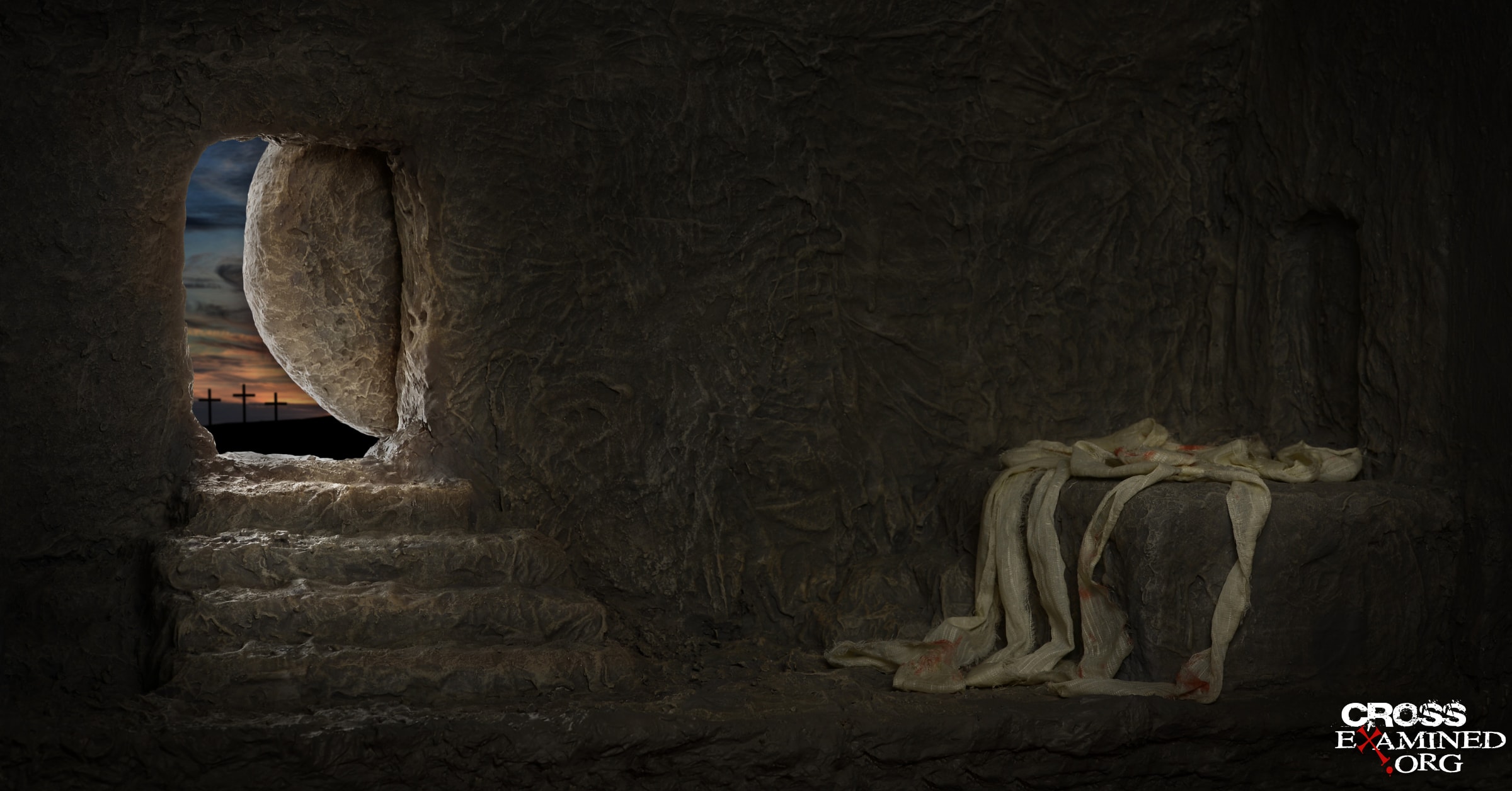
A friend asked me about a supposed Jewish tradition concerning the head wrapping of Jesus in the tomb. The Gospel of John notes that Peter and John (if the beloved disciple is the writer of the Fourth Gospel which this writer accepts) run to the tomb of Jesus. They investigate the tomb and saw the “napkin, that was about his head, not lying with the linen clothes, but wrapped together in a place by itself” (Jn. 20:7, KJV).

According to a story circulating online which has been passed along in many churches, an ancient Jewish tradition held that when a person had finished their meal, the person would toss their napkin aside if he or she was finished. However, if the person had to leave and was not finished, the person would neatly fold their napkin and place it to the side of their plate indicating that he or she would return. Advocates of this story contend that the folding of the napkin in John 20:7 was Jesus’s way of saying that he was going to leave but would soon return. While the story is heartwarming, one must ask if there any merit to the claim. After investigating the story, unfortunately, I must report that there seems to be no evidence that the story is true. But there is a more remarkable twist that is greater than the supposed tradition. First, here are the reasons why the story seems to be nothing more than an urban legend.

  1. The headcloth was not a napkin. With all due respect to the King James Version, “napkin” may not be the best translation of the term Sudarion indicates a small piece of cloth which could be a towel, a napkin, handkerchief, or a face cloth. Given the context, no one was eating a meal inside the tomb which would exclude the term “napkin.” Sudarion best fits with the idea of a cloth that covered the head of the corpse. The Christian Standard Bible provides a better translation as it says, “the wrapping that had been on his head was not lying with the linen cloths but was folded up in a separate place by itself” (Jn. 20:7, CSB).
  2. The headcloth was rolled and not folded. While the CSB uses the term “folded,” the term entulissō seems to fit better with the notion of being rolled. According to Louw and Nida, entulissō indicates the action “to cause something to be in the shape of a roll.”[1] The term is also used in Revelation 6:14 where the sky is entulissō (i.e., rolled up) like a scroll. The neat folding of the headcloth as implied by the mealtime tradition does not seem to fit the tomb scene even if the tradition did exist as it seems more likely that the head cloth was rolled up like a scroll.
  3. There is no evidence of the Jewish mealtime tradition. The death knell to the mealtime legend (no pun intended) is that there seems to be no evidence that such a Jewish mealtime tradition exists. Granted, there are numerous Jewish traditions in both the written and oral law and it is possible that one could have been overlooked. Nonetheless, this writer could not find anything pertaining to a tradition surrounding a folded napkin.

This so-called Jewish mealtime tradition is one that I have heard but have never investigated until now. The story has no root in any apparent oral or written tradition (at least as far as I could find) and possesses all the earmarks of being nothing more than an urban legend. While this news may be disappointing for some, the genuine story of the rolled head cloth provides greater and deeper meaning to the resurrection of Jesus. Consider the following three truths.

  1. The body was clearly resurrected and not merely resuscitated. Something amazing must have taken place for the rolled head cloth to have been placed in a separate location than the other linens. For Jesus to have been able to escape the grave cloths without disturbing their form while at the same time rolling the cloth that had wrapped his head illustrates that Jesus experienced a greater and far different return to life than what Lazarus or anyone else ever had. Lazarus had to be unbound from the cloths that enclosed his body (Jn. 11:43-44). Jesus was able to return to life and leave behind the cloths without any assistance. Remarkable!
  2. The body would have had to come through the cloths with the head wrapping. The other cloths were lying in the same place and the same form they had when they wrapped the body of Jesus. Yet, here was this head cloth rolled up to the side away from the other cloths. This seems to suggest that the body of Jesus came through the cloths with the head cloth attached. Thus, if a person were to witness the resurrection, it is likely that the eyewitness would see the body arising out from the cloths. Or, it could be that a person would see the body vanish with the cloths sinking in where the body had been with the visible Jesus standing beside them with headcloth in hand. After the resurrection, Jesus rolled up the cloth like a scroll and laid it to the side before exiting the tomb. The resurrection of Jesus was an otherworldly event, unlike anything anyone had before perceived. When Jesus resurrected from the dead, God used a new system of physics for this event—one that linked the spiritual and physical in an amazing new union.
  3. The body of Jesus was wrapped in more than one cloth. While the Shroud of Turin’s authenticity is not necessary to believe in the resurrection of Jesus, some have used the cloths mentioned in John’s Gospel to refute the Shroud. This is not a good practice primarily because John notes the existence of more than one kind of cloth. Since the women were not able to fully embalm the body of Jesus, it is possible that a Shroud covered the body of Jesus along with other wrappings in the tomb. The head cloth and the other linens indicate the plurality of cloths used to bury Jesus’s body. The absence of evidence pertaining to the Shroud is not evidence of absence.

So, while the story of an ancient Jewish tradition linking the folded head cloth with Jesus’s return is most likely an urban legend, the actual story of the wrapped head cloth tells a greater story. Jesus’s resurrection was a spectacular and ethereal event. The power exhibited by the resurrection is greater than any power known to humankind. Paul notes that just as Jesus has risen from the dead, so shall all of those who have trusted Christ (1 Co. 15:23). This indicates that this kind of resurrection will one day be coming to a tomb near you.

Note

[1] Johannes P. Louw and Eugene Albert Nida, Greek-English Lexicon of the New Testament: Based on Semantic Domains (New York: United Bible Societies, 1996), 704.


Brian G. Chilton is the founder of BellatorChristi.com and is the host of The Bellator Christi Podcast. He received his Master of Divinity in Theology from Liberty University (with high distinction); his Bachelor of Science in Religious Studies and Philosophy from Gardner-Webb University (with honors); and received certification in Christian Apologetics from Biola University. Brian is currently enrolled in the Ph.D. program in Theology and Apologetics at Liberty University and is a member of the Evangelical Theological Society and the Evangelical Philosophical Society. Brian has been in the ministry for over 15 years and serves as the Senior Pastor of Westfield Baptist Church in northwestern North Carolina.

Original Blog Source: http://bit.ly/2Ixzqw3

By Brian Chilton

When I had struggled with my faith, it was not in the area of science. I believed that science and faith can coexist, and I still do. The God who gave the special revelation of the Bible is also the same God who created the heavens and the earth from no materially existent thing. My struggles were in the area of history. In 1997, I came across a work by a group called the Jesus Seminar (composed of individuals such as John Dominic Crossan, Robert Funk, and Marcus Borg) which claimed that the majority of the words of Jesus as recorded in the Gospels could not be historically verified. I later came to find that the Jesus Seminar had no evidence to support their claims, just their own presuppositions.

However, as I began studying the areas of history, philosophy, and theology, I came to realize that the core details of Jesus of Nazareth’s life can be known with great certainty. One of my professors at Liberty, Gary Habermas, developed what he calls the minimal facts approach. This approach lists out six areas of Jesus’s life that are universally accepted by all historians. He also adds a seventh which holds strong support, albeit less than the other six. So, what are these seven historical aspects of Jesus’s life that can be held with great certainty? They are as follows.

  1. Jesus died on a Roman cross. It is universally accepted that Jesus of Nazareth died by crucifixion. Even agnostic leaning atheist New Testament scholar Bart Ehrman states that “The crucifixion of Jesus by the Romans is one of the most secure facts we have about his life.”[1] The Romans were efficient killers. They would ensure that the individuals whom they were instructed to kill died. Otherwise, their lives would have been taken in the victim’s place.
  2. The disciples had experiences that led them to believe that Jesus had risen from the dead. It may surprise you to discover that nearly all historians accept that the disciples had experiences that led them to believe in the resurrection of Jesus. Nearly all scholars agree that something happened on the first Easter Sunday. But what happened is where they differ.
  3. The disciples were transformed by their experiences to the point that they were willing to die for what they knew to be true. People die for what is false all the time. Many individuals have fallen in a war for nations that did not have noble causes. However, it is far different when the person dies for something they know to be true or false. The early disciples were willing to lay their lives on the line, and the lives of those they loved, for what they knew to be true or false. They literally believed that Jesus had risen from the dead.
  4. The resurrection message was promoted early in the church’s history. This is one of the points that excites me. I hope to write my dissertation on this very topic. Throughout the New Testament are early creeds that predate the New Testament documents. One of the earliest is 1 Corinthians 15:3-7 which tells of Jesus’s resurrection appearances to the disciples, James, and 500 witnesses at one time. The creedal formulation is extremely early. Bart Ehrman, an agnostic, holds that the material goes back “to the early 30s of the Common Era.”[2] James D. G. Dunn holds that the material dates to “within a year or two of the events themselves.”[3] More likely, the creed dates to the very year of Jesus’s death, burial, and resurrection. This along with Galatians 1:18-19 and the early creeds are among the earliest material in all of the New Testament record.
  5. Paul of Tarsus, the former opponent of Christianity, became a Christian after encountering the risen Jesus. No one denies that Paul of Tarsus had some experience on the road to Damascus which radically transformed his life. What could have transformed this Pharisee of Pharisee who was either a member of the Sanhedrin or one who was on his way to becoming a member (a position that paid extremely well)? Having an encounter with the risen Jesus would have brought such a transformation.
  6. James the brother of Jesus, a former skeptic, became a Christian after encountering the risen Jesus. The same holds true for James the brother of Jesus who was not a follower of Jesus until after the resurrection. James disproved of Jesus’s ministry (see Jn. 7:5) perhaps in part because it was expected that the oldest sibling would take over the family business. Jesus didn’t. Instead, he went on a preaching campaign. James probably felt great resentment towards Jesus during Jesus’s earthly ministry. However, his experience with the risen Jesus changed all that.
  7. The tomb was found empty. While this fact is not held as strongly as the other six, 75% of historical scholars accept that the tomb of Jesus was found empty on the first Easter Sunday. It is also interesting to note that the preaching of the resurrection happened early in Jerusalem. This is compelling because the skeptic would have known where the tomb of Joseph of Arimathea was located. The tomb could easily be checked. Jesus was not there.

More likely than not, as we approach the Easter season, you will encounter shows, books, and booklets that will try to dissuade you from believing that Jesus rose from the dead. The reality is, the best evidence supports not only that Jesus lived and that he died, but that he also rose again from the dead. As James and Paul were transformed by the resurrection of Jesus, so can you! Let us shout in triumph with the angels standing by the empty tomb of Jesus, “He is not here, but has risen” (Lk. 24:6).

Notes

[1] Bart D. Ehrman, Why Was Jesus Killed?, Kindle ed.

[2] Bart D. Ehrman, Did Jesus Exist? This Historical Argument for Jesus of Nazareth (New York: HarperOne, 2012), 141.

[3] James D. G. Dunn, Jesus Remembered, Christianity in the Making, vol. 1 (Grand Rapids; Cambridge, UK: Eerdmans, 2003), 864.


Brian G. Chilton is the founder of BellatorChristi.com and is the host of The Bellator Christi Podcast. He received his Master of Divinity in Theology from Liberty University (with high distinction); his Bachelor of Science in Religious Studies and Philosophy from Gardner-Webb University (with honors); and received certification in Christian Apologetics from Biola University. Brian is currently enrolled in the Ph.D. program in Theology and Apologetics at Liberty University and is a member of the Evangelical Theological Society and the Evangelical Philosophical Society. Brian has been in the ministry for over 15 years and serves as the Senior Pastor of Westfield Baptist Church in northwestern North Carolina.

Original Blog Source: http://bit.ly/2HI5Bte

By Terrell Clemmons

How Soviet Disinformation Infected the West & What the West Can Do About It

On Tuesday, July 25, 1978, Romanian-born Ion Mihai Pacepa (‘e-YOHN MEE-hai pa-CHEP-a’) crossed the small outer lobby of the United States Embassy in Bonn, West Germany, and made his way toward the Marine officer standing guard, arms across his chest, at the door to the entrance. The son of a devout Christian mother, the intelligence veteran had sworn to himself upon being drafted into the Securitate (Romanian secret police) that he would never take part in a political killing. For 27 years he had lived with the running nightmare that, at some point, assassination orders would land on his plate. The previous Saturday, the dreaded moment had arrived.

Now was the time to break with the evil system that had controlled his entire adult life. In spite of his resolve, though, the physical steps were proving harder than the mental ones. Keeping his voice as low as possible, he spoke directly to the Marine. “I am a Soviet bloc two-star intelligence general, and I want to defect to the United States.”

Three days later, in the pre-dawn darkness of Friday, July 28, General Pacepa boarded a military plane at U.S. Rhein-Main Air Base, bound for Washington, D.C. Aside from the clothes he was wearing, his worldly possessions consisted of the paperwork confirming President Jimmy Carter’s approval of his request for political asylum, his passport, some personal notes, and a camera containing a few snapshots of his daughter. That night, after a very long first day in his newly adopted homeland, he fell to his knees and prayed aloud for the first time in more than 25 years. Exactly three months shy of his fiftieth birthday, he was a free man.

Disinformation: Deception as Strategic Policy

And an exceedingly grateful one. Coming to America to stay had been a lifelong dream of his. His hands may have been empty, but his head was crammed full of information of monumental importance to the West, and he was eager to share it. Hanging in his abandoned office back in Bucharest, there was a banner proclaiming, “CAPITALIST ESPIONAGE REPORTS HISTORY. WE MAKE IT.” To understand what the Soviets meant by that little epigram, one must understand the Russian “science” of dezinformatsiya, or disinformation—a foreign concept to well-meaning, free-world Westerners.

Lest we think that global warfare ended with World War II or that Western political liberty prevailed for good with the collapse of the Berlin Wall, General Pacepa would advise us to think again. The Soviet cancer of disinformation has metastasized across the globe, and recognizing and countering it is literally a matter of life and death, as the octogenarian—now an American citizen—shows in his latest book, Disinformation: Former Spy Chief Reveals Secret Strategies for Undermining Freedom, Attacking Religion, and Promoting Terrorism (WND Books, 2013), co-authored with law professor Ronald J. Rychlak.

Disinformation is not synonymous with misinformation. If Russian sources had fabricated a story and published it through their own outlets, that would be misinformation, and Westerners would rightly have read it through a skeptical filter. If, however, the same information appeared in Western media and was attributed to Western sources, that would be disinformation. In both cases, it reduces to flat-out lying, but in the latter case, the credibility of the lie—and therefore its power—is substantially greater.

Codified in highly classified training manuals, disinformation was, for the Soviet-bloc countries, a carefully planned and strategically executed “science.” By 1950, Joseph Stalin, Supreme Dictator of the USSR and de facto head of roughly a third of the world’s population, faced a strong post-war alliance between the U.S. and Western Europe. He knew he didn’t have the military or economic strength to break that bond, but he was also a bad loser, unable to coexist contentedly with the free West. So he reverted to the older, low-tech weaponry of lies and emotional manipulation.

He appointed Andrey Vishinsky as Minister of Foreign Affairs and charged him with turning European sentiments against America. (Vishinsky would accomplish this by accusing America of harboring Zionism—more on that in a moment.) Then he dispatched Aleksandr Panyushkin to Washington, D.C., as Soviet Ambassador to the U.S. Panyushkin’s main task was to foster the creation of peace movements in America (because, if you can seduce your enemy into laying down his arms, he and everything behind him will all be yours). The goals were to divide the West and to vilify and weaken America, the strongest of the Western nations.

This was the strategy with which the Cold War was prosecuted from Moscow. Stalin called it World War III. It was a war of ideas—an intelligence war in which more people worked in disinformation than in the Soviet army and defense industry combined.

But unlike Western intelligence services, Soviet-bloc espionage was not designed to obtain factual information or analyze the enemy. The purpose of foreign intelligence for the Soviets was to spread information—false information, usually aimed at accomplishing one of three objectives: (1) to polish a Communist leader’s image, (2) to hide Communist crimes, or (3) to frame and slander an enemy—usually America, the Church, or later, Israel. Very often, disinformation involved rewriting history, retrofitting what has beento make it accord with whatever best furthered the objectives of the current regime. Thus, there were “few things more difficult for Russian and Western historians,” Pacepa and Rychlak note wryly, “than to predict Russia’s past.”

Only in a world of deceit is the past unpredictable. But this is what was meant by the pithy assertion, WE MAKE HISTORY.

Truth as Counter-Strategy

Disinformation amounted to deception as national policy. Of course, this was never publicly announced by the Kremlin, and by and large, Western leaders were oblivious to the sheer cunning of it. President Truman did know, however, that Stalin intended to expand territorial control. Truman also believed that the “force of imperialistic communism” could only be stopped “through a concerted religious effort,” one that would place the superiority and strength of “truth and freedom” before the peoples of the world. In this way, Truman reasoned, Soviet falsehoods would be overcome by the “plain, simple, unvarnished truth.”

And so he launched his “Campaign of Truth” in 1950, which he rightly saw as “a struggle, above all else, for the minds of men.” He asked Pope Pius XII, who had proven himself a strong moral ally in the face of Nazism, for help, and a cooperative, free-world counteroffensive began, which gave birth to the Voice of America, Radio Free Europe, and Radio Liberation (later, Radio Liberty). The Vatican acquired a large tract of land north of Rome for a new broadcasting center, and in 1957 it went into operation. Soon after that, Vatican Radio, which had helped the resistance oppose the Nazis during World War II, became another high-powered voice of truth, countering the lies of Communism in 47 languages.

“Blow Up That Whole W-w-wasps N-n-nest”

Quantifying the full return on this kind of a political-global investment is humanly impossible, but the ramifications with respect to Pacepa alone would prove profound, as the broadcasting center would play a role in his defection. The target of the long-dreaded assassination order that prompted him to defect in 1978 was Noel Bernard, the director of Radio Free Europe’s Romanian program. “I w-w-want Noel k-k-killed,” Romanian “President” Nicolae Ceausescu had whispered in his ear on July 22, 1978. “And a few days later,” he had continued, “blow up that whole w-w-wasps n-n-nest.” The “wasp’s nest” was the Munich headquarters of Radio Free Europe, from which Bernard had been blackening Ceausescu’s carefully crafted image. So Bernard had to go, “Death to truth-tellers” being the primal instinct of a dictator.

But out of conscience, as we have seen, Pacepa sought asylum in the U.S. rather than complying with the order. Indeed, far wider consequences were yet to unfold. In 1987, with the encouragement of his American patriot wife Mary Lou, and after overcoming obstacles to publication erected by the Carter administration, Pacepa published his first book, Red Horizons: The True Story of Nicolae and Elena Ceausescu’s Crimes, Lifestyle and Corruption. (At the time, America and the West were fawning over Ceausescu—the strategic result of a successful disinformation campaign out of Moscow.) In 1988, Red Horizonswas serialized over Radio Free Europe, and the following year, both Nicolae and Elena Ceausescu were executed by the Romanian people after a trial in which the charges had come nearly word-for-word out of Red Horizons.

At the risk of sounding like an infomercial, (But wait!) there’s more. During this time also, two congressmen handed a copy of Red Horizons to President Reagan, to whom it became “my bible for dealing with dictators.” By 1990, the Berlin Wall had come down, and the entire Soviet edifice would soon follow.

The Empire Strikes Back

Of course, this was a cataclysmic collapse with far-reaching implications, prompting justifiable celebrations worldwide. But the evil designs on the West had gone to seed, and whole KGB-launched or KGB-commandeered organizations based on falsehood had put down roots and taken on pernicious lives of their own.

The most virulent strain to emerge thus far has come out of the Middle East. On April 16, 2004, Sheik Ibrahim Mudeiris appeared on Palestinian TV and, pounding his fist in the air, cried out, “It is World Zionism that manipulates U.S. decision-making by remote control.” How did he know this? This “World Zionism” had been exposed, he said, by Roger Garoudy, a former French Communist convert to Islam, who had learned of it from reading The Protocols of the Elders of Zion.

This, too, is the fruit of a disinformation campaign—Operation “SIG,” which involved disseminating into the Islamic world hundreds of thousands of Arabic translations of the Protocols—a known Russian forgery saying that the Jews planned to take over the world. (Protocols had also, incidentally, been the basis for much of Hitler’s Mein Kampf.) Pacepa was personally involved in distributing it, along with “documentary” material “proving” the U.S. to be the Jews’ Zionist accomplice. Lest this sound too far-fetched to be believed by peaceable Westerners, Pacepa scrupulously details the machinations and chain reactions from Moscow to a plethora of leftist peace movements, liberation ideologues, and Islamic jihadists.

Plain Truth: Still the Best Defense

Disinformation can be tough reading. The darkness of the evil it exposes assaults the psyche, but the onslaught is mitigated by the unfolding revelation of how plain, unvarnished truth did illuminate the darkness and out-endure the lies. Pacepa’s own story of redemption, the collapse of the USSR, and the enduring light of the Catholic Church—these all bear witness that truth and virtue ultimately prevail and that the campaign of truth is still the best hope in the face of evil empires and their lies.


Terrell Clemmons is a freelance writer and blogger on apologetics and matters of faith.

This article was originally published at salvomag.com: http://bit.ly/2T1ClTz

By Robby Hall

Often, people may ask how to show that Buddhism is false or what’s a good argument against Hinduism or the New Age, etc.  But in the end, one doesn’t necessarily have to argue against those worldviews as much as they need to give an argument for the Resurrection of Jesus.

The Resurrection is the central tenet of the Christian faith.  The Apostle Paul stated that:

And if Christ has not been raised, then our preaching is in vain and your faith is in vain.  We are even found to be misrepresenting God because we testified about God that he raised Christ, whom he did not raise if it is true that the dead are not raised.  For if the dead are not raised, not even Christ has been raised.  And if Christ has not been raised, your faith is futile and you are still in your sins.  Then those also who have fallen asleep in Christ have perished.  If in Christ we have hope in this life only, we are of all people most to be pitied.

1 Cor 15:14-19

What this means is that the implications of the resurrection weigh greatly upon the Christian worldview. So what does it mean if Christ was resurrected?

1. God is real

Obviously, if one doesn’t believe in God, a man claiming to be God and rising from the dead would seem to indicate that God does exist.  However, Jesus has stated that even this wouldn’t convince the hardest skeptic.  But this does not diminish the strong evidential nature of the resurrection, it only describes the skeptic’s state of mind.

2. Christianity is True

If we can be sure from the evidence that Jesus is the son of God, he died on a Roman cross for our sins, and rose from the dead, Christianity follows.

3. All other worldviews are false

The law of non-contradiction states that two opposing ideas cannot both be true at the same time and the same way.  The statement “all religions are basically the same” or “all religions are equally true” are patently false.  However, they could all be false, even Christianity.  But, the resurrection would be evidence that the Christian worldview is true and all others would be false given the identity of Jesus being confirmed by the resurrection.

If you can show good, historically reliable evidence for the resurrection (and there is), then you have done most of the work in showing all other worldviews are false and have shown the truth of Christianity as Paul stated so long ago:

But in fact Christ has been raised from the dead, the firstfruits of those who have fallen asleep. 21 For as by a man came death, by a man has come also the resurrection of the dead. 22For as in Adam all die, so also in Christ shall all be made alive. 23But each in his own order: Christ the firstfruits, then at his coming those who belong to Christ. 24Then comes the end, when he delivers the kingdom to God the Father after destroying every rule and every authority and power. 25 For he must reign until he has put all his enemies under his feet. 26 The last enemy to be destroyed is death. 27 For “God has put all things in subjection under his feet.” But when it says, “all things are put in subjection,” it is plain that he is excepted who put all things in subjection under him.28 When all things are subjected to him, then the Son himself will also be subjected to him who put all things in subjection under him, that God may be all in all. 1 Cor 15 20-28.


Robby Hall is in the Secure Access industry for Information Technology.  He has been married for 3 years and has just welcomed his first child, Bridget.  He is graduate of the Cross Examined Instructor’s Academy and leads apologetics small groups at his local church.

Original Blog Source: http://bit.ly/2BwXFGf

[/et_pb_text][/et_pb_column][/et_pb_row][/et_pb_section]

By Jeremy Linn

We received a great question on our Instagram page this week:

“How do we know that the extra-biblical sources which mention Jesus are trustworthy? Josephus, Tacitus, and the rest weren’t eyewitnesses; they never knew Jesus.”

The questioner here is referring to ancient historical accounts – especially written by the historians Flavius Josephus and Cornelius Tacitus – which mention Jesus and give us some information about him. Josephus describes Jesus as the brother of James in his work Antiquities of the Jews and also provides the most well-known extra-biblical reference to Jesus. Tacitus makes reference to Jesus’ death under Pontius Pilate in his work Annals.

As the questioner stated, Josephus and Tacitus both were not eyewitnesses to the events of Jesus’ life. Josephus was born a few years after the events of Jesus’ life and was mostly involved in Jewish political matters (and not in the early Christian church). Tacitus also lived after Jesus – a few decades later – and focused on the politics and history of Rome (an area not heavily reached by the Christian church at the time).

Since these two historians were not eyewitnesses, how can we know to trust their references to Jesus? There are a few things we need to consider when answering this question:

  1. Ancient accounts of historical events were often written by people who lived after the events happened

In other words, they were not eyewitnesses of the events. Still, in these cases, we can still learn basic facts about the events which took place. For example, the earliest source we have about the events of Alexander the Great was written by a historian who lived around 300 years after the life of Alexander. Even with this time gap, we can consider many facts about Alexander to be reliable and true.

  1. Almost all ancient historical accounts were written within a culture focused on oral tradition

This focus means the details of the events were transmitted verbally within a community that could check the facts of the events with each other. This method of transmitting information becomes powerful when multiple people witness an event, as all the eyewitnesses can work together to reach a reliable account of the events that took place.

This oral focus gives us a primary reason why the writing of historical events tended to happen later – there was little need to immediately preserve events through writing when people were used to preserving events orally within their community. It also explains how a written account written years after a historical event can still be reliable – a reasonably accurate oral tradition could have already solidified by the time the events were written down.

  1. The works of Josephus and Tacitus are generally reliable. 

Tacitus is praised by historians for being a reliable source on the history of ancient Rome. Josephus’ reliability has been called into question because of his tendency to exaggerate and because of a strong bias towards Jews. However, he has provided us with valuable information about historical figures like Herod the Great, and information about the inner workings of Jewish ritual and culture. Overall, Josephus is reliable in providing basic historical facts about the lives of Jews.

Once we establish the general reliability of these authors, we can turn to the reliability of specific historical accounts they wrote, and specific passages within those accounts.

  1. There is no reason to question Tacitus’ reference to Jesus being killed under Pontius Pilate. 

The language used in passage 15.44 – saying that Jesus suffered the extreme penalty under Pontius Pilate, is consistent with other works of Tacitus. There is nothing out of the ordinary noted in this passage which would make us think the text was tampered with. And we even have archaeological evidence for the existence of Pilate – through an inscription found 50 years ago, and a ring found this year.

  1. We can find basic facts about Jesus in the works of Josephus. 

The references to Jesus in Josephus’ Antiquities get a bit more complicated. There is one reference to Jesus as the brother of James, which appears in every copy we have of the Antiquities. The reference doesn’t seem to be out of the ordinary in terms of the flow and style of the writings of Josephus. It is reasonable to consider this passage reliable.

However, in the most well-known reference to Jesus called the Flavius Testimonium, there is some commentary we would not expect Josephus to make based on his other writings and based on the fact he is a Jew. For example, one copy of the Antiquities includes the comment that Jesus was “the Christ,” which would be highly unlikely for him to say (after all, that would make him more of a Christian than a Jew!).

The inclusion of this commentary makes us question the details given in the passage, and brings up the possibility of an error in copying the passage or an intentional change in the passage by readers who lived after Josephus. That doesn’t mean we need to throw out the entire passage – it just means certain details are in question. When we eliminate the questionable details, we can still pull basic facts about Jesus in the passage, such as he was someone who did “marvelous works.”

  1. These references are not the only sources we have on Jesus. 

Let’s say we do throw the references in Tacitus and Josephus out. We still have the letters of Paul, the synoptic gospels, the writings of early Church fathers, and a few other extra-biblical references that provide some information on Jesus. Even the Gnostic gospels from the 2nd Century point us to some very basic facts about Jesus (such as his existence!)

The references in Tacitus and Josephus give us a greater sense of confidence in Jesus’ existence, and some key facts about his life – especially his ability to do things that people considered to be miraculous or at least “wonderous.” The references also point us to his death, an event that most Muslims and some skeptics deny. And through other extra-biblical sources, we can see that early followers revered Jesus highly and elevated him to the status of God.

Again, I didn’t intend for this post to provide the definitive answer for the reliability of extra-biblical references to Jesus. But these six considerations will definitely give you something to think about. No matter how we view the references to Jesus in Josephus and Tacitus, one thing is for sure – we have a wealth of evidence supporting the existence of Jesus and the basic claims that Christians make about his life.


Jeremy is the co-founder of the ministry Twin Cities Apologetics and is an accountant for a law firm in Minneapolis, Minnesota. He’s also going to Bethel Seminary for a graduate degree in a program called Christian Thought (basically Apologetics!). Outside of Apologetics, Jeremy enjoys sports, playing guitar, and making videos. 

Original Blog Source: http://bit.ly/2FZeFc9

By J. Brian Huffling

“Historians are biased and choose what they report. As such, history can’t be known.” That’s a typical objection to the ability to know history. If such objections prove that we can’t know history, then we can’t know that Christianity is true since it is known through history and historical claims. In his prologue, Luke says,

“In as much as many have undertaken to compile a narrative of the things that have been accomplished among us, just as those who from the beginning were eyewitnesses and ministers of the word have delivered them to us, it seemed good to me also, having followed all things closely for some time past, to write an orderly account for you, most excellent Theophilus, that you may have certainty concerning the things you have been taught” (Luke 1:1-4; emphasis added).

The above passage demonstrates that Luke was writing as an historian. Words such as the ones underlined show his desire to write the truth of the events he wanted to convey. So, if history can’t be known, then we can’t know that Christianity is true. Let’s look at a typical objection.

Bias is probably the most popular objection to knowing history. It is claimed by some that historians are biased. It is not always clear what the objection is really getting at, but usually it is something like the historian holds certain views that in some way make his reporting subjective or unfair. For example, an historian may be writing about a religious issue and if he is part of that religion he is likely going to be accused of being biased. The disciples are often said to be biased regarding the events of the life of Jesus, particularly his resurrection. Since they knew him and had a vested interest they must have made up the claims of the resurrection.

Ironically, there are many assumptions (i.e., biases) about the nature of bias. It is more often than not used in a negative way and is equated with subjectivity and falsity. But why should this be the case? Why should the notion of either bias or subjectivity be equated with something being false? People could be biased because of evidence. If the disciples really did see Jesus alive after he was dead, then the reason they were biased was because of evidence and proof. But this bias would not be based on any subjectivity since their knowledge was based on objective and empirical evidence. Further, someone could have a subjective view of something and still be correct. There is nothing about being biased or subjective that guarantees that the belief is false. Such is an assumption in itself.

Consider this popular argument against objectivity:

  1. To be objective one must be free from bias.
  2. No one is free from bias.
  3. Therefore, no one is objective.

This is a valid argument, meaning that the conclusion follows from the premises. But is it sound (i.e., is the argument valid and the premises and conclusion true)? Well, if no one is free from bias that means the one making this argument is not free from bias. But statements like “No one is . . .” is a universal statement that applies to everyone everywhere. But aren’t universal statements objective? What else would ‘objective’ means other than something that is universal and not simply limited to the subjective beliefs of an individual? This whole line of argument is self-defeating. In other words, when using the argument’s criteria, the very argument itself fails. The objector, in this case, is objective in trying to argue that no one is free from bias and that no one is objective. However, the only way to make such universal statements is for the objector to make objective statements. If they were subjective, then they wouldn’t necessarily be universal. If they weren’t universal, then maybe some people aren’t biased. But this contradicts the argument. Assuming the argument holds water because no one really denies that people are biased, it shows that one can be biased and objective. (Note, it is not guaranteed that one is going to be objective and biased, just that it’s logically possible. The objection is thus deflated.)

This raises another question that is rarely asked and usually assumed: What does it mean for something to be ‘objective’? By now it should be clear that it can’t mean free from bias since we’ve just seen that a person can be both biased and objective. So being free from bias is not necessary to be objective (in fact I would agree that everyone is biased in a general sense). So what does it mean? Most people think that it means being detached from a given circumstance so that one can see it as an objective outsider. In his fascinating work Jesus and the Eyewitnesses: The Gospels as Eyewitness Testimony, drawing on other work on this topic (such as Samuel Byrskog’s Story as History—History as Story: The Gospel Tradition in the Context of Ancient Oral History), Richard Bauckham makes the surprising and unfashionable statement:

“A very important point that . . . for Greek and Roman historians, the ideal eyewitness was not the dispassionate observer but one who, as a participant, had been closest to the events and whose direct experience enabled him to understand and interpret the significance of what he had seen” (page 9).

He further notes that many historians wanted someone who was involved in the events in question because that person would have a vested interest. They wanted someone who was involved and really there.

This counters the usual desire or assumed need for detatchment, but it does not say what objectivity is. Objectivity is arriving at conclusions that are based on evidence and principles that have their foundation in external reality. Everyone can use and measure truth claims based on external (objective) reality. Put negatively; it is the opposite of one making conclusions that arise simply out of one’s subjective mind. Such evidence based on reality and the principles that follow is mind-independent. Since reality is objective, that is, everyone can know it (as long as their faculties are working properly), the conclusions based on reality can also be objective. When one uses universal (objective) principles to ascertain the truth of a conclusion, one can be objective. Such principles are the laws of logic (or being). One such law is the law of non-contradiction. It declares that if two statements are mutually exclusive one must be true and the other must be false. For example, Christianity teaches that Jesus died. Islam counters that Jesus did not die. These statements are mutually exclusive—one must be true and the other false since there is no third option. Thus, they are contradictory. (This is contrasted with statements that can both logically be false, such as “Buddhism is true” and “Atheism is true.” Such statements that can both be false are called ‘contrary.’) Regarding this principle and its application to historical objectivity, Maurice Mandelbaum says,

“Our knowledge is objective if, and only if, it is the case that when two persons make contradictory statements concerning the same subject matter, at least one of them must be mistaken” (The Anatomy of Historical Knowledge, 150).

The law of non-contradiction is based in the nature of reality. It is not just a principle of thought, but of being. A tree cannot exist and not exist at the same time in the same sense. That would be a contradiction. Such first principles of thought and arising out of the nature of reality since something can’t simultaneously be and not be. It is not simply a made-up principle. In fact, it is undeniable since to deny it would require using it.

Thus, if one’s conclusions are based on external and objective reality and evidence, and the principles from such reality, those conclusions can be objective. There is, in a sense, an objective apparatus giving us the possibility of being objective. Again, this is contrasted with something arising only from one’s (subjective) mind rather than from external (objective) reality. There is, therefore, nothing about biases that preclude one from making objective historical statements. Biases do not guarantee subjectivity or falsity.

Back to Bauckham’s point regarding bias, it is often the case that people are indeed biased, but biased because of the evidence. They have seen so much evidence, that they are convinced that what they are saying is true. This, however, is not subjective bias or assumption, but rather the careful examination of objective reality and the evidence that all can investigate.

When looking at historical questions, such as the resurrection, one should not base his conclusions on notions such as the alleged bias of the ones making claims. Rather, one should examine the evidence for the claims to discover their veracity. We can recognize bias in every area and by all people. However, that alone is not enough to show that a person’s claim is false. To be good and responsible historians and investigators, we must follow the evidence.

(I would like to thank Norman L. Geisler for his direction regarding my MA thesis topic which was on this issue, as well as Thomas A. Howe to whom my thoughts and work are indebted greatly.)


Original Blog Source: http://bit.ly/2HOROSC

By Nick Peters

Objection:

The Bible is a compendium of fireside tales and fables recounted orally for generations by goat herders and primitive tribes from the stone age until writing was invented, and then again many different sources, transliterations, and versions were written down.

A Quick History Lesson

There were no grand central universities to organize the many various versions of these origin stories. They were for entertainment, and to answer the questions of the many fears and mysteries of our universe since there was no science yet. This is the Old Testament.

The ‘new’ Testes is also hearsay since these letters, ‘gospels’ and stories were written by the loyal faithful, the camp followers, not by objective historians at that particular time, or by any contemporary writers, and these tales were written many years after the supposed events of this mythical Jesus. Thus, there is no verifiable evidence of a Jesus in real history.

Then many of these stories, but not all, were compiled for one self-absorbed converted Roman Emperor for his expressed purpose of conquest and control of the people of Europe for his Holy Roman Empire. He recognized that this was the perfect religion/mythology for domination of the populace. Half the stories were ignored by the Nicean Bishops, and none have been proven to be based on fact.

This ‘Bable’ is backed up by absolutely no facts and evidence.

– Brien

Nick Peters’ Response:

I have been asked by Tim Stratton to write a reply to Brien as he has been making these same objections in various groups on social media — including the FreeThinking Ministries Facebook page. Tim refers to it as a “softball objection.” I really think that’s inappropriate because when you play softball, there’s an actual target to swing at.

Let’s go through and consider Brien’s objections:

“The Bible is a compendium of fireside tales and fables recounted orally for generations by goat herders and primitive tribes from the stone age until writing was invented, and then again many different sources, transliterations, and versions were written down.”

Let’s begin by noting that no evidence is given to support any of these assertions. It’s all a “just so” story. Somehow, Brien knows these stories go back to the Stone Age. How? What evidence has been brought forward? Nothing. There’s also this implication that people who are goat herders specifically — and all primitives — must be therefore stupid. It’s one of my favorite claims to see: “Ancient People Were Stupid!”

Then we are told writing was invented and many different sources, transliterations, and versions were written down. Well, a source is something that’s used when writing, so that part doesn’t make sense. Then transliteration supposedly, but that’s using another alphabet to write a message, so what message was being transliterated if the alphabet hadn’t been written? Then he claims there are many versions, but where are these versions? Can Brien show them? We could recommend that he read a book like this, but that’s likely too much work. (By the way, for those financially challenged libraries offer these books for free.)

“There were no grand central universities to organize the many various versions of these origin stories. They were for entertainment, and to answer the questions of the many fears and mysteries of our universe since there was no science yet.

This is the Old Testament.”

That’s true. There were no grand central universities. After all, there was no Christianity yet, and Christians started the majority of those universities, including the universities that were founded in AmericaIn the medieval period, there were plenty of universities founded by Christians. As for why the stories were written, again, we have a “just so” story. It’s also assumed the accounts are meant to be read as scientific accounts. I disagree. I go with John Walton in saying the accounts are aimed at dealing with God declaring the function of creation in being a cosmos for Him to dwell in. Still, Brien has given zero evidences or sources for any of this.

“The ‘new’ Testes is also hearsay since these letters, ‘gospels’ and stories were written by the loyal faithful, the camp followers, not by objective historians at that particular time, or by any contemporary writers, and these tales were written many years after the supposed events of this mythical Jesus.”

Awwww. “The New Testes.” Isn’t that cute? I bet Brien sure feels like a big boy using terminology like that. Well, give him a cookie. So the first statement we have is that the Gospels are hearsay. On what grounds? First, they were written by the loyal faithful.

I was not aware that being loyal to a cause meant that your account was hearsay or even dare I say it, unreliable. They are also contrasted to objective historians. Keep in mind, Jews today have the best holocaust museums out there, and I’m quite sure they have a bias. As for objective historians, no historian is purely objective. If you write about something, it’s because you care about it.

Besides that, which historians should have written about Jesus? How many of them are going to take seriously the claims of a crucified criminal in the backwaters of Judea being a Messiah figure? No more than most elite will go and track down a Benny Hinn claim.

‘Finally, these were not by contemporary writers and were written many years after the events.’

Well, usually historical accounts are written after the events. That’s the way it works. Next, this is also common in the ancient world. Plutarch would write about events that took place centuries before he lived. The first biographies of Alexander the Great that we have come centuries later.

Next, there is still no evidence given. Perhaps Brien could someday learn to interact with a work like this one. Does Brien have any methodology whereby to date an ancient manuscript? Does he have a methodology to determine authorship?

Finally, this would only apply to the Gospels. Seven of the thirteen epistles attributed to Paul are universally accepted in scholarship, and those seven are all we need to make a case for the resurrection of Jesus.

“Thus, there is no verifiable evidence of a Jesus in real history.”

At this point, we just put our heads back and roar in laughter! Jesus mythicism is to history what Intelligent Design (ID) is said to be to science. (I am not a supporter of ID anyway.) Wait. That’s not accurate. There are far more Ph.D.’s in science that will give some backing to it than there are Ph.D.’s in the New Testament or ancient history that will support mythicism. In other words, if you think ID and/or any denial of evolution is junk science, you have no grounds to be supporting mythicism.

Bart Ehrman and Maurice Casey are both serious NT scholars who have written on this topic. They definitely represent the position of most skeptical scholars on this issue. It’s just not a serious claim. It leaves too many questions to explain and lacks much explanatory power itself.

“Then many of these stories, but not all, were compiled for one self-absorbed converted Roman Emperor for his expressed purpose of conquest and control of the people of Europe for his Holy Roman Empire. He recognized that this was the perfect religion/mythology for domination of the populace. Half the stories were ignored by the Nicean Bishops, and none have been proven to be based on fact.”

Poor Brien doesn’t know his history. The Holy Roman Empire started in 800 with Charlemagne. The Council of Nicea was under Constantine in 325. Constantine didn’t have much to do with it and Athanasius, the grand hero of the event, went into exile numerous times afterward as Arians took power. Brien tells us half the stories were ignored by the bishops. No evidence is given of this, and the Council of Nicea was about the Arian controversy. It was not about the canon of Scripture. The first listing we have that mirrors the Protestant Bible comes from Athanasius in 367.

Brien tells us this was the perfect mythology to control the populace. Why? No reason is given. All we have is assertions of faith.

“This ‘Bable’ is backed up by absolutely no facts and evidence.”

You might think this if you ignore all scholarship and archaeology and everything else. It seems as if Brien has never read any scholarship. In an irony, he is like many pastors in many pulpits that he would decry. Reading Brien’s writing reminds me of the joke about the fundamentalist pastor writing the sermon outline for Sunday and putting on the side, “Weak point. Pound pulpit harder.” It would remind me more if there were any points here at all. Brien is just a “fundamentalist pastor” for the other side giving statements of faith without evidence.

Irony is funny, isn’t it?


Nick Peters has a passion for apologetics. He has a Bachelor’s Degree in preaching and Bible from Johnson University and is currently working on a Master’s in the New Testament. He and his wife are both diagnosed with Aspergers and have a cat named Shiro. His other interests include reading, video games, and popular TV shows like The Big Bang Theory and The Flash. Nick says that he is extremely sarcastic, so you’ve been warned! Make sure to check out his Deeper Waters website here at www.deeperwatersapologetics.com

Original Blog Source: http://bit.ly/2UGvMUe