Tag Archive for: Historicity of Jesus

By Bob Perry

If you’re anything like me, you probably associate the word “myth” with an ancient fairy tale. The Greek and Roman pantheon of gods comes to mind — magical spells, curses, and multi-headed monsters. But myths are more than just old-fashioned fantasies. They serve a purpose. They appeal to our collective imaginations. Myths may be fantastical but, as the Merriam-Webster Dictionary puts it, they “serve to unfold part of the worldview of a people or explain a practice, belief, or natural phenomenon.” They are archetypal stories that help us make sense of the world in which we find ourselves. In other words, there is a connection between myth and reality.

The Power of a Story

C.S. Lewis grew up a voracious reader. In 1916, while waiting for a train near London, he bought a copy of George MacDonald’s Phantastes: A Faerie Romance. The book changed his life, not because it enticed him to believe in fantasies, but because it “baptized his imagination” through the power of story. His appreciation for man’s moral imagination led to a lifetime of reading and writing stories. He later studied ancient Greek and Latin literature, philosophy, and Medieval and Renaissance literature. He taught and lectured on all of those during his 29 years as a professor at Magdalen College, University of Oxford.

Great Minds Don’t Always Think Alike

While he was at Oxford, Lewis became friends with J. R. R. Tolkien. They argued about philosophy, religion, and the existence of God. Both were storytellers. And they argued about how to tell stories too. Tolkien, the author of The Hobbit and Lord of the Rings, believed that myths originated in the mind of God as a way to communicate his truths to the world. Lewis thought that was nonsense. Though he saw myths as beautiful charmers of our imaginations, he thought “they were lies: inventions that contain no objective truth about the world.”*

C.S. Lewis struggled with the relationship between myth, imagination, and reality for years. But it wouldn’t let him go. Finally, in 1929, alone in the quiet of his room at Magdalen College, he succumbed to God’s call. And I do mean succumbed.

The Most Reluctant Convert

Lewis describes his two-step conversion — from atheist to theist to Christian — in his autobiography, Surprised by Joy. He knew mythology. And he was intellectually honest enough to read the Christian Scriptures. Something about them rang true. Ultimately, it was his love for truth and stories that merged in the pages of the Gospels:

“I was … too experienced in literary criticism to regard the Gospels as myths. They had not the mythical taste. And yet the very matter which they set down in their artless, historical fashion . . . was precisely the matter of the great myths. If ever a myth had become fact, had been incarnated, it would be just like this. And nothing else in all literature was just like this …

Myths were like it in one way. Histories were like it in another. But nothing was simply like it … And no person was like the Person it depicted; as real, as recognizable, through all that depth of time, as Plato’s Socrates . . . yet also numinous, lit by a light from beyond the world, a god … But if a god — we are no longer polytheists — then not a god, but God. Here and here only in all time, the myth must have become fact; the Word, flesh; God, Man. This is not ‘a religion,’ nor ‘a philosophy.’ It is the summing up and actuality of them all.”**

The God who became flesh made sense of the two things C. S. Lewis knew and loved the most. He surrendered to the divine call. Lewis entered God’s kingdom kicking and screaming, “the most reluctant convert in all of England.”

Storytellers

C.S. Lewis’s conversion is notorious but it’s not unique. History is littered with the accounts of reluctant converts who were struck by the peculiar force of the Christian myth. He and Tolkien became two of the most famous storytellers to do so.

“Fortified by their faith, they proclaimed for their generation — and ours — a True Myth about the dignity of human life and its relationship to God. Against all expectation, their writings would captivate and inspire countless readers from every culture and every part of the globe … as mythmakers, [their writing] created new worlds … invented new languages, and transported us into realms of brooding darkness and unforgettable beauty.”***

In the end, Tolkien and Lewis rejected the secular myth that had dragged the world through two World Wars and into the empty despair of the postmodern worldview. They were masterful at appealing to our moral imaginations. They connected myth to reality.

The True Myth

The Christian myth is a story of the struggle between good and evil. It’s a story of flawed and rebellious people, heroes, and villains. Ultimately, it’s the most fantastic story of redemption ever told. And its hero is — as my friend Tom Gilson has put it in his book by the same name — simply “too good to be false.” Gilson’s point is that Jesus of Nazareth is the most compelling character in human history for a reason. He stepped into the story he wrote.

Jesus’ life and ministry are recorded and verifiable. The veracity of the accounts of his death and resurrection are as reliable as those of any historical event. But his impact goes beyond the reliable accounts about it. As J. Warner Wallace has so clearly summarized it in his book, Person of Interest, Jesus’ life rocked the world, even for those who never believed in him. He influenced education, literature, music, art, architecture, and science in ways that no mere mortal ever could. We restarted our calendars because of his life. He quite literally changed the world by combining history’s most fascinating character with mythology’s most compelling storyline.

He brought the myth to life.

Heaven Meets Earth

In Jesus, the infinite voluntarily reduced itself to something we could see and understand. The divine put on flesh and bone. The all-powerful became a pain-feeling person who stood for the powerless. The Almighty who spoke the universe into existence took the form of a tiny, vulnerable embryo. The Great Mythical ‘I AM’ became a little boy.

Contemplating that, I was reminded of a talented musician named Rich Mullins. Mullins died tragically in a car wreck in 1997, at age 41. But his music always resonated with me. It was thought-provoking, vulnerable, and real. Rich Mullins was a storyteller. So, it’s not surprising that the same guy who wrote the classic worship song, “Awesome God,” also wrote the little tune I offer you below.

Here, Mullins does with music what C. S. Lewis did with literature. He brings the myth to life. It will never become a classic in the genre, but that’s why I consider Rich Mullins’ “Boy Like Me” to be a Christmas song. Maybe you will too …

Boy Like Me

You was a baby like I was once … You was cryin’ in the early morn’

You was born in a stable, Lord … Reid Memorial is where I was born.

They wrapped You in swaddling clothes … Me they dressed in baby blue.

Well, I was twelve years old in the meeting house, listening to the old men pray,

And I was tryin’ hard to figure out what it was that they was tryin’ to say.

There You were in the temple … They said You weren’t old enough to know the things You knew

Well, did You grow up hungry? Did You grow up fast? 

Did the little girls giggle when You walked past?

Did You wonder what it was that made them laugh?

And did they tell You stories ’bout the saints of old? Stories about their faith?

They say stories like that make a boy grow bold. Stories like that make a man walk straight.

And You was a boy like I was once … But was You a boy like me?

Well, I grew up around Indiana. You grew up around Galilee

And if I ever really do grow up … Lord, I want to grow up and be just like You.

References:

* Joseph Loconte, A Hobbit, A Wardrobe and a Great War (Nashville: Nelson Books, 2015), pp. 130-131.

** C. S. Lewis, Surprised by Joy (New York: Harcourt Brace Jovanovich, 1956), pp. 236.

*** Loconte, p. 138.

Recommended resources related to the topic:

How Can Jesus be the Only Way? (mp4 Download) by Frank Turek

Cold Case Resurrection Set by J. Warner Wallace (books)   

Jesus, You and the Essentials of Christianity by Frank Turek (INSTRUCTOR Study Guide), (STUDENT Study Guide), and (DVD)      

_____________________________________________________________________________________________________________________________________________________

Bob Perry is a Christian apologetics writer, teacher, and speaker who blogs about Christianity and the culture at truehorizon.org. He is a Contributing Writer for the Christian Research Journal and has also been published in Touchstone, and Salvo. Bob is a professional aviator with 37 years of military and commercial flying experience. He has a B.S., Aerospace Engineering from the U. S. Naval Academy, and an M.A., Christian Apologetics from Biola University. He has been married to his high school sweetheart since 1985. They have five grown sons.

Original Blog Source: https://bit.ly/3HAE5IE


By Brian Chilton

In 2000, I made the difficult decision to step away from my faith. I entered into what I call theistic-leaning agnosticism, one step removed from pantheism. I believed that some kind of God could possibly exist. However, I didn’t know that a person could know if that God really did exist and most certainly could not know anything about the historical Jesus of Nazareth. These doubts were brought on the claims of the Jesus Seminar who held that less than 14% of the sayings attributed to Jesus were actually his own. The Seminar claimed that the rest of the sayings were inventions from the apostles. Couple the Seminar with PBS’s show From Jesus to Christ, which claimed that the Christ of faith evolved over time from the Jesus of history, then one could see why I needed some serious answers. When I asked Christian leaders about how I could know if Jesus was accurately portrayed in the Gospels, I was met with scorn and hostility. Add to that the nepotistic hypocrisy I often saw, then stepping away from the faith was pretty easy.

However, everything changed in 2005. I was introduced to the writings of Lee Strobel, Josh McDowell, William Lane Craig, and Gary Habermas. This past week, my journey came full circle. I had the honor to have one of my apologetic heroes, Gary Habermas, once again as a professor. The class investigated the New Testament creeds, which is the material in the New Testament that predates the New Testament writings. It is thought even by skeptical scholars that many of these creeds date to no later than 35 AD when Paul met Peter and James in Jerusalem (Gal. 1:18-20). The NT creeds tell us much about the historical Jesus because this information is located at ground zero. The creeds tell us about the message of the earliest church, which in turn came from the historical Jesus of Nazareth. So, what can we know about the historical Jesus of Nazareth from these creeds?

Creeds Tell Us about the Nature of the Historical Jesus. As fascinating as it is, the creeds provide us with high Christology. In fact, the earliest church had the highest Christology. This decimates the claims that the church evolved the nature of Jesus from a prophet to a divine God-man over time. For instance, consider the Philippians hymn. The Philippians hymn notes that Christ Jesus “existing in the form of God, did not consider equality with God as something to be exploited. Instead, he emptied himself by assuming the form of a servant, taking on the likeness of humanity” (Php. 2:6-7a, CSB). The sermon summaries of Acts, all thought to be extremely early, denote the deity of Jesus as one who “has been exalted to the right hand of God” (Acts 2:33, CSB). Don’t forget about the Colossian’s creed where Christ is said to be the “invisible God, the firstborn over all creation” (Col. 1:15, CSB and see following Col. 1:16-20). One may say, “Okay, but this shows the church’s theology, not the historical Jesus of Nazareth.” In response, one must note that there is no historical presence of evolutionary development, not even legendary development. The earliest church held an extremely high view of Jesus. Therefore, Jesus of Nazareth must have taught something about his divine nature, backing them up with miraculous works.

Creeds Tell Us about the Life of the Historical Jesus. While the majority of the creeds focus on the death, burial, and resurrection of Jesus, the creeds do provide details pertaining to the life and ministry of Jesus of Nazareth. The creeds note that Jesus was born a descendant of David (Acts 13:23; Rom. 1:3). Jesus was noted to have been a Nazarene (Acts 2:22; 4:10; 5:38). Jesus of Nazareth performed numerous miracles (Acts 2:22; 10:38) and fulfilled several Messianic prophecies (Acts 2:25-31; 3:21-25; 4:11; 10:43). From the creeds, the researcher begins to see a similar pattern of Jesus of Nazareth’s life that is portrayed in the biblical narratives concerning him.

Creeds Tell Us about the Death and Resurrection of the Historical Jesus. The majority of the creeds are based around the earliest kerygma of the church—that is, the death, burial, and resurrection of Jesus. Most notably, 1 Corinthians 15:3-7 denotes the resurrection appearances of Jesus, even stating that 500 people witnessed the risen Jesus at one time (1 Cor. 15:6). The sermon summaries of Acts also provide the same formula in that Jesus lived, died, and rose again. The Acts 13 sermon summary even gives a nod to the empty tomb. For Paul’s early message stated that “When they had carried out all that had been written about him, they took him down from the tree and put him in a tomb. But God raised him from the dead, and he appeared for many days to those who came up with him from Galilee to Jerusalem, who are now his witnesses to the people” (Acts 13:29-31, CSB). The creeds denote the numerous witnesses who saw the risen Jesus. They sometimes provide details that other sources do not, such as Simon Peter’s private interaction with the risen Jesus (Lk. 24:34; 1 Cor. 15:5) and James’ private meeting with the risen Jesus (1 Cor. 15:7).

The early creeds are impressive in what they tell us about the historical Jesus of Nazareth. Some will skeptically hold that since the creeds speak of the miraculous and the divine that they must be thrown out. However, such attitudes show more of an anti-supernatural bias than they do a quest for historical truth. At the very least, these early creeds tell us what the earliest church believed about Jesus. At the most, the early creeds give a fascinating description of whom Jesus was, is, and forever will be. Even if we did not have the New Testament, the creeds would tell us everything we needed to know about the historical Jesus of Nazareth, who is the Christ of faith! The creeds tell the life-changing truth that Jesus has risen. Will you allow this truth to transform you?


Brian G. Chilton is the founder of BellatorChristi.com and is the host of The Bellator Christi Podcast. He received his Master of Divinity in Theology from Liberty University (with high distinction); his Bachelor of Science in Religious Studies and Philosophy from Gardner-Webb University (with honors); and received certification in Christian Apologetics from Biola University. Brian is currently enrolled in the Ph.D. program in Theology and Apologetics at Liberty University and is a member of the Evangelical Theological Society and the Evangelical Philosophical Society. Brian has been in the ministry for close to 20 years and serves as the Senior Pastor of Westfield Baptist Church in northwestern, North Carolina.

Original Blog Source: http://bit.ly/2ZALSAi

By Luke Nix

Introduction

In my late teens and early 20s, I was wrestling with many questions about what I believed. I had several challenges to my Christian faith that ranged from the philosophical to the scientific to the historical. One of the challenges that would not go away, due to some college professors and some friends, was the challenge to the historical Jesus and the gospels. Of all the worldviews one can hold, Christianity can be easily falsified by simply demonstrating that a single person did not actually exist in history: Jesus of Nazareth. Did he really exist in history? If so, what can we really know about him? Does that match was the Bible claims? Was there any evidence that Jesus actually came back to life after being dead? How do we know that the right books were included in the New Testament? Why not the books are known as the “Gnostic Gospels” too?

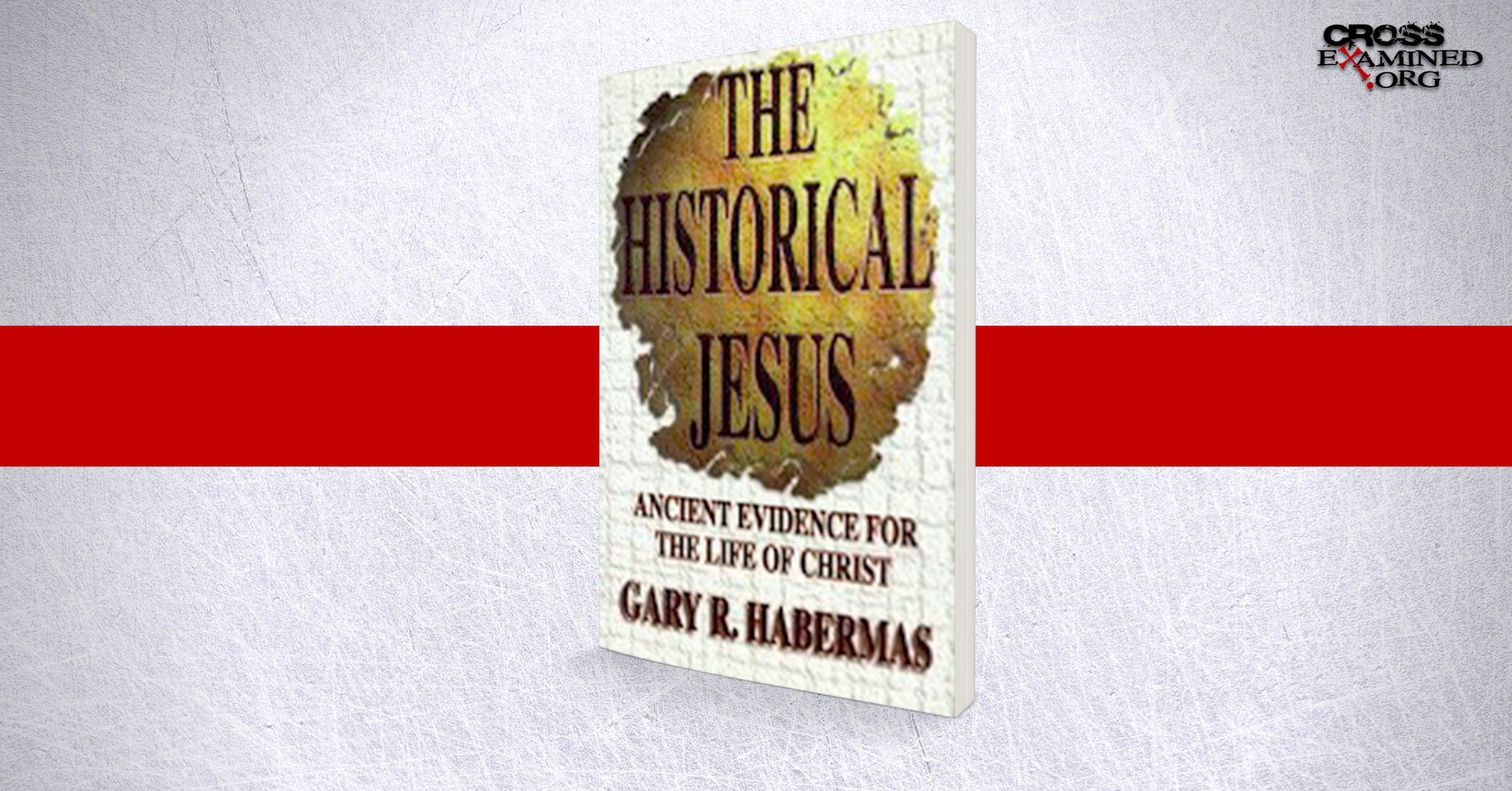
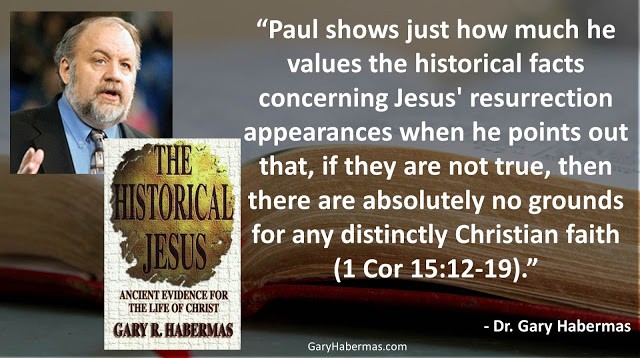
When I was looking for some answers to these questions, I came across the work of Dr. Gary Habermas. The first book of his that I read was the one I present to you today: The Historical Jesus: Ancient Evidence for the Life of Christ. Reading through this book provided the answers to more than just the questions that I was asking but also to questions that I did not know would eventually come too. This was well over a decade ago, and it is time for me to revisit the book and publish a proper review of this most important work. The review will follow my usual chapter-by-chapter summary style and conclude with my thoughts and specific recommendations.

Part 1: Contemporary Challenges to the Historicity of Jesus

Chapter 1: The Modern Quest for the Historical Jesus

In the introductory chapter, Habermas introduces the reader to the historical quest to discover the historical Jesus. He goes over some of the history of the studies, what different scholars proposed at different times regarding Jesus’ historicity and how to handle the different miracle-claims of the New Testament. He describes the popularity of the liberal approaches of the fictitious lives of Jesus and the idea that the gospel accounts were purely mythologies in the eighteenth and nineteenth centuries and the deemphasizing of the historical Jesus in the early twentieth century. He brings the reader “up to speed” by describing the re-emphasis on the necessity of the historical Jesus near the mid-1900s and onto today. While most scholars today recognize that Jesus was a historical figure, there is a small group that still does not. Habermas reminds the reader that the popularity of a particular position does not provide legitimate evidence, in or of itself, for the historicity of Jesus, so this book will examine the evidence that has convinced the majority of scholars that the historical Jesus existed, and it will make the case that the historical Jesus is the Jesus of Christianity.

The historical Jesus Book 2

Chapter 2: Did Jesus Ever Live?

Even though most scholars reject the idea that Jesus never lived, the idea that he did should not be taken for granted in an investigation about the historical Jesus. Habermas addresses the two most common theories to explain the records of the New Testament without Jesus living in history. The first view addressed is that of G.A. Wells, while the second view is more modest and is promoted by Michael Martin.
G.A. Wells dates the gospels in the late first century to early second, and Paul’s letters earlier. He believes that the gospels were too late to contain accurate historical information, so he leans on Paul for historical information of Jesus. He holds that Paul’s writings include very little information about the historical Jesus and concludes that Paul neither knew or cared about the historical Jesus. Wells believes that, at best, Jesus was a much earlier historical figure that legend grew around, and at worst, Jesus was based upon pagan mythologies. Of the many issues with Wells’ view, Habermas address five of them. He provides textual and historical evidence that Wells is incorrect on issues of Paul’s lack of record of and/or concern with historical information about Jesus, the idea that Jesus may have lived prior to the first century AD, Jesus’ connection to pagan mythologies, the late dating of the gospels, and his overall historical methodology.
Recognizing the failure of the more extreme views of G.A. Wells, Michael Martin softens some of the positions to make them more compatible with the textual and historical evidence. For instance, Martin grants that some historical data can be gleaned from the Pauline epistles, but he does not allow for much. He does retain the late dating of the gospels, and he adds that extrabiblical sources either do not contain historical data of the historical Jesus or that the information is inaccurate. Habermas addresses each of these claims briefly as they were either addressed in the section on G.A. Wells or will be covered in greater detail later in the book.
The historical Jesus Book 3

Chapter 3: Limitations on the Historical Jesus

Even though the extreme view that Jesus never existed in history is widely rejected among scholars, many do still believe that what can be known about the Jesus of history is greatly limited. This view is born out in a few different ways. Habermas describes these various attempts to limit historical investigation of the Jesus of history and demonstrates how each of them fails, thus leaving wide open a historical investigation of the life of Jesus as a person that actually existed in the past.

The first view that Habermas addresses is the idea that the gospels record what early Christians believed about Jesus, not necessarily what actually happened. This view removes the gospels from the historical investigation because they would not be claiming to record what actually happened but just what a group of people believed. Habermas explains that this view fails on four accounts. The first is that it removes all historical grounding for the origin of Christianity (from where did the recorded beliefs come?). The second is that without even attempting to investigate the claims of the gospels as historical claims, it rejects them as mythological (how did they come to the conclusion that the gospels recorded beliefs and not events?). The third is that the view assumes that, unique among all historical authors, the early Christians’ records were to not be trusted to be true because they believed their records to be true (how does belief of an event necessitate an incorrect recording of that event?). And fourth, the view holds that due to the few copies of the gospels, we cannot trust that we have what the early Christians originally wrote (given the mountain of copies compared to other ancient writings, how then are we to trust that we know what other ancient writers originally wrote?).

Another optional view is that while the Gospels do record historical events, the only historical events that are correct are ones that are not miraculous. Habermas addresses four ways in which this view fails as well. The first here is that it presumes to reject the miracle claims without even investigating whether they happened or not. Such a priori assertions exhibit neither good scientific investigation nor good historical investigation. The second problem is that the view does not even allow for the investigation of miraculous events because they are miraculous. However, if an event takes place in reality, that it happened can be investigated independently of its source or cause. Third, when the second problem is removed, investigation of Jesus’ being seen after his death and burial is well established, and no naturalistic explanation can account for the event. If no naturalistic explanation can account for an event that has been historically investigated and confirmed happened, then only a non-natural or supernatural explanation (miracle) is possible; thus miraculous events were recorded in the gospels. Fourth, if it can be established that Jesus did rise from the dead (to be investigated later in the book), then his metaphysical (and theological) teachings and actions must be considered relevant to the reader.
The historical Jesus Book 4

Chapter 4: Reinterpretations of the Historical Jesus

Many scholars grant the failures of the views critiqued in the previous chapter, yet they still wish to reject the Christian worldview. So many have attempted to reinterpret the historically established events of Jesus’ life. Habermas investigates these attempts in this fourth chapter.

The majority of these proposed alternate lives of Jesus depend upon the idea that Jesus did not die by crucifixion as recorded in the gospels. Many offers that Jesus merely appeared to be dead and after being removed from the cross and placed in the tomb, he recovered enough to escape and went on to live a secret life. While there are numerous versions of this “swoon” theory, all of them fail on three major accounts. The first is that Roman crucifixion was extremely brutal and would have left Jesus in such horrific condition that he could not escape from a sealed tomb, much less, convince anyone he had “overcome” death. Second, crucifixion caused death by asphyxiation due to the inability to breathe while hanging from the cross when the muscles are relaxed. This means that it was not possible to appear dead on the cross without actually being dead. Third, the Roman executioners ensured Jesus’ death by thrusting the spear into his side and puncturing his heart. Even if faking death on the cross was possible, this final blow would have killed Jesus immediately. Because of these reasons, the swoon theories have all been rejected by scholars.

Even though the failure of this foundation of the alternate lives of Jesus theories is enough to reject those theories, they fail on other accounts as well. These theories, of course, come in many different versions. Some hold that the Gospels and Paul recorded incorrect information and the real events of Jesus post-crucifixion life is unknown, and others hold that Jesus traveled to other places in the world. All of the theories fail for multiple reasons. They contradict already established historical records (the Gospels). They appear late. They have no historical grounds. And the arguments require multiple fallacies to come to their conclusions. Along with those commonly held failures, Habermas also discusses several additional failures that are unique to the various theories. He ends by stating that, because of the incredible list of reasons that these theories fail, they are not taken seriously by historians today, but they needed to be addressed due to their continual recurrence within popular culture.
The historical Jesus Book 5

Chapter 5: The New Gnosticism

One of the more popular challenges in historical Jesus studies comes from the discovery of several texts dated from the mid-to-late second century to the early third century. These are the Gnostic writings, with The Gospel of Thomas probably being the most familiar to the public. Some scholars believe that these text raise a power challenge against orthodox teachings about Jesus due to their traditionally early dating. The Gospel of Thomas is dated as early as AD 140 (all the others are date much later). Supporters of the Gnostic view attempt to date the tradition that is contained within the Gospel of Thomas in the first century, and they contend that due to the early sourcing, it should at least be held on the same authoritative level as the Gospels. Now, the significance of this dating is that, if the dating is correct, then it is possible that there were multiple expressions of Christianity at the time. The competing claim is that the New Testament that we have today is incomplete and that these Gnostic writings are the “lost books” of the Bible that tell a very different story about the historical Jesus. The Gospel of Thomas lacks mention of the crucifixion and Resurrection of Jesus, so the Gnostics claim that these events did not take place (what makes the view incompatible with orthodoxy). They claim that what is known as orthodoxy today merely won a “cultural war” among the different views and is not a reflection of actual events in history.

Having presented this strong challenge of the Gnostic view against the orthodox view of the historical Jesus, Habermas turns to a four-pronged critique of the view. First, even if The Gospel of Thomas is accurately dated early at AD 140 and its tradition is still earlier, the gospels have all been dated a minimum of half a century earlier than even that, which places their source material closer to the events they record than the source material of the Gospel of Thomas. This means that the Gnostic gospels and the Gospels were not co-circulating at the earliest times; the Gospels were present at least fifty years before the Gnostics showed up and (as will be seen later) within only a few years of Jesus’ death. Secondly, Habermas presents four standards of ancient historiography that establish the accuracy of the Gospels’ historical records. This serves to hold authority over later writings that present contradictory stories (the Gnostic writings, in this case).

Thirdly, based upon the testimony present in various books of the New Testament and in the writings of the apostolic fathers, we can see that the canon of Scripture was well established prior to the dates of many of the Gnostic writings. This means that Christians had recognized the earliest writings as accurate and authoritative before the greater body of Gnostic writings (and their contradictory content) were even present. Fourthly, even though the death and Resurrection of Jesus are not mentioned in the Gospel of Thomas, that is not evidence that it did not happen, especially when we have four earlier records that record that they did happen. Interestingly enough, proponents of the Gnostic view hold that the proposed document “Quelle” or “Q”, that is the source for the similarities among the synoptic Gospels, did not contain information of Jesus’ death and crucifixion, but this is speculation as both the existence and content of the document are hotly debated. Even if they were right about the content’s absence, its absence still would not argue against its actually taking place. For these four reasons, scholars generally do not consider Gnosticism a viable alternative view for the historical Jesus; Gnosticism or elements of it is vastly more popular among non-scholars.
The historical Jesus Book 6

Chapter 6: The Jesus Seminar and the Historical Jesus

Another way to dismiss the historical Jesus (as recorded in the gospels) is put forth by people in the Jesus Seminar. The Jesus Seminar tends to see their position as a compromise between those who reject all historicity of the records in the gospels and those who take every word of it historically. Their position begins philosophically with, not just the rejection of the supernatural, but the very incompatibility of the supernatural with reality. Using this filter, they reject all records in the gospels that include any kind of non-natural event, including all experiences with Jesus after his crucifixion; however, they do tend to believe that the events that required no such non-natural mechanism are historically accurate.
Habermas explains that the Jesus Seminar does not really offer as much of a “compromise” position as they like to think. The primary reason for this is before any investigation on their part has begun, they have already ruled out even the possibility of many of the historical events taking place. They have already rejected the only explanation of the events, so they are unable to perform an unbiased investigation of the historical data. With this critique in place, some Seminar scholars have pulled back on some of the extreme conclusions and have opted for agnosticism on the historicity of different non-natural events. These more moderate Seminar scholars offer several naturalistic explanations for the records of the non-natural events; however, Habermas shows how they fail to account for the historical data and/or commit various fallacies. He also demonstrates how their hypotheses are often contradicted by the historical evidence. Ultimately, he concludes that the various positions offered by Jesus Seminar scholars are not historically viable and should be rejected.

The historical Jesus Book 7

Part 2: Historical Data for the Life of Jesus

Chapter 7: Primary Sources: Creeds and Facts

Having surveyed and dismantled the many different attempts to separate the historical Jesus from the Jesus of the gospels, Habermas now turns to an investigation of what can be known about the historical Jesus and early Christian theology apart from the New Testament gospels. He begins by evaluating the creeds, hymns, and traditions that were closest to the death of Jesus. These sources originated prior to the formation of the New Testament and are recorded within it. Several, among many others, can be found in the following passages of the New Testament:

  • 1 John 4:2
  • 2 Timothy 2:8
  • Romans 1:3-4
  • 1 Timothy 3:16
  • Phillippians 2:6
  • Romans 10:9
  • 1 Corinthians 11:23
  • 1 Timothy 6:13
  • 1 Peter 3:18

Taking the reader through the many early sources, Habermas demonstrates over forty different characteristics of Jesus Christ that were both believed by the early Christians and passed down through the centuries to today. In this exercise, Habermas demonstrates that the Jesus of Christianity is indistinguishable from the Jesus believed by the earliest Christians. These orthodox beliefs were not the product of any single or series of events that took place over time; the beliefs appeared early and suddenly.

Habermas also spends a considerable portion of the chapter evaluating the creed in 1 Corinthians 15. This creed is often considered to be one of the most important because it ties the beliefs of the earliest Christians to eyewitness testimony of those who walked with Jesus and had experiences of the risen Jesus. Because of this eyewitness connection, this early creed not only opens the door to historical testing of the events surrounding Jesus and the claims that He and the early Christians made, but it compels such testing. Thorough testing has been performed on at least twelve unique claims of the historical Jesus regarding the most important event: the Resurrection. That testing has revealed the facticity of those twelve claims; however, Habermas believes that only four of them are sufficient to establish the historicity of the Resurrection event. He spends a small portion of the chapter explaining this “minimal facts” apologetic, but for those who wish to go deeper into this specific historical event, check out Habermas’ book “The Risen Jesus and Future Hope” along with his many other writings at GaryHabermas.com.
The historical Jesus Book 8

Chapter 8: Archaeological Sources

Archaeology has provided evidence of the historical context surrounding the life of Jesus, has provided corroboration for several of the historical claims within the gospels, and may even provide compelling evidence for the Resurrection of Jesus. One of the most contested (non-miraculous) events recorded in the gospels is that of the census described by Luke. Habermas explains how archaeology has not only helped answer some of the questions this event but has also provided calibration tools for identifying the year of Jesus’ death. Archaeology has also yielded much information about the ancient practice of crucifixion that corroborates reports in the gospels. For instance, the skeleton of “Yohanan,” a crucifixion victim, was discovered in 1968. This particular discovery has provided information regarding the condition of the victim as they were nailed to a cross, the excruciating way a victim was nailed to a cross, many painful events that happened to the body while on the cross, and the ultimate cause of death. This data has given medical and historical researchers ways to test the claims surrounding Jesus’ mode of execution and have found them to be accurate.

Probably the most controversial archaeological find surrounding the historical Jesus is the Shroud of Turin. Tradition has it that this linen is the actual burial cloth of Jesus. Many visual commonalities provide a powerful case for this claim, including the blood stains that are common to victims of a crucifixion and other stains that are unique to Jesus’ crucifixion. The absence of evidence of bodily decomposition suggests that the victim was not in the cloth for long. And some Christians believe that the “scorch” marks that are inconsistent with foreign materials provide evidence of a resurrection. However, carbon dating has seriously challenged the identification of the Shroud with the first century AD, but even these studies have come under scrutiny due to lack of peer review and blind testing, possible contamination, and inconsistency with other pieces of evidence. Habermas explains that even if the Shroud is not that of Jesus, it could still be that of a victim who suffered a remarkably similar fate, thus still providing powerful evidence of the practice of crucifixion. He also explains that if the Shroud is, in fact, the burial cloth of Jesus, archaeologists have powerful tangible evidence not only Jesus’ mode of death but the historical event of His Resurrection as well.

Chapter 9: Ancient Non-Christian Sources

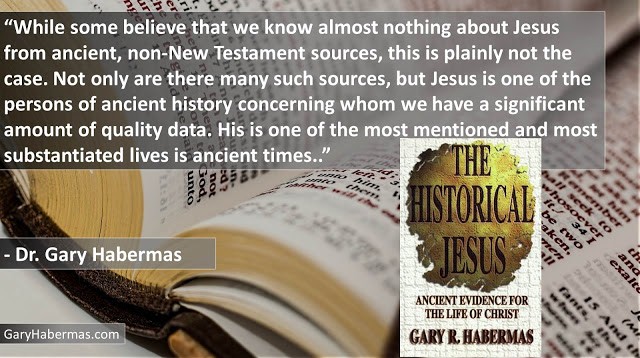
Of all the figures in ancient history, Jesus is the most mentioned. The mentions not only come in ancient Christian writings but also in those of non-Christian sources. Habermas takes the reader through the different ancient historians’ and other writers’ material that mentions Jesus. Tacitus, Suetonius, and Pliny the Younger are just a few. As Habermas describes these writings (and several others) and how they have been preserved in antiquity, he quotes directly from them, highlighting not just the mention of Jesus but also all the information about Jesus’ life, His teachings, and His death that are recorded.

He also discusses the most controversial of them all: Josephus. He quotes the disputed and undisputed texts along with a proposed “original version” of the disputed text that would be more consistent with Josephus’ worldview as a Jewish historian. Habermas takes the undisputed portions along with the proposal to demonstrate several facts recorded by Josephus regarding Jesus. Habermas even cautiously uses Gnostic writings to help support certain claims about the historical Jesus that are found in other non-Christian sources. Habermas concludes from all these ancient non-Christian sources that even if Christian sources (discussed in the next chapter) are disregarded, it is established that the Jesus of the Bible existed in history and many true things can be known about Him.
The historical Jesus Book 9

Chapter 10: Ancient Christian Sources (Non-New Testament)

Of course, the ancient writings of the historical Jesus are not limited to non-Christian sources. Many Christian sources outside the New Testament were also composed and circulated.  These authors included Clement of Rome, Ignatious, Justin Martyr, among others. These early sources give historians an understanding of early Christian doctrine and what the early Church believed about the historical Jesus. Habermas discusses each author that builds a total description of Jesus’ life, teachings, death, and resurrection that echoes the claims of the New Testament. These records indicate that the early Church already believed what was written in the New Testament; they did not wait to see who the “winners” were regarding orthodoxy.

Many people believe that the fact that these writers were Christian made them unjustifiably biased in their beliefs and that makes them unreliable sources. However, because much of their beliefs about the historical Jesus were based upon the material in the New Testament (only one generation removed, in some cases), which was shown to be trustworthy in the previous chapters, these early Christian authors were certainly justified in their beliefs.  Because they were justified in believing what they recorded, their records stand firmly as a testimony of the beliefs of the earliest Christians.

Chapter 11: Summary and Assessment

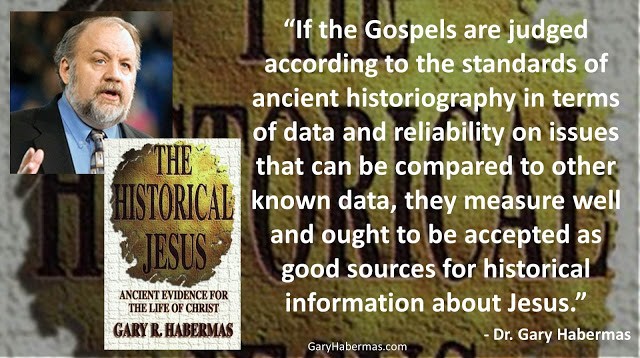
Having concluded a survey of the historical evidence that could speak to the historical Jesus and various challenges to his existence, Habermas succinctly summarizes what can be known from the historical evidence alone. He lists out 129 things that can be known about the historical Jesus relating to His life, work, death, and resurrection. These facts are gathered from 45 different ancient Christian and non-Christian sources. The sheer number of ancient sources that give pertinent information about the life of Jesus is more than enough to conclude by the standards of historiography that the historical Jesus is the same Jesus that is recorded in the Bible. If the Jesus of the Bible is to be separated from the Jesus of history, the entire enterprise of ancient historical studies is called into question.
The historical Jesus Book 10

Reviewer’s Thoughts

The Historical Jesus: Ancient Evidence for the Life of Jesus was an exciting read! I came to the book originally with many questions about what could be truly known about the historical Jesus, but as I read through it, my questions were answered. As my original questions were answered, more questions formulated in my mind that Habermas seemed to almost anticipate. It has been over a decade since my initial read through the book when these questions were answered. It was refreshing and encouraging to read through it again because over the last decade, some curiosities have come up that I had forgotten were addressed in the book. When these come up in conversation, I am now more prepared to “give a reason for the hope that I have” (1 Peter 3:15).

When I first read the book in my early 20s, it was very understandable at that time (it answered my basic questions), yet it is comprehensive and deep enough to have addressed the more nuanced challenges that I have been exposed to over the years. Habermas really made the historical facts come to life for me and give me a more connected feeling to the actual events of history. This not only excited me but gave me a profound sense of satisfaction that my belief is justified true belief, justified by the evidence of history.

If you are having serious doubts about the historical Jesus, you definitely need to get this book. And if your church has a library, it needs to be on the shelf for those who have these deep questions and are honestly looking for answers. For any Christian who regularly discusses the truth of Christianity (that should be all of us), you also need this book. It will give you a resource to always be prepared to answer both the basic and the deeper challenges of those who are skeptical of the historical foundations of our worldview. Nearly two thousand years ago, the Apostle John proclaimed, “The Word (Jesus) became flesh and made his dwelling among us. We have seen his glory, the glory of the one and only Son, who came from the Father, full of grace and truth,” and history bears a fantastic witness to this truth.


Original Blog Source: http://bit.ly/2yMrnWJ

By Evan Minton

Did Jesus really rise from the dead? How can we know? Most people, both Christians, and non-Christians alike, will tell you that if you believe that Jesus rose from the dead, it has to be on either the basis of a religious experience (for example, you were addicted to drugs but prayed to Jesus to free you, and if He did, you would follow him all the days of your life) or blind faith. The general public is under the impression that Jesus’ resurrection cannot be believed on the basis of evidence. However, while this perception is common among the general population, it isn’t true. There is actually a wealth of historical evidence for the truth of Christianity, and many skeptics have become Christians by looking at this evidence.[1]  I’m glad that such evidence exists for a number of reasons. For one, I consider myself a generally skeptical and critically thinking person. I like that I can believe that Christianity is true on the basis of more than “The Bible tells me so.” If there were no evidence for Jesus’ resurrection other than the claims of The Bible, I would have a hard time maintaining belief in it. Especially since other religions make equally radical claims. How would I know to accept The Bible’s claims about God rather than, say, the Quran’s? Secondly, it is important to our eternal fates whether we know that Jesus rose from the dead if He actually did. As C.S Lewis eloquently put it: “Christianity, if false, is of no importance. But if true, it is of infinite importance. The only thing I cannot be is moderately important.”[2]  Christianity is of no importance whatsoever if it isn’t true. If Jesus were just a wise teacher or a false prophet who met an untimely demise, who cares? On the other hand, if The Bible is true, if Christianity is true if Jesus was God incarnate who died and rose from the dead, then it is infinitely important that we listen to what He has to say and that we apply it to our lives. If Christianity is true, and we don’t believe it, we’re in for one Hell of an afterlife (pun intended), since The Bible teaches that whoever does not believe in Jesus will be under God’s wrath (John 3:18, John 3:36), who will be thrown in a lake of fire to be tormented forever and ever (Revelation 14:10-11). It is therefore vital that we believe Jesus’ claims about Himself. Not to do so result in us dying in our sins (see John 8:24). This is why C.S Lewis said that Christianity is infinitely important if it’s true. But if it’s not true, then the warnings of judgment in scripture are nothing but empty threats.

So if it’s true and we don’t believe it, eternal agony awaits.[3] If it’s false and we don’t believe it, no biggie. This is why Lewis said it’s either infinitely important or not important at all. But under no circumstances can it be somewhat important.

Why The Resurrection Is So Important

As you’ve probably noticed, I used “Christianity” and “Jesus’ resurrection” interchangeably in the paragraphs above. There’s a reason I did that. If the resurrection of Jesus of Nazareth can be historically established, then that means that the entire Christian worldview is established as well. If Jesus rose from the dead, Christianity is true and any worldview or religion that contradicts Christianity is false.

Why do I say that? Is this some unjustified leap? “Are you seriously saying that validating one of The Bible’s claims validates the entire Bible? Aren’t you committing the hasty generalization fallacy in making this assertion?”[4]  I understand why you would raise this question. Before I get into making a case for Jesus’ resurrection, I need to first unpack why it would validate the entire Christian worldview.

First of all, there is strong historical evidence that Jesus claimed to be God. If Jesus said that he was God, but he wasn’t, then he was either a lying heretic or else he was crazy. If that were the case, there’s no way God The Father would resurrect Jesus from the dead knowing that that would vindicate his blasphemous claims and lead many people astray. God would never raise a heretic and a blasphemer. But if God did raise Jesus from the dead, then God implicitly put his stamp of approval on everything Jesus said and did. If Jesus rose from the dead, then that means God The Father agreed with Jesus’ claims for which his enemies killed him as a blasphemer. If God The Father raised Jesus from the dead, then that means He agrees with Jesus’ claims to be divine.

If that’s the case, then whatever Jesus teaches carries a lot of weight. Well, what did Jesus teach? He taught (1) that the Old Testament was the divinely inspired Word of God. He believed and taught that every word in The Old Testament was true. (2) Since he handpicked the writers of the New Testament, this means the New Testament is divinely inspired given that Jesus is God, (3) He also seemed to believe that Adam and Eve were historical individuals, that (4) the flood story in Genesis 6-9 actually happened, that (5) angels and demons really do exist, and (6) that if you place your faith in him, you will have eternal life but that if you don’t place your faith in Him, you’ll end up in Hell (John 3:16-18, John 8:24).

So if Jesus rose from the dead after allegedly blaspheming the One who raised him, we can believe all of these things as well simply because Jesus believed them. This is why you’ll often hear Christian Apologists say “I don’t believe in Jesus because I believe The Bible. I believe The Bible because I believe in Jesus”.

But, how do we know that Jesus actually claimed to be divine and that he believed the Old Testament was inspired, that he believed angels and demons existed, etc.? I unpack this in my blog post “What Is The Significance Of Jesus’ Resurrection?”  

“Oh no! Not Another Blog Series!” 

I’ve come to learn that not everyone likes blog post series[5], so I plan on making this both a blog post series as well as a book. I know of no one interested in researching these matters who hates books, so if you’re one of those people who hate blog posts series, you can wait and the series compiled in book form. Though this particular paragraph and subsection will be missing.

Be Willing To Follow The Evidence Wherever It Leads 

If you understand the importance of knowing whether or not Christianity is true, then you’ll take the time to either read this blog post series or read the book adaption of it. If you do take the time to listen to my arguments, please follow them to their logical conclusions. My friend Neil Mammen has a saying “Don’t let the consequences of your logic cause you to abandon that logic.”[6]  Not everyone who denies the resurrection of Jesus does so purely on intellectual grounds or on the grounds that the evidence isn’t sufficient. Some people deny that the resurrection occurred simply because they want it not to have occurred. Some people aren’t Christians because there isn’t enough evidence to establish that it’s true, but because they don’t want it to be true.

If Jesus rose from the dead, then Christianity is true. If Christianity is true, then several implications follow. It means that if you’re living in sin, you’ll have to repent. Jesus said that if you even look at a woman with lust, you’ve committed adultery in your heart (Matthew 5:28), and adultery is one of the things God said not to do (Exodus 20:14). If you like to spend your evenings downloading and looking at pornography, you’ll have to get that out of your life or answer to God for it (2 Corinthians 5:10). But porn watchers don’t want to do that. Watching porn is fun! It’s exciting! Porn watchers don’t want to give up porn because they enjoy it too much. Others may want to sleep around, bouncing from woman to woman as Charlie Harper did on the hit sitcom Two and A Half Men. According to Hebrews 13:4, this is a no-no. If someone engaged in this behavior doesn’t repent, they’ll be facing judgment. Romans 1:26-28, 1 Corinthians 6:9-11, and 1 Timothy 1:9-11 prohibit homosexual relationships. Some people don’t want Christianity to be true because it means they’ll have to stop having sex with their same-sex partner. 2 Corinthians 6:14 prohibits a believer marrying an unbeliever. Some people may not want Christianity to be true because they know that if it is, they need to become Christians, or else they face Hell, and if they’re Christians themselves, they’ll be prohibited from marrying their boyfriend or girlfriend who is also an unbeliever.

For many people, it’s a purely intellectual issue. Merely being presented with the evidence in this blog series will be sufficient to persuade them to become Christians. For others, they’re resistant to following the evidence where it leads because they’re in love with their sin, and don’t like the idea of having to exchange their pet sin for a relationship with Jesus. Jesus talked about this when he said “This is the verdict: that light has come into the world. Yet men loved the darkness rather than the light for their deeds were evil. Everyone who does evil hates the light and will come nowhere near the light for fear that their deeds will be exposed.” (John 3:19-20). Echoing Jesus’ words, the mathematician and Christian Apologist John Lennox said: “If religion is a fairytale for those afraid of the dark, then atheism is a fairytale for those afraid of the light.”[7]

So again, “Don’t let the consequences of your logic force you to abandon that logic.” Don’t let the consequences of Christianity being true to force you to swim against the current of evidence pointing against it. The Christian Apologist Frank Turek of CrossExamined.org often exposes someone as resisting Jesus on emotional or moral grounds by asking them one simple question: “If Christianity were true, would you become a Christian?” That’s the question I’m posing to you, dear reader. If you knew beyond a reasonable doubt that Christianity is true, would you be willing to give up whatever lifestyle Christ might not approve of in order to follow Him and serve Him? If you were convinced that God exists, would you bow to Him as your Savior and Lord? If you hesitate or if your answer is “no,” then your problem isn’t in your head, it’s in your heart. In that case, this series and its e-book adaption will be of no use to you, since your problem isn’t intellectual, to begin with. So, before you proceed, do some introspection and determine whether you’re on a truth quest or whether you’re on a happiness quest. If your answer to that question is “Yes,” then keep reading! God promises that those who sincerely seek Him find Him when they seek Him with all their heart (see Jeremiah 29:13).

Moreover, if your answer is “No, let me ask you something. Isn’t it better to live in the truth than in a lie? Wouldn’t it be wonderful if life didn’t end at the grave, but that an eternity of uninterrupted bliss followed? Wouldn’t it be infinitely awesome if the death of a loved one wasn’t a final goodbye, but an “until we meet again”? If Christianity is true, life doesn’t end at the grave, death is the beginning of an eternity of uninterrupted bliss, and I will see my loved ones again someday. I would think you would want Christianity to be true, not false! Yeah, you’d have to give up some worldly pleasures, but isn’t an eternal life worth more than a night of porn or a marriage to someone of the same sex?

Of course, what we want to be true doesn’t matter one iota. What matters is where the evidence points. My point in the previous paragraph was an attempt to change your desire if you fell into the category of people who say “No” to Frank Turek’s question. I wanted to make you want it to be true, or at least find Christianity attractive so you might be less prone to suppressing the truth (Romans 1:18-20).

Addressing The Elephant In The Room

Moreover, when you examine the evidence, make sure you don’t go in with a presupposition that miracles cannot occur. What is a presupposition? Josh and Sean McDowell explain that “A presupposition is something assumed or supposed in advance. … A presupposition is something that is assumed to be true and is taken for granted. Synonyms include prejudgment, an assumption of something as true, prejudice, for judgment, preconceived opinion, fixed conclusion, preconceived notion, and premature conclusion.”[8] If you go into this concluding from the outset that miracles cannot occur, that will distort your ability to interpret the evidence.

The biochemist Michael Behe gives an amusing illustration of this in his book Darwin’s Black Box:

“Imagine a room in which a body lies crushed, flat as a pancake. A dozen detectives crawl around, examining the floor with magnifying glasses for any clue to the identity of the perpetrator. In the middle of the room, next to the body, stands a large, gray elephant. The detectives carefully avoid bumping into the pachyderm’s legs as they crawl, and never even glance at it. Over time the detectives get frustrated with their lack of progress but resolutely press on, looking even more closely at the floor. You see, textbooks say detectives must “get their man,” so they never consider elephants.”[9]

Behe was writing in the context of Darwinists ruling out Intelligent Design theory out from the outset, but the analogy is just as applicable in looking at the evidence for Jesus’ resurrection. If you presuppose that a miraculous resurrection cannot occur and then interpret the evidence in light of that presupposition, you’re like the detectives who refuse to consider that the corpse on the floor may have been killed by the elephant standing directly adjacent to it. Of course, if a naturalistic explanation can account for the data, that’s one thing. But to think, either consciously or subconsciously “No matter what the evidence says, Jesus could not possibly have come back to life” is wrongheaded. If a human culprit could be found, tried, and convicted for the murder of the person in Behe’s analogy, that would be one thing. But to say “No matter what the evidence says, an elephant couldn’t possibly be the culprit” is wrongheaded.

Why I’m Writing A Whole Series On This

I have written about the evidence for Jesus’ resurrection elsewhere. I’ve written about it in “The Minimal Facts Case For Jesus’ Resurrection PART 1” and “The Minimal Facts Case For Jesus’ Resurrection PART 2”. I’ve also written an abbreviated version of that first article called “A Quick Case For Jesus’ Resurrection.” And I’ve done a 20-page chapter on it in my book Inference To The One True God: Why I Believe In Jesus Instead Of Other Gods. Given this, one may wonder why I’m doing a whole series on it. The answer: because the evidence is far more powerful and plenteous than I was able to present in the space allotted to me in those linked articles and book chapter. For example, I gave three reasons to believe Jesus’ tomb was empty in the writings above, but there are actually a lot more reasons to believe that this is true. Other criteria of authenticity establish that Jesus’ tomb was empty and that Jesus did die by Roman crucifixion. I just didn’t mention these in these above writings because (1) I didn’t know about a few of these arguments until recently, and (2) I didn’t want the above writings to be lengthier than need-be.

In this series, I’ll be covering familiar ground while also talking about the evidence I had not talked about in my prior writings on this subject.

Conclusion 
In the next blog post, I’ll explain the methodology of how we get from the question “Did Jesus rise from the dead?” to the answer “He is risen!” Most of the non-Christians I engage with simply don’t understand the reasoning behind the arguments, and therefore make all kinds of misguided accusations, such as that we’re reasoning in a circle. It’s vital to understand the process of the case for Jesus’ resurrection if one is to properly respond to it (either by falling to their knees or in rebuttal).

Notes 

[1] Such as Lee Strobel, Josh McDowell, J. Warner Wallace, Frank Morrison, and C.S Lewis. They came to believe that Jesus claimed to be God and rose from the dead on the foundation of the historical evidence that we will be looking at in this series.

[2] C. S. Lewis Quotes. BrainyQuote.com, Xplore Inc, 2017. https://www.brainyquote.com/quotes/quotes/c/cslewis164517.html, accessed November 6, 2017.

[3] Some people think The Bible’s teachings on Hell impugn God’s goodness. I don’t, but it’s beyond the scope of this series to get into why. If you’re bothered by The Bible’s teachings on Hell, I recommend checking out my book A Hellacious Doctrine: A Defense Of The Biblical Doctrine Of Hell which addresses this biblical doctrine in depth. Each chapter takes on a different objection to the doctrine of Hell, from the “Eternal torment is overkill” argument to the “What happens to the unevangelized” question.

[4] The Hasty Generalization fallacy occurs when someone takes a small sample of a class and then makes an unjustified conclusion about the totality of that specific class in which the sample was found. For example, someone would be committing the hasty generalization fallacy if they said “All men are pigs” based on their past relationships, or if they said “All white men are racists” just because they knew a couple of white men who were indeed racists.

[5] Tony Lee Ross Jr. expressed his dislike of blog post series in an article he wrote titled “Why You Should Stop Writing Blog Post Series (Part 1). — https://www.sinnersinthehandsofanangryblog.com/2017/09/why-you-should-stop-writing-blog-post.html

[6] Neil Mammen, “Who Is Agent X: Proving Science and Logic Show It’s More Rational To Believe That God Exists”, page

[7] I could never find a place where Lennox said this in writing, but I know he said this in a debate he had with Stephen Hawking. In fact, it’s a rather popular quote of his.

[8] McDowell, Josh; McDowell, Sean. Evidence That Demands a Verdict: Life-Changing Truth for a Skeptical World (p. lxi). Thomas Nelson. Kindle Edition.

[9] Michael J. Behe, Darwin’s Black Box (New York: Free Press, 1996), 192.rft


Original Blog Source: http://bit.ly/2DWOwp4

People trying to discover the truth about God would be wise to take a hard look at Jesus before looking anywhere else. While that may sound like a bold assertion in and of itself, it really isn’t when you consider Jesus is the one religious leader who is most frequently mentioned by religious groups, whether or not they happen to be Christian. Every major religious movement considers Jesus to be an important religious figure. Every movement makes some effort to account for His existence and teaching. This ought to give seekers a reason to pause and consider the life of Jesus seriously.

Judaism
While we recognize Judaism pre-existed (and gave birth to) Christianity, Judaism has also had over two-thousand years to consider and respond to the claims of Christ. Much has been written about Jesus from a Jewish perspective, most interestingly by those early Jews who described Jesus in the centuries immediately following His life. Ancient Jewish believers (as recorded by the Talmud and the Toledot Yeshu) described Jesus in the following way:

READ MORE

What if I told you there was once an ancient religion whose God was conceived by a virgin named Meri and had a stepfather named Seb (Joseph)? What if I told you this God was born in a cave and his birth was announced by an angel, heralded by a star and attended by shepherds? He attended a special rite of passage at the age of twelve (although the ancient texts describing this God are silent about His life from the age of 12 to 30). At 30 years of age, this God was baptized in a river (His baptizer was later beheaded). He had 12 disciples, performed miracles, exorcized demons, raised someone from the dead, and even walked on water. They called Him “Iusa”, the “ever-becoming son” and the “Holy Child”. He delivered a “Sermon on the Mount”, and his followers recounted his sayings. He was transfigured on a mount and eventually crucified between two thieves. He was buried for three days in a tomb and rose from the dead. His followers called Him “Way”, “the Truth the Light”, “Messiah”, “God’s Anointed Son”, “Son of Man”, “Good Shepherd”, “Lamb of God”, “Word made flesh”, “Word of Truth”, “the KRST” or “Anointed One”. He was also known as “the Fisher” and was associated with the Fish, Lamb and Lion. According to this ancient religion, this God came to fulfill the Law and was supposed to reign one thousand years. Sounds a lot like Jesus doesn’t it? According to those who deny the existence of Jesus, however, this description is of a mythological precursor to Christianity, the Egyptian God named Horus. Skeptics sometimes use ancient deities like Horus, Mithras or Osiris as examples of dying and rising precursors to Jesus. They claim the mythology of Jesus was simply borrowed from pre-existing examples such as these.

Was Horus really like Jesus in all the ways skeptics often describe him? These similarities are startling. For many Christians (especially young believers who encounter this objection while in college) similarities such as these cast doubt on the historicity of Jesus. It’s important, therefore, to examine the truth of these claims to see what the real mythologies tell us about characters such as Horus. While it’s true there are a number of pre-Christian mythologies with dying saviors, they aren’t much like Jesus once you start to examine them closely. They often merely reflect the expectations and yearnings of ancient people for the God who truly did come to earth. A significant portion of what we just described about Horus is simply false and lacks any Egyptian historical or archeological support whatsoever. Much of what I described about Horus is simply a reflection of the effort of atheists to make Horus look as much like Jesus as possible.

Horus was worshiped principally in two Egyptian cultural centers (Bekhdet in the north and Idfu in the south). Little remains at the northern location, but there is still a large and well preserved Ptolemaic temple at Idfu; most of our information about Horus comes from this southern temple. Horus was usually represented as a falcon. He was the great sky God and the Son of Isis and Osiris. Let’s take a look at the claims we’ve already described and separate truth from fiction (for a more in depth examination of Horus and many other alleged Christian precursors, please visit David Anderson’s excellent website. I’m condensing much of his work in this brief blog post). We’ll also look at some of the reasonable expectations and motivations causing these mythologies to resemble Jesus:

Claim: Horus was conceived by a virgin mother named Meri, and had a stepfather named Seb (Joseph)
Truth: Horus was NOT conceived of a virgin. In fact, mural and textual evidence from Egypt indicates Isis (there is no evidence that “Meri” was ever part of her name) hovered over the erect penis (she created) of Osiris to conceive Horus. While she may have been a virgin before the conception, she utilized Osiris’ penis to conceive. She later had another son with Osiris as well. There is no evidence of three wise men as part of the Horus story at all. Seb was actually the “earth god”; He was not Horus’ earthly father. Seb is not the equivalent of Joseph and, in most cases, Seb is described as Osiris’ father.

Claim: Horus was born in a cave, his birth announced by an angel, heralded by a star and attended by shepherds.
Truth: There is no reference to a cave or manger in the Egyptian birth story of Horus. In fact, none of these details are present in the ancient Egyptian stories of Horus. Horus was born in a swamp. His birth was not heralded by an angel. There was no star.

Claim: Horus attended a special rite of passage at the age of twelve and there is no data on the child from the age of 12 to 30.
Truth: There is no continuous effort in the Horus mythology to account for all these years, so there are no real gaps in the chronology. Horus never taught in any temple at twelve (as did Jesus).

(Read More)