
Tag Archive for: atheism

By Eric Chabot

After talking to hundreds of college students for several years about spiritual beliefs, one thing that comes up from time to time is whether the existence of God is even relevant. In other words, the discussion kind of goes like this: “I don’t see what difference God would make in my life!” As a matter of fact, at this moment, we are in the midst of promoting an event at a large college campus called Stealing From God: What Makes Sense of Reality: Theism or Atheism? You can see our clip here:

Anyway, the comment “I don’t see what difference God would make in my life!” displays a very pragmatic view of truth. I have discussed the problem with this elsewhere. But when a student says God’s existence isn’t really relevant, my first response is to try to get them back to the issue of truth. After all, if there is a God and He does exist and it turns out Jesus is His Son, that is an objective reality. It has zero to do with how I feel about it. And the truthfulness of it isn’t determined whether the person stays busy and says “I don’t care if God exists.” Another issue that comes up is the following worldview questions:

• Origins: How did it all begin? Where did we come from?
• The Human Condition: What went wrong? What is the source of evil and suffering?
• Redemption: What can we do about it? How can the world be set right again?
• Morality/Human Rights, Human Dignity: What is the basis for morality? In other words, how do we know what is right and wrong? What is the basis for human rights, moral values, moral duties, human dignity, and equality?
• History: What is the meaning of history? Where is history going?
• Death: What happens to a person at death?
• Epistemology: Why is it possible to know anything at all?
• Ontology: What is a reality? What is the nature of the external reality around us?
• Purpose: What is man’s purpose in the world

Now after looking at these worldview issues, I think the one that is the question that is the most pressing one is the morality, human rights, and human dignity issue. This issue is directly related to the origins question. They can’t be separated. Just recently in the recent presidential debate, the abortion topic came up. That is directly related to one’s view of humans and what makes them valuable. Of course, on a theistic worldview, the human isn’t valuable based on their function. They are valuable based on their nature or essence. It is quite obvious we live at a time where people are obsessed with human rights, justice, and equality. I discuss why theism lays the foundation for these features of reality here. 

So in the end, when I run into college students that are apathetic about the existence of God, I now ask them if they think humans are valuable and whether they believe in justice, equality, and human rights. Every single time, the student says “Yes!” So now the door is open to discuss the origins question and how that relates to the human dignity and equality issue. Robert Spizter helps us understand the importance of this topic. He says:

“The best opinion or theory is the one that explains the most data. The general principle is this: opinions that explain the most data and are verified by the most evidence are better than those that do not. The vast majority of people consider this principle to be self-evident because if greater explanatory power and more evidence is not better, then additional evidence and explanatory power add nothing, which means that all evidence and explanatory power are essentially worthless. This leaves us with only our subjective assertions, which most people do not consider to be good enough. For example, as suggested previously, Einstein’s theory about the universe is better than Newton’s theory because it explains more data. (Newton was unaware of most of the data that the special and general theories of relativity account for.) Again, calculus has more explanatory power than algebra and trigonometry because it can account for curves through derivative and integral functions, which algebra and trigonometry cannot do on their own. This applies to virtually every science and social science. The more data a theory or hypothesis explains, the better it is. With respect to life issues, this principle is important because a theory of human personhood that treats a person as a mere individual physical thing (materialism) does not explain the data of persons being self-conscious or having transcendental desires (such as the desire for complete and unconditional Truth, Love, Goodness, Beauty, and Being). Therefore, materialism’s explanation of many acknowledged human powers and activities, such as empathy, agape (self-sacrificial love), self-consciousness, the desire for integrity and virtue, the sense of the spiritual, and the drive for self-transcendence, is, at best, weak. Theories that attempt to account for and explain these data, such as hylomorphism or transmaterialism, should be preferred to ones that do not, such as biological reductionism, materialism, and behaviorism. There is another more serious consequence of the underestimation of human personhood, namely, the undervaluation of real people. If we consider human beings to be mere matter without the self-possession necessary for freedom and love, without unique lovability, or without spiritual or transcendent significance, we might view human beings as mere “things”.
If humans are viewed as mere things, then they can be treated as mere things, and this assumption has led historically to every form of human tragedy. Human beings might be thought of as slaves, cannon fodder, tools for someone else’s well-being, subjects for experimentation, or any number of other indignities and cruelties that have resulted from human “thingification”. The principle of most complete explanation has a well-known corollary, namely, “There are far more errors of omission than commission”, which means that leaving out data is just as harmful to the pursuit of truth as getting the wrong data or making logical errors. This adage is related to the moral saying that “there are far more sins of omission than commission.” In the case of the underestimation of human personhood, history has revealed how close the relationship between errors and sins truly is.”- Ten Universal Principals 

Resources for Greater Impact
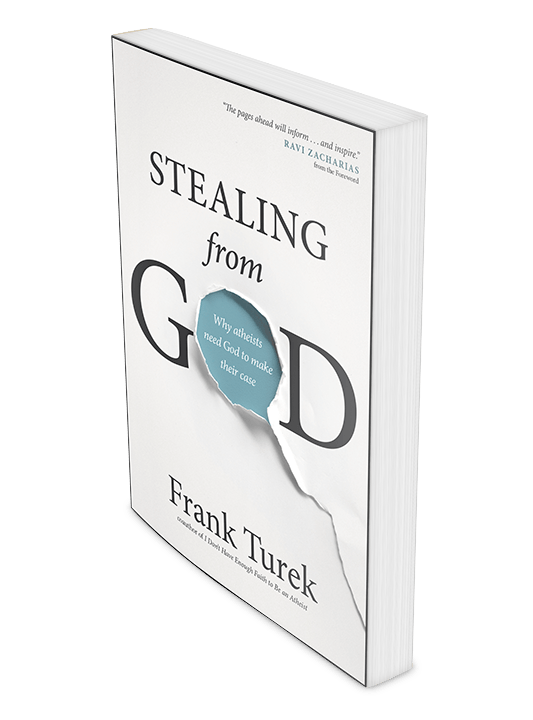
SFG angled book
SFG_DVD_Box_3D_Cropped__88285.1447165762.1280.1280

By Natasha Crain

Since my book, Keeping Your Kids on God’s Side, came out in March, I’ve been blessed to receive 75 five-star reviews of it on Amazon. To all who have taken the time to leave those reviews, thank you! It means a lot!

In addition to those 75 reviews, I’ve also received 2 one-star reviews…from people who haven’t read the book.

One headline says, “How to brainwash and indoctrinate your child instead of letting him/her think for themselves [sic]”. This is followed by his review, which simply says, “This whole concept is a little upsetting to say the least.”

The other one-star review says, “If you don’t trust your children to follow your religion on their own (without constant reinforcing) then either you don’t trust in your kids or in your religion.”

Clearly, neither of these commenters have read the book and are simply rating the idea of doing something—anything—to “keep your kids on God’s side.” I probably receive at least one blog comment to that effect every week: If you’re raising your kids with a Christian worldview, it automatically means you’re forcing your religion on them.

This is, frankly, nonsense.

Let’s take a minute today and consider what “forcing” your religion—or atheism—on your kids would actually look like…and what it wouldn’t.

5 Signs You’re Forcing Your Religion (or Atheism) on Your Kids

1. You encourage them to have a blind faith, whether you realize it or not.

A blind faith is one where a person accepts certain beliefs without question. I’m pretty sure that if you asked most Christian parents if they want their kids to have such a faith, they’d answer with an emphatic, “No!” Theoretically, everyone wants their kids to have a faith more meaningful than that.

But what many parents don’t realize is that you can inadvertently raise your kids with a blind faith by encouraging them to “just believe” in Jesus.  Is this a heavy-handed or malicious forcing of religion? No. But it has a similar effect—it leads to kids having a faith that exists just because yours does.

Atheists who encourage their kids to reject God without question (because believing in God is just so ridiculous) are effectively doing the same thing.

2. You answer your kids’ questions about God with disapproval.

When kids ask questions about God, it’s the Christian parent’s privilege and responsibility to take the time to offer accurate and thoughtful answers. If your kids’ questions are met with disapproval, however, you’re teaching them that they should just accept what you believe for the sake of believing it. Again, is this a heavy-handed or malicious forcing of religion? No. But, again, it leads to kids having (some kind of) faith just because you do.

Atheists who are determined to make sure their kids don’t fall for the idea of God and show disapproval when their kids express interest in religion are guilty of the same thing.

3. You trivialize other worldviews.

I’ve heard far too many Christians condescendingly laugh at the idea of evolutionary theory, the fact that Mormons have special underwear, or that Muslims believe virgins are waiting in heaven for faithful martyrs. We don’t need to believe that every worldview is true (that’s not even possible), but we do need to make sure we don’t trivialize the beliefs of others by treating them as intellectually inferior. When we do, we’re effectively pushing our beliefs onto our kids by trying to make other beliefs look “small.” Instead of issuing snide remarks, we should be focused on teaching our kids to fairly evaluate the evidence for the truth of varying worldviews.

Atheists who teach their kids that Christianity is an absurd belief system for uneducated or gullible fools should take the same advice.

4. You threaten them with hell when they question the truth of Christianity.

If your gut reaction to a child expressing doubt about the truth of Christianity is something like, “You better not stop believing or you’re going to hell!”, you’re strong-arming them into belief.

Yes, hell is a reality spoken of repeatedly in the Bible. Yes, kids must understand that there is real judgment that awaits all people. But trying to make kids believe in Jesus out of fear won’t lead them to a true relationship with God. Parents should meet kids’ doubts with an open willingness to talk about questions…not with threats.

Atheists get a pass on this one since they don’t believe in hell.

5. You tie them down with ropes and repeatedly yell, “You will believe the way I do…OR ELSE!”

This is what it would look like to literally try forcing your religion or atheism on your kids. Obviously, that’s not happening. But people will keep using the word forcing anyway.

And 5 Signs You’re NOT Forcing Your Religion (or Atheism) on Your Kids

1. You encourage them to have beliefs rooted in good reason and evidence.

The opposite of raising your kids with a blind faith is raising your kids with a faith that’s deeply rooted in good reason. It’s helping them discover the evidence for God in nature—things like the origin of the universe, the design of the universe and of living things, and the origin of morality. It’s helping them understand that all religions can’t point to the same truth. It’s helping them learn the historical evidence for the resurrection. It’s helping them understand the intersection of faith and science. By teaching them why there’s good reason to believe Christianity is true, you’re making sure their beliefs are their own and are not just being pushed onto them from you.

(All of these subjects are covered in my book, Keeping Your Kids on God’s Side: 40 Conversations to Help Them Build a Lasting Faith. If you need help discussing these things, please check it out!)

Atheists can do the same by not simply expecting their kids to reject God, and by talking about the actual evidence they believe points to an atheistic universe.

2. You not only invite your kids’ questions, you raise questions they haven’t even thought of.

Parents shouldn’t see themselves as a Q&A machine. We need to be able to answer our kids’ questions, but we also need to teach them about the questions others raise about Christianity. As I’ve said before, if our kids are someday shocked by the claims of skeptics, we didn’t do our job. By proactively sharing those challenges, we demonstrate that truth has nothing to fear and that we’re not “forcing” them to see only one side of the picture.

Atheists should do this as well, by sharing with their kids the challenges theists raise to their worldview.

3. You proactively teach them about other worldviews.

It’s one thing to share the challenges to Christianity with your kids (point 2, above). But it’s another thing to study worldviews in their entirety. For example, you might address the common atheist challenge that miracles aren’t possible, but that doesn’t give your kids a comprehensive understanding of what the atheist worldview is and what its implications are. It’s important that kids get that bigger picture for the major worldviews today so, once again, they never feel we’re forcing them to see only one perspective.

Atheists…you knew it was coming…should be doing this too. If atheist parents just nitpick at Christianity by teaching their kids random snippets of Christian belief and never take the time to offer a comprehensive picture of the Christian worldview, they’re just as guilty of passing on a one-sided perspective.

4. You deal with your kids’ doubts by helping them find meaningful answers to their questions.

Parents who address doubts by helping their kids find meaningful answers to their questions—rather than personally threatening them with eternal consequences—are giving their kids the tools they need to make their faith their own.

If atheists have kids who are doubting their atheism, they should equally work to address those questions rather than casually brushing them off.

5. You DON’T tie them down with ropes and repeatedly yell, “You will believe the way I do…OR ELSE!”

Ironically, given those one-star reviews, my book is all about why parents need to not push a blind faith onto their kids…and how to, instead, help them make their faith their own.

It definitely doesn’t suggest we should effectively or literally force religion upon our kids. No ropes. No yelling. No threats. Not even a one-sided presentation of Christianity.

But the claims will continue to come because too many people don’t stop to think about what it actually means to force religion on kids…and what it doesn’t.

Fortunately, I now have this post to share and help them out.  I’m sure they’ll be very grateful.

Visit Natasha’s Website @ www.ChristianMomThoughts.com

Natasha Crain is a blogger, author, and national speaker who is passionate about equipping Christian parents to raise their kids with an understanding of how to make a case for and defend their faith in an increasingly secular world. She is the author of two apologetics books for parents: Talking with Your Kids about God (2017) and Keeping Your Kids on God’s Side (2016). Natasha has an MBA in marketing and statistics from UCLA and a certificate in Christian apologetics from Biola University. A former marketing executive and adjunct professor, she lives in Southern California with her husband and three children.
Original Blog Source: http://bit.ly/32n5hH0

By Richard Playford

When someone makes a claim about the world, if they want to convince others, they are required to provide justification for that claim. This is not a contentious or strange idea, but what does this mean for atheism? Is atheism a belief and does it require justification? In this article I will show that atheism is a belief about the world and that it does require a justification in the same way that theism does.

When exploring this topic the most important thing to do is to define our terms clearly. Traditionally theism, agnosticism and atheism were seen as the three positions that one could hold towards the existence of God. Consider the claim “God exists.” We have three options that we could take toward this claim. We can endorse it and agree that God exists. We can deny it and say that God does not exist. Or we can neither endorse it nor deny it and claim not to know (or care). These, in theory, are the only three options (although I will come back to this later). The affirmation that God exists is called theism. The denial of God’s existence (the claim that he does not exist) is what is traditionally called atheism. We find this definition confirmed in the Stanford Encyclopedia of Philosophy: “‘Atheism’ means the negation of theism, the denial of the existence of God.”[1] Not knowing whether God exists is traditionally called agnosticism; again, we find this definition confirmed in the Stanford Encyclopedia of Philosophy: “‘Agnostic’ is more contextual than is ‘atheist’, as it can be used in a non-theological way, as when a cosmologist might say that she is agnostic about string theory, neither believing nor disbelieving it”[2]. Not caring whether God exists is traditionally called apatheism.

If we accept these definitions, then it seems clear that both the theist and the atheist have a burden of proof. Someone cannot simply assert that because there is no evidence for something it must therefore not exist. This does not follow because it suggests that an absence of evidence is evidence of absence. This is not true. Pluto was discovered in 1930.[3] Prior to then, there was no hard evidence that it existed. Did this mean that it did not exist? No! If somebody wants to say that something does not exist then they must provide a justification for that. They cannot conclude that simply because none of the arguments or evidences for a proposition fail, that the proposition is therefore false. The atheist philosopher Kai Nielson agrees and says, “[t]o show that an argument is invalid or unsound is not to show that the conclusion of the argument is false”.[4] This means that, in philosophy, even if all the arguments for a proposition fail, it does not follow that the proposition is false.

One criticism that is often voiced is that proving a negative is impossible; this is not true. I can prove that Santa does not live at the North Pole by going and looking, I can prove that a 30 cm piece of string is not 40 cm by measuring it, and I can show that there are no married bachelors by showing that it is a logically incoherent concept. The same applies for God. If somebody can show that God is an internally inconsistent concept or that it is incompatible with an aspect of the physical world, then this would prove that God does not exist.

Another criticism that is often voiced is that in the case of God an absence of evidence does entail evidence of absence. This criticism is similar to the argument from hiddenness (which is a formal argument against the existence of God to which there are various responses). As such, because this is an actual argument against the existence of God, this criticism does not detract from my argument.

It should be noted that people rarely fit neatly into the categories that I outlined above. Very few atheists claim to know for certain that God does not exist (many theists also would not claim to know for certain that he does). I suspect that it is views like this which lead people to adopt the title “agnostic atheist.” This has been defined in a number of different ways but one definition is “one who does not know for sure if any gods exist or not but who also does not believe in any gods.”[5]The problem with this definition is that it does not give us a complete account of what the person believes. This fails to tell us whether they believe in God’s non-existence (the belief that he does not exist). This is because lacking belief in God is not the same as believing that God does not exist. In general, people who label themselves like this tend to believe that, although we do not know for certain whether God exists, his existence is unlikely. As a result, they must justify the claim that God probably does not exist with a reasonable inductive argument. The lesson, however, is that people must be clear about what they believe and define their terms carefully before entering a conversation, and if they are making a claim about the world, they must justify that claim. We can see that atheism does require justification in the same way that theism does.


Please visit the CAA website:

Christian Apologetics Alliance BLOG Banner


Resources for Greater Impact: 

SFG angled book

STEALING FROM GOD

Answering the NEW Atheist DVDANSWERING THE APOSTLES OF THE NEW ATHEISM


[1] Smart, J. J. C., “Atheism and Agnosticism”, The Stanford Encyclopedia of Philosophy(Spring 2013 Edition), Edward N. Zalta (ed.), Available athttp://plato.stanford.edu/archives/spr2013/entries/atheism-agnosticism/. [Accessed on 21/05/2013].

[2] IBID.

[3] NASA, “Pluto: Overview”. Available at:http://solarsystem.nasa.gov/planets/profile.cfm?Object=Pluto. [Accessed on 21/05/2013].

[4] Nielsen Kai (1971) Reason and Practice. New York: Harper & Row.

By Ryan Pauly

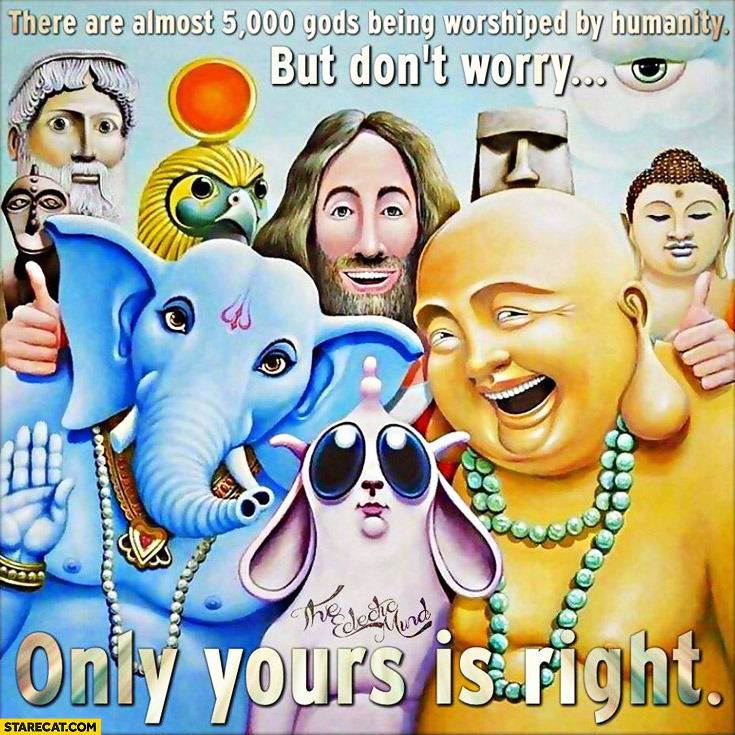
You don’t have to spend very much time interacting with atheists on the internet before you hear this objection: “There are almost 5,000 gods being worshiped by humans, but don’t worry… only yours is right.” The picture above was sent to me on Twitter last week in response to my blog about God’s hiddenness. There are other very popular forms of this argument. Richard Dawkins claims that Christians are atheists when it comes to Zeus, Thor, the Flying Spaghetti Monster, and many others. Dawkins just goes one god further than the Christian. So the claim is either than I’m an atheist when it comes to 4,999 gods or that I’m dumb for claiming to have truth when I reject so many other options.

The reason this argument is so popular on the internet is that it is easy. It fits into a 140 characters for Twitter and can easily be turned into a meme. Here are examples I found from a very quick search on Twitter.there-are-almost-5000-gods-being-worshiped-by-humanity-but-dont-worry-only-yours-is-right

“There have been nearly 3000 Gods so far but only yours actually exists. The others are silly made up nonsense. But not yours. Yours is real.”

“there are thousands of religions practices. thousands of gods worshiped. but don’t worry. yours is the only right one.”

“30,000 religions and 5000 versions of Christianity and only ‘yours’ is the right one-you are a joke.”

“Roughly 4200 religions in the world; and only yours is the right one? You must be a genius and everyone else is dumb to not pick yours.”

This objection also works well because a good response can’t fit on Twitter or a meme (like most good responses or argument), and so it seems like the Christian is left without an answer. If you try to answer on Twitter, you are most likely going to get another short objection. Instead of giving you a short Twitter response,  I will hopefully help you understand this objection. This will help you see that there is a response and that the is just a bad, popular level objection. There’s nothing to worry about for the Christian.

Let’s start by applying the same logic of this objection to other scenarios to see if it even makes sense. The basic idea of this argument is that since different people believe different things, it is unreasonable to think that you are right. If a married couple does their finances and comes to two different conclusions on how much money is in their bank, does that mean they can’t know the truth? No, it means that either both are wrong or one is right and the other is wrong. Disagreement doesn’t lead to the absence of truth. A person can have the truth in a world of contrary beliefs.

The second idea I see with this objection is that Christians are basically atheists because they reject thousands of other gods. Does that follow? Is a married man basically a bachelor because he isn’t married to thousands of other women? To say that I am an atheist when it come to Zeus and Thor is like saying a married man is a bachelor when it comes to women other than his wife. The difference between a bachelor and a married man is the difference between a theist and an atheist. You would never say a married man is a bachelor for every other woman. Therefore, it doesn’t make sense to say that a Christian is an atheist to every other God.

Another objection against Christianity that can be easily refuted by simply paying close attention to how silly it really is.

Imagine looking at a police lineup and telling the officer that person #4 committed the crime. What would you say if the officer responded by saying, “There are four other possible suspects… but only your guy is the right one-you’re a joke.” I don’t think you would say “Good point officer, I guess we are done here.” If this objection worked, defense attorneys could win every trial by saying “Roughly 7 billion people in the world; and only yours is the right one? You must be a genius and everyone else is dumb to not pick yours.” There’s a reason we don’t see this objection being used with police or in court.

The reason we don’t see these situations in court is that we base the innocence or guilt of a suspect on evidence. We know that not all suspects are the same, and in the same way, not all gods are the same. If there is positive evidence that a certain person committed a crime, then we have good reason to rule out all other possible suspects. We don’t use the possibility of other suspects to say that we can’t know who committed the crime. If that were true, no one would go to jail. If we can prove beyond a reasonable doubt that one person is guilty, then other possible suspects are innocent. In the same way, I am convinced that we can prove beyond a reasonable doubt that the Christian God exists.

The reasonable person makes a conclusion based on the evidence, and this is why it is reasonable to conclude that I do have the truth in a world of different beliefs. There is very good evidence that God exists. I won’t get into that evidence here, but I barely scratched the surface of examining the evidence when I wrote my blog Is Belief in God a Rational Position? These are just three of over a dozen arguments for His existence. A big difference that atheists, who present this objection, fail to recognize is that Thor, Zeus, and the Flying Spaghetti Monster are all gods inside the universe. The Christian God exists outside the universe and is the creator of all physical things. We are talking about very different categories.

Visit Ryan’s website at CoffeeHouseQuestions.com


Resources for Greater Impact: 


By Tim Stratton

Sunday morning I awoke to horrific news on my Facebook feed: an Islamic terrorist brutally gunned down over fifty of our fellow human beings at a gay nightclub in Orlando, Florida. This broke my heart and made me extremely angry! I cannot imagine the sorrow, pain, and anguish the friends and family members of the deceased victims are currently experiencing. This was an objectively evil act – it was wrong!

As soon as I read the headlines and processed the fact that evil has once again reared its ugly head, I told my wife what was going to happen next. Like clockwork, people were going to insist that “religion is the problem,” or that “guns are the problem.” The statements made on social media over the past few hours have validated my prediction. In this article I will examine both of these statements and offer a third option that must be considered if we are to extinguish terror, hate, and evil.

“Religion is the Problem!”

Since 9-11, many atheists have pontificated, “Religion is what’s wrong in the world today.” They conclude that since Muslims were behind the terror attacks on September the 11th, 2001, and Islam is a religion, then religion is to blame for the terror in the world today. This attempt at an argument can be written in the following syllogism:

1- Islam is responsible for the 9-11 terror attacks.
2- Islam is a religion.
3- Therefore, religion is responsible for the 9-11 terror attacks.

This argument fails as it commits the logical fallacy of composition. This error involves an assumption that what is true about one part of something must be applied to all, or other parts of it. In this case, the atheist assumes that since one particular religion affirms terror, then all religions affirm terror.

If one were to allow this argument to pass, then we could jump to all kinds of crazy conclusions. For example, according to several reports I read following the terror attack in Orlando, the terrorist was a registered Democrat. If one allows the above argument to pass, then the following argument would suffice as well:

1- The terrorist responsible for murdering homosexuals in the gay nightclub was a registered Democrat.
2- Hillary Clinton and Barak Obama are Democrats.
3- Therefore, Hillary Clinton and Barak Obama are responsible for the murders of homosexuals in the gay nightclub.

Obviously this is ridiculous and such reasoning is incoherent. Reasonable people will reject such “conclusions.” Thus, a reasonable person will reject the so-called “conclusion” that, “religion is the problem with the world today.” This is explicitly demonstrated when surveying other religions and world views.

Take the religion of Christianity, for example. A necessary condition for one to be a legitimate Christian is that they desire, and strive, to follow the teachings of Jesus Christ. The teachings of Jesus are clearly contradictory to the teachings of Muhammad and Islam. Sure, the two religions share some overlapping beliefs: Christians and Muslims all agree, for example, that the universe began to exist and was caused and created by an enormously powerful Intelligent Designer, but they begin to part ways soon after. The final teachings from both of these religions are quite different with Muhammad commanding Muslims to kill all infidels (non-Muslims) in the Quran, and Jesus commanding his followers to love all people, from their neighbors (Mark 12:31) to their enemies (Matthew 5:44), in the Bible. Moreover, according to Islam, those in the LGB community are to be executed. According to Jesus, however, although homosexual acts go against God’s plan, the ones committing these homosexual acts are to be loved!

Let me repeat myself: According to the law of Christ found in the New Testament, homosexual acts are sinful, but homosexuals are to be LOVED! Click here for more!

“Guns are the Problem!”

Many others in America today see horrendous headlines of Islamic terror and immediately jump to the hasty conclusion that guns are the real problem. The error with this line of thinking is that it does not take into consideration all of the other means by which evil people can accomplish their evil plans. After all, the Nazis used poisonous gas to kill millions of Jews, the Ku Klux Klan used rope to hang African Americans, Timothy McVeigh used fertilizer to kill 168 people, and Islamic terrorists killed thousands of Americans on 9-11 without firing a single bullet.

If one thinks banning guns is going to stop hate crimes, then, to be consistent, they must also strive to ban all gas, rope, fertilizer, and airplanes too. This is obviously ridiculous as well, as the real problem does not lie within the tools that an evil man uses to accomplish his evil desires, but the desires of the evil man. If all guns, rope, fertilizer, and airplanes were banished from the face of the earth, these evil men would continue to find ways to accomplish their hateful plans. This is a much bigger problem.

Ideas are the Problem!

These evil desires typically stem from previously held ideas. The way one thinks directly leads to the way one acts, and the way one believes directly influences the way he behaves. You see, the problem is not all religions, all guns, all rope, all fertilizer, or all airplanes. The problem is ALLbeliefs, thoughts, and ideas that do not correspond to reality.

Ideas have consequences, and ideas that do not correspond to reality have painful consequences. These underlying ideas are referred to as one’s worldview. A worldview is a foundational set of beliefs that ultimately influence all other beliefs built upon this foundation.

Consider the worldview (or idea) of atheism. It is vitally important to understand what consistent atheism logically implies: If God does not exist, then there is nothing objectively good, bad, right, wrong, fair, or evil with anything! Watch this short video to understand exactly why this is true. It logically follows that if naturalistic atheism is true, then there is nothing really wrong with the Islamic terrorist shooting homosexuals at the gay nightclub in Orlando this past weekend. Moreover, if naturalistic atheism is true, this Muslim had no choice in the matter, as the laws of physics and chemistry forced this poor terrorist to believe and behave exactly as he did. It was simply not his fault.

To make matters worse for atheists, history is not on their side. This past century has provided evidence as to the consequences of following atheistic ideas, as the nations governed according to these ideals usually end in suffering and mass human slaughter. The atrocities committed in the name of atheism by Stalin, Pol Pot, Mao, and arguably Hitler being influenced by naturalism’s “survival of the fittest,” has caused devastating collisions with the reality of morality; human suffering and death followed on a massive scale.

If naturalistic atheism were true, then there would be nothing really wrong, bad, or evil with any action and there would be no ability to make moral choices. Couple that with the historical fact that communistic governments officially adopting atheism (or being influenced by it) make all murders under the umbrella of “religion” pale in comparison. Why would anyone want to hold to an incoherent worldview like atheism over the ideas of Jesus teaching all people to love all people? Can you imagine a world where everyone loves everyone? That sounds like heaven to me — maybe Jesus was on to something!

So, if you are keeping score, here is a quick recap: In regards to the terrorist attacks at the gay nightclub in Orlando, Florida this past weekend, here is what each worldview affirms; or rather, here are the consequences that follow from each set of ideas:

1- Consistent Islam: this attack was GOOD as Muhammad’s final commands were to kill the infidels (Take five minutes to understand by clicking here).

2- Consistent Atheism: there was NOTHING objectively WRONG with these attacks. In fact, on naturalistic atheism it is unavoidable. Terrorists are therefore not responsible for their actions.

3- Consistent Christianity: this attack was objectively WRONG and EVIL! According to the law of Christ, all humans are commanded to love all humans (even the ones we disagree with). According to Jesus, we are to love everyone from our neighbors to our enemies. Thus, one who consistently follows the teachings of Jesus will demonstrate love to all people (even the ones he disagrees with)!

Is there a best choice option? Yes there is. The one supported by all of the evidence and the same one commanding us to love!

Bottom line: If you agree that these Islamic terror attacks against homosexuals at the gay nightclub were objectively wrong and evil, then, to be logically consistent, you must reject atheism, Islam, or any other view that disagrees with the teachings of Jesus Christ. If you think terror and persecution against the homosexual community is objectively wrong, then you ought to be a Christ follower!

Stay reasonable (Philippians 4:5) and love one another (John 13:34-35),

Tim Stratton


Notes

To learn more about Islamic terror and Jihad, begin by reading this article by Timothy Fox reviewing the book of the former Muslim, Nabeel Qureshi, Answering Jihad: A Better Way Forward.

Original article: http://freethinkingministries.com/islamic-terror-homosexuality-the-consequences-of-ideas/

By Natasha Crain

A mom left a comment on one of my older posts the other day that said, “It sounds like you are teaching your kids to question the Bible. We should never teach our kids to question the Bible!”

To that I say…Of course we should.

Let’s not get confused, however, by what it means to “question” the Bible. To ask questions about something doesn’t mean to doubt it by default. Neither default acceptance nor default rejection is the response of a critical thinker.

To encourage our kids to question the Bible means to encourage them to examine it fully so they can determine its truth value for themselves.

This is a spiritual process so sorely lacking in most kids’ (and adults’) lives today.

Our kids learn a selection of key Bible stories throughout their childhood, but what do they learn about the Bible–why they should even believe those stories?

Typically, next to nothing.

Yet, parents and church leaders spend years preaching to kids from the Bible, assuming those kids should and will accept it at face value. It takes just a few skeptics to throw darts at that face value before kids make the point of this “atheist pig”:

Don’t expect your kids to care what the Bible says unless you’ve taken the time to help them understand why there’s good reason to believe it’s true.

In Keeping Your Kids on God’s Side, I wrote 8 chapters to help you do just that. Of course, there are many other possible topics to address on the Bible’s veracity, but I selected these because they are the most pertinent and the most frequently attacked by skeptics.

Here’s an overview of these 8 key questions you should be teaching your kids to ask of the Bible.

1. How were the books in the Bible selected?

Skeptics claim: In the first centuries after Jesus, there were many rival versions of Christianity, but the representative writings were suppressed by those in power. Our New Testament books represent the version of Christianity that happened to win over time. The winning books weren’t picked until some 300 years after Jesus’ death, and they won because they found political favor at the time.

Kids need to understand: That there were many early Christian writings, how the early church leaders sifted through those writings over time, and how the books of our Bible today were eventually deemed authoritative.

This is explained in Chapter 25 of my book.

2. Why were books left out of the Bible?

Skeptics claim: There are many “gospels” missing from the Bible which give equally valid but completely different views of Jesus than the one we have. If these books had made it into the Bible, Christianity would mean something very different today.

Kids need to understand: Why the mere existence of dozens of early Christian writings that never made it into the Bible says absolutely nothing. The question they need to be able to confidently answer is whether or not any of those writings can legitimately claim spiritual authority by way of connection to Jesus and His apostles.

This is explained in Chapter 26 of my book.

3. How do we know we can trust the Bible’s authors?

Skeptics claim: The gospels were written decades after Jesus lived by anonymous authors based on growing legends and unreliable oral history.

Kids need to understand: Why we can be confident that the gospels are based on reliable, eyewitness testimony.

This is explained in Chapter 27 of my book.

4. How do we know the Bible we have today says what the authors originally wrote?

Skeptics claim: The Bible has been copied, edited, copied, edited, copied, edited, etc. so many times since the original authors wrote their content that we have no way of even knowing what the books we have should say. (See the quote on the image at the top of this post from one actor making this claim.)

Kids need to understand: Why thousands of copies of early manuscripts and hundreds of thousands of differences between them actually don’t undermine what we know about Christianity.

This is explained in Chapter 28 of my book.

5. Does the Bible have errors and contradictions?

Skeptics claim: The Bible is filled with hundreds of errors and contradictions, clearly demonstrating it’s not the Word of God. (See bibviz.com as one example of this claim.)

Kids need to understand: How to evaluate alleged errors and contradictions (with special consideration of the alleged contradictions in the Gospels).

This is explained in Chapter 29 of my book.

6. Does the Bible support slavery?

Skeptics claim: God’s laws about slavery in the Old Testament show that, far from being a perfect moral Being, He actually supported this terrible institution–even sex slavery (see Exodus 21:7-11).

Kids need to understand: The issue of slavery in the Old Testament is very complex and requires an appropriate understanding of biblical context, culture, and history.

This is explained in Chapter 30 of my book.

7. Does the Bible support rape?

Skeptics claim: The Bible approves of rape.

Kids need to understand: The meaning of biblical laws on rape (Deuteronomy 22:23-29) and the biblical context for three key passages often used to support skeptics’ claims in this area (treatment of female war captives, treatment of the Midianite virgins, and treatment of the women of Jabesh-gilead).

This is explained in Chapter 31 of my book.

8. Does the Bible support human sacrifice?

Skeptics claim: God may explicitly condemn human sacrifice in the Bible, but He violates His own prohibition multiple times.

Kids need to understand: The theological background of God’s command for Abraham to sacrifice Isaac, the nature of child sacrifices of kings, Jepthah’s vow, the consecration of firstborn males, and Jesus’ death on the cross.

This is explained in Chapter 32 of my book.

So should you teach your kids to ask these and other questions about the Bible? Absolutely. If you don’t, skeptics will. And soon your kids won’t care what the Bible says any more than the “atheist pig”.

Keeping Your Kids on God’s Side is available from your local Barnes & Noble and Christian book retailers, as well as ChristianBook.com, BarnesandNoble.com, and Amazon.com.

For more articles like Don’t Expect Your Kids to Care What the Bible Says Unless You’ve Given Them Reason to Believe It’s True visit Natasha’s site ChristianMomThoughts.com

By Timothy Fox

Welcome to the second installment in my series, Stuff Atheists Say! (Read part 1 here.) This series is dedicated to bad arguments and statements that some atheists (the internet troll type) make to derail a conversation and avoid having to put forth any arguments or evidence of their own. My intention is not to smear every nonbeliever as there are many thoughtful and honest questions that skeptics ask which need to be answered. In fact, there are many atheists who are just as tired as these nonsensical statements as I am! That’s why I want to clear up some of these pointless slogans once and for all. So on to the second one:

Bad “argument” #2: Believing in God is no different than believing in Santa Claus.
Or maybe you’ve heard it stated: “I don’t need to disprove God any more than I need to disprove the existence of leprechauns.” Or fairies. Or any other type of mythical creature. The point of this statement is to equate God with any other imaginary being that is ridiculous to seriously believe in.

The Santa Delusion

So is believing in God really the same as having an imaginary friend? An invisible sky daddy? Maybe, if believing in a fat man in a red suit who delivers presents in a sleigh pulled by flying reindeer to every child in the world is the same thing as believing in a God who created the universe from nothing, brought life from non-life, and grounds objective moral values and duties. If so, then yes, they’re exactly the same.

But if believing in God is so ridiculous, you know what’s even more ridiculous? Giving lectures against his existence. Having debates about it. Trolling blogs and internet chatrooms. Writing popular-level books promoting unbelief. Meanwhile, I don’t see anyone penning The Santa Delusion or The Tooth Fairy Is Not Great.

And I guess that the overwhelming majority of humans throughout all of time are as deluded as little children. Because every culture across history has had some kind of religion or believed in a deity of a sort.  We discuss God’s existence in the classroom, at the dinner table, and over a coffee (or beer). From philosophers to scientists, with believers, skeptics, and everyone in-between. Silly humans.

No, Seriously

But let’s take this argument seriously. Is belief in God really no different than belief in Santa? First, how justified are we in believing in Santa Claus? What would it take for someone to actually think that he exists? Evidence. And here the atheist says “Correct! There’s no evidence for either of them! That’s why it’s ridiculous to believe in God or Santa!” But is the evidence for Santa Claus and God really the same? Well, if Santa does exist, we would know what to look for: a fat man in a red suit delivering presents Christmas Eve. But what about God? If God exists, do you know what you would look for? Before stating that there is no evidence for something, make sure you know what kind of evidence there should be if that thing does exist!

For it to be reasonable to believe that Santa Claus exists, he would have to be the best explanation for the existence of Christmas presents. But is there another, better explanation? Perhaps someone else put the presents under the tree, like parents. Maybe the gifts just popped into existence from nothing. Or maybe they’ve been there for all eternity! You can probably see where this is going. How did the universe get here? Did it just pop into existence uncaused, has it always been here, or is it reasonable to believe that something, or someone, caused it to begin to exist? God is the best explanation for all of reality. And even if you disagree, it’s still a legitimate option, is it not?

But maybe Santa exists and he’s just hiding. That’s why he has never been observed, just like God! Again, what are the reasons to believe that Santa exists? Are there any? Because there are very good reasons to believe that God exists, such as the cosmological argument, moral argument, fine-tuning argument, etc. Can you honestly say the same about Santa? Of course not.

Furthermore, what are the consequences if Santa doesn’t exist? Then kids must get their Christmas presents another way, because we know from experience that presents exist (unless you were on the naughty list, I guess). But if there’s no God? Then the universe came into existence uncaused from nothing for no reason. Life came from non-life and consciousness from non-consciousness. There are no objective morals and values. Exactly the same? No. Not a chance.

Conclusion

I hope we can all see how ridiculous it is to equate God with some imaginary or mythical being. It’s not as trivial as who delivers Christmas presents or trades cash for teeth; we’re talking about the First Cause who created and upholds the entire universe. There are good reasons and arguments for God’s existence. So to those who say that belief in God is no different than belief in Santa Claus, please stop. You’re the ones making ridiculous claims, not us.

For another good and thorough treatment of this issue, check out the Reasonable Faith article Is God Imaginary?

For More Articles like Stuff Atheists Say: Believing in God Is Like Believing in Santa visit Tim’s site at FreeThinkingMinistries.com

By Natasha Crain

There’s a new church movement you may not have heard about, but it’s growing by leaps and bounds. It’s called the Sunday Assembly. It started less than two years ago in England and now has more than 60 congregations around the world. Twenty-five more congregations are expected to launch by early 2015. The Sunday Assembly is growing especially quickly in the United States, where congregations have formed in 17 cities.

At a Sunday Assembly, church members come together to sing songs, hear a speaker and reflect on their lives. Outside of church, they have small groups, book clubs, a choir, peer-to-peer support and a variety of opportunities to volunteer. Their motto is “Live better, help often and wonder more.”

So what’s unique about this rapidly growing church?

Most of the congregants don’t believe in God. It’s a church for atheists.


What is an Atheist Church?

The Sunday Assembly was started by two comedians named Pippa Evans and Sanderson Jones who liked the idea of a church without God. Pippa is an ex-Christian who found she missed church elements like “community, volunteering, and music,” but didn’t miss God. Sanderson had noticed the joy at Christmas created by caroling and wondered if it was possible to harness those warm feelings and just celebrate the fact we’re alive.

When Evans and Jones launched the Sunday Assembly, they promoted it using the (appropriate) phrase “atheist church.” However, they now avoid the atheist description and promote the Sunday Assembly as a group “celebrating life.” A New York congregation actually broke off from the group earlier this year because they wanted to focus more on celebrating godlessness than celebrating life.

True to this rebranding effort, the “Frequently Asked Questions” page on the Sunday Assembly’s website attempts to distance the organization from a strict atheist association. In response to the question, “Is Sunday Assembly exclusively for atheists?” they say, “Absolutely not. We say in the Charter that we don’t do supernatural but we won’t tell you you’re wrong if you do. One of the unique things about Sunday Assembly is that it is radically inclusive–allowing us to celebrate life together, regardless of what we believe in.” They go on in other answers to discourage using their group as a vehicle for presenting atheist philosophy or for telling others that they’re wrong for what they believe.

Irony lurks below the surface of this shallow inclusiveness. The first item on their public charter says, “We are born from nothing and go to nothing. Let’s enjoy it together.” Make no mistake: this isn’t just a secular gathering where no claims are being made about God one way or another. The Sunday Assembly is built on explicitly atheist assertions. And people are loving it.


A Very Important Lesson for Christian Parents

I’m fascinated by this rise of atheist churches, and I think there is a very important lesson Christian parents can take from it:

We have to make sure our kids are attracted to Jesus and not just the church.

Humans are built for relationships. We desire community; we desire to help others; we desire to live a “good” life and find meaning in what we do–all things that can be found in church. Christians believe that these desires are given to every person by God. That means church is a place that can fill a God-given need for our kids whether they believe in Him or not.

The risk is that they’ll mistake that partial fulfillment for the sum of everything they spiritually need.

Bart Campolo, son of well-known Christian pastor and speaker Tony Campolo, made the news last month because of his deconversion from Christianity. In an interview, he described how as a teenager he was drawn by the sense of community and “the common commitment to love people, promote justice, and transform the world.” He commented, “All the dogma and the death and resurrection of Jesus stuff was not the attraction.”

Church – not Jesus – was the attraction.

How can you know if your kids are attracted to Jesus or just the church? Look at their spiritual development outside of church:

  • Do they show an interest in reading and understanding the Bible, or just an interest in good values and community service?
  • Do they initiate conversations about faith and ask thoughtful questions?
  • Do they demonstrate a desire to discern what God wants for their life?
  • Do they pray? (If you don’t know, ask!)

There are certainly a lot of kids kicking and screaming all the way to church each week. That’s a whole other problem. But let’s be sure to not assume a happy church-goer is also a Jesus-lover. As the Sunday Assembly has shown us, a lot of people are happy to do church without God.

What kind of “relationship” do your kids have with your church? Have you ever considered if it’s a Jesus-centered relationship? I’d love to hear your thoughts!

For more articles like What Christian Parents Can Learn from Atheist Churches visit Natasha’s website: ChristianMomThoughts.com

By Billy Dyer

Familiar claims to the contrary notwithstanding, Darwin didn’t manage to get mental causes out of his account of how evolution works. He just hid them in the unexamined analogy between selection by breeding and natural selection…we can claim something Darwinists cannot. There is no ghost in our machine; neither God, nor Mother Nature…and there are no phantom breeders either. What breeds the ghosts in Darwinism is its covert appeal to intensional biological explanations…Darwin pointed the direction to a thoroughly naturalistic—indeed a thoroughly atheistic—theory of phenotype [trait] formation; but he didn’t see how to get the whole way there. He killed off God, if you like, but Mother Nature and other pseudo-agents got away scot-free. We think it’s now time to get rid of them too.  (Fodor, J. and M. Piattelli-Palmarini. 2010. What Darwin Got Wrong. New York: Farrar, Straus and Giroux, 162-163.) 

  • Essentially Fodor & Piattelli-Palmarini are saying that Darwin denies God as an agent but then gives Mother Nature all the qualities of God. That is, in a scientific book you might read on page 2 that God does not exist but then on page 5 you will see Mother Nature “choosing”, “selecting”, “deciding”, “having wisdom”, etc… It is simply a bait and switch.

No one who has attended to the breeding of domestic animals will doubt that this must be highly injurious to the race of man. It is surprising how soon a want of care, or care wrongly directed, leads to the degeneration of a domestic race; but excepting in the case of man himself, hardly any one is so ignorant as to allow his worst animals to breed. (Charles Darwin, The Descent of Man, 2nd ed. (1874), ch 5 www.gutenberg.org/dirs/etext00/dscmn10.txt) 

  • To me it looks like Darwin is affirming the degeneration of breeds. It seems that he is saying that when a race breeds it degenerates but then gives the only exception to mankind. My point with this quote is to say that Darwin wasn’t consistent. If breeding leads to degeneration then why is man an exception? Evolution says that we evolve to a better plight but history & all human experience says we devolve. Even Darwin seemed to see this but he couldn’t let it contradict his theory.

What is the use of their (bacteria) unceasing mutations if they do not change? In sum the mutations of bacteria and viruses are merely hereditary fluctuations around a median position; a swing to the right, a swing to the left, but no final evolutionary effect. (Pierre-Paul Grasse, Evolution of Living Organisms (New York: Academic Press, 1977), 87.)

  • We need to understand the difference between micro and macro evolution. They are not the same. Grasse shows us that surely there can be mutations but only on a micro level. That is, fruit flies might mutate to having a third wing, be faster, or be bigger but they are always fruit flies. We have always heard that mutations lead to change and then natural selection “selects” the changes that are beneficial. But Grasse tells us that mutations do not have any purpose or goal. They are simply fluctuations a little to the right or left but always come back to the median position. Simply put, you can breed all sorts of different dogs and make micro changes to the left or right. But left up to normal breeding and all dogs go back to the median position or being a wolf.

Although, at the phenotypic level, it deals with the modification of existing parts, the theory is intended to explain neither the origin of parts, nor morphological organization, nor innovation…But selection has no innovative capacity: it eliminates or maintains what exists. The generative and ordering aspects of morphological evolution are thus absent from evolutionary theory.  (G. B. MÜLLER, ‘Homology: The Evolution of Morphological Organization’ in G. B. MÜLLER and Newman S.A. (eds.), Origination of Organismal Form. Beyond the Gene in Developmental and Evolutionary Biology, Harvard, MIT Press, Vienna Series in Theoretical Biology, 2003, p. 51.) 

  • I love this quote. Müller really hits one out of the park here. He explains that evolution doesn’t and cannot explain the origin of parts. It tries to explain how we got to this level but it doesn’t tell us how the whole thing started. Secondly, it cannot deal with the organization of parts at the very beginning. Third, natural selection doesn’t have free will. I get tired of hearing people tell me that natural selection “chose”. Natural selection isn’t an agent, it cannot make a choice. Therefore, it has no mind to innovate as Müller says. So even if evolution is true, which it certainly is not, it still fails to explain origins and natural selection can’t make choices. Therefore, Darwin failed.


Visit Billy’s Website: DyerThoughts.com

Billy Dyer is a CrossExamined Instructor Academy Graduate.

By Billy Dyer

When God created man he gave us free-will. He did this so that He could have genuine children who loved Him. For love by its very nature has to be freely given and freely received. Therefore, He had to give mankind some kind of law so that they could choose to love Him or disobey Him. The Devil tempted Eve to eat of the forbidden fruit. He attacked on three levels:

  1. God’s Word–“Indeed, has God said”
  2. God’s Character–The serpent said to the woman, “You surely will not die!”
  3. God’s Goodness–“For God knows that in the day you eat from it your eyes will be opened, and you will be like God, knowing good and evil.”

We all know the story. Eve ate and gave some to her husband and he ate of it. That was the only thing God forbade them to do. So the moral of the story is to eat more bacon because fruit can ruin the world…..ok just kidding!

Today we use the phrase “forbidden fruit” as a metaphor for an object of desire whose appeal results from knowledge that it should not be obtained. Admittedly, the common human experience is that we all are tempted with our own forbidden fruit. But I’d like to suggest that Atheism, as a worldview, has a common forbidden fruit and that is asking the question, “Why?”.

Atheist don’t like to ask that question for two reasons.

  1. They’d rather state their view then have to defend it
  2. There is no why

As to the first reason I understand it is a general statement and not all atheists are like this. But when you do not have evidence to support your worldview it is a lot more comfortable to simply assert your belief than defend it. As to the second view I believe the atheists can speak for themselves.

Richard Dawkins said, “In a universe of electrons and selfish genes, blind physical forces and genetic replication, some people are going to get hurt, other people are going to get lucky, and you won’t find any rhyme or reason in it, nor any justice. The universe that we observe has precisely the properties we should expect if there is, at bottom, no design, no purpose, no evil, no good, nothing but pitiless indifference.” (River Out of Eden) We see here that there is no rhyme or reason to atheism. We just are in this sort of universe. If we ask “why” the answer is “just because” or “there isn’t a why”. When we begin to examine this thought it is very disturbing. It is like there is something inside of us screaming that this is wrong but we don’t necessarily know why. The Bible on the other hand says that God has set eternity on our hearts (Ecc 3:11). There is something hard-wired within us, by God, that longs for something more than this world. We intuitively know we are different. That is why all humans across the board, regardless of the answers they decide on, struggle with the questions, “Where did I come from?”, “Why am I here?”, and “Where am I going?”.

Dawkins goes on to say, “DNA neither cares nor knows. DNA just is. And we dance to its music.” (River Out of Eden). I always laugh at statements like this because they are so self-refuting and the authors who say them don’t even live by them. Let us think about this for a second. If we are really just dancing to the music of DNA then that means we are like a soda can that is simply fizzing because we were opened. We didn’t decide to fiz and we don’t even know that we are fizzing. We simply fiz as a chemical reaction. If this is the case then why try to convince me of it since I don’t even have the ability to change my mind? In fact, according to Dawkins’ view, I believe what I do about God as a chemical reaction. These atheists can’t even live by their worldview. If we are all simply reacting to chemicals in our brains without abilities to make conscious decisions then why ask me to make a conscious decision to change my worldview and accept yours?

Christians are commanded to ask questions and seek (Lk 11:9; Prov 1:2, 4:7, 23:23, et al.) for answers. There is no fear with the truth. We have the truth on our side. Our interpretations may change but the Word of God is truth (John 17:17). Therefore, I have no problem asking the question “why” or any other question about Christianity. Every time I’ve questioned my faith it has led me to a deeper understanding of God and a stronger faith. There are good answers out there it is just a matter of whether you want to do your homework to find them. What questions do you have about Christianity or your faith right now?

Visit Billy’s website: Dyerthoughts.com 

Billy Dyer is a CrossExamined Instructor Academy Graduate.


Resources for Greater Impact: