Tag Archive for: apologetics

The status of women in Islam is a subject enshrouded in controversy. According to many Muslims, Muhammad was a champion of women’s rights, bestowing upon the women in his community privileges and rights that they did not have previously. The notion that women in pre-Islamic Arabia had no rights, however, is demonstrably untrue. Former Muslim Nabeel Qureshi lists some of the rights that women had in pre-Islamic Arabia, which included ease of divorce, the ability to marry multiple men, and become overlords. Women were even able to propose for marriage, as in fact was the case with respect to Khadija’s marriage to Muhammad.

To outsiders, the hijab is often viewed as a symbol of oppression. Since April 2011, wearing of head coverings (including hijabs) in public places has even been outlawed in France. Muslims, by contrast, point out that the tradition of veiling and seclusion was present in pre-Islamic Arabia, and also Syria and Iran, since long prior to Muhammad, and was even seen as an emblem of social status, only affordable by women who didn’t need to work out in the fields.

The first alleged revelation concerning veiling occurred in 627 A.D. This is found in Surah Al-Ahzab (33) 53:

Believers, do not enter the Prophet’s house … unless asked. And if you are invited … do not linger. And when you ask something from the Prophet’s wives, do so from behind a hijab. This will assure the purity of your hearts as well as theirs.

Surprisingly, this verse does not prescribe the veil for all women but only Muhammad’s wives. Reza Aslan, in his book No God But God, points out that the term, darabat al-hijab, used for putting on the veil, was used interchangeably with “becoming Muhammad’s wife” and suggests that the hijab was adopted by other Muslim women only after the death of Muhammad — possibly as a means of emulating Muhammad’s wives — and that the veil didn’t become compulsory or even generally adopted until much later. Reza’s interpretation, however, is disputed by other scholars.

The Hijab should not be regarded as the primary issue in the debate concerning the status of women in Islam. There are many far more concerning issues that need to be addressed.

In this article, I want to draw attention to some of these issues relating to Muhammad’s view of women.

Women Are Mentally Deficient?

According to the Qur’an, the testimony of one man is as good as the testimony of two women. We read in Surah Al-Baqara (2) 282 in the context of writing receipts for paid debt:

“Have two witnesses from among your men, and if two men are not there, then one man and two women from those witnesses whom you like, so that if one of the two women errs, the other women may remind her.”


Why is the testimony of a woman only worth half that of a man? Muhammad himself informs us in Sahih al-Bukhari (Volume 3, Book 48, no. 826):

“Narrated Abu Said Al-Khudri: The Prophet said, ‘Isn’t the witness of a woman equal to half of that of a man?’ The women said, ‘Yes.’ He said, ‘This is because of the deficiency of a woman’s mind.”


This is further stated in volume 1, book 6, no. 301, of Sahih al-Bukhari. Muhammad is reported to have said,

“O women! Give alms, as I have seen that the majority of the dwellers of Hell-fire were you (women).” They asked, “Why is it so, O Allah’s Apostle?” He replied, “You curse frequently and are ungrateful to your husbands. I have not seen anyone more deficient in intelligence and religion than you. A cautious sensible man could be led astray by some of you.” The women asked, “O Allah’s Apostle! What is deficient in our intelligence and religion?” He said, “Is not the evidence of two women equal to the witness of one man?” They replied in the affirmative. He said, “This is the deficiency in her intelligence. Isn’t it true that a woman can neither pray nor fast during her menses? The women replied in the affirmative. He said, “This is the deficiency in her religion.”


Muhammad, thus, does not seem to take a particularly high view of the intellect of women.

The Majority of Hell’s Inhabitants Are Women?

In Sahih Al-Bukhari volume 1, book 2, number 28 Muhammad again asserts that he saw that “the majority of [Hell’s] dwellers were women who were ungrateful.” After being asked whether this ungratefulness was directed towards Allah, Muhammad answered that “They are ungrateful to their husbands and are ungrateful for the favors and the charitable good (charitable deeds) done to them.” In Sahih Muslim book 36 (no. 6600), Muhammad is reported to have said “Amongst the inmates of Paradise the women would form a minority.”

What if, however, the Muslim women start being grateful to their husbands? What awaits them in Paradise? Well, according to Sahih Al-Bukhari, they get to stand in corners of a pavillion in paradise awaiting men to come and have sex with them. We read in volume 6, book 60, no. 402,

“Narrated Abdullah bin Qais: Allah’s Apostle said, “In Paradise, there is a pavillion made of a single hollow pearl sixty miles wide. In each corner of which there are wives who will not see those in the other corners; and the believers will visit and enjoy them…”

Beating Your Wife Into Subservience

According to the Qur’an, Surah An-Nisa (4) 34,

“Men are caretakers of women, since Allah has made some of them excel the others, and because of the wealth they have spent. So, the righteous women are obedient, (and) guard (the property and honor of their husbands) in (their) absence with the protection given by Allah. As for women of whom you fear rebellion, convince them, and leave them apart in beds, and beat them. Then, if they obey you, do not seek a way against them. Surely, Allah is the Highest, the Greatest.”


Women are here viewed as the property of their male caretakers, and men are permitted to beat their wives in cases where they “fear rebellion”.
Muhammad’s favorite wife, Aisha (to whom he was betrothed to be married when she was six and he fifty-one, a marriage that was consummated when she turned nine and before she had reached the age of puberty), makes an observation that is recorded in Sahih al-Bukhari volume 7, book 72, no. 715:

Narrated Ikrima: Rita’a divorced his wife whereupon Abdur-Rahman bin Az-Zubair Al-Qurazi married her. Aisha said that the lady (came), wearing a green veil (and complaining to her (Aisha) of her husband and showed her a green spot on her skin caused by beating. It was the habit of ladies to support each other, so when Allah’s Apostle came, Aisha said, “I have not seen any woman suffering as much as the believing women. Look! Her skin is greener than her clothes.”

Even during the lifetime of Muhammad, Aisha observed that nobody suffered so much as the believing, i.e., Muslim, women — in other words, Muslim women were being treated worse than pagan women. Rather than rebuke the man for beating his wife until her skin turned green, as one might expect of the champion of woman’s rights that Muhammad is supposed to have been, Muhammad instead took the side of the husband and rebuked the woman.

Aisha’s father, Abu Bakr, a close companion of Muhammad and the first of the four rightly-guided caliphs, also seems to have abused Aisha. According to Sahih al-Bukhari volume 8, book 82, no. 828.

Narrated Aisha: Abu Bakr came towards me and struck me violently with his fist and said, “You have detained the people because of your necklace.” But I remained motionless as if I was dead lest I should awake Allah’s Apostle although that hit was very painful.”


Muhammad is even reported to have said (according to Sunan Abu Dawud book 11 no. 2142), “A man will not be asked as to why he beat his wife.”

The Qur’an Permits Rape Of Female Captives

According to Surah An-Nisa (4) 24, “Also prohibited are the women already bound in marriage, except the bondwomen you come to own.”    

Surah Al-Mumenoon (23) 1-6 says the same thing:

“Success is really attained by the believers who concentrate their attention in humbleness when offering Salah (prayers) and who keep themselves away from vain things, and who are performers of Zakah and who guard their private parts except from their wives or from those (bondwomen who are) owned by their hands, as they are not to be blamed.”


A similar instruction is given in Surah Al-Maarij (70) 30. What is the historical context of these verses? We need only go to the Hadith sources to find out. We read in Sunan Abu Dawud 2150,

“The Apostle of Allah sent a military expedition to Autas on the occasion of the battle of Hunain. They met their enemy and fought with them. They defeated them and took them captives. Some of the companions of the Apostle of Allah were reluctant to have intercourse with the female captives in the presence of their husbands who were unbelievers. So Allah, the Exalted, sent down the Qur’anic verse: ‘And all married women are forbidden unto you save those (captives) whom your right hands possess.’ That is to say, they are lawful for them when they complete their waiting period.”


Another report is given by Sahih Muslim book 8, no. 3432,

“Abu Sa’id al-Khudri (Allah be pleased with him) reported that at the Battle of Hanain, Allah’s Messenger (may peace be upon him) sent an army in Autas and encountered the enemy and fought with them. Having overcome them and taken them captives, the companions of Allah’s Messenger (may peace be upon him) seemed to refrain from having intercourse with captive women because of their husbands being polytheists. Then Allah, Most High, sent down regarding that: “And women already married, except those whom your right hands possess.”


In Sahih Muslim book 8, no. 3371, we read,

“Abu Sirma said to Abu Sa’id al Khadri (Allah be pleased with him): O Abu Sa’id, did you hear Allah’s Messenger (may peace be upon him) mentioning al- ‘azl? He said: Yes, and added: We went out with Allah’s Messenger (may peace be upon him) on the expedition to the Bi’l-Mustaliq and took captive some excellent Arab women; and we desired them, for we were suffering from the absence of our wives, (but at the same time) we also desired ransom for them. So we decided to have sexual intercourse with them but by observing ‘azl (withdrawing the male sexual organ before emission of semen to avoid conception, also known as coitus interruptus). But we said: We are doing an act whereas Allah’s Messenger is amongst us; why not ask him? So we asked Allah’s Messenger (may peace be upon him), and he said: It does not matter if you do not do it, for every soul that is born up to the Day of Resurrection will be born.”


Sahih al-Bukhari volume 5,book 59, no. 459, says,

“Narrated ibn Muhairiz: I entered the Mosque and saw Abu Said Al-Khudri and sat beside him and asked him about Al-Azl. Abu Said said, “We went out with Allah’s Apostle for the Ghazwa of Banu Al-Mustaliq and we received captives from among the Arab captives and we desired women and celibacy became hard on us and we loved to do coitus interruptus. So when we intended to do coitus interruptus, we said, “How can we do coitus interruptus before asking Allah’s Apostle who is present among us?” We asked (him) about it and he said, “It is better for you not to do so, for if any soul (till the Day of Resurrection) is predestined to exist, it will exist.”


Muslims sometimes try to argue that this would have taken place only after marriage to these captive women. But this is clearly not the case, since the men wanted to fetch a ransom price for them afterwards.

Prostitution

Muhammad permitted temporary marriage contracts whereby one could contract with a woman for a temporary marriage. According to Surah An-Nisa (4) 24, “…to those of them whose company you have enjoyed, give their dues (dower) as obligated. There is no sin on you in what you mutually agree upon after the (initial) agreement.


We also read in Sahih Bukhari Volume 6, Book 60, Number 139,

Narrated Abdullah: We used to participate in the holy wars carried on by the Prophet and we had no women (wives) with us. So we said to the Prophet “Shall we castrate ourselves?” But the Prophet forbade us to do that and thenceforth he allowed us to marry a woman temporarily by giving her even a garment and then he recited “O you who believe! Do not make unlawful the good things which Allah has made lawful for you.”


Here, Muhammad gives permission to Muslims to offer a woman clothing in exchange for access to her body. A further reference to this practice is given in Sahih Muslim, book 8, number 3252:

“Sabra Juhanni reported: Allah’s Messenger (may peace be upon him) permitted temporary marriage for us. So I and another person went out and saw a woman of Bana Amir, who was like a young long-necked she-camel. We presented ourselves to her (for contracting temporary marriage), whereupon she said: What dower would you give me? I said: My cloak. And my companion also said: My cloak. And the cloak of my companion was superior to my clock, but I was younger than he. So when she looked at the cloak of my companion she liked it, and when she cast a glance at me I looked more attractive to her. She then said: Well, you and your cloak are sufficient for me. I remained with her for three nights, and then Allah’s Messenger (may peace be upon him) said: He who has any such woman with whom he has contracted temporary marriage, he should let her off.”

Conclusion

The items raised above represent just a few of the many issues that could be raised in relation to Muhammad’s view of women. The bottom line is that the assertion that Muhammad was a champion of women’s rights is historically untenable. By contrast, the Bible has a very progressive view of women, certainly for its day. According to Paul, although the sexes may have different roles in marriage and ecclesiology, men and women are ultimately equal in the sight of God, all being one in Christ Jesus (Galatians 3:28). Jesus Himself forgave a woman caught in the act of adultery and saved her from being stoned to death (John 8:1-11), spoke to a Samaritan woman about the way of salvation (John 4:1-42), allowed his feet to be anointed by Mary Magdalene, and tasks John the Apostle with looking after his mother Mary (John 19:26-27). Jesus’ first post-resurrection appearances are even to women. Many women are also key players in the book of Acts, as well as the Old Testament — for example, the story of Esther is about a woman who saves her people, the Hebrews, from being exterminated. When one examines and compares the Qur’an and the Bible, the stark contrast in view of women becomes very apparent.

Recommended Resources: 

Answering Islam by Dr. Frank Turek (DVD Set, Mp4 and Mp3)

Was Jesus Intolerant? by Frank Turek (DVD and Mp4)

Legislating Morality: Is it Wise? Is it Legal? Is it Possible? by Frank Turek (Book, DVD, Mp3, Mp4, PowerPoint download, PowerPoint CD)

Counter Culture Christian: Is the Bible True? by Frank Turek (Mp3), (Mp4), and (DVD)        


Dr. Jonathan McLatchie is a Christian writer, international speaker, and debater. He holds a Bachelor’s degree (with Honors) in forensic biology, a Masters’s (M.Res) degree in evolutionary biology, a second Master’s degree in medical and molecular bioscience, and a Ph.D. in evolutionary biology. Currently, he is an assistant professor of biology at Sattler College in Boston, Massachusetts. Dr. McLatchie is a contributor to various apologetics websites and is the founder of the Apologetics Academy (Apologetics-Academy.org), a ministry that seeks to equip and train Christians to persuasively defend the faith through regular online webinars, as well as assist Christians who are wrestling with doubts. Dr. McLatchie has participated in more than thirty moderated debates around the world with representatives of atheism, Islam, and other alternative worldview perspectives. He has spoken internationally in Europe, North America, and South Africa promoting an intelligent, reflective, and evidence-based Christian faith.

Originally posted at: https://bit.ly/3NnBbPX

There have been many reasons people have refused to take on the Christian faith since the time Christ was on earth. Some couldn’t believe in miracles. Some rejected Jesus’ claim to be the only way to God. Others didn’t want to abide by God’s rules for living and chose to risk the threat of an eternity separated from their Creator.

Today, those reasons seem to be less cited by those who reject or leave the faith. When you read or hear the stories of many who “deconstruct” their faith or deny Christianity, the reason often comes down to one central idea: Christianity is “evil”. The Crusades are pointed to as evidence that Christianity is used for conquest and subjugating people. Is this true? How should a Christian respond to this?

Caveats

This can be an extremely emotional argument for some people, and I want to make a few things clear. This article is to serve in no way to justify any immoral or unethical act by anyone claiming to be a Christian, ever. It is also an extremely small summary of a very long and complex history. That said, if people use the idea of the crusades as evidence that Christianity is evil, a Christian should be able to grapple with the question.

A Very Brief Summary of the Crusades

It should be remembered that the story of the Crusades was not only about the Christian faith. An objective reading of history shows that this was a struggle between two faiths, Christianity and Islam. Islam came about in the 7th century AD, long after Christianity had become a common faith all over Europe, Northern Africa, and the Middle East, joining pagans, polytheists (Romans, Greeks), and other worldview groups that typically existed in relative peace by the 7th century

There were eight individual military campaigns deemed by historians as “The Crusades”. They occurred between 1096 and 1270. The Crusades were initiated at times by church leadership, at times by kings, and at times by diplomats. The first Crusade (The Prince’s Crusade, 1096) was actually in response to aggression by Muslim forces that attacked Christians on pilgrimage to the holy lands, and in response to a request for aid from Byzantine Christians who were dealing with Muslim aggression from the Turks. Jerusalem was captured by the Christian crusaders, and protective forts were established to allow for safe pilgrimage from Europe to the holy land.

This led to a back-and-forth between Christians in “Crusader States” and Muslims seeking to exert their dominance in those regions. The successive Crusades were almost always in one way or another called in response to cities or regions that had fallen to Muslim conquerors following the first Crusade. (1) In the end, the areas the crusaders were able to temporarily control for a time largely fell to Muslim armies.

Notable Atrocities

Even though the Crusades were usually in response to Muslim advances, Christians committed acts that are widely condemned by historians as atrocities during the Crusades. In addition to civilians, Jews, pagans, and Christian “heretics” were also put to the sword by crusaders at various times in some of the campaigns. Notable massacres occurred in Jerusalem in 1099 and in Constantinople in 1204. That said, atrocities were not limited to Christian crusaders. Muslim forces were known to enslave, rape, and murder Christian civilians and hostages in the course of their advances. While the body count is very much in dispute, the accounts from eyewitnesses in that era from both Christian and Muslim sources tell a very dark story of humans mistreating other humans.[i] (2)

Summary of the Summary

Despite recent scholarship that attempts to paint the Crusades as nothing but bloody, unjustified aggression by colonializing Christians, it is well documented that the Crusades are more accurately described as an attempt by Western European Christians to respond to centuries of Islamic wars of expansion, reclaim the control of the holy land, and check the expansion of Islamic control in the East.[ii] (1) An objective view of history tells us that both the Christian and Islamic faiths were responsible for their shares of ungodly behavior. The fact that some crusaders committed atrocities should not be left out of any conversation about the Crusades. That should also be true for the acts of those with whom they fought. The story of the Crusades deserves a fair hearing with all of the evidence available for context.

Bad Religion?

Acknowledging that some Christian crusaders committed atrocities, should we deduce that the religion itself is evil? As Christian Apologist Frank Turek often argues, when someone plays Mozart poorly, you don’t blame Mozart. Where Christians sinned, Christians sinned. This is not an exclusive feature of the Crusades, and Christians (including yours truly) sin to this very day. But that does not affect the message of the namesake of Christianity.

Compared to What?

I would also expect that the honest critics would consider the actions of non-Christians who have also done evil in the name of things like progress, socialism, humanism, and other systems that sought (or seek) to conquer or eliminate people groups. Atheistic socialist regimes like Russia, China, and other countries are credited with killing more than 100,000,000 people in the 20th century alone.[iii] (3) This is a far more bloody history than anything the Crusades could be charged with. If that is life without Christianity, I will take Christianity. How does the atheist defend non-Christian atrocities?

One could easily write many, many books about all the evils committed by Christians since Christ last walked the earth. And it is worth remembering that Christ is far more knowledgeable of all of the sins committed by Christians than we are. How saddened and angry He must be with us for the way we have treated our fellow image bearers, and for the way we have failed to love others as He loves us.

The Christian can and should acknowledge the wrongdoing of other Christians at any time, but they are certainly justified in also pointing out that there are no perfect non-Christians either. This can be a way to help people understand a point so apparent throughout the Bible, and summed up in the passage that states, “there is none who does good, not even one” (Psalm 14:1-3). Now, we can talk about the good news.

The Good News

Christians must remember that the object of our faith is not the perfect behavior of 12th-century knights, or, for that matter, 21st-century pastors and priests. The object of our faith is not in how well Christians behave. The object of our faith should be Jesus Christ and His perfect life, death, and resurrection, displaying the willingness of God to save us from our sins by our faith in Him and His work.

There is no need for anyone to lose trust in Christ, even when we lose trust in Christians. We have all sinned and fallen short of the glory of God. No amount of other people’s sins will allow you or me to be considered sinless. But Christ lived a perfect life, told us to love God and one another, and died to save any who would repent and follow Him. So, consider your own sins, and seek Christ for yourself, being confident that we are all guilty and in need of what only a loving Creator could do through His Son’s death and resurrection.

References:

[i] Encyclopaedia Britannica. (n.d.). Crusades. In Encyclopaedia Britannica. Retrieved October 14, 2025, from https://www.britannica.com/event/Crusades

[ii] Ibrahim, R. Sword and Scimitar: Fourteen Centuries of War between Islam and the West. Grand Central Publishing, 2018.

[iii] Rummel, R. J. Death by Government. New Brunswick, NJ: Transaction Publishers, 1994.

Recommended Resources:

What is God Really Like? A View from the Parables by Dr. Frank Turek (DVD, Mp3, and Mp4)

Counter Culture Christian: Is the Bible True? by Frank Turek (Mp3), (Mp4), and (DVD)        

How Can Jesus be the Only Way? Mp4, Mp3, and DVD by Frank Turek

Stealing From God by Dr. Frank Turek (Book, 10-Part DVD Set, STUDENT Study Guide, TEACHER Study Guide)


Tony Williams is a retired police officer from Southern Illinois and currently lives in Kentucky with his family. He has been studying apologetics in his spare time for two decades, since a crisis of faith led him to the discovery of vast and ever-increasing evidence for his faith. Tony received a bachelor’s degree in University Studies from Southern Illinois University in 2019. His career in law enforcement has provided valuable insight into the concepts of truth, evidence, confession, testimony, cultural competency, morality, and most of all, the compelling need for Christ in the lives of the lost. Tony plans to pursue postgraduate studies in apologetics in the near future to sharpen his understanding of the various facets of Christian apologetics.

Originally posted at: https://bit.ly/3NO4vPG

Scott Adams, the creator of the Dilbert comic strip died recently, and reports are saying that he had a death bed conversion. Lord willing, he meant it. I enjoyed his cartoons. He had some clever commentary. But of course, no amount of good works, humor, or wit can get anyone to heaven. I hope for his sake that his last rites were sincere, and that I’ll be able to meet him in heaven one day. Death bed conversions however pose a real problem.

The problem isn’t about the fact that they happen. That’s not a problem for Christian theology. We teach that salvation isn’t earned as a reward, it’s a received gift. So, death-bed conversions are possible even for people who’ve lived a long and rebellious life. Just ask the thief on the cross. God’s grace allows for all sorts of people to come to a saving knowledge of Jesus Christ, and NO ONE is good enough to deserve heaven. So, that’s not the problem.

The problem with death bed conversions isn’t about justice or grace, it’s about pragmatics. There are some looming practical problems for anyone who is planning to save their Christian conversion till after they’ve lived life on their own terms.

1. Tomorrow isn’t guaranteed.

You don’t really know when you’ll die. Your doctor might say you have 6 months or 60 years to live, but honestly, not even tomorrow is guaranteed. That’s why Paul “today . . . is the day of salvation” (2 Cor. 6:2).

2. You might not want to when the time comes.

Over the course of your life you’re cultivating your own character, for good or bad. You might think you’ll convert on your deathbed because, for now, you plan to “Live it up,” sow your wild oats, or some pithy nonsense like that. But, in the course of your rebellion you’re building moral momentum in a certain direction to where you just won’t make that turn, and do the right thing, even when your eternal life is on the line. Or, if you’ll pardon the mixed metaphor, you may think you’ll turn over the wheel to Jesus once you’re done driving, but you don’t realize after a lifetime of hogging the steering wheel you’ll never want to let someone else drive your life.

3. You might not be able to, when the time comes

There’s no guarantee that willfully rebellious people will somehow have the will-power and the prevenient grace to loosen their stiff neck, and soften their hard heart, to finally respond – on their death bed – to the gospel that they’ve been rejecting all their life. Now God can soften even the hardest heart, but that’s a literal miracle and we cannot assume that we can twist God’s arm and force him to perform a miracle to transform our hearts AGAINST OUR WILL That kind of work is God’s fiat, His choice, His rules. We don’t get to tell God what to do especially not after rejecting his gracious offers repeatedly assuming the window of opportunity would stay open to us forever.

4. You might be bargaining with a fake Savior

What makes you think that you can “bargain” with the literal King of Kings, the sovereign ruler over all the universe, and the resurrected God-Man who died on a cross to prove once and for all that his sacrificial love cannot be questioned and His infinite merit is our only hope of salvation? What makes YOU think you can bargain with HIM? If you think Jesus is some kind of roadside vendor to where you can haggle with Him over matters of eternity, you aren’t talking about the real Jesus. Sure, you might envision Jim Cavezil, on a bloody cross, or maybe some patchwork Sunday school version of Jesus H. Christ. But if you think he enacted the Gospel, written in his own blood, so that you could bargain with him for a “better deal” then you don’t understand the Gospel, you don’t know who you really are, and you don’t know who you’re dealing with.

5. God cannot be mocked.

When we finally understand who God is, and what he’s done for us, and the great gift He’s offering us, the only proper response is to receive that gift in grateful humility. But what if someone were to reject that gift saying, “I’m not interested right now, but try me again in a few years.” Every time we reject God’s gift of salvation, we are insulting the gift-giver, making a mockery of the Gospel, deluding ourselves into thinking that our self-sufficiency and personal plans are somehow more valuable than eternal glory. We cannot safely assume that we can mock God repeatedly and get away with it. For now, God might be keeping our hearts just soft enough to respond to the Gospel, but He is well within his rights to let us finally have the hard-heart we’ve been training for all these years.

Death bed conversions do happen sometimes. I pray Scott Adam’s conversion was sincere. God’s grace can save lifelong sinners, young believers, teenage Jesus freaks, gang members, murders, rapists, and that’s just biblical examples. He can save all sorts of people from every life circumstance. But, please please be warned. Every day you spend rejecting God’s saving grace you are training yourself to reject Him on your last day. If you’re planning to “live it up” and then, on your death bed, pray a little prayer sneaking into heaven by the skin of your teeth, then you might have been bargaining with a fake savior. No one gets to have salvation on their own terms. That was never an option. God is liable to grant you the locked door you’ve been asking for every time you rejected Him before.

“The times of ignorance God overlooked,
but now he commands all people everywhere to repent.”
Acts 17:30 (NIV)

Recommended Resources: 

The Great Book of Romans by Dr. Frank Turek (Mp4, Mp3, DVD Complete series, STUDENT & INSTRUCTOR Study Guide, COMPLETE Instructor Set)

Jesus, You and the Essentials of Christianity by Frank Turek (INSTRUCTOR Study Guide), (STUDENT Study Guide), and (DVD)      

How to Interpret Your Bible by Dr. Frank Turek DVD Complete Series, INSTRUCTOR Study Guide, and STUDENT Study Guide

Debate: What Best Explains Reality: Atheism or Theism? by Frank Turek DVD, Mp4, and Mp3 


Dr. John D. Ferrer is an educator, writer, and graduate of CrossExamined Instructors Academy. Having earned degrees from Southern Evangelical Seminary and Southwestern Baptist Theological Seminary, he’s now active in the pro-life community and in his home church in Pella Iowa. When he’s not helping his wife Hillary Ferrer with her ministry Mama Bear Apologetics, you can usually find John writing, researching, and teaching cultural apologetics.

Wondering Should I read the Bible? Maybe you’ve never picked one up. Maybe you’ve only skimmed it and never really read it with purpose. Either way, the answer is yes. If you’re a Christian or wondering about Christianity, nothing will change your faith and life more than reading the Bible.

Reading the Bible daily is the most important habit any believer can have. It’s so important to read God’s word, deeply and thoroughly, that I say all Christians should be saturated in the Bible.

Becoming deeply saturated in the word changed my relationship with God forever. I spent too many years full of misunderstanding and carrying legalistic burdens because I didn’t have an accurate understanding of the Bible and didn’t really know God for myself.

My superficial relationship with His word had stunted my spiritual growth. I had missed so much of who God is and His messages for us. It was a process of slowly walking in truth for me.

I used to read my Bible using the flip method. I would pray, flip open my Bible, and stop on a random passage. While the verse was always something useful and almost always related to my circumstances, my knowledge of the scripture through this methodology was pretty limited. Nothing was connecting to anything else.

I wasn’t so much saturated in the word as much as slightly damp. God’s words are always good words, but just using the random flip method really limited my knowledge to the Bible stories I heard as a child, and verses from sermons at church, and these snippets from my daily reading. I didn’t even realize how much more there was for me to know.

What happens when you read the whole Bible?

I became more than a cultural Christian. About six or seven years ago, God grabbed a hold of my heart and helped me understand grace in a way I had never personally grasped. That moment of lightning bolt clarity eventually led to my fervent prayer surrendering all of my life, all my sins, all my desires, all my quirks, everything to God.

And that moment felt like scales falling from my eyes. The world went from black and white to color in a spiritual sense. I was flooded with the Holy Spirit who gave me discernment and wisdom.


Since that moment, I began to study God’s word differently, and that has made ALL the difference.

  • Read the WHOLE Bible – At least the first time, start at Genesis and go through Revelation. (It’s really okay if it doesn’t all make sense at first.)
  • Follow a reading plan – I use the YouVersion Bible App. They have several great read through the Bible in a year plans. I have tried several and learn something new each time.
  • Learn to use complementary guides or inductive studies to help you understand what you’re reading. I’ve personally found historical context commentary especially powerful in understanding the Bible.
  • Find some great apps to help – the Blue Letter Bible app is wonderful as a study aide.

In the years since, I’ve read through the Bible nearly six times cover to cover so to speak although I’ve followed several different plans (and only one was in order from Genesis to Revelation).

What happens when you read the Bible everyday?

First, reading the Bible everyday helps you become Biblically literate. You recognize the names and places. The terms become familiar. Books of the Bible become comforting friends.

But the craziest thing happened as I became increasingly Biblically literate, I began to better understand the character of God. I now see how strange Mosaic laws relate to the cross.

When you read the Bible everyday, you begin to understand the character of God.

Even some of the harder passages started to be clear to me. I understand now why God could command violence against some people because I know they were burning infants alive as sacrifices to their gods.

Reading the Bible everyday, I started to see the thread of Christ’s redemption that ties the entire Bible together. And I began to be able to tell the truth from a lie. When you read the whole Bible, you start spotting Satan’s lies.

And his lies are hard to spot. They are dipped in chocolate, wrapped in pretty ribbons, masked within the truth. Because the hardest lies to spot are the ones that are almost truths. Almost true, almost right, almost Christ-like, almost good, almost what that verse means . . . Is almost good enough?

Would you drink Windex?
It’s over 90% water. Water is good. Water is necessary. So why wouldn’t you drink Windex? Because it’s not pure water! It’s mostly water with a little bit of poisonous chemicals. Satan’s lies are just like Windex.

We think Satan’s lies are the big ones, the obvious whoppers, but he’s been doing this a long time. He knows just how to get to us. A lot of good stuff with a little bit of worldly poison.

That is why we must be truly saturated in God’s word. We have to be able to discern the truth from a lie.

“Behold, I am sending you out as sheep in the midst of wolves, so be wise as serpents and innocent as doves” (Matthew 10:16 ESV).

Because when we believe lies they become splinters separating us from God. Lies about who God is. Lies about our past. And lies about reality. When we don’t recognize who God really is and what the Bible really means, we get off course, maybe just a few steps off course at first, but over time even one step off course can become miles off target.

If our target is spending eternity with God, we have to make sure we are on the narrow path.

“Enter by the narrow gate. For the gate is wide and the way is easy that leads to destruction, and those who enter by it are many. For the gate is narrow and the way is hard that leads to life, and those who find it are few” (Matthew 7:13-14 ESV).

God gave us His Word so that we can know Him. Jesus extensively quoted the Old Testament. He never contradicted what the Old Testament taught, except when He established the new covenant, which replaced the old Mosaic covenant.

The Bible is how we hear from God. The Holy Spirit often brings a verse to mind or directs my thoughts, but He can’t bring to mind a verse I’ve never read.

If we want to know and follow God’s will, we have to read the whole Bible and be saturated in His wisdom. Being saturated means to be so totally filled that it permeates your very essence.

When you think of that, does someone’s face come to mind? Peaceful, Patient, Gentle, Kind, Loving, Faithful. She always exudes peace and joy, no matter her circumstances, even when life is hectic, you never get a sense that she feels frantic or rushed. I yearn to be that kind of Christian woman who reflects Jesus in every interaction.

If you’re still wondering Should I read my Bible? 

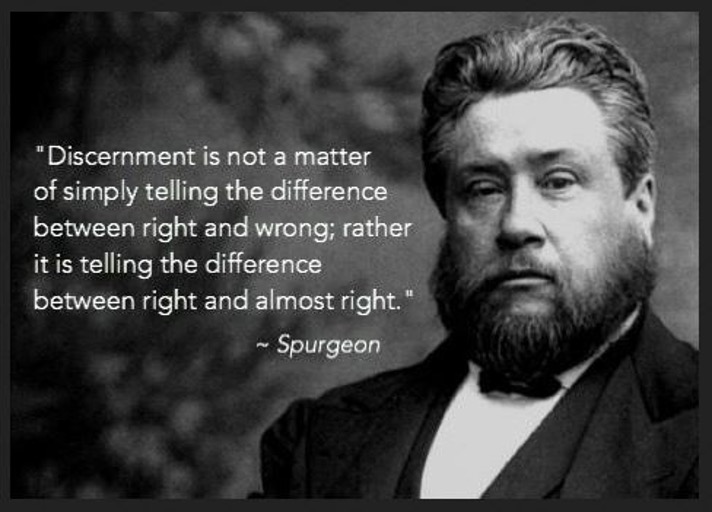
Reading the Bible daily is how can we grow to have that kind of relationship with God. It starts with being saturated in the word, which is how we begin to truly know God and discern “almost right” from His real truth in the world around us.

Being saturated in God’s word isn’t just how we know right from wrong. It’s how we recognize right from almost right. #ChristianWoman #ChristianBlogger #Godsword #ReadyourBible Share on X

What kind of relationship do you have with your Bible? I want you to know how to passionately love your Bible and ache to dive into its pages, to long to be saturated in the word.

Are you in that place? Or is it on a shelf somewhere, dusty from neglect? Maybe it’s sitting at the ready on your nightstand, only to let busy days distract you from reading it. Maybe you spend a few minutes each day reading your Bible, but don’t feel like it’s really making sense.

I challenge you to get into a habit of reading the Bible daily. Pick a plan and spend a few minutes every day reading toward the goal of reading the entire Bible. It might take you longer than a year if you stop and deeply study some sections, but have a goal and work towards it.

Even if having a busy day means you only read a verse or two, if you stay on your plan, you’ll find that your understanding and knowledge will grow deeper as you also find over and over the messages of grace, forgiveness, love, and redemption are woven through every part of the Bible.

Recommended Resources: 

Why We Know the New Testament Writers Told the Truth by Frank Turek (mp4 Download)

The Top Ten Reasons We Know the NT Writers Told the Truth mp3 by Frank Turek

Counter Culture Christian: Is the Bible True? by Frank Turek (Mp3), (Mp4), and (DVD)        

How to Interpret Your Bible by Dr. Frank Turek DVD Complete Series, INSTRUCTOR Study Guide, and STUDENT Study Guide


Jennifer DeFrates is a former English and Social Studies teacher turned homeschool mom and Christian blogger at Heavennotharvard.com and theMamapologist.com. Jennifer is a 2x CIA graduate (the Cross-Examined Instructors Academy) and volunteers with Mama Bear Apologetics. She has a passion for discipleship through apologetics. Her action figure would come with coffee and a stack of books. She is also the reluctant ringleader of a small menagerie in rural Alabama.


Originally posted at: https://bit.ly/49wm4ew

Download Transcript

Most Christians will struggle, at least once, with the issue of losing their salvation. For some people this struggle becomes a lifelong trial of frustration and anxiety. Some protestant denominations, including Methodists and Lutherans, teach that it is possible to lose your salvation. But other denominations, such as Presbyterians and Baptists, teach that once you become a Christian, you can never lose your salvation. So, who has the final say in such matters? We should always look to God and His Word as our first and final authority. He has given us His instructions in the Bible, and we’re responsible to study it diligently so we know the truth. In this article I will make the case that the Bible teaches that a Christian cannot lose their salvation.

What Does It Mean to Be a Christian?

First, let me explain exactly what it means to be a Christian. A Christian is simply someone who has been reconciled to God by repenting of their sins and placing their trust completely in Jesus Christ for their forgiveness. I’m using the term ‘repent’ here to mean when someone recognizes they’ve made moral mistakes and turn to God with a desire for Him to rescue them from their evil ways and transform them into a godly person from the inside out. In other words, a person needs to come to grips with the fact that they’ve sinned against a holy and righteous God. While they may not have committed sins as bad as some other people, repentance means recognizing your own internal rebellion against the God who created you. Our condition is hopeless, and if left alone we’d be completely lost and unable to make things right with God on our own. We should admit we deserve God’s punishment for our sin, which is eternal death, forever separated from the God of all good things. There’s nothing anyone can do on their own to fix their relationship with God, a relationship that’s been broken because of our sin. Every single person since Adam and Eve has been in this same unfortunate condition.

“Just as through one man sin entered into the world, and death through sin, and so death spread to all men, because all sinned” (Romans 5:12, NASB).

A Christian is also someone who has heard of God’s great love for them. Through a pastor, a close friend, a book, or some other means, they have been exposed to God’s solution to their sin problem. They’ve learned that, because God loved us so much, He sent His Son Jesus Christ to earth to become the sin bearer for the entire world. This Person, who was born two thousand years ago, was fully human and fully God at the same time. He lived the perfect life that we all failed to live. Then He died on the cross to take the penalty of God’s punishment for the sins of the whole world.

“Having now been justified by His blood, we shall be saved from the wrath of God through Him. For if while we were enemies we were reconciled to God through the death of His Son, much more, having been reconciled, we shall be saved by His life” (Romans 5:9-10).

Lastly, a Christian is someone who, after hearing this good news, placed their trust in Jesus Christ for the forgiveness of their sins. Instead of trusting in their own efforts to please God, they humbly admitted their sin and put their faith in Jesus alone to make things right between them and God. Trusting in Jesus isn’t a work or a task you do to earn forgiveness; it’s simply a way to receive God’s gift of forgiveness absolutely free. The Bible says when someone does this, they are immediately reconciled with God as He removes all the sins from their account, past, present, and future.

“And [I] may be found in Him, not having a righteousness of my own derived from the Law, but that which is through faith in Christ, the righteousness which comes from God on the basis of faith” (Philippians 3:9).

Many other things happen at that instant in time someone trusts in Christ. The Bible calls it being “born again” because, at that moment, the Holy Spirit indwells you and gives you supernatural power. These powers won’t enable you to fly through the air or lift a car over your head; the supernatural powers from the Holy Spirit are actually much better than that! What the Spirit’s power does is enable you to live for God with your whole life, to turn from sin and selfishness so you can walk with Jesus every day and grow more like Him in all of His kindness and love. Christians still make mistakes, of course, but God works in their life to empower, teach, and correct them, preparing them to spend eternity with Him loving God, loving others, and being loved in return. Sometimes in the Bible this is referred to as the Holy Spirit producing “fruit” in a Christian’s life.

“But the fruit of the Spirit is love, joy, peace, patience, kindness, goodness, faithfulness, gentleness, self-control, against such things there is no law. Now those who belong to Christ Jesus have crucified the flesh with its passions and desire” (Galatians 5:22-24).

“I have been crucified with Christ; and it is no longer I who live, but Christ lives in me; and the life which I now live in the flesh I live by faith in the Son of God, who loved me and gave Himself up for me” (Galatians 2:20).

Four Reasons Salvation Cannot Be Lost

Now we come to the question of whether or not a Christian can lose their salvation. There are several places in the Bible that help explain why this is not possible. Below we’ll look at four of them:

1. Salvation Is a Free Gift

First of all, we need to remember that salvation is a free gift from God with no strings attached. Since a Christian didn’t earn salvation by performing good works to begin with, but by putting their trust in Christ, it’d be very strange indeed to think salvation could be lost based on performance. We can’t lose our salvation because of any sin or bad thing we may do because salvation is not by works but by faith. God tells us, however, that after He saves us He then empowers us to do good works for others which He’s planned out before we were even born.

“For by grace you have been saved through faith; and that not of yourselves, it is the gift of God; not as a result of works, so that no one may boast. For we are His workmanship, created in Christ Jesus for good works, which God prepared beforehand so that we would walk in them” (Ephesians 2:8-10).

2. You Can’t Walk Away

But couldn’t someone just stop trusting Jesus? No. The Bible teaches that once a person puts their trust in Jesus as their Savior, the Holy Spirit takes up residence in that person and supernaturally protects them from ending their faith in Jesus.

“Blessed be the God and Father of our Lord Jesus Christ, who according to His great mercy has caused us to be born again to a living hope through the resurrection of Jesus Christ from the dead, to obtain an inheritance which is imperishable and undefiled and will not fade away, reserved in heaven for you, who are protected by the power of God through faith for a salvation ready to be revealed in the last time“ (1 Peter 1:3-5).

To Him who is able to keep you from falling and to present you before his glorious presence without fault and with great joy – to the only God our Savior be glory, majesty, power and authority, through Jesus Christ our Lord, before all ages, now and forevermore! Amen” (Jude 24-25).

The Holy Spirit that indwells you when you first become a Christian is described in the Bible as a pledge or “down payment” you receive from God here on earth. A person is often required to pay a pledge or down payment at the beginning of a loan as a promise that they’ll pay the rest of it later or else they’ll lose what they’ve already put down. The Spirit plays a similar role in that His indwelling of a Christian functions as a pledge or a promise of more things to come when we die and go to heaven. Surely we know God will give us what He’s promised, but He’s gone further in giving us a down payment to show He can be fully trusted.

“In Him, you also, after listening to the message of truth, the gospel of you salvation – having also believed, you were sealed in Him with the Holy Spirit of promise, who is given as a pledge of our inheritance, with a view to the redemption of God’s own possession, to the praise of His glory” (Ephesians 1:13-14).

3. Satan Can’t Take Your Salvation Away

Could Satan or some demonic power take our salvation away? To do so they would have to be more powerful than God Himself!

My sheep hear My voice, and I know them, and they follow Me; and I give eternal life to them, and they will never perish; and no one will snatch them out of my hand. My Father, who has given them to Me, is greater than all; and no one is able to snatch them out of the Father’s hand. I and the Father are one” (John 10:27-30).

“What then shall we say to these things? If God is for us, who is against us? He who did not spare His own Son, but delivered Him over for us all, how will He not also with Him freely give us all things? Who will bring a charge against God’s elect? God is the one who justifies; who is the one who condemns? Christ Jesus is He who died, yes, rather who was raised, who is at the right hand of God, who also intercedes for us. Who will separate us from the love of Christ? Will tribulation, or distress, or persecution, or famine, or nakedness, or peril, or sword? Just as it is written, “For Your sake we are being put to death all day long; we were considered as sheep to be slaughtered.” But in all these things we overwhelmingly conquer through Him who loved us. For I am convinced that neither death, nor life, nor angels, nor principalities, nor things present, nor things to come, nor powers, nor height, nor depth, nor any other created thing, will be able to separate us from the love of God, which is in Christ Jesus our Lord” (Romans 8:31-39).

4. The Elect Are Kept by God

This last reason is a bit deeper theologically, but the concept isn’t too hard to grasp if you think through it carefully. First, read these verses:

“And we know that God causes all things to work together for good to those who love God, to those who are called according to His purpose. For those whom He foreknew, He also predestined to become conformed to the image of His Son, so that He would be the firstborn among many brethren; and these whom He predestined, He also called; and these whom He called, He also justified; and these whom He justified, He also glorified” (Romans 8:28-30).

The doctrine of election is a very deep subject, and good Christian theologians take different positions on how best to understand it. I myself affirm what’s called “conditional predestination” or “conditional election,” that God chooses to be saved those who meet the condition of putting their faith in Christ through the Holy Spirit’s empowerment. (To read more about that, see here: Election: God’s Right to Choose.) But regardless of what your position on election is, nearly all Christians agree that the Bible teaches that in eternity past God knew who would become Christians. It’s important to note that these people God knew would be Christians by putting their faith in Christ aren’t better than other people because faith isn’t something we can boast about. Faith doesn’t earn us salvation; faith is only a way to receive salvation. God desires all people to be saved (1 Tim. 2:4) and offers salvation to everyone, but only those who trust Jesus will have their sins forgiven. He knows who these people are and has predestined that they become like Jesus Christ in character and in love. These verses from Romans 8:28-30 are referred to sometimes as the “unbreakable golden chain” because those He foreknew, He then predestined, He then called, He then justified, and He will glorify. There is an unstoppable progression of events from faith to heaven (glorification) that nothing can stop because God orchestrates the process from beginning to end. We can be sure of our glory in heaven because the God who knows all things has predestined it.

Some “Problem” Passages

Now with all that said, there are some verses in the Bible that make it seem like Christians can fall away from the faith and lose their salvation. For example, consider the following:

Can People Partake of the Holy Spirit and Not Be Saved?

For in the case of those who have once been enlightened and have tasted of the heavenly gift and have been made partakers of the Holy Spirit, and have tasted the good word of God and the powers of the age to come, and then have fallen away, it is impossible to renew them again to repentance, since they again crucify to themselves the Son of God and put Him to open shame” (Hebrews 6:4-6).

A person like this may have experienced the mighty ministry of the Holy Spirit convicting them of their sin and encouraging them to trust Jesus, but if they resist and reject the Holy Spirit, then there is no other alternative but to pay for their own sins by being eternally separated from God forever. These warnings should be taken very seriously but not because they’re teaching that people can lose their salvation. Verses like this are warning people not to reject the Holy Spirit’s wooing and empowerment to trust in Christ. In other words, these verses are describing people who resist the empowerment of the Holy Spirit when God was drawing them to salvation. This empowerment from the Holy Spirit is described in Hebrews 6:4-6 as being enlightened, tasting of the heavenly gift, being partakers of the Holy Spirit, tasking the good word of God and the powers of the age to come. All of these descriptions help us understand just how powerful the Holy Spirit’s empowerment is when the Spirit is drawing someone to trust in Christ. However, according to these verses, this empowerment can be resisted. If someone resists this empowerment from the Holy Spirit and refuses to trust in Christ, then there is no hope for their salvation. This is similarly described in Acts 7:51.

“You men who are stiff-necked and uncircumcised in heart and ears are always resisting the Holy Spirit; you are doing just as your fathers did” (Acts 7:51).

Perhaps Someone Only Claimed to Be a Christian

The Bible also talks about people who claim to be Christians for a time but really aren’t.

The one on whom seed was sown on the rocky places, this is the man who hears the word and immediately receives it with joy; yet he has no firm root in himself, but is only temporary, and when affliction or persecution arises because of the word, immediately he falls away” (Matthew 13:20-21).

Such people claim to have trusted in Jesus, but in reality they haven’t. Some people know that their claim is false and they’re just faking it. Others may have actually deceived themselves into thinking they trusted in Christ, but in reality they haven’t really put their faith in Him. This is a scary concept, and that’s why the Bible repeatedly tells us to examine ourselves to make sure we are in the faith.

“Examine yourselves to see whether you are in the faith; test yourselves. Do you not realize that Christ Jesus is in you—unless, of course, you fail the test?” (2 Corinthians 13:5).

But what do you examine? How can you measure faith? Faith is simply trusting Jesus, and that is what makes you a Christian to begin with. We can’t see this born-again experience take place because it’s a spiritual transformation, but we can see the effects of it in a person’s life. Jesus explained it to Nicodemus in John 3 using wind as an example. We don’t see wind itself, but we see the effects of it: bustling leaves, swaying branches, knocked over garbage cans! In the same way, we don’t see the new birth when someone becomes a Christian, but we see the effects of it in their life. This is caused by the Holy Spirit, who transforms them from the inside out by empowering them to change their sinful and selfish ways and instead live a life of serving and loving others.

“The wind blows where it wishes and you hear the sound of it, but do not know where it comes from and where it is going; so is everyone who is born of the Spirit” (John 3:8).

Do We Have to Do Good Works to Maintain Salvation?

Does this mean we are saved by faith but to keep it we must do good things? No. We are saved by faith alone, but after we become a Christian the Holy Spirit changes our life from the inside out. It’s not about cleaning up our lives to look better on the outside. God gives us a new heart so that we want to live for Him and love other people. We should never look to good works in our life as things that earn or merit us God’s love but as evidence that Holy Spirit is really in us and transforming us. If you find that your life hasn’t changed at all since you became a Christian, then you should carefully consider if you’ve truly trusted in Christ as your Savior. It might be the case that you only said you trusted in Christ to impress others, to fit in with a particular group of people, or to alleviate peer pressure from friends or family.

James 2 discusses how our good works serve as evidence our faith is genuine. It’s important to start with James’ question: “What use is it, my brethren, if someone says he has faith but he has no works? Can that faith save him?” (James 2:14). It’s a rhetorical question, and the obvious answer is no, that kind of ‘faith’ can’t save him because, as James goes on to explain, it’s a ‘dead faith.’ The hypothetical person ‘says’ they have faith, but they really don’t, and this is evident because of a lack of good works in their life. James’ point throughout this section in James 2 is that this “false dead faith that can’t save” isn’t a real, true faith. He’s describing a false faith, and the evidence it’s false is that it hasn’t produced a changed life, that is, it hasn’t produced good works. So James is describing a faith that cannot save someone. He’s describing a false faith claim (someone who ‘says’ they have faith), a dead faith, and the evidence that it’s false and dead is that it doesn’t produce works. According to James, it’s that type of faith, a false, dead faith, that cannot save.

James here is explaining that if someone has no good works, then that’s evidence their faith is false and dead; they’ve ‘said’ they have true faith, but they really don’t. Conversely, the good works which a Christian does are evidence that their faith is true saving faith. Good works in the Christian’s life are evidence of God’s empowering grace to live a godly life, which they receive only as a result of putting their faith in Christ for salvation. Paul said something similar in Galatians:

“But I say, walk by the Spirit, and you will not carry out the desire of the flesh. For the flesh sets its desire against the Spirit, and the Spirit against the flesh; for these are in opposition to one another, so that you may not do the things that you please. But if you are led by the Spirit, you are not under the Law. Now the deeds of the flesh are evident, which are: immorality, impurity, sensuality, idolatry, sorcery, enmities, strife, jealousy, outbursts of anger, disputes, dissensions, factions, envying, drunkenness, carousing, and things like these, of which I forewarn you, just as I have forewarned you, that those who practice such things will not inherit the kingdom of God. But the fruit of the Spirit is love, joy, peace, patience, kindness, goodness, faithfulness, gentleness, self-control; against such things there is no law” (Galatians 5:16-23)

When someone truly puts their faith in Christ, then God changes them from the inside out, and their life changes accordingly in that the Holy Spirit produces fruit in their life; that is, they engage in good works by God’s empowerment to live a godly life. That’s all that Paul meant when he wrote that what matters is “faith working through love” (Gal. 5:6). Jesus also talked about how we can know whether or not someone has true faith by their works:

“Beware of the false prophets, who come to you in sheep’s clothing, but inwardly are ravenous wolves. You will know them by their fruits. Grapes are not gathered from thorn bushes nor figs from thistles, are they? So every good tree bears good fruit, but the bad tree bears bad fruit. A good tree cannot produce bad fruit, nor can a bad tree produce good fruit. Every tree that does not bear good fruit is cut down and thrown into the fire. So then, you will know them by their fruits” (Matthew 7:15-20).

Jesus taught that false teachers will be known by their bad fruit and true teachers will be known by their good fruit. Similarly, James 2 is saying that if someone is a Christian, if they have true saving faith, then there should be fruit that functions as evidence that the Spirit is working in their life. One of James’ main messages throughout his letter is that Christians should “prove yourselves doers of the Word, and not merely hearers who delude themselves” (James 1:22-25). Thus, we can be confident that he’s not talking about doing good works to earn salvation (or earn the right to keep salvation) but is explaining that how people live their lives will be evidence as to whether or not their faith is genuine, real, true faith or if it’s a dead, unreal, false faith.

James illustrates his point in James 2:15-16 with an analogy of someone who “says” they’re concerned about a person who doesn’t have proper clothing and daily food but yet doesn’t do anything to help the person. The fact that he doesn’t do anything shows that his verbal claim of being concerned is hollow, unreal, and false. Similarly, if someone’s life hasn’t been changed at all by God’s empowerment, that can show that his verbal claim of having faith in Christ is hollow, unreal, and fake.

It is in this context that James goes on to drive home the point that good works in the lives of Christians are evidence of true faith. In other words, good works are the way to prove, or “show” evidence of, someone’s true faith that saved them. That’s why James wrote that someone can “show” their faith by their works (James 2:18). He argued that “faith without works is useless” (James 2:20), not only because it’s false and dead and thus can’t save but also because it provides no evidence of someone’s salvation; it can’t “show” that their faith is real. However, if someone “says” they have faith in Christ and is doing good works, then those works can be seen by others and considered as evidence that their faith is genuine and real. James then uses Abraham and Rahab as examples of how this plays out in practice.

Does James Say that Salvation Is Not by Faith Alone?

First, James affirmed salvation by faith apart from works when he, like Paul, pointed out that the Old Testament taught that “Abraham believed God, and it was reckoned to him as righteousness” (James 2:23). However, James explained that Abraham’s faith was evidentially justified by his action of being willing to sacrifice his son Isaac. James isn’t using the term ‘justified’ in this context to talk about salvation or to mean ‘to be made righteous’ like Paul often uses the term ‘justified.’ No, James is using the term ‘justified’ here to talk about how evidence justifies a certain conclusion. For example, a judge in a courtroom may say that the large amount of evidence justifies his conclusion that someone is guilty. Similarly, James is saying that good works in someone’s life serve as solid evidence that justifies concluding that the person is a Christian, that they have true saving faith. That’s what James was getting at when he wrote that “faith was working with his works, and as a result of the works, faith was perfected [evidenced]; and the Scripture was fulfilled [justified, i.e., shown to be true by the evidence] which says, ‘and Abraham believed God, and it was reckoned to him as righteousness,’ and he was called the friend of God” (James 2:22-23). In other words, Abraham’s good works were evidence that showed he had truly believed/trusted in God. James concluded that a person’s salvation is “justified [evidenced] by works and not by faith alone” (James 2:24), for we can’t ‘see’ a person’s faith, but we can see the works that a true faith will produce. In the same way, James explained that Rahab’s salvation was “justified [evidenced] by works” (James 2:25) when she protected God’s messengers. Both Abraham and Rahab showed evidence of their true faith, and the salvation that results from true faith, through their good works.

On the flip side, if someone ‘claims’ to be a Christian and yet there’s no evidence of good works in their life, then that might be evidence they’ve made a false claim about being a Christian. The reason this is the case is that when someone becomes a Christian by putting their faith in Christ, God then transforms them into a new, morally better person from the inside out. This transformation includes God giving them an inclination to do good works and empowering them with the ability to do them. So, if I have a friend who claims to be a Christian, but I don’t see God’s transforming work in his life, it would be appropriate for me to be concerned and lovingly talk to him to make sure that he hasn’t falsely claimed to trust in Christ when, in fact, he really hasn’t. People make such false claims for various reasons: to get people to stop bothering them, to appease others, to impress folks for whatever reason, to get a job, to convince someone to date them, etc. Jesus talked about this in Matt. 7:15-23 when he warned of false teachers who claim to be Christians in order to take advantage of people. Jesus explained that we will be able to spot them by their bad works, i.e., their lack of good works. That’s the point James was making when he wrote that “faith, if it has no works, is dead, being by itself” (James 2:17). That is, if someone ‘says’ they have faith but there are no good works in their life, then that’s good evidence that their faith is dead, that is, that they have no true saving faith in Christ at all; it’s a ‘false, dead faith.’

Lastly, it’s important to note that false, dead faith might include believing some true facts about Christianity. This was the point James was making, that mere intellectual agreement on a set of facts isn’t true saving faith, when he wrote to his hypothetical objector that “you believe that God is one. You do well; the demons also believe, and shudder” (James 2:19). This is a type of dead, useless faith; it’s merely intellectual assent, but since it’s not true saving faith/trust, it produces no good works in someone’s life. Real, true saving faith is not merely intellectual assent that certain facts are true; that would be a type of dead, useless ‘faith.’ As I noted above, faith is trusting in Christ, which includes repentance.

What If I Still Struggle with Sin?

In light of the four reasons we looked at above for believing someone can’t lose their salvation, it’s best to understand these falling away verses such as Hebrews 6:4-6 as referring to those people who pretended to be Christians but then later it became obvious they were faking it. Many of these verses are God’s way of trying to reach those who claim to be Christians but really are just faking it. However, these verses have also caused true Christians a lot of anxiety about whether or not they really are saved when they continue to struggle with sin. This can become a difficult and complex issue that we have to take seriously. We don’t want to be too easy on ourselves and not take our sin seriously. But at the same time we don’t want to be too hard on ourselves and question whether or not we’re really saved every time we struggle with sin. Overall, it’s best to evaluate our lives over the long run and see if there’s evidence the Holy Spirit is transforming us into a more godly person. This doesn’t mean that we’ll ever achieve perfection in this life, but there should be a steady growth in the fruit of the Spirit. And when we do sin, we should immediately recognize it as such, confess what we’ve done, pray to God for empowerment to do better, and consciously choose to trust that Christ’s work on the cross guarantees our forgiveness. At all times keep in mind that it is your faith in Christ that has fixed your relationship with God, not your good works, and you can never lose your salvation no matter how badly you mess up.

“The one who says, ‘I have come to know Him,’ and does not keep His commandments, is a liar, and the truth is not in him. …This is His commandment, that we believe in the name of His Son Jesus Christ, and love one another, just as He commanded us“ (1 John 1:4, 1 John 3:23).

Is it our responsibility to go around and examine other people to see if they are real Christians? No! The verse says to examine yourself, not others. And remember that Christians still sin and make terrible moral mistakes sometimes. There are certain times where it can be more obvious that someone was faking it when they claimed to be a Christian. For example, it can become more obvious if they completely turn their back on Christianity and go back to living their sinful lifestyle.

“They went out from us, but they were not really of us; for if they had been of us, they would have remained with us; but they went out, so that it would be shown that they all are not of us” (1 John 2:19).

But even true Christians can go through a period of strong rebellion. So, when we see someone completely turning their back on Christianity, it might be that they never were a Christian to begin with, or it might be the case that they are truly a Christian but are just going through a time of strong rebellion. We can’t know people’s hearts for sure; only God can. But we can know for sure that if someone truly puts their faith in Christ for salvation, then they can never lose that salvation.

Conclusion

If you are struggling over whether or not someone can lose their salvation, go to the Bible for your answers. In His Word God explains you cannot lose what He has freely given you. The falling away verses such as those in Hebrews 6 come from God’s compassionate heart that desires all people to be saved. They are warnings to those who are pretending to be Christians but who haven’t really put their faith in Him yet. If that describes you, delay no longer! Trust in Jesus today and be fully confident that you rest secure in His love and forgiveness.

Recommended Resources:

The Great Book of Romans by Dr. Frank Turek (Mp4, Mp3, DVD Complete series, STUDENT & INSTRUCTOR Study Guide, COMPLETE Instructor Set)

Jesus, You and the Essentials of Christianity by Frank Turek (INSTRUCTOR Study Guide), (STUDENT Study Guide), and (DVD)      

How to Interpret Your Bible by Dr. Frank Turek DVD Complete Series, INSTRUCTOR Study Guide, and STUDENT Study Guide

How Can Jesus be the Only Way? Mp4, Mp3, and DVD by Frank Turek


Adam Lloyd Johnson has served as the president of Convincing Proof Ministries since 2023. Prior to that, Adam was a university campus missionary with Ratio Christi at the University of Nebraska–Lincoln. He has also taught classes for Midwestern Baptist Theological Seminary and has spent time living and teaching at Rhineland Theological Seminary in Wölmersen, Germany. Adam received his PhD in Theological Studies with an emphasis in Philosophy of Religion from Southeastern Baptist Theological Seminary in 2020. Adam grew up in Nebraska and became a Christian as a teenager in 1994. He graduated from the University of Nebraska–Lincoln and then worked in the field of actuarial science for ten years in Lincoln, Nebraska. While in his twenties, he went through a crisis of faith: are there good reasons and evidence to believe God exists and that the Bible is really from Him? His search for answers led him to apologetics and propelled him into ministry with a passion to serve others by equipping Christians and encouraging non-Christians to trust in Christ. Adam served as a Southern Baptist pastor for eight years (2009-2017) but stepped down from the pastorate to serve others full-time in the area of apologetics. He’s been married to his wife Kristin since 1996, and they have four children – Caroline, Will, Xander, and Ray. Adam has presented his work at the National Apologetics Conference, the Society of Christian Philosophers, the Evangelical Philosophical Society, the International Society of Christian Apologetics, the Canadian Centre for Scholarship and the Christian Faith, the American Academy of Religion, and the Evangelical Theological Society. His work has been published in the Journal of the International Society of Christian Apologetics, Philosophia Christi, the Westminster Theological Journal, the Canadian Journal for Scholarship and the Christian Faith, the journal Eleutheria, and the journal Religions. Adam has spoken at numerous churches and conferences in America and around the world – Los Angeles, Chicago, Charlotte, Boston, Orlando, Denver, San Antonio, Canada, Germany, the United Kingdom, and Switzerland. He is the editor and co-author of the book A Debate on God and Morality: What is the Best Account of Objective Moral Values and Duties? published in 2020 by Routledge and co-authored with William Lane Craig, Erik Wielenberg, J. P. Moreland, and others. He is most recently the author of the book Divine Love Theory: How the Trinity is the Source and Foundation of Morality published by Kregel Academic in 2023.

Originally posted at: https://bit.ly/4pzpW4l

Bart Ehrman (see timestamp 12:51 – 17:46) and Alex O’Connor (see timestamp 1:12:40 – 1:14:32) have both tried to undermine the eyewitness argument for Jesus’s resurrection by comparing it to the eyewitness testimony for Mormonism’s golden plates. Both Alex and Bart challenge Christian apologists with this question:

“Why do apologists reject the eyewitness testimony of Mormonism when their reasons for believing in Christianity are founded on the eyewitness testimony of the apostles?”

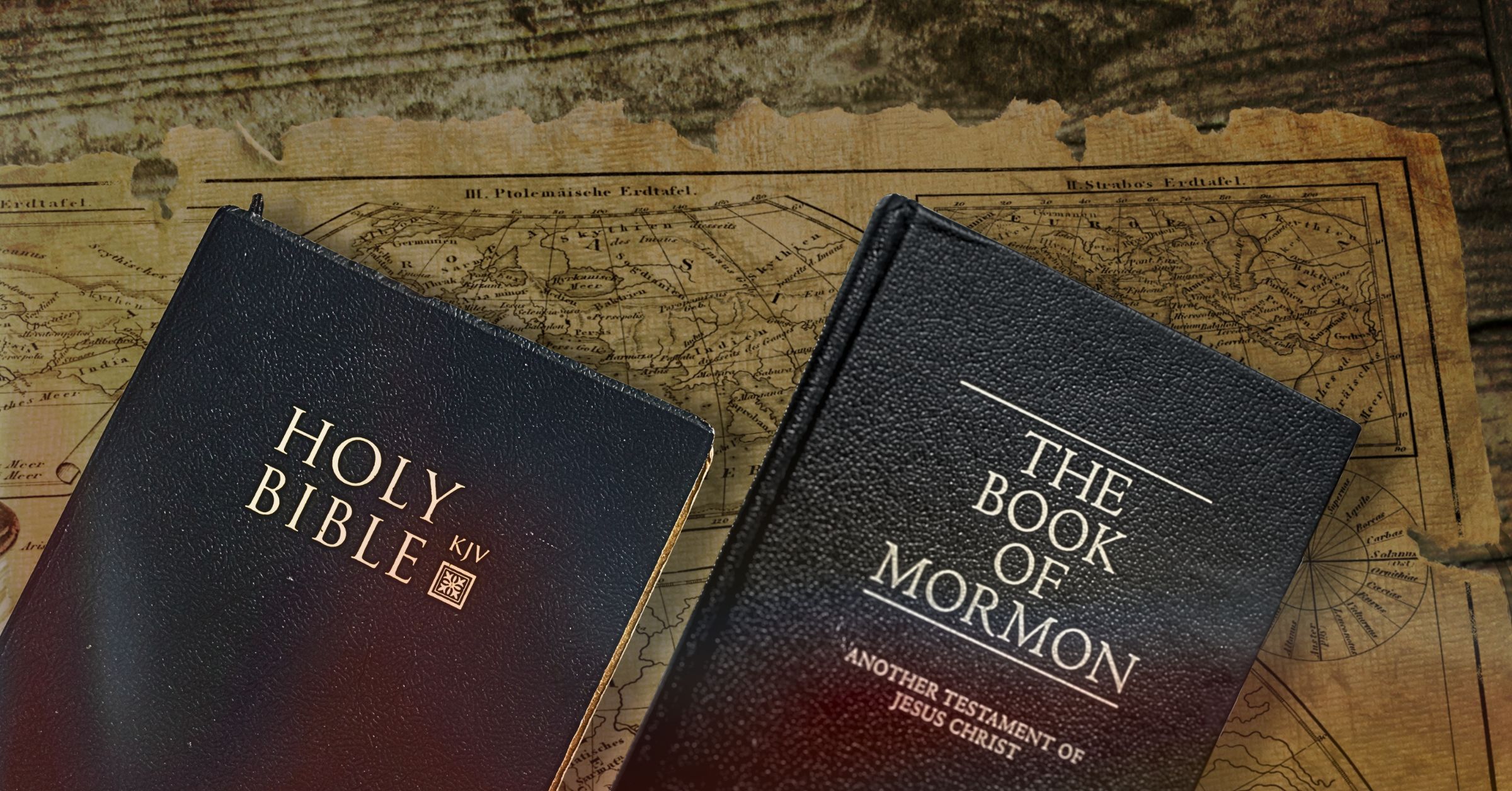
Are they right that this is a double standard? After all, Mormonism has a total of twelve eyewitnesses for its key claim about the golden plates. In addition to Joseph Smith’s testimony, eight witnesses say they saw the golden plates, plus three more witnesses say that an angel showed them the plates. There are a few simple points of response to this specific challenge.

  1. Christianity “Got There First”
    Christianity is privileged over Mormonism because it ‘got there first’. Just like Islam, Mormonism tries to build upon the historic Christian message.[1] And just like Islam, Mormonism is birthed from a supposed angelic appearance. But the apostle Paul writes all the way back in c.50 A.D.:

“But even if we or an angel from heaven should preach to you a gospel contrary to the one we preached to you, let him be accursed” (Galatians 1:8 ESV).

He also writes in 2 Corinthians 11:12-15 (ESV) that Satan disguises himself as an angel of light, whose servants likewise disguise themselves as servants of righteousness. Moreover, the Bible ‘signs off’, as it were, with a warning for all future generations. Jesus says in Revelation 22:18 (ESV):

“I warn everyone who hears the words of the prophecy of this book: if anyone adds to them, God will add to him the plagues described in this book…” 

And yet the Book of Mormon comes along in the 19th century and church authorities say in its introduction:

“The Book of Mormon was the most correct of any book on earth, and the keystone of our religion, and a man would get nearer to God by abiding by its precepts, than by any other book.”

The reality is that Christianity’s eyewitness testimony trumps Mormonism’s by the rule: first-come-first-served. Christianity is smart; it safeguards itself against specific alterations of its message, and that is the privilege it gets for being first on the scene. It beats Mormonism by 1800 years.

  1. For Mormonism, eyewitness testimony is unstable.
    Mormonism’s eyewitness testimony is unstable in comparison to the testimony of the apostles. The apostles’ eyewitness testimony is unified and doesn’t carry the stain of eventual scandal, faction, and dissension.

Mormonism’s witness history is much more stained. With the Church of Jesus Christ of Latter-Day Saints’ own official website, we learn that each of the three witnesses – who claimed to see an angel – later fell out with Joseph Smith and never reconciled with him. We also learn that some of the eight witnesses (who were mostly made up of two families) eventually became estranged from the LDS church.

In apostolic Christianity, there is no falling out between any of the key figures such that a key eyewitness like Paul, Peter, James, or John walks away from the church or is excommunicated from the church.

An important principle from Detective J. Warner Wallace is that we can learn a lot by observing the lives of eyewitnesses. Disunity stains the record of Mormon witnesses in their relationships with either the LDS church or with Joseph Smith, adding doubt to key elements of their testimony about the golden plates.

  1. Only One of These has a Support Structure
    Christianity’s testimony has a supporting structure; Mormonism’s doesn’t. To acknowledge Bart and Alex’s challenge; Christianity’s eyewitness testimony certainly has important evidential value. The apostles were willing to go to their deaths for what they believed, and it is difficult to pin them down for a false motive if they merely invented Christianity for personal gain.

But apostolic eyewitness testimony is only one piece of a broader cumulative case for Christianity.[2] The apostles proclaimed Jesus’s resurrection not only because they were convinced that they saw him alive, but they did so at personal cost and while appealing to the greater metaphysical story of the Old Testament (see for example Peter’s speeches in Acts 2-3, or Paul’s creed in 1 Corinthians 15:3-4).

And we also have non-Christian sources, written within 100 years of Jesus’s lifetime, from which we can verify and reconstruct the apostolic claim of the resurrection.[3] Notwithstanding the argument for biblical reliability, Christianity can still make a case for the resurrection even without the Bible.

Not so on Mormonism. Mormonism’s claim to the golden plates is isolated and does not locate itself within a greater plausibility structure (for instance, nowhere are the plates prophesied about in the Bible). And Mormonism cannot appeal outside of itself – neither to non-Mormon sources nor to archaeology – to verify its eyewitness claims about the golden plates.

In summary   

Christians are not guilty of a double standard for affirming the eyewitness testimony of apostolic Christianity but rejecting the eyewitness testimony of Mormonism. Mormonism’s eyewitness testimony can be criticised for three reasons:

  1. First, for claiming to have scriptural revelation in addition to the Bible, even though the Bible explicitly warns against this.
  2. Second, for disunity amongst its witnesses.
  3. Third, for its isolated claim without a greater plausibility structure.

By contrast, Jesus’s apostles warned of future false prophets altering their message, they remained committed to unity of faith until their deaths, and they plugged their eyewitness testimony into both history and an overarching structure of scriptural fulfilment and Messianic expectation.

Eyewitness testimony is only one part of a broader cumulative case for God’s existence and Jesus’s resurrection. But Mormonism solely appeals to taking 12 witnesses at their word in an isolated claim. Mormonism’s eyewitness testimony is not the same as Christianity’s.

References:


[1] [Editor’s Note: Latter Day Saints, also known as Mormons, commonly identify as a denomination of Christianity. From the perspective of historic Christianity that label however is mistaken since historic Christianity contradicts Mormon doctrine by affirming Trinitarian monotheism, rejecting polytheism, denying any “Heavenly Wife” of Father God, and more. The theological differences between Mormonism and historic Christianity are not just “denominational” disagreements but rather heretical divergence. In this way, Mormonism is better understood as a cult offshoot departing from Christianity rather than a denomination within Christianity. In this blog, “Christianity” refers to historic/orthodox Christianity (i.e., Catholicism, Protestantism, and Eastern Orthodox) in distinction from Mormonism/Latter Day Saints.]

[2] See for example Frank Turek’s 6 Es for the reliability of the New Testament; See also J Warner Wallace: The Cumulative Case For Christianity: Death By A 1,000 Paper Cuts. Incidentally, Wallace has plenty of work on the differences between Mormonism and Christianity on his YouTube channel.

[3] Besides archaeology, the two main non-Christian sources which testify to the apostles’ claims are Roman-source Tacitus (Annals 15.44) and Jewish-source Josephus (Antiquities 18.63–4). For more on the authenticity of Josephus’s passage, see T C Schmidt’s ground-breaking 2025 book “Josephus and Jesus: New Evidence for the One Called Christ.” A helpful chapter on external corroboration of the New Testament can be read in J. Warner Wallace, “Chapter 12: Were They Corroborated?” in Cold-Case Christianity: Updated and Expanded Edition (Colorado Springs, David C Cook Publishers: 2023).

Recommended Resources: 

Another Gospel? by Alisa Childers (book)

Early Evidence for the Resurrection by Dr. Gary Habermas (DVD), (Mp3) and (Mp4)

Why We Know the New Testament Writers Told the Truth by Frank Turek (mp4 Download)

The Top Ten Reasons We Know the NT Writers Told the Truth mp3 by Frank Turek


Sean Redfearn is a former Community Youth Worker who now works for Christian Concern in Central London, UK. He completed an MA in Religion at King’s College London, is in the process of completing the MA Philosophy program at Southern Evangelical Seminary, and is a 2022 CrossExamined Instructor Academy graduate. Passionate about Jesus, he is grateful for the impact that apologetics has had on his faith.

In a previous article, I offered a simple reason why the Qur’an cannot possibly be the word of God, since the proposition that the Qur’an is the word of God entails a necessary contradiction. Here, I am going to present an equally compelling reason to reject the Qur’an as the word of God.

As I alluded to in my previous post, the Qur’an contends that the disciples of Jesus were Muslims. According to Surah 3:52,

“…when Isa [Jesus] sensed disbelief in them, he said: “Who are my helpers in the way of Allah?” The disciples said:“

If The Apostles were Muslim . . .

So according to the Qur’an, there is no question that the apostles were Muslims, under Jesus. But what if we could establish that the teaching of the apostles differed starkly from the teachings of Muhammad and the Qur’an? Here’s an argument to ponder:

Premise 1: If the original disciples of Jesus rejected core Islamic teachings, Islam is false.
Premise 2: The original disciples of Jesus rejected core Islamic teachings.
Conclusion: Therefore, Islam is false.

In order for a Muslim to escape the conclusion, he or she has to reject one of these two premises. What possible escape routes might be available? One escape route might be to say that the disciples of Jesus were fooled or somehow mistaken – or perhaps they corrupted the true message of Jesus sometime after this. Or maybe even the 12 disciples of Jesus are not even who is in mind here. This escape route, however, is blocked by Surah 61:14,

“O you who believe, be supporters of (the religion of) Allah, just as Isa, son of Maryam, said to the Disciples, ‘Who are my supporters towards Allah?’ The Disciples said, ‘We are the supporters of (the religion of) Allah.’ So a group from the children of Isra’il believed, and another group disbelieved. Then we supported those who believed against their enemy, and they became victors.”

Thus, such speculation runs into the following problem: Jesus’s apostles were victors who rose to dominance because of Allah’s support for them, indicating their message was approved by Allah. This becomes clear also when we read Surah 3:55:

“When Allah said: “O ‘Isa, I am to take you in full and to raise you towards Myself, and to cleanse you of those who disbelieve, and to place those who follow you above those who disbelieve up to the Day of Resurrection.”

In syllogistic form, the argument can be summarized as follows:

Premise 1: There were victors rising to dominance who Allah supported (Surah 3:55; 61:14).
Premise 2: The victors were either Jesus’s apostles or not Jesus’s apostles.
Premise 3: If they were not Jesus’s apostles, then we would see records of these non-apostle victors.
Premise 4: We do not see such records.
Premise 5: Therefore, it is false that the victors were non-apostles.
Conclusion: Therefore, the victors were Jesus’s apostles.

So, when we read Surah 3:52, we can be sure that it is referring to the disciples. Allah blessed these persons. It was the apostles whom Allah brought to dominance and vindicated. But now a Muslim might well ask, “How do you know the apostles rejected core Islamic teachings?” It is to this question that I now turn my attention.

Consider Paul the apostle. Now, I understand that the apostle Paul was not one of the original disciples of Jesus, but converted to Christianity following a vision of Jesus on the road to Damascus in Acts 9. But I am going to argue that Paul was approved by the original disciples of Jesus. This strongly suggests that his view about the nature of God and identity and mission of Christ matched that of the disciples. In any case, even in the absence of the evidence I am about to present, if we take Surah 3:55 and Surah 61:14 seriously, then Paul’s teaching must have been consistent with the disciples, because the Christianity that prevailed is what Muslim polemicists would consider to be Pauline Christianity – and the Qur’an tells us that the true followers of Jesus were the ones who achieved dominance and became the victors.

Commentators

Am I completely off-the-wall with this contention? No; In fact, I am in good company. Consider the following quotations from respected Quranic commentators:

Renowned thirteenth-century commentator Al-Qurtubi, says of Surah 61:14:

“It was said that this verse was revealed about the apostles of Jesus, may peace and blessing be upon him. Ibn Ishaq stated that of the apostles and disciples that Jesus sent (to preach) there were Peter and Paul who went to Rome; Andrew and Matthew who went to the land of the cannibals; Thomas who went to Babel in the eastern lands; Philip who went to Africa; John went to Dac-sos which is the tribe to whom the sleepers of the cave belonged; Jacob went to Jerusalem; Bartholomew went to the lands of Arabia, specifically Al-Hijaz; Simon who went to the Barbarians; Judas and Barthas who went to Alexandria and its surrounding regions. Allah supported them (the apostles) with evidence so that they prevailed (thahirin) meaning they became the party with the upper hand. Just as it is said, ‘An object appeared on the wall’ meaning it is clearly visible (alu-wat) on the wall. Allah, who is glorified and exalted, knows the truth better and to Him is the return and retreat.”

Ibn Ishaq’s Sirat Rasul Allah (English translation, page 653), the earliest extant biography of Muhammad, says the following:

“Those whom Jesus son of Mary sent, both disciples and those who came after them, in the land were: Peter the disciple and Paul with him, (Paul belonged to the followers and was not a disciple) to Rome. Andrew and Matthew to the land of the cannibals; Thomas to the land of Babel, which is in the land of the east; Philip to Carthage and Africa; John to Ephesus the city of the young men of the cave; James to Jerusalem which is Aelia the city of the sanctuary; Bartholomew to Arabia which is the land of Hijaz; Simon to the land of Berbers; Judah who was not one of the disciples was put in place of Judas.”

Or consider Al Tabari’s History (Volume IV, p. 123):

Among the apostles, and the followers who came after them were the Apostle Peter and Paul who was a follower and not an apostle; they went to Rome. Andrew and Matthew were sent to the country whose people are man-eaters, a land of blacks, we think; Thomas was sent to Babylonia in the east, Philip to Qayrawan (and) Carthage, that is, North Africa. John went to Ephesus, the city of the youths of the cave, and James to Jerusalem, that is, Aelia. Bartholomew was sent to Arabia, namely, the Hijaz; Simeon to the land of the Berbers in Africa. Judas was not then an apostle, so his place was taken by Ariobus. He filled in for Judas Iscariot after the latter had perpetrated his deed.

Thus, Al-Qurturbi, Al Tabari, and Ibn Ishaq all are led to praise the apostle Paul as a direct consequence of these verses.

Independent Reasons from History

There are several independent historiographical reasons for thinking that Paul’s teaching was approved by the original disciples of Jesus. Among them are the following:

Reason 1: Individuals in the early church, who are likely to be associated with the apostles (Polycarp, Clement, and Ignatius) speak approvingly of his letters.

Reason 2: Never do the early church show knowledge of a fundamental dissension between Paul and Peter on matters pertinent to Christology and the nature of God, even though they often mention him alongside the apostle Peter.

Reason 3: Paul tells us in Galatians 2 that he went up to Jerusalem with Barnabus to confirm that the gospel he was preaching to the gentiles was the same as theirs. It is unlikely that he made this story up in order to support his own apostolic authority – because in the same chapter he also mentions the dispute that happened between Paul and Peter regarding circumcision when Peter came to Antioch.

Reason 4: Paul makes a disinterested comment about the Apostle James in Galatians 1:18-19:

“Then after three years I went up to Jerusalem to visit Cephas and remained with him fifteen days. 19 But I saw none of the other apostles except James the Lord’s brother.”

Notice the disinterested off the cuff remark from Paul about James. If Paul was a false Apostle inventing stories we would not expect him to just mention James in passing without making a point. The fact that Paul merely mentions James in this off the cuff way persuades historians that Paul was recalling real events about his association with the early church and Apostles.

Reason 5: Paul writes in 1 Corinthians 15:9-11,

“For I am the least of the apostles, unworthy to be called an apostle, because I persecuted the church of God. 10 But by the grace of God I am what I am, and his grace toward me was not in vain. On the contrary, I worked harder than any of them, though it was not I, but the grace of God that is with me. 11 Whether then it was I or they, so we preach and so you believed.”

Paul thus appears to endorse the other apostles and even goes so far as to say that he considers himself less than the least of them. Paul seems to assume that the Corinthian Christians also believed his message to be consistent with the other apostles. This strongly suggests that Paul and the other apostles were generally in agreement on the core matters of the faith.

Paul’s theology was radically at odds with core Islamic teaching, since Paul affirmed not only the deity of Christ, but also the crucifixion and resurrection (all of which are expressly rejected by Islam).

Paul’s Words

For the purposes of argument, I will only appeal to the non-disputed works of Paul, works that all Christian and non-Christian historians unanimously grant were written by him.

In Philippians 2:5-11, Paul quotes what is likely an early Christian hymn:

“Have this mind among yourselves, which is yours in Christ Jesus, 6 who, though he was in the form of God, did not count equality with God a thing to be grasped, 7 but emptied himself, by taking the form of a servant, being born in the likeness of men. 8 And being found in human form, he humbled himself by becoming obedient to the point of death, even death on a cross. 9 Therefore God has highly exalted him and bestowed on him the name that is above every name, 10 so that at the name of Jesus every knee should bow, in heaven and on earth and under the earth, 11 and every tongue confess that Jesus Christ is Lord, to the glory of God the Father.”

The crucifixion of Jesus is already starkly at odds with Islamic theology (see Surah 4:157-158). Furthermore, there are at least three reasons why this text teaches the deity of Christ:

1. It says that Christ was “in the form of God” and then “took the form of a servant” – he is thus putting the two in the same category, since he uses the greek word morphé (meaning “form”) in both clauses.
2. The context of the passage instructs us to emulate the humility of Christ. But it is no act of humility on the part of a creature to not seek to be God.
3. Verses 10 and 11 link with Isaiah 45:23: “To me [i.e. Yahweh] every knee shall bow, every tongue shall swear allegiance.”

To take one further example, Paul appears to expand upon the shema (from Deuteronomy 6:4) in 1 Corinthians 8:6, identifying Jesus Christ as Lord of the shema:

“Yet for us there is one God, the Father, from whom are all things and for whom we exist, and one Lord, Jesus Christ, through whom are all things and through whom we exist.”

This suggests, by extension, that the disciples of Jesus likewise affirmed the deity of Christ. It also seems unlikely that they would have reached such a radical conclusion had Jesus not himself identified Himself in this way, especially given (1) the Jewish Messianic expectations; (2) The Jewish concept of God; and (3) the connotations of crucifixion to a Jew.

To conclude, there is no reason to think that Jesus’ disciples were Muslims as the Qur’an contends and every reason to think otherwise. This presents yet another formidable challenge to the Islamic religion and gives even more rational warrant for its rejection.

Recommended Resources:

How Can Jesus Be the Only Way? (mp4 Download) by Frank Turek

Can All Religions Be True? mp3 by Frank Turek

Jesus, You and the Essentials of Christianity by Frank Turek (INSTRUCTOR Study Guide), (STUDENT Study Guide), and (DVD)      

Person of Interest: Why Jesus Still Matters in a World that Rejects the Bible by J. Warner Wallace (Paperback), (Investigator’s Guide).


Dr. Jonathan McLatchie is a Christian writer, international speaker, and debater. He holds a Bachelor’s degree (with Honors) in forensic biology, a Masters’s (M.Res) degree in evolutionary biology, a second Master’s degree in medical and molecular bioscience, and a Ph.D. in evolutionary biology. Currently, he is an assistant professor of biology at Sattler College in Boston, Massachusetts. Dr. McLatchie is a contributor to various apologetics websites and is the founder of the Apologetics Academy (Apologetics-Academy.org), a ministry that seeks to equip and train Christians to persuasively defend the faith through regular online webinars, as well as assist Christians who are wrestling with doubts. Dr. McLatchie has participated in more than thirty moderated debates around the world with representatives of atheism, Islam, and other alternative worldview perspectives. He has spoken internationally in Europe, North America, and South Africa promoting an intelligent, reflective, and evidence-based Christian faith.

Originally posted at: https://bit.ly/450zGNI

One of the most common objections skeptics raise to the deity of Christ is the idea that Jesus never actually claimed to be God. Sure the church ended up worshiping Him as such, but this was a later development that was projected onto Jesus but wasn’t something He intended to claim for Himself . . . or so the argument goes.

If you are expecting to find a Bible verse in which Jesus stands on the Mount of Olives and proclaims in English, and every other known language, “I am God!” You won’t find it. He actually did one better . . . but we’ll save that for the end.

Biblically, there are several ways to know that Jesus is God. He accepted worship, possessed all the eternal attributes of God, did things only God can do, and was given titles of deity. (Those are all great subjects for future blog posts.)

But Jesus did also CLAIM to be God, and here are three times He did just that:

#1 Mark 14:61-62

After His arrest, Jesus was brought before the Sanhedrin, the Jewish court. The high priest asked him point blank: “Are you the Messiah, the Son of the Blessed One?” Jesus replied, “I am…and all of you will see the Son of Man seated at the right hand of the Power and coming with the clouds of heaven.”

Reading with modern eyes, it looks as if Jesus is simply claiming to be a “son of man”—not God Himself. But when set within its cultural and biblical context, Jesus was making a reference to a prophecy in the book of Daniel. This not only identified Him as the “Son of Man” predicted in chapter 7, but the eternal Sovereign Lord of all, who will return to judge the very court in which He now stood trial. When seen in the light of Psalm 110, Jesus was claiming to sit on the very throne of Israel’s God.

Still fuzzy? It wasn’t to the biblically literate Jews who heard him make these claims. In fact, Jesus’ claim to be God was considered blasphemy, and according to Leviticus 24:16, blasphemy was punishable by death. The high priest acknowledged his understanding of this by tearing his robes and calling for Jesus’ execution (Mark 14:63-65).

#2 John 10:30

One day, Jesus was walking around the temple complex and was surrounded by some Jews who wanted to know if He was the Messiah. After identifying God the Father as “greater than all,” He said, “The Father and I are one.”

Through modern eyes, this could look like Jesus was simply saying that He and God had some kind of special connection—that they were really “in sync.” But when seen through the eyes of ancient Jews, Jesus was actually claiming to be of the same essence and nature as God Himself.

We only need to look at the reaction of the Jews to know that they understood what Jesus was saying. They immediately picked up stones to stone Him for “blasphemy,” saying, “because you, a mere man, claim to be God!”

#3 John 8:58

While having a heated argument with some Judeans about their relationship to Abraham, they asked Jesus in verse 53, “Who do you think you are?” To this Jesus answered, “Truly, truly, I say to you, before Abraham was, I am.” I AM. This is Jesus’ most explicit claim to deity.

Modern eyes might read this and think, I am . . . what? Rewind over a thousand years to Exodus 3, where we find Moses standing face to face with a bush engulfed in flames. From within the bush, God calls Moses and unmistakably identifies Himself: “I am the God of your father, the God of Abraham, the God of Isaac, and the God of Jacob.” When Moses asks for God’s actual name, God answers, “Say this to the people of Israel: ‘ I AM has sent me to you.’”

​When Jesus identified Himself as “I am,” He was not only claiming to be God, but the very God of the Old Testament: The God of Abraham, Isaac, and Jacob. Of course, the Jews understood exactly what He was claiming, and once again, picked up stones to execute Him for blasphemy.

Jesus was an intentional and articulate communicator and there was no ambiguous language in His claims to deity. The people to whom he was speaking were not confused—they got the message.

​Three times He claimed to be God, and three times they wanted Him dead for it.

Recommended Resources: 

Jesus, You and the Essentials of Christianity by Frank Turek (INSTRUCTOR Study Guide), (STUDENT Study Guide), and (DVD)

Early Evidence for the Resurrection by Dr. Gary Habermas (DVD), (Mp3) and (Mp4)

How Can Jesus be the Only Way? Mp4Mp3, and DVD by Frank Turek

Person of Interest: Why Jesus Still Matters in a World that Rejects the Bible by J. Warner Wallace (Paperback), (Investigator’s Guide).


Alisa Childers is an American singer and songwriter, best known for being in the all-female Christian music group ZOEgirl. She has had a string of top ten radio singles, four studio releases, and received the Dove Award during her time with ZOEgirl. In later years, Alisa found her life-long faith deeply challenged when she started attending what would later identify as a Progressive Christian church. This challenge pushed Alisa toward Christian Apologetics. Today you can read, listen and watch Alisa’s work online as well as purchase her recently published book on Progressive Christianity titled  Another Gospel.

Originally posted at: https://bit.ly/4p82ACG


I sat down with some Jehovah’s Witnesses who were visiting with me. The elder who was leading our study stated that Jesus never claimed to be God. Jehovah’s Witnesses argue that Jesus is a created being. Liberal “Christians” argue that Jesus never claimed to be God. Many other groups say the same. If such is the case, then Christians have some explaining to do as they teach that Jesus is God. But did he ever claim this title for himself? Let’s look at what he actually said.

I am going to argue that, yes, Jesus in fact did claim to be God. This can be seen by the fact that he claimed to be identical with God in various ways.

Jesus Claimed to Be Identical with God

Jesus made statements about himself that were expressly made of Yahweh in the Old Testament. Let’s look at the OT claims and then Jesus’ claims.

“I AM”

One of the clearest passages of Jesus claiming to be God is his claiming to be Yahweh as being the great I AM of Exodus 3:14.

OT Claim: “God said to Moses, ‘I am who I am.’” The designation “I am” was solely reserved for Yahweh and was recognizes by the Jews as such. (Exodus 3:14)

Jesus Claim: “Jesus said to them, ‘Truly, truly, I say to you, before Abraham was, I am.‘ 59 So they picked up stones to throw at him, but Jesus hid himself and went out of the temple” (John 8:58-58). Clearly the Jews understood Jesus to be making himself equal with God. That’s why they wanted to kill him.

First and the Last

OT Claim: “Thus says the Lord, the King of Israel and his Redeemer, the Lord of hosts: ‘I am the first and I am the last; besides me there is no god.’” (Isaiah 44:6)

Jesus’ Claim: “When I saw him, I fell at his feet as though dead. But he laid his right hand on me, saying, ‘Fear not, I am the first and the last, 18 and the living one. I died, and behold I am alive forevermore, and I have the keys of Death and Hades.’” (Note for Jehovah’s Witnesses: This can’t be Jehovah since for them Jehovah never died.)

Having the Glory of God

Jesus claimed to have the glory that only God had.

OT Claim: “I am the Lord; that is my name; my glory I give to no other, nor my praise to carved idols.”

Jesus’ Claim: “And now, Father, glorify me in your own presence with the glory that I had with you before the world existed.”

His Acceptance of Worship

The OT and NT also forbade the worship of any other being, idol or otherwise (Exodus 20:1-4; Deut. 5:6-9; Acts 14:15; Rev. 22:8-9). Jesus, however, worship on several occasions and never reprimanded anyone else for it (Matt. 14:33; Matt. 20:28; John 9:38; John 20:28). In this last example Thomas explicitly calls Jesus God and Jesus didn’t correct him.

He Claimed to Have Authority and Equality with God

Throughout Matthew 5 Jesus claims his words have the same authority as God. Repeatedly he says regarding the OT, “You have heard it said, but I say to you . . .” (See 5:22, 28, 32)

In the baptismal formula he gave at the Great Commission, he claimed equality with the Father and Spirit: “All authority in heaven and on earth has been given to me. 19 Go therefore and make disciples of all nations, baptizing them in the name of the Father and of the Son and of the Holy Spirit, 20 teaching them to observe all that I have commanded you. And behold, I am with you always, to the end of the age.” (Matt. 28:18-20)

He claimed to be able to forgive sins, which only God could do: “And when Jesus saw their faith, he said to the paralytic, ‘Son, your sins are forgiven.’ Now some of the scribes were sitting there, questioning in their hearts, 7 ‘Why does this man speak like that? He is blaspheming! Who can forgive sins but God alone?’” (Mark 2:5-7)

Perhaps the clearest passage is John 10:30-33: Jesus claimed to be one with the Father. “I and the Father are one.” 31 The Jews picked up stones again to stone him. 32 Jesus answered them, “I have shown you many good works from the Father; for which of them are you going to stone me?” 33 The Jews answered him, “It is not for a good work that we are going to stone you but for blasphemy, because you, being a man, make yourself God.”

Objections to Jesus Being God

Objection: Some will object that Jesus can’t be God. God, they say, is infinite and unlimited; however, Jesus claimed to be limited in various ways. For example, in Matthew 24:36 Jesus said, referring to his second coming, “But concerning that day and hour no one knows, not even the angels of heaven, nor the Son, but the Father only.”

Response: We have to understand that Jesus did in fact claim (and prove) to be God. The traditional Christian teaching is that Jesus had two natures even though he was just one person. One nature was his divine nature that he shares with the Father and Spirit. The other is his human nature. Sometimes he refers to his divine nature, such as having glory with God, being the first and the last, etc. However, sometimes he refers to his human nature. When we ask questions about his ability to do something or know something we have to be clear as to whether we are talking about his divine or human nature. In this verse Jesus is referring to his limited human nature. This does not deny his divine nature.

Objection: Jesus also said “The Father is greater than I.” (John 14:28)
Response: The same basic answer is used here. The Father is greater in office while not being greater in nature, that is, in Jesus’ divine nature. Of course, the Father is greater than Jesus’ human nature. An illustration may make this clearer. The President of the United States is greater than me. However, he is only greater in office. We are both of the same nature.

Objection: in Matthew 19:17 we read: “And behold, a man came up to him, saying, ‘Teacher, what good deed must I do to have eternal life?’ 17 And he said to him, ‘Why do you ask me about what is good? There is only one who is good.’” In other words, only God is good, so why are you calling me good?
Response: Notice there is no explicit denial of his deity. He is likely saying, “Do you realize that in calling me good you are calling me God?” However, even if this is not what he is saying, there is no explicit denial of being God, and we have already seen several (select) examples of him claiming to be God.

Conclusion

Above are a few of the many passages where Jesus claims to be equal with God in various ways. The notion that he didn’t claim to be God is simply false. He was also understood to be God by his followers and the Church. Objections to this idea fail when properly examined. Jesus in fact claimed to be God.

*I am indebted as a student of Dr. Norman L. Geisler for the above connections and general thought. See for example his Christian Apologetics.


Recommended Resources: 

Jesus, You and the Essentials of Christianity by Frank Turek (INSTRUCTOR Study Guide), (STUDENT Study Guide), and (DVD)      

Early Evidence for the Resurrection by Dr. Gary Habermas (DVD), (Mp3) and (Mp4)

How Can Jesus be the Only Way? Mp4, Mp3, and DVD by Frank Turek

Person of Interest: Why Jesus Still Matters in a World that Rejects the Bible by J. Warner Wallace (Paperback), (Investigator’s Guide).


J. Brian Huffling, PH.D. has a BA in History from Lee University, an MA in (3 majors) Apologetics, Philosophy, and Biblical Studies from Southern Evangelical Seminary (SES), and a Ph.D. in Philosophy of Religion from SES. He is the Director of the Ph.D. Program and Associate Professor of Philosophy and Theology at SES. He also teaches courses for Apologia Online Academy. He has previously taught at The Art Institute of Charlotte. He has served in the Marines, Navy, and is currently a reserve chaplain in the Air Force at Maxwell Air Force Base. His hobbies include golf, backyard astronomy, martial arts, and guitar.

Originally posted at: https://bit.ly/44J7ONY

Thousands of amateur investigators across the interwebs are scouring the Charlie Kirk assassination case. That’s not necessarily a bad thing. Many of them pose sincere questions and innocent curiosity. There should be no problem with a healthy exercise of free speech, free inquiry, and the marketplace of ideas. Mainstream narratives deserve a fair share of testing since they can’t all be trusted. But being popular, mainstream, or conventional never made anything false. Sometimes the truth is so widely recognized it becomes the majority view. Truth isn’t always sensationalistic. Sometimes it’s boring and predictable. Truth doesn’t care to entertain anyone. It just is what it is.

But not every question is a fair question either. Sometimes questions are cloaked accusation, mean-spirited insinuation, manipulative suggestion, and trick questions designed not to reveal truth but to reinforce one’s bias, or worse, they are catty attempts to flex one’s “mean girl” credentials in a veritable coupe de tat against a prettier rival. Of course, the analogy of feminine aggression in the school yard is just an analogy here, but it does point out that we cannot safely assume that everyone who’s asking questions is “just asking questions.” We can’t assume everyone posing as a sincere investigator is acting in good faith.

Apart from thoughtful questions and good faith debate, there’s this other level of questioning. It’s not “just” questions, but more like manipulative inquisition. It’s riddled with gossip, reckless conjecture, cynicism, mean-spirited guess-work, paranoid conspiracies, and even exploitation. This manipulative posture does not reflect the grace, sincerity, love, humility, or restraint we should expect from Christians engaged in sincere investigation. Rather it operates more opportunistically, seizing upon crises as a chance to vault oneself into new levels of influence, authority, popularity, power, or to just get rich at someone else’s expense.

Christians do well to stay above the fray where possible. And if we must weigh in, we need to be gracious, discerning, truth-seekers with an eye for redeeming situations as far as we are able. That takes a lot of love and a lot of wisdom. If you’re short on wisdom and lacking love right now, then you might not be in the right head space to delve into the Candace Owens situation. Jesus summarized the right disposition as “shrewd as snakes and innocent as doves” (Matthew 10:16). That’s a good goal to aim for.

Rather than address Candace Owens directly, we can address the evidence for Tyler Robinson. If he is indeed the shooter then 99% of Candace Owen’s most popular conspiracy claims evaporate.

Regarding Tyler Robinson, when you stack up the evidence, it’s pretty impressive. Nevertheless, a lot of people have been tainted with reckless conjecture, cynicism, conspiricism, or they just enjoy gossipy guesswork a bit too much. Setting all that aside, the evidence available to the public is pretty strong on it’s own.

From some of the reports I’ve read, Tyler Robinson’s DNA was found on the purported murder weapon. The weapon was owned by Tyler’s grandfather, so Tyler had access to it and might have practiced shooting with it before. It had been fired recently. It uses reduced recoil 30-06 ammunition because of the age of the rifle and gun restrictions for Tyler’s age. That type of round would be consistent with a shot at about 150 yards, with or without an exit wound. Multiple witnesses testify to a single, and very loud, gunshot (suggesting it wasn’t from a mile away, for example, but was fairly nearby). The shot was within range to where a relatively amateur shooter could have made that shot. The shooter’s actions in staking out a spot, staging the shot, and his escape route – all visible to several cameras – is consisted with an amateur shooter and not very consistent with a professional assassin. Tyler had a known motive for murder – assassinating one of the most influential conservative figures in the country for preaching alleged “transphobia” to millions of people. Tyler confessed to the shooting. He confessed not just once, but at least twice, and to different people. His own family believed he was suspicious and/or guilty enough to where they turned him in, even negotiating with the police for a peaceful surrender so Tyler wouldn’t get harmed in the process. Video footage shows the approximate location of the shooter at the time of firing. Footage places Tyler at the scene, and along the escape path fleeing from the rooftop and into the woods. Video footage, police officers, and police dogs have retraced his approximate ‘escape’ route and his actions for the next 1-2 hours after the shooting including his vehicle, clothing, shoes, lunch, and where he stashed the weapon. To my knowledge there is no reported exit wound, so the bullet would have likely been recovered in the autopsy. If it matches the weapon then this seems to be an open and shut case. If there are any legal experts or experienced criminal investigators out there who care to comment I’d be interested to hear your opinions in the comments below.

There’s an additional question of whether Tyler was working alone or had help. Either way, if he pulled the trigger he is still guilty so the case against him remains relatively unchanged. Then the question is whether there is enough evidence to convict anyone else as an accomplice – when said “accomplice” has the same presumption of innocence that Tyler has in this case. If some reddit trolls egged him on, or someone said they’d help stash his gun, that sort of “accomplice” wouldn’t substantially change the single shooter narrative. Ockham’s Razor suggests that a single shooter, with the weapon, motive, and multiple confessions, is a sufficient explanation for what happened that fateful day.

I pray that justice wins out, and the gossipy conspiracists are humble enough and self-aware enough to let the truth win in the end, whether it’s boring or sensationalistic, mundane and predictable, or entertaining and surprising. We need no bias for or against Tyler Robinson to take a stand for truth. We can however pray for everyone involved. I know at least one grieving widow and some orphans who need our prayers. Scripture says in this regard,

“Do not take advantage of the widow or the fatherless. If you do and they cry out to me, I will certainly hear their cry” Exodus 22:22-23.

There are also some opportunistic evil-doers hoping to sow chaos and confusion now that one of the gate keepers of the conservative movement has been shot down. That gate, arguably, remains unmanned. So, it’s no surprise to see eager ideological arsonists sneaking in trying to set fire to the powder keg that is US politics. It never took very much effort to ignite it, setting the country ablaze. And for those who expect a woke left or woke right Phoenix to rise from the ashes, they are liable to set it all ablaze on purpose believing (against all reason) that the key to improving the country is to tear it to the ground first. We do well to pray against opportunistic evil-doers from whichever direction they may come. We need a lot of God-fearing, Jesus-loving, Spirit-led prayer followed-up with level-headed wisdom if we’re going to avoid reactionary and alarmist errors amidst the fog of ideological war.

Even Tyler Robinson could use some prayer right now. We can pray for justice to be served and for everyone involved in that awful day to come to a saving faith in Jesus Christ.

Let truth and love ring out louder than all the gossip, conspiracies, and rage-bait.

Recommended Resources: 

If God, Why Evil? (DVD Set), (MP3 Set), and (mp4 Download Set) by Frank Turek 

Correct not Politically Correct: About Same-Sex Marriage and Transgenderism by Frank Turek (Book, MP4, )

Stealing From God by Dr. Frank Turek (Book, 10-Part DVD Set, STUDENT Study Guide, TEACHER Study Guide)

Jesus vs. The Culture by Dr. Frank Turek DVD, Mp4 Download, and Mp3


Dr. John D. Ferrer is a speaker and content creator with Crossexamined. He’s also a graduate from the very first class of Crossexamined Instructors Academy. Having earned degrees from Southern Evangelical Seminary (MDiv) and Southwestern Baptist Theological Seminary (ThM, PhD), he’s now active in the pro-life community and in his home church in Pella Iowa. When he’s not helping his wife Hillary Ferrer with her ministry Mama Bear Apologetics, you can usually find John writing, researching, and teaching cultural apologetics.