
Anti-Abortion, Abolition, and Equal Protection – Where Do You Stand?
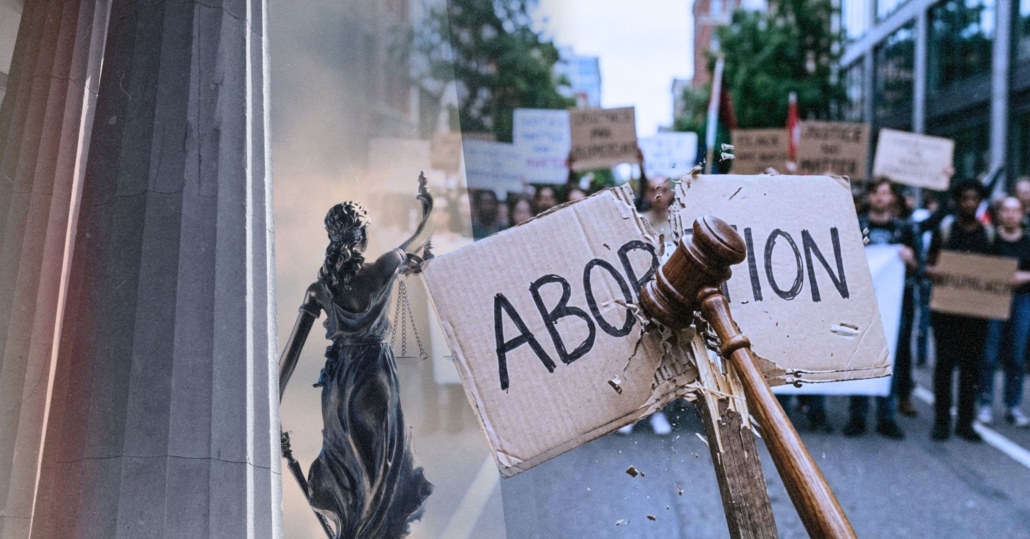
I have more than enough conflict in my life already. I’m a professional apologist after all. It comes with the territory. And I’m the president of the AbortionMuseum.org. So, I’m no a stranger to hot topics and heated debates. But, it feels like “bringing work home” when certain debates arise between friends. Soon they’re family feuds. It’s even more uncomfortable when that division starts creeping into my homelife. That’s how it feels with the Equal Protection debate.
I’ve mostly stayed out of the “Equal Protection” debate, and the larger, older, abolitionist debate. That’s because they tend to be friendly fire and, as far as I can tell, it’s a secondary issue compared to the larger issue of saving babies.
I summarize the anti-abortion position simply as “saving babies.” Because that’s the most straightforward way to highlight the wholesome and life-saving work we’re trying to do. So, I love when the conversation goes like this: “Are you interest in saving babies? You are?! Great! Me too. Let’s save babies together.”
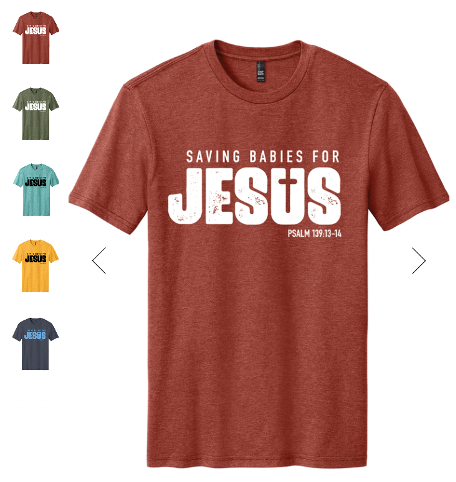
*** Do you have your Saving Babies for Jesus T-Shirt? They’re only $20 right now if you Order here!***
That said, abortion conversations are rarely that neat and easy. The conversation over equal protection for example is pretty heated. This contentious debate adds onto the standing debate between incrementalism versus abolitionism. The debates over equal protection and abolitionism aren’t dying down or cooling off. And they might just heat up even worse, to the point of forcing people like myself to take sides, or do something to let the hot air out.
This post is my effort to release the pressure a bit, so we can unite along our lines of agreement and focus our efforts in a more positive direction. My aim here isn’t to take a side, or denigrate any legitimate points from each side of the aisle. Rather might aim is to point out how the dividing lines weren’t drawn right to begin with. Hopefully, a little clarity on this issue will clear up confusion, and release some of the pressure in this hot topic. There are strong points on all sides. I’ve got good friends on all sides here, so please know that I’m trying to tread carefully.
- Pro-life means Anti-abortion
The normal, conventional, and historic sense of the term “pro-life/ProLife” is anti-abortion. Whenever I say I’m “pro-life” I’m not necessarily taking a side on incrementalism vs. abolitionism, or equal vs. unequal protection. I’m just saying what most people have meant by “pro-life” for the last 50 years or so. I’m saying “anti-abortion.”
This clarification is important because there are folks on the left who aggressively try to redefine “pro-life” so that no one qualifies as “pro-life” unless they sign on to every social-welfare program, adopt every baby, commit to pacifism, oppose the death penalty, reject the second amendment, and they’re basicaly vegetarian socialist bongo players campaigning for the latest Democratic Socialist for office. Anything short of signing onto every leftist agenda item would prove I’m a hypocrite on the abortion issue . . . allegedly.
On the other side, there are anti-abortionists who are also redefining “pro-life” to mean something other than “anti-abortion.” That’s not cool either.
This language game is confusing, misleading, and distracting. That’s not necessarily an accident either. Confusing language tends to work like a smoke screen; it’s how folks slip something past you. Confused terminology blurs ideology which builds up to bad policy. In all that confusion there’s bound to be someone exploiting that juicy opportunity to do some serious damage before the fog clears.
- Incrementalism is the antithesis of Abolitionist
If you think incremental anti-abortion laws are currently the best way to save babies, then you’re an incrementalist. If you think that’s too compromised and we need to push for laws that abolish abortion outright, then you’re an abolitionist. Now both of those positions allow for other commitments, regarding Christianity, equal protection, capital punishment, therapeutic abortion, euthanasia, church and state relations, etc. But to be clear, those other commitments are beyond the scope of the incremental vs. abolition contrast.
- Unequal Protection is the antithesis of Equal Protection
If you think abortion doctors and post-abortion women should be equally prosecuted for murder then you are an “equal protection” advocate. If you think there should be unequal punishment, letting post-abortion women go unpunished or given only trivial consequences, then you are an “unequal protection” advocate. There can be degrees of distinction between these two positions too. If, for example, the abortion method is a mifepristone pill, then the pregnant mother is also the abortionist. That’s one complication. If the pregnant woman is coerced into the abortion or she didn’t have informed consent, that could be a mitigating circumstance where some equal and unequal protectionists might even agree on how to treat them.
We should also distinguish, ethically, between rebels and captors. If the woman is a rebel, that’s morally different from when she’s a captor. Legally, if possible, there might be room to distinguish those different levels of liability there. Anyway, the point is that equal protection is not the opposite of prolife. Its anthesis is unequal protection. And there is room for many shades of distinction in between these poles.
All this might seem pedantic. But in stating the obvious, some not-so-obvious distinctions might come to light.
4. There are Lots of Options for Anti-Abortion
Now it should be clear that there aren’t just two or even three sides here. Just with the pro-life (antia-abortion) side there are at least four positions to choose from, depending on where one stands on the equal protection and abolition debates (see below)
| Prochoice/ Abortion-Choice |
Prolife/Anti-abortion Stances | |||
| Equal Protection |
Unequal Protection |
|||
| Incrementalism | (1) Incrementalist Equal protection |
(2) Incrementalist Unequal Protection |
||
| Abolitionism | (3) Abolitionist Equal Protection |
(4) Abolitionist Unequal Protection |
||
If you are anti-abortion, then you can look over the two contrasts above, pick one from each, and that describes your prolife position. You can be an abolitionist whether you support equal protection or unequal protection. You could be an incrementalist, supporting equal or unequal protection.
But here’s the kicker. Every abolitionist is a prolifer – according to the normal, historic sense of the word “prolife.” Don’t miss the point here. There are more options than people may realize. You can even be anti-abortion and not have a committed position on incrementalism vs. abolition, or equal vs. unequal protection. If you oppose abortion then you are anti-abortion and that’s synonymous with pro-life. Count it all up that goes from four prolife positions to at least nine (see below).
| Prochoice/ Abortion-Choice |
Prolife/Anti-abortion Stances | ||||
| Equal Protection |
Unequal Protection |
Undecided | |||
| Incrementalism | (1) Incrementalist Equal protection |
(2) Incrementalist Unequal Protection |
(3) Incrementalist | ||
| Abolitionism | (4) Abolitionist Equal Protection |
(5) Abolitionist Unequal Protection |
(6) Abolitionist | ||
| Undecided | (7) Equal Protectionist | (8) Unequal Protectionist | (9) Basic Prolife | ||
- The “Prolife Establishment” differs from Abolitionism not as Prolife but as an Establishment
Granting all the above, there is still a practical distinction between the “prolife establishment” versus the “abolitionist movement.” But it’s not because one is pro-life and the other isn’t – they’re both “Pro-life” since they’re both anti-abortion. The difference is that one is an establishment, while the other is the “new kid on the block.” In other words, it’s an “establishment” contrasted with a new “movement.”
The “prolife establishment” includes all the legal and social history, wins and losses, people and projects, biases and burdens, and all the connotation that comes with that generalized grouping of “old-guard” anti-abortionists. Put all that together and that’s a substantially different entity than the abolitionist movement which is relatively new, tends to be more overtly Christian, and often mingles their message with evangelism. Broadly speaking, the old-guard “pro-life establishment” and the upstart abolitionist movement are both anti-abortion, and therefore pro-life in the broad conventional sense of the word. But the establishment has a different history, and therefore a different identity than the abolitionist movement. And that’s okay. Any given establishment can have age-old wisdom to share, along with bad habits and adult-onset arthritis limiting it’s responsiveness and agility. Meanwhile, upstart movements can bring new life to the mix, new energy, and new ideas even if they tend not to reflect the level of wisdom and experience from their more-seasoned elders. Both are valuable. Both have their own baggage. Both have their own strengths. And as long as we’re all in the “saving babies” business then we do well to find ways to work together towards that common cause.
***
Having said all that, when people ask me where I stand on the “Prolife vs. Abolitionism” debate I tell them I’m anti-abortion. If you’re anti-abortion too then let’s see how we can join forces to save more babies.
It’s hard enough curating a whole museum, getting good information together and showcasing potentially life-saving insights for to the viewing public visiting Abortionmuseum.org. It’s a tough enough task with the Museum as we’re trying to raise the level of public discourse on this topic. Those tasks alone get me far too many enemies already. So, if I had to pick a side on the prolife vs. abolition debate I pick the side of . . . not getting duped into thinking we’re enemies when it’s more like a denominational distinction between like-minded members in the same common cause.
Don’t get me wrong. There’s a place for debating the nuanced distinctions between these anti-abortion denominations. That place, however, doesn’t have to be public-facing, bitter, or damaging to the larger anti-abortion cause. It can be a family matter, with brothers and sisters privately arguing through their differences with love and respect, never forgetting the deeper agreement and unity that binds them together in a common cause.
Where do you stand on the issue of abortion? If you think I’m way off base, and I’m misinformed, or I’m trying to bury you in word-salad, or that I’m a paid agent working for the IDF for $7000 dollars a month, then feel free to share your disagreement in the comment section below. I just ask that you be civil, be sincere, and make the comment section better for your being there.
Recommended Resources:
Was Jesus Intolerant? by Frank Turek (Mp4)
Does Jesus Trump Your Politics by Dr. Frank Turek (mp4 download)
Stealing From God by Dr. Frank Turek (Book, 10-Part DVD Set, STUDENT Study Guide, TEACHER Study Guide)
Legislating Morality: Is it Wise? Is it Legal? Is it Possible? by Frank Turek (Book, Mp3, Mp4, PowerPoint download, PowerPoint CD)
Dr. John D. Ferrer is a speaker and content creator with Crossexamined. He’s also a graduate from the very first class of Crossexamined Instructors Academy. Having earned degrees from Southern Evangelical Seminary (MDiv) and Southwestern Baptist Theological Seminary (ThM, PhD), he’s now active in the pro-life community and in his home church in Pella Iowa. When he’s not helping his wife Hillary Ferrer with her ministry Mama Bear Apologetics, you can usually find John writing, researching, and teaching cultural apologetics.