
The LDS Can’t Outrun Joseph Smith the Materialist
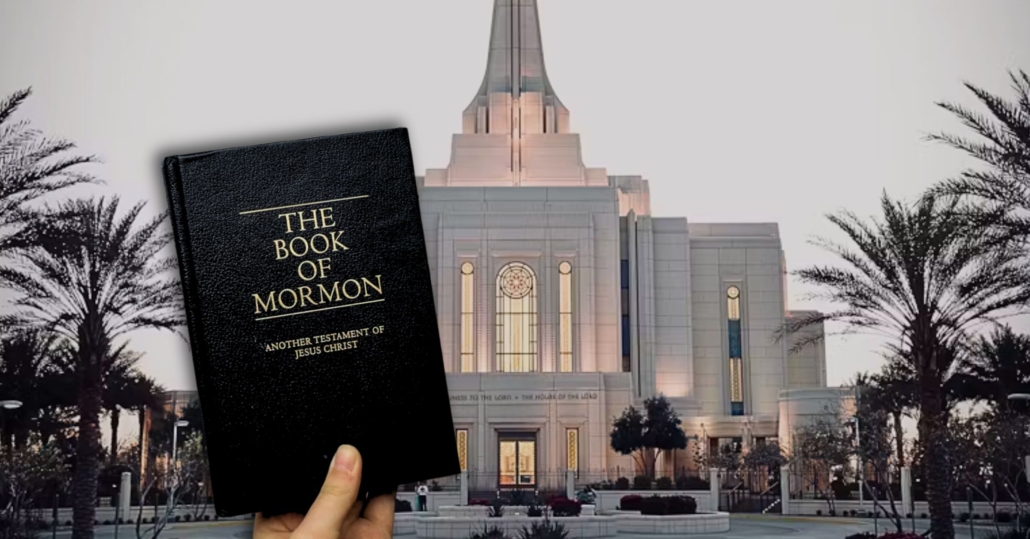
I don’t know if you’ve had a chance to look into the Mormons or not. I’m here in Arizona, and they tend to enjoy a state just north of me: Utah. I’m not super old, but I’m old enough to remember a few waves of Mormon advertisements, and I’m starting to notice a pattern, or is it a trajectory? Their current wave is a pivot, if that’s the word I want, away from “we are restoring the church with this third testament we found buried in upstate New York” to “we’re evangelicals with a fun little twist about marriage.”
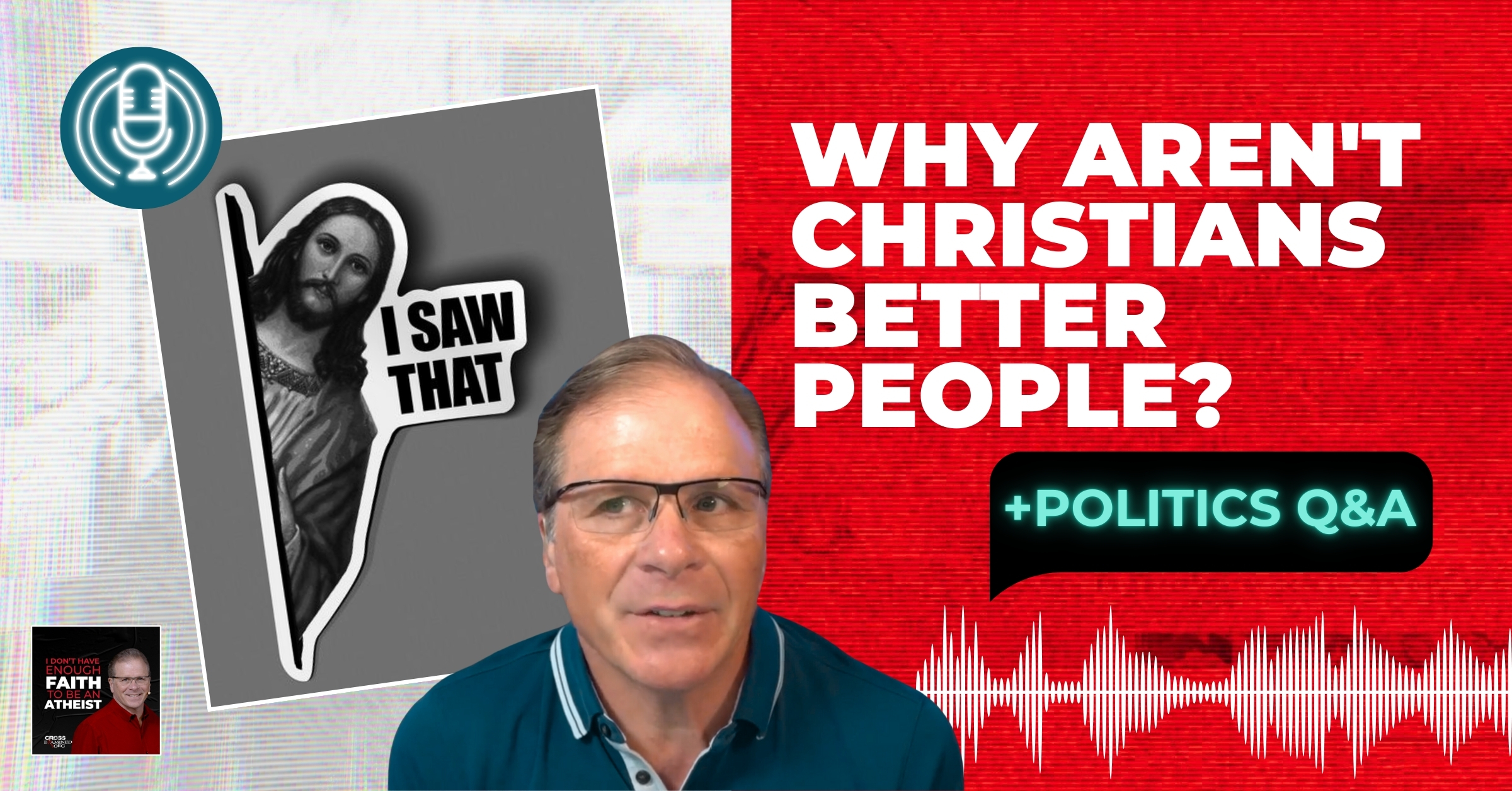
Mormon apologist Jacob Hansen represents this new approach among the LDS in trying to become just one of the guys on the Christian theology social media pages. For some time now, they have been doing their best to argue that they are just one of the Christian groups, perhaps with a few scruples about the Trinity and sola scriptura, and maybe the only ones getting into the third heaven, but otherwise not different from the Baptists or Methodists. You can see the meme as if it were right here, in fact, here it is:

In case you’re not familiar, the joke is that he isn’t one of the fellow kids and it is pretty obvious to everyone.
And yet, this “we’re like you” approach always hits a brick wall when actual Christians start quoting Joseph Smith. He is a fount of questionable claims about God, the afterlife, marriage, and other planets. Brigham Young is a close second. But now, when a Christian brings up the King Follett discourse, apologists like Hansen wave their hands and say, “Oh, that was just speculation, never meant to be taken as settled dogma. I can’t believe you don’t know that distinction.”
Never mind that a quick trip to LDS.org can confirm that these are official teachings of the church. What is a Christian to do? Is this the final grift of the group pushing a third testament? Do they want to be mainstream Christians, or are they offering a renewed path from golden tablets to restore Christianity after 1,800 years of apostasy? Why don’t they repent of their sin instead of trying to talk their way out of fraud charges? It is as if their founder was a well-known scoundrel and they are chips off the old. It might all seem so confusing.
But we can take a cue from Hansen. He makes the distinction between speculation about God having parents who also had parents all the way back to infinity on the one hand, and LDS canon on the other. Well, it happens I was at Goodwill the other day perusing their used books. Mormons tend to donate their publications so that the needy have ample access to both canonical and speculative resources.
I picked up a copy of Doctrine and Covenants. And there it was, right on the first page, this statement: “Doctrine and Covenants: One of Four Scriptures Accepted by the Church—The modern volume of scripture known as the Doctrine and Covenants is but one of four scriptures accepted as binding upon the membership of the Church of Jesus Christ of Latter-day Saints.” Now, that sounds pretty official to me. Not at all just personal speculation, but the real, pure canon of the LDS. Even Jacob Hansen will have to agree.
Then I kept reading, and in the Doctrine and Covenants I found this claim: “The Father has a body of flesh and bones as tangible as man’s; the Son also; but the Holy Ghost has not a body of flesh and bones, but is a personage of Spirit. Were it not so, the Holy Ghost could not dwell in us” (130:22 link).
That’s their official doctrine. The Mormons are material monists, which means they believe that all is matter. There is nothing besides matter. If you were to say to a Mormon, “But check out spirit, because spirit is non-extended and incorporeal,” they’d say, “No, that’s still just a kind of matter.” Here’s the quote:
“There is no such thing as immaterial matter. All spirit is matter, but it is more fine or pure, and can only be discerned by purer eyes; We cannot see it; but when our bodies are purified we shall see that it is all matter” (130:7–8 link).
Now let’s run the algorithm: if all is matter, and God is one of the things covered by “all,” then God is matter. And here’s a second algorithm: if all is matter, and something must have existed from eternity, then matter has existed from eternity. That’s two canonical claims!
Here’s the problem. This view of God clearly contradicts the doctrine of God taught in the Bible. But I’ve already said that the Mormons have a few points of disagreement with the Bible and the Trinity. So, here’s an even worse problem: it also contradicts clear general revelation.
Let’s say you were a plowboy out in your field in upstate New York and Joseph Smith stopped by. And let’s also say that you couldn’t read and hadn’t read the Bible. Joseph Smith comes up to you rather excited and says he has just deciphered an Egyptian plate that he found buried not far from you, written by Abraham, or maybe a lost tribe of Israel, and he wants you to join his group.
Being naturally curious, you ask, “What makes your group different from the others going around? After all, this is a burned-over district.”
“I’m glad you asked,” he says, “because I prayed to God for just this insight. I asked him to show me the true church among all these revivalists, and he has!”
“Well, that’s quite something,” you say, natural curiosity at an all-time high. “Can you tell me about this God who answered your prayer?”
“Why yes,” Joseph eagerly says, “I was just talking to him the other night. He’s made of flesh and bones just like us.”
And now is where your natural curiosity pays off. “Are you speaking about incarnation?” you query.
“Oh no,” he reassures you, “I mean God the Father. He’s made of flesh and bones, which is all I can say canonically, but by way of personal speculation I also think he had parents, who had their own parents, who again had parents, all the way back.”
“Let’s stick to this ‘flesh and bones’ routine,” you say, liking to keep things simple. “Do you mean that God had a beginning?”
“I don’t want to get carried away from my canon,” he nods confidently, “so for now, let’s say, of course not. God has existed from eternity.”
“Well, there I see your problem,” you weigh in helpfully. “If God has existed from eternity, and God is material, then matter has existed from eternity.”
“And I don’t see your point,” he says, brows coming together in thought, “and?”
“Well, matter can’t have existed from eternity. You don’t need an education or even to be able to read to know that. You just need to be able to think about the world around you.”
“I’m not sure I follow?” he says, a slight edge in his voice.
“Let’s go step by step. We can agree matter is changing?”
“Yes.”
“And if something is changing toward an end, such as burning out or running down, then after eternity it would have already reached that end?” Your voice goes slightly higher to indicate a question.
“And so?”
“Well, the sun, stars, and everything else changing toward an end has not yet burned out, but it will only take a finite amount of time to do so, and thus they cannot have existed from eternity. They must have come into existence some finite amount of time ago.”
“But there are so many of them, countless stars and universes.”
“That might seem like it would help, but it doesn’t. No matter how big the number, it is still less than eternity. Most of what we see is empty space, matter is quite limited even if there is a surplus of it from our perspective. And the outcome is that the material world had a beginning.”
“Hmmm. Seems a bit advanced.”
“Then look at that fire over there,” you say, pointing to the fire over there. “What if I told you it had been burning from eternity.”
“I’d think you’d gone crazy and were trying to grift people out of money with a far-fetched story.”
“Just so,” you agree. “And why is that?”
“Because if that fire had existed from eternity, it would have already burned out, any school kid knows that.”
“And what if I say I’d been adding more wood to it over the centuries since eternity?”
“It would have burned up all possible wood by now having existed from eternity, after all, wood is finite since it does not take up all space.”
“I think you just need to make that last tiny leap to grasp my point about matter not existing from eternity.”
“No,” he shakes his head, “nothing is coming to me.”
“The fire was an analogy.”
“Ahh!” the light seems to go off in his mind. “So you mean that in the same way we all know a fire hasn’t been burning from eternity, we can also know the changing material universe has not existed from eternity.”
“You get it. The stuff your ‘God’ (you make the scare quotes) is made of had a beginning. And here’s the part that might seem like an insult, and I’m terribly sorry, but everyone seems to know that already. The philosophies and religions of the world are an attempt to explain that beginning. You’re a bit late to the show.”
“Maybe God is made of a special kind of matter.” He seems to think he’s on to something.
“Does this special matter take up space, you saw him in one place and not another?”
“Yes of course, he appeared to me and not you, he’s not here now.”
“There you have it. A God limited by matter made of flesh and bones that require energy as they run down. Not much of an insight.”
“But God gave me this insight.”
“Let me ask you about that. What did he look like?”
“Like God.”
“Sure, but I mean, did he happen to be all shiny, angelic, like an angel of light?”
“I suppose that captures it.”
“And he said he is offering you this new gospel to replace the one Christians currently teach?”
“Yes, he said they lost their way almost from the start.”
“Again, not trying to step on any toes, but that’s Lucifer. Paul covers this in Galatians 1:8 when he says, ‘But even if we, or an angel from heaven, preach any other gospel to you than what we have preached to you, let him be accursed.’ And then also when he says, ‘Satan himself masquerades as an angel of light’ in 2 Corinthians 11:14.”
“I thought you said you couldn’t read the Bible.”
“That wasn’t me; that was the narrator. And I can’t. But my Dad can and he does family worship morning and evening. And you see the issue. You’re teaching that God is material, that matter has existed from eternity, and those are both clearly false and easily refuted. Once we also read the Bible, your whole start-up is a no-go. Yours can’t be the true church that restores Christianity.”
“Why not? I have high hopes.”
“Did the Christians in the New Testament teach that God is material and matter is from eternity?”
“No, but maybe someone did back there somewhere.”
“Then you’re admitting you are not restoring Christianity to Biblical consistency, you’re at best joining up with whatever heretical group you can find in the early church who also believed God the Father is material.”
“But this view, you know, the one I found on secret golden plates, will unify upstate New York” he insists, even pounding his foot on the turf.
“Your solution to the many divisions among the revivalists was to introduce an entirely new religion. Not much of a solution, now, was it?” you query with a raised eyebrow and tilted head.
“Says you,” he declares, thumbing his nose and walking off to the next farm.
And so, we can leave that plowboy and get back to Jacob Hansen. No matter how far they try to run from the personal speculations of Joseph Smith, the Mormon origins and canonical teachings are tied to materialism and a material God. Their religion reportedly began with Joseph Smith praying to be shown the true church among the revivalists, and his answer was a false doctrine of God. Zero restoration all falsehood.
Before the Mormons even begin to dispute sola scriptura and the Trinity, just raise a finger and say, “Tut tut. I know you believe matter is eternal and God has a body. Repent and turn to Christ to be saved from your false philosophy, or get behind me.”
We don’t need to get in any other questions or disputes with the Mormon, their religion is refuted as quickly as it began. Be like our illiterate plowboy and stay focused.
Recommended Resources:
Jesus, You and the Essentials of Christianity by Frank Turek (INSTRUCTOR Study Guide), (STUDENT Study Guide), and (DVD)
Why We Know the New Testament Writers Told the Truth by Frank Turek (DVD, Mp3 and Mp4)
I Don’t Have Enough Faith to Be an Atheist (Paperback), and (Sermon) by Norman Geisler and Frank Turek
What is God Like? Look to the Heavens by Dr. Frank Turek (DVD and Mp4)
Dr. Owen Anderson is a Professor of Philosophy and Religious Studies at Arizona State University, a pastor, and a certified jiu-jitsu instructor. He emphasizes the Christian belief in God, human sin, and redemption through Christ, and he explores these themes in his philosophical commentary on the Book of Job. His recent research addresses issues such as DEIB, antiracism, and academic freedom in secular universities, critiquing the influence of thinkers like Rousseau, Marx, and Freud. Dr. Anderson actively shares his insights through articles, books, online classes, and his Substack.