Tag Archive for: Tim Orr

I never set out to become a witness to the West’s unraveling. I was just a minister seeking to show God’s love to people. In short, I simply loved Muslims—deeply and sincerely—and believed that the surest way to honor that calling was to study Islam from within its own intellectual world. That conviction led me to Islamic College in London. I was excited that I was going to learn under Muslim scholars. So, I wasn’t seeking conflict or controversy. Far from it. Instead, I was pursuing what I saw as a ministry of respect and understanding.

Shifting Cultural Currents

For several years, the professors supported my work. Classmates welcomed my questions, and I completed an M.A. in Islamic Studies believing I had formed genuine friendships. Yet even then, during my repeated visits to London, something unsettling tugged at me. I sensed cultural currents shifting beneath the surface of the city I had come to love, though I lacked words to describe it.

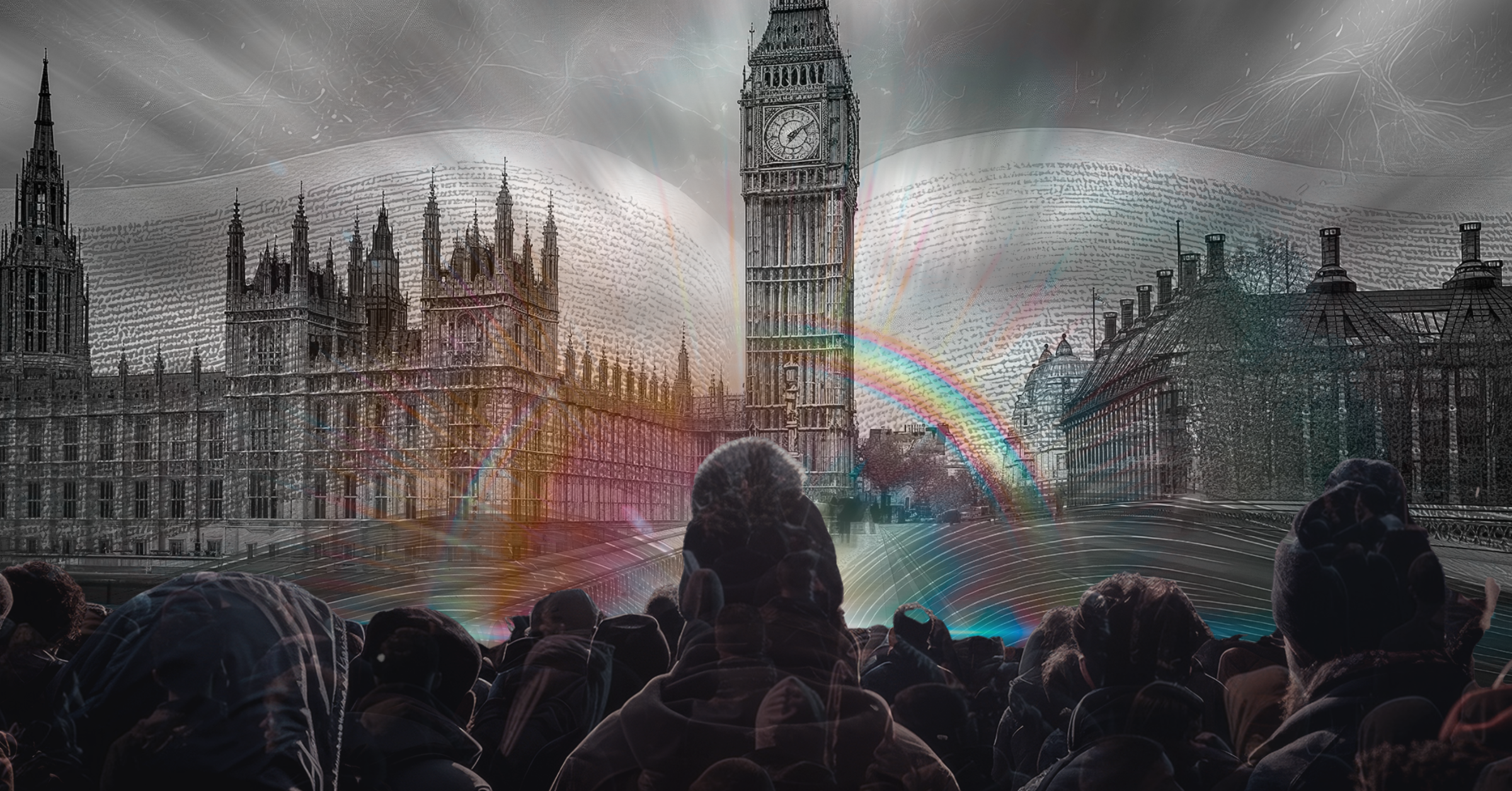
During those visits, especially when staying in neighborhoods with dense Muslim populations, I often felt as if I was walking through two London’s at once. It would become abundantly clear, as I interacted with countless people, that British culture was not very evident. There was not much assimilation. Another culture has overtaken it, and many British elites were on board.

When I landed in London on October 7, 2023, I expected nothing more than a week full of scholarly conversations with Shia leaders.[1] Instead, I stepped directly into the aftermath of Hamas’s massacre of Israeli civilians. Suddenly I noticed that, almost below the level of conscious awareness, the city’s emotional atmosphere shifted with a speed that left me disoriented. Suddenly, it wasn’t the same London I thought I knew. Within minutes, I was added to a group text coordinating rallies, and the words “genocide,” “apartheid,” and “resistance” appeared in messages. I was stunned.

Organized Jew-Hatred 

Later, a Muslim friend urged me to meet protest organizers, and was glad to introduce me to them. He insisted I had a role to play, but the invitation scared me to death. What have I got myself into? By the next morning, October 8, I saw with my own eyes, as I was headed to church in an Uber, coordinated demonstrations filled the streets. It felt less like a reaction and more like a mobilization. I realized that there was an organized network of Jew hatred that I didn’t know existed, at least in that magnitude.

“There was an organized network of Jew hatred that I didn’t know existed, at least in that magnitude”

Throughout that week, I took twenty-two Uber rides across the city, and eighteen drivers delivered unsolicited monologues about Israel with nearly identical certainty. I was stunned by the vitriol. What I noticed was a narrative template toward the Jews that I later discovered was in the Quran. I found myself listening quietly, wondering how these views had become so widespread, so quickly, and so synchronized. With each ride, the sense of ideological cohesion grew more visible, and I felt like a visitor in a city I once understood. The London I loved for its diversity now felt dominated by a single, unchallenged narrative.

What I felt most was that the Church there was very weak. And that weakness carried a cost. That disorientation deepened when I watched American and European universities erupt days later with the same slogans and emotional choreography. It was then I realized I was witnessing the expression of a coherent transnational worldview, not a series of isolated events.

“the Church there [in London] was very weak. And that weakness carried a cost.”

Inside Islamic college, the rupture was equally swift and painful. When I publicly defended Israel’s right to exist, relationships that once felt steady collapsed almost instantly. I found this reaction to be profoundly shocking. What I didn’t know was that I was getting an education that I would have never received in a classroom. A professor who had championed my academic work sent a short message cutting all contact. Others followed. There was only one person maintaining communication, who I would still call a friend, who offered a quiet kindness when the others withdrew.

Mainstream Jew-Hate 

More jarring still, I later learned that certain Shia leaders in the broader network wondered aloud if I might be a spy for Israel. I thought me, a spy? You have to be kidding. That suspicion didn’t anger me; it showed how deep the polarization ran. In that moment, I finally saw that anti-Israel sentiment wasn’t fringe. Instead, it was central in ways I’d sensed but never admitted.

After the initial shock, I turned to research in search of clarity, and what I found reframed my entire experience. I discovered through my Media investigations, that there were concerns raised about possible connections between the Islamic College and Al-Mustafa International University, an institution controlled by Iran’s Supreme Leader and described by some analysts as a “foothold” for exporting revolutionary ideology.[2] Some pro-regime Iranian outlets even called the College Al-Mustafa’s UK “branch,” though the College strongly denies any link.[3]

Reports also documented troubling public statements by staff. For example, one lecturer compared Israel to Nazi Germany, while another described Anders Breivik as an “ultra-Zionist.” A former principal appeared in footage encouraging chants for Hezbollah, a group now banned in the UK. Can you imagine Hezbollah? As I read, a cold clarity settled over me—these were not scattered controversies but pieces of a coherent pattern.

More investigation yielded that processes had been triggered by UK regulatory bodies far before my own personal breaking point. Middlesex University, the higher education body that validated the College’s degrees, withdrew its partnership with the organization after damning accusations were leveled on national news channels.[4] The Office for Students stated that it was reviewing the situation.

Reports also detailed how the Islamic Centre of England, which was described as having close connections to individuals at the College, held a vigil where IRGC commander Qassem Soleimani was praised, resulting in a Charity Commission warning.[5] The group of students from the college was reported to have visited the home of Ayatollah Khomeini on their trip to Iran in 2016.[6] It became clearer that the philosophy I was being confronted with was institutional.

Input from external perspectives contextualized the anecdotal evidence I was presented with about Al-Mustafa. Analysts such as Kasra Aarabi describe Al-Mustafa University as the “heart of Iran’s international ideological messaging,” from where the regime seeks to grow its reach abroad through highly-supervised networks of scholars.[7] This is an idea that many progressives turn their heads in denial. These studies say the university claims affiliated centers in dozens of countries, including some reported to be operating in the UK.

Pro-regime Farsi outlets have also suggested that certain leaders at the London college were connected to Al-Mustafa, though the College denies any formal ties. These were not antagonistic voices. They were pro-Iranian regime. Still, the mix of rhetoric, leadership backgrounds, and institutional relationships suggested a shared ideological direction rather than coincidence. Only then did I understand that the reflexes I saw in London after October 7 were not improvised. They were cultivated over time.

Asymmetric Integration  

All this led me to start seeing things through a particular framework that made sense of both my experience and the wider crisis in the West: Asymmetric Integration. The West assumes that integration is symmetrical – that newcomers to the open society will enter with a mindset of adopting civic norms and contributing in a pluralistic, multi-valued context. But that assumption breaks down when a new mindset sees openness not as a value to be mutually held, but a thing to be used.

Asymmetric Integration happens when a liberal society welcomes newcomers, which is great. But when it allows certain ideological networks to quietly pull that society into their own worldview, this is problematic. That’s what I saw, writ large. The result isn’t multiculturalism but one-way permeability. The West values rights and freedoms; the ideological ecosystem values faith and internal cohesion. One system is permeable; the other is rigid. That asymmetry constitutes a vulnerability the West doesn’t yet comprehend.

“[With] asymmetric Integration . . . the result isn’t multiculturalism but one-way permeability.”

Beyond culture, the asymmetry is civilizational: Liberal societies assume identities can coexist without hierarchy; many ideological systems born abroad assume truth rests on hierarchy and authority. It’s a deep conflict. Take the interview Der Spiegel conducted with Russian President Vladimir Putin last week. Putin asked, “Can you imagine the Russian Federation negotiating with some party inside the European Union?” And yet that’s conventional practice in Europe, which doesn’t pretend all its constituent powers have identical identities and interests.

Liberalism presumes debate and dissent; these networks presume cohesion and loyalty. Liberalism believes diversity dilutes the strength of beliefs; these networks believe beliefs should remain pure. And because liberal democracies assume good faith, they have difficulty recognizing when a different worldview does not. Thus, the West is not just failing to integrate certain communities, it is being integrated into ideological architectures it did not choose, and doesn’t understand. Suddenly the transformations I felt in London, the rapid mobilization of protests, and the rupture in my academic community all made painful sense.

“Because liberal democracies assume good faith [and mutual respect], they have difficulty recognizing when a different worldview does not.”

Another element of this asymmetry is how crises function within each worldview. In liberal societies, a crisis provokes questions, such as “What happened?”, “Why?”, and “What can we learn from this?” In ideological ones, whose foundation is different, crises are opportunities for rollout, not inquiry. The narrative is set, the action plans are in place, the orchestra of emotions is expertly rehearsed. A crisis doesn’t inspire their reaction; it triggers it.

That is why protestors appeared on the streets in London within hours, why college campuses in the United States exploded days later with matching slogans, and why the attitudinal response seemed harmonized across the world. It was only those on the inside, who recognized that this was not a task for improv theater, for whom this was a reflex, rather than an act of hesitation

The Biggest Weakness in the West       

I think the biggest weakness in the West is that they have lost confidence in their core values and everything that Western philosophy stands for. These days, with the rise of multiculturalism, it feels like a lot of institutions are scared to stand up for the things they believe in because they do not want to get labeled as intolerant or bigoted. In that kind of environment, “being open” is not always positive. Instead of being a virtue, it becomes a vulnerability.

I did not really get this at first. It was only after I personally lost my place in a community that I had really been trying hard to understand. The exact moment this happened was when I acknowledged Israel’s right to exist. It was at that moment that the whole illusion of “shared values” just disappeared, and I was exposed to the underlying truth beneath the community.

Today, I can say with confidence that “tolerance” without discernment, without understanding, and without inclusion is not really a virtue or moral strength. Instead, it’s a sort of surrender to power and loss of legitimacy. This moment was the end of innocence for me, and that I now look at the institution and the civilization that embraced me in a fundamentally different way.

These insights did not come from theory alone; they emerged from years inside Islamic academic environments where I was welcomed warmly until the moment I stepped outside the boundaries of ideological conformity. My story is only one expression of a larger structural phenomenon, which is networks shaped abroad embedding themselves into Western institutions that no longer defend their philosophical foundations. Unless the West recovers the confidence to distinguish between integration and absorption, it will continue to erode silently.

Our culture is in danger, but the shift isn’t going to be obvious. It won’t be announced or declared, just slowly shoved out of place. Key institutions will be overtaken and our moral footing will slip away. So, I first fell in love with these institutions and held high hopes for them. That’s why it was so painful when I left them, having gained an understanding of something that few in the West are honest with themselves about.

I thought I could understand myself and my place in the world by studying in London. Instead, what I learned shocked me, and my world was turned upside down. In the future, Western countries will have to recognize the asymmetry in these kinds of cultural encounters, and quickly, or else it will find out that the institutions it’ll be welcoming won’t be integrating as it expects, but slowly transforming the West.

References:

[1] [Editor’s note: Islam has two main factions or denominatios – Sunni (about 85-90% majority) and Shia (the minority). Here, ‘Shia’ refers to a subset of orthodox Islam.]

[2] Turner, C. (2023, March 4). University watchdog “engaged” in talks with London college over Iran links — Discussions follow claims that the Islamic College in Willesden has ties to Iranian Revolutionary Guards. The Telegraph.

https://web.archive.org/web/20240412001735/https://www.telegraph.co.uk/news/2023/03/04/university-watchdog-engaged-talks-london-college-links-iranian/

[3] C. Turner, “University watchdog “engaged” in talks with London college over Iran links — Discussions follow claims that the Islamic College in Willesden has ties to Iranian Revolutionary Guards,” The Telegraph, (4 March 2023)

https://web.archive.org/web/20240412001735/https://www.telegraph.co.uk/news/2023/03/04/university-watchdog-engaged-talks-london-college-links-iranian/

[4] Campaign Against Antisemitism, “Middlesex University reportedly cutting ties with the Islamic College over links to Iran and inflammatory staff, (7 March 2023), https://antisemitism.org/middlesex-university-reportedly-to-cut-ties-with-islamic-college-over-links-to-iran-and-inflammatory-staff

[5] Aarabi 2023.

[6] Aarabi 2023.

[7] Aarabi 2023.

Recommended Resources: 

Answering Islam by Dr. Frank Turek (DVD Set, Mp4 and Mp3)

How to Interpret Your Bible by Dr. Frank Turek DVD Complete Series, INSTRUCTOR Study Guide, and STUDENT Study Guide

Why We Know the New Testament Writers Told the Truth by Frank Turek (mp4 Download)

Jesus, You and the Essentials of Christianity by Frank Turek (INSTRUCTOR Study Guide), (STUDENT Study Guide), and (DVD)      


Tim Orr serves full-time with the Crescent Project as the Assistant Director of the Internship Program and Area Coordinator, where he is also deeply involved in outreach across the UK. A scholar of Islam, Evangelical minister, conference speaker, and interfaith consultant, Tim brings over 30 years of experience in cross-cultural ministry. He holds six academic degrees, including a Doctor of Ministry from Liberty University and a Master’s in Islamic Studies from the Islamic College in London. In September, he will begin a PhD in Religious Studies at Hartford International University.

Tim has served as a research associate with the Congregations and Polarization Project at the Center for the Study of Religion and American Culture at Indiana University Indianapolis, and for two years, he was also a research assistant on the COVID-19 study led by Hartford International University. His research interests include Islamic antisemitism, American Evangelicalism, Shia Islam, and gospel-centered ministry to Muslims.

He has spoken at leading universities and mosques throughout the UK, including Oxford University, Imperial College London, and the University of Tehran. His work has been published in peer-reviewed Islamic academic journals, and he is the author of four books. His fifth book, The Apostle Paul: A Model for Engaging Islam, is forthcoming.

Originally posted at: https://bit.ly/4apWecu
Throughout the history of Christianity, God has raised up His people in specific places and times for unique purposes. The early church carried the gospel from Jerusalem across the Roman Empire. The Reformation revived biblical faith and reshaped the Western world. In our time, many Christian leaders believe that God has entrusted a distinctive mission to the American church — a mission with two inseparable parts: to proclaim the gospel of Jesus Christ to the nations and to stand with the Jewish people, including the modern State of Israel.

These two callings are not separate tracks. They emerge from the same biblical story, reflect the same divine purposes, and together represent one of the most important responsibilities of the church in our generation.

Preach the Gospel — and Fuel a Global Missions Movement        

The first and most fundamental calling of the church is as old as Christianity itself: “Go therefore and make disciples of all nations…” (Matthew 28:19). The Great Commission is not a suggestion for particularly zealous Christians — it is the church’s central identity and purpose. And for the past two centuries, the American church has played a uniquely significant role in carrying out that mission.

Beginning in the early 19th century, especially during the Second Great Awakening, revival movements in the United States helped spark a powerful missionary effort that would go on to shape global Christianity. Out of this wave of spiritual energy came the Student Volunteer Movement, founded in 1886, which mobilized more than 20,000 young Americans for overseas missions before World War I. In the years that followed, organizations such as the International Mission Board, Wycliffe Bible Translators, and Youth With A Mission (YWAM) played a key role in advancing the gospel by translating Scripture, planting churches, and training local leaders around the world. At the same time, American Christians poured significant resources into building seminaries, hospitals, schools, and humanitarian projects, all of which opened new doors for ministry and helped expand the global reach of the gospel (Noll, 2002)[1].

Of course, this work has never been exclusively American. British, German, Australian, Korean, Brazilian, and African churches have all been deeply involved in global missions. But the American church, uniquely resourced with wealth, freedom, technology, and global influence, has often functioned as a catalyst, multiplying the reach of others and pioneering new frontiers. The missiologist Christopher Wright notes that mission is not an activity the church does but the very identity of God’s people, participating in God’s mission to redeem all nations (Wright, 2006)[2]. This identity must remain central as the global landscape changes. Billions still live without access to the gospel, and God’s call to the American church remains: to send, support, and sustain a movement that reaches every tribe and tongue.

Stand with the Jewish People — Beyond Prophecy Charts

The second calling, standing with the Jewish people, is more controversial but no less biblical. It is not merely a matter of eschatology or politics. It flows from God’s covenant promises, from the church’s spiritual heritage, and from a moral responsibility rooted in history.

God’s relationship with Israel did not end with the coming of Christ. His promise to Abraham, “I will bless those who bless you…” (Genesis 12:3), was never revoked. Paul makes this point clearly in Romans 11, using the image of a cultivated olive tree to describe the relationship between Israel and the Church. Gentile believers are like wild branches grafted into Israel, drawing life from its covenant blessings (Romans 11:17–18). The root itself remains essential, and “the gifts and the calling of God are irrevocable” (Romans 11:29). Moreover, Paul envisions a mysterious future in which the salvation of the Gentiles will provoke Israel to jealousy, ultimately leading to its redemption, and that redemption, he writes, will mean “life from the dead” for the world (Romans 11:15).

This vision offers a deeper reason to stand with the Jewish people than geopolitical alliances or prophetic speculation. At its heart, this is about covenant faithfulness and gratitude. From Israel came the Scriptures, the prophets, the covenants, and ultimately the Messiah Himself (Romans 9:4–5). Christianity isn’t a replacement for Israel — it’s the continuation and fulfillment of God’s promises through Israel. Supporting the Jewish people today, including affirming their right to security and self-determination in their ancestral homeland, is a way of honoring God’s faithfulness and participating in His unfolding plan (McDermott, 2017)[3].

The Moral Imperative: Confronting the Oldest Hatred      

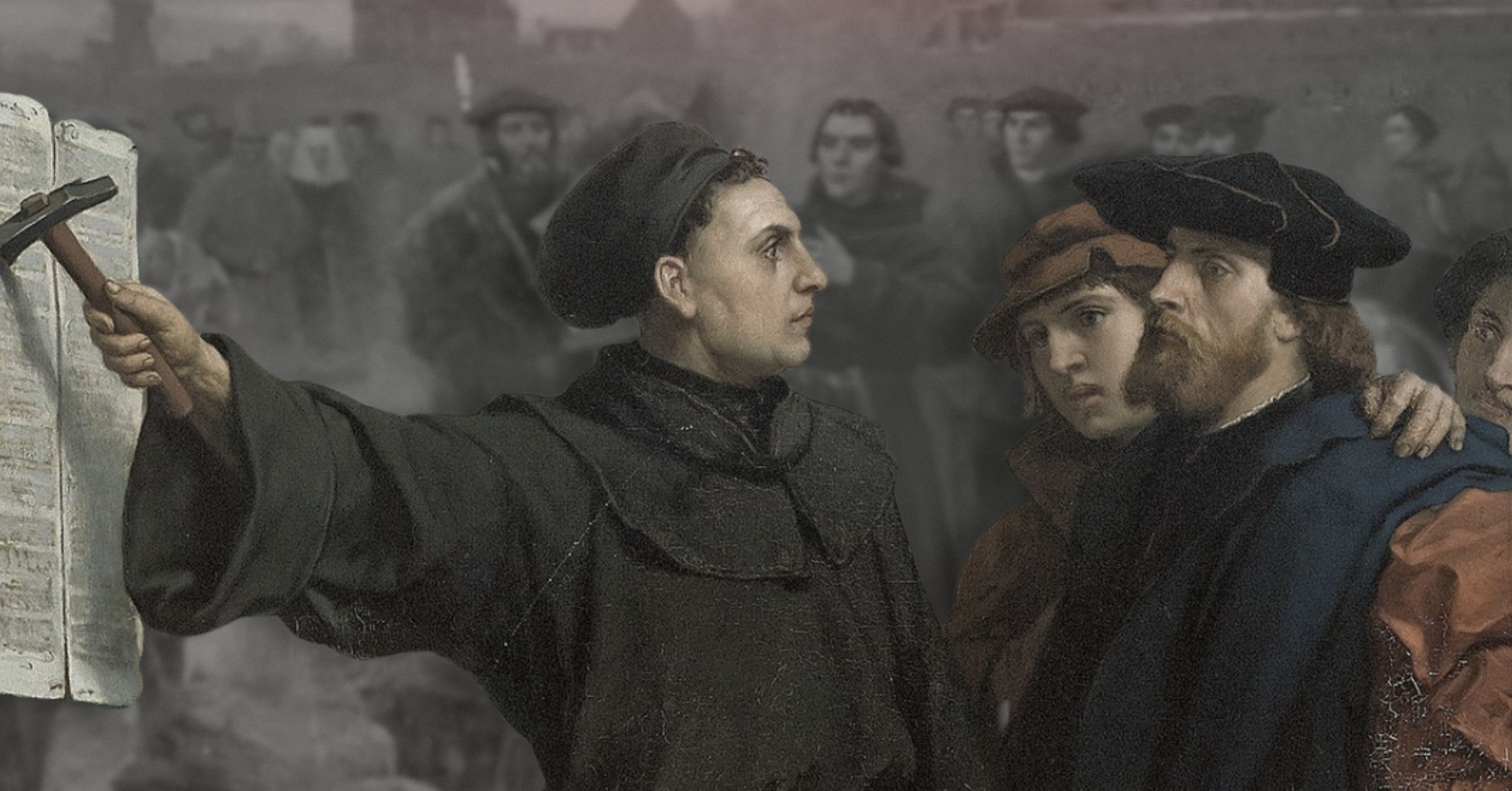
Even apart from theology, there is a profound historical and ethical reason for Christians to stand with the Jewish people: antisemitism. Often called “the world’s oldest hatred,” antisemitism has plagued humanity for millennia, from ancient slanders to medieval blood libels, from forced conversions to expulsions, and culminating in the Holocaust. Tragically, much of this hatred was fueled or tolerated by Christians, particularly in the Church in Europe and the Middle East. The Church fathers also wrote polemics against Jews, medieval councils imposed discriminatory laws, and even Martin Luther penned vitriolic works that were later exploited by the Nazis (Noll, 2002)[4].

Yet the story also includes courage and repentance. Believers such as Dietrich Bonhoeffer, Corrie ten Boom, and André Trocmé risked their lives to resist antisemitism and protect Jewish lives. Their example demonstrates what faithful Christian witness looks like amid hatred and violence. Today, antisemitism is resurging in new forms like conspiracy theories, Holocaust denial, and the delegitimization of Israel itself. The Church needs to, once again stand in the gap. Confronting antisemitism isn’t about politics — it’s about living out Christian love and obedience to Jesus’ command to “love your neighbor as yourself” (Mark 12:31).

Historical Responsibility and Theological Gratitude

Christianity is inseparable from its Jewish roots. Every page of Scripture, every covenant, and every prophecy is part of Israel’s story. Jesus Himself was a Jew who observed Jewish festivals and fulfilled Jewish prophecy. As N.T. Wright argues, the church does not replace Israel but participates in its vocation, to bear witness to God’s faithfulness and salvation before the nations (Wright, 2013)[5].

That shared story carries responsibility. After centuries of persecution, I believe Christians have a moral responsibility to stand up for the dignity and safety of the Jewish people. One important way we can live out that responsibility is by supporting their right to self-determination, including the existence and security of the State of Israel. Doing so doesn’t mean we have to agree with every policy or turn a blind eye to the suffering of Palestinians, but it does mean recognizing a deep obligation shaped by history and conscience. Justice, as the prophet Micah reminds us, requires that we “act justly, love mercy, and walk humbly” (Micah 6:8). Christians can oppose antisemitism and advocate for Palestinian dignity simultaneously. Compassion is not a zero-sum game.

“Compassion is not a zero-sum game.”

Engaging Objections: Supersessionism and Political Zionism                     

Some Christians reject this emphasis on Israel, arguing that the church has replaced Israel in God’s plan — a view known as supersessionism. But Paul directly refutes this in Romans 11:1 “Has God rejected his people? By no means!” The inclusion of the Gentiles does not mean the exclusion of Israel; God’s promises are enduring. Theologian Gerald McDermott argues that the church’s historic neglect of Israel stems from theological misunderstandings that flatten the biblical story and ignore its Jewish context (McDermott, 2017).

Others fear that Christian support for Israel leads to uncritical nationalism or partisan politics. This is a legitimate concern, and precisely why Christian support must be rooted in biblical theology and wisdom, not worldly ideologies. Supporting Israel does not mean endorsing every action of its government. It means affirming the Jewish people’s right to exist, opposing antisemitism, and advocating for policies that uphold human dignity on all sides.

Mission and Israel: Two Callings, One Story

It is important to see that these two callings, mission and solidarity with Israel, are not separate. They are deeply intertwined in God’s redemptive plan. Paul’s vision in Romans 11 suggests that Gentile evangelism will one day stir the Jewish people toward faith, and their redemption will bring even greater blessing to the world. In this way, mission and Israel’s restoration are part of the same divine trajectory, one that points to the final renewal of all creation.

Moreover, antisemitism itself is a barrier to the gospel. How can the church credibly proclaim the love of God if it remains indifferent to hatred against the people through whom God brought salvation into the world? Standing with the Jewish people is therefore not a distraction from the church’s mission but an essential part of it.

Strategic Pathways for the American Church          

The American church has been uniquely positioned by God, with resources, freedoms, and global influence, to play a leading role in this twofold calling. But how can we move from ideas to action? Here are five strategic ways churches and believers can live out this mission:

  1. Recommit to Global Mission. Renew investment in missionary sending, cross-cultural training, and gospel-centered partnerships. Support indigenous leaders and prioritize unreached peoples.
  2. Confront Antisemitism Locally. Educate congregations about antisemitism’s history and current expressions. Partner with Jewish organizations to stand against hatred in your community.
  3. Build Bridges with Jewish Communities. Foster relationships based on respect and trust. Participate in dialogues, attend cultural events, and demonstrate solidarity.
  4. Advocate for Justice and Peace. Support Israel’s right to exist while calling for policies that promote peace, security, and dignity for both Jews and Palestinians.
  5. Teach the Church’s Jewish Roots. Recover the Old Testament story, celebrate the Jewishness of Jesus, and help Christians understand how they are grafted into God’s covenant story.

Conclusion: A Church for This Moment       

When we step back and see the bigger picture, the twofold calling of the church becomes clear. God has entrusted His people, and especially the American church, with immense opportunity and responsibility. We are called to proclaim the gospel with boldness and compassion, fueling a global missions movement that reaches every nation. And we are called to stand with the Jewish people, opposing antisemitism, honoring God’s covenant, and seeking justice and peace in the land where God’s promises began.

These are not two competing agendas; they are two sides of one mission — the mission of God to bless all nations through the family of Abraham and to reconcile the world through His Son, Jesus Christ. If the American church embraces this calling with faith, humility, and courage, it will not only shape the course of history but also bear powerful witness to the unchanging faithfulness of God.

References:

[1] Noll, M. (2002). A History of Christianity in the United States and Canada. Grand Rapids, MI: Eerdmans.

[2] Wright, C. J. H. (2006). The Mission of God: Unlocking the Bible’s Grand Narrative. Downers Grove, IL: IVP Academic.

[3] McDermott, G. (2017). Israel Matters: Why Christians Must Think Differently About the People and the Land. Grand Rapids, MI: Brazos Press.

[4] Noll, M. (2002). A History of Christianity in the United States and Canada. Grand Rapids, MI: Eerdmans.

[5] Wright, N. T. (2013). Paul and the Faithfulness of God. Minneapolis, MN: Fortress Press.

Recommended Resources:

Correct not Politically Correct: About Same-Sex Marriage and Transgenderism by Frank Turek (Book, MP4, )

Was Jesus Intolerant? (DVD) and (Mp4 Download) by Dr. Frank Turek 

Legislating Morality: Is it Wise? Is it Legal? Is it Possible? by Frank Turek (Book, DVD, Mp3, Mp4, PowerPoint download, PowerPoint CD)

Jesus, You and the Essentials of Christianity by Frank Turek (INSTRUCTOR Study Guide), (STUDENT Study Guide), and (DVD)      


Tim Orr serves full-time with the Crescent Project as the Assistant Director of the Internship Program and Area Coordinator, where he is also deeply involved in outreach across the UK. A scholar of Islam, Evangelical minister, conference speaker, and interfaith consultant, Tim brings over 30 years of experience in cross-cultural ministry. He holds six academic degrees, including a Doctor of Ministry from Liberty University and a Master’s in Islamic Studies from the Islamic College in London. In September, he will begin a PhD in Religious Studies at Hartford International University.

Tim has served as a research associate with the Congregations and Polarization Project at the Center for the Study of Religion and American Culture at Indiana University Indianapolis, and for two years, he was also a research assistant on the COVID-19 study led by Hartford International University. His research interests include Islamic antisemitism, American Evangelicalism, Shia Islam, and gospel-centered ministry to Muslims.

He has spoken at leading universities and mosques throughout the UK, including Oxford University, Imperial College London, and the University of Tehran. His work has been published in peer-reviewed Islamic academic journals, and he is the author of four books. His fifth book, The Apostle Paul: A Model for Engaging Islam, is forthcoming.

Note: The original version of this article was published on Dr. Orr’s Substack.
The present version has been substantially revised and adapted by the author.

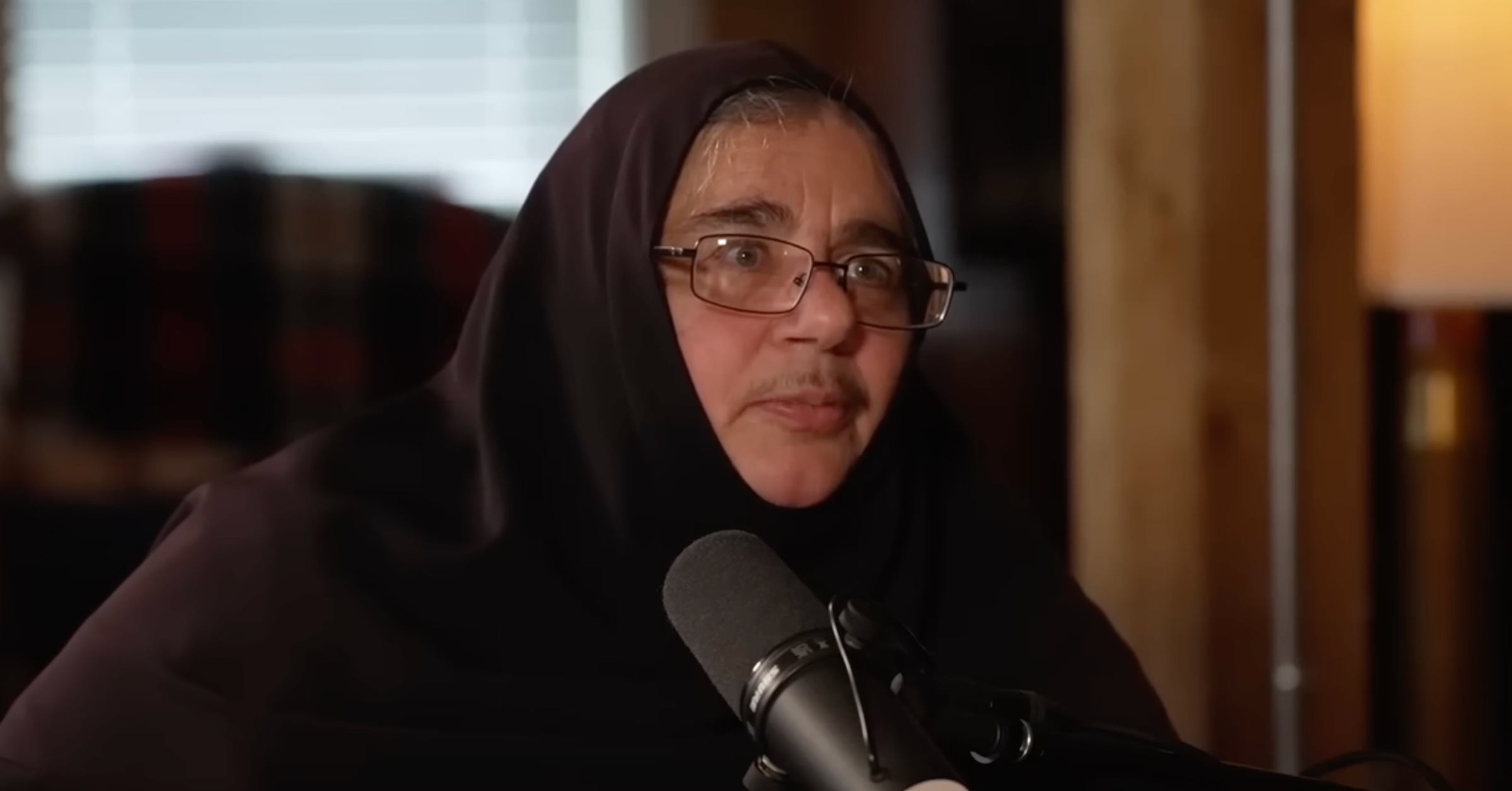
When Tucker Carlson aired the episode Here’s What It’s Really Like to Live as a Christian in the Holy Land (2025), the optics were powerful. His guest, Mother Agapia Stephanopoulos, appeared cloaked in a black Orthodox veil, her presence suggesting sanctity and authenticity. The fact that she was also the sister of George Stephanopoulos, longtime ABC political commentator, made the segment doubly compelling. The habit and the surname prepared audiences to assume her words carried both religious authority and cultural weight.

On the surface, she seemed to speak truth about Christian suffering in the land of Christ’s birth. In reality, what she offered was not gospel witness but a politicized narrative—an apologetic for propaganda. This is not about attacking a nun or a television host; it is about recognizing how propaganda undermines Christian credibility.

Christian apologetics must resist the lure of propaganda, for when believers trade truth for political narratives or survival strategies, they undermine the very credibility of the gospel whose power rests on historical reality and Christ’s Lordship. Carlson’s broadcast gives us a case study in how easily symbols and stories can distort Christian witness, and why apologists must anchor every defense of the faith in uncompromising truth.

Truth as the Foundation of Witness

The problem is not only what Mother Agapia said, but how Western audiences received it. Many viewers, unfamiliar with the history of Arab Christianity or the survival strategies of dhimmi life, mistook her testimony for unbiased truth. Yet her narrative echoed centuries of Christian communities navigating life under Islamic subjugation.

Under dhimmi status—a framework that allowed Jews and Christians to live under Muslim rule but only as second-class subjects—Christians developed “survival apologetics.” These rhetorical strategies defended not the gospel but communal existence. When this survival instinct becomes the measure of witness, truth is displaced, and credibility is lost.

Symbol vs. Substance in Apologetics           

In the Western imagination, the nun’s habit symbolizes purity, moral authority, and spiritual integrity. Carlson framed Mother Agapia not as a political actor but as a “holy witness,” inviting viewers to hear her with reverence. As Roland Barthes observed, such symbols often function as “mythological signs”—they communicate meaning before arguments are tested.

But apologetics demands discernment beyond symbols. Peter calls believers to “set apart Christ as Lord” before making any defense (1 Pet. 3:15). No veil, robe, or role guarantees truth. The apologetic task is to measure every witness against Scripture, not appearances.

Why Credibility Matters in Apologetics       

Mother Agapia claimed Christians are leaving Bethlehem because of Israeli occupation. While the demographic collapse is undeniable, her explanation was misleading. Historians have shown Bethlehem’s decline stems primarily from Islamist harassment, discriminatory laws, and economic pressures. By contrast, Israel’s Christian population has grown under protections of law and freedom of worship.

The apologetic point is critical: if Christians are careless with political truth, unbelievers will not trust them with theological truth. The resurrection rests on historical reliability. If we distort the facts in politics, why should anyone trust us about history’s most important fact—the empty tomb?

The Dhimmi Reflex and the Gospel’s Call    

As Bernard Lewis observed, Christians under Islamic rule often shifted blame onto Jews as a way to preserve their safety. This “dhimmi reflex” continues today when Arab Christians echo nationalist propaganda instead of confronting Islamist hostility.

But Jesus warned against making survival the highest good: “Whoever would save his life will lose it” (Matt. 16:25). True apologetics refuses to sacrifice gospel truth for cultural or political survival. The early martyrs knew this well—burning incense to Caesar may have seemed like a minor concession, but it betrayed Christ’s Lordship. Apologetics today must embody the same fidelity.

It is worth noting that such compromises often arose under severe pressure. Christians living as minorities have faced hard choices. Yet the lesson for us today is not to condemn but to learn: fidelity to truth, even when costly, has always been the mark of authentic witness.

The Cost of False Witness     

Mother Agapia’s credibility was already in question after her discredited claims during the 2002 Bethlehem siege. Yet Carlson presented her as trustworthy, as though a habit and a surname sanctified her words.

But apologetics cannot sanctify distortion. Its task is to defend the hope we have in Christ (1 Pet. 3:15), a hope grounded in truth. The gospel rises or falls on historical reality. Once Christians become comfortable bearing false witness for political ends, we erode the foundation of our apologetic witness.

Conclusion: Apologetics Anchored in Christ Alone 

Mother Agapia’s appearance was praised as bold truth-telling, but in reality it was propaganda cloaked in sanctity. Her surname gave her visibility, her habit gave her credibility, and Carlson’s platform gave her reach. Yet none of these could sanctify distortion.

We are not called to defend propaganda—we are called to defend Christ. When Christians compromise truth for cultural approval, survival strategies, or political alliances, they may gain short-term credibility with the world but they lose credibility for the gospel. As Jesus warned, “What will it profit a man if he gains the whole world and forfeits his soul?” (Matt. 16:26).

The apologetic task is not to prop up narratives but to bear faithful witness to Christ, crucified and risen. The world will only trust our defense of the resurrection if it sees us defending truth in every sphere of life. In an age when media spectacles masquerade as reality, the most powerful apologetic is fidelity: setting apart Christ as Lord, and proclaiming Him with integrity, courage, and unwavering commitment to truth.

Recommended Resources:

Answering Islam by Dr. Frank Turek (DVD Set, Mp4 and Mp3)

Legislating Morality: Is it Wise? Is it Legal? Is it Possible? by Frank Turek (Book, DVD, Mp3, Mp4, PowerPoint download, PowerPoint CD)

Reflecting Jesus into a Dark World by Dr. Frank Turek – DVD Complete Series, Video mp4 DOWNLOAD Complete Series, and mp3 audio DOWNLOAD Complete Series

Does Jesus Trump Your Politics by Dr. Frank Turek (mp4 download and DVD)


Tim Orr serves full-time with the Crescent Project as the Assistant Director of the Internship Program and Area Coordinator, where he is also deeply involved in outreach across the UK. A scholar of Islam, Evangelical minister, conference speaker, and interfaith consultant, Tim brings over 30 years of experience in cross-cultural ministry. He holds six academic degrees, including a Doctor of Ministry from Liberty University and a Master’s in Islamic Studies from the Islamic College in London. In September, he will begin a PhD in Religious Studies at Hartford International University.

Tim has served as a research associate with the Congregations and Polarization Project at the Center for the Study of Religion and American Culture at Indiana University Indianapolis, and for two years, he was also a research assistant on the COVID-19 study led by Hartford International University. His research interests include Islamic antisemitism, American Evangelicalism, Shia Islam, and gospel-centered ministry to Muslims.

He has spoken at leading universities and mosques throughout the UK, including Oxford University, Imperial College London, and the University of Tehran. His work has been published in peer-reviewed Islamic academic journals, and he is the author of four books. His fifth book, The Apostle Paul: A Model for Engaging Islam, is forthcoming.


I spent years studying Shia Islam from within, earning an MA in Islamic Studies from the Islamic College in London. My goal was to understand Islam on its terms, not merely as an outsider, but as a serious student of its theology, history, and lived reality. This academic path wasn’t just about gaining knowledge; it was rooted in a deep desire to build bridges between Christians and Muslims through respectful dialogue. I believed that rigorous study, combined with empathy and grace, could overcome centuries of misunderstanding and mistrust. That belief shaped my posture in interfaith spaces for years. However, on October 7, 2023, I was confronted with a reality that no classroom or textbook had prepared me for. What I encountered in the streets of London that day shook the very foundation of what I thought I knew, not just about Islam, but about the spiritual dynamics at play in our world today.

The View from England

October 7th started like any other day in London. Still, it ended with a profound shift in my thinking, particularly in the assumptions I had carried for years about the nature of Islam, the effectiveness of interfaith dialogue, and the influence of Western democratic values on extremist ideologies, a spiritual awakening that has since reshaped how I view Islam, Western culture, and my calling. I didn’t know it at the time, but that day tore the veil of illusion I had long carried with me into interfaith spaces. I had come to London to meet with Muslim scholars and leaders, particularly Shia leaders, many of whom I had interacted with for years through respectful, even warm, dialogue. My posture had always been one of a bridge-building. I believed, perhaps too confidently, that the West had a civilizing influence on radical Islam. I thought civility and grace would overcome the deeply entrenched theological and political barriers that divide Christians and Muslims. But that illusion shattered before my eyes. The events of October 7, 2023, exposed a deeper current of rage than I wasn’t prepared for.

Just one day before Israel responded to Hamas’ brutal incursion, I found myself surrounded by rallies in London that openly celebrated terror. These were not fringe events tucked away in back alleys, but widespread public gatherings in prominent areas. I stood among people I had once hoped to partner with for dialogue, only to hear unfiltered hatred. The chants were not only political, but deeply theological and dehumanizing. The language was raw and venomous, filled with images of resistance that glorified bloodshed. It was not just rage against Israel, but rage against the Judeo-Christian worldview. In that moment, I realized I had misunderstood the nature of the battle. What I saw was not just a protest, but a spiritual and ideological war.

Over the following days, I had 18 Uber rides, most of which were with Muslim drivers. While these conversations were significant, I recognize they reflect the views of individuals and not all Muslims, and each one became an unexpected dialogue. I didn’t try to provoke conflict, but I did ask questions to gain a deeper understanding of what people believed. The responses I heard were jarring and consistent: Israel had no right to exist, Hamas was merely defending the oppressed, and Christianity was a colonial relic. Some told me that Islam would eventually triumph and bring justice to the world, replacing the confusion caused by the Bible and Western civilization. These weren’t isolated opinions, but widespread sentiments expressed confidently and without hesitation. I began to see that a militant ideology was not only alive but thriving. It wasn’t hidden in caves or confined to faraway regions. It was riding beside me through the streets of London, one ride at a time.

The View from the United States     

When I returned to the United States, I expected to find some distance from the hostility I had witnessed overseas. But I returned to see the same rage manifesting in American streets and on our university campuses. At institutions such as Columbia University and Harvard, students and even some faculty were chanting slogans like “From the river to the sea,” openly siding with Hamas and calling for a third intifada. These were not isolated incidents, but coordinated events that reflected a larger ideological alignment. The same dehumanizing rhetoric I had heard in London was now being echoed on American soil. It was cloaked in the language of justice and liberation, but rooted in ancient hatreds. I realized the West is no longer just observing this battle from afar. It is becoming a participant, and the church can no longer afford to remain unaware.

In response, I knew I needed to go deeper intellectually, not just emotionally or spiritually. I began attending educational programs and seminars focused on antisemitism, both to understand what I had encountered and to equip myself more thoroughly. Two organizations in particular became central in this journey. First, I connected with Indiana University’s Institute for the Study of Contemporary Antisemitism, a respected academic center that conducts rigorous research on modern forms of antisemitism. Second, I engaged with ISGAP, the Institute for the Study of Global Antisemitism and Policy, which addresses antisemitism as a global phenomenon and provides tools for confronting it at both scholarly and policy levels. These were not just academic spaces—they were communities where I found solidarity, wisdom, and clarity. I also developed friendships with others who had been grappling with these realities for years.

One year later, I had the opportunity to present my research on Islamic antisemitism at the annual conference for the Association for the Study of the Middle East and Africa. ASMEA is a scholarly organization dedicated to promoting high-quality, nonpartisan research on the Middle East and Africa. My paper drew on years of study but was sharpened by my experiences in London and beyond. I explored how classical Islamic texts, historical narratives, and political ideologies contribute to persistent antisemitic attitudes within the Muslim world. I argued that while colonialism and nationalism play roles, the theological foundations must be confronted if lasting change is to occur. The response to my presentation was deeply encouraging as several scholars approached me afterward to commend the clarity and boldness of the analysis, and a few even expressed interest in collaborative projects. It was clear that my contribution resonated with many who had been quietly wrestling with similar concerns. That moment reminded me that this research is no longer abstract. It is now central to my calling and mission.

A Call to the Church  

I left London with a heavy heart but a sharper mind. I had been naive in thinking that love alone could overcome centuries of deeply rooted theology and political grievance. What I witnessed was not merely a political protest; it was a spiritual and ideological war. This does not mean dialogue is useless, but it does mean we must understand the spiritual powers at work behind the slogans and marches. If Christians fail to recognize evil for what it is and reduce it to mere social grievance, we will continue to be blindsided. October 7 was my wake-up call. It showed me that our mission is not to tame Islam or conform to culture, but to proclaim Christ; and not to win arguments, but to stand firmly in the truth of the gospel.

Since that day, I have adopted a more presuppositional approach, meaning I begin with the assumption that the Bible is true and use that framework to interpret and challenge opposing worldviews to ministry, one that rests not just on reason and civility, but on the unshakable foundation of God’s Word. I still believe in respectful conversation, in common grace, and in the power of relationship. But I no longer underestimate the power of deeply held beliefs that stand in direct opposition to the gospel. The church must become more theologically grounded and aware of how antisemitism disguises itself in new forms—whether Islamic, progressive, or even within compromised Christian circles. We must speak clearly, love deeply, and engage boldly. The days of assuming we are insulated from this hatred are over. My prayer is that others will not need their own October 7 experience to wake up.

Recommended Resources:

Answering Islam by Dr. Frank Turek (DVD Set, Mp4 and Mp3)

Legislating Morality: Is it Wise? Is it Legal? Is it Possible? by Frank Turek (Book, DVD, Mp3, Mp4, PowerPoint download, PowerPoint CD)

Jesus vs. The Culture by Dr. Frank Turek DVD, Mp4 Download, and Mp3

Reflecting Jesus into a Dark World by Dr. Frank Turek – DVD Complete Series, Video mp4 DOWNLOAD Complete Series, and mp3 audio DOWNLOAD Complete Series


Tim Orr serves full-time with the Crescent Project as the Assistant Director of the Internship Program and Area Coordinator, where he is also deeply involved in outreach across the UK. A scholar of Islam, Evangelical minister, conference speaker, and interfaith consultant, Tim brings over 30 years of experience in cross-cultural ministry. He holds six academic degrees, including a Doctor of Ministry from Liberty University and a Master’s in Islamic Studies from the Islamic College in London. In September, he will begin a PhD in Religious Studies at Hartford International University.

Tim has served as a research associate with the Congregations and Polarization Project at the Center for the Study of Religion and American Culture at Indiana University Indianapolis, and for two years, he was also a research assistant on the COVID-19 study led by Hartford International University. His research interests include Islamic antisemitism, American Evangelicalism, Shia Islam, and gospel-centered ministry to Muslims.

He has spoken at leading universities and mosques throughout the UK, including Oxford University, Imperial College London, and the University of Tehran. His work has been published in peer-reviewed Islamic academic journals, and he is the author of four books. His fifth book, The Apostle Paul: A Model for Engaging Islam, is forthcoming.