Tag Archive for: theology

What if you’re talking to someone who flat-out rejects the Bible despite its historic credibility—can you still make a good case for the Resurrection? The answer is…YES!

Popular Christian YouTuber, Allen Parr from The B.E.A.T., joins Frank from CIA 2025 to explore some of the most convincing evidence for the resurrection of Jesus. While the New Testament documents have proven to be reliable and trustworthy, Frank and Allen demonstrate how extra-biblical sources can guide skeptics toward the historical truth of Christianity—even if they don’t trust the Bible (yet!). They’ll answer questions like:

  • What two facts must be established in order for Christianity to be true?
  • Why do many skeptics like Bart Ehrman trust the New Testament documents as having historically reliable information?
  • What are the five strongest pieces of biblical evidence for the resurrection of Jesus?
  • Could the post-resurrection appearances of Jesus be explained by hallucinations?
  • What’s an important question to ask someone who says they don’t trust the Bible?
  • What are 6 facts that non-Christian sources confirm about the historical Jesus?
  • What is the “minimal facts” argument and how does it help defend the Christian faith?
  • What are 5 alternative theories to the resurrection and are any of them valid?
  • Is a transformed life the strongest argument we have for Christianity?

Whether you’re talking to a skeptic, a curious friend, or even a Christian with doubts, this episode will equip you with historical tools to build confidence in the resurrection—without needing to quote the Bible first!

If you enjoyed this podcast episode PLEASE HELP US SPREAD THE TRUTH OF CHRISTIANITY BY SUPPORTING OUR MINISTRY HERE. 100% of your donation goes to ministry, 0% to buildings!

Resources mentioned during the episode:

Allen’s website: https://www.allenparr.com/
Allen’s YouTube channel: https://www.youtube.com/@thebeatagp
The Earliest Non-Christian Testimony to Jesus May Be Authentic (Josephus) with Sean McDowell

Download Transcript

Why are so many popular figures who claim to be Christians supporting anti-Christian positions and is there anything we can do about it? In this special midweek podcast episode recorded LIVE from CrossExamined Instructor Academy 2025 in Charlotte, NC, Frank sits down with Megan Basham, Alisa Childers, and Natasha Crain to discuss some of the popular secular ideas that plague the modern Church and answer questions like:

  • Does calling out sin and false teachers cause division in the Church?
  • What are four secular beliefs that promote the authority of self vs. the authority of God?
  • What are some incentives for going along with the flow instead of standing up for biblical truth?
  • Why are truth claims seen as power grabs for those who push back against biblical Christianity?
  • What does sourdough baking have to do with deceptive ideas?
  • Why is it important to get uncomfortably specific when it comes to calling out false teachers and their ideas?
  • What are some good resources for both adults and kids who want to embolden their Christian faith?
  • Are we on the verge of another great awakening or revival in the Church?

Be sure to check out some of the valuable resources for both kids and adults that were mentioned during the episode in the list below, and stay tuned for more podcast episodes recorded from CIA 2025!

If you enjoyed this podcast episode PLEASE HELP US SPREAD THE TRUTH OF CHRISTIANITY BY SUPPORTING OUR MINISTRY HERE. 100% of your donation goes to ministry, 0% to buildings!

Resources mentioned during the episode:

Fearless Faith Self-Paced Online Course – https://bit.ly/4kmld3g
Train Your Brain (online logic course for kids & adults) – https://bit.ly/4lMq6ni
Shepherds for Sale by Megan Basham – https://www.amazon.com/dp/0063413442
World Watch News – https://worldwatch.news/
Natasha’s books – https://natashacrain.com/books/
Alisa’s books – https://alisachilders.com/

Download Transcript

Does your church teach you how to interpret the Bible? Sadly, many Christians never learn the tools to read Scripture well, and that leads to all kinds of confusion about theology. But how can we know if we’re handling God’s Word the right way?

This week, Frank sits down with the one and only Mike Winger, a former pastor turned popular YouTuber, who’s dedicated his channel to helping Christians understand the Scriptures. In this episode, Mike shares what led him to take his ministry online and explains the five core principles he uses when studying the Bible—principles many churches don’t talk about, but every believer should know! During their conversation, Frank and Mike will dive into questions like:

  • Why do some churches seem to avoid the topic of how to interpret the Bible?
  • What are some commonly misinterpreted verses in the Bible?
  • What does it mean to “turn the other cheek”?
  • How can you avoid reading your presuppositions into the Bible?
  • Were Jesus’ brothers really his cousins?
  • What’s the real context of Matthew 7 (“Don’t judge”) and Matthew 5 (“Eye for an eye”)?
  • Why is understanding proper word usage so important?
  • How has Bart Ehrman misled people about the Gospel of Mark
  • What’s one thing that makes the Gospel of Mark so unique?
  • Why does Mike feel compelled to call out false teachers?

From spiritual gifts and women in ministry to Catholicism, false teachers, and misunderstood passages, Mike isn’t afraid to tackle the tough issues. With 1,000+ videos and a weekly Q&A livestream, Mike’s YouTube channel is a goldmine for anyone who wants to explore a deeper understanding of the Christian faith. Subscribe to Mike’s channel, visit his website BibleThinker.org, and learn how to study your Bible like never before!

If you enjoyed this podcast episode PLEASE HELP US SPREAD THE TRUTH OF CHRISTIANITY BY SUPPORTING OUR MINISTRY HERE. 100% of your donation goes to ministry, 0% to buildings!

Resources mentioned during the episode:

Mike’s website: BibleThinker.org
Mike’s YouTube channel: https://youtube.com/@MikeWinger
‘How to Interpret Your Bible’ Self-Paced Course

Download Transcript

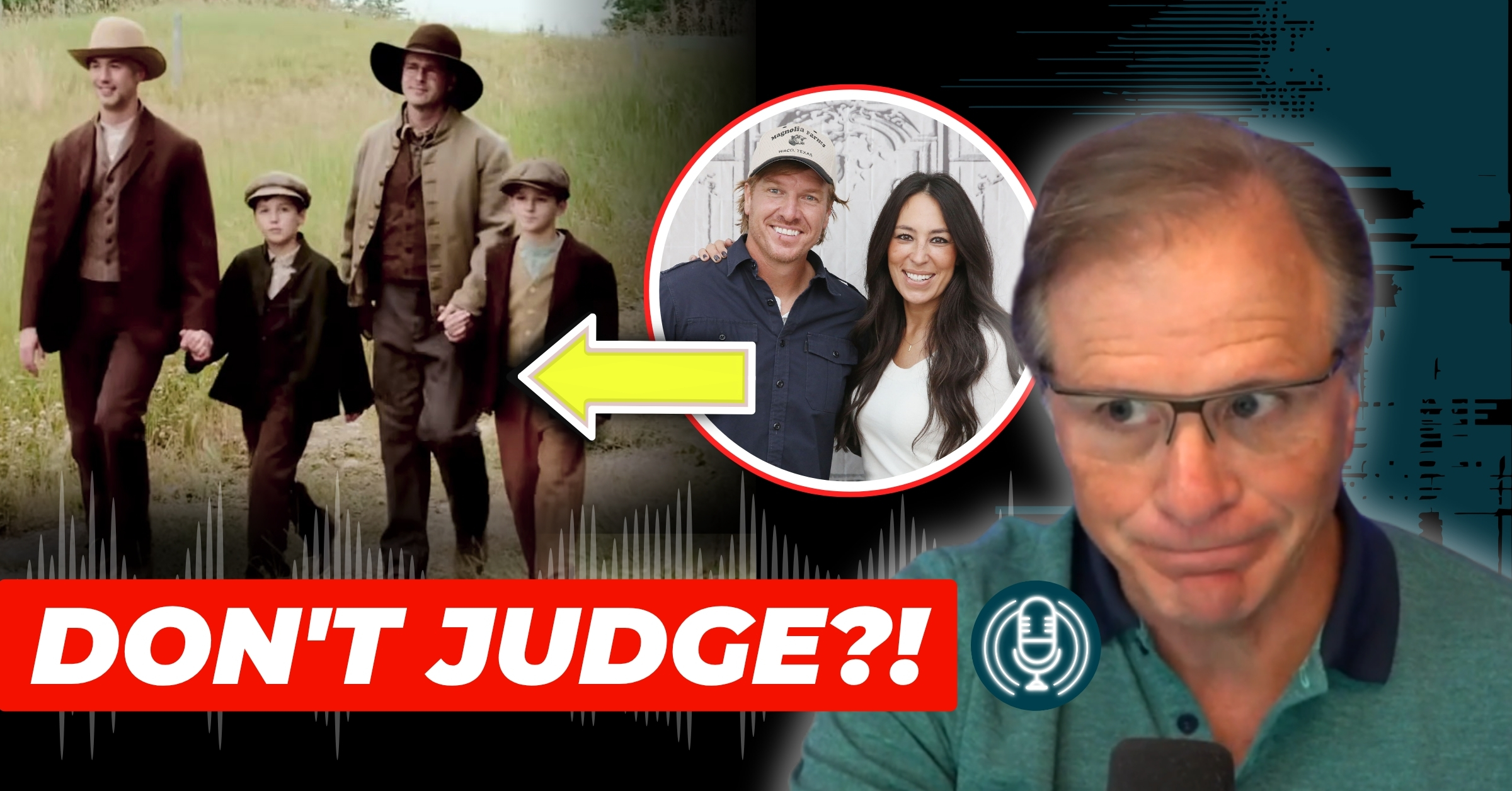
HGTV’s favorite home-renovating duo, Chip & Joanna Gaines, recently found themselves at the center of controversy after featuring a same sex couple on their new show. While they’re known for flipping houses, some Christians are now asking, have they flipped their theology too?

In this solo midweek podcast episode, Frank addresses the cultural pressure Christians face when it comes to affirming homosexuality, and whether it’s ever wrong for believers to judge the sinful behavior of others. Tune in as Frank reacts to the backlash coming from both sides and answers questions like:

  • Did Jesus tell us never to judge?
  • Is it wrong to address sinful behavior that can hurt other people?
  • What’s the difference between judging and being judgmental?
  • What are the 4 most popular secular and cultural beliefs that have made their way into Christianity?
  • Are our feelings a trustworthy guide for moral decisions?
  • How did Chip Gaines miss the mark during his recent tweet directed towards “modern American Christians”?
  • What’s the best way to correct someone without being obnoxious?

Later in the show, Frank also answers more of your listener questions including:

  • Is there a New Testament version of Jeremiah 29:11 that can be applied to modern-day Christians?
  • Can people be saved if they believe baptism is essential for salvation?
  • What are biblical chiasms, and how do they affect biblical interpretation?
  • What evidence shows the disputed long ending of Mark WAS in the original?

If you enjoyed this podcast episode PLEASE HELP US SPREAD THE TRUTH OF CHRISTIANITY BY SUPPORTING OUR MINISTRY HERE. 100% of your donation goes to ministry, 0% to buildings!

Resources mentioned during the episode:

Would Jesus Attend a Gay Wedding? with Becket Cook & Dr. Robert Gagnon
Faithfully Different by Natasha Crain
Hollywood Heroes by Frank & Zach Turek
The Longer Ending of Mark is Authentic! (Part 1) with Dr. Warren Gage

Download Transcript

Jesus Of Nazareth Is the most disputed character in history. Most of the world’s religions incorporate him into their teaching, whether as a morally perfect prophet (Islam), a divine manifestation (Baha’i), or a reincarnated god (Hinduism). Buddhists believe he is a grace-giving demigod or even a Buddha. Christian cults like the Jehovah’s Witnesses and the Mormon Church readily incorporate Jesus as a partial divine, more than man but less than the full deity of Father God. Almost all of Judaism rejects Jesus as a false prophet, a mere mortal, and a failed messiah.[1] Meanwhile Atheists and skeptics tend to see Jesus as a liar or a lunatic. Mythicists debate his very existence with skeptical weapons set on eleven.


Clearly, Jesus of Nazareth is a contentious character. So we should not be surprised that Christian history has held many theological battles in the theatre of Christology (theology about Jesus). The church has fought hard to answer, “Who is Jesus?” If He is, indeed, “the way the truth and the life” and “salvation is found in no other name” then we should make sure we aren’t dealing with a distorted pseudo-Jesus (John 14:6; Acts 4:12). Theological integrity is a matter of ultimate importance here. Heresies about Jesus (a.k.a., christological heresies) make for an important study because Jesus is the most important person there is.

What is a Heresy?

First, we may ask, what is a heresy? The short answer is, “aberrant teaching.” A heresy is some teaching which departs from core Christian teaching.  But that definition is a little unclear. It doesn’t really help quell the human habit of exaggerated accusations – where people are liable to call most anything heresy, even if it’s just a different option within historic Christianity. Nor does that definition help distinguish between denominational versus heretical disagreements.

Often people throw around the term “heresy” with little concern for the implications of this imposing term. Heresy is a libelous term and shouldn’t be used lightly. For our purposes here, we need to see what really qualifies as heresy. But to do this, we need to know, “what is orthodoxy?”

Orthodoxy (Lat., “right doctrine/teaching”) refers to the established, agreed-upon, and time-tested theology of the historic Christian faith (incl., Catholics, Protestants, and Eastern Orthodox). A similar concept is orthopraxy (Lat. “right practice”). Sometimes these notions, right-practice and right-teaching, are fused under the parent-term orthodoxy. We’re just looking at teachings about Jesus Christ, what theologians call “Christology.” So, we don’t need to address orthopraxy here.

There is a lot of gray area in the notion of “orthodoxy,” and there are many disputes over particular teachings and whether they count as heresy, such as “open theism,” or “baptismal regeneration.” But we have an imperfect yet reliable way to identify what is probably orthodox and what is probably not.

  1. Does it pass the test of Apostolicity (it is affirmed implicitly or explicitly by the teachings of the prophets and apostles in biblical times)?
  2. Does it pass the test of Scripture/Canonicity (it aligns fairly and completely with the Canon Scripture)?
  3. Does it pass the test of Creedal History (it is affirmed within the history of church creeds and councils)?
  4. Does it pass the test of Catholicity (it has universal or near universal acceptance by the church)?
  5. Does it pass the test of History (it is affirmed within the collective teachings and traditions of the church over it’s history)?
  6. Does it pass the test of the Church Fathers (it is affirmed within the teachings of the Church Fathers)?

These tests are the various ways the church has been checking ideas for theological integrity over the whole course of church history. You can skim any of the Ecumenical Church councils and see each of these criteria in action. These tests aren’t implemented equally by all denominations, nor are these tests collectively used by each Christian faith tradition. But together these tests constitute a good approximation for how to discern orthodoxy. This rubric is imperfect in that some orthodox ideas only satisfy a few of these tests. But this rubric is reliable in that there’s no orthodox idea which fails all of these tests.

Deviations from orthodoxy are called heterodoxy. Not all heterodox teachings would count as heresy because something could lie outside of orthodox teaching, but it’s not important enough, it doesn’t carry enough consequence, or it’s too much of a terminological dispute (just haggling over word choice, without any other significance underneath). For example, it would be heterodox to teach that Jesus’s favorite number was 9, or that all church buildings should be cross shaped, or that women and men have to partake of communion on different days of the week, or that church services will be meeting only on ground that’s been blessed by a saint.

Compared to orthodoxy, the term “heresy” is referring to some teaching or practice which deviates in a contradictory way from orthodoxy. That is, heresy deviates from the established and agreed-upon central teachings in historic Christianity.

What is Historic Christianity?           

By “historic christianity” is meant the church universal over the course of it’s history. That includes, Catholics, Protestants, and Eastern Orthodox. there is a continuum of development–as the church refines it’s teaching and practices over time. And there are denominational differences between and within these schools of thought. But the changes are not heresy unless (1) they step outside of the agreed-upon theological options vetted across church history (such as the 7 ecumenical councils, Vatican II, the test of Scripture, Apostle’s creed, etc.), and (2) they address a central teaching of the church, such as a creedal statement or a salvation teaching. For example, many of the teachings of the 2nd century Church Father Origen were not considered heresy at the time, but were later deemed heretical. There is grace for him, however, since the collective wisdom of the church had not yet aligned on the finer points of theology which he transgressed. Like the rest of us, Origen was responsible for what he was able to know, not for what he was couldn’t have known at the time.

What then is the orthodox teaching about Jesus Christ?

Getting Christ Right: Orthodox Christology

Orthodoxy: Jesus is revealed in the Bible as the promised and prophesied Messiah, fully God,
fully man, born of a virgin yet eternal and unborn, equal deity with the Father and with the Holy Spirit, sinless and miracle worker, second person of the Trinity, who died by crucifixion, was buried, who rose bodily the third day, into the same but glorified body, having died for the sins of the world, such that faith in Him as God and savior is the only means of salvation, by grace and not by the works of other men, and He will return to judge all people and He reigns forevermore.

Christological Heresies

Ebionism: Originated in the1st-2nd cent. Jesus was only man, not God. *Heresy of the Ebionites.*From the Hebrew word “ebyon,” meaning “poor” which was the name chosen by an early and self-debasing Jewish sect for which this heresy is named. *They focused on Jesus’ teaching, “blessed are the poor in spirit.” *Deny Deity of Christ. *Deny virgin birth. Deny Jesus’ preexistence (before being born on earth). *Condemned in the Council of Nicea in 325AD.

Docetism: Orig., 3rd cent. Jesus was only God, not man *AKA: Illusionism. *From the Greek “Doketai” meaning “to seem.” *Jesus only seemed to be human but was in reality only God. *First mentioned in the early 3rd century but was found in various views including Marcionism and Gnosticism. *Some assert that another person died in Jesus’ place on the cross. *Condemned in the Council of Chalcedon 451.

Adoptionism: Orig., 2nd cent. Jesus was man who became Christ or God by adoption. *AKA: Dynamic Monarchianism. *Jesus was a righteous man who became the Son of God by adoption. *The adoption was at baptism where the Spirit or “Christ” descended on Him. *Some think He became “God” at the Resurrection. *Earliest expression of this view was in the Shepherd of Hermas. *Also affirmed by Theodotus. *Rejected by the church in the 2nd and 8th centuries. *Compatible with Arianism. *Condemned in 325 at the Council of Nicea.

Arianism: Orig., 4th cent. Jesus was a demigod, between God and man. *Jesus was less than God but more than man. *Jesus was created, finite, and could sin. *Similar to ebionism and compatible with adoptionism. *Advanced by 4th Century Bishop Arius. *It took 18 church councils to resolve the issue, most of them elaborating on the Nicene Council. *Condemned in 325 at the Council of Nicea.

Apollinarianism: Orig., 4th cent. Jesus had no human mind. *Jesus lacked a human mind/soul, having instead a divine mind. *Jesus had all the other parts of a human however: spirit, body, and animal soul (the animating force but not the intellect or spirit). *Espoused by Apollinarius in the 4th century. *Condemned in the 4th century, in 381 at the First Council of Constantinople.

*see a review of this article “Not My Jesus, Part 1” by William Lane Craig at Reasonable Faith*

Monophysitism: Orig., 5th cent. Jesus had only one divine nature and no human nature. *AKA: Eutychianism, named after its founder Eutychus. *Jesus had only one nature the divine nature which absorbed and nullified any human nature. *Affirms that Jesus is both divine and human, but not “fully” human. *Slightly different from Apollinarianism. This view asserts that Jesus had one nature, while Apol. asserts Jesus had one soul. *Condemned at the Council of Chalcedon 451.

Nestorianism: Orig., 5th cent. Jesus has two unmixed, unrelated, natures. *Jesus is two distinct natures, and only one, the human nature, was birthed by Mary. *Nestorius (5th cent.) vigorously opposed the phrase “[Mary] Mother of God” (Theotokos), preferring the phrase “Mother of Christ” (Kristotokos). *The human and divine natures are separate and distinct. *Condemned at the Council of Ephesus in 431AD.

Monothelitism: Orig.: 7th cent. Jesus lacked a human will. *Originally taught in 633AD in Armenia and Syria by Vigilius and Pope Honorius. *Affirmed Jesus’s human and divine natures, but denied that Jesus had two wills. *Jesus’s divine will meant he would not/could not have conflicted desires. *Condemned in the Third Council of Constantinople, 680-681AD

Mythicism: Orig., 19th cent. Jesus was only a mythical character. *Originally taught by Charles Francois Dupuis (1742-1809). There are two-major variations. Strong mythicism teaches that there was no historical Jesus, a.k.a., Jesus of Nazareth. Weak Mythicism teaches that the “Jesus of faith” is radically different from the Jesus of history who was, instead, either a mere mortal subject to evolving myth and legend or he is an amalgam of characters and events fused together in the course of legendary accrual.

References:

[1] Judaism overwhelmingly rejects Jesus as the Messiah. This majority includes almost all Jewish denominations or sects including Orthodox/Rabbinic, Conservative, Reform, Karaite, Samaritan, Reconstructionist, Secular, Sephardic, and Hasidic Judaism. All broadly unite in the rejection of Jesus as Divine and as Messiah. The exception is Messianic Judaism, sometimes called “Fulfilled” Judaism, which is typically categorized as a Christian denomination instead of a Jewish sect properly. The conventional categories, however, are subject to debate since Messianic Jews, arguably, are an authentic hybrid of Jewish and Christianity identity–truly Jewish and truly Christian–with no theological compromise or revision on either front. This unique and uncompromised status would be in contrast to other alleged “hybrids” like Sikhism (supposedly hybridizing Islam and Hinduism), or Nation of Islam (supposedly Islamic plus Black Theology).

Recommended Resources:

Jesus, You and the Essentials of Christianity by Frank Turek (INSTRUCTOR Study Guide), (STUDENT Study Guide), and (DVD)      

How to Interpret Your Bible by Dr. Frank Turek DVD Complete Series, INSTRUCTOR Study Guide, and STUDENT Study Guide

Can All Religions Be True? mp3 by Frank Turek

How Can Jesus be the Only Way? Mp4, Mp3, and DVD by Frank Turek


Dr. John D. Ferrer is a speaker and content creator with Crossexamined. He’s also a graduate from the very first class of Crossexamined Instructors Academy. Having earned degrees from Southern Evangelical Seminary (MDiv) and Southwestern Baptist Theological Seminary (ThM, PhD), he’s now active in the pro-life community and in his home church in Pella Iowa. When he’s not helping his wife Hillary Ferrer with her ministry Mama Bear Apologetics, you can usually find John writing, researching, and teaching cultural apologetics.

Originally posted at: https://bit.ly/3TAWiy6

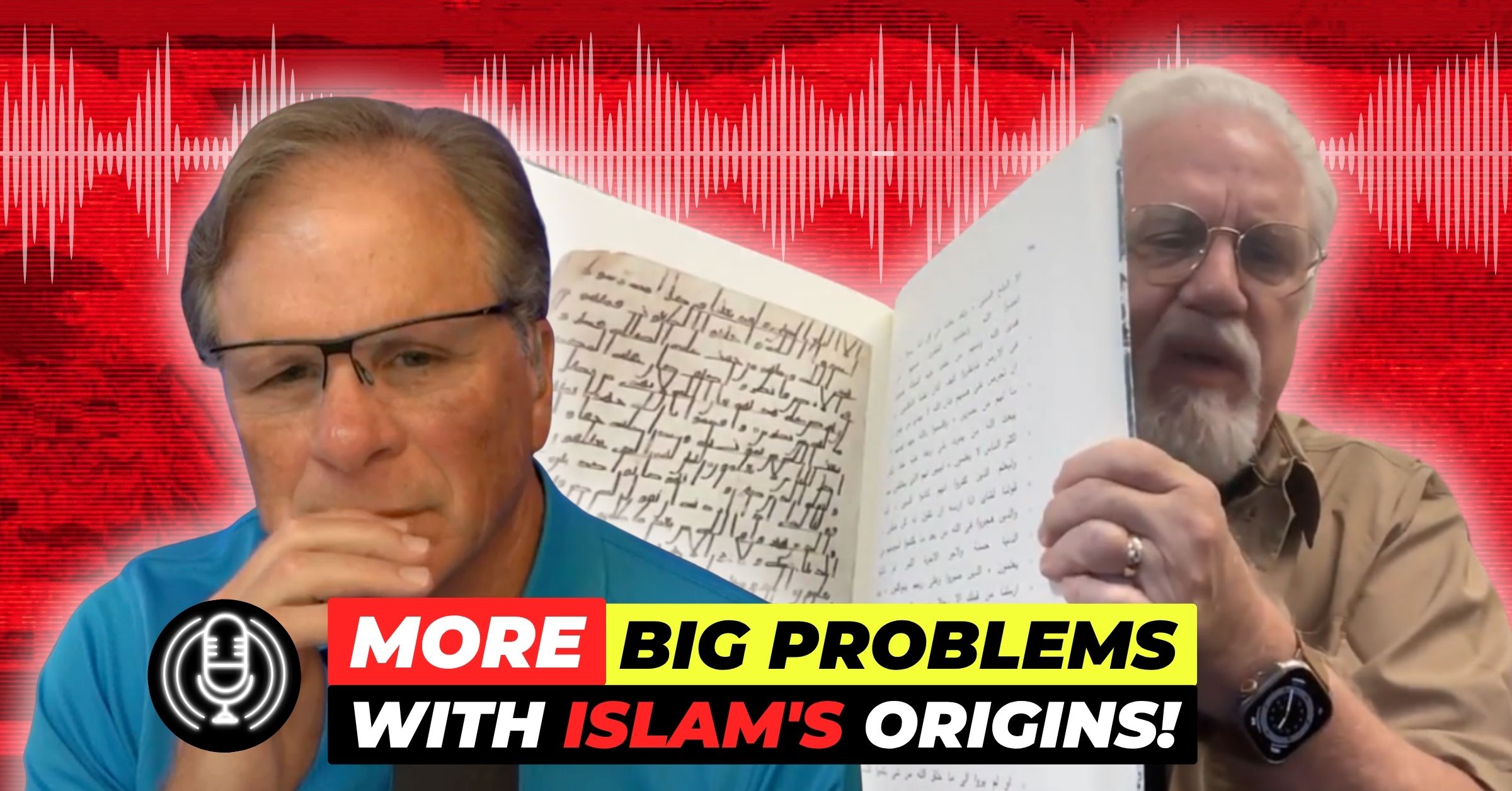
How much do you really know about Islam? Is it possible that we’ve never been told the full story about the historic origins of Muhammad, Mecca, and the Qur’an? In this midweek episode, Frank continues his fascinating conversation with Islam expert, Dr. Jay Smith, who has dedicated his life to evangelizing Muslims. Together, they expose the shocking lack of historical and manuscript evidence for the Qur’an, the prophet Muhammad, and even the city of Mecca itself. Together, Frank and Dr. Smith address questions like:

  • What is the earliest manuscript evidence for the Qur’an, and why do over 2,000 variants raise serious concerns?
  • Are parts of the Qur’an based on Christian hymns?
  • Is Islam a Christian heresy?
  • Who is John of Damascus and why did he call parts of the Qur’an despicable, terrible, and evil?
  • Why did a top a Muslim scholar recently admit that we don’t have good historical evidence for anything written about what Muhammad said or did?
  • Why are most Muslim scholars so hesitant to talk about the Qur’an’s apparent problems?
  • What’s the problem with the Black Stone of Mecca located in Saudi Arabia?
  • Could Islam have originated somewhere other than Mecca?
  • Is it possible that the Muhammad of Islam never existed?
  • What are the four major claims Muslims make about the Qur’an and how do they compare to Jesus and the Bible?
  • What is Dr. Smith’s advice for Muslims and Christians when it comes to responding to this material?

This riveting conversation will not only expose the inconsistencies in Islam’s origin story, but also highlight the unmatched reliability of the Christian faith in contrast. We should encourage our Muslim friends to consider a better Man and a better Book–Jesus and His Word!

If you enjoyed this podcast episode PLEASE HELP US SPREAD THE TRUTH OF CHRISTIANITY BY SUPPORTING OUR MINISTRY HERE. 100% of your donation goes to ministry, 0% to buildings!

Resources mentioned during the episode:

Why the Foundations of Islam Are Now Crumbling – Part 1
Dr. Jay Smith’s Website
Dr. Jay Smith’s YouTube channel
HOT OFF THE PRESS! Muslim Scholar Throws the Historicity of Muhammad UNDER THE BUS!
Two New Findings That Muhammad Didn’t Exist
Investigating Islam
Dismantling Islam PowerPoint Slides

Download Transcript


Did the prophet Muhammad actually exist? How did the Qur’an come into existence? And did Islam really begin in Mecca? If you think you know a lot about the historic origins of Islam–think again!

Frank welcomes Dr. Jay Smith to the program, a legendary defender of the faith and top Christian apologist to Muslims who spent over two decades at the legendary Speaker’s Corner in London. Dr. Smith shares personal experiences from his years evangelizing Muslims, challenging Islamic claims, and navigating the theological and historical issues at the core of Islam. During this eye-opening conversation, Frank and Dr. Smith tackle questions like:

  • What was it like to evangelize at Speaker’s Corner in London for 25 years and why is it a magnet for Muslims?
  • How did the events of 9/11/2001 change the dynamic between the world’s two largest competing religious worldviews–Christianity and Islam?
  • Why is using the Qur’an helpful when sharing the Gospel with Muslims?
  • What is the “three-legged stool” that supports Islam and how does it compare to Christianity?
  • If Mecca is so old, why is there no evidence historically?
  • What are the four genres of S.I.N. (the Standard Islamic Narrative) and why are they being thrown under the bus by some Muslim scholars?
  • Why are there currently 30 official versions of the Qur’an even though it claims to be eternal and unchanged by human hands?
  • Why are the Qur’an’s earliest manuscripts shockingly incomplete and why was the biography of Muhammad compiled by a German scholar?

This is just part one of a riveting two-part discussion, so be sure to tune in next week as Frank and Dr. Smith continue unpacking the historical and theological cracks in the foundation of Islam. And don’t miss the helpful resources in the list below, including the slides from Dr. Smith’s recent presentation at Calvary Chapel Chino Hills!

If you enjoyed this podcast episode PLEASE HELP US SPREAD THE TRUTH OF CHRISTIANITY BY SUPPORTING OUR MINISTRY HERE. 100% of your donation goes to ministry, 0% to buildings!

Resources mentioned during the episode:

Dr. Smith’s Website
Dr. Smith’s YouTube channel
HOT OFF THE PRESS! Muslim Scholar Throws the Historicity of Muhammad UNDER THE BUS!
Two New Findings That Muhammad Didn’t Exist
Investigating Islam
Dismantling Islam PowerPoint Slides

Download Transcript


Why does the Church seem so ineffective (and sometimes corrupt) when it claims to carry the truth? Does this mean the Holy Spirit is no longer at work? And why does Frank recommend so many books on his podcast: isn’t the Bible all we need? Tune in this week as he tackles these pressing listener questions and quickly recaps last week’s popular series on the Book of Revelation and the end times while addressing other questions like:

  • Why would God allow His Church to be so corrupt, chaotic, and unfaithful?
  • Do we need to sense the Holy Spirit working in our lives in order for Christianity to be true?
  • Despite its shortcomings, what positive impact has the Church made in the West and all over the world?
  • What is the contrasting difference between Jesus and Muhammad that many people don’t understand?
  • What is Sola Scriptura? Does it mean everything we need to know is in the Bible?
  • What are the three tiers of understanding the Bible?
  • What are the three ways to gain wisdom?
  • What is prolegomena and why is it essential to a proper understanding of Scripture?
  • What’s the #1 subject kids (and adults) should learn in addition to the Bible?
  • Why is redemption better than innocence?

Do you have a question for Frank? Send it to hello@crossexamined.org for a chance to be featured on a future episode!

If you enjoyed this podcast episode PLEASE HELP US SPREAD THE TRUTH OF CHRISTIANITY BY SUPPORTING OUR MINISTRY HERE. 100% of your donation goes to ministry, 0% to buildings!

Resources mentioned during the episode:

The Revelation YouTube playlist with Dr. Chip Bennet & Dr. Warren Gage
Person of Interest by J. Warner Wallace
Train Your Brain Self-Paced Course
How to Interpret Your Bible Self-Paced Course
Digging Up the Bible PREMIUM Course starts 9/8/2025!


Download Transcript


We see the battle between good and evil throughout the Bible and in the world around us. But do angels and demons influence our lives today and if they do, how do they interact with us?

Joining Frank on the program this week is Pastor Allen Jackson from World Outreach Church in Murfreesboro, TN. Under his humble yet confident leadership, the church has grown from fewer than 30 people to over 15,000 since 1989. His new book, ‘Angels, Demons & You: Unseen Spiritual Influences in Our Lives‘, provides a biblical perspective on the reality of spiritual forces and how they impact our daily lives. Together, Frank and Allen answer questions like:

  • What happened to Allen’s mom that led to his whole family being born again?
  • How did World Outreach Church go from a small Bible study in Allen’s parents’ home to a megachurch?
  • Is leadership just a secular word?
  • Is Islam compatible with the U.S. Constitution?
  • Why does our American culture seem to dismiss the existence of angels and demons?
  • What was it like studying at a secular school like Vanderbilt University?
  • What roles did angels have in the Bible and what is their role today?
  • Should pastors be “political”?
  • Is there a way to detect the presence of angels and demons acting in our lives?

You’ll also learn the importance of making disciples instead of people who just sit in pews, and why the greatest inheritance we can leave our family isn’t fortune or fame–but living a life that honors God. From his humble beginnings as the son of an equine veterinarian, to a ministry that now reaches and encourages 3,000,000+ people per week around the globe, you’ll see why Allen says, “The One we serve is great and we serve at His pleasure!”

If you enjoyed this podcast episode PLEASE HELP US SPREAD THE TRUTH OF CHRISTIANITY BY SUPPORTING OUR MINISTRY HERE. 100% of your donation goes to ministry, 0% to buildings!

Resources mentioned during the episode:

World Outreach Church – Murfreesboro, TN

Allen Jackson Ministries

Culture & Christianity – The Allen Jackson Podcast

Angels, Demons, and You: Unseen Spiritual Influences in Our Lives

God Bless America Again


What do the surprising connections between Old Testament figures and Revelation reveal about the Bible’s divine authorship? Dr. Chip Bennett and Dr. Warren Gage return to continue their fascinating conversation with Frank about the true context of Revelation. Together, they’ll explore how the Old and New Testaments mirror one another in profound and intentional ways—shedding new light on Jesus, prophecy, and redemption. In this episode, they’ll answer questions like:

  • Why was Jesus named after Joshua?
  • How does the battle of Jericho relate to the Book of Revelation?
  • What’s the significance of Jesus meeting the woman at the well?
  • What evidence suggests that the Book of John & the Book of Revelation were written together by John?
  • Who is the beast described in the Book of Revelation?
  • How is Joseph a type of Christ and what’s the mind-blowing connection between Judah, Judas, and Jesus?
  • Why is only focusing on Bible “heroes” a big mistake?
  • How does spotting chiasms or center-points found in Scripture create a deeper meaning of the text?

You’ll discover how the Bible—from Genesis to Revelation—reveals God’s unified plan of redemption through types, themes, and patterns that no human could have orchestrated. This conversation will leave you with greater confidence in Scripture’s divine origin and remind you that no matter who tries to discredit it, the Bible stands as a trustworthy and true revelation from God!

If you enjoyed this podcast episode PLEASE HELP US SPREAD THE TRUTH OF CHRISTIANITY BY SUPPORTING OUR MINISTRY HERE. 100% of your donation goes to ministry, 0% to buildings!

Resources mentioned during the episode:

What No One Ever Told You About the Book of Revelation (Part 1)

Grace Community Church – Sarasota, FL

YouTube playlist – The Revelation Project with Chip & Warren

Chip on TikTok

Chip on YouTube

Dr. Warren Gage on YouTube

WatermarkGospel.com/Revelation – The Book of Revelation Explained in 5 Minutes!

DrWarrenGage.com/Revelation – Revelation resources

Dr. Gage’s book: Milestones to Emmaus


Download Transcript