Tag Archive for: theology

By Brian Chilton

The world suffers from great turmoil and distress. People are distrustful of one another, and they certainly do not trust their governmental representatives. Unfortunately, conspiracy theories have taken center stage. What was once the discourse of backyard talk has now become talking points on Capitol Hill. Numerous people have asked my thoughts on the COVID-19 vaccines and whether the vaccine could represent the mark of the beast. Vaccines are not the only things postulated to be the mark of the beast. At one time, it was thought that the electronic numbers used by credit cards could represent the mark of the beast. Doing my part to emphasize rational discourse and valid hermeneutical practices, it is necessary to investigate the source behind the mark of the beast.

In full disclosure, this article affirms the futurist perspective of the book of Revelation. Futurists believe that much of the book of Revelation speaks to future prophetic events that will play out in the end-times. Preterists represent the opposing view, instead believing that most of Revelation speaks of events that occurred in the first century. Thus, presuming the futurist position, what can we learn about the mark of the beast? Before we engage the mark of the beast, we must first read what the book of Revelation says about the dubious mark.

With the text in hand, two questions need to be considered. First, what is the mark of the beast when kept in the proper context? Second, what can the other theological teachings of the Bible tell us about the mark of the beast?

What is the mark of the beast?

The mark of the beast is found in the larger context of Revelation 13 which deals with the second beast. It must be understood that the powers of darkness attempt to mimic God at every turn. God is Triune, existing as Father, Son, and Holy Spirit. In the book of Revelation, Satan tries to copy this trait coming as a dragon (Satan), a beast (antichrist), and a false prophet. The beast of the sea in the early part of Revelation 13 most likely is the antichrist, a worldly political leader filled with the power of Satan. The antichrist is essentially Satan incarnate.

The beast of the earth is most likely the false prophet. The antichrist imitates Christ’s resurrection by suffering a perceived mortal wound and is healed from it (Rev. 13:13). People worship the beast because they think him to be godlike (Rev. 13:4). Remember, Satan wants to be God and desires people to worship him rather than God.

The second beast arises in Revelation 13:11. The second beast is a religious leader who is also known as the “false prophet” (Rev. 16:13; 19:20; 20:10). The false prophet appears to be gentle, represented by the “two horns like a lamb” (Rev. 13:11), but speaks and behaves viciously. The second beast deceives (Rev. 12:19) through signs and wonders, most likely faked, serving the lie of Satan (2 Thess. 2:9). Here is the critical point to consider: the false prophet leads people to erect an image paying homage to the first beast (the antichrist) so as to worship the first beast. Three things take center stage when identifying the mark of the beast.

The mark is a seal of worship to the unholy trinity. It is uncertain whether the mark is an actual mark or not. It could be. But no matter if it is a physical branding or not, it is undeniable that the mark is a seal of devotion to Satan, the antichrist, and the false prophet. In this case, Satan imitates the Father, the antichrist imitates the Son, and the false prophet imitates the Holy Spirit. Paying homage to an idol was not unique in John’s day as will be shown later in the article.

Is the mark a secretive thing? No! The mark is not something that one takes unaware. Whatever the mark is, it is taken as a cognizant and willing act of devotion to the unholy trinity. The mark will be public, and everyone will know it when it comes. A person taking the mark of the beast publicly identifies oneself with the antichrist much as a baptized believer is publicly identified with Christ.

What does 666 mean? The number hexakoioi hexekonta hex (666) is the numerical value of the antichrist’s name. Each letter in Greek, Hebrew, and Aramaic—the languages of the Bible—held numerical value. Arabic numbers had not been invented by this time. Thus, each word and name hold a numerical value in the biblical text. To calculate the numerical value for each word, the numbers for each letter were added. Jesus’s name equals the numerical value of 888. 8 is a number representing new beginnings and resurrection as it is one digit higher than the number of perfection—the number 7. The beast’s name is one digit below perfection—the number 6. Thus, 666 represents the name of the antichrist and his unholy nature. Ironically, the name Kaiser Nero equaled the value 666. John is telling his readers, who were knowledgeable of Nero’s horrific exploits against believers, that the future antichrist would be like Nero, but only worse and on a global scale.

How does this text merge with other theological teachings in the Bible?

Already, it has been noted how the mark of the beast finds its meaning in the context of Revelation 13. However, three additional theological teachings help to further understand the mark of the beast. When a text becomes difficult to interpret, it must be gauged against other major teachings in Scripture. Clear teachings clarify obscure texts. Additionally, biblical themes are repeated throughout the entirety of Scripture. As such, consider three important truths.

Mark of God. Not only is there a mark of the beast, but Scripture also mentions a mark of God. It is amazing that the next chapter is not read when examining the mark of the beast. In chapter 14, Jesus (aka., “The Lamb of God”) stands on Mount Zion with 144,000 of his children. The 144,000 are most likely Jewish believers saved during the horrible time of tribulation. Nonetheless, notice what is on the foreheads of the 144,000. They had “his name and his Father’s name written on their foreheads” (Rev. 14:1). In Revelation 22, the new heaven and earth are occupied by those who have God’s name written on their foreheads. The text reads, “They will see his face, and his name will be on their foreheads” (Rev. 22:4). In the OT, believers were told to bind the Word of God on their foreheads and hands (Deut. 6:8). The Israelites took this command seriously as they created phylacteries that contained Scripture, placed Scriptural passages in these boxes, and bound them to their foreheads and wrists. But was this command intended to be taken literally or metaphorical?

God says that he will write his word on the hearts of his people (Heb. 8:10). This leads me to wonder whether the mark is a literal mark at all. Perhaps the mark is one’s identification or allegiance to someone or something. The person’s wholesale allegiance to a person or entity may be what the mark represented all along.

Unpardonable sin. When thinking about the mark, a very important teaching given by Jesus himself must be considered. When accused of performing miracles at the hand of Satan, Jesus first instructs his accusers that a kingdom divided against itself cannot stand (Matt. 12:25–26). Jesus then notes, “Anyone who is not with me is against me, and anyone who does not gather with me scatters. Therefore, I tell you, people will be forgiven every sin and blasphemy, but the blasphemy against the Holy Spirit will not be forgiven” (Matt. 12:31). The only sin that is unforgivable is the rejection of the Holy Spirit’s work in the life of Jesus. That is, the unpardonable sin is to reject Christ unto death. Whether the mark is a literal branding or an allegiance of the heart, the thing that makes the mark unforgivable is the rejection of Christ accompanying it. The mark is taken willingly and publicly whether it be for devotion to Christ or Satan. Even now, people bear a mark of Christ or a mark of the beast in their own lives depending on who rules their heart.

Comparison to the book of Daniel and John’s day. One last point needs to be made before wrapping up. This point is a historical one that bears upon the interpretation of the text. People of John’s day would have known what John had in mind when speaking of the mark of the beast. The Greco-Roman world was replete with idols of gods and goddesses. People were instructed to worship certain gods and goddesses in their region which differed according to the location and the god chosen to worship. The pantheon of manmade idols were thought to embody the gods they represented. Scripture notes that when people worshiped these idols, they actually worshiped demons (Deut. 32:16–17). Remember, Satan and his army desire the devotion that God deserves for themselves.

The book of Revelation finds many parallels to the OT. This may be an area that finds a root in the OT as well. In the book of Daniel, Nebuchadnezzar set up a 90-foot-tall by 9-foot-wide idol and ordered everyone to worship the idol (Dan. 3:1–3). Whoever did not worship the idol was thrown into a furnace of fire (Dan. 3:6). Nebuchadnezzar’s command caused a problem for the devout Daniel, Hananiah (Shadrach), Mishael (Meshach), and Azariah (Abednego). Hananiah, Mishael, and Azariah chose the flames of the furnace over worshiping a false god because they knew that only Yahweh deserved such praise. However, after being thrown into the furnace of fire, they were spared by a Fourth Man walking in the fire with them who appeared as a divine being (Dan. 3:25). With this backdrop in mind, the mark of the beast becomes ever more clear. The mark of the beast represents a person’s allegiance to the dragon (Satan), the beast of the sea (antichrist), and the beast of the earth (false prophet).

Conclusion

The mark of the beast is not so much about an actual mark as it is about one’s allegiance to the powers of darkness. Each person already bears a mark of some sort in one’s heart and life. Scripture indicates that the Holy Spirit is the seal of God upon the believer’s life (2 Cor. 1:22; 5:5; Eph. 1:13–14; 4:30). Either a person is marked by God or marked by Satan. A person’s allegiance can change from the influence of Satan to God by the power of God working in them. But going back to the mark of the beast, people do not need to constantly worry about being deceived into taking a mark that will eliminate their chances of entering heaven. Vaccines and electronic devices do not represent what John had in mind when he recorded the revelation of God. He speaks of a person’s public denial of Christ and affirmation of a public, political leader who is directed and filled with the power of Satan. With this in mind, as Joshua challenged the Hebrews, we are challenged as well to “choose this day whom [we] will serve” (Josh. 24:15).

Recommended resources related to the topic:

How to Interpret Your Bible by Dr. Frank Turek DVD Complete SeriesINSTRUCTOR Study Guide, and STUDENT Study Guide

How Philosophy Can Help Your Theology by Richard Howe (MP3 Set), (mp4 Download Set), and (DVD Set)

By Brian Chilton

People are stressed. Sure, that is the understatement of the year. But it’s true. People are stressed for numerous reasons. Political issues, the pandemic, isolation, and financial strain are among many of the catalysts causing distress for individuals. Christians are among those who seem to be distressed the most. But why? I do not claim any super-spirituality for myself by any stretch of the imagination. However, it must be asked, where is our faith? Christians say they have faith. But does faith not especially prove true when things are rough?

This is a question that was posed to the disciples. Let your mind go back to an event preserved in Mark 4:35–41. The time: The first-century, circa AD 28. The place: The Sea of Galilee in Israel. Jesus, fully knowing what would happen, said to the disciples, “Let’s cross over to the other side of the sea” (Mark 4:35).[1] Without causing a stir, the disciples agreed. They were probably excited to perhaps catch a fish or two while they were on the water. Fishermen love to fish. Additionally, the company of disciples had been inundated with large crowds pressing to see and hear from Jesus. This trip was a welcome getaway from the bustling life of ministry; one that led them to act as Jesus’s security guards trying to keep the mobs from overwhelming Jesus.

Tragedy struck what should have been a pleasant trip while they were midway across the sea. A great windstorm came upon them. The power of the wind stirred up the sea causing waves to crash into the boat. The disciples struggled to keep the water out of the boat. They were fighting a losing battle. More water entered the boat than what they could cast out. The disciples thought they were doomed. Worse yet, Jesus was not bothered by their conundrum. He was found lying asleep in the stern of the boat. Distressed people are annoyed by other people who remain calm. Didn’t Jesus care about their plight? How could he remain sleeping? An unnamed disciple, most likely Peter, yelled at Jesus, saying, “Teacher! Don’t you care that we’re going to die?” (Mark 4:38). What was Jesus’s problem, anyway? How dare Jesus remain calm when everything was going haywire?

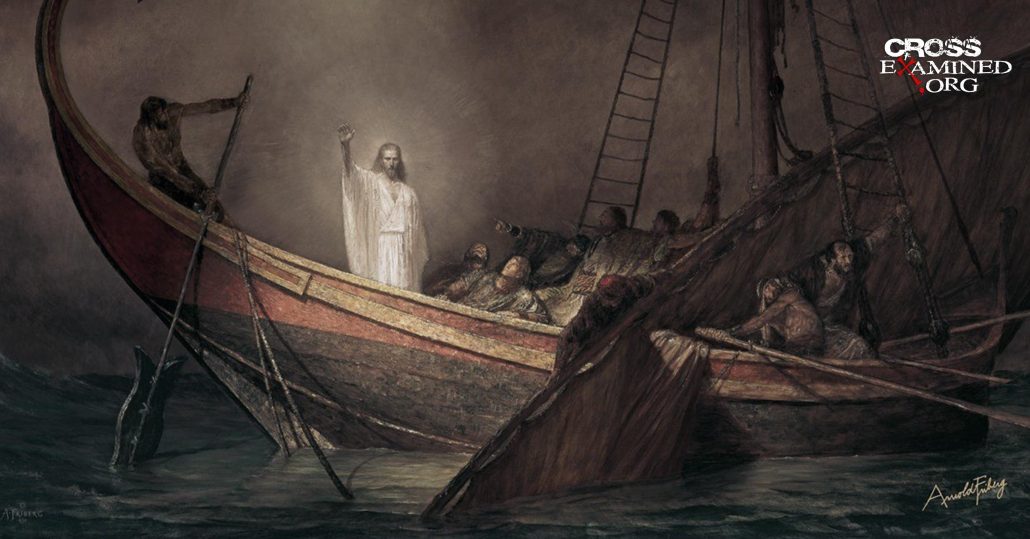
Jesus responded. When Jesus responds, things happen. He stood up, probably wiping the sleep from his eyes and perhaps cracking his neck, stretched out his arms, and said, “Silence! Be still” (Mark 4:39)! At that, the wind immediately stopped blowing and the sea became tranquil and serene. Terrified out of their wits, the disciples could not believe what they just witnessed. Jesus turned to them with steely eyes and asked, “Why are you still afraid? Do you still have no faith?” (Mark 4:40).

Jesus continues to ask his disciples this question. This time, he asks it of us. Jesus is in heaven, still alive and well after having defeated death and ascending to the right hand of the Father. Here we are today facing our own storms. Yet Jesus’s challenging words remain. Where is our faith? This question challenges at least three areas of our trust in him.

Where is Our Faith in God’s Probity?

Probity is the righteous characteristic of holding strong moral principles, honesty, and decency. God is the absolute good (1 John 1:5). God is the source of goodness (3 John 11). If God is the absolute good and the source of goodness, then God has the best of intentions from even the most difficult of circumstances. People generally want results without putting in the effort. Most preachers want to be like Billy Graham but very few are willing to put in the hours of study and preparation that Dr. Graham did. Many young men want to look like famed bodybuilders, but few want to put in the work to get there. Likewise, people want to be sanctified, but they don’t want to endure the process that God uses to build up his people. Do we trust in the goodness of God?

Where is Our Faith in God’s Power?

The disciples were stunned at the power that Jesus demonstrated. But should they have expected any different from Jesus? Scripture indicates that Jesus was not only the Son of God but that Jesus was also instrumental in creation (Col. 1:16). Before the disciples are criticized for their lack of faith, modern Christians must ask themselves if they still believe in the power of God. If they do, then they will realize that God is greater than any pandemic. They will also realize that God is greater than any political power. The believer should still live responsibility, seeking out the best for those around them. However, one should not be overcome with fear. Do we trust in the power of God?

Where is Our Faith in God’s Promises?

Here is the clincher. Jesus told us that pandemics, wars, and national powers were going to get worse as the timing of Christ’s return hastens. The closer the world gets to the return of Christ, the more chaotic the world becomes. Jesus said, “When you hear of wars and rumors of wars, don’t be alarmed; these things must take place, but it is not yet the end” (Mark 13:7). He goes on to say, “There will be famines, and earthquakes in various places” (Matt. 24:7). Interestingly, some translations add epidemics or pandemics to the list. No matter whether epidemics should be added or not, the pale green horseman of the book of Revelation notes that the world will be plagued by pandemics before the return of Christ (Rev. 6:8). Jesus teaches that all these things are but the “beginning of birth pains” (Mark 13:8). A woman begins to experience labor pains before the baby is eventually born. Likewise, global and national disturbances are but labor pains notifying individuals that Jesus’s return is imminent. God has already laid out his prophetic plans. Do we trust in God’s promises?

Conclusion

Perhaps our lack of faith speaks more to the biblical illiteracy of our times than anything else. Maybe the reason that people have no more trust in God’s plan is that preachers and teachers are not emphasizing the teachings and prophetic message of Jesus. Or it could be that the modern absence of faith in God originates from a trust in self more than a trust in the Savior. No matter the cause, the modern believer needs to realize that pandemics, wars, and disturbances do not take God by surprise. God is working to bring us to a place where pandemics, wars, and disturbances do not exist. Believers have every reason to trust God, especially in times like these.

Recommended resources related to the topic:

Jesus, You and the Essentials of Christianity – Episode 14 Video DOWNLOAD by Frank Turek (DVD)


Brian G. Chilton is the founder of BellatorChristi.com, the host of The Bellator Christi Podcast, and the author of the Layman’s Manual on Christian Apologetics. He received his Master of Divinity in Theology from Liberty University (with high distinction); his Bachelor of Science in Religious Studies and Philosophy from Gardner-Webb University (with honors); and received certification in Christian Apologetics from Biola University. Brian is enrolled in the Ph.D. program in Theology and Apologetics at Liberty University and is a member of the Evangelical Theological Society and the Evangelical Philosophical Society. Brian has served in pastoral ministry for nearly 20 years.

Original Blog Source: https://cutt.ly/ujliwpY

By Alisa Childers

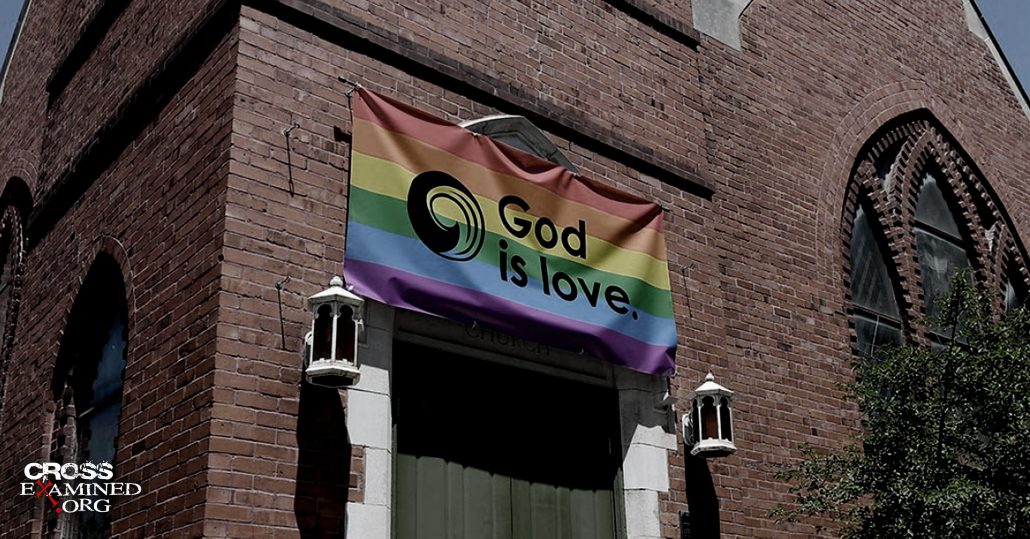
Several years ago, my husband and I began attending a local Evangelical, non-denominational church, and we loved it. We cherished the sense of community we found among the loving and authentic people we met there, and the intelligent, “outside the box” pastor who led our flock with thought-provoking and insightful sermons. Sadly, the church started going off the rails theologically, and after about a year and a half, we made the difficult decision to leave. Today that church is a self-titled “Progressive Christian Community.” 

Back then I had never heard of “Progressive Christianity,” and even now it is difficult to pin down what actually qualifies someone as a Progressive Christian, due to the diversity of beliefs that fall under that designation. However, there are signs—certain phrases and ideas—that seem to be consistent in Progressive circles. Here are 5 danger signs to watch for in your church:

 1. There is a lowered view of the Bible 

One of the main differences between Progressive Christianity and Historic Christianity is its view of the Bible. Historically, Christians have viewed the Bible as the Word of God and authoritative for our lives. Progressive Christianity generally abandons these terms, emphasizing personal belief over the biblical mandate.

Comments you might hear:

  • The Bible is a human book…
  • I disagree with the Apostle Paul on that issue…
  • The Bible condones immorality, so we are obligated to reject what it says in certain places…
  • ​The Bible “contains” the word of God…

2. Feelings are emphasized over facts

In Progressive churches, personal experiences, feelings, and opinions tend to be valued above objective truth. As the Bible ceases to be viewed as God’s definitive word, what a person feels to be true becomes the ultimate authority for faith and practice.

Comments you might hear:

  • That Bible verse doesn’t resonate with me…
  • I thought homosexuality was a sin until I met and befriended some gay people…
  • I just can’t believe Jesus would send good people to hell…

3. Essential Christian doctrines are open for re-interpretation

Progressive author John Pavlovitz wrote, “There are no sacred cows [in Progressive Christianity]….Tradition, dogma, and doctrine are all fair game, because all pass through the hands of flawed humanity.” Progressive Christians are often open to re-defining and re-interpreting the Bible on hot-button moral issues like homosexuality and abortion, and also cardinal doctrines such as the virgin conception and the bodily resurrection of Jesus. The only sacred cow is “no sacred cows.” 

Comments you might hear:

  • The resurrection of Jesus doesn’t have to be factual to speak truth…
  • The church’s historic position on sexuality is archaic and needs to be updated within a modern framework…
  • The idea of a literal hell is offensive to non-Christians and needs to be re-interpreted…

​4. Historic terms are re-defined

There are some Progressive Christians who say they affirm doctrines like biblical inspiration, inerrancy, and authority, but they have to do linguistic gymnastics to make those words mean what they want them to mean. I remember asking a Pastor, “Do you believe the Bible is divinely inspired?” He answered confidently, “Yes, of course!” However, I mistakenly assumed that when using the word “inspired,” we both meant the same thing. He clarified months later what he meant—that the Bible is inspired in the same way and on the same level as many other Christian books, songs, and sermons. This, of course, is not how Christians have historically understood the doctrine of divine inspiration.

Another word that tends to get a Progressive make-over is the word “love.” When plucked out of its biblical context, it becomes a catch-all term for everything non-confrontative, pleasant, and affirming.

Comments you might hear:

  • God wouldn’t punish sinners—He is love…
  • Sure, the Bible is authoritative—but we’ve misunderstood it for the first 2,000 years of church history…
  • It’s not our job to talk to anyone about sin—it’s our job to just love them…

​5.  The heart of the gospel message shifts from sin and redemption to social justice

There is no doubt that the Bible commands us to take care of the unfortunate and defend those who are oppressed. This is a very real and profoundly important part of what it means to live out our Christian faith. However, the core message of Christianity—the gospel—is that Jesus died for our sins, was buried and resurrected, and thereby reconciled us to God. This is the message that will truly bring freedom to the oppressed.

Many Progressive Christians today find the concept of God willing His Son to die on the cross to be embarrassing or even appalling. Sometimes referred to as “cosmic child abuse,” the idea of blood atonement is de-emphasized or denied altogether, with social justice and good works enthroned in its place.

Comments you might hear:

  • Sin doesn’t separate us from God—we are made in His image and He called us good…
  • God didn’t actually require a sacrifice for our sins—the first Christians picked up on the pagan practice of animal sacrifice and told the Jesus story in similar terms…
  • We don’t really need to preach the gospel—we just need to show love by bringing justice to the oppressed and provision to the needy…

Conclusion:

Identifying the signs is not always obvious—sometimes they are subtle and mixed with a lot of truth. Progressive Christianity can be persuasive and enticing but carried out to its logical end, it is an assault on the foundational framework of Christianity, leaving it disarmed of its saving power.

We shouldn’t be surprised to find some of these ideas infiltrating our churches. Jesus warned us, “Watch out for false prophets” who “come to you in sheep’s clothing, but inwardly they are ferocious wolves” (Matthew 7:15). So if you spot any of these 5 danger signs in your place of worship, it might be time to pray about finding fellowship in a more biblically faithful church community.

Recommended resources related to the topic:

Letters to a Young Progressive by Mike Adams (Book)

Jesus, You and the Essentials of Christianity – Episode 14 Video DOWNLOAD by Frank Turek (DVD)


Alisa Childers is an American singer and songwriter, best known for being in the all-female Christian music group ZOEgirl. She has had a string of top ten radio singles, four studio releases, and received the Dove Award during her time with ZOEgirl. In later years, Alisa found her life-long faith deeply challenged when she started attending what would later identify as a Progressive Christian church. This challenge pushed Alisa toward Christian Apologetics. Today you can read, listen and watch Alisa’s work online as well as purchase her recently published book on Progressive Christianity titled Another Gospel.

Original Blog Source: https://cutt.ly/Ijk76DJ

By John A. Limanto

The first genealogy within the Gospel of Matthew is an important cornerstone of the Gospel. This genealogy—a relic of the pre-Jewish-Roman War—contains, at the very heart of it, a Jewish tapestry that may only be deciphered by a thoroughly Jewish mind. In interpreting the genealogy, we find that it is indeed the pinnacle of the Jewish message of the Gospel. Containing within it is the stupendous claim that Jesus of Nazareth—the carpenter and the Son of Mary—is in the line of King David and is worthy of the Throne of Israel. Lingering deep within this chapter is the Messianic priority that has been reserved for the Jews. As the words of St. Paul proclaim, “for it is the power of God for salvation to everyone who believes, to the Jew first and also to the Greek.”[1]

However, far from being considered as a scrupulously precise report, Matthew’s genealogy has been widely regarded as incomplete. The differences that it bears with its Lukan counterpart along with the omissions of the names of several kings are demonstrably palpable. At surface value, these details may indeed impugn Matthew as a reliable source. Furthermore, the supposed symmetrical structure of the genealogy that Matthew posited seems to contain asymmetrical number of persons. This issue is critical especially when it is put in relation to the traditional doctrine of Biblical inerrancy—which is the doctrine that requires for there to be no error within the Scripture. How can this be accomplished when even the first genealogy in Matthew contains such follies? Have Matthew really crossed the unpardonable line of errancy?

Within this essay, I would like to present a case in support of the inerrancy for the Gospel of Matthew in light of the supposed problems found within Matthew’s genealogy. I believe that when we look at the case fairly—examining the evidences to their roots—we will begin to see how the first genealogy is not just inerrant, but has effectively accomplished its designed purpose. I will begin by providing some context to the Gospel of Matthew before moving on to the structure of the genealogy, the alleged “problems” before finally ending in my reconciliation between Biblical inerrancy and the Matthean genealogy

Context Regarding the Gospel of Matthew and the Genealogy

The Gospel of Matthew was likely written around the late AD 60’s.[2] Although this has placed the Gospel at a later date in comparison with Mark, it is likely that the information in the gospel has been gathered from the Gospel of Mark itself.[3] However, as the Gospel of Mark itself does not contain the names in the genealogy, Matthew must have had garnered the names from both the Old Testament and the extrabiblical sources found in Temple of Jerusalem prior to its destruction in AD 70[4]Thus, Matthew bears witness to names of kings that are not found anywhere else in the surviving Jewish Literature. R.T France wisely remarks, “While most of the names between Zerubbabel and Joseph conform to familiar Jewish types of name, there is no reason to link any of the individuals listed with anyone who is known to us from other sources.”[5]

One of the interesting things about genealogy is its etymology. The word used in Matthew (translated in the NIV as: “genealogy”) is the Greek word γένεσις (“genesis”). This alludes to the creation of the world; the coming of Jesus was supposed to mark a new creation—a new beginning. Moreover, Genealogies are particularly important within the Jewish tradition. It is said that out of genealogies, disputes were settled regarding properties and extensive genealogies were scrupulously preserved as records of the family.[6] Thus, it is very unlikely for Matthew, as a Jew himself, to contrive the names of the descendants of Jesus. As Matthew himself was writing very early after the death of Jesus, any fraudulent contrivances will be easily verified (assuming that the Matthean Gospel is written before the fall of the Temple of Jerusalem in AD. 70)

Structure of the Genealogy

The genealogy is divided into three main sections as Matthew himself claimed:

 17 So all the generations from Abraham to David were fourteen generations, and from David to the deportation to Babylon fourteen generations, and from the deportation to Babylon to the Christ fourteen generations.[7]

What importance does this hold? Matthew here seems to be designing his genealogy in a way that is symmetrical and easy to memorize. Thus, Matthew asserted that the genealogy contains fourteen generations per section. However, any shrewd reader will be apt to point out that the number does not correctly correspond to each section. Grant. R. Osborne points out,

There are fourteen names in the first series if David is counted. The problem is that there are only thirteen generations (periods between names)… In the second series, there are fourteen names only if David is not counted, so there are fourteen full generations (periods between names). In the third series, there are fourteen names if you count Christ.[8]

Here, Osborne rightly points out the numeral discord in each section. Let us consider the names in each series:

Series 1 (from Abraham to David): Abraham, Isaac, Jacob, Judah, Perez, Hezron, Ram, Aminadab, Nahshon, Salmon, Boaz, Obed, Jesse, David (14)

Series 2: (David to Jeconiah): David, Solomon, Rehoboam, Abijah, Asa, Jehosaphat, Jehoram, Uzziah, Jotham, Ahaz, Hezekieh, Manasseh, Amon, Josiah, Jeconiah (15)

Series 3 (Jeconiah to Jesus): Jeconiah, Shealtiel, Zerubbabel, Abihud, Eliakim, azor, Zadok, Akim, Elihud, Eleazar, Matthan, Jacob, Joseph, Jesus (14)

Osborne offers a creative escape as a way of interpreting this without asserting inaccuracy: “This is resolved by simply assuming that Matthew is counting the generation leading to Abraham.”[9] Thus, counting from Jesus, one can omit either Jeconiah or David from the second series—assuming the former to belong to the third series and the latter to belong to the first series. Our new series will thus be:

Series 1 (from Abraham to David): Abraham, Isaac, Jacob, Judah, Perez, Hezron, Ram, Aminadab, Nahshon, Salmon, Boaz, Obed, Jesse, David (14)

Series 2: (David to Jeconiah): Solomon, Rehoboam, Abijah, Asa, Jehosaphat, Jehoram, Uzziah, Jotham, Ahaz, Hezekieh, Manasseh, Amon, Josiah, Jeconiah (14)

Series 3 (Jeconiah to Jesus): Jeconiah, Shealtiel, Zerubbabel, Abihud, Eliakim, azor, Zadok, Akim, Elihud, Eleazar, Matthan, Jacob, Joseph, Jesus (14)

This strategy would satisfyingly do justice to Matthew’s original claim that there are fourteen generations each, while retaining the structural format.

The question as to why Matthew has chosen this particular format has perplexed the Biblical Scholar world. It is unclear as to what the number fourteen is supposed to represent. Nonetheless, many suggestions have been given.[10] One of the main suggestions has been gematria. This is the suggestion that even Osborne himself called as “the most likely.”[11] Gematria is the Jewish practice of using letters and alphabets for numbers. Every name and vowel has their own numeral significance—the word David in Hebrew consists of the three consonants dwd. Here, “d” equals to four and “w” equals to six (counted in Hebraic consonant order). In sum, the three letters produce the number fourteen. Scholars such as R. T. France, on the other hand, prefer the simpler explanation that fourteen is merely twice seven.[12]

The Omission of the Kings

This is the crux of the problem. The seemingly contrived structural format might have already given it away, but the genealogy has omitted—for some reason or another—the names of five kings along the line: Ahaziah, Joash, Amaziah, Jehoahaz, and Jehoiakim. Ahaziah, Joash, and Amaziah are supposed to be in between the line of Jehoram to Uzziah, while the two brothers Jehoahaz and Jehoiakim are in between Josiah and Jeconiah.

Analysis of the Kings

Any robust analysis of the omission of the five kings must contain a discussion of each of these kings. A pattern that of unrighteousness can be noticed within each of the kings. Ahaziah was blatantly described as an evil king who “walked in the ways of the house of Ahab.” (2 Chronicles 22:3). He was later captured in Samaria and killed by the men of Jehu, the tenth king of the Northern Kingdom of Israel. His successor, Athaliah, was subsequently executed and succeeded by Joash (2 Chr. 23:12-15)—who was the biological son of Ahaziah. Joash, in contrast, was first described as a righteous king (2 Chr. 24:2), but soon fell away at the end of his life. He was said to have served the Asherim and the idols and was later assassinated by his own servants (2 Chr. 24:18, 25). Likewise, Amaziah was a righteous king from the outset, but turned away later after striking the Edomites (2. Chr. 25:14).

It is obviously tempting for one to sway away the problem by merely attributing the omissions to the vile and the treacheries of these kings. Indeed, this solution has been proposed by R. T France himself. A clear success of such an approach is ambiguous, however—especially when the topic at hand is in regards to Biblical inerrancy. Such motives may give the opponents of the Scripture the necessary ammunition to impugn the Gospel of Matthew based on what they would perceive as “embellishments.”

Jehoahaz and Jehoiakim enters the picture as the two of the few ungodly kings recorded in 2 Kings 23-31 and 2 Kings 24:20. The Old Testament remarked that these kings include: Jehoahaz, Jehoiakim, Jehoiachin/Jeconiah, and Zedekiah. What does it, then, even mean when Matthew says “Josiah [is] the father of Jeconiah and his brothers?” A possible explanation is provided by Wilkins who points out that in the LXX (the Septuagint from where Matthew may have derived his genealogy from), the Greek word loakim denotes both Jehoiakim and Jeconiah.[13] It is possible that Matthew really intended for the word to have a double entendre—referring to both Jehoiakim and Jeconiah. Such an explanation will come more naturally when we understand the word “brothers” to not only mean the other rulers of the time, but also of the whole brotherhood of the Israelites sent to the exile—thus the whole clause is referring to a much greater scope than its literal meaning. Although this may be a possible interpretation, I shall adopt the worst possible scenario in this essay—that Matthew has actually omitted five kings from his genealogy.

In overall, the omission of the kings is a tougher issue to deal with for the inerrantist in comparison to the miniscule problem of the symmetrical structure. This understanding of Divine Inspiration is ubiquitous through the Christian tradition—and to deny such a doctrine costs a great price. Before we can proceed, however, it is good to inquire on what the biblical doctrine of inerrancy means.

Inerrancy

A solid understanding of what Biblical Inerrancy means will be vital to our discussion at hand. The most common misconception is that Biblical Inerrancy means that whatever the Bible says is true. However, this seems highly confused and misleading. For if whatever the Bible says is true, then the illustrations within the book of Revelation, would too, be literally true. But surely, this is absurd. The illustration in the book of Revelation is obviously a figure of speech or some sort. Thus, with this at hand, we can understand that defining inerrancy in its barest, narrowest sense will be counter-productive for any sincere truth-seeker. MacGregor avers:

“This classic doctrine of inerrancy stipulates that for each periscope within every document of the scriptural canon, when we first take into consideration that periscope’s original literary genre and the rules for what does and does not constitute an error in that genre, the periscope contains no errors.”[14]

The doctrine of Inerrancy does not concern what the Bible say on surface, but rather what the Bible teaches in its depth. We must determine the certain genre, literary tools, and context within a certain passage and determine whether it is correct in those senses.

Incompleteness and Inaccuracy

The best strategy for Christians, it seems, is to admit that there is incompleteness within the genealogy, but not inaccuracy. Herein, the difference is apparent. The Bible, for example, does not teach astrophysics or medicinal science. Does this mean the Bible is unqualified? By no means! Omissions of such details only signify an incompleteness of the Bible in discussing those topics.

However, here, we can go a step even further and ask ourselves, “is it appropriate for the Bible to omit such details?” Obviously, with regards to subjects such as astrophysics or medicinal science, one will adamantly agree that it is in all of a Bible’s propriety to leave out details that are not conducive to what the Bible focuses—the message of Salvation and knowledge of the One true God.

From here, we must likewise ask, “is it appropriate for the Gospel of Matthew to omit certain names within the genealogy?” If Matthew here meant to be precise and complete in his genealogy, doubtless that an incomplete genealogy would be Matthew’s errancy. However, does Matthew really intend for his genealogy to be perceived in such a way? Modern scholars think not.

The Purpose of the Genealogy

Matthew’s personal obsession in scrupulously arranging a symmetry is to be baffled about. Such an obsession, fortunately, helps to reveal to us Matthew’s original intent for the genealogy—an easy, memorisable, family data to help act as “signposts” for his Jewish audiences to identify Jesus within the line of the family of David. This identification of Jesus resonates with the unanimous view of New Testament scholars. Thus R. T. France says,

“But its [genealogy] main aim is clear enough: to locate Jesus within the story of God’s people as its intended climax, and to do it with a special focus on the Davidic monarchy as the proper context for a theological understanding of the role of the person whom Matthew, more than the other gospel writers, will delight to refer to not only as “Messiah” but also more specifically as “Son of David.”[15]

For such a purpose, the omission of the four kings will indeed be a beneficial tool in catalysing a compact genealogy for the purpose of easy memorization. In such a case, only the key people will be necessary within the genealogy with the purpose of acting as “signposts” pointing to the right direction. In fact, Craig S. Keener pointed out, “Matthew opens his Gospel by showing both Jesus’ historic inseparability from the history of Israel… The opening verse of the Gospel introduces two ancestors who become pivotal characters in the genealogy: Jesus is the son of Abraham (the ideal Jew) and the son of David (the Messiah).”[16] Here, Keener has even gone on to reduce the pillars of the genealogy to merely two characters: Abraham and David.

Keener goes on to argue that the main purpose of Matthew’s genealogy is not at all to show the genetic ancestry, but the emphasis has always been on His spiritual ancestry.[17] Ergo, he asserts, “Matthew thus establishes rhetorical community with his audience in his proem; proems typically appealed to audience sympathy.”[18] Keener’s view that such a genealogy is intended to build an emotional relation to the audience echoes well with Matthew’s colloquial and symmetrical format. Matthew here is not writing formally, but as a fellow Jew in his own relation to his brethren.

This theme of Jewish relation is indeed the majority view of Bible commentators with regards to Matthew’s purpose through the genealogy. Often times, this has been marked by the interpretation that Matthew has a theological focus more than one that is historical. Again, the theme is brought up that Matthew is not acting just as a historian in his writing, but also as a theologian. Wilkins’ statement is typical: “Matthew’s opening verse gives an important clue to his overall purpose and perspective. It had special meaning for those with a Jewish background, attempting both to awaken the faith of Jews and to strengthen the faith of Jewish Christians, insofar as Jesus is the “Messiah,” the “son of David,” the heir to the promises of Israel’s throne through King David.”[19] Some commentators have even gone so loose and say that for Matthew, this theological focus trumps over his historical focus. Thomas G. Long comments,

“It seems here that Matthew is more interested in making a theological point than in being genealogically precise. Almost every commentator has noted that this pattern of sets of uniformly numbered generation is an artificial creation, for each of these three time periods cover too many years to be spanned by only fourteen generations.”[20]

Comparison to Lukan Genealogy

A much broader issue appears once we compare the Matthean genealogy to its Lukan counterpart as expounded within Luke 3:23-38. Wilkins has formulated a list of five main differences that rifts apart the two genealogies.[21] 1) Matthew gives a descending genealogy, beginning with Abraham while Luke gives an ascending genealogy, starting with Jesus and tracing it backward to Adam. The Matthean genealogy here is more faithful to the Jewish tradition of genealogies while the Lukan genealogy adhere to genealogies more commonly found in Greco-Roman tradition. 2) Mathew places special emphasis on the covenants made with Israel, by tracing Jesus’ lineage to David and Abraham. Meanwhile, Luke places special emphasis on Jesus’ relation to all of humanity and to God by tracing his lineage to Adam and God himself. 3) The names of several persons after the Babylonian deportation differs between the two genealogies. Matthew follows the line through Jeconiah, Shealtiel, and Zerubbabel. Luke follows the line through Neri, Shealtiel, and Zerubbabel. 4) Matthew omits several names that are found in the genealogy of Luke. 5) Matthew puts emphasis on Jesus’ kingly lineage. David is not simply the son of Jesse—as Luke titles him—but that he is “King David”. Matthew traces Jesus’ genealogy through David’s son Solomon, while Luke traces the line through David’s son Nathan, who never reigned as king.

The issue of our interest regarding Matthean genealogy and Biblical inerrancy concerns third, fourth, and fifth point. The difference in the genealogy between Matthew and Luke itself is enough to crumble down the Biblical inerrancy. In the next passage, I shall attempt to reconcile the two together and provide a possible solution.

Reconciliation with Biblical Inerrancy

Henceforth, I will be arguing my last point—that by the context and the Biblical data that we have, we can see how the Matthean genealogy may be vindicated from accuses of errancy with regards to the omission of the four kings, differences with the Lukan genealogy and further, with regards to its symmetrical structure.

With regards to its symmetrical structure, we have observed that it is possible for us to view the genealogy in a way that will circumvent the issue of the asymmetrical number of people in each set. Although the first and third set contains fourteen people on its own, while the second contains fifteen, an easy way out would be to assume that Matthew was simply counting the generations leading to Abraham. Such a trick allows us to bypass the problem and retain the symmetrical structure of the genealogy that Matthew postulated.

With regards to the omission of the five kings, we have seen previously how this is consistent with the context of the Matthean genealogy—written colloquially in a structure that is memorisable to form an emotional relation with Jews who are reading the gospel. By the scrupulosity of Matthew towards its structural rigidity (despite the messiness that still ensues nevertheless) we can understand that Matthew never intended for his genealogy to be written as a complete, formal genealogy. Rather, his symmetrical focus and the unnecessity for the completion of the genealogy points to how Matthew deliberately omitted those kings in favour of the structural format.

Within such genre and context—there is no necessity for the genealogy to be precise. It ought to be precise only with regards to its theological and literary purposes—which it did. Therefore, form here we can infer that Matthew has indeed fulfilled its context, literary genres, and purposes; this is precisely what is needed to sufficiently fulfil the criteria for inerrancy. David L Turner is correct in saying, “Matthew has omitted three names … and other omissions can also be noted. But it is not that Matthew has erred, since he did not intend to work exhaustively and precisely.”[22]

Moreover, considering the insignificance of these five kings as signposts in the line of David, it would do little if those kings were omitted. To accomplish his purpose in the context of providing an informal genealogy for the lay people, the structural format has to be prioritized. In this regard, Matthew’s decision may even be praiseworthy as it shows his shrewdness as an author. It is further worthwhile to mention Keener’s remark that within the genre of ancient genealogies, it is not uncommon for such omissions to happen.[23] If this is indeed true, it would imply that not only such omissions permissible, but also in line with the mainstream tradition of ancient genealogies.

More, however, needs to be added with regards to the Lukan genealogy. There have been several possible suggestions posed as to how we can construe the differences in the Lukan and the Matthean genealogy. Luther has suggested that Matthew offered the Joseph’s ancestry while Luke offered Mary’s. This position, however, runs aground when we see the explicit wording in Luke 3:23 (cf. Luke 1:27). R. T France further excoriate this position by pointing out that ancient Jewish genealogies were not traced through the mother.[24] Another view that sprung up would be that either Matthew or Luke has simply invented names. But again, such a case is very unlikely. Genealogies are simply too important for any Jew to treat them so cavalierly.[25] Thus, Contemporary scholars have now opted for a third position that Matthew emphasized the royal lineage of Jesus by tracing the “throne-succession of the actual, and, after the exile, the putative kings of Judah.[26] Meanwhile, Luke may have emphasized the actual biological lineage of Jesus. France confesses that such a view may be speculative, but it is indeed possible that biological and dynastic line run on separate lines while converging on multiple occasions.[27]

Conclusion

I hope to have established a firm case for a reconciliation between the Matthean genealogy and Biblical inerrancy. As we have thus far seen, the obstacles into reconciling the two of them have fallen short. Though it is not at all unreasonable to doubt Matthew’s inerrancy—especially in light of its differences with the Lukan genealogy—, by the strength of the evidences, it seems more plausible for us to adhere to its inerrancy. Such a view is far more supported by our present understanding of Jewish tradition—their scrupulous preservation and recording of genealogies. With regards to the omission of the five kings and the asymmetrical number of people in the genealogy, I hope to have shown that there can be no reasonable doubt that Matthew has intended for the omission and this, too, fulfils the context, genre and purpose of the genealogy. The purported “asymmetry,” on the other hand, may be resolved simply with a quick re-evaluation as provided above.

Notes

[1] The Holy Bible: English Standard Version. (2016). (Ro 1:16). Wheaton: Standard Bible Society.

[2] The date of the authorship of Matthew has been clouded with much obscurities. The general scholars have been divided into two camps: the pre-70 AD camp and the Infra-70 AD camp. The position posed within this essay is the traditional position of the early Church Fathers. See Iraneus’, Against Heresies, 3.1.1. For a complete discourse regarding the debate of Matthew’s date of authorship, see R.T France, The Gospel of Matthew, 18-19; Michael J. Wilkins, Matthew, 24.

[3] K Lachmann, 1835; C. H. Weisse and C. G. Wilke, 1838; H.j. Holtzmann, 1863; B. Weiss, 1886; B. H. Streeter, 1924. This impressive list of 19th century scholars who have persuasively argued for the primacy of the Gospel of Mark is gathered in Edwards, James. R. 2002. The Gospel According to Mark. Wm. B. Eerdmans Publishing Co.

[4] Genesis Rabbah 98:8; j. Taʿanit 4:2; see Anthony J. Saldarini, Pharisees, Scribes and Sadducees in Palestinian Society: A Sociological Approach (Wilmington, Del.: Michael Glazier, 1988), 204–6.

[5] The genealogy in 1 Chr. 3 ends in Zerubbabel. See R.T. France, The Gospel of Matthew, 109

[6] Wilkins, Michael J. 2004. Matthew. The NIV Application Commentary. Grand Rapids: Zondervan. 57

[7] The Holy Bible: English Standard Version. (2016). (Mt 1:17). Wheaton: Standard Bible Society.

[8] Osborne, Grant. R. 2010. Matthew. Michigan: Grand Rapids: Zondervan. 60.

[9] Ibid.

[10] See Davies and Allison, Matthew. They discuss eight views of this arrangement.

[11] Osborne, Grant. R. 2010. Matthew. Michigan: Grand Rapids: Zondervan. 59.

[12] France, R.T. 2007. Gospel According to Matthew. Wm. B. Eerdmans Publishing Co. 103.

[13] Wilkins, Michael J. 2004. Matthew. The NIV Application Commentary. Grand Rapids: Zondervan. 62.

[14] See Kirk MacGregor’s Luis de Molina, Life and Theology of the Founder of Middle Knowledge, 177. In the book, MacGregor offers a compelling model for Biblical inerrancy that ought to draw our attention.

[15] France, R.T. 2007. Gospel According to Matthew. Wm. B. Eerdmans Publishing Co. 103.

[16] Keener, Craig S. 1999. A Commentary on the Gospel of Matthew. Wm. B. Eerdmans Publishing Co. 73

[17] Ibid. 77

[18] Ibid.

[19] Wilkins, Michael J. 2004. Matthew. The NIV Application Commentary. Grand Rapids: Zondervan. 65.

[20] Long, Thomas G. 1997. Matthew. Westminster John Knox Press. 10

[21] Wilkins, Michael J. 2004. Matthew. The NIV Application Commentary. Grand Rapids: Zondervan. 57-58.

[22] Turner, David L. 1994. Matthew. Baker Academic. 27.

[23] “But skipping some generations was common enough in ancient genealogies, and Matthew would have seen no harm in approximating generations.” Keener, Craig S. 1999. A Commentary on the Gospel of Matthew. Wm. B. Eerdmans Publishing Co. 75

[24] France, R.T. 2007. Gospel According to Matthew. Wm. B. Eerdmans Publishing Co. 104

[25] Ibid.

[26] Ibid.

[27] Ibid.

Recommended resources related to the topic:

Jesus, You and the Essentials of Christianity – Episode 14 Video DOWNLOAD by Frank Turek (DVD)

Why We Know the New Testament Writers Told the Truth by Frank Turek (mp4 Download)

The Top Ten Reasons We Know the NT Writers Told the Truth mp3 by Frank Turek

Counter Culture Christian: Is the Bible True? by Frank Turek (Mp3), (Mp4), and (DVD)                       


John A. Limanto is a fellow leader of Philosophy group in Pelita Harapan School and an aspiring Christian apologist in his local community. After living for 7 years in Borneo, he now resides with his family in Jakarta, Indonesia where he is pursuing his research on Molinism and free will.

Original Blog Source: https://cutt.ly/NhIaPsr

By Alisa Childers

One of the most common misconceptions about the New Testament canon (the list of books the church recognizes as authoritative) is that early Christians didn’t have any Scripture until hundreds of years after the life of Christ and the Apostles. The church then examined all the books they had and “picked” the ones they thought should go in the canon. However, this is not how it happened.

Most of the earliest Christians were Jews, so they had the Old Testament Scriptures, but concerning the 27 books of the New Testament, there wasn’t an official canon until three or four hundred years later.  That doesn’t mean they didn’t have New Testament Scripture. In fact, the word “canon” does not need to be confined to a formal and final list, but rather reflects “the entire process by which the formation of the church’s sacred writings took place.”[1] Here are 5 facts that point to an early canon:

Fact #1: Early Christians differentiated between canonical and non-canonical books.

Christians divided books into four categories: 

Recognized books: Certain books like the four Gospels, Acts, and the letters of Paul were regarded as canonical by early Christians and were not disputed. In the 4th century, church historian Eusebius noted that this core canon had existed in Christianity for some time.[2]
Disputed books: Other books such as James, Jude, 2 Peter, 2 and 3 John, were disputed by some, yet accepted by many.  These books weren’t officially canonized until later.[3]
Rejected books: Some books were acknowledged to be helpful for spiritual growth, but were not regarded as having the same authority as Scripture. Among these books were the Shepherd of Hermas, the Acts of Paul, and the E​pistle of Barnabas, to name a few.[4]

Heretical books: A few books were never considered for canonical status and were rejected as outright heresy, such as the Gospel of Thomas, the Gospel of Peter, and the Acts of Andrew and John.[5]

Fact #2: Certain New Testament writings were cited as Scripture not long after they were penned.

The earliest mention of a New Testament book being referred to as Scripture comes from the New Testament itself. That’s as early as it gets! In 1 Timothy 5:18, the Apostle Paul writes:
For the Scripture says: Do not muzzle an ox while it is treading out the grain, and, the worker is worthy of his wages. 

The first part of Paul’s quotation comes from Deuteronomy 25:4, but the second part comes from the New Testament—Luke 10:7 to be exact. In other words, Paul quotes Luke’s Gospel and calls it “Scripture.”

Another example comes from 2 Peter 3:15-16, where Peter mentions “all of Paul’s letters,” and warns believers to not be deceived by people who twist them “as they do the other Scriptures.” He obviously believed Paul’s epistles were on equal footing with the Old Testament, and expected this to be uncontroversial among his readers. 

When the original Apostles were still alive, they discipled younger converts. One such convert, Polycarp,  was believed to be a personal disciple of the Apostle John.[6] In the early second century, he wrote a letter to the church at Philippi, referencing the book of Ephesians as “Scripture.”[7]

Fact #3: Church Fathers began to compile lists of New Testament books long before any councils met to finalize the canon.

22 of the 27 books of the New Testament were listed in what is called the Muratorian Fragment, dated from about 180 AD. This list includes everything but Hebrews, James, 1 and 2 Peter, and possibly 3 John, indicating that the bulk of the New Testament canon was established at an extraordinarily early date. 

The first complete list of the New Testament canon is often attributed to Athanasius, around AD 367, but Dr. Michael Kruger argues that all 27 books were affirmed by church father Origen more than a hundred years before that. This means that most likely by the 3rd century, the complete canon was recognized and in place.

Fact #4: Early Christian manuscripts were intended for public reading. 

Manuscripts of the Greco-Roman world were made to be appreciated as works of art and not necessarily to be read in public. However, early Christian manuscripts were unique in that they were made for functionality, not beauty. Compared with their cultural counterparts, they had fewer lines per page, an exceptionally large number of reader’s aids, and spaces between sections—all of which suggests they were meant for public reading.
In the early church, and even going back to the Old Testament synagogues, almost all the writings that were read in public worship services were Biblical books. (For example, 2nd-century Christian apologist Justin Martyr tells us that in church gatherings, portions of the Old Testament and the Gospels would be read, followed by a sermon.[8] This indicates that the scribes who copied the manuscripts believed them to be Scripture and intended them to be used as such.[9]

Fact #5: Early Christians primarily used a codex rather than a scroll. 

Centuries before it was broadly employed in Greco-Roman culture, early Christians mainly used a codex (similar to a modern book, bound at the spine) rather than a scroll, which was the primary form of a written document in the ancient world. The switch to the codex was sudden, early, and widespread among Christians. This may indicate the church’s need to combine several books into one volume, which only a codex was able to do. Many scholars believe this supports the idea that a canon was beginning to be established as early as the end of the 1st century.[10] 
What did the councils actually do?

The councils that eventually convened to established the canon did just that—they finalized the list of books that were already considered canonical and settled a handful of disputes surrounding the remaining texts. However, the evidence suggests that early Christians had a functioning New Testament core canon long before that.

References

[1] Brevard S. Childs, The New Testament as Canon: An Introduction (SCM, 1984) p. 25

[2] Eusebius, Church History, 3.25.1-2

[3] Ibid., 3:25.3

[4] Ibid., 3.25.4

[5] Ibid., 3.25.6

[6] Tertullian, The Prescription Against Heretics, 32.2; Iranaeus, Against Heresies, 3.3

[7] Polycarp, Epistle to the Phillipians, 12.1

[8] Justin Martyr, The First Apology of Justin, LXVII

[9] Michael J. Kruger, “The Origin and Authority of the New Testament Canon,” Reformed Theological Seminary, 4 August 2016, Lecture #20 (Kruger also notes in his article Were Early Christian Scribes Untrained Amateurs? that this fact is well supported by a number of modern scholars.)

[10] Andreas J. Kostenberger & Michael J. Kruger, The Heresy of Orthodoxy (Crossway, 2010) p. 194-195

Recommended resources related to the topic:

The New Testament: Too Embarrassing to Be False by Frank Turek (DVD, Mp3, and Mp4)

Why We Know the New Testament Writers Told the Truth by Frank Turek (DVD, Mp3 and Mp4)


Original Blog Source: https://cutt.ly/1hUbmE6

By Ryan Leasure

Historic Christianity affirms that Jesus Christ, though fully human, is also fully divine. He is the Alpha and Omega, the beginning and the end (Rev. 22:13) — the eternal creator of all things (Jn. 1:3). The Nicene Creed (AD 325) declares of Jesus that he is:

With Jesus’ deity established, can we honestly say Jesus could experience genuine temptations? After all, James 1:13 declares that “God cannot be tempted by evil.” Doesn’t this present a bit of a dilemma for the biblical Christian? If Jesus was impeccable, that is, he was unable to sin, to what extent can we say that his temptations really affected him?

On the surface, it seems that Christians can’t take much comfort from Hebrews 4:15, which reads, “For we do not have a high priest who is unable to empathize with our weaknesses, but we have one who has been tempted in every way, just as we are — yet he did not sin.”

Can we really say he was tempted in every way as we are? I experience temptation all the time and give in to those temptations more than I’d like to admit. That wasn’t a problem for Jesus, though. He couldn’t give in to his temptations. Doesn’t this seem like apples and oranges to you?

While I affirm that Jesus was unable to sin due to being fully divine, in the remaining space, I want to demonstrate that he experienced genuine temptations as a human. And I want to show that we can believe in both truths simultaneously.

A Spirit-Filled Human

I contend that the reason Jesus could not sin and the reason he did not sin are for different reasons. I believe Jesus could not sin because he is the second person of the Triune God who is incapable of sinning (Js. 1:13). The reason he didn’t sin, however, was because, as a human, he was filled and empowered by the Spirit. That is, Jesus lived his life on earth fundamentally as a human and relied on the Spirit to perfectly obey his Father. Let me give you a few texts of Scripture to support this claim:

And the Spirit of the LORD shall rest upon [the Messiah], the Spirit of wisdom and understanding, the Spirit of counsel and might, the Spirit of knowledge and the fear of the LORD (Isa. 11:2).

The Spirit of the Lord GOD is upon me (the Messiah) because the LORD has anointed me to bring good news to the poor; he has sent me to bind up the brokenhearted, to proclaim liberty to the captives, and the opening of the prison to those who are bound (Isa. 61:1).

And Jesus returned in the power of the Spirit to Galilee, and a report about him went out through all the surrounding country (Lk. 4:14).

But if it is by the Spirit of God that I (Jesus) cast out demons, then the kingdom of God has come upon you (Mt. 12:28).

How God anointed Jesus of Nazareth with the Holy Spirit and with power. He went about doing good and healing all who were oppressed by the devil, for God was with him (Acts 10:38).

I believe this small sample size of texts demonstrates that Jesus lived his earthly life fundamentally as a human. If, in the incarnation, Jesus lived primarily as deity, the filling of the Holy Spirit would have been both redundant and unnecessary for his mission.

Jesus’ Sinlessness Illustrated

A few years back, daredevil Nik Wallenda tightrope across Niagara Falls on national television. As I watched Wallenda make the successful 1,800-foot journey across the falls, I remember feeling nervous for him, but I wasn’t worried he was going to die. Why? Because the television producers forced him to wear a safety harness to ensure he wouldn’t fall to his death while the entire world watched.

Now, could Wallenda have died on his walk across the tightrope? No, the safety harness protected him from falling. But, how did Wallenda make it across the tightrope? He balanced himself and walked across. The harness didn’t help him one bit. You see, the reason he could not have died and the reason he made it across are for two completely different reasons.

In the same way, Jesus could not have sinned because he was fully divine. This was his safety harness if you will. But Jesus didn’t sin because he perfectly obeyed the Father as a human in the power of the Holy Spirit. That is to say, he experienced genuine temptations, but never once did he give into them.

The Extent Of Jesus’ Temptations

Some still object and say Jesus’ temptations were of a lesser nature than ours. After all, he didn’t have a sin nature. He didn’t battle the same kind of internal temptations we do. This much is true. But it doesn’t mean his temptations were less severe than ours.

Think about it. Whatever internal temptations Jesus didn’t experience, he more than made for up it by going toe-to-toe with Satan. Satan gave Jesus his best shot. He knew what was at stake during Jesus’ life. If he could get Jesus to sin, he wins. Game over. You and I probably won’t ever get Satan’s full onslaught like Jesus did.

Also, consider the fact that you and I often break in the face of temptation. Whether we’re tempted to lust, lash out in anger, or grow impatient, we typically can only handle so much before we eventually give in. The temptation builds and builds until we can’t withstand any longer, and we snap. Jesus, on the other hand, saw temptations all the way through to the very end, and even as the pressure built, he never once sinned. He stood firm in the face of the most intense feelings of temptation — something we often don’t get to because we cave earlier.

Consider, as an illustration, the world’s strongest man. He picks up a twig, holds it by both ends, and snaps it with ease. Next, he picks up an iron bar and attempts to do the same. He bends with every bit of force he can muster for a few minutes, but the bar remains unscathed. As you think about twig and the iron bar, which of the two-faced more intense pressure from the world’s strongest man? The iron bar, of course.

Well, we’re like the twig, and Jesus is like the bar. We snap before we can feel the full force of the temptation. Jesus, however, experiences the full force of the temptation and never once snaps. It seems naive, therefore, to suggest that we face more difficult temptations than he did.

Why This Is Important

When God the Son took on human flesh — or emptied himself according to Philippians 2 — he set out to live as much like a human as was possible for him to do. This means he couldn’t conjure his divine powers every time he got himself in a quandary. For example, when Satan tempted Jesus to turn the stones into bread, he tempted him to rely on his deity instead of his humanity in that situation.

Think about the problem we’d have if every time Jesus faced a difficult situation, he simply performed a miracle to make his life easier. If he healed himself every time he got sick, or if he teleported to Jerusalem instead of taking the long journey just like everyone else, in no real sense could he be one of us and represent us as our high priest before the Father (Heb. 4:15). Jesus, however, can be our faithful high priest because he lived his life on earth fundamentally as a human (Heb. 2:17-18). And as a human, he perfectly obeyed his Father because he was filled completely with the Spirit.

So, could Jesus have sinned? No. He was God. But did he experience genuine temptations as a human? Yes. Both are true at the same time.

Recommended resources related to the topic:

How Can Jesus Be the Only Way? (mp4 Download) by Frank Turek

Cold Case Resurrection Set by J. Warner Wallace (books)

Jesus, You and the Essentials of Christianity – Episode 14 Video DOWNLOAD by Frank Turek (DVD)


Ryan Leasure holds a Master of Arts from Furman University and a Masters of Divinity from the Southern Baptist Theological Seminary. Currently, he’s a Doctor of Ministry candidate at the Southern Baptist Theological Seminary. He also serves as a pastor at Grace Bible Church in Moore, SC.

Original Blog Source: https://cutt.ly/2hb3hrr

By Brian Chilton

During a time of devotions, I came across a text written by A. W. Tozer. Tozer inquires, “Did you ever notice that our Lord Jesus Christ, when He walked the earth, never apologized? He never got up in the morning and said, ‘I’m sorry, boys. Yesterday when I was talking, I misspoke Myself, and I said this, but I meant that’” (Tozer, AOG II, 139–140). When the text is first read, one may think that Tozer implied that Jesus was obstinate and irritating. Such thoughts bring to mind that one person that everyone tries to avoid. You know the person, the one who always thinks that he/she is right and never apologizes when he or she is clearly in the wrong. However, this is not the point behind Tozer’s teaching. Tozer clarifies his intention when saying that Jesus never apologized because he never did anything that required an apology. How is this possible? It was only possible because Jesus was perfect. Tozer notes, “He was wisdom divinely incarnated in the voice of a man. And when He spoke, He said it right the first time. He never had to apologize” (Tozer, AOG II, 139–140). Jesus never had to apologize because he was perfect in all that he said and did.

Simon Peter taught this very thing. The amazing thing is that Simon Peter knew Jesus perhaps better than anyone. He walked, talked, and even lived with Jesus for 3 ½ years. He knew Jesus in public and in private. Yet he was still able to write the following about Jesus:

21 For you were called to this, because Christ also suffered for you, leaving you an example, that you should follow in his steps. 22 He did not commit sin, and no deceit was found in his mouth; 23 when he was insulted, he did not insult in return; when he suffered, he did not threaten but entrusted himself to the one who judges justly. 24 He himself bore our sins in his body on the tree; so that, having died to sins, we might live for righteousness. By his wounds, you have been healed. 25 For you were like sheep going astray, but you have now returned to the Shepherd and Overseer of your souls (1 Pet. 2:21–25, CSB).

Did you catch Peter’s teaching on Jesus’s perfection? He said that Jesus committed no sin and never said anything deceitful (1 Pet. 2:22). If a person thinks someone perfect, all one needs to do is to contact those who have lived with the person in question. My wife will quickly tell you how imperfect I am if asked. But this is not so with Simon Peter and the early disciples on their views of Jesus. Tozer is right in his assessment of Jesus. There are four ways that one can see how Jesus’s perfection negates any need for him to apologize.

Jesus never apologized for his suffering because he left us a perfect standard (1 Pet. 2:21, 23)

Jesus knew the difficulties he would face. But he willingly faced the sufferings of life so that he could serve as the perfect standard. Suffering is not something that someone should pursue. If a medicine is available to keep one from suffering, one should take it. However, when suffering comes, God can bring something good out of it. Notice that Peter said that Jesus did not threaten people when something did not go his way—a far cry from modern behaviors. He never had to apologize for a word falsely spoken, unlike yours truly. Everything Jesus said and did was intentional. While we all have role models we like to follow, Jesus is the best standard because he is the perfect standard. He knows the sufferings you endure because he has been there. He can identify with your suffering more than anyone ever could because he is the perfect standard. He suffered but never sinned.

Jesus never apologized for his actions because he was perfectly sinless (1 Pet. 2:22)

As Tozer previously noted, Jesus never apologized for something dumb that he did. He never had to express regret for a word misspoken. It was not as if Jesus would not have apologized and sought reconciliation if he were in the wrong. Jesus was humble. He was not obtuse in his manner of conduct. Rather, Jesus lived a perfect life that never required him to apologize. An important application for our lives can be found at this juncture. God’s actions are planned. God is doing something in your life with great intentionality. God never needs to apologize because his actions will bring forth an ultimate good. The good that God brings will be far greater than what we can contemplate. Thus, while things in the present may not make sense to us, we need to remember that God’s thoughts are far higher than ours (Isa. 55:8). Joseph could have easily thought that God had forsaken him when he was forsaken by his brothers, left for dead, before being sold as a slave. While in Egypt, he found himself imprisoned after being falsely accused of a crime that he did not commit. However, God elevated him to a status that would eventually allow him to save the lives of the very ones who enslaved him. God is bringing together a focused plan. The question is, do we trust God with our present and future?

Jesus never apologized for his death because he was the perfect sacrifice (1 Pet. 2:24)

When Jesus told his disciples that he would go to the cross, Peter abhorred the idea. He said that he would never allow someone to hurt Jesus. Peter, acting like a big brother to Jesus, wanted to protect his Savior at all costs, at least at that time. Jesus rebuked Peter, saying, “Get behind me, Satan! You are a hindrance to me because you’re not thinking about God’s concerns but human concerns” (Matt. 16:23, CSB). When reading the text in its totality, one discovers that Peter went from being called blessed after noting that Jesus was the Son of God to being called the Prince of Darkness in a matter of moments. That is what sticking your foot in your mouth will do for you. Even then, Jesus was calling out the spirit of darkness that tried to invade Peter’s thinking. The pandemic has surfaced the great instability of the modern psyche. The forces of darkness want you to be scared. They want you to think that all is lost. But remember, what people mean for evil, God intends for good (Gen. 50:20). The question is, do you trust God with your thinking?

Jesus never apologized for his leadership because he was a perfect Shepherd (1 Pet. 2:25)

One of the titles I have most appreciated is that of a pastor. The title relates to the role of a shepherd as its roots connect back to the concept of an overseer of grass-fed animals. Pastors impact their congregants. While many try to emulate the spiritual walk of their pastors or perhaps another person who has influenced their life, the ultimate role model is Jesus himself. When we try to become like another person, we adopt their bad practices. But with Jesus, he never had to apologize for bad leadership tactics. Jesus’s disciples were dismayed as they had hoped for a military leader who would take back Israel from Roman hands. However, Jesus was something greater than a military leader. He was, is, and forever will be the King of the Universe. Nations come, and nations go. Rulers rise and fall. But understand, Jesus will reign forever. Reading the comments from many Christians’ social media accounts, I am struck by the wonder that believers have not changed since the first century. Some seemingly indicate a preference for Jesus to serve as a political or military ruler, standing ready to blast away anyone with whom they find disagreement. However, Jesus’s leadership style has not changed. He will not apologize for his leadership style because he has come to seek and save the lost, not become our political pawn. He is a servant leader. He rules by compassion and grace. Modern believers must ask themselves, do they want a political hero, or do they want a divine King?

Conclusion

Jesus never had to apologize for anything he did because everything he did was perfect. Jesus holds the answers to the problems we face. As I read the writings of the NT, I am reminded how far from God’s mark we have become. The Christian life is about faith. It always has been and always will be. Faith is trust in a person. It does not indicate that a person believes something for which there is no evidence. That is a false definition of faith that has led to the very anti-intellectualism that harms the mission of the church. Rather, biblical faith is much more difficult. Biblical faith requires that one trusts God with the things that make sense and especially the things that do not. Jesus does not have to apologize because he is perfect. But we are anything but perfect. Do we trust the plan that Jesus has for us? Do we trust in his perfect mission? If you are looking for something for which you can be thankful, be thankful that you have a perfect Savior.

Sources

Tozer, A. W. Attributes of God. Volume Two. Camp Hill, PA: Christian, 2003.

Recommended resources related to the topic:

Jesus, You and the Essentials of Christianity – Episode 14 Video DOWNLOAD by Frank Turek (DVD)

How Can Jesus be the Only Way? (mp4 Download) by Frank Turek

Cold Case Resurrection Set by J. Warner Wallace (books)


Brian G. Chilton is the founder of BellatorChristi.com, the host of The Bellator Christi Podcast, and the author of the Layman’s Manual on Christian Apologetics. He received his Master of Divinity in Theology from Liberty University (with high distinction); his Bachelor of Science in Religious Studies and Philosophy from Gardner-Webb University (with honors); and received certification in Christian Apologetics from Biola University. Brian is enrolled in the Ph.D. program in Theology and Apologetics at Liberty University and is a member of the Evangelical Theological Society and the Evangelical Philosophical Society. Brian has served as a pastor in pastoral ministry for nearly 20 years.

Original Blog Source: https://cutt.ly/ghb0OPg

By Richard Land  

This past week the Evangelical world has reverberated with a debate by two of Evangelicaldom’s most illustrious, influential, and popular theologians: John Piper and Wayne Grudem. On October 22, John Piper wrote an article, “Policies, Persons, and Paths to Ruin: Pondering the Implications of the 2020 Elections.” In which he explains why he would not be voting for Biden or Trump and noted in a tweet that “the reasoning really matters.” Piper’s article ignited a firestorm of discussion on social media.

On October 27, Wayne Grudem wrote an in-depth response to Piper, “A Respectful Response to My Friend John Piper about Voting for Trump,” which appeared in The Christian Post.  I won’t try to summarize what they said. They did that themselves, succinctly and with clarity and passion. They were both clearly aware that they were in disagreement about profoundly important issues.

And yet, they were respectful and well-mannered. They did not allow their substantive disagreements to escalate to rancor and to degenerate into personal attacks.

In fact, prior to Grudem publishing his response, he sent a copy to his friend of many years, John Piper, for comments. Piper responded that Grudem “had represented him fairly” and “that he counted me as a dear friend.” Grudem explained that then Piper in a pure “Piperesque” touch “pointed out how I could make one of my arguments stronger.”

Piper and Grudem do have very significant and differing points of view on the issue of the 2020 election (and in the interest of full disclosure, I think Grudem gets by far the better of the argument). You can read these positions for yourselves and draw your own conclusions.

The most important part, however, of this Piper-Grudem debate is that it models how Christian brothers and sisters should be able to debate and discuss substantive and important issues of disagreement (“iron sharpeneth iron,” Prov. 27:17) and do so in a manner that honors Christ. Unfortunately, this model of civility and respect for differing viewpoints is far rarer than it ought to be in today’s Christendom.

Once again, in the interest of full disclosure, I have met both men, but I have a far more developed relationship with Dr. Grudem. I do try to read everything they both write since both are such excellent writers, even though my theological perspective is somewhat different than theirs.

One of the most interesting things about the Piper-Grudem debate is that both men’s theology tells them that God “decreed” or “ordained” who was going to win next Tuesday’s presidential election before the foundation of the world, while I merely believe that He always knew the outcome as a function of His omniscience, not necessarily His omnipotence.

In conclusion, I am extremely grateful to Dr. Piper and Dr. Grudem for providing such an inspiring model of how Christian brothers can disagree in a way that honors our Savior and His Kingdom.

I must confess that I had started to pen a response to Dr. Piper’s piece before I read Dr. Grudem’s response. Alas, my column was not as elevated in tone as Dr. Grudem’s, and so I am grateful to have this positive influence on my attitude.

Finally, let us always remember that even if the candidate we support does not win next Tuesday, God is still on His throne. God may send judgment to America, but God’ church will continue on “and the gates of hell shall not prevail against it” (Matt. 16:18).

Recommended resources related to the topic:

How Philosophy Can Help Your Theology by Richard Howe (MP3 Set), (mp4 Download Set), and (DVD Set

Tactics: A Game Plan for Discussing Your Christian Convictions by Greg Koukl (Book)


Richard Land, D. Phil, Professor of Theology (A.B., 1969; Th.M., 1972; D.Phil., 1980; Honorary D.D., 2009). Prior to becoming the president of Southern Evangelical Seminary in 2013, Richard Land served as the President of the Ethics and Religious Liberty Commission of the Southern Baptist Convention. Currently, he serves as the Executive Editor of The Christian Post.

Original Blog Source: https://cutt.ly/Ahc0kMQ

By Alex McElroy

As long as there have been humans living in groups, there has been conflict. At times, this conflict has escalated to the level of the Holocaust or wars. Without guidance, individuals and countries alike can and have ventured into disappointing methods of diffusing conflicts. Theologians have at times given humanity, and the church specifically, the tools and means to navigate difficulties present in modern society. It is not an option for the Christian to retreat from society because nowhere is Christ more visible than in how His church responds to conflict and those negatively impacted by it. Scripture has also made it clear that although there should be a marked difference in how the Christian lives in the world, he or she is not of the world (John 17:15-16).

When the church, who in practicality is the people, do not actively exhibit what it means to be Christ-like in every facet of society, gaps are formed that the world eventually fills. The modern resurgence of atheism can be largely traced to the disengagement of Christians due to the privatization of their religious lives. Much can be learned from Dietrich Bonhoeffer, who attempted to rouse Christians to be vocal about their beliefs and active because of those beliefs. In response to the church’s tangible detachment from society Dietrich Bonhoeffer promoted Christian engagement with the increasingly secular world.

The Cause for Bonhoeffer’s Theology

Bonheoffer was able to centralize the indispensable message contained within the Gospel by removing the external enclosures in which some had tried and do try to contain it. In examining Eric Metaxas’s biography of Bonhoeffer, Duff notes, “Metaxas betrays one of the most enduring qualities of Bonhoeffer’s theology (that it attracts and challenges a broad spectrum of Christian readers—from theologically liberal to theologically conservative) by claiming Bonhoeffer for conservative evangelicals alone.”[1] Regardless of one’s political alignment or theological bent, it is clear that those presuppositions were not of great concern to Bonhoeffer. His focus was Christ and action. A confident Christian should be an active Christian, undeterred by societal pressures, and unhindered by an overwhelming allegiance to religious rituals.

Many theologians have attempted to illuminate the proper balance between what Christ has already done, and what he calls His church to continue doing. In attempting to find the balance between detachment from the world in order to safeguard against an erosion of spirituality, and an evangelistic engagement with the world, some have landed too far on either end of the pendulum. Knight writes,

Protestants especially have, at times, struggled to articulate the significance of the daily ‘work’ of Christian life alongside the decisive and finished work of Christ. Questions of divine and human agency, formation and practice all recur here, no matter how far they had receded before the polemics of justification against a latent ‘pelagianism’, and failure to attend to the gap between salvation as divine act and as daily passage can unwittingly tend toward cheapened grace, static spirituality and threadbare accounts of sanctification.[2]

Bonhoeffer sought to integrate the variety of focal points present within Protestantism. For Bonheoffer this was not an, ‘either or’ ideology, but a ‘both and’ philosophy. In outlining this religionless Christianity, Bonhoeffer was seeking to remove the weight of unnecessary dogma, if it presented itself, in order to present Christ to the world. Olson notes, “He rejected as unfaithful to the gospel any striving for detached, disengaged piety that viewed Christians as above or better than the rest of humanity.”[3] Therefore in Knight’s analysis of how Bonhoeffer addressed the issue of the inward and outward balance each Christian needs to possess, he writes, “Bonhoeffer’s advocacy of a committed and distinctive form of Christian piety…required the discipline of prayer, confession, worship, and the regular study of the Bible within the fellowship of the church. Yet…the ecclesial formation of the Christian was oriented toward the world.”[4]

Bonhoeffer sought to reattach a detached church from a secular world in a tangible way, which was reeling from the effects of war and Nazism. His writings, with such a high Christology, reflect his devotion to the Christian message and highlight the potential of the church’s impact on society. On June 19, 1932, Bonhoeffer preached a sermon in which he said:

You may suspect that those who are constantly seeking things above may lose contact with the ground under their feet. ‘If he reaches up and raises his head to touch the stars, then his unsure feet will have no foothold, and he will be the plaything of clouds and wind.’ No matter how the individual feels about it, human society suspects with good reason that people with their heads in the clouds like that might be useless extra mouths to feed, instead of using burning hearts and a strong arm to create order and progress here on earth, that they would dream of a better afterlife and would be unfit for the great revolutionary action that each generation must take, smashing old tablets and setting up new and better ones.[5]

It has been said that sometimes a Christian can be so heavenly-minded that he is no earthly good. Bonhoeffer sought to reduce that possibility by calling for the Christian not to get stuck in the clouds, but to be present amongst the people.

Bonhoeffer’s Relevance in a Postmodern Society

Olson writes, “According to Lyotard, postmodernism is “incredulity towards meta-narratives.”[6] Although Bonhoeffer was addressing the influence of modernity and secularism prevalent in his day, his theology is abundantly relevant in the present postmodern culture. Perhaps being overwhelmed with the range of opinions presented as well as the various mediums through which people view those opinions and ideologies (i.e. television, YouTube, social media, etc.), many have become numb to the idea of truth. It is also possible that many are not able to separate the propositions contained within a particular worldview with the actions of the practitioners of that worldview. With regards to Christianity it is sadly a fact that, at times Christians behave in a less than Christ-like manner. However, this should not dissuade one from adopting the principles of Christianity or from coming to know the person of Jesus Christ in a salvific way. It seems then, that one primary manner through which the postmodern non-religious individual might come to know Jesus is through a relational engagement with someone who already knows Him. It is in this way that Bonhoeffer’s theology is extremely relevant to today’s theologians and to today’s church.

Regarding the issue of how the Christian today can attract her friend to know Jesus, in spite of her own shortcomings or the church more broadly, Bonhoeffer offers the following directive. He writes, “Strict exercise of self-control is an essential feature of the Christian’s life.”[7] It does matter how one lives. Words are often not heard until their truth-value is first felt. In other words, the Christian in a postmodern world needs to demonstrate, by way of love, service and devotion what it looks like and what cost he gladly accepts in his service to Christ. This will affirm to the non-Christian that Christianity is not another metanarrative to be thoughtlessly lumped in with the others. It is a lifestyle in relationship with the truth, and is therefore, the means through which the truth in love is manifested. Bonhoeffer goes on to say, “As brother stands by brother in distress, binding up his wounds and soothing his pain, so let us show our love towards our enemy. There is no deeper distress to be found in the world, no pain more bitter than our enemy’s. Nowhere is service more necessary or more blessed than when we serve our enemies.”[8] This is a Christian reality that is difficult to perfect, but that does not disavow the implications of his sentiment.

If one assumes that truth is relative, which is common in a postmodern world, this notion can only be proven false when an intellectual response is combined with an existential response. In other words, mere facts will often not be enough to convince a skeptic that he should alter his worldview. However, existential experience, which is lived in relationship with someone of another worldview, will often do more to shift the mind of one whose heart has been impacted by another individual. By engaging in all areas of influence within the society, the Christian can increase the truth-value of the Gospel message. Communication is not just verbal, but it is also visible. However, such engagement can pose a risk to a Christian, and it introduces the potential for frustration and heartbreak. No one knew this better than Bonhoeffer, who paid with his life by being hanged, after being accused of conspiring to kill Hitler. Krötke wrote,

Nevertheless, such an action remains a ‘venture’. It cannot ‘take cover’ beneath normalcy or a claim to legal legitimacy. A person who takes this risk upon himself no longer has any security in this world. Such a person is completely thrown back on trusting in the God who in this extraordinary situation has moved the person to stand up against a horrible status quo. For Bonhoeffer, such a risk becomes possible only by placing it into ‘the divine guidance of history.’[9]

Olson notes that postmodern theology “must be done in community. It cannot be an individual enterprise.”[10] Bonhoeffer produced a theology centered on engaging in community with those who are not subservient to the dictates of the church. Engagement precedes indoctrination. In this way Bonhoeffer’s theological emphasis provides tremendous guidance for how the Christian of today can speak, within the context of community, with the non-Christian when she experiences racism, sexism, classism or general despair. Likewise, the Christian can speak to the pain of one who is sick, grieving, loses a job or has been unable to break the bonds of sensuality. Once theology exits the lecture hall and enters the town hall, the Christian and thereby the Gospel will be welcomed to the table. Bonhoeffer writes, “Today we have villains and saints again, in public view…That evil appears in the form of light, of beneficence, of faithfulness, of renewal, that it appears in the form of historical necessity, of social justice, is for the commonsense observer a clear confirmation of its profound evilness.”[11] In other words, the ethicist cannot get out of his own way in trying to undermine the ethics of another man. This is very similar to the postmodern mindset, which often in its assertion refutes those very assertions. For example, to make the claim that there is no truth is in and of itself a claim to truth. Therefore, by making the claim, one refutes the essence of that very same claim and that whole proposition becomes meaningless.

There is truth, and in Christianity, truth is not simply professed in an ethereal sense, but as a person. Jesus is the truth and even the postmodern man must live within the realm of some certainties. Truth should always undergird those certainties and, Bonhoeffer provides a method through which even the most ardent skeptic can be introduced to the truth, which shatters his disbelief that the truth could ever be singular. Bonhoeffer illustrates this well in another sermon, where he said,

Then it says again, ‘but have not love, I am nothing.’ Insight, knowledge, truth without love is nothing – it is not even truth, for truth is God, and God is love. So truth without love is a lie; it is nothing. ‘Speaking the truth in love,’ says Paul in another letter [Eph. 4:15]. Truth just for oneself, truth spoken in enmity and hate is not truth but a lie, for truth brings us into God’s presence, and God is love. Truth is either the clarity of love, or it is nothing.[12]

References

[1] Nancy Duff, “Letters and Papers From Prison” Theology Today, Vol. 69, Issue 4 (Jan. 2013): 533.

[2] M. J. Knight, “Christ Existing in Ordinary: Dietrich Bonhoeffer and Sanctification.” International Journal of Systematic Theology, Vol. 16, Issue 4 (October 2014): 414.

[3] Olson, Journey of Modern Theology, 432.

[4] Knight, Christ Existing in Ordinary, 415.

[5] Isabel Best, The Collected Sermons of Dietrich Bonhoeffer. (Minneapolis: Fortress Press, 2012), 50.

[6] Olson, Journey of Modern Theology, 503.

[7] Bonhoeffer, The Cost of Discipleship, 169.

[8] Ibid., 149.

[9] Wolf Krotke, Karl Barth and Dietrich Bonhoeffer: Theologians for a Post-Christian World. (Grand Rapids, MI: Baker Academic, 2019), 172.

[10] Olson, Journey of Modern Theology, 644.

[11] Clark Elliston, Dietrich Bonhoeffer and the Ethical Self. (Minneapolis, MI: Fortress Press, 2016), 12.

[12] Bonhoeffer, Sermons of Dietrich Bonhoeffer, 144.

Recommended resources related to the topic:

Counter Culture Christian: Is There Truth in Religion? (DVD) by Frank Turek

Is Morality Absolute or Relative? (Mp3), (Mp4), and (DVD) by Frank Turek

How to Interpret Your Bible by Dr. Frank Turek DVD Complete Series, INSTRUCTOR Study Guide, and STUDENT Study Guide

How Philosophy Can Help Your Theology by Richard Howe (MP3 Set), (mp4 Download Set), and (DVD Set


Alex McElroy is an international speaker, apologist, leadership advisor, author of the book “Blueprint for Bible Basics” and writer for the blog “Relentless Pursuit of Purpose.” He is one of the founding Pastor’s of at Engage Community Church and formerly the Pastor of Education at New Life Covenant Southeast Church, led by Pastor John F. Hannah with 20,000 members. For over 14 years Alex has served in both youth and adult teaching ministries. Alex has also trained hundreds of teachers and ministers so they are equipped to deliver lessons in Biblical study, purpose, leadership, and Apologetics in order to maximize their effectiveness in and for the Kingdom of God. He is a firm believer that everyone is born on purpose with a purpose. He teaches people all over the world to find the purpose God has placed inside of them and to deliver it to the world.

By Al Serrato

Sitting in traffic the other day, I saw once again the bumper sticker “Got Faith?”   It’s catchy, in a way, and in this age of sound bites, I can guess why people find it useful.  Perhaps it’s a good discussion generator, a way to invite a question or a response. But Christians should be careful to understand the unintended effect words like “faith” have on those whose worldview is intentionally secular.  

When we borrow from the famous milk commercial for a slogan, we risk reducing faith to a commodity – like milk.  Yes, we need it, and we can acquire it, and if we do, others things in life may go better, like the way cookies taste better with milk.  But is faith a commodity that we can acquire? Or is it something that all of us already have? Something we already make use of?

I recently talked to an atheist friend about these ideas.  She told me that in her view, faith and reason are opposites. Faith, she said, means accepting things you can’t understand or explain, and reason, by contrast, is the opposite, accepting only those things you can understand and explain.  With this view of the world, she will never be open to considering God, because by her definition to try to do so would be unreasonable. Those who “got faith” may be comforted, but they have nothing to tell her. Indeed, when she thinks about it, she feels a bit sorry for the “faithful,” because they’ve stuck their heads in the sand. They may feel safe and warm, she accepts, but the price of “not seeing things the way they really are” is just too high.

A more productive approach might be to let the secularist see that she is using “faith” as well, and to consider whose faith is more rationally based.  The first step, of course, is to clarify this misunderstanding about what “faith” actually means. I would suggest a definition of “faith” as the act of trusting in something that you cannot know with complete certainty.  It contains an action part – trusting – and a standard of proof part, for lack of a better term – the degree of certainty you attach to your conclusion.  Contrary to my secular friend’s view, the opposite of faith is not reason, it is disbelief.  In other words, to lack faith in something is to believe that what is posited is not in fact true, that it does not conform to the way things actually are. I don’t have “faith” that positive thinking will always allow me to achieve my goals. It doesn’t hurt to practice positive thinking, of course, but I do not actively trust that things actually work that way. In some instances, to lack faith would mean to go even further, to believe that the opposite is probably true. I lack faith in my ability to leap over a tall building because I know the opposite to actually be true.

Reason, by contrast, is not an act of trusting; it is act of thinking, a process by which we arrive at conclusions based upon evaluating evidence that we receive through our senses.  It can be inductive or deductive; it can be sound or fallacious.  But in the end, it is simply a tool that we have access to through the use of our minds, much like the tool of vision, hearing, or language acquisition. These things are simply available to any human being with a normally functioning mind.  The opposite of reason is not faith, it is irrationality. If I conclude, for instance, that a set of feathered wings will allow me to take flight, I am proceeding irrationally because the available evidence establishes that this simply cannot work, however much “trust” I wish to place in what I am attempting.

Far from being opposites, then, reason and faith coexist in a continuum, in which knowledge moves from things that are definitely known through observable evidence (trust with high certainty) to things that are not definitely known but highly likely to be true (trust with less certainty) to matters that are entirely speculative and can be taken only “on faith” (trust with little or nothing to support).   So faith in God, like any other conclusion a person reaches, is always the product of reason, because reason is simply the only way anyone can arrive at a conclusion.  What distinguishes sound faith from foolish faith is the strength of the evidence that supports the conclusion and the validity of the reasoning process that was used.

Let’s apply this approach to a real-world example, say a wife wondering whether her husband is worthy of her trust.  Because she cannot be with him all the time, she cannot know for certain whether he is cheating on her.  But she is not totally without evidence, either.  You would not say to her that she simply has “faith,” as if she has no reasons whatsoever for her beliefs.  Instead, you would view that situation as a continuum of knowledge.  In other words, her “faith” can be soundly based on available evidence – as in the situation where through long term observation and knowledge of the character, belief system and conduct of her husband, she can be confident in placing her trust.  Or her “faith” can be foolish – as in the situation where the husband claims to be true but has shown through prior behavior and through comments that he is not likely to withstand the temptation to stray.   This example shows two things: one, that faith is something we all use, even without necessarily thinking about it, because as limited beings we cannot know everything with certainty; and two, that the certitude of one’s faith depends on the facts and rationale that support the faith.  In this example, the one rests her faith on logic and reason, while the other holds it in spite of logic and reason.

Faith and reason are not inherently in conflict, as many secularists seem to believe. While faith requires a step beyond what can be known with complete certainty, it is not irrational to take that step, depending on the strength of the evidence to support it. Thoughtful and intelligent people throughout the ages have found no conflict in accepting that God exists and placing their trust in him.

As believers, we need to prepare ourselves to show others today that this is still the case.

Recommended resources related to the topic:

Forensic Faith for Kids by J. Warner Wallace and Susie Wallace (Book)

Defending the Faith on Campus by Frank Turek DVD and Mp4  This is part of the complete package promote one or the other

Defending the Faith on Campus Complete Package by Frank Turek DVD

I Don’t Have Enough Faith to Be an Atheist (Paperback), and (Sermon) by Norman Geisler and Frank Turek 


Al Serrato earned his law degree from the University of California at Berkeley in 1985. He began his career as an FBI special agent before becoming a prosecutor in California, where he continues to work. An introduction to CS Lewis’ works sparked his interest in Apologetics, which he has pursued for the past three decades. He got his start writing Apologetics with J. Warner Wallace and Pleaseconvinceme.com.

Tag Archive for: theology

Nothing Found

Sorry, no posts matched your criteria