Tag Archive for: theology

By Jason Jimenez

Have you ever doubted what you believe as a Christian?

The truth is, we all have. Every Christian (including your pastor) has had doubts. Even legends like John the Baptist, John Calvin, C. S. Lewis, Charles Spurgeon, and Martin Luther all struggled with their own set of doubts.

Perhaps you doubt because you have a misconstrued understanding of God. Or maybe you doubt because you underwent a traumatic experience and have never recovered from it. Whatever the reason, you will constantly battle with doubt until you genuinely give it over to God.

However, many Christians don’t know what to do with their doubts. Some feel embarrassed to be questioning God’s love. At the same time, other Christians are confused by the number of challenges brought against Christianity.

Remember the disciple, Thomas? You know, the guy we refer to as “Doubting Thomas”? In John 20, we read that the disciples told Thomas that they had seen the resurrected Christ. Thomas responds by saying, “Unless I see in his hands the mark of the nails, and place my finger into the mark of the nails, and place my hand into his side, I will never believe” (20:25). However, Thomas has gotten a bad rap. Thomas wasn’t being defiant and rejecting the fact that Jesus rose from the dead. He was merely expressing his doubt on the fact that he personally hadn’t seen Jesus physically in his resurrected body.

So what did Thomas do?

He put forward some reasonable criteria if he was to believe. Thomas took the gruesome facts about the crucifixion and specified what sort of evidence he would need that lined up to the facts to convince him to believe. Thomas conveyed reasonable doubts in search of reasonable answers. And that’s precisely what Jesus gave to Thomas.

I’m reminded of what one young man told me after I spoke at an event in California. He said he decided to register for the event at the last minute because he felt God wanted him to go. The young man shared that his doubts consumed him so much that he didn’t know what to believe anymore. At this point in his life, the man stopped praying, reading the Bible and recently stopped attending church. But after hearing the case for Christianity and being around passionate Christians who listened to him and answered his questions, he told me he felt his doubts disappear.

So, if you have doubts, don’t think for a second that God won’t lead you to the answers you seek in your life. No matter how strong your doubts might be, God is faithful. He has given you the Spirit of truth to help you work out your doubts, just like He helped Thomas and the young man who came to the apologetic conference. Both men were struggling, questioning, and searching for answers. God didn’t leave them in a state of confusion but sent them the answers they needed to overcome their doubts and strengthen their faith in Jesus.

God will do the same for you. All you need to do is ask God for help and allow Him to guide you to the right mentors, Christian resources, and credible explanations that will sharpen your faith. Peter writes these inspirational words, “Make every effort to supplement your faith with virtue, and virtue with knowledge, and knowledge with self-control, and self-control with steadfastness, and steadfastness with godliness, and godliness with brotherly affection, and brotherly affection with love. For if these qualities are yours and are increasing, they keep you from being ineffective or unfruitful in the knowledge of our Lord Jesus Christ.” 

Recommended resources related to the topic:

Counter Culture Christian: Is the Bible True? by Frank Turek (Mp3), (Mp4), and (DVD)       

When Reason Isn’t the Reason for Unbelief by Dr. Frank Turek DVD and Mp4

____________________________________________________________________________________________________________________________________________________

Jason Jimenez is President of STAND STRONG Ministries and author of Challenging Conversations: A Practical Guide to Discuss Controversial Topics in the church. For more info, check out www.standstrongministries.org

Original Blog Source: https://bit.ly/3YzEaFL

J.R. Klein (Josh Klein)

The Grammy’s have long been a cultural symbol of transgression. The goal of the Grammy’s used to be to celebrate the best music artists in the world. It was an awards night. Or, at least, it used to be.

They have always been edgy and culturally progressive. For instance, in 1973 Helen Reddy thanked God for her award but referred to God as “she” while doing so.[i] The secular entertainment industry lends itself to this sort of subversive rhetoric.

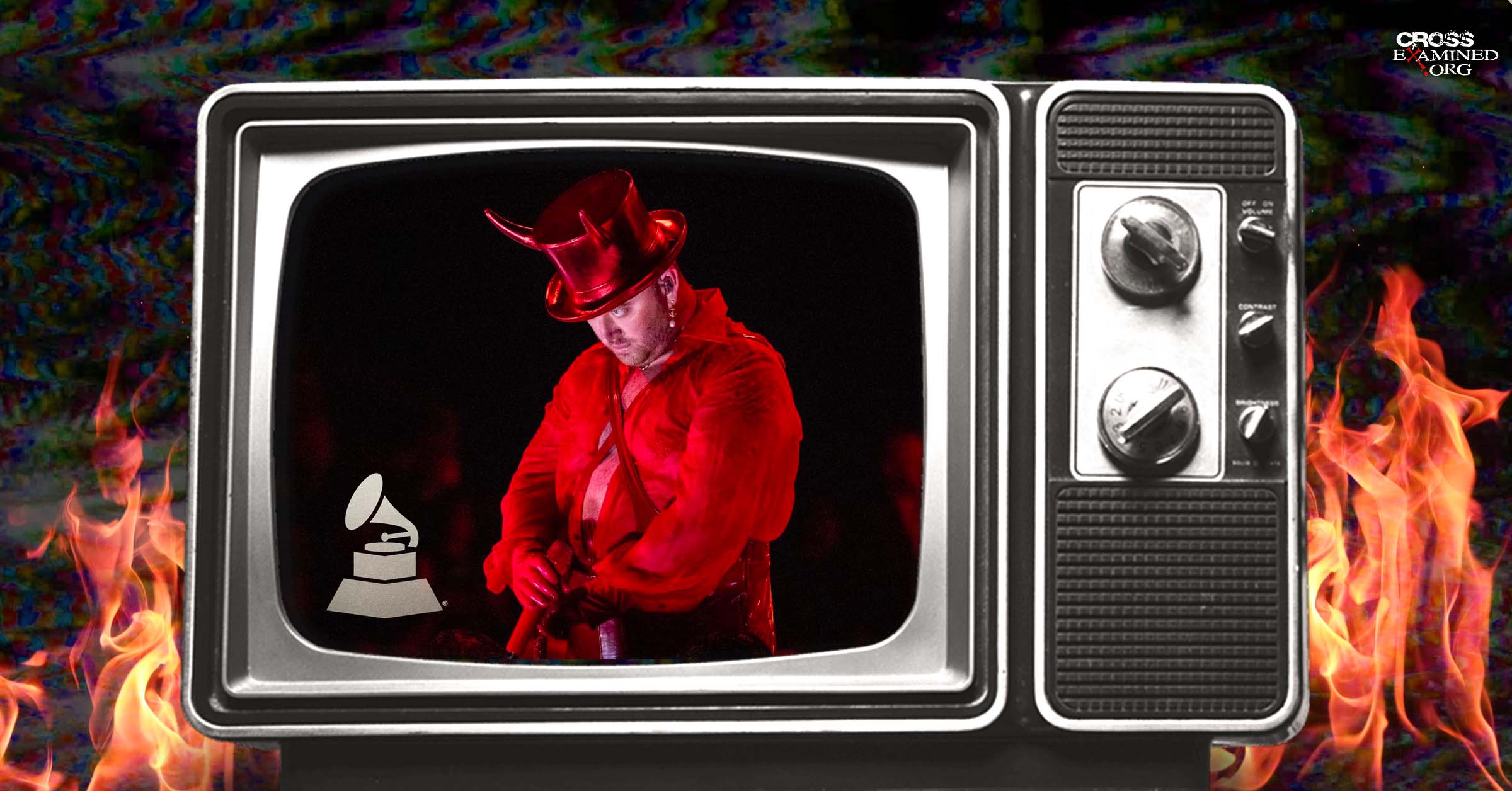
But recently the Grammy’s have become more than a shocking cultural display while recognizing the best secular artists of the day.  Long before 2023’s shocking performance by Sam Smith and Kim Petras[ii], they had shifted from shocking and transgressive to lewd and Satanic.

This is not a conspiratorial statement. You will hear no talk of Illuminati, MK Ultra, or Demon possession here, but what the Grammy’s has become, whether the people who are involved realize it or not, is a worship service to deeds of darkness and even Satan himself.  This slide may have been overtly realized in 2023, but elements of Satanic worship have made their way into the Grammy’s for decades.

First, I want to explain what I mean by Satanic.  I do not mean Occult, or the literal worship of Satan.  There were, as far as I am aware, no literal virgin sacrifices or summoning of demons on February 5th. What I do mean is an unwitting plunge into the darkness of which the performers, actors, and producers are barely aware.  As they dance in overtly Satanic gear they think they are shedding light on darkness through mockery, but they accomplish the opposite and open themselves up to demonic influence in the process.

Judge less, love more, they say,[iii] but love means affirmation in this realm. Reality pushes pack, love cannot affirm untruth.[iv]

The best trick Satan ever pulled was convincing the culture that he either does not exist or that following his ideals leads to power and pleasure without limits. Satan’s goal is not to be worshipped. He is not interested in that. His goal is simply to stop the worship of the one true God and destroy what is good. It could look overt, like it did on February 5th, or, more often, it looks normal – the choice to commit to a sport over church, the choice to pursue a career at the expense of your marriage. Satan was once an angel of light, he understands how to deceive, but once the culture has bought the covert deceptions he will move in for the kill.

In John 10:10 Jesus gives us a behind the scenes look at Satan’s goals. He comes only to steal, kill, and destroy. A performance need not be invoking Satanic worship or summoning Demons to be considered a Satanic ritual – it need only be a full embrace of darkness, theft of light, death of good, and destruction of holiness.

Sam Smith’s performance accomplished all three in a single song.  He declares darkness light, he mocks God’s created order (declaring himself as non-binary, and his co-performer is transgender), and he destroys holiness with a full-on plunge into radical self-autonomy and pleasure.  The song he performs is literally entitled Unholy. It glorifies infidelity and promiscuity.

Once we recognize that Satanism, according to its forefathers Aleister Crowley and Anton Lavey, is not merely the worship of Satan, but first and foremost the worship of self we can begin to understand the influence it has had on the entertainment industry.

Perhaps another time we can do a deep dive into the history of both Crowley and Lavey, but suffice it to say that the modern Satanic movements are built on their ideology. Crowley was a much more religious figure than Lavey. Lavey[v] sought to popularize Satanism by tying it to an atheistic framework, Crowley[vi], on the other hand, bought into the spiritual realm. One strand of thought that extending from Crowley to influence the Laveyan popularization[vii] of Satanism, however, was a quote from Crowley himself, “Do What Thou Wilt.”[viii]

Lavey would often scoff at the idea that his group worshiped a literal Satan (as would Crowley to some degree) but that the Church of Satan stood for what Satan symbolized in Paradise Lost. A 17th century poem by John Milton[ix]. Radical self-autonomy, including the ability to choose what is right and wrong rather than simply to recognize the difference between right and wrong, stood at the heart of Laveyan Satanism.

The irony of the Satanic church is, while their Satanic worship is supposedly tongue-in-cheek, their worship of self and desire to choose for themselves what is right and wrong is, in fact, the very same thing Satan used in the garden to entice Eve. In essence, they worship the literal Satan without even realizing that is what they are doing, and Satan would have it no other way.

So, what does this have to do with the Grammy’s?

Within the backdrop of this form of Satanism we find the rise of the modern entertainment industry. The worship of self-gratification and self-actualization transgresses the Christian belief of self-sacrifice and holy living (Matthew 16Rom. 12Col. 3:5-10). Whether intentional or not, the worship of self leads to deeds of darkness and the glorification thereof.

One need not perform a literal Black Mass to worship the Devil. Simply look in the mirror and whisper, “I am a god.”

The Grammy’s, in that sense, have been a bastion of Satanic ritual for decades. Hedonism, Paganism, and Satanism are mostly all sides of the same coin and rewards season in Hollywood, specifically the Grammy’s, has become a once-a-year ritual of worship that slips from naturalism to hedonism to Satanism in the blink of an eye.

But don’t take my word for it, CBS allegedly tweeted as much before the Grammy’s:

How quickly we forget that the last ten years have seen a steady increase of Satanic boldness at the Grammy’s. Smith’s performance was not new or edgy, it was simply more in a pattern of self-worship from the power brokers of the entertainment industry.

In 2012, Nicki Manaj performed a mock exorcism on stage[x]. The Washington Post was shocked.  But the Post lauded Smith and Petras’ performance of Unholy only a decade later[xi] as one of the top four performances of the night.

In 2014, Katy Perry performed an enigmatic and dark song called Dark Horse. In the song she emerged from a crystal ball with shadowy figures summoning her to a black altar when a red cross appeared on her chest, she danced with a broom and ended the performance being burnt at the stake.[xii] Seemed a bit on the nose at the time, but 2023 takes the cake in that regard. This same year the Grammy’s held a mass “wedding ceremony” for gay couples as well, explicitly mocking a church service in the process[xiii].

In 2015, Madonna (who also introduced Smith in 2023) performed a song called Living for Love with background dancers clad in demonic garb[xiv].

In 2017, A pregnant Beyoncé performed what looked like an ode to her goddess-self giving birth to a child. But, again, you do not have to take my word for it[xv].

In 2019, a metal band called Ghost won a Grammy. The band is known for its Satanic imagery. Its lead man often dons clothing associated with the Occult and riddled with references to Satan, darkness, upside down crosses and demonic imagery[xvi].  Leading man Tobias Forge says this of their message:

“I think it’s sad that people are wasting their time thinking that we’re bad for people, when actually what we’re really trying to do is make people happy and make people feel good about themselves when they come to our show and have a good time.”

Do what thou wilt, one might say.

2021 and 2022 had similarly eerie performances, one by Post Malone[xvii] in which he was surrounded by darkly hooded monks as he wrestled with the hopelessness he felt in Hollywood’s grips and one by Lil Nas X who performed his song Montero that featured a lap dance on the devil in the music video.

These odes to darkness are not outright Wiccan ritual or Occult sacrifices, but they can often stand in for something just as insidious and more subversive. The point is the destruction of norms, reclaiming of a new morality, and recasting of darkness disguised as light. Make no mistake – the Devil smiles at such displays, not because he is worshipped but because that which is being worshipped is not, in fact, the one true God.

This brings us to the most recent spectacle. At the 2023 Grammy’s, self-proclaimed non-binary performer Sam Smith and transgender performer Kim Petras combined to present the most brazen tribute to modern day Satanism to date, with their presentation of the song Unholy.

Kim (born Tim), a transgender woman who had gender reassignment surgery at the age of 16[xviii] writhed around in a cage guarded by demonic strippers while Sam Smith gyrated with and performed with transgender strippers dressed in demonic costumes.  The whole display lacked subtlety and imagination.  You were seeing, in full display, a desire to embrace darkness for the very fact that reality is offensive to our fleshly desires. We can make our own reality, where gender is a matter of opinion and sexes can change through the miracle of modern medicine. We can choose for ourselves what is good and what is evil and be damned if you disagree.

Petras had this to say about the performance:

“I think a lot of people, honestly, have kind of labeled what I stand for and what Sam stands for as religiously not cool, and I personally grew up wondering about religion and wanting to be a part of it but slowly realizing it didn’t want me to be a part of it… So it’s a take on not being able to choose religion. And not being able to live the way that people might want you to live, because as a trans person I’m already not kind of wanted in religion. So we were doing a take on that and I was kind of hell-keeper Kim.”[xix]

There is a lot to break down in this quote.  It gives a glimpse into the slippery slope from individual autonomy to the embrace of evil itself. At first glance one might empathize with the apparent ostracization of Petras, but the admission here is not that religion would not have him, it is that he would not have religion. Whatever god Petras would willingly serve must first bend the knee at his own self-actualization.

The Christian life, though, is about dying to self and rising with Christ, remade, a new creation (Matt. 16:24-26Rom 12:1-31 Cor. 6:19-20) and being transformed into obedience to truth which is Jesus himself. The problem was not that Kim could not choose religion, it is that religion, Christianity in particular, required a change in identity for Kim.  It meant not looking inward for validation hope, or truth but looking upward.

Ironically, Kim’s own performance shows the truth of his commitment, the self-actualization into radical autonomy left him writhing in a cage, unfree, trapped in Hell.  What promises as freedom is bondage but what looks like constraint is freedom (John 8:3210:10). Had Kim or Sam chosen Jesus they might find that they would not need to seek applause and shock to remain relevant, whole and fulfilled. Our culture’s promise that sexual pleasure is the highest pursuit, and victimhood the highest virtue only leads to hopelessness and irrelevance.

Is it worth it in the long run?

“Age does not matter to me… I’m never going to stop fully clubbing and loving gay clubs and going to them. That’s just who I am.”[xx]

Kim Petras

But what about when age does matter?  What about when the fame fades? What then?

If the Enemy can keep us focused on the here and now rather than the there and then he has won half the battle. This game is endless, exhausting, and boring all at the same time. Always having to look for the next shocking display, the next transgressive cause to burn down the norms of history. It seems like a high calling because of the cultural plaudits, but it is meaningless and empty of value. There’s a reason Madonna, at 64, can’t let go of her 1980s self and must always insert herself into these moments.

The culture of transgression is fleeting, being a sex symbol only lasts for a few years before you are cast aside for the next and hottest new thing. The worship of self, pleasure, and identity only gives meaning for a short time, but it is long enough to waste a lifetime. Satan knows this and his desire to amplify this meaningless self-worship has eternal consequences.

So, what is the Christian’s response to things like this?

First, I believe our role is to expose the darkness for what it is (John 1:5) and to avoid loving what it stands for (1 John 2:15) but we must also pray for those that are mired in it to be exposed to the light. May they find true hope, peace, and purpose. I do not hate Sam Smith or Kim Petras, on the contrary, I love them deeply.  I want them to know and understand the deep and abiding love that Christ has for them. I want them to experience a rest from their pursuit of relevance, acceptance, fame, and pleasure.

Our goal should be similar to what Jesus revealed to Paul as he was sent among the hedonistic and pagan nations of the gentiles:

“…To open their eyes and turn them from darkness to light, from the power of Satan to God, so that they may receive forgiveness of sins and a place among those who are sanctified by faith in me (Acts:26:18).”

We must recognize, as Paul did, that the world is, whether they realize it or not, under the power of Satan. This sort of darkness, this worship of self, certainly opens individuals and cultures up to the influence of the spiritual realm. Satan is the prince of this world (Eph. 2:1-2) and they serve him whether they realize it or not.  The enemy, however, is not Sam Smith or Kim Petras but the dark and spiritual forces of evil in the heavenly realms (Eph. 6:12).

We cannot be naïve about these things, but we also must not overreact out of fear either. We must be sober-minded and watchful (1 Peter 5:8) prepared to engage with the boldness of love and truth.

In the end though, we must remember that Satan’s greatest weapon against the church is not a dark cultural display at the Grammy’s but in false gospels, fear, and ineffectiveness. So while we ought to be aware of these things, we should be more concerned about our own churches, neighborhoods, and Bible studies lest we get distracted by things like the Grammy’s at the expense of real and true discipleship.

Footnotes

[i] https://www.insider.com/most-shocking-moments-grammys-history#long-before-ariana-grande-sang-god-is-a-woman-helen-reddy-made-that-proclamation-during-her-1973-acceptance-speech-1

[ii] https://variety.com/2023/music/news/sam-smith-kim-petras-unholy-grammys-1235510990/

[iii]  https://www.billboard.com/music/awards/kim-petras-2023-grammys-judge-less-speech-1235213820/

[iv] https://freethinkingministries.com/of-truth-and-empathy/

[v] https://www.britannica.com/biography/Anton-LaVey

[vi]  Aleister-Crowley-s-Satanism.pdf

[vii] https://www.history.com/topics/1960s/satanism

[viii] https://www.goodreads.com/book/show/123653.The_Book_of_the_Law

[ix] https://www.britannica.com/topic/Paradise-Lost-epic-poem-by-Milton

[x] https://www.washingtonpost.com/blogs/click-track/post/grammys-2012-the-last-exorcism-of-nicki-minaj-what-went-wrong-and-what-almost-went-right/2012/02/13/gIQAzAxMBR_blog.html

[xi] https://www.washingtonpost.com/arts-entertainment/2023/02/05/grammy-awards/

[xii]  https://youtu.be/jDuL_3TsdZE

[xiii] https://variety.com/2014/music/news/madonna-marries-gay-couples-at-the-grammys-2-1201072143/

[xiv] https://www.salon.com/2015/02/09/see_madonnas_demonic_grammy_performance_of_living_for_love/

[xv] https://www.self.com/story/beyonce-grammys-2017

[xvi] https://www.yahoo.com/entertainment/grammy-nominated-metal-band-ghost-addresses-satanic-accusations-music-styles-promote-way-worse-lifestyle-175537647.html

[xvii] https://www.youtube.com/watch?v=nNBDjJosK74

[xviii] https://www.thesun.co.uk/tvandshowbiz/9832006/kim-petras-transition-clarity-fame/

[xix] https://variety.com/2023/music/news/ted-cruz-slams-sam-smith-kim-petras-grammys-evil-performance-1235514438/

[xx] https://abcnews.go.com/Entertainment/wireStory/kim-petras-talks-religion-trans-community-ahead-grammys-96847838

Recommended resources related to the topic:

Defending Absolutes in a Relativistic World (Mp3) by Frank Turek

Is Morality Absolute or Relative? (Mp3), (Mp4), and (DVD) by Frank Turek

____________________________________________________________________________________________________________________________________________________

Josh Klein is a Pastor from Omaha, Nebraska with over a decade of ministry experience. He graduated with an MDiv from Sioux Falls Seminary and spends his spare time reading and engaging with current and past theological and cultural issues. He has been married for 12 years to Sharalee Klein and they have three young children.

Original Blog Source: https://bit.ly/3S1lyMc

[et_pb_section fb_built=”1″ admin_label=”section” _builder_version=”4.16″ global_colors_info=”{}”][et_pb_row admin_label=”row” _builder_version=”4.16″ background_size=”initial” background_position=”top_left” background_repeat=”repeat” global_colors_info=”{}”][et_pb_column type=”4_4″ _builder_version=”4.16″ custom_padding=”|||” global_colors_info=”{}” custom_padding__hover=”|||”][et_pb_text admin_label=”Text” _builder_version=”4.19.5″ background_size=”initial” background_position=”top_left” background_repeat=”repeat” global_colors_info=”{}”]

How many times have you heard me cry out

“God please take this”?

How many times have you given me strength to

Just keep breathing?

Oh I need you,

God I need you now.

Though I walk through the shadows,

And I, I am so afraid.

Please stay… please stay right beside me,

With every single step I take.

These beautiful lyrics are from a 2013 song named “Need You Now by Tiffany Arbuckle Lee. But you probably know her by the name “Plumb.” In case you don’t know of Plumb, she was active until about 2018, and her songs regularly played on Christian radio. I remember listening to this song when I had a two year old, tears in my eyes knowing the feeling of this type of desperation.

I think anyone with a two year old gets this type of desperation, am I right?

She was inspired to write the song due to her suffering from debilitating anxiety when she was younger and the difficulties in her marriage. I remember hearing on the radio about the tough times that she was going through in her marriage. I recall thinking at the time how hard that must be for her to share something so personal. She shared how she and her husband had overcome so many obstacles. They were reconciled, were stronger than ever, and everything was made beautiful out of the ashes.

Until it wasn’t.

She and her husband are no longer together, and Plumb has been very quiet on the music scene. It’s now 2023, and she hasn’t released a single since 2018. It seems a lot has been going on for the singer in the last five years. I follow her on social media and didn’t really notice a lot from her until June 2022, when she made a controversial post about Roe Vs. Wade being overturned. She stunned her followers by implying that this isn’t something we need to be happy about and that the Church sometimes talks more about what we’re against than what we’re for. Granted, I have to agree to a point. But I would draw a hard line here and say that it would be exceedingly strange not to speak against killing innocent children, as this is exactly what many Christians believe abortion is!

It would be like a Christian speaking against child abuse, but then someone throws a rebuke at us, saying that because we’re Christians, we need to speak about what we’re for, not against. Is there actually a way to speak about the realities of abortion outside of speaking against it? Isn’t this precisely why it’s called “pro-life,” not “anti– Abortion”? But I digress.

She posted later in the year how she and her husband were officially done. I could tell it was a tough few years for her. She probably feels like she was in a toxic relationship that has left a wake of pain and confusion. No doubt this changed a lot for her. But it was the post from Wednesday, January 04, 2023 that stopped me in my tracks. It says:

Thx @walkingpastor for sharing this #richardrohr post…its a new year…begin again. I am. Asking questions Ive been intimidated to ask. Being more open minded. Wanting to learn things Ive been lazy to learn. Making space to love God and others well. Thats it. 3 years ago my life fell completely apart. In the process, deconstruction happened w/o me even realizing it at first. Its been a long road. This year…I am starting a journey to piecing back together a new me. Its not all gonna just magically happen in 2023…but its the year I am starting to begin again. And again. And…again. #GraceForSelf.

Richard Rohr. Deconstruction. I Am.

“Not Plumb!” I thought to myself! Another Christian singer has fallen for the Progressive Christian serpent speak. I thought about this post and prayed for days afterward for her and for those who have no idea of the consequences of these words. Though she hasn’t given many details in this regard, it would seem that Plumb is reading and aligning with the teachings of Progressive teacher Richard Rohr. This is an alignment with beliefs in a social justice gospel, inner divinity, a denial of many essential Christian doctrines such as the beautiful Atonement, that the Bible isn’t the Word of God, and much more. This made me sad.

“Two things happens when we hit rock bottom as Christians: We run from God, or we run to God.”

It seems it all started when her life fell apart, and I find that one of two things happens when we hit rock bottom as Christians: We run from God, or we run to God. They give up instead of look up. They look inward instead of upward.

I can’t sit here and say I understand her position or pain. But it seems that this was the turning point for her. How can someone who’s sung such beautiful lamented lyrics suddenly deny the God she claims to have sung for? Did she have someone to help guide and disciple her through this time? What questions has she been intimidated to ask? How well did she know her Bible? I naturally want more answers for clarification. The cultural climate is extremely aggressive toward Biblical Christianity. I think some are tired of running the race. I think some don’t want to be seen as being “against” the LGBTQ+ community. They want to seem loving, tolerant, open-minded, and non-judgmental. They are fatigued from fighting the good fight. So they stop fighting.

Christian, keep up the good fight. Cross that finish line, even if you have to crawl to it. Anchor yourself in God’s Truth.

There’s a God-shaped hole in all of us,

And the restless soul is searching.

There’s a God-shaped hole in all of us,

And it’s a void only He can fill.

I pray these words from her own song to remind her that deconstruction and Progressive Gospel will leave her empty and hopeless. Only Jesus can fill her void. He is the Living Water, the Bread of Life. I have been praying for her, and I hope you will join me.

Recommended resources related to the topic:

Correct, NOT Politically Correct: How Same-Sex Marriage Hurts Everyone (Updated/Expanded) downloadable pdf, PowerPoint by Dr. Frank Turek

Legislating Morality: Is it Wise? Is it Legal? Is it Possible? by Frank Turek (Book, DVD, Mp3, Mp4, PowerPoint download, PowerPoint CD)

____________________________________________________________________________________________________________________________________________________

Melissa Dougherty is a Christian Apologist best known for her YouTube channel as an ex-new ager. She has two associate’s degrees, one in Early Childhood Multicultural Education, and the other in Liberal Arts. She is currently pursuing her bachelor’s degree in Religious Studies at Southern Evangelical Seminary.

[/et_pb_text][/et_pb_column][/et_pb_row][/et_pb_section]

By Luke Nix

The Magna Carta of Humanity: Sinai’s Revolutionary Faith and The Future of Freedom

In today’s world it is difficult to be online, at parties, with family, at work, or even just in public without hearing about the current cultural and political climate in the United States. Even if the Christian case-maker tries to avoid politics, they still confront culture and will be challenged with the hypocrisies of the Church and those who claimed to be members of the Church who just happened to also have founded The United States of America. And it is rare that challenges stop there.

People are passionate about one political view (or party) or another. Extremes on the different sides constantly accuse opposing sides of trying to destroy democracy, the Constitution, and even freedom itself. The rhetoric and apparent goals of different politicians can get our heads spinning out of control as we try to make sense of what is going on, how it affects us (and our future), what we can do about it to bring some measure of sanity in the conversations we inevitably get sucked into, and how we can respond logically with both gentleness and respect when the challenges come.

That is where I have found great value in Os Guinness’ “The Magna Carta of Humanity” (Hard copyaudiobookKindle). Guinness digs into the foundations, principles, and histories of the cultural and political divide in America. He compares and contrasts them in such a way that brings crystal clarity to the current situation. He points out that before we can even talk about “make America great again” (MAGA), we must truly understand what made America great in the first place. And before anyone wishes to reject the ideals that founded America, they must first truly understand those ideals and truly understand the implications of the ideals they are trading them for.

In my effort to help you determine if this is a book that is worth your time (and I believe it is), I will include a few of the skeletal points of the book, several of my favorite quotes (mainly from the Introduction- I don’t want to spoil too much), and my more specific recommendations.

My Awareness

I have to start with the podcast that drew my attention to this excellent book. Alisa Childers interviewed Dr. Os Guinness on her podcast (a great podcast that I highly recommend on its own, by the way) about whether or not Christians should be involved in politics. He not only answered in the affirmative but answered why that is the case and how America (and the world) has reached the point that such action is necessary. Here is the video:

Upon completing the podcast, I immediately purchased the audiobook and listened to it twice then picked up the hard copy to do a more analytical reading. This helped me to better grasp, understand, and appreciate the case presented by Guinness. It was definitely worth the additional time and effort spent.

Key Points:

  • The division in the USA today is due to two mutually exclusive views of freedom.
  • The first originates from the Exodus and was the foundation of the American Revolution of 1776. This view understands freedom as the individuals possessing the power to do what they ought to do. (“Sinai”)
  • The second view of freedom originates with ancient atheists and was the foundation of the French Revolution in 1789. This view understands freedom as individuals possessing complete autonomy. (“Paris”)
  • Paris, along with its many offshoots, have all proved disastrous for human life and liberty. Whereas Sinai (even when applied inconsistently) has been the only one that has resulted in true liberty.
  • Paris fails (and will continue to fail) because it has a false understanding of both the dignity and fallenness of humanity. On the contrary, Sinai recognizes these realities at its core.
  • The freedom of Sinai, though, is not self-sustaining. It requires individual self-awareness and focused and intentional dedication of each succeeding generation if it is to be maintained for future generations.
  • America must recognize the sins of its past and move forward. The way forward proposed by Paris (and the progressive left) is that of hate and revenge. While the way forward proposed by Sinai and Jesus (and even Martin Luther King Jr.) is that of love and forgiveness.
  • Because freedom is incompatible with hate and revenge, the way of Paris necessarily offers no hope of true freedom now or in the future. It pays lip service to the term while insisting on a contradictory concept.
  • America is currently in the process of switching from the ideals of 1776 to the ideals of 1789, and it, along with its citizens, will suffer the same fate as all the other nations that have tried its numerous versions (including Russia, China, and North Korea).
  • There is still time for America to stop the current trajectory and reclaim the love and forgiveness that is required of true freedom and reject the hate and revenge that has done nothing but prove disastrous.

Favorite Quotes:

“The great American republic is as deeply divided today as at any moment since just before the Civil War. Yet this time no Abraham Lincoln has stepped forward to address the evils, appeal to the Declaration of Independence, defend the better angel of the American character, demonstrate the magnificence of ‘government of the people, by the people, for the people’ in our time, and call for a ‘new birth of freedom.'”

“America appears to be abandoning the ideals of the American Revolution or ideas that are disastrous not only to America but to freedom and to the future of humanity.”

“The American crisis is a crisis of freedom and must be understood as such…The present crisis stems from the fact that over the last fifty years, major spheres of American society have shifted their loyalties and now support ideas that are closer to the French Revolution and its heirs rather than the American Revolution.”

“Such current movements as postmodernism, political correctness, tribal and identity politics, the sexual revolution, critical theory (or grievance studies), and socialism all come down from 1789 and have nothing to do with the ideas of 1776…They are the *dramatis personae* without which the drama of America’s current crisis cannot be understood or resolved.”

“The United States is suffering from profound philosophical cynicism, moral corruption, and serious social collapse…And too many Americans, especially those who are younger, have already been bewitched by the ideas coming from the other revolution, 1789, and not 1776…they now appear hell-bent on rejecting ideas from their past, which they have not tried to understand, even as they embrace ideas from the other revolution, which they have not examined as closely as they need to. Many in America see only their ancestors’ errors and at once think that makes them wiser and better than their ancestors. Yet they do not try to understand what their ancestors thought and why, let alone ask where the alternative ideas will lead them.”

“The Russian and Chinese revolutions represented the first successful establishment of secularist regimes in history; the Russian doing so in Europe and the Chinese in Asia. Along with Hitler’s Germany, the Russian and Chinese revolutions were also the first regimes to produce genuine totalitarianism. With the horrendous quartet of their total ideology, total mobilization, and total surveillance, and total repression, these totalitarian regimes became the epitome of oppressive evil and the complete denial of liberty.”

“Far from ushering in the final form of freedom and representing a second coming of Epicurus, [the French, Russian, and Chinese Revolutions]’ claims to be the true and reliable source of human freedom have been left in tatters by the history of their repressive secularist regimes in the twentieth century and the slaughter of millions of their own citizens.”

“Is it still possible in the advanced modern world to build societies with both freedom and order at the same time? To build and sustain communities and nations that demonstrate the highest values of human dignity, freedom, justice, equality, compassion, peace, and stability?”

“Historically, it was the Exodus Revolution and not the French Revolution, that lay behind the genius of America’s ordered freedom or covenantal and constitutional freedom. A rediscovery of the foundational principles of the Exodus Revolution is therefore the once and future secret of true revolutionary faith and a sure path to freedom, justice, equality, and peace.”

“The…American Revolution [is] decisively different from the French Revolution, and the future of freedom depends on appreciating the differences and choosing between them.”

America cannot endure permanently half 1776 and half 1789. The compromises, contradictions, hypocricies, inequities, and evils have built up unaddressed. The grapes of wrath have ripened again, and the choice before America is plain. Either America goes forward best by going back first, or America is about to reap a future in which the worst will once again be the corruption of the best.

“Will the coming generation return to faith in God and to humility or continue to trust in the all-sufficiency of reason, punditry, and technocracy and the transformative power of politics?”

“The future for freedom and humanity is in the balance, as Sinai spells freedom for the future whereas Paris has so far spelled out freedom betrayed and the coming of a long night of expanding statism, surveillance, and repression.”

“This is not a plea for some special protection or exemption for faith. It is time and past time to set out the debate in its fullest terms and to recognize that the sequel to this generation’s choices will be consequential and historic.”

Recommendations:

While I believe that every reader, who takes the time to read the book seriously, would have much to gain from it, I do believe this book is of special interest for several groups:

  • Anyone who is involved in political discussions online or in person. Having a firm grasp on the sources of disagreement will guide us in how to address those disagreements. Recognizing areas of agreement will build a bridge that those we disagree with can cross to accepting the truth that we wish to communicate. Having those of these in our minds will help keep us calm, respectful, loving, and confident in discussion and will keep the discussion focused and productive.
  • Any scientist. When untrained and unlearned politicians sense a threat to their power, they will censor scientific research and the scientists (even if the research doesn’t legitimately provide a threat). Scientists will not be permitted to do research freely nor will they even be able to pretend to (much less, actually) follow the evidence where it leads. This is the way of Paris and 1789. All these naturalists and New Atheists who think that “science” is the end-all/be-all: they are about to reap a world that will destroy everything they have worked for, everything they are working towards, and everything they cherish. Not because they conceded to belief in God and man’s sinfulness, but because they explicitly rejected God and his moral authority over all individuals including those in government who have power over them. Let’s also not forget that this is not limited to politicians; it extends to corporations and those in power there as well. This similarly applies to any educator, researcher, and creative.
  • Anyone who supports the views of postmodernism, Critical Theory, tribal politics, identity politics, Marxism, socialism, and/or communism. Dr. Guinness shows how hate and revenge are at the core of these ideas and that history demonstrates that each of these ends in disaster for the individual who holds to them and nations that rule by them, no matter how they are applied; and any “new” ideas of how to apply them are doomed to fail as well.
  • Private and Home Educators. It is important that American and World history be taught with an eye to its application to the children we are teaching. We teach history not merely for trivial information, but so that our children will not make the same mistakes of the past. Freedom is not self-sufficient. It must be taught and applied to the world around our children so they can see the importance of this part of their education and what will happen is they too become “bewitched” by the glitter of Paris. Also, if there ever was a time to teach students the evidence for Christianity, it is today (see Christian apologists and theologians below).
  • Christian apologists and theologians. Os Guinness’ discussions and case depend highly upon the truth of several ideas that Christian apologists commonly (and maybe not so commonly) defend, thus he gives renewed urgency in showing these to be true to the world. They include: Obviously, God’s existence, but also man being created in the Image of God, human fallenness, trust (biblical faith and not blind faith), objective morality, human dignity, human equality, libertarian free will (properly understood, of course), the historicity of the exodus, truth, knowledge, and numerous more that I’m sure you will see as you come across topics you frequently address. Also, the utopian promises of Paris cannot ever be fulfilled by anyone or any government because they are false and do not reflect reality. It is important to show others that these are false so that they do not continue to trust the claims of Paris and its off-shoots and reap its consequences. Ultimately, this book can serve as a highlight several strong, basic human desires- freedom and justice that cannot ever be fully and perpetually fulfilled in this life because of sin; it is only through the atonement of Jesus Christ and the truth of his resurrection that there is ultimate hope for love and forgiveness now perpetually the future when He returns.
  • Pastors and Church Leaders. In today’s culture that is accepting a “progressive” and false gospel that is often grounded in postmodernism and is focused on social justice and politics, it is important to see the differences between those ideas that are sneaking into the Church, how they differ from Scripture and the world we live in, and the disastrous results if your congregation accepts them. You do not have to have a bent towards the political in your church, just a passion for truth and defending it (see Christian apologists and theologians, above)

Recommended resources related to the topic:

Counter Culture Christian: Is the Bible True? by Frank Turek (Mp3), (Mp4), and (DVD)       

I Don’t Have Enough Faith to Be an Atheist (Paperback), and (Sermon) by Norman Geisler and Frank Turek

____________________________________________________________________________________________________________________________________________________

Luke Nix holds a bachelor’s degree in Computer Science and works as a Desktop Support Manager for a local precious metal exchange company in Oklahoma.

Original Blog Source: https://bit.ly/3HuzZDT 


By Al Serrato

A common challenge raised by atheists is to point out the brokenness of the world and to use it as evidence that there cannot be a God. Your God is perfect, they reason, so why did he create such an imperfect place as this? They point to the natural suffering in the world, the harm that hurricanes and earthquakes can wreak on mortal and fragile human beings. They highlight too the evil that people, driven by their basest emotions, inflict upon their fellow human beings, from theft to murder and everything in between. How could a perfect God have ended up with this as his creation?

This is how one skeptic framed the argument:

“If something is perfect, nothing imperfect can come from it. Someone once said that bad fruit cannot come from a good tree, and yet this “perfect” God created a “perfect” universe which was rendered imperfect by the “perfect” humans. The ultimate source of imperfection is God. What is perfect cannot become imperfect, so humans must have been created imperfect. What is perfect cannot create anything imperfect, so God must be imperfect to have created these imperfect humans. A perfect God who creates imperfect humans is impossible.”

The logic being employed by this challenger appears valid. If something that is perfect can only create perfection, then the Christian God is disqualified, as we believe God to embody complete perfection but concede that this world, and its human inhabitants, are clearly not perfect. But the problem with this argument is not the logic; it is instead the assumptions that underly the stated premises. The challenger’s first sentence – that nothing imperfect can come from a perfect creator – is not proven. It is simply an assertion. For the argument to actually hold, there must be some support for the premise that a perfect being is “limited” in what it can do, namely, that such a being can only create perfection. But the very articulation of this notion betrays the problem embedded in the assertion: it purports to limit the power of a perfect being. In other words, immediately after acknowledging God’s infinite power – his perfection – the skeptic, himself an imperfect being, attempts to limit the types of things God can do.

But how could the skeptic possibly know what God can or cannot do? On what basis can he conclude that a limitless, all-powerful being is constrained in the options available to him? Certainly, the possibility that a perfect being could create something less than himself is not contradictory. The opposite, of course, would be true; an imperfect being would be unable to impart perfection to his creation, something that he himself does not possess. So, it would be contradictory to claim that an imperfect being could create God. But why would a greater being be unable create something that is lesser than himself?

But there is an even greater flaw embedded in the challenge. That is, the skeptic assumes that God set out to create a “perfect” universe and somehow failed. Let’s take a moment to examine this conclusion? What evidence does the skeptic rely upon relating to God’s purpose or to conclude that God failed to achieve this purpose? To arrive at such a conclusion, one would first have to know the intent of the creator. Is not “perfection,” or at the very least success, dependent upon what the actor had as his goal? After all, perfection denotes a quality or performance or attribute that cannot be surpassed. For example, perfect vision would mean vision that cannot be improved upon. But to know what perfect vision is, one would first have to know what is to be accomplished with vision. Is it simply seeing in daylight, or also in complete darkness or underwater? A perfect robot would be one that completed its assigned tasks flawlessly, on time and without any failures or breakdowns. But to measure such performance, the reviewer would first need to know what tasks have been assigned, what the time limit is and what constitutes a breakdown or failure. It is only when one first has in mind a clear understanding of the designer’s purpose that one can decide whether the creation in question has achieved the ends or purposes set for it.

To this, the challenger would no doubt respond that this universe is imperfect under any definition. But by this he would simply mean that things break, that health suffers, that people do evil, or other things of this nature. But of course this only follows if one first assumes that God set out to create “perfectly” functioning humans in a flawless universe. Was this God’s goal? Could it have been, to the contrary, that God had in mind a much different purpose, specifically, to allow for the development of beings who possess free will and who can experience true love, freely given? In other words, did he instead set out to create conscious, intelligent and self-aware beings who were actually capable of exercising free will, and by so doing, necessarily capable of rejecting him and doing evil? Could the struggles we face in this broken world be part of a process by which we are developed, and refined?

This is certainly possible. If free will is to have any meaning, then people must of course be free to do wrong and to harm others. They must be free to reject love and embrace hate. They must be free to reject the God who created them.

Christians believe that God is, ultimately, love, which we understand to be the commitment of the will directed toward the good of the other. Love must be freely given if it is to have meaning. A spouse who remains in a marriage out of fear, or desire for material benefit, does not love the other spouse. We all desire to be the object of another’s true love, and by that we certainly do not mean someone who “cares” because they are afraid to be caught not caring or whose “love” is purchased. There is no reason to believe that God views love any differently. Despite our imperfections and limitations, we remain free to seek God and to ask him to do the refining work in us that is necessary to make us ready, and able, to reunite with him. In other words, as we make our way through this broken and imperfect world, we have the ability, and the freedom, to learn to love and begin to reciprocate the love of the God who gave us life, and intelligence and self-awareness. And, by contrast, we also remain free to reject him.

With sufficiently clear vision, it is possible to see that creating a universe filled with robots and other perfectly functioning things would not have accomplished God’s actual purpose. Yes, life on Earth is messy and often filled with great pain and suffering, much of which we struggle in vain to understand. As we make our way through this vale of tears, we may not understand God’s purpose; indeed, it may seem to us limited beings that such suffering has no purpose. Understanding that God’s plan requires imperfection in the here and now, and the suffering that may come from that, may not bring us comfort in the short run. But contemplating what God has in store for us, what reuniting with a perfect being will entail, may help us begin to make sense of our lives…and better plan our future. For what God has in mind is so much more ambitious – and wonderful – than creating something that fits our definition of perfection.

Recommended resources related to the topic:

The Wounded Healer: Finding Ultimate Purpose in Your Suffering (crossexamined.org)
Why the Problem of Evil is a Problem (crossexamined.org)
https://crossexamined.org/is-a-perfect-being-possible/

How Old is the Universe? (DVD), (Mp3), and (Mp4 Download) by Dr. Frank Turek 

God’s Crime Scene: Cold-Case…Evidence for a Divinely Created Universe (Paperback), (Mp4 Download), and (DVD Set) by J. Warner Wallace

____________________________________________________________________________________________________________________________________________________

Al Serrato earned his law degree from the University of California at Berkeley in 1985. He began his career as an FBI special agent before becoming a prosecutor in California, where he worked for 33 years. An introduction to CS Lewis’ works sparked his interest in Apologetics, which he has pursued for the past three decades. He got his start writing Apologetics with J. Warner Wallace and Pleaseconvinceme.com 


By John D. Ferrer

In part one[i] we raised a question from one of our viewers in Nigeria at the contentious Islamic/Christian border there. He asked what should Christians do when the other guy is cheating? In this case, Muslims from the north are rigging elections to win political influence over the Christian south. Our answer is don’t sink to their level, but honor God above all. Unless you’re literally forced to lie or cheat, then don’t lie or cheat.

The next logical question is, “Okay, don’t ‘sink to their level.’ But how do we do that?” Here are seven principles for when our opponent isn’t fighting fair.

First, “live not by lies.”

In 1974, just before his exile from the U.S.S.R., Alexander Solzhenitsyn wrote an essay that became his farewell address to Soviet Russia. Titled, “Live not by lies,” this essay answered how to stay spiritually grounded in the face of government oppression.  Solzhenitsyn distilled his  wisdom down to one clear warning: “live not by lies.” Oppressors will press you. They’ll hurt your body, restrict your freedom, and test your faith. But they can’t touch your soul unless you let them. When you let them make you a liar, you’ve volunteered for that corruption.

To be clear, “live not by lies” doesn’t mean be foolhardy. You don’t have to draw a target on your back or invite persecution. But neither should you let them make you a liar. You can be discrete. Measure your words. Be quiet where your words will be misconstrued. Just don’t let them make you a liar. Or a cheat, for that matter. Otherwise, you get pulled into their game. Why would you want to play their game? They’re masters at it. You’re not. And you’ll lose. Plus you’d betray your own conscience and faith just by playing it. Soon you’re no better than they are.

Second, get creative with the influence you do have.

You have more influence than you may realize. Get creative. Be savvy. You’ll be surprised at the ways you can affect positive change. Besides voting and public office, there’s also citizen journalism, signing petitions, starting “go-fund-me” campaigns, peaceful protests, concerts, graphic arts, social media, boycotts, rearing children, and more.

This is Biblical too. Scripture instructs people not just in the law but also in wisdom. There’s a whole genre of biblical books called “wisdom literature” (Job, Psalms, Proverbs, Ecclesiastes, and Song of Solomon). Scripture guides us with law and wisdom as complementary traditions running parallel like train tracks so we can get where we need to go. We need more than just law-abiding moral behavior. We also need wisdom to find the best way to obey God’s laws.  Jesus implies as much when he says to his disciples,

“Behold, I am sending you out as sheep in the midst of wolves, so be wise as serpents and innocent as doves” (Mt 10:16)

Third, reframe the game

We should also remember the bigger battle happening here. Stolen elections aren’t just about politics. They’re not just earthly warfare or even just battles between church and mosque. This is ultimately spiritual warfare. When we understand that fact, we can reframe our earthly struggle in terms of the bigger picture.

We could dwell on this point, but for now, just remember that spiritual warfare isn’t a metaphor. It’s literal. It forces everyone to take sides. It engulfs every other battlefield. And it rewrites the rules of engagement. As Paul says, “our struggle is . . . against the rulers, against the authorities, against the powers of this dark world and against the spiritual forces of evil in the heavenly realms. Therefore put on the full armor of God” (Eph 6:12-13).

Fourth, remember the real enemy

Our ultimate enemy isn’t other people but rather Satan and his forces. Before Paul describes this spiritual warfare in Ephesians 6 he points out that “our struggle is not against flesh and blood” (vs. 12). You may be tempted to treat your earthly opponent as the real enemy. But that person might not even be a rebel. He or she could just be a confused and deluded captive who doesn’t know any better. We fight differently against captives than against a rebel army. So don’t forget who the real enemy is.

Fifth, we don’t fight as the world fights

Since our battle is ultimately spiritual warfare, and Satan is the real enemy, it should be no surprise that we need to fight differently. I can’t explain this point any better than St. Paul does.

For though we live in the world, we do not wage war as the world does. The weapons we fight with are not the weapons of the world. On the contrary, they have divine power to demolish strongholds. We demolish arguments and every pretension that sets itself up against the knowledge of God, and we take captive every thought to make it obedient to Christ.” (2 Corinthians 10:3-5)

Sixth, you can’t force divine justice ­

This world is fallen, it remains fallen, and will keep falling… until Christ returns. In the meantime, we have only hints and bits of justice. They’re like glimpses into the eternal perfection of heaven. God carved out lots of room for us to practice redemptive influence here and now. But be assured that justice isn’t guaranteed till Judgment Day.

If you try to “force” God’s hand, seeking divine justice now,  you’re probably using questionable methods. Plus, you might make the same mistake Judas did. Some scholars believe that Judas Iscariot betrayed Jesus in hopes of triggering an uprising where Jesus would have to lead a revolt against Rome to claim his Messianic crown. We can’t be certain of Judas’s motives, but we can say that in betraying Jesus, even Judas’s best intentions couldn’t redeem those actions. You may be tempted to “force” justice on this side of eternity by taking “creative license” with the law. But this is quicksand. There’s no clear biblical case for vigilante justice in the New Testament.

Seventh, draw courage from believers who’ve gone before you.

We’re not alone in this struggle. Persecution and hardship are normal Christian living (John 16:33). Yet believers across church history have pressed on. And so can you. Whether it was from Roman laws, Jewish zealots, Muslim invaders, state authorities, or rude neighbors, persecution is part of normal Christian living. Countless believers have gone before us setting an example to follow. Some faced persecution. Some died as martyrs. But all of them ran their race and passed the baton to future generations. That’s us. As we “run the race” marked out for us, they are a “great cloud of witnesses” now cheering us on from the stands (Heb 12:1). For their sake, and for God’s, we cannot afford to take shortcuts, bending the rules for some “greater good.”

Final Warnings

So how do we answer whether “turnabout is fair play”? In We need to honor God above all – even when our opponent breaks the law. We talked at length about how to do that.  But a few more warnings are in order.

If we cheat because our opponent cheats, then we invite God’s judgment all the same. Plus, we risk losing our integrity. Our character is hard to earn and easy to lose especially if we forget that the ends don’t really justify the means. Also, remember that we represent our family, our church, and our God. So, if we ever lie and cheat for political gains it’s like spraying graffiti on the walls of our home or church: “LIAR!” “CHEAT!” Winning an election is not worth defacing our family name, our church, or the name of Jesus.

Are there any exceptions?

Earlier I mentioned some possible exceptions that don’t apply here. Stay tuned for part 3 in this series where we talk about dilemmas!

Footnotes:

[i]  https://crossexamined.org/when-your-opponent-cheats-what-should-you-do

Recommended resources related to the topic:

Is Morality Absolute or Relative? by Dr. Frank Turek DVD, Mp3 and Mp4

When Reason Isn’t the Reason for Unbelief by Dr. Frank Turek DVD and Mp4

____________________________________________________________________________________________________________________________________________________

Dr. John D. Ferrer is an educator, writer, and graduate of CrossExamined Instructors Academy. Having earned degrees from Southern Evangelical Seminary and Southwestern Baptist Theological Seminary, he’s now active in the pro-life community and in his home church in Pella Iowa. When he’s not helping his wife Hillary Ferrer with her ministry Mama Bear Apologetics, you can usually find John writing, researching, and teaching cultural apologetics.

By John D. Ferrer

You may have heard the phrase, “turnabout is fair play.” If your opponent on the soccer pitch, football field, or basketball court is illegally pushing, shoving, and elbowing you, then it’s only fair that you can push back, right? Turnabout, as they say, is fair play. And as long as it’s not against the law, immoral, or physically harming anyone, then that principle might work fine at least for ball games and boardgames. But what about the game of politics?

Frank and I had a podcast on this topic too. Check it out at:
When Your Opponent Cheats, What Should You Do? | with Dr. John Ferrer

How far should we take this idea of, “turnabout is fair play?” A gentleman from Nigeria by the name of Austin sent us a question about this last week.

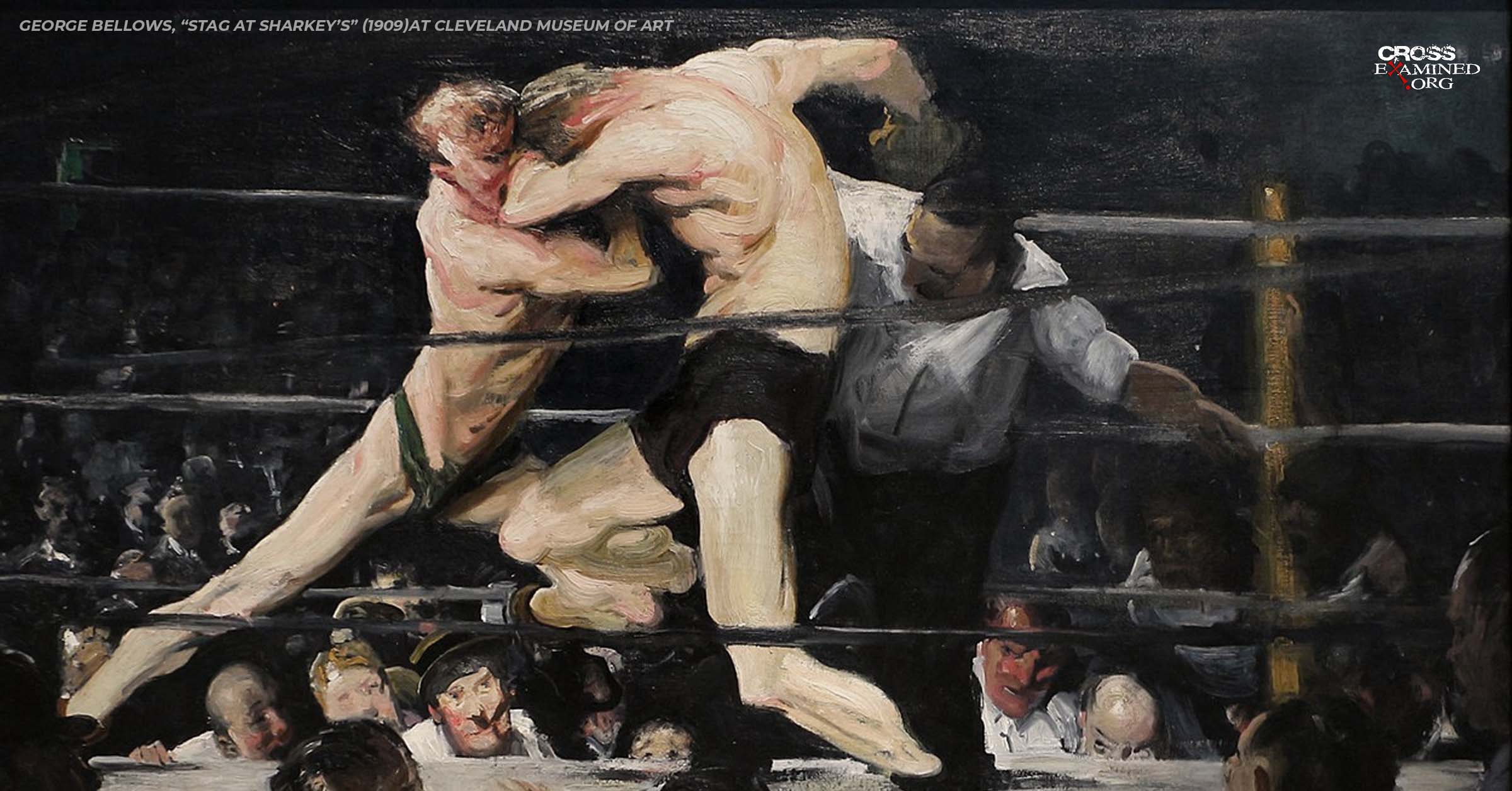
“Imagine that you’re in the ring of boxing with an opponent who is breaking all the rules and nobody is calling him to order, would you keep following the rules? To be more specific, this analogy is to capture the imbalance of political power between the muslim north and the christian south of Nigeria. As I’m sure you already know, the survival of Islam is hinged on political power and domination. Our muslim brothers are extremely political, while the christians are, for the most part, passive. But besides the political docility of the christians, our muslims don’t really play fair. For example, muslims go as far as registering underaged voters. This is one of the major reasons northern votes beat southern votes in federal elections, not that the number of muslims is above that of christians. There’s a lot more of their shenanigans that I’d rather not name here. The situation is far uglier than I’ve decided to capture at this present time… So, how do you see this? How do you play fair with an opponent who doesn’t play fair?”

Austin is clearly concerned for more than just apologetics. He yearns for justice. Beneath the looming weight of political corruption and injustice, he is staring down one of the largest militant fronts of modern day Islam. He’s rightfully concerned that religious and political opponents have rigged the system. Of course, he wants to do something about it!

If his opponents in the Muslim north are cheating and abusing the system to stay in power, then perhaps Christians in the South can use the same tactics to stand against the spreading Islamic caliphate. The Christians would have good motives. The other guys cheated first. So, is it okay to lie and cheat if the other guy is doing it?

In short, no.

While I sympathize with Austin in Nigeria, I can’t condone that behavior. He’s asking a practical question, of whether the “ends justify the means.” That axiom is the centerpiece of Utilitarianism[i], a non-Christian ethical theory coined by Jeremy Bentham. Sure, lying and cheating might help you win elections. And you might be cheating the same way your opponents are. But the ends don’t justify the means. The means need to be justified themselves.

Moreover, lying and cheating won’t preserve the integrity of the church or showcase the light of Christ to the world. Now, we’ll get into some exceptional cases later. But at this point, if you aren’t literally being forced lie and cheat, then you shouldn’t lie or cheat.

Heart check

Perhaps the best starting point for unpacking that answer is to do a heart-check. Ask yourself: Do you fear and love God more than anyone else?

 “Do you fear and love God more than anyone else?”

By that I mean, do you fear God as the sovereign judge and King more than you fear anyone else? And do you love God as your heavenly Father, more than you love anyone else? When we can answer this heart-check with a resounding “Yes!” then we’re in a good position to face hardship and do the gritty work of apologetics.

This heart-check was Peter’s advice to first century believers. Apologists love to quote him in 1 Peter 3:15b, “always be prepared to give an answer.” But just before that classic call to defend the faith, Peter sets it inside a persecution context. In verse 14 he says, “But even if you should suffer for what is right, you are blessed. Do not fear their threats; do not be frightened.” Answering how to do that, Peter says to put Jesus first. “But in your hearts revere Christ as Lord” (vs15a). The surrounding passage, 1 Peter 3:9-17[ii] reinforces this point saying, “do not repay evil with evil,” “or insult with insult,” “repay evil with blessing,” “keep [your] tongue from evil and lips from deceitful speech,” and “suffer for doing good” rather “than for doing evil.”

That’s easy for you to say

Of course, it’s easy for me to say all this. My job, my family, my way of life, are all safe. There are no political enemies or religious invaders beating down our door. My home church faces no real danger of conquest, at the hands of radical Muslims, militant Hindus, or even snarky atheists. It’s easy for me to tell folks to endure persecution heroically when it’s their persecution and not mine. That’s why I’m not speaking on my own authority. Apostle Peter said it first. I’m just agreeing with him. If I ever face persecution like my brothers and sisters in Nigeria are facing, I pray I’d have the courage to take my own advice, I pray I would follow St. Peter in honoring Christ as Lord and suffering well.

 “Love and honor Christ as Lord, then suffer well.”

How do we do that?

At this point, you may be saying to yourself, “Okay, be righteous and don’t ‘sink to their level.’ I get it. But how do we do that?” That’s a great question. I’m glad you asked! Stay tuned for part 2 where I explain seven principles we should all follow when our opponent isn’t fighting fairly.

Footnotes:

[i] https://plato.stanford.edu/entries/utilitarianism-history/

[ii] https://www.biblegateway.com/passage/?search=1+Peter+3%3A9-17&version=ESV

Recommended resources related to the topic:

Is Morality Absolute or Relative? by Dr. Frank Turek DVD, Mp3 and Mp4

When Reason Isn’t the Reason for Unbelief by Dr. Frank Turek DVD and Mp4


____________________________________________________________________________________________________________________________________________________

Dr. John D. Ferrer is an educator, writer, and graduate of CrossExamined Instructors Academy. Having earned degrees from Southern Evangelical Seminary and Southwestern Baptist Theological Seminary, he’s now active in the pro-life community and in his home church in Pella Iowa. When he’s not helping his wife Hillary Ferrer with her ministry Mama Bear Apologetics, you can usually find John writing, researching, and teaching cultural apologetics.


By Erik Manning

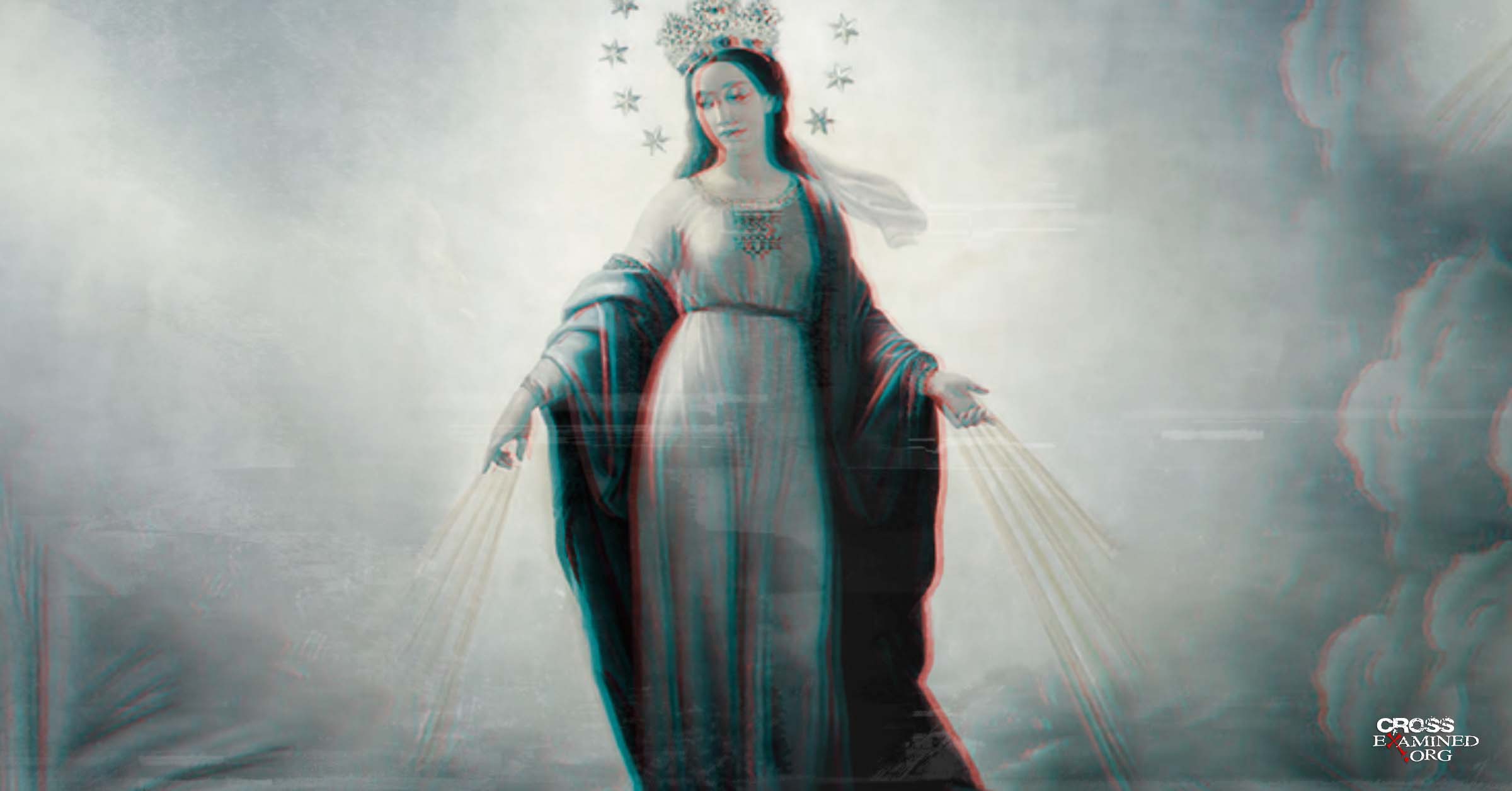
On the evening of April 2, 1968, a Muslim bus mechanic was working across the street from St. Mary’s Coptic Church in Zeitoun, a district of Cairo, Egypt. Suddenly, something on the roof of St. Mary’s got his attention: a figure that looked like a young woman. The mechanic pointed it out to a few people nearby who saw the same thing. Concerned that the young lady was about to commit suicide, they called the police. A crowd gathered around the church to watch. Then, after just a few minutes, the woman suddenly vanished. As you can imagine, this got people talking.

At first the police tried to explain things away, saying it was just some light reflecting in a strange way from a street light – but many weren’t persuaded. A week later the female figure appeared on the roof again. The appearance of the woman lasted for a few minutes and then disappeared. Some people began to connect the dots: This is St. Mary’s church. The church is believed to be one of the locations that Jesus’ family stayed during their flight to Egypt. We’re seeing a shining female figure on the roof. Sure this must be the Mother of Jesus!

From there the appearances began to happen more frequently, at times lasting for hours. In some reports, the apparition appeared to be bowing toward the cross atop the church or blessing onlookers on the street below. Some of the faithful who came to tour the holy site reported to be healed of illnesses. The Coptic Orthodox Pope appointed a committee of high-ranking priests and bishops to investigate. On May 4th, the church issued an official statement confirming the apparitions as genuine.

The apparitions were witnessed by the Egyptian President. Some were recorded on film by newspaper photographers and Egyptian television. Police investigations found no apparent explanation. No device was found within a radius of fifteen miles capable of projecting the image, and many photos were taken of the alleged apparition from independent sources. With no alternative explanation and approval from religious and political leaders, the Egyptian government accepted the apparitions as true.

ARE APPARITIONS LIKE RESURRECTION APPEARANCES?

So why am I talking about the Marian apparitions of Zeitoun? It’s because scholars like Dale Allison and Bart Ehrman attempt to parallel these appearances with Jesus’ resurrection appearances. In fact, Allison says that they are in some ways better evidenced and yet he remains agnostic about them. Allison writes:

“Our knowledge of what happened in the days after Good Friday is depressingly sparse over and against our knowledge of what happened in Zeitoun. With respect to the latter, we have interviews with multiple eye-witnesses. We have photographs. We have on-the-spot, as-it-unfolded journalistic reports from religious and irreligious. We have a statement from an investigative committee. We have none of this, by contrast, with respect to Jesus’ resurrection, only a lamentable paucity of evidence and lack of detail at every turn. One wonders how, if we cannot solve the puzzle of Zeitoun, about which we know so much, we can solve the puzzle that is Jesus’ resurrection, about which we know so little.”

Bart Ehrman mostly agrees with Allison. He seemingly points out some inconsistency among resurrection apologists like William Lane Craig, Gary Habermas and Mike Licona, writing:

 “it is striking and worth noting that typically believers in one religious tradition often insist on the “evidence” for the miracles that support their views and completely discount the “evidence” for miracles attested in some other religious tradition, even though, at the end of the day, it is the same kind of evidence (for example, eyewitness testimony) and may be of even greater abundance. Protestant apologists interested in “proving” that Jesus was raised from the dead rarely show any interest in applying their finely honed historical talents to the exalted Blessed Virgin Mary”

 (How Jesus Became God) Ehrman doesn’t call them out by name, but these three prominent resurrection apologists are all committed Baptists.

When an Emailer asked about the parallel between Marian appearances and Jesus’ post-mortem appearances, Dr. Craig had his colleague Mike Licona respond to the reader’s question. Licona wrote:[i]

 “In my debates with Ehrman, when he has raised the topic of Marian apparitions, I have responded that I do not doubt that the recipients saw something. What they saw is what I question. Elliot Miller and Kenneth Samples co-authored the book The Cult of the Virgin: Catholic Mariology and the Apparitions of Mary. In this book, they discuss the three major accounts of Marian apparitions: Lourdes, France; Fatima, Portugal; and Medjugorje, (mud·joo·jor·jee) Croatia. I know Samples personally. He has interviewed several of the seers to whom Mary has appeared in Medjugorje. Although Samples is a Christian whose Protestant theology does not incline him to believe that Mary has appeared to others, he is convinced that these seers have seen a spirit being. In fact, I had an opportunity to inquire further of Samples on the matter. He told me that several of the seers in Medjugorje continued to have visions of Mary. In fact, he was with one of the seers while he was experiencing such a vision, although no one else in the room saw her. Samples told me he asked the seer if Mary had ever spoken to him. The seer said she had, recommending a specific book which the seer was to read. When Samples looked up the title of the book, it was occultic. This led him to believe that a demonic spirit is what is appearing to the seers.”

I’m sure the “it’s the devil” hypothesis will offend Catholics and Orthodox Christians. I’d bet that Ehrman would be content to let them fight it out amongst themselves. Pitting Catholics vs. Protestants is a classic move made by skeptics going back to the Deist Controversy in the 17th and 18th century. Rather than denying the evidence, Licona refers to Samples’ theological argument, which seems to be based on some personal anecdotes and doctrinal inferences.

Even if you’re theologically opposed to the veneration of Mary, this evil spirit hypothesis is probably giving the devil more credit than due. While I’m a settled Protestant, I’m not automatically inclined to say that all Marian apparitions are either delusions, hoaxes or demonic because of my prior theological commitments. With enough evidence, my mind could be changed. But I don’t think Marian apparitions come anywhere near what we have for the resurrection. It’s more of an apples and oranges comparison.

WHAT WOULD BE EVIDENCE OF MARIAN APPARIATIONS?

What would convince me of Marian apparitions? Let’s think about it. Imagine if Mary appeared to a dozen people and ate several meals with them, they touched her hands, and she conversed with them. Now also suppose this group of twelve people were all Protestants, living in a country where converting to Catholicism could result in their arrest, torture, or death. That would move me a bit closer to accepting them.

But there’s a big problem. No one who has seen an apparition of Mary knew Mary before she died. There’s a tradition that she appeared to James the Son of Zebedee in Spain in 40 AD, but the evidence for this tradition is thin and Mary was probably still alive at that time. Those who believe in this appearance claim that she was supernaturally present in two places at once. The first recorded Marian apparition approved by the Catholic church was in 1555. Obviously Mary hasn’t been known by anyone personally for centuries, so there’s always at least the possibility that someone could be hoaxing these people in this proposed scenario.

People laughed when Robert Greg Cavin came up with his “twin brother” theory to explain away the resurrection. But Cavin had to come up with a theory to explain why the disciples thought they saw the risen Jesus, as they knew what Jesus looked like. They had hung out with him for three years.

But some might say that perhaps what the apostles saw was something like what people saw in Zeitoun. Maybe they experienced something like a bright light on a rooftop that they mistook to be Jesus and enthusiasm took its course from there. The problem with that is we can’t say that if we take the gospel accounts seriously. For they report multisensory group appearances extended across 40 days. These appearances involved conversations with Jesus, touching his wounds, and eating fish together. These aren’t the kinds of things you can be mistaken about.

Ehrman and Allison think that these accounts are embellished and unreliable, and so this is why they run this weak parallel. It’s not that they don’t think the disciples experienced appearances of Jesus of some sort. They do. This is because of what Paul tells us in 1 Corinthians 15 that Peter, the Twelve, Paul, James and an unnamed 500 brothers all claimed to have seen the risen Jesus. But what the appearances were like isn’t something Paul goes into detail about. If the best evidence we have for the resurrection is the creed that Paul quotes to the Corinthians, then we’re left with a pretty vague report. Or to use Allison’s words, “depressingly sparse”.  Vague appearances that were overinterpreted by the disciples would be consistent with the creed in 1 Corinthians 15.

If we’re going to defend the resurrection, we’re going to need to defend the detailed reports contained in the Gospels are at least what the early disciples reported. But because Licona will only use facts that 90% + of scholars agree upon — which include the likes of Allison and Ehrman — he’s not able to do that. In his big book on the resurrection, Licona writes:

“We may affirm with great confidence that Peter had such an experience in an individual setting, and we will see that the same may be said of an adversary of the church named Paul. We may likewise affirm that there was at least one occasion when a group of Jesus’ followers including “the Twelve” had such an experience. Did other experiences reported by the Gospels occur as well, such as the appearances to the women, Thomas, the Emmaus disciples, and the multiple group appearances reported by the tradition in 1 Corinthians 15:3-7 and John? Where did these experiences occur? Historians may be going beyond what the data warrants in assigning a verdict with much confidence to these questions.”

The Resurrection of Jesus, A New Historiographical Approach, Kindle location 3758

This is why I’m not a fan of the minimal facts approach. If we are willing to say that the appearances to the Emmaus disciples or Thomas are impossible to know historically because that’s what the scholarly consensus allows us to say is a minimal fact, then there’s a massive problem. But if we look at the Gospels closely and more fairly, I think we can know with some confidence that they are scrupulous, habitually honest and close up to the facts. They were not the kind of authors who would be prone to embellish things. Nor are they likely to be schizophrenic authors, showing all these signs of truthful testimony, but suddenly at other times consider themselves free to invent and change facts.

And so it looks like they recorded what was really originally claimed by witnesses about Jesus’ resurrection. And this was the apostles’ claim in the midst of persecution, so it would be unlikely that they were fudging the truth. See my playlist on the reliability of the Gospels for more.

So getting back to Marian apparitions. I don’t think it’s at all impossible to have evidence that has strong weight for Marian claims. Let’s suppose that two Protestants who had previously publicly criticized Marian doctrine both claimed at the same time to have seen a vision of a woman claiming to be Mary telling them that she was taken bodily into heaven. Neither had a prior history of mental illness. They destroyed their own Protestant careers and endangered their lives by claiming this.

Furthermore, suppose the woman in question instructed them to call each other and ask each other, “Did you have any strange experience in the last 24 hours?” And they independently did this. That would be evidence of the Marian claims, but it wouldn’t exactly be an analogy to Jesus’ appearances on earth. It would perhaps be more analogous to the conversion of Paul and James. Oddly enough, Dale Allison says nothing short of Mary appearing to him would convince him. I don’t think our standards need to be that absurdly high.

This whole Marian apparition analogy just doesn’t work when one takes a more maximal data approach to the Gospels. I might not be able to explain all Marian apparitions, but they’re not the same as the resurrection appearances in the Gospels. At best they make me say “huh. Maybe the world is a weirder place than I thought, and I don’t really know what to make of this.” But because there seems to be some vagueness about what these apparitions mean or where they originate from I don’t feel super inclined to believe them.

Footnotes:

[i] https://www.reasonablefaith.org/writings/question-answer/appearances-of-mary-and-jesus-resurrection-appearances

Recommended resources related to the topic:

Can All Religions Be True? mp3 by Frank Turek

When Reason Isn’t the Reason for Unbelief by Dr. Frank Turek DVD and Mp4

____________________________________________________________________________________________________________________________________________________

Erik is a Reasonable Faith Chapter Director located in Cedar Rapids, Iowa. He’s a former freelance baseball writer and the co-owner of a vintage and handmade decor business with his wife, Dawn. He is passionate about the intersection of apologetics and evangelism.

Original Blog Source: https://bit.ly/3Vs9Z0Y

By Judge Phil Ginn

‘I would much rather trust the true Christ than a blatantly false figment of someone’s misguided imagination’

CHARLOTTE, N.C. — Parishioners at Trinity College chapel, a constituent college of the University of Cambridge, were stunned and horrified when junior research fellow Joshua Heath preached a sermon claiming that due to select works of historical art, Christ had a “trans body.”[i]

Despite the cries of heresy during the sermon, Dr. Michael Banner, the dean of Trinity College, said Heath raised “legitimate” speculation about the gender of Christ, claiming his sermon “suggested that we might think about these images of Christ’s male/female body as providing us with ways of thinking about issues around transgender questions today.”

Judge Phil Ginn, president of Southern Evangelical Seminary (SES, www.ses.edu), responded to this outlandish speculation, warning Christians against the false doctrines espoused by the misguided and to hold fast to the truth of the Gospel.

Ginn stated, “In the year 167 BC, Antiochus IV (Epiphanes), the king of Syria, captured the city of Jerusalem and laid waste to the capitol of Judaism. In doing so, he desecrated the temple by sacrificing a pig on an altar to Zeus, which had been constructed over the holiest portion of the Jewish Temple. Sadly, desecration of holy places continues to this day despite the warning from 1 Corinthians 3:17 that if ‘any man defiles the temple of God, him shall God destroy.’

Such is the case with junior research fellow Joshua Heath and even more unfortunately with Dr. Michael Banner, a Dean at the University of Cambridge in the United Kingdom. As reported by Fox News, Mr. Heath apparently preached a sermon in which he claimed that works of art portraying the crucifixion and death of Jesus essentially contemplated the martyrdom of a ‘trans Christ.’ Going even further in his malaise, Heath concluded from his observation of the paintings that the spear wound in Christ’s side ‘takes on a decidedly vaginal appearance.’ Cries of heresy arose from the crowd, but amazingly Dean Banner came to the defense of the blasphemy. Cambridge, of course, labeled the message as ‘thought provoking academic inquiry in keeping with open debate and dialogue.’

“I am sure that Mr. Heath is thankful that someone in authority like the Dean and the Cambridge University leadership came to his defense with their words of support. However, I would tend to lend greater credence to what the Apostle Paul had to say about heretical words and actions desecrating the holiness of God: ‘For the wrath of God is revealed from heaven against all ungodliness of men, who by their unrighteousness suppress the truth’ (Romans 1:18). Paul goes even further: ‘For although they knew God, they did not honor him as God or give thanks to him, but they became futile in their thinking, and their foolish hearts were darkened’ (Romans 1:21). Finally, Paul says this in the last verse of Romans 1: ‘Though they know God’s righteous decree that those who practice such things deserve to die, they not only do them but give approval to those who practice them.’”

Ginn concluded, “At Southern Evangelical Seminary we are well familiar with the Latin phrase ‘Coram Deo.’ Simply put, it means to live your life as though you are doing so before the very face of God. We constantly are reminding ourselves and our students to live worthy of the calling of God on our lives. That is why we are standing steadfast in the truth of the Gospel. We hold fast to the inerrant and infallible word of God because we know that it is by the Word of God that our lives will be judged. My prayer is that Mr. Heath, Dean Banner, and all of Cambridge University will come to know the true Messiah who gave his life for the sins of the world and rose on the third day victorious over death. I speak for SES and myself when I say that I would much rather trust the true Christ than a blatantly false namby-pamby figment of someone’s misguided imagination.”

Judge Phil Ginn was appointed president of SES in April 2021 after a distinguished career as both a lawyer and a judge. Over the course of his 22-year judicial career, he was privileged to hold court in almost 50% of the county seats in North Carolina. He holds a B.A. from Appalachian State University, a J.D. from the University of North Carolina at Chapel Hill, and a Doctor of Ministry from Southern Evangelical Seminary. Prior to his appointment as SES president, Judge Ginn served as SES Chairman of the Board of Trustees.

SES is proud to announce the upcoming release of “Steadfast: In a World of Confusion, Know Why You Believe.”[ii] This new 10-week study for small groups doubles as a seminary primer course and will give every believer game-changing training for living the Christian faith in today’s world. The study will feature exciting sessions from select SES professors. For more information about the upcoming study, click here.

The mission of SES is to train men and women, based on the inerrant and infallible written Word of God, for the evangelization of the world and the defense of the historic Christian faith. SES offers a range of undergraduate, graduate, and doctoral degrees (along with several for-credit certificates) that uniquely integrate theology, philosophy, and apologetics to build a complete and systematic Christian worldview.

Footnotes:

[i] Cambridge dean defends sermon about Jesus’ ‘trans body,’ ‘vaginal’ side wound blasted as ‘heresy’

[ii] In a World of Confusion, Know Why You Believe STEADFAST 10-Week Small Group Apologetics Study

Recommended resources related to the topic:

Correct, NOT Politically Correct: How Same-Sex Marriage Hurts Everyone (Updated/Expanded) downloadable pdf, PowerPoint by Dr. Frank Turek

You Can’t NOT Legislate Morality mp3 by Frank Turek

____________________________________________________________________________________________________________________________________________________

Original Blog Source: https://bit.ly/3VlirPt


By RYAN LEASURE

At Grace Bible Church, we have a statement of faith that all members must affirm. It’s a fine statement of faith (though a little long if you ask me). And it provides a nice summary of basic Christian belief. That said, not all doctrines are created equal. Some doctrines are absolutely essential while others are less important. How, then, should Christians “contend for the faith that was once for all delivered to the saints” (Jude 3) without contending for too much or too little?

In other words, how do we know which doctrines are worth fighting for and which ones are not? To help with these matters, we have adopted what Al Mohler once dubbed a “Theological Triage.”

Theological Triage

The word “triage” comes from a French word which means “to sort.” And if you’ve ever been to an emergency room, you’re familiar with the sorting process that takes place. If someone shows up with the sniffles, they’re most likely put at the back of the line. If someone shows up holding their decapitated leg, they’re put up front.

Doing theological triage follows a similar principle. As Christians, we must think through doctrine and decide which doctrines get sorted to the front (first-order issues) and which ones get pushed to the back (third-order issues).

At every membership class, I explain this concept and teach newcomers which doctrines are essential and which ones we can agree to disagree on. Let’s consider the three categories in turn.

First-Order Doctrines

First-order doctrines are the absolute essential doctrines to the Christian faith. These are doctrines that every true believer should affirm without hesitation. These doctrines include:

  • God is a Trinity
  • God is the creator of all things
  • Jesus Christ is the Son of God
  • Jesus is both God and man
  • Humans are made in God’s image
  • All humans are sinners and they must repent of their sin
  • Jesus died on a cross for our sins and rose again from the dead
  • People are saved by grace alone through faith alone in Christ alone
  • The Bible is God’s inspired word
  • Jesus is coming back to judge the living and the dead

You get the idea. These beliefs are so fundamental to the faith that if someone were to deny them, we would say that person belongs to a different faith system altogether.

Second-Order Doctrines

Second-order doctrines are not essential doctrines of the Christian faith, but they are essential for church membership. That is to say, even though people may disagree with us on these issues, we would not call into question their standing with God. We may think they’re wrong and think they should reconsider their views. But we would not question their faith altogether. That said, if people are going to be part of the same church, they need to agree on these second-order issues:

  • The recipients of baptism
  • Women Pastors
  • Revelatory gifts (speaking in tongues or prophecy)

Our statement of faith is clear on the first two points. We baptize believers and believe God has ordained for qualified men to serve as pastors. Our statement of faith doesn’t speak to revelatory gifts in the same way. So one could technically classify it as a third-order doctrine. But I suspect if someone felt strongly about publicly prophesying or speaking in tongues before the church, they would feel compelled to go to a different church where those types of practices were more accepted.

Third-Order Doctrines

Third-order doctrines are not essential to the Christian faith, nor are they essential for church membership. That is to say, church members are free to disagree on these matters. This does not mean, however, that these doctrines are unimportant (we can think of less important beliefs). It does not mean that we should not study the Scriptures to try and make sense of them as best as we can. What it does mean is that we are not going to divide over these issues.

Now sadly, it’s these third-order issues that have led to more church splits than anything else. But at Grace Bible Church, we are committed to remaining unified around the main things while allowing charitable disagreement around the not-so-main things. These third-tier doctrines include:

  • Calvinism vs. Arminianism
  • Age of the Earth
  • Millennial or tribulation views

Our statement of faith does not take a hard stand on any of these issues. Therefore, one does not need to affirm Calvinism or Arminianism in order to be a member in good standing at Grace Bible Church. In fact, our church leadership has disagreements on these matters! The same goes for one’s understanding of the age of the earth and the millennium. Good faithful Christians throughout history have disagreed on these matters which leads us to believe the issues aren’t as clear as the first and second-order doctrines.

What we encourage, then, is for each member to act charitably towards others with whom they disagree. We should never ridicule someone or call their faith into question because they land in a different place on one of these third-tier issues. We can agree to disagree or even study the topic together with the hopes of learning from one another. Let’s remember, though we’re all trying to get it right, none of us are infallible.

Dividing Over Doctrine

Placing doctrines in their proper tiers allows the church “to contend for the faith that was once for all delivered to the saints” (Jude 3). It protects the church from contending too much or too little.

Liberals have historically contended for too little. They have tended to press first-tier doctrines down to the third tier. They’ve adopted an “agree to disagree” mentality when it comes to important matters such as Christ’s bodily resurrection from the dead! On the flip side, fundamentalists have historically contended for too much. They have pushed third-tier issues up to the first tier and have divided over less-than-critical matters.

Doing theological triage protects us from both of these errors.

Recommended resources related to the topic:

Legislating Morality (mp4 download),  (DVD Set), (MP3 Set), (PowerPoint download), and (PowerPoint CD) by Frank Turek

Legislating Morality: Is it Wise? Is it Legal? Is it Possible? by Frank Turek (Book)

____________________________________________________________________________________________________________________________________________________

Ryan Leasure holds a Master of Arts from Furman University and a Masters of Divinity from the Southern Baptist Theological Seminary. Currently, he’s a Doctor of Ministry candidate at the Southern Baptist Theological Seminary. He also serves as a pastor at Grace Bible Church in Moore, SC.