
Tag Archive for: Rajkumar Richard

By Rajkumar Richard

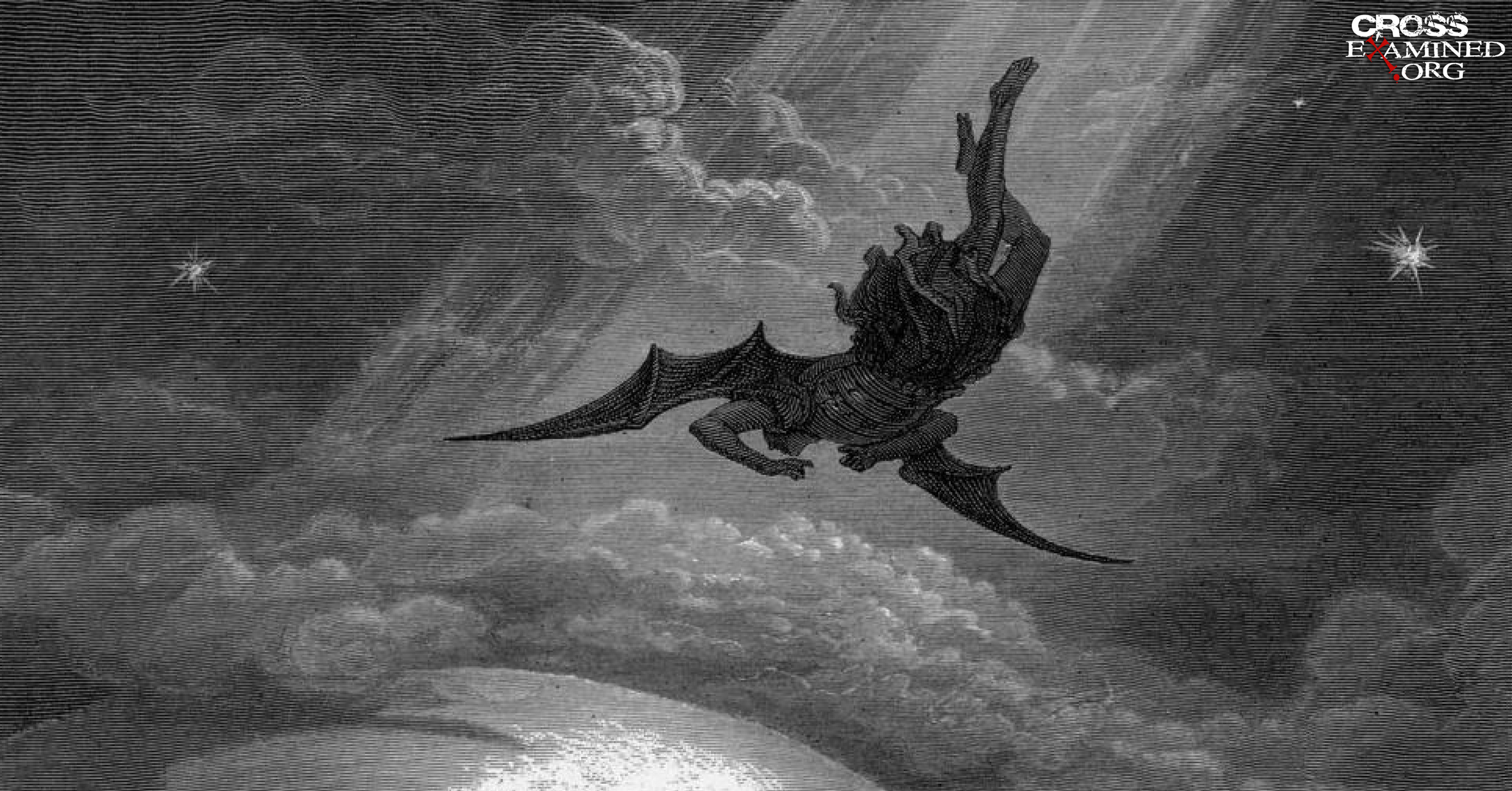
No one is spared of evil. We either reel under the effects of evil or feel the impact of evil upon our relatives, friends, and society at large. Some question God’s goodness on account of evil and a few others dispute God’s presence.

Evil is real. Evil is not an illusion. Any sane human being would affirm this position. Terrorism or human trafficking is an act of evil, and the pain felt by those hurt by this evil is indeed real.

If evil is real, then it should have a source, and that source has to be real. (If Satan is not real, then was Christ hallucinating while HE was tempted by Satan and while HE drove away the demons?)

The Bible terms Satan as the source of all evil (John 8: 44). Christians believe in God as a maximally great being; HE is supreme over all that has been, is and ever will be. If God is supreme, then HE should have created Satan. Isn’t it?

Before we explore the Bible to learn about Satan, we should discard the following concepts:

  1. That Satan and his demonic entourage are merely a mythological conception drawn from the culture of the day. This is German theologian Rudolf Bultmann’s program of demythologization of Satan.
  1. That Satan and evil do not stem from a personal source but are woven in the fabric of our social reality as a part of the very structure of reality. This is Christian existentialist theologian Paul Tilich’s depersonalization of Satan.
  1. That demons are simply nothingness in their dynamic, not created by God but a threat to God’s creation. This is reformed theologian Karl Barth’s conception. This conception of evil denies the concreteness of evil; hence we disagree.

So to begin with, we agree with the Bible that evil is real, Satan is real, and God is also real. Did God then create Satan? The answer is an unequivocal yes.

But the bigger question is, “Did God create Satan as a source of evil?” The answer to this question is an unequivocal no, for God, as a good being, cannot be the creator of evil.

This then is Bible’s teaching about Satan:

Isaiah 14: 12-17 and Ezekiel 28: 12-19 are often termed as conjectures of the Satanic fall. This may or may not be so, for these passages could refer to human kings of Babylon and Tyre. Hence it would be profitable for us to explore the Bible from outside these references to learn more about Satan.

  1. God created everything, which includes angels and demons (Colossians 1: 15-16).
  2. Everything God created was originally good (Genesis 1: 31; 1 Timothy 4: 4)
  3. Some angels sinned and are doomed for eternal destruction (1 John 3: 8; 2 Peter 2: 4; Jude 6). If some angels sinned, then they were created with a potential to sin i.e. they had the free will to sin.
  4. Satan is an angel who is subordinate to God (Job 1: 6-7).
  5. Satan is a demon (Luke 10: 17-20) – casting out of demons implies the defeat of Satan.
  6. Satan is the prince of demons (Matthew 12: 22-32; Mark 3: 22-30; Luke 11: 14-23).
  7. Those who are demon possessed are under the influence of the devil (Acts 10: 38; cf. Luke 13: 16).
  8. Satan is the evil one (Matthew 13: 19; 1 John 2: 13, 3: 12, 5: 18).

These passages undoubtedly teach us that God created Satan and his demons originally as good beings. But Satan and some of his fellow angels sinned against God and are in the business of enabling mankind’s rebellion and disobedience against God.

Significantly, God did not create an evil Satan. God created a good angel, who used his free will to reject God and become evil.

If God had not created angels, then Satan would not exist. So why did God create angels? The Bible reveals the purpose behind God’s creation of angels. Angels were created to…

  1. …reveal and communicate God’s message to humans (Acts 7: 53; Hebrews 2: 2).
  2. …minister to believers (Acts 5: 19; Hebrews 1: 14).
  3. …execute judgment on the enemies of God (2 Kings 19: 35).
  4. …praise and glorify God (Psalm 103: 20, 148: 2).
  5. …be involved in Christ’s second coming (Matthew 25: 31)

A variant of the bigger question is, ‘why did God create Satan knowing that he will cause evil in this world?’

First, did God know that Satan would cause evil? Yes, God would have known all about Satan. God is all-knowing (Job 37:16; Psalm 139:2–4, 147:5; Proverbs 5:21; Isaiah 46:9-10; 1 John 3:19–20), so God would have definitely known that Satan would cause evil and disaster in this world.

Second, could not have God created a world without Satan? Wouldn’t a world without Satan and evil be a better world than ours? In other words, is our world the best of all possible worlds?

One of the great thinkers of 17th and 18th century is Gottfried Wilhelm Leibniz. He proposed that our world is the best of all possible worlds. Leibniz’s proposition was that since God knew all of the infinite possibilities, this world should be the best of all possible worlds, for God has actualized this world over the other possible worlds.

Christian analytic philosopher, Alvin Plantinga differed from Leibniz by positing that there cannot be a best world, for one more palm tree or one more morally righteous person can make any world better. So Plantinga concluded that there is no such thing as the best world. [Even if God does not create anything, HE alone will exist as the greatest good (Summum bonum)]. Therefore, God is merely obligated to create a good world and not a best world.

This world is a good world since God has offered freedom to his creation. God has offered freedom to man to love HIM freely. The same freedom was offered to the angels as well. Some angels a.k.a. Satan and his demonic entourage abused this freedom and rebelled against God.

A world without freedom is not a good world. Therefore, as C.S Lewis wrote in ‘Problem of Pain,’ God has created a good world in such a way that the goodness of this world could be perverted into evil upon mankind’s rebellion or when creation is distorted.

In other words, free beings, i.e., man could use their freedom to perform evil deeds by rejecting God, which in effect would destroy the goodness of God’s creation. Similarly, man can tamper with nature to bring about evil, e.g., destruction of coral reefs would bring about hunger, poverty, and political instability.

As long as God offers freedom to his creation, the free moral agents (e.g., man) would possess the ability to do good or evil. So the question is not about Satan’s existence whereas the question should be about the presence of freedom.

A world without freedom would be a world full of puppets or automata albeit in the form of human beings, which in essence is not a good world at all. Creating human beings with freedom is wiser than creating humans in an antiseptic environment from whom the logical possibility of desiring anything contrary to God’s will is excluded. Therefore, a world without free will and Satan would any day be a terrible world to live in than a world with free will and Satan.

Could God have created a world with free will and without Satan? A world with freewill will entail evil, and a world with evil will posit a source, namely Satan. Even if angelic beings were not created, and as long as free will exists, evil would exist.

Evil would exist because God in HIS nature is good. So anyone opposing or rejecting a good God would do evil. So a world with free will and without Satan would still contain evil.

Satan and his cohorts are busy causing evil in this world. Although we reel under the effects of evil both directly and indirectly, God has offered us eternal life through the Lord Jesus Christ, and God has promised to care for and protect those who believe and seek HIM. May we believe in Christ, gain life eternal, and protection against evil. Amen.


Rajkumar Richard is passionate to strengthen the faith of fellow Christians, especially the young Christians. He has a Masters in Religion (Southern Evangelical Seminary, NC, USA) and Masters in Biology (School of Biological Sciences, Madurai Kamaraj University, India). He is a Christian blogger, itinerant speaker, social evangelist, and a mentor to young Christians.

Original Blog Source: http://bit.ly/2N2TV6q

By Rajkumar Richard

The question, “Would there be less evil in a world without Satan?” could be relevant, for if the answer to this question is a yes, then we could plausibly ask, “Why did God create angels, i.e., Satan if evil in this world would be lesser without Satan?”

Within this context, if God had not created Satan, evil would have been less, and our world would have been a good world. However, since God created Satan, could we then infer that God erred in HIS decision to create Satan?

The entailment to this thought process could potentially debunk Historic Christianity. God (as a maximally great being) cannot err. If God erred in creating Satan, HE cannot be God. Hence God’s existence could be disputed. The infallibility of the Bible that reveals God to mankind could also be thus disputed. We could go on and on.

Let us discuss this theme by considering the following aspects albeit from a biblical standpoint.

The Source of Sin

Sin is an evil action or motive that opposes and assaults God. Sin replaces God with something or someone in God’s rightful place of supremacy. Sin entails evil.

Understanding the source of sin is vital to understanding the theme we are discussing now. If Satan is the source of sin and evil, one could argue that God should not have created Satan to keep the world free of sin and evil.

The “Animal Nature” of man is the source of sin, claimed British Philosopher and Theologian Frederick R. Tennant. Under this notion, humans possess natural animalistic impulses as a means to human survival that have intensified through natural selection based on their evolution from less highly developed forms. Other theologians have posited other sources of sin. However, each of these views has been found to be largely inadequate.[1]

The Bible teaches differently. Sin is not caused by God (James 1:13), but man is responsible for his sins (James 1: 14-15).

Man possesses certain innate desires. He could either satisfy those desires in moderation or sin by abusing those desires to either hurt himself or the others.

His ‘desire to enjoy’ could result in an enjoyment of eating in moderation or a sin by being a glutton, whereby he injures himself.  His ‘desire to obtain’ could be satisfied either by legitimately acquiring material possessions or he could sin by exploiting and stealing from others. His ‘desire to achieve’ could be satisfied either through legitimate achievement or he could sin and achieve at the expense of others.

Man could satisfy these desires in a godly manner by dwelling within the divinely imposed constraints. But man sins when he fails to accept the divine limits to these desires and makes these desires as ends in themselves, which are the cravings of a sinful man (1 John 2: 16).

While desires are natural, there could be external inducements (Satanic or human) that motivate a man to sin. Whatever be the case, man is wholly responsible for his sins. Sin is the choice of the person who commits it.

Function of Satan in Sin

Satan is a demon (cf. Luke 10: 17-20). He is the tempter and deceiver. Satan opposes God and the work of Christ by tempting and deceiving humans. Satan tempted Adam & Eve, Jesus, Judas, etc. (cf. Acts 5:3, 1 Corinthians 7:5, 2 Corinthians 2: 11, Ephesians 6: 11, 2 Timothy 2: 26).

Sometimes we state that Satan is the source of sins. While making such statements, we use the word “source” informally. In this informal usage, “source” refers to an ‘originator’ or an ‘instigatory cause.’

If we claim that Satan is the source of all sins, i.e., if we use the word ‘source’ to mean, in an Aristotelian sense, the material cause (‘that out of which’) or the efficient cause (‘the primary source of…’), then we posit dualism. Dualism contradicts the Bible, for there are no two equally ultimate powers, one good, and the other evil.

God is the only ultimate power and God is good. God is not the source or the originator of sin or evil. Moreover, Satan was originally created good; hence Satan is not the source of sin and evil.

Potency of Freewill to Sin without Satan

If asked differently, the title question would be, “Would Adam & Eve have sinned without Satan?” Since man is responsible for his sins, the answer should be yes.

The premise on which this argument is also predicated on is the freewill-based rebellion of angels in the heavenly realm. (This premise presupposes the metaphysical similarity of the free will of angels and humans.)

The angels that rebelled against God did not have an external inducement (as Adam & Eve had Satan as an external inducer). There were only two entities during the angelic fall – God and Angels. (Even if mankind was created before the fall of Satan, man was totally incapable of influencing Satan’s fall.)

Since God can neither tempt nor cause evil, the angelic rebellion was an entailment of their free will. Therefore, it is quite reasonable to conclude that Adam & Eve had the potential to sin or would have sinned irrespective of the presence of Satan.

Satan merely accelerated the sin of Adam and Eve. Had Satan not existed, Adam and Eve would have sinned (or eaten from the tree of the knowledge of good and evil) sooner or later.

Conclusion

Satan is not the source of sin. Man’s free will is the source of sin. Man would have inevitably sinned regardless of Satan’s existence.

Would the quantum and the extent of sins be minimized if Satan was not created? Not necessarily so, for if Satan is to be considered as an accelerant of sin, then there is a possibility that the quantum and the extent of sins would be actualized at a later time. So the quantum and the extent of sins would have been the same with or without Satan, for the potency of man’s free will to sin is independent of Satan.

The other possibility is that the quantum and the extent of sins would be lesser without Satan. In which case, the question, “If evil in this world would be lesser without Satan, then why did God create Satan?” gains legitimacy.

If Satan is the sole cause of evil, then evil would have been absolutely eliminated, had Satan not been created. However, since Satan exists and that Satan is not the sole cause of evil, only God, in HIS omniscient wisdom would be able to determine the extent to which evil would be reduced had angels not been created.

But on the other hand, if the good that is to be actualized from the good angels in ministering to people is commensurately immeasurable, then God would be justified to create Satan even with the potential of evil.

Finally, natural evil, which is devoid of human willing and acting, such as hurricanes, tornadoes, volcanic eruptions, earthquakes, tsunamis, etc. and suffering caused by a host of diseases such as cancer, cystic fibrosis, etc. exist independent of Satan and adds substantial numbers to the victims of evil. The pain and suffering caused by natural evil and diseases are innate in the creational design of this world and the human body.

The fact of the matter is that evil would not cease to exist if Satan were to be non-existent. Hence, numbers need not matter. When evil exists, the terms ‘lesser’ and ‘greater’ do not gain greater significance, for the world we live in would be evil even if only 1% of the total population (1 out of 10 people) are adversely affected by evil. Moreover, if only 1% of the total population is affected by evil, then there is a certain possibility for evil to increase.

Therefore, the question, “Would there be less evil in a world without Satan?” would neither debunk nor harm Historic Christianity.

Notes:

[1] Other theologians have posited various sources for sin. The “Anxiety of Finiteness” was proposed by Reinhold Niebuhr (1892-1971). The idea of “Existential Estrangement” was proposed by Paul Tillich (1886-1965), the “Economic Struggle” proposed by the Liberation Theology, and “Individualism and Competitiveness” as argued by Harrison Sacket Elliott (1882-1951).


Rajkumar Richard is passionate to strengthen the faith of fellow Christians, especially the young Christians. He has a Masters in Religion (Southern Evangelical Seminary, NC, USA) and Masters in Biology (School of Biological Sciences, Madurai Kamaraj University, India). He is a Christian blogger, itinerant speaker, social evangelist, and a mentor to young Christians.

Original Blog Source: http://bit.ly/2OKqCUp

by Rajkumar Richard

You may have encountered and engaged these claims, “Christianity is intolerant!” and “Christianity is exclusive!” The other religions are allegedly tolerant and hence, inclusive. Is it so? No! Every major religion claims exclusivity.

Within the theme of “Religious Diversity,” three relevant theories should be recognized.[1] The “Pluralist theory” believes that one religion is as truthful as another. The “Exclusivist theory” considers only one religion as uniquely valuable – the sole bearer of truth. The “Inclusivist theory” finds merit with both the pluralistic and exclusivistic religions by arguing that while the exclusivistic religion could hold most value, the others still have religious value, for there may be partial truth in the other religions.

A religion proclaims exclusivity if it absolutely contradicts an essential doctrine (Godhead, Sin, Salvation, etc.) of another religion. Since mutually contradictory statements cannot be true at the same time and in the same sense (Law of noncontradiction), the either-or logic (not the both-and) should be applied while determining the truth. When two religions mutually contradict each other, the truth remains with either religion A or religion B (both religion A and religion B cannot be true, in this instance). Therefore, only one religion could be true, but the fact remains that both religions claim exclusivity, for both these religions claim to bear the truth.

Every major religion in the world, either implicitly or explicitly, claims exclusivity. Ravi Zacharias states, “The truth is that every major religion in the world claims exclusivity, and every major religion in the world has a point of exclusion…”[2] Therefore, a preliminary study of the claims of exclusivity of the major world religions is in order.

Exclusivity of Hinduism

Hinduism, one of the world’s oldest religious systems, claims to be inclusive.[3] But it is not so.

Hinduism excludes other religions based on its core doctrines. Consider the doctrine of God in Hinduism. Brahman, the absolute God of Hinduism, is a mysterious being.[4]

Although Brahman is one God, he manifests in innumerable forms, “Hinduism is unique because it is essentially a monotheistic faith which acknowledges polytheism as reflective of the diversity in God’s creation. God is one, but also many. He manifests Himself in innumerable forms and shapes.”[5] But the God of Christianity does not manifest Himself in innumerable forms. Hence, Hinduism should exclude Christianity or Islam on the basis of the Godhead. The same holds true for doctrines such as karma and reincarnation, which absolutely contradict Christianity and other religions.

While Hinduism claims inclusivity, it excludes the exclusivists, “Hinduism does not recognize claims of exclusivity or a clergy. Anyone who claims to by [sic] the exclusive possessor of spiritual truth or the only ‘method’ of reaching God finds no place in Hinduism; a method or a message can only be one among many…Krishna, speaking as God in the Bhagavad-Gita, says, “All paths lead to me,” and also those who worship other gods with devotion worship me….Hinduism does not force itself on others through proselytization…”[6]

Existentially, Hinduism contradicts its own claims for inclusivity. If Hinduism is truly inclusive, it would not proselytize. But Hinduism, in India – the country of its origin, is actively converting people. The recent Ghar Wapsi (Home Coming) program in India is a classic case in point. Ghar Wapsi is, “a series of religious conversion activities, facilitated by Indian Hindu organizations Vishva Hindu Parishad and Rashtriya Swayamsevak Sangh, to facilitate the conversion of non-Hindus to Hinduism”[7]

Furthermore, Ravi Zacharias, who was born into a Hindu household, asserts the exclusivity of Hinduism, “Hinduism, for example, is often represented as being the most tolerant and accepting of other faiths. That is just not true. All Hindus believe in two fundamental, uncompromising doctrines—the Law of Karma, and the belief in reincarnation.”[8]

Therefore it is very reasonable to conclude that Hinduism is not an inclusive faith since it claims exclusivity.

Exclusivity of Buddhism

Rejection of Hinduism led to the birth of Buddhism, says Ravi Zacharias, “Buddhism was born out of the rejection of two other very dogmatic claims of Hinduism. Buddha rejected the authority of the vedas and the caste system of Hinduism.”[9]

There are several irreconcilable differences between Buddhism and Historic Christianity. Two such differences are found below:

First, Buddhism rejects the notion of a personal God, which is in stark contrast to Christianity, “There is no almighty God in Buddhism. There is no one to hand out rewards or punishments on a supposedly Judgement Day.”[10] However, Buddha is worshipped by some Buddhists.

Second, Buddhism excludes other religions that believe in sin, for there is no such thing as sin in Buddhism, “Buddhists do not regard man as sinful by nature of ‘in rebellion against god.’ Every human being is a person of great worth who has within himself a vast store of good as well as evil habits…According to Buddhism, there is no such thing as sin as explained by other religions.”[11]

There are many such points of exclusions in Buddhism. Hence, Buddhism is also an exclusive religion.

Exclusivity of Islam

Islam, being strictly monotheistic, rejects every contradicting worldview (Trinitarian monotheism, polytheism, pantheism, etc.). Moreover, Islam, by virtue of rejecting Christ’s divinity, excludes Christianity.

Islam is also a legalistic system. A Muslim must earn his salvation by holding to the “Articles of Faith” (belief in God, Angels, Scripture, Prophets, and Last Days) and following the “Pillars of Faith” (The Creed, Prayer, Almsgiving, Fasting, and Hajj Pilgrimage). This is in absolute contrast to Christianity, which believes that man is not saved by his good deeds but is saved by the grace of God through faith in the Lord Jesus Christ.

Therefore, Islam stakes claim to exclusivity by excluding the contradicting religions.

Exclusivity of Judaism

It may be an effortless task to prove Judaism’s claim to exclusivity vis-à-vis other religions that are not named Christianity. Judaism and Christianity have much in common. Josh McDowell and Don Stewart, in their work “Handbook of Today’s Religions,” state the fundamental similarity, “It is to historic Judaism, the Judaism of the Old Testament, that Christianity traces its roots. Christianity does not supplant Old Testament Judaism; it is the fruition of Old Testament Judaism. One cannot hold to the Bible, Old and New Testaments, as God’s one divine revelation without also recognizing and honoring the place God has given historic Judaism.”[12]

Given this relationship between Judaism and Christianity, the exclusivity of Judaism would be clearly emphasized if Judaism excludes Christianity. A couple of points of exclusion are highlighted below:

First, Judaism rejects the Christian belief that Jesus Christ is the Messiah, “While Christianity recognizes that the promise of a personal, spiritual savior is the core of biblical revelation, Judaism has long vacillated in the concept of messiahship. That Jesus Christ, the true Messiah predicted in God’s Word, would be rejected by the Jews of the first century shows that even at that time there was a divergence of opinion on the meaning and authority of messianic passages in Scripture. In the course of Jewish history, the meaning of the Messiah had undergone changes. Originally, it was believed that God would send His special messenger, delivering Israel from her oppressors and instituting peace and freedom. However, today any idea of a personal messiah has been all but abandoned by the majority of the Jews. It has been substituted with the hope of a messianic age characterized by truth and justice.”[13]

Second, the salvation of the Jews is predicated on sacrifices, penitence, good deeds and a little of God’s grace, since they reject the substitutionary atonement of the Lord Jesus Christ.[14] Salvation in Christianity is absolutely contingent on God’s grace, but not on the performance of good deeds.

Conclusion  

Every major religion of the world remains exclusive, for there are irreconcilable contradictions between these religions. The notion that Historic Christianity is the only religion that claims exclusivity is, therefore, incorrect.

Notes:

[1] http://www.iep.utm.edu/reli-div/

[2] http://rzim.org/a-slice-of-infinity/point-of-exclusion/

[3] http://indianexpress.com/article/india/india-news-india/hinduism-is-more-inclusive-and-not-exclusive-rss-chief-mohan-bhagwat-2947063/

[4] http://www.hinduwebsite.com/brahmanmain.asp

[5] http://www.hinduwebsite.com/onegod.asp

[6] M. G. Chitkara, Rashtriya Swayamsevak Sangh: National Upsurge, A.P.H Publishing Corporation, New Delhi, 2004, p61.

[7] https://en.wikipedia.org/wiki/Ghar_Wapsi

[8] http://rzim.org/a-slice-of-infinity/point-of-exclusion/

[9] Ibid.

[10] http://www.buddhanet.net/e-learning/snapshot01.htm

[11] http://www.budsas.org/ebud/whatbudbeliev/182.htm

[12] Josh McDowell and Don Stewart, “Handbook of Today’s Religions,” Thomas Nelson Publishers, Nashville, 1983, p364.

[13] Ibid. p372.

[14] Ibid. p373.


Rajkumar Richard is passionate to strengthen the faith of fellow Christians, especially the young Christians. He has a Masters in Religion (Southern Evangelical Seminary, NC, USA) and Masters in Biology (School of Biological Sciences, Madurai Kamaraj University, India). He is a Christian blogger, itinerant speaker, social evangelist, and a mentor to young Christians.

Original Blog Source: http://bit.ly/2l7HkPU

By Rajkumar Richard

The Bible is replete with miracles[1]. Sincere Christians who worship the Triune God will objectively believe every recorded miracle in the Bible. Miracles are intended to glorify God, meet human needs and establish the supernatural basis of revelation.

Sincere Christians will also affirm miracles subjectively. They will subjectively assert their existence as a product of not one or two, but many a miracle. A classic spiritual example of a miracle is the born-again experience.

Postmodern Christians, however, will arrogantly deny miracles. Consequently, they will deny that the Bible (God’s Word) is inspired by God, is error -free and absolutely trustworthy.

Miracle, by definition, ought to appeal to God as its ultimate source. So atheists are not expected to believe in miracles. However, their beliefs in life from non-life, order from chaos, rational from non-rational are miracles in themselves. It’s just that atheists would attribute miracles to random occurrences without scientific explanation[2].

This article is neither intended to deny miracles nor affirm its absolute uselessness, but it will endeavor to highlight specific instances of application where miracles could be rendered useless.

Miracles Sustain Unbelief

Miracles would be rendered useless if it were solely used as an evangelistic means to bring people to Christ.

Miracles bring people to Christ. The Jews who witnessed Lazarus’ miraculous resurrection believed in Christ (John 11: 45).

However, the Lord Jesus performed numerous miracles. Nevertheless people abandoned HIM. So miracles were either rendered useless when people did not respond with belief in Christ or miracles were not performed with a motive for people to believe in HIM.

The 6th chapter of the gospel of John offers a remarkable insight into people’s disbelief and abandonment of the Lord. Although they were cognizant of the Lord’s miraculous feeding of the 5000 and the miraculous walking on the water, many disbelieved and abandoned HIM (John 6: 30, 66).

This is the problem. Without adequate biblical support, miracles are posited as a vital means to evangelism by certain Christians. But there are instances of people refusing to believe in Christ even upon witnessing miracles. (An overnight change in character from bad to good need not be construed as a miracle by those who are not predisposed to believing in miracles.)

On the other hand, when miracle-workers fail to perform miracles, they ascribe the failure upon the audience. They could claim that their audience did not possess adequate faith in Christ for miracles to occur.

These Christians commonly believe that miracles cannot be performed when there is no faith in people (cf. Matthew 13: 58, Mark 6: 5). This is an invalid notion.

The sovereign God cannot be limited by man’s belief. Christ healed a faithless man who was invalid for 38 years (John 5: 1-9).

Since not all miracles lead people to Christ, a conclusion that miracles sustain unbelief in Christ is reasonable.

Miracles Deceive People

The notion that miracles are solely meant to draw people to Christ presupposes an argument that Christians are the one and the only group who could perform miracles. This is an invalid notion.

The Egyptian magicians imitated the miracles of Moses and Aaron to a large extent (Exodus 7). If miracles are solely meant to draw people to Christ, then the miracles performed by those in the name of their gods would deceptively draw people to their gods. If miracles lead people away from Christ, the notion that miracles should solely lead people to Christ is self-defeating.

The fact remains that miracles could be deceptive.

Satan deceives people through miracles, “The coming of the lawless one will be in accordance with how Satan works. He will use all sorts of displays of power through signs and wonders that serve the lie, and all the ways that wickedness deceives those who are perishing…” (2 Thessalonians 2: 9-10, NIV, Emphasis Mine).

Therefore, miracles are useless when it deceives people and draws them away from the living God.

Miracles Propel Evangelists

Quite a few evangelists / miracle-workers perform miracles to propel themselves into greater fame and power. The Bible reveals this fact.

The Bible records Simon’s unholy eagerness to perform miracles (cf. Acts 8: 21-22). Simon probably desired to perform miracles to propel him to greater fame. The depravity of man’s heart remains the same then and now. Now quite a few evangelists use miracles to glorify themselves.

Sadly the destinies of these people are abundantly clear. They are eternally doomed (Matthew 7: 22-23). Although the miracles these people perform could bring people to Christ, these miracles, in their own eternal context, are useless (these miracles do not save the miracle-workers).

Miracles Entertain People

Miracles do possess an entertainment value.

Herod desired entertainment from Christ, so he hoped that the Lord would perform miracles (Luke 23: 8-9). This is the situation with quite a few people today. They look upon miracles as a means of entertainment.  This is another situation where miracles would be rendered useless.

Furthermore, could we pray for miracles in our life today? Yes! Miracles could be a means of God’s answer to our prayers.

How do we recognize if a miracle is from God or not? Miracles from God save man from his terrible predicament. Satan, as an agent of destruction, need not always save man from his predicament, unless ordained by God for a specific reason.

On a rather detached tangent, what about those among us who remain idle while expecting a miracle to happen?

This is a complex question. A universal answer is not a good choice to deal with this predicament. A suitable alternative is to examine every situation as independent of another within this context.

As a case in point, consider a Christian who refuses to eat medicines but waits on God to perform a miracle of healing. While God can accede to this request, HE could, as a just and a sovereign being, deny this prayer request. Hence, it is upon the Christian to know the will of the Lord.

The prayer life of a Christian should determine whether he/she waits upon the Lord for a miracle or consumes medicines, all the while knowing that medicines are also an agent of God’s healing for man.

So to conclude, the Bible reveals that Satan (a created being and enabled by God to perform miracles) could be a secondary source for miracles. In this instance, miracles will lead people away from Christ. So miracles need not always have God as its source (although God is the ultimate source for all miracles).

Man could also employ his [corrupt] freewill to draw people to himself rather than God. So miracles need not always be for the sake of God’s glory.

When a believer of Christ employs miracles for his selfish agendas, God need not necessarily confiscate the spiritual gift of miracles from him / her. The believer is responsible to use every gift for the sake of God’s glory.

Therefore, miracles should not be blindly believed to be as from God or as approved by God. Miracles ought to be perceived with utmost spiritual diligence.

Endnotes:

[1] Dr. William Lane Craig defines miracles as extraordinary acts of providence which should not be conceived, properly speaking, as violations of the laws of nature, but as the production of events which are beyond the causal powers of the natural entities existing at the relevant time and place. (http://www.reasonablefaith.org/creation-providence-and-miracle, last accessed on July 13, 2015)

[2]  http://www.bbc.co.uk/religion/0/24660240, last accessed on July 13, 2015

Original Blog Source: http://bit.ly/2tRFqX0


By

INTRODUCTION

This is a short introductory essay to defend objective moral values. In philosophy, the term ‘objective,’ is defined as the existence of an object independent of human mind (mind-independency); “the object would “be there,” as it is, even if no subject perceived it.”1 In contrast, the term ‘relative’ refers to the perception of an object by the subject (mind-dependency).

‘Relativism’ espouses true or false moral judgments relative to language, culture or biological makeup.For instance, relativism need not consider polygamy as crime, for cultures or people can justify polygamy relative to their thought paradigm. Relativism denies objectivity and appeals to man’s mind.

Alternatively, ‘Objectivism’ espouses truth and falsity as independent of mind, so to claim and appeal to the reality of objective moral facts. Therefore, objectivism will rule polygamy to be a crime by appealing to the existence of objective moral laws (which is discovered and not invented by humans). This is similar to objectivism affirming the objective reality that sun is more massive than the earth.

THESIS

I – A Case for Objective Moral Values:

‘Objectivism’ or ‘we should not be moral relativists’ could be reasonably defended by positing the presence of ‘objective moral values.’ Moral relativism opposes ‘objectivism’ by negating the presence of objective realities.3 But if objective moral values can be postulated to exist, then moral relativism could be reasonably debunked.

 (1) Objective Reality is Factual

There are objective realities. The fact that sun is more massive than earth is an objective reality. This fact does not depend on anyone affirming or negating it.

(2) Objective Moral Values are a Reality

It’s morally wrong to not assist a person in need when we are able to. Similarly genocide is morally wrong; it is morally wrong to deliberately and systematically eliminate a group of people. These are universally affirmed objective moral values and do not depend on people’s mind (whether anyone believes or accepts, it is morally wrong to not assist a person and to commit genocide). Thus there are universally affirmed objective moral values.

(3) An Objective Basis is Necessary for Objective Moral Values to Exist

The “objectivism” proposed by Ayn Rand (1905-1982) posits man’s selfishness or man’s survival as the objective foundation to objective moral values.4 But human selfishness cannot be sustained as an objective foundation against an argument that a certain human subjectivity ought to be involved in deciding opposing values of human selfishness.

Would it be objectively true if the Nazi’s argued that it was morally right for them to eliminate the entire Jewish population because the Jews were an economic burden to Germany? The human selfishness of the Nazis was predicated upon the economic crisis in Germany, but in stark contrast, the human selfishness of the Jews was predicated on protecting their own life. So the Randian objectivism would crumble when two opposing cases of human selfishness collide with each other. Thus one ought to subjectively decide between the opposing objective moral values espoused by the two groups.

But ‘God’ can be reasonably posited as the sole objective source for moral values. God, as the greatest conceivable being, transcends humanity and the space-time coordinates. Hence God is an objective reality and the sole objective basis for objective moral laws.

However, proof of God’s existence ought to be reasonably provided, if not, God cannot be posited as the basis of mind-independent objective moral laws. Many arguments for God’s existence have been reasonably and plausibly posited, such as the Teleological Argument,5 Cosmological Argument,6 Moral Argument7 etc.

Since objectivity, objective moral values, and an objective moral value giver (God) can be posited, a reasonable conclusion is that there are objective moral values. Hence, we should not be moral relativists.

II – A Case for an Immoral World:

Moral relativism would stimulate an immoral world without any restraint whatsoever. When moral values are predicated on human mind, morality would be a slave of the dogma that controls that human mind. If one’s dogma is cannibalism, he would appeal to moral relativism to justify his devouring of his neighbor. Since moral relativism promotes an immoral world, we should not be moral relativists.

CONCLUSION

Two mutually contradicting statements cannot be true within the same context, at the same time and for all people. So objective and relative moral values cannot both be true for they contradict each other. The presence of objective moral values and the case for an immoral world portrays that moral relativism exists by ignoring or suppressing the truth of objective moral values. Therefore, we should not be moral relativists.

END NOTES:

1http://www.iep.utm.edu/objectiv/#SH2a

2http://plato.stanford.edu/entries/relativism/

3http://www.iep.utm.edu/moral-re/#H3

4http://plato.stanford.edu/entries/ayn-rand/

5 J.P Moreland, Scaling the Secular City – A Defense of Christianity, (Michigan: Baker Academic, 1987), p43-76.

6 Ibid, p15-42.

7http://www.reasonablefaith.org/moral-argument#ixzz2mPz3C86b

This article was posted at http://rajkumarrichard.blogspot.in/2013/12/should-we-be-moral-relativists_28.html

Original Blog Source: http://bit.ly/2th89GR


By

The question, “Does God love Satan?” seemingly yields diametrically conflicting answers from conservative Christian theologians. Some assert that God cannot love Satan. In contrast, others claim that God loves Satan. So does God love Satan or not? 

Answers to the question, “Does God love Satan?” cause further complications. If God does not love Satan, how could God be maximally and perfectly good? (If God does not love one being, then HE cannot be maximally and perfectly good.) Moreover, if God hates Satan for being evil, does HE also hate all those humans who reject and slander HIM? If God hates those who reject and slander HIM, HIS love is conditional. But isn’t God’s love unconditional?

The answer, “God loves Satan,” is also riddled with complications. If God loves Satan, how could a good God love the evil Satan? Could there be a semblance of evil in God because HE loves the evil Satan? Furthermore, if God loves Satan, should we also love Satan?

God Cannot Love Satan

Christian Q&A website, Gotquestions.org affirms that God cannot love Satan, “No, God does not love Satan, and neither should we. God cannot love that which is evil and unholy, and Satan embodies all of that. He is the enemy (1 Peter 5:8); the evil one (Matthew 6:13); the father of lies and a murderer (John 8:44); the accuser of God’s people (Revelation 12:10); the tempter (1 Thessalonians 3:5); proud, wicked and violent (Isaiah 14:12-15); a deceiver (Acts 13:10); a schemer (Ephesians 6:11); a thief (Luke 8:12); and many more evil things. He is, in fact, everything that God hates. The heart of Satan is fixed and confirmed in his hatred of God, his judgment is final, and his destruction is sure. Revelation 20 describes God’s future plan for Satan, and love for Satan has no part in it.”1

God Loves Satan

Dr. William Lane Craig claims that God loves Satan, “I feel no awkwardness whatever in affirming that God most certainly does love Satan. Indeed, what I should find awkward would be affirming that He does not! God is a perfectly loving being, whose love is not based on a person’s performance. Satan is a person, indeed, on the traditional conception an angelic person of unparalleled beauty and perfection among creatures. How could God not love him? The fact that that person is now fallen and unspeakably evil does not imply that God ceases to love him, any more than He ceased to love us when we fell and became enemies of God (Romans 5.10).”2

(Dr. Craig’s claim was in response to this question, “…Is it not true then that His love for all includes the Devil? For if it were not the case then there would be at least one eternally damned being whom God does not love or loves less, i.e., He is not all-loving or the greatest conceivably loving being.”)

Is Satan Totally Evil?

In his blog, Tough Questions Answered, Bill Pratt quotes Dr. Norm Geisler to contend that Satan is not totally evil, “Many people mistakenly believe that while God is totally good, Satan, or the Devil, is totally evil. They are polar opposites of each other.

This idea, however, is false. Satan, while being totally evil in a moral sense, is not totally evil in a metaphysical sense. Theologian Norm Geisler explains the distinction in his book If God, Why Evil?: A New Way to Think About the Question. Geisler writes:

The Bible speaks about Satan as “the evil one” (1 John 5:19) who is a liar by his very nature (John 8:44). Surely there is no good in Satan – is he not totally evil? Yes, he is completely evil in a moral sense, but not in a metaphysical sense. Just like fallen humans still have God’s image, even so Satan has the remnants of good that God gave to him as a created angel.

For example, Satan has good insofar as he is a creature of God, insofar as he has intelligence, and power, and free will. Of course, he uses all these God-given good powers to do evil; he is ever, always, irretrievably bent on evil. But this is only to say he is totally depraved morally, not that he is totally deprived of all creaturely good metaphysically.” (Emphasis Mine).3

Understanding God’s Love For Satan

The assertions, “God loves Satan” and “God hates Satan” need not be construed as being diametrically opposite or absolutely conflicting. Both these assertions could be true in a particular sense – the metaphysical or the moral.

Since Satan retains a remnant of the goodness of God’s creations from a metaphysical sense, we could reasonably sustain the notion that God loves Satan. In other words, God loves Satan only from a metaphysical sense.

But Satan is morally depraved. God cannot love the consequential deeds of a morally depraved being. So from this sense – the moral sense – the notion that God hates Satan (his evil deeds) could be sustained.

Significantly, an absolute denial of God’s love for Satan cannot be sustained. Just one reason may be sufficient to corroborate this assertion. If God hates Satan absolutely or totally, then should God not hate all those who reject and slander HIM?

But the Bible clearly teaches that God loved us when we were sinners (Romans 5:8). Therefore, if God loves a sinful, rebellious and slanderous man, on what grounds could God not love Satan? While it is true that both Satan and those men and women who rebel, reject, and slander God are doomed to an eternal damnation, the judgment of God need not violate HIS love for those who disbelieve and abuse HIM.

God’s judgment is contingent on the exercise of free will in the case of Satan and the unbelieving mankind. But God’s love for HIS creation is not contingent on HIS judgment. It is contingent on the goodness of HIS creation (God created all things good). Moreover, as it has already been asserted, neither Satan nor the unbelieving mankind is totally evil, for they still retain their creational goodness in the metaphysical sense. (The unbelieving humans could be morally good in certain or most instances. Satan too could, arguably, be morally good in certain situations, albeit in a passive sense, when he does no harm to his followers – not from the perspective of eternity, but from a worldly perspective.)

To conclude, the understanding that God loves Satan could only be sustained if the entailing complications could be resolved. These are the complications. If God loves Satan, then “how could a good God love the evil Satan?” Could there be a semblance of evil in God because HE loves the evil Satan? Furthermore, if God loves Satan, should we also love Satan?

How could a good God love the evil Satan? Satan is morally depraved and irretrievably bent on evil, but this is from a moral sense. However, Satan does retain a remnant of the goodness of God’s creations (intelligence, power, free will etc.). If Satan retains even a remnant of the metaphysical goodness of God’s creation, there is enough latitude for God to love Satan. So an absolute assertion that God hates Satan cannot be sustained. Therefore we could reasonably affirm that God loves Satan from the metaphysical sense and yet assert that God hates Satan from the moral sense.

Could there be a semblance of evil in God because HE loves the evil Satan? A maximally good and perfect being cannot be evil in the sense of both the metaphysical and the moral. If God loves Satan from a moral sense, then an argument that God could be evil may be valid. However, God’s love for Satan is from a metaphysical sense (not from a moral sense), hence there cannot be a remote semblance of evil in God.

Does God’s love for Satan imply that we should love Satan? The Bible mandates us to stand against the evil schemes of Satan and his entourage (Ephesians 6: 11). Moreover, Satan works against God’s people, so Christians cannot love Satan.

Notes

1https://www.gotquestions.org/does-God-love-Satan.html last accessed on 18th June 2017.

2http://www.reasonablefaith.org/does-god-love-the-devil last accessed on 18th June 2017.

3http://www.toughquestionsanswered.org/2015/03/02/is-satan-totally-evil/, last accessed on 18th June 2017.


Original Blog Source: http://bit.ly/2thjJBO

By

Examining atheism from the vantage point of Christianity motivates a Christian to ask two questions. First, “what would I gain if I convert to atheism?” Second, “is there any value to the benefits stockpiled from atheism?”

Unholy Benefits Atheims

What would I gain if I convert to atheism?

Thankfully, the “Creed” penned by the English poet and music journalist Steve Turner reflects the panoramic voice of an atheist whose godless worldview mandates an embrace of relativism:

We believe in Marxfreudanddarwin

We believe everything is OK

as long as you don’t hurt anyone

to the best of your definition of hurt,

and to the best of your knowledge.

We believe in sex before, during, and after marriage.

We believe in the therapy of sin.

We believe that adultery is fun.

We believe that sodomy’s OK.

We believe that taboos are taboo.

We believe that everything’s getting better

despite evidence to the contrary.

The evidence must be investigated

And you can prove anything with evidence.

We believe there’s something in horoscopes UFO’s and bent spoons.

Jesus was a good man just like Buddha, Mohammed, and ourselves.

He was a good moral teacher though we think

His good morals were bad.

We believe that all religions are basically the same –

at least the one that we read was.

They all believe in love and goodness.

They only differ on matters of creation,

sin, heaven, hell, God, and salvation.

We believe that after death comes the Nothing

Because when you ask the dead what happens

they say nothing.

If death is not the end, if the dead have lied, then it’s compulsory heaven for all

excepting perhaps

Hitler, Stalin, and Genghis Kahn

We believe in Masters and Johnson

What’s selected is average.

What’s average is normal.

What’s normal is good.

We believe in total disarmament.

We believe there are direct links between warfare and bloodshed.

Americans should beat their guns into tractors

and the Russians would be sure to follow.

We believe that man is essentially good.

It’s only his behavior that lets him down.

This is the fault of society.

Society is the fault of conditions.

Conditions are the fault of society.

We believe that each man must find the truth that

is right for him.

Reality will adapt accordingly.

The universe will readjust.

History will alter.

We believe that there is no absolute truth

excepting the truth

that there is no absolute truth.

We believe in the rejection of creeds,

And the flowering of individual thought.

Postscript:

If chance be

the Father of all flesh,

disaster is his rainbow in the sky

and when you hear:

State of Emergency!

Sniper Kills Ten!

Troops on Rampage!

Whites go Looting!

It is but the sound of man

worshipping his maker.

The benefit an atheist accrues is predicated on an assumption that atheism sets him free.

If I’m an atheist, I’d be liberated from religious demands. I no longer need to love and worship God.

If I do not love God, I’d not be shackled to a morally pure life required by Christianity. As Friedrich Nietzsche thought, if God does not exist, everything is permitted. I am my own god.

Decisions abhorrent to a well meaning Christian would be desirable to an atheist. An atheist can abort his / her unborn child. Gaining wealth by hook or by crook cannot be condemned by moral relativism. Fraud and bribery are acceptable. If anyone impedes his pursuit, he can bulldoze them, figuratively and literally. Thanks to atheism.

Pleasure in all forms is acceptable to an atheist, for atheism is sufficiently undergirded by the relativistic paradigm. An atheist is free to practice adultery, polygamy, homosexuality, child sex and what not. Thanks to the power of subjective moral values.

This is not it.

An atheist could also live a depressing life, for he would suffer a constant existential struggle.

This metaphysical struggle is between moral relativism and the law of the land, which is fundamentally predicated on objective moral values (you shall not kill, you shall not steal, you cannot rape etc.).

Although moral relativism prescriptively allows an atheist to gain wealth through unholy means, the law of the land legislates various stipulations that stifles and could imprison him for gaining wealth through unholy means. So he should painfully ponder over the wisdom behind the law of the land not being predicated on moral relativism!!

Jeffrey Dahmer, an American serial killer, expressed this struggle, “If a person doesn’t think there is a God to be accountable to, then—then what’s the point of trying to modify your behavior to keep it within acceptable ranges? That’s how I thought anyway. I always believed the theory of evolution as truth, that we all just came from the slime. When we, when we died, you know, that was it, there is nothing…” (Jeffrey Dahmer, in an interview with Stone Phillips, Dateline NBC, Nov. 29, 1994.).

Is there any value to the benefits stockpiled from atheism?

Atheists who wholly experience the unholy pleasures of this material world is destined to become weary of pleasure so to doom themselves into the darkened dungeons of meaninglessness.

Edward Young, in his work “Night Thoughts” ridiculed pleasure, “Sure as night follows day, Death treads in Pleasure’s footsteps round the world, When Pleasure treads the paths which Reason shuns.” And wasn’t it G.K Chesterton who said, “Meaninglessness does not come from being weary of pain. Meaninglessness comes from being weary of pleasure.”?

The author of Ecclesiastes pronounced the meaninglessness of pleasure, “I said to myself, “Come now, I will test you with pleasure to find out what is good.” But that also proved to be meaningless. “Laughter,” I said, “is madness. And what does pleasure accomplish?” I tried cheering myself with wine, and embracing folly—my mind still guiding me with wisdom. I wanted to see what was good for people to do under the heavens during the few days of their lives.

I undertook great projects: I built houses for myself and planted vineyards…I amassed silver and gold for myself…I acquired male and female singers, and a harem as well—the delights of a man’s heart. I became greater by far than anyone in Jerusalem before me. In all this my wisdom stayed with me.

I denied myself nothing my eyes desired; I refused my heart no pleasure. My heart took delight in all my labor, and this was the reward for all my toil. Yet when I surveyed all that my hands had done and what I had toiled to achieve, everything was meaningless, a chasing after the wind; nothing was gained under the sun.” (Ecclesiastes 2: 1-11, NIV).

So atheism does not set anyone free instead it imprisons its devotees to meaninglessness. Atheism offers perishable benefits, not enduring benefits.

What about those atheists who have lost faith in God because of the problem of evil and suffering? If you’re one of those atheists, please read the book of Habakkuk in the Bible.

The author of Habakkuk complains to God about evil, injustice and God’s apparent inactivity. But after hearing God’s response, he wholeheartedly proclaimed, “Though the cherry trees don’t blossom and the strawberries don’t ripen, Though the apples are worm-eaten and the wheat fields stunted, Though the sheep pens are sheepless and the cattle barns empty, I’m singing joyful praise to God. I’m turning cartwheels of joy to my Savior God. Counting on God’s Rule to prevail, I take heart and gain strength.  I run like a deer. I feel like I’m king of the mountain!” (Habakkuk 3: 17-19, MSG).

To conclude, yes, atheism offers a plethora of unholy benefits. But unholy benefits cannot enrich life.

There’s a God. HE desires that we love HIM. When we love God truly and wholly, we don’t gain pleasure from anything the material world has to offer. We find pleasure in enjoying God’s presence and the peace HE offers us through the good and the bad days of our lives. Because we love HIM, we long to be with HIM forever – even beyond this earthly life.

So let’s echo the words of the author of Ecclesiastes, who after having considered everything the material world has to offer, finds meaning in God alone, “Now all has been heard; here is the conclusion of the matter: Fear God and keep his commandments, for this is the duty of all mankind. For God will bring every deed into judgment, including every hidden thing, whether it is good or evil.” (Ecclesiastes 12: 13-14, NIV).

Original Blog Source: http://bit.ly/2nxaiun