
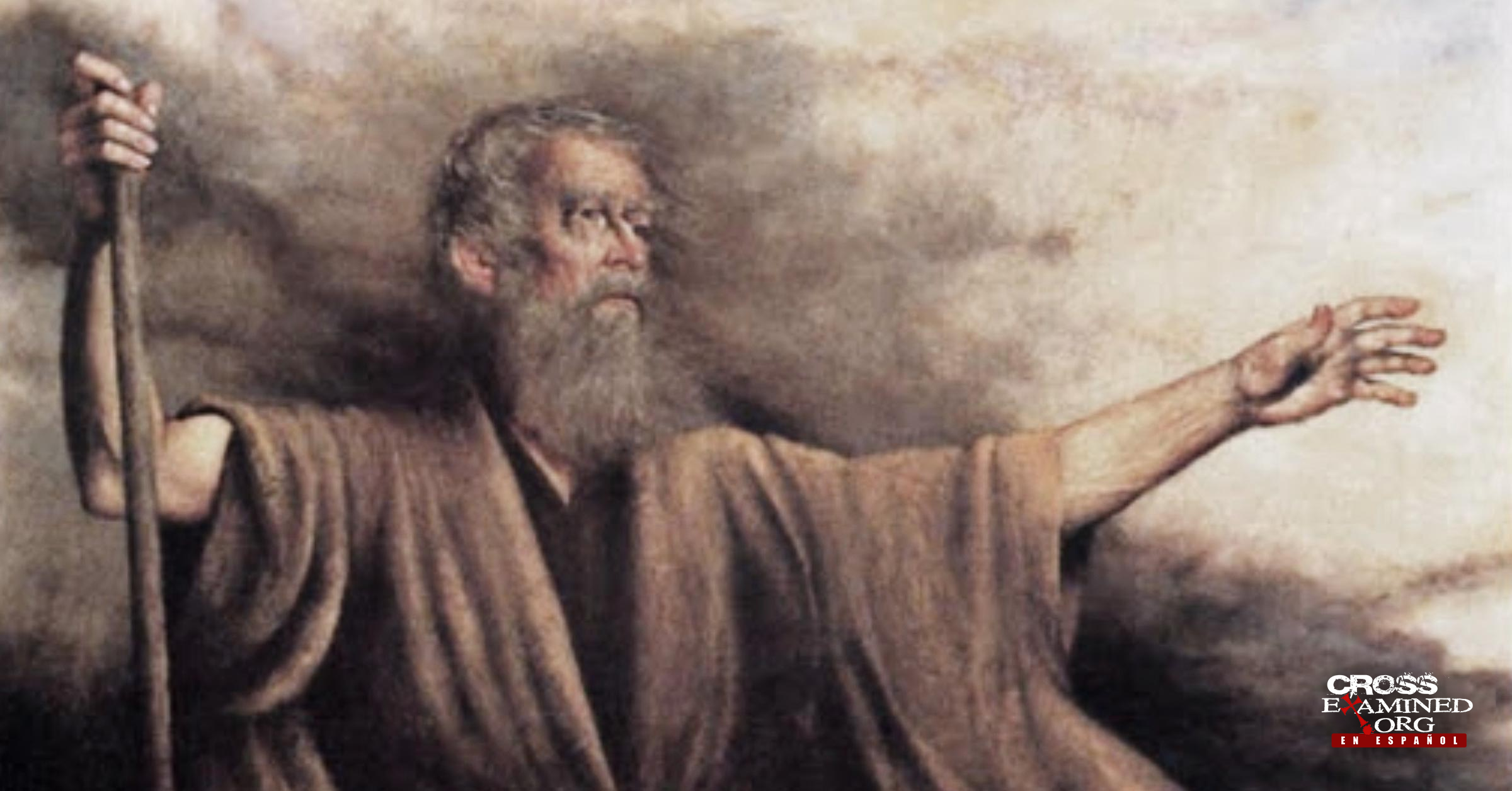
Turn on your television and you will surely come across religious programs with someone claiming to speak for God. Go to your local bookstore, and there, I am sure you will find several books written by people who claim to have received divine revelations from God. Go on YouTube, and you will definitely see videos of preachers proclaiming, “Thus saith the Lord.”
This bombardment of “prophetic words” from thousands of voices has undoubtedly caused confusion for many Christians. In one group, you have Christians who get caught up in the sensationalism of the prophetic words espoused by the Word of Faith movement. In another group, you have Christians who doubt prophecy altogether, because they lack the faith to understand its purpose in the body of Christ. And still there are those who do not know what to believe.
So, let’s go back to the Bible to see what it has to say about prophets.
The first thing we notice about Paul is that there are prophets in the Church today. In Ephesians 4:11-13, Paul mentions the office of prophet in the church. Not only that, but Paul also describes the gift of prophecy in 1 Corinthians 12:10. In fact, the gift of prophecy is mentioned more than any of the other spiritual gifts. You can find it in these passages: Romans 12:6; 1 Corinthians 12:27-29; 13:1-3, 8; 14:6, and in Ephesians 4:11.
That said, it is vital to understand that the office of prophet in modern times is not the same as that of the Old Testament prophets. Before Jesus came to earth, God raised up prophets (Hebrew: nabi, “to utter”) or seers (spokesmen) as national leaders who spoke with specificity and 100% accuracy in their prophecies (Deut. 18:20-22; Jer. 23:28, 31-33). But after Christ’s ascension to heaven and the completion of the written Word, God uses His modern prophets differently than He did Samuel, Daniel, and Isaiah. The writer of Hebrews makes this clear when he opens his letter with these words: “God, who at sundry times and in divers manners spake long ago unto the fathers by the prophets, hath in these last days spoken unto us by his Son, whom he hath appointed heir of all things, through whom also he made the worlds” Hebrews 1:1-2 (NASB).
Furthermore, according to 1 Corinthians 14:3-4, the primary function of a prophet now is to edify, comfort, and encourage the Church. However, that does not mean that predictive prophecy is not exercised among some prophets of God. Like Agabus (in Acts 11:27-28), there are times when a prophet will give a prophetic word from God about the future. That is why we must not neglect prophecy in the Church (1 Thessalonians 5:19-21). But again, the primary purpose of the gift of prophecy, in the Church age, is to encourage and exhort one another (1 Cor. 14:31). Prophets are not called by God to generate visions that others in the church cannot judge (1 Cor. 14:29).
Therefore, we should not look to the prophets for a new revelation, but for an exhortation in accordance with the illumination of the Scriptures.
Finally, the following six indicators will help you distinguish between a true prophet and a false prophet.
- The word of a true prophet will be fulfilled. The word of prediction of a false prophet will not be fulfilled (Deut. 18; Jer. 23).
- A true prophet never gives a word that contradicts the Bible. A false prophet will twist Scripture to validate a dream or vision he has had. For example, false prophets will take prophecies explicitly intended for Israel and apply them to the United States, directly contradicting God’s promises in the Bible.
- A true prophet does not boast or have a profit motive. A false prophet boasts of having received a “prophetic word” or a vision from God as if he were divinely anointed and exploits the church for financial gain.
- The ministry of a true prophet aligns with what the Bible teaches. A false prophet speaks more of his heavenly visions and “prophetic words” than what the Holy Bible contextually teaches. “Your prophets saw for you false and foolish visions, and did not reveal your iniquity so that you might return from your captivity, but they saw for you false and deceptive oracles” (Lamentations 2:14).
- A true prophet builds up the church and points people to Jesus Christ. A false prophet does not call people to repentance but shares messages that appeal to their needs and desires. 2 Timothy 4:3-4 (NIV), “For the time will come when people will not endure sound doctrine, but, having itching ears, they will accumulate for themselves teachers to suit their own desires; and they will turn their ears away from the truth and be turned aside to myths.”
- The defense of a true prophet comes from the Holy Spirit. A false prophet continually tells people that he is not a false prophet.
Recommended resources in Spanish:
Stealing from God ( Paperback ), ( Teacher Study Guide ), and ( Student Study Guide ) by Dr. Frank Turek
Why I Don’t Have Enough Faith to Be an Atheist ( Complete DVD Series ), ( Teacher’s Workbook ), and ( Student’s Handbook ) by Dr. Frank Turek
__________________________________________________________________________________________________________________________________________________
Jason Jimenez is president of STAND STRONG Ministries and the author of Challenging Conversations: A Practical Guide to Discuss Controversial Topics in the church. For more information, visit www.standstrongministries.org .
Original Blog: https://cutt.ly/9mwmCNy