
Tag Archive for: prayer

It’s doubtful parents would send their kids to college without some sort of meal plan, but are parents as diligent in helping set up a spiritual meal plan for their children? Once that dorm key is issued, there will be no more spoon-fed lessons by the youth group. When our kids head to college, it’s time for them to feed themselves, or they could spiritually starve to death.

In our previous blog, we addressed the top four preparations to keep your kids on FIRE for God: faith-based, intellectual, relational, and environmental. In this blog, we’ll discuss how to prepare your kids spiritually for college, specifically through spiritual disciplines.

Developing Good Faith Habits  

Helping your child establish the habits of personal Bible study and prayer while they are still living in your home is an important part of encouraging them to remain connected and committed to their local church and their Christian beliefs. (I contend it’s not too late, even if they’ve already gone off to college and even if they have already graduated. If we’re still breathing, it’s not too late.)

If you are at a parenting stage where you can model this for your kids, go for it. If that discipline has not yet been developed, don’t let a guilt trip or excuses stall you into inaction.  Why not express your current desire to engage and use it as an incentive for both of you to start? You could even hold one another accountable and/or share what you’re learning.

Need some help? Host a get-together with other college-bound Christian friends to encourage and equip them to dig into this discipline. Call in a trusted Christian mentor to share their personal insights on the importance of reading the Word, committing to prayer time, and using trusted tools and resources. Research shows that maintaining relationships with parents and having other adults they respect invest in their lives helps young adults stay connected to church through and after college.

Ways To Nurture Your Kid’s Faith

Devotionals
Devotionals can serve as an appetizer to prepare the palate for the main course, like a warm-up to a workout. Encourage your child to use a devotional book that quotes Scripture daily. If they never get to the main course, at least they will have had a taste of God’s Word that day.

Although there are many modern-day devotionals that are great, don’t be afraid to introduce your kids to classic devotionals. The writing and theology are rich, and these writers connect your kids to our shared Christian heritage and history. (Consider Oswald ChambersCharles Spurgeon, and A.W. Tozer to start. Want something from the 21st century? Try Paul David Tripp.)

Bible Study
Talk about a smorgasbord! There are so many approaches to Bible study, it’s often hard to know where to start. Why not ask your child what appeals to them? A historical biblical figure? A book of the Bible? A theme? A word study? Use this list to help if they aren’t sure:

  • Basic theology. Studying basic theology can be helpful and grounding for students. An introduction to the orthodox Christian tenets is key to recognizing heresy (anything that denies the teaching of Jesus). (Try Wayne Grudem and Norman Geisler.)
  • Attributes of God. Studying the attributes of God can develop your child’s understanding of God, fortifying their trust in Him. Knowing our never-changing God provides a compass in an ever-changing culture. (Try A.W. TozerR.C. Sproul, and J.I. Packer. We also recommend a book by Lydia White for parents and kids ages 4-11.
  • Fruit of the Spirit. Studying the fruits of the Spirit help develop spiritual maturity in college (and it’s a way to personally measure their growth).
  • Specific passages. While still at home, have your child study the passage your pastor preaches from on Sunday morning. Then, when they join a campus ministry and a local church while at college, they can continue the habit.
  • Wisdom literature. A chapter a day from Proverbs is easy to digest and gives great insight into both wisdom and warnings. (Help your child keep in mind that these pithy sayings are principles, not promises.)
  • Apologetics (we’re kinda partial to this one!). The Apologetics Study Bible has great articles on pertinent faith questions that will come up in college, a worldview chart explaining what other religions believe, and sections called “twisted scripture” about passages commonly misused or misinterpreted. It’s a great reference tool and study Bible. You can sign up for 52 weeks of free apologetics content and use that to spur study. Online videos also offer tough questions. If your church offers a RightNow subscription, use it!
  • The ESV Study Bible continues to get high marks both for the translation and the study materials. Download the free app for robust resources and reading plans.
  • Consider teaching your child the inductive Bible study method. This discipline will set them on a lifelong trajectory of rich study that they can do on their own without Bible study books.

Go Digital
Since our students are such digital natives, engage them through their thumbs and earbuds. Bible study and prayer apps might be the best way to get them connected, literally.

  • YouVersion has access to multiple translations of the Bible at your fingertips. Plus, Bible reading plans can be chosen both by topic as well as by length of time to complete the study. Includes video, audio, and much more. Be discerning about the content.
  • Blue Letter Bible has a Bible reading plan in addition to devotionals, dictionaries, lexicons, Bible studies, maps, charts, free online books, and more. Those who want to can really “nerd” out here as they deepen their study time and tools.
  • Bible Gateway has a verse of the day upload, a Bible reading plan with a daily reminder alarm, and an audio version of Bible readings, which could be nice to listen to on the way to class or while they are working out.
  • The Bible Recap app is an excellent way to read through the Bible in a year with succinct commentary.

Don’t forget: While there are advantages to digital–based content, reading a printed Bible has even more benefits. If your child doesn’t have a Bible of their own, consider getting them one before they leave for college.

Prayer
There’s no better way to learn how to pray than by actually praying. Use an acrostic like ACTS (Adoration/praise, Confession, Thanksgiving, and Supplication) – it’s instructive, biblical, and focused. The ACTS method can help your children develop their relationship and trust in God. Teach your child as they read the Bible to highlight these four aspects of prayer.

Another thing you can try is praying God’s Word — in context, of course. While there are tremendous books and studies on prayer, learning to use your Bible to pray will be rich and requires no other material.

There are apps for prayer as well. YouVersion includes a prayer module with guided prayer prompts, a way to create your own prayer list and track answers, and a tool to set a daily reminder to pray.

Personally, having a prayer partner in college with whom I studied a book on prayer (and who held me accountable to pray daily) changed the trajectory of my prayer life. (We’ll talk more about how to pray for your kids in college in a later blog in this series!) While corporate prayer is extremely important (prayer groups are popping up on college campuses everywhere), personal prayer time lays the foundation.

Model prayer for your kids. We recommend our book, Honest Prayers for Mama Bears, to help you. It’s topical, so it’s easy to find a prayer that fits your particular situation. To help you get started, we’ve created these images that you can download and print. There are two for boys and two for girls. Pick your favorite, print it out, and then put it up to remind you to pray for your kids.

Time
Encourage your child to find the time that is best for them, so they will stick with a plan. Chances are that if they have an 8 a.m. chem lab, they are not going to get up and have quiet time. But if they have a break on campus in the early afternoon, maybe they can find a nice spot to spend 15-20 minutes in the Word and prayer. Be willing to share your own struggles and successes with maintaining a consistent personal study and prayer time.

A Faith They Can Own 

So, before that last duffle bag is packed, consider giving your child a special new study Bible, pocket Bible, or leather-bound devotional book with a personal inscription in it. Wrap it up with a new set of earbuds with a note to “plug in daily” to God’s Word. Challenge them to weave Scripture reading and prayer readings into their playlist. And don’t forget the value of Scripture memorization, which requires active mental engagement. (Mama Bear Hillary recommends the BibleMemory app) You can also check out this classic tool from Navigators.

A nourishing daily diet of God’s Word and prayer will go a long way to help our college students resist the temptation to ingest the spiritual junk food offered by some of their peers and professors.

Recommended Resources:

Jesus, You and the Essentials of Christianity by Frank Turek (INSTRUCTOR Study Guide), (STUDENT Study Guide), and (DVD)    

How to Interpret Your Bible by Dr. Frank Turek DVD Complete Series, INSTRUCTOR Study Guide, and STUDENT Study Guide

Intellectual Predators: How Professors Prey on Christian Students (DVD) (mp3) (mp4 Download

Can All Religions Be True? mp3 by Frank Turek


Julie Loos combined her passion for prayer and apologetics in her contributions to three Mama Bear Apologetics books. Her apologetics training came from campus ministry and certificates from Biola University and the Crossexamined Instructors Academy. Julie has been teaching, writing, and speaking on prayer for Moms in Prayer International for more than 23 years. She lives in Missouri with her husband, Todd, has two married sons, two grandchildren, and enjoys working out, Bible study, chocolate, coffee, and deep conversations.

Originally posted at: https://bit.ly/3JoRnic

We live in a troubled world, plagued by sin which leads to pain and suffering. This state of the world is nothing new, it has gone on since the fall of man. The entirety of humankind from Adam to us have dealt with a variety of suffering as a result of this fall. However, though we do not live in a more sinful time, for every age has overflowed with sinfulness, we seem to be facing a different struggle. Our society is fighting a battle of the mind, and losing.

We Just Can’t Even

We live in a world where many cannot seem to bear the slightest sorrow. This makes it all the more difficult to persevere through the most difficult situations anyone of us could face; such as the loss of a loved one, a severe medical diagnosis, the loss of a job, and other heavy burdens. This mental and emotional crisis has been the result of one of the Church’s failings — teaching how to properly handle suffering. This has spread outside of the church and into our society. To put it plainly, we have lost the ability to suffer well. In recent years, our minds have been flooded with messages telling us that we all need therapy, we need to talk about all of our emotions, we need to constantly think about and share whatever trauma we have over and over again

Where can we actually find help?

The problem is that this doesn’t seem to be helping. We are more depressed and more anxious than ever. But how should we deal with suffering? Where can we find comfort and help in our suffering? Our Lord has provided us three supports to comfort and strengthen us in this life: prayer, scripture, and the Church.

Prayer: The best guide to prayer that we have are the Psalms. If you need examples of prayers read through Psalms, and you will find a prayer for nearly every situation of life. But if you don’t know what to pray, or you can’t summon the strength to, remember Romans 8:26 “Likewise the Spirit helps us in our weakness. For we do not know what to pray for as we ought, but the Spirit himself intercedes for us with groanings too deep for words.”

The Spirit Himself will pray for us and understands our groanings when we don’t know what to say. In prayer we lift up our lives, the blessings and the sufferings to God, for only God our savior has the strength to carry us through.

Scripture: Studying the Bible, like prayer, is an essential part of the Christian life, especially in times of pain and suffering. The Bible is filled with a multitude of books such as Lamentations and Psalms to help us. I encourage you to read through the Gospels and through the sufferings that Jesus experienced. Scripture reminds us that Christ is with us in our sufferings. He understands and has experienced sufferings greater, and similar to our own.

Moreover, the Apostle Paul lets us know that our affliction is ultimately making us stronger and preparing us for eternity in 2 Corinthians 4:17 saying, For this light momentary affliction is preparing for us an eternal weight of glory beyond all comparison . . .”

The Church: Another major tool that God has given us, is the Church, the body of believers. We are not alone in our sufferings. If you are not a part of a local Bible-believing church, join one, and if you have a church, reach out to them. You don’t have to share with everyone all the gory details about the circumstances you might be facing, but you need the support of your brothers and sisters in Christ. The responsibility is not yours alone — God has commanded the Body of Christ [fellow Christians] to stand with you and share your sufferings. Paul writes, “Bear one another’s burdens, and so fulfill the law of Christ” (Gal 6:2).

We are all one Church. We must be unified. So, if you know another believer is struggling with loss or pain, reach out and help them. This is how we are to love one another.

How Should We Respond to Suffering?

These support structures will help you persevere when you are in the midst of affliction, but there is more that is needed for you to thrive in your suffering. On top of the practical help that we’ve been given, we must also have the proper attitude and emotional response to life’s hardships. To discover how we should respond, we must look at scripture. The most well-known example of suffering in the Bible is Job. In his story, God allowed Satan to take all of Job’s earthly possessions and to kill Job’s children. When this happened, Job’s first response was to worship the Lord and bless His name.

“Then Job arose and tore his robe and shaved his head and fell on the ground and worshiped. 21 And he said, ‘Naked I came from my mother’s womb, and naked shall I return. The LORD gave, and the LORD has taken away; blessed be the name of the LORD.’ 22 In all this Job did not sin or charge God with wrong” (Job 1:20-22).

This by no means is an easy thing to do, but the Bible sets this up as the correct response to suffering. Our first act should be to worship and glorify the Lord. Our comfort should be in God. Paul writes in 2 Corinthians,

“Blessed be the God and Father of our Lord Jesus Christ, the Father of mercies and God of all comfort, 4 who comforts us in all our affliction, so that we may be able to comfort those who are in any affliction, with the comfort with which we ourselves are comforted by God. 5 For as we share abundantly in Christ’s sufferings, so through Christ we share abundantly in comfort too” (2 Cor 1:3-5)

Our Lord wants to comfort us. He is with us in our affliction. Cling to Christ and allow Him to carry your burdens; let Him bear the brunt of your suffering. If you are still in doubt of how to respond to suffering study the Bible, it is filled with examples of God’s servants and how their lives were filled with affliction, yet they sought God and found their comfort in Him.


Recommended Resources On This Topic

If God, Why Evil? (DVD Set), (MP3 Set), and (mp4 Download Set) by Frank Turek

Why does God allow Bad Things to Happen to Good People? (DVD) and (mp4 Download) by Frank Turek

Relief From the Worst Pain You’ll Ever Experience (DVD) (MP3) (Mp4 Download) by Gary Habermas 

Why Doesn’t God Intervene More? (DVD Set), (MP3 Set), and (mp4 Download Set) by Frank Turek


Thomas Moller began studying astrophysics at the University of Nebraska-Kearney, specifically in Cosmology. Through the study of the universe and the laws that guide it, a passion understanding the Creator and Fine-Tuner of the universe provided the catalyst for Thomas diving deeply into theology. He then left the study of astrophysics to go pursue a theology degree. Through his studies at Trinity College of the Bible and Theological Seminary, Thomas began to focus Christian Ethics. Through the lens of Christian Ethics Thomas tackles political, cultural, and literature topics. Though he no longer studies astrophysics at an academic institution, he still has a love for science and scientific arguments for God.

Originally posted at: https://bit.ly/4b2tq8O


By Jason Jimenez

In a recent conversation with a Christian friend, he shared how several unexpected killjoys had sprung up in his life and dragged him down to a dark place. Since then, my friend has struggled to find joy in his life.

What about you? Are you finding it hard to be joyful in life?

The reality is, we could all use more joy in our lives. Which leads me to share with you the first of five steps to living a more joyful life.

The first step is to seek joy from God. 

Joy is a gift from God. It doesn’t come from people or objects in the world. You might get temporary relief or happiness. But the joy the Bible speaks of is so much more. As we read in the Bible, joy has to do with a deep state of gladness, cheer, and contentment. In the Lexham Bible Dictionary, “joy” is “closely related to gladness and happiness, although joy is more a state of being than an emotion; a result of choice.”

David declared that it’s in the presence of God that there is “fullness of joy” (Ps. 16:11). In Nehemiah 8:10, we read that we find strength in “the joy of the Lord.” In Galatians 5:22, Paul lists “joy” as a byproduct of the Holy Spirit.

If you want more joy in life—look no further. Look to God.

The second step is to acknowledge and cherish the eternal blessings you have as a child of God:

  • You are forgiven and have peace in Christ– “But now in Christ Jesus you who once were far off have been brought near by the blood of Christ. For he himself is our peace, who has made us both one and has broken down in his flesh the dividing wall of hostility by abolishing the law of commandments expressed in ordinances, that he might create in himself one new man in place of the two, so making peace, and might reconcile us both to God in one body through the cross, thereby killing the hostility. And he came and preached peace to you who were far off and peace to those who were near” (Ephesians 2:13-17).
  • You are sealed with the promised Holy Spirit – “In him you also, when you heard the word of truth, the gospel of your salvation, and believed in him, were sealed with the promised Holy Spirit, who is the guarantee of our inheritance until we acquire possession of it, to the praise of his glory” (Ephesians 1:13-14).
  • You have a living hope in Christ – “Blessed be the God and Father of our Lord Jesus Christ! According to his great mercy, he has caused us to be born again to a living hope through the resurrection of Jesus Christ from the dead, to an inheritance that is imperishable, undefiled, and unfading, kept in heaven for you, who by God’s power are being guarded through faith for a salvation ready to be revealed in the last time” (1 Peter 1:3-5).

The third step is bringing balance into your life.

You’ve heard the saying, don’t sweat the small stuff. It’s next to impossible to appreciate the joy you have as a Christian if you live a hurried-up life filled with stress. In the book of Philippians, Paul writes, “Do not be anxious about anything, but in everything by prayer and supplication with thanksgiving let your requests be made known to God. And the peace of God, which surpasses all understanding, will guard your hearts and your minds in Christ Jesus” (4:6-7).

We can’t overlook that Paul wrote the words “don’t be anxious” while in prison. Despite the various trials and the ups and downs, Paul still found joy amid some of his darkest hours. That, my friend, is joy!

It would be great that every time you feel worried or anxious, you simply pray for it to go away, and just like that, it’s gone! But, as you very well know, that’s not reality. We may not like it, but it’s in hardships and feeling depressed that God’s joy is made so much more real to us.

So, offer up prayers of thanksgiving to help eliminate any worry or stress that might be preventing you from living a life of joy.

The fourth step involves setting boundaries with certain people who suck the joy out of you.

Setting boundaries is a hard thing to implement for anyone. Starting with the fact that no one likes confrontation. And secondly, most of the “joy suckers” in our lives are people we have no choice but to be around. They can be a family member—a co-worker.

So, the obvious thing is not to overreact and pull away from everybody. What you want to do is assess your relationships and determine who is the most self-centered, critical, argumentative, and who tends to push your buttons. In a nutshell, who leaves you feeling drained and discouraged most of the time?

Once you’ve realized who the “joy suckers” are, the next challenge is to draw the necessary boundaries to protect you from allowing this person to steal your joy. As mentioned in step one, joy is a choice. You may not always have a choice who you are around. But you do have a choice how you interact with them and they with you. So, make sure you bathe your relationships in prayer and seek wise counsel before setting certain boundaries.

The fifth step is to enjoy life today!

It’s easy to take for granted what we have in our lives. I’ll admit that when I get impatient with people or with work-related stuff, I can miss out on enjoying life. Just the other night, I told my wife how I needed not to lose sight of enjoying the simple moments in life. Whether it be throwing the football with one of my kids or sipping a cup of coffee with a friend. I need to be more sensitive and aware of counting my blessings every day.

How about you? What are some blessings you’ve received from God that you need to appreciate more?

As you seek to implement these five steps to achieving a more joyful life, seek to add the prayer from Paul below to enrich your motivation.

“May the God of hope fill you with all joy and peace in believing, so that by the power of the Holy Spirit you may abound in hope.” Romans 15:13

Recommended resources related to the topic:

Jesus, You and the Essentials of Christianity by Frank Turek (INSTRUCTOR Study Guide), (STUDENT Study Guide), and (DVD)     

Counter Culture Christian: Is There Truth in Religion? (DVD) by Frank Turek

_____________________________________________________________________________________________________________________________________________________


Jason Jimenez is President of STAND STRONG Ministries and author of Challenging Conversations: A Practical Guide to Discuss Controversial Topics in the church. For more info, check out www.standstrongministries.org.

Original blog: https://bit.ly/3N574aM


By Al Serrato

Superstition is as old as man. An incomplete picture of why things work the way they do fuels the imagination to conjure up hidden forces at work behind the scenes. Pull back the curtain and perhaps one will find an “all-powerful” being at work pulling the strings. Accessing – and eventually perhaps cajoling or influencing that being – can easily become the basis for a religious belief system.

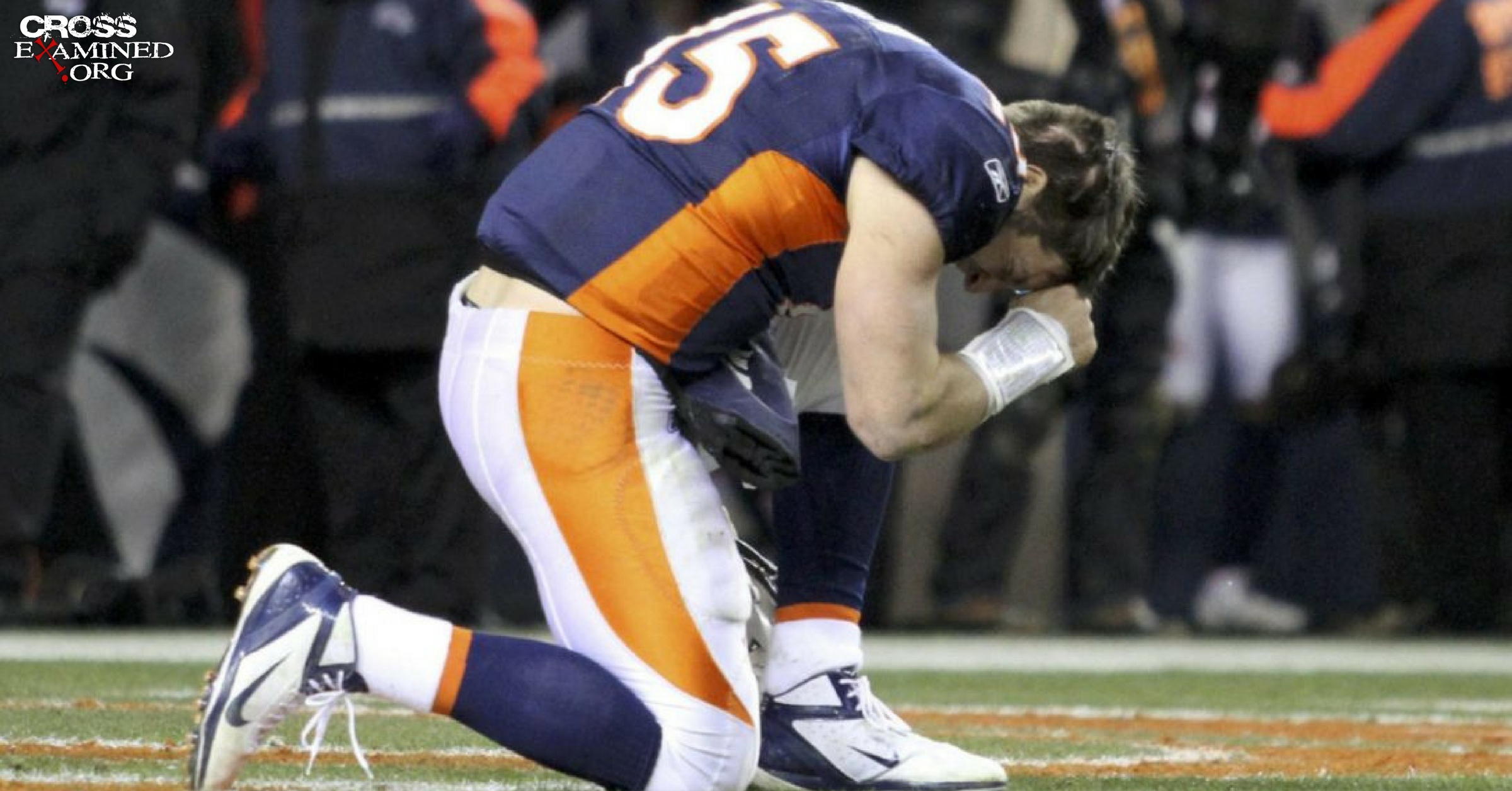
Does Christianity fall into this same category? Some unbelievers, observing the behavior of professional athletes, might believe that superstition is at play. Praying and acknowledging one’s deity, they assume, is a way of seeking to influence the outcome of the contest. For some, it seems like a cheap – and silly – trick.

But this is not what Christian players are doing when they acknowledge God, nor is it what a mature devotion to Christianity would include.

Some non-believers who consider this behavior will ask themselves a very basic question: will becoming a Christian “improve” my life? Is it a ticket to greater wealth and prosperity, better relationships, a future filled with every type of goodness and blessing? For many, this seems too good to be true, but they pursue it hoping for the best; for others, it appears to be a shell game or cheap con, and they reject it without ever considering what it really entails.

The nutshell answer is: probably yes. In most cases for most people, developing a relationship with God in which you accept His gift and then living a life that reflects His will, as best you can achieve it, will improve your life in some important and significant ways. But having a “better” life is a by-product of belief and not the main point of devoting one’s life to Jesus.

If prosperity or other rewards become the main point, Christianity begins to be marketed as a product, a method of achieving some desirable end. A person identifies a need in his or her life and Christianity fills that need, the way any product might do. But this is not the message of Christianity. The Bible is not a “how to” manual on achieving financial or worldly success. It does not promise riches in the here and now, nor an end to all hardship… nor a victory in every football contest. Quite the opposite, in fact, as the early fathers of the church, and their followers could have attested. (Except of course for the football part.)

In short, Christianity tells the story of man’s broken relationship with his Creator. It claims to speak the truth about the nature of God and of this broken relationship and what is needed to fix it. The Old Testament provides the backdrop as God prepares a people to serve as the vehicle for redemption. Jesus comes – not to make my life profitable or more fulfilling in some modern sense or to help me nail down a spot in the Super Bowl- but to fulfill the ancient prophecies, to give His life as ransom for us, and to thereby restoring our relationship with the Father.

Christianity should be assessed on its merits – are its claims true? – not on what it can achieve for you. The Apostle Paul said as much when he said that we are to be pitied as fools if Christ did not rise from the dead. Everything rests on that truth claim. Once we see that Christ did rise, and we place our trust in Him, He will do a work in us and will eventually welcome us into His Kingdom. But Paul himself remained physically afflicted, and there is no reason to believe that by following Christ, our problems will disappear.

We will, however, look at them differently, and by living Biblical values, we will probably have a better life than we might otherwise have had – and certainly a more fulfilling one.


Original Blog Post: http://bit.ly/2ABUIBT


By Natasha Crain

My son Nathan wasn’t feeling well recently so we all prayed together for him to feel better. The next night at prayer time, Kenna pointed out that we prayed for him already but he wasn’t feeling better. She had a look of simultaneous confusion and disappointment on her face.  In a total of about 3 seconds I had the thought that this is the beginning of a lifetime of seeking to understand why God does or does not answer certain prayers AND replied, “We’ll keep praying and trust God that Nathan will feel better.”

I felt a giant theological error well up in my throat. How often we casually imply or even consciously think that if we just “trust God” for a specific prayer outcome, He will answer the way we want!

“Everything will be OK! Just trust in God!”

Yes, everything will be OK . . . perfect actually . . . when Christ returns and God is glorified in His kingdom for eternity. In the meantime this life is a mess. We are sinful people with free choices, surrounded by other sinful people with free choices. There is illness, there is death. There are natural disasters. Christians live in this fallen world and are affected by its consequences as much as non-believers.

Yet, we are to pray. We are to ask God for our hearts’ desires in the midst of all this. If every Christian’s prayer for a specific (positive) outcome was answered, however, we would effectively be in control of the world through God.  Thank God that prayer doesn’t work that way!  It’s actually a little scary to think of millions of people (even if they are Christians) controlling God like a puppet through prayer strings. I would much rather God be in control, in His infinite wisdom and perspective.

The dynamics of prayer are really not unlike our children making requests to us . . . we encourage their requests, consider their requests, and want them to continue making requests, but may not grant them what they want depending on how it would impact themselves, us or others  . . .  just like God relates with us through prayer.

Jesus powerfully demonstrated this himself when he prayed in Mark 14:36: “Father, all things are possible for you. Remove this cup from me. Yet not what I will, but what you will.” God CAN do anything but his specific answers to prayer are based on how our requests align with His will.

If we come to believe that God can or should be trusted for specific outcomes, our relationship with Him will be as variable as the ups and downs of life; a good outcome equals happiness with God, a negative outcome equals disappointment or anger with God. This is not what our relationship should look like, yet it is very common.

To put this in a simple framework for my kids, I’ve boiled it down to these 5 key concepts that I emphasize at home.

    1. God wants us to continuously pray. (e.g., Philippians 4:6-7; Ephesians 6:18)
    2. God hears our prayers. (Implied in the fact he wants us to pray, plus Psalm 34:15)
    3. We can and should pray for our hearts’ desires. (e.g., Matthew 21:22; Matthew 7:7-11; John 14:13-14)
    4. God CAN answer our prayers for specific outcomes, but may not, depending on His will. (e.g., Matthew 6:10; Matthew 26:42; Mark 14:36)
    5. God works all things together for good. This statement, from Romans 8:28, can easily be taken out of context. Paul is not saying that God works all things together for OUR good (at least as we would commonly perceive “good” in this life). He follows in verses 28 and 29 by explaining that the good he is referencing is God’s overall plan for the world leading to His final glorification.

Here is is how I apply these truths for my (young) children:

“We just prayed for (fill in the blank). Do we know God WANTS us to pray? (yes) Do we know God hears ALL of our prayers? (yes) Do we know that God CAN answer any prayer he chooses? (yes) Does God answer EVERY prayer the way we ask? (no) What is important is that we always pray because God wants us to, but we have to remember that only God can decide how he is going to answer our prayers.”

In this way I hope to teach them that we should not limit or censor our prayers, but at the same time we need to respect and trust in God’s infinite wisdom . . . not our own.

By Brian Chilton

This past Sunday, the third episode of Morgan Freeman’s show The Story of God as aired on the National Geographic Channel. The third episode dealt with how God is understood to be in various cultures and religions. Again, I am profoundly surprised at how well this show has been made. The show has not attacked any particular worldview, as I feared that it would. Rather, the show has taken a fairly neutral position while evaluating some major topics. This episode was no different. The third episode dealt with the issue “Who is God?” This article will seek to answer 7 questions that were raised during the show from a Christian perspective.

  1. Is there one God or several gods?

By sheer necessity, there is only one ultimate uncaused cause. If there were several gods or goddesses, one would have to ask “How did such a number of gods arise?” It seems to me that one would be forced to accept a first uncaused cause. While it is possible to accept a multiplicity of gods and goddesses, it makes better sense to accept that only one God exists. Why? Well, I think Thomas Aquinas answers this well. Aquinas states,

 “When the existence of a cause is demonstrated from an effect, this effect takes the place of the definition of the cause in proof of the cause’s existence. This is especially the case in regard to God, because, in order to prove the existence of anything, it is necessary to accept as a middle term the meaning of the word, and not its essence, for the question of its essence follows on the question of its existence. Now the names given to God are derived from His effects; consequently, in demonstrating the existence of God from His effects, we make take for the middle term the meaning of the word ‘God.’”[1]

From sheer necessity, only one God must exist. Thus, God could manifest himself in several ways, but in the end, there is but only one God.

  1. How does one connect to God?

If by connecting, one means relating to God, then one can connect with God in various ways. Morgan Freeman is right when he notes that it is sometimes difficult to relate to a transcendent God. However, God has given us means to relate to him. One way people connect with God is through prayer. Prayer is a means by which we can communicate with God and a way that God communicates with us.[2] Another way a person connects to God is through the written Word of God. The Scriptures are God’s revelation to all humanity. A third way a person can connect with God is through the intellect. A person can connect with God by learning more about God. Fourth, a person can connect with God through nature. As the psalmist notes, “the heavens declare the glory of God, and the sky above proclaims his handiwork” (Psalm 19:1).[3] Lastly, a person can ultimately connect with God through a relationship with Christ. When one receives Christ, the Bible tells us that the believer is filled with the Holy Spirit of God (John 14:15ff).

  1. Has God revealed himself to several people throughout the world?

There is but only one ultimate truth. However, this is not to say that God has not been trying to reveal himself to various peoples throughout the world. Solomon writes that God “has made everything beautiful in its time. Also, he has put eternity into man’s heart, yet so that he cannot find out what God has done from the beginning to the end” (Ecclesiastes 3:11). So, I am not saying that all religions are the same. Such is not logically possible. However, I feel it is quite possible that God has been trying to reveal himself throughout all of history. Ultimately, the full revelation came through Jesus of Nazareth, the “only begotten Son of God” (John 3:16).

  1. How do we know what’s divine?

Only God is truly divine in the purest sense. However, human beings are made in the image of God (Genesis 1-2). Thus, human beings bear the mark of divinity (although we are not divine). But in fact, all things bear the mark of God in reality because “All things were made through him, and without him was not anything made that was made” (John 1:3). So, only one person is truly divine (God), yet all things bear the imprint of the divine as God created all things.

  1. Can we imagine God?

In a way, yes. In a way, no. I think Norman Geisler puts it best. Geisler notes that “Although God can be apprehended, He cannot be comprehended.[4] Paul writes, “For we know in part and we prophesy in part, but when the perfect comes, the partial will pass away” (1 Corinthians 13:9). Thus, we cannot say that we know everything about God. If we could, we would be God.

  1. Does God indwell us?

We all bear the image of God (Genesis 1:26). However, God indwells each person who receives Christ as Savior. This person is known as the Holy Spirit.

  1. Can we experience God?

Yes! Absolutely we can! We experience the blessings of God every day. However, the only way to fully experience God is through a relationship with Christ Jesus. See also the answer to the second question.[5]

Much more could be said about God. In reality, the third episode of Freeman’s documentary as well as this article has focused more upon how humanity knows God. Such a knowledge of God is called revelation. God has revealed himself both through natural revelation (available to all) and special revelation (delivered to those of faith). If a person has not experienced God, it is highly advised that the person seek God and ask God to reveal himself.

Notes

[1] Thomas Aquinas, Summa Theologica I.2.2., in Thomas Aquinas, Summa of the Summa, Peter Kreeft, ed., Fathers of the Dominican Province, trans (San Francisco: Ignatius Press, 1990), 59.

[2] Some individuals have argued that God does not communicate with a person through prayer. With all due respect, I have found such arguments greatly lacking. God has spoken to a vast array of individuals in the Bible through the means of prayer (e.g. Habakkuk, Job, Elijah, Isaiah, and so on). To claim that God cannot speak to a person in prayer discredits the power and personal nature of God. However, I agree that one should always “test the spirits” (1 John 4:1) to ensure that one is truly hearing from God.

[3] Unless otherwise noted, all Scripture comes from the English Standard Version (Wheaton: Crossway, 2001).

[4] Norman Geisler, Systematic Theology: In One Volume (Minneapolis: Bethany House, 2011), 529.

[5] Also, check out the discipleship program Experiencing God by Henry Blackaby, Richard Blackaby, and Claude V. King.


Brian G. Chilton is the founder of BellatorChristi.com and is the host of The Bellator Christi Podcast. He received his Master of Divinity in Theology from Liberty University (with high distinction); his Bachelor of Science in Religious Studies and Philosophy from Gardner-Webb University (with honors); and received certification in Christian Apologetics from Biola University. Brian is currently enrolled in the Ph.D. program in Theology and Apologetics at Liberty University. Brian has been in the ministry for over 15 years and serves as a pastor in northwestern North Carolina.
Original Blog Source: http://bit.ly/2x7KBnT