

Tag Archive for: Daniel

When you hear the word “disciple” does your mind go back to the first century where a group of twelve men followed Jesus and helped him pass out baskets full of loaves and fish? The word “disciple” is often associated with Christianity, and for good reason. The Great Commission in Matthew 28:19 commands every Christian to “go out and make disciples of all nations.” It’s no wonder that people’s idea of discipleship is linked only to religious groups.

My goal isn’t to change your mind that discipleship is a must when it comes to Christianity. My goal is to get you to think more deeply when it comes to what it means to disciple and be discipled. I’ll start with the claim that discipleship is not isolated to Christianity. And I’ll prove this by using an unconventional source – Babylon. In fact, I am going to make the case that Christian or not, you are somebody’s disciple. Your neighbor is somebody’s disciple. That person going through the Starbucks drive-thru? Yep, they’re somebody’s disciple too.

We can learn a lot about discipleship from Babylon.

Some might say Babylon is one of the most unconventional sources to teach us about discipleship. I agree, but when it comes to discipleship, Babylon had it down. They knew how to disciple and they did it well. Before we go any further, we first have to define what it means to be a disciple. A disciple is a follower or student of a teacher or philosopher. That means we are all somebody’s disciple because we all follow the ideas and beliefs of someone else. In essence, we have been and are being discipled in order to have arrived at the beliefs we hold.

In order to understand the Babylonian influence and culture during the time of Judah’s exile, let’s visit Daniel, chapter 1.

Babylon was under the rule of King Nebuchadnezzar from around 605-562 BCE. It was a thriving city in Mesopotamia located on the Euphrates. Babylon is one of the most famous cities of antiquity, known for its symbolism of wickedness from Genesis to Revelation. In Genesis, Babylon is known as the location for the Tower of Babel. In Revelation, we see Babylon suffer the final judgment and wrath of God. So if you’re thinking, “What can Babylon possibly teach us about discipleship,” let me remind you – discipleship is not a word isolated to Christianity.

Babylon was intentional.

What does it mean to be intentional? It means you do things with and for a purpose. Babylon was intentional. Take a look at Daniel 1:1-4 and you’ll see that Nebachudnezzer strategically chose the young men of Judah. These weren’t just ordinary teenage boys. They were of royal descent; they were nobility. They were wise, good looking, and teachable. Babylon did not target the older population to serve the king. Babylon knew the minds of the young were moldable, impressionable, and these young men could be trained to learn the ways of Babylon.

Babylon understood the optimal time to make disciples and they pounced on it. The intent of Babylon was to win the minds of the young for greater service to the king.

Babylon was immersive.

Immersive means to be surrounded by. The training Babylon put these young men through was immersive with no room for flexibility. Verses 4-6 of chapter one gives us insight into this immersive discipleship training when it tells us the young men had to learn the language and literature of the Chaldeans. Not only did they learn to read and speak the language, they ate the food and wore the clothes. This immersive experience lasted for three years before they could even step foot into service to the king.

Babylon was not neutral.

Babylon left no room for neutrality. Discipleship is never neutral. Babylon proved this when they changed the names of the young men from their given Hebrew names to a new Babylonian name that gave tribute to the gods of the culture. For Babylon, it was not enough that these young men lived among them. They had to become one of them. Babylon forced the young boys to conform to the culture and forget the ways of their parents. But isn’t that the whole goal of discipleship – the student follows the teacher until the student becomes the teacher? Really, you can’t blame Babylon for their tactics. That’s just the way of discipleship.

What is Christian Discipleship?

I can go on and on about what Christian discipleship is, but I’ll spare you the details and make it short: it’s intentional, immersive, and it is not neutral. Yes, you read that right. Christian discipleship looks like Babylon’s discipleship. In fact, all discipleship does. Yes, Jesus commands us to go out and make disciples, but doesn’t that make you wonder what Christian discipleship actually entails and what makes it different from Babylon? In all four gospels, we see where the discipleship of the twelve was intentional, immersive, and not neutral.

Intentional and Immersive

 Jesus intentionally chose the twelve (John 6:70). The twelve lived with Jesus, followed Jesus, and was part of His ministry for three and a half years. They witnessed storms ceasing at His word, blind men seeing, dead men rising, religious men trying to trap Him in His words, and the correction of their hard hearts and closed minds (Mark 8:21). They were privileged to get the inside scoop because after Jesus spoke in parables to the crowds they received special instruction behind the scenes (Mark 8). The timing of their training was intentional and so was the method of their training.

Jesus was not neutral. He watched many disciples walk away when they could not fathom the thought of eating His flesh and drinking His blood (John 6). He said He was the only way to the Father, calling all other religions and belief systems false (John 14:6). And Jesus told His disciples they could not have more than one master (Matt 24-26). In other words, He wasn’t neutral and neither was their discipleship training.

You are somebody’s disciple.

Since discipleship is not isolated to Christianity, that means discipleship can come from anyone passing on information and knowledge from one mind to the other. All discipleship involves education, and education is indoctrination. We must reconcile that in order to launch into the most important question that comes after it: who is discipling you? Who is discipling your kids? Because you are somebody’s disciple and so are they.

The days of Babylon might be a thing of the past but Babylon is still a representation of the secular culture and its wickedness today. Babylon is anything that sets itself up in the stead of God and no one understands discipleship better than Babylon, not even the twenty-first century church. If we did, we would understand that in discipleship, there is no room for compromise.

Who did it better?

After all of this, I bet you’d expect me to say we should follow Babylon’s lead in making disciples. I’m not. Although the plan of Christian discipleship looks the same as Babylons, the doctrine makes it different. Christians share the one true God, whereas Babylon does not. The goal of Christian discipleship is so that the good news of the gospel may reach the ears of all people in every nation. The goal of Babylon’s discipleship is so you will serve the god of the age and lose yourself in service to the king.

No, don’t follow the lead of Babylon. The answer to discipleship is found in the response of Daniel and his friends when faced with the temptations of the Babylonian culture. The text reads, “Daniel purposed in his heart that he would not defile himself with the portion of the king’s delicacies.” Daniel remained committed to the one true God. He did not waver in his traditions and customs, although I’m convinced the temptation was overwhelming.

One might wonder why. Why would Daniel and his friends resolve not to compromise? How could they withstand the temptation of Babylon and not crack under the pressure? I can tell you why – they were already somebody’s disciple. Before they left Judah, under the intentional, immersive, and unwavering training of their parents, they learned how to be a disciple of the one true God. How do I know? Because we are all somebody’s disciple. Even Babylon knows this.

Sign your kids up for the next round of Let’s Get Real: Examining The Evidence For God that begins in January, 2024.

Recommended resources related to the topic:

Intellectual Predators: How Professors Prey on Christian Students by Frank Turek (mp4 Download) (mp3) (DVD)

Tactics: A Game Plan for Discussing Your Christian Convictions by Greg Koukl (Book)

Jesus, You and the Essentials of Christianity by Frank Turek (INSTRUCTOR Study Guide), (STUDENT Study Guide), and (DVD)      

Counter Culture Christian: Is the Bible True? by Frank Turek (Mp3), (Mp4), and (DVD) 

__________________________________________________________________________________________________________________________

Shanda Fulbright is a credentialed teacher and has a certificate in Christian Apologetics from Biola University, a certificate from the CrossExamined Instructor’s Academy as well as several certificates from Online Christian Courses. She hosts Her Faith Inspires podcast where she takes cultural issues and aligns them to biblical truth. You can read her blogs and find out more about her at shandafulbright.com.
 

By Erik Manning

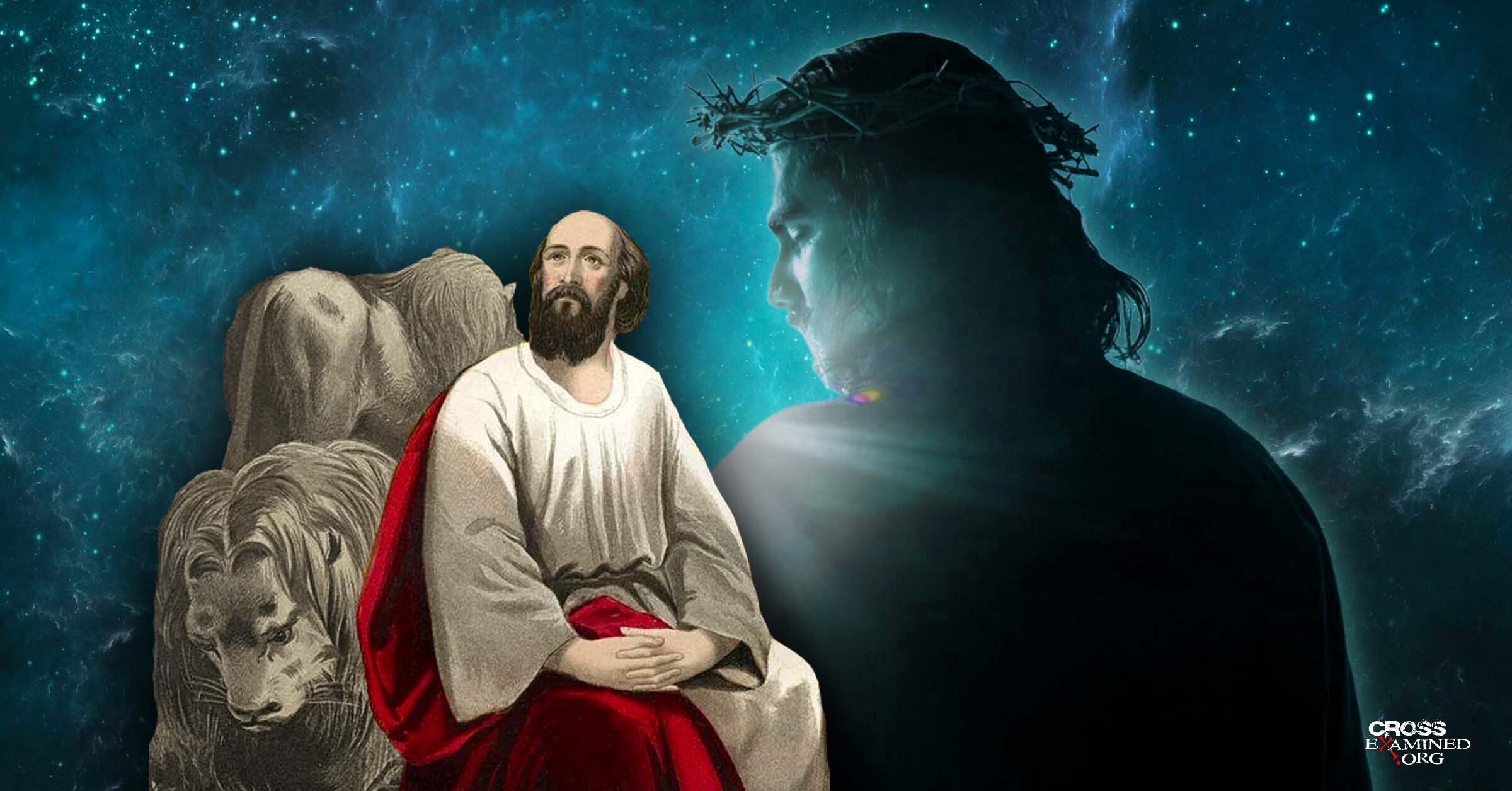
How did Jesus see himself? As we learn about Jesus’ Jewish context in the first century, we find that he made some staggering claims. First of all, Jesus spoke constantly about God’s kingdom. The phrase kingdom of God or kingdom of heaven appears more than 100 times in the Gospels. Jesus begins his ministry in Mark by saying, “The time is fulfilled, and the kingdom of God is near.” (Mark 1:15)

Okay, so what’s the big deal about that? And what does Jesus mean when he says the kingdom of God is “near”? Jesus was assuming that his audience would pick up on the ideas he was laying down. When a first century Jew heard the phrase “the kingdom of God,” their minds likely turned to a very specific prophecy in Daniel 2. Let’s provide some context before reading the prophecy. Daniel 2 describes King Nebuchadnezzar’s dream of an impressive statue crafted from four precious metals. As the dream unfolds, a large mountain grows from a mysterious stone, destroying the statue.

JESUS AND THE KINGDOM OF GOD

Let’s read the prophecy. Daniel 2:31-35 says:

“You, O king, were watching and behold, there was a single great statue; that statue, which was large and of extraordinary radiance, was standing in front of you, and its appearance was awesome. The head of that statue was made of fine gold, its chest and arms of silver, its belly and its thighs of bronze, its legs of iron, and its feet partly of iron and partly of clay. You continued watching until a stone was broken off without hands, and it struck the statue on its feet of iron and clay, and crushed them. Then the iron, the clay, the bronze, the silver, and the gold were crushed to pieces all at the same time, and they were like chaff from the summer threshing floors; and the wind carried them away so that not a trace of them was found. But the stone that struck the statue became a great mountain and filled the entire earth.”

The four parts of the statue represent four pagan empires, beginning with the Babylonians. Nebuchadnezzar is told by Daniel that he is the head of gold. Additionally, he tells him that a second kingdom inferior to Babylon will follow after him, symbolized by silver, and a third kingdom by bronze. Eventually, a fourth kingdom emerges that is initially strong like iron, but gradually weakens, as if it were a mixture of iron and clay. Note that the fifth kingdom — God’s kingdom — occurs during the time of the fourth kingdom (Daniel 2.26-43).

Here’s Daniel 2:44-45:

And in the days of those kings the God of heaven will set up a kingdom which will never be destroyed, and that kingdom will not be left for another people; it will crush and put an end to all these kingdoms, but it will itself endure forever. Just as you saw that a stone was broken off from the mountain without hands, and that it crushed the iron, the bronze, the clay, the silver, and the gold, the great God has made known to the king what will take place in the future; so the dream is certain and its interpretation is trustworthy.”

Daniel explains that the four majestic beasts refer to four kings who arise from the earth. (7:17) After the appearance of four beasts, a heavenly “son of man” appears who seems to share divine honors. Then Daniel 7:9, 13-14 says: “I kept looking until thrones were set up, And the Ancient of Days took His seat; His garment was white as snow, And the hair of His head like pure wool. His throne was ablaze with flames, Its wheels were a burning fire….“I kept looking in the night visions, And behold, with the clouds of heaven One like a son of man was coming, And He came up to the Ancient of Days And was presented before Him. And to Him was given dominion, Honor, and a kingdom, So that all the peoples, nations, and populations of all languages Might serve Him. His dominion is an everlasting dominion Which will not pass away; And His kingdom is one Which will not be destroyed.”

This Son of Man is the king of the fifth kingdom, God’s eternal kingdom. Think about what Jesus is saying in the Gospels. He speaks of God’s kingdom. Then he declares that he is the Son of Man, the ruler of the kingdom that would come during the Roman Empire. An attentive first century Jew would understand that he is claiming he is the long-awaited Messiah who will end the reign of these beastly kingdoms on earth.

JESUS, THE “CUT OFF” MESSIAH

Jesus applies one more prophecy in Daniel to himself. According to him, the Son of Man must be handed over to the authorities and put to death. (Mark 8.31-32) Where does Jesus get this idea from? In a rather bizarre passage, Daniel 9 describes the Messiah being executed. Here’s Daniel 9:24-27:

“Seventy weeks have been decreed for your people and your holy city, to finish the wrongdoing, to make an end of sin, to make atonement for guilt, to bring in everlasting righteousness, to seal up vision and prophecy, and to anoint the Most Holy Place. So you are to know and understand that from the issuing of a decree to restore and rebuild Jerusalem, until Messiah the Prince, there will be seven weeks and sixty-two weeks; it will be built again, with streets and moat, even in times of distress. Then after the sixty-two weeks, the Messiah will be cut off and have nothing, and the people of the prince who is to come will destroy the city and the sanctuary. And its end will come with a flood; even to the end there will be war; desolations are determined. And he will confirm a covenant with the many for one week, but in the middle of the week he will put a stop to sacrifice and grain offering; and on the wing of abominations will come the one who makes desolate, until a complete destruction, one that is decreed, gushes forth on the one who makes desolate.”

There has been much ink spilled over this very difficult section of Scripture. For this video, I’m choosing to limit myself to three reasons why the passage has been interpreted as referring not only to the work of the Messiah, but when he would arrive. In the prophecy, 490 years, or about 70 weeks of time, will pass between Jerusalem’s restoration and the coming of the Messiah. The phrase cut off implies that this Messiah will die. Jesus treats the Son of Man in Daniel 7 and the Messiah in Daniel 9 as one person. Additionally, the prophecy links the death of the Messiah with the destruction of the city and sanctuary, meaning Jerusalem and the Temple . As a result, animal sacrifices will cease. Jesus himself mentions the abomination of desolation coming during his Olivet Discourse and predicts that Jerusalem and the Temple will be destroyed. Let’s now look at the dates for this astonishing prediction.

 JESUS CAME RIGHT ON TIME

Many commentators believe that the “sending forth of the word to restore and rebuild Jerusalem” happened when the Persian King Artaxerxes commanded the Temple to be rebuilt in 457 BC. (Ezra 7) From there there’s the seventy weeks of years, which equals 490 years. That’s 33 AD, that’s the year many scholars believe Jesus was crucified! This is when Daniel says Messiah will be cut off. And then by 70 AD the city and sanctuary were destroyed.

You don’t have to trust my math. Let’s look at what the Jewish historian Josephus had to say: “We are convinced…that Daniel spoke with God, for he did not only prophesy about future events, as did the other prophets, but he also determined the time at which these would come to pass.” (Antiquities 10.267-68)

And here’s the French mathematician Blaise Pascal. (You know…the guy who came up with probability theory): “One must be bold to predict the same thing in so many ways. It was necessary that the four idolatrous or pagan monarchies, the end of the kingdom of Judah, and the seventy weeks, should happen at the same time, and all this before the second temple was destroyed.” (Pensees 11.709)

Scholars debate the exact dates of this prophecy, but regardless of how one calculates them, the 490 years between the restoration of Jerusalem and the coming of the Messiah occurred before the Temple was destroyed in 70 AD. The prophecy of Daniel has to be fulfilled in the first century.

Summing up, this background from Daniel gives us a glimpse into what many Jewish people in the first century longed for. Their hope was in the coming of God’s kingdom and the messianic Son of Man. Furthermore, this data explains why Josephus, writing after the destruction of the Temple, is so surprised by Daniel’s predictions. It also explains why a first-century Jew like Jesus could describe his own coming death-along with the destruction of Jerusalem and the Temple-as the fulfillment of biblical prophecy. Daniel did more than prophesy that the Messiah would come; he also predicted when he would come, what would happen to him, and what would happen to Jerusalem and its Temple. And it came to pass. During the first century. 2,000 years ago. Jesus of Nazareth, the proclaimer of God’s Kingdom and the Son of Man’s coming, was crucified 490 years after Jerusalem was restored by King Artaxerxes. This is rather stunning. The fulfillment of the prophecy goes to show that Jesus wasn’t a liar or a lunatic. He’s the long-awaited Messiah who came just when Daniel predicted.

Recommended resources related to the topic:

Counter Culture Christian: Is the Bible True? by Frank Turek (Mp3), (Mp4), and (DVD)       

Jesus, You and the Essentials of Christianity by Frank Turek (INSTRUCTOR Study Guide), (STUDENT Study Guide), and (DVD)     

_____________________________________________________________________________________________________________________________________________________

Erik is a Reasonable Faith Chapter Director located in Cedar Rapids, Iowa. He’s a former freelance baseball writer and the co-owner of a vintage and handmade decor business with his wife, Dawn. He is passionate about the intersection of apologetics and evangelism.

Original blog source: https://bit.ly/3LEzW9e 


By Brian Chilton

Recently, we celebrated my wife’s birthday. As we reach a certain age, we remember the date, but the year begins to become foggy (intentionally, of course). When one celebrates a person’s birthday, the person’s life is being celebrated. The birthday celebration acknowledges the importance of a person’s existence. A person’s birth represents the person’s beginning of existence (also included are the nine months prior in the womb as this writer believes that life begins at conception). So, when we celebrate my wife’s birth, we celebrate her existence and the blessings we have in knowing her.

As Christmas approaches, many ask questions concerning the origin and the date of the celebration. Christmas is supposed to represent the birth of Jesus Christ. Did the celebration of Christmas have pagan origins? Do we even celebrate the correct day when celebrating the birthday of Jesus? These questions are intriguing. There does seem to be some pagan influences in the Christmas celebration. It may be that Jesus was born in the spring. However, there are ancient traditions that place the wise men’s visit of the Messiah around December 25th to January 6th (see article “Is Christmas Celebrated on the Correct Day?”). This does not necessarily designate the period of time as the birthdate of Jesus as this occurred two years after the fact.

In the end, it really doesn’t matter. It doesn’t matter because the birthday of Jesus does not mark the beginning of Jesus. The Bible presents some interesting information about the Messiah. The Messiah existed before He was born. This is called pre-existence. Jesus’ pre-existence is discovered in four different ways.

The Messiah’s Pre-Existence was Suggested in the Prophets

Isaiah wrote,

“For to us a child is born, to us a son is given, and the government will be on his shoulders. And he will be called Wonderful Counselor, Mighty God, Everlasting Father, Prince of Peace.  Of the greatness of his government and peace there will be no end. He will reign on David’s throne and over his kingdom, establishing and upholding it with justice and righteousness from that time on and forever. The zeal of the Lord Almighty will accomplish this. The Lord has sent a message against Jacob; it will fall on Israel” (Isaiah 9:6-8).

The text of Isaiah is a popular passage of Scripture that is read in many Christmas plays. Most scholars would accept that the passage of Scripture is referring to the future Messiah. The titles represent various characteristics about the coming Messiah. Wonderful Counselor refers to the compassion and authority of the coming Messiah. Mighty God refers to the fact that the Messiah would in fact be God in the flesh. The Everlasting Father is especially intriguing. John Martin explains, “the title “Everlasting Father” is an idiom used to describe the Messiah’s relationship to time, not His relationship to the other Members of the Trinity (Martin 1985, 1053). This reference shows that the Messiah would be eternal. So does the prophecy given in Daniel’s writing.

“In my vision at night I looked, and there before me was one like a son of man, coming with the clouds of heaven. He approached the Ancient of Days and was led into his presence. He was given authority, glory and sovereign power; all nations and peoples of every language worshiped him. His dominion is an everlasting dominion that will not pass away, and his kingdom is one that will never be destroyed” (Daniel 7:13-14).

Although not as explicit as Isaiah, Daniel shows that the Son of Man (which was Jesus’ favorite designation for Himself) would have the ability to approach the Ancient of Days (God the Father). It appears that the Son of Man would have many of the characteristics of the Ancient of Days such as having authority, glory, and sovereign power…everlasting dominion.Therefore, it appears that the Messiah was in fact eternal and existed before He would be born.

The Messiah’s Pre-Existence was Proclaimed by the Apostles

One of the greatest evidences of the Messiah’s pre-existence is found in the opening paragraph of John’s gospel. John writes, “In the beginning was the Word, and the Word was with God, and the Word was God. He was with God in the beginning. Through him all things were made; without him nothing was made that has been made. In him was life, and that life was the light of all mankind. The light shines in the darkness, and the darkness has not overcome it”(John 1:1-5). The Word (or logos) represents the Messiah. The Word is designated as being different from God (the Father) but essentially the same. This has connotations of the doctrine of the Trinity of God. If the Word was in the beginning with God, then the Word must have existed before the physical birth on earth. Therefore, the Messiah existed before He was born.

The Messiah’s Pre-Existence was Referenced in History

In the history of the nation of Israel, especially in the book of Genesis, there are occasions where a theophany occurred. A theophany is a visible manifestation of God. Some of these theophanies occurred as christophanies. A christophany is a pre-existent visible manifestation of Christ. Many of these occurrences took place by the mystical appearance of the angel of the Lord. This is contrasted against an appearance of an angel. The angel has certain characteristics that are linked with God Himself. Some of these appearances include an appearance to Hagar. The angel of the Lord found Hagar near a spring in the desert; it was the spring that is beside the road to Shur. And he said, “Hagar, slave of Sarai, where have you come from, and where are you going?” (Genesis 16:7-8). In verse 13, Hagar said, “She gave this name to the Lord who spoke to her: “You are the God who sees me,” for she said, “I have now seen the One who sees me”(Genesis 16:13).

There also is the occurrence with Abraham when the Lord appeared with two angels before destroying Sodom and Gomorrah. “When the men got up to leave, they looked down toward Sodom, and Abraham walked along with them to see them on their way. Then the Lord said, “Shall I hide from Abraham what I am about to do?” (Genesis 18:16-17). Notice that one of the men was referenced as the LORD. This was a physical manifestation of God. It would appear that since the Messiah is the physical manifestation of God that this would have been a pre-incarnate Jesus.

Also, there is the occasion where Jacob wrestled with the angel all night. After the bout was over, the following was written, So Jacob called the place Peniel, saying, “It is because I saw God face to face, and yet my life was spared” (Genesis 32:30). Note that Jacob realized that He had wrestled with God Himself and was freed. This angel must have been an incarnation of God for this to hold true. Therefore, it would seem that it was the pre-incarnate Christ with whom Jacob wrestled. These instances would seem to indicate that the Messiah existed before He was born.

The Messiah’s Pre-Existence was Preached by the Messiah

 The Savior Himself would indicate His pre-existence. When addressing His identity, Jesus said the following:

“Your father Abraham rejoiced at the thought of seeing my day; he saw it and was glad.” “You are not yet fifty years old,” they said to him, “and you have seen Abraham!” “Very truly I tell you,” Jesus answered, “before Abraham was born, I am!” At this, they picked up stones to stone him, but Jesus hid himself, slipping away from the temple grounds”(John 8:56-59).

There are many dimensions in the previous passage. For one, Jesus noted that He had seen Abraham to which the religious leaders thought to have been a vision. They did not believe that one could have a vision unless they were around 50 years of age or older. Jesus indicated that He existed before Abraham. In addition, Jesus used the phrase I am. The statement was rooted in the personal name of God. The name YHWH is defined as “I AM WHAT I AM.” So Jesus also identified Himself with God. This is why the leaders wanted to stone Jesus.

Conclusion

Why does the pre-existence of Christ matter? It matters for two reasons. One, it matters because a proper understanding of the person of Jesus is essential in knowing Him and the mission for which He was sent. Also, it matters to obtain a proper perspective on Christmas. It matters not whether Jesus was actually born on December 25th, April 17th, or any other date on the calendar. The early Christians focused more on the end events than the beginning events of Jesus. It is because of this that scholars have narrowed down the dates of Jesus’ crucifixion to Friday, April 7th, 30AD or Friday, April 3rd, 33AD with the resurrection occurring on either Sunday, April 9th, 30AD or Sunday April 5th, 33AD. The early Christians did not focus on the birthdate because they realized that Jesus’ birth was not the origin of the Messiah. Jesus had existed far before He was born. However, it is still important for all Christians to set aside a time to celebrate the incarnation of Christ…the time when God became flesh. This is why Christmas is celebrated. Do not lose the true meaning of Christmas this Christmas season.

Remembering that Jesus is the reason for the season,

Pastor Brian


Resources for Greater Impact

Cold Case Christianity Book angled pages

Cold-Case Christianity (Paperback)


Bibliography

All Scripture, unless otherwise noted, comes from The New International Version. Grand Rapids, MI: Zondervan, 2011.

Martin, John A. “Isaiah.” In The Bible Knowledge Commentary: An Exposition of the Scriptures. Edited by J. F. Walvoord and R. B. Zuck, vol. 1. Wheaton, IL: Victor Books, 1985.