
Tag Archive for: Christianity

By Ryan Pauly

Is it a rational position to believe that there is an all-powerful God who created the world and gives us purpose? This question has become the topic of many debates over the years. One of the reasons is because its answer has eternal significance. “The existence of a personal, moral God is fundamental to all that Christians believe.”[1]Without a foundation in God, Christianity would crumble to the ground. Without God, man would just be an accident; a result of matter coming together and changing over time. This would create random accidental beings, and there would be no meaning, value or purpose.[2] However, with God, we have meaning, value, purpose, and answers to many questions. But is this a rational position?

Rather than looking at personal likes and dislikes, we need objective arguments based in logic to help us understand if belief in God is rational. To just say, “I feel” or “I think” is not enough. There have been four basic arguments that have been used over the years to prove God’s existence, three of which will be covered here. These are arguments from creation (cosmological), design (teleological), and moral law (axiological). With these arguments we should be able to give a logical and objective approach to see if God’s existence is rational.

1. The Argument Based On Creation

The first argument comes from creation and is called the Kalam Cosmological Argument. It states that whatever begins to exist has a cause. The universe began to exist; therefore, the universe has a cause. The first premise shows to be true because it is clear that whatever begins to exist has a cause. We don’t see things coming into existence every day. Are you able to give an example of anything that came into existence from nothing and without a cause? The second premise stating that the universe had a beginning is supported by philosophy and science. Science and philosophy give us strong evidence that the universe cannot be eternal and has to have a starting point. One scientific example is the 2nd law of thermodynamics. It states that the universe is running out of usable energy. “If the universe is running out of energy, and it has been here infinitely long, it would have run out of its energy infinitely long ago.”[3] Based on the first two premises, the conclusion follows that the universe has a cause. Whatever this first cause was had to be spaceless, timeless, uncaused, all powerful and immaterial. That sounds a lot like God.

2. The Argument Based On Design

The cosmological argument open the door for a rational belief in God, and when added, the second argument strengthens our case for a rational belief in God. The second argument is based on design and is the teleological argument. The design argument deals with the presence of order in the universe. This order can be explained by either scientific laws or personal explanations.[4] Scientific laws explain things like the law of gravity or the laws of motion. Personal explanations describe things like ability, intention, or order. For example, there is no scientific law explaining why your phone is lying next to your computer. It is only the person who put the phone there that can explain why he/she did that.

One thing that all of these scientific laws and personal explanations show us is that there is order in the universe. The universe has been so finely tuned that the slightest change would create a disaster. Science has discovered this delicate balance over the last 25-30 years.[5] For example, if the mass of a proton changed in the slightest, there would be no possibility for life. These numbers are so finely tuned that there has to be an intelligent designer. In the same way that a building has an architect, a painting has a painter, a computer program has a programmer, and a code has an encoder, the universe has to have an intelligent designer to explain its order and intricacy.

One scientific finding that has caused problems for many atheists is the information stored in DNA. “Even atheist Richard Dawkins, in his book Blind Watchmaker, admits that the DNA information in a single-cell animal equals that in a thousand sets of an encyclopedia!”[6] It is hard to believe that someone would stumble across a thousand sets of an encyclopedia and think that they just randomly appeared out of pure chance. One scientist figured that the odds for this type of a single-cell organism to form by chance are 1 in 10 to the 40,000th power, and it is infinitely more complex for a human being to emerge by chance.[7] All of this shows that science does not disprove the existence of God but that the rational explanation is that there has to be an intelligent being that created and designed our highly ordered DNA.

3. The Argument Based On Moral Values

We have seen the need for a cause and an intelligent designer, so now let’s see if we need a moral law giver. The first thing to realize is that there really is right and wrong and everyone expects others to follow that moral code. These objective moral laws don’t show us what is, but what ought to be.[8] Unless you are in a position of authority, you cannot tell someone they ought to do something. You could possibly say you think they should or you think it would be better, but this turns into subjective morality. In order for there to be objective moral values for all people at all times, we need someone in an objective position of authority. Even governments can’t be this authority because then each government would create its own morality and everything would return back to being subjective. The only way to explain objective moral laws is to have an objective moral law giver, God.

It is also interesting that in order to deny moral absolutes; you have to make an absolute denial.[9] It is very hard and sometimes even impossible to hold to the point that there are no objective morals. As soon as someone does something you don’t like and you tell them that they shouldn’t do it, you are making a moral statement. You are claiming that there are objective morals and we ought to obey them. Any time someone claims there is evil in the world or that the world is unjust, they are affirming objective morality. So in fact, the attempt to deny the existence of God by using evil in the world actually confirms his existence. Without God there would be no right or wrong, just different decisions. It is easy to claim relativism and say there are no objective moral laws, but it is nearly impossible to live it. “A moral atheist is like someone sitting down to dinner who doesn’t believe in farmers, ranchers, fishermen, or cooks. She believes the food just appears, with no explanation and no sufficient cause.”[10]

These three arguments combined show us the need we have for a cause, an intelligent designer, and a moral law giver. There is no possible way that our universe could begin to exist, be intricately designed, and have objective moral laws without God. These scientific and philosophical arguments make a very strong case that belief in God is a rational position. The odds of having what we have without God would be too large to count. Even if life could be possible, without God it would be meaningless. The best explanation for all of the evidence that we have is that there really is a God and therefore it is a rational position to believe that God exists.


Ryan Pauly is a CrossExamined Instructor Academy Graduate.

Original Source For This Article: Is Belief In God A Rational Position?


[1] Norman Geisler, When Skeptics Ask (Grand Rapids: Baker Books, 2013) 9

[2] William Lane Craig. “The Absurdity of Life Without God.” Lecture

[3] J.P. Moreland, “Arguments for the existence of God.” Lecture

[4] J.P. Moreland, “Arguments for the Existence of God.” Lecture

[5] J.P. Moreland, “Arguments for the Existence of God.” Lecture

[6] Geisler 15

[7] Geisler 16

[8] Geisler 16

[9] Geisler 287

[10] Francis J. Beckwith and Gregory Koukl, Relativism (Grand Rapids: Baker Books, 1998) 168

By Brian Chilton

In our last installment of “Examining Jesus by the Historical Method,” we discussed the first aspect of the historical method. We examined how Jesus of Nazareth enjoys documentation by a variety of independent sources, something that is important for both the historian and the detective.

This article will discuss the second method by which a person and/or event of history is scrutinized—enemy attestation. Gary Habermas and Michael Licona note that “If testimony affirming an event or saying is given by a source who does not sympathize with the person, message, or cause that profits from the account, we have an indication of authenticity.[1]

Here’s why this is so important: if a person’s mother said that her child had integrity, one could claim the mother spoke out of bias for her child. But what if the person’s enemy said that the person had integrity? The claim of integrity would hold greater weight. The same is true of historical enemy attestation. The following are examples of enemy attestation as it pertains to Jesus of Nazareth. The writers of the texts you are going to read are not Christians and have no allegiance to the Christian church.

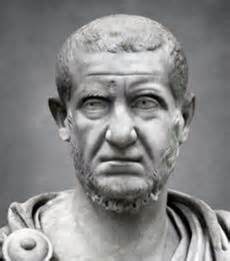
cornelius-tacitus

Roman historian Tacitus (Annals 15.44), c. 100AD.

In the late first-century, Roman historian Tacitus set out to write an account of the histories of Rome. When discussing the twisted emperor Nero, Tacitus briefly mentions Jesus and the band of followers known as the Christians. Tacitus’ comments are associated with Nero’s burning of Rome. Tacitus writes,

“Consequently, to get rid of the report, Nero fastened the guilt and inflicted the most exquisite tortures on a class hated for their abominations, called Christians by the populace. Christus, from whom the name had its origin, suffered the extreme penalty during the reign of Tiberius at the hands of one of our procurators, Pontius Pilatus, and a most mischievous superstition, thus checked for the moment, again broke out not only in Judaea, the first source of the evil, but even in Rome, where all things hideous and shameful from every part of the world find their centre and become popular. Accordingly, an arrest was first made of all who pleaded guilty; then, upon their information, an immense multitude was convicted, not so much of the crime of firing the city, as of hatred against mankind. Mockery of every sort was added to their deaths. Covered with the skins of beasts, they were torn by dogs and perished, or were nailed to crosses, or were doomed to the flames and burnt, to serve as a nightly illumination, when daylight had expired.”[2]

From Tacitus, we can acquire that Jesus of Nazareth lived, died during the reign of Tiberius by the hands of Pontius Pilate, and was believed to have been resurrected (from Tacitus’ claim of one “mischievous superstition”). One also can acquire the great devotion of the early Christians from Tacitus’ text.

josephus

Jewish historian Josephus (Antiquities 18.3), c. 90AD.

Josephus was not a Christian, but was a Jewish historian. Josephus was also a Roman sympathizer. Since Josephus was not a believer, this has led some to dismiss Josephus’ reference to Jesus. However, Josephus mentions Jesus and Jesus’ brother James in other places of his work. Many have noted that the reference is legitimate, but may have originally left out the part where the historian refers to Jesus as “the Christ.” While the exact wording is debated, the reference is authentic. Josephus writes,

“Now, there was about this time Jesus, a wise man, if it be lawful to call him a man, for he was a doer of wonderful works—a teacher of such men as receive the truth with pleasure. He drew over to him both many of the Jews, and many of the Gentiles. He was [the] Christ; and when Pilate, at the suggestion of the principal men amongst us, had condemned him to the cross, those that loved him at the first did not forsake him, for he appeared to them alive again the third day, as the divine prophets had foretold these and ten thousand other wonderful things concerning him; and the tribe of Christians, so named from him, are not extinct at this day.”[3]

From Josephus, we can know that Jesus lived, was considered to be wise, was condemned by Pontius Pilate, was crucified on a cross, died, and that his disciples believed him to have been raised from death.

talmud1

Talmud (Sanhedrin 43a), c. 220AD but reports an earlier tradition.

The Babylonian Talmud contains a tradition that was handed down from a previous source. While there are some differences in this account than the Gospel record (for instance, the Talmud only records 5 disciples), the general facts about Jesus (or Yeshu) are the same.Sanhedrin 43a reads,

“There is a tradition (in a Barraitha): They hanged Yeshu on the Sabbath of the Passover. But for forty days before that a herald went in front of him (crying), “Yeshu is to be stoned because he practiced sorcery and seduced Israel and lead them away from God. Anyone who can provide evidence on his behalf should come forward to defend him.” When, however, nothing favorable about him was found, he was hanged on the Sabbath of the Passover.”[4]

Notice that this is not a source friendly to Jesus. Even still, one can demonstrate the hostility to Jesus from the religious authorities, the crucifixion of Jesus, and even the working of miracles (attributed as sorcery in this reference). Also, one notes that Jesus, in accordance with the Gospel record, was hung on the cross near the time of Passover.

mara-bar-serapion

Mara Bar-Serapion, c. 73-100AD.

At some point after 70AD, Syrian and Stoic philosopher Mara Bar-Serapion wrote of the importance of a person’s pursuit of wisdom. In doing so, Serapion compares Jesus (ie. The “wise king” to Socrates and Pythagoras. Serapion writes,

“What are we to say when the wise are forcibly dragged by the hands of tyrants and their wisdom is deprived of its freedom by slander, and they are plundered for their superior intelligence without the opportunity of making a defence? They are not wholly to be pitied.

What advantage did the Athenians gain from putting Socrates to death? Famine and plague came upon them as a judgment for their crime. What advantage did the men of Samos gain from burning Pythagoras? In a moment their land was covered with sand. What advantage did the Jews gain from executing their wise king? It was just after that that their kingdom was abolished.

God justly avenged these three wise men. The Athenians died of hunger; the Samians were overwhelmed by the sea; the Jews, ruined and driven from their land, live in complete dispersion. But Socrates did not die; he lived on in the teaching of Plato. Pythagoras did not die; he lived on in the statue of Hera. Nor did the wise king die; he lived on in the teaching which he had given.”[5]

Thus, one can identify the wisdom that even Jesus’ adversaries found in the Nazarene. In addition, one can find that Jesus’ teachings were passed down by the early church.

Thallus (from Julius Africanus fragment), c. 52AD.

Julius Africanus quotes a now extant (meaning that it is lost) writing from a historian named Thallus. Africanus states that Thallus “wrote a history of the Eastern Mediterranean world from the Trojan War to his own time…Thallus, in the third book of his histories, explains away this darkness as an eclipse of the sun—unreasonably, as it seems to me (unreasonably, of course, because a solar eclipse could not take place at the time of the full moon, and it was at the season of the Paschal full moon that Christ died).”[6] Thus, from Thallus one can note the darkness that surrounded Christ’s death.

Acts of Pilate (from Justin Martyr, First Apology 35), Justin wrote in the mid 2nd century but records a text from the first-century AD.

In his book the First Apology, Justin Martyr refers to a commonly known document known as the Acts of Pontius Pilate. Unfortunately, the document is now extant. Nevertheless, Martyr writes,

“And the expression, ‘They pierced my hands and my feet,’ was used in reference to the nails of the cross which were fixed in His hands and feet. And after He was crucified they cast lots upon His vesture, and they that crucified Him parted it among them. And that these things did happen, you can ascertain from the Acts of Pontius Pilate.”[7]

The translators of the text add the following note, “These Acts of Pontius Pilate, or regular accounts of his procedure sent by Pilate to the Emperor Tiberius, are supposed to have been destroyed at an early period, possibly in consequence of the unanswerable appeals which the Christians constantly made to them.”[8] Some may see this as a forgery. However, I do not think so. Such ancient records could have been confirmed and/or denied. The fact that early Christians tended to appeal to this document would tend to verify its authenticity to some degree. This causes me to think that there may be more ancient resources available yet to be discovered that would further confirm the historical veracity of Jesus of Nazareth.

Conclusion

From the enemy attestation presented, the historian can know the following:

1) Jesus existed;

2) Jesus was a teacher from Judea;

3) Jesus was thought to have been wise;

4) Jesus performed miracles, although attributed to sorcery by his adversaries;

5) Jesus was crucified at the command of Pontius Pilate;

6) Darkness surrounded the area at Jesus’ crucifixion;

7) Jesus was crucified around the time of the Passover;

8) One can assume from the information given that Jesus was buried;

9) Jesus was believed to have been resurrected;

10) and Jesus’ followers accepted suffering and death while still holding on to the belief of Jesus’ resurrection.

From enemy attestation, one can know a great deal about the fundamentals of Jesus’ life. Does Jesus pass the test of enemy attestation?

YES!!!

But what about the third test? The third test considers embarrassing admonitions. Will Jesus pass the third test? Find out on our next post on this series!

 Bibliography

Africanus, Julius. Chronography 18.1. In Josh McDowell. The New Evidence that Demands a Verdict. Nashville: Thomas Nelson, 1999.

Bar-Serapion, Mara. TextExcavation.com. Accessed January 4, 2016.http://www.textexcavation.com/marabarserapiontestimonium.html.

Habermas, Gary R., and Michael R. Licona. The Case for the Resurrection of Jesus. Grand Rapids: Kregel, 2004.

Josephus, Flavius, and William Whiston. The Works of Josephus: Complete and Unabridged.Peabody: Hendrickson, 1987.

Martyr, Justin. “The First Apology of Justin.” In The Apostolic Fathers with Justin Martyr and Irenaeus. The Ante-Nicene Fathers. Edited by Alexander Roberts, James Donaldson, and A. Cleveland Coxe. Buffalo, NY: Christian Literature Company, 1885.

Tacitus, Cornelius. Annals XV.44. The Internet Classics Archive. Translated by Alfred John Church and William Jackson Brodribb. Accessed January 4, 2016.http://classics.mit.edu/Tacitus/annals.11.xv.html.

Talmud. Sanhedrin 43a. JewishChristianLit.com. Accessed January 4, 2016.http://jewishchristianlit.com//Topics/JewishJesus/b_san43a.html#DIS.

Notes

[1] Gary R. Habermas and Michael R. Licona, The Case for the Resurrection of Jesus (Grand Rapids: Kregel, 2004), 37-38.

[2] Tacitus, Annals XV.44, from The Internet Classics Archive, Alfred John Church and William Jackson Brodribb, trans, retrieved January 4, 2016,http://classics.mit.edu/Tacitus/annals.11.xv.html.

[3] Flavius Josephus and William Whiston, The Works of Josephus: Complete and Unabridged(Peabody: Hendrickson, 1987), Logos Bible Software.

[4] Talmud, Sanhedrin 43a, JewishChristianLit.com, retrieved January 4, 2016.http://jewishchristianlit.com//Topics/JewishJesus/b_san43a.html#DIS.

[5] Mara Bar-Serapion, TextExcavation.com, retrieved January 4, 2016.http://www.textexcavation.com/marabarserapiontestimonium.html.

[6] Julius Africanus, Chronography, 18.1, in Josh McDowell, The New Evidence that Demands a Verdict (Nashville: Thomas Nelson, 1999), 122.

[7] Justin Martyr, “The First Apology of Justin,” in The Apostolic Fathers with Justin Martyr and Irenaeus, ed. Alexander Roberts, James Donaldson, and A. Cleveland Coxe, vol. 1, The Ante-Nicene Fathers (Buffalo, NY: Christian Literature Company, 1885), 174–175.

[8] Ibid., 175, 1n.


Brian G. Chilton is the founder of BellatorChristi.com and is the host of The Bellator Christi Podcast. He received his Master of Divinity in Theology from Liberty University (with high distinction); his Bachelor of Science in Religious Studies and Philosophy from Gardner-Webb University (with honors); and received certification in Christian Apologetics from Biola University. Brian is currently enrolled in the Ph.D. program in Theology and Apologetics at Liberty University. Brian has been in the ministry for over 15 years and serves as a pastor in northwestern North Carolina.

Original Blog Source: http://bit.ly/2BBBYVH

How do we fix a world filled with murder, rape, betrayal, adultery, fraud, theft, sexual exploitation, pornography, bullying, abortion, terrorism, cheating, lying, child abuse, racism, assault, drugs, robbery, and countless other evils?

There will be no solutions unless we are honest about their underlying causes. Although we don’t want to admit it, the truth is that every one of those world problems can be traced back to a problem with the human heart.

No one knows that better than an honest cop. My friend Jim Wallace is a cold-case homicide detective in California. He’s been featured four times on Dateline for solving crimes that are decades old. He’s noticed that every crime he has ever solved can be traced back to one or more of these three motives: financial greed, relational lust, or the pursuit of power (money, sex and power). We want these things so much that we are willing to use immoral means to get them.

In other words, the sick condition of our world is preceded and caused by the sick condition of our hearts.  That’s why we won’t improve the external world until we first improve our internal worlds.

You might think that this doesn’t really apply to you. After all, you may be congratulating yourself because you haven’t committed any of the crimes listed at the top of this column.

“Well, not most of them anyway,” you say. “Who hasn’t lied or stolen something?   But I’m better than most people!”

Maybe so. But your very act of self-justification proves the point—instead of admitting our faults, our natural inclination is to minimize them or cover them up while claiming moral superiority.

We don’t want to admit this because it hurts our pride, which is also a heart issue. “Don’t tell me I’m wrong! You’re offending me! You’re hurting my feelings!”

It’s no wonder free speech is under attack in the culture and on campus. To channel Jack Nicholson, we “can’t handle the truth” because the truth exposes the fact that we are not really as good as we claim we are. We can’t bear the fact that we are broken, narcissistic creatures who find it much easier and more natural to be selfish rather than selfless.

This affects even people who deny real right and wrong. For example, leading atheist Richard Dawkins has declared, “The universe we observe has precisely the properties we should expect if there is at the bottom, no design, no purpose, no evil and no good. Nothing but blind pitiless indifference… DNA neither knows nor cares. DNA just is, and we dance to its music.”

But Dawkins doesn’t act like he actually believes that. He recently insisted that a woman has the right to choose an abortion and asserted that it would be “immoral” to give birth to a baby with Down syndrome. According to Dawkins, the “right to choose” is a good thing and giving birth to Down syndrome children is a bad thing.

Well, which is it? Is there really good and evil, or are we just moist robots dancing to the music of our DNA? If there is no objective morality, then there is no “right” to anything, whether it is abortion or the right to life.

And if there is no objective morality, then why does everyone, including atheists, try to justify their own immoral behavior? As C.S. Lewis observed, “If we do not believe in decent behavior, why should we be so anxious to make excuses for not having behaved decently? The truth is, we believe in decency so much—we feel the Rule or Law pressing on us so— that we cannot bear to face the fact that we are breaking it, and consequently we try to shift the responsibility.”

Ironically, when we try to shift the responsibility for our immoral actions, we often appeal to other moral principles to justify ourselves:

  • I used my expense account for personal items because I work harder than what they pay me, and it’s unjust that my boss makes so much more than me.
  • I ran off with my assistant because she really loves me, unlike my wife who doesn’t give me the attention I deserve.
  • I don’t have time for my kids because I’m too busy working hard to provide for their future.
  • I had an abortion because it’s immoral to give birth to a Down syndrome child.

Even our excuses show that we really, deep down, believe in objective morality. We often deceive ourselves into believing that something immoral is really moral (like abortion), but, as Thomas Jefferson famously declared, certain universal moral truths are “self evident.” All rational people know this. Unfortunately, our tendency for moral self-deception is also universal. We know what’s right, but we make excuses for doing wrong by trying to appeal to what is right!

Where does all this leave us?

There is hope. Regardless of what you believe about the Bible, what can’t be denied is that the Bible nails the truth about human nature and our deceptive human hearts. The book of Genesis admits that “every intent of the thoughts of [mankind’s] heart was only evil continually.” Jeremiah wrote, “The heart is deceitful and wicked, who can know it?” Jesus declared, that people “love darkness rather than light.” And Paul observed that we “suppress the truth in unrighteousness” in order to continue in our sins.

But the Bible doesn’t just accurately state the problem; it also reveals the only possible solution. Because of our moral failings, God’s infinite love compelled Him to add humanity over his Deity and come to earth in the person of Jesus that first Christmas. The incarnation was necessary because an infinitely just Being cannot allow sin to go unpunished. Instead of punishing us, God found in Jesus an innocent human substitute to voluntarily take the punishment for us.

Our pride tells us that we can rescue ourselves, but we can’t. No matter how much we try to justify ourselves or pledge to do better in the future, we can’t escape the fact that we’re guilty for what we’ve already done.

So it’s important to ask this Christmas season, “Have you accepted the pardon Jesus came to offer you? And have you asked Him into your life to help heal your self-centered heart?” If not, why not? He’s the only true solution to the world’s evils and the heart problem that afflicts each one of us.

The moral argument for God’s existence is often presented as follows:

Premise 1: If God does not exist, objective moral values and duties do not exist.
Premise 2: Objective moral values and duties do exist.
Conclusion: Therefore, God exists.

As with any valid syllogism, the moral argument can be defeated by proving one of the supporting premises to be false. In many conversations with atheists, I’ve encountered several who agree with premise 1, but deny the truth of premise 2. Is this a rational position, or do we have good reason to believe that objective moral values and duties do in fact exist?

Before we look at the evidence, let’s define clearly the boundaries of the premise. The claim is that our universe contains moral categories of values (good and evil) and duties (right and wrong actions) that exist independently of the opinion of anyone and that apply to the actions and motivations of all persons. Therefore, the topic at hand is a question of ontology—whether these categories actually exist, and not epistemology—how we know these categories. How we come to knowledge of morality is irrelevant to the question; whether we know the speed limit on the streets of our city has no effect on the existence of such a limit. In my hometown, you will still be cited for speeding, even if the road is not posted with speed limit signs!

Secondly, the claim is not interested in whether one believes in objective morality. Belief in, or lack of belief in a truth claim does not make the claim true or false. You may not believe that our town has a speed limit; you can still be given a citation in spite of your lack of belief. What the claim addresses is whether these moral categories exist in reality, not in someone’s belief system.

So the question on the table presents us with two different types of realities; a moral universe in which objective moral categories exist, and an amoral universe that contains only subjective moral categories (where each person’s standard of right, wrong, good, and evil is defined by themselves and applies only to themselves). In order to determine which of these descriptions applies to our own universe, let’s take a look at what both of these realities would be like, and then see which most closely describes the features of our own universe.

In an Amoral Universe, objective moral categories do not exist. No action can be called objectively evil; while one might dislike another’s action, no external standard exists by which any action can be called good or evil. In the overall scheme of things, feeding your child is no better or worse than beheading your child, and any feelings one has to the contrary is simply opinion. In this universe, these moral opinions have no basis in reality; that is to say, nothing objective exists on which to base such a concept.

In a Moral Universe, objective moral categories do exist. Any action can fall into one of three categories:

  • Moral actions — actions that conform to the objective moral standard
  • Immoral actions — actions that violate the objective moral standard
  • Amoral actions — actions which are not addressed by the objective moral standard

While legality is not a synonym for morality, the two are somewhat analogous. It is legal in the United States to peacefully and publicly speak against an policy implemented by our government. It is illegal to murder the government official who is responsible for creating this policy. It is a-legal to read the public information related to the policy. Freedom of speech is expressly permitted by the law, murder is expressly forbidden by the law, and reading public documents is simply not addressed by the law.

As an objective feature of the universe, and not of an individual human, these categories apply to all humans, just as the law of gravity applies to all humans. Just as there’s no escaping the laws of physics for physical creatures, the laws of morality are just as binding on moral creatures. However, the moral categories are necessarily different from other laws of the universe in that they are prescriptive (describing how things ought to be) and not descriptive (describing how things are).

Having described these two universes, let us now consider our own. Which of these two descriptions best describes what we see in our own actual universe? I offer here two reasons why I contend that the description of the moral universe more accurately describes our universe.

The idea of an amoral universe is existentially self-refuting.

The concept of an amoral universe, thought not logically self-refuting, is existentially self-refuting. There is no logical incoherence in the statement “No objective moral values and duties exist.” The problem arises when one attempts to describe how one should live in such a universe… for the instant one makes such an attempt, they have invalidate the concept. In an amoral universe, “how one should live” is meaningless… no standard exists to describe how one should live.

Without considering the implications of such a universe deeply, it’s easy to claim, “Objective moral truths do not exist; I have the right to do as I please!” Yet, this statement makes a moral claim to a “right” while denying moral reality. If you believe that others ought to allow you to live according to the dictates of your own will and your own conscience, then you are appealing to objective morality to justify what others “ought” to do.

The logically correct view in an amoral universe is that everyone will do as they do with no moral implications at all. Yet, atheists commonly make moral demands; for example, that theists “stop imposing their morality”. This demand certainly assumes that theists “ought” to act in a particular way.  Yet, without objective morality, no such “ought” can exist.

Or think of it this way; we are beings who can conceive and consider many different possible courses of action. Does any course of action exist that should always happen, if possible? Does any course of action exist that ought never to happen? Ought theists to never torture atheists for fun? Ought atheists to rebut theists who claim that objective moral categories exist?

If one single course of action ought never to happen, then objective morality must exist. But let’s not get ahead of the evidence; whether it is immoral to torture atheists for fun (a question of epistemology) is irrelevant to the point—the only way that such a statement can logically be true is if there is an applicable objective standard by which we can judge the action in question.

The idea of moral categories would be unintelligible in an amoral universe.

In an amoral universe, one is hard-pressed to determine how the idea of moral categories would come to be. While in such a universe, any moral standard is necessarily subjective, such a subjective morality could have absolutely no basis in reality.

While we certainly conceive of ideas that are fictional, most, if not all of these fictional concepts have their roots in reality; unicorns are an extension of horses; werewolves are a blending of human and animal, a cyclops is an oversized human with a single eye. None of these concepts are completely manufactured out of nothingness.

Yet for the concept of subjective morality to appear in an amoral universe is similar to the idea of blue and green appearing in a colorless universe. It is impossible to convey the richness and experience of color to a man blind from birth, because such a man has no basis on which to relate to such a description. While you might explain that blue is a certain wavelength of light, that doesn’t convey to the blind man what light is, or the experience of seeing blue. To the blind man, color and light do not exist in his experience.

But in an amoral universe, moral categories have no basis of existence in reality. In a world where color had no basis of existence in reality, all would be as the blind man above, completely incapable of understanding the concept of color. Even if one conceived of such a thing as green or red in their imagination, they could never communicate this idea to others without a shared reference point. For purely subjective concepts, such shared reference points cannot exist.

It’s been argued that the fact that different cultures and religions have differing concepts of morality is evidence against objective morality. However, this is not the case. My wife and I frequently disagree on colors; I’ll say something is blue, while she insists that it is green. When it’s brought in to sunlight, we usually find that she’s right!

But notice that while we may disagree on the color of the object, neither of us is claiming that it has no color at all! In order for us to have a meaningful conversation about the object’s color, both of us must assume that color exists, and that the object does have a color. If color does not exist, then our conversation is meaningless, unexplainable, and could only be called delusional.

So the fact that every single person who has reached age two seems to have conversations about what men should and should not do seems to be strong evidence that they actually perceive something in the universe that actually exists. Whether politician, priest, parent, or protester, all make the claim that men should behave in a certain way. It seems remarkably myopic to consider all who hold such views to be sharing the same delusion!

For example, Christianity teaches that we should love our enemies, and as much as it is possible, we should live in peace with all men. Some branches of Islam believe that one should behead their enemies. Again, for this point, which view is correct is irrelevant; but in order for anyone to have a meaningful conversation about which view (if either) is correct, one must assume that a correct view does in fact exist. This requires an objective moral standard.

The implications of these two lines of evidence seem inescapable; unless objective moral categories of good, evil, right, and wrong actually exist in reality, our tendency to think in these terms is unexplainable. But to be fair, we’ve only looked at one side of the evidence. In a later post, I will address the arguments against this view.

Beyond surpassing wonder about God or mere inquiry about Him and His truth, doubt digs much deeper. Doubt doesn’t just ask, “What is real?” It poses the challenge, “Is my faith real?” Is what I believe really valid? Or is it simply a modified myth, an uber-marketed religious fairy tale supported by millions of gullible minds throughout history?

Doubt trumps wondering, and it body-slams mere curiosity. In its worst form, it goes beyond simply searching for answers to questions, inevitably denying the legitimacy of the questions themselves.

FREE “Doubting Toward Faith” Chapter – Click here to DOWNLOAD NOW!

For Christians, doubt can either serve us or sink us. It can drive us to seek truth or it can drown us in despair, hopelessness, and confusion. If ignored or left unchecked, it can bore into our brain, releasing a virus of unbelief, infecting and eventually destroying every healthy thought about God. It can take us to the place where nothing else matters. Where we find ourselves loathing even life itself.

If left unchecked, intellectual doubt metastasizes, seeping its way into our emotions and collecting a wide array of fears, worries, anxieties, anger, confusion, depression, and ultimately despair at the thought of being played or duped or envisioning a life without our once “cherished belief” in God.

Horrifying so, doubt is no stranger to our time. And capturing the zeitgeist of our changing times is quite the project. We live in a multi-textured culture that is replete with innumerable beliefs, opinions, ideas, and life philosophies. Ours is a culture of doubt and longing, faith and questioning, searching and probing. And much of the doubt has been accelerated by fast-paced change. Our culture is living between the tension of what we once were and what we are now becoming. And for many, waiting in the blank space between the definition of what we were and the search to define what we are becoming feels for the moment confusing, and even a bit uncomfortable.

Echoing this angst, Os Guinness writes, “We live in an age of doubt, disillusion and disaffiliation, which naturally prizes what has been described as ‘the faith that you go to when you don’t know where to go.”[i] Both our pluralistic and secularized culture has produced a fragilized-self as it pertains to doubt.[ii] We’ve shifted from Christianity to Anyanity (pluralism) or Noanity (atheism).

Belief isn’t nearly as comfortable and cozy as it once seemed. There’s an irritant to it; like a pebble in a shoe, these competing beliefs have made the faith walk a little less comfortable. Today, record numbers of those who once professed faith in Christ are walking away from the church, even limping, in the name of doubt.

Such torturous doubt splits the mind. And contrary to popular belief, intellectual doubt is not the opposite of faith; unbelief is. Doubt is in between, seesawing and dangling in the middle.

Yet, make no mistake. Doubt never stays put. It’s not neutral.

It makes up its mind.

It’s directional.

It’s going somewhere.

This means a person will either doubt toward unbelief or they will doubt toward faith. You’ll waver one way or another. But thankfully God can discern the nature of our doubts. There’s skeptical doubt and sincere doubt. There is antagonistic doubt and authentic doubt. And the difference between them is worlds apart. Those who hold to the latter want their doubts solved so they can go forward with God, while the former want their doubts confirmed so they can move beyond God.

Next time you find yourself experiencing a bout with doubt, or the angst of a splintered mind let me encourage you to doubt toward faith. And I’m not talking about an empty existential faith that takes a leap into the darkness, but rather a bona fide trusting faith in the Person of Jesus Christ. Yes, next time you doubt.

Doubt.

Toward.

Jesus!

[i] Os Guinness, Renaissance (Downers Grove, IL: InterVarsity Press, 2014), 25.

[ii] Philosopher James K.A. Smith describes fragilization as follows, “In the face of different options, where people who lead ‘normal’ lives do not share my faith (and perhaps believe something different), my own faith commitment becomes fragile—put into question, dubitable.” How (Not) To Be Secular (Grand Rapids, MI: Wm. B. Eerdmans, 2014), 141.

[iii] Adapted from: DOUBTING TOWARD FAITH

Copyright © 2015 Bobby Conway

Published by Harvest House Publishers

Eugene, Oregon

www.harvesthousepublishers.com

Used by Permission.

It’s about 2 a.m. on an August morning in 1979. A beautiful young nurse by the name of Lynne Knight is living in a bungalow behind a larger house in Torrance, California. As two police officers approach her door, they notice a chair overturned in the entryway and bloody footsteps leading back to the rear bedroom. Each officer has his gun drawn, not sure what to expect.

When they switch on the light, they witness the worst murder scene of their careers. Ms. Knight is lying on her bed, undressed. Her throat is deeply severed, and her lifeless body, which had been stabbed repeatedly, is covered in blood.

Under her body is 18 inches of twisted wire strung between two small pieces of wood that had been sawed off from an old broomstick. Although they’ve never seen one in person before, the officers immediately know it’s a garrote—a homemade weapon used to strangle someone in order to commit a murder quietly.

The killer tried to murder Lynne with the garrote, but couldn’t complete the evil act because she fought back. So the killer stabbed her to death and left the garrote behind in a panic.

Could the garrote lead the cops to this monster? Not soon enough. For nearly three decades, the case went cold until cold case homicide detectives J. Warner Wallace, and Rick Glass got involved in 2007. They dusted off the evidence left in a box at the Torrance PD, and Wallace made it his personal mission to analyze every aspect of the garrote. It turned out to be the key to the murder trial that took place last summer in the same LA courtroom where O.J. Simpson was tried. And there was a familiar face in this trial. The defendant, Doug Bradford, hired O.J. lawyer Robert Shapiro to be his defense attorney.

While Bradford was a former lover of Knight, there was no eyewitness or DNA evidence to link Bradford to the murder. And there were several other suspects in the case, some of whom had since died. Wallace, Glass, and LA District Attorney John Lewin had an uphill battle to convince a jury of twelve that Bradford had indeed committed the crime. There would be no conviction unless all twelve agreed.

But Wallace, Glass, and Lewin had been down this road before. They earned convictions on every cold case they had brought to trial so far. Three of those cases were so intriguing that NBC’s Dateline featured them. This case was no different: Keith Morrison and his Dateline crew were filming the case in an episode they called “The Wire.”

Although Dateline didn’t know it going in, their confidence was rewarded: on August 14, 2014, this LA jury returned a guilty verdict. Robert Shapiro, perhaps aware he had been out argued, didn’t even show up for the verdict. Doug Bradford is now serving a life sentence after being free for 35 years.

How did they get the conviction?

They began by asking the question, all detectives ask at a death scene: can this death be explained by staying inside the room, or does it require us to look outside the room? Obviously, this death was a murder and required a suspect outside the room. Had this been a suicide, natural death, or accidental death, the event could be explained by staying inside the room.

Then Detective Wallace used some very ingenious methods to link the garrote back to Bradford. (You can watch the entire Dateline explanation here.) He linked the effect (the garrote) back to the cause (Bradford).

Now Wallace is employing the same investigative principles he uses to solve cold case murders to eight of the greatest questions we ponder as human beings. He does this in his insightful new book, God’s Crime Scene. In the book Wallace seeks to discover if we can stay inside the room (the natural world) or must go outside the room (the supernatural world) for the causes of the following effects:

  • The origin of the universe
  • The fine-tuning of the universe
  • The origin of life
  • The origin of new life forms and biological machines
  • Consciousness
  • Free will
  • Objective Moral Values
  • Evil

Each of the eight chapters starts with the details of a real criminal case and then applies the principles to the question at hand (the Lynne Knight case is in Chapter 4).

Wallace was a committed atheist until age 35. Now he is a highly skilled author and speaker who presents a unique case for the Christian worldview across the country. Columnist Mike Adams and I have recently teamed with J. to equip Christian youth and their parents with the case for Christianity through a dynamic new College Prep program. I can tell you that audiences are captivated by the way he applies forensic principles to build the case for Christianity.

But don’t think Wallace just tows the party line. Since he is a cold-case homicide detective, Wallace presents you with the evidence pro and con, and then leaves you to draw your own conclusions. He does a masterful job of laying out the evidence and even illustrates that evidence with over one hundred of his own drawings, which clarify and summarize some potentially difficult subject matter. (Who said a serious book can’t have pictures?)

God’s Crime Scene is an engaging and very readable work that investigates some of life’s most important questions. I highly recommend you get it regardless of your religious viewpoint. I can’t guarantee you’ll be convicted, but your thinking will be challenged.


Dr. Frank Turek (D.Min.) is an award-winning author and frequent college speaker who hosts a weekly TV show on DirectTV and a radio program that airs on 186 stations around the nation.  His books include I Don’t Have Enough Faith to be an Atheist and Stealing from God:  Why atheists need God to make their case.

We have sent this year’s graduating seniors off to college hoping that we as parents and teachers have prepared them for the challenges of college life. We gave them the best education we could, prodded them when they wanted to goof off instead of study, made college visits, wrote recommendations, and helped them write admissions essays. But have we prepared them for the most serious confrontations to their faith that they will face on the university campus?

College can be a dangerous place for the spiritual life of Christian students. What if your child is assigned a Hindu roommate who sets up a shrine to his or her god in the dorm room? Or, what about the increasingly common situation in which your student ends up rooming with someone who self-identifies as homosexual? Showing Christ’s love to persons with whom we disagree is not the only issue. The question is whether your student is prepared to navigate the intimacy of a dorm room setting with a roommate of the same sex who affirms same-sex attraction.

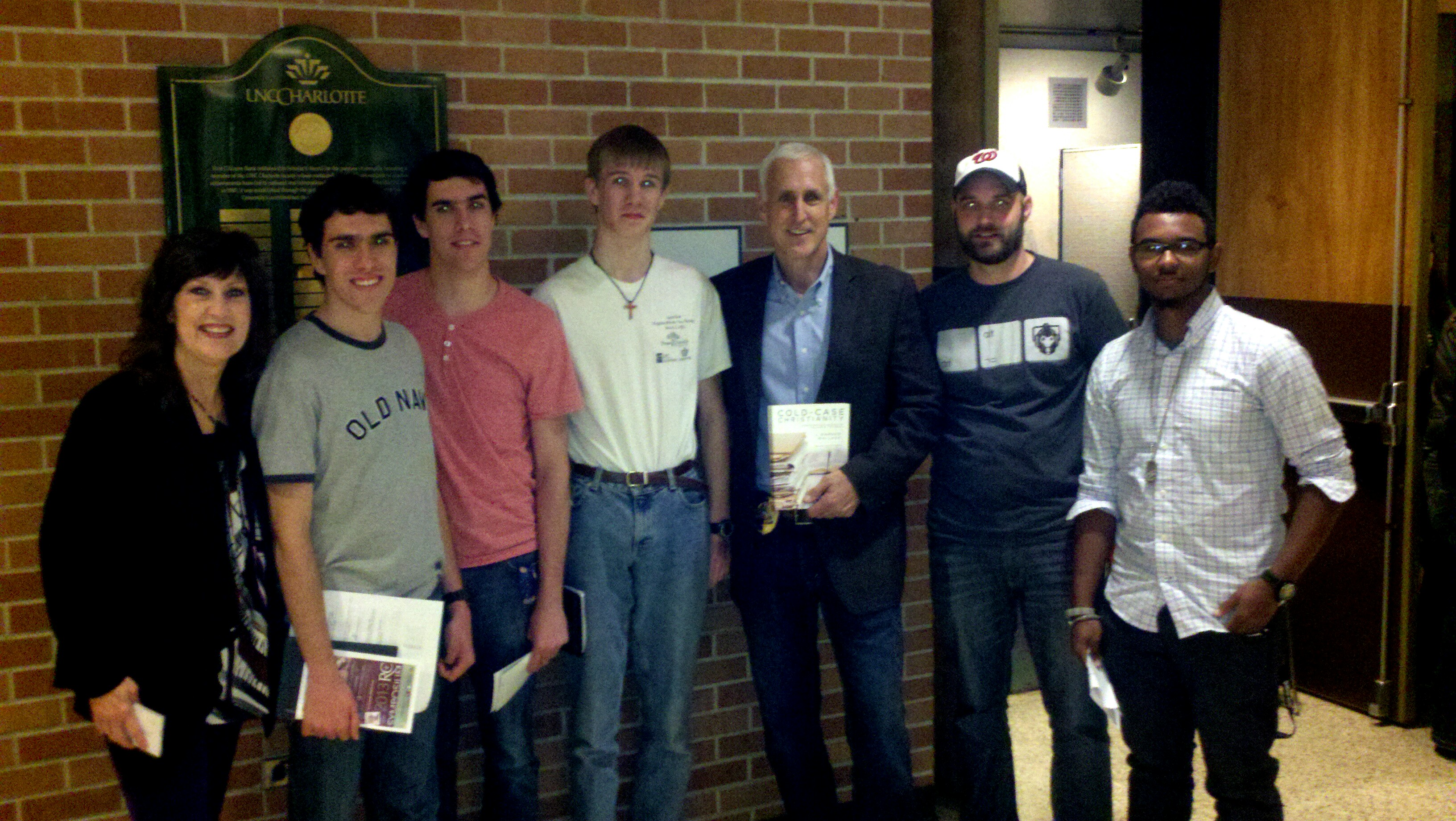
Hickory Grove Christian High School students in Charlotte, NC with apologist J. Warner Wallace

Hickory Grove Christian High School students in Charlotte, NC, with apologist J. Warner Wallace

Peers aren’t the only source of pressure. Many college professors believe that Christian students are naïve and misguided, and see it as their job to disabuse them of their backward, bigoted Christian notions. How will your student respond when an English professor insists that a sentence has no inherent meaning but rather the reader endows the text with meaning? Will your student be swayed by the philosophy professor who insists truth and morality are relative to culture, or by the New Testament professor who argues that the gospels are full of errors and their accounts about the life and words of Christ cannot be trusted?

Just so you don’t think I am exaggerating about the frontal attack Christian students face a mere twelve weeks after high school graduation, let me share what a former student told me happened the first week she entered college orientation.

Mrs. Scribner,

I just wanted to let you know how much you were right! (Not that there was ever a question:)) I went to college orientation last week and they taught us about tolerance and not pushing your beliefs on others. ‘Your beliefs are your beliefs and let’s keep them that way’ was a major thing. We had to play a ‘get to know you’ game and we were asked about religion. I freely told people I was a Christian and afterward definitely got the cold shoulder. This was at the end of the day so I had already made some friends, but after I told them that it was almost as if the [person] that they had met earlier had ceased to exist. When our group leader talked to us about accepting everyone as they are and not trying to change them it was almost like he was talking directly to me. A couple of the students made it their personal mission to either offend me or change my beliefs; I’m not sure which they had in mind. One made a comment and started out with, ‘Let’s say God  ACTUALLY exists. . . .’  I was most upset by the fact that they were allowed to attack me like this. Not that I would have, but had I made a mean comment about their atheism or unitarianism I feel certain I would have gotten in trouble. I’m already sickened by the double standards and a school hasn’t even started yet!! 

Fortunately, this student was not swayed by the hostile attitudes of teachers and students. In high school apologetics class, we had talked many times about this inevitable reality of college life. Not only was she not swayed, but she was also ready to exercise her apologetics muscles in conversations. She shared one example in which she talked with someone who raised difficult spiritual questions.

I immediately thought back to apologetics and I was ready to discuss! He asked really good questions and at first, I was nervous about answering them. I took a deep breath and remembered my training! I began to ask him questions about what he specifically believed. I used the ‘what do you mean by…?’ question multiple times. I was so excited that I could keep up and even ask questions that took [him] a minute to answer! I just wanted to thank you for everything. You have not only shown me the information but how to use it most effectively. I honestly think your class was the most important one I will ever take. It answered some of my questions and also gave me more. I now have the ability to think for myself and the confidence that I actually know what I’m talking about!!

Now, to be honest, if you asked most of my students what they thought of the apologetics course, they would describe it is far less glowing terms. Studying the evidences for Christianity is hard work, sometimes tedious, and even doubt provoking, as students grapple with questions they have never before asked. Nevertheless, my prayer is that while students may not recall all that we have studied, they will remember that we talked about the questions with which they are later faced, and know where to go for answers.

I applaud this young woman for her perceptive recognition of the disparity between espoused tolerance and the way that students are perceived and treated once they self-identify as Christians. She also was willing to practice what she had learned in class, which requires a willingness to take risks. She even employed effective communication skills in dialogue.

Her story affirms my own conviction that before leaving high school, Christian students need to learn and practice sharing the rational evidences from science, history, philosophy, and logic, for the truth claims of Christianity. Apologetics is not a luxury but a necessity. In fact, a Christian student’s education is incomplete if it has not included focused study of the rationale for Christianity’s claims that:

  • the existence of objective truth and morality is undeniable.
  • the evidence for the God Who created the universe in its entirety and created humans as new and distinctly unique beings in His own image is morally, scientifically, and philosophically overwhelming.
  • Jesus Christ’s deity, miracles, atoning death, and physical resurrection were forecasted in the Old Testament and confirmed in the New Testament.

How do we accomplish this overwhelming task? Parents can proactively teach how to analyze and evaluate truth assertions made by diverse worldviews and share evidences for the truth of Christianity. Church student leaders can incorporate apologetics courses in discipleship plans. Teachers in Christian schools can integrate not only the biblical worldview but also the rationale for that view vertically from pre-K through 12th grade and horizontally across disciplines. We’ll talk more about how to integrate apologetics at home, church, and school in upcoming posts. For now, a good place to start is by equipping yourself as a parent or teacher of elementary, middle school or high school students. Get a good apologetics primer such as I Don’t Have Enough Faith to Be an Atheist and dig in so that you can start the dialogue.

We’ve been told that people who want to maintain the man-woman definition of marriage are “on the wrong side of history.” Perhaps they are correct. Maybe “history,” which is determined largely by how people behave, will continue to move toward defining marriage as genderless in the 90 percent of governments that still maintain the natural definition. But what’s the take-away? Jump on the bandwagon?

Remember, Moses was on the wrong side of the golden calf. And Lincoln’s Emancipation Proclamation was on the wrong side of Dred Scott — the 1857 Supreme Court decision that declared blacks were “so far inferior that they had no rights.” Being on the wrong side of some popular moral assertion doesn’t mean your position is wrong.

Now that five judges say that same-sex marriage is a new “right,” let’s ask a more foundational question. Where do rights come from? Specifically, where does the right to same-sex marriage come from?

If you say that rights come from governments or constitutions, how can they really be rights? Isn’t a right something you have regardless of what a government says? For example, if same-sex marriage is really a right, then you actually possess that right even if you live under a government that doesn’t recognize same-sex marriage. You may not be able to exercise it, but you have it nonetheless.

Moreover, if there is no overarching moral standard that transcends human governments, then how we could prosecute Nazi soldiers for violating the rights of others? The Nazis were just following their government.

The truth is, rights don’t come from men or governments. Instead, “to secure these rights, Governments are instituted among Men,” as our Founders wrote in the Declaration of Independence. In fact, that was the entire point of the Declaration — the government of King George was usurping the rights of colonists, so we declared our independence.

Some argue that evolutionary theory provides us with a right to same-sex marriage, but one doesn’t even have to challenge evolutionary theory to see that something is wrong with that argument. If natural selection has a goal of survival and reproduction, then how could same-sex marriage help with that? Such marriages are an agreement to stay in a sterile and medically unhealthy relationship — the exact antithesis of survival. In fact, if everyone lived faithfully in same-sex marriage, the human race would end quite quickly. (I’m not saying that same-sex marriage laws would accomplish this, just that the observation shows a real moral and consequential difference between natural marriage and same-sex marriage).

An even more basic problem with the evolutionary argument is that moral rights don’t result from evolutionary processes. Rights are prescriptive and come from an authoritative person. Evolutionary processes are descriptive and have no authority to tell you what to do. How does a mutating genetic code have the moral authority to tell you how you ought to behave or how you ought to treat others?

The truth is, just as history describes what does happen and not what ought to happen, biology describes what does survive, not what ought to survive. Why should humans survive as opposed to anything else? And which humans? Mother Theresa? Hitler?

Those who want to follow evolutionary theory are led to a dark place. Murder would be OK if it helped you survive, thrive and better reproduce. Rape would be OK because if it helped propagate DNA.  And a society might justify exterminating the weak and undesirables to improve the gene pool and help the desirables survive. In fact, Hitler used evolutionary theory to justify just that. Homosexuals were many of his victims.

So if rights don’t come from governments or evolution, then where do they come from? To truly be rights, they can only come from an authoritative being whose nature is the very standard of perfect Goodness. That’s what we mean by God.

Without God, there is no authoritative moral standard beyond humanity, which means that every action or behavior is merely a matter of human opinion. The murder of Jews, gypsies, and homosexuals? It’s just your opinion against Hitler’s opinion. Child crucifixions? It’s just your opinion against that of ISIS. Freedom of speech? That’s just your opinion against that of a dictator. Gay bashing is bad? Again, just your opinion.

The same holds true with any supposed right, including the right to same-sex marriage. While you can get five judges to assert it is a right, without God, it is just an opinion (thus the Court’s judgment is aptly named).

But couldn’t God approve of same-sex marriage?

The major religious books state just the opposite. So does the Natural Law derived from God’s nature. Thomas Jefferson called this “Nature’s Law,” from which we get “self-evident truths,” including the truth that people “are endowed by their Creator with certain unalienable rights.” Same-sex marriage is not one of those self-evident truths. In fact, Jefferson and other politically incorrect Founding Founders called homosexual acts “crimes against nature” because such acts go against the natural design of the body and frustrate the goal of perpetuating humanity. This observation is not based on bigotry but on biology. (It’s ironic that our Founding Fathers were more apt to follow science than today’s secular left who ignore science when they insist that biological gender is changeable and sexual behavior is not. The exact opposite is true!)

The issue of slavery does not invalidate Jefferson’s judgment. Jefferson understood that slavery was wrong and admitted so, even if he succumbed to the temptation to keep his slaves throughout his life (it was Darwin who believed in the “favored races”). Simple observation tells us that every race of human is fully human. And nature tells us that mixed-race marriages lead to healthy offspring. Indeed, experience has shown that bigger gene pools are healthier than smaller ones. The natural law that points away from homosexual relationships also points away from racism.

Since real rights can only come from God, if you want to insist same-sex marriage is a right then you must assume that God is for same-sex marriage. But then you must also assume the implausible notion that God wants you to harm your own health and that of the human race by contributing to its extinction. How’s that for love? Don’t be fruitful. Don’t multiply. Don’t survive. Same-sex marriage is not only on the wrong side of God and nature; it’s on the wrong side of humanity.

So if not from governments, evolution or God, where does the “right” to same-sex marriage come from? Our imaginations. Perhaps well-intended imaginations, but imaginations nonetheless.


Dr. Frank Turek (D.Min.) is an award-winning author and frequent college speaker who hosts a weekly TV show on DirectTV and a radio program that airs on 186 stations around the nation.  His books include I Don’t Have Enough Faith to be an Atheist and Stealing from God:  Why atheists need God to make their case.

Sex is the new religion in America, and it’s a religion of the sword. That’s the real reason this controversy has risen in Indiana. A determined and vocal minority from the religion of sex is bullying and cutting down traditionalists who need a law that would allow them to be left alone. This clash of orthodoxies has opposing values with moralists on both sides demanding their rights.

One side says, “everyone must celebrate my same-sex marriage” (a moral position). And the other side says, “God or my conscience prevents me from doing so” (also a moral position). Can anyone see any middle ground here? There is none. So the question is, whose moral “right” will take precedence?

Governors in Indiana, Arkansas, and several other states see the need for protecting religious liberty for a very good reason—it is under attack. The scales have tipped decidedly against the free exercise of traditional religion—against the right of Christians, Muslims, Jews and anyone else who can’t celebrate the orthodoxy of the new religion.

Forget tolerance. This is well beyond tolerance. Now, if you don’t agree to celebrate same-sex marriage, believers in the religion of sex will commence an inquisition and, without a trial, punish you for heresy. That’s why this legislation is necessary. Florists, bakers, photographers, real estate agents, Internet CEOs, and speakers like myself have all discovered personally that the people who say they are fighting for “tolerance” are often the most intolerant. In the name of “inclusion and diversity,” those of us who have a diverse view are being excluded, and even fired and fined because we won’t violate our beliefs to satisfy the overbearing clergy of the religion of sex.

A few years ago Cisco and Bank of America fired me as a training consultant because I had conservative beliefs about sex and marriage even though my beliefs were never expressed on the job. When a homosexual manager at Cisco found out on the Internet that I had authored a book giving evidence that maintaining the natural definition of marriage would be best for society, he couldn’t tolerate me and demanded that I be fired. An HR executive canned me within hours without ever speaking to me. This happened despite the fact that the leadership and teambuilding programs I led always received high marks (even from the homosexual manager!).

While I’m probably in the minority, I believe that people have the right to choose with whom they do business. In other words, I support Cisco’s right to fire me. My problem, as I explained here, is that they falsely claimed to be “inclusive and diverse” when they are anything but that. Their orthodoxy is just as closed and narrow as the most rabid fundamentalist church.

My friends David and Jason Benham agree with freedom of association and the rights of businesses as well. When members of the religion of sex learned that the evangelical Benham brothers were violating orthodoxy by being pro-life and pro-natural marriage, an inquisition began to get the Benhams fired from their TV show. Executives from HGTV ultimately caved to the demands of the dogmatic priests and canceled the show, which was already in production. When Jason Benham told a TV reporter that HGTV had the right to fire them, the reporter’s jaw dropped. The Benhams are actually tolerant! So are most Christians (although there are some bad apples in every group).

Somehow people are getting the wrong impression about these state laws that seek to protect religious liberty. (Not that the media would ever misrepresent an issue related to homosexuality—we all know how fair and balanced they are.) This one graphic shows how these laws work. You’ll notice that they do not allow businesses to deny anyone service at a retail establishment. No one is doing that now, and you wouldn’t be in business very long if you did. The free market would see to it. Moreover, those who actually follow Jesus want to be with and serve unbelievers as Jesus did. We just can’t advocate events or ideas that go against Christ’s teaching on marriage (Mt. 19:4-6).

The truth is these laws are not swords but shields. They are intended to shield those in the traditional religions from those in the religion of sex who would like to use the sword of government to force the traditionalists to participate in ceremonies that go against their religion or conscience. In other words, the laws are designed to prevent discrimination against the traditionalists, not enable them to discriminate against those in the religion of sex.

America has a long history of successfully balancing a variety of religious and moral beliefs with other important interests. For example, even when military service was involuntary, we still made room for conscientious objectors who did not want to carry weapons. If we can allow people to exempt themselves from defending the country—which is the most important responsibility our government has—we can certainly allow people to exempt themselves from performing same-sex wedding ceremonies!

What compelling government interest is there to force someone to support a same-sex wedding? It’s not like there is a shortage of people willing to do them. If a 70-year-old grandmother who is a florist can’t arrange flowers at your same-sex wedding, why not just go to someone else who would be happy to do it? (Is it really that hard to find a gay florist?) Why don’t we ever hear about traditionalists suing gay business owners for refusing to print up anti-gay marriage fliers? Why is “tolerance” only a one-way street to the religion of sex?

Should a Muslim caterer be forced to do a same-sex wedding? Should a Muslim T-shirt maker be forced to print gay pride T-shirts or those that satirize Mohammad? (The religion of sex would prefer we don’t use Muslims in our questions; stick to Christians please.)

There is no compelling government interest to force a business to do a wedding or print up anything against their beliefs. That’s why the religion of sex is distorting the facts and throwing a temper tantrum to get a government to force people to violate their conscience. (Their approach reminds me of what bad preachers write in the margin of their sermon notes: “Logic weak here—pound pulpit!”) Apparently, the religion of sex just can’t tolerate the fact that some people won’t accept their false doctrines by faith.

I wish there was a compromise position here but there isn’t. We have two opposing values in direct conflict. The religion of sex values the sword of government compulsion over the freedom of religion and conscience. Do you?


Dr. Frank Turek (D.Min.) is an award-winning author and frequent college speaker who hosts a weekly TV show on DirectTV and a radio program that airs on 186 stations around the nation.  His books include I Don’t Have Enough Faith to be an Atheist and Stealing from God:  Why atheists need God to make their case

Recognize God Created You with Purpose.

*God is the Creator. God created everything, including you; therefore He knows what is best for you. Colossians 1:16, Psalm 139

*God is Holy. He cannot “wink” at sin. If He did not judge sin as evil, then He would not be a holy God. Isaiah 5:16

*God is Love.  He loves you & wants the best for you. Ephesians 5:2; John 3:16

Acknowledge You Have a Sin Problem.  

*We all have sinned and we cannot fix it on our own. Romans 3:10, 23

*Sin is thinking and acting as the boss of ourselves, against God. It is missing the mark, like when you shoot an arrow and miss the bull’s eye. No matter how hard we try, we cannot be perfect and holy as God is. Since Adam sinned we have all sinned just as he did, being sinners by nature and by choice. Romans 5:12, 3:23, Isaiah 53:6

*Because God is holy, sin separates us from Him. “Death” in the Bible means both physical separation of the soul from body and spiritual separation of the soul from God. We have earned death because of our sin and rebellion. Romans 6:23, Isaiah 59:2

*As enemies of God, we cannot make things right by doing “good” things. Isaiah 64:6

Believe God Sent Jesus to Pay the Penalty for Your Sin on Your Behalf.

*Despite your sin, there is hope. As your Creator, God can fix your sin problem. He can give you forgiveness, new life, and hope. Romans 8:3-4, 1 Peter 1:18-19

*Because God created you, your life’s purpose is relationship with Him. Ephesians 2:10

*Because God loves you, He sent His Son, Jesus Christ, God in the flesh, to pay the penalty, dying in your place, for your sin, so you would not have to. Death could not defeat Jesus, and three days later, He arose physically to live forever. He offers you spiritual and eternal life, as well. Romans 5:8, 6:4

*If you agree with God (confess) about your sinfulness, and trust His offer of forgiveness through Jesus, He will forgive your sin, restoring your relationship with God. Romans 10:9-10, 1 John 1:9-10

*You can have new life. Through the Holy Spirit, He gives you His very Life. He will lead you into all truth and give you power over sin. 2 Corinthians 5:17, Galatians 5:16

*You have eternal life. You will live with God forever. John 3:16. He will never leave you. Hebrews 13:5.

Trust in Christ as Your Savior.

To accept Jesus’s free gift of salvation, turn from your sin to believe Jesus is God in the flesh, who died in your place for your sin, and rose again to life. Receive His gift of salvation by trusting Him as Savior. Then you will experience peace with God and become His child.  Romans 10:9-10, Ephesians 2:8-9, John 1:12. To talk with God you might say: Jesus, I am a sinner and I cannot fix my sin problem. Thank you for coming to earth as God in the flesh and paying the penalty for my sin. I believe you arose from the dead. I trust you to forgive my sin, live in my life, and give me the sure hope of heaven. Amen.