Tag Archive for: Christianity

By Tim Stratton

Why are you a Christian? As a full-time church youth pastor and a part-time adjunct professor at a Christian college, I like to ask this question to all of my students. In fact, I ask this question quite often to many active churchgoers these days. The answer I typically receive in response to my simple question is nothing but a blank stare. After a little coaxing, sometimes I get answers like, “because my parents were Christians,” or, “’cause I was born in ‘Merica!” With that I respond, “Oh, so if you were born in Afghanistan, then you would be a Muslim?” The blank stare typically returns.

What frightens me about the state of the church (including many pastors) today is that by and large, we do not know WHY we are Christians. I think that if pressed, many churchgoers today simply like the story of the gospel, but they don’t really think it’s true! Perhaps they like the “country club atmosphere” the church provides and the community they can find there, but they sure don’t think Christianity is really true!

This is evidenced by so many unchanged lives. We see this play out every week when we see churchgoers in the pews on Sunday mornings, singing praise songs, opening their Bibles, and whispering “amen” to the pastor’s message, but during the week you couldn’t tell a difference between the churchgoer and the atheist. In fact, it doesn’t surprise me to see the atheist living a more moral life than the churchgoer on Friday and Saturday nights. But as soon as Sunday morning comes around, they will put on their Sunday best and come back to the good ol’ country club (I mean church).

Speaking of atheists, it is these hypocritical churchgoers who are the greatest cause of atheism in the world today. Why do we find this dilemma in the modern church? Because people don’t think Christianity is really true! Sure, if you ask them they will tell you that they think it’s true, but deep down, they have been influenced by atheistic naturalism if they realize it or not. They really don’t think any of this supernatural stuff is true at all.

As a pastor, I believe the problem starts at the pulpit. When pastors themselves don’t really know why they believe what they say they believe, the people in the pews hear it loud and clear. The congregation will at  least have caught what was not intentionally meant to be taught. Many times pastors will say things like, “According to the Bible, Jesus was raised in Nazareth,” or “The Biblical truth is that Jesus was raised in Nazareth.” While these statements are true (and the intention is good), statements worded in this manner can often lead to postmodern views. People will have caught what was not meant to be taught. They will think, “Oh, there is Biblical truth, and there is also Islamic truth, there is Buddhist truth, and there is Star Wars truth. So you can have your Biblical truth, and I’ll have my Star Wars truth!”

Here’s the problem: Is it true that Luke Skywalker was raised on the planet Tatooine? Yes, that is a true statement. Within the Star Wars narrative, Luke Skywalker was raised on the planet Tatooine. Next question: Is it true that Jesus was raised in Nazareth? Yes, that is a true statement. Within the Biblical narrative, Jesus was raised in Nazareth. Both of these propositions are true within their narratives, but only one of these statements corresponds to reality. That is to say, only one of these statements is really true!

By definition, statements that are true correspond to reality. Reality is the way things are. If churchgoers simply attend on Sunday mornings because the Gospel story makes them feel good, or merely because they like the people in their small group, you will never see a radical transformation in their lives. This kind of transformation only occurs when one comes to understand Ultimate Reality (God)! Moreover, even if one kept all of the church’s/country club’s “rules,” and acted like Mother Theresa, but didn’t really think Christian theism was true, then, these individuals are not Christians.

Saving belief requires three essential components that can be remembered via the acronym, “K.A.T.” Let’s apply this to John 14:6 (one of my favorite Bible verses). In this verse, Jesus is quoted as saying, “I am the way, and the truth, and the life. No one comes to the Father except through me.” The “K” stands for knowledge. This means, understanding the proposition that Jesus is the only way to the Father. The “A” stands for assent. This means, believing this proposition is really true. If you don’t really think it’s probably true, then you do not have saving belief.

It’s important to note that merely having the “K” and the “A” of K.A.T. is not enough for salvation as James 2:19 states that even “the demons believe and shudder.” One must possess knowledge and assent, but then they need the “T” to complete saving belief: trust! Have you put your trust (a.k.a. “faith”) in what you believe is probably true? If not, you have the same kind of belief the demons have. Let that sink in a bit!

There are many churchgoers today that only have the first two aspects of saving belief as they understand the Gospel and think it’s probably true; however, they have never put their trust/faith in Christ. With that said, I am starting to see that many today (including some pastors) at least struggle with the “A.” They do not really think Christianity is true. They might really like the story, and they can tell you what the Bible says, but they don’t really think it corresponds to reality.

Now, I’ve devoted my life to truth. In fact, I would say that I am more committed to truth that I am to Christianity. However, since I am devoted to truth, and I am fully convinced that Christianity is really true, I am willing to die for my faith! If I’m willing to die for my faith, you better believe I’m willing to live it out 24/7!

When churchgoers know what they believe, and why they believe it, radical transformation occurs (Romans 12:2)! When the churchgoer is transformed into someone who understands reality and knows that Christianity is true, the “compartmentalized” problems of the modern church come to an abrupt end. That is to say, churchgoers will do so much more than only act like a Christian on Sunday mornings and maybe Wednesday nights; rather, they will live for Jesus Christ all the time, even when no one else is watching!

I am committed to truth, and since I sincerely believe the Bible is true in all that it teaches, I think we should read it to see what Jesus thought about “truth.”

John 4:24

“God is spirit, and those who worship him must worship in spirit and truth.”

John 8:31-32

“… If you abide in my word, you are truly my disciples, and you will know the truth, and the truth will set you free.”

John 14:6
“Jesus said to him, “I am the way, and the truth, and the life. No one comes to the Father except through me.”

John 18:37

“… For this purpose I was born and for this purpose I have come into the world—to bear witness to the truth. Everyone who is of the truth listens to my voice.”

Wow! The very reason the creator of the universe entered into the universe was to testify to the TRUTH! If Jesus has this attitude towards truth, I see nothing wrong with being devoted to truth our selves. In fact, if we are truly Christ followers, we ought to be committed to the same thing. If there is any confusion regarding Jesus’ attitude towards truth, Paul makes it clear:

Ephesians 4:15

Rather, speaking the truth in love, we are to grow up in every way into him who is the head, into Christ,

Ephesians 4:25

Therefore, having put away falsehood, let each one of you speak the truth with his neighbor, for we are members one of another.

Philippians 4:8

“Whatever is true…. think about these things.”

1 Timothy 2:4

(God) “desires all people to be saved and to come to the knowledge of the truth.”

Let’s get back to the original question. I hope if someone inquires and asks, “Why are you a Christian?,” you can respond with more than just a blank stare. When someone asks me that simple question I respond with a simple answer:

I’m a Christian because I believe it’s TRUE!”

Christianity is so much more than simply being true according to the narrative found in a book. The gospel message found in the Bible also corresponds to reality. That is to say, Christianity is really true!

Stay reasonable my friends (Philippians 4:5),

Tim Stratton


Visit Tim’s Site: Free Thinking Ministries

Visit the source site of this article.


Resources for Greater Impact:
By Brian Chilton

For the past several weeks, we have been investigating how the historical Jesus of Nazareth fares by being tested by the traditional historical method. Before wrapping up our investigation, NT scholar Michael Licona provides two additional tests that need to be considered. This article will investigate those two additional tests or methods and will offer some concluding thoughts on our quest.

Arguments to the Best Explanation.

Licona notes that the Arguments to the Best Explanation method “makes inferences and weighs hypotheses according to specific criteria.”[1] In other words, the data is compiled and examined according to a particular hypothesis made by the historian. The criteria include:

Explanatory scope: Examining the most relevant data according to the hypothesis.

Explanatory power: Looking at the “quality of the explanation of the facts.”[2]

Plausibility: How much confidence can the historian possess that a certain event took place? For the skeptic, if they are to be honest historically, they must suspend their skepticism and allow for the possibility of the miraculous if they are to become unbiased.

Less ad hoc: Covering only what the data suggests without going “beyond what is already known.”[3]

Illumination: Where one piece of data strengthens other areas of inquiry.

Speaking of this method, Licona goes on to say that “Arguments to the best explanation are guided by inference and can sometimes be superior to an eyewitness to an event. Testimony to the court does not provide truth but data.”[4]

Examining the data that we have presented already when using this method demonstrates that the best historical explanation is that Jesus of Nazareth existed and walked out of the grave the first Easter Sunday. Licona, in his work The Resurrection of Jesus: A New Historiographical Approach , comes to the following conclusion in his over 600 page work:

“I am contending that Jesus’ resurrection from the dead is the best historical explanation of the relevant historical bedrock. Since it fulfills all five of the criteria for the best explanation and outdistances competing hypotheses by a significant margin in their ability to fulfill the same criteria, the historian is warranted in regarding Jesus’ resurrection as an event that occurred in the past.”[5]

Thus, from using this method, Jesus’ historicity as well as Jesus’ resurrection are confirmed.

Arguments from Statistical Inference.

The Arguments from Statistical Inference method evaluates all data in question and evaluates the probability that an event could have happened. If one eliminates the possibility of God’s existence and God’s involvement in an event, then the odds that a “miraculous” event occurred goes down dramatically. However, if one holds that a greater power was involved, the odds go up drastically. Licona gives the illustration of one evaluating whether his son could lift 200 lbs. over his head. While such may be improbable, if one is willing to add that a bodybuilder assisted him, the added datum allows for such an event to become much more probable.[6] If the historian is going to be unbiased, then one must allow for the possibility of God’s existence and the possibility that God may have an invested interest for raising Jesus from the dead.

While this method will always be somewhat subjective, the historian can make an educated synopsis of how historically certain an event is. McCullagh uses the following grades:

“Extremely probable: in 100-95% of cases

Very probable: in 95-80% of cases

Quite or fairly probable: in 80-65% of cases

More probable than not: in 65-50% of cases

Hardly or scarely probable: in 50-35% of cases

Fairly improbable: in 35-20% of cases

Very improbable: in 20-5% of cases

Extremely improbable: in 5-0% of cases.”[7]


While it must be admitted that in history one cannot hold 100% certainty that any event took place. One could argue that one cannot be 100% certain of what a person had for breakfast. However, one could say that it was extremely probable that a person had Cheerios® for breakfast if one sees a used bowl and spoon with bits of Cheerios® cereal, accompanied by used milk at the bottom of the bowl, with an empty Cheerios® box sitting beside the bowl.

So, what can we draw from our investigation?

Concluding Thoughts

So, does Jesus pass the historical method? I would say so. In fact, so much so that I think one can logically hold the following premises.

It is extremely probable that Jesus existed. One can say with over 95% certainty that Jesus existed. To claim otherwise is to hold a level of skepticism that will disallow one to know about anyone or anything in history.

It is extremely probable that Jesus rose from the dead. The strength of Jesus’ existence is coupled with the strength of his resurrection. In my estimation, I would say that one holds a very strong case for the resurrection of Christ being an actual event of history.

It is extremely probable that Jesus’ disciples saw him risen from the dead. Some may argue that this point deserves to hold the level “very probable.” However, I feel that given other data to consider that it is extremely probable that Jesus’ disciples encountered the risen Jesus.

It is very probable that we have good eyewitness testimony telling us about the life of Jesus. While we have fantastic eyewitness testimony for the life of Jesus, particular debates surrounding the Evangelists’ identity and the like take down the probability a notch. In my estimation the eyewitness testimony deserves to have the highest ranking, but to be fair to all the data involved, I give it a very probable ranking (95-80% certainty).

It is extremely improbable that the Jesus Mythicist campaign has any leg on which to stand. Even agnostic Bart Ehrman has confessed that the Jesus Mythicist campaign is erroneous. While the historical data does not prove Jesus to be the Messiah (that comes by faith), the data provides solid grounding for accepting such a belief. In stark contrast, one can claim that the idea that Jesus was a myth is extremely improbable (0-5%).

Therefore, one may deny Jesus’ identity as the Messiah, one may reject his claims as divine, and one may pass off his miracles as the work of a magician, however one cannot deny that Jesus of Nazareth existed and one will be hard-pressed to deny that this same Jesus walked out of the tomb the first Easter Sunday.

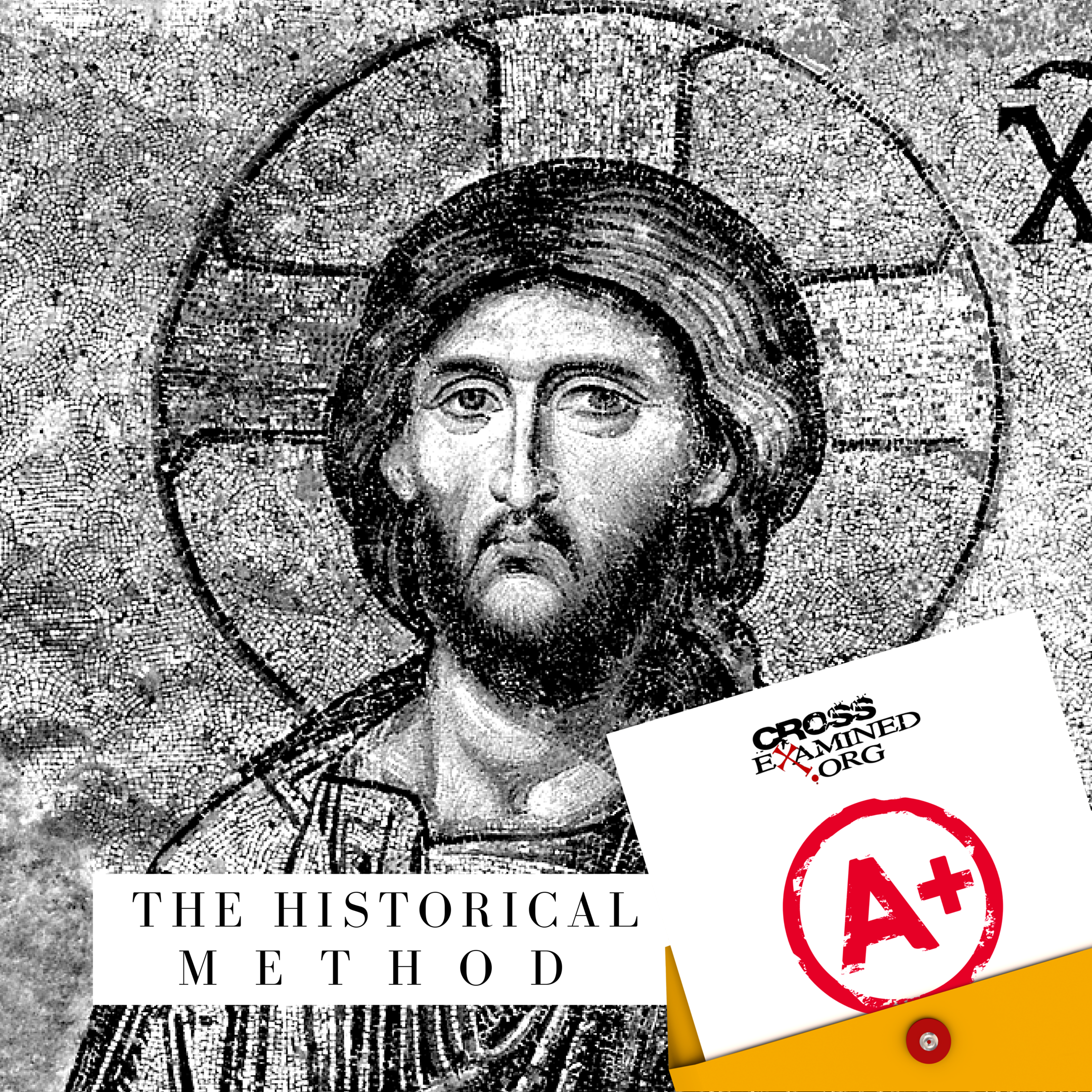
Jesus of Nazareth passes the historical test with a solid A+.


Visit Brian’s Website: Bellator Christi

Click here to see the source site of this article. 

© February 15, 2016. Brian Chilton.


Bibliography

Licona, Michael R. The Resurrection of Jesus: A New Historiographical Approach. Downers Grove; Nottingham, UK: IVP Academic; Apollos, 2010.

McGullagh, C. B. Justifying Historical Descriptions. New York: Cambridge University Press, 1984.


[1] Michael R. Licona, The Resurrection of Jesus: A New Historiographical Approach (Downers Grove; Nottingham, UK: IVP Academic; Apollos, 2010), 108.

[2] Ibid., 109.

[3] Ibid., 110.

[4] Ibid., 114.

[5] Ibid., 610.

[6] See Licona, 114.

[7] C. B. McCullagh, Justifying Historical Descriptions (New York: Cambridge University Press, 1984), 52.

By Natasha Crain

The other day I was reflecting on how much time I spent in Sunday school and youth groups growing up…and how little I understood about the Christian faith by the time I left home. For some reason, I decided to calculate roughly how much time that actually was.

I scratched out the following on a piece of paper:

  • Kindergarten through 12th grade = 13 years (I went to church from the time I was a baby, but I just wanted to include the core learning years in my calculation)
  • 52 Sundays per year
  • 90% attendance rate, to allow for illnesses or being out of town

13 years of Sunday school x 52 Sundays per year x .90 attendance rate = 608 hours

608 HOURS.

And that’s not even counting the corresponding worship services…that’s just the Christian education time!

I don’t know about you, but that number made my jaw drop.

I spent more than 600 hours in church growing up, but by the time I left home, here’s all I really understood about Christianity:

People go to heaven or hell depending on whether or not they believe in Jesus. Once you accept Jesus, you are saved. Christians need to be as good as possible and not sin just to be forgiven. It’s important to tell others about Jesus so they can be saved too.

The result is that I lived the next 12 years with an incredibly blah, shallow faith. I didn’t actually lose my faith—as do more than two-thirds of other kids who grow up going to church—but it was only hanging there by a thread.

Where did those 600+ hours of Christian education go? How can it be that so many kids spend this kind of time in church and don’t leave home with much more understanding of Christianity than could be taught in a week of church camp?

I think I know the answer.


The Problem of Unconnected Puzzle Pieces

This is a problem of unconnected puzzle pieces.

Over the years that a child attends Sunday school, teachers vary, curricula vary, and churches vary (as families move). Kids are handed various pieces of Christianity during that time, which they collect and store internally. But unless there is a consistent, focused, goal-oriented spiritual trainer in their life—a parent—those pieces will almost certainly lie around unconnected.

Here’s why.


1. Having a bunch of puzzle pieces doesn’t necessarily mean you know what the completed puzzle is supposed to look like.

Imagine that someone handed you all the pieces to complete a 5000-piece puzzle but didn’t give you the box top picture to see how they all fit together. You’d be able to connect a few pieces here and there, but you’d face a lot of difficulty because you wouldn’t know what picture you’re working toward.

Kids collect “puzzle pieces” of Christianity over the years in Sunday school, usually in the form of individual Bible stories. A piece might be the story of Moses at the burning bush, Joseph with his multi-colored coat, or any one of Jesus’ miracles. Most kids who have spent hundreds of hours at church can describe these individual puzzle pieces quite well.

That’s not the problem.

The problem is that they don’t know how those pieces fit together into a meaningful, complete picture of salvation history. In other words, why on Earth should they care to learn that God spoke to Moses in a burning bush? Could anything seem more disconnected from a kid’s reality in the 21st century? After my 600+ hours in Sunday school, I certainly couldn’t have explained the connection between this event and the Exodus, why the Exodus mattered, what that had to with Jesus, and why that’s relevant to my faith today.

It was just an isolated piece of the puzzle of Christianity.

And isolated pieces do not join themselves together to make a beautiful picture.

As parents, we can’t expect that the pieces our kids pick up at church will fall into obvious places, even after 600+ hours. It is our responsibility, and our responsibility only, to be the intentional hand that guides these pieces into place on a bigger picture over time.


2. Having a bunch of puzzle pieces doesn’t necessarily mean those pieces will create a picture with meaningful complexity.

When kids first start doing puzzles, those puzzles usually have just 12 giant pieces. They make a picture, but a very simple one–nothing like the artistic complexity of one with 1000 pieces or more.

In Sunday school, kids tend to be continually handed the same pieces over and over: individual Bible stories, help with building Godly character, and some basic life lessons.

If this is effectively the extent of a child’s spiritual training, skeptics will eventually point out that their faith is equivalent in complexity to a toddler’s 12-piece puzzle.  Sunday school tends to be focused on the basics, but kids need so much more than basics today given the challenges they are sure to encounter.

As parents, we are responsible for helping our kids develop a faith with a meaningful level of complexity. The 40 questions in my book are critical for kids to understand today, yet very few of those questions would even be touched on in a Sunday school class. The level of spiritual depth kids need to stand strong in a secular world simply won’t come from the typical Sunday school curriculum.


3. Having a bunch of puzzle pieces doesn’t necessarily mean you’ll know what to dowith the puzzle even if you finish it.

When my kids finish puzzles, they want to leave them out for a while to display their work. Their puzzles linger in the corner of the room until I can’t stand it anymore and tell them they’ve enjoyed the puzzles “long enough.” We don’t know what else to do with them other than put them away.

Similarly, when I left home with 600+ hours of church tucked safely under my belt, I truly didn’t know what to do with my faith, other than continue to wear the Christian label and bide my time as a good person until I was zapped up to heaven someday. Those hundreds of hours hadn’t taught me what it means to actually see all of life differently than someone who didn’t believe in Jesus; I had no idea what it meant to have a Christianworldview.

As parents, we are responsible for placing the picture into a real-world context for our kids. 600+ hours of Sunday school may never directly answer questions like, “How does the fact we are created in the image of God impact our view of the sanctity of life?” “Why is it sometimes the most loving action to tell people truth they don’t want to hear?” or “How can we make career decisions that glorify God?” Parents must be proactive in helping kids know what to do with their puzzle of faith. Otherwise, it will likely be pushed to the corner of their life, where it will eventually be dismantled and put away for good.


Don’t leave your kids “puzzled” by outsourcing their faith to church. Whether they spend 600 or 6,000 hours in Sunday school, there’s simply no replacement for you.

Visit Natasha’s Website: Christian Mom Thoughts


By Brian Chilton

Last week, we discussed the eyewitness testimony for Jesus by demonstrating the validity of the Gospel records. Such an endeavor was important to establish particular witnesses found within the Gospel accounts. We have seen that one holds good reasons for accepting that the apostle Matthew had, at least in part, a hand in the writing of the First Gospel; that John Mark wrote down the information found in the Second Gospel; that the physician and co-hort of Paul—Luke—wrote the third Gospel; and that the apostle John wrote the Fourth Gospel. But, how does this influence the eyewitness testimony that one holds for Jesus of Nazareth?

Peter1

The Testimony of Peter

As noted last week, Irenaeus notes that “Matthew also issued a written Gospel among the Hebrews in their own dialect, while Peter and Paul were preaching at Rome, and laying the foundations of the Church. After their departure, Mark, the disciple and interpreter of Peter, did also hand down to us in writing what had been preached by Peter.”[1] Thus, the church unanimously accepted that John Mark recorded the testimony of one Simon Peter. The Gospel of Mark does focus quite a bit on the life of Simon Peter. Of the information in Matthew’s Gospel believed to have been taken from Mark, the majority of the shared material deals with the life of Simon Peter. Thus, the believer has essentially the eyewitness testimony from one of the inner circle disciples—Simon Peter.

 john-the-apostle-the-bible

The Testimony of John

Last week, we noted that despite the skepticism of some modern scholars, the majority of internal and external evidence for the Fourth Gospel demonstrate that the apostle John wrote the text. It has always amazed me how one misses John’s imprint in the Fourth Gospel. In John 21:1-2, the writer lists Jesus’ appearance to seven disciples “Simon Peter, Thomas (called the Twin), Nathanael of Cana in Galilee, the sons of Zebedee, and two others of his disciples were together” (John 21:1-2).[2] It is interesting that John the son of Zebedee is never explicitly listed, but rather this “disciple who Jesus loved” (John 21:7). It was Peter and this mysterious disciple who traveled to the tomb of Jesus. Who else would one imagine accompanying Peter to the tomb other than John the apostle? In fact, John the apostle is linked to being the caretaker of Jesus’ mother after Jesus’ death by the early church fathers.

Among the writings of the early church fathers, there is a letter written by Ignatius to John the apostle. These writings are normally attributed to the late first-century. Nevertheless, Ignatius writes, There are also many of our women here, who are desirous to see Mary [the mother] of Jesus, and wish day by day to run off from us to you, that they may meet with her, and touch those breasts of hers which nourished the Lord Jesus, and may inquire of her respecting some rather secret matters.”[3] Even if the letter is spurious, it demonstrates the early acceptance of the idea that John the apostle assumed the role of caretaker of Mary, the mother of Jesus. This mysterious disciple whom Jesus loved is also linked with being the caretaker of Mary, the mother of Jesus in the Fourth Gospel (John 19:26-27). Then, the Gospel states as a postscript, “This is the disciple who is bearing witness about these things, and who has written these things, and we know his testimony is true” (John 21:24). What this tells us is that we have another witness by an inner circle disciple. Even if John was written by a disciple of the apostle, we would still have eyewitness testimony about Jesus since the apostolic witness would have been recorded.

MatthewLevi

The Testimony of Matthew

As we noted last week, good reasons exist to hold the apostle Matthew as the author of at least part of the First Gospel. It seems quite odd that the early church would choose Matthew, a tax-collector, as the author of the First Gospel if it were in fact not based upon truth. I could provide further reasons for holding Matthean authorship. But suffice it to say, that if one accepts the apostle Matthew as the writer of the First Gospel, then one has another apostolic eyewitness for Jesus of Nazareth.

Early-Church

The Testimony of the Early Church

We have already noted the existence of pre-New Testament material in the letters of Paul and, some would say, in the Gospels. This is particularly the case in Luke’s Gospel where Luke notes that he used the testimony of those “who from the beginning were eyewitnesses and ministers of the word [who] have delivered them to us” (Luke 1:2). Thus, in Luke’s Gospel, one will find a panoply of eyewitness testimonies from various individuals used by Luke to construct his Gospel account.

Mary-Mother-of-Jesus-Christ

The Testimony of Mary the Mother of Jesus

The first few chapters of Luke’s Gospel relays information pertaining to the birth of Jesus and the experiences that Mary, the mother of Jesus had before Jesus’ birth. Robert Stein states that It is clear from the first chapter of Matthew as well as the traditional nature of the material in Luke 1–2 that Luke did not create all this material.”[4] Luke records the Magnificat (Mary’s Song of Praise) in Luke 1:46-55. In addition, the Evangelist records particularly intimate details about Mary such as the time when Mary “treasured up all these things, pondering them in her heart” (Luke 2:19). Since this material is not original to Luke and since pagan myths do not account for the inclusion,[5] it seems to me that the most likely explanation is that Luke received the eyewitness testimony of Mary, the mother of Jesus for the beginning of his Gospel. Thus, I would argue that one has the eyewitness testimony of Mary in Luke’s Gospel, which further adds to the testimony found within the Gospel narratives.

 Conclusion

Undoubtedly, there are many more witnesses than those presented in this article. Nevertheless, one may still remain skeptical. It is quite apparent that not everyone will accept all of my conclusions in this article. But let it be said that even if one does not accept the evidence listed in this section of our presentation, one still must accept the early eyewitness testimony found in the pre-New Testament creeds and formulations. Therefore when coupled with the Gospel accounts, the eyewitness testimony for Jesus of Nazareth is quite good. Jesus of Nazareth passes the eyewitness testimony examination of the historical method.

Our investigation is not quite yet complete. Next week, we will examine two other areas of historical research offered by New Testament scholar Michael Licona. Thus far, Jesus of Nazareth has withstood the scrutiny of the historical method. Will he continue to remain standing after these final two areas of research? Check back next week to find out.


© February 8, 2016. Brian Chilton.

Visit Brian’s Website: Bellator Christi

Click here to see the source site of this article


Bibliography

 Ignatius of Antioch. “The Epistle of Ignatius to St. John the Apostle.” In The Apostolic Fathers with Justin Martyr and Irenaeus. The Ante-Nicene Fathers. Edited by Alexander Roberts, James Donaldson, and A. Cleveland Coxe. Buffalo, NY: Christian Literature Company, 1885.

Irenaeus of Lyons. “Irenæus against Heresies.” In The Apostolic Fathers with Justin Martyr and Irenaeus. The Ante-Nicene Fathers. Volume 1. Edited by Alexander Roberts, James Donaldson, and A. Cleveland Coxe. Buffalo, NY: Christian Literature Company, 1885.

Stein, Robert H. Luke. The New American Commentary. Volume 24. Nashville: Broadman & Holman Publishers, 1992.


 Notes

[1] Irenaeus of Lyons, “Irenæus against Heresies,” in The Apostolic Fathers with Justin Martyr and Irenaeus, ed. Alexander Roberts, James Donaldson, and A. Cleveland Coxe, vol. 1, The Ante-Nicene Fathers (Buffalo, NY: Christian Literature Company, 1885), 414.

[2] Unless otherwise noted, all Scripture comes from the English Standard Version (Wheaton: Crossway, 2001).

[3] Ignatius of Antioch, “The Epistle of Ignatius to St. John the Apostle,” in The Apostolic Fathers with Justin Martyr and Irenaeus, ed. Alexander Roberts, James Donaldson, and A. Cleveland Coxe, vol. 1, The Ante-Nicene Fathers (Buffalo, NY: Christian Literature Company, 1885), 124.

[4] Robert H. Stein, Luke, vol. 24, The New American Commentary (Nashville: Broadman & Holman Publishers, 1992), 81.

[5] See Stein, Luke, NAC, 81.

By Brian Chilton

As we have engaged in our evaluation of Jesus according to the historical method, my previous articles have demonstrated that the historical Jesus passes the historical method with flying colors. However, we must continue our quest in asking, “Do we have eyewitness testimony concerning Jesus of Nazareth?” That is, do we have the accounts of Jesus from those who personally knew him? If someone is investigating a person or an event of history, the investigator will want testimony from those who actually knew the person, or witnessed the event.

Admittedly, this area of study pertaining to the historical Jesus is among the most controversial. Many prominent New Testament scholars hold that the accounts that we have of Jesus come from second-hand sources, which would eliminate any eyewitness account that one possesses of the historical Jesus of Nazareth.

But hold on! Not so fast! There are just as many scholars who hold that the testimonies in the New Testament come from eyewitnesses. This article will examine the reasons for holding that the Evangelists record eyewitness testimony. The second installment will look into the weight of this eyewitness testimony as it tells us who provides the witness. For this investigation, we will examine the Four Gospels. Since at least 7 letters of Paul are undisputed and since I have previously discussed the pre-NT traditions found in Paul’s letters, we will not focus on proving the eyewitness nature for his material.[1]

Internal Evidence of the Gospels

Within the Gospels, one can find reasons to hold that the testimony comes from eyewitness testimony.

Internal Testimony of Matthew

Matthew has traditionally been ascribed to the disciple Matthew who was a former tax-collector. It is odd that the church would ascribe the Gospel to one who was a tax-collector if it was not true. Tax-collectors were hated in ancient times. Internally, one finds reasons for holding Matthean authorship. Blomberg writes,

This author, at least of an original draft of this book (or one of its major sources), seems quite probably to have been the converted toll collector, also named Levi, who became one of Jesus’ twelve apostles (cf. 10:3; 9:9–13; Mark 2:14–17).”[2] In addition, Cabal adds that “The Gospel also contains clear evidence that the author possessed a strong command of both Aramaic and Greek, something that would be a prerequisite for most tax collectors. Furthermore, the author of Matthew used the more precise term nomisma for the coin used in the dispute over tribute (Mt 22:19) than Mark’s and Luke’s denarion (Mk 12:15; Lk 20:24).”[3]

This would have been something that a tax-collector would have known.

Internal Evidence of Mark

The church unanimously agreed that John Mark had recorded the eyewitness testimony of Simon Peter in the Second Gospel. The internal nature of Mark’s Gospel seems to indicate that John Mark was indeed the author. Grassmick notes that

“Several features also point to the author’s connection with Peter: (a) the vividness and unusual detail of the narratives, that suggest that they were derived from the reminiscences of an “inner-circle” apostolic eyewitness such as Peter (cf 1:16–20, 29–31, 35–38; 5:21–24, 35–43; 6:39, 53–54; 9:14–15; 10:32, 46; 14:32–42); (b) the author’s use of Peter’s words and deeds (cf. 8:29, 32–33; 9:5–6; 10:28–30; 14:29–31, 66–72); (c) the inclusion of the words “and Peter” in 16:7, which are unique to this Gospel; and (d) the striking similarity between the broad outline of this Gospel and Peter’s sermon in Caesarea (cf. Acts 10:34–43).”[4]

The tradition that Mark records Simon Peter’s testimony is affirmed by the internal nature of the Gospel as well as the external witness which will be given later in the article.

 Internal Evidence of Luke

The physician Luke is normally ascribed to have been the author of the Third Gospel. Internally, one finds evidence for this association. While Luke was not an eyewitness, Luke acknowledges his use of eyewitness material by saying, “just as those who from the beginning were eyewitnesses and ministers of the word have delivered them to us” (Luke 1:2).[5] Thus, Luke never claims to be an eyewitness but uses eyewitness material.

Internal Evidence of John

The Fourth Gospel is normally ascribed to the apostle John. John is nearly universally agreed to have been the last Gospel written. While some may disagree, the episodes of the “disciple whom Jesus loved” (John 13:23; 19:26; 20:2; 21:7, 20) within the Gospel points to an inner circle disciple. Peter and James are mentioned in such episodes, but never John. The Gospel ends by saying, “This is the disciple who is bearing witness about these things, and who has written these things, and we know his testimony is true” (John 21:24). In addition, the “disciple whom Jesus loved” is assigned by Jesus to care for Jesus’ mother Mary (John 19:27). The letters of early church leader Ignatius confirms this report. Thus, the internal evidence is clear. John the apostle wrote the Fourth Gospel either by his own hand or dictating the information to a student.

Now that we have considered the eyewitness testimony of the Gospels by the internal evidence, let us consider the eyewitness testimony of the Gospels given by external testimony.

 External Evidence of the Gospels

The early church was unanimous in their acceptance of the four canonical Gospels. Early on, church father Papias provides a glimpse at how the Gospels were written.

Testimony of Papias of Hierapolis (c. AD 95-130)

Papias may not have personally known John the apostle, although he may have heard John speak.[6] Nevertheless, Papias knew Polycarp and others who knew John well. Papias recorded the following pertaining to the writings of the Gospel of Mark and the Gospel of Matthew that he received from the presbyter (presumably John, but perhaps Polycarp):

“And the presbyter said this. Mark having become the interpreter of Peter, wrote down accurately whatsoever he remembered. It was not, however, in exact order that he related the sayings or deeds of Christ. For he neither heard the Lord nor accompanied Him. But afterwards, as I said, he accompanied Peter, who accommodated his instructions to the necessities [of his hearers], but with no intention of giving a regular narrative of the Lord’s sayings. Wherefore Mark made no mistake in thus writing some things as he remembered them. For of one thing he took especial care, not to omit anything he had heard, and not to put anything fictitious into the statements…Matthew put together the oracles [of the Lord] in the Hebrew language, and each one interpreted them as best he could.”[7]

It must be remembered that we do not possess the entirety of Papias’ writings. However, we are benefited by the documentation of those who knew Papias’ writings well.

Testimony of Irenaeus of Lyons (c. AD 175)

Irenaeus of Lyons probably knew the writings of Papias well. Irenaeus describes the writing of all four Gospels by documenting the following:

“Matthew also issued a written Gospel among the Hebrews in their own dialect, while Peter and Paul were preaching at Rome, and laying the foundations of the Church. After their departure, Mark, the disciple and interpreter of Peter, did also hand down to us in writing what had been preached by Peter. Luke also, the companion of Paul, recorded in a book the Gospel preached by him. Afterwards, John, the disciple of the Lord, who also had leaned upon His breast, did himself publish a Gospel during his residence at Ephesus in Asia.”[8]

 These testimonies would find further corroboration by church historian Eusebius.

Testimony of Eusebius of Caesaria (c. AD 325)

Eusebius of Caesaria was a church historian writing around AD 325. He writes the following pertaining to the writing of the Gospels:

“But Luke, who was of Antiochian parentage and a physician by profession, and who was especially intimate with Paul and well acquainted with the rest of the apostles, has left us, in two inspired books, proofs of that spiritual healing art which he learned from them.”[9]

“For Matthew, who had at first preached to the Hebrews, when he was about to go to other peoples, committed his Gospel to writing in his native tongue, and thus compensated those whom he was obliged to leave for the loss of his presence.

And when Mark and Luke had already published their Gospels, they say that John, who had employed all his time in proclaiming the Gospel orally, finally proceeded to write for the following reason. The three Gospels already mentioned having come into the hands of all and into his own too, they say that he accepted them and bore witness to their truthfulness; but that there was lacking in them an account of the deeds done by Christ at the beginning of his ministry.”[10]

 Evidence from Dating

We mentioned in a previous article that good reasons exist for holding that the three canonical Gospels were all written before AD 64. Primarily, it was argued that Luke does not record the death of Paul and Peter, quite odd if Acts was written after Peter and Paul’s execution. Some scholars hold that Peter and Paul died around AD 64. If this is true, then Acts must have been written before AD 64, forcing the Gospel of Luke and the borrowed material from the Gospels of Matthew and Mark prior to the 60s. An early dating bodes well for claiming that the Gospels hold eyewitness testimony because the time-frame puts the writings well within the time of the eyewitnesses.

Conclusion

While there are many who deny the authenticity of eyewitness testimony in the four canonical Gospels, I feel that the evidence strongly supports the assertion that the Gospels are based upon eyewitness testimony. If the findings of this article are true, then Matthew and John provide first hand eyewitness testimony, whereas Mark and Luke provide documentation of eyewitness testimonials. In the next section of this article which will be published next week, we will look at the number of eyewitnesses we have in the New Testament alone. The historical Jesus continues to pass the historical methodological test.

Bibliography

Blomberg, Craig. Matthew. The New American Commentary, Volume 22. Nashville: Broadman & Holman Publishers, 1992.

Cabal, Ted, et al. The Apologetics Study Bible: Real Questions, Straight Answers, Stronger Faith.Nashville: Holman Bible Publishers, 2007.

Eusebius of Caesaria. “The Church History of Eusebius.” In Eusebius: Church History, Life of Constantine the Great, and Oration in Praise of Constantine. A Select Library of the Nicene and Post-Nicene Fathers of the Christian Church. Volume 1. Second Series. Edited by Philip Schaff and Henry Wace. Translated by Arthur Cushman McGiffert. New York: Christian Literature Company, 1890.

Grassmick, John D. “Mark.” In The Bible Knowledge Commentary: An Exposition of the Scriptures. Edited by J. F. Walvoord and R. B. Zuck. Wheaton: Victor Books, 1985.

Irenaeus of Lyons. “Irenæus against Heresies.” In The Apostolic Fathers with Justin Martyr and Irenaeus. The Ante-Nicene Fathers. Volume 1. Edited by Alexander Roberts, James Donaldson, and A. Cleveland Coxe. Buffalo, NY: Christian Literature Company, 1885.

Papias. “Fragments of Papias.”In The Apostolic Fathers with Justin Martyr and Irenaeus. The Ante-Nicene Fathers. Volume 1. Edited by Alexander Roberts, James Donaldson, and A. Cleveland Coxe. Buffalo, NY: Christian Literature Company, 1885.

Notes

[1] In addition, we are looking for material for those who knew Jesus during his earthly ministry.

[2] Craig Blomberg, Matthew, vol. 22, The New American Commentary (Nashville: Broadman & Holman Publishers, 1992), 44.

[3] Ted Cabal et al., The Apologetics Study Bible: Real Questions, Straight Answers, Stronger Faith(Nashville, TN: Holman Bible Publishers, 2007), 1402.

[4] John D. Grassmick, “Mark,” in The Bible Knowledge Commentary: An Exposition of the Scriptures, ed. J. F. Walvoord and R. B. Zuck, vol. 2 (Wheaton, IL: Victor Books, 1985), 95–96.

[5] Unless otherwise noted, all Scripture comes from the English Standard Version (Wheaton: Crossway, 2001).

[6] This is an area of dispute. It depends on one’s understanding of Papias’ testimony.

[7] Papias, “Fragments of Papias,” in The Apostolic Fathers with Justin Martyr and Irenaeus, ed. Alexander Roberts, James Donaldson, and A. Cleveland Coxe, vol. 1, The Ante-Nicene Fathers (Buffalo, NY: Christian Literature Company, 1885), 154–155.

[8] Irenaeus of Lyons, “Irenæus against Heresies,” in The Apostolic Fathers with Justin Martyr and Irenaeus, ed. Alexander Roberts, James Donaldson, and A. Cleveland Coxe, vol. 1, The Ante-Nicene Fathers (Buffalo, NY: Christian Literature Company, 1885), 414.

[9] Eusebius of Caesaria, “The Church History of Eusebius,” in Eusebius: Church History, Life of Constantine the Great, and Oration in Praise of Constantine, ed. Philip Schaff and Henry Wace, trans. Arthur Cushman McGiffert, vol. 1, A Select Library of the Nicene and Post-Nicene Fathers of the Christian Church, Second Series (New York: Christian Literature Company, 1890), 136.

[10] Eusebius of Caesaria, “The Church History of Eusebius,” in Eusebius: Church History, Life of Constantine the Great, and Oration in Praise of Constantine, ed. Philip Schaff and Henry Wace, trans. Arthur Cushman McGiffert, vol. 1, A Select Library of the Nicene and Post-Nicene Fathers of the Christian Church, Second Series (New York: Christian Literature Company, 1890), 152–153.


Brian G. Chilton is the founder of BellatorChristi.com and is the host of The Bellator Christi Podcast. He received his Master of Divinity in Theology from Liberty University (with high distinction); his Bachelor of Science in Religious Studies and Philosophy from Gardner-Webb University (with honors); and received certification in Christian Apologetics from Biola University. Brian is currently enrolled in the Ph.D. program in Theology and Apologetics at Liberty University. Brian has been in the ministry for over 15 years and serves as a pastor in northwestern North Carolina.

Original Blog Source: http://bit.ly/2DSPk2A

By Timothy Fox

When you study to be an educator, you have to spend a certain number of hours as a student teacher, under the guidance of a veteran teacher. I remember my cooperating teacher telling me one of my strengths was that I took criticism well and was very open to it. I was shocked to hear this! I wanted to tell him he was crazy and that I hate criticism! But I was also well aware that he was the master, and I was the apprentice and that it was his responsibility to help me to be the best teacher I could be. So I needed his criticism. (And I received a lot of it!) Whenever he gave me feedback, positive or negative, it wasn’t intended to stroke my ego or hurt my feelings. It was so I can learn and improve, to keep doing the good and to change the bad.

Don’t judge me. Why Not? Because Jesus said so!

The same goes for many other things, such as sports. Athletes have coaches that train and guide. But what about normal, everyday life? That’s when we want people to leave us alone. Don’t tell me how to live. Don’t judge me.

That’s the defense mechanism of our generation: “Don’t judge me!” But did you ever ask “Why not?” You may get the response: “Jesus says so” (from a defensive Christian, anyway). And they’re probably referring to Matthew 7:1, which begins: “Do not judge.” But that’s only the first three words of a complete thought:

“Do not judge, or you too will be judged. For in the same way you judge others, you will be judged, and with the measure you use, it will be measured to you. Why do you look at the speck of sawdust in your brother’s eye and pay no attention to the plank in your own eye? How can you say to your brother, ‘Let me take the speck out of your eye,’ when all the time there is a plank in your own eye? You hypocrite, first take the plank out of your own eye, and then you will see clearly to remove the speck from your brother’s eye. Do not give dogs what is sacred; do not throw your pearls to pigs. If you do, they may trample them under their feet, and turn and tear you to pieces.” (Matthew 7:1-6 NIV)

Jesus’ point is not not to judge (note the double negative). It’s “Don’t be a hypocrite!” Verse 5 commands us to clean up our own junk, then to help clean up your friends’. He’s stating the obvious, that when you criticize people, they will turn around and criticize you back. So make sure your closet is clean first! And how do you know who the “dogs” and “pigs” are (v. 6)? Wouldn’t you have to judge them?

And then there is John 7:24: “Do not judge by appearances, but judge with right judgment.” Here Jesus is differentiating between proper and improper judgment. But he still commands to judge!

The reason for many of Paul’s letters is to correct some kind of nonsense going on in a church. In 1 Corinthians 5, he writes angrily that the church is not judging sin in their midst (and it’s quite the sin – go read it!). In verse 12, he rhetorically asks “Are you not to judge those inside [the church]?” And in the following verse, he plainly states to remove the “wicked person” from their midst. Here Paul is criticizing the church for not judging when they should have, even to the extent of excommunicating an unrepentant church member.

Maybe we just don’t like the word “judge.” It sounds so, well, judgmental. But there are plenty of similar words used throughout the Bible: discern, correct, rebuke, admonish, reprove, etc. Here are some examples:

Whoever loves discipline loves knowledge, but he who hates reproof is stupid (Proverbs 12:1).

Let the message of Christ dwell among you richly as you teach and admonish one another with all wisdom through psalms, hymns, and songs from the Spirit, singing to God with gratitude in your hearts (Colossians 3:16).

Preach the word; be prepared in season and out of season; correct, rebuke and encourage—with great patience and careful instruction (2 Timothy 4:2).

It’s clear that one of the reasons why we have a community of believers is so we can help each other grow spiritually. Paul teaches us in Ephesians 4:11-16 that God has provided leaders whose responsibility is “building up the body of Christ” so we can achieve “mature manhood,” no longer thinking and acting like children (or worse – teenagers!). Our ultimate goal is to become like Christ. And this can only happen through instruction and correction by those wiser than we are.

More often than not, the ones who cry “Don’t judge me!” the loudest are the ones who need it the most, whether it’s due to insecurity, pride, or flat-out rebellion. But let us not forget that Jesus was full of truth and grace. We desperately need both in our dealings with our brothers and sisters in Christ, when we give correction as well as when we receive it. It’s never pleasant to hear some hard (but loving) truth, but remember the first half of Proverbs 27:6: “Faithful are the wounds of a friend.” Do we like it? Of course not. But we need it. And more than that, the Bible commands it.

Make sure to check out this video about it.


Original Blog Source: http://bit.ly/2nza3BV

By Brian Chilton

This article picks up where the last article left off. We continue our glimpse at the early testimony for Jesus of Nazareth.

The Argument for the Early Dating of the Synoptic Gospels

The Gospels of Matthew, Mark, and Luke are all said to be the “Synoptic Gospels.” “Synoptic” means that they are seen through the same eye. These three Gospels tell the story of Jesus in a familiar fashion. Some have claimed that the Gospels all should have been written after AD 70 due to a prophecy given that relates to the destruction of the Temple (occurring in AD 70). However, many scholars are beginning to change their mindset concerning these dates.

Examining Jesus by the Historical Method (Part 5-Early Testimony: Early New Testament Texts)

J. Warner Wallace makes a compelling argument, an argument held by some New Testament scholars, that all three Synoptic Gospels must have been written prior to AD 63. Wallace argues that “The New Testament fails to describe the destruction of the Temple…The New Testament fails to describe the siege of Jerusalem [70 A.D.]…Luke said nothing about the deaths of Paul and Peter…Luke said nothing about the death of James [62 A.D.]…Luke’s Gospel predates the Book of Acts…Paul quoted Luke’s Gospel in his letter to Timothy.”[1] Therefore, since Acts is the sequel to the Gospel of Luke and does not mention the details that Wallace has noted, then it only stands to reason that Acts was written before AD 64 with Luke being written sometime prior to Acts. Since Luke uses Mark and Matthew, then it is feasible to claim that Mark and Matthew predate the writing of Luke. If Wallace is correct, then the Synoptic Gospels were all composed within 30 years of the crucifixion of Jesus of Nazareth. It would be comparable to currently writing about an event that transpired in 1986. With several eyewitnesses and with fond memories of the 80s, one could write a trustworthy account within that timeframe.

Even if one is not persuaded by Wallace’s argument, suffice it to say that there exist several early traditions in the Gospel texts that predate the New Testament. Even with the Gospel of John which is normally attributed to the late first-century, many scholars—including some liberal ones—hold that John reports traditions that fit well within the early the time of Christ. This includes the inclusion of a miracle by Jesus at one Pool of Bethesda. The Pool of Bethesda was destroyed prior to AD 70.[2]

Earliest New Testament Letters

Galatians

In addition to the previously listed material, one should note that many of the epistles listed in the New Testament canon are considered early. Consider the Paul’s letter to the Galatians. Gerald Peterman writes concerning Galatians that “Probably the letter should be dated to AD 49…Paul came to Christ probably around AD 35 and the events described in Gl 2:1-10 must have occurred before the letter was written. Therefore, the reference to ‘fourteen years’ (2:1) must be all-inclusive—that is, the ‘three years’ previously mentioned (1:18) plus 11 more. This yields AD 49 (35+14).”[3]

 James

The letter of James is another early manuscript. While some date the letter to the latter first-century, an idea based upon the skepticism that James, the half-brother of Jesus, would not pen a work; many Bible scholars hold that James not only was written by the authentic James, the half-brother of Jesus, but that the work was extremely early. Kurt A. Richardson writes that “If the epistle’s author is James the Lord’s brother, then it was written before a.d. 62, perhaps in the previous decade. James is the only likely candidate for authorship, as, indeed, Christian tradition has affirmed.[4] John F. Hart takes the date a step further. Hart holds that James was written extremely early since that the Epistle of James does not indicate any reference to the Jerusalem Council. Thus, Hart notes that “If the book was written before the Jerusalem Council (AD 49), the date of writing could be as early as AD 45-48 (most evangelicals). If the dispersion in 1:1 refers to the scattering of Jewish believers in Ac 8:1, dated at about AD 34, the book could have been written as early as AD 35-36. James is probably the first NT book written.”[5] If Hart is correct, then we have a reference to Jesus of Nazareth, that is “the Lord Jesus Christ” (James 1:1), as early as 2-5 years from the time that Jesus of Nazareth was crucified and resurrected!

 1 Thessalonians

1 Thessalonians is another work that provides early testimony to Jesus of Nazareth. 1 Thessalonians, like Galatians, Romans, and the Corinthian letters, is one of the letters universally attested to Paul. 1 Thessalonians, the book that provides the eschatological concept of the Parousia, was most likely written around AD 51, a mere 18-21 years from the crucifixion and resurrection of Jesus of Nazareth. Kevin D. Zuber denotes that “Paul probably arrived before Gallio began his tenure in AD 50. He probably wrote 1 Thessalonians in early AD 51 and 2 Thessalonians later that same year. Although these two letters are among the earliest of Paul’s ‘canonical correspondence’ (only Galatians is earlier), the themes and issues reflect a mature faith and a consistency of doctrine.”[6]

Conclusion

This article has only scratched the surface of early testimony that one finds for Jesus of Nazareth. No other person in all of antiquity holds the early reliable testimony that Jesus of Nazareth enjoys. Those who are skeptical of the Christian faith may not accept the claims made about Jesus of Nazareth. However, if one is to be honest with the evidence, then one must admit that not only was Jesus of Nazareth an authentic person of history, but also that he was crucified and was thought to have resurrected from the dead from the outset of the Christian movement. This evidence holds such power that it was used by God not only to bring me back to a strong Christian faith, but also led me back into the Gospel ministry.

Next week, we will examine whether there exists eyewitness testimony for Jesus of Nazareth. Thus far, Jesus of Nazareth has passed the historical test with flying colors. Will Jesus continue to pass the historical test when we investigate eyewitness testimony?

Bibliography

Albright, W. F. Recent Discoveries in Bible Lands. New York: Funk & Wagnalls Company, 1955.

Habermas, Gary. The Historical Jesus: Ancient Evidence for the Life of Christ. Joplin, MO: College Press, 1996.

Licona, Michael R. The Resurrection of Jesus: A New Historiographical Approach. Downers Grove; Nottingham, UK: IVP Academic; Apollos, 2010.

Richardson, Kurt A. James. The New American Commentary. Volume 36. Nashville: Broadman & Holman Publishers, 1997.

Rydelnik, Michael, and Michael Vanlaningham, eds. The Moody Bible Commentary. Chicago: Moody Publishers, 2014.

Wallace, J. Warner. Cold-case Christianity: A Homicide Detective Investigates the Claims of the Gospels. Colorado Springs: David C. Cook, 2013.

Endnotes 

[1] J. Warner Wallace, Cold-case Christianity: A Homicide Detective Investigates the Claims of the Gospels (Colorado Springs: David C. Cook, 2013), 161-163.

[2] In the 19th century, many scholars dismissed the Gospel of John as a late invention over this Pool of Bethesda. That is, until the Pool of Bethesda was excavated and discovered in the late 19th to early 20th century.

[3] Gerald Peterman, “Galatians,” in The Moody Bible Commentary, Michael Rydelnik and Michael Vanlaningham, eds (Chicago: Moody Publishers, 2014), 1827.

[4] Kurt A. Richardson, James, vol. 36, The New American Commentary (Nashville: Broadman & Holman Publishers, 1997), 39.

[5] John F. Hart, “James,” in The Moody Bible Commentary, Michael Rydelnik and Michael Vanlaningham, eds (Chicago: Moody Publishers, 2014), 1947.

[6] Kevin D. Zuber, “1 Thessalonians,” in The Moody Bible Commentary, Michael Rydelnik and Michael Vanlaningham, eds (Chicago: Moody Publishers, 2014), 1877.


Brian G. Chilton is the founder of BellatorChristi.com and is the host of The Bellator Christi Podcast. He received his Master of Divinity in Theology from Liberty University (with high distinction); his Bachelor of Science in Religious Studies and Philosophy from Gardner-Webb University (with honors); and received certification in Christian Apologetics from Biola University. Brian is currently enrolled in the Ph.D. program in Theology and Apologetics at Liberty University. Brian has been in the ministry for over 15 years and serves as a pastor in northwestern North Carolina.

Original Blog Source: http://bit.ly/2VwGJsl

By Brian Chilton 

When asked to identify the greatest commandment in all of the Law, Jesus answered the inquiry by saying, “Love the Lord your God with all your heart, with all your soul, and with all your mind. This is the greatest and most important command” (Matthew 22:37-38).[1] It seems that one aspect of this commandment has eluded the modern church. Yes, the church notes the great need to love the Lord with the heart, that is the will and emotions. The modern American church also focuses on the love that one must hold for God with one’s soul, that is, one’s conscious being (life). However, the third aspect of the great commandment seems to have escaped the modern American church. The Christian is also commanded to love the Lord with his or her mind. Extreme fideism (believing that the Christian life is only about faith without reason) has led the church into a state known as anti-intellectualism. Anti-intellectualism is defined as the state of “opposing or [being] hostile to intellectuals or to an intellectual view or approach” (Merriam-Webster Dictionary). In this case, the intellectual approach is the intellectual approach to the Christian faith. Anti-intellectualism not only hinders one from keeping the great commandment, but such an attitude is also damaging to the church. This article will present eight ways that anti-intellectualism harms the church.

8 Ways that Anti-Intellectualism is Harming the Church

1. Anti-intellectualism harms the church theologically.

By theologically, I simply indicate how the church views God. Dr. Daniel Mitchell, one of my theology professors from Liberty University, once said, “The more you study God, the bigger God becomes.” His statement proved true. So often, anti-intellectuals limit their scope of God. Because anti-intellectuals fail to examine, research, and contemplate, they miss out on the vast nature of God. While the Christian may understand the basic fundamentals of God’s omniscience and omnipotence, one who allows oneself to contemplate and study these attributes of God will be left in great awe of the greatness of God Almighty. We love God with our minds when we study God. “Search for the LORD and for His strength; seek His face always” (1 Chronicles 16:11).

 2. Anti-intellectualism harms the church doctrinally.

By doctrinally, I simply indicate how the church views God’s interactions with humanity. How does the church view salvation? How does the church view humanity? The modern church has allowed pop culture to dictate these issues according to social fads and the like. The anti-intellectual will relish in having loads of moving music, will jump with excitement with the latest form of entertainment, but will be left with no basis for examining whether such songs and activities fit within the parameters of orthodoxy. So often, modern Christians leave their churches feeling great excitement, yet are left without any solid foundation for knowing what the church stands for and why it stands for certain things. Issues of salvation have become universalized, issues of eternity have been compromised, and issues concerning humanity have been radicalized because many modern Christians fail to love the Lord with their minds.

 3. Anti-intellectualism harms the church apologetically.

Those who know my testimony knows that I left the ministry for seven years and nearly became an agnostic. Why? My faith was shaken by the Jesus Seminar. When I asked Christian leaders why it was that I could trust the Bible, they responded by saying such things as “Because it’s the Bible;” “the Bible says we should believe the Bible;” and “you shouldn’t ask such things!” It wasn’t until I came across the works of Christian apologists like Josh McDowell, Lee Strobel, William Lane Craig, Gary Habermas, and many others that I began to realize that there were good reasons for why I should believe the Bible. Many of those evidences came from outside of the Bible (e.g., archaeology, manuscript evidence, and etcetera). Had I been given this information earlier, I would not have left the ministry. Anti-intellectualism is killing the church today because we are left with no defense from the attacks arising from secularists and the like. We must remember that we are instructed to “Always be ready to give a defense to anyone who asks you for a reason for the hope that is in you” (1 Peter 3:15). To do otherwise is to neglect the love that we have for God with the mind.

4. Anti-intellectualism harms the church emotionally.

The fourth statement may sound counter-intuitive. Often when a case is made for intellectual Christianity, emotionalism is invalidated. However, emotions are important for human beings. Yet, emotions can lead us astray. Anti-intellectualism, such as is found in movements like the prosperity gospel and the like, often lead to far more emotional damage than intellectual Christianity. A proper understanding of theodicy, suffering, and the problem of evil will help the believer in times of great distress. Proponents of anti-intellectualism are far less equipped to deal with times of tragedy than those who have a solid understanding of such topics. In fact, I have personally witnessed pastors who advocated anti-intellectualism fall into times of far greater distress and doubt when they are met with times of suffering and stress. Their doubt and stress is at a far greater degree than those who are grounded with an intellectual faith. An intellectual faith grounds the emotions and demonstrates how a person can love God with the mind.

5. Anti-intellectualism harms the church philosophically.

Philosophy and theology are intertwined to some degree. Theology is a branch of philosophy. Philosophy, simply put, is “a discipline comprising as its core logic, aesthetics, ethics, metaphysics, and epistemology” (Merriam-Webster), or the “pursuit of wisdom” (Merriam-Webster). How do we see the world? How do we see society? What is the meaning of life? These are questions that everyone must answer. Different people come to differing conclusions. In a culture where every opinion is held to equal value, it is important that the believer understands such concepts as truth, logic, and value. Otherwise, the believer will be led by everything thrown their direction or, in contrast, oppose everything that may have some value. Some oppose philosophy because of Paul’s statement to the Colossians, saying, “Be careful that no one takes you captive through philosophy and empty deceit based on human tradition” (Colossians 2:8). A closer examination of Paul’s statement will reveal that Paul is not dismissing philosophy, but rather Paul is dismissing bad philosophy. In addition, Paul’s statement on philosophy is a philosophical statement. Thus, it would seem that quite the opposite is being promoted by Paul. One should not avoid philosophy. One should avoid bad philosophy. How does one know bad philosophy? They know bad philosophy because they know good philosophy. Possessing good philosophy is another way that the church loves God with the mind.

6. Anti-intellectualism harms the church socially.

It seems that many are led more by politics rather than their religious convictions. The opposite should surely be the case. When one allows political parties and nationalistic fervor to dictate their beliefs, one may well be found favorable among the populace while being very unpopular with God. Anti-intellectual Christians will find themselves more easily swayed by the great influence of politics. The intellectual Christian, one grounded in the fundamentals of the Christian faith, will understand the great value of all lives despite race, nationality, or gender. Intellectual faith remembers and realizes the truthfulness of Paul’s statement in that “There is no Jew or Greek, slave or free, male or female; for you are all one in Christ Jesus” (Galatians 3:28). When intellectual faith realizes and actualizes Paul’s statement, then one will truly love God with the mind…and will be moved to love their neighbors as themselves.

7. Anti-intellectualism harms the church evangelistically.

While in prison, Paul wrote that “what has happened to me has actually resulted in the advance of the gospel… I am appointed for the defense of the gospel” (Philippians 1:12, 16). How would Paul have been able to know how to defend the gospel if he did not know why one should believe the gospel? Many anti-intellectuals hold a limited, if not unbiblical view of faith. Anti-intellectuals often consider faith to be the acceptance for which no evidence exists. Or, some may view faith as simply an emotional crutch. Faith is not demonstrated in such a way in the Bible. For instance, consider Jesus’ use of miracles. Jesus did not ask for blind faith. Jesus would back up his claims with a demonstration of power. Jesus said, “I am the light of the world” (John 9:5) and then provided the light of physical sight to the man at the pool of Siloam. At the tomb of Lazarus, Jesus told Mary and Martha (the sisters of Lazarus) as well as everyone else “I am the resurrection and the life. The one who believes in Me, even if he dies, will live” (John 11:25). Bold words to say at a man’s tomb, don’t you think? Yet, Jesus demonstrated that he was the resurrection and the life by raising Lazarus back to life. Jesus backed up his claims. It behooves the modern Christian to know the evidences for the faith. This will provide great strength to one’s evangelistic efforts. Know what you believe, know why you believe what you do, and know the One in whom you are believing, so that you can tell others about the One you serve. Doing such demonstrates a love for God with the mind.

8. Anti-intellectualism harms the church spiritually.

Finally, anti-intellectualism harms the church spiritually. How one might ask? Anti-intellectualism harms the church spiritually in many ways. I will list only two for the purpose of this article. 1) It harms one’s view of salvation. Some have added to or taken away from the gospel message because of an unexamined view of salvation from the Bible. False professions have been made without understanding the submission required for salvation, that is to say, one’s submission to Christ as the Lord of one’s life. 2) It harms one’s spiritual walk. Sometimes anti-intellectuals will allow things into their lives, which should not be present. When confronted, the person will say, “I have faith, and that is all that matters.” Such a view stems from a bad interpretation of faith. If a person had studied their Bibles, researched passages, and held a true love of learning about God, then one would be willing to submit themselves to God fully and completely. Perhaps some of the problems of integrity in the modern church stems from the laziness which is so boldly exhibited in the anti-intellectual movement. Such can be protected at least to some degree by loving God with the mind.

Conclusion

Socrates is noted as saying that “an unexamined life is not worth living.” Socrates is right. However, one could stretch the philosopher’s statement in saying that “an unexamined faith is not worth having.” Biblical faith is enmeshed with reason. We should know why we believe in God and why we believe in Christ. If one simply accepts Christ because their family or friends did, is their faith truly legitimate? The Christian should not be afraid of loving God with the mind. One need not leave their brain at the door of faith. In fact, reason and faith are complementary because we serve a real God who provides a real trust. Anti-intellectualism is harmful for the church. It is a trend that must be reversed. Charles Bugg puts it best in saying,

“There is no excuse for preaching that requires people to leave their head outside the church. In the Great Commandment, Jesus taught His disciples to love God with all of their mind, heart, and soul. Some preachers make their living by attacking education or by riding the horse of anti-intellectualism. The result is a kind of demagoguery that creates unwarranted suspicion toward education. Ministers need to use the minds God has given them and to love God with all of that mind. Likewise, they need to call their listeners to love God with all of their minds” (Bugg 1992, 125-126).

Sources Cited:

Bugg, Charles B. Preaching from the Inside Out. Nashville: Broadman Press, 1992.

Mish, Frederick C. Merriam-Webster’s Collegiate Dictionary. Springfield, MA: Merriam-Webster, Inc., 2003.

© August 24, 2015. Brian Chilton.

[1] Unless otherwise noted, all Scripture quoted in this article comes from the Holman Christian Standard Bible (Nashville: Holman Bible Publishers, 2009).


Brian G. Chilton is the founder of BellatorChristi.com and is the host of The Bellator Christi Podcast. He received his Master of Divinity in Theology from Liberty University (with high distinction); his Bachelor of Science in Religious Studies and Philosophy from Gardner-Webb University (with honors); and received certification in Christian Apologetics from Biola University. Brian is currently enrolled in the Ph.D. program in Theology and Apologetics at Liberty University. Brian has been in the ministry for over 15 years and serves as a pastor in northwestern North Carolina.

Original Blog Source: http://bit.ly/319QXjw

By Timothy Fox

It’s the zombie argument. The objection that won’t stay down: the Euthyphro dilemma. Skeptics just can’t accept the fact that Euthyphro has been dead for centuries and keep dragging him out of his grave.

In case you don’t know who Euthyphro is, let me introduce you to him. Euthyphro is a character from one of Plato’s writings who has a discussion with Socrates about the gods and piety. His dilemma has been repurposed as an argument against the goodness of God and can be stated as follows:

Is something good because God commands it or does God command something because it is good? In the first option, God’s commands seem arbitrary, that he could have easily commanded murder and rape to be good and love and kindness to be evil. In the second option, God merely reports to us the commands of some other moral standard that even he is subject to. So we’re caught in a dilemma: either God’s commands are arbitrary or he is not the ultimate authority. This is the Euthyphro dilemma.

At first it seems like we’re stuck. Except, as mentioned earlier, this dilemma has been resolved for centuries: God is good. He is the source of goodness. Heis the moral standard. His commands are not arbitrary, nor do they come from some standard external to him. They are good because they flow from his innate goodness. Dilemma averted.

Euthyphro is dead.

Now I know this doesn’t settle the issue of God’s goodness. Since this article is only intended to discuss the Euthyphro dilemma, I’ll just briefly touch on two related objections:

1 – God is not good. This is typically in response to an action or command from God in the Old Testament. And I agree that there are some things that are hard to understand and need to be discussed. But generally speaking, if we question God’s goodness, what are we judging him against? Our own moral standard? Then it’s our opinion against God’s and, if he truly exists, I’m going to trust his judgment over any finite, fallible human’s.

2 – How do we know that God is good? This question completely misses the point of Euthyphro’s resolution: God is the standard of goodness. There is nothing to compare him against or judge him by. But let’s suppose there does exist some higher moral standard. By applying this objection’s logic, we should ask “How do we know that this standard is good?” See the problem? You’re forever asking “How do we know?” to any moral standard. But if there is an objective moral standard, that is the standard by which morality is measured. It simply is good.

The best you can do is try to find some kind of inconsistency in God’s moral character. But then you can still only judge him against himself, which would point you back to objection 1. And even if you feel that one (or both) of these objections has not been resolved, my broader point is that the Euthyphro dilemma fails as a dilemma since there’s a third possible option, whether you like it or not. Thus, it’s an invalid argument.

Euthyphro is dead.

Why do skeptics keep digging him up? You may as well as ask why zombies keeps coming back. Because they do. That’s what makes them zombies. Bad arguments will always come back into fashion. But you need to see Euthyphro for what he is: a dead, defeated argument. Yet unlike zombies from tv shows and movies, he has no bite. He doesn’t even have teeth. His dilemma has been resolved for centuries.

So if you’re looking for an argument against God’s goodness, Euthyphro is not your man.

Euthyphro is dead!


Original Blog Source: http://bit.ly/2IWKnqD

By Tim Stratton

All philosophical conversation, scientific hypotheses, mathematics, and conclusions based on the historical method entail the reality of logical laws. It would be impossible to engage in any of these disciplines if there were not logical absolutes providing parameters to help us reach conclusions that follow from given premises. Here are three fundamental Laws of Logic that are always required in rational interaction:

The Law of Identity:
 Something is what it is. ‘A’ is ‘A’. Things that exist have specific properties that identify them

The Law of Non-Contradiction: ‘A’ cannot be both ‘A’ and ‘Non-A’ at the same time, in the same way, and in the same sense

The Law of Excluded Middle:
 A statement is either true or false. There is no middle position. For example, the claim that “A statement is either true or false” is either true or false.

You may have never heard of the laws of logic before; however, you use them every day whether you realize it or not. These laws are just as necessary to keep us grounded in rationality as the law of gravity is necessary to keep us grounded on the earth. Logical laws apply to everyone no matter when or where one lives. That is to say, the laws of logic transcend humanity and are objectively true.

Logical laws are not material substances. We do not discover them by digging them up or viewing them under a microscope. We cannot employ the scientific method to discover the laws of logic; rather, a scientist must assume the laws of logic before engaging in the scientific method. These laws are the bedrock of reason and rationality.

Christian theism makes this point stronger. John 1:1 states, “In the beginning was the Logos.” The Greek word “logos” is used synonymously with Jesus in the text. What is interesting is that logos in Greek means “the principle of reason.”[1] This is where we get the term “logic.” The Bible is clear that Jesus is God and suggests that he is the ground of logic itself. This makes perfect sense as to why the immaterial laws of logic impose themselves on the material world. God created the material world according to the logical laws he had in mind or that are grounded in his essence and nature. This explains why these abstract laws of logic impose themselves upon the material world.

Just as computers function correctly when programmed to work according to the laws of logic, humans behave correctly (in an objective sense) when approximating to “The Logos.” When humans freely choose to think and behave logically, we simultaneously think and behave in a godly manner. Isaiah seems to agree: “Come now, let us reason together, says the Lord…” (Isaiah 1:18). The Apostle Paul makes this point even stronger in the New Testament: “Let your reasonableness be known to everyone…” (Philippians 4:5 ESV).

Stay reasonable my friends,

Tim Stratton

Notes

[1] The ESV Study Bible, English Standard Version, 2008, Crossway Bibles, Good News Publishers (Commentary on John 1:1)


Original Blog Source: http://bit.ly/2oviHC0