Tag Archive for: Christianity

By Natasha Crain

[NOTE: This post is 4 years old but continues to receive a large number of visitors from Google searches on teaching kids about faith. A lot has happened here on the blog since I wrote this–including having the opportunity to write a book that was released in March 2016 by Harvest House Publishers: Keeping Your Kids on God’s Side: 40 Conversations to Help Them Build a Lasting Faith! If you’re here because you’re looking for resources to help you effectively raise your kids to follow Jesus in the midst of this secular world, please take a moment to check it out!] 

Yesterday, my 3-year-old daughter asked about the word “faith” after hearing it in the devotional book she received for Christmas. I told her that faith means we believe in God even though we can’t see Him, hear Him or touch Him. Hearing myself say that out loud, I realized for the first time just how difficult the concept of faith can be. My definition was true in a simple sense, but as my kids grow I want them to understand the greater richness of the word as used in the Bible.

This inspired me to study the different instances of the word translated as “faith” in the New Testament. Based on my (digital) study Bible, there are 245 such instances. I read each of the passages and categorized them into 10 key insights on faith that I hope to teach my children as they grow.

10 Things Children Should Learn About Faith

1. Faith is what saves. Amongst the many verses that attest to this, Ephesians 2:8 clearly states, “It is by grace you have been saved, through faith – and this not from yourselves, it is the gift of God”. Our children first and foremost need to learn that faith in Jesus is the only thing that results in salvation of our souls.

2. Faith can grow. Since the Bible clearly establishes faith as the requirement for salvation, it is natural to think of it as something we either have or don’t have. While that is true for saving faith, many verses make it clear that the faith of (saved) Christians can and should continue to grow (e.g., Romans 4:20, 2 Corinthians 10:15, Philippians 1:25, 1 Thessalonians 3:10, Romans 14:1). Our children need to understand that growing faith is a life-time process that starts with saving faith.

3. Faith can fail. In Luke 22:31-34, Jesus foretells Peter’s denial. In verse 32 Jesus says, “…but I have prayed for you that your faith may not fail.” Our faith can fail due to our circumstances. When facing such circumstances, our children need to know they can pray for their faith to remain firm.

4. Faith is a gift. Romans 12:3 and 1 Corinthians 12:9 tell us that faith is a spiritual gift from God and therefore it varies by person.  When it first registered for me last year that strength of faith is actually a gift, I honestly felt a sense of relief; I had always thought something was wrong with my faith because it’s been more of a struggle for me to believe than for many other Christians I know.  Our children should understand that faith DOES vary amongst believers and that comparisons are fruitless. What matters is our personal faith growth.

5. Faith can move mountains.  Jesus says in Matthew 17:20 and 21:22 that if you do not doubt, your faith can move mountains; note He didn’t say that “medium” faith will move hills! Our children need to understand that the power of prayer lies in full conviction.

6. Faith means to trust. The book of Matthew quotes Jesus saying “O you of little faith” on five occasions. On all but one of those occasions, He was addressing the disciples regarding their fear or worry (6:30, 8:26, 14:31, and 16:8). If little faith results in worry, that implies great faith results in trust. When our children are worried or scared, we should help them pray specifically for God to grow their faith; faith that results in trust is the remedy for fear.

7. Faith is protective. There are two New Testament verses that use faith as a metaphor for spiritually protective armor (the “shield of faith” in Ephesians 6:16 and the “breastplate of faith” in 1 Thessalonians 5:8). Our children need to be aware of the need for spiritual protection in their daily lives, and that faith is the basis for that protection.

8. Faith results in action. Hebrews chapter 11 recalls many of the most faithful people of the Old Testament. Each verse starts with the pattern, “By faith (person) (did something)”.  It wasn’t enough for the author to point out that each of these people HAD faith; the focus was on what that faith produced. Our children need to understand that authentic faith results in action.

9. (Great) Faith is believing before you experience.  In almost every instance where Jesus acknowledged someone for having great faith, it was in the context of believing in Him prior to experiencing healing (e.g., see Matthew 8 for the “greatest” faith of the Centurion). Our children need to know that faith doesn’t require waiting for signs or experiences that lead to the “conviction of things not seen”; Jesus acknowledged great faith as first believing in Him.

10. Faith is a decision everyone makes. Even if a person does not have faith in God, he or she must have faith in another “unproven” alternative about the afterlife (even if it’s that nothing exists). Our children need to realize that faith is a decision everyone makes, not just Christians.

Original Blog Source:  http://bit.ly/2n1hiOs


By Natasha Crain

I’m coming down to the final six weeks of writing my next book and am very much looking forward to being on the other side of that deadline! I’ve missed being able to blog regularly during this intense writing time, so I had to take a break today and share a new post inspired by some of the topics my next book will address. (On a side note, watch for a new post very soon to reveal the cover and title of the book!)

My favorite section to write has been on Science and God, because I know so many parents are looking for help in talking about this subject with their kids. While writing the chapters in that section, I thought a lot about how we, as Christian parents, are collectively failing to adequately prepare our kids to engage with questions of faith and science. Today, I want to share 5 ways I believe that’s happening, and encourage all of us to consider what we can do better in our own homes.

1. We don’t talk about the relationship between faith and science at all.

This is, without a doubt, the number one way we fail our kids in this area—we fail to say anything at all. Not only do we need to say something, we need to say quite a lot. Over and over again, researchers have found that a leading reason why so many young people walk away from faith is that they believe they have to choose between Christianity and science. Meanwhile, other research has shown that only ONE percent of youth pastors address any issue related to science in a given year.

This is a giant disconnect.

Regardless of the fact that churches need to do a much better job in this area, parents need to take the reins. This is our responsibility, and there is absolutely no doubt that questions of faith and science will challenge our kids in some way…whether this is an area we feel equipped to discuss or not. If you do feel equipped, great—get started. If you don’t, that’s OK—start learning. Those are really the only two options.

2. We boil all “science versus faith” conversations down to one (or two) issues.

I find in talking with parents that when you say the words “science and faith,” most people quickly launch into a conversation about evolution. There’s no doubt that evolution is one of the most important topics in this category, if not the most important topic. But there are many other questions our kids need to understand, especially at the more philosophical level. For example, people throw out broad statements like “science disproves God” all the time. Kids need to know what to make of those kinds of assertions just as much as they need to know what to make of the subject of evolution.

The second section of my next book will address six of these broader questions:

  • Can science prove or disprove God’s existence?
  • Do science and religion contradict one another?
  • Do science and religion complement one another?
  • Is God just an explanation for what science doesn’t yet know?
  • Can science explain why people believe in God?
  • What do scientists believe about God?

3. We teach overly simplistic answers that ignore important nuances.

I understand that science is not a “user-friendly” topic for many people. The only C grade I ever received in my life was in high school chemistry and I’m still bitter about it.

Unfortunately, this leads many parents to either 1) ignore the science-versus-faith dialogue completely (see my first point) or 2) teach overly simplistic answers that can inadvertently do major damage to their kids’ faith later.

One of the most important ways we can avoid this is by taking the time to define key words. For example, consider the question, “Can science prove or disprove God’s existence?” If someone asked me that, I couldn’t even answer their question unless I first asked them: What do you mean by science? What do you mean by prove or disprove? And what do you mean by God? People use those words in many different senses today and you simply can’t have a meaningful discussion without understanding their more nuanced underlying question. They may be asking:

 Can a specific branch of science provide evidence that strongly challenges a specific historical claim of a given religion? (Answer: Yes.)

Or, they may be asking:

Can the field of science, when defined as the systematic study of the structure and behavior of the natural world, say anything about the existence of God, when defined simply as a supernatural being who may or may not have created the world? (Answer: No—and even most atheists would agree.)

While we may wish we could simply teach our kids easy answers like, “Of course science doesn’t disprove God!”, we fail to adequately prepare them for this challenging secular world when we do.

4. We teach only one of several Christian views on origins (age of the Earth and evolution).

If you’ve read my first book, Keeping Your Kids on God’s Side, you know how strongly I feel about this. There are eight chapters written to explain why Christians have varied views on how and when God created the world—based on both scriptural and scientific considerations. While many parents don’t teach their kids anything at all on this subject, many of the remaining parents only teach their kids one specific view (for example, young-Earth creationism, old-Earth creationism, or theistic evolution). Whatever view you teach, your kids will hear challenges from both other Christians and from atheists—a very confusing position for them to be in if you’ve never explained the issues at stake.

Note that I’m not suggesting we shouldn’t tell our kids what we believe. There’s no problem at all with explaining our own convictions. The problem lies in teaching them our views in a silo rather than taking the time to explain why fellow believers and skeptics interpret science and/or the Bible differently than we do.

5. We’re overly fearful of suggesting there’s a conflict between Christianity and science.

One of the things I found most interesting when preparing to write on whether or not science and religion contradict one another was just how quick Christians are to lay out a case for why Christianity and science are not in conflict. Much of the time, Christians jump straight to showing 1) how science can’t say anything about a Being outside of nature and/or 2) how there’s no reason to expect that science could even be done if there weren’t a God to rationally design the universe. Those things are true. But much of the time when skeptics talk about the conflict of science and Christianity, they’re talking specifically about the conflict between mainstream scientific consensus and a specific claim of the Bible that intersects with the natural world—for example, the age of the Earth (based on the young-Earth interpretation of Scripture) and direct creation (versus evolution). If we just keep insisting “there’s no conflict,” when there actually are apparent conflicts in some areas, we miss some very important discussion opportunities with our kids. Again, we have to define terms clearly.

Finally, it’s important to remember that the accurate interpretation of scientific data and the accurate interpretation of the Bible will never be in true conflict. If apparent conflicts arise, (at least) one interpretation is wrong. When we’re convicted of the accuracy of our interpretation of Scripture, we shouldn’t be afraid to acknowledge when the Bible conflicts with scientific consensus; Scientists can be wrong. On the other hand, when there is an apparent conflict, we should be willing to thoughtfully consider the scientific data; Our biblical interpretation can also be wrong.

Rather than sweep apparent conflicts under the carpet, we can help our kids significantly by 1) confidently explaining why apparent conflicts may arise and 2) studying the scientific and scriptural considerations together.

What questions about science and faith do you most have trouble discussing with your kids? If you don’t currently have these discussions, what’s your biggest barrier?

Original Blog Source: http://bit.ly/2mouGKB


By Brian Chilton

One of the more difficult of the apologetics arguments to understand is that known as the ontological argument. The ontological argument finds root in Anselm of Canterbury’s famed declaration, “God is that, than which noting greater can be conceived.”[1] This is the say, God is the greatest of all possible beings. God, properly understood, is maximally great. Nothing could be greater than God. Thus, Anselm argues that if it is possible to conceive of the greatest possible beings, then that greatest possible being must exist. There is much to unpack in this argument. However, I would like to focus on arguments that provide reasons to believe that God is a necessary being.

Before we look at some arguments for the necessity of God’s existence, we must first define a necessary being. A necessary being is a being whose existence is mandatory due to a result of that being’s existence (i.e., contingency). For example, I exist only because of the necessity of my parents’ existence. My existence is contingent (based upon) the necessity of their existence. My parents’ existence is contingent (based upon) the necessity of their parents’ existence (my grandparents). The logical line of necessity continues until one finds the necessity of a maximally great being—a being that is transcendent, omnipotent, omniscient, omnipresent, and omnibenevolent. We know that maximally great being as God. Let’s look at three or four modern ontological arguments that make the case for the necessity of God’s existence.

  1. Necessity of God Found in Logical Necessity.

As we already unpacked the argument from necessity, we have found that God’s existence is mandatory. However, the logical necessity of God’s existence is found in the following argument presented by Douglas Grootius:

  1. God is defined as a maximally great or Perfect Being.

  2. The existence of a Perfect Being is either impossible or necessary (since it cannot be contingent).

  3. The concept of a Perfect Being is not impossible, since it is neither non-sensical nor self-contradictory.

  4. Therefore (a) a Perfect Being is necessary.

  5. Therefore (b) a Perfect Being exists.[2]

The first premise notes that God is defined as a maximally great being, or Perfect Being. Premises 2 and 3 demonstrate the logical necessity that a Perfect Being is either an impossibility or a necessity. Since the existence of a Perfect Being is neither impossible, nonsensical, nor self-contradictory, the existence of a Perfect Being is shown to be a necessary concept. The atheist would need to demonstrate that God’s existence is impossible (which itself is impossible), nonsensical (which is actually found in a worldview that postulates that things magically pop into existence without any cause), or self-contradictory. The only means that the non-believer has to disprove the necessity of God’s existence in my humble opinion is to show that there is a self-contradiction in God’s existence. Yet, it appears to me that there are greater self-contradictions in viewing the universe without the existence of God, thereby strengthening the necessity of a Perfect Being. The former is an impossible task, the middle is a task that some have attempted…and failed, and the third is inherently flawed.

Looking at this model from a different perspective, consider Alvin Plantinga’s take on Norman Malcolm’s argument, presented by Norman Geisler:

  1. If God does not exist, his existence is logically impossible.

  2. If God does exist, his existence is logically necessary.

  3. Hence, either God’s existence is logically impossible or else it is logically necessary.

  4. If God’s existence is logically impossible, the concept of God is contradictory.

  5. The concept of God is not contradictory.

  6. Therefore, God’s existence is logically necessary.[3]

Let’s unpack this argument. If God did not existence, his existence would be a logical impossibility like the existence of magical unicorns. If God does exist, then his existence would be a logical necessity—like the example of my parents’ existence as given above. Thus, God’s existence would be logically necessary if he exists or logically impossible if he does not exist. If God’s existence is impossible, then the idea of God is contradictory. God’s existence is not a contradiction; therefore, God is a logical necessity.

I personally like these arguments as I find the existence of God an absolute necessity. Non-theistic arguments often lead to bizarre absurdities which are at times irreconcilable. Christian theism is the most coherent of all worldview, thus the existence of the Christian God is a logical necessity. There is another take to this argument that demands consideration: the necessity of God found in possible worlds.

  1. Necessity of God Found in Possible Worlds.

A possible world is a hypothetical scenario that describes the various ways that the world could be. We live in the actual world, however the would could have been much different. With that in mind, consider Alvin Plantinga’s ontological argument from possible worlds.

  1. It is possible that a maximally great being exists.

  2. If it is possible that a maximally great being exists, then a maximally great being exists in some possible world. That is, God’s existence is not impossible (logically contradictory), so we can conceive of a world in which God does exist.

  3. If a maximally great being exists in some possible world, then it exists in every possible world. (Otherwise, it would not be maximally great.)

  4. If a maximally great being exists in every possible world, then it exists in the actual world.[4]

Let’s unpack Plantinga’s difficult argument. Nearly everyone would agree that it is at least possible that a maximally great being exists—that is, God. Since God’s existence is not impossible, then it is conceivable that God exists in some possible world. If it is possible that God exists in one possible world, then it is possible that he exists in every possible world including the actual world in which we live. Some will argue, “But yeah, it is possible that magical unicorns exist in some possible world. So, does that mean that magical unicorns must exist in this world?” Absolutely not! The existence of the magical unicorn is not a necessity. Since I am a contingent being, it is necessary in all possible worlds that I have a reason for my existence (by my parents or another set of parents). If God, being a necessary being, is possible in some possible world, he is possible in all possible worlds and is in fact found in the actual world. Confusing? Yes. But logically coherent? Absolutely!

Let’s now look at the last ontological argument of God’s necessity as it pertains to the Second Law of Thermodynamics.

  1. Necessity of God Found in Second Law of Thermodynamics.

The Second Law of Thermodynamics states that entropy increases as time progresses. Entropy is the disorder that occurs over time. Think of a wind-up toy. The wind-up toy is wound up and allowed to wind itself down. The winding down of the toy is the state of entropy. The same occurs with heat. Over time, heat cools until all heat is lost (i.e., heat death). The Second Law of Thermodynamics states that the universe is losing energy as it continues to exist. This will ultimately lead to a complete loss of heat unless there is an intervention from outside the universe. The following modus Tollens argument, presented by Groothius, notes how the Second Law of Thermodynamics argues for the finite nature of the universe and the necessity of God’s existence.

  1. If the universe were eternal and its amount of energy finite, it would have reached heat death by now.

  2. The universe has not reached heat death (since there is still energy available for use).

  3. Therefore, (a) the universe is not eternal.

  4. Therefore, (b) the universe had a beginning.

  5. Therefore, (c) the universe was created by a first cause (God).[5]

Let’s unpack this argument. If it were possible that the universe is eternal with finite energy (which is observable), then the universe would have reached a heat death already. However, that has not occurred. Due to the absence of such an event, this proves that the universe is finite and had a beginning. If the universe had a beginning, the cause is most plausible to have been attributed to God. “Wait!” the skeptic may say. “Isn’t it possible that a multiverse gave birth to the universe?” Yes, it is possible. However, it has been shown in the BVG Theorem (named by its discoverers Borg, Vilenkin, and Guth) that all physical universes must have a finite past and an absolute beginning. So, the skeptic does nothing by arguing for a multiverse outside of pushing the necessity of God’s existence back a step or two.

Conclusion

It is true that these arguments are quite complex. But if one takes the time to evaluate and understand these versions of the ontological argument, I think one will find the necessity of God’s existence is rooted in a wealth of logical and philosophical certitude. Logically speaking, God’s existence is a necessity as it is demanded by logic and the data of causal relations in the actual world.

Original Blog Source: http://bit.ly/2npUHen


Once you have established that the unborn are human from fertilization, the next step is to ask when we should assign basic human rights to a human individual [1]. The right to life is the most fundamental of all rights since without it you can’t enjoy any other rights. It’s pretty difficult to enjoy freedom of speech if you’re not alive to speak in the first place.

As a Christian, I believe that all humans are valuable because we were made in God’s image. [2] God does not have a physical body, so we weren’t made in His physical image. We were made in the image of His likeness; in other words, God has a rational, moral nature, and made us with a similar rational, moral nature.

The pro-life view is that basic human rights should be established when the human comes into existence, that is, at fertilization. In fact, I hesitate to use the term “person” because it’s a legal term that has been used to legally discriminate against groups of people in the past (such as Africans when slavery was legal). So when I use “person” it’s usually synonymous with “entity with basic rights” (e.g. the right to life).

The view held by most pro-life advocates is the Substance View, which has its roots in the sixth century Christian philosopher, Boethius: “a person is an individual substance that has a rational nature.” [3] A substance is essentially something that maintains its identity through change. You are essentially the same being now as the embryo you were in the womb. You can cut off an arm and still be you. Since you are the same substance, if a morally justifiable reason is needed to kill you now, a morally justifiable reason is needed to kill you in the womb. So if anyone is going to support abortion, a reason must be given that could not also be applied to someone outside the womb, otherwise killing that person outside the womb would also be morally justifiable.

The only truly consistent position is the pro-life position, which holds that the unborn are human from fertilization. Basic human rights should be established as soon as the human comes into existence. By contrast, the pro-choice position establishes basic human rights at a certain arbitrary point in human development.

Furthermore, the pro-life view is the all-inclusive view, whereas the pro-choice view excludes certain humans based on their lack of some arbitrarily-decided-upon feature (or point in their development). But to the pro-life advocate, all humans are valuable based on their inherent capacity as rational, moral agents. The human is both a rational and a moral being. Without a moral nature there would be no true humanity, so those who would abolish the moral law would abolish humanity in the bargain. [4] As C.S. Lewis writes, “Either we are rational spirit obliged for ever to obey the absolute values of the Tao, or else we are mere nature to be kneaded and cut into new shapes for the pleasure masters who must, by hypothesis, have no motive but their own ‘natural’ impulses. Only the Tao provides a common human law of action which can over-arch rulers and ruled alike. A dogmatic belief in objective value is necessary to the very idea of a rule which is not tyranny or an obedience which is not slavery.” [5]

It often helps in discussions with pro-choice advocates to make sure you listen carefully and accurately understand what their actual argument is, rather than assuming it. It helps to make a distinction between the humanity of the unborn and their personhood. Sometimes when someone accuses the unborn of not being human, they really mean they don’t believe we should afford them basic human rights, or personhood. If they really mean the unborn isn’t alive or isn’t human, then you can refer to my previous article about how we know the unborn are unique, living, human organisms. But if they mean the unborn are not persons, then the conversation will most likely be led in the following direction.

Most pro-choice objections you will encounter will usually fall under one of four categories, and you can remember these by the acronym SLED, as conceived by philosopher Stephen Schwartz. [6] SLED stands for Size, Level of Development, Environment, and Degree of Dependency. An objection raised that falls under one of these categories argues that the unborn aren’t human, or aren’t a person. After looking at these objections we’ll analyze a few others which have to do with function and socioeconomic problems. There are other, more difficult objections which I’ll write about in a future post. For now, these are some of the more common objections you’ll encounter.

For each of these objections, it helps to affirm the difference. This establishes common ground with the pro-choice advocate. Yes, the unborn are smaller, less developed, etc. than we are. But then you’ll want to ask why it matters. Finally, point to someone outside the womb who has those same differences and ask if it would be okay to kill them for that same reason. [7]

Size — the unborn is certainly much smaller than we are, but two-year-old children are much smaller than adults. Women are generally much smaller than men. But does this mean that two-year-old children have less rights than adults, and women have less rights than men because they’re smaller? It would not be unfair for a basketball coach to choose Shaquille O’Neal for his team over Gary Coleman, but it would be equally wrong to kill either one of them.

Level of Development — the unborn are certainly less developed than we are. Two-year-olds are less developed than adults. Does this mean that two-year-olds have less rights as humans than adults do?

Environment — the unborn are in a different place than we are. They’re in the womb. Changing location doesn’t change your nature or your value. I flew to Italy three years ago but who I was didn’t change. So how does an eight-inch journey down the birth canal change one’s value or nature?

Degree of Dependency — the unborn are much more dependent than we are. But how does being more dependent make us less valuable? It seems to me that someone who is more vulnerable deserves that much more protection. Children can’t drive, so they are more dependent than their parents are, who have driver’s licenses. But does it follow that adults may kill their children because they’re more dependent? Some say that the fact that they are totally dependent on one person means that person has the right to kill them. But how does that follow?

First, it seems that only being dependent on one person makes you less of a burden than being dependent on many people. But second, as Justice for All’s Executive Director David Lee says, suppose you’re the last out of a public pool and you hear a splash from the deep end. You look in the water and a toddler has fallen in and is drowning. No one else is there but you. That child is completely dependent on you for its survival — are you morally justified in walking away and letting the child die?

Some say that it’s okay to kill the unborn because they can’t feel pain. I think when someone says this they really mean it’s better to kill someone as an embryo because they won’t be in pain. But still, the lack of feeling pain does not mean it’s morally justified to kill someone, otherwise you would be justified in killing someone in their sleep, or through a painless method.

Take the case of Gabby Gingras, born with congenital insensitivity to pain. [8] This would mean that it would be morally justifiable to kill someone with this condition for any reason that would be used for a similar abortion.

Some also say consciousness or self-awareness is what establishes value. The problem with self-awareness is that we’re not self-aware until sometime after birth. So this would justify infanticide (and some pro-choice philosophers, such as Michael Tooley and Peter Singer, support infanticide for this very reason). Plus, if the immediately exercisable capacity for consciousness is what establishes value, then we could kill anyone who loses consciousness. This would mean we would be morally justified in killing someone for any reason who falls asleep, enters a reversible coma, or goes under anesthesia before a major surgery.

Additionally, as Francis Beckwith and Patrick Lee note, if consciousness is required to bestow value on a human, then no humans are intrinsically valuable. Consciousness is intrinsically valuable. This would mean that the moral rule would be to maximize valuable states of functions. It would not be morally wrong to kill a child, no matter what age, if doing so enabled one to have two children in the future, and thus to bring it about that there were two vehicles of intrinsic value rather than one. [9]

The thing about pain, self-awareness, or consciousness (aside from the problems already mentioned) is that these are Level of Development problems. So point to a two-year-old, or another human outside the womb who also fails in that way, and ask if it’s morally justifiable to kill someone just because they’re less developed than we are.

Finally, there are certain objections that rely on socioeconomic problems. For example, they might say that a family can’t afford another child, or that overpopulation is an issue, etc. Someone making these arguments is simply assuming that the unborn aren’t human, so in an argument like this it helps to bring the argument back on topic (to what is the unborn?) by asking if these same reasons could be used to justify killing a two-year-old child. A family of six could not kill their two-year-old child to help feed their other children, so we can’t justify abortion for this reason. We can’t go around killing small children or homeless people to help with overpopulation, so we can’t justify abortion for this reason either. Trotting Out the Toddler is a powerful tool to help keep the discussion on what the actual issue is, the nature of the unborn [10].

Original Blog Source: http://bit.ly/2ncmmyd


[1] Note here that as a JFA mentor, we actually take a slightly different approach than the one presented here. The scope of this article is how to defend the position that personhood should be established at fertilization, but in JFA seminars we prefer to keep the focus on what the unborn is. I have used both approaches in my discussions with pro-choice advocates.
[2] Genesis 1:26
[3] Ancius Manlius Severinus Boethius, Liber de Persona et Duabus Naturis, ch. 3.
[4] Lewis, C.S., The Abolition of Man, p. 77.
[5] ibid., pp. 84-85. Note that when C.S. Lewis speaks of the Tao, he is referring to an objective moral law.
[6] Schwartz, Stephen D., The Moral Question of Abortion, Chicago: Loyola University Press, 1990, pp. 15-19.
[7] Credit goes to JFA for this approach to using the SLED tool in a dialogue.
[8] Note that this article is a little graphic.
[9] Paraphrased from Francis J. Beckwith, Defending Life: A Moral and Legal Case Against Abortion Choice, (Cambridge University Press: Cambridge, New York, 2007), p.50, and Patrick Lee, Abortion and Unborn Human Life, (Washington, DC: Catholic University of America Press, 1996), p. 55.
[10] Credit goes to Scott Klusendorf and Greg Koukl for the tool of Trotting Out the Toddler.


By Michael C Sherrard

It is good to acknowledge the appropriateness of ones anger in the midst of evil and pain. It is right to be angry over injustice. It is right to be sick at crimes against children. It is good for you to feel a hole in your stomach as you look upon the devastation and loss of life caused by a natural disaster. It is right to think, “This is not how life is supposed to be.” The key is for anger to be directed rightly whereupon your steps follow the right path of action.

Acknowledging an individual’s sense of justice can lead them to repentance. When we are angry at evil, we are acknowledging that life has purpose. We are recognizing that there is a difference between good and bad. We are affirming that bad should be punished. But what does that mean for my bad actions? And from where did my sense of justice come in the first place?

If life is the result of an accident, how can life have a purpose? And if life has no purpose, why am I angry at what I think is unfair? My sense of oughtness is an indication that I believe in a standard of life. But what standard, an arbitrary one set by changing cultures driven by natural selection or a transcendent one that never changes even though societies might? Mankind’s sense of justice can point them to the good Judge. Affirm their outrage and direct it properly.

If you take people down this road, you will see how mankind’s universal sense of justice is to the gospel’s advantage. There is only one worldview that provides a justification for belief in inherent human value and thereby true morality. It is theism. A transcendent creator is needed for our sense of justice to have any value. Existence must have been intentional for life to have intrinsic and objective worth. And simply, when we look at the world and say, “That is wrong!” there has to be an eternally fixed “right” for our moral indignation to have any value. Leverage this understanding that all naturally possess and direct them toward the One who is not only the standard of life, but its very essence.

This blog was originally published at MichaelCSherrard.com


By Stephen Bedard

I have spent much of my apologetics activity responding to the Jesus myth theory. My first book (co-authored with Stanley Porter) Unmasking the Pagan Christ and my first journal article were both responses to the Jesus myth theory.

Although generally discounted by scholars, I believe that it is a dangerous theory that is influencing people through the medium of the internet. I am thankful that many apologists see this challenge and are responding to it.

This post is not a response to the specific claims of the Jesus myth theory.

My question is: Why is there even a Jesus myth theory to begin with? It does not make sense for people to just wake up one morning and decide they are going to question the historicity of one of the most well known ancient figures. Why do they do it?

I do not believe that there is only one answer to that question. I will present four possible reasons for people to embrace this theory.

1) Atheist Agenda. Atheists by definition deny the existence of God. Traditionally, however, they have accepted the existence of Jesus. They have seen Jesus as either someone who was delusional or someone who was misrepresented (usually by Paul).

More recently, some atheists have begun to question the existence of Jesus as well. Why make this leap? It may be the fault of many Christian apologists. Some apologists, including myself, see the resurrection of Jesus as the best evidence for the existence of God. If the evidence demonstrates that Jesus died and then on the third day was seen alive, something supernatural must have happened.

Instead of attacking each piece of evidence, it may be easier for some atheists to just reject the entire story. There is no need to respond to the empty tomb if Jesus never existed.

2) Anti-Religion. This reason has some overlap with the first but it is somewhat different. Being anti-religious does not require being an atheist. Some people use their love for God to fuel their hatred of religion.

The denial of the existence of Jesus should be seen in the context of attitudes toward other founders of major religions. In addition to denying the existence of Jesus, there are those who deny the existence of Moses, Buddha, and Muhammad. Admittedly, those who deny the existence of Muhammad are quite careful in how they express that view.

There seems to be a trend for people to question the existence of every founder of a religion. How long before people question the existence of Joseph Smith?

3) Another Conspiracy. Some people embrace the Jesus myth because of their love for conspiracy theories. We can assume that at some point people knew that Jesus was a myth and then at another point, people believed he was real. Someone had to be responsible for this change.

The Church has made many mistakes over the centuries and so they are an easy target. Church leaders must have secretly decided to make Jesus historical, presumably to make money off of the ignorant masses.

Once you add Constantine into the mix, you have both religious and political powers conspiring together. That is the makings of the perfect conspiracy theory.

4) Alternative spirituality. Not everyone who subscribes to the Jesus myth does it for negative reasons. Some use it to replace traditional Christianity with an alternative spirituality.

My introduction to the Jesus myth came through Canadian author Tom Harpur. Harpur is a former Anglican priest. Having read his books and spoken with him over coffee, I have a sense of why he believes what he does. Harpur was deeply disturbed by the exclusivity of traditional Christianity. Belief in Jesus as the only way is, according to Harpur, the reason behind the crusades, inquisition, holocaust and so on.

But what if the story of Jesus was true in a spiritual sense rather than a historical sense? What if there was no historical Jesus to divide Jews, Christians and Muslims? What if there was a cosmic Christ in every human of every religion and of no religion? Then there would be the potential for peace and unity for the human race.

This is not the place to respond to each of these claims. Rather the purpose of this post is to acknowledge that there are different reasons why people accept the Jesus myth. The practical application for apologists is to determine the kind of Jesus mythicist we are interacting with. Their place in each of the four categories will influence how we respond to their questions.


Christian Apologetics Alliance BLOG Banner

By Tim McGrew

One of the favorite targets of destructive biblical criticism is the narrative of Jesus’ birth in the first two chapters of Matthew. One distinctive feature of Matthew’s account makes it a particularly tempting target. Matthew’s theological agenda is absolutely overt: over and over in the first few chapters of his Gospel, we get some variation on the phrase, “… all this took place to fulfill what was spoken by the prophet…” followed by a quotation of some passage from the Old Testament. Clearly, Matthew is deeply concerned to show the birth of Jesus as the fulfillment of Old Testament prophecy.

There are two ways to look at that fact. From a traditional Christian perspective, Matthew, knowing some of the events surrounding Jesus’ birth, searched back through the prophets to find passages that would resonate with the events. Jewish interpretive practices in the first century were varied and complex and not always something sober twenty-first-century readers would engage in. Still, Matthew’s use of those techniques (still a debated issue in some circles) is pretty tame by Jewish standards of his time.

It is not difficult, in a quick online search, to find long lists of ostensible messianic prophecies fulfilled by Jesus. Take Hosea 11:1, for example:

When Israel was a child, I loved him, and out of Egypt I called my son.

One recent commentary (John Phillips, Exploring the Minor Prophets: An Expository Commentary (Grand Rapids: Kregel, 2002), p. 60) reflects on this passage:

Devout Jewish students must have often pondered this Messianic prophecy. How can the Messiah possibly come out of Egypt? they no doubt reasoned.

Or consider Jeremiah 31:15:

Thus says the LORD, “A voice is heard in Ramah, Lamentation and bitter weeping. Rachel is weeping for her children; She refuses to be comforted for her children, Because they are no more.”

Even in Jeremiah’s time, Rachel had been dead for centuries; her mourning is a metaphor. Matthew, reflecting on the small but brutal massacre in Bethlehem, saw history coming full circle again and found in Jeremiah’s description of Rachel’s lament an apt metaphor for events in his own time.

Above all, there is the much-disputed sign promised in Isaiah 7:14:

Behold, the virgin shall conceive and bear a son, and shall call his name Immanuel.

As the notes in the NET Bible Synopsis of the Four Gospels inform us, the “Messiah was to be born of a virgin”—and despite what appears to be an unending wrangle over the words almah and parthenos, it is not hard to see how Matthew, learning that Jesus had indeed been born of a virgin, would have taken the event to be a fulfillment of prophecy.

But from a more cynical perspective, this order of looking at things is backwards. Matthew, knowing the Old Testament prophecies, and persuaded that Jesus was the Messiah, invented the stories in order to fit the prophecies. The events did not remind Matthew of the prophecies; the events, in fact, never took place. Rather, recollected prophecies gave rise to the fabrication of the Christmas story.

The simplicity of the skeptical theory gives it a certain superficial charm. Anything Matthew says that cannot be independently verified can be explained away in this fashion. Why does he (but not Luke) send Jesus to Egypt? Because that way, Jesus can be seen as fulfilling the prophecy in Hosea.

Regarding Jeremiah 31:15, George Wesley Buchanan (Jesus, the King and His Kingdom (Macon: Mercer University Press, 1984), p. 292) writes:

Jeremiah was a prophet. Therefore, he would have been speaking only of the days of the Messiah. Why would there be weeping in Herod’s day? Herod must have slaughtered Rachel’s descendants the way Pharaoh had done with the Hebrew children in Egypt.

There is the reversal: Herod “must have” done this, as it is what the prophecy requires; therefore, the story fulfills the prophecy, neatly bypassing actual history in the process.

And for Isaiah 7:14, the skeptical explanation seems ready made. Does Isaiah prophesy a virgin birth for the Messiah? Well, then if Jesus is the Messiah, a virgin birth he must have. To the skeptical eye it is all so so clear, so satisfying.

Except for one small problem. In all of the Jewish literature prior to the advent of Christianity, there is not one scrap of evidence that any Jewish reader ever considered Isaiah 7:14, Jeremiah 31:15, or Hosea 11:1 to be messianic prophecies.

It is not as though we lack evidence of what they did consider to be messianic. We have an abundance of evidence on that front. In an appendix to the second volume of his massive work The Life and Times of Jesus the Messiah, Alfed Edersheim lists 456 passages that are glossed in the Targums or the Talmud as messianic. And not one of these passages makes the list.

I want to express myself carefully here, as there is a risk that I will be misunderstood. I am not saying that, by the standards of first-century Jewish interpretation, these passages could not be taken to resonate with actual events in the life of Jesus. Clearly they could—if those events really transpired, they might well suggest that sort of application of these passages. What I am saying is that, so far as our evidence is concerned, there is no reason whatsoever to believe that an overly zealous first century Jew, intent on making up a story about the birth of the Messiah, would reach for these passages or feel the need to work them into his narrative. There is plenty of other material to work with. But for this hypothetical Jewish-Christian novelist, these three passages are simply not relevant.

The fact that the Jews themselves did not consider these passages to be Messianic is fatal to the theory that the birth narrative in Matthew was fabricated to accord with messianic expectations. One might even reverse the argument. It is not easy to find a good explanation for the incorporation of such material into a fictional account of Jesus’ nativity. Yet there it is. How, then, shall we explain that fact? Why did Matthew feel moved to draw out just those strands from the prophetic writings, unless it was because the parallels were suggested by the events themselves?

Against this, there is always the fundamental fallback position of skepticism, a position that Matthew Arnold puts with admirable bluntness in his Preface to Literature and Dogma (London: Smith, Elder, & Co., 1883), p. xii:

[O]ur popular religion at present conceives the birth, ministry, and death of Christ, as altogether steeped in prodigy, brimful of miracle;—and miracles do not happen.

With such an antagonist, one knows where one stands. There is no subterfuge here, no pretense that the narratives must be set aside because of the results of dispassionate historical criticism. As G. K. Chesterton observes:

Somehow or other an extraordinary idea has arisen that the disbelievers in miracles consider them coldly and fairly, while believers in miracles accept them only in connection with some dogma. The fact is quite the other way. The believers in miracles accept them (rightly or wrongly) because they have evidence for them. The disbelievers in miracles deny them (rightly or wrongly) because they have a doctrine against them. [Orthodoxy (New York: Dodd, Mead and Co., 1945), pp. 278-79]


Christian Apologetics Alliance BLOG Banner

?  Visit the Christian Apologetics Alliance ?


By Steve Wilkinson

I often hear people talk about faith as if it is ‘wishful thinking’. This is especially true in the ‘science vs. religion’ debates. “I have my reason…. you have your faith…” is the general sentiment. I have even heard Christians use a similar way of speaking. In some circles, there seems to be an attitude that you should ‘just believe’ and not question anything.

These views of ‘faith’ are a misunderstanding of epistemology (how we know what we know… what separates a justified belief from simple opinion) on one side, and what the Bible teaches on the other. The assumption from non-believers is that faith has no foundation. The assumption from some Christians is that the Bible teaches us to ‘just believe’ and that searching for reinforcement of our beliefs is some kind of sinful doubting.

Faith, though… whether in religion or secular… is a very similar thing. If I decide to fly to Chicago tomorrow, I’d go to an airport and travel in a jet. I don’t know for certain that gravity will work the same way tomorrow, and the jet will get to its destination (baring other things which could go wrong). However, I am reasonably confident in what science has discovered about the nature of gravity and its consistency. I am also reasonably confident in-flight safety records. My chances of a safe flight are extremely good. If this were not the case, I wouldn’t have so much ‘faith’ in the whole process and would walk or drive.

In this use of ‘faith’, everyone can see what I mean. It is a trust or confidence in what I do know, even if I might have fears, doubts, and lets face it… in this case, some uncertainty. There is no full guarantee or promise that I will absolutely get there; nor can I prove it before I leave! It is, a leap of faith.

Christian faith is similar in many ways. I can’t put it all in a set of test-tubes and beakers in a lab and test it. I can’t, in some complete way, prove it to you. But what, when you think about it, can you ultimately do this with? The set of things is pretty limited. I can’t prove my senses are 100% accurate, though without them, life would be incredibly uncertain. I can’t prove my wife loves me in a ‘naturalistic scientific’ way. There is no lab test for that kind of thing…. any such tests would depend on things we already suppose we know about the way things work.

Christian faith is based on trust in what God has done for us, and will do for us. This is based on our relationship with God, God’s revelation to us, history, science (yes, I said science… more on this in another post), and experience. It may or may not be something I can ‘prove’ to you (depending on what prove means to you), but it is certainly NOT wishful thinking.

Faith is essentially trust. We trust things based on many criteria. Just like the factors involved in my jet flight, or my wife’s love for me, some of these criteria can be ‘proven’ to various degrees, and some are harder to measure. We do this all the time, every day of our lives. Christian faith is really no different. How faith differs from belief, is that we are confident enough in it to put it into action. I might reasonably believe the jet will get me to my destination safely, but until I climb aboard, it doesn’t really become faith. Christians believe in the promises of God in Christ, and then exercise faith by putting their lives (and souls) in Christ’s hands.

Christian Apologetics Alliance BLOG Banner

This article was first published at TilledSoil.org. Copyright © 2013 TilledSoil.org. All rights reserved.


Resources for Greater Impact

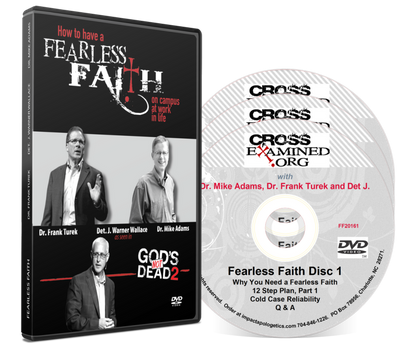
FF Box and DVD Lead

Fearless Faith Seminar (DVD)

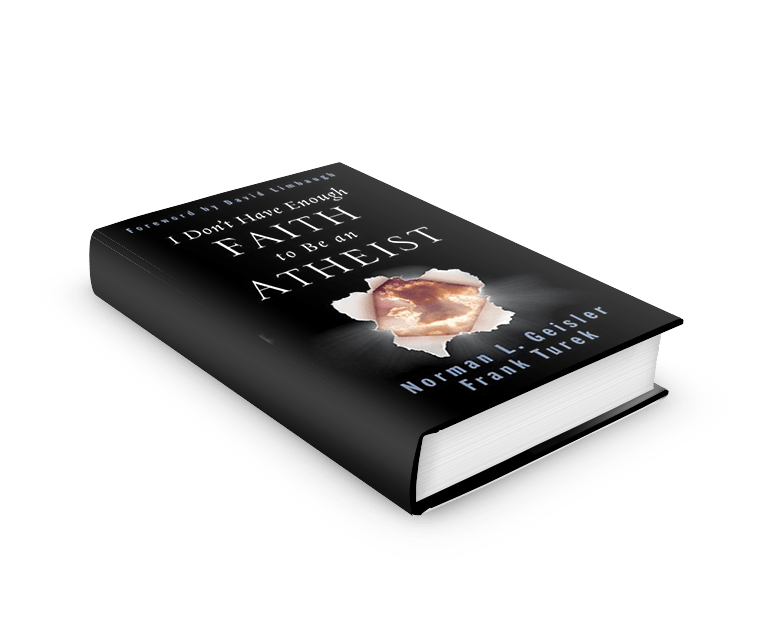
IDHEFTBAA laying down book

I Don’t Have Enough Faith to Be an Atheist (Book)


I was asked to participate in a meeting between Donald Trump and about 35 Christian leaders Friday night in Charlotte.  There was no requirement for participants to endorse Mr. Trump. Instead, it was a chance to exchange ideas with Mr. Trump on issues especially important to the Christian community, such as life, judges, and the growing problem of the government coercing religious people to violate their religious beliefs.

Christians and Donald Trump

As he did in a similar meeting I attended in New York a couple of weeks ago, Mr. Trump affirmed his commitment to protect life, appoint conservative judges vetted by the Federalist Society, and to work with Christians on religious freedom issues.  While I don’t endorse candidates, I am encouraged by Mr. Trump’s willingness and openness to personally discuss these issues and express his agreement with the positions I support.

For those Christians who think it’s wrong to meet with someone like Mr. Trump, I ask them to take off their Pharisee robes for a minute to see whom Jesus met with and ministered to.  Meeting with Mr. Trump is not only biblical, it’s an opportunity to do good. When one of the two people who will be President of the United States asks for your opinion, why wouldn’t you provide it?  It’s a dereliction of duty to not speak the truth on issues that directly affect lives and our ability to preach the Gospel and live our faith!

Mr. Trump’s team reached out to me and other Christians.  I’d meet with Mrs. Clinton if she requested my opinion (I’ve only heard crickets so far. And I doubt there are any evangelical Christians expecting her call since she wants to use the force of government to change our beliefs, and her party has demonstrated hostility to biblical Christianity for the past eight years).

For those of you who see no good choice in this presidential election, remember that you are not just voting for one person— you are actually voting for thousands of people that come along with the top of the ticket, some of whom will affect our country for generations. There are literally thousands of political appointees at several levels of government, including Supreme court judges and about 300 other judges, whom the President will appoint. Those people will attempt to make America in the image of their party platform. Those are two radically different images and two radically different futures for you and your children.

To see how radically different they are, take a look at this very helpful chart that quotes directly from the two party platforms.  It shows where the Democrats and Republicans stand on issues important to most Christians.  Given this knowledge, it is also a dereliction of duty when you fail to vote.

By Natasha Crain

During Vacation Bible School this summer, our church collected an offering to help an orphanage in Mexico. The kids were all encouraged to bring what they could to contribute toward the cause.

My daughter, age 7, has always been very generous with her allowance and came running down the stairs with a Ziploc bag of piggy bank money the morning after the collection was announced. I smiled with appreciation for her giving heart and told her, “I’m so proud of you. You always want to share your allowance with others. That’s wonderful, sweetheart.”

She looked at me, gave a slight shrug, and replied, “It’s JUST money I had in my piggy bank. It doesn’t really matter.”

My blood immediately went to a rolling boil. I have worked really hard to teach my kids the value of money and emphasize how grateful we need to be for every small thing we have. I couldn’t believe her cavalier attitude that morning.

I unsuccessfully tried to cover my deep annoyance and disappointment.

“You have got to be kidding me. I seriously can’t believe you just said that when we have talkedso much about gratitude and generosity. That’s several dollars you have in that bag! How can you say it ‘doesn’t matter’?”

She looked down at the bag, which held two dollar bills and a bunch of coins. Then she looked at me in confusion and said, “MOMMY. This is not ‘several dollars.’ This is two dollars and a bunch of change that doesn’t matter.”

I took the bag and dumped everything out on our floor, then made piles of four quarters. I counted it all up and told her that she had $8.36.

She was shocked.

She scooped it all up, promptly put it back in the bag and announced there was “no way” she was giving away $8.36. Before I could launch into a sermon on generosity, she was halfway up the stairs looking for her piggy bank so she could deposit her newly found riches.

I’ve reflected several times on that experience, but not as much on the subject of generosity as on the subject of what it means to accurately value something.

There was $8.36 in that bag before and after our conversation. But something happened that drastically changed the value my daughter assigned to it—to the point that I couldn’t pry it out of her little hands just a few minutes later!

Similarly, Christianity is objectively true regardless of the value a person assigns to it. But something happens to many kids that fundamentally changes the value they place on it. Ultimately, the statistics show that at least 60% of kids reject faith by their early 20s…they decide it no longer has value. It literally becomes worthless.

Why the change? I think it boils down to three things.

1. They never understood how to value it.

My daughter ultimately didn’t know how to add up all the spare change in the bag. She could plainly see it all but didn’t know how to add all those different coins together. She just looked at the two dollar bills and assumed that’s all there was to the total value.

In a culture where people chalk religious belief up to nothing more than a person’s opinion about what may or may not exist beyond our natural world, most kids never learn how to appropriately value their religious beliefs. They don’t, by default, come to understand that:

  • Christianity is either true or it’s not. It’s an objective truth, and can’t be a matter of opinion. People may have different assessments of whether or not it’s true, but it’s not something that actually can be true for some and not others. When kids understand that, they’ll be more likely to value their faith because they’ll realize there’s much more at stake than a trivial matter of opinion. (For help talking to your kids about the nature of truth and Christianity in the context of other worldviews, see chapters 9-13 in my book, Keeping Your Kids on God’s Side.)
  • The truth of Christianity can be assessed by looking at evidence. Even if a person realizes that Christianity is ultimately an objective truth, they may place little value on committing to Christ because they believe there’s no real way of knowing Christianity is true. Our culture perpetuates the idea that faith is blind—a big leap in the dark. But that’s not the nature of biblical faith at all. Biblical faith is rooted in good reason (1 Peter 3:15). Again, kids don’t understand this by default. We have to shape their understanding so they know that they really can be confident that their decision for Christ is rooted in good reasons. That conviction makes all the difference in the world in how much a person values their faith.

2. They never had time to value it.

I’m guessing that if I had put my daughter in a room without distraction and plenty of time, she could have come close to totaling up the coins on her own. But between school, homework, piano lessons, soccer and chores, there’s no way such an exercise was going to get priority. She just didn’t have the time to appropriately value what was in the bag.

It’s really easy to play the victim when it comes to the perceived predator of time. I’m hugely guilty of this myself. “I have no time!” “I just wish there was more time!” “Where did the time go?” Those are things we all say. But the fact is, we all have the same number of hours in the day. It’s a matter of how we choose to use them. If your family’s spiritual life is crowded out by the constant shuttling between extracurricular activities, it’s time to really consider that. It might not be comfortable to look at it this way, but if we’re too busy to set aside family spiritual time at least once a week (for Bible study, faith conversations, prayer, etc.), we are quite literally choosing other activities over our kids’ spiritual growth.

It’s up to us to make time for them to learn to value their faith.

3. They forgot how to value it.

Last year, I actually had taught my kids how to add up coins of different values; there was a point in time when my daughter probably wouldn’t have been so cavalier with the money because she did know how to value it. But she forgot.

It’s easy to take for granted that whatever we taught our kids last month, last year, or three years ago is still part of their working knowledge. But planting seeds isn’t enough. We have to continually water them, tend to the growing soul, and plant more seeds. Otherwise, those earlier seedlings can easily be lost, and our kids can simply forget how to value what they may have know how to value in the past.

May we all help our kids develop a faith that they clutch like that Ziploc, realizing the surpassing worth of knowing Jesus Christ (Philippians 3:8).

Visit Natasha’s website at www.ChristianMomThoughts.com

Resources for Greater Impact: