Tag Archive for: Christianity

By Brian Chilton

For the past few weeks, we have investigated the authors of the Gospels and the book of Acts. In this article, we examine the evidence for the Gospel of John. Who wrote the Fourth Gospel? As we have in previous articles, this article will look at the proposed author, the internal and external evidences for authorship, the dating, and the location and intended audience for the Fourth Gospel.

Proposed Author by Tradition:       Church tradition claims that John the apostle wrote the Fourth Gospel while pastoring as an aged man in Ephesus. Does the evidence back up this assumption?

Internal Evidence:    Internally, as the other Gospels, the author is unnamed. However, a clear reading of the Fourth Gospel denotes that the one named the beloved disciple, or the disciple whom Jesus loved, is also the author of the book. The phrase “the disciple whom Jesus loved” appears 5 times in the Fourth Gospel. This disciple holds a prominent role even to the point that Peter asks about the beloved disciple’s ministry in John 21., son of Zebedee, meets this criterion as well as James, the brother of John. We know that James, son of Zebedee, died in the 40s AD (Acts 12:1-5). The beloved Jesus appears with Peter in 13:23-24; 18:15-16; 20:2-9; and in chapter 21. John is also found with Peter in Luke 22:8; Acts 1:13; 3-4; 8:14-25; and Galatians 2:9. So, only John meets the criteria needed for the Fourth Gospel’s authorship. The question of Peter in John 21 indicates that the author was aged and reflecting back on his life with Jesus and the apostles.

External Evidence:   Referencing the Fourth Gospel’s author, early church father Irenaeus (c. 130-202 AD) writes,

Further, they teach that John, the disciple of the Lord, indicated the first Ogdoad, expressing themselves in these words: John, the disciple of the Lord, wishing to set forth the origin of all things, so as to explain how the Father produced the whole, lays down a certain principle,—that, namely, which was first-begotten by God, which Being he has termed both the only-begotten Son and God, in whom the Father, after a seminal manner, brought forth all things. [1] 

Clement of Alexandria (c. 150-215 AD), as quoted by the church historian Eusebius of Caesarea (c. 263-339 AD) denotes the following:

Again, in the same books Clement has set down a tradition which he had received from the elders before him, in regard to the order of the Gospels, to the following effect. He says that the Gospels containing the genealogies were written first, and that the Gospel according to Mark was composed in the following circumstances:—

Peter having preached the word publicly at Rome, and by the Spirit proclaimed the Gospel, those who were present, who were numerous, entreated Mark, inasmuch as he had attended him from an early period, and remembered what had been said, to write down what had been spoken. On his composing the Gospel, he handed it to those who had made the request to him; which coming to Peter’s knowledge, he neither hindered nor encouraged. But John, the last of all, seeing that what was corporeal was set forth in the Gospels, on the entreaty of his intimate friends, and inspired by the Spirit, composed a spiritual Gospel.[2]

Ignatius of Antioch (c. 35-108 AD) quotes John’s Gospel quite frequently as he writes an epistle to the Antiochians. Ignatius’s quotation of the Fourth Gospel illustrates that the book was viewed in a positive light and authoritative. Ignatius is noted as a disciple of John the apostle along with Polycarp. The Marytrdom of St. Ignatius notes the following:

Wherefore, with great alacrity and joy, through his desire to suffer, he came down from Antioch to Seleucia, from which place he set sail. And after a great deal of suffering he came to Smyrna, where he disembarked with great joy, and hastened to see the holy Polycarp, [formerly] his fellow-disciple, and [now] bishop of Smyrna. For they had both, in old times, been disciples of St. John the Apostle. Being then brought to him, and having communicated to him some spiritual gifts, and glorying in his bonds, he entreated of him to labour along with him for the fulfilment of his desire; earnestly indeed asking this of the whole Church (for the cities and Churches of Asia had welcomed6 the holy man through their bishops, and presbyters, and deacons, all hastening to meet him, if by any means they might receive from him some spiritual gift), but above all, the holy Polycarp, that, by means of the wild beasts, he soon disappearing from this world, might be manifested before the face of Christ.[3]

Much more could be given as far as external evidence. However, the presented information should suffice for our purposes.

Date:   Evidence suggests that John’s Gospel was the last to be written at some point after 70 AD. It appears that John may have been written in the mid-80s to early 90s as he may have served as pastor of the church of Ephesus.

Location and Audience:       John’s testimony is preserved while serving in Ephesus in Asia Minor. Thus, he writes to the people of that area, but also to the future generations of the church. Perhaps this is why Clement of Alexandria calls it a “spiritual gospel.”

Conclusion:    I believe that John the apostle authored the Gospel by dictation. That is to say, John most likely provided the material to an amanuensis. The amanuensis documented the aged apostle’s words and added the addendum to the Fourth Gospel and the title “the disciple whom Jesus loved” in reference to the apostle. I think the evidence is quite strong for John the son of Zebedee authoring the Fourth Gospel. Claims to the contrary[4] bring more questions than answers. Such as, why do the other Gospels not elevate the other suggested candidates to a higher light? How is it that John is an inner circle disciple in the other Gospels and is missing in prestige in the Fourth Gospel if John is not the author?[5] To reiterate, I believe an amanuensis was employed in the Gospel’s formation. But the use of an amanuensis does not negate the apostle’s hand in writing. So, for those who erroneously claim that the apostle could not have formed a document such as this, such an argument is dispelled if an amanuensis is employed. It is still quite possible with the knowledge obtained by Jesus and his earlier employment that John, son of Zebedee, could have written the entire Gospel by hand. But, I prefer to think that an amanuensis was employed.

Notes

[1] Irenaeus of Lyons, “Irenæus against Heresies, 1.8.5.” in The Apostolic Fathers with Justin Martyr and Irenaeus, ed. Alexander Roberts, James Donaldson, and A. Cleveland Coxe, vol. 1, The Ante-Nicene Fathers (Buffalo, NY: Christian Literature Company, 1885), 328.

[2] Clement of Alexandria, “Fragments of Clemens Alexandrinus,” in Fathers of the Second Century: Hermas, Tatian, Athenagoras, Theophilus, and Clement of Alexandria (Entire), ed. Alexander Roberts, James Donaldson, and A. Cleveland Coxe, trans. William Wilson, vol. 2, The Ante-Nicene Fathers (Buffalo, NY: Christian Literature Company, 1885), 580.

[3] Alexander Roberts, James Donaldson, and A. Cleveland Coxe, eds., “The Martyrdom of Ignatius,” in The Apostolic Fathers with Justin Martyr and Irenaeus, vol. 1, The Ante-Nicene Fathers (Buffalo, NY: Christian Literature Company, 1885), 130.

[4] Ben Witherington, III holds that Lazarus was the author of the Fourth Gospel.

[5] For instance, it seems clear that the beloved disciple was one who was prominently known. John the apostle holds such a status.

About the Author:

Brian Chilton is the founder of BellatorChristi.com and is the host of The Bellator Christi Podcast. He received his Master of Divinity in Theology from Liberty University (with high distinction); his Bachelor of Science in Religious Studies and Philosophy from Gardner-Webb University (with honors); and received certification in Christian Apologetics from Biola University. Brian is currently working on his Ph.D. in Theology and Apologetics at Liberty University. Brian is a full member of the International Society of Christian Apologetics and the Christian Apologetics Alliance. Brian has been in the ministry for over 14 years and serves as the pastor of Huntsville Baptist Church in Yadkinville, North Carolina.

Original Blog Source: http://bit.ly/2wVQNSb


By Dan Grossenbach

Understanding evil reveals an important part of reality. As much as we try to avoid it, evil is part of the universal human condition – something theists and atheists both have in common. You may be surprised, however; that the way atheists think about evil actually shows God exists.

Debate Atheism Arrival Evil

For the previous post on part 3, atheist arguments for the Arrival of Biological Information, click here. Unlike other points in this series so far, probing evil touches the heart. It gets emotional. The argument I’m presenting, by contrast, isn’t designed to address the emotional part of the problem. There are volumes dedicated to that. Rather, the point here is to reason through three facts about evil that nearly all people agree on and to see what follows:

  1. Evil exists

This fact is so obvious that even the argument of evil used against God relies on it. Readers have probably heard the “problem of evil” used as a critique against theism. This was something I knew Dr. Shapiro would bring up in our debate, since he’s brought it up in a prior encounter, so I decided to hit it head on. As expected, Dr. Shapiro parroted the classic criticism from 4th century BC philosopher Epicurus:  “Is God willing to prevent evil, but not able? Then he is not omnipotent. Is he able, but not willing? Then he is malevolent. Is he both able and willing? Then whence cometh evil? Is he neither able nor willing? Then why call him God?” [1]

The question puts God in a dilemma. Either he’s not all powerful (he can’t stop evil) or not all good (he’s unwilling to stop it). Theists believe God is both all-powerful and all-good thus find themselves having to eliminate one. I address this more later. What we must consider at present; however, is that the objector assumes the existence of evil prior to the objection. This is a huge assumption. Epicurus posed a fair question to the Greek polytheists of his day but is it fair to carry this over to God of the Bible? We’ll address that later. The immediate question is whether or not evil exists at all and this objection only works if it does. Put simply, if there’s a “problem” of evil, then there’s evil.

Seeing the plain consequences of this fact, skeptics typically go one of two ways: 1) ground goodness on something other than God, or 2) deny good or evil exist at all.

This first group accepts value propositions as something real (good and evil exist) but tries to avoid God. Freedom from Religion founder and president Dan Barker says “’Good’ is that which enhances life, and ‘evil’ is that which threatens it.”[2]

Sam Harris defines morality as the “right and wrong answers to the question of how to maximize human flourishing in any moment…”[3] In my debate with Dr. Shapiro, he repeated the secular humanist doctrine that value relates to the standard of universal “well-being.”

The careful reader may see that they shifted the meaning of good. Rather than goodness defined as ultimate moral perfection, they see it as the best way to accomplish a goal. Plenty could be said about this shift, but it doesn’t really matter for this part of my argument. Whether they ground goodness in human flourishing or not, they still have an objective standard. They don’t put it on God, but instead on something else of objective and universal value. Sam Harris urges, “we need some universal conception of right and wrong”[4]. So, despite this shift in definition, they find themselves in the same place in terms of establishing objective goodness. For this purpose, we can join together in agreement with atheists who agree objective goodness exists, right?

Not so fast! Other well-known atheists dismiss value altogether. In Darwinian naturalism, there is no way things are supposed to be. Dawkins puts this best:

In a universe of electrons and selfish genes, blind physical forces and genetic replication, some people are going to get hurt, other people are going to get lucky, and you won’t find any rhyme or reason in it, nor any justice. The universe that we observe has precisely the properties we should expect if there is, at bottom, no design, no purpose, no evil, no good, nothing but pitiless indifference[5].

An abstract from Cornell University scientist William Provine’s second annual Darwin Day speech starts off this way: “Naturalistic evolution has clear consequences that Charles Darwin understood perfectly” One of those consequences, he suggests, is that “no ultimate foundation for ethics exists”[6].

If moral values aren’t real, this disrupts my first premise. There are plenty of reasons to reject the idea that moral values are a convenient social construct, but it’s important to show where this takes us if it were so.

It turns out the denial of moral value just exchanges one problem for another. If the atheists who deny evil are right, then the problem of evil goes out with it. If there’s no evil, there’s nothing to complain about. Saying there’s no evil is different than living that way, however. For most people, this isn’t as far as most are willing to go. Our gut-wrenching feelings on the inside and our outward actions tell us that everyone knows evil exists. In fact, even atheists arguing this objection often find themselves blaming God for the evil they just told us doesn’t exist. While the denial of evil may be something popular writers do, those dedicated to clear thinking on this issue have come to a much different conclusion. They know objective value is only possible with God.

The philosopher who put this most poetically was one of the greatest thinkers of the 19th century who also happened to be an ardent atheist Friedrich Nietzsche. Nietzsche vividly illustrates the absurdity of a moral laden world without God in this passage from The Joyful Wisdom:

“Where is God gone?!” he called out. “I mean to tell you! We have killed him, – you and I! We are all his murderers! But how have we done it? How were we able to drink up the sea? Who gave us the sponge to wipe away the horizon? What did we do when we loosened this earth from its sun? Whither does it now move? Whither do we move? Away from all suns? Do we not dash on unceasingly? Backwards, sideways, forwards, in all directions? Is there still an above and below? Do we not stray, as through infinite nothingness? Does not empty space breathe upon us? Has it not become colder? Does not night come on continually, darker and darker? Shall we not have to light lanterns in the morning? Do we not hear the noise of the grave-diggers who are burying God? Do we not smell the divine putrefaction? – for even Gods putrefy! God is dead! God remains dead! And we have killed him![7]

In our own time, atheist philosopher of science Michael Ruse puts it this way,

“The position of the modern evolutionist . . . is that humans have an awareness of morality . . . because such an awareness is of biological worth. Morality is a biological adaptation no less than are hands and feet and teeth . . . . Considered as a rationally justifiable set of claims about an objective something, ethics is illusory. I appreciate that when somebody says ‘Love they neighbor as thyself,’ they think they are referring above and beyond themselves . . . . Nevertheless, . . . such reference is truly without foundation. Morality is just an aid to survival and reproduction, . . . and any deeper meaning is illusory . . . . [8]

The late atheist Christopher Hitchens conceded that it “could be true, yes. That could well be true,” that morality is a by product of social evolution without any objective foundation[9]. He adds, “one wants to think their love for their fellow creature means more than that.” No Christopher, they don’t merely want to think it, they actually do think it and for good reason.

Nietzsche, Ruse, Hitchens, and other like-minded atheists may not believe in God and many despise him. However, they know that without him, they’re posed with another problem worse than the first. Namely, they are unable to account for the kinds of evil that we all know is real. Worse, they deny the very evil atheists typically point to as evidence against God. This argument turns the challenge on its head. We can only make sense of evil if God exists.

In my recent debate, my secular humanist opponent didn’t seem to grasp this. Instead, he doubled down. Dr. Shapiro indicted God for allowing things he described as real examples of evil. The irony here was that he was proving my point. If Shapiro is right that there are real unjustified evils that God was allowing, he’s granting that the first premise above. It’s as if he wants to argue “God exists and he’s really bad so he can’t exist!” He can’t have it both ways. Take it from the atheists, either evil exists or we need to act like it does.

So which is it? Do moral values exist in something other than God or are they useful illusions? We’ve seen how Darwinian naturalism leads to a world without value. On the other side, we’ve seen God’s critics condemn his acts as evil in no uncertain terms. We’ve also seen that a world devoid of evil can’t condemn God for something that doesn’t exist. If true, advocates of this view don’t point us to God nor do they challenge him, essentially making evil a non-issue. Those who blame God for real evil agree with us on this first point, but how far will they go?

  1. Evil entails objective good

By objective good, I mean absolute moral perfection by which all things of value are measured. Evil isn’t really a thing at all. Rather, it’s the absence of something – namely, something good. Just as darkness isn’t anything on its own without light (dark = the lack of light rays), evil only comes about when something good is taken away. For Harris, Barker, and Shapiro evil is when human well being doesn’t go the way it should. Whether we base value on God or our own idea of human flourishing, evil is when something goes wrong. It’s not the way things are supposed to be. This only makes sense if there’s a right way for things to be. Next, we see what kinds of things come with objective goodness.

  1. Objective good must transcend, precede, hold accountable, and value humanity.

Transcending:  First, goodness entails a moral authority which crosses all times, places, and cultures. People groups can’t make up their own values. Instead, value applies to all people regardless of what anyone thinks about it. That’s what philosophers mean by “mind-independent.” The Nazis can’t be just in doing what they did no matter how many people agreed with it. Instead, goodness must extend beyond the individual mind or community consensus to be the standard by which ALL people and cultures are compared. The value inherent in objective goodness must transcend humanity in this way.

Preceding:  Second, goodness cannot have been invented by the first humans. After all, any values established by man can be later undone by men[10]. It would be absurd to think the first humans could come up with whatever value system they wanted because they were first on the scene. It doesn’t take much effort to see the advantage of having lying or stealing as virtues. No, that isn’t an option available to us. Goodness wasn’t invented. It was already there.

Holding Accountable:  Third, there is no objective goodness if evil goes unpunished. As my friend Frank Turek puts it, where there’s no justice, there’s no injustice. When people are allowed to do bad things without any consequences, there is no justice. Objective goodness demands justice. But there’s not always justice in this world. The murderers of black teenager Emmet Till in the 1950’s rural Mississippi never faced trial. The murderer of 6 year old Adam Walsh admitted the killing but was never charged. While in his 70’s Joseph Stalin had already killed about 50 million people (not including war casualties) and continued his genocidal orders from his deathbed in a Moscow mansion. In a purely natural world with no accountability for all people, there’s no justice for all people. If there’s no justice for all people, there’s no justice at all. If that’s not good, then goodness must include universal human accountability.

Value Giving:  Fourth, objective goodness must include the intrinsic value inherent in all human life. By intrinsic, I mean they all have equal worth just for being part of the species and not for any act, experience, or attribute they have or lack. It would make no sense to violate the rights of a human being if they aren’t valued in the first place. Evil and suffering experienced by humans only makes sense if the species has worth beyond itself and that their value is an objective fact of reality.     

  1. Therefore, since evil exists, there is a transcendent, authoritative, human valuing source of objective goodness

Biblical Christianity’s explanation offers a solution that perfectly fits these facts:

  • God transcendshumanity – Job 12:10, Acts 17:25, 28, Col 1:17, Heb 1:3, Eph 4:6
  • God precedeshumanity – Gen 1-2, Ps 90:2, Job 36:26, Rev 1:8, Jn 8:58
  • God holds humanity accountable– Gen 3:24, Amos 9:1-4, Mt 6:20, 1 Pet 4:4-5, 2 Pet 3:9, Mt 25, Mk 9:43, Rev 14:9-11, 20:10
  • God valueshumanity – Gen 1:27, Ps 16:11, 73:25-26, Isa 62:5, Zep 3:17-18, Jn 3:16, Eph 5:23-32, 1 Jn 4:19
  • God isobjective goodness – Gen 1:31, Ps 100:5, Lk 18:19, Rom 12:2, 1 Thes 5:18, 1 Jn  4:8

As I said in the beginning of this post, it’s hard to separate emotion from logic when reflecting seriously on evil. This was a tough one to cover. On stage during the live debate, I had three examples of human suffering in my slide show but by the third one I lost my composure and had to skip it. I know I was being overly emotional in my appeal, but my unexpected emotional response just emphasized the point. Evil exists and deep down we all know it. Christianity might not be what people like, but it provides the best explanation. Dr. Shapiro didn’t think so, but he missed the point entirely. This was most evident during the Q&A when he said “I want to clear up something really fast. Christians always say if you don’t believe in God you can’t say anything about morality. That’s nonsense!”

Nobody ever argued this and Dr. Shapiro is smart enough to know better. The point he ignored that there is no objective basis to ground moral values under atheism. I’ve had the chance to meet with Dr. Shapiro since our debate and learned he considers all morality as relative. So, even when he grants the horrid act of abusing babies as objectively wrong, he still considers it relative.

Strangely, Dr. Shapiro seems to embrace moral realism when he condemns God’s actions, or his failures to act. Shapiro can’t allow for any moral values as real and mind independent since it makes no sense under atheistic naturalism. In other words, Dr. Shapiro might argue like this: Since God doesn’t exist, there are no moral values outside of the human mind. Since there are no values outside human minds, all morality is relative.

The trouble is, I don’t think Dr. Shapiro has followed the logic as far as it goes. As Dr. Shapiro said in his opening speech “It just is what it is.” At bottom, the universe has no meaning or purpose outside of humanity, he said.

Christianity does offer it. It offers a basis for grounding value in the universe, a value of humanity and holding people accountable. Dr. Shapiro didn’t understand the point and furthered the case for Christianity every time he complained about evil. It’s ironic, actually. The very person he blamed for evil – God – is the one we can see much more clearly in contrast to the evil we all know exists. The intellectual dishonesty really showed in the inconsistent demand Shapiro and questioners put on Christianity. They tolerated, even celebrated ignorance on origins of cosmos or biology but demanded to know why God allowed evil. Even if they could ground evil in something transcendent and authoritative, why not find ignorance on that just as “refreshing?” It gets worse.

This brings us to an important rule: the one who bears the burden of proof is the one who makes the claim. It wasn’t my burden to refute my opponent’s unsupported assertions but they are his to defend. I had to provide support for my position, but so did he. No one gets a free pass here.

Dr. Shapiro is fully within his rights to criticize my ideas, but he must do more than rely on emotional reaction and make a compelling case for his view. He gave no case so there was nothing to address. That’s why I pointed out to the audience that Dr. Shapiro depended on a “shock” factor in the absence of sound argument. In addition to pointing out this fallacy, I gave three points that Dr. Shapiro needed to defend for the Epicurian dilemma mentioned at the top of this post:

  • God has no moral authority to do as he sees fit with his creation.
  • God has no justification to accomplish a greater good (and we have enough knowledge to determine this).
  • God could have done otherwise to accomplish a better result.

Even after pointing this out during my rebuttal speech, Dr. Shapiro still failed to provide any good reasons to believe these three hidden assumptions implicit in his complaint about God.  Instead of arguing it, the appeal was to the heart, “How could a good God allow this?!”

As in the other points I made, I invited Dr. Shapiro to present an alternative explanation for evil. Since he didn’t do that, the offer presented consistent with Christian theism remained the best explanation offered that day.

Theism offers the best explanation but it does more. It is so obvious that there are things wrong with this world, that the burden falls on those who deny it. Sitting on a comfy couch with my wife talking about our day is all it takes to bring this reality home. As a federal agent and a nurse, the common question “How was your day, honey?” makes this evident daily. Regardless of where you are in life, I’m sure this could be true for you too.

Christian theism not only explains evil in our world, but it’s the only one that offers a satisfying solution to it. The same God of the Bible whose perfect nature sets the standard for value also offers mercy to people who have violated it. In perfect justice, the crimes against him are paid in full by the only one who can bear it, the God-man Jesus of Nazareth. Clearly, this is something that atheists won’t grant. But you would be surprised what they do say about him. The question of Jesus will take us to the fourth and final point in this short series.

Endnotes:


[1] Classic argument for the “problem of evil” first attributed in this form to the Greek philosopher Epicurus

[2] Dan Barker, Losing Faith in Faith, page 125

[3] Sam Harris, bases his moral standard on what he deems human flourishing,https://www.samharris.org/blog/item/thinking-about-go

[4] Ibid

[5] Richard Dawkins, River Out of Eden: The Darwinian View of Life, Basic Books, 1995, p133

[6] William Provine, “Evolution: Free will and punishment and meaning in life” [abstract] from speech given at the Second Annual Darwin Day Celebration, University of Tennessee – Knoxville on Feb. 12, 1998https://web.archive.org/web/20070829083051/http://eeb.bio.utk.edu/darwin/Archives/1998ProvineAbstract.htm

[7] Friedrich Nietzsche, The Joyful Wisdom,https://archive.org/stream/completenietasch10nietuoft/completenietasch10nietuoft_djvu.txt

[8] Michael Ruse, “Evolutionary Theory and Christian Ethics,” in The Darwinian Paradigm (London: Routledge, 1989), pp. 262, 268-269.

[9] Hitchens vs. Craig debate “Does God Exist,” Biola University (La Mirada, CA), April 4, 2009, at approximately 1:25 https://www.youtube.com/watch?v=0tYm41hb48o

[10] Gregory Koukl, The Story of Reality, p73

Original Blog Source: http://bit.ly/2xAUvhp



By Dan Grossenbach

Information embedded inside all of life demands an explanation. Virtually all agree that, at some point in earth’s early history, the first living being came about from non-living (dead) material. Setting aside for the moment the incredible principle of life arising from death, what we find inside of life gives us the greatest mystery of all. The information inside of life is exactly what we see in high tech computer engineering. It’s remarkably designed. Bestselling atheist writer and evolutionary biologist Richard Dawkins remarks on information in every cell this way:

Debating Atheists Biological Information

“The machine code of the genes is uncannily computer-like. Apart from differences in jargon, the pages of a molecular biology journal might be interchanged with those of a computer engineering journal.”[1]

So the argument goes like this…

  1. All life requires DNA/RNA.

Citing Richard Dawkins, “DNA code is universal among all living things” [2]

  1. DNA/RNA is information

What’s information? “By information, I mean the specification of the amino acid sequence in protein…Information means here the precise determination of sequence, either of bases of the nucleus acid or in amino acid residue in the protein.” Christian skeptic and co-discoverer of the DNA structure, Francis Crick. “Genes are information…a code…in sequence…just like what a computer programmer would do!” [3]

  1. Information requires a mind

In his debate with Christian apologist David Wood last year, leading atheist and editor of Skeptic Magazine Michael Shermer explains it this way,

Is there some advanced intelligence, a designer, call it whatever you want. Maybe. How do we know? Our methodology is actually pretty good for finding out…[Y]ou know the SETI program has algorithms. They grind through of signals coming from space to determine if it’s random noise or if it’s a signal. [4]

Shermer concedes that information infers an intelligent cause and even offers a way to verify it. Ironically, his method is the very same one offered by the ID advocates he’s trying to refute.

  1. Therefore, life required a mind.

This is why religion critics like Francis Crick[5], Richard Dawkins [6] and others propose the rarely accepted view of panspermia, or the idea that intelligent alien life seeded the early earth at just the right time for life to take root. In fact, there’s little discussed about origin of life at all. Normally, the question skips the origin of life issue and goes right into the evolution mechanism. Like all facts which lead us to conclusions we don’t like, it’s much easier to simply ignore the problem.

But not all of them are. The arrival of biological information is an area evolutionary biologists around the world are dealing with. In Nov 2016, scientists from around the world met in London to discuss how the neo-darwinian mechanism fails to account for the complexity of life. Recordings of the lectures will be provided on the Royal Society website soon. What’s more, is that the issue of information already in the cell before the first organism ever existed is not even a matter of evolution at all.

The reason I presented this as evidence for God is the same reason atheist philosopher Thomas Nagel and former atheist Antony Flew saw purpose and design in biological life. Every living cell requires something that is so particular that it cannot, in principle, be attributed to chance or natural causes. The DNA molecule contains not only complexity – for it has that. The complexity must also be arranged in such a way that it performs a specific function for the development of a living organism.

The specific complexity of this program is exactly like computer software. In fact, the four fundamental nucleotide base chemicals comprising the DNA molecule strands are not only similar to a computer program but they are the exact same thing. The pioneer of modern software, and no friend to Christianity, recognized this when he said, “DNA is like a computer program but far, far more advanced than any software ever created.” [7] The four chemicals abbreviated A-C-G-T are a four character code much like the binary two character code of human developed software consists of particularly placed zeros and ones. The only difference, is that whereas a slight computer code error typically results in a minor disfunction, any deviation from the DNA sequence most likely terminates the organism and any future decendants. This poses major problems for the. Neodarwinist theory of random mutation but that’s beyond our immediate scope.

Lest anyone be tempted to think time and chance under natural laws can produce such a function-based information code, atheist paleontologist Stephen Jay Gould shows that time is not available to us:

[W]e are left with very little time between the development of suitable conditions for life on the earth’s surface and the origin of life. Life is not a complex accident that required immense time to convert the vastly improbable into the nearly certain. Instead, life, for all its intricacy, probably arose rapidly about as soon as it could. [8]

Richard Dawkins goes further by ruling out chance a priori:

However many ways there may be of being alive, it is certain that there are vastly more ways of being dead, or rather not alive. You may throw cells together at random, over and over again for a billion years, and not once will you get a conglomeration that flies or swims or burrows or runs, or does anything, even badly, that could remotely be construed as working to keep itself alive. [9]

Not only was there no time for the DNA/RNA to develop naturally, there was also no known natural mechanism for it to do so.

Atheist philosopher Thomas Nagel agrees, “The more details we learn about the chemical basis of life and the intricacy of the genetic code, the more unbelievable the standard historical account [neo-Darwinian evolution] becomes.” [10]

“It is prima facie highly implausible that life as we know it is the result of a sequence of physical accidents together with the mechanism of natural selection.” [11]

“I realize that such doubts will strike many people as outrageous, but that is because almost everyone in our secular culture has been browbeaten into regarding the reductive research program as sacrosanct on the ground that anything else would not be science.” [12]

“I believe the defenders of ID deserve our gratitude for challenging a scientific world view that owes some of the passion displayed by its adherents precisely to the fact that it is thought to liberate us from religion.” [13]

Whenever information is found, in uniform and repeated human experience, it’s been the product of an intelligent mind. I left it to Dr. Shapiro to provide at least one piece of evidence to the contrary. He didn’t. 

This was the third in a series of five posts showing how atheists concede four primary facts that infer biblical Christianity. For a fuller picture of this argument, you may want to check out part one (introduction) or part two (arrival of the universe). 

Notes

[1] Richard Dawkins, River Out of Eden: A Darwinian View of Life, New York:Basic Books/Harper Collins, 1995., p17

[2] This fact is so widely assumed it was hard to find a direct quote. Richard Dawkins cited in a news article https://news.virginia.edu/content/richard-dawkins-universal-dna-code-knockdown-evidence-evolution. It’s worth noting after an exhaustive search, I found no published work directly denying this fact.

[3] Richard Dawkins interview starting at 1:25 https://m.youtube.com/watch?v=oF1UzhPA5N8

[4] Michael Shermer vs. David Wood debate on “Does God Exist” October 10, 2016, Kennesaw State University

[5] Francis Crick, directed panspermia 1972, https://profiles.nlm.nih.gov/ps/access/scbccp.pdf

[6] Richard Dawkins at the end of Expelled https://www.youtube.com/shared?ci=Dee3DLgEDEw

[7] Bill GatesThe Road Ahead p228

[8] Stephen Jay Gould, “An Early Start,” Natural History, February, 1978.

[9] The Blind Watchmaker: Why the Evidence of Evolution Reveals a Universe Without Design 1988, p9 The immediate relevance to this was pointed out to me by Douglas Axe.

[10] Nagel, Thomas (2012). Mind and Cosmos: Why the Materialist Neo-Darwinian Conception of Nature is Almost Certainly False. Oxford: Oxford University Press. p5

[11] ibid, p5

[12] ibid, p7

[13] ibid, p12

Original Blog Source: http://bit.ly/2veByDB


By Brian Chilton

Over the past few months, we have been investigating the authors and backgrounds of the New Testament books. In this article, we will look into the letters attributed to Peter. Towards the back of the New Testament, one will find two letters associated with Peter, most would think this would be the same Simon Peter as found in the Gospel narratives. But, what do we know about the author and background behind these two letters?

Letter

Author: The author of 1 Peter is identified as “Peter, an apostle of Jesus Christ” (1 Pet. 1:1). 2 Peter is also associated with “Simeon Peter, a servant and an apostle of Jesus Christ” (2 Pet. 1:1). Thus, Simon Peter is the clear candidate for authorship of the two letters bearing his name. Silvanus was employed as an amanuensis for the first letter (1 Pet. 5:12). The second letter does not mention an amanuensis as far as I can tell. It could have been that an unnamed amanuensis was employed, but it is odd that no name is given especially with the church’s disdain for pseudonymous letters.[1] The Semitic spelling of Simeon in 2 Peter 1:1 suggests that Peter himself penned the letter. In addition, while 2 Peter had some skeptics, the vast majority of the early church accepted 2 Peter as a genuine writing from Simon Peter. 1 Peter was unanimously accepted as being the words of the imprisoned Simon Peter. Irenaeus, Tertullian, and Clement of Alexandria all accepted the letters’ authenticity.

Date:   If 1 Peter was written by Simon Peter, then it must have been penned somewhere between AD 62 and 64. Paul was imprisoned around AD 60 to 62 and he never mentioned Peter. Likewise, Peter never mentions Paul being in Rome with him. Only Silvanus and Mark were with Peter (1 Pet. 5:12-13). This suggests that 1 Peter was after AD 62 when Paul was imprisoned and released for a time, but at a time before 2 Peter. So, when was 2 Peter written?

2 Peter, like 1 Peter, was likely written from a Roman prison cell. The author of 2 Peter know that he is about to soon die as he writes “since I know that I will soon lay aside my tent, as our Lord Jesus Christ has indeed made clear to me” (2 Pet. 1:14).[2] Tradition indicates that Peter died sometime around AD 67 during Nero’s reign (AD 54-68). 2 Peter was written after 1 Peter which forces the dating of 1 Peter to a time between AD 62-67. I think it can be said that 1 Peter was written around AD 65 with 2 Peter coming about in AD 67.

Purpose:          1 Peter was addressed to “those chosen, living as exiles dispersed abroad in Pontus, Galatia, Cappadocia, Asia, and Bithynia, chosen according to the foreknowledge of God the Father” (1 Pet. 1:1-2a). Peter writes about the living hope that the children of God have while living in the last days. Throughout the text, Peter provides ethical standards for the child of God. This theme on ethical living is continued in 2 Peter (2 Pet. 1:3-11; 3:11-18) but with the emphasis of focusing on the true teaching of Christ (2 Pet. 1:12-21; 3:1-10) and the rejection of false heresies that attempt to infiltrate the church (see especially 2 Pet. 2:1-22).

2 Peter’s Association with Jude: 2 Peter and Jude are quite similar. Some scholars suggest that one author borrowed from the other. If the author of 2 Peter borrowed from Jude, then Peter was probably not the author since Jude was written somewhere between AD 65-80.[3] However, if Jude borrowed from Peter, then Peter is more likely the author. It is far more likely that Jude borrowed from Peter than vice versa. Since Peter was an influential leader and Jude, even if he was the brother of Jesus, was not a disciple until after the resurrection of Jesus.

The letters of Peter are quite powerful and important for modern Christians. Believers are reminded of the call to moral living in Peter’s letters. In addition, we are reminded of the importance of truth. It is in 1 Peter 3:15 that we are given what has become the mantra for apologetics. Peter teaches that the believer must “regard Christ the Lord as holy, ready at any time to give a defense to anyone who asks you for a reason for the hope that is in you. Yet do this with gentleness and respect, keeping a clear conscience, so that when you are accused, those who disparage your good conduct in Christ will be put to shame” (1 Pet. 3:15-16).

Notes

[1] Tertullian flatly rejected a pseudonymous letter related to Paul and Thecla. See also Eusebius, Church History, 6.12.3.

[2] Unless otherwise noted, all quoted Scripture comes from the Christian Standard Bible(Nashville: Holman, 2017).

[3] Later datings of Jude would certainly eliminate Peter from contention as he died in AD 67 by the command of Nero.

About the Author 

Brian Chilton is the founder of BellatorChristi.com and is the host of The Bellator Christi Podcast. He received his Master of Divinity in Theology from Liberty University (with high distinction); his Bachelor of Science in Religious Studies and Philosophy from Gardner-Webb University (with honors); and received certification in Christian Apologetics from Biola University. Brian is in the Ph.D. program in Theology and Apologetics at Liberty University. Brian is full member of the International Society of Christian Apologetics and the Christian Apologetics Alliance. Brian has been in the ministry for over 14 years and serves as the pastor of Huntsville Baptist Church in Yadkinville, North Carolina.

Original Blog Source: http://bit.ly/2gcThEy


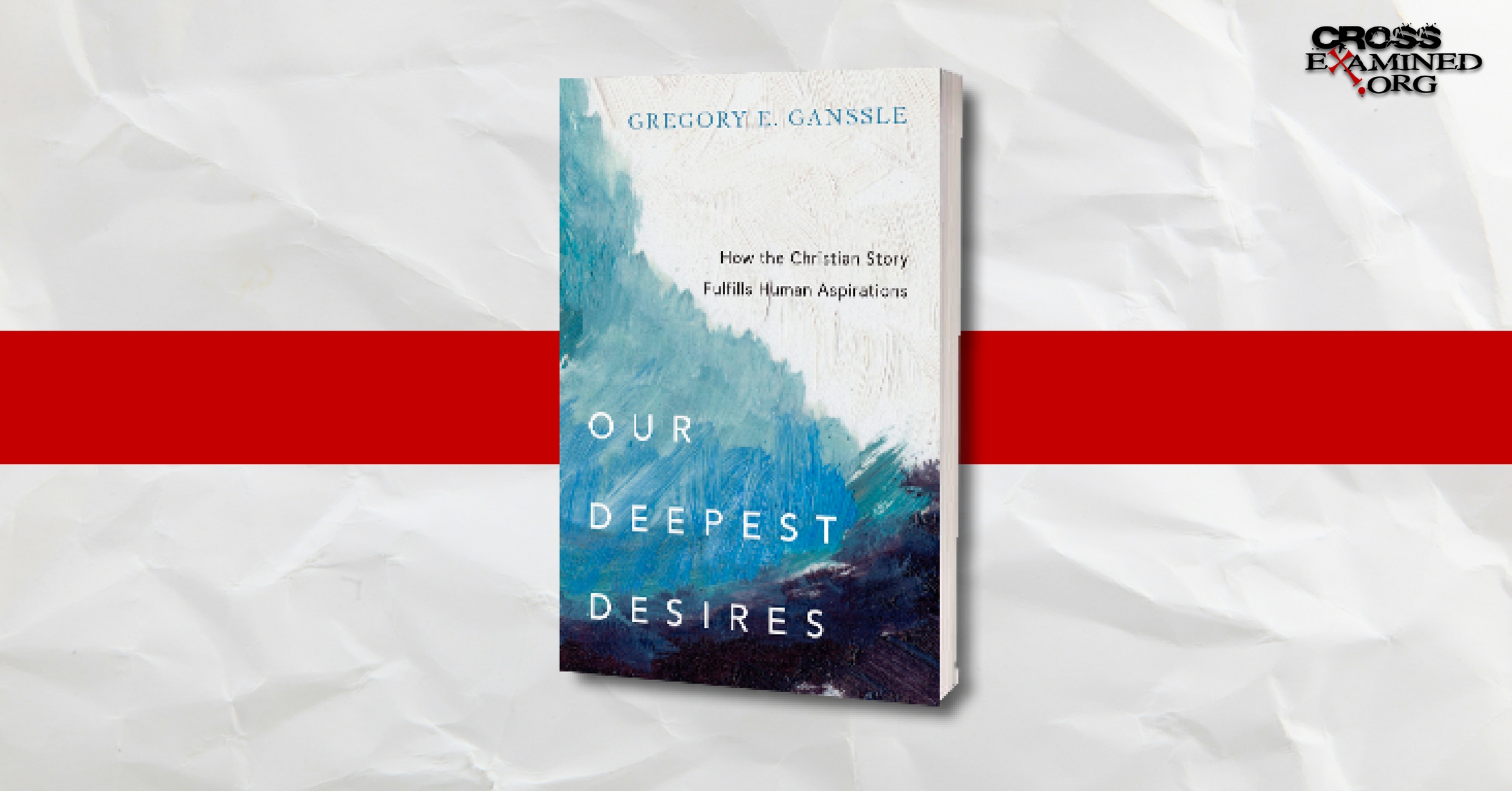
My friend and Biola colleague Greg Ganssle has written a fascinating new book called Our Deepest Desires: How the Christian Story Fulfills Human Aspirations. Professor Ganssle takes a unique approach to the apologetic task. Essentially, his goal is not to show that Christianity is true, but to argue that when it is properly understood, people should wish it were true. He talks about how tragedy, beauty, and freedom make the most sense in a Christian worldview and that only Christianity fulfills our deepest desires.

Our Deepest Desires is one of the most interesting books I have read in awhile. I hope you will check out this interview and think about getting a copy of his excellent book:

SEAN MCDOWELL: Can you tell us briefly what your book is about?

GREG GANSSLE: As the subtitle indicates, the book is about how the Christian story explains and grounds our basic aspirations. Every person has the same task—that is we all aim to navigate life in the best way we can. We navigate life with some notions of what it is good to be and to do. These notions are widely shared among people, regardless of their religious beliefs or lack of them.

I structure the book around four fundamental commitments that are widely shared. First, there is the commitment to persons. Nearly everything we care about is connected to human beings. Second, is the commitment to goodness. We want to be good and we enjoy what is good. Third, we are drawn towards beauty. Beauty calls us home in two ways. First, it calls us to see that this world is a wonderful place. Second, it points beyond this world to the next. Lastly, we long for personal freedom. That is the freedom to become the kind of people we want to be.

Each of these areas makes sense in the Christian story. God, the most fundamental reality, is personal. He is good and made a good world for his own good reasons. We are not surprised to find the world to be beautiful because he is a master artist. God created us to embody certain virtues, and we find our own freedom as we experience these.

MCDOWELL: The goal of your book is to convince people they should hope Christianity is true. What do you mean, and why start there?

GANSSLE: I start there because I think that most people do not care whether or not Christianity is true. They are already convinced that it is a story that hinders human flourishing, rather than a story that secures and promotes flourishing. What is startling is the fact that the things most human beings care most about fit better within the Christian story than they do in the various atheistic stories. Once we see this connection, we see that we want the Christian story to be true. Of course, the fact that we want it to be true does not show that it is true. But once a person wants it to be true, the objections to the truth of the Gospel seem much smaller.

MCDOWELL: Who is the primary audience?

GANSSLE: As I wrote this book, I was thinking of the many professors I know who are not yet followers of Christ. I was trying to overcome what I see as the biggest obstacle to belief in Christ–that the Christian story is unattractive. Nietzsche quipped, “What is decisive against Christianity now is our taste, not our reason.” I am trying to overcome the sense that the Christian story is not to be desired.

MCDOWELL: How might those who are already believers use and benefit from this book?

GANSSLE: There are two ways this book can benefit those who are already followers of Jesus. First, it can help us grasp the Gospel more deeply. We often have a superficial understanding of the Christian story. As a result, we fail to see its intrinsic relevance to the deep aspirations of every person. Our own appreciation of the Christian story will be enriched as we reflect on how it provides the resources to capture the most common human aspirations.

Second, this book will be a good tool to start conversations. You can hand it to a thoughtful person and discuss it later. Because it is not a work of scholarship, it is accessible to all kinds of people. I even made sure the chapters were short! I would recommend giving it to neighbors and following up with some questions.

MCDOWELL: What message is there for the church?

GANSSLE: I am convinced that the next horizon for apologetics is the desirability of the Gospel. As one of my colleagues has written (Dave Horner), the Christian story is “too good not to be true.” We have been so keen to defend theological notions such as the sinfulness of every person that we have neglected the deeper theological truths of the value, goodness and beauty of all God has created. We do not believe in the omnipotence of sin. Sin twists everything, to be sure, but it cannot erase that goodness that God has put into the world and into human beings.

MCDOWELL: I have heard you mention how tragedies reveal the deepest human desires. What do you mean, and how does this support the Christian worldview?

GANSSLE: When we encounter suffering, we long for meaning. We want our suffering to be meaningful or to contribute to a meaningful life. Horrendous suffering has the potential to crush a person’s soul. Unless our meaning is securely grounded in the God who brings good out of evil, who experienced evil, and who gives us his presence in the midst of suffering, we may find it impossible to experience a meaningful life in the midst of suffering. It is Jesus weeping at the grave of Lazarus that gives us hope because he is the God who bears our suffering and offers his presence.

Sean McDowell, Ph.D. is a professor of Christian Apologetics at Biola University, best-selling author, popular speaker, part-time high school teacher, and the Resident Scholar for Summit Ministries, California. Follow him on Twitter: @sean_mcdowell and his blog: seanmcdowell.org.


By Dan Grossenbach

In the previous post of this short blog series found here, I explained how four facts agreed upon by the majority of non-Christian experts can be used to build a strong case for Christianity. This is the approach I took when I debated Freethought Arizona spokesperson Dr. Gil Shapiro in November 2016. In this week’s post, I’ll cover the first one.

#1 The Arrival of the Universe

Either the universe is infinitely old or it started at a finite time ago at a certain point in time. There’s no third option unless we deny the existence of the universe altogether as some new age or eastern beliefs do. The cosmos has been the focus of study as long as man has existed and some mysteries remain yet unsolved. Nevertheless, that the universe had a beginning is something we can say with relative certainty.

  1. About 13.8 bya the universe came into existence where energy, matter, natural laws, time, and space arrived on the scene prior to which they were not there.ASU astrophysicist and religion critic Paul Davies says “the universe can’t have existed forever. We know there must be an absolute beginning a finite time ago.”[1]

Alexander Vilenkin, another skeptic of religion goes further arguing for a finite starting point even with the possibility of multiple universes when he said this in 2003:

“It is said that an argument is what convinces a reasonable man, but a proof even an unreasonable man. With the proof now in place, cosmologists can no longer hide behind the possibility of a past-eternal universe. There is no escape:  they must face the problem of a cosmic beginning.” The problem for Vilenkin and his non-Christian peers is what follows from a “beginning.”[2]

In defense of this idea, outspoken religion skeptic and Arizona State University physicist Lawrence Krause said, “If you asked me what I would bet, I would bet that our universe had a beginning.”[3] To see why scientists like Davies, Krause, and other skeptics consider the beginning of the universe a problem, it’s important to see what follows from another fact we already know.

  1. In uniform and repeated human experience, everything that begins to exist has a cause

Sensing the pending consequences of these two facts, Dr. Krause tries to show how events can occur from “nothing.” The trouble is, he defines nothing as something. You can see Krause first properly defines “nothing” as the “absence of anything” but in the very next breath tells us his “nothing” of the pre-beginning initial conditions of the universe contained something, namely, lots of complex “stuff” and “particles” interacting with each other.[4] Dr. Krause is a brilliant man and must know better. For the stuff and particles he just listed by default entails space, time, energy, matter, and abstract objects like physical laws and logic which is all that’s needed to make up our entire physical universe. These things are not only not “nothing” (no-thing) but are the very things scientists tell us did NOT exist until they came into being at the beginning of the universe, a beginning Dr. Krause would put his money on. In fact, the universe itself is comprised of the same things he attributes to as “nothing.” So for Krause: nothing = universe.

If these first two points hold true, as nearly all experts agree, and the logic is sound, the following conclusion is inescapable.

  1. The universe had a cause.

This opens a whole other can of worms. Who or what is the cause? Well, we can infer a few things from this argument. The cause must be supernatural, uncaused, spaceless, immaterial, timeless, personal, powerful, rational, and independent. This list of attributes rules out nearly every world religion except monotheism.

Uncaused – Gen 1:1, Ps 102:25-27, Jn 1:3, 1 Cor 8:6, Col 1:16, Heb 1:2

Spaceless – 1 Kings 8:27, Isa 66:1-2, Acts 7:48

Immaterial – 1 Kings 8:27, Isa 66:1-2, Acts 7:48

Timeless – Ps 90:2, Job 36:26, Rev 1:8, Jn 8:58

Personal – Gen 17:1, Rev 19:6, Ps 33:9, Rom 4:17

Powerful – Gen 18:14, Jer 32:17, Job 42:1-2, Mt 19:26, Mk 14:26

Rational – 1 Cor 14:33, Isa 1:18, 2 Tim 2:13, Lk 10:27

Independent – Gen 1:1, Ps 102:25-27, Jn 1:3, 1 Cor 8:6, Col 1:16, Heb 1:2

We’re not able to show the God of Christianity on this first argument alone, but there’s no better candidate than theism to fit the bill. At the very least, the God of biblical Christianity matches this description without a single miss and is among a very short list of contenders. It’s important to note none of the rival atheistic theories fit these attributes for the universe’s initial cause. But before critiquing any rival options, I waited for Dr. Shapiro to present another cause that better explains the creation of the universe. He never did. And the options offered by the atheists mentioned here start off on false or unfounded assumptions. Atheists might not like the Christian explanation, but they seem to support the basis for it and fail to offer a better way. So the Biblical account of the arrival of the universe remains the best explanation available to us.

Original Blog Source: http://bit.ly/2xeVSkM

Endnotes:

[1] Paul Davies, “The Big Bang-and Before,” lecture at Thomas Aquinas College March 2002 quoted from ReasonableFaith.org.

[2] Alexander Vilenkin, Many Worlds in One p176, quoted from Common Sense Atheism blog post “Craig on Vilenkin on Cosmic Origins” by Luke Muehlhauser

[3] Lawrence Krause, debate with William Lane Craig in Brisbane, Australia on August 7, 2013 transcript here

[4] Lawrence Krause, debate with William Lane Craig, 2013, video here starting at around 17:00


By Brian Chilton

On today’s podcast, host Brian Chilton discusses his personal journey back to the Christian faith. Brian was saved at the age of 7 and was called into the gospel ministry at 16 years of age. However, he left the faith in 2000 due to personal issues and doubts that he had pertaining to the reliability of the faith. While he did not completely become an atheist, he did become what he calls a “theist-leaning-agnostic” or perhaps a panentheist. Nevertheless, in 2005, Brian’s world was transformed as he encountered 3 books at a local Lifeway Christian Bookstore that transformed his mindset. They were Lee Strobel’s The Case for Christ, and Josh McDowell’s Evidence that Demands a Verdict and McDowell’s compilation book, A Ready Defense. Today, Brian discusses the 7 major arguments that led him back to faith, which were, as Pastor Brian testifies:

#1: The Evidence for the Resurrection of Jesus of Nazareth. The evidence for the resurrection of Jesus greatly surprised me. To a great degree, this was the evidence that sealed the deal for my return.

#2: The Evidence for the New Testament’s Reliability. The Jesus Seminar was responsible for spiraling my faith downward. However, the massive amount of evidence for the New Testament (i.e., over 24,000 ancient manuscripts), the ability to know what were in the originals to a degree of 99.7%, in addition to the archaeological confirmation, and attestations from extra-biblical texts (at least 86,000 to a million quotations from the early church fathers) all confirmed for me that the Bible is trustworthy in what it says.

#3: The Ontological Necessity for God’s Existence. While I had not completely rejected the idea of God in my state of doubt, the ontological necessity for God’s existence has always been so strong that atheism never appealed to me.

#4: The Cosmological Argument for God’s Existence (particularly the Kalam Argument). William Lane Craig is the man! I may not agree with him on all his theological points. Nevertheless, the Kalam Cosmological Argument is a powerful and succinct argument for the causal nature of the universe.

#5: The Teleological/Design Argument for God’s Existence. It’s unavoidable. The universe was designed. That points to the existence of a Designer.

#6: The Moral Argument for God’s Existence. Everyone, including atheists, appeal to a moral standard. A moral standard requires a transcendent law giver. That Lawgiver is God.

#7: The Historical Tenacity of Jesus of Nazareth. Well, this may not be so much an argument as much as it is admiration. Even the most skeptical of NT historians agree that Jesus was quite tenacious. While I had been hurt by some individuals in the church and was confused by the hypocrisy that I sometimes seen in the church, I was amazed at the example of Jesus. I saw Jesus afresh and anew.

Come and listen to the arguments that led Pastor Brian Chilton back to a vibrant faith in Jesus Christ!

About the Host:

Brian Chilton is the founder of BellatorChristi.com and is the host of The Bellator Christi Podcast. He received his Master of Divinity in Theology from Liberty University (with high distinction); his Bachelor of Science in Religious Studies and Philosophy from Gardner-Webb University (with honors); and received certification in Christian Apologetics from Biola University. Brian is currently studies in the Ph.D. program in Theology and Apologetics at Liberty University. Brian is full member of the International Society of Christian Apologetics and the Christian Apologetics Alliance. Brian has been in the ministry for over 14 years and serves as the pastor of Huntsville Baptist Church in Yadkinville, North Carolina.


Original Blog Source: http://bit.ly/2vckGZq


By Brian Chilton

This past Saturday, I returned home from our church’s annual Vacation Bible School. The topic for this year’s VBS was on putting on the full armor of God. When I sat down in my office chair, I turned on my laptop to check the website and look over a few final details for Sunday’s message. As I perused my social media account, one of the headlines told of a tragedy that had occurred in Charlottesville, Virginia.

White supremacist groups, Neo-Nazis, among others gathered in the streets of Charlottesville to espouse their radical ideas. Amidst their demonstrations, counter-protestors made their voices heard. Eventually, the scene turned violent as a James Alex James, Jr., 20, of Maumee, Ohio plowed his car into the counter-protestors, killing Heather Heyer, 32, of Charlottesville and injuring many others.

As a pastor, a theologian, a pastor, and most importantly a Christian, I am appalled by the racist ideologies plaguing our society. Racism exhibited by any person of any race is incompatible with the Christian worldview for the following reasons.

Racism is incompatible with Jesus’s example. Jesus ministered to many people from different walks of life. While he challenged individuals in different ways, he never turned anyone away.[1] As Jesus said, “Everyone the Father gives me will come to me, and the one who comes to me I will never cast out” (John 6:37).[2]

Racism is incompatible with Jesus’s teachings. The Parable of the Good Samaritan was a radical story (Luke 10:25-37). In Jesus’s parable, the protagonist was a Samaritan. The nature of the story is lost until one realizes that Samaritans were hated by the Jews because they were a mixed race. Jesus teaches in this story, among many of his other messages, that the believer is to love his or her neighbor. Who is one’s neighbor? The parable shows that a person’s neighbor is each person encountered.

Racism is incompatible with God’s nature. Throughout Scripture, it is noted that God is love (1 John 4:8). In addition, God is shown to impartial to individuals regardless of race (Deut. 10:17; Lk. 20:21; Acts 10:34; Rom. 2:11). As a loving and impartial God, no one could justify that following God allows one to be racially motivated, an act that is unloving and partial.

Racism is incompatible with the Gospel’s mission. Jesus did not tell his disciples to go to only one race. Rather, they were to begin with their current location and then move towards the uttermost parts of the world (Acts 1:8). Jesus told the disciples to go and “make disciples of all nations, baptizing them in the name of the Father and of the Son and of the Holy Spirit” (Matt. 28:19).

Racism is incompatible with heaven’s populace. In John’s vision of heaven, he sees a “vast multitude from every nation, tribe, people, and language, which no one could number, standing before the throne and before the Lamb” (Rev. 7:9). The believer will associate with fellow Christians from all walks of life, from every race, and from every language in heaven. It seems to me that we had better learn how to get along with fellow believers from all walks of life. Because in heaven, we’ll be spending a long timetogether!

Racism is incompatible with the Christian faith. Let us shine God’s love and grace to every person we encounter whether they look like us or not. Let us impartially love others for the glory of God and of his Messiah.

Notes

[1] Some may contend, “Wait, what about the man healed of demon-possession in Gadara? Did Jesus not keep him from following him?” In that case, Jesus needed the man to minister to the community as the community itself did not desire Jesus’s company.

[2] Unless otherwise noted, all quoted Scripture comes from the Christian Standard Bible(Nashville: Holman, 2017).

 About the Author

Brian Chilton is the founder of BellatorChristi.com and is the host of The Bellator Christi Podcast. He received his Master of Divinity in Theology from Liberty University (with high distinction); his Bachelor of Science in Religious Studies and Philosophy from Gardner-Webb University (with honors); and received certification in Christian Apologetics from Biola University. Brian is in the Ph.D. program in Theology and Apologetics at Liberty University. Brian is full member of the International Society of Christian Apologetics and the Christian Apologetics Alliance. Brian has been in the ministry for over 14 years and serves as the pastor of Huntsville Baptist Church in Yadkinville, North Carolina.


Original Blog Source: http://bit.ly/2v1LsEm


By Dan Grossenbach

On November 27, 2016, I debated a local atheist leader, retired podiatrist Dr. Gil Shapiro, the spokesperson of Freethought Arizona (video here). I’ve blogged on general post-debate thoughts here but now will cover a series of five consecutive blog posts covering each of the four arguments that the atheist couldn’t answer. This is no credit to my debating skills or subject knowledge which are nothing special, but it does show how classic arguments for the Christian worldview can be powerful if we keep it simple. My hope is that this will serve as a good outline to keep in mind when you engage with skeptics in your own community, the water cooler, or the next family dinner table.

By far, the most difficult part of debate prep was planning my general approach. Knowing my opponent helped. In a story by the local paper leading up to the event, the AZ Daily Star quoted Dr. Shapiro saying, “There is the religious view and the secular point of view, and there will be some things we can’t move on our position, but there will be some things that we can.” In this spirit, I researched claims from renowned atheists and non-Christians and arrived at four aspects of reality we can all agree on even though we may come to different conclusions. They are:

1) the arrival of the universe from nothing

2) the arrival of biological information from dead matter,

3) the arrival of evil, and

4) the arrival of Jesus.

This was a community event between two amateurs so I had to stick to the basics. As a full time detective, I’m not a biblical scholar, scientist, or philosopher so I wasn’t going to get fancy. That’s why I proffered four facts that enjoy the vast consensus of scholars regardless of religious or non-religious bias. I was also intentional on my topic selection. After all, what could be more pressing for the Christian worldview than creation, sin (evil), and the resurrection? I framed the debate using only commonly accepted facts both Dr. Shapiro and I could, in principle, agree on, and provided an explanation that best fit the facts. If my logic was valid and the facts true, the conclusions I offered would remain standing as the most reasonable. At the end of each of the four separate arguments, I told the audience I would wait to see what my opponent would offer as a better explanation of these facts. In his rebuttals, he gave a lot of criticisms but never answered my challenges directly. Not only was my opponent silent in presenting an alternative explanation for any of these four facts, he didn’t offer any explanation at all.  So, if the challenges I presented demand an explanation, the Christian explanation won by default.

Christianity won because the evidence was better and the reasoning clearer than what my atheist friend offered. We all know that debates are won or lost by much more than the content. If I came across condescending or frustrated, all the evidence and logic in the world wouldn’t have helped me. Good manners and graciousness are critical. My goal was to be bold and nice at the same time. While his arguments were lacking, I owe thanks to Dr. Shapiro for keeping things cordial as well. He’s a gentleman.

A quick note about scholarly consensus is important. Few of us have the time or training to master all the arguments so it helps to stand on the shoulders of scholars who do. I’m not suggesting an appeal to authority or majority can replace sound reasoning. Surely, scholarly consensus alone isn’t an argument. It would be fallacious to appeal to the majority since the majority can be wrong and the number of noses is irrelevant to the truth of a proposition. What this shows is that each fact has been defended in published work and debated among experts on all sides of the issue. When scholars committed to a worldview contrary to Christianity concede these facts, they do so in spite of their desires because of the weight of evidence and because intellectual honesty compels them. That’s what we want it to do for our unbelieving friends as well. We just need to point this out.

To show how this works, I’ll release four short blog posts to unpack each of these facts over each of the next four weeks. When combined together, these four facts make a cumulative, or “minimal facts,” case we can use to show our skeptical friends to infer important conclusions that point us to God based on facts even atheists grant. Inspired by what Gary Habermas has done for the historical case for the resurrection, these facts can be extended into an overall case for Christianity. The compelling force of Habermas’ work is showing the mass concession by scholars from non-Christian, even hostile, worldviews on relevant facts surrounding the death of Jesus. It’s easy to point out Christian scholars in support of our views, and there’s nothing wrong with that, but citing a skeptic who is an authority on the topic blunts the bias objection from the start.

It’s not only skeptics who need to hear this. When I speak at various Christian groups, I’m constantly surprised by how many intelligent and faithful Christians don’t know how widely accepted these facts are either. Without the facts, they risk being forced into defending ideas already settled among the experts. To suggest that Jesus died by crucifixion, for example, might sound like a religious claim, not a historical one. Once we learn that the most skeptical scholars accept Jesus’ crucifixion, however, it should cause our skeptical friend to question her own reasons for denying it.

Many of the scholars I’ll cite are the same ones our skeptical friends are learning from. So if our friends are persuaded by atheist writings of Dawkins, Shermer, Hitchens, Krauss, Erhman, Carrier, and others, get ready to hear what they have to say now!

Original Blog Source: http://bit.ly/2uYUC3P


By Bryan Chilton

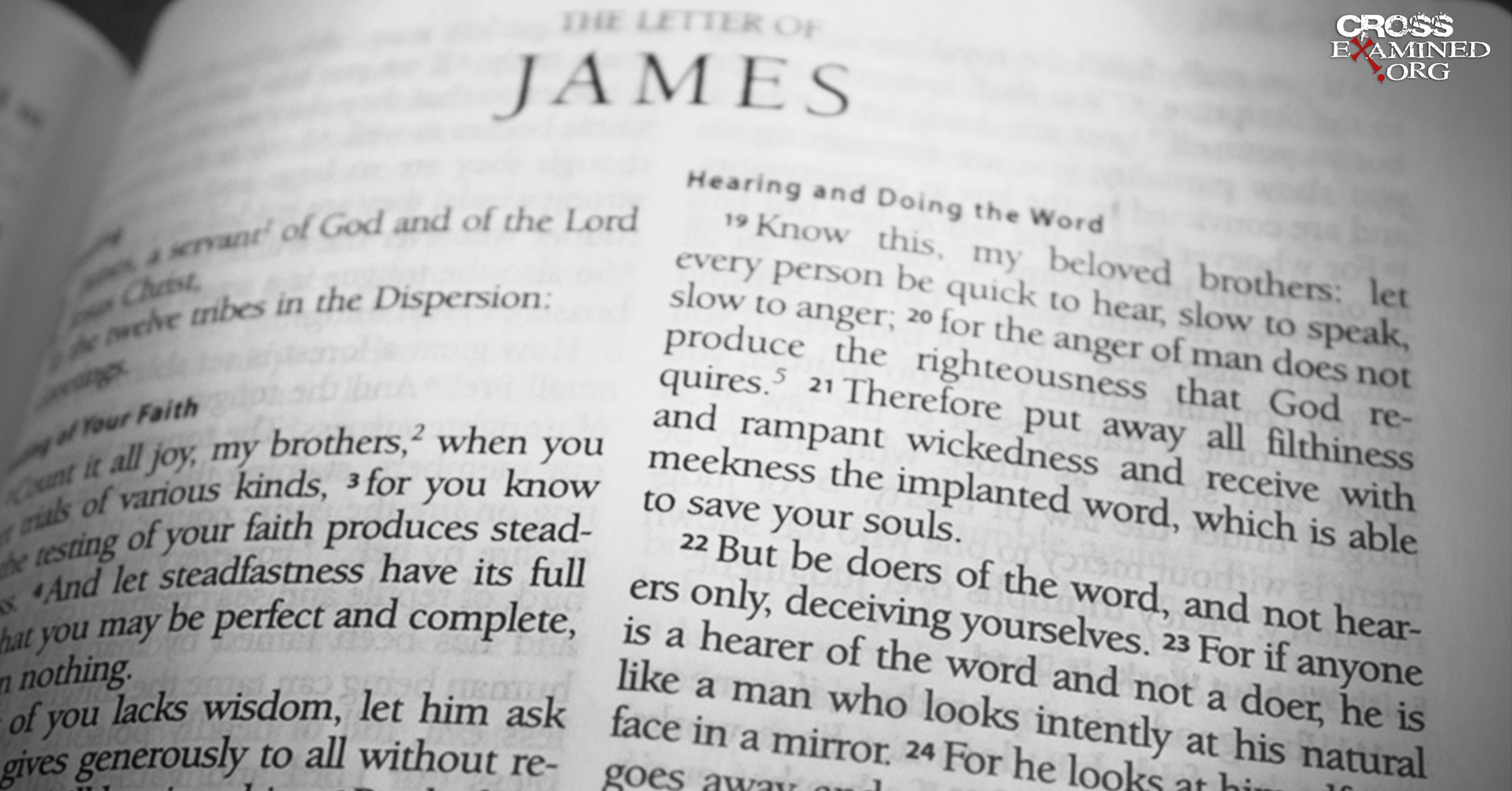
As you know, we have been examining the authorship of the New Testament letters over the past few weeks. Thus far, we have learned that good reasons exist to accept the apostles Matthew and John as authors of the First and Fourth Gospels; John Mark as the author of the Second Gospel, who in turn served as a preserver of Simon Peter’s testimony; Dr. Luke, the beloved physician and colleague of Paul, as the author of the Third Gospel; Paul as the most reasonable author for the 13 letters attributed to him; and most likely Luke as the author of Hebrews. But what about the letter attributed to James? Who is the most likely candidate for the pastoral letter? That is the topic of this article.

Date:   Interestingly, the letter attributed to James is most likely the oldest letter in the entire New Testament. Evidence suggests that the letter of James was probably written around the year A.D. 48 as the letter holds more a kinship with Jewish wisdom literature than does further developed Christian literature. James’s tie with the Jerusalem church as well as a thoroughly Jewish focus leads one to believe that the letter was written prior to the Jerusalem Council (c. A.D. 48).

Purpose: Many have claimed, and rightfully so, that James’s letter is somewhat similar to the Jewish wisdom literature found in the Old Testament. The key difference between James and the wisdom literature of the Old Testament is that James contains key exhortations and prophetic elements which are not found in OT wisdom literature.[1]

The book of James is the most practical of all the books in the NT. So practical is James that many have suggested a difference between the theology of James and Paul. However, such differences are quite exaggerated. Paul does focus on grace while James focuses on works. Yet, the two are far more complementary that skeptics suggest. James holds that true, genuine faith will lead to action as one should be a “doer of the word and not hearers only” (James 1:22, CSB). Jesus holds a similar outlook as he notes that one who loves him will obey his commandments (John 14:15). Therefore, James and Paul do not present alternate versions of Christianity. Rather, their message of works subsequent to grace is complementary.[2]

Author:           Three people are candidates for authorship of this early letter: James the son of Zebedee, James the son of Alphaeus (also known as James the Less or James the Younger),[3] and James the brother of Jesus (also known as James the Just). James the son of Zebedee could not have authored the letter as he died in A.D. 44 (Acts 12:2).

Pertaining to James the son of Alphaeus, there is no claim in the early church that he wrote the letter. Not much is known pertaining to the whereabouts of James the son of Alphaeus after the early ministry with Jesus. It is thought that James the Less was stoned by the Jewish authorities for preaching Christ and was buried in the Sanctuary in Jerusalem.[4] Justinian is said to have exhumed the body of James and placed his bones in the Church of the Holy Apostles in Constantinople in 332.[5]

This leaves only one possible candidate: James the brother of Jesus, also known as James the Just. James was not a believer in Jesus during Jesus’s earthly ministry (John 7:5). However, James did start following Jesus after Jesus’s resurrection from the dead. He was listed among those to whom Jesus appeared after his resurrection (1 Corinthians 15:7). James was one of the first leaders of the Jerusalem Church (Galatians 2:9). James later died by being pushed off the temple ledge[6] and stoned by the Jewish authorities.[7]  With the Jerusalem origin of the letter and the focus on Jewish wisdom literature, James the brother of Jesus is identified as the author of the letter.

Notes 

[1] CSB Study Bible (Nashville: Holman, 2017), 1965.

[2] See also Jesus’s illustrations to good and bad fruit in Luke 6:43.

[3] William Steuart McBirnie, The Search for the Twelve Apostles, revised ed (Carol Stream: Tyndale, 1973), 138.

[4] Ibid., 148.

[5] Ibid., 148.

[6] Eusebius, Ecclesiastical History, 2.23.12-16.

[7] “Festus was now dead, and Albinus was but upon the road; so he assembled the sanhedrin of judges, and brought before them the brother of Jesus, who was called Christ, whose name was James, and some others, [or, some of his companions]; and when he had formed an accusation against them as breakers of the law, he delivered them to be stoned.” Josephus, Antiquities 20.200, in Flavius Josephus and William Whiston, The Works of Josephus: Complete and Unabridged (Peabody: Hendrickson, 1987), 538.

About the Author:

Brian Chilton is the founder of BellatorChristi.com and is the host of The Bellator Christi Podcast. He received his Master of Divinity in Theology from Liberty University (with high distinction); his Bachelor of Science in Religious Studies and Philosophy from Gardner-Webb University (with honors); and received certification in Christian Apologetics from Biola University. Brian is in the Ph.D. program in Theology and Apologetics at Liberty University. Brian is full member of the International Society of Christian Apologetics and the Christian Apologetics Alliance. Brian has been in the ministry for over 14 years and serves as the pastor of Huntsville Baptist Church in Yadkinville, North Carolina.


Original Blog Source: http://bit.ly/2uYK9VZ