
Tag Archive for: apologetics

By V. T. Clark

Daniel was a young man when his world changed.

The world Daniel knew and grew up in changed to a world contrary to his culture and his faith. Christians today find themselves not immune to the shifting cultural changes of society. With this brings personal and communal challenges of what is the Christian response and role in culture. It becomes vital figuring out how to respond to culture with a stance in Apologetics, through actions reflecting Christ and standing firm in the faith.

One response could be disengagement. However, as Chuck Colson wrote in “How Now Shall We Live?” Christians should not shy away from culture, but be prepared to minister, serve, and share the Gospel. Disengagement from the culture is not a best response nor should it be a choice. Instead, as Christians, what needs to be done is finding ways to engage and live within society as Daniel did, but without compromising Biblical values. This is a fine line to walk, but the reality is Christians must live and interact within the society and culture.

Although Daniel could have tried to escape with repercussions, he becomes an example of courage and steadfastness in a culture different from his own. When offered food considered defiling (Daniel 1:8-16), rather than compromise, Daniel relied on his faith in God. God’s response for Daniel’s faithfulness was favor not only in God’s eye but through later circumstances the king’s so Daniel was given opportunities to display in words and actions, credit to God.

For Christians, Daniel’s responses to his world is an example of the Christian response to modern day culture. While Daniel did not have a say in where he lived, he did have a choice in how he would respond to society and culture. Likewise, so do Christians and one form at a believer’s use is in the form of apologetics. Mary Jo Sharp writes in, “Living in Truth” apologetics is, “making a case for belief in the Christian God, which includes answering objections to belief in God.” This echoes 1 Peter 3:15 of being prepared like Daniel to give reason and why to belief in God. For those unfamiliar with apologetics, there are Bible studies geared toward teaching believers not only how to share their belief, but even how to defend their belief. Daniel use every opportunity to credit God and use those moments to be a testament in his faith in God.

Paul, in the book of Acts, interacted with diverse groups of people in a form of apologetics where though the message of the Gospel stayed the same, he considered how he interacted with society and the culture. There are many ways to handle the encounters without changing the message. Tim Muehlhoff argues the greatest skills for Christian is not in debating but recognizing and affirming God’s truth through conversations with people and how Christians engage others in their daily lives. The challenge is engaging in culture while not being part of culture (John 17:13-19). Obviously, Daniel was facing more extreme situations where he had little if any say in his life. However, like Daniel, he showed the struggles for us as Christians, being under pressure to conform to society and culture without compromising values and belief.

Those who follow Christ are called to shed light on the Gospel to the world. (John 17:15). There is the reality though not to be too influenced by the world. (James 1:27; 1 Corinthians 7:31; Romans 12:2; 1 John 2:15). One solution is suggested by Dr. Jim Eckman for believers to evaluate how they speak the language of Christianity in a relativistic world. This also brings the need to do heart checks and determine if one’s faith and even actions line up with Christ. A favorite quote from Francis Schaeffer is:

“We are not excused from speaking, just because the culture and society no longer rest as much as they once did in on Christian thinking. Moreover, Christians do not need to be in the majority to influence society.”

Daniel was one man, but he held fast to God, and by obedience, he followed God. The same can be said for modern Christian engaging others in an increasingly secular world. Reality, this can make casual conversations and daily interactions sometimes a complex manner. The concept of what is truth is becoming more convoluted and with it changing definitions of even what is tolerance. Christians are supposed to be counter-culture. John Lennox saw post-modernism having within itself a self-contradiction of “no absolute truth” while the Christian finds themselves sharing truth seen through the eyes of God.

When looking at how Daniel handle his response to a changing society and culture, what is found is a core commitment to God. While the Christian finds themselves immerse in day to day engagement with people in real life or even on social media there is a point of conflict when the two worlds meet. Apologetics calls for sharing the truth of God’s world which is a contrast to a pluralistic world where sometimes the prevailing idea is “live and let live.” For the Christian, this is not biblical and laced with grey areas of morality not founded on biblical truth.

Apologetics is about finding common ground to be able to engage in conversations where the message of the Gospel can be interlaced in conversation. It is easy to react to a post-modern society without grace or think culture is useless, but Theodore Turneau countered like Paul, use culture in a way to connect with non-believers without compromising the message. Disengagement from society and even culture will not help discussions. Disengaging can be detrimental or even argued contrary to the “Great Commission” (Matthew 28:19-20). Every day brings with it new challenges to those who follow and believe in Christ. The challenge then lies in the Christian understanding more what is their role in society and culture and how to engage in the community in a way which reflects Christ.

Notes

Charles W. Colson.”How now shall we live?” Journal of Markets & Morality, vol. 5, no. 1, 2002, p. 287+.

Dr. Jim Eckman. “Culture and the Christian: Separate, Identify or Transform? – Issues In Perspective.” Issues In Perspective. 31 Dec. 2011. https://graceuniversity.edu/iip/2011/12/11-12-31-1/.

James A. Patterson.  “Cultural Pessimism In Modern Evangelical Thought: Francis Schaeffer, Carl Henry, And Charles Colson,” Journal of the Evangelical Theological Society 49, no. 4 (December 2006): 813.

Mary Jo Sharp. Living in Truth: Confident Conversation in a Conflicted Culture by Mary Jo Sharp (September 26, 2015).  Lifeway Christia


V. T. Clark is a graduate student via Houston Baptist University Online graduate program. She holds a Bachelor’s degree in Christian Ministry with a minor in Biblical Studies from Liberty University. She’s currently part of HBU Chapter of Ratio Christi at Houston Baptist University, as well as a writer for By Grace, In Faith. V. T. Clark is a member of CAA: Christian Apologetics Alliance and a member of the Evangelical Theological Society. Married to a Combat Marine Veteran, she is dedicated to apologetics, theology, and biblical studies.

Original Blog Source: http://bit.ly/2ABma49

By Alex McElroy

IS IT TRUE, O Christ in Heaven,
That the highest suffer most?
That the strongest wander furthest,
And more helplessly are lost?
That the mark of rank in nature
Is capacity for pain?
And the anguish of the singer
Makes the sweetness of the strain?
Is it true, O Christ in Heaven,
That whichever way we go
Walls of darkness must surround us,
Things we would but cannot know?
That the infinite must bound us
Like a temple veil unrent,
Whilst the finite ever wearies,
So that none’s therein content?
Is it true, O Christ in Heaven,
That the fullness yet to come
Is so glorious and so perfect
That to know would strike us dumb?
That if ever for a moment
We could pierce beyond the sky
With these poor dim eyes of mortals,
We should just see God and die?

by Sarah Williams

People will always settle for a feel-good lie until the truth is fully presented. What is true about your nature, your identity, and your purpose? What criteria do you use to assess what’s true? We live in a day and an age when the truth has migrated from the boundaries of objectivity into the fluid realm of preference. If it is possible for two individuals to live by separate truths, even if one of those truths is not actually true, we are content with the ramifications as long as no one’s truth harms the other person.

However, is it possible to live in a world where we no longer know what to trust or even how to determine the standard to assess what we should trust? How can we rear our children in such a world where what we teach today may not be palatable tomorrow and therefore deemed as ‘not true’? Do you truly know who you are? Is that something that can be known? Is it possible that there is only One who has the potential to know all of us equally and perfectly? I believe so, but many will say that the existence of such a One is not true at all.

TRUTH IS A PERSON

Many people make audacious statements. We are left to decipher them and determine which are valid and which are mere boasts. Jesus said, “I am the way, the truth, and the life” (John 14:6a). In John 18:37, Jesus is talking to Pontius Pilate and says, “Everyone who is of the truth hears My voice.” First, we must notice that Jesus didn’t claim to know the truth. He claimed to be the truth. Only in the Christian worldview is truth not simply a concept, but a person. This cannot be overstated. The claim is significant but can it be trusted?

By rising from the grave after being fully executed, Jesus demonstrated in undeniable fashion that He was telling the truth about everything He said, including His claim to “be” the truth. Some deny the resurrection, but how do they account for the inexplicable conversion of Saul to Paul or of Jesus’ half-brothers Jude and James who mocked His claims to be the Messiah (John 7:3-6) but later became faithful followers of Him? The tomb is still empty, and over 500 saw a resurrected Jesus (1 Cor. 15:6). Is it possible that some are still willing to settle for a ‘feel good’ lie because they aren’t prepared to deal with the ramifications of the clear and present truth? Do you know the truest person to ever live?

TRUTH IS IN YOUR PURPOSE

The poet above asks God, “Is it true, O Christ in Heaven, that the fullness yet to come is so glorious and so perfect that to know would strike us dumb?” The apostle Paul writes, “Therefore we do not lose heart. Even though our outward man is perishing, yet the inward man is being renewed day by day. For our light affliction, which is but for a moment, is working for us a far more exceeding and eternal weight of glory” (2 Cor. 4:16-17). Yes, the fullness yet to come will be glorious, and we may very well be awestricken, but until then we have a purpose to fulfill.

“The Lord will fulfill his purpose for me; your steadfast love, O Lord, endures forever. Do not forsake the work of your hands” (Psalm 138:8). The truth is that you and I have a purpose for being here. How we got here is irrelevant as are many of the unanswerable questions that we ask in this life. But we must remember that our forever has already begun, and our purpose is for such a time as this. The role you and I play in advancing His holy plan can only be played well if we adhere to what is true and live our lives accordingly.

He that takes truth for his guide, and duty for his end may safely trust to God’s providence to lead him alright. – Blaise Pascal


Alex McElroy is an international speaker, author, blogger, leadership advisor, and the Pastor of Education at New Life Covenant Southeast Church, with over 20,000 members led by Pastor John F. Hannah.  Alex has been serving in both youth and teaching ministries at New Life for over 12 years.  In his role, he teaches Discipleship class designed for adults to learn, fellowship, and grow in their faith within a small group setting. Alex also trains hundreds of teachers and ministers to deliver lessons in proper lifestyle, Biblical study, focused preparation, and Apologetics in order to maximize their effectiveness in and for the Kingdom of God.

Original Blog Source: http://bit.ly/2RnSZsm

PODCAST

Rigid adherence to scientism—as opposed to a healthy respect for science—is all too prevalent in our world today. Rather than leading to a deeper understanding of our universe, this worldview actually undermines real science and marginalizes morality and religion.

In this interview, celebrated philosopher J. P. Moreland exposes the self-defeating nature of scientism and equips us to recognize scientism’s harmful presence in different aspects of culture, emboldening our witness to biblical Christianity and arming us with strategies for the integration of faith and science—the only feasible path to genuine knowledge. Yes, this is a podcast you cannot miss!

Get the book: http://a.co/d/8VSY4SO

By Michael C. Sherrard

Sociologists, apologists, and the media have well articulated the abandoning of religion by many young adults. The church is aware of the attack on the faith of teenagers. It is becoming old news. We have become saturated with the statistics. We know the problem; it is time for a solution.

The solution, the way forward begins with obtaining a good understanding of where you are. This excerpt from “A Solution” given at the NCCA offers three insights into why young adults are leaving Christianity.

Hear:


Michael C. Sherrard is a pastor, the director of Ratio Christi College Prep, and the author of Relational Apologetics. Booking info and such can be found at michaelcsherrard.com.

Original Blog Source: http://bit.ly/2Qa0pSB

Join Frank on a fascinating survey of history from 1453 to the Pilgrims to Thanksgiving with none other than historian Bill Federer. This episode for the CrossExamined podcast is packed with surprising historical data. Don’t miss it!

Visit Bill’s website here: https://americanminute.com/

By Jeremy Linn

I’ve written a bunch about what Apologetics is – a rational defense of the Christian faith – and what it all involves. But the “What” of Apologetics doesn’t matter if there are no reasons why we should use Apologetics or even have it on our minds. To show its importance on our daily lives as Christians, I created a list of 33 reasons explaining why we need Apologetics.

I placed the reasons into categories for easy reading and sorted the categories into alphabetical order.

CHRISTIAN COMMUNITY

  1. It prompts a deeper discussion between Christians. It’s simple – Apologetics topics drive deep discussion. This discussion starts to change the shallow habits of some Christian circles.
  2. It eases tension between Christians with different views. When you understand the array of views Christians can reasonably hold, you become more open to accepting a Christian who holds a different view on a specific topic.
  3. It unifies people from various Christian denominations. The defense of God’s existence and the evidence behind Jesus’ life crosses all Christian denominations – no Christian is excluded from the Apologetics enterprise.
  4. It provides opportunities to encourage other Christians. A community of Christians can come together and ask tough questions, talk through them, and encourage each other to use what they’ve learned in daily life. This kind of encouragement happens all the time in podcasts like Stand to Reason.

EVANGELISM

  1. We can use it to break down intellectual barriers to the gospel. Many people won’t instantly accept Jesus into their life after hearing the gospel. They may have questions or objections that hold them back from doing so. Apologetics starts the process of tearing down these intellectual barriers.
  2. We can use it to better connect with people that have passions different than ours. For example, by diving into Apologetics topics related to science, you can have a deep conversation with a scientist (say, about the origin of the Universe) even when science isn’t your top passion.
  3. It helps us to better understand another person’s perspective. When someone stars explaining a viewpoint we’ve already heard through Apologetics study, we can better understand how the person arrived to that viewpoint.
  4. It gives us greater empathy toward people with other views. When we wrestle through Apologetics topics and understand the difficulty of that process, it helps us identify emotionally with people who have wrestled through the same topics and came to different conclusions.
  5. When we use it, we carry on the work of Christian thinkers living throughout the centuries. There is a long list of Christians defending the truth of God through the ages – St. Augustine, Blaise Pascal, and C.S. Lewis instantly come to mind.
  6. We can use it to reach people who are naturally skeptical. Sometimes, Apologetics-based discussion is the only kind of spiritual discussion a skeptic will be open to.
  7. It prepares us for questions about faith people may ask. Many Christians shy away from evangelism because they’re afraid of the questions that might be asked. Apologetics eases this anxiety by increasing our confidence in answering the questions others have.

FAITH

  1. It gives us a well-rounded understanding of our faith. Apologetics doesn’t just hyper-focus on specific issues like the Trinity, divine providence, or the applicability of Old Testament laws. Through Apologetics, we can explore and understand a wide range of elements of our faith.
  2. It helps us wrestle through intellectual doubts. Doubts aren’t a bad thing to go through, but unanswered intellectual doubts can debilitate our faith over time. Apologetics provides the resources needed to wrestle through our intellectual doubts.
  3. It grounds the faith of young people and new believers. This grounding is hugely important as young people enter a skeptical academic environment and new believers encounter new challenges.
  4. It provides a foundation of truth to hold onto during difficult times in life. When difficult circumstances carry the potential to turn us away from God, we can instead turn to Apologetics and cling to the truth about God.
  5. It keeps our guard up. When we consistently immerse ourselves into Apologetics content, we prepare ourselves for sudden and unexpected intellectual challenges that come our way – challenges which could easily put us into a “crisis of faith.”

PRACTICAL

  1. It exercises our mind. Reading books exercises our mind and thinking ability the most, and book reading is plentiful in Apologetics study.
  2. It connects some of the main areas of thinking together. Philosophy, science, history, and theology become an interwoven venture rather than separated subjects.
  3. It prompts us to be life-long learners. There is always more Apologetics content to learn, which leads us to yearn for a life of gaining knowledge and wisdom.
  4. It informs our voting decisions. Studying ethical issues helps us decide where to stand on key election topics.
  5. Sharing it builds up various skills. Sharing through blogs develops writing skill, sharing verbally shapes public speaking skill, and sharing through video builds production skill. My own graphic design skills have increased greatly from sharing Apologetics content on Instagram.
  6. It causes us to check our biases. People tend to listen only to data which affirms their own beliefs – this is a well-known phenomenon called confirmation bias. Apologetics prompts us to reflect on our biases and push against confirmation bias when we dig into views which oppose our beliefs.
  7. It helps us to recognize the false ideas in our culture. Recognizing these false ideas is key to ensure we don’t start to follow those ideas and suffer from their damaging consequences.
  8. It teaches us basic logic and formation of arguments. We can understand and assess arguments more effectively and identify logical fallacies in other people’s thinking.

SCRIPTURE

  1. Scripture commands us to use it. Paul says in 1 Peter 3:15 – “Always be prepared to make a defense to anyone who asks you for a reason for the hope that is in you.” Apologetics gets us prepared to make this defense.
  2. It allows us to follow the example of Jesus. Jesus used Apologetics methods (such as asking questions) in conversations described in Mark 12:18-27 and Matthew 22:15-22.
  3. It allows us to follow the example of the earliest Christians. They used Apologetics to affirm God’s existence by pointing to the events of Jesus resurrection – see especially Acts 2:29-33.
  4. It shows us the importance of the events of Jesus’ life. What did Jesus’ sacrifice accomplish? Why does it matter that he rose from the dead? Apologetics provides answers to these key questions.
  5. It coincides with reading scripture correctly. Apologetics helps us to read Bible passages in proper context, through an understanding of the historical background behind the passage and through the idea that we can’t just read one Bible verse (we need to read the verses around it to gather the flow of thought).

SPIRITUAL DEVELOPMENT

  1. It can deepen our relationship with God. When you’re in a relationship with someone, knowing more about that person can take that relationship deeper. The same goes with our relationship with God as we learn things about him through Apologetics!
  2. It gives us a greater sense of awe towards God. When we can acknowledge true things about God and see his power more through Apologetics content (on topics like miracles), our sense of awe towards him increases.
  3. It puts us in a position where we need to trust God. We don’t know the results of using Apologetics in conversations with others. We also don’t know what path our investigation of truth will lead us down. We need to trust in God through these unknowns.
  4. It brings us to a place of humility. The more we study Apologetics, the more we realize there is much we don’t know. At some point, humility is needed to accept we won’t have all the answers, which opens up an opportunity for faith.

This list is not exhaustive – I’m probably missing some reasons in it. But the list is sufficient to show that Christians truly need Apologetics in their daily lives.


Original Blog Source: http://bit.ly/2Fk4orK

Decades ago the free speech movement was born in the campus of UC Berkeley. Today the story is the complete opposite. Only a few weeks ago a student senator by the name of Isabella Chow abstained from a vote supporting “transgender rights” and even though she gave a well-reasoned explanation now more than 1,000 people have signed a petition demanding that she resign from the student government. In other words, she’s being excluded in the name of inclusion. Frank explains what’s happening in the college campuses across the U.S. and why.

The task of defending the truth of Christianity today is becoming increasingly difficult, especially since now technology allows us to “extract” a phrase or two and interpret it any way we want. Whether is in social media, radio or video, it’s never been easier to take things out of context. How can we successfully defend Christianity in a soundbite world? Stay tuned for the answer!

By Mikel Del Rosario

Faith in the Spotlight

Can you thrive in your career while staying true to your beliefs?

As Christians, we are vocational ambassadors representing Jesus in all that we do. But can you really thrive in your career while staying true to your Christian beliefs? In this episode of the Table Podcast, I sat down with Megan Alexander of Inside Edition to talk about this very question. Megan is an actress, author, and a reporter for Inside Edition.

We discussed her book, Faith in the Spotlight: Thriving in Your Career While Staying True to Your Beliefs, along with her experiences working in the media. But regardless of your vocation, it is possible to thrive in your career as an ambassador of Jesus. It is so important for us to have a seat at the table in a variety of public spaces. If Christians aren’t there, we won’t be represented.

Megan also mentioned how important reading C.S. Lewis was in terms of helping her learn about apologetics. She is a great storyteller and I especially loved hearing about how she got to explain Bible stories to her colleagues in the newsroom!

Watch:


Mikel Del Rosario helps Christians explain their faith with courage and compassion. He is a doctoral student in the New Testament department at Dallas Theological Seminary. Mikel teaches Christian Apologetics and World Religion at William Jessup University. He is the author of Accessible Apologetics and has published over 20 journal articles on apologetics and cultural engagement with his mentor, Dr. Darrell Bock. Mikel holds an M.A. in Christian Apologetics with highest honors from Biola University and a Master of Theology (Th.M) from Dallas Theological Seminary where he serves as Cultural Engagement Manager at the Hendricks Center and a host of the Table Podcast. Visit his Web site at ApologeticsGuy.com.

Original Blog Source: http://bit.ly/2B5r1fp

By Terrell Clemmons

It’s Time to Remit Darwinian Storytelling to the Annals of History.

Stephen Meyer was a young geophysicist working in the oil industry in Dallas, Texas, in 1985 when he saw that an interesting science conference was coming to town and he decided to drop in. During a panel discussion on the origin of the first living things, Charles Thaxton, a highly credentialed chemist, noted that the information stored in DNA could not be explained by chemical evolutionary processes. This was generally known already and uncontroversial. But Thaxton ventured a step further by suggesting that the information could point to an intelligent cause. This was a reasonable inference, Thaxton said because, in our regular human experience, we know that information is typically attributable to intelligent causes.

This struck Meyer as both intuitive and plausible. But what really piqued his interest was the heated reaction of some of the other scientists at this suggestion. They got really personal. Some criticized Thaxton’s intellect; others, his motives, as if he’d broken some unwritten convention. What was with all this emotion? Meyer wondered. He’d always thought scientists were objective professionals who coolly looked at data and followed the evidence. This was an interesting problem.

The encounter led to some follow-up discussions with Thaxton and a burning new question, which Meyer would take with him to Cambridge University a year later: Could this idea of intelligence—or intelligent design—be made into a rigorous scientific argument?

But during his first year there, an after-lecture social gathering brought home a sobering reality. Everyone at Cambridge was openly atheistic. In fact, atheism was so preemptively the assumed worldview that theism was not even on the table. Meyer not only believed in God; he was a Christian. Clearly, this could be a lonely work environment, and the widespread atheism around him could present obstacles to collaborations on this question. But he took heart in remembering the great scientists of history whose science had been specifically driven by their Christian worldview.

The Closed Darwinian Circle

Science writer Tom Bethell, who had arrived at sister university Oxford about twenty-five years prior, experienced a similarly disappointing revelation. He’d arrived at Oxford “naively imagining that philosophy taught us the meaning of life.” It didn’t.

But Bethell later came to see its usefulness. Many problems in philosophy had flourished, he discovered, because the words used to formulate theories weren’t clearly defined. Sometimes, he further realized, the vagaries seemed to be intentional. Bethell would go on to a long career as a philosophically astute journalist, brilliantly clarifying and parsing some of the most crucial enigmas of public life and history.

Case in point: Charles Darwin’s central postulate said that the diversity of biological life on earth could be explained by natural selection operating on random variations. Herbert Spencer, a contemporary of Darwin, summarized this notion as “survival of the fittest.” The phrase stuck, and today, Darwin’s postulate reigns as the grand unifying theory of established science.

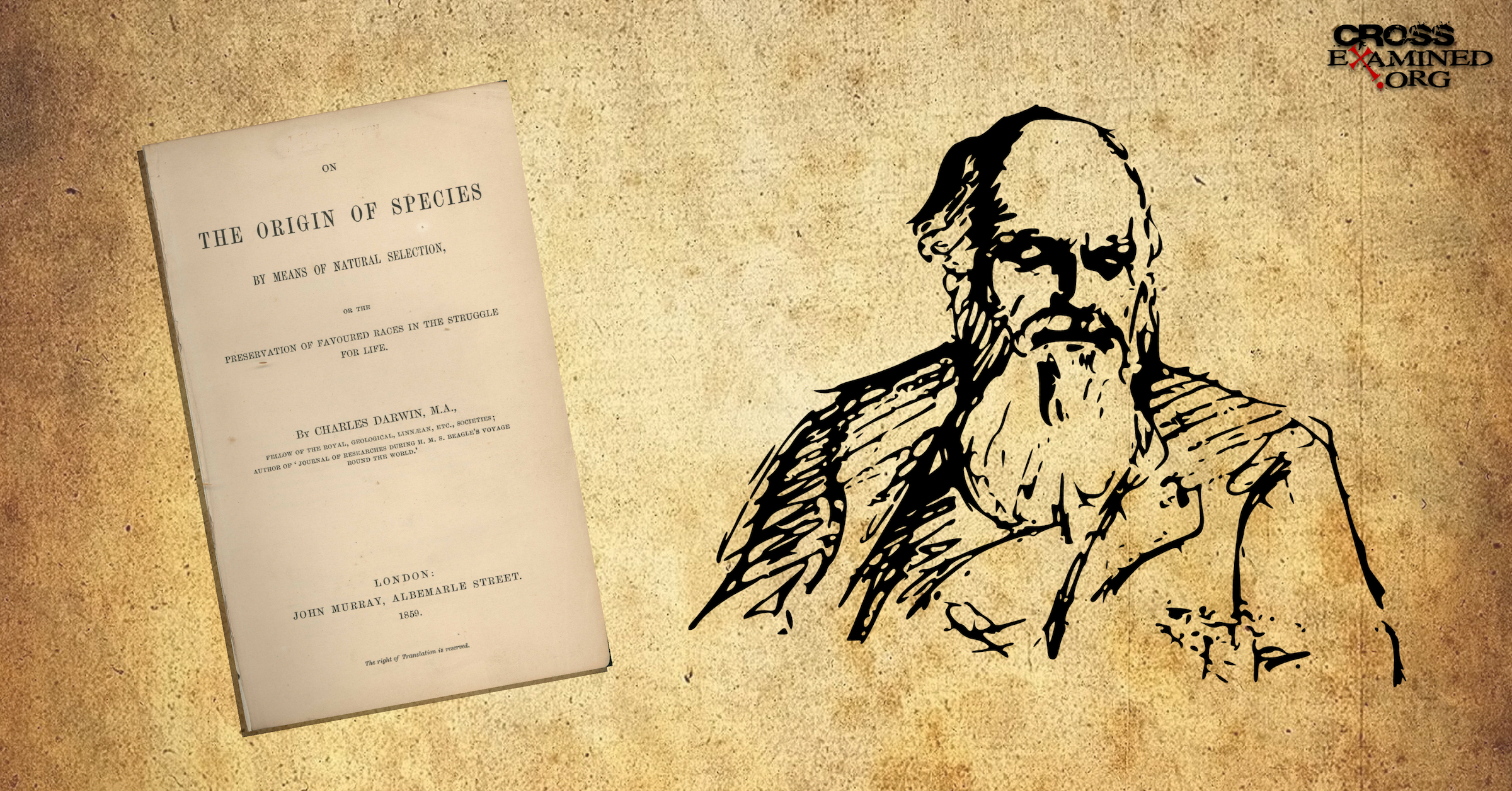
But was there an inherent problem with it, philosophically, from the very start? “Doubts about evolution first arose in my mind when I looked at the title page of The Origin of Species,” Bethell wrote.

I read, and then reread that page:

On the Origin of Species

by Means of Natural Selection

or the

preservation of favoured races

in the struggle for life

by Charles Darwin, M.A.

1859

The words ‘preservation’ and ‘favoured’ stood out. Was there any way of knowing what ‘races’ (meaning species, or individual variants) were favored other than by looking to see which ones were in fact preserved?

This was no pedantic quibble. For if there truly is no way of determining what is “fit” other than by seeing what survives, then Darwin was arguing in a self-confirming circle: the survival of the survivors. In rhetorical terms, this is what’s called a tautology—a statement that is true by definition, due to the construction of the language by which it is expressed. In effect, Darwin’s proposed mechanism—natural selection—rested on the observation that, “Survivors survive.” To which any clear-thinking middle-school student might say, “Well, duh.”

Curating History

Beginning with this observation, Bethell’s latest book examines the dialogue that has taken place among scientists since the publication of The Origin. But rather than giving us a chronological point-counterpoint synopsis of it, Bethell presents a kind of “tour” of the topics over which the debate has been hashed out—the “rooms,” if you will, of the 150-plus-year-old house of Darwin: common descent, natural selection, the fossil record, information theory, evolutionary psychology, artificial intelligence, the growing intelligent design movement, and more.

The upshot of it all is captured in his title: Darwin’s House of Cards: A Journalist’s Odyssey Through the Darwin Debates. Darwinism is an idea past its prime, he concludes, one whose collapse is inevitable and is in fact already demonstrably underway.

Examining a Theory and Its Theorist

He states that forthrightly, but also backs it up with characteristically sound logic—examining, like a museum curator, Darwin’s various claims in light of both mounting new evidence against them and the ongoing lack of evidence supporting them. Room by room, he shows how evolutionary theory today is being propped up by logical fallacies, bogus claims, and outdated empirical evidence that has all but disintegrated under the weight of new discoveries.

In addition to covering the high points of the scientific discussion, Bethell also delves into the man Darwin as he revealed himself through his personal writings. While Darwin was in his own right a legitimate scientist, his theorizing was influenced, inordinately as it turns out, by three ideas of his day: Malthusian economics, Progress, and philosophical materialism.

  • Malthusian Math: Political economist Thomas Malthus had speculated that when population growth outstrips food supply, then death by starvation would result in some sectors of society but not others. Darwin had read Malthus, and he simply transferred the calculus of overpopulation to the plant and animal kingdom. “It at once struck me that under these circumstances favorable variations would tend to be preserved, and unfavorable ones to be destroyed. The result would be the formation of new species.” Darwin had no evidence of the formation of any new species, though. That was pure extrapolation.
  • Progress: Capitalized to denote the philosophy as it existed in his day, “Progress” was the reigning metanarrative in post-Enlightenment England, the all-encompassing, assumed a trajectory of reality. It was “as difficult for him to escape as the air he breathed,” wrote Bethell, and Darwin was a confirmed believer. The word “evolution” doesn’t actually appear in The Origin. He referred rather to improvement, progress, and perfection, in the end, writing that “all corporeal and mental endowments will tend to progress toward perfection.”
  • Materialism: Darwin himself was a full-blown materialist, but he avoided outwardly confessing the extent of his belief. He’d worked out his theory by 1837, but didn’t go public with it for more than twenty years, partly because the 1830s climate of opinion was highly unfavorable to materialism. Even at publication in 1859, he still didn’t deploy it consistently in The Origin, but rather strategically and progressively invoked it over the course of six editions.

Darwin’s metaphysical outlook was not a deduction from his science, though, but was influenced by his theology. He raised theological issues in several of his writings, and Bethell devotes an entire chapter to his evolving religious views. Two points are worth mentioning here. In his autobiography, Darwin mentioned being “heartily laughed at” for quoting the Bible while on the H.M.S. Beagle. We can only speculate about the psychological effect of this incident, but it obviously affected him enough to write about it forty years later. Afterward, he reconsidered the Bible’s place in his view of the world and concluded it was “no more to be trusted than the sacred books of the Hindoos, or the beliefs of any barbarian.”

In addition, like many in insulated societies, he took issue with God over the problem of evil and suffering, ultimately deciding that the concept of an all-loving and all-powerful God could not be reconciled with the reality of misery in the world. “Thus disbelief crept over me at a very slow rate, but was at last complete.”

More a product of their theorist and the zeitgeist, then, than of science, Darwin’s postulates found easy acceptance among an elite intelligentsia predisposed to believe in materialism and Progress. Sadly, liberal clergy went along without objection or concern.

Straightening Out Bad Philosophy

Molecular biologist Jonathan Wells concurs with Bethell that Darwinian evolution is one long argument bolstering an a priori metaphysics. In Zombie Science: More Icons of Evolution, he gives three common definitions of science: (1) empirical science is the enterprise of seeking truth by formulating hypotheses and testing them against evidence; (2) technological science comprises the advances that have enriched modern life; and (3) establishment science consists of professionals conducting research. These can all be legitimate uses of the word.

In addition, though, he notes, some people have come to define science as (4) the enterprise of providing natural explanations for everything. But this would more accurately be called methodological naturalism. And while it is true that the methods of empirical science limit the causal explanations, it can confirm or disconfirm to the material realm, to go further and assume that only material causes exist is to assume an unstated claim about metaphysical reality. Furthermore, to do so and call it science constitutes fraud.

Metaphysical Storytelling & the Judgment of History

Fraud aside, it also compromises science. When priority is given to proposing and defending materialistic explanations over following the evidence, materialistic philosophy is running the show. Where this happens (and it does), Wells calls it zombie science. “Evolution is a materialistic story,” he writes, “and since the materialistic story trumps the evidence, it is zombie science.”

Listen to biologist-turned-filmmaker Randy Olsen’s explanation for why he knowingly passed off falsehood in his 2007 film Flock of Dodos: The Evolution-Intelligent Design Circus: “Scientists must realize that science is a narrative process, that narrative is story; therefore science needs story.” This is stunning! What Olson is saying here is that metaphysical storytelling should override accuracy in science reporting.

Returning to Meyer at Cambridge, during his first year, he was granted a second telling revelation when his supervisor offered some unsolicited advice. “Everyone here is bluffing,” the kindly old school don said. “And if you’re to succeed, you must learn to bluff too.”

Fortunately, Meyer opted for personal integrity and legitimate science over bluffing and storytelling and then left it to others to sort things out. Imagine the exhibit in some future Museum of Science and History: Everyone believed the Darwinists, boys, and girls until a few brave scientists concerned with data and following evidence came along and called their bluff.

That, ladies and gentlemen, is a science story worth telling.


Terrell Clemmons is a freelance writer and blogger on apologetics and matters of faith.

This article was originally published at salvomag.com: http://bit.ly/2z72XqW