
Some Definitional Drawbacks In Atheism
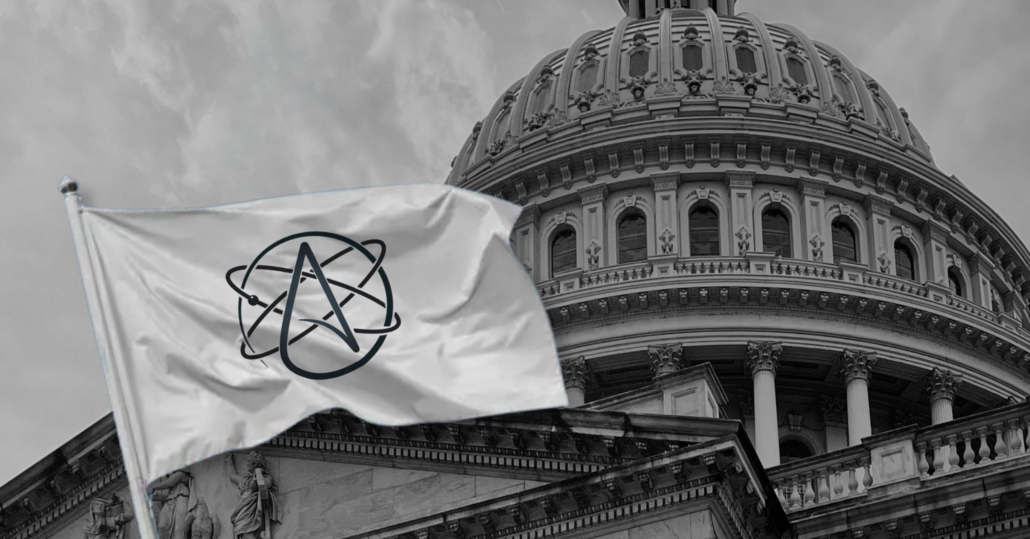
In a previous article I wrote about how “atheism” is best understood as a belief that there is no God. Those who prefer to describe themselves as merely “lacking God-belief” would do better to describe themselves as “negative atheists” as that is the more precise term.
As a postlude to that article, I think it’s important to state why this stuff matters. I’m not confident that that this definitional minutia matters a lot. It matters. But it’s not of ultimate importance. Far more important things deserve discussion. Nevertheless, this stuff matters enough to deserve at least a little observation here. Here are some reasons why I think this stuff matters.
First, Negative Atheism Comports With God’s existence
Perhaps the biggest most glaring problem with the “new” (negative/soft/weak) atheism is that it’s compatible with God’s existence. When atheists define their atheism as “lacking God belief,” then that atheism is “true” if indeed that person has no God-belief. Even if God exists, if that self-identified atheist really does “lack God-belief,” then his atheism is true. The reference point for that truth claim isn’t in God but in the mind of that individual. One’s atheism can be true and God exist. That’s odd, to say the least.
Second, there’s Still an Implicit Burden of Proof
Second, the negative atheist still, presumably, thinks his or her view is rational but that amounts to a claim and claims carry their own respective burden of proof. Put another way, the atheist may be holding to his or her non-theism for good reasons, bad reasons, or no reason at all. But if he or she won’t offer an any good reasons, then he cannot honestly wear the mantle of a “reasonable” atheist. Or, at least, no one else owes them the assumption that their atheism is reasonable. His atheism could be dogmatic, fundamentalist, or otherwise thoughtless irrationality. I would assume he thinks his atheism is reasonable, but absent any justifying reasons that he is reasonable, I cannot safely assume he is reasonable. He has an implicit burden of proof, to show that his non-belief is reasonable.
Third, it’s Superfluous
There’s already a whole set of terms addressing these categories effectively making a new sense of “atheism” superfluous. If he has a generalized skepticism regarding all theological objects, then he’s a theological skeptic. If he lacks belief in God, he’s a negative atheist. To reinvent the term “atheism” to mean “lack of God belief” just isn’t necessary, since that semantic domain is already covered without confusingly overlapping different concepts under the same term. And whenever people are blurring and redefining terms, especially when there’s an obvious agenda at work, there’s a good chance that’s a smoke-grenade. And people don’t throw a smoke grenade unless they’re trying to sneak something past you.
Fourth, it’s confusing
Fourth, religious and theological discussions can get quite confusing. Inconsistent or faulty terminology makes things worse. Often I find that when atheists and theists disagree using terms like “faith,” “belief,” “theism,” or “atheism,” the core of our disagreement often boils down to non-standard language. I understand that language is flexible and I’m not denying stipulated or tentative terminology. But even then, it’s helpful to recognize the normal meaning of a term and then clearly point out how it’s being used in a non-standard way in this conversation. Without at least some exposure and acceptance of conventional terms, we can’t get very far in our discussions. When we don’t align on key terms, understanding and entertaining them–whether or not we agree with them–we tend to get so busy talking past each other we don’t actually make any progress in pursuit of truth.
Fifth, it’s like Sitting on the floor and calling it a chair
Fifth, many Atheists don’t seem to understand that they have a whole history and set of terms already available to them. But either they haven’t looked into it, or they are misinformed, so they mislabel or try to reinvent things–not thinking it through very deeply. In this way, the history of atheism is like a big house with lots of furniture and those particular atheists are sitting on the floor calling it a chair. A lot of people, myself included, are interested in serious academic dialogue on matters like God’s existence, religious truth, and the possibility of miracles. So, I’ve done some work to discover these terms and understand my own views and the views of other religions and non-religious outlooks. It shouldn’t be necessary for a Christian theist to have to teach atheists about their own array of conceptual and terminological options, just so we can eventually engage on these topics. I value vigorous dialogue. Ideas matters. And language matters. But ultimately, lives matter more, and I’d like to be able to be challenged and critiqued while offering the same in a mutual pursuit of truth. If atheists won’t even accept a chair I’m offering them, from their own ideological “house,” then we probably won’t be able to sit down to a civilized conversation. If we can agree on some of the furniture here. We can then both pull up our chairs, draw up a pot of tea, and sit down to a lively discussion instead of pleading with some atheist Jack on the floor to come join us at the debate table.
Sixth, it’s an affront to positive atheism
Negative atheism is an implicit affront to positive atheism. Negative atheism implies that positive atheism isn’t convincing enough to persuade them to that position. Positive atheism, being the belief that no God exists, has a burden of proof because it’s making a claim about reality that, in reality, there is no God. That position is either reasonable or it is not. If it is reasonable, then negative atheists would be within their epistemic rights to adopt positive atheism instead of negative atheism. But instead of identifying themselves as “positive atheists,” the negative atheist has declined the offer.
Seventh, it risks duplicity
Seventh, related to the last point, negative atheism risks duplicity. Why would a person present himself or herself as an atheist in the negative (lack of belief) sense when there is, underneath that posture, is an abiding commitment to positive atheism or agnosticism that better describes their actual beliefs? It’s confusing and unclear, at best, to hide one’s positive atheism or agnosticism underneath a veneer of negative atheism. At worst, it’s strategic dishonesty where a person is pretending to be more open-minded, or less committed than they actually are.
Every positive atheist is also a negative atheist, technically speaking. By believing that no god exists, one is also lacking belief in God’s existence. But then that person is more clearly and precisely described as “positive atheist.” Negative atheism is a superfluous distracting descriptor for them. Meanwhile, one could be an agnostic negative atheist in the sense of refraining from God belief because one thinks that knowledge of God isn’t happening. If some people are atheist in the classic sense then why stipulate a modified sense that hides one’s underlying position? Audiences are left wondering whether those people can defend that position or whether they are too scared to show their hand for fear it might be a losing hand.
Eighth, it’s imprecise
As mentioned above, if a person claims to merely “lack belief in God” that position begs for the follow-up question: “Are you the agnostic kind or the (positive) atheist kind?” If one halts at the point of merely “lacking belief in God,” then the intellectual train has stalled out before arriving at a good stop. That position is manifestly imprecise. We can’t be clear about everything, but we would do well to be clear where we can. Here we can be very clear. Any aversion to clarity risks the duplicity mentioned above.
Ninth, poor terminology makes for poor thinking
Mangled and blurry words tend to generate equally mangled and blurry thinking. If we’re aiming at truth, we do well to aim for clear and careful thinking. And to do that we need clear and honest terminology. Redefining atheism from a metaphysical stance (No God exists) to a psychological stance (I have no God-belief) is a seriously problematic shift. For the reasons stated above, it should be clear how poor terminology makes for poor thinking.
As a Christian theist I affirm that God exists, Jesus is God and God’s son, and He rose from the dead to save us from our sins. I also believe that God gave us rational faculties that, when used correctly, assist us in discovering and understanding how Jesus is the answer to the most important questions in life. I have a vested interest in helping Christians and non-Christians alike to think better. Rationality, sound logic, and critical thinking are pre-evangelism. They won’t do everything, but they are still important. Words matter to me, because words carry messages, and some messages are matters of life and death.
We need strong minds, humble hearts, and willing hands before we are ready to receive the big challenging Gospel message. But critical thinking poses a stark challenge to the Christian faith as well. Whatever the church has acquired that’s untrue, misstated, or errant–what’s liable to be critiqued into oblivion by discerning congregants. Christian theology is subject to revision and division. And critical thinking is a big part of that painful process. When it comes to atheists, I want every atheist to be the most rational, most reasonable, and most critically discerning person they can be. I understand that many of them will never come to faith in Christ. But it’s at least a service, a way to love them, regardless of what they do with that well-intended service. And for some of atheists, their ability to think well and their passionate pursuit of wisdom will drive many of them to their knees before God. I do not apologize for taking confusing terms, and opaque concepts and holding a light to them so that atheists and theists can see them better, weigh them more fairly, and think clearer for it.
Recommended Resources:
I Don’t Have Enough Faith to Be an Atheist (Paperback), and (Sermon) by Norman Geisler and Frank Turek
Stealing From God by Dr. Frank Turek (Book, 10-Part DVD Set, STUDENT Study Guide, TEACHER Study Guide)
Macro Evolution? I Don’t Have Enough Faith to be a Darwinist (DVD Set), (MP3 Set) and (mp4 Download Set) by Dr. Frank Turek
Answering Stephen Hawking & Other Atheists MP3 and DVD by Dr. Frank Turek
Dr. John D. Ferrer is a speaker and content creator with Crossexamined. He’s also a graduate from the very first class of Crossexamined Instructors Academy. Having earned degrees from Southern Evangelical Seminary (MDiv) and Southwestern Baptist Theological Seminary (ThM, PhD), he’s now active in the pro-life community and in his home church in Pella Iowa. When he’s not helping his wife Hillary Ferrer with her ministry Mama Bear Apologetics, you can usually find John writing, researching, and teaching cultural apologetics.
Originally posted at: https://bit.ly/4tsXCm8