By Tim McGrew
Here are some of the details that Luke gets right in Acts that cannot be derived from Josephus. Most of these can be found in Colin Hemer’s magisterial work, The Book of Acts in the Setting of Hellenistic History.
1. A natural crossing between correctly named ports. (Acts 13:4-5) Mt. Casius, which is south of Seleucia, is within sight of Cyprus.
2. The proper port (Perga) along the direct destination of a ship crossing from Cyprus (13:13)
3. The proper location of Iconium in Phrygia rather than in Lycaonia. (14:6) This identification was doubted because it challenges some sources reflecting boundary changes from a different date, but the ethnic inclusion of Iconium in Phrygia is confirmed by the geographical distribution of Neo-Phrygian texts and onomastic study.
4. The highly unusual but correct heteroclitic declension of the name Lystra. (14:6) This is paralleled in Latin documents.
5. The Lycaonian language spoken in Lystra. (14:11) This was unusual in the cosmopolitan, Hellenized society in which Paul moved. But the preservation of the local language is attested by a gloss in Stephanus of Byzantium, who explains that “Derbe” is a local word for “juniper.” Hemer lists many other native names in the Lystra district.
6. Two gods known to be so associated—Zeus and Hermes. (14:12) These are paralleled epigraphically from Lystra itself, and the grouping of the names of Greek divinities is peculiarly characteristic of the Lystra district.
7. The proper port, Attalia, which returning travelers would use. (14:25) This was a coasting port, where they would go to intercept a coasting vessel, by contrast with Perga (13:13), a river port.
8. The correct order of approach (Derbe and then Lystra) from the Cilician Gates. (16:1; cf. 15:41)
9. The form of the name “Troas,” which was current in the first century. (16:8)
10. The place of a conspicuous sailors’ landmark, Samothrace, dominated by a 5000 foot mountain. (16:11)
11. The proper description of Philippi as a Roman colony, and the correct identification of its seaport as Nea Polis, which is attested both in manuscripts and in numismatic evidence. (16:12)
12. The right location of the Gangites, a small river near Philippi. (16:13)
13. The identification of Thyatira as a center of dyeing. (16:14) This is attested by at least seven inscriptions of the city.
14. The proper designation for the magistrates of the colony as strategoi (16:22), following the general term archontes in v. 19.
15. The proper locations (Amphipolis and Apollonia, cities about 30 miles apart) where travelers would spend successive nights on this journey to Thessalonica. (17:1)
16. The presence of a synagogue in Thessalonica. (17:1) This is attested by a late 2nd AD inscription. (CIJ 693)
17. The proper term (“politarchs”) used of the magistrates in Thessalonica. (17:6) See Horsley’s article in the Anchor Bible Dictionary, in loc.
18. The correct implication that sea travel is the most convenient way of reaching Athens, with the favoring “Etesian” winds of the summer sailing season. (17:14-15)
19. The abundant presence of images in Athens. (17:16)
20. The reference to a synagogue in Athens. (17:17) See CIJ 712-15.
21. The depiction of philosophical debate in the Agora, which was characteristic of Athenian life. (17:17)
22. The use of the correct Athenian slang word for Paul (spermologos, “seed picker,” 17:18) as well as for the court (Areios pagos, “the hill of Ares,” 17:19)
23. The proper characterization of the Athenian character. (17:21) This, however, might be attributed to common knowledge.
24. An altar to an “unknown god.” (17:23) Such altars are mentioned by Pausanias and Diogenes Laertius. Note also the aptness of Paul’s reference to “temples made with hands,” (17:24), considering that Paul was speaking in a location dominated by the Parthenon and surrounded by other shrines of the finest classical art.
25. The proper reaction of Greek philosophers, who denied the bodily resurrection. (17:32) See the words of Apollo in Aeschylus, Eumenides 647-48.
26. The term “Areopagites,” derived from areios pagos, as the correct title for a member of the court. (17:34)
27. The presence of a synagogue at Corinth. (18:4) See CIJ 718.
28. The correct designation of Gallio as proconsul, resident in Corinth. (18:12) This reference nails down the time of the events to the period from the summer of 51 to the spring of 52.
29. The bema (judgment seat), which overlooks Corinth’s forum. (18:16ff.)
30. The name “Tyrannus,” which is attested from Ephesus in first-century inscriptions. (19:9)
31. The shrines and images of Artemis. (19:24) Terracotta images of Artemis (=Diana) abound in the archaeological evidence.
32. The expression “the great goddess Artemis,” a formulation attested by inscriptions at Ephesus. (19:27)
33. The fact that the Ephesian theater was the meeting place of the city. (19:29) This is confirmed by inscriptional evidence dating from AD. 104. (See OGIS 480.8-9.)
34. The correct title “grammateus” for the chief executive magistrate in Ephesus. (19:35) This is amply attested in inscriptional evidence.
35. The proper title of honor “neokoros,” commonly authorized by the Romans for major cities that possessed an official temple of the imperial cult. (19:35) See Wankel, Die Inschriften von Ephesus, 300.
36. The term “he theos,” the formal designation of the goddess. (19:37) See the Salutaris document, passim.
37. The proper term (“agoraioi hemerai”) for the assizes, those holding court under the proconsul. (19:38)
38. The use of the plural “anthupatoi,” (19:38), which is either a remarkable coincidence of expression or else a deliberate reference to the fact that at that precise time, the fall of AD 54, two men were conjointly exercising the functions of proconsul because their predecessor, Silanus, had been murdered. See Tacitus, Annals 13.1; Dio Cassius 61.6.4-5. This is one point where Ramsay’s work has been superseded in a way that reflects great credit on Luke’s accuracy.
39. The “regular” assembly, as the precise phrase is attested elsewhere. (19:39) The concept is mentioned repeatedly in the Salutaris inscription, IBM 481.339-40 = Wankel 27, lines 468-69.
40. The use of a precise ethnic designation, “Beroiaios.” (20:4) This is attested in the local inscriptions.
41. The employment of the characteristic ethnic term “Asianos,” meaning “Greeks in Asia.” (20:4) Cf. IGRR 4.1756, where the Greeks honor a Sardian citizen with this designation (lines 113, 116).

Visit the Christian Apologetics Alliance Here
Resources for Greater Impact
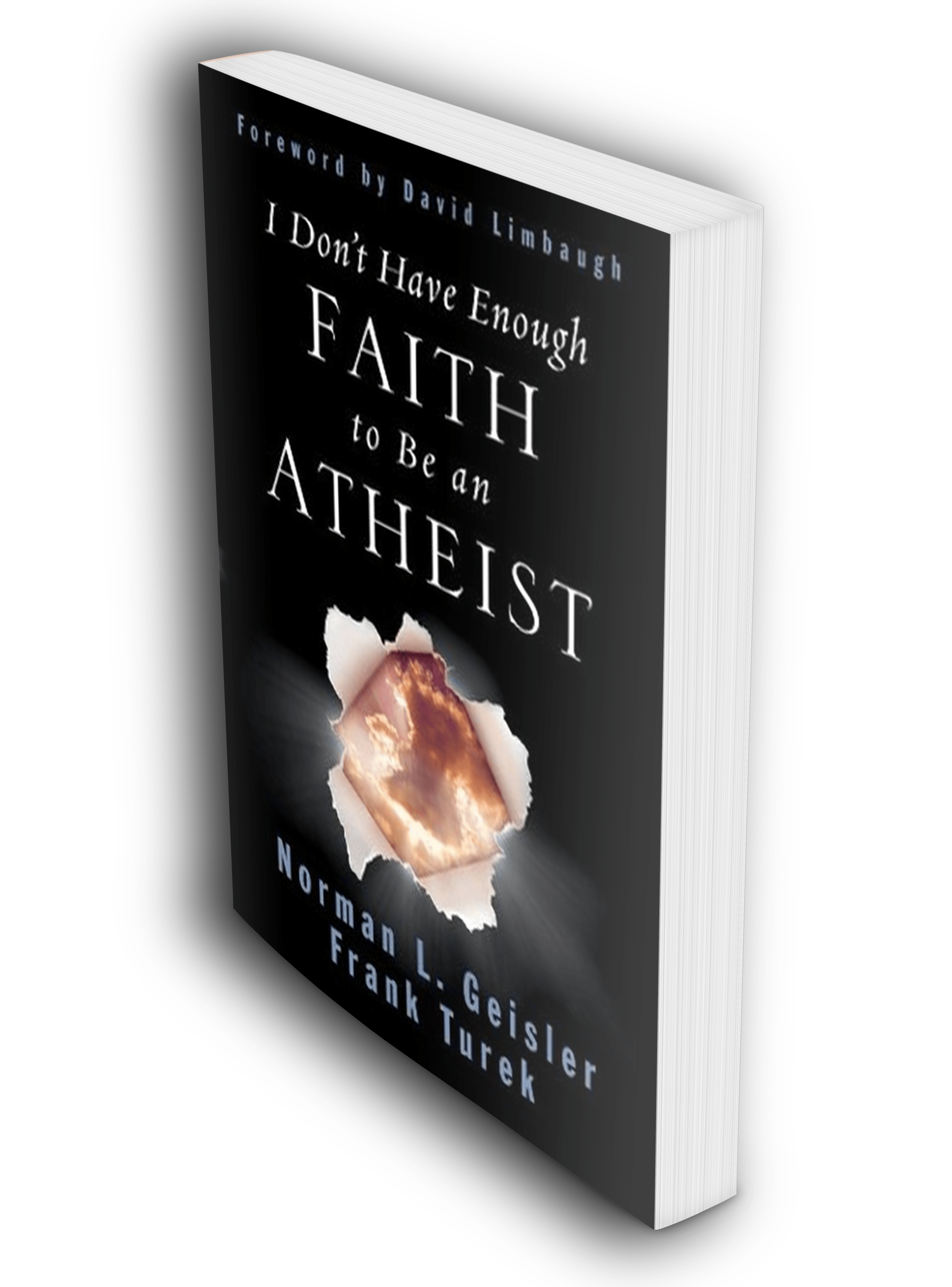 I Don’t Have Enough Faith To Be An Atheist (Paperback)
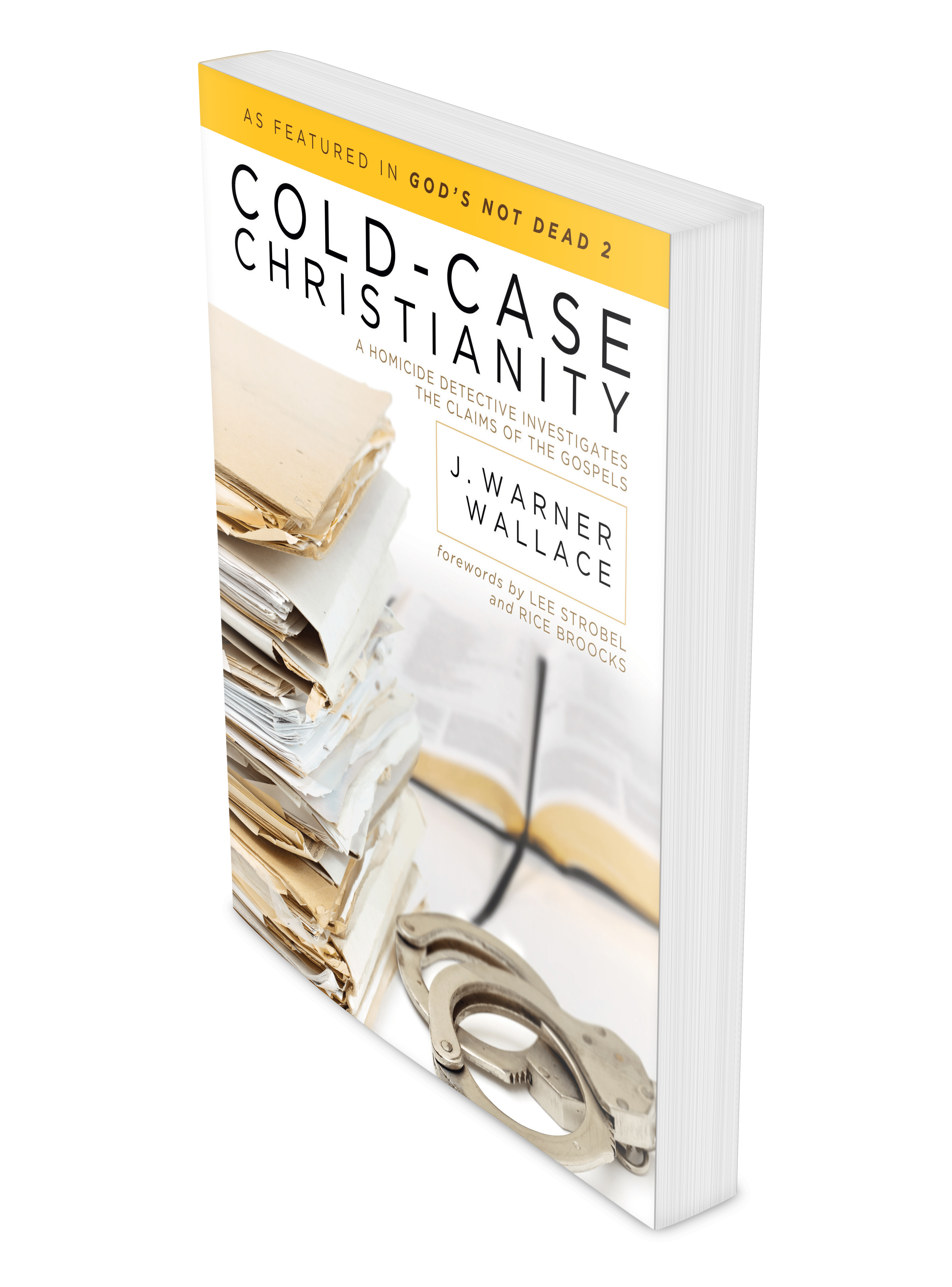
Cold-Case Christianity (Paperback)

The Cross and the Falsification of Islam
IslamBy Samuel Inbaraja
The Quran claims that Jesus was not killed. It denies the death of Jesus on the cross of Calvary.
The Crucifixion of Jesus attested by both biblical and extra-biblical evidences.
1.Biblical Evidence:
Eye-witnesses record
3 For I delivered to you as of first importance what I also received,that Christ died for our sins according to the Scriptures,4 and that He was buried, and that He was raised on the third day according to the Scriptures,5 and that He appeared to Cephas, then to the twelve.6 After that He appeared to more than five hundred brethren at one time, most of whom remain until now, but some have fallen asleep;7 then He appeared to James, then to all the apostles (1 Corinthians 15: 3- 7)
Skeptical Scholar John Dominic Crossan says that the death of Jesus “is as sure as anything historical can ever be.”
2. Scientific Proof
— Journal of the American Medical Association (JAMA 1986;255:1455-1463)
3. Extra – biblical Evidence
Conclusion
The Quran claims to be the perfect inerrant revelation of God. The Quran denies the death of Christ. History confirms the death of Christ. Therefore the Quran is not inerrant; Quran is not the revelation of God. So Mohammed the messenger who delivered the message in the Quran and claimed to be a prophet from God is a False Prophet and Islam which claims to be the true way is proved to be a false religion. Thus the death of Christ on the Cross falsifies the Quran and proves that Mohammed is a false prophet and disproves Islam as a false cult.
Visit the Christan Apologetics Alliance Here ?
Resource for Greater Impact
Answering Islam (DVD)
Answering Islam (Download)
Essential DNA Required for Life
2. Does God Exist?By Philip Carlson
If one believes in evolution, it is important to know what is required for life. Not just what environmental conditions are needed, but also what biochemical conditions.
It is often quoted that there are 250 essential proteins required for basic life. To have life, you need 250 proteins so it was thought. While those were previous guesses it is now possible to determine what parts of DNA are essential for life. A study released in the journal Molecular Systems Biology provides a method of testing just that. Not only do they give a method they also performed the test on a “simple” bacterium (Caulobacter crescentus).
The complete genome of this bacterium was sequenced in 2001. Which helps tremendously with the task of determining which parts are essential for its survival. It is important to know that just because the genome was sequenced does not mean that the function of all the pieces is known, just that the nucleobase sequence that makes up the DNA is known.
With the bacteria in hand, these researchers from the Stanford University School of Medicine took a close look at exactly what parts of DNA are required for this bacteria to live in the lab.
What is essential for life from a biochemical standpoint? They came up with some interesting conclusions which dwarf the previous estimates.
We are told, “that 12 percent of the bacteria’s genetic material is essential for survival under laboratory conditions.” (1) Sounds like a small percentage overall, but keep in mind that this essential genome was 492,941 base pairs long. These are base pairs that are needed for life in this bacterium. This means that 985,882 amino acids were needed in the correct arrangement to allow life for this bacterium. The implications this has for the unaided formation of the first life are staggering. (While we could stop here and calculate the apparent overly absurd odds of this happening, such a calculation would serve little purpose. As a side note, creationist literature often attempts to calculate the absurd odds of things happening the way evolutions claim. Many set up straw men with these types of processes. I think that more often than not those types of calculations oversimplify the problems and ashamedly make a caricature of the opponents position. This type of “argumentation” is best left off the table if any real headway is to be made with this issue. While I do believe that such odds could be calculated at a rudimentary level, it could never be done to complete satisfaction without knowing all the factors involved. We do know, however, that the improbability is greatly increased because of the sheer number of correctly sequenced amino acids needed.) The researches did find 480 protein coding regions that are essential. This nearly doubles the previous estimates of how many proteins are needed for life. While is is a bit of an extrapolation to say that all of those 480 proteins are needed for life I think we can say that if that part of the DNA is needed it stands to reason that so are those proteins. They also found 91 essential coding regions and 49 coding regions that have unknown function.
These 91 essential DNA segments that are of unknown function were still found to be essential to life! This reminds me of the old vestigial organs argument often used in support of evolution. That is right, just because we don’t know the function does not means there isn’t one. See the previous discussion on pseudogenes for another example of that type of thinking.
This new research helps to contribute to our (mis)understanding of an evolutionary origin of life, and, I think, push us toward accepting that the transcendent creator did not use evolution to bring about life.
1. Digitale, E. “New method reveals parts of bacterium genome essential to life”. Stanford School of Medicine news release, August 30, 2011, http://med.stanford.edu/ism/2011/august/shapiro.html
Visite here CAA here
Resrouce for Greater Impact
Signature in the Cell (DVD)
Darwin’s Dilemma (DVD)
Jesus, The Bible, The Quran, and The Law of Non-Contradiction
Theology and Christian ApologeticsBy Derrick Stokes
In the Quran, the Gospel, or Injil, is considered to be from God and is incorruptible. The Bible says scripture is God-breathed. Yet, they contrast on what they say about Jesus. In comes the Law of Non-Contradiction.
The Law of Non-Contradiction, or the law of the excluded middle, states that
(A) cannot be both (A) and (non-A) simultaneously.
It is logical to have different aspects of (A), but not contradictory aspects.
Example: John is a father. John is in New York. These are different aspects of the same person. However, logic demands that John cannot be in New York and not be in New York at the same time. This would be contradictory. This goes against logic.
According to the Bible, Jesus died a public death on the cross and rose three days later. All four Gospels testify to the crucifixion referenced below but for the sake of time we will look at John specifically:
Matthew 27:45-60
Mark 15:33-39
Luke 23:44-49
John 19:16-33
16. Finally Pilate handed him over to them to be crucified. So the soldiers took charge of Jesus.
17. Carrying his own cross, he went out to the place of the Skull (which in Aramaic is called Golgotha).
18. There they crucified him, and with him two others—one on each side and Jesus in the middle.
19. Pilate had a notice prepared and fastened to the cross. It read: Jesus of Nazareth, the king of the Jews.
20. Many of the Jews read this sign, for the place where Jesus was crucified was near the city, and the sign was written in Aramaic, Latin and Greek.
21. The chief priests of the Jews protested to Pilate, “Do not write ‘The King of the Jews,’ but that this man claimed to be king of the Jews.”
22. Pilate answered, “What I have written, I have written.”
23. When the soldiers crucified Jesus, they took his clothes, dividing them into four shares, one for each of them, with the undergarment remaining. This garment was seamless, woven in one piece from top to bottom.
24. “Let’s not tear it,” they said to one another. “Let’s decide by lot who will get it.” This happened that the scripture might be fulfilled that said, “They divided my clothes among them and cast lots for my garment.” So this is what the soldiers did.
25. Near the cross of Jesus stood his mother, his mother’s sister, Mary the wife of Clopas, and Mary Magdalene.
26. When Jesus saw his mother there, and the disciple whom he loved standing nearby, he said to her, “Woman, here is your son,”
27. and to the disciple, “Here is your mother.” From that time on, this disciple took her into his home.
28. Later, knowing that everything had now been finished, and so that Scripture would be fulfilled, Jesus said, “I am thirsty.”
29. A jar of wine vinegar was there, so they soaked a sponge in it, put the sponge on a stalk of the hyssop plant, and lifted it to Jesus’ lips.
30. When he had received the drink, Jesus said, “It is finished.” With that, he bowed his head and gave up his spirit.
31. Now it was the day of Preparation, and the next day was to be a special Sabbath. Because the Jewish leaders did not want the bodies left on the crosses during the Sabbath, they asked Pilate to have the legs broken and the bodies taken down.
32. The soldiers therefore came and broke the legs of the first man who had been crucified with Jesus, and then those of the other.
33. But when they came to Jesus and found that he was already dead, they did not break his legs.
As you can see, according to the Gospels, Jesus died. In addition to this the Bible is clear on the importance of Christ’s death, resurrection, and ascent into heaven:
1 Corinthians 15 & 1 Timothy 3:16-17
In Islam, the Quran mentions Jesus more than any other Prophet. It states He was born of a virgin (Surah 19), had disciples (5:111-115), ascended into heaven (4:158), and will return as a sign of the end times (43:61). However, unlike the Bible, the Quran states that Jesus did not die:
Quran 4:157-158
That they said (in boast), “We killed Christ Jesus the son of Mary, the Messenger of Allah”;- but they killed him not, nor crucified him, but so it was made to appear to them, and those who differ therein are full of doubts, with no (certain) knowledge, but only conjecture to follow, for of a surety they killed him not:-
Nay, Allah raised him up unto Himself; and Allah is Exalted in Power, Wise;
Now, we go back to the logic stated at the beginning. (A) cannot be both (A) and (non-A). Both can’t be true. Here, we have the Bible (particularly the Gospels) stating Jesus died and the Quran stating that He didn’t. Both cannot be true.
But wait, the Quran makes a couple other very important claims.
–God sent the Gospels
3:3
It is He Who sent down to thee (step by step), in truth, the Book, confirming what went before it; and He sent down the Law (of Moses) and the Gospel (of Jesus) before this, as a guide to mankind, and He sent down the criterion (of judgment between right and wrong)
5:46
And in their footsteps We sent Jesus the son of Mary, confirming the Law that had come before him: We sent him the Gospel: therein was guidance and light, and confirmation of the Law that had come before him: a guidance and an admonition to those who fear Allah,
— The word God sends cannot be changed (corrupted)
6:34
Rejected were the messengers before thee: with patience and constancy they bore their rejection and their wrongs, until Our aid did reach them: there is none that can alter the words (and decrees) of Allah. Already hast thou received some account of those messengers,
Yet, Muslims believe that the Gospels have been altered to show that Jesus died.
What can we say then? The last of the four Gospels, John, can be dated around 80 A.D. The Quran is dated 570 years later at around 650 A.D.
Jesus either did die or didn’t die. Both books can’t be right on this subject. However, looking at the Gospels and what the Quran teaches about the Gospels, the only logical conclusion on the matter is Jesus was crucified. Both texts affirm it when logic is applied!
So let us recount the sequence of events:
Logic: (A) cannot be both (A) and (non-A) simultaneously
The Gospels attest to Jesus dying on the cross
While Quran 4:157-158 says that Jesus did not die
But Quran 3:3 & 5:46 says God sent the Gospels
And Quran 6:34 states the word God sends cannot be changed (corrupted)
So we are left with two conclusions:
1. If the Quran is right about Jesus not being crucified, this would mean it is wrong about God’s word being incorruptible, so the Quran itself loses credibility since it states the Gospels and the Quran were both sent by God.
or
2. The Quran, which was written over half a millennium after the Gospels, is simply wrong about Jesus not dying because it changed the account of Christ’s death and resurrection.
If both texts logically affirm the Gospels; and the Gospels state Jesus died a public death, was buried, and raised on the third day, we have one more reason to believe in the authority of the Christian scriptures. We have more reason to place our faith in the atoning work of Jesus, the Son of God!
In his book, AT THE MASTER’S FEET, Sadhu Sundar Singh, Christian missionary, imagines a conversation between a disciple and Jesus in which Jesus says:
The cross is the key to heaven. At the moment when by My baptism I took the cross upon My shoulders for the sake of sinners, heaven was opened, and by means of My thirty-three years bearing of the cross and by death upon it, heaven, which by reason of sin was closed to believers, was forever opened to them.
By Derrick Stokes
Theologetics.org
My Favorite Bible Verse
CrossExaminedBy Tim Stratton
Many times I am asked the question: “Tim, what is your favorite Bible verse?” This is a hard question for me to answer because there are many verses contending for this top spot. Off the top of my head, some of my favorites include (in no particular order): Romans 12:2; Matthew 22:37-39; Romans 1:20; 1 Corinthians 10:13; 2 Corinthians 4:17; Colossians 1:16; Deuteronomy 30:11-19; Psalms 1:19; Psalms 97:1-6; Judges 6:12; 1 Timothy 2:4; 1 Peter 3:15; 2 Peter 3:9; James 4:7; Genesis 1:1; John 1:1, Ephesians 1:4; Ephesians 6:12; Colossians 4:5-6; Philippians 4:5; John 18:37; John 14:6, and of course, John 3:16.
Although I love dwelling upon each of these passages of Scripture, if push comes to shove and I must choose a “life verse,” I would choose 2 Corinthians 10:5. In this passage, the Apostle Paul writes:
I love this Bible verse for two reasons: First, Paul provides the example to Christian apologists to destroy every argument and incorrect opinion about God! To be clear, Paul does not say that we destroy every “arguer” (we are supposed to love them); rather, we are to destroy bad arguments! Based on the logical law of identity, an arguer and an argument are two different things. It stands to reason that Christians can destroy arguments while loving arguers! This is often hard to accomplish, but it is quite possible. When this is done correctly, I have seen miracles occur and lives transformed for eternity!
The second reason I love this verse is because Paul states that “we” — and implies that we ought to — take our thoughts captive to obey Christ. According to Paul’s other writings, Jesus Christ is ultimate reality (Col 1:16). Thus, when we take our thoughts captive to obey Christ, we are thinking true thoughts. This is because truth corresponds to reality.
What I love most about this verse is the fact that Paul implies that we are responsible free thinkers of the libertarian variety. According to the fifth verse of the tenth chapter of his second letter to the Corinthians, Paul makes it clear that all of our thoughts are not causally determined and forced upon us from external sources. That is to say, YOU are responsible for your own thoughts (at least some of them).
Paul is clear that we ought to take our thoughts captive to obey Christ — to obey reality! He also implies that we can be taken captive by incorrect thinking in Colossians 2:8. It follows that humanity is engaged in a battle. This battle is “not against flesh and blood” (Eph 6:12); no, whether we realize it or not, each and every one of us is in a battle for the mind!
We must take our thoughts captive before they take us captive. We are responsible for our thoughts and thus, we ought to be free thinkers!
Which is not even possible on naturalism or any other deterministic view!
So, take your thoughts captive and in Paul’s other words…
Stay reasonable (Philippians 4:5),
Tim Stratton
Convince Me There’s A God: Fine-Tuning
2. Does God Exist?By Mark McGee
I was comfortable as an atheist. I could do anything I wanted to do (or could get away with) and laugh at the masses of people stuck in the merry-go-round of belief in a “higher power.” I laughed at them privately, with friends, and publicly on my radio talk show. So, it came as quite a surprise when I heard that science might support creation of the heavens and the earth by “God.” That was stuff of my childhood, certainly nothing to concern myself as an informed adult, but there it was staring me in the face – creation science.
In the early 1970s people like Dr. John Meyer of the University of Louisville (Physiology and Biophysics), Dr. Malcolm Cutchins of Auburn University (Aerospace Engineering), Dr. Kenneth Cummings with the U.S. Consultants Fisheries Service in LaCrosse, Wisconsin (Research Biologist), Dr. Thomas Barnes of the University of Texas, El Paso (Physics), Dr. David Boylan of Iowa State University (Dean, College of Engineering), Dr. Arthur Wilder-Smith of the University of Illinois Medical School Center, University of Geneva School of Medicine, and University of Bergen School of Medicine (Doctorates in Physical Organic Chemistry and Pharmacological Sciences), and Dr. Edward Blick of the University of Oklahoma (Aerospace, Mechanical and Nuclear Engineering) were supporting creationism using science as evidence. I found that very interesting since my observation of Christians at the time was they were not educated nor informed in the “sciences.”
The man who introduced me to the fact that many scientists believed in creation had been a professor of Civil Engineering at Rice University in the 1940s and had received his Ph.D. in Hydraulic Engineering at the University of Minnesota. Dr. Henry Morris taught at several universities during the 1950s and 60s and helped start the Creation Research Society in the early 60s. He co-wrote The Genesis Flood with Dr. John Whitcomb, which included his belief in the literal interpretation of the world-wide cataclysmic flood that killed all life on earth except for those who rode out the flood in the Ark built by Noah and his sons. Thus, the reason for Dr. Morris’ visit to Florida as he prepared to search for the Ark on Mt. Ararat. All of this seemed ridiculous to me, so I invited Dr. Morris to appear on my radio show in a special two-hour edition where we would dig into the claims of a creator God who destroyed most life on the planet with water.
One of Dr. Morris’ evidences about creationism was the “fine-tuning” of the universe. By that he meant the earth was the only physical place in the universe capable of sustaining higher forms of life. Dr. Morris pointed to the earth’s unique hydrosphere, atmosphere, and lithosphere as some of the evidence for that, along with the position of the earth in its distance from the sun and how the earth’s moon and other planets and moons in our solar system orbited the sun in a way that benefited life on earth and served as a protective shield to most of the damaging elements hurtling through space.
Fine-Tuning of the Universe
One of the evidences presented by scientists who believe in creation is known as “fine-tuning.” Dr. Lawrence Henderson of Harvard College and Harvard Medical School wrote about the concept of fine-tuning a century ago in his book The Fitness of the Environment (1913). Other scientists who made scientific discoveries used in the development of the theory of fine-tuning (prior to 1971) included Dr. Hermann Weyl of ETH Zurich (where he was a colleague of Albert Einstein) and Princeton University (Mathematical Physics), Sir Arthur Eddington of the University of Cambridge (Astrophysics), Nobel Prize winner (Physics) Dr. Paul Dirac of the University of Cambridge, University of Miami, and Florida State University, Dr. Carl Brans of Princeton University and Loyola University (Mathematical Physics), and Dr. Robert Dicke of Princeton University (Physics, Astrophysics, Atomic Physics).
The idea of fine-tuning, as was explained to me, is that of the universe being fine-tuned for “life”. Could the universe be so highly tuned for life that the earth was the only place in the universe that could support it? What had we learned from our exploration of the universe through powerful telescopes straining to see as far as many miles and light years as possible? Did we see other planets supporting life? NASA had launched many rockets into space by 1971 looking for signs of life. Did we have “proof of life” in another part of our galaxy or the universe? Not to say that space exploration wouldn’t find life out there somewhere, someday, but it seemed at the time as if we were alone in the universe.
Some of the “large number coincidences” (also known as large numbers hypothesis) were extraordinary in the study of the universe. I traced it back to the early part of the 20th century to something Dr. Hermann Weyl wrote – “the ratio of the electron radius to the electron’s gravitational radius is of the order of 1040. The ratio of the electron radius to the world radius may be of similar proportions” (H. Weyl. 1919. Ann. der Physik S9129). Eddington, Dirac, and Dicke built on Weyl’s idea of coincidences between extremely large numbers from different origins. Were those coincidences because of the slow change of evolution or something more purposeful?
As an atheist who gladly accepted evolution as the “truth,” I did not believe there was any purpose to life. Why would there be any purpose to billions of years of evolution with its slow process of “natural” selection? There wasn’t. I had no purpose. People I knew had no purpose. The world I lived in had no purpose. I was the product of a more highly evolved life form and could use lower life forms to my advantage. I could also take advantage of similar life forms, but at a certain risk of other life forms taking advantage of me. It was a bit tricky, but I was figuring it out as I went along.
But what if there was a life form that was much higher than humans? What if that higher life form existed in another dimension than the one we experienced? What if that higher life form made demands on humans even as humans made demands on lower life forms? What if that higher life form had created lower life forms for a purpose? If so, what was the purpose? Was it to take advantage of us in the same way we took advantage of other life forms? Or something else?
I had never looked at life in that way before. Things were so simple in my world. Eat, grow, dominate, reproduce, lose strength and ability to dominate, die. Things only became difficult if something or someone tried to keep me from eating, growing, dominating, and reproducing. Get in my way and I’ll shut you down. That was my basic belief about life at the time. The possibility of something greater than the human race making demands on us got my attention in a big way.
The process of researching something in 1971 was different than today. There was no publicly-accessible Internet, no cable TV with hundreds of channels filled with information, no smart phones and tablets with apps, no personal computers with quick and easy access to the vast online libraries of the world, and no email. If you wanted to research something you spent hours at a library, or purchased books and other materials at bookstores or ordered them through catalogs. I spent a lot of time at libraries.
The more I read, the more I wondered if I had missed something – something big. What if I was wrong? What if the universe was so finely tuned that evolution could not have done it? What if a “higher life form” had designed and created the universe with a purpose? If so, how could I know the purpose? It was an important time in my life. I sensed I was at a crossroads. I didn’t know what it would mean for my life, but I needed to know the truth. Something was pulling me to figure it out.
Would the argument of a finely-tuned universe be enough to change my mind about the existence of God? If that was the only evidence for the existence of God, it might not have been enough. However, there were many more arguments to come. More about those next time.
The Wisdom Chronicle
Wisdom ChronicleThe Wisdom Chronicle is designed to bring nuggets of wisdom from the dozens of books I read every year. I endeavor to share the best of what I have gleaned. The determination of relevance lies with you. Blessings, J. Whiddon
The adolescent children of jet-powered attack helicopter parents look great on paper. Their middle and high school transcripts show high grades, extracurricular activities and awards, and special honors — most of which were never really earned. These teens’ mistakes are swept under the carpet, and awards are earned with little or no effort on their part. We have often heard their parents say, “It’s a competitive world out there, and I want my kids to have every advantage. What they do when they are young should not hold them back later.
In their zeal to protect their young, these parents swoop down on any person, school, or agency that they see as a threat to their children’s impeccable credentials. Armed with verbal smart bombs, they are quick to blast away at anyone who sets high standards for behavior, morality, or achievement that may cause their children to take responsibility for themselves.
Declaring their child a victim is a favorite tactical maneuver designed to send school personnel or social workers diving into the trenches for protection. The constant barrage of attack helicopter parents wears down teachers and school administrators.
A perfect image and spotless school transcript are poor substitutes for character and the attitude that achievement comes through struggle and perseverance. The workforce of tomorrow — and to a great extent, many of those starting work today — are in for a rude awakening when they realize that “going to work” means just that, and that they won’t be able to call their parents in to chew their bosses out because their promotion went to someone more willing to put in the elbow grease and apply themselves to learning the skills needed to get the job done.” Excerpt From: Fay, Jim. “Parenting Teens with Love and Logic.”
Let’s recognize that the Holy Spirit has plans for the next generation that are bigger than what they can dream for themselves, and let’s make it our business to tune their hearts to hear his voice, not just ours.”
Excerpt From: Kinnaman, David. “You Lost Me.”
Excerpt From: McDowell, Josh. “God-Breathed.”
Perhaps most disturbingly, the identical pattern appeared whether the watchers were ordinary citizens, law enforcement personnel, or criminal court judges.
Nothing could change the camera angle’s prejudicial impact—except changing the camera angle itself. The bias disappeared when the recording showed the interrogation and confession from the side, so that the suspect and questioner were equally focal. In fact, it was possible to reverse the bias by showing observers a recording of the identical interaction with the camera trained over the suspect’s shoulder onto the interrogator’s face; then, compared with the side-view judgments, the interrogator was perceived to have coerced the confession.
Manifestly here, what’s focal seems causal.”
Excerpt From: Cialdini, Robert. “Pre-Suasion.”
It is perfectly kosher to ask God for money. If you are comfortable with prayer, go ahead and include a request for prosperity in your prayers. What you are really asking for is the opportunity to serve your fellow human beings.”
Excerpt From: Rabbi Daniel Lapin. “Thou Shall Prosper.”
Excerpt From: Sax, Leonard. “The Collapse of Parenting.”
Faith: ‘wishful thinking’?
CrossExaminedBy Steve Wilkinson
I often hear people talk about faith as if it is ‘wishful thinking’. This is especially true in the ‘science vs. religion’ debates. “I have my reason…. you have your faith…” is the general sentiment. I have even heard Christians use a similar way of speaking. In some circles, there seems to be an attitude that you should ‘just believe’ and not question anything.
These views of ‘faith’ are a misunderstanding of epistemology (how we know what we know… what separates a justified belief from simple opinion) on one side, and what the Bible teaches on the other. The assumption from non-believers is that faith has no foundation. The assumption from some Christians is that the Bible teaches us to ‘just believe’ and that searching for reinforcement of our beliefs is some kind of sinful doubting.
Faith, though… whether in religion or secular… is a very similar thing. If I decide to fly to Chicago tomorrow, I’d go to an airport and travel in a jet. I don’t know for certain that gravity will work the same way tomorrow, and the jet will get to its destination (baring other things which could go wrong). However, I am reasonably confident in what science has discovered about the nature of gravity and its consistency. I am also reasonably confident in-flight safety records. My chances of a safe flight are extremely good. If this were not the case, I wouldn’t have so much ‘faith’ in the whole process and would walk or drive.
In this use of ‘faith’, everyone can see what I mean. It is a trust or confidence in what I do know, even if I might have fears, doubts, and lets face it… in this case, some uncertainty. There is no full guarantee or promise that I will absolutely get there; nor can I prove it before I leave! It is, a leap of faith.
Christian faith is similar in many ways. I can’t put it all in a set of test-tubes and beakers in a lab and test it. I can’t, in some complete way, prove it to you. But what, when you think about it, can you ultimately do this with? The set of things is pretty limited. I can’t prove my senses are 100% accurate, though without them, life would be incredibly uncertain. I can’t prove my wife loves me in a ‘naturalistic scientific’ way. There is no lab test for that kind of thing…. any such tests would depend on things we already suppose we know about the way things work.
Christian faith is based on trust in what God has done for us, and will do for us. This is based on our relationship with God, God’s revelation to us, history, science (yes, I said science… more on this in another post), and experience. It may or may not be something I can ‘prove’ to you (depending on what prove means to you), but it is certainly NOT wishful thinking.
Faith is essentially trust. We trust things based on many criteria. Just like the factors involved in my jet flight, or my wife’s love for me, some of these criteria can be ‘proven’ to various degrees, and some are harder to measure. We do this all the time, every day of our lives. Christian faith is really no different. How faith differs from belief, is that we are confident enough in it to put it into action. I might reasonably believe the jet will get me to my destination safely, but until I climb aboard, it doesn’t really become faith. Christians believe in the promises of God in Christ, and then exercise faith by putting their lives (and souls) in Christ’s hands.
This article was first published at TilledSoil.org. Copyright © 2013 TilledSoil.org. All rights reserved.
Resources for Greater Impact
Fearless Faith Seminar (DVD)
I Don’t Have Enough Faith to Be an Atheist (Book)
Yes, You Do Have Time to Learn Apologetics
Theology and Christian ApologeticsBy Melissa Cain Travis
Whenever I was in graduate school studying for my M.A. in Science and Religion, I was often the recipient of wide-eyed stares and exclamations of, “How on earth do you have enough hours in the day?!” After all, I was running a household, homeschooling two elementary-age boys, teaching intermittently at church, and nurturing my marriage all while working on a graduate degree. Post-graduation, I’m able to look back on those 3-and-a-half years with no regret and so very much to be thankful for. I would like to take this bit of space to encourage other busy wives and mothers (and husbands and dads!) by describing how and why I managed all of those responsibilities. Most of you are not considering graduate education, but what you should at least be planning is how to fit more learning time into your life, so that you can love and glorify God with your mind.
Make no mistake; I sacrificed some things. But those things pale in comparison to what I gained, both in value and longevity. I had to give up mindless entertainment, but it was replaced with the life-long discipline of worshiping God on an intellectual level. I socialized a lot less, but whenever I did meet up with friends, the time was intentional and well-spent in deep conversation that grew those relationships unlike anything else could. I learned the value of rising early and making the most of every hour, yet I never denied myself a full night’s rest or a minimum of a half day’s rest each week.
Did my family sacrifice? In some ways, they did. My children did not get to attend every play group, birthday party, or kids’ church function that came around, but we did go to those things occasionally. We still did fun things like movies and park outings, but I had to economize my time in advance. My husband (who, incidentally, is my biggest supporter and most ardent fan) would often run an errand for me after work and we’d eat takeout a couple (or three) times per week. But you know what? He never once complained. He understood perfectly why I was doing what I was doing, that I was fulfilling God’s call on my life and investing my time in an important way. I asked him recently if he mourned the fact that I spend more time in books than I do in the kitchen. He laughed, then assured me that I was exactly the type of woman he wanted to be married to and to have as the mother of his sons. He sees the eternal value in what I am modeling for our children and what I’ve equipped myself to teach them before they face the world on their own. It is true that I almost never bake cakes from scratch, and my house isn’t always immaculate, but I can teach my kids how to be confident in their faith, and to defend their beliefs and worldview in the face of inevitable challenges.
Now that I’m finished with my degree, I have found that the extra time that became available to me has been naturally filled with self-study, writing, and teaching. I do participate in more leisure and social activities, but I’m still very intentional about how I spend my time. One of my sons saw me reading one afternoon shortly after graduation and he said, “Mom, what are you doing? I thought you were done with school.” To which I responded, “Sweetie, school ends, but learning should be life-long.” As parents, our actions speak so much louder than words.
Honoring God and fulfilling the command to reach the world for Christ is a mission that requires knowledge, including a good foundation in apologetics. We must always be prepared to give the reasons for the hope that we have! Sometimes, it will be the educated skeptic that demands answers. To be sure, coming up short in such a situation does not glorify the Lord. It isn’t possible for everyone to be an expert, and surely God has a different plan for each of us. But it is possible for every Christian to develop the discipline of study and to work towards having the conversational and research skills necessary to be an effective ambassador both to the world and to their own children.
Are you at a complete loss for where to begin? How about the most central doctrine of Christianity–the Resurrection of Jesus? There are fantastic resources available to you. For beginners, I would suggest Cold Case Christianity by J. Warner Wallace. I would follow this with a basic and broad apologetics overview, such as Douglas Groothius’ book, Christian Apologetics: A Comprehensive Case for Biblical Faith (don’t be put off by the page count; it’s actually a relatively quick read arranged by topic). Don’t have a lot of time to sit and read? No problem! There are many excellent podcasts available through iTunes that you could listen to in the car or during exercise. I personally like to watch apologetics and theology videos on my iPad whenever I’m folding a mountain of laundry or unloading/reloading the dishwasher. I recommend the podcasts and videos available through http://www.str.org, http://www.reasonablefaith.org, http://www.johnlennox.org, http://www.idthefuture.com, and http://www.rzim.org. Additionally, Biola University has a large selection of lectures available for free through iTunesU. This is only a fraction of the resources out there.
Just imagine the difference it would make if you were to give up a mere three or four hours of entertainment per week and replace them with high quality apologetics and theology material. I challenge you to try it for one month. I can guarantee that you will never be the same! Worshiping God with your mind is rewarding in a way that intensifies one’s motivation for it. I think of it as the ultimate perpetual motion machine!
Visit Melissa’s Website >>Here<<
5 Common Objections to the Moral Argument
2. Does God Exist?By Paul Rezkalla
The Moral Argument for the existence of God has been graced with a long tradition of defense from theistic (and atheistic!) philosophers and thinkers throughout the history of Western thought…and a long tradition of misunderstandings and objections by even some of the most brilliant minds. To be fair, the argument is not always as intuitive as theists like to think it is. Essentially, the moral argument seeks to infer God as the best explanation for the objective moral facts about the universe. One of the most popular formulations is as follows:
1. Objective morality cannot exist unless God exists.
2. Objective morality exists.
3. Therefore, God exists.
There are a host of common objections that are usually blown in the direction of this argument, but for the sake of brevity, I will only deal with five.
1. “But I’m a moral person and I don’t believe in God. Are you saying that atheists can’t be moral?”
The moral argument has nothing to do with belief in God. No proponent of the moral argument has ever argued that an individual cannot be moral unless they hold belief in God. Rather, the argument deals with grounding, or substantiating, objective morality. If God does not exist, then there can be no basis for objective morality. Sure, atheists can be moral. In fact, I know several atheists who are more moral than some theists! The issue of belief is not pertinent to the argument. The argument simply highlights the fact that there must be a basis– some kind of standard–that is outside of ourselves, in order for there to be objective morality. This objection makes a category error of confusing a question of moral ontology (Is there a moral reality?) with moral epistemology (How do we come to know or believe in the moral reality?).
2. “But what if you needed to lie in order to save someone’s life? It seems that morality is not absolute as you say it is.”
We’re not talking about absolute morality here. There is an important difference between absolute and objective. Absolutism requires that something will, or must, always be the case. Objectivity simply means ‘mind-independent’ or ‘judgement-independent’. When I argue for objective morality, I’m not arguing that it is always the case that lying or killing are wrong; the moral argument does not defend absolute morality. Rather, it contends that there is a standard of morality that transcends human opinions, judgments, biases, and proclivities. Let’s suppose that some nation today decreed that everyone of its homosexual citizens would be tortured to death simply for being homosexual; it would still be the case that, ‘It is wrong to torture homosexuals to death simply for being homosexual’.
The statement, ‘It is wrong to torture homosexuals to death simply for being homosexual’ is true, regardless of whether or not anyone believes it to be true. This is what is meant by objective.
3. ‘Where’s your evidence for objective morality? I won’t believe in anything unless I have evidence for it.’
Well, in that case, you shouldn’t believe that I exist. You shouldn’t believe that your parents gave birth to you. You shouldn’t believe that your closest loved ones are real, actual persons who matter and have feelings. You shouldn’t believe that the external world around you is actually there. After all, how do you know that you are not a brain in a vat being electrically stimulated by a crazy scientist who wants you to think that all of this is real? You could be in the matrix, for all you know (take the blue pill)! How do you know that you weren’t created a couple minutes ago and implanted with memories of your entire past life? How could you possibly prove otherwise?
See where this is going? Denying the existence of something on the basis of, ‘I will not believe unless I have evidence for it’ leaves you with solipsism. We believe in the reality of the external world on the basis of our experience of the external world, and we are justified in believing that the external world is real unless we had good evidence to think otherwise. There is no way to prove (empirically or otherwise) that the external world is real, or that the past wasn’t created 2 minutes ago with the appearance of age, and yet we all believe these to be true and are justified in doing so. In the absence of defeating evidence, we are justified in trusting our experience of the external world. In the same way, I think we can know that objective morality exists on the basis of our moral experience. We have access to moral facts about the universe through our moral intuition. Unless we have good reason to distrust our moral experience, we are justified in accepting the reality of the objective moral framework that it presents us with.
4. ‘If morality is objective, then why do some cultures practice female genital mutilation, cannibalism, infanticide, and other atrocities which we, in the West, deem unacceptable?’
There can be two responses given here:
The first response is that even though not all cultures share the exact same moral facts, most embrace the same, underlying moral values. For example, there are certain tribes that practice senicide (authorized killing of the elderly) due to their belief that everyone in the afterlife will continue living on in the same body that they died with. Thus, in order to ensure that those in the afterlife are capable of hunting, swimming, building houses, etc., the elderly are killed before they become too old to take care of themselves. This act is done with the well-being of the elderly in mind. The moral value that we hold in the West- ”The elderly are valuable and must be taken care of”- is also accepted by these tribes, even though their facts are slightly (well, maybe more than slightly) off.
The second response is that some cultures do, in fact, practice certain things that are straight up morally abominable. Cultures that practice infanticide, female circumcision, widow burning, child prostitution, etc. are practicing acts that are repulsive and morally abhorrent. When a man decides to have his 6-year old daughter circumcised or sold into prostitution, that is not a cultural or traditional difference that we should respect and uphold, rather these are atrocities that need to be advocated against and ended. The existence of multiple moral codes does not negate the existence of objective morality. Are we to condone slavery and segregation since they were once allowed under our country’s moral code? Of course not. We condemn those actions, and rightly so.
Take the example of Nazi Germany: the Nazi ideology consented to the slaughter of millions, but their actions were wrong despite them thinking that they were right. Tim Keller summarizes this point succinctly:
The Nazis who exterminated Jews may have claimed that they didn’t feel it was immoral at all. We don’t care. We don’t care if they sincerely felt they were doing a service to humanity. They ought not to have done it. We do not only have moral feelings, but we also have an ineradicable belief that moral standards exist, outside of us, by which our internal moral feelings are evaluated.
Simply because a society practices acts that are contrary to what is moral does not mean that all moral codes are equal. Moral disagreements do not nullify moral truths.
5. ‘But God carried out many atrocities in the Old Testament. He ordered the genocide of the Canaanites.’
For starters, this isn’t really an objection to the moral argument. It does not attack either premise of the argument. It is irrelevant, but let’s entertain this objection for a second. By making a judgment on God’s actions and deeming them immoral, the objector is appealing to a standard of morality that holds true outside of him/herself and transcends barriers of culture, context, time period, and social norms. By doing this, he/she affirms the existence of objective morality! But if the skeptic wants to affirm objective morality after throwing God out the window, then there needs to be an alternate explanation for its basis. If not God, then what is it? The burden is now on the skeptic to provide a naturalistic explanation for the objective moral framework.
Visit the Christian Apologetics Alliance Here
Resources for Greater Impact
Is Morality Absolute or Relative?
DVD
Download
I Don’t Have Enough Faith To Be An Atheist (Paperback)
On the Historical Accuracy of the Book of Acts
4. Is the NT True?By Tim McGrew
Here are some of the details that Luke gets right in Acts that cannot be derived from Josephus. Most of these can be found in Colin Hemer’s magisterial work, The Book of Acts in the Setting of Hellenistic History.
1. A natural crossing between correctly named ports. (Acts 13:4-5) Mt. Casius, which is south of Seleucia, is within sight of Cyprus.
2. The proper port (Perga) along the direct destination of a ship crossing from Cyprus (13:13)
3. The proper location of Iconium in Phrygia rather than in Lycaonia. (14:6) This identification was doubted because it challenges some sources reflecting boundary changes from a different date, but the ethnic inclusion of Iconium in Phrygia is confirmed by the geographical distribution of Neo-Phrygian texts and onomastic study.
4. The highly unusual but correct heteroclitic declension of the name Lystra. (14:6) This is paralleled in Latin documents.
5. The Lycaonian language spoken in Lystra. (14:11) This was unusual in the cosmopolitan, Hellenized society in which Paul moved. But the preservation of the local language is attested by a gloss in Stephanus of Byzantium, who explains that “Derbe” is a local word for “juniper.” Hemer lists many other native names in the Lystra district.
6. Two gods known to be so associated—Zeus and Hermes. (14:12) These are paralleled epigraphically from Lystra itself, and the grouping of the names of Greek divinities is peculiarly characteristic of the Lystra district.
7. The proper port, Attalia, which returning travelers would use. (14:25) This was a coasting port, where they would go to intercept a coasting vessel, by contrast with Perga (13:13), a river port.
8. The correct order of approach (Derbe and then Lystra) from the Cilician Gates. (16:1; cf. 15:41)
9. The form of the name “Troas,” which was current in the first century. (16:8)
10. The place of a conspicuous sailors’ landmark, Samothrace, dominated by a 5000 foot mountain. (16:11)
11. The proper description of Philippi as a Roman colony, and the correct identification of its seaport as Nea Polis, which is attested both in manuscripts and in numismatic evidence. (16:12)
12. The right location of the Gangites, a small river near Philippi. (16:13)
13. The identification of Thyatira as a center of dyeing. (16:14) This is attested by at least seven inscriptions of the city.
14. The proper designation for the magistrates of the colony as strategoi (16:22), following the general term archontes in v. 19.
15. The proper locations (Amphipolis and Apollonia, cities about 30 miles apart) where travelers would spend successive nights on this journey to Thessalonica. (17:1)
16. The presence of a synagogue in Thessalonica. (17:1) This is attested by a late 2nd AD inscription. (CIJ 693)
17. The proper term (“politarchs”) used of the magistrates in Thessalonica. (17:6) See Horsley’s article in the Anchor Bible Dictionary, in loc.
18. The correct implication that sea travel is the most convenient way of reaching Athens, with the favoring “Etesian” winds of the summer sailing season. (17:14-15)
19. The abundant presence of images in Athens. (17:16)
20. The reference to a synagogue in Athens. (17:17) See CIJ 712-15.
21. The depiction of philosophical debate in the Agora, which was characteristic of Athenian life. (17:17)
22. The use of the correct Athenian slang word for Paul (spermologos, “seed picker,” 17:18) as well as for the court (Areios pagos, “the hill of Ares,” 17:19)
23. The proper characterization of the Athenian character. (17:21) This, however, might be attributed to common knowledge.
24. An altar to an “unknown god.” (17:23) Such altars are mentioned by Pausanias and Diogenes Laertius. Note also the aptness of Paul’s reference to “temples made with hands,” (17:24), considering that Paul was speaking in a location dominated by the Parthenon and surrounded by other shrines of the finest classical art.
25. The proper reaction of Greek philosophers, who denied the bodily resurrection. (17:32) See the words of Apollo in Aeschylus, Eumenides 647-48.
26. The term “Areopagites,” derived from areios pagos, as the correct title for a member of the court. (17:34)
27. The presence of a synagogue at Corinth. (18:4) See CIJ 718.
28. The correct designation of Gallio as proconsul, resident in Corinth. (18:12) This reference nails down the time of the events to the period from the summer of 51 to the spring of 52.
29. The bema (judgment seat), which overlooks Corinth’s forum. (18:16ff.)
30. The name “Tyrannus,” which is attested from Ephesus in first-century inscriptions. (19:9)
31. The shrines and images of Artemis. (19:24) Terracotta images of Artemis (=Diana) abound in the archaeological evidence.
32. The expression “the great goddess Artemis,” a formulation attested by inscriptions at Ephesus. (19:27)
33. The fact that the Ephesian theater was the meeting place of the city. (19:29) This is confirmed by inscriptional evidence dating from AD. 104. (See OGIS 480.8-9.)
34. The correct title “grammateus” for the chief executive magistrate in Ephesus. (19:35) This is amply attested in inscriptional evidence.
35. The proper title of honor “neokoros,” commonly authorized by the Romans for major cities that possessed an official temple of the imperial cult. (19:35) See Wankel, Die Inschriften von Ephesus, 300.
36. The term “he theos,” the formal designation of the goddess. (19:37) See the Salutaris document, passim.
37. The proper term (“agoraioi hemerai”) for the assizes, those holding court under the proconsul. (19:38)
38. The use of the plural “anthupatoi,” (19:38), which is either a remarkable coincidence of expression or else a deliberate reference to the fact that at that precise time, the fall of AD 54, two men were conjointly exercising the functions of proconsul because their predecessor, Silanus, had been murdered. See Tacitus, Annals 13.1; Dio Cassius 61.6.4-5. This is one point where Ramsay’s work has been superseded in a way that reflects great credit on Luke’s accuracy.
39. The “regular” assembly, as the precise phrase is attested elsewhere. (19:39) The concept is mentioned repeatedly in the Salutaris inscription, IBM 481.339-40 = Wankel 27, lines 468-69.
40. The use of a precise ethnic designation, “Beroiaios.” (20:4) This is attested in the local inscriptions.
41. The employment of the characteristic ethnic term “Asianos,” meaning “Greeks in Asia.” (20:4) Cf. IGRR 4.1756, where the Greeks honor a Sardian citizen with this designation (lines 113, 116).
Visit the Christian Apologetics Alliance Here
Resources for Greater Impact
Cold-Case Christianity (Paperback)