
By Arthur Khachatryan

We are subjective creatures. We have a consciousness that provides us with an internal reality, one we experience within of our inner self. We have private preferences, opinions, fears, and biases, which are very real in our thoughts and reflect in our actions. This internal reality is immediate and cannot be overthrown, at least not without receding into irrational alternatives. However, there is also the external world for which we have to account.

Reality is after all comprised of not only conscious creatures but also the environment in which they live. When people say, ‘you have your truth, and I have mine,’ are they suggesting that the world is different for them? Or are they trying to say that truth is merely subjective? It couldn’t be the latter though since truth is that which corresponds to reality. And since reality includes the entire known physical world, it cannot be a personal internal thing. So, while the ‘your truth, my truth’ mentality is representative of the popular sentiment of the day, it is rooted in a personal internal battle with the external reality.

When Christians assert that Jesus is the only way to heaven, it is not meant to be taken merely as an internal subjective belief that Jesus saves, but one that corresponds to an external reality. The belief is an internal representation of an outward reality. Some would think it to be arrogant and intolerant of people to claim that they have come to the one true God and reject all false gods and religions. But mutually exclusive claims are made by virtually all religions. Are all religious views arrogant? Or do they merely all make truth claims, which may or may not be representative of reality? Truth, by its very definition, is exclusive. If something is true, then all views contradicting that must be false.

We may legitimately differ in our preferences, and there’s nothing wrong with these differences. But truth does not lay hostage, shackled by our preferences. An overwhelming body of work that includes the biblical writings and ancient historians testify of Jesus of Nazareth. But many atheists claim that such a man never existed. Jesus either existed, or he didn’t. The Bible tells us that Jesus was crucified. The Koran tells that Jesus was not crucified. Jesus was either crucified, or he wasn’t. He either rose from the dead or he didn’t. There is little use for opinion in the matter. When we look at the historical record we can be fairly certain that Jesus of Nazareth existed and was crucified, even though the Koran would tell us that he was not. When we look at the historical record, we see a very compelling case for the Bible being the inspired word of God, even though virtually every other religious view would be in disagreement.

Now, how do you see Jesus? Did he exist? Who was he? Was he just a human being, perhaps a good moral teacher? These are relatively common conclusion that people have come to regarding Jesus. But are any of these real options? When we read what Jesus claimed about Himself, we should be awestruck at how precisely he pointed to himself as the one and only true God. C.S. Lewis put it brilliantly when he said,

“I am trying here to prevent anyone saying the really foolish thing that people often say about Him, ‘I’m ready to accept Jesus as a great moral teacher, but I don’t accept His claim to be God.’ That is the one thing we must not say. A man who was merely a man and said the sort of things Jesus said would not be a great moral teacher. He would either be a lunatic – on the level with the man who says he is a poached egg – or else he would be the Devil of Hell. You must make your choice. Either this man was, and is, the Son of God: or else a madman or something worse. You can shut Him up for a fool, you can spit at Him and kill Him as a demon, or you can fall at His feet and call Him Lord and God. But let us not come with any patronizing nonsense about His being a great human teacher. He has not left that open to us. He did not intend to.”[1]

Preferences will differ, and that’s what makes the world so diverse and interesting. However, that which is to be found in the real world apart from mere desire or preference, that which aligns with reality, cannot be approached merely by the existential monotony of the merely internal self. It must be cohesive with the external world. Preferences, as wonderfully diverse as they may be, cannot be rationally imposed on the external world.

Notes

[1]Lewis, C. S., Mere Christianity: Revised/Amplified Edition, 52.


Original Blog Source: http://bit.ly/2r0H5Ml

By Tim Stratton

All philosophical conversation, scientific hypotheses, mathematics, and conclusions based on the historical method entail the reality of logical laws. It would be impossible to engage in any of these disciplines if there were not logical absolutes providing parameters to help us reach conclusions that follow from given premises. Here are three fundamental Laws of Logic that are always required in rational interaction:

The Law of Identity:
 Something is what it is. ‘A’ is ‘A’. Things that exist have specific properties that identify them

The Law of Non-Contradiction: ‘A’ cannot be both ‘A’ and ‘Non-A’ at the same time, in the same way, and in the same sense

The Law of Excluded Middle:
 A statement is either true or false. There is no middle position. For example, the claim that “A statement is either true or false” is either true or false.

You may have never heard of the laws of logic before; however, you use them every day whether you realize it or not. These laws are just as necessary to keep us grounded in rationality as the law of gravity is necessary to keep us grounded on the earth. Logical laws apply to everyone no matter when or where one lives. That is to say, the laws of logic transcend humanity and are objectively true.

Logical laws are not material substances. We do not discover them by digging them up or viewing them under a microscope. We cannot employ the scientific method to discover the laws of logic; rather, a scientist must assume the laws of logic before engaging in the scientific method. These laws are the bedrock of reason and rationality.

Christian theism makes this point stronger. John 1:1 states, “In the beginning was the Logos.” The Greek word “logos” is used synonymously with Jesus in the text. What is interesting is that logos in Greek means “the principle of reason.”[1] This is where we get the term “logic.” The Bible is clear that Jesus is God and suggests that he is the ground of logic itself. This makes perfect sense as to why the immaterial laws of logic impose themselves on the material world. God created the material world according to the logical laws he had in mind or that are grounded in his essence and nature. This explains why these abstract laws of logic impose themselves upon the material world.

Just as computers function correctly when programmed to work according to the laws of logic, humans behave correctly (in an objective sense) when approximating to “The Logos.” When humans freely choose to think and behave logically, we simultaneously think and behave in a godly manner. Isaiah seems to agree: “Come now, let us reason together, says the Lord…” (Isaiah 1:18). The Apostle Paul makes this point even stronger in the New Testament: “Let your reasonableness be known to everyone…” (Philippians 4:5 ESV).

Stay reasonable my friends,

Tim Stratton

Notes

[1] The ESV Study Bible, English Standard Version, 2008, Crossway Bibles, Good News Publishers (Commentary on John 1:1)


Original Blog Source: http://bit.ly/2oviHC0

Beyond surpassing wonder about God or mere inquiry about Him and His truth, doubt digs much deeper. Doubt doesn’t just ask, “What is real?” It poses the challenge, “Is my faith real?” Is what I believe really valid? Or is it simply a modified myth, an uber-marketed religious fairy tale supported by millions of gullible minds throughout history?

Doubt trumps wondering, and it body-slams mere curiosity. In its worst form, it goes beyond simply searching for answers to questions, inevitably denying the legitimacy of the questions themselves.

FREE “Doubting Toward Faith” Chapter – Click here to DOWNLOAD NOW!

For Christians, doubt can either serve us or sink us. It can drive us to seek truth or it can drown us in despair, hopelessness, and confusion. If ignored or left unchecked, it can bore into our brain, releasing a virus of unbelief, infecting and eventually destroying every healthy thought about God. It can take us to the place where nothing else matters. Where we find ourselves loathing even life itself.

If left unchecked, intellectual doubt metastasizes, seeping its way into our emotions and collecting a wide array of fears, worries, anxieties, anger, confusion, depression, and ultimately despair at the thought of being played or duped or envisioning a life without our once “cherished belief” in God.

Horrifying so, doubt is no stranger to our time. And capturing the zeitgeist of our changing times is quite the project. We live in a multi-textured culture that is replete with innumerable beliefs, opinions, ideas, and life philosophies. Ours is a culture of doubt and longing, faith and questioning, searching and probing. And much of the doubt has been accelerated by fast-paced change. Our culture is living between the tension of what we once were and what we are now becoming. And for many, waiting in the blank space between the definition of what we were and the search to define what we are becoming feels for the moment confusing, and even a bit uncomfortable.

Echoing this angst, Os Guinness writes, “We live in an age of doubt, disillusion and disaffiliation, which naturally prizes what has been described as ‘the faith that you go to when you don’t know where to go.”[i] Both our pluralistic and secularized culture has produced a fragilized-self as it pertains to doubt.[ii] We’ve shifted from Christianity to Anyanity (pluralism) or Noanity (atheism).

Belief isn’t nearly as comfortable and cozy as it once seemed. There’s an irritant to it; like a pebble in a shoe, these competing beliefs have made the faith walk a little less comfortable. Today, record numbers of those who once professed faith in Christ are walking away from the church, even limping, in the name of doubt.

Such torturous doubt splits the mind. And contrary to popular belief, intellectual doubt is not the opposite of faith; unbelief is. Doubt is in between, seesawing and dangling in the middle.

Yet, make no mistake. Doubt never stays put. It’s not neutral.

It makes up its mind.

It’s directional.

It’s going somewhere.

This means a person will either doubt toward unbelief or they will doubt toward faith. You’ll waver one way or another. But thankfully God can discern the nature of our doubts. There’s skeptical doubt and sincere doubt. There is antagonistic doubt and authentic doubt. And the difference between them is worlds apart. Those who hold to the latter want their doubts solved so they can go forward with God, while the former want their doubts confirmed so they can move beyond God.

Next time you find yourself experiencing a bout with doubt, or the angst of a splintered mind let me encourage you to doubt toward faith. And I’m not talking about an empty existential faith that takes a leap into the darkness, but rather a bona fide trusting faith in the Person of Jesus Christ. Yes, next time you doubt.

Doubt.

Toward.

Jesus!

[i] Os Guinness, Renaissance (Downers Grove, IL: InterVarsity Press, 2014), 25.

[ii] Philosopher James K.A. Smith describes fragilization as follows, “In the face of different options, where people who lead ‘normal’ lives do not share my faith (and perhaps believe something different), my own faith commitment becomes fragile—put into question, dubitable.” How (Not) To Be Secular (Grand Rapids, MI: Wm. B. Eerdmans, 2014), 141.

[iii] Adapted from: DOUBTING TOWARD FAITH

Copyright © 2015 Bobby Conway

Published by Harvest House Publishers

Eugene, Oregon

www.harvesthousepublishers.com

Used by Permission.

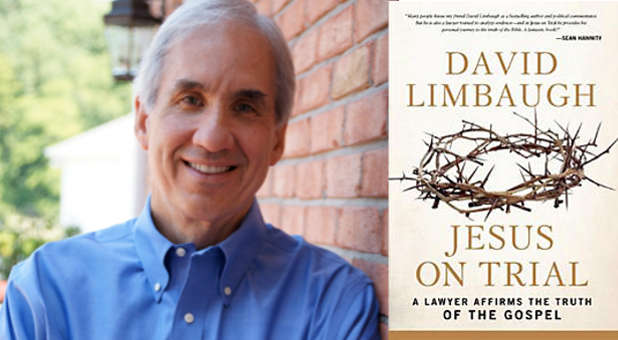
When David Limbaugh let his friend Steve know that he had doubts about Christianity, he was surprised by Steve’s response. Instead of a blast of arrogant judgmentalism, Steve responded like a Christian should—with grace and evidence. What has happened since that time is told in Limbaugh’s excellent new book, Jesus on Trial: A Lawyer Affirms the Truth of the Gospel. Limbaugh artfully tells his journey from skepticism about Christ to skepticism about skepticism and ultimately to trust in Christ.

David is a lawyer, but he doesn’t write like a lawyer. While he’s intellectually precise, he writes as if he’s sitting across the table from you, anticipating your questions and objections. This is rare for a book of Christian evidences (often called Christian apologetics). Such books often read like technical manuals, but not Jesus on Trial. Limbaugh not only does a masterful job of highlighting the abundant evidence that supports Christianity, his insights into what the scriptures actually say will have you marveling at the tapestry of scripture and the Savior who wove it.

From the very beginning, Limbaugh bares his soul, holding nothing back about how his previous doubts were shielded by an embarrassing lack of knowledge. He writes, “I knew, after all, that I hadn’t really given the Bible itself a hearing, much less a fair one. To my surprise— and this is embarrassing to admit—Steve showed me how verses of Scripture, both Old and New Testaments, were tied to others in content and theme with remarkable frequency. Amazingly, I had never looked at a reference Bible before, and I was blown away. My ignorance was on display, but Steve wasn’t remotely judgmental— to help me learn more, he even gave me that Bible. I was genuinely intrigued to discover that the Bible was not simply a mishmash of stories, allegories, alleged historical events, and moral lessons. There was obviously a pattern here, and for the first time in my life the Bible appeared to me to be thematically integrated. The scales on my eyes started peeling away.”

His two chapters called “Aha Moments” reveal the numerous tipping points in Limbaugh’s journey where scale after scale fell away—tipping points that no honest seeker of truth can ignore.   Of course, as Limbaugh admits, many who are not interested in truth, or have their own agenda, ignore or remake Christ in their own image.

He writes, “We must not casually remake Jesus in the image in which we prefer to see Him or which conforms to the popular culture’s misperceptions about Him. Our politically correct culture may, presumptuously, choose to recast Jesus as indifferent to sin and saccharine sweet, no matter the circumstances, but this Jesus is God, and God cannot look upon sin. What do these revisionists make of the Jesus Who made a whip of cords and drove the moneychangers out of the Temple (John 2: 15)? … What do the revisionists say about the Jesus Whom Paul describes as “revealed from heaven with his mighty angels in flaming fire, inflicting vengeance on those who do not know God and on those who do not obey the gospel of our Lord Jesus ” (2 Thess. 1: 7– 8)? What of the difficult moral standard Jesus laid down in the Sermon on the Mount? Did He show indifference to sin there?” Limbaugh rightfully concludes: “This idea that Jesus is meek, mild, indifferent, and non-judgmental is the stuff of pure myth.”

In addition to correcting the culture’s emasculated view of Christ, Limbaugh has two fantastic chapters tackling the paradoxes of Christianity. These include: God’s plan of salvation, including the relationship between grace and works; the acknowledgement that we are sinful yet commanded to be perfect; the Trinity, that God is one in essence yet three in persons; that Jesus has two natures, human and divine; that you must give up your life to find it; that Christians are strong when they are weak; that God is sovereign yet humans have free will; that God knows all and is unchangeable, yet we are to pray; that the Bible is inspired yet written by men; and many others. The insights Limbaugh brings to these paradoxes are some of his own, and the best nuggets mined from Christian scholarship that I doubt you’ll find in one place anywhere else.

Limbaugh devotes several chapters to the evidence for the Bible, including its unity and reliability as evidenced through history, archaeology, prophecy and science. He debunks several myths and misunderstandings along the way, and then saves his final chapter for what many think is the atheist’s trump card against God: Evil.

Many years ago David provided me an “Aha Moment” during one of our very many theological discussions. He said, “Evil really bothers me, but only Christianity has a sensible answer to it.” There’s no question he’s correct. We wouldn’t even know what evil was unless good existed, and real objective good could only exist if God exists. As David explains, evil turns out to be a backhanded argument for God. In fact, evil is the very reason God entered human history in the person of Christ. Only his sacrifice can solve the evil in my heart and yours.

David puts it this way: “Don’t be offended by the notion that you must have saving faith in Christ. Don’t assume that God is making you jump through unnecessary hoops. He is the One Who suffered for you. He did this so that you could live. He doesn’t ask you to believe because He is on a divine ego trip, but because He loves you and wants you to latch on to Him in order to be saved from your sins.”

I just can’t recommend Jesus on Trial highly enough. Every thinking person should investigate the claims of Christ, who is unarguably the most influential human being to ever walk the earth. If his claims are true (and Limbaugh shows they are), then we won’t be putting him on trial—he will be putting each of us on trial. Only Christ can secure you a favorable verdict.

David Limbaugh will join cold case homicide detective J. Warner Wallace as a speaker at the CrossExamined donor banquet on October 9, 2014 at the Big Chill in Charlotte, North Carolina.  For details on attending, email Gil@CrossExamined.org.

In the third installment of the Indiana Jones movie series, The Last Crusade, “Indy” goes to the chalkboard in his tweed jacket and writes down the word “FACT” and underlines it. Then he says to his eager listening students:

Archaeology is the search for fact not truth. If it’s truth you’re interested in, Dr. Tyree’s philosophy class is right down the hall.”

“Indy” in the classroom.

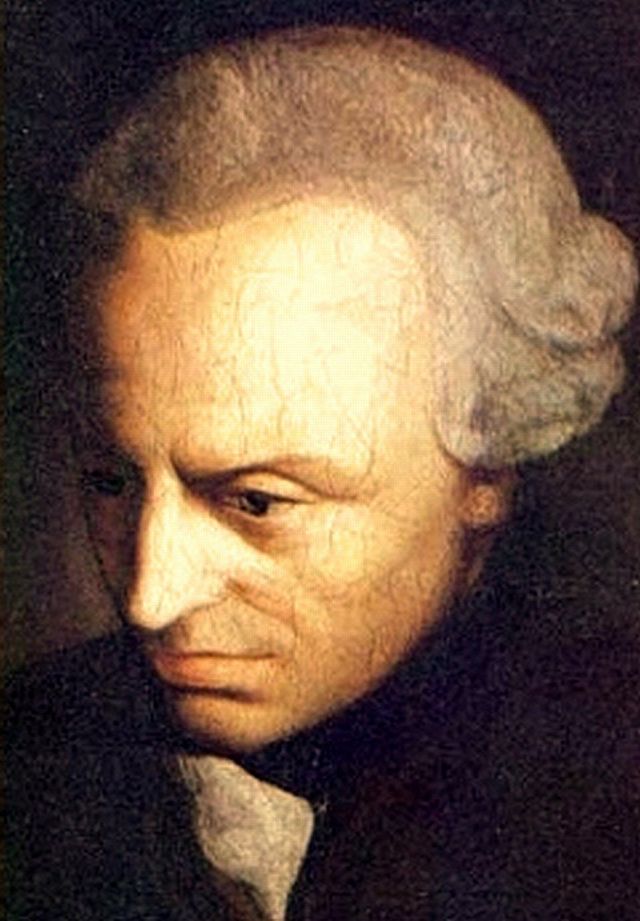
Unbeknownst to most people, “Indy” was summarizing a philosophical outlook, not an archaeological one! That outlook, reaches all the way back to the 18th Century and the European Enlightenment from a German philosopher named, Immanuel Kant.

Immanuel Kant

Immanuel Kant

Kant was responsible for the radical separation of facts from truth (or values).[1] The question is, is “Indy” right? Was Kant right? Should ‘facts’ be divorced from truth? Are the two mutually exclusive? Is truth merely from someone’s perspective? How should truth be defined? Furthermore, why does this even matter? It matters because ideas have consequences! Truth by its very nature is absolute and unbreakable. Truth is that which corresponds to reality.

If Bible-believing Christians adopt the philosophical viewpoint of Kant and “Indy,” it would have devastating consequences on their faith. It is, however, is the viewpoint of Israeli archaeologist Amon Ben Tor. Ben Tor is representative of most archaeologists working in Israel and the Levant, and articulates a view of facts and values that is in directly line with Immanuel Kant [& Dr. Jones].

 This intense urge to prove the Bible cannot affect the pious believer. For such a person, the scriptures contain their own truth and need not be criticized or proven. This need is prevalent, in what must be construed as an irrational manner, among large sections of the secular public, which find it important that the archaeologists prove that all the events in the Bible did indeed occur and that all the figures mentioned and the episodes described are entirely consistent with reality. There is in this demand a violation of archaeological integrity and an attempt to impose upon archaeology unattainable objectives that is the proof of faith.[2]

Ben-Tor states that the Scriptures “contain their own truth,” as if there were a separation between what the Bible says and the facts of reality. When Ben-Tor and other scholars make statements of skepticism towards the Bible, it is not a conclusion from archaeology, rather it is an outworking of an underlying philosophy and world-view to which they adhere.

Not every statement by an archaeologist or historian is a statement of archaeology or history.

The judgments by Ben-Tor are philosophical in nature. The particular philosophical viewpoint he articulates actually has a name, and it is called fideism. Fideism is the belief that faith, by itself apart from any evidence, is what is most important for the Christian.

Sadly, many Christians today have adopted this definition of faith which is actually not Biblical at all. All too often when young people have questions about their faith or the Bible, they are told by their parents, “Just believe!” or “Just have faith!” When these same young people get to college and they are challenged by their atheistic professors, they have no answers. What are they to place their faith in? What are the reasons for their faith? The writer of Hebrews states: “Now faith is the substance of things hoped for, the evidence of things not seen.”[3] Faith is not blind, it has an object, and faith is only as good as its object.

F.F. Bruce strongly reinforces this point in his great little book, The New Testament Documents: Are They Reliable?

For the Christian gospel is not primarily a code of ethics or a metaphysical system; it is first and foremost good news, and as such it was proclaimed by its earliest preachers. True, they called Christianity ‘The Way’ and ‘The Life’; but Christianity as a way of life depends upon the acceptance of Christianity as good news. And this good news is intimately bound up with the historical order, for it tells how for the world’s redemption God entered into history, the eternal came into time, the kingdom of heaven invaded the realm of earth, the great events of the incarnation, crucifixion, and resurrection of Jesus the Christ.[4]

The object of our faith is the real, historical person of Jesus Christ, and the historical reality [the truth] of His resurrection, mitigated to us through a historical document called the Bible.

Indiana Jones may have separated facts from truth, but the Bible does not. If there was not a historical, bodily resurrection of Jesus from the dead then our preaching is useless and our faith is in vain (1 Corinthians 15:13-17).

[1] See Kant’s Critique of Pure Reason, Trans. Norman Kemp Smith (London: Macmillian, 1929). The terms that Kant used were the ‘phenomena’ and the ‘noumena.’ He believed that the only true knowledge that we have access to, is the ‘noumena’ or what he called the ‘noumenal world’ which exists only in our minds. The phenomena (or things as they are) are separated in our minds by a great “gulf,” hence the “fact-value dichotomy.”

[2] Amon Ben-Tor, Editor, The Archaeology of Ancient Israel (New Haven and London: Yale University Press, 1992)[Introduction], 9 [emphasis mine].

[3] Hebrews 11:1 (NKJV) [emphasis mine].

[4] F.F. Bruce, The New Testament Documents: Are They Reliable? (Leicester, England: InterVarsity Press, 1997, Fifth Revised Edition), pp.7-8 [emphasis mine].

A Look at “The Creed” Through History & Archaeology

800px-In_Front_of_the_Garden_Tomb

For I delivered to you first of all that which I also received: that Christ died for our sins according to the Scriptures, that He was buried, and that He rose again the third day according to the Scriptures, and that He was seen by Cephas, then by the twelve. After that He was seen by over five hundred brethren at once, of whom the greater part remain to the present, but some have fallen asleep. After that He was seen by James, then by all the apostles. Then last of all He was seen by me also, as one born out of due time (1 Cor. 15:3-8)

One of the earliest records of the events surrounding the first Easter was recorded in an early saying or “creed” which the Apostle Paul mentions in his epistle (or letter) in 1 Corinthians 15:3-8. It has been called the first Christian “creed” or Credo [Latin for ‘I believe’]. Although Paul refers to it, it is not original to him; it is Pre-Pauline. It very likely dates back to the earliest followers of Jesus – His first Disciples – those who waked with Him, lived with Him, those who watched the drama of His life unfold before their eyes…those who watched Him die…those who ate with Him and spoke with Him and saw Him after He reportedly arose from the dead.

Part of how we know whether or not something happened in the past or not is through eyewitness testimony. Eyewitnesses can be reliable or not. One way (certainly not the only way) we can test whether an eyewitness is speaking the truth is through internal and external evidence that is consistent with other verifiable facts in a particular time period. Unlike mathematics or deductive logic, history allows us to make inferences based on the evidence that we have at hand as we study it carefully and determined if it is reliable.

From this early creed – I would like to consider three facts[1] that it is indeed genuine and bears the key marks of an authentic record of a monumental historical event – namely that Jesus did, in fact, rise from the dead.

Read more

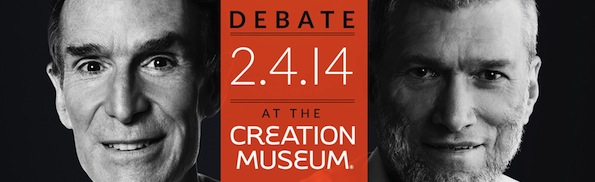
Just as expected, the much anticipated and hyped debate between Kan Ham (CEO of Answers in Genesis) & Bill Nye (the “Science” Guy) sparked a “mini-blizzard” of blogs and articles from people on both sides of the debate (I guess this is just one more to add to the pile).

Ham-Nye debate

If you happened to miss the debate, it will be posted here on the AiG (Answers in Genesis) website and will also available for purchase. An estimated three million people viewed the debate which was streamed live from the internet to schools, churches and colleges across America and around the world.

It is certainly easy to play “Monday morning quarterback” on these sorts of debates. Both men are to be admired for being willing to stand “in the arena” and defend their respective views and take criticism.

I thought both men handled themselves admirably, although I must say that I thought Nye was more personable and passionate when he was speaking which certainly plays to his favor rhetorically. One of Ken Ham’s strongest moments, I thought, was when he played the clips of various PhD. scientists who are  creationists and have either invented useful technologies [MRI] or have conducted peer-reviewed research, undercutting Nye’s claim that a belief in Divine creation stifles or limits science.

Nearly everyone has thoughts on what “should have been said” or “what kinds of evidence should have been used.”

I read though the various blogs and articles, however, I came across several great points which I will highlight in a moment.

Originally, I had planned on writing a point-by-point critique and evaluation of the debate, but since that has already been done on numerous other sites (which I will list below for your consideration); instead, I will review just a couple of my personal expectations on what I thought the debate would accomplish (I originally shared all six on my personal Facebook page) and whether or not they “played out” as I expected.

1. Both debaters represent a popular understanding of the respective positions on this debate (Faith & Science). It will certainly not be settled in this debate, but will spark even more debate and reams of new blogs from apologists scrambling to distance themselves from “Simple minded” creationists like Ken Ham.

As expected, I remain unconvinced that someone who was watching the debate last night will walk away with a deeper and more enlightened understanding of this complex issue (i.e. faith and science and their compatibility).

There’s certainly nothing wrong with public speakers who try to popularize complex ideas and communicate them to an broad audience (that’s what I do!), but I don’t believe that these two gentlemen were the best representatives of their respective “camps.”

As a friend of mine pointed out last night, “…they both seemed like they were giving infomercials for their respective audiences.” I agree.

Also expected and fulfilled were the reams of new blogs and articles from apologists offering alternative explanations and perspectives (I guess this one is a self-fullfilled prophecy!).

2. As a classically trained apologist (in the vein of Aquinas, C.S. Lewis, Geisler, et. al.), I cringe at the very likely possibility that Ham will “…beg the question” in his presuppositional approach to defending the Bible. When and if he uses evidence, I will rejoice and be glad.

The question that was debated was “Is creation a viable model of origins in today’s modern, scientific era?” While this is a good question, it actually doesn’t get at the root issue which is whether or not a theistic God exists and what evidence, if any points to His existence.

At CrossExamined we don’t take an official position on the age of the earth. We have students and supporters who defend each of the mainline views on origins (i.e. Young Earth Creationism and Old Earth Creationism, etc…).

That said however, we confidently stand on evidence in support of our belief in a personal, all-powerful, space-less, timeless, immaterial Creator. We leave it to Christians to sift the evidence for themselves, as to whether or not the earth is young or old.

The question of the age of the earth is a “second order question.” The question of God’s existence is a “first order question.” In dialoguing and debating non-believers, we should not front-load the conversation with secondary questions. Establishing God’s existence is primary.

Last night Ken Ham’s very starting point for science was the Bible itself and the age of the earth. The only problem with that is that Bill Nye and perhaps millions of others, don’t accept the Bible as true because they don’t believe there is a God.

My criticism isn’t necessarily leveled against Ken Ham’s Young Earth Creationism (or some of the other evidences he presented), rather it’s against the WAY that he argued which is just as important. In beginning with the Bible, he put the cart before the horse.

Let me be perfectly clear – I am a staunch defender of Biblical inerrancy, but in order for inerrancy to be philosophically true, Truth (with a capital “T”) must exist, God must exist and naturalism (as a worldview) must be false. The space-time universe is not a closed system, so miracles and the supernatural are very reasonable possibilities.

3. The truth of Romans 1 & Psalm 19 has been in full operation since the creation of the world when there were no publicly hyped debates.

One of the great things about God’s Word is that its truths are timeless and ever relevant.

Creation itself (which is silent yet vocal – Psa. 19:3-4) is the greatest evidence for the Creator. The evidence is so great and overwhelming that there is no debate – all men are without excuse (Rom. 1:20). The age of the earth wasn’t an issue when Paul penned Romans, yet he tells us that “everyone can know that there is a Creator.”

Below are a few blogs that I found especially helpful in illuminating and evaluating the Nye/Ham debate.

Helpful Blogs About the Bill Nye vs. Ken Ham Debate On Feb 4th, 2014

Casey Luskin (Discovery Institute) Old Earth Creationist 

David Coppedge (Creation Writer) Young Earth Creationist 

Melissa Cain Travis (Houston Baptist University) Old Earth Creationist

Dr. Albert Mohler (President, Southern Seminary) Young Earth Creationist 


Silent you stand before the altar of death! Life here and life after constitute an eternal conundrum; but its expiring spark awakens us to holy devotion and quiets every other voice except religion. Eternity has the floor.

~Alfred Nobel: read at his funeral (1896)

The above words were spoken at Alfred Nobel’s funeral service in 1896. In life Nobel was an interesting but ironic man. He is remembered, of course as the Swiss chemist and engineer who invented dynamite among other things, and also the man whose name is associated with coveted prizes in physics, chemistry, literature and peace. Nobel was also an atheist, and yet he also left large sums of money to churches. In 1888 when Nobel was reading through a French newspaper, he was astonished to read about his own obituary – the heading was “The merchant of death has died.” As it turned out, it was actually his brother Ludwig that had died. It would only be eight years later that Alfred himself would die by a brain hemorrhage at age 63.

Apparently Nobel had given some thought to that moment when he would face his own mortality. It’s not a pleasant thought – thinking about one’s own death, but one day every person must stand in silence and enter that mysterious realm beyond this life on earth, or as Nobel says… that eternal conundrum

Cementary

The Old Testament patriarch Job pondered this question millennia ago when he asked, If a man dies, will he live again? (Job 14:14)

Atheists and materialists alike, stake their eternal souls on the belief and the affirmation that there is no afterlife or soul which survives the body after physical death. But is science equipped to answer such a question? Pascal would say no.

In the 17th Century (the 1600’s) a brilliant Frenchman (child prodigy, pioneering mathematician, inventor of the world’s first mechanical calculator, philosopher and scientist)[1] named Blaise Pascal put forth a rather strange argument for religious faith – and not just generic religious faith, but faith in full orbed Christianity.[2]

This is Pascal’s famous argument called “The Wager” (or The Bet).

But first let’s clear up a common misconception and make one clarification about Pascal’s famous Wager.

(1). He is not proposing “faith in faith” (a blind leap in the dark), but assumes that we have our data correct (faith is only as good as its object) – i.e. that the true God is the God of Christianity and that salvation is found only in a belief in Jesus Christ and that rejection of Him will result in eternal damnation.[3]

(2) Similar to the above notion – the Wager should not be considered in complete isolation from the larger work of Pascal’s Pensees (his apologetic for Christianity).

As philosopher James R. Peter’s observes, “Properly understood, the wager makes a compelling but limited point….”[4]

Kreeft clarfies:

“The Wager is not an attempt to prove the God exists. It is not a new argument for the existence of God. Rather it tries to prove that it is eminently reasonable for anyone to “bet” on God, to hope that God is, to invest his life in God. It moves on the practical, existential, human level rather than the theoretical, metaphysical, theological level. …It is not an alternative to the traditional arguments for the existence of God… [the Wager]…is addressed to unbelievers, to those who are skeptical of both theoretical reason and revelation.”[5]

What Pascal’s Wager highlight’s is the fact that we are all “in the game” – there is no neutrality on the question of God’s existence or of eternal salvation in Jesus Christ.

He writes:

“Let us examine this point, and let us say: ‘Either God is or he is not.’ But to which view shall we be inclined? Reason cannot decide this question. Infinite chaos separates us. At the far end of this infinite distance a coin is being spun which will come down heads or tails. How will you wager? Reason cannot make you choose either, reason cannot prove either wrong.

Do not then condemn as wrong those who have made a choice… ‘No, but I will condemn them for not having made this particular choice, but any choice, for although one calls heads and the other one are equally at fault, the fact is that they are both at fault: the right thing is not to wager at all.’

Yes, but you must wager. There is no choice, you are already committed. What will you choose then? Let us see: since a choice must be made, let us see which offers you the least interest. You have two things to lose: the true and the good: and two things to stake: your reason and your will, your knowledge and your happiness.”[6]

Finally and interestingly, the Wager comes down to a pleasure (or a happiness) calculus – which appeals to what a person has the potential to gain from such a wager.

Here is what is at stake.

A. God exists (& Christianity is true)

  • If I believe it and it turns out to be objectively true then I gain eternal happiness and lose nothing.  
  • If I do not believe it and it turns out to be objectively true then I lose everything (including happiness and pleasure).

B. God does not exist (Christianity is not true)

  • If I believe this and it is objectively true then I gain nothing and lose nothing.
  • If I do not believe this and it is objectively true then I gain nothing and lose nothing.

If Christianity is true then those who don’t believe it have everything to lose. But if it is not true then nothing, in the end, is lost to the pious believer. It is really the unbeliever who has more to lose if they are wrong.

Pensee 241 provides a good summary:

I should be much more afraid of being mistaken and then finding out that Christianity is true than of being mistaken in believing it to be true [& it not actually be true].

On death’s threshold “eternity has the floor,” then religious questions don’t seem so silly after all.

What will you choose then?


[1] For an old but excellent biography of Pascal’s life see Morris Bishop’s classic, Pascal: The Life of Genius (New York: Reynal & Hitchcock, 1936)

[2] See his Pensees, 418.

[3] For more on this point see Peter Kreeft’s excellent book, Christianity for Modern Pagans: Pascal’s Pensees Edited, Outlined & Explained (San Francisco: Ignatius Press, 1993), pp. 292-3.

[4] James R. Peters, The Logic of the Heart: Augustine, Pascal, and the Rationality of Faith (Grand Rapids: Baker Academic, 2009), 188-9.

[5] Kreeft, pg. 291 [emphasis mine].

[6] “233” in Pensees, Translated by W.F. Trotter, Robert Maynard Hutchins, Editor in Chief, Great Books of the Western World, (Chicago: Encyclopedia Britannica, 1952), 213-6 [emphasis mine].

Rulers, Statesmen, Nations, are wont to be emphatically commended to the teaching which experience offers in history. But what experience and history teach is this, – that peoples and governments never have learned anything from history, or acted on principles deduced from it.

~ Georg Wilhelm F. Hegel, from his lectures, On the Philosophy of History (1837)

Just recently my son has become keenly interested in the story of the Titanic, the steam ship which hit an iceberg and sank in the Atlantic on April 14, 1912. These past few days we have watched a number of very interesting documentaries, some of which recount eyewitnesses to the disaster who were passengers on board the night it sank. On board the ship that fateful night were some of the world’s most famous and prominent people – among them were the American millionaire John Jacob Astor IV and his wife Madeleine Force Astor, industrialist Benjamin Guggenheim, Macy’s department store owner Isidor Strauss and his wife Ida among many others. Throughout the documentaries there were historians and letters cited from people who lived at the opening decades of the 20th century. Historian Carroll Quigley in his book Tragedy and Hope: A History of the World in Our Time writes that, “The 19th century was characterized by (1) belief in the innate goodness of man, (2) secularism, (3) belief in progress, (4) liberalism, (5) capitalism, (6) faith in science, (7) democracy, (8) nationalism.”[1]

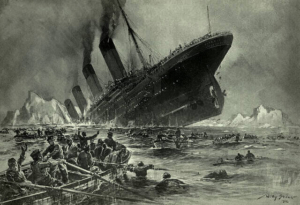
Although most people today think of the Titanic as the award-winning movie of 1997, in 1912 it was the symbol of the hopes and dreams of thousands of people around the world. For the wealthy it represented the pinnacle of technology and the triumph of science, to the poor, it represented a chance for a new life in America – itself a symbol of hope for millions of immigrants. On the evening of April 15, 1912 the huge ship struck an iceberg ripping open a huge section of the hull. In 2 hours, 40 minutes it was on the bottom of the Atlantic. 1,514 lives were lost. The world was in shock.

Sinking of the R.M.S. Titanic, April 15, 1912

The sinking of the Titanic was the first of several shocks the world of the early 20th Century would receive. Just two short years later, (July, 1914) for the first time in history, the entire world would be engulfed in the First World War. In 1918 when the war ended, over 10 million Allied & Central command soldiers were dead, not including civilians. The results of WWI set in motion the gears which led to the Second World War when Adolf Hitler invaded Poland in 1939.[2]

WW I also had a profound effect on some of the greatest artists (Picasso, M. Duchamp, etc…) and literary minds of the 20th century. Among them was J.R.R. Tolkein whose Lord of the Rings series came right out of his gruesome experiences of fighting in the trenches on the Western Front. One of his biographers makes a telling comment. He writes:

This biographical study arose from a single observation: how strange it is that J.R.R. Tolkein should have embarked upon his monumental mythology in the midst of the First World War, the crisis that disenchanted and shaped the modern era.[3]

“The crisis that disenchanted and shaped the modern era…”

What can we learn from this and the other tragedies of the last century?

QUESTIONS TO PONDER

In conclusion, I would like to ask if there are any lessons we can learn from these opening decades of the 20th Century? Are we, in the 21st Century, still clinging to 19th century ideals which lead to the disillusionment of so many? I assert that we certainly are. We are holding on to at least three of them and we are once again setting ourselves up for even greater disillusionment or even worse:

(1). Belief in the innate goodness of man. (Is human nature basically good?)

“The belief in the innate goodness of man had its roots in the eighteenth century when it appeared to many that man was born good and free but was everywhere distorted, corrupted, and enslaved by bad institutions and conventions. As Rousseau said, Man is born free yet everywhere he is in chains.

Obviously, if man is innately good and needs but to be freed from social restrictions, he is capable of tremendous achievements in this world of time, and does not need to postpone his hopes of personal salvation into eternity.”[4]

If the Twentieth-Century and our own experience has taught us anything, it is that man is not innately good – but has a fallen nature. People automatically don’t do the right thing and despite all of their valiant efforts[5], atheists & materialists fail to ground absolute goodness in reality. Similarly, if there is no God – no absolute standard, then there is no ultimate grounding for right and wrong (morality). If there is no God (in reality) then (in reality), there is no difference between Mother Theresa and Hitler.

(2). Secularism (Is ‘religion’ just a hangover from our past?)

Secularists have a strictly materialistic & mechanistic view of human nature and because of this they utterly fail to account for man’s religious nature which they will never eradicate nor will they understand with the methods of the sciences. For most of human history people have had the desire to worship. This is certainly not to say that all religions are the same or that they are all equally true, but merely to point out that the desire to worship and the desire for transcendence is part of what it means to be truly human.[6] Secularism just doesn’t get it! The ultimate question is which religion is true? Which religion corresponds to reality? If the laws of logic apply to all of reality then they apply to religious claims as well. Only one can be true.

(3). Faith in science (Will “science” solve our problems?)

“Science” is touted by many today as the only true view of reality and an inoculation against the claims of religious masses who still live in ignorance & stupidity. These are the ones who still believe that “science” will answer all of our burning questions and solve all of humanity’s problems. But lest we forget, we have the 20th Century as a guide. It is intimately familiar to us. We have lived through much of it. It is analogous to all of human history because of the simple fact that human nature remains the same and many are still trusting that “science” and the scientific worldview is the way forward.

Why are things not improving now in the first decade of the 21st Century – the most well-informed, well-educated and scientifically minded centuries to date?

Surely the sciences and technology have brought us much good (curing diseases, saving lives, etc…), but they are ill-equipped to solve our greatest problems which are spiritual & moral in nature.

Many critics will surely point to religious extremism and the turmoil happening in the Middle East as the prime example that “religion” is at the core of the world’s problems. They fail, however, to make vital distinctions between contradictory religious truth claims (especially in the Theistic religions of Judaism, Islam & Christianity). Yet it is only in the religion of Christianity – whose message is the reconciliation of fallen humanity (made in God’s image) to the Creator by the God-Man, Jesus Christ who died on a cross for the sins of the world – that there is hope for the future.

There simply is no unity, order or peace apart from Him.


[1] Carroll Quigley, Tragedy and Hope: A History of the World in Our Time (New York: Macmillan Publishing, 1966), pp. 24-5.

[2] And of course, WW2 ended with the dropping of the atomic bomb on the Japanese cities of Hiroshima and Nagasaki in 1945.

[3] John Garth, Tolkein and the Great War: The Threshold of Middle-earth (Boston: Houghton Mifflin Company, 2003), xiii.

[4] Summary of Quigley, p. 24.

[5] One of the latest is Sam Harris’s, The Moral Landscape: How Science Can Determine Human Values (New York: The Free Press, 2010).

[6] For an excellent study on the relationship between science and human nature I strongly recommend Brendan Purcell’s excellent work, From Big Bang to Big Mystery: Human Origins in the Light of Creation and Evolution (Hyde Park, New York: New York City Press, 2012).

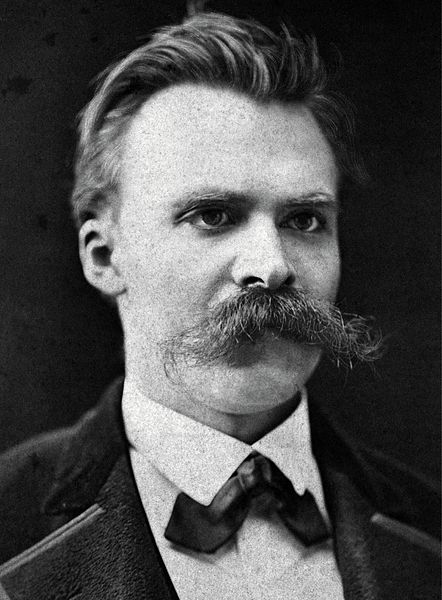
Friedrich Nietzsche 1844-1900

Friedrich Nietzsche 1844-1900

It is widely believed that the German philosopher Friedrich Nietzsche ushered in the twentieth century with his famous phrase, “God is dead…”[1] Nietzsche himself died in 1900. Obviously, atheism didn’t start in the twentieth century with Nietzsche. In fact, he was the culmination (the pinnacle) of a long line of thinkers which reached back into the sixteenth and seventeenth centuries.[2] The European Enlightenment promised grand and wonderful things when human reason finally divorced itself from the shackles of faith.[3] Using the newly found tools of the “scientific method,” (via Bacon & Spinoza); a humanistic morality which was becoming increasingly devoid of God (via Nietzsche); and the burgeoning industrial revolution with its new technologies, the twentieth century was set to take mankind to new heights never before dreamt of – a utopia of sorts. Some who were wise, however, could see that “wicked things were written in the sky.”[4] The next century (the 20th) would either be wonderful or it would be a nightmare. Enter H.G. Wells novel, A Modern Utopia (1905), the book which inspired Aldous Huxley’s vision of the future in Brave New World (1932), and later, George Orwell’s Nineteen Eighty-Four (1949).

Both of these novels predicted a future in which mankind would be destroyed either by external oppression by a despot using technology (the big-brother of Orwell) or through technologies which would make us lazy and undo our capacity to think (Huxley).[5] In both instances, technology would somehow be used to lead to our undoing.

If there is no God (or at least since He died in the 19th century) then humans must put their hopes, dreams, and aspirations for the future in something. Enter the Enlightenment 2.0 – 21st-century edition – human reason, science, and technology will surely help us solve all of the world’s problems. How are we doing 13 years into this century? Not very well. Do we ever learn? Usually not.

Neil Postman makes a brilliant observation in, Technopoly: The Surrender of Culture to Technology (1992). An observation that we should etch into our heads.

Our most serious problems are not technical, nor do they arise from inadequate information. If a nuclear catastrophe occurs, it shall not be because of inadequate information. Where people are dying of starvation, it does not occur because of inadequate information. If families break up, children are mistreated, crime terrorizes a city, education is impotent, it does not happen because of inadequate information. Mathematical equations, instantaneous communication, and vast quantities of information have nothing to do with any of these problems. And the computer is useless in addressing them.[6]

The scientific, atheistic and materialistic worldview is utterly incapable of ensuring civilization. It can’t be trusted. Why? Because the last century has been one gigantic experiment in what it is capable of and also of what it is incapable of.

In my next post A Titanic Failure: Never Learning from Our Past, we will take a look at some epic examples of the complete failure of the European Enlightenment and materialistic atheism and what it could teach us about our future – if anything at all.


[1] See, “Thus Spake Zarathustra,” in Walter Kaufmann, Editor & Translator, The Portable Nietzsche (New York: Penguin Books, 1982).

[2] For an excellent book on the philosophical battles which ensued between various German thinkers on the role of reason during the era of the Enlightenment see, Fredrick C. Beiser’s, The Fate of Reason: German Philosophy from Kant to Fichte (Cambridge, MA: Harvard University Press, 1987); for a Christian analysis of the Enlightenment see, James Collins, A History of Modern European Philosophy (Milwaukee: The Bruce Publishing Co., 1954).

[3] Interestingly, the modern Internet & Wikipedia had its birth in the Enlightenment with the idea of the Encyclopédie which was published in France 1751-1772.

[4] To borrow the line from Chesterton’s poem “The Ballad of the White Horse” – a poem about England’s Saxon king, Alfred the Great.

[5] I am indebted to Neil Postman for this observation in his excellent book, Amusing Ourselves to Death: Public Discourse in the Age of Show Business (1985). Postman’s thesis is that Huxley was right. History has proven that he was correct.

[6] Technopoly: The Surrender of Culture to Technology (New York: Vintage Books, 1992), p.119.