
Tag Archive for: worldview

At the Colson Center for Christian Worldview, we often talk about the importance of worldview. Each of us, as Christians, ought to allow our Christian beliefs to shape the way we think about every aspect of life, including the way we consider notions of beauty and artistic expression. That’s why I was delighted to hear about a new concept album from Aryn Michelle, a Christian pop and alternative rock artist. Aryn just released a series of songs (in a collection called The Realist Thing) inspired by William Lane Craig’s book, Reasonable Faith. That’s right, an apologetics album of sorts, walking through “several philosophical arguments for the existence of God and the primary evidences for Jesus Christ as his son.” Sounds interesting, right? Aryn agreed to let me interview her about this groundbreaking effort:

J. Warner:
Aryn, I will confess that I was not familiar with your work prior to this collection of songs. I was incredibly impressed with the creativity and quality of the effort, can you tell us something about your musical journey?

Aryn:
I began writing songs when I was fifteen years old. Initially I had hoped that God would use me as a “light in the darkness” in that I would be a believer writing and working in the secular music industry while always maintaining artistry from a Christian perspective. I pursued this goal for almost ten years (and two albums) before I had the revelation that perhaps working within the secular music industry was how I wanted God to use me, but was not necessarily how God had gifted and equipped me. It took me that long to realize that I needed to approach God and ask him how HE wanted to use my life and the giftedness he had given me. I could see that God had brought me up in a background of church music (I’m the daughter of a music minister), and he has given me a heart for the church and for encouraging the people of God. Even when I was not making “Christian” music, followers of Jesus tended to be the ones who responded to my music. About 5 years ago I turned my attention to write explicitly faith-based music in order to encourage believers, dig deep into God’s truth and follow in obedience in using my gifts for God’s calling.

J. Warner:
In your video you mention being in a place in your life as a Christian where you had many questions. Can you tell us a little bit about that and how Christian apologetics literature helped you to answer some of those questions?

Aryn:
Several years ago I approached one of our pastors and asked to meet with him to talk about some struggles I was having. I told him that while I felt confident in my heart about my belief in Jesus, I felt like my head had not caught up with where my heart was. I felt like I had been neglecting the life of the mind in regards to my faith. I didn’t often have intellectual conversations with other believers about difficult questions where philosophy and theology converged. I was frustrated that it felt like no one around me was expressing an interest to seek out the answer to hard questions. He gave me the wise counsel that if I had a thirst for knowledge then I needed to ask God to reveal to me answers and also to seek out that knowledge. To read books, to dig deeper, to go out searching. He suggested a few books to start with and from that point I kept reading and eventually decided to tackle Dr. Craig’s book Reasonable Faith. This book was very helpful on my journey into a deeper life of the mind because it comprehensively covered a good deal of what I was hoping to learn. I want to clearly state that I believe the testimony of the Holy Spirit is the greatest witness one can give, but I was thankful to be able to also articulate philosophical arguments for the existence of God and evidences for Jesus Christ as God’s son after reading that book in particular

J. Warner:
It’s amazing to me that you actually wrote songs about the evidence for theism and Christianity. Can you tell our readers about the evidences that inspired you to write each song?

Aryn:
The album features a prelude and postlude (both entitled “Honesty”) that give the listener my personal perspective and state of mind as I began and concluded this project. Beyond those two songs each one of the songs aligns with a different argument featured in Dr. Craig’s book. “The Realest Things” discusses the ontological argument for the existence of God, summarized in the line “if something could be greater than God, it would be God.” The next song, “The Question,” discusses the cosmological argument when it asks the question, “Why is there something rather than nothing?” The teleological argument is featured in the song “Order,” where I give examples of intelligent design and fine-tuning in lines such as, “there’s a constant in the pull of gravity, a balance of the forces strong and weak.” Following that is the moral argument for the existence of God in the song “Good” which says, “If there is good, don’t you think there is God?” After that song I transition into two songs dealing with evidences for Jesus Christ as God’s son. The first of those songs, “Miracle Man” explores the miracles and eyewitness accounts of the works of Jesus. The next songs entitled, “The Story of Redemption” explores the self-understanding and resurrection accounts of Jesus. It was obviously a great challenge to condense such rich material into one song a piece for each argument, but my hope is that I’ve tried to grasp a key component of each argument in a memorable way.

J. Warner:
This is such an interesting project in that it has the ability to reach an audience that standard apologetics blogs, book and videos can’t reach. What is your hope for the concept album?

Aryn:
My primary hope for this album is that it can be an equipping tool and encouragement for believers. I wanted to give people a song in their hearts to go along with the deep thoughts in their heads. My hope is that when people are striving to call these arguments to mind that they can use the songs to help them remember and express what these arguments are about. Music is a powerful tool for engaging memory and emotions. I also hope that more artists will strive to create a marriage of creative expression and reason. Sometimes we may be tempted to think that creativity and rationality are mutually exclusive or working against each other, but I know that God has created us with a heart AND a mind to be engaged for service to him.

J. Warner:
This last question cheats a bit and includes a few related questions: Will you be singing these songs in live concert settings, ( and is it difficult to find venues that are open to such an interesting concept)? How can our readers learn more about you and what’s next, now that you’ve tackled Christian apologetics?

Aryn:
I primarily perform these songs in house concerts. For this project in particular I find private house concerts to be the best venues to share the music because it allows me an intimate setting to talk and really communicate the motivation behind the album and also the individual concepts within each song. I have also attended a few apologetics gatherings for students and been able to share the songs in that setting. I also hope to be able to take the music to churches or bible studies who may have an apologetics emphasis. I think the main point is having an environment where discussion and thoughtfulness can thrive. If people would like to stay in touch with me they can find me at my website: www.arynmichelle.com, or on Facebook at www.facebook.com/arynmichelleband.

Aryn’s new album is more than a great idea, it’s a great collection of songs and an excellent example of how a Christian worldview can shape every aspect of someone’s life. Aryn has employed more than God’s gifting to create this project; she’s allowed her Christian worldview to shape and inform the words in every song. The result is excellence in both word and melody. I cannot recommend it more.

J. Warner Wallace is a Cold-Case Detective, Christian Case Maker, Senior Fellow at the Colson Center for Christian Worldview, and the author of Cold-Case Christianity, Cold-Case Christianity for Kids, God’s Crime Scene, God’s Crime Scene for Kids, and Forensic Faith.


Comment or Subscribe to J. Warner’s Daily Email

By Luke Nix

Introduction

A month or so ago, I came across an interesting challenge to Christianity. A skeptic told me that religion was an exercise in avoiding truth- a willful delusion. He observed that many Christians (and religious people, in general) tend to believe the claims of their “holy” books over what has been discovered about nature, history, or the very nature of reality. He noticed that many religious people have a precommitment to a particular understanding of the world and no amount of evidence provided will persuade them otherwise. He, as an intellectual, does not want to make this same mistake. In this post, I want to explore the possibility that he is making the same mistake based upon the philosophical foundations of the claim he makes for rejecting religion, and Christianity specifically.

Missing Philosophical Foundations

While several things did strike me as dissonant about his claim, one of the first things that I noticed about the language the skeptic chose was that his naturalistic worldview could not provide any such grounding for the claim. I am specifically referring to his references to the will and ability to reason.

The Missing Will and Intentionality

First, if naturalism is true then any specific event is the cumulative result of the events prior to it, governed by laws of nature. Not only does this apply to any specific event, it applies to all events in the history of the universe all the way back to the big bang. On this view, ultimately, the laws of physics and the initial conditions of the universe fatalistically determined every event that would take place. This includes every “willful” “decision” that humans would make. Ultimately, there are no true decisions being made, no person is “willfully” denying anything; they are merely reacting to the events prior to their “decisions.” The claim that anyone is doing anything “willfully” does not make sense in a naturalistic world. So, the naturalist cannot actually claim an intentional anything and be speaking accurately about reality.

The Missing Ability to Reason Reliably

Second, an assumption of the claim is that it is possible for people to reason reliably and accurately (but have just chosen not to). If naturalism is true, then the brains responsible for reasoning and the senses responsible for sensing the environment are not focused on true inferences or true observations but on survival. Alvin Plantinga spends an entire book on this very topic that I have recently read and reviewed. However, I’d like to reinforce Plantinga’s conclusion, that if naturalism is true then we cannot trust our brains to reason towards truth, with some evidence from the real world. If naturalism is true, there is no such thing as free agency (see paragraph above). This means that everything that we believe about the intentionality of others is false. We intend to get up in the morning, to eat, to walk, to drive, to work, to organize, to engineer, to account, to create, to relate, to think, and numerous other things. If evolution has produced brains that believe that we actually do these things intentionally, then our brains survived for their ability to produce a majority of beliefs that are false yet highly practical in the environment.

The Over-Abundance of “Useful Fictions”

What makes this so powerful is that intentionality is merely one all-encompassing belief about reality that, if false, demonstrates that our brains are unreliable when it comes to inferring truth about reality, yet we have evidence that our brains have survived and that we do believe these false notions. With every additional false notion that is brought to the table of evidence (the concept of design, the concept of purpose, the concept of value, the concept of progress [all four require true intentionality, even value grounded in purpose], objective morality, moral and creative responsibility, reward and punishment, and even the existence of God- just to name a few more), the conclusion that Plantinga argued philosophically becomes even more certain evidentially.

But some naturalists attempt to escape this conclusion by saying that these are merely “useful fictions.” I find this to be an astounding concession. When we are discussing the ability to discover truth, “useful fictions” is actually an oxymoron. This becomes painfully apparent when one considers how deeply grounded in and encompassing of our beliefs about reality these fictions truly are. And yet, we still believe them because the fictions are useful. Useful for survival, but obviously not for their truth-value, for if it were for their truth-value, we would not believe them. Any naturalist who grants that “useful fictions” are believed fall prey to this devastating argument. And what is even more devastating than all our beliefs being based in fiction? The fact that we have near-certainty that no belief will ever be believed for its truth-value. For the naturalist, this brings annihilation to the only source they thought they had for truth: science. Science depends upon the reliability of our senses and our brains to infer true things about reality, and if they can never be reasonably expected to produce such, then science has no place to begin or go regarding the search for what is true. Science is merely another “useful fiction” that we falsely believe for its survival value.

Conclusion

The skeptic who raises such a challenge fundamentally contradicts their worldview when they claim that someone is “willfully avoiding truth.” And the evidence closely approaches 100% that they should be speaking that claim to a mirror: it is all-but-certain that they are the ones with the willful delusion, possessing faith despite the evidence–a blind faith. Based upon the weight of the evidence and the logical contradiction within the worldview, any skeptic, who raises this challenge out of concern for the pursuit of truth, should abandon their naturalism and the idea that our brains are the result of unguided processes otherwise they fall victim to the very evil they wish to escape.

For more information on this argument against naturalism I highly recommend:

Original Blog Source: http://bit.ly/2sc7V3P


By Bryan Chilton

In our last article, we presented the first four of the eight major worldviews. As we noted, this is a revision to a previous article that only listed six. The first article in this series presented the worldviews known as atheism/naturalism, agnosticism, pantheism, and panentheism. This article will provide the last four. To keep from confusion, the last four worldviews will be listed as #1-4 in this article even though they represent #5-8 on our list.

  1. (#5) Polytheism: Several Gods Exist.

The term “polytheism” comes from two Greek terms: “polu” meaning “many” and “theos” as we have already defined as the term for God. In the polytheistic worldview, it is held that many gods and/or goddesses exist. Certainly, aspects of Hinduism meet the worldview. But, Hindus hold that the universal God manifests in various avatars. Polytheism is better represented in pagan religions, Greek and Roman mythologies, as well as Mormonism.[1]

The trouble with polytheism is found in necessary beings. Even if it is possible that there are many universes populated by Mormon men and women, one would be forced to push their existence back to a Prime Necessary Being. As noted earlier, all material, physical universes must hold a starting point. The universe demands an explanation for its existence. According to the BVG theorem, there cannot exist eternal material universes. Therefore, even if there are multiple universes populated by multiple gods and goddesses, those universes and beings become contingent upon the necessity of a transcendent, omnipotent, omniscient, omnibenevolent being we know as God. Because of the concept of Ockham’s Razor,[2] polytheism fails as gods and goddesses are not necessary beings, whereas God is. The Christian apologist will need to use the issue of necessary and contingent beings among other areas as a starting point with polytheists.

  1. (#6) Dualism: God and the Physical World are Irreparably Separated.

Dualism is the belief that the spiritual and physical realms are irreconcilably separated. One must not confuse the dualist worldview with the dual nature of mankind (soul/body). A form of dualism in the human person can be demonstrated biblically.[3] However, the dualist worldview takes the distinction between the soul and body to extreme measures. Dualists will claim that the spiritual dimension is good and the physical dimension is bad. Thus, resurrection is not accepted nor is recreation of the new heaven and new earth presented in Revelation 21. Ancient Gnosticism, Platonism, and New Age philosophies often fit within the dualist paradigm.

The trouble with dualism is twofold. On the one hand, not all spiritual beings are good. Angels are considered spiritual beings. However, Satan and his demonic cohort are certainly not good. Rather, they are the epitome of evil. So, dualism fails to account for the fact that not all spiritual entities are good. On the other hand, dualism fails to account for the historicity of Jesus’ literal bodily resurrection. God, who is Spirit (John 4:24), created the physical world. The grand theme of Scripture is God’s restoration of the world and humanity. This includes the physical world. The Christian apologist will need to describe these distinctions and will want to provide the historicity of Jesus’ resurrection to the dualist.

  1. (#7) Deism: God as a Deadbeat Dad.

Deism is unique in that it takes its name from a Latin word rather than Greek. The Latin term “deus” is the word for “God.” Deism holds much in common with theism. Deists generally accept the existence of a transcendent God who is worthy of worship. The deist also accepts that this God is worthy of praise. The key distinction comes in God’s current involvement with creation. Deists reject the idea that God is immanent. They hold that God created everything at the outset but does not interject or intervene in creation since that time. Think of a wind-up toy. A person winds up the toy and releases it. The toy continues until it winds down without any involvement from the one who wound it. God is presented much like a deadbeat dad—that is, a dad who is uninvolved with his child’s life. Thus, deists reject the miraculous, revelations in any form except for reason, and personal relationships with the divine. Thomas Jefferson, Benjamin Franklin, John Locke are among the more famed deists.

Deism fails if one miraculous claim can be proven. If one miracle can be demonstrated, then deism fails because the miracle serves as evidence of God’s involvement in creation. Craig S. Keener’s two-volume work Miracles: The Credibility of the New Testament Accounts will help the Christian apologist defeat deist claims. Also, the apologist will want to demonstrate the historicity of Jesus’ bodily resurrection as evidence of God’s involvement.

  1. (#8) Monotheism/Theism: God is Omnipotent, Transcendent, and Personal.

Finally, we come to the final worldview. The last worldview is monotheism or theism. Theists hold that one God exists. God is both transcendent (separate from creation) and immanent (works within creation). Thus, God is omnipotent (all-powerful) and omniscient (all-knowing). But, God is also omnibenevolent (all-loving) and omnipresent (in all places). God is beyond the scope of the universe and is not constrained by the laws of nature. Yet, God is also personal and reveals himself to humanity. The three classic religions of Christianity, Judaism, and Islam are considered theistic in scope.

Theism triumphs in many ways. Theism best explains the necessity of God’s being, the creation of the universe, the miraculous, personal revelation, and the substance dualism of humanity. However, one must note that while all Christians are theists, not all theists are Christian. The Christian apologist will want do demonstrate the reliability of the New Testament, then illustrate the reliability of the Old Testament, in addition to providing evidence for the life and resurrection of Jesus of Nazareth. In doing so, the Christian apologist will show that God has ultimately revealed himself in Jesus.

Conclusion

Everyone has a worldview of some sort. The first step in presenting the gospel message comes by understanding where the person’s worldview currently resides. Understanding a person’s worldview comes by listening. Apologetics and evangelism are not a quick process. As Douglas Groothius claims, the Christian worldview is argued as the best hypothesis “carefully, slowly, and piece by piece…this means paying close attention to the components and implications of the Christian worldview, with an eye for detecting false stereotypes and caricatures.”[4] The process takes time, but if a person comes to faith in Christ, it’s worth every moment spent.

  Notes

[1] Mormons hold that God the Father is wed to a divine mother. Jesus is believed to have been the first spirit child. Mormon theology also holds that Mormon men and Mormon women wed in Mormon temples are able to become gods and goddesses of their own celestial universe and will produce their own spirit children.

[2] That is, the simpler explanation is preferred.

[3] See the works of J.P. Moreland, especially his book The Soul, for more information on substance dualism.

[4] Douglas Groothius, Christian Apologetics: A Comprehensive Case for Biblical Faith (Downers Grove; Nottingham, UK: IVP Academic; Apollos), 50.

© 2017. Bellator Christi.


Resources for Greater Impact

IDHEFTBAA book standing w SHadow

I Don’t Have Enough Faith To Be An Atheist (Paperback)

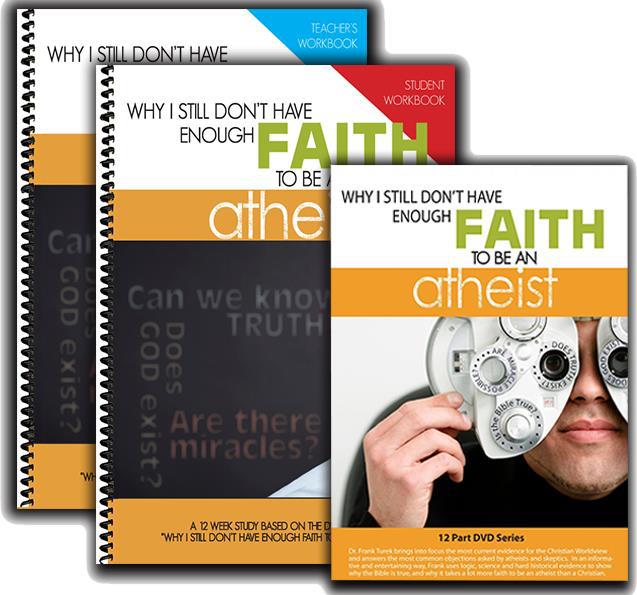
IDHEFTBAA workbooks set

Why I Still Don’t Have Enough Faith to be an Atheist (Set)

By: Brian Chilton

Before the website transferred from pastorbrianchilton.wordpress.com to bellatorchristi.com, I had written an article on the major worldviews across the globe. I presented six major worldviews at the time. While I still think the previous article treated the most major of worldviews, I have come to realize after reading Douglas Groothius’ book, Christian Apologetics: A Comprehensive Case for Biblical Faith, that other major worldviews exist that should be discussed and incorporated into the list.[1] So, let’s revisit the major worldviews in this article. The goal of the article will be to notify the reader of each belief and will show how Christian theism triumphs. In addition, the Christian apologist will need to understand the starting points that must be taken with each worldview.

Worldviews

  1. Atheism/Naturalism: Rejection of God’s Existence, Only the Physical World Exists.

The term “atheist” is taken from the Greek term “a” meaning “no” and “theos” meaning “God.” Placed together, the term means “no God.” The atheist, therefore, is one who does not believe in the existence of God. Atheists are often termed “naturalists” as they only accept the existence of the natural/physical world, thereby rejecting the existence of things like God, spirits, the human soul, angels, and demons. Richard Dawkins and Lawrence Krauss are good examples of atheism.

Atheism holds a problem as it pertains to the immaterial world. Naturalism cannot explain the existence of human consciousness. Even if the consciousness could be shown to derive from material means, naturalism (or materialism) faces a great problem as the human consciousness is a non-material thing. A scanner can see brainwaves, but not mental thoughts and the like. Naturalism holds two additional problems. On the one hand, naturalism cannot answer why anything exists. It has been mathematically demonstrated by the theorem of Borg, Vilenkin, and Guth (i.e., the BVG Theorem) that there cannot be an infinite regress of material worlds. Every material world must have a beginning point. On the other hand, naturalism fails to account for the mounting evidence of near death experiences.[2] Atheism and naturalism hold great problems serving as a cohesive worldview. The Christian apologist will need to demonstrate the reasonability of God’s existence and the means by which naturalism fails.

  1. Agnosticism: God’s Existence is Unknowable.

Agnosticism comes from two terms: “a” the Greek term meaning “no” and “gnosis” the Greek term meaning “knowledge.” The agnostic does not necessarily reject belief in God. The agnostic claims no knowledge on the issue. There are at least two forms of agnosticism. Atheistic agnostics incline to reject belief in God, but are open to the possibility of God’s existence. The atheistic agnostic claims that it is impossible to know whether God exists or not. Bart Ehrman and Neil deGrasse Tyson are examples of atheistic agnostics.

Theistic agnostics are individuals who are inclined to believe in God’s existence. However, they are doubtful whether individuals can know anything about God. The theistic agnostic may either reject divine revelation altogether and claim that no religion is correct, or the theistic agnostic may reject exclusive revelation and will claim that all religions are correct. When I stumbled into my time of personal doubt, I became more of the theistic agnostic (one who claimed to be spiritual but not religious). The Ba’hai religion and Morgan Freeman may be considered examples of theistic agnosticism.

The trouble with agnosticism is with divine revelation. If God can truly be shown to exist, then atheistic agnosticism begins to wane. If one can demonstrate that God has revealed himself to humanity (particularly through Jesus of Nazareth), then theistic agnosticism begins to fade. The Christian apologist will need to understand, first, that agnosticism can cover a wide variety of flavors. Second, the Christian apologist will need to describe the evidence for Jesus of Nazareth’s life, miracles, and resurrection.

  1. Pantheism: The Force is With You.

Pantheism comes from two Greek terms: “pan” meaning “all” and “theos” meaning “God.” Pantheism may look quite a bit like panentheism and even theistic agnosticism. However, generally speaking, pantheism is the belief that God is an impersonal force. Buddhism is the greatest example of pantheism. The Star Wars idea of the “force” is another example of pantheism. Buddhists claim to be agnostic concerning God’s existence. Yet, the Buddhist believes in impersonal forces (i.e., the force behind reincarnation). The goal of such a worldview is to become nothing. In fact, the Buddhist concept of Nirvana means that one has become so enlightened that he or she escapes the wheel of reincarnation and becomes nothing.

The trouble with pantheism is diverse. On the one hand, the pantheist will speak of such forces in such a way that intelligence is necessary. For example, why is there a wheel of reincarnation? Why is it that good behavior elevates one to a higher level and vice versa? On the other hand, pantheists have great trouble in explaining why anything exists at all. Much more could be said on this issue as it pertains to the trouble of pantheism. The Christian apologist will need to describe the internal inconsistencies of pantheism as a starting point as well as note the personal nature of the divine.

  1. Panentheism: Everything is God.

Panentheism comes from three Greek terms: “pan” meaning “all,” “en” meaning “in,” and “theos” meaning “God.” Therefore, panentheism is literally defined as “all in God.” Panentheists hold that God penetrates everything. While the Christian may initially be inclined to agree, one must understand that panentheists believe that everything is God. Thus, the panentheist would agree that Jesus of Nazareth is God. But, the panentheist would also agree that you are God, he is God, everyone is God, and even your kitchen sink is God. The panentheist does not distinguish between the personal God and the physical creation. Hinduism is the greatest example of panentheism.

Panentheism, however, holds issues as it pertains to the world. If the world is God, then why is there so much evil? God is certainly good. So, if everyone is God, then wouldn’t everything be perfect? To accept such a claim, one must have a flawed idea of God’s nature. With the panentheist, the Christian apologist will need to begin by teaching the distinction between the personal divine being of God and the physical, material creation that is the world.

We have investigated the first four of the eight major worldviews. In our next article, we will describe the final four: polytheism, dualism, deism, and monotheism/theism.

Notes

[1] See Douglas Groothius, Christian Apologetics: A Comprehensive Case for Biblical Faith (Downers Grove: IVP Academic, 2011), 50.

[2] Here, I do not mean heavenly or hellish experiences. I am addressing the scientific verification of such events in this world. For instance, if one were to see something that could not have been otherwise seen after one’s death, then this would serve as a verification of the soul’s survival past death. Soul survival discredits naturalism.

© 2017. Bellator Christi.


Resources for Greater Impact

IDHEFTBAA book standing w SHadow

I Don’t Have Enough Faith To Be An Atheist (Paperback)

IDHEFTBAA workbooks set

Why I Still Don’t Have Enough Faith to be an Atheist (Set)


By Timothy Fox

I’ve waited for this book for a long time. I’ve been listening to Greg Koukl – one of my personal apologetics heroes – on the Stand to Reason podcast for years and he would occasionally mention this book he was working on, The Story of Reality (originally entitled Credo). I had been (not so) patiently waiting for it ever since.

In a sense, I felt like I’ve read the book before since it contains ideas Greg weaves throughout all of his podcasts and talks. But now we have a full survey of the Christian worldview in one location. And it’s fantastic.

Content

The Story of Reality is obviously about a story. But not just any story, the Story, with a capital S. Greg argues that Christianity is not just a mere religion; it is a complete understanding of all reality. And as any story is comprised of four major components – introduction, crisis, resolution, and ending – so does the Story: creation, fall, redemption, and restoration. If any of those pieces are missing from your understanding of the Story, you have an incomplete view of Christianity.

So what is the Christian Story? Greg explains it through the five parts of his book: God, Man, Jesus, Cross, and Resurrection. The Story begins with God because He is the main character, the creator of all things. This part explores competing explanations of what reality is composed of, Matter-ism (materialism) and Mind-ism (pantheism).

Part 2 tells how God crafts man in His own image, which makes humans beautiful and valuable. But man disobeys God, triggering the crisis of the Story and bringing pain and suffering into the world. So now mankind is both beautiful and broken. This explains what every human knows about reality: there is something deeply wrong.

Part 3 introduces us to the Hero, Jesus Christ, the God-man, who came to fix what mankind broke. It answers two important questions: Who is Jesus? and What did Jesus come to do? Greg also briefly discusses a common modern objection that Jesus never existed as an actual person of history.

Cross teaches how the Hero saves us, by sacrificing Himself through a brutal crucifixion. Jesus bears the punishment we deserve by making a divine trade with the Father. All we do is place our trust in Him and accept God’s saving grace.

In Part 5, Greg uses what is known as the minimal facts approach to show that Jesus’ resurrection is a true historical event. The resolution of the Story shows mankind’s two alternatives: perfect mercy or perfect justice. We can either accept God’s offer of salvation or face his wrath as a just God.

Assessment

In my opinion, The Story of Reality offers the best way of explaining Christianity: as a complete Story or worldview. You cannot take the parts you like and leave the ones you don’t. Similarly, there may be aspects of reality that are difficult to understand but best fit within the Christian Story and not into others, like the pieces of a puzzle.

Greg tells the Christian Story simply and thoroughly, packing a ton of truth in under 200 pages. Every part is divided into multiple chapters which span only a few pages each. If you have ever listened to Stand to Reason, you know how skilled Greg is at explaining complex topics, which also applies to this book, making it very readable. This book is appropriate for Christian and seeker alike, so buy a copy for yourself and your unbelieving friend.

Conclusion

Greg has created a hard decision for me. Whenever anyone asked for a recommendation for an apologetics book, my number one choice without hesitation was always his previous book, Tactics. That is the book to learn how to navigate any conversation with ease and grace. But now I’m torn because The Story of Reality is so foundational. It surveys the entire Christian worldview simply and thoroughly while handling common objections.

Maybe next time some asks for my number one apologetics resource, I’ll just flip a coin. But either way, the top honor belongs to Greg Koukl.

―Tim Fox (FreeThinkingMinistires.com)


To purchase “The Story of Reality” visit STR.org

STR logo


By Natasha Crain

In the last couple of years, I’ve had the opportunity to speak at several Christian conferences and churches on the importance of parents teaching their kids apologetics (how to make a case for and defend the truth of the Christian faith). When I speak, I often begin by asking the following two questions.

First, I ask parents, “How many of you have come here already knowing that our world is becoming very secular and that your child’s faith is likely to be challenged in some way because of it?”

One hundred percent of the hands go up…every time.

Second, I ask parents, “How many of you would go to the next step of saying you’re confident that you know specifically what those big faith challenges are, how to effectively address them with your kids, and how that translates into parenting responsibilities on a day-to-day basis?”

Zero percent of the hands go up…every time.

As I’ve blogged about Christian parenting for the last four years, I’ve had the opportunity to hear from hundreds of parents. This gap between 1) knowing our secular world will influence our kids’ faith and 2) understanding what exactly that means for parents, is nearly universal. And it often leads to fear and frustration—parents know there’s a problem but they don’t know the solution.

It’s that gap that led me to write Keeping Your Kids on God’s Side: 40 Conversations to Help Them Build a Lasting Faith(released in March). I wanted to help parents identify and understand 40 of the most important faith challenges they need to discuss with their kids so those challenges no longer feel ambiguous and unmanageable. But even once parents gain this critical understanding, the question remains: How does this translate into parental responsibilities?

Here are five key things to consider.

  1. Parents must commit to continually deepening their understanding of Christianity.

In a secular world, kids will frequently encounter challenges to their faith—especially from vocal atheists. Atheists are often well prepared to lay out their arguments against God and Christianity in particular. Unfortunately, many Christian parents are not equally prepared to teach their kids the case for the truth of Christianity and how to defend their beliefs. Questions like the following are critically important for kids to understand today, but few parents are equipped to proactively address them: What evidence is there for the existence of God? Why would a good God allow evil and suffering? How can a loving God send people to hell? Is faith in God the opposite of reason? What are the historical facts of the resurrection that nearly every scholar agrees on? How can Christians believe miracles are even possible? How do we know the Bible we have today says what the authors originally wrote? Does the Bible support slavery, rape, and human sacrifice (as skeptics allege)?

In the past, when society was at least more nominally Christian, parents may have been able to avoid addressing the more difficult questions of faith with their kids (not that they should have!). But today’s challenges require much more from faithful Christian parents. We must learn what the big challenges are, equip ourselves to engage with them, and commit to continually deepening our understanding of our faith so we can guide our kids accordingly.

      2. Parents must intentionally make “spiritual space” in their home.

It’s not enough to deepen your own understanding of Christianity, of course. Somehow you have to transfer that understanding to your kids, and that transfer requires carefully set aside time. The kinds of faith conversations we need to be having with our kids today (like the questions listed in point 1) are simply not going to happen in a meaningful way unless you make spiritual space for them. By spiritual space, I mean dedicated time for your family to engage together in growing your understanding of and relationship with God. There’s no reason such a time shouldn’t be scheduled just like all the other (less important) activities in your life. If you’re not currently doing this, start with just 30 minutes per week. That’s reasonable for any family, and you can always work up from there.

  1. Parents must study the Bible with their kids. Really.

Even if you know Bible study is important, statistics show you’re probably not doing it: Fewer than 1 in 10 Christian families study the Bible together in a given week. If your kids perceive that you’ve effectively relegated the Bible to the backburner of relevancy, they’ll have little reason to see it as the authoritative book Christians claim it to be. It’s absolutely pointless to talk about the Bible being God’s Word if you’re not treating it as such.

Meanwhile, the Bible is a favorite attack point of skeptics and our kids will have ample opportunity to hear how it’s an ancient, irrelevant book filled with inaccuracies and contradictions. If you’re not regularly studying the Bible with your kids, there’s a good chance they’ll eventually stop caring what it has to say. (See my article, Don’t Expect Your Kids to Care What the Bible Says Unless You’ve Given Them Reason to Believe It’s True, for more on this.)

  1. Parents must proactively and regularly ask their kids what questions they have about faith.

In a secular world, where kids are constantly hearing competing worldviews, questions are guaranteed to continually arise. But there are many reasons kids may never actually ask them—they have too many other things going on, they’re afraid of your reaction, or they are simply not interested enough to bring them up.

In our house, we’ve implemented a scheduled “questions night” to help with this. You can read about how to start your own in my article, How to Get Your Kids to Ask More Questions about Their Faith.

  1. Parents must ask their kids the tough questions they don’t think to ask.

If you regularly encourage your kids to ask questions about faith (see point 4), you’ll have lots of great conversations. But many questions that are important for kids to understand in preparation for the secular world they’ll encounter are ones that might never cross their mind to ask. For example, most kids don’t think to ask how we know the Bible we have today says what the authors originally wrote. But that doesn’t mean they won’t almost certainly encounter skeptics who tell them the Bible is completely untrustworthy for that reason. Just as we don’t wait for our kids to ask questions about World War II before deciding when what, and how to teach them about it, we shouldn’t wait until our kids encounter challenges before we address them. They’ll undoubtedly hear about these topics from skeptics at some point, so there’s no reason they shouldn’t hear about them from us first.

Greater Impact Resources: 


Natasha Crain is a blogger, author, and national speaker who is passionate about equipping Christian parents to raise their kids with an understanding of how to make a case for and defend their faith in an increasingly secular world. She is the author of two apologetics books for parents: Talking with Your Kids about God (2017) and Keeping Your Kids on God’s Side (2016). Natasha has an MBA in marketing and statistics from UCLA and a certificate in Christian apologetics from Biola University. A former marketing executive and adjunct professor, she lives in Southern California with her husband and three children.

Original Blog Source: http://bit.ly/2AKrp2J