Tag Archive for: theology

By Ryan Leasure

An untrained eye might miss it, but the Old Testament, properly read, points to Jesus. From Genesis forward, we see reference after reference to a coming Messiah who would one day crush the head of the serpent (Gen. 3:15).

Certainly the covenants with both Abraham (Gen. 12, 15, 17) and David (2 Sam. 7) point to a coming Messiah, but it’s another covenant mediator I want to draw our attention to — Moses. Outside of Abraham, Moses is probably the most significant figure in the Old Testament, because it was through Moses that God gave his Law to the nation of Israel.

As special as Moses was, though, God promised Israel that he would send another prophet who was going to be just as, if not more, significant than Moses himself.

The Promise of A Future Prophet Like Moses

As Israel approached the end of its forty years in the wilderness, God made a promise to them about a future prophet to come. We read Moses’ words in Deuteronomy 18:

The LORD your God will raise up for you a prophet like me from among you, from your fellow Israelites. You must listen to him… The LORD said to me: “I will raise up for them a prophet like you from among their fellow Israelites, and I will put my words in his mouth. He will tell them everything I command him” (v. 15-18).

I can only imagine that at this moment, Israel was fearful of what they were going to do after Moses departed. After all, the people relied on Moses to hear from God as they didn’t dare approach Him themselves. But what would a prophet like Moses look like? Numbers 12:6-8 gives us a clue. The text reads:

Listen to my words: “When there is a prophet among you, I, the LORD, reveal myself to them in visions, I speak to them in dreams. But this is not true of my servant Moses; he is faithful in all my house. With him, I speak face to face, clearly and not in riddles; he sees the form of the LORD.”

Notice the LORD’s words here in response to Miram and Aaron’s complaints about Moses. The LORD says that Moses is not only a prophet; he’s an exulted prophet. Other prophets only get dreams or visions from God. But Moses can see God and speak with him face to face.

Did the Future Prophet Come?

Before we can answer this question, I need to address Mosaic authorship briefly. I realize several folks reject that Moses wrote the Pentateuch, but I am not one of them. After all, it seems as if Jesus was persuaded of Mosaic authorship (Jn. 5:46-47; Mk. 10:3-5; 7:10; 12:26; Mt. 8:4; Lk. 16:29).

Nobody, however, disputes that someone else wrote the end of the Pentateuch which describes Moses’ death. While the dating of the end of the Pentateuch isn’t clear cut, most commentators lean toward the post-exilic era (between 500-400 BC). Meaning, whoever wrote the ending did so about 1,000 years after Moses. We know it wasn’t soon after Moses because the author tells us that no one even knows where Moses’ body is buried (Deuteronomy. 34:6).

I raise this authorship and dating issue because the person who penned Deuteronomy 34 wasn’t convinced that the prophet like Moses had come yet. Verses 10-12 state:

Since then (the time of Moses), no prophet has risen in Israel like Moses, whom the LORD knew face to face, who did all those signs and wonders the LORD sent him to do in Egypt — to Pharaoh and to all his officials and to his whole land. For no one has ever shown the mighty power or performed the awesome deeds that Moses did in the sight of Israel.

As far as the author of Deuteronomy 34 goes, the prophet promised in Deuteronomy 18 had yet to come. Even great prophets like Elijah, Elisha, or Isaiah didn’t make the cut. No, Israel still waited patiently for the prophet who would communicate with God face to face, speak the very words of God, and perform public miracles. Certain prophets had met some of the criteria, but none had met all of them.

Jesus: The Prophet Like Moses

It’s no wonder that so many first-century Jews expected the Messiah to be the great Prophet. After Jesus fed the 5,000, we read in John 6:14, “After the people saw the sign Jesus performed, they began to say, “Surely this is the Prophet who is to come into the world.” In other words, these people recognized that the author of Deuteronomy 34 was correct. A prophet like Moses had yet to come at that point. But he’s here now!

Peter makes the connection abundantly clear in Acts 3. While preaching to a crowd in Jerusalem, Peter proclaimed:

Now, fellow Israelites, I know that you acted in ignorance, as did your leaders. But this is how God fulfilled what he had foretold through all the prophets, saying that his Messiah would suffer. Repent, then, and turn to God so that your sins may be wiped out, that times of refreshing may come from the Lord…and that he may send the Messiah, who has been appointed for you—even Jesus. For Moses said, The Lord, your God will raise up for you a prophet like me from among your own people; you must listen to everything he tells you.

Of course, this Jewish audience would have been familiar with Deuteronomy 18. Peter emphatically tells the crowd that the great Prophet like Moses has finally come. It’s Jesus of Nazareth.

After all, Jesus meets all the criteria. As the Son of God, he’s the only one who had communicated with God face-to-face. As John 1:18 tells us, “No one has ever seen God, but the one and only Son, who is himself God and is in closest relationship to the Father.” Furthermore, he not only communicated the very words of God; he was the Word of God incarnate (Jn. 1). And, of course, his public miracles are well documented.

Similarities Between Jesus And Moses

The prophecy of Deuteronomy 18 states that the coming prophet would be like Moses. But in what sense? Consider some of the similarities now:

Both were born under death decree (Ex. 1-2; Mt. 2:16-18).

Both escape into the heart of Egypt (Ex. 2; Mt. 2:13-15).

Both are described in detail in four books, beginning with their births and ending with their deaths (Exodus—Deuteronomy; Matthew—John).

Both were covenant mediators (Moses of the Old, Jesus of the New).

Both gave or received instruction on a mountain (Ex. 20; Mt. 5-7)

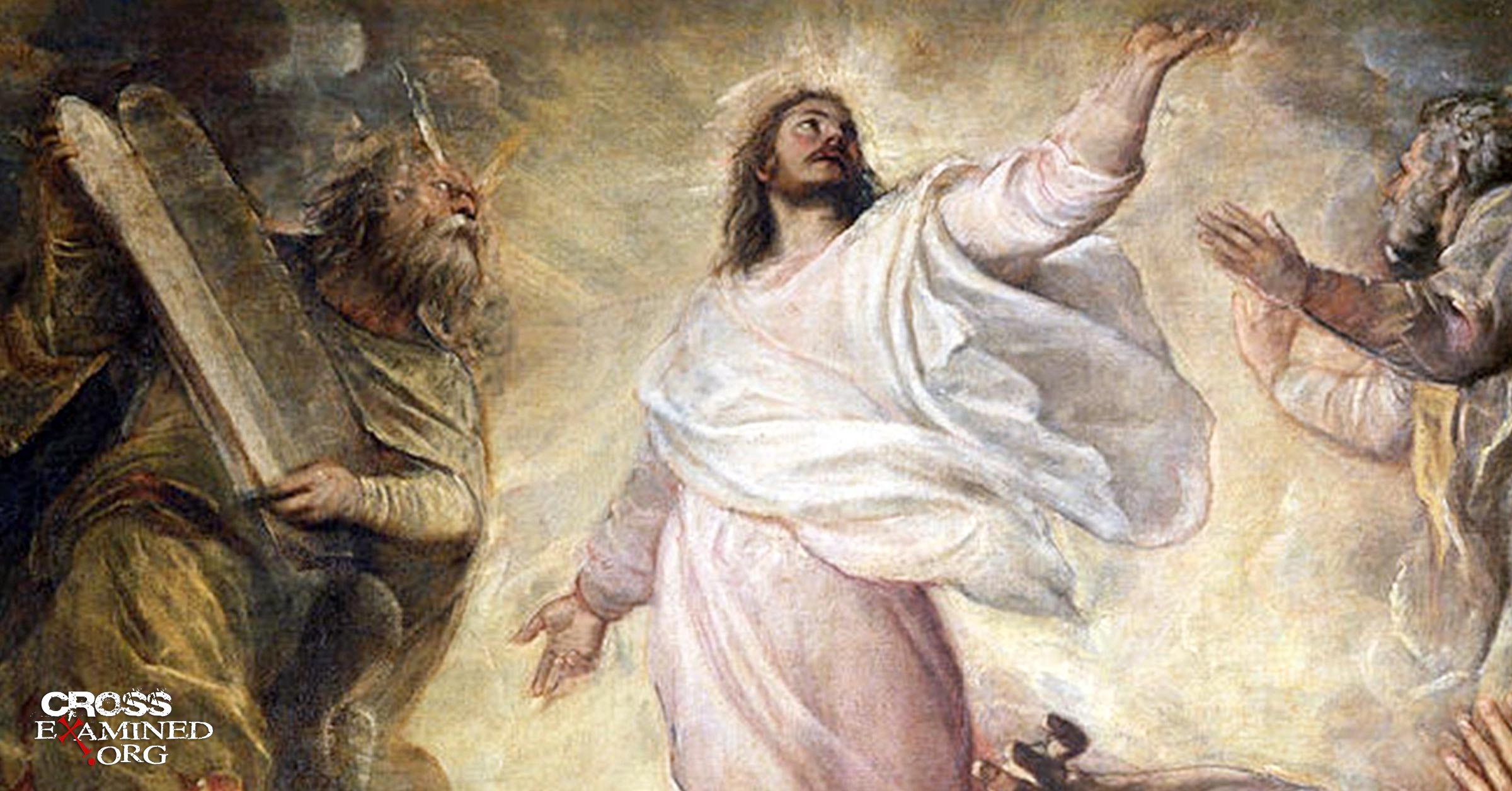
Both are transfigured on a mountain (Ex. 34:29-35; Mk. 9:2-13)

Both are isolated for 40 days without food or water (Ex. 34:28; Mt. 4:2)

Both are rebelled against by Israelites (Num. 16; Lk. 22-23).

Truly, Jesus was the prophet like Moses.

Differences Between Jesus And Moses

Despite their similarities, it’s their differences that matter the most. Consider these two:

First, like any prophet, Moses repeatedly said, “thus saith the LORD.” The LORD had communicated to him in some form or fashion, and he then communicated those same words to the people.

Jesus, on the other hand, never used the phrase “thus saith the LORD.” Instead, he said something radical — “truly, truly, I say unto you.” In other words, Jesus didn’t need to receive a word from the LORD because he was the LORD himself! Jesus spoke with authority, unlike any other prophet — including Moses.

Second, God accepted Jesus’ atoning sacrifice but not Moses’. In Exodus 32, after Israel sinned by worshipping the golden calf, God was going to consume them. Moses, however, sought to spare the people by offering up himself as an atoning sacrifice. We read in verses 30-33:

The next day Moses said to the people, You have sinned a great sin. And now I will go up to the LORD; perhaps I can make atonement for your sin. So Moses returned to the LORD and said, Alas, this people has sinned a great sin. They have made for themselves gods of gold. But now, if you will forgive their sin — but if not, please blot me out of your book that you have written. But the LORD said to Moses, Whoever has sinned against me, I will blot out of my book.

Even at this early stage, Moses recognized atonement must be made for Israel’s sins, and thus he offers up himself! But God rejected his offer. After all, Moses himself was just a man — a sinful one at that. He couldn’t possibly atone for the people’s sins.

But Jesus could. Being divine and sinless, Jesus could bear the sins of the world. And unlike Moses, God accepted Jesus’ sacrifice and demonstrated his acceptance by raising him from the dead.

So, while Jesus was a prophet like Moses, he was certainly greater.

Jesus Is Greater Than Moses

The author of Hebrews saw this comparison and didn’t hesitate to elevate Jesus above Moses. His words seem an appropriate ending to this article:

Therefore, holy brothers and sisters, who share in the heavenly calling, fix your thoughts on Jesus, whom we acknowledge as our apostle and high priest. He was faithful to the one who appointed him, just as Moses was faithful in all God’s house. Jesus has been found worthy of greater honor than Moses, just as the builder of a house has greater honor than the house itself. For every house is built by someone, but God is the builder of everything. “Moses was faithful as a servant in all God’s house,” bearing witness to what would be spoken by God in the future. But Christ is faithful as the Son over God’s house (Heb. 3:1-5).

Recommended resources related to the topic:

The Jesus of the Old Testament in the Gospel of John mp3 by Thomas Howe

Jesus, You and the Essentials of Christianity – Episode 14 Video DOWNLOAD by Frank Turek (DVD)

How Can Jesus be the Only Way? (mp4 Download) by Frank Turek

World Religions: What Makes Jesus Unique? mp3 by Ron Carlson

Historical Evidences for the Resurrection (Mp3) by Gary Habermas


Ryan Leasure holds a Master of Arts from Furman University and a Masters of Divinity from the Southern Baptist Theological Seminary. He currently serves as a pastor at Grace Bible Church in Moore, SC.

Original Blog Source: http://bit.ly/30b2ccw

By Brian Chilton

Certain verses in the Bible have become so popularized that they are often removed from their context. In so doing, the biblical passage loses the impact that it holds. Worse yet, the text may be given a message that it never intended to carry. Jeremiah 29:11 is one such example.

The verse is a promise of God which states, “For I know the plans I have for you’—this is the Lord’s declaration—‘plans for your well-being, not for disaster, to give you a future and a hope’” (Jer. 29:11, CSB). The verse has been often misapplied as it has become a staple for graduation Hallmark cards, plaques, and knick-knacks. For some, the verse holds a promise that God will never allow the person to suffer bad experiences or trouble. The graduate who receives such things may think that God will only bring good things to his or her life. But is that really what the passage says? Proper biblical interpretation unveils three theological truths that exceed the kitschy cliché that the verse has become.

  1. Jeremiah 29:11 Indicates that God Can Be Found in Difficult Days. It is critically important to note that Jeremiah 29:11 is part of Jeremiah’s letter to the Israelites who would become Babylonian exiles. This is key to understanding the context of the verse. If the interpreter misses this point, he or she will not comprehend the nature of the verse. Quite frankly, I do not know that anyone would want this to be their graduation theme because God is telling the nation that they are about to experience difficult days ahead.

Living in an era of self-entitlement and luxury, it is easy to think that God will only bring good things to our lives. We almost view God as if he is a self-improvement coach rather than a Heavenly Father. Perhaps some would even like God better if God were the former rather than the latter. Nevertheless, God never promises that a believer’s walk will be easy. Rather, God promises us that God’s presence will never leave us in good times or bad. If you continue reading the text, God tells those who are about to suffer the exile, “You will call me and come and pray to me, and I will listen to you. You will seek me and find me when you search for me with all your heart” (Jer. 29:12–13, CSB). God’s presence is always with his children (Matt. 28:20).

  1. Jeremiah 29:11 Indicates that God is Sovereign Over the Good Times and Bad. Jeremiah 29:11 is comparable to Romans 8:28 in the fact that the prophet holds that God is sovereign over all times and occasions. Why does God allow evil to occur? This issue, otherwise called theodicy, is beyond the scope of this present article. However, it must be understood that God may allow bad things to occur to bring about a greater end.

I spoke with a church member today about the book of Job and the primary theological theme of the book. God tells Job that he must trust him because he set everything in motion since the beginning of creation. Life and the operation of the universe are far more complex than anyone could imagine. In a similar fashion, God is telling the soon-to-be Babylonian exiles the same, saying, “Trust me.” The author of Hebrews notes that one should not “take the Lord’s discipline lightly or lose heart when you are reproved by him, the Lord disciplines the one he loves and punishes every son he receives. Endure suffering as discipline: God is dealing with you as sons” (Heb. 12:5–7, CSB). When divine discipline comes, it is never to harm us. But rather, God’s discipline is always to make us better. Psalm 94 notes that a person is blessed when they receive the Lord’s discipline because they are being taught how to keep the law (Ps. 94:12, ESV). God even tells Jacob, “Fear not … for I am with you. I will make a full end of all the nations to which I have driven you, but of you, I will not make a full end. I will discipline you in just measure, and I will by no means leave you unpunished” (Ps. 118:18, ESV). The people of Jeremiah’s day had not been faithful which led to God’s disciplinary actions. However, God notes that God is still sovereign in the bad times as he is in the good times. He is telling the people, “Trust me.”

  1. Jeremiah 29:11 Indicates that God Will Bless His Faithful Children in the End. Here again, Jeremiah 29:11 can be likened to Romans 8:28 which states, “We know that all things work together for the good of those who love God, who are called according to his purpose” (Rom. 8:28, CSB). In like manner, God tells those who would be exiled, “I will restore your fortunes and gather you from all the nations and places where I banished you … I will restore you to the place from which I deported you” (Jer. 29:14, CSB). While the people would face severe difficulty in their days ahead, they could live with the assurance that God would restore the fortunes of their people and their land. Similarly, we are part of the community of God’s people. We do not always get things right. Quite honestly, we probably mess up more than do right. Nonetheless, God has a better day coming for his children—a day where there will be no more tears, no more pain, no more heartache, no more divisions, and no more death (Rev. 21:3–4). Most importantly, that day will be a time where there will be no more separation from God (Rev. 22:4–5). Our faith will be sight (2 Cor. 5:7).

Jeremiah 29:11 is a wonderful verse. But the depth of its theological mines cannot be dug unless one takes the time to understand the verse in its proper context. While it may not be that this verse will be as desirable to place on graduation cards as it once was, the verse becomes more intense and stronger especially when troubles come. God’s ultimate plan for our lives is to bring great blessings. But those blessings may often become shrouded in the heartaches of life. By placing us in the pressures of life, God makes us into diamonds.

Recommended resources related to the topic:

How to Interpret Your Bible by Dr. Frank Turek DVD Complete Series, INSTRUCTOR Study Guide, and STUDENT Study Guide

How NOT to Interpret the Bible: A Lesson from the Cults by Thomas Howe mp3

Can We Understand the Bible? by Thomas Howe Mp3 and CD

How Philosophy Can Help Your Theology by Richard Howe (MP3 Set), (mp4 Download Set), and (DVD Set)


Brian G. Chilton is the founder of BellatorChristi.com, the host of The Bellator Christi Podcast, and the author of the Layman’s Manual on Christian Apologetics. He received his Master of Divinity in Theology from Liberty University (with high distinction); his Bachelor of Science in Religious Studies and Philosophy from Gardner-Webb University (with honors); and received certification in Christian Apologetics from Biola University. Brian is enrolled in the Ph.D. program in Theology and Apologetics at Liberty University and is a member of the Evangelical Theological Society and the Evangelical Philosophical Society. Brian has been in the ministry for nearly 20 years and serves as the Senior Pastor of Westfield Baptist Church in northwestern North Carolina.

Original Blog Source: http://bit.ly/37NKleq

By Wintery Knight

Legacy of Slavery 1

James White asks: does the Bible apply to black women?

I don’t like Calvinist theologian James White at all, but at least he’s willing to defend the moral teachings of the Bible against the woke identity politics that is taking over Christian churches. A few months ago, he tweeted something very controversial (see above), and got into a lot of hot water with fake Christians. In this post, I’ll explain why he is right.

So, as you can see above, James is concerned that black women are having so many abortions, and he thinks that the solution to this is to encourage black women to take the Bible’s advice on sexual morality. Shocking, I know.

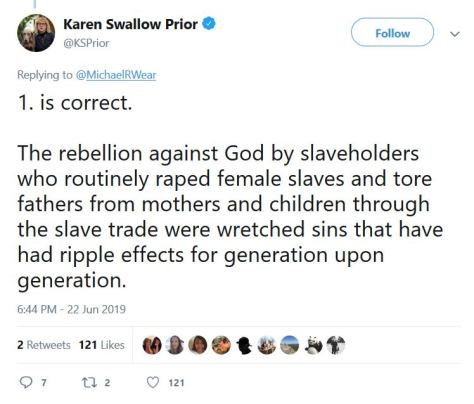
If you read the replies to his tweet on Twitter, you’ll see millions and millions of comments calling him a racist, and telling him that slavery is to blame for EVERYTHING that black women do wrong. Basically, James haters say that black women can do anything they want and should never be told that it’s wrong according to the Bible because their bad choices are all the fault of slavery. So, the Bible doesn’t even apply to them, or something.

Here is an example from a radical feminist progressive named Karen Swallow Prior:

Legacy of Slavery 2

Karen Swallow Prior says that unlike whites, blacks have no moral agency

According to the fake Christians, it’s not that black women make poor choices with sex, it’s that the ghosts of white slavers who raped their great-great-great grandmothers reach through time with magic and force them to have sex with hunky bad boys who won’t commit to them before sex. It’s not rap music calling black women hoes! It’s the ghosts of slavery past. And even if this ghost theory isn’t true, we shouldn’t tell black women not to sin, because…it would hurt their feelings. After all, the Bible isn’t a book that’s designed to set boundaries to prevent self-destructive behaviors. It encourages us to listen to our hearts, be reckless, and sin as much as we can.

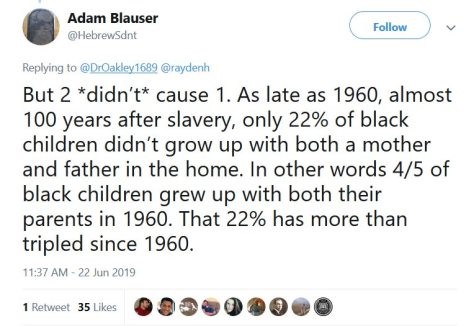
So, when did black community problems with sex and abortion start? Did it start with slavery times? Actually, blacks were doing GREAT at marriage and sexual matters just 50 years ago.

This reply to James White explained:

Legacy of Slavery 3

Blacks married at rates comparable to whites before the welfare

That’s true. Black children weren’t fatherless, so they weren’t having early sex outside of marriage, and so they weren’t getting abortions.

Children born to blacks were just as likely to be born in a married home as children born to whites, up until the 1960s:

Legacy of Slavery 4

Black women were more likely to be married before single mother welfare programs

(Source)

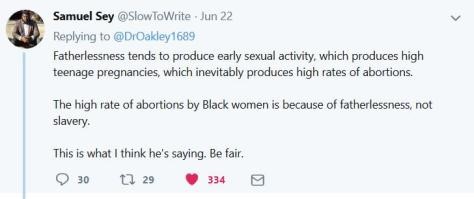
The reason that the graph is going upward is because daughters raised in fatherless homes tend to engage in sexual activity at younger ages because they are seeking approval from a man which their (single) mother cannot give them. It’s a tragic downwards spiral, and it affects all races. The only way to stop it is to tell women to choose marriage-minded men (not hot bad boys) and marry before having sex like the Bible says. But woke fake Christians think the Bible is too mean, and better to allow sin by saying that sin is inevitable because slavery ghosts or something.

What’s neat is that black men who take Christianity seriously are totally on board with the facts:

Legacy of Slavery 5

Black man here. Can confirm that the Bible applies to black women.

On this blog, I don’t talk about my ethnicity myself, for confidentiality reasons, but I have said that my skin is darker than Barack Obama. I’m not white or Asian. And the reason that I don’t fall into this trap of causing babies to be born out of wedlock is because I think that when the Bible says that sex outside of marriage is a sin, that this is true. I don’t make excuses or shift blame. It’s incumbent on me to obey since I claim to be a follower of Jesus. I’m not interested in identity politics. I’m not interested in racial divisions. I’m not interested in blame-shifting. The rules are the rules. And my following of the rules caused me to not cause abortions, according to Christian specifications. Period.

When it comes to sex outside of marriage, the answer of every Bible-believing Christian is simple: I’m against it. That is the correct answer, and anything more or less than this answer is demonic. If you are a Christian, sex outside of marriage is always morally wrong. And if you try to justify it, or blame someone else, in order to excuse it, then you’re not a Christian at all. If you try to make excuses for why someone did it, you’re not a Christian. Whether you have had it and been forgiven, or never had it, the answer is always the same: it’s morally wrong. Don’t do it. Never do it.

What I am seeing from people who are critical of James White’s tweet is that they are basically trying to attack those who make moral judgments based on what the Bible says. They want to make room for sinners to sin. The root of abortion sin is sexual sin. Real Christians discourage sexual sin and therefore protect unborn children. Fake Christians want to be liked by appearing compassionate, so they make excuses for sexual sin. If you take the Bible seriously on morality, you won’t be liked. Those who try to excuse sin do so because their need to be liked is more important than their need to promote what the Bible teaches.

Some fake Christians will say, “oh, but I do think the Bible is right about sex and marriage, but we have to care about slavery reparations and global warming and refugees and illegal immigrants and transgender rights, too.” Baloney. An authentic Christian is concerned about the things that the Bible teaches are “major” things. Drunkenness is a major thing. Sexual immorality is a major thing. Divorce is a major thing. Homosexuality is a major thing. If you meet a Christian who treats those issues as minor issues, and instead majors in what the secular left tells them are major issues, then you’re talking to a fake Christian.

Christianity isn’t a brain-dead faith. You get your priorities from the Bible, and you argue those priorities using facts. The facts about marriage rates are clear, and they show that the problems in the black community aren’t caused by slavery. They’re caused by single mother welfare programs. Those welfare programs taught women of all races that they didn’t have to listen to their fathers when choosing men. Those welfare programs taught women that feelings were a better guide in relationships than the Bible. Those welfare programs taught women that their eyes were a better judge of character than the performance of traditional marriage roles. Those welfare programs taught women that recreational sex was a way to get a man to commit and stop being a bad boy. We need to go back to the root cause of the problem. The root cause of the problem was making excuses for disobedience to the Bible and transferring money from married homes to out-of-control women. Of all races.

Recommended resources related to the topic:

The Apologetics of Abortion mp3 by J. Budziszewski 

Reaching Pro-Abortionists for Christ CD by Francis Beckwith

The Case for Christian Activism (MP3 Set), (DVD Set), and (mp4 Download Set) by Frank Turek 

Legislating Morality (mp4 download),  (DVD Set), (MP3 Set), (PowerPoint download), and (PowerPoint CD) by Frank Turek

Legislating Morality: Is it Wise? Is it Legal? Is it Possible? by Frank Turek (Book)


Original Blog Source: http://bit.ly/2SQCVCX

By Al Serrato

One of the most common challenges to the Christian worldview is the problem of evil. We see evil all around us; we need to do little more than pick up a newspaper or watch the nightly news to have our sensibilities assaulted with countless acts of senseless violence and suffering. Many are man-made and some a product of an indifferent Mother Nature; whatever the source, at times, it feels as if the world is awash in wickedness.

How, the challenger entreats, can your good and loving God create such things? Why did he imbue man with such capacity for wickedness? The Christian responds that God did not create evil. No, they claim, evil is the product of man’s twisted free will. How well does this claim hold up?

The challenger seems to have logic on their side. Reduced to a simple syllogism, the challenge goes something like this: 1) God created all things; 2) evil is a thing; 3) therefore, God created evil. Though raised anew in every generation, the challenge itself is not new.  In the 4th century, St. Augustine tackled it, as did St. Thomas Aquinas centuries later. What we call evil, they explained, is in fact a deprivation of the good and is therefore not really a “thing” at all.   Like the “hole” in a donut, it describes what is not there, what is missing. But this does not always satisfy the challenger. Often, they may counter: an all-powerful, all-loving God would not have allowed deprivations any more than he would have created evil.

This response seems to accept the difference between deprivation and a thing and confronts the believer with the same challenge: a good God would never have allowed such deprivations, such departures, from the good.  But this challenge actually misses the point of the distinction that Augustine and Aquinas drew; through sloppy thinking, it continues to view evil as a thing, even though it adopts the language of deprivation. 

Consider: what we see as evil, whether a thought or an act, can only be gauged if we first hold in our minds what the good would be.  For example, using a knife to cut someone is evil when done by the assailant but not by the surgeon.  Setting off an explosion is evil when used to harm others but not when used to carve out a tunnel.  The knife and the cutting; the bomb and the blast – these may be “things’ in a manner of speaking, but any measure of evil in their use depends not on what they are, but on the extent to which their use deviated from God’s perfect will.

We know this intuitively. And because some of us are better at knowing God’s will than others, we may mistakenly call something evil when in truth it is not.  For example, a law prohibiting abortions would be viewed as “evil” by those who believe that a woman has the right to choose; they would view the act of stopping a woman from aborting her unborn child to be a departure from the “good” of free choice. This, of course, would be wrong. It would not be evil at all, but instead good, because such a law would comport with, and not defy God’s will. 

Those who reject Augustine’s approach will insist that these are examples of things – namely acts that are being done: stopping the woman by force of law, setting off the explosive, cutting into a person. They will insist that a good God would not have created them. This misunderstands the point: what constitutes evil is not the action or the thing, but the use to which it is put. God, as the infinite expression and definition of good, is by necessity the ultimate standard of what is good. Consequently, what we describe as evil is, in reality, a rough gauge of the extent to which the thought or act in question departs from God’s nature or will, or at least what we view that nature or will to be.

So, why does God allow evil? Because when he gave us free will, he meant for us to have, well, free will. The opposite of free will would be directed will. Whatever actions we took would be controlled, the way a robot’s or computer’s would be.  In such a world, there would be no abortions, no stabbings, no hidden minefields.  But such a world would not know freedom. God allows evil, even though he never created it, because if He does not allow us to depart from His perfect will, then free will would be an illusion.

Recommended resources related to the topic:

If God, Why Evil? (DVD Set), (MP3 Set), and (mp4 Download Set) by Frank Turek 

If God Why Evil. Why Natural Disasters (PowerPoint download) by Frank Turek

Why Doesn’t God Intervene More? (DVD Set), (MP3 Set), and (mp4 Download Set) by Frank Turek

Why does God allow Bad Things to Happen to Good People? (DVD) and (mp4 Download) by Frank Turek 

By Luke Nix

Introduction

A while back, I saw an intriguing question on social media from a person who is in the middle of a worldview transition. This person is concerned about why so many Christians follow conservative economic theories and not more liberal ones. As I have thought about the question more and more, I have noticed not just a viable answer but also an apologetic opportunity in addressing this concern. Here is the question in the questioner’s own words and how I would respond:

The Question:

“I am going through a transition… From an atheist to someone who may not be Christian but does believe in a higher power.

My background is economics, and I am struggling with the fact that Christianity has aligned its self so heavily with the conservative party. I totally understand your aversion to abortion, but not the economic theory behind their chosen party.

Are there people here that don’t agree with the conservative economic theory, or is the abortion issue the main reason why you align with them?”

My Response:

Limited Government

I believe that the reason that most Christians align with conservative parties is because conservative parties tend to believe in a government that has limited power to legislate. All laws (including regulations that guide economics of a country) legislate morality. The more a government legislates morality, the further from a pluralistic society it promotes and starts to infringe upon differing moral views. Conservatives generally (*generally*) believe that the government should only legislate the basic morality that is “written on the hearts of all men” and should stay out of other matters. Norman Geisler and Frank Turek go into the details of this position in their book “Legislating Morality: Is It Wise, Is It Legal, Is It Possible.”

Intrinsic Human Value and Economics

When a government is limited in this manner, it has less control (some is definitely necessary) over

economics and leaves that control with the people.

Today’s popular view of economics for liberals is based on the intrinsic value of humans (see my post “Do Humans Have Intrinsic Value?“) and pushes for all to have a comfortable and healthy life. Neither of those desires are wrong or evil. In fact, both are very good. The goodness of the foundation and intentions of the liberals’ view should not be overlooked, nor should they be ignored. They need to be honored for the objective value that they ascribe to humanity and the objective good that they wish to achieve.

However, no one should forcibly take something from one person to give to another. Forcibly removing funds (such as for economic redistribution or universal anything) would violate not taking what is not yours (stealing). So, that method to achieve the goals cannot be used.

No view of economics should achieve its moral goal through immoral means; this includes both liberal and conservative economic views.

Free Will and Economics

The conservatives hold that people should freely give to those in need (which many do either directly or through charities). I know a lot of liberals see that many also do not, and they believe that this is not right (especially when we see the suffering in the world), but one person (or group of people) simply cannot do something evil to force another person or group of people to do what is right. It is neither logical nor moral to attempt to achieve a good end by intentionally doing evil acts.

Both sides have the free choice of their behavior and actions, and they also have to live with the consequences of their chosen behavior and actions. Those who do evil, both conservative and liberal, will be judged by the ultimate Judge. There will be justice ultimately- whether one side or both; both are held responsible. Most conservatives and Christians believe it is best that only those who refuse to be generous (and refuse to care for widows and orphans- James 1:27) be the ones suffering consequences, not those people and the ones who forcibly take (steals) what is not theirs (the funds of the selfish people) to “right the wrong.” We cannot repay evil with evil. We can encourage them to choose good behavior and actions instead of evil ones, but we cannot force their actions. It is their free choice and their consequences to be reaped.

Sin In Conservative Economics 

Having said that, I must also point out that the failures of conservative economic policies (such as capitalism) are primarily due to the fact that people have chosen to practice those policies outside the correct moral framework. The Christian worldview provides a powerful explanation for this common behavior and skewed moral framework: sin. Such an exercise has resulted in much evil, but the answer is not another economic system (such as socialism) that will be practiced outside the correct moral framework too. The economic system (capitalism) is not necessarily the problem; the problem is the moral framework. That is what needs to be different.

And that leads me to my main point: we cannot merely set idly by in judgment of another’s evil decisions in the capitalist society, rather our recognition of the suffering of others due to evil choices not of their own is a call to self-assessment, self-judgment, and change. The Christian does not just watch the poor suffer at the hands of evil people because logic and morality forbid them to interfere in the affairs of the evil people. Instead, we must assess our own situation to make changes so that we can be the solution, so that “what (one) meant for evil, God meant for good” (Genesis 50:20).

“Give Like No One Else”

This does not require a change from capitalism and does not require us to use evil means to “right the wrong.” The foundational philosophy that drives the business of financial guru Dave Ramsey is this: “Live like no one else, so you can live and give like no one else.” The poor do not have to suffer because “in a moral capitalist society logic and morality do not permit us to force the rich to share their money”, rather the poor do not have to suffer because we have the free will to make the decision to make financial changes and sacrifices in our own lives so that we have excess to give to others.

Ramsey, though, explains in his book “Total Money Makeover” an important aspect of this kind of a change:

“To properly view behavior and to understand how to change behavior intelligently, we must consider several things. Behavior intelligently viewed takes into account the emotional, the relational, the family history, the socioeconomic impacts, and the spiritual. To ignore any of these while discussing behavior change about money is incomplete and a very naive.” (emphasis added)

I emphasized “spiritual” and the naivety of ignoring it because Ramsey goes on to say that the person must have a “heart-level makeover”. Without a change in our heart and worldview to accepting Jesus Christ’s sacrifice for our sins, we cannot have a heart-level makeover, and we are likely to fall into the same sin trap of the evil people who refuse to give to the poor. It is only through Christ that we can overcome this sin that we despise so much in others (Matt 7:1-5).

How This Discussion Leads to Christ

Earlier in the post, I pointed out that the intrinsic human value that grounds our moral outrage can only be found in the Christian worldview (via the doctrine of the Image of God). I also explained that only Christianity (through the recognition of man’s natural sinful state) can explain the evil behavior and actions (and will cause them to continue regardless of the economic system). Those who find the alignment of Christians with the conservative economic system of capitalism concerning must borrow from the Christian worldview in at least two areas to justify their concern (a third borrowing is also necessary for objective morality, which I didn’t expand on). Now, we see that the only logical and moral solution is through the affirmation of the truth of the Christian worldview (acceptance of Christ so that we can be the solution- the Body of Christ- again James 1:27). In the discussion of economics and the evil that has been seen, the skeptic of Christianity (who brings up these concerns) has four reasons on his or her economic concerns alone to accept the truth of the Christian worldview.

Conclusion

If our concern for the poor is authentic, and we truly want to see this issue solved, Christianity is the only option. Without Christ, there are only two equally despicable alternatives:

We either must resort to illogical and immoral means and “repay evil with evil.”

Or we must abandon our concern for the poor and just let them suffer at the hands of evil.

For the questioner who is in transition in their worldview, if this discussion is not enough to at least get them considering the truth of Christianity (perhaps they are tempted to accept one of the alternatives above), then I implore them to consider the evidence for the single historical claim that if it happened, Christianity is true and they have your answer to their economic concern, but if it did not happen, Christianity is false, and they are free to pick from the two options above. For the objective, historical evidence of the resurrection of Jesus Christ, I recommend these posts and books:

Did The Historical Jesus Rise From The Dead?

Book Review: Has Christianity Failed You?

Book Review: The Historical Jesus

Book Review: The Risen Jesus and Future Hope

Book Review: Cold-Case Christianity

NOTE: Along with the books I recommended above, I would also recommend another by Norman Geisler called “Christian Ethics: Issues and Options.” It goes into more detail about Christian morality and how it applies consistently across many different moral debates.

Recommended resources related to the topic:

American Apocalypse MP3, and DVD by Frank Turek

Correct, NOT Politically Correct: How Same-Sex Marriage Hurts Everyone (Updated/Expanded) downloadable pdf, Book, DVD Set, Mp4 Download by Frank Turek

Economics, Environment, Political Culture CD by Kerby Anderson 

Government Ethics CD by Kerby Anderson

The Case for Christian Activism MP3 Set, DVD Set, mp4 Download Set by Frank Turek

You Can’t NOT Legislate Morality mp3 by Frank Turek

Economics, Environment, Political Culture CD by Kerby Anderson

Legislating Morality (mp4 download),  (DVD Set), (MP3 Set), (PowerPoint download), and (PowerPoint CD) by Frank Turek

Legislating Morality: Is it Wise? Is it Legal? Is it Possible? by Frank Turek (Book)

Is Morality Absolute or Relative? by Dr. Frank Turek DVD, Mp3 and Mp4

Counter Culture Christian: Is There Truth in Religion? (DVD) by Frank Turek


Luke Nix holds a bachelor’s degree in Computer Science and works as a Desktop Support Manager for a local precious metal exchange company in Oklahoma.

Original Blog Source: http://bit.ly/2ZjSXX9

By Natasha Crain 

Last Sunday, our church did its annual multilingual service, with three congregations—Mandarin-speaking, Spanish-speaking, and English-speaking—all coming together for worship. We had readings in multiple languages, and a sermon was given in Spanish with an English translator. There was no Sunday school this week, so kids joined their parents in adult church.

When we informed our kids Sunday morning of what would be happening, there was a collective and passionate, “NOOOOOOOOOOOO!” (Honestly, I should have typed more o’s to reflect the true level of protest.)

“PLEASE, let us stay home! We can do home church! Please, not THAT service! It’s SO BORING!”

Apparently, they remembered it well from the prior year. We dragged them into the car in spite of the whining and endured their pleas all the way there.

I’d be lying if I said this was a rare occurrence of my kids not wanting to go to church. The nature of this service perhaps made them complain more loudly than normal, but there are plenty of typical Sundays when our kids ask, “Do we have to go?” I’d bet a lot of money that you’ve been asked the same.

The question of what to do when kids don’t want to go to church has been one of the most frequent ones I’ve received over the years from readers, and it’s one of the most commonly discussed questions in various Christian parenting forums (you can join my own Christian parenting group on Facebook by clicking here).

The running theme of kids’ complaints is usually that church is boring, and they don’t want to go because of it. Parents tend to assume it’s their job to convince their kids that church isn’t boring and are looking for ways to do so.

But that’s a really bad assumption.

I think there are actually quite a few legitimate reasons why so many kids are bored by the church and/or Sunday school. In other words, kids aren’t always just making up random excuses to not go; a lot of times, their avoidance reflects a genuine problem.

Here are several “legit” reasons for boredom at church that parents should consider.

  1. There’s too much emphasis on fun at Sunday school.

This probably sounds counterintuitive. After all, if Sunday school is a lot of fun, then kids should want to go, right? No, no, and no. Now, if Sunday school truly was some kind of incredible amusement park-like experience, that could be the case (and kids would choose to go for the wrong reasons). But Sunday school “fun” usually consists of relatively mild amusement like crafts, foosbal, or maybe an indoor relay race using spoons and M&Ms.

This kind of “fun” can never compete with your child’s idea of fun at home, where they can do anything they want.

Of course, they will want to stay home; church fun is boring compared to home fun. When a Sunday school program focuses on entertainment, this is the natural apples-to-apples comparison a kid’s going to make. Who can blame them?

If most of what your kid takes away from church is that there’s a little lesson with a lot of social time, you’re going to have a hard time convincing them that “church” isn’t boring (when “church” is Sunday school entertainment in their mind).

  1. “Adult” church is beyond their current grasp.

Parents sometimes try to get around the lack of substance found in many Sunday school programs by keeping their kids with them in “adult” church each week. This can work really well for some kids. My 11-year-old daughter has recently been opting out of Sunday school to come with us to adult church because she’s able to follow along and says she learns much more than in class. When my 9-year-old daughter saw that her sister was doing this, she wanted to come too. But when she did, she spent most of the service with her head on my shoulder trying to sleep—she just doesn’t have the interest or attention span yet that my older daughter does. When she told me after church that day that it was boring, I told her, “Of course it was! You chose to sleep!”

For kids like my older daughter, who want to attend adult church in lieu of Sunday school, this can be a great choice. But for those like my younger one who aren’t ready to track with what’s being taught and instead spend the time doodling in a bulletin or daydreaming, boredom will be the inevitable outcome. That doesn’t necessarily mean that kids’ Sunday school will be seen as less boring, but rather that adult church isn’t always the answer.

  1. Their family attends church sporadically.

Every pastor I know laments the fact that families are attending church with less regularity than they used to, for all kinds of reasons (Sunday morning sports being a big one). A “regular” attender is now someone attending once per month.

I know this is going to rub some people the wrong way, but it’s important to say: A church could have the best Sunday school program in the world, but if a family only attends sporadically, it’s natural that a child will find it boring—they’re not really connected to what’s going on or what’s being taught. You can’t blame a kid for mentally checking out at that point.

  1. Faith in their family is mostly about going to church on Sundays.

Even if your family attends church every week, if you’re not regularly praying together, studying the Bible together, and having conversations about faith at home, your kids will rightly wonder why they should bother going to church. Church will come to be seen as just one more thing they have to do each week, without any meaningful connection to their daily lives. In other words, it will become an unnecessary time burden in their minds because it’s irrelevant for the rest of the week.

  1. They regularly engage in deep faith conversations at home.

Here’s another counterintuitive point, but I’ve seen it happen in a lot of families that are very committed to their faith. If your family consistently has deep faith conversations (the kinds I write about in my books, Keeping Your Kids on God’s Side and Talking with Your Kids about God), in all likelihood your kids are gaining a far more intellectually robust faith than they’ll get from the average Sunday school—and Sunday school will seem extremely boring in comparison. A telltale sign that this is the problem is when your kids complain they aren’t “learning anything” or say that it’s the “same stories over and over.”

Though parents often assume there’s some kind of problem with their kids’ spiritual development when they don’t want to attend Sunday school, it can mean the opposite in this case; kids may simply have much higher expectations for what should be discussed in a Sunday school environment and be bored by the 600th telling of Noah’s ark followed by popcorn.

  1. They have doubts about God or the truth of Christianity.

It should be obvious, but I’m surprised how many parents never consider this possibility: If kids have stopped believing in God or in the truth of Christianity, they’re going to find church boring.

Imagine for a moment that you had to attend a church (or other group) you didn’t agree with every single week, and someone expected you to take interest. They study a book you think is fiction but apply it as truth in their lives and think you should too. Chances are, you’d find that boring because you don’t believe what they do. Why study a fictional book so deeply each week?

In the same way, kids who no longer hold a faith in Jesus are going to get tired of hearing about Him every Sunday. It’s outside the scope of this post to weigh the pros and cons of making such kids attend church, but there are two points for our current purpose to take away here:

  • If your kids find church boring and/or fight you on going, have a conversation with them about what they currently believe regarding God, Jesus, and the Bible. You may be surprised by what you learn.
  • If you discover that their boredom with the church is rooted in unbelief, your greater concern (by far) should be to discuss their doubts and to have conversations about the evidence for the truth of Christianity.
  1. They’re human.

On the drive to the church service I described at the beginning of this post, I turned to the kids in the back of the car and said, “Hey guys. I have something surprising to tell you.” They got quiet, and I continued.

“I don’t feel like going to church today either. I don’t really enjoy this particular service. I would rather be at home this morning.”

They looked at me with wide eyes, anticipating we might go home.

“But I’m going anyway. You see, as humans, it’s often easiest and very tempting to stay home from church on Sunday mornings. That’s a totally normal feeling, and adults have it too sometimes. But we make it a priority to go in spite of those occasional feelings for several reasons: 1) It’s one way of putting God first in our lives (by committing to church each Sunday morning); 2) Church isn’t only about learning—it’s also about worship, and worship transforms our relationship with God; and 3) It’s important to develop relationships with other believers and be in community (Hebrews 10:25). I’m not going to church this morning because I can’t think of anything else I’d like to be doing, but rather because I love the Lord, and this is one way I put him first.”

In other words, I explained to them why their boredom shouldn’t be the deciding factor in attending church.

didn’t try to convince them that they shouldn’t ever think the church is boring.

This is a critical distinction for kids to understand because as I’ve hopefully shown in this post, there are many legitimate reasons why kids may find church boring at times. When they understand why church matters even when they find it boring, it can lead to far more productive conversations than just ramming heads every Sunday morning.

Stay tuned for next week’s blog post, when I’ll do a cover reveal with the table of contents for my new book coming in March! I’m so excited to share it with you! Also, I’m running a giveaway of four of my books on my blog’s Facebook page through December 5. If you don’t follow me there already or haven’t seen it, click over!

Recommended resources related to the topic:

Talking with Your Kids about God: 30 Conversations Every Christian Parent Must Have by Natasha Crain (Book)

Keeping Your Kids on God’s Side: 40 Conversations to Help Them Build a Lasting Faith by Natasha Crain (Book)

Courageous Parenting by Jack and Deb Graham (Book)

Proverbs: Making Your Paths Straight Complete 9-part Series by Frank Turek DVD and Download

Forensic Faith for Kids by J. Warner Wallace and Susie Wallace (Book)

God’s Crime Scene for Kids by J. Warner Wallace and Susie Wallace (Book)


Natasha Crain is a blogger, author, and national speaker who is passionate about equipping Christian parents to raise their kids with an understanding of how to make a case for and defend their faith in an increasingly secular world. She is the author of two apologetics books for parents: Talking with Your Kids about God (2017) and Keeping Your Kids on God’s Side (2016). Natasha has an MBA in marketing and statistics from UCLA and a certificate in Christian apologetics from Biola University. A former marketing executive and adjunct professor, she lives in Southern California with her husband and three children.

Original Blog Source: http://bit.ly/2PzKxGO

By Ryan Leasure

Skeptics of all stripes vehemently deny the deity of Christ. Besides their a priori commitment to philosophical naturalism, a major argument they put forth is that the earliest Christians didn’t believe Jesus was divine. Rather, this belief in his deity was a legendary development, as evidenced by the four Gospels.

It’s the skeptics’ contention that the earliest Gospels (Matthew, Mark, and Luke) don’t teach a divine Jesus at all. Instead, they portray a very human Jesus. It’s not until the Gospel of John, written some sixty years after Jesus’ death, that we find a clear reference to Jesus’ divinity.

The argument goes; these Gospels reflect what the earliest communities believed about Jesus. Thus, the earlier Gospels, which don’t portray the deity of Christ, suggest that the earliest communities didn’t believe in the deity of Christ. Once we get to John, however, legends of Jesus’ divine nature have had time to spread throughout the Christian community, hence the high Christology in John.

Bart Erhman, Of Course, Agrees

Bart Ehrman sums up this view in this article:

The problem is that the only Gospel of the New Testament, where Jesus makes divine claims about himself is the Gospel of John. In the three earlier Gospels, you do not find Jesus saying things like “I and the Father are One,” or “Before Abraham was, I am,” or “If you have seen me, you have seen the Father.” These sayings are found only in the Fourth Gospel, as are all the other “I am” sayings, in which Jesus identifies himself as the one who has come from heaven to earth for the salvation of all who believe in him.

He goes on to say:

The most common way that scholars have explained this almost inexplicable omission in the Synoptic Gospels is simply that their authors did not think of Jesus as a divine being who was equal with God and pre-existed his birth, who became incarnate as the God-Man…

And the ultimate payoff is that this view of the Fourth Gospel is not the view of the historical Jesus himself.  It is a later view put on his lips by the author of John or his sources.

Is Ehrman right? Was the deity of Christ a legendary development as he suggests? I don’t think so for at least two reasons.

Paul Writes Earlier Than the Gospels

First, hardly anyone disputes the fact that Paul wrote his letters before the Synoptic Gospels. And interestingly enough, Paul has an incredibly high Christology. Consider these two texts:

Romans 9:5

To them (the Jews) belong the patriarchs, and from their race, according to the flesh, is the Christ, who is God over all, blessed forever. Amen.

Writing sometime in the mid-fifties, here’s a clear reference to the deity of Christ. The legendary hypothesis doesn’t seem to work here. Nor does it with the next text.

Philippians 2:5-11

Have this mind among yourselves, which is yours in Christ Jesus, who, though he was in the form of God, did not count equality with God a thing to be grasped, but emptied himself, by taking the form of a servant, being born in the likeness of men. And being found in human form, he humbled himself by becoming obedient to the point of death, even death on a cross. Therefore God has highly exalted him and bestowed on him the name that is above every name, so that at the name of Jesus every knee should bow, in heaven and on earth and under the earth, and every tongue confess that Jesus Christ is Lord, to the glory of God the Father.

There’s little doubt this text proclaims Jesus as the pre-existent God of the universe. Paul gives us at least two reasons for reaching this conclusion.

First, he states that Jesus was “in the form of God.” The word for “form” in the Greek is morphe, which denotes the exact substance or nature of something.

Second, Paul suggests that Jesus was equal with God when he wrote that Jesus “did not count equality with God something to be grasped.”

What is especially interesting is that even though Paul penned these words, scholars agree that this portion of Philippians was an early Christian hymn dating much earlier than Paul’s letter itself.

In other words, the pre-Pauline Christian community sang these words in their corporate gatherings and collectively worshipped Jesus as God.

Larry Hurtado highlights this truth:

The singing/chanting of such odes is one of several phenomena that demonstrate the remarkable and innovative nature of early Christian worship, in which Jesus was programmatically included in the “devotional pattern” of early Christian circles along with God, and in ways otherwise reserved for God.1

While Ehrman and other skeptics try to persuade the masses that nobody believed in the deity of Christ until the end of the first century, Paul’s writings seem to indicate otherwise.

The Synoptic Gospels Highlight the Deity Of Christ Too

The second reason we should reject the legendary hypothesis is that the Synoptics, though not as explicit as John, still portray a divine Jesus. Let me give you a few examples:

Matthew 1:23

Behold a virgin shall conceive and bear a son. And they shall call his name Immanuel, which means God with us.

From the very beginning, Matthew seems to indicate that this baby Jesus would be pretty special. Divine actually. His very name would mean “God with us” — a clear expression of the incarnation.

Mark 2:5-7

After the men had lowered the paralytic man down through the roof, Mark reports:

And when Jesus saw their faith, he said to the paralytic, “Son, your sins are forgiven.” Now some of the scribes were sitting there, questioning in their hearts, “Why does this man speak like that? He is blaspheming! Who can forgive sins but God alone?”

The scribes ask a crucial question. Who can forgive sins but God alone? Of course, the answer is no one. Yet, we have Jesus pronouncing forgiveness upon this paralytic man, and backing up his pronouncement with a healing miracle.

Luke 1:16-17

As the forerunner of Jesus, Luke speaks of John the Baptist:

And he will turn many of the children of Israel to the Lord their God, and he will go before him in the spirit and power of Elijah, to turn the hearts of the fathers to the children, and the disobedient to the wisdom of the just, to make ready for the Lord a people prepared.

John’s prophetic role was to prepare the people of Israel for the coming Lord. And we know, based on the rest of the text, that coming Lord was Jesus himself.

Matthew 28:18-19

Jesus proclaims in the famous Great Commission:

All authority in heaven and on earth has been given to me. Go, therefore, and make disciples of all nations, baptizing them in the name of the Father, and of the Son, and of the Holy Spirit.

Here at the end of Matthew’s Gospel, Jesus lumps himself in with the Trinity — God the Father, God the Son, and God the Holy Spirit. Notice he uses the singular for “name” not plural “names.” In other words, Jesus understood himself as one with the Father and Spirit.

Mark 14:62

As Jesus stood on trial, the Jewish leaders asked if he was the Son of God. He unashamedly affirmed:

“I am. And you will see the Son of Man sitting at the right hand of the Mighty One coming on the clouds of heaven”

It’s a common misconception to think that Jesus’ favorite title for himself — Son of Man — refers to his humanness. The exact opposite, however, is the case.

Jesus’ self-claim is actually a reference to a prophesy about a divine figure found in Daniel 7:13-14. That text reads:

In my vision at night I looked, and there before me was one like a son of man, coming with the clouds of heaven. He approached the Ancient of Days and was led into his presence. He was given authority, glory and sovereign power; all nations and peoples of every language worshiped him. His dominion is an everlasting dominion that will not pass away, and his kingdom is one that will never be destroyed.

It’s not hard to see the parallels between Jesus’ statement in Mark 14 and the prophesy in Daniel 7. Jesus claimed to be this apocalyptic figure who would come down from the clouds of heaven to judge the earth. He had all authority, glory, and power. All the nations would worship him, and his dominion would last forever. How could anyone think these qualities belonged to anyone other than God?

I could give several other examples, but this should suffice for now.

A Final Verdict

Skeptics have gotten a lot of mileage out of the claim that the deity of Christ was a legendary development. Yet, the data seems to suggest otherwise.

Despite not being as explicit as John, the synoptic Gospels still present a divine Jesus. They present him as the second person of the Trinity, the apocalyptic Son of Man from Daniel 7, and the one who has the authority to forgive sins.

Additionally, Paul — who wrote before any of the Gospels — presents an even higher Christology. Not only does he say things like Christ is God (Rom. 9:5), he quotes from pre-Pauline hymns that exalt the divinity of Jesus, demonstrating that the early Church believed in the deity of Christ from the very beginning.

It’s time we dispel the myth that the early Christians didn’t believe in the deity of Christ. As Richard Bauckham succinctly puts it, “The earliest Christology was already the highest Christology.”2 And who could argue based on the evidence?

Recommended resources related to the topic:

Jesus, You and the Essentials of Christianity – Episode 14 Video DOWNLOAD by Frank Turek (DVD)

How Can Jesus Be the Only Way? (mp4 Download) by Frank Turek

Cold Case Resurrection Set by J. Warner Wallace (books)

World Religions: What Makes Jesus Unique? mp3 by Ron Carlson

The Bodily Nature of Jesus’ Resurrection CD by Gary Habermas 

Historical Evidences for the Resurrection (Mp3) by Gary Habermas

The Jesus of the Old Testament in the Gospel of John mp3 by Thomas Howe


Ryan Leasure Holds a Master of Arts from Furman University and a Masters of Divinity from the Southern Baptist Theological Seminary. He currently serves as a pastor at Grace Bible Church in Moore, SC.

Original Blog Source: http://bit.ly/2E6IxAu

By Mikel Del Rosario

Every Christmas and Easter, I tend to get into conversations about Jesus with people who see Christianity differently. But I’ve also found that even Christians can ask questions raised by skeptics in the public square like, “Was Jesus married?” Often times, Christians find challenges to the Bible’s portrayal of Jesus in a popular book, movie, YouTube video, or somewhere online and wonder how to respond.

Recently, the question of whether or not Jesus had a wife has come up again. So, was Jesus married?

There is no ancient evidence that explicitly tells us that Jesus was married. But raising the question makes a good conspiracy theory. For example, think about popular conversations surrounding Dan Brown’s novel, The Da Vinci Code, and the alleged “Gospel of Jesus’ Wife” fragment. Still, it’s not the kind of thing that historians who study Jesus professionally spent a lot of time debating. In fact, there is a virtual consensus among professional Historical Jesus scholars that Jesus was single.

In this post, I share four challenges to this virtual consensus and show how historical data can help us understand cultural concerns. (1) Was Jesus Married to Mary Magdalene? (2) Was Jesus Married to the Woman Who Anointed Him? (3) Was Jesus Married Because He was a Rabbi? (4) Was Jesus Married Because He was Jewish?

Was Jesus Married to Mary Magdalene?

Why might some people think that Jesus was married? Here are four culturally-based questions that tend to come up in conversations about Jesus’ marital status.

First, it wasn’t common for Jewish women to travel or live alongside men in Jesus’ culture. So, some people wonder if this was socially acceptable only because Mary Magdalene was Jesus’ wife. But Luke says that there were three women who travelled with Jesus: Susanna, Joanna, and Mary Magdalene (8:1-3) And he doesn’t say anything that links Mary to Jesus as a wife at all. Beyond this, Jesus was known to challenge cultural views of how men and women should relate to one another, so operating outside the norm by letting women minister alongside him wasn’t a departure from his modus operandi. Later, as Jesus was dying on the cross, he didn’t show any special attention to Mary Magdalene, but instead gave special attention to his mother and John.

Was Jesus Married to the Woman Who Anointed Him?

Second, some people wonder if the sinful woman who anointed Jesus was actually his wife (Luke 7:36-50). They reason that the whole situation wouldn’t have been as offensive to a Jewish audience if the woman was married to Jesus. But Luke reports that the whole situation was in fact offensive, which is why the Pharisee said “If this man were a prophet, he would have known who and what sort of woman this is who is touching him, for she is a sinner” (Luke 7:39). That objection wouldn’t make a lot of sense if the woman was Jesus’ wife.

Was Jesus Married Because He was a Rabbi?

Third, some people argue that since Jesus was a rabbi, he would have gotten married because that was the tradition of the rabbis. But this starts from a faulty premise. Even though people called Jesus, “teacher” and “rabbi,” he actually wasn’t a rabbi in any official Jewish capacity. This is one reason why the Jewish leaders were often challenging his authority to interpret the law. Beyond this, his teaching about becoming a (metaphorical) eunuch for the sake of the kingdom seems to relate to his own example of singleness and devotion to God (Matthew 19:10-12).

Was Jesus Married Because He was Jewish?

Fourth, some say that Jesus had to be married because he was Jewish—as if all Jewish men in the first century felt compelled to marry by their culture. But this just isn’t true. Again, it’s based on a false premise. We know there were first-century Jews who chose to remain single. And their singleness was nothing to be ashamed of in their culture. Some people even looked up to them for it.

A Hellenistic Jew, Philo of Alexandria, wrote that not all Jews thought they had to be married. In fact, some very pious Jews tried to avoid being married as part of their religious devotion (Hypothetical 11.14-17).

The Essenes were a Jewish sect that produced the Dead Sea Scrolls discovered in the Qumran caves. They were very concerned about being faithful Jews. These Jews didn’t think they had to be married and chose to be celibate for religious reasons. For them, it helped them keep God as their top priority. Still, archeologists have discovered evidence that there were a minority of women who lived alongside the men at Qumran. This goes to show that Jewish women did live alongside some pious Jewish men who chose to stay single.

The first-century Jewish historian Josephus wrote that, for the Essenes, celibacy was not required, but it was strongly encouraged. He said that they admired abstinence, even to the point where they “neglect wedlock” (Jewish War 2.8.2.121-22).

Josephus also said that many Jews admired the Essenes because of their religious commitment (Antiquities 18.1.5.20). So, not all Jewish men felt compelled to get married, and their singleness was nothing to be ashamed of because it was part of their religious devotion. Paul actually mentions a similar idea in a Christian context (1 Corinthians 7). Which brings me to an extra observation.

Paul on Marriage and Singleness

Here’s a little bonus: It’s interesting to see how Paul does not refer to Jesus in a couple of discussions about marriage and singleness. On the one hand, he didn’t appeal to Jesus while telling the Corinthians about how a pastor had the right to be married (1 Cor 9:4-7). If Jesus was married, this would be the perfect place to say, “Since Jesus was married, all pastors can be married, too.”

On the other hand, when Paul gives his own personal advice about staying single, he doesn’t mention Jesus either. This is because he wasn’t telling Christians that they had to stay single in order to be fully devoted to God. So, he didn’t want to say, “Since Jesus was single, all Christians should be single, too.” Jesus never taught that, and putting an end to families would spell the end of the Christian movement! Still, my point is that Paul’s silence about Jesus’ marital status in these discussions makes good sense if Jesus was single.

Jesus was Single

So, was Jesus married? No. All the data supports the virtual scholarly consensus that Jesus was single. Contrary to what some might say about first-century Jewish culture, a pious Jewish man could remain single and have no problem fitting in with Jewish society. Jewish culture did understand and appreciate singleness, especially when connected to a lifestyle of religious devotion.

Recommended resources related to the topic:

Jesus, You and the Essentials of Christianity – Episode 14 Video DOWNLOAD by Frank Turek (DVD)

Jesus Among Other Gods: The Absolute Claims of the Christian Message (book) by Ravi Zacharias


Mikel Del Rosario helps Christians explain their faith with courage and compassion. He is a doctoral student in the New Testament department at Dallas Theological Seminary. Mikel teaches Christian Apologetics and World Religion at William Jessup University. He is the author of Accessible Apologetics and has published over 20 journal articles on apologetics and cultural engagement with his mentor, Dr. Darrell Bock. Mikel holds an M.A. in Christian Apologetics with highest honors from Biola University and a Master of Theology (Th.M) from Dallas Theological Seminary where he serves as Cultural Engagement Manager at the Hendricks Center and a host of the Table Podcast. Visit his Web site at ApologeticsGuy.com.

Original Blog Source: http://bit.ly/2YyEl63

By Dr. Dave Oldham

A number of years ago, a young woman came to our church for counseling and talked to me. She poured out her story of disappointment with her husband’s unfaithfulness, his unwillingness to change, and the mess her life had become, not only because of him but also because of her own unwise choices. She felt she was in a hole and wanted to know how to get out and begin afresh. While she was sharing and I looked into her searching eyes, I was asking myself and God how he and the healing he alone could bring might fit into her life. I knew she needed Jesus and the forgiveness and hope he would give, but I struggled with how to tell her she needed him. How did “accepting Jesus as her Savior” fit into the prospects that her past life would not continue to make her its slave? In short, how did the Gospel offer a new light to her path?

As I continued to think about what to say to her—though this was only a brief few minutes in the counseling session—it seemed that immediately inviting her to ask God for his forgiveness wasn’t the solution to her problems. Indeed, as I thought and prayed about what counsel to give her, it didn’t seem like the typical “altar call” invitation to accept Christ would be understood by her because of her lack of background in the Christian faith. She had not come for “religion” but for a solution to her life that she considered a mess.

Yet, I was a pastor and a Christian counselor. The struggle in my mind as I listened to her difficult story forced me to ask some of the hardest questions about my understanding of the gospel and Christianity. I think in those moments, God was doing something in me, something that would radically change my thinking from that time on. It is easy to say, “Jesus is the answer!” but the question that was pulsating in my mind was “How does God—especially, the message of salvation—fit into this young lady’s mess (damage, brokenness) and offer a future and a hope?”

I had been reading a book by Scott McKnight (The Gospel of the Kingdom)[1] in which he was debating where a person ought to begin in explaining the Gospel, the good news about God’s transformation in the lives of his people. He noted that far too often, Christians begin with the account of Jesus’ death as our substitute and the forgiveness that he made possible. But as I sat there with this young lady in my office, my mind said that was not the place to begin to guide her and help her find a new direction, new hope, a new chapter in her life. Then, I remembered McKnight’s words: The Gospel must begin with Adam and Eve’s fall in the garden. The perfect—sinless couple, undamaged, “innocent” as they came from the creative hand of God—became, like all of us, rebels. They freely chose to spurn God’s recipe for living in the paradise in which God had placed them. But from eternity past, God had a plan. He knew that his creatures (then and ever since then) would need a way of restoration, a restoration that was a path of healing for disobedience and the consequent damages. His plan begins with their (and our) acknowledgement that they had gone their own way, that they had chosen a way to live “better” than God’s. This rejection of the Creator’s design was and is a personal affront to God. This the Bible calls “sin.” And such choices have consequences; sometimes as the shipwreck, it makes in our lives, but—beyond that—our rebellion has put us in serious jeopardy with God. Though he loves us, his creatures as no one else does or ever will—he is a God of justice and must punish our sins. Punishment doesn’t sound like love, but here is where the good news begins.[2] He will be our judge, but he also wants to be our benefactor, offering us forgiveness because his beloved Son took on himself our punishment, the consequences of our sin. His forgiveness is a gift he offers for all.

Thus, the beginning of our restoration is seeking, asking for the forgiveness Jesus died to make possible, resting in God’s punishment of his Son for a restored standing with him. But God does something beyond forgiveness. He makes us his children; he adopts into his family, and though we (sadly) will and do disobey again, he has committed himself by his Spirit to take our brokenness and lead us to restoration and healing, a healing that follows the path Jesus taught. Jesus said his teachings were not “new,” but were in the Old Testament Scriptures. What in particular? A scribe asked that very question:

“What is the Greatest Commandment?” His response: “You shall love the Lord your God with all your heart and with all your soul and with all your mind. 38 This is the great and first commandment. 39 And a second is like it: You shall love your neighbor as yourself” (Matthew 22).

Our mission statement as new children of God is to do these two: to love God with our whole being (to love what he loves; to think how he thinks—which is discovered by reading and reflecting on the Scriptures; to be what he is: “holy,” set apart for God’s use; and to do what Jesus did.), and to love our neighbor as ourselves.

Restoration for this young lady—and for us—(1) begins with a brokenness because she/we have rejected God’s way (even if we did not do it knowingly); (2) progresses with asking God for his forgiveness; and (3) continues by depending on God’s power (the Holy Spirit) to restore her/our life to God’s ideal. The following illustration pictorially summarizes McKnight’s concept:

freethinking 201119

This is the new way, and it can be best lived in a “new community” with other children of God who are committed to the same mission: God’s mission. Dieter Zander put it well when describing his mission, he said:

This…work…[is] to form communities of people that produce apprentices of Jesus who live in the gospel and communicate and draw others in a matter of course to the way they live…. [Far too often, echoing Dallas Willard] the gospel is informing how we die. Instead, the gospel ought to be about how we live! A lot of church people don’t know the relationship between the gospel of Jesus and how we are to live…. Their belief is that they try to believe in Jesus so that when they die, they get to go to heaven. Populating heaven is the main part of the gospel. Instead, the gospel is about being increasingly alive to God in the world. It is concerned with bringing heaven to earth.

God’s plan, then, is not only for people to find forgiveness (the beginning) but for wholeness and restoration to God’s image. This gives broken people hope. Because of Jesus, they can be forgiven. Because of the Spirit, there can be transformation. And because of the relationship with other children of God, she/they can be inspired to live out their commitment to God before a watching world.

Notes

[1] Two other seminal resources are Dallas Willard’s, The Divine Conspiracy and N. T. Wright’s, Jesus and the Victory of God and The Challenge of Jesus: Discovering Who Jesus Was and Is.

[2] Eddie Gibbs and Ryan K. Bolger, Emerging Churches, 44: “Clearly, the gospel is not restricted to a message giving an individual assurance about eternal destiny. It is minimally that, but it is much more, being concerned as much with life before death as with life after death. When people are reconciled to God through Christ, they become a ‘new creation’ (2 Cor. 5:17). They first experience God’s reconciliation, often in community, which results in a life of radical transformation. The primary reference point is no longer their former alienation but their present and future identification as part of God’s new order, which was inaugurated with the first coming of Christ.”

Recommended resources related to the topic:

Tactics: A Game Plan for Discussing Your Christian Convictions by Greg Koukl (Book)

Practical Apologetics in Worldview Training by Hank Hanegraaff (Mp3)

The Great Apologetics Adventure by Lee Strobel (Mp3)

Defending the Faith on Campus by Frank Turek (DVD Set, mp4 Download set and Complete Package)

So the Next Generation will Know by J. Warner Wallace (Book and Participant’s Guide)

Reaching Atheists for Christ by Greg Koukl (Mp3)

Living Loud: Defending Your Faith by Norman Geisler (Book)

Fearless Faith by Mike Adams, Frank Turek and J. Warner Wallace (Complete DVD Series)


David Oldham graduated from the University of Illinois (BA), received an M.Div. from Trinity Evangelical Divinity School, and D.Min. from Fuller Seminary (2000). He has done post-doctoral with Dallas Willard (Course: “Spiritual Formation”). For 42 years, Oldham was a pastor in the Evangelical Free Church of America and then spent 3 years as a missionary in Honduras.

Original Blog Source: http://bit.ly/2pyYknW

By Erik Manning

Some Christians have argued that apologetics is a waste of time. We aren’t supposed to be arguing with unbelievers; we’re just called to preach the simple gospel. If we’re faithful to do that, the Holy Spirit will supernaturally come to our aid — either in supernatural conviction, or performing signs and wonders through us that no one can gainsay.

To support this view, these well-meaning believers will point to Paul’s so-called ‘failure’ in Athens. Paul debated with the thinkers of Mars Hill, using natural theology and quoting their own philosophers in order to persuade them of the truth of the gospel. Paul’s results were modest. Acts 17:32-34 reads: “Now when they heard of the resurrection of the dead, some mocked. But others said, “We will hear you again about this.” So Paul went out from their midst. But some men joined him and believed, among whom also were Dionysius the Areopagite and a woman named Damaris and others with them.”

After Athens, Paul moved on to Corinth and switched up his approach, or so the story goes. In 1 Corinthians 1:18-2:5, Paul says that the word of the cross is folly to those who are perishing. He quotes Isaiah, who wrote that “God will destroy the wisdom of the wise,” which included the ballyhooed wisdom of the Greeks. God isn’t calling very many of those who are wise by worldly standards.

Paul says that when he came to the Corinthians, he didn’t come to them with lofty speech or wisdom. He decided to know nothing but Jesus and him crucified and came in demonstration of the Holy Spirit and power. In 1 Cor. 4:20, Paul continues this line of thought, saying the kingdom of God doesn’t consist in talk but in power.

So these critics argue that for Paul, using fancy arguments and evidence wasn’t necessary anymore. He learned this the hard way at the Areopagus.

Here’s the thing about this view: While there is some seemingly some biblical evidence that Paul switched things up with the Corinthians, it just isn’t true that Paul didn’t continue to use evidence and arguments in order to persuade people to become Christians. We just have to keep reading.

Did Paul give up on using reason and evidence after Athens?

For starters, let’s see how Luke records Paul’s visit to Corinth. Acts 18:3 says: “And he reasoned in the synagogue every Sabbath, and tried to persuade Jews and Greeks.” The Jews later tried to get Paul arrested, saying to the proconsul, “This man is persuading people to worship God contrary to the law.” (v. 13).

Paul clearly was still in the business of trying to persuade people. This pattern continues in the very next chapter when Paul goes to Ephesus. Check out Acts 19:8-10:

“And he entered the synagogue and for three months spoke boldly, reasoning and persuading them about the kingdom of God. But when some became stubborn and continued in unbelief, speaking evil of the Way before the congregation, he withdrew from them and took the disciples with him, reasoning daily in the hall of Tyrannus. This continued for two years so that all the residents of Asia heard the word of the Lord, both Jews, and Greeks.”

Paul was reasoning in the synagogues. When the Jews weren’t having it, he moved on and rented out the lecture hall of Tyrannus and was “reasoning daily,” there for two whole years. He did this until everyone in the area heard the gospel. This almost sounds like a daily public Q+A session. As Peter May writes:

“for Paul, a lively exchange of views, in which he presented the gospel. By engaging with [the culture in the cities in Acts], he challenged their assumptions, clarified the issues, stormed their defences, provoked their questions, addressed their doubts, and presented the gospel in a compelling manner. This sort of “inter-faith” dialogue was not merely about finding common ground or seeking mutual understanding. It was far more than that. Paul engaged in dialogue in order to win his hearers to Christ.”

Peter May, What is Apologetics?

Paul still continues this pattern at the end of Acts. Even after having a healing revival of sorts (Acts 28:8-9), he still used arguments and reason to persuade others to become Christians. Acts 28:23, we read: “When they had appointed a day for him, they came to him at his lodging in greater numbers. From morning till evening, he expounded to them, testifying to the kingdom of God and trying to convince them about Jesus both from the Law of Moses and from the Prophets.”

Paul’s still using his eyewitness testimony of the resurrection. He’s still using the argument from prophecy.

Paul used apologetics in his letters

We also have what Paul wrote that undercuts this argument of “preach and perform miracles only.” In the very same letter, Paul points to eyewitnesses to the resurrection of Jesus in order to prove the resurrection of the physical body to the Corinthians. 1 Cor. 15:3-8, he cites a creed that lists multiple individuals and groups who had seen the risen Jesus.

He even uses modus tollens in the form of an argument. Quoting the Expositor’s Greek NT Commentary on 1 Cor 15:17-18, “Paul leaves the inference, which observes the strict method of the modus tollens, to the consciousness of his readers (cf. 1 Corinthians 15:20): “We are true witnesses, you are redeemed believers; on both accounts it is certain that Christ has risen,—and therefore that there is a resurrection of the dead”.

Paul deftly uses logic to show them that they’re begging the question when they say there is no resurrection from the dead. For if Christ isn’t raised, then their faith is useless. But Christ has been raised, therefore their faith isn’t futile — they too will one day be raised.

In his second letter to the Corinthians, Paul says, “We destroy arguments and every lofty opinion raised against the knowledge of God, and take every thought captive to obey Christ.” (2 Cor 10:5) And writing from prison a decade letter, Paul writes to the Philippians that he is set for the defense of the gospel. (Phil 1:7) The Greek word defense there is apologia, where we get our word apologetics. He is set out to remove false ideas and defend the gospel.

Paul did not give up on apologetics

So the bottom line is that it’s just not true that Paul didn’t value using reason and evidence in proclaiming and defending the gospel. It’s ironic that these pious-sounding critics against apologetics use reason and evidence to defend their own view that apologetics is worthless. They’re making an apologetic against apologetics, which is just sawing off the branch that they’re sitting on. Why not think that God’s Spirit can use preaching, miracles, and arguments? Why limit what God can use?

By pointing to Paul’s alleged paltry results in Athens, they basically are saying reaching Damaris and Dionysus the Areopagite was a waste of time. Jesus doesn’t think that way, the parable of the lost sheep tells us that Jesus will leave the 99 to find the one. Paul said became all things to all men in order that he might save some. (1 Cor. 9:21-23)

Recommended resources related to the topic:

Tactics: A Game Plan for Discussing Your Christian Convictions by Greg Koukl (Book)

Practical Apologetics in Worldview Training by Hank Hanegraaff (Mp3)

The Great Apologetics Adventure by Lee Strobel (Mp3)

Defending the Faith on Campus by Frank Turek (DVD Set, mp4 Download set and Complete Package)

So the Next Generation will Know by J. Warner Wallace (Book and Participant’s Guide)

Reaching Atheists for Christ by Greg Koukl (Mp3)

Living Loud: Defending Your Faith by Norman Geisler (Book)

Fearless Faith by Mike Adams, Frank Turek and J. Warner Wallace (Complete DVD Series)


Erik Manning is a Reasonable Faith Chapter Director located in Cedar Rapids, Iowa. He’s a former freelance baseball writer and the co-owner of vintage and handmade decor business with his wife, Dawn. He is passionate about the intersection of apologetics and evangelism.

Original Blog Source: http://bit.ly/37oXnQ8