Tag Archive for: Eric Chabot

If Jesus rose from the dead, wouldn’t that also demonstrate beyond a reasonable doubt that the Messianic prophecies were about Him? Even if you can convince an orthodox Jew that the resurrection actually happened, it still may not be enough to persuade them that Jesus is the promised Messiah of the Old Testament. Where exactly is the disconnect and why do so many Jews (and even Christians) have trouble detecting the link between these prophecies and the events described in the Gospels?

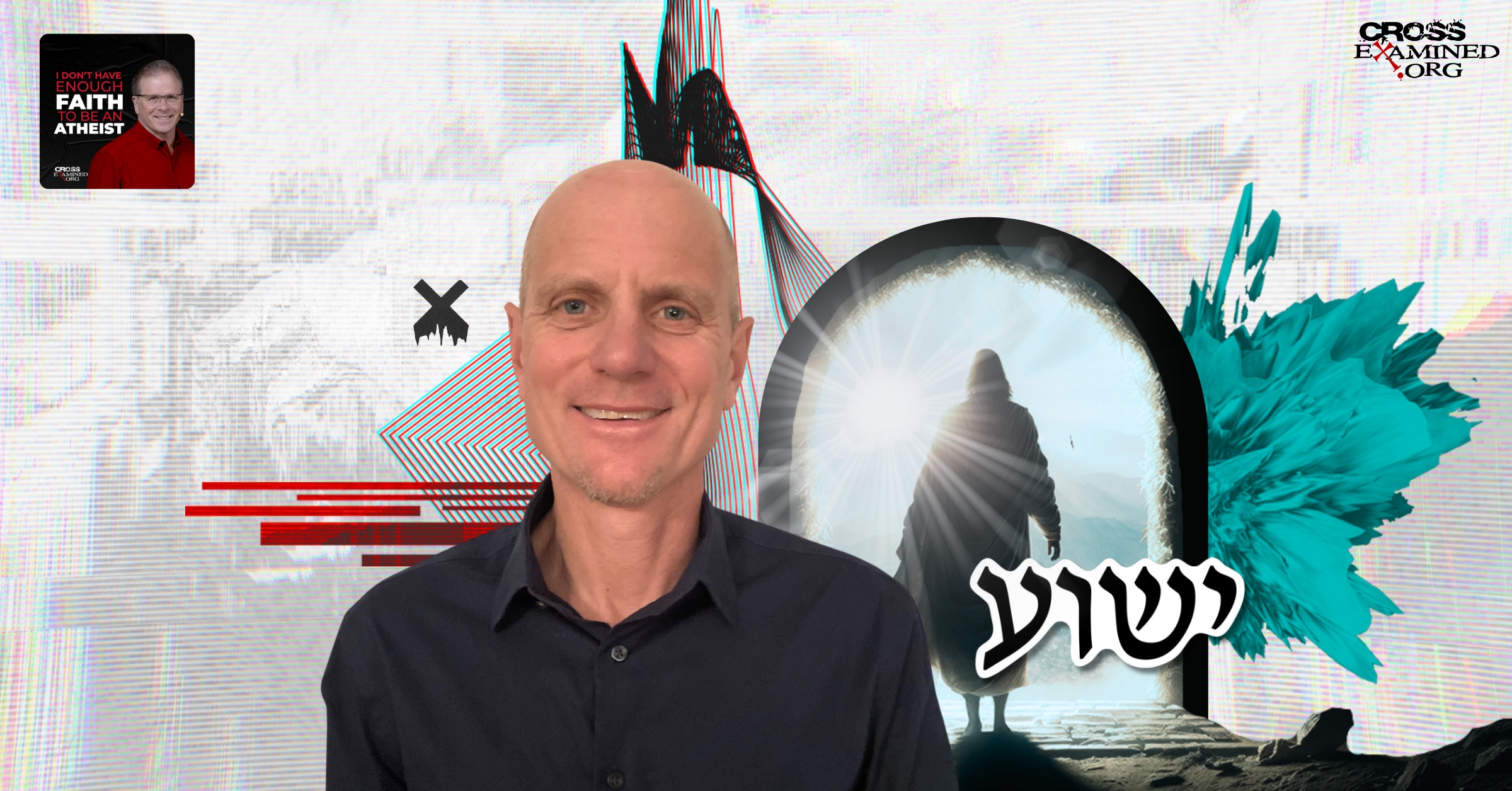
This week, Frank invites Eric Chabot, author of the book ‘The Resurrection of the Jewish Messiah‘, and contributor to the new book, ‘Faith Examined‘, to explore the Old Testament’s references to the Messiah and the great significance of the literary theme of the third day throughout the Scriptures. Serving as the chapter leader of Ratio Christi at The Ohio State University, Eric will share how Ratio Christi is reaching college students with the Gospel on his local campus and also touch on why there is a Jewish aversion to accepting Jesus as the Messiah. During their conversation, Frank and Eric will answer questions like:

  • What strategies does Ratio Christi use to engage students on The Ohio State campus?
  • How has the attitude towards religion shifted in recent years at Ohio State?
  • Why do Jews often avoid Isaiah 53?
  • What’s so special about 1 Corinthians 15?
  • Do Messianic prophecies specifically promise that the Messiah will rise from the dead?
  • What is the commonality between Jews who had previously claimed to be the Messiah prior to Jesus?

As you’ll hear during this midweek podcast episode, key passages from the Old and New Testaments include symbolism, typology, and metaphors, all pointing to the reality that Jesus meets all of the qualifications of the Jewish Messiah. Because of his background growing up in a Jewish community, Eric has a passion for drawing Jewish people to Christ and has used these clues from the Scriptures to foster meaningful conversations with people in that demographic. If you want to dig deeper into the significance of the Messianic prophecies, be sure to pick up a copy of Eric’s book ‘The Resurrection of the Jewish Messiah‘ and also read his chapter on this topic in the new book written by CIA graduates called ‘Faith Examined: New Arguments for Persistent Questions, Essays in Honor of Dr. Frank Turek.’

To view the entire VIDEO PODCAST be sure to join our CrossExamined private community. It’s the perfect place to jump into some great discussions with like-minded Christians while simultaneously providing financial support for our ministry.

You can also SUPPORT THE PODCAST HERE.

RESOURCES MENTIONED DURING THE EPISODE:

Faith Examined book: https://a.co/d/hvS13kK

The Resurrection of the Jewish Messiah: https://a.co/d/1AvTNHd


Download Transcript


By Wintery Knight

Investigation in progress.

From Eric Chabot of Ratio Christi – Ohio State University.

He lists eight ways that Jesus makes his case.

Here’s one of the ways:

Jesus Appealed to Evidence

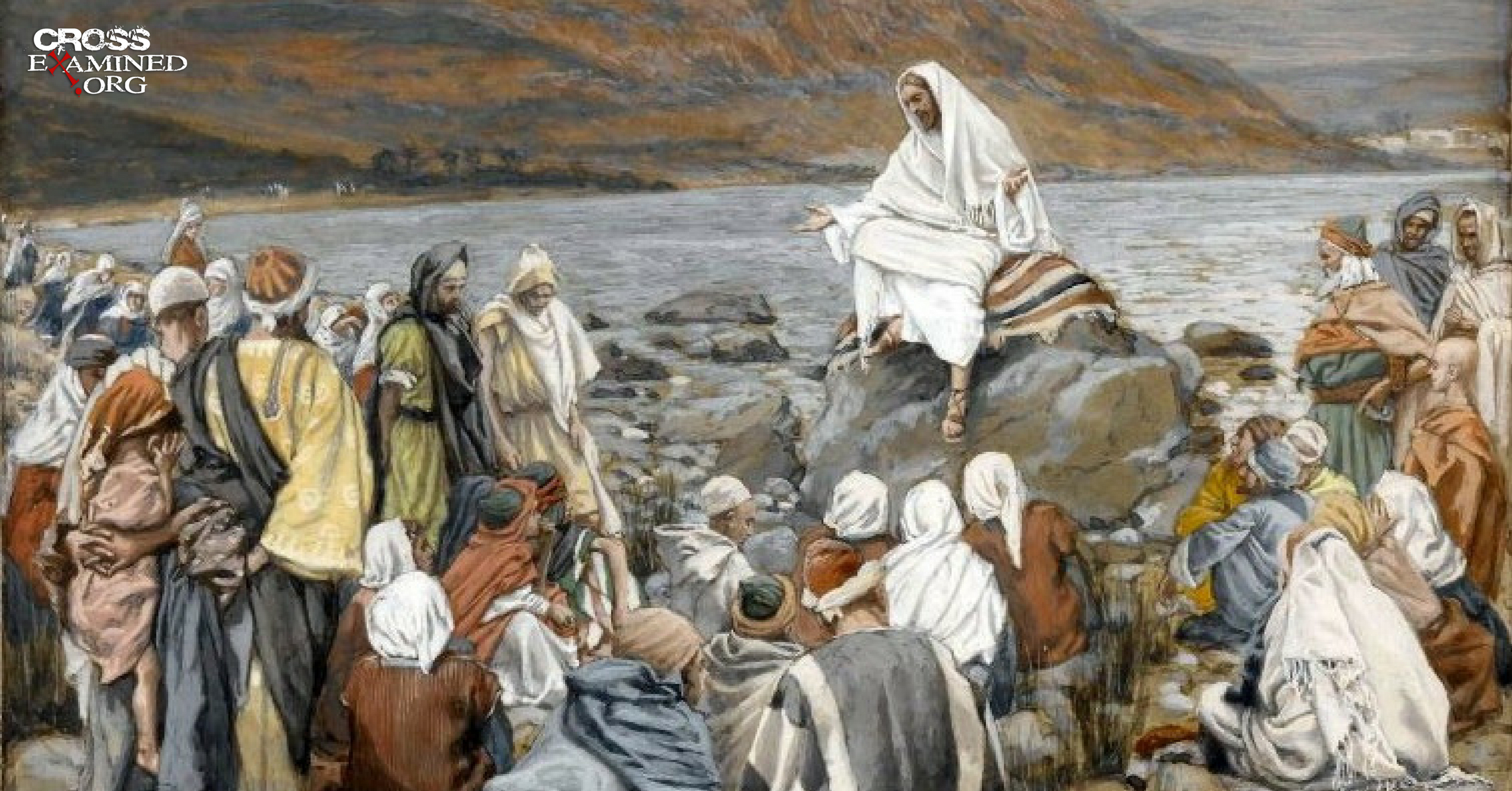
Jesus knew He could not show up on the scene and not offer any evidence for His Messiahship. In his book On Jesus, Douglas Groothuis notes that Jesus appealed to evidence to confirm His claims. John the Baptist, who was languishing in prison after challenging Herod, sent messengers to ask Jesus the question: “Are you the one who was to come, or should we expect someone else?” (Matt. 11:3). This may seem an odd question from a man the Gospels present as the prophetic forerunner of Jesus and as the one who had proclaimed Jesus to be the Messiah. Jesus, however, did not rebuke John’s question. He did not say, “You must have faith; suppress your doubts.” Instead, Jesus recounted the distinctive features of His ministry:

“Go back and report to John what you hear and see: The blind receive sight, the lame walk, those who have leprosy are cured, the deaf hear, the dead are raised, and the good news is preached to the poor. Blessed is the man who does not fall away on account of me.” (Matt. 11:4-6; see also Luke 7:22).

Even in the Messiah Apocalypse, which is dated between 100 and 80 B.C.E mentions a similar theme as seen in Matt.11: 4-6: “He [God] frees the captives, makes the blind see, and makes the bent over stand straight…for he will heal the sick, revive the dead, and give good news to the humble and the poor he will satisfy, the abandoned he will lead, and the hungry he will make rich.”

Jesus’ works of healing and teaching are meant to serve as positive evidence of His messianic identity, because they fulfill the messianic predictions of the Hebrew Scriptures. What Jesus claimed is this:

If one does certain kinds of actions (the acts cited above), then one is the Messiah.

I am doing those kinds of actions.

Therefore, I am the Messiah.

And:

The Miracles of Jesus

In the Bible, miracles have a distinctive purpose: they are used for three reasons:
1. To glorify the nature of God (John 2:11; 11:40)
2. To accredit certain persons as the spokesmen for God (Acts 2:22; Heb. 2:3–4)
3.
To provide evidence for belief in God (John 6:2, 14; 20:30–31). (3)

Nicodemus, a member of the Jewish ruling council, the Sanhedrin, told Jesus, “‘Rabbi, we know you are a teacher who has come from God. For no one could perform the miraculous signs you are doing if God were not with him’ ” (Jn. 3:1–2). In Acts, Peter told the crowd that Jesus had been “accredited by God to you by miracles, wonders and signs, which God did among you through him” (Acts 2:22).

In Matthew 12:38-39, Jesus says, “A wicked and adulterous generation asks for a miraculous sign! But none will be given it except the sign of Jonah the prophet.” In this Scripture, God confirmed the Messianic claim when Jesus said the sign that would confirm his Messiahship was to be the resurrection.

It is important to note that not all witnesses to a miracle believe. Jesus did not do His miracles for entertainment. They were done to evoke a response. So perhaps Paul Moser is right on target in what he calls “kardiatheology” – a theology that is aimed at one’s motivational heart (including one’s will) rather than just at one’s mind or one’s emotions. In other words, God is very interested in moral transformation.

We see Jesus’ frustration when His miracles did not bring the correct response from his audience. “Even after Jesus had done all these miraculous signs in their presence, they still would not believe in him” (John 12:37). Jesus himself said of some, “They will not be convinced even if someone rises from the dead” (Luke 16:31). One result, though not the purpose, of miracles is condemnation of the unbeliever (cf. John 12:31, 37). (4)

I am forever pointing this out to people. Jesus didn’t get people to follow him because he was nice. And he didn’t just talk to people who agreed with him. He even promised “a wicked generation” his resurrection as evidence for his claims. He called his resurrection “the sign of Jonah”, and it was meant for people who were looking for a “sign”. This is the way we should be – using whatever evidence we can dig up from science, history, law, and even the social sciences (when arguing moral issues).

Read the rest here. Surprise! Jesus loves to convince people, and not just by quoting the Bible to people who already accept the Bible, either. His goal was not to make people accept his claims because of their feelings, but because of the evidence, he offered them.


Original Blog Source: http://bit.ly/2PXLO94

By Eric Chabot

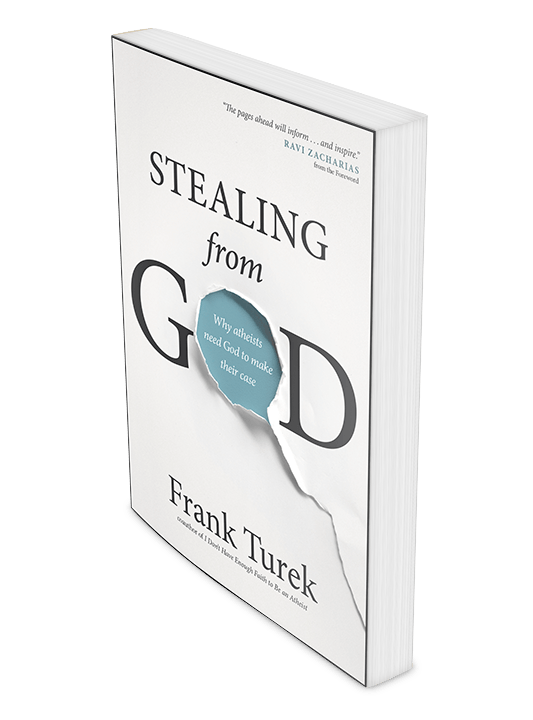
After talking to hundreds of college students for several years about spiritual beliefs, one thing that comes up from time to time is whether the existence of God is even relevant. In other words, the discussion kind of goes like this: “I don’t see what difference God would make in my life!” As a matter of fact, at this moment, we are in the midst of promoting an event at a large college campus called Stealing From God: What Makes Sense of Reality: Theism or Atheism? You can see our clip here:

Anyway, the comment “I don’t see what difference God would make in my life!” displays a very pragmatic view of truth. I have discussed the problem with this elsewhere. But when a student says God’s existence isn’t really relevant, my first response is to try to get them back to the issue of truth. After all, if there is a God and He does exist and it turns out Jesus is His Son, that is an objective reality. It has zero to do with how I feel about it. And the truthfulness of it isn’t determined whether the person stays busy and says “I don’t care if God exists.” Another issue that comes up is the following worldview questions:

• Origins: How did it all begin? Where did we come from?
• The Human Condition: What went wrong? What is the source of evil and suffering?
• Redemption: What can we do about it? How can the world be set right again?
• Morality/Human Rights, Human Dignity: What is the basis for morality? In other words, how do we know what is right and wrong? What is the basis for human rights, moral values, moral duties, human dignity, and equality?
• History: What is the meaning of history? Where is history going?
• Death: What happens to a person at death?
• Epistemology: Why is it possible to know anything at all?
• Ontology: What is a reality? What is the nature of the external reality around us?
• Purpose: What is man’s purpose in the world

Now after looking at these worldview issues, I think the one that is the question that is the most pressing one is the morality, human rights, and human dignity issue. This issue is directly related to the origins question. They can’t be separated. Just recently in the recent presidential debate, the abortion topic came up. That is directly related to one’s view of humans and what makes them valuable. Of course, on a theistic worldview, the human isn’t valuable based on their function. They are valuable based on their nature or essence. It is quite obvious we live at a time where people are obsessed with human rights, justice, and equality. I discuss why theism lays the foundation for these features of reality here. 

So in the end, when I run into college students that are apathetic about the existence of God, I now ask them if they think humans are valuable and whether they believe in justice, equality, and human rights. Every single time, the student says “Yes!” So now the door is open to discuss the origins question and how that relates to the human dignity and equality issue. Robert Spizter helps us understand the importance of this topic. He says:

“The best opinion or theory is the one that explains the most data. The general principle is this: opinions that explain the most data and are verified by the most evidence are better than those that do not. The vast majority of people consider this principle to be self-evident because if greater explanatory power and more evidence is not better, then additional evidence and explanatory power add nothing, which means that all evidence and explanatory power are essentially worthless. This leaves us with only our subjective assertions, which most people do not consider to be good enough. For example, as suggested previously, Einstein’s theory about the universe is better than Newton’s theory because it explains more data. (Newton was unaware of most of the data that the special and general theories of relativity account for.) Again, calculus has more explanatory power than algebra and trigonometry because it can account for curves through derivative and integral functions, which algebra and trigonometry cannot do on their own. This applies to virtually every science and social science. The more data a theory or hypothesis explains, the better it is. With respect to life issues, this principle is important because a theory of human personhood that treats a person as a mere individual physical thing (materialism) does not explain the data of persons being self-conscious or having transcendental desires (such as the desire for complete and unconditional Truth, Love, Goodness, Beauty, and Being). Therefore, materialism’s explanation of many acknowledged human powers and activities, such as empathy, agape (self-sacrificial love), self-consciousness, the desire for integrity and virtue, the sense of the spiritual, and the drive for self-transcendence, is, at best, weak. Theories that attempt to account for and explain these data, such as hylomorphism or transmaterialism, should be preferred to ones that do not, such as biological reductionism, materialism, and behaviorism. There is another more serious consequence of the underestimation of human personhood, namely, the undervaluation of real people. If we consider human beings to be mere matter without the self-possession necessary for freedom and love, without unique lovability, or without spiritual or transcendent significance, we might view human beings as mere “things”.
If humans are viewed as mere things, then they can be treated as mere things, and this assumption has led historically to every form of human tragedy. Human beings might be thought of as slaves, cannon fodder, tools for someone else’s well-being, subjects for experimentation, or any number of other indignities and cruelties that have resulted from human “thingification”. The principle of most complete explanation has a well-known corollary, namely, “There are far more errors of omission than commission”, which means that leaving out data is just as harmful to the pursuit of truth as getting the wrong data or making logical errors. This adage is related to the moral saying that “there are far more sins of omission than commission.” In the case of the underestimation of human personhood, history has revealed how close the relationship between errors and sins truly is.”- Ten Universal Principals 

Resources for Greater Impact

SFG angled book
SFG_DVD_Box_3D_Cropped__88285.1447165762.1280.1280

By Eric Chabot

How do we know God exists?  In the past when I was asked this question  I used to automatically  jump to an argument for God. I would sit down and try to explain it in detail to the individual. I have now decided to take a different approach and back up: I ask the person “How should we approach the existence of God?” or “ What method should we use?”  Now, I know that when you ask a Christian, Jewish person, Muslim, or Mormon how they know what they believe is true, they might just say, “I have faith.” This should cause us to stop and ask if that is an adequate answer. It probably won’t go very far in a skeptical and pluralistic culture. So in this post I want to discuss some of the various ways we can approach the existence of God. I am well aware that there are other methods as well.

#1: The Revelatory Approach

The skeptical issue in our culture mostly enters into the religious dialogue in the following way: In the case of God, who isn’t some physical object but a divine being, what kind of evidence should we expect to find? There is a tendency to forget that the Bible stresses that sin can dampen the cognitive faculties that God has given us to find Him. Therefore, sin has damaging consequences on the knowing process (Is. 6:9-10; Zech. 7:11-12; Matt. 13:10-13). Thus, people are dead, blinded, and bound to sin.

Christianity stresses that  the God of the Bible is capable of giving a revelation to mankind through a specific medium. One of the most important themes of the Bible is this- since God is free and personal, he acts on behalf of those whom he loves, and his actions include already within history, a partial disclosure of his nature, attributes, and intensions. Revelation is a disclosure of something that has been hidden– an “uncovering,” or “unveiling.” There are three things that are needed for a revelation to take place: God, a medium, and a being able to receive the revelation.

The mediums God uses in the Bible are General Revelation (The Created Order/Conscience; Rom. 1&2); Special Revelation: Jesus (John 3:16; 14:9; Colossians 2:9; Heb. 1:1-2), The Bible (2 Tim. 3:16); Miracles, Prophecy, Theophanies, Missionaries/Messengers, and other means as well.

But why the need for revelation?  First, we need to know the character of GodHence, we need a clear communication to establish the exact nature of God’s character. Who is God and what is He like? Also, we need a revelation to understand the origin of evil/the Fall. In other words, we need to be educated concerning the reasons for where we are at as a human race. Furthermore, without a clear revelation, people might think they are the result of a blind, naturalistic process instead of being created in the image of God. And without a clear revelation we would not know our destiny.

Also, people often lament that God should just give them direct evidence of Himself in a way that will cause people to follow Him (e.g, write his name in the sky or have a resurrected Jesus appear to everyone today). The problem with this desire is most people don’t know what they are asking for.  Biblically speaking, people can’t see God and live (see Exodus 33:20). Therefore, that is why God picks a specific medium to reveal Himself to humanity. Furthermore, even if people had direct evidence, it does not mean they will love God and follow Him.

Challenges to the Revelation Argument

There is no doubt going to be challenges to the revelation argument. After all, the Bible is considered to be God’s revelation to mankind. However, The Quran, The Book of Mormon, and other holy books are also to considered to be The Word of God. Who has it right? The late Christopher Hitchens said:

Since all these revelations, many of them hopelessly inconsistent, cannot by definition be simultaneously true, it must follow that some of them are false and illusory. It could also follow that only one of them is authentic, but in the first place this seems dubious and in the second place it appears to necessitate religious war in order to decide whose revelation is the true one. [1]

That is why the revelation argument will generally lead us to utilize historical apologetics (see next point).

#2: Historical Arguments/Prophecy

When it comes to historical arguments, we ask if God has revealed Himself in the course of human history? If so, when and where has He done this? We can look at religious texts and see if they pass the tests for historicity. Also, see here. Thus, we enter the domain of historical apologetics.

Let me first expand on the miracles/prophecy issue a little bit: There seems to be a pattern of how God works in the history of Israel. Every time he is doing something new in their midst, he confirmed what he was doing through a prophet. Signs are used to provide evidence for people to believe the message of God through a prophet of God.

We see this is an important feature with Moses and Jesus:

1. God says to Moses, “I will be with you. And this will be the sign to you that it is I who have sent you” (Exod. 3:12).

2. When Moses asks God, “What if they do not believe me or listen to me?” the Lord gives Moses two “signs”: his rod turns into a snake (Exod. 4:3) and his hand becomes leprous (Exod. 4:1–7).

3. Moses “performed the signs before the people, and they believed; … they bowed down and worshiped” (Exod. 4:30–31).

“Sign” (sēmeion) is used seventy-seven times (forty-eight times in the Gospels). Remember that the prophet Isaiah spoke of a time where miraculous deeds would be the sign of both the spiritual and physical deliverance of Israel (Isa.26: 19; 29:18-19; 35:5-6; 42:18; 61:1). Also:

  1. The word “sign”  is reserved for what we would call a miracle.
  2. “Sign” is also used of the most significant miracle in the New Testament, the  resurrection of Jesus from the grave.
  3. Jesus  repeated this prediction of his resurrection when he was asked for a sign(Matt. 16:1, 4). Not only was the resurrection a miracle, but it was a miracle that Jesus predicted (Matt. 12:40; 16:21; 20:19; John 2:19).
  4. Nicodemus  said of Jesus “We know you are a teacher who has come from God. For no one could perform the miraculous signs you are doing if God were not with him” (John 3:2).
  5. “Jesus the Nazarene was a man accredited by God to you by miracles, wonders and signs, which God did among you through him, as you  yourselves know” (Acts 2:22).

To see more, see our post “Who Do You Say I Am? A Look at Jesus

Also, former atheist Anthony Flew said the resurrection of Jesus was the best attested miracle claim that he had seen (see There Is A God? How the World’s Most Notorious Atheist Changed His Mind(New York: Harper Collins, 2007). Also, to see more on the prophecy issues, See our post: “Who is the one true God: A Look at Prophecy as a Verification Test and The Argument from Miracles: A Cumulative Case  for the Resurrection of Jesus of Nazareth.

#3 God as an Explanatory Hypothesis?

Paul says that God’s existence and attributes can be “clearly seen” (Romans 1:18-20)  since they have been “shown” to the unbelieving world through “the things that are made” (nature). Notice that Paul never posits that we can view God as a material object. But he does say that people should be able to look at the effects in the world and infer that there is a Creator. When we observe the effects in the world, we can infer
there are two kinds of causes—natural and intelligent. In other words, there  are really two general kinds of explanations for events: intentional accounts  (which demonstrate signs of value, design, and purpose) and non-intentional  accounts (which lack values, design, and purpose). (2)  Generally speaking, there is mass confusion over the difference between Agency and mechanisms.

Agents have goals and plan ahead. Mind or intelligence is the only known condition that can remove the improbabilities against life’s emergence. It is hard to see how a blind, naturalistic, undirected process could anticipate the universe that is required for our life to get started on our present earth and then go on to create life from non-life as well as the genetic code, etc.

C.S. Lewis said that “I believe in Christianity as I believe that the Sun has risen, not only because I see it, but because by it I see everything else.” (see The Weight of Glory). To apply what Lewis said, we might utilize what is called inference to the best explanation. The inference to the best explanation model takes into account the best available explanation in our whole range of experience and reflection. An example of this approach is seen in a book like A Meaningful World: How the Arts and Sciences Reveal the  Genius of Nature by Benjamin Wiker and Jonathan Witt.

To see a short example of this approach online, see  The Return of the God Hypothesis  by Stephen C. Meyer or Paul Copan’s God: The Best Explanation

Also, using God as an explanatory explanation is seen in philosophical theology or natural theology arguments. The book The Blackwell Companion to Natural Theology does a fine job in handling this issue.

#4: Pragmatic Arguments?

Many people might ask why I would bring this one up. The reason I mention it is because about 70% of people I talk to about Christianity object to it by saying “I don’t understand what difference Christianity would make in my life?” This is a very popular approach. In this argument, many people say their religious beliefs have been tried and tested  in the reality of life. Thus, they think their beliefs correspond to reality because they do make a difference. In other words, “Christianity works because it is true!”

This does have some merit. After all, if the Christian faith is the one true path, it should make a radical difference in the reality of life. The challenge of this argument is that in some cases, it seems Christianity doesn’t work. Christians have challenges in their families, work related issues, and relationships. However, just because Christians don’t always reflect the character of Jesus and don’t always show the difference it makes, this doesn’t mean Christianity is false. Furthermore, the Gospel is not “What Can Jesus Do For Me?” but instead a call to die to ourselves and follow the Lord (Luke 9:23).

It could be that the person is not under healthy teaching/discipleship, or they are living in sin.  So the pragmatic argument can be a tricky one. Everyone knows Christians have done some amazing things for the world (see here), but we also have some inconsistencies.

Conclusion:

I can say from experience that people  have come to know the Christian faith is true for a variety of reasons.  There are several other approaches to the existence of God. I hope that has caused you to go further in the question of God’s existence.

Sources:

1. Christopher Hitchens, God is Not Great: How Religion Poisons Everything (New York: Hachette Book Group, 2009), 97-98.

2. Charles Taliaferro, Philosophy of Religion: A Beginners Guide (Oxford: Oxford Publications, 2009), 70.

Christian Apologetics Alliance BLOG Banner

Visit the Christian Apologetics Alliance Now >> 


Resources for Greater Impact

IDHEFTBAA book standing w SHadow

I Don’t Have Enough Faith to Be an Atheist (Book)
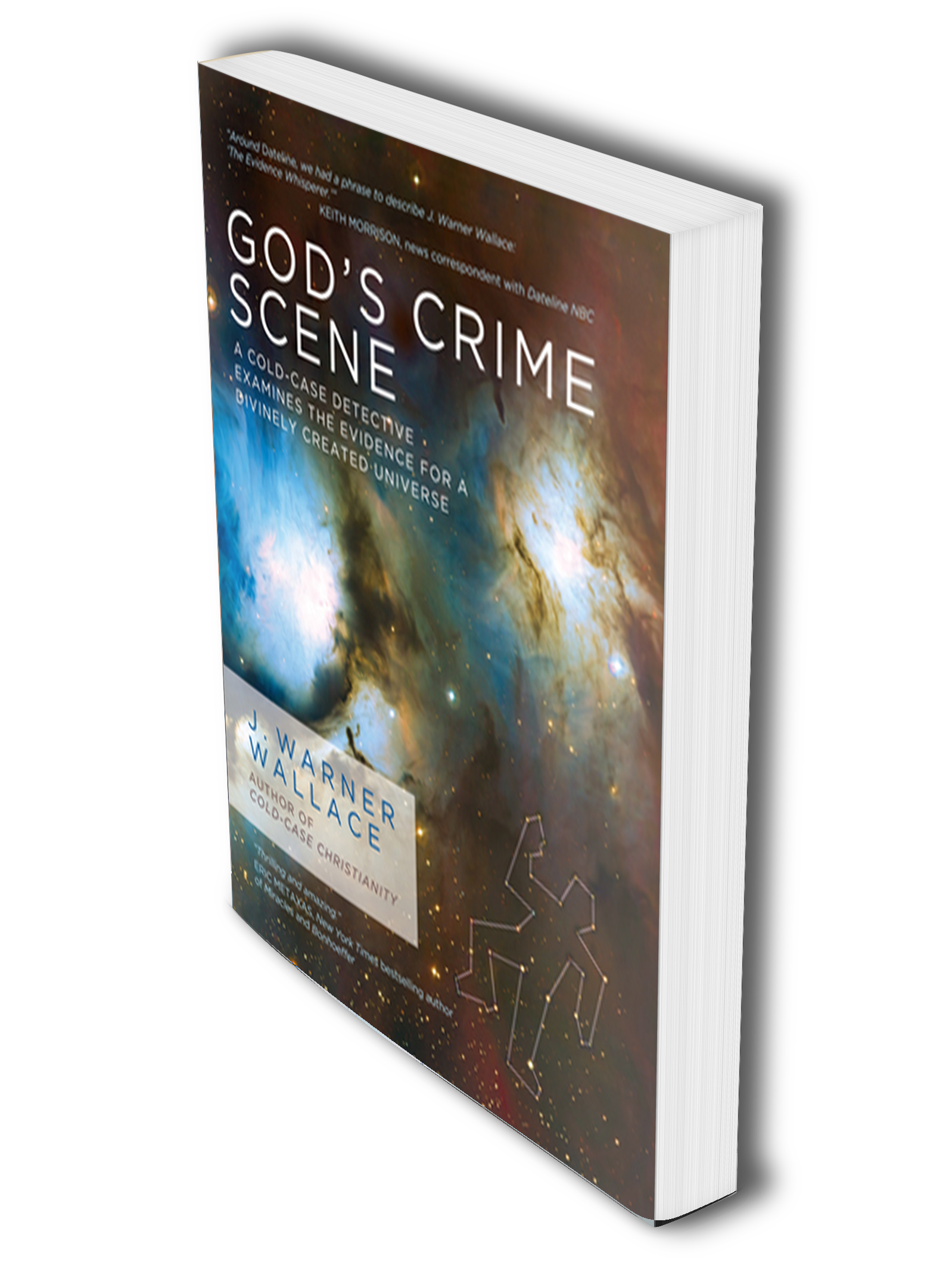
GCS _JWW_Book_Shadow

God’s Crime Scene (Book)